


Do You Have A Frame of Reference Here?

“Instead of trusting in the experts and letting them inform the public, those with little to no experience are voicing their opinion on subject(s) that they don’t have any expertise or understanding of. Thus, this brings me to the critical question that rarely gets asked today: Do you have a frame of reference here?”

We live in a time where having an opinion on every single topic is often treated as more important than having an informed one or not having one when you haven’t fully researched the topic at hand. The influence of social media, 24-hour news cycles, and the pressure to ‘weigh in’ constantly have created a culture where silence is mistaken for ignorance and confidence is mistaken for competence in many different areas. Instead of trusting in the experts and letting them inform the public, those with little to no experience are voicing their opinion on subject(s) that they don’t have any expertise or understanding of. Thus, this brings me to the critical question that rarely gets asked today: Do you have a frame of reference here?

A ‘frame of reference’ is built through lived experience, actual study, or meaningful exposure to a subject, regardless of which one it is. Without it, opinions are often shallow, reactive, or based on incomplete information from often unreliable sources. Yet today, many people, especially political leaders, regularly comment on complex issues such as geopolitics, economics, public health, without the necessary context to understand them or any one of these complex topics. This kind of willful arrogance doesn’t just dilute meaningful discourse on the subject being discussed; it can actively mislead others who assume that their confidence equals real credibility.

What’s personally refreshing for me is when a public figure, especially a political leader, admits the limits of their knowledge. When a mayor of a major city recently acknowledged that they were not informed enough to comment on a geopolitical issue involving another country, it stood out to me positively not as a weakness, but as showing intellectual honesty. In a culture that rewards hot takes and instant reactions, restraint is increasingly rare but it’s also responsible and what we should expect more from our leaders.

Real wisdom comes from not needing to be a ‘master of all’ but rather to hone your knowledge base and your life experience on subjects you are confident enough to weigh in on and learn more about others where you have little or no experience with. Focusing on mastering one subject or a few subjects is difficult enough over a period of years or a lifetime, what’s impossible is trying to comment on every little subject you hear about or is making the news.

There’s value in recognizing when something is outside your lane and admitting that you don’t know enough about something to give an opinion on. Deferring to experts, asking questions instead of making declarations, or simply choosing not to comment are all signs of maturity, not ignorance. In fact, the ability to say “I don’t know enough about this” might be one of the most credible statements a person can make, especially those people in positions of power and influence.

Before speaking out loud, it’s worth pausing to ask: Do I understand this? Or am I just participating to hear myself talk? That distinction matters more than ever because not every conversation needs your opinion, and not every opinion needs to be voiced. In practice, this means getting comfortable with a little restraint especially with different audiences. You’re your coworkers, it might look like asking clarifying questions instead of jumping into debate, or saying, “I haven’t looked into that enough to have a strong view.” That doesn’t make you disengaged; it makes you credible. With your friends and family, where emotions tend to run higher, it helps to focus on understanding their viewpoint rather than winning the argument. You don’t need to ‘correct’ every take at the dinner table. Sometimes the better move is letting a moment pass or redirecting the conversation to something more constructive or worthwhile.

If a topic genuinely interests you and you really want to learn more about it to have an informed opinion, there’s nothing wrong with engaging with it further but do it the right way. Take the time to seek out legitimate sources, compare perspectives, and pressure-test what you’re reading to see if it’s credible information. That kind of effort means going beyond sensational headlines, avoiding echo chambers, and giving more weight to subject-matter experts than to loud personalities who bloviate without any substance. Real understanding of any subject takes serious effort, which you may not be able to devote time to. Here’s the part that most people skip: be willing to revise your opinion as you learn more about the topic. Changing your mind isn’t a loss but rather it’s evidence that you’re thinking deeply about it in a constructive way. When you finally do speak about it, do it from a place of informed perspective, not impulse. That kind of discipline doesn’t just make your voice more credible; it makes it worth listening to.

When things get heated with voicing your opinion, especially with strangers, the goal should shift from being right to keeping things from spiraling out of control. You’re not going to out-argue someone who isn’t interested in nuance or subtlety. What you can do instead is lower the temperature of the conversation: acknowledge their perspective without endorsing it outright (“I can see why you’d feel that way”), avoid absolute statements, and step back when the conversation turns into a one-way performance rather than a two-day dialogue. Walking away from that person or people, changing the subject, or simply not engaging further in the discussion isn’t weakness, it’s control of your environment. It’s true that not every verbal battle deserves either your energy or your effort.

At the end of the day, discernment is a key skill for any adult to exercise, especially in our current era. Knowing when to speak, when to listen, and when to opt out entirely of making your opinion heard will earn you more respect than having a take on every single subject. In a world full of noise and bluster, the people who stand out are the ones who choose their words carefully and know when silence says enough.
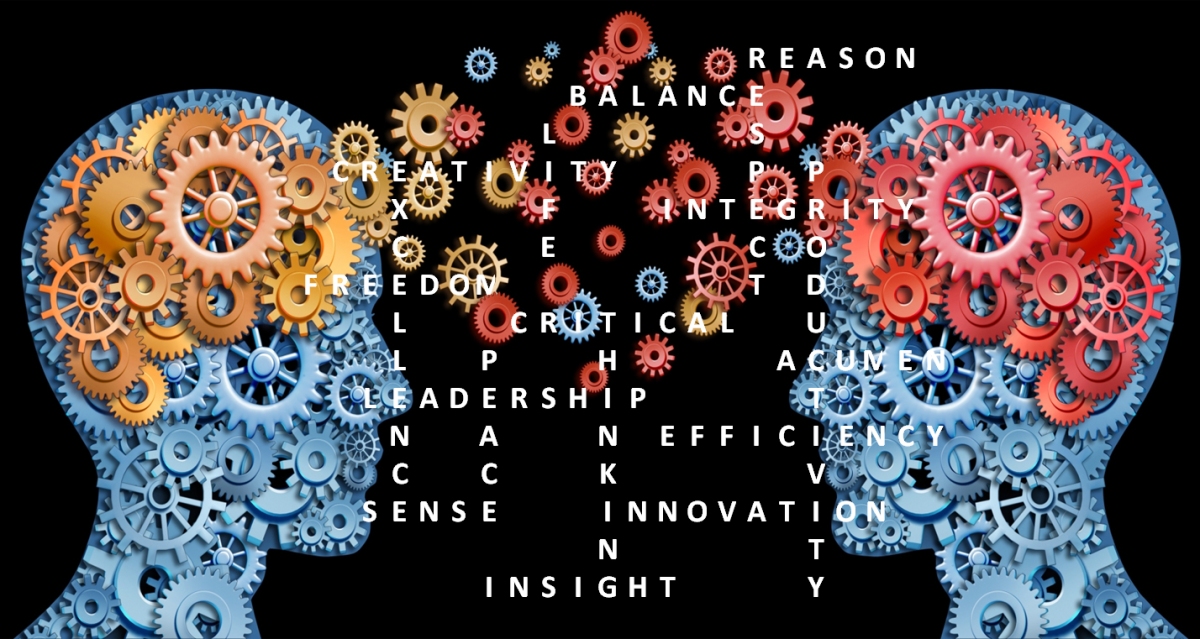
The Need for Critical Thinking

Facts are a tricky thing, but the importance and recognition of them is vital in order to consider yourself a critical thinker. In this era of ‘alternative facts’ and opinionated media, it’s necessary to be able to read, analyze, and think about all of the information that you’ve been taking in and figure out for yourself if it’s truthful or nonsense. In this day and age, opinions are easy to find everywhere but what have become harder to find are the cold, hard facts. The famous expression, “take it with a grain of salt” can be applied to you if you want to be a critical thinker.

The first thing you have to do, as a critical thinker is to be able to sort out the facts from the falsehoods. You should be able to use more than one source of information and before you use those sources of information, you need to verify that they are both unbiased and trustworthy. The evidence that you gather for these facts have to be based off of real sources, who have compiled the information and verified its’ authenticity.

For example, if you’re a Chemistry student and you’re trying to do an experiment on making a chemical volcano, would you choose to get the information from an actual scientist who has their PhD and teaches Chemistry at a local university or would you trust the advice of a best friend in your Science class instead?

While it’s desirable to be a good friend and trust them because they would like to help you most likely, it’s likely their advice will pale in comparison to the Chemistry professor with the PhD who wrote a ‘how to’ article on chemical experiments in the latest edition of ‘Science Weekly.’ If you’re a critical thinker, you would choose option #2 100% of the time because you would like to create an experiment that’s going to be the best that it can be and using your friend’s advice won’t get you to that point.

Regardless of what professional or educational field that you decide to pursue, you’re going to need critical thinking. Being inherently skeptical at first of the information you’re receiving is important to do because you need to be able to discern if what you’re reading, watching, listening to, etc. is factual. In your daily life, you’re going to need to identify prejudice, bias, propaganda, etc. that you’re likely to encounter in your daily life. You have to do your best to discern fact from fiction even if it takes some time. You could decide to ingest every bit of information that you see in the news or at the office as being factual but it would benefit you instead to deep a bit digger by doing your research, verify the source(s), bounce it off other pieces of information to see if there’s a pattern, and then decide if it’s factual.

A true critical thinker is not lazy and does not take shortcuts. He or she goes the extra mile to gather the right information, prioritize it to give it credence in your decision-making, and then recognize, solve the problems in order to move on to the next goal. If you’re in a field where you’re working with data on the computer, you have to be able to interpret it, evaluate it, and then use it for your business or company’s needs. By being able to communicate effectively and clearly is also a necessity when it comes to being able to take those fresh facts you’ve verified and then pass it on to the next person so they know that they’re not being misled by you.

As a critical thinker, it’s also necessary to disregard generalizations made about complex topics, which require in-depth research and analysis. Instead, critical thinking also necessitates the ability to draw conclusions from the evidence and the facts that you have gathered. Then, you have to be able to pass those conclusions on to the right people so they know what’s true and what’s false.

Conclusions that you’ve made in the past can sometimes change in the present or in the future so it’s vital to not be stubborn about your beliefs. Critical thinking requires that you also be flexible in your beliefs especially if you’re able to take in new evidence, and logic. A man or a woman who does not change their views on anything despite overwhelming evidence to the contrary cannot consider himself or herself to be a true critical thinker. While it can be difficult to let go of your innate biases and prejudices, you still should be open-minded and be able to accept the truth and the facts even if they contradict with yours.

If your mother, someone who you loved and respected, happened to have told you one day that the sky was the color red instead of blue, would you accept her statement at face value or would you go outside of the house to check, verify her statement to see if it was true or false? If you are not a critical thinker and a great son, you would choose option #1 and believe that statement without actually checking to see if it’s true. If you are a critical thinker but still a good son, you would choose option #2 and tell your mother later that the sky is actually blue because you went outside to see its’ color for yourself. Even if your mom might be offended by your conclusion, she would still love and respect you for being a critical thinker as is necessary.

To put it bluntly, there are a lot of people out there in different industries that are not critical thinkers and they’re hoping the same about you. I don’t want to name names but you’re likely to encounter them in your neighborhood, your city, and your city. However, if you’re able to develop the right personal habits and characteristics, you’ll be able to set yourself apart as a real critical thinker rather than just a person who believes what he hears, reads, or listens to all of the time regardless of the source it’s coming from.

Those habits involve being a problem solver, an evidence gatherer, a decision maker, a rational thinker, being able to reason with others, and an inquisitive learner above all else. While critical thinking isn’t mandatory in life, you’ll still go a lot further and succeed more when you put those skills and habits to use when compared to those who don’t. If you’re an open-minded, intelligent, mature, and inquisitive person, you’ll turn out to be a good critical thinker and a positive example for others to follow.