

‘Tikkun Olam’ – Why Healing the World Matters More Than Ever

“In a world that often feels fractured, chaotic, divisive, and downright overwhelming when it comes to making positive changes reverberate, the ancient Jewish concept of Tikkun Olam – “repairing the world”, rings out like a timeless call to action in 2025.”

In a world that often feels fractured, chaotic, divisive, and downright overwhelming when it comes to making positive changes reverberate, the ancient Jewish concept of Tikkun Olam – “repairing the world”, rings out like a timeless call to action in 2025. This ancient idea in Judaism isn’t stuck in dusty scrolls or isolated in synagogue sermons alone, as it is a timeless principle that challenges every one of us, of any religion or non-religion, to take ownership of the cracks in our communities, the inequities in our cities, the damage being done to our planet, and even healing the wounds within ourselves. Rarely, if ever, have I written about religion and my own faith background but the need for practicing Tikkun Olam is something in Judaism I’ve always held dear not just for myself but for others to participate in, regardless of their own religious or other background.

What is ‘Tikkun Olam’ and Why Does It Matter?

Literally, Tikkun from the Hebrew language means “repair” or “healing,” and Olam (also from Hebrew) means “world.” It’s an invitation to actively make the world a better, more just, and more whole place, even if it is just a small action you partake in individually to counteract the evils and injustices taking place at the same time. Originating in Jewish thought, this concept for lending a hand to fight injustice and to do some good in the world, has evolved into a broader ethical framework that resonates far beyond Judaism. It’s a powerful reminder that healing for humanity, whether social, environmental, economic or personal is not someone else’s job. It starts with all of us, and we must all do our own part, whatever form that may be. As Mahatma Gandhi famously said, “Be the change that you wish to see in the world.”

Why does Tikkun Olam Matter More Than Ever in 2025?

Look around what’s going on around the world today: climate change threatens our very survival as a species on this planet, social inequality keeps millions trapped in poverty and continues to increase (especially in the United States), countless thousands have died in recent wars and conflicts from Eastern Europe to the Middle East to Sub-Saharan Africa and political polarization fractures communities worldwide leading to extremism and increasing stress on democratic values and freedoms. It’s tempting to feel helpless with all the ills taking place around the world, like the problems are too big and complex for any single person to fix any of them.

However, Tikkun Olam flips that script on itself. It says: the world isn’t going to heal by itself and no one person can do it alone. It requires active participation by more people, conscious choices on how to commit good acts, and collective courage to stand up against known evils and injustices. As Margaret Mead wisely put it, “Never doubt that a small group of thoughtful, committed citizens can change the world; indeed, it’s the only thing that ever has.” History has shown us repeatedly that when regular people mobilize consistently for change, are organized around their cause that they know is just, then their collective power can indeed make things better if it is sustained and united.

Healing Isn’t One-Dimensional for Humanity


Tikkun Olam asks us to think holistically about how we heal as humanity. Healing the world means tackling injustice across the board, whether racial, economic, or social, because inequality weakens the social fabric whatever form it may take. It means protecting the environment, our shared home, from exploitation and neglect, and coming up with solutions that keep it that way for future generations. Perhaps most importantly, it means looking inward to heal our own biases, fears, and prejudices. Because how can we fix the world if we’re broken ourselves or unwilling to be honest about our own healing process? The philosopher William James said it well, “Act as if what you do makes a difference. It does.”

How Do We Live Tikkun Olam in 2025?

The beauty of Tikkun Olam is that it doesn’t require grand gestures or heroic feats because collective power to create change will always usurp that of any individual. While the average political leader, environmental activist, and social critic, can influence change with their platform they have, it’s not enough if no one else believes in your cause and will work with you to implement it together.

It’s in the everyday actions that really push change across the finish line: volunteering at a local shelter, voting for political leaders who will represent your beliefs and values, feeding and clothing the homeless with your donations, supporting sustainable businesses, speaking up against injustice in your community, or simply educating ourselves about the issues at hand. Small choices as well that we have heard about since we were children like reducing, recycling, or reusing your waste (if possible), donating time or money to causes that make positive change, or listening with empathy and kindness accumulate into real change.

The Road to Change is Never Easy but It’s Necessary

Good intentions sometimes falter no matter how much work and effort we can put into positive change. Activism can lead to burnout due to lack of support or funding. The world’s problems can feel like a tidal wave threatening to pull us all under. Tikkun Olam doesn’t promise a quick fix or painless journey towards being successful in seeing the world get better. It demands persistence, consistency, and resilience from everyone involved.

Here’s the truth of the matter: when you commit to healing some aspect of the world, you’re also joining a community of changemakers worldwide who believe in the power of repair and that is powerful to be in good company with other citizens wanting to better the world. As the novelist Paulo Coelho reminds us, “The world is changed by your example, not by your opinion.”

Looking Ahead: Hope for Action in a Fractured World

The future of Tikkun Olam or ‘healing the world’ lies in believing in global citizenship, recognizing that we’re all interconnected to one another despite our ever-present divisions. What happens halfway around the world affects us as much as what happens down the street from us. It’s about continuing to use technology, education, and cross-cultural understanding for good and work to bridge growing divides, learn from other’s advocacy to fuel our own, and inspire sustainable solutions that benefits humanity for the foreseeable future. The healing starts small but grows exponentially, like cascading ripples in a pond, momentum that starts in one town or city and spreads globally because of how universally justice, peace, and compassion can be applied. Reverend Martin Luther King Jr.’s words guide us here: “Injustice Anywhere is a Threat to Justice Everywhere.”

Why Waiting on Change Will Never Lead to It

If you are waiting on the world to change on its own, you’ll be waiting until your dying day. The world is crying out for repair from every one of us, and the clock is ticking. Tikkun Olam is more than a spiritual ideal from Judaism; it’s a practical roadmap for living with purpose in a fractured world. The question isn’t whether you can make a difference, amplify your impact by combining your efforts with others to create collective change on top of individual change to create that ‘ripple effect’ it’s whether you’re ready to start and what problem(s) do you want to start tacking first. So, what’s your first step? The world is waiting on you.
America Off Track – Why It Needs a Nationwide High-Speed Rail Network

“In an age where it’s hard to agree about anything, I do think having nationwide high-speed rail as the rule rather than the exception is something most Americans would support if given a choice of whether to fund it.”

Introduction: Connectivity Beyond Broadband and Rocket Ships

Connectivity in the modern age is more than high speed broadband or rocket ships that can go to the Moon or Mars, it can be as simple as connecting major towns and cities together. It is a simply an economic win-win when you think about having high speed rail being as common as any kind of subway, commuter rail, or streetcar. It is an economic investment that pays for itself over time and is a great way to support local to national economies. It is the exact kind of rail that I believe America is lacking outside my home region of the Northeast and which continues to be neglected despite the benefits far outweighing the costs. In an age where it’s hard to agree about anything, I do think having nationwide high-speed rail as the rule rather than the exception is something most Americans would support if given a choice of whether to fund it.

From Railroad Pioneers to Going Off the Rails

Long ago, the United States was the leader in rail across the board especially when the transcontinental railroad was first established connecting the continental nation together from east to west in the late 1860s. Fast forward to the mid-20th century, America decisively turned away from rail and embraced cars and planes as symbols of modernity and freedom. The construction of the Interstate Highway System in the 1950s, along with generous federal subsidies for aviation, made driving and flying faster, cheaper, and more convenient than taking the train. As families moved to the new and sprawling suburbs, car ownership exploded, and passenger rail ridership collapsed.

Meanwhile, freight railroads, struggling with shrinking margins, often abandoned or neglected passenger services. Amtrak’s creation in 1971 was a last-ditch effort to save intercity rail travel, but chronic underfunding, outdated equipment, and lack of political will left it unable to compete with well-funded highways and airports. This shift cemented a car-and-plane culture in the United States, relegating trains to a niche role in the American transportation landscape rather than the preferred mode of transportation. Unfortunately, today, it continues to be a disappointing national story as trains and train speeds here are some of the slowest, most infrequent, and bordering on dysfunctional in the modern era.

There are a whole host of factors and finger pointing to go around in terms of how we got to where we are as a nation in 2025 from NIMBYism to the airline and auto lobbies to cost overruns that drain support for any of these high-speed rail projects. However, I’d like to focus first on where America stands now compared to other developed nations and how far the U.S. needs to go to catch up to other nations who have surpassed us in this key area of development.

China Leads, Europe Excels

China is currently the world leader in high-speed rail with the biggest network of high-speed trains on Earth with top speeds clocking in at around 220 miles per hour (350 kilometers an hour). If you look at any map of Chinese high-speed rail, all major cities are connected to each other by a train and often for one day, multiple trains serve each city at different times a day making it a better option than flying within the country. Many more cities in China are connected by high-speed rail than American cities and the trains are much faster by comparison.

Unfortunately, this is not only the case in China but in also much of the European Union. France, Germany, Spain, and Italy all have high speed rail networks that are extensive, fast, and reliable, whose coverage far exceeds the U.S. when you do an overlay of their networks compared to the regional networks in the U.S. or per capita in terms of access despite the size difference. Other major players in high-speed rail include Japan, South Korea, Indonesia, with Thailand, Vietnam, and India looking to start building their ‘bullet’ trains in the 2020s. Even developing nations in Africa such as Morocco have invested in having their own high-speed rail with Morocco’s Al-Boraq line between Casablanca and Tangier having opened in 2018, which is the first high speed train in Africa (approx. 180 miles per hour / 300 kilometers per hour) and not likely to be the last.

High-Speed Rail: A 21st Century Economic Engine

As we get close to being well into the second half of the 2020s-decade, high speed rail investment makes more sense and not less sense. It is a win-win to me economically when you can create jobs in construction, project management, and other related industries. As more economies pivot to clean energy, I find that high speed rail is a more efficient, less polluting form of travel that is also extremely safe and reliable if run well. Regional and local economies can flourish more especially when high speed rail comes to their communities’ bringing tourists and possibly new businesses to set up shop there.

Business travel can expand as well when you don’t have the options of only relying on renting a car, taking a bus, or flying on a plane to get to a conference or a meeting in another city in the same day. Cutting carbon emissions is a goal almost universally shared in 2025 so a keyway to do it is embracing forms of travel that are better for the environment such as high-speed rail. Multiple studies in Europe show that every dollar or euro spent on high-speed rail returns multiple dollars in long-term economic gains. The overall return on investment speaks for itself and that’s why more than ever, nationwide high-speed rail efforts should become a national priority.

America’s Missed Opportunities in High Speed Rail

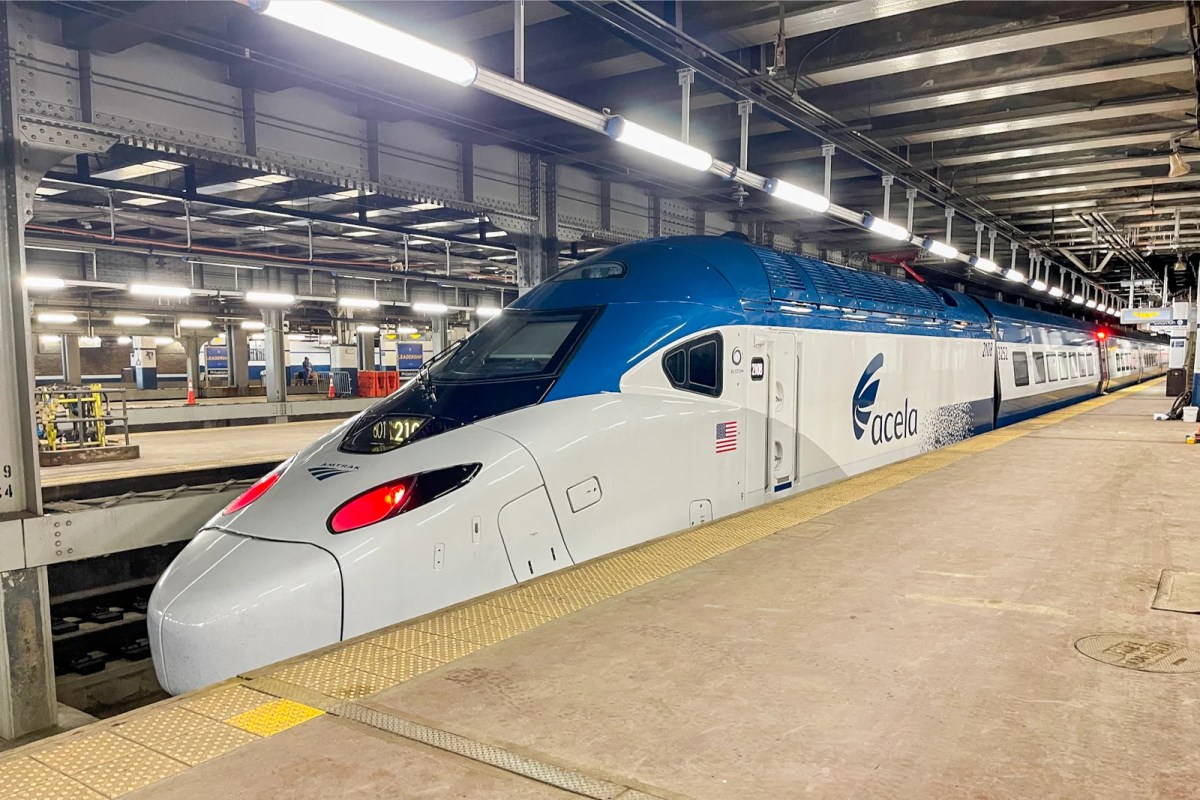
My love for the Northeast’s Amtrak lines as someone who rides multiple times a year, especially the Acela and Northeast Regional, comes from knowing how liberating it feels to speed past gridlocked highways and soul-crushing airport security. However, I would like to be clear in that what we have in the Northeast United States is the exception, not the rule. The rest of the nation is left with woefully inadequate or non-existent passenger rail options, especially no high-speed rail train options.

California’s notorious and still unfinished high-speed rail project, originally envisioned to connect Los Angeles and San Francisco in under three hours, has become a cautionary tale of political infighting, spiraling costs, and endless delays, now more than fifteen years since voters approved it, the line remains incomplete as of this writing. Texas’ proposed Dallas-to-Houston bullet train, based on Japan’s Shinkansen technology, has been mired in lawsuits and land disputes, while Florida’s once-promising plan for a Tampa-Orlando-Miami high-speed corridor was killed by politics despite federal funding being on the table. These failures aren’t just isolated missteps; they’re a systemic reflection of America’s inability to plan, fund, and execute transformative infrastructure projects in the 21st century.

A Vision of a More Connected America

Imagine for me now a future United States where a high school student in Indianapolis could visit Washington, D.C. on a field trip by getting there in 4-5 hours, or where a business traveler could commute between Atlanta and Charlotte in 90 minutes, turning what’s now a grueling four-hour drive into a swift and productive journey. France’s TGV system, which I have been lucky enough to ride from Bordeaux to Paris has long proven that high-speed rail is profitable and competitive with air travel for distances up to 600 miles, drawing millions of passengers who might otherwise fly or drive in that country.

China’s network, the world’s largest as mentioned earlier, has shrunk travel times dramatically: for example, the 819-mile Beijing–Shanghai route, once a ten-hour slog by conventional train, now takes just four and a half hours. A similar Chicago–New York high-speed line, roughly the same distance, could cut today’s fourteen-hour Amtrak ride by more than two-thirds if it were ever developed and invested in.

The creation and development of a nationwide rail grid could connect major population centers such as Houston, Dallas, Austin, Chicago, Detroit, Miami, Atlanta, Denver, and Los Angeles with frequent, fast trains. This would wholeheartedly reshape the American economy as we know it and foster new hubs of innovation, tourism, and opportunity in cities both large and mid-sized, and if smaller cities can be added to a more local line with more stops, that’s a positive as well.

Overcoming America’s High Speed Rail Barriers

There’s no denying the hurdles that exist and will continue to slow the development of a nationwide high speed network: federal and state governments have rarely aligned on rail priorities; outdated regulations, such as the Federal Railroad Administration’s archaic crash standards, make it difficult to adopt off-the-shelf European or Asian trainsets; and NIMBYism often turns local communities into fierce opponents of new rail lines.

However, none of these obstacles are insurmountable if America learns from the examples set by other nations. Spain’s national AVE system, for instance, was built with robust public support and clear national commitment, resulting in more than 2,000 miles of high-speed track in a country with less than a seventh of America’s population. Japan’s initial Shinkansen line was completed in just five years, transforming travel patterns permanently, and this is despite being a mountainous island nation where political gridlock can also occur.

America could adopt federal legislation to streamline permitting, incentivize public-private partnerships, and dedicate a long-term funding mechanism like the Highway Trust Fund to ensure reliable and consistent investment. Beyond these present technicalities, it will take real leadership willing to communicate to the American voter that high-speed rail is not a luxury for a developed nation, but a real necessity for economic growth, energy security, and national competitiveness in the 21st century.

Conclusion: It’s Time to Board the Train of Real Progress

I am writing this article on an Amtrak Northeast regional train to Washington, DC ironically but not intentionally because as someone who treasures the unique sense of freedom and connection offered by train travel in the Northeast United States, I believe deeply that every American deserves the same opportunity. This should be the case whether they live in Houston, Detroit, or Los Angeles. We have the financial resources, the technology, and the know-how; what we lack is the political resolve to make high-speed rail a reality nationwide.

Our tax dollars should be able to build systems that make our daily lives better, and there are few investments more transformative than modern, fast, reliable trains that knit together our cities and regions. High-speed rail would give Americans more options, less stress, and cleaner air, while restoring our global reputation as a nation of builders and innovators. It’s time for the United States to leave the station of outdated thinking, board the train of progress, and embrace a future where high-speed rail is not the rare exception, but the expectation for every American traveler.

Note: The views expressed in this article are entirely my own and do not reflect the opinion(s) of any outside organization, firm, or entity.

Works Cited / Endnotes (MLA)

  1. “China’s High-Speed Rail Development.” China Railway Corporation, 2023, www.china-railway.com.cn/en/high-speed-rail/.
  2. “TGV: The French High-Speed Train.” SNCF, 2024, www.sncf.com/en/trains/tgv.
  3. International Union of Railways (UIC). “High-Speed Rail in Europe: A Competitive Advantage.” UIC Publications, 2023, uic.org/IMG/pdf/high-speed-rail-in-europe.pdf.
  4. “Al Boraq, Africa’s First High-Speed Train.” Office National des Chemins de Fer (ONCF), 2019, www.oncf.ma/en/Projects/High-Speed-AlBoraq.
  5. Hurst, Dana. “Morocco Opens First High-Speed Rail Line in Africa.” BBC News, 15 Nov. 2018, www.bbc.com/news/world-africa-46227056.
  6. California High-Speed Rail Authority. “Project Update Report to the Legislature.” CHSRA, March 2024, www.hsr.ca.gov/docs/about/legislative_reports/2024_Project_Update_Report.pdf.
  7. Swarts, Jonathan. “Texas’ Bullet Train Faces Legal, Financial Roadblocks.” Texas Tribune, 20 Apr. 2024, www.texastribune.org/2024/04/20/texas-high-speed-train-lawsuits/.
  8. United States Government Accountability Office (GAO). “Intercity Passenger Rail: Amtrak’s Challenges in Implementing High-Speed Rail.” GAO-21-480, Sept. 2021, www.gao.gov/assets/gao-21-480.pdf.
  9. International Energy Agency. “The Future of Rail: Opportunities for Energy and the Environment.” IEA, 2019, www.iea.org/reports/the-future-of-rail.
  10. European Commission. “White Paper on Transport: Roadmap to a Single European Transport Area.” Publications Office of the European Union, 2011, ec.europa.eu/transport/themes/strategies/2011_white_paper_en.
  11. Pew Research Center. “Most Americans Support Investments in Infrastructure, Including Public Transit.” 15 June 2021, www.pewresearch.org/2021/06/15/public-views-on-infrastructure/.
  12. American Public Transportation Association (APTA). “Economic Impact of High-Speed Rail.” APTA Reports, 2022, www.apta.com/research-technical-resources/research-reports/economic-impact-of-high-speed-rail/.

Life, Subscribed: How Everything Became a Recurring Fee

“Welcome to the age of subscriptization: a world where the default mode of engagement is no longer ownership, but ongoing payment(s).”

Okay, not literally everything, but it’s certainly starting to feel that way. Remember that feeling you had as a kid or teenager picking up a compact disc (CD), a DVD, or a book from the local school fair. You paid for it only once and then you owned it for life or if you didn’t sell it to someone else or lose it entirely. I get nostalgic for those days when ownership of items was the priority in this economy. We used to buy things.

Now, we rent or subscribe to experiences, housing, streaming services, and even our identity, one monthly or yearly payment at a time. From software and streaming to meals, mattresses, and meditation, life itself has undergone a quiet revolution from owning to subscribing. Welcome to the age of subscriptization: a world where the default mode of engagement is no longer ownership, but ongoing payment(s).

At first glance, this model seems like a win to anyone. Why drop hundreds upfront on a good or service when you can pay $9.99 a month forever? Subscription services promise convenience, affordability, and flexibility, and they’ve reshaped how we consume as a society. Need entertainment? Subscribe to Netflix. Need groceries? Subscribe to weekly HelloFresh deliveries. Therapy? BetterHelp sessions, available by month or more. Transportation? Try Tesla’s subscription model. It’s not just media and goods anymore; it’s your health, your fitness, your mental well-being, and your relationships.

However, beneath the surface of ease lies a subtler transformation if you haven’t noticed it already, one that touches everything from personal finance to cultural values. Subscriptions create the illusion of choice and control while tethering us to an endless cycle of micropayments that add up over time and can lead to a financial trap. They can fragment our budgets, blur the line between need and want, and slowly chip away at your financial autonomy. When every facet of life comes with a recurring fee or payment, you may never feel “caught up” or always feel like you need to add one more service to make your life more convenient. There’s always one more plan, one more upgrade, one more renewal reminder in your inbox making it harder and harder to unsubscribe entirely.

Beyond our bank statements, the subscription model is rewiring our expectations and sense of satisfaction with our choices. We’ve become conditioned to expect instant access, regular updates, and constant novelty, whether it’s a new show to binge, a wardrobe refresh, or the latest application feature update. That “always something new” mindset can quietly foster impatience, restlessness, and even entitlement. Why wait for anything or stick with something you buy once when everything can be delivered, streamed, or unlocked for a monthly fee? This kind of mindset creates a culture that prizes immediacy over depth, reducing life’s experiences to transactions, and undermining the joy that can come from delayed gratification or from rewarding true craftmanship.

As people, we are also internalizing the logic of subscriptization in how we relate to ourselves and others. Self-improvement has become something you can subscribe to, through fitness applications, meditation platforms, career coaching, or therapy on demand. While these tools have value as subscriptions, they often position growth as something you consume, not something you do. There’s a growing risk that we start seeing our personal progress as another product, measurable, trackable, and cancelable, rather than as a slow, often uncomfortable process that lasts a lifetime.

This recent economic shift also speaks volumes about our societal mindset. In an era marked by career instability and a gig-based economy that more people must participate in to survive and make ends meet, people are more hesitant to commit entirely for the foreseeable future, whether it’s to a car, a house, or a romantic partner. Socially, we now navigate dating and relationships through platforms that resemble subscription services themselves, where matches, friends, or followers can be swiped, upgraded, or ghosted as easily as deleting your Spotify playlist.

The emotional consequences of this wide shift are still unfolding, but the early signs suggest it’s making genuine connection more fragile, and commitment feel optional entirely. Subscriptions cater to our age of societal anxiety, offering an easy way out at any time. Don’t like it? Cancel it. Swipe left. Move on. That same disposability in what we subscribe to may be eroding our sense of permanence, ownership, and investment, in both materialistic and emotional ways.

Meanwhile, companies aren’t just selling services, they’re collecting our data for months and years because of the subscription model. Every subscription is a pipeline of behavioral intelligence; when you watch, what you skip, how often you order, when you’re most likely to purchase. Algorithms then feed this data back into your shopping, dating, or entertainment experience, shaping your preferences before you even know you have them. It’s a form of consumer surveillance masquerading as personal freedom.

The subscriptization of life isn’t inherently evil, but it’s worth examining the consequences of moving more and more to a subscription-only economy. As we increasingly trade ownership for access to services and goods that we need rather than just want, and permanence for flexibility, we must ask ourselves: what are we gaining with this model, and what are we losing? Subscriptions might make life smoother, more convenient, but they can also make it shallower, more transactional, and harder to disconnect from. It is also possible that we end up paying more for these goods and services in the long run every week, month, or year, rather just one-time only.

The question isn’t whether we’ll return to owning everything again as that ship has sailed. In this new economy of access, the challenge is to subscribe with real intention, not out of pure habit. Because if everything is on auto-renew, or there’s no longer a ‘buy now’ option, it might be time to ask: who’s really in control of our choices as consumers?

More importantly, we need to consider what kind of life we’re curating through this endless stream of monthly and yearly commitments. Are we building something lasting or simply paying to keep the lights on in a lifestyle we don’t fully own? The convenience is real, especially for those who benefit from seamless access. However, so is the quiet erosion of autonomy when we outsource our decisions to algorithms, platforms, and plans we barely remember signing up for. At some point, the goal should be more than just temporary access. It must be about intentionally creating meaning, through what we purchase, who we support, and how we contribute. And meaning, as it turns out, isn’t something you can just rent or subscribe to.

“…It’s Just A Business” – Anatomy of A Scene

“As one economic system is thrown into recession, other illicit ones, such as illegal gambling tend to flourish in its wake, which is what ‘Killing Them Softly’ does a good job of showing the effects of a recession leading to a boom in the illicit economy.”

“America is not a country, it’s just a business.”

‘Killing Them Softly’ is a 2012 movie that flew under the radar at the time of its release. It may seem on the surface as a movie about the mob regarding unpaid debts, illegal gambling rings, and retribution for those caught in the crossfire, but what makes this movie different is its allegory laid out in the film regarding its relation to the financial system. As the mafia tries to prop up its system of illegal gambling rings and extortion rackets by using different hired hitmen, there are radio and TV clips highlighting the role of different politicians trying to prop up the financial system in the wake of the 2008 financial crisis. To keep the system functioning, drastic measures are taken.

As the U.S. economy suffers, illegal activities flourish and there are those people who get caught up in resorting to crime to keep their head above water. When the illegal system malfunctions such as a Mafia protected card game gets robbed by criminals outside the system, Jackie Cogan (played by Brad Pitt) is called upon as an enforcer hired to restore order to prevent the local criminal economy to collapse.

When any economy, illicit or legal, are ripped from its foundations, there will be enforcers or politicians who will need to clean up the mess left behind. While the allegory is not spelled out in the film, As Jackie is left to clean up the mess of the robbed card game by getting revenge on the small-time criminals who wanted to disrupt the system, many scenes highlight how the U.S. economy needs to be bailed out due to the irresponsible actions of the bankers and financial traders who got the country into this mess. While it may not be the most pertinent allegory, Jackie Cogan, is there to maintain order in their own local illegal gambling racket, similar to how leading politicians in government are called upon to maintain order when the national financial system is ready to crash.

Jackie Cogan is on his own throughout the movie and must rely upon himself to fix the mess left behind from the mob-protected robbed card game’s aftermath. He knows other mob enforcers who could help but they’re jaded, bitter, or too worse for wear having done Jackie’s job multiple times before to keep the mafia afloat. Above all else, Jackie is in it for himself to get paid and survive in an economic situation that is affecting everyone, criminal or civilian.

U.S. political leaders, similarly, were asked to intervene on behalf of the government, to step in to save a system that was being abused by financial firms, but also individuals, who made irresponsible decisions, and even illegal ones, which caused the national economy to crash. To prevent the system from collapsing, former Presidents, George W. Bush, and then Barack Obama had to step in to save the economy even though the system itself was at fault.

In the wake of the financial crisis that still resulted from the bad decisions and greedy actions of its players, when there’s a resulting increase in unemployment and poverty as the film depicts along with the collapse of some communities, some people will inevitably turn to criminal and illegal activities including gambling, extortion, and drug dealing. As one economic system is thrown into recession, other illicit ones, such as illegal gambling tend to flourish in its wake, which is what ‘Killing Them Softly’ does a good job of showing the effects of a recession leading to a boom in the illicit economy.

Without spoiling too much of the film, the ending scene takes place with Jackie and the mafia’s head accountant meeting at a bar to discuss his payment rendered for being an enforcer to keep the Mob card game running afloat after the perpetrators were punished for robbing it. Jackie, like the head Mafia accountant, are using each other for the money and stability of their own enterprises. Jackie Cogan is in it for himself as other enforcers were not able to do what he does, and he wants to be rewarded for it.

The Mob accountant is looking to make sure his illegal enterprise stays afloat without paying more than he needs to. In this scene, Jackie raises the rate of how much he charges for committing the hits on the people who robbed the card game due to the ‘recession.’ The mob accountant counters by saying that what they would him are the ‘recession’ prices and that he’s getting what another enforcer who couldn’t do the job would normally get.

“You know this business is a business of relationships.” The accountant tells Jackie that they want to keep the relationship with him going since every other enforcer is unavailable so he should not ask for more money given he might need to help them again. Jackie isn’t fooled by this plea to continue their ‘working’ relationship because at the end of the day, it’s about getting paid by them and they could not care less what happens to the enforcers who clean up the mob’s mess.

The accountant is listening to the 2008 election night acceptance speech by then-Presidential candidate Barack Obama imploring Americans to see each other as ‘one people’ and ‘out of many, we are one.’ Jackie doesn’t buy it given the circumstances for which he lives out his life in America. The accountant labels him as a ‘cynical’ person but he has reason to be as ends up cleaning up messes violently and criminally to keep the gravy train for others rolling.

Jackie sees even one of the founding Fathers, Thomas Jefferson’ as a hypocrite because while he wanted freedom and liberty for all, he still owned slaves and wasn’t actually fighting for the ideals he espoused in the Declaration of Independence. Despite being known as an ‘American Saint’, Jackie believes Jefferson was out for himself and his own interests and that there are no unifying ideals that bind the country together besides the need for ‘money.’

“Don’t make me laugh…I’m living in America…and in America, you’re on your own. America is not a country, it’s just a business.” Jackie Cogan, after what he goes through in the film, is looking to get paid and survive at the end of the day. He is corrupted and evil but justifies his actions by telling himself and the audience that he’s on his own like many other people were in the financial crisis and must take this blood money from the mafia to make it in America.

When Jackie Cogan hears American politicians say that “we’re all in this together”, “we are one community, one nation”, he believes that no one is looking out for him, not even his mafia employers, and must fight for every dollar he can have because he would not survive otherwise. ‘Killing Them Softly’ is not just about a low-level mafia enforcer keeping a mob-run gambling ring going after doing contract kills on three people who robbed one of the games.

Throughout the film, whether its news clips, radio segments, or the desperate actions of its characters, ‘Killing Them Softly’ is primarily about the larger and looming allegory for the larger failures of the economic system who could not protect many of its citizens from financial ruin in the wake of the 2008 crisis. The effects of this past crisis reverberates even to this day, whose mess created such dire circumstances for people across the country to fend for themselves. While the small-town mafia and Wall Street can get propped up by those who intervene to save it, the film makes it a key point in this ending scene that for too many Americans, they believe they have been left behind by a financial system that does not work for them and for a culture where it’s “winner take all” and if you get left behind, nobody is going to be there to bail you out.