English Corner – Exploring Pronunciation Variations in American English and British English

“From the rhythmic cadences to vowel shifts, each dialect paints a vivid linguistic landscape. Let’s dive into the nuances of pronunciation and phonetics that differentiate and unite American English and British English.”

The English Language, as a living entity, evolves and diversifies across regions and cultures, manifesting in the various dialects that we know today. American English and British English, two prominent branches of the English language, exhibit distinctive phonetic characteristics that reflect their unique historical, cultural, and geographical backgrounds. From the rhythmic cadences to vowel shifts, each dialect paints a vivid linguistic landscape. Let’s dive into the nuances of pronunciation and phonetics that differentiate and unite American English and British English.

One of the most noticeable differences between American and British English lies in the vowel pronunciation. British English often employs a more centralized vowel sound, while American English tends to elongate and broaden the vowels.

For instance, the word “bath” in British English is pronounced with a short ‘a’ sound, like “cat.” In American English, however, it adopts a longer ‘a’ sound, resembling “car.” This phenomenon, known as the “bath-trap split,” highlights the divergence in vowel articulation between the dialects. Similarly, the pronunciation of the vowel in “dance” shows another distinction. British English renders it as a short ‘a,’ while American English elongates it to a ‘diphthong’, resembling the “a-e” sound.

Consonants also contribute to the divergent phonetic landscape of American and British English. Notable differences emerge in the pronunciation of certain consonant clusters and the tendency is for American English to flatten or soften certain sounds.

Consider the word “water.” In British English, the ‘t’ is often pronounced as a glottal stop or a light tap, whereas in American English, it is pronounced more emphatically, with a clear ‘t’ sound. Furthermore, the pronunciation of the ‘r’ sound varies significantly between the dialects. American English tends to emphasize the ‘r’ sound, particularly in words like “car” or “hard,” whereas British English often drops or softens the ‘r’ sound in similar usage.

The rhythmic patterns of speech also contribute to the distinctiveness of American and British English. British English tends to exhibit a more staccato rhythm, characterized by clear pauses between words and phrases. In contrast, American English adopts a more flowing rhythm, with smoother transitions between words.

This contrast is evident in the recitation of poetry or the delivery of speeches. British poets like William Wordsworth often employed a rhythmic structure that accentuates the individuality of each syllable, whereas American poets such as Walt Whitman, prioritize fluidity and continuity in their verses.

Intonation, the rise and fall of pitch in one’s speech, plays a crucial role in conveying both meaning and emotion. While both American and British English utilize intonation to varying degrees, subtle differences exist in the tonal patterns of the dialects British English tends to exhibit a more varied intonation, with rising and falling pitches used to convey questions, statements, and emotions. In contrast, American English often employs a flatter intonation, particularly in certain regions of the country where speech patterns are more monotone.

Despite these disparities, American and British English share several phonetic features rooted in their common linguistic heritage. Both dialects employ stress-timed rhythm, where stressed syllables occur at regular intervals, giving speech a distinctive cadence.

Furthermore, certain consonant sounds, such as ‘p,’ ‘t,’ and ‘k,’ maintain consistent articulation across both dialects. For instance, the pronunciation of the ‘p’ sound in words like “pat” or “portrait” remains largely unchanged in both American and British English.

Moreover, the influence of globalization and emergence of global media sources has led to increased mutual intelligibility between American and British English speakers. As a result, many phonetic distinctions have become less pronounced over time, particularly among the younger generations.

The phonetic differences between American and British English reflect the rich tapestry of linguistic diversity within the English-speaking world. From vowel shifts to rhythmic patterns, each dialect offers a unique melodic variation that reflects its own cultural and historical context.

While these differences contribute to the distinct identity of American English and British English, they also serve as a reminder of the inherent dynamism of a language. As communication transcends borders and cultures, the evolution of English pronunciation continues, creating a vibrant mosaic of linguistic expression.

Mastering the nuances of American or British English pronunciation requires dedicated practice and immersion in the respective dialect. Whether aiming to adopt a specific accent for professional purposes or simply exploring linguistic diversity, students can employ various strategies to hone their pronunciation skills, such as by doing the following:

1. Listen Actively:

Immersing oneself in authentic speech is paramount to understanding and replicating the nuances of American or British English pronunciation. Students can listen to podcasts, watch movies, or tune into news broadcasts from their target dialect. Paying attention to intonation, rhythm, and vowel sounds in natural speech helps internalize the patterns of the desired accent.

2. Mimic Native Speakers:

Practice makes perfect, and mimicking native speakers is an effective way to refine pronunciation skills. Students can mimic the speech patterns of native speakers by repeating phrases, sentences, or entire conversations. Focus especially on replicating the sounds, intonation, and rhythm of the target accent as closely as possible.

3. Utilize Pronunciation Guides:

Online resources and pronunciation guides provide valuable insights into the phonetic differences between American English and British English. Students can refer to dictionaries with audio pronunciations, phonetic transcription tools, or language learning applications that offer interactive pronunciation exercises. These resources often break down pronunciation into individual sounds, making it easier to identify and practice specific phonetic features.

4. Record and Evaluate:

Recording oneself while practicing pronunciation allows for self-assessment, review, and feedback. Students can compare their recordings to native speakers or their pronunciation guides to identify potential areas for improvement. Pay attention to vowel sounds, consonant articulation, and overall intonation, adjusting your pronunciation accordingly.

5. Engage in Conversational Practice:

Practicing pronunciation in a conversational setting provides real-time feedback and helps internalize the accent’s natural flow. Students can engage in language exchange programs, join online discussion forums, or participate in conversation groups with native speakers. Interacting with other native speakers of the dialect allows for dynamic feedback and encourages active engagement with the target accent.

6. Explore Regional Variations:

Both American and British English encompass a diverse array of regional accents and dialects. Students can broaden their understanding of pronunciation by exploring regional variations within their target dialect. By listening to speakers from different regions, you can note variations in vowel sounds, intonation patterns, and lexical differences. Embracing regional diversity enhances linguistic versatility and fosters a deeper appreciation for cultural nuances.

7. Practice Regularly:

Consistency is the key to mastering pronunciation of any dialect. Incorporate pronunciation practice into daily routines, setting aside dedicated time to focus on specific phonetic features. Whether through structured exercises, informal conversation, or passive listening, regular practice reinforces pronunciation skills and facilitates gradual improvement over time.

To conclude, in the pursuit of mastering American English or British English pronunciation, active engagement and consistent practice are paramount. By immersing oneself in authentic speech, mimicking native speakers, utilizing pronunciation guides, recording oneself, and consistently evaluating your progress, engaging in conversational practice, exploring regional variations, and practicing regularly, students can develop a nuanced understanding of their preferred dialect. Ultimately, by embracing linguistic diversity and appreciating the rich tapestry of accents in the English-speaking world, you will be able to both enhance your own communication skills and foster greater cross-cultural understanding.

‘Babel’ – Film Review and Analysis

There’s a famous story from the Book of Genesis in the Bible that is known as the ‘Tower of Babel.’ It’s a mythic story about how human beings were once speaking the same language around the world and were able to communicate seamlessly enough where they were able to build a magnificent tower to reach the heavens. Humanity is united and in peace with each other given that they share the same language, culture, and geographical location.

After the ‘great flood’ washed away and receded, humanity wanted to build the tower of Babel in order to reach God and the heavens. In the story, God is befuddled by this show of hubris and ego that has united humanity together in building this tower to reach his presence, and decides to make humanity speak different languages, and separates people into different tribes located in different places around the world. The confusion of languages has a major impact on humanity causing a breakdown in communication, and leading to the future certainties of conflict, violence, and overall suffering.

Alejandro Gonzalez Inarritu has created a beautiful film named after this allegorical Biblical event titled, Babel (2006), which was released over a decade ago, and was a winner of Best Original Score at the Oscars as well as six other Academy Award nominations. The film was released to critical acclaim and has garnered a lot of recognition for its’ themes of globalization, cultural and language miscommunication, and the powerlessness of people to control critical events that happen in their lives.

‘Babel’ features an ensemble cast of actors from around the world, which include Brad Pitt, Cate Blanchett, Gael Garcia Bernal, Koji Yashuko, and Adriana Barraza. ‘Babel’ is an intriguing film in that the characters and situations in the film take place in three different parts of the world but are interrelated with each other. The sequences of events that occur are out of order but are shown to connect with each other as the film goes on. As for the countries where the film is set, they include Morocco, Japan, Mexico, and the United States. A lot of credit must be given to Mr. Inarritu for weaving these three storylines together without making it too hard to follow or too farcical to be believed. The aspects that make this film unique are the interweaving storylines, the excellent acting, and the themes and questions that ‘Babel’ poses to its’ audience.

The stories that make up ‘Babel’ show how unrelated and seemingly random events at the time can end up turning people’s lives upside down. The overall plot of ‘Babel’ starts out with a Japanese businessman giving a rifle to his hunting companion / tour guide in Morocco as an innocuous gift. This event seems harmless as a moment between two men of different countries and cultures sharing a gift but which causes different events of the movie to unfold over three different continents.

The hunting rifle that makes its’ way to Morocco, is eventually sold by Hassan Ibrahim, who receives the rifle from his old Japanese hunting partner and the rifle ends up in the hands of a goat-herder named Abdullah. Perhaps not using the best judgment as a grandfather should but not seeing a problem with it, Abdullah gives over the hunting rifle to his two sons, Yussef and Ahmed, who want to use it to ward off jackals from killing the goats in their flock.

The boys who are only teenagers and are not skilled with weapons end up practicing the range of the rifle and end up practicing the firing of the rifle on rocks, a moving car, and then the bus. The two boys do not really know the danger that they’re playing with and they don’t know who is on the bus they’re firing the rifle at. The Western tourists who are travelling through Morocco are also unaware as to what is about to happen and are trying to enjoy their trip to a foreign country. Susan, played by Cate Blanchett, is an American woman sleeping on that bus filled with Western tourists and is trying to get some rest when she is shot in the neck accidentally by one of the Moroccan boys with the hunting rifle.

Her husband, Richard, played by Brad Pitt, is caught unaware of what happens to his wife, Susan, but quickly catches up to the reality that his wife is severely wounded in a foreign country where he doesn’t speak the language, and he doesn’t have control of the situation. After losing their third child recently to the SIDS disease, Richard and Susan’s marriage is on the rocks and they took the trip to Morocco to get the spark back in their love life. In some scenes of the film, they seem angry, confused, and emotionally distraught after the tragic death of their infant child.

While Richard and Susan are on vacation in Morocco as a means to save their marriage, their two children are in the care of their long-term nanny who is originally from Mexico. Amelia (played by Adriana Barraza) is put into a difficult situation after Susan’s injured state becomes known. She is an undocumented person working in the United States illegally but she has been a nanny and housekeeper for Richard and Susan for many years. She treats their children like her own son and daughter after being a personal caretaker for them. It is made clear to the audience that Adriana has been in the U.S. for over a decade and a half and she has close ties to the American family.

During the film, Adriana is put into a very difficult situation, as she has to go back to Mexico for her son’s wedding but is unable to leave Richard and Susan’s children by themselves at the house in California. Because Richard can’t leave Susan’s bedside, they are delayed in their arrival back to San Diego. Against Richard’s wishes, Adriana decides to take their children with her to Mexico for the evening to enjoy the wedding of her son. Everything is fine for Adriana and the children at the wedding until her nephew, Santiago, decides to drink heavily during the celebration. He is shown to be intoxicated before driving on the way back to U.S.-Mexico border with Adriana and the children causing a number of unfortunate events that upends the lives of all those who are involved in his serious mistake.

The last part of the storyline takes place in Japan and focuses mainly on a teenage girl named Chieko Wataya (played by Rinko Kikuchi). Chieko is deaf and is unable to hear the outside world. On top of that, her mother recently committed suicide, which Chieko became the first witness to leaving her traumatized and inconsolable. She struggles in her attempts to relate to people anymore and is frustrated with boys her age. It is implied that her father and Chieko don’t have the best relationship with each other and haven’t discussed the traumatic event of her mother’s suicide.

During this storyline, it becomes clear that Chieko is confused, lonely, and looking to receive love from a father-like figure since her own father has been so absent in her life. Without spoiling the ending of this storyline, it is also revealed that Chieko’s father is the one to originally give the hunting rifle to the Moroccan man, Hassan Ibrahim, who he met on his trip there. The police eventually question Chieko’s father about why he sold his rifle to Hassan, and how Susan’s wounded state has become a major political point of contention between the U.S. and Moroccan governments.

Overall, Alejandro Gonzalez Inarritu does an excellent job of bringing these four storylines over three continents to life, and is able to tie them together seamlessly. ‘Babel’ is a story of human beings living their lives in their own ways within their own cultures but who get caught up in external events beyond their control. Inarritu is able to capture how interconnected our world is today in the early stages of the 21st century whether we would like to be aware of it or not. Seemingly unrelated events to each other are able to cause powerful effects that can change people’s lives when they least expect them.

A Japanese man goes on a hunting trip in Morocco, enjoys his Moroccan hunter’s company, and gives him a gift. That Moroccan man sells the rifle to a local goat-herder who lets his two sons practice with the weapon, and they fire the gun consecutively without knowing the damage it can do. The boys, not trying to do harm intentionally, end up shooting accurately at a bus that happens to be filled with Western tourists. An American woman who is catching some sleep catches a stray bullet and starts to bleed to death. She has to seek help from the local Moroccans in the village, and her wounded status causes a political feud between the U.S. – Moroccan governments over whether or not the act was ‘terrorism.’

While she’s recovering from her wounds, her housekeeper half a world away takes her children to Mexico to see her son get married at a wedding. Her nephew uses poor judgment on the drive back to the U.S. from Mexico and makes a fateful decision that changes Adriana and the children’s lives. ‘Babel’ was one of the first movies of the 21st century to really capture the phenomenon of globalization, and how actions that happen half a world away can affect other people’s lives directly. In this movie, we see how people try to do their best as people do, and often times don’t mean to do harm to others intentionally.

Sometimes, people can get caught up in making decisions that they think are good at the time but end up having the opposite effect. ‘Babel’ is not a simple black and white film with truly good or truly evil people. This is a film that understands that there are various shades of grey to life, and that it is difficult to control everything that happens to us and the people in our lives.

Overall, ‘Babel’ is an emotionally charged film that reminds us how people, things, and events can be misinterpreted. When you as an individual come from different cultural and language backgrounds, there are things that are likely to be lost in translation with another person of a different background. Unfortunately, miscommunication is apart of life, and problems are going to occur when people are unable to understand and connect with each other even if they do speak the same language with each other.

As the Biblical story goes, humanity ended up being divided by different languages after trying to be unified in their desire to build up a singular tower to the heavens. We are said to have been punished for our hubris and ego, which caused us to be separated from each other as we were spread out intentionally across the globe.

The audience is left to wonder at the end of ‘Babel’ if there is a truly happy or sad ending to take note of. The plain truth of the ending to me is that ‘Babel’ purposely shows all the elements of the human experience from Chieko’s joy at going to a rave party with her friends to Adriana’s pure despair at losing Richard and Susan’s children in the Mexican desert.

‘Babel’ shows us that life has its’ inevitable ups and downs, and that we can only control so much about our own lives, and many things are often out of our control yet still happen to affect us deeply regardless. Still, this brilliant film captures the resilience of its’ characters who try to make amends for their mistakes, and want to become better as they figure out the complexities and difficulties that make up life. I highly recommend ‘Babel’ to others and hope that it will get the recognition it deserves for years to come.

Interconnected

interconnected
“Will humanity become more or less interconnected during the 21st century?”

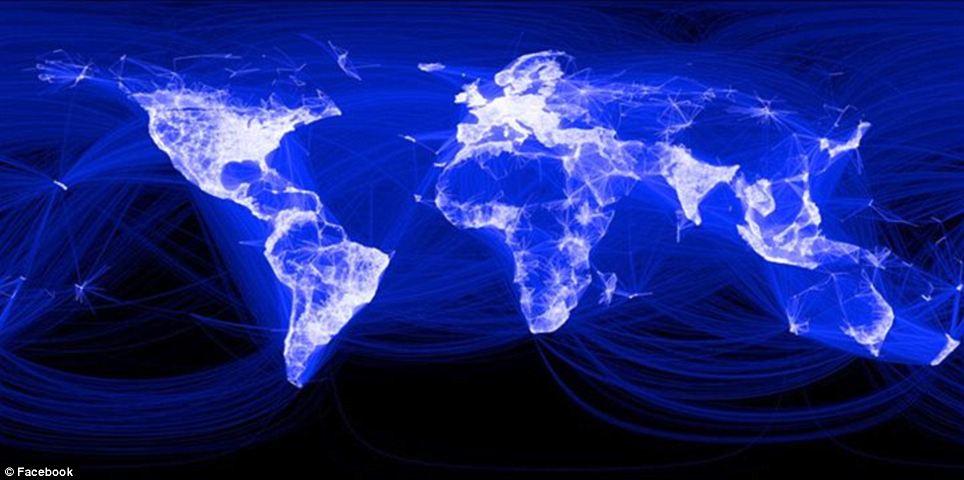
When the 21st Century is over and becomes apart of the history books, it will be known as the first truly interconnected, interdependent, and entangled era of human history. Compared to past eras, borders are more open, long-distance travel is common place due to modern aviation, and global commerce is more free than it ever has been. Globalization as a phenomenon has been made possible not just through open borders and advances in aviation but also due to the wonders of the Internet.

While many human beings can not physically cross borders or take modes of transport to other countries, the Internet has helped to minimize that gap of connection by allowing people from around the world to connect virtually at an increasing frequency. As the technology continues to improve and advance, the Internet has made our planet interconnected on a scale once considered unthinkable a generation ago.

I woke up one morning in New York, had my breakfast and juice, and then was able to log-in to Skype and chat with my good friend who is living in Beirut, Lebanon about his work there and how he has adjusted to living in the Mediterranean metropolis. After that, I sat down to have lunch and finished some homework for a 1:30 PM Spanish lesson with my teacher who is originally from Mexico but currently lives in Italy. Somehow, we were able to make the six-hour time difference work between me in New York and her in Italy. Before the day was over, I had two more Skype and Google Hangout based English lessons with my students from countries like Saudi Arabia and South Korea. Satisfied with my day of both teaching and learning, I settled the rest of my affairs and went down to the kitchen to prepare my dinner for the evening.

None of these lessons or exchanges of information would be possible between persons of different countries and backgrounds without the invention of the Internet. Too often, the average person either takes for granted the capabilities that allow us to stay connected on a worldwide scale or doesn’t take advantage of using this technology to bolster their abilities personally or professionally.

Professionally, as an ESL teacher, the fact that I have been able to use the Internet and web applications such as Skype, Google+, etc. to connect with numerous students from around the world virtually has been a real treat for me. Sometimes, my students with whom I’m working with online do not have the means or ability to work with a native English speaker / teacher in person in their own city or country. Those of us language teachers who commit time out of our lives to help others learn our native languages should be commended for making this a possibility. It is truly enjoyable for me to work with those students online from different countries who will share with me interesting tidbits about their cultures and societies.

Personally, I have been able to stay in touch and meet up again with friends of mine from different regions of the world thanks to staying connected through social media websites like Facebook, CouchSurfing, Twitter, etc. The Internet has allowed me to stay connected with international friends, both new and old, thanks to the rise of social media and its applications. It is funny to think that only fifty to hundred years ago, or even before the advent of the Internet, twenty years ago, the best that you could do is send a handwritten letter by mail or make an expensive call to any location overseas. Now, such communication to an international location is often very cheap or even free of charge depending on which application you decide to use.

While the advent of globalization has its positives and negatives, which are often debated and discussed endlessly, I believe that one net positive from globalization has been how the Internet and the “world wide web” has made humanity interconnected. This one trend of “Interconnectedness” for the 21st century is one that isn’t going to reverse course anytime soon and is going to be hard pressed to find itself limited in total amount of users or overall global popularity.

According to the World Bank’s recent report titled “World Development Report 2016: Digital Dividends”, the number of people worldwide who have access to the Internet has tripled from about 1 billion people in 2006 to about 3.5 billion people in 2016. This recent development is an extraordinary occurrence. This means that over 40% of humanity now has some type of access to the Internet which has become increasingly possible due to rise of mobile technology and the spread of 3G and 4G cellular networks.

As more and more people connect to digital markets of e-commerce, become new entrepreneurs and start to create their own small businesses, this will also allow more students to connect and learn with me here in New York and other teachers around the world to learn English or another foreign language. The possibilities of eventually having everyone connected to the Internet would be truly endless. It could lift millions more people out of poverty and create new economic opportunities where there were none before.

Some of the big questions to be answered in the coming decades is how do we as a global community work together to connect the remaining 60% of humanity to the Internet? How do we work together as governments, NGOs, and individuals to give people the means virtually to benefit economically and personally from the advent of the Internet? These are not easy questions to answer let alone solve. However, if humanity is to continue advancing and developing into the future, we must continue to become more interconnected to each other. That is a fundamental truth of the 21st century for which we all must be aware of.

Sources:

1.)  http://www.theguardian.com/technology/2016/jan/13/internet-not-conquered-digital-divide-rich-poor-world-bank-report

2.) http://www.worldbank.org/en/publication/wdr2016

Made In America?

free-trade-cartoon

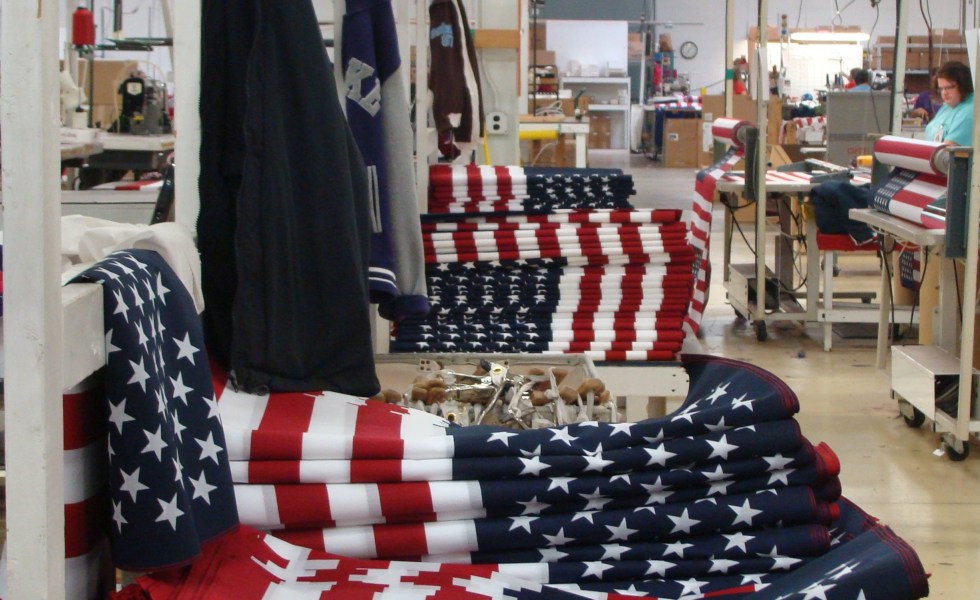
Have you ever noticed this small yet important detail when you’re out at the store buying a consumer good whether it’s a pair of pants, a carpet, or some brand new shoes? For those of you who are confused right now, there’s a tag attached to the item indicating that the final product was “Made in …..” which indicates the origin of the country the good has come from. I doubt that most people notice this small detail when they’re out shopping and it’s probably not their biggest concern.

However, I do believe it’s very important as consumers to know where our goods and services are coming from and to what sort of quality they are made. It’s also important to ask the question of these companies who make these consumer products, both foreign and domestic, how well are they treating their employees and what do they pay them for their hard work? Do they receive good health benefits and vacation time? Are the working conditions in their factories and shops safe and hospitable?

I have noticed that most of the clothing, household items, and electronic products that I have bought were not made in the United States. I am not against wearing or buying consumer goods that were created and manufactured in other countries. However, I do worry that we are relying too heavily on these foreign-made products in our daily lives instead of having some of these same goods made in the U.S.A., which could improve the lives of many people looking for decent-paying jobs. Many abandoned and dilapidated factories, plants, and mills could be re-opened again if we change the way we look at free trade.

According to the official and most recent numbers on United States International Trade Data, there was a sizable overall trade deficit in goods and services of $43.9 billion dollars in October of 2015. Since ‘The Great Recession of 2007-2008’, the trade balance has not changed greatly in terms of lowering the overall deficit. Over the past five years alone, the monthly trade deficit has ranged from $40 to $65 billion. There has been very little sign of this trade imbalance being decreasingly significantly or being entirely eliminated recently. This means that the U.S. is importing a much larger quantity of goods than we are exporting overseas. While some people would argue that this is not a big deal, I would say that in order to grow the economy at a higher output and decrease unemployment further, increasing our exports overseas with the stamp “Made in America” should be a higher priority especially with the upcoming presidential election.

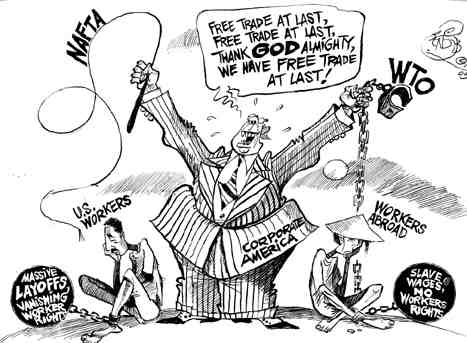
With the decline in American manufacturing, the U.S. has increasingly looked to its trading partners overseas to fill the void that has been created. Due to free-trade agreements such as NAFTA and the recent passing of the Trans-Pacific Partnership, many American companies and jobs have moved overseas causing the trade deficit to increase over the past generation. This has led to many good-paying middle class jobs with health and other benefits to disappear. There has also been a steady decline in the Unions and their total membership and influence within the U.S.

Examples of the shift towards the growing importation of manufactured goods and products that used to be made in here at home can be found in companies such as Wal-Mart and Apple. These iconic companies that were created by Americans such as Steve Jobs and Sam Walton have changed significantly like many others since their early days. They have become multi-national in nature and have expanded their facilities and operations to multiple countries around the world. Even though their company headquarters are in Silicon Valley and in the heartland of Arkansas, these companies are not taxed like other U.S. companies and carry out their manufacturing and production of goods from overseas suppliers.

American workers are known to be more expensive to train and hire than those workers found in countries such as China, Vietnam, and Cambodia. That’s an unfortunate truth that has led many companies to take the easy way out by calculating how much they would save due to the fact that foreign labor is cheaper. For these firms, there is little to no need to worry about strict labor laws that don’t exist outside the U.S. and other parts of the Western world. For example, huge multi-national companies such as Apple have used subsidiary companies like the ‘Foxconn Technology Group’ for years in order to manufacture their iPhones and other high-tech products. There have been many investigative reports done by The New York Times and other news outlets about the harsh working conditions, poor salary, long hours, and reported suicides and riots occurring at these plants in China.

In a lot of developing countries, the taxes associated with doing business are much cheaper which allows a lot of big manufacturing firms to operate there more freely. Even though multinational companies have to pay U.S. taxes on the profits that they earn from products that they make and sell in other countries, Apple and others can avoid paying these taxes by re-investing their profits made from outside the U.S. on overseas factories, stores, warehouses, etc. Because of that, they won’t have to pay the higher taxes. It’s a significant loophole that hasn’t been closed yet and allows U.S. companies to store billions in profits overseas. “Apple is not alone in this strategy. U.S. companies have $2.1 trillion in foreign profit stashed overseas, according to Capital Economics.”

Once the multi-national companies decide to move their manufacturing and production operations overseas, it’s very difficult to bring them back to the U.S. Competitors like China have the infrastructure and a vast amount of workers willing to work in the factors for these supplier companies. It is the responsibility of companies like Apple to break their agreements with manufacturing giants like Foxconn if they ever decided to move their production operations back to the U.S. However, Apple would have to invest in billions of dollars to build these new factories and pay these workers a fair wage with benefits. This proposition is entirely unlikely to occur in the near future for Apple, Wal-Mart, GE, and others to move their manufacturing back to the U.S. due to the higher taxes, the higher costs of the workers and their desire to make the most profits that they can secure.

Free trade is a complicated subject but I decided to write about this issue because I think as consumers, we should know where our money is going. I am guilty like many other Americans in supporting these popular multi-national companies who have gotten away with sketchy business practices and who have shied away from creating jobs here in the U.S. However, it’s never too late to be informed about where your clothes, your cars, and your electronics come from. Do your research and be informed about these issues.

Globalization and free trade have lifted millions of people out of poverty and allowed many countries to boost their economies but it’s also led to a higher amount of competition, the stagnation of wages, and many environmental concerns. I am not a protectionist and I believe that some free trade is good. However, it’s more important than ever that we support fair trade and business practices from these companies. Workers around the world should be treated fairly with good wages, good health and vacation benefits, and they shouldn’t be taken advantage of whether they are located in Saigon or Detroit.

We have free trade with other countries so that we can exchange goods and services with them to better our economies and our peoples. Lets’ not create a situation where we are importing more goods than we should be at the expense of the American worker and taxpayer. These companies need to be held accountable for what they do both here in the U.S. and overseas.

I would encourage everyone reading this entry to think about where your goods and products come from. If you have the chance and opportunity to do so, I would argue that you should try to buy from the U.S. companies making the goods and services right here in America. I am not against buying foreign goods either but we have to know whether these large companies out there are playing by the rules and are not being exploitative.

By ‘Buying American’, it’s good to show those small businesses and firms that we still support them and that we want them to succeed. If you would like to support buying American-made goods and products, check out this website: http://madeinusachallenge.com/ (Made In America – Master List)

Sources