Anatomy of a Scene – “People will come, Ray, people will most definitely come.”

“It’s very rare in movies where a monologue becomes a classic and is quoted and re-quoted throughout the decades. That is most definitely the case nowadays with James Earl Jones’s famous monologue playing Terence Mann in the 1989 American movie, ‘Field of Dreams.’”

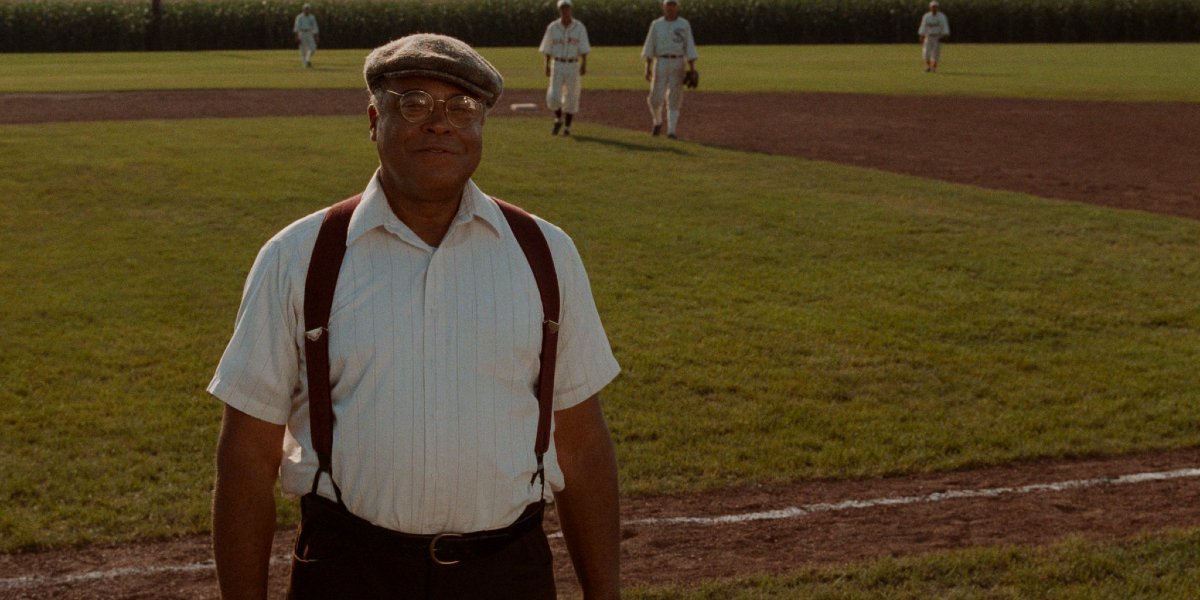
It’s very rare in movies where a monologue becomes a classic and is quoted and re-quoted throughout the decades. That is most definitely the case nowadays with James Earl Jones’s famous monologue playing Terence Mann in the 1989 American movie, ‘Field of Dreams.’ Now over 35 years old and counting, Field of Dreams’ and this legendary scene focus on the timeless appeal of Baseball in America, whose monologue has become iconic culturally not just for baseball fans and movie lovers but for what America can represent to the world when it taps into its best impulses.

“Ray, people will come, Ray. They’ll come to Iowa for reasons they can’t even fathom.” Baseball isn’t just a sport in this scene; it is the heartbeat of a nation’s spirit and resilience. The sport embodies the essence of the American Dream where everyone regardless of background, race, or ethnicity, can find a chance to succeed and belong, on and off the field. The monologue by Terence Mann (played by the legendary James Earl Jones) taps into the idea of America thriving on belief, on hope, and on the idea that greatness is around the corner if you dare to dream about it and fight for it.

Terence Mann isn’t just selling the idea of a baseball field and game to Ray Kinsella (Kevin Costner) on his farm but rather the idea of the possibility of uniting people and bringing them together. The message of his monologue is clear to viewers: If you build something meaningful in life, whatever that may be including a baseball field, people will be drawn to it because hope, enjoyment, and belief are powerful magnets.

Ray’s struggle to manage this baseball field and bring closure to a rough chapter in his life unresolved with his estranged father is emblematic of the struggles we all go through in this life. This scene with Ray is emblematic of a universal human quest to search for inner peace amidst chaos, uncertainty, and doubt. Terence’s monologue offers Ray and the audience a kind of calm assurance, a spiritual yearning, reminding everyone that the future isn’t handed to us, and it’s what we create and what we work towards to stay true to our vision, whatever that may be. It’s not about instant gratification in the form of a house or a car, it’s also about believing in your values, your vision, and knowing that the work you do is meaningful, especially if it connects to the past, family, baseball, or otherwise.

This scene also highlights how baseball has functioned and continues to function as a unifying thread through America’s social fabric. In the face of division, segregation, bias, and greed, baseball still brings people together around the country, crossing lines of race, class, and background. It’s a shred language that can bring Americans together, a communal ritual that reminds us that we’re all in this together as a people. When Terence says, “people will come, Ray…”, it’s a promise that no matter how ugly the world gets, how divided America may be, that promise will endure no matter the obstacles that face us. Sports, and in this case, baseball, has the unique power to draw people together in a collective experience that transcends our differences and can unite us to bring joy, happiness, and excitement with comradery and sportsmanship leading the way.

In this famous monologue, the actor playing Terence Mann, James Earl Jones’ delivery is everything and has made it such an iconic scene throughout the years. He is calm, measured, yet deeply convincing in summing up the power of the game of baseball. His voice here carries the weight of baseball’s history and that of America, of unspoken truths, of healed traumas, of future possibilities. He’s not just a supporting character in the movie; he’s also a narrator and a guide from the past.

He’s a sage sent into Ray’s life to remind him (and the audience) of a timeless truth: building anything worthwhile takes patience, faith, and a belief in the everlasting power of human connection. His words echo beyond the scene and the entire movie into the realm of business, relationships, goals, and our life’s purpose. He reinforces the idea that success comes from persistence and the courage to believe in what you put out into the world.

The scene is also a nod to the resilience embedded in American culture and its people. There is a strong “keep going no matter what” mentality that is deeply embedded into the cultural landscape and is also about leaning into “reinventing oneself” if you must that creates hope after hardship and how collective belief can overcome turning to cynicism and despair. In its essence, the monologue is a microcosm of American optimism, delivered through the poetic cadence of Jones’ voice and the symbolism of baseball as a sport that has gone through trials and tribulations like the country that birthed it.

Ray’s field or stadium to be in Iowa isn’t just about bringing baseball players from the past or present there to play a regular game. It sells the idea instead that America’s greatness is rooted in shared dreams and the belief that when you create something authentic and true, people will come…and not just to watch the game unfold, but for sharing a connection with each other, hoping for better days ahead, and finding community in a shared love of the game, America’s pastime. 
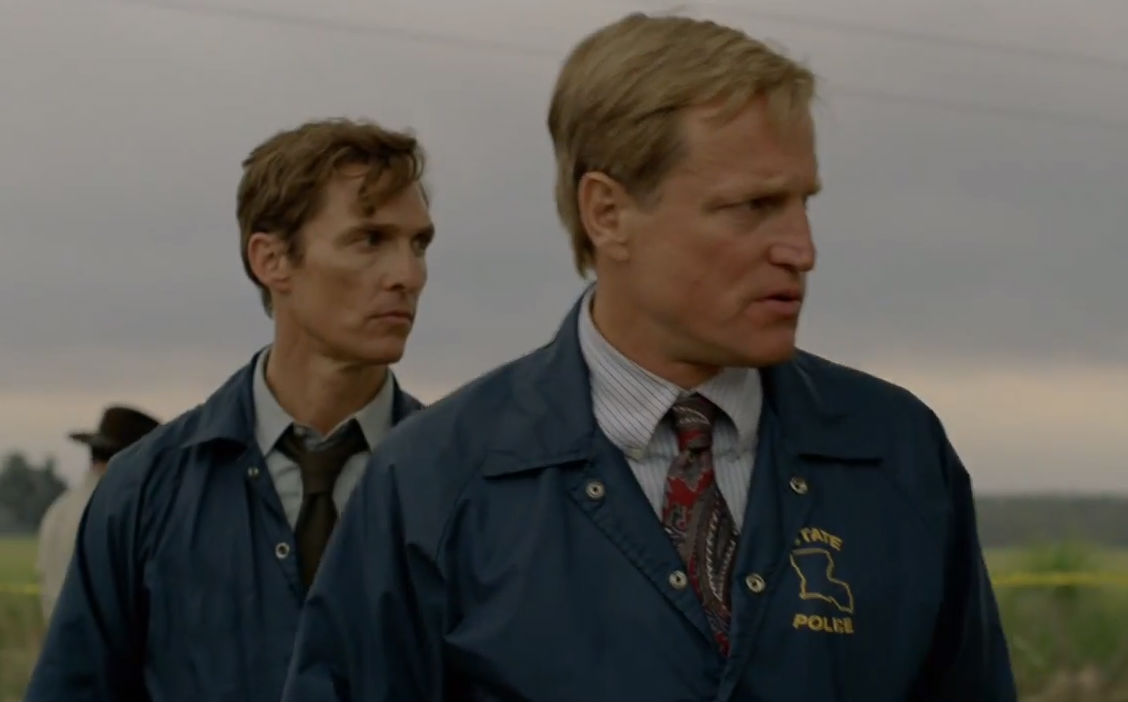
Anatomy of a Scene – ‘How you been, ya know, besides work?’ (True Detective)

“However, they both are excellent detectives, dedicated to solving crimes, and are each other’s yin and yang by keeping the other one honest.”

True Detective, Season 1 on HBO aired over ten years ago but it’s still regarded as one of the best TV drama seasons of all time. Part of its lore lies in its storyline and direction, but a lot of credit also should go to the lead actors, Matthew McConaughey and Woody Harrelson. The two actors who play Rustin ‘Rust’ Cohle and Martin ‘Marty Hart’ respectively do an excellent job of showing these actors at different periods in their lives and careers as detectives with the Louisiana State Police. Both men appear to be opposites at the start and the friction(s) that they have intensify over the year. However, they both are excellent detectives, dedicated to solving crimes, and are each other’s yin and yang by keeping the other one honest.

Few shows since that season of True Detective or the seasons of the popular anthology series since the 1st season with Rust and Marty have achieved the same level of on-screen chemistry and presence. It helps that off-screen both actors are close friends and have known each other for decades. They’ve been quoted as almost being like ‘brothers’ sharing the same sense of humor, profession, and having different hobbies in common. While True Detective with Marty and Rust happened over ten years ago, there are rumors swirling around that both characters could come back in the future for another story by showrunner Nic Pizzolatto.

One scene on the show that really sums up their rocky relationship and occurs later in their troubled careers. Not only do they have unfinished business with each other in terms of reconnecting and perhaps getting over their troubled past but also to attend to possibly solving a murder mystery central to the season’s plot. At this point in the season, they are older, not on the force anymore as detectives, and life has both affected them in different ways including estranging them from their former family and friends.

Marty Hart, for example, is balding, lives alone after separating from his now ex-wife, and doesn’t have sole custody of his daughters anymore. He doesn’t cook much (it’s implied), likes to fish for a hobby, has trouble finding purpose in his current job, and has resorted to online dating (unsuccessfully so far) even though he insists it’s ‘casual’, but likely wants to have a new relationship via Match.com. Rust Cohle, has grown his hair and beard out, looks a bit older due to his smoking and drinking habit, owns a bar in rural Louisiana, is isolated but does seem to enjoy the quiet of living by himself and spending time watching the sunset each night while drinking a beer.

You can tell by the montage of this scene in the show that as the years gone by, they’ve lost connection not only to their purpose and to each other, but also to what made truly worth living. They may have other jobs and maybe some other things keeping them going, but they miss the work they did, the past relationships they squandered, and even each other begrudgingly.

While the montage showing them settling into middle age monotony may be unsettling, the short scene does give them a chance to reconnect again, get to know each other on a personal level outside of detective work, and work together to find a purpose again. In this case, there’s a murder mystery to solve and they cannot do it by themselves. Since they both are single, one divorced and the other non-committal to it, seemingly estranged from their current work and lacking purpose, they need each other ten years later more than they could ever know.

Life can get lonely without friends or family but especially if there’s no one around to help you find your purpose. I think that’s why this scene is so key within the show is that it shows Marty and Rust may feel like they’re alone, but they do have each other despite their past differences. Sometimes, you must go through some solitary times in life to find out what you really want to do or who you really want to spend your time with. Rust knows he is alone as the scene makes clear, but he has made peace with the loneliness even if he might wish for a girlfriend or a friend to drop by the bar after it closes. Marty had a marriage and a good relationship with his children but unfortunately, he was not able to balance it with his work life and his infidelity.

The scene’s montage shows the years have been a bit hard on Marty as he tries to rekindle what he once had but being unsuccessful at doing so. The montage shows you just how precious our situation can be with work, with love, and with family, and that you can’t go back and change the past. As much as you might wish to catch lightning in the bottle twice as is the case with Marty in terms of finding love or companionship, sometimes, those second chances never come around. The fact that they each have each other in their lives again, even with their storied pasts, is a good thing and shows that they still have an innate purpose regarding their work as detectives and that they are better off working together than being apart. In time, they will get back their skillset, work to solve the case, and even become friends again, which can help put their loneliness at bay.

While this scene of them living isolated lives may be looked on as depressing, I think it is a realistic look at how life can get as you get older. You may have to deal with periods of loneliness or getting swept up in a routine that grows stale. However, it’s important to remember for all of us watching is that life throws us curveballs sometimes and you never know who will appear in your life again or what kind of purpose and worth you can find in the most unlikely of places. For Marty, it was seeing Rust’s trust again on the road after ten years as they drove on the same road, and there was more to their story together, and they think they were both happy to find each other again and work towards getting their sense of purpose back together.

Anatomy of a Scene – ‘The Lady In The Red Dress’ (The Matrix)

“In a simulated world, which is built both on illusion and deception, distraction is the perfect weapon for keeping one complacent and from asking questions.”

In a simulated world, which is built both on illusion and deception, distraction is the perfect weapon for keeping one complacent and from asking questions. Few film moments capture that idea more powerfully than a short but iconic scene from The Matrix (1999): Neo (Keanu Reeves), newly unplugged from the simulated world he once thought of as reality or the ‘real world’, walks through a bustling cityscape inside a training simulation that is programmed to feel like ‘The Matrix’, but whose participants realize it is a simulation and not the ‘real world’.

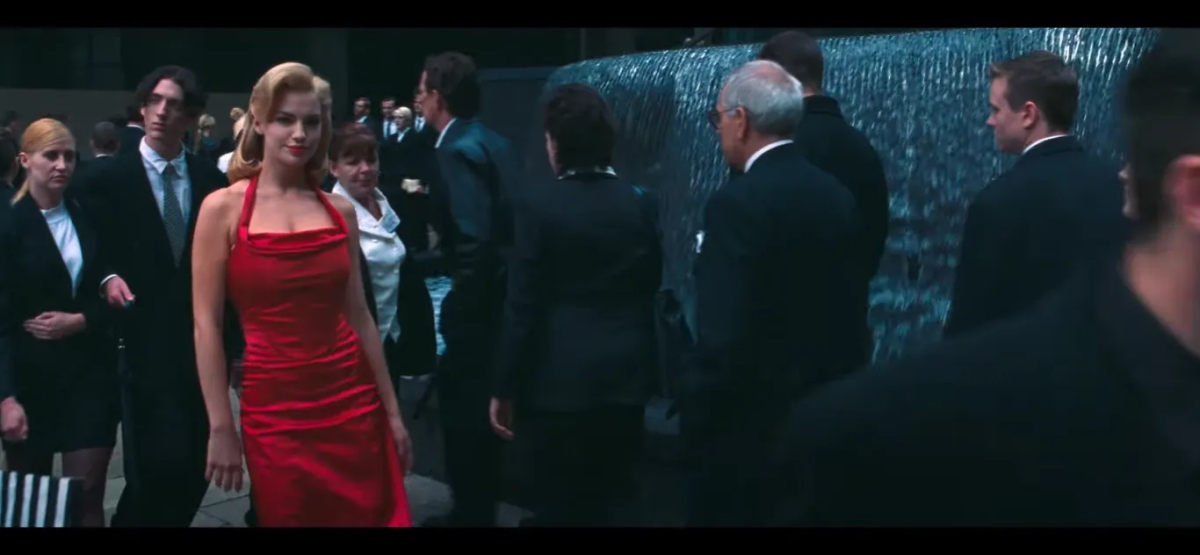
Suddenly, his attention is captured fully as he stops listening to Morpheus’s speech and focuses elsewhere. This distraction is not of danger, but by desire. A stunning blonde woman in a bright red dress walks past him on a city street. He turns to look at her and take in her beauty. A moment later, he’s staring down the barrel of a gun from an Agent of The Matrix.

This moment, while brief, is the Matrix in miniature form, a system that doesn’t just imprison the body, but hijacks the mind as well. In this scene, the Wachowski Brothers, who directed the Matrix film series, deliberate show the audience how distraction can be deadly, how perception can be manipulated, and how even the most liberated minds are vulnerable to illusion even after escaping from the simulated word of The Matrix. Over two decades later, this scene resonates more than ever as we live in a blurred world now of reality and simulation and of seemingly endless distractions like the lady in the red dress.

Let’s walk through how the scene unfolds similarly to how Neo and Morpheus experience the simulation themselves. Neo and Morpheus are in what appears to be a peaceful, clean city environment with sun-drenched streets, people in business attire moving in orderly fashion of different occupations and livelihoods. It’s not the gritty or green-tinted world Neo has just escaped from. Everything here is vibrant, bright, almost too perfect and calm. There’s a catch to it but we don’t know what it is yet as the audience.

Morpheus explains to Neo, “This isn’t the real world. It’s a computer-generated dreamworld built to keep us under control.” They’re inside a training program that mimics the Matrix, but this version is safe and controlled with seemingly no threats like what lurk inside the Matrix. As they walk, Morpheus encourages Neo to stay alert and keep up with him. However, Neo’s attention suddenly drifts elsewhere. A tall, blonde, and slightly smirking woman in a red dress glide past him, a stark contrast to the grayscale suits and muted tones of the crowd. The camera follows Neo’s gaze and not Morpheus’ words. Just as Neo turns around to look at her again, Morpheus interrupts: “Were you listening to me, Neo, or were you looking at the woman in the red dress?”

Neo turns again and instead of the woman, an Agent from the Matrix stands there with a gun to his head. The simulation freezes. Morpheus smiles. “Look again.” This is Neo’s wake-up call after he flinches from the sight of the Agent’s gun in his face. Neo is shaken as at any time in the Matrix, any of those ‘people’ are enslaved by the Matrix can turn into an Agent who is looking to prevent others from being freed from their enslavement by Neo, Morpheus and his crew. In The Matrix, distractions can be deadly because anyone can be an Agent and turn into one at any time. Neo learns his lesson and Morpheus instructs Neo about the real danger of going back into the Matrix, but they have a mission to free those from a reality that is not real, whatever the cost may be.

At its core, the Lady in the Red Dress scene isn’t just about Neo getting distracted having not been accustomed to the unique threat of an Agent. It’s about how the Matrix and by extension, any system of contro uses desire, beauty, and sensory overload to mask its true threat.

The woman in red is not a glitch, nor an accident of the simulation. She is designed by Morpheus’s crew to test Neo’s ability to focus and to challenge his awareness in an environment that constantly floods the senses, a virtual simulation that is meant to feel real but isn’t real. Morpheus isn’t just teaching Neo about the Matrix’s mechanics but also, he’s teaching him about vulnerability. The greatest danger isn’t always visible or known in the Matrix. Often, it’s hidden behind the things we want most or desire to have the most.

The red dress is more than a splash of color on a woman who is simulated to be a distraction. It’s a symbol in the overall movie of temptation, distraction, and the human tendency to follow what pleases us, rather than what protects us, even if it will end up hurting us later. In mythology, this kind of idea of ill-fated temptation appears often: sirens luring sailors to their doom in ‘Odysseus’, the forbidden fruit offered to Adam and Eve in Eden from the Old Testament, each of these illusions are designed to distract heroes from their quests or to lead to the fall of man and woman.

In this scene, the woman in the red dress is a test, one for which Neo fails, momentarily, and I think a lot of us would fail like he did with the distractions that are constantly thrown at us each day. His eyes are drawn away from his mentor, away from the lesson he is teaching, and toward something that feels more real than the truth. The result of his ill-fated choice? Instant danger and his potential demise if he were to make the same mistake again.

The brilliance of this scene lies in how it’s staged visually and shot from Neo’s perspective: everyone is dressed in grayscale, forming a camouflage of conformity and ordinariness. The woman is the only thing that stands out to Neo and the audience. She breaks the pattern of what we see and thus, attracts attention and an extra look. That’s what makes her the perfect distraction and allegory for ill-fated temptation, and that’s what makes this scene timeless.

Fast forward to today’s world where distraction has become the default mode for many of us. Our attention is fragmented by design, engineered by algorithms, applications, increasingly ‘real’ virtual and simulated realities, and seemingly endless digital stimuli, for which has dramatically shortened our attention spans. The modern “Matrix” isn’t an actual simulation in our brains, at least not yet as I write this, but it’s a network of more and more screens, news feeds, constant notifications, and seductive content. It’s the all-knowing algorithm pushing what it knows will make you pause mid-scroll and continue to feed your dopamine receptors.

Every time you find yourself watching a video you didn’t intend to watch, reacting to an outrage post on a political or social issue, comparing your life to curated influencer perfection on social media, or buying something new because it popped up at just the right time in your news feed, that’s the ‘red dress’ in action. While you’re watching the distraction, whatever kind it may be, something else is happening in the background of our lives: real threats are forming that pose real danger to us. Climate change. Political instability. Ongoing wars. Mental health crises. Surveillance capitalism. Social isolation. Economic inequality. Things that are far more dangerous and impactful than seeing ‘a lady in red’. Like Neo, we rarely see ‘the Agent’ or the real threats coming at us on the horizon.

In The Matrix, Morpheus teaches Neo that true liberation begins with awareness, not just of the system, but of how the system manipulates us and our desires. The Lady in the Red Dress is a metaphor for all the ways we’re trained to look away, to not pay attention, to surrender to the pleasure of the moment rather than focus on the issues of the present and the future. In 2025, this scene is more relevant than ever to our real world. It reminds us that to stay aware, engaged, and vigilant in a constantly distracted world is a small yet meaningful act of rebellion.

The focus and impact that you give to the world around you rather than cheap simulated or virtual distractions is actual power. Being able to have greater perception and awareness is everything these days and will allow you to help other people do the same. The next time something flashy, tempting, or beautifully packaged grabs your attention, you should ask yourself: “Am I listening, or was I looking at ‘the woman in the red dress’?”

Anatomy of a Scene – Bourdain’s ‘Parts Unknown’ in Congo and NYC Contrast

“One of Anthony Bourdain’s ‘Parts Unknown’ episodes in the Congo has one of the show’s best scenes where it has a vivid description of Bourdain gazing over New York City from his high-rise apartment in the closing moments, set up against the backdrop of his first and only foray to the Democratic Republic of Congo.”

If you had to pick opposites in the world, you couldn’t do much worse to contrast the journey through the thick Congolese jungles and down the Congo River with the urban sprawl of New York City. One of Anthony Bourdain’s ‘Parts Unknown’ episodes in the Congo has one of the show’s best scenes where it has a vivid description of Bourdain gazing over New York City from his high-rise apartment in the closing moments, set up against the backdrop of his first and only foray to the Democratic Republic of Congo.

There are multiple themes to take away from the significance of Bourdain’s perilous journey in the Congo throughout the episode and with the contrasting solitude and isolation he likely had felt back in his NYC apartment after such a harrowing trip. There is a burden that he must have felt in witnessing such a contrast between the Congo and New York City that leaves the contrasting scenes up for our interpretation as fans of his ‘Parts Unknown’ show. How easy it can be to feel lonely amongst millions of people after traveling to such a distinct place, the burden of making it through a perilous journey and putting your life on the line, and how traveling to such extreme places can change your sense of place in a complicated and often troubling world.

Before his passing in 2018, Anthony Bourdain was the preeminent travel host for over 15 years and his last show, Parts Unknown, from 2013-2018 was the deepest dive in his own mission of uncovering people’s stories through food and culture. In terms of looking at human nature and the human condition, few shows, if any, were better than Parts Unknown. More than anything, many of the Parts Unknown episodes had Bourdain providing needed historical context regarding the complex and difficult history of the country or place he would be visiting. This was especially the case during the Congo episode where he spends part of the episode looking at the colonial exploitation, civil conflict, and poverty that has gripped the country both before and after it became the nation state known as the Democratic Republic of the Congo today.

Bourdain was a huge fan of the Joseph Conrad book, ‘Heart of Darkness’ and makes it known in the episode of how became obsessed with the Congo and the Congo River without trivializing the country or its people. His approach is sincere, and he looks to paint an accurate picture of what the Congo is like, why he sought to demystify and humanize the place, and how it was both similar and different to Conrad’s interpretation of it.

“When all is said and done, I wanted to go to the Congo, and I did.” Bourdain knew that this would be one of his most difficult journeys, but he also wanted to pay homage to Conrad’s novel by following a similar exploration to the authors with a boat trip down the Congo river. However, this kind of journey as shown in the episode was not simply a leisurely trip down the river without witnessing the history, culture, or food of the Congolese. Bourdain and his film crew interacted with different villagers, aid workers, and other locals to hear their stories despite how difficult the journey had been especially losing power on the boat and being surrounded by mosquitoes and other insects at one point.

It takes a toll on a person to look at the dark history of a place’s past as well as its uncertain present and not be affected by it. Bourdain has a visible weariness and introspection upon the conclusion of the journey given how hearing about the history of violence, dealing with the security issues involved, the lack of infrastructure to make the journey work, and to hear about the sheer resilience and fortitude of the Congolese people under extremely difficult circumstances.

The hardest part for Bourdain in my view maybe wasn’t the actual trip down the Congo river with all the bureaucracy, bribery, and lack of infrastructure involved to make it finally happen. I think the final scene of this Parts Unknown episode sums up the ‘lost’ feeling and the isolation to have witnessed all that and come back to a New York City that is abundant, thriving yet inequal, and with a completely different set of circumstances than one would encounter in the Congo. There’s ‘culture shock’ and then there is experiencing a bit of a totally different reality that few Americans and fewer New Yorkers would ever see for themselves. This contrast in realities and the stark scene transition from leaving the Congo River to being back at his high-rise apartment in Manhattan is perhaps the greatest scene ever shot for Parts Unknown or in any of his travel shows.

To break down this excellent scene and contrast further, Bourdain is in one of the world’s most crowded cities, but he is alone and isolated in his apartment like being isolated from most people’s lived experiences of the world, which pales in comparison to his own having had been to over 100 countries in his travels. He is filmed sitting behind his apartment windows, which acts as a barrier between Anthony and the rest of the world, seeing everything for himself but finding it difficult to connect with his immediate surroundings in NYC after witnessing such a contrasting reality in the Congo.

I think this final scene of the Congo episode really encapsulates Bourdain’s struggle as a travel host and writer to search for meaning and purpose in a world that often feels indifferent or alienates the struggles of other people who live in a different place or country. Bourdain’s gaze through the window symbolizes the distance between the world he witnessed and the world he felt disconnected from. It reflected the existential tension that marked his life: the constant search for meaning, tempered by the knowledge that some things, no matter how deeply we travel, remain elusive.

In his life, Antony Bourdain likely felt a sense of solitude and isolation having witnessed the worst of humanity at times, which could be hard to relate to other people or even travelers who had not been to the same places. He was brave, kind, and let other people to tell their stories without judgment but it must have been lonely especially after a return from the Congo and returning home where he may have felt the most alone rather than out on the road with others in his crew or amongst people he had met. There is a loneliness in the familiar as any traveler can attest and the novelty of new places, people, and experiences make the routine feel mundane and trite. Bourdain’s entire journey, in this case, from the Congo back to his home in New York, shows that it can be hard to come full circle after visiting one of the least known places in the world.

The final shot of Anthony Bourdain in his New York City apartment, looking out over the vast, bustling city, yet consumed by solitude, serves as a poignant culmination of his journey as a seasoned traveler. After traveling the world, exploring the darkest corners of humanity in places like the Congo, Bourdain returns home, not with answers, but with a profound sense of isolation. The Congo episode, with its harrowing depictions of suffering and resilience, reflects the complexity of human nature that Bourdain grappled with throughout his career. The contrast between the vibrant, chaotic cityscape of NYC and Bourdain’s contemplative stillness in his apartment alone emphasizes a universal paradox: despite all the human connections made in the world, the traveler often finds themselves confronted with a loneliness that cannot be filled as a result.

Bourdain’s Parts Unknown was not merely about exploring food and culture, but it was also an exploration of the man himself. His travels were a quest for greater understanding, but they also unearthed the difficult truth that knowing the world does not necessarily mean knowing oneself at the same time. In the end, Bourdain’s legacy lies in the raw, honest portrayal of this duality, the external world and the internal battles that shape who we are. His life story continues to remind us that, no matter where we go or how much we learn, we all face the same fundamental challenge in life: to find a true connection in a world that often seems vast, indifferent, and overwhelming.

Anatomy of a Scene – ‘Family, Jimmy, Family’ (The Wire)

“This scene that I’ve titled, ‘Family, Jimmy, Family’ feels like it’s not just about the character, Jimmy McNulty, one of the leading roles of the show and a deeply flawed one at that but also could reflect on our own lives and who we prioritize in them.”

Sometimes, it takes a great work of fictional television to cause the viewer to do some soul searching themselves. ‘The Wire’ is not only an excellent crime drama and takes a critical lens to different facets of American society, but there are also multiple scenes that stand out for how they deliver truths to each of their characters for what they themselves are ignorant of or choose to forget. One of those scenes is short but whose succinctness of its message and point-blank delivery is something that you could do a deep analysis of. This scene that I’ve titled, ‘Family, Jimmy, Family’ feels like it’s not just about the character, Jimmy McNulty, one of the leading roles of the show and a deeply flawed one at that but also could reflect on our own lives and who we prioritize in them.

For a little bit of background before diving into the scene itself, which takes place in ‘The Wire’ Season 5, Jimmy McNulty is an obsessive workaholic and a functional alcoholic. His thirst for booze rivals his own thirst for self-satisfaction in being able to solve murders as a detective in the Baltimore Police Department. While he does crave justice, he craves adulation, admiration, and boosting his ego too because of his natural talents with regards to being a lead detective. However, without getting into too many details, the stress of the job, the clashes with his bosses, and the long hours cause him to drink heavily, carouse with random women, and cause him to lose control of his relationship with both his ex-wife and his children.

Jimmy loves being a detective, the purpose that comes with the badge, and the colleagues who he handles cases with. It’s also about the camaraderie that he finds in the work, the all-consuming nature of the work, and by outsmarting criminals and thugs who think they have successfully outwitted him and the police. The thing with letting work consume you is that it takes over your life and suffocates the rest of your identity with it. Jimmy is a great detective but throughout the show, the job takes a toll on his personal life and about separating work from his time out of work. When you have nothing but the job and the people in it, is it really a good life?

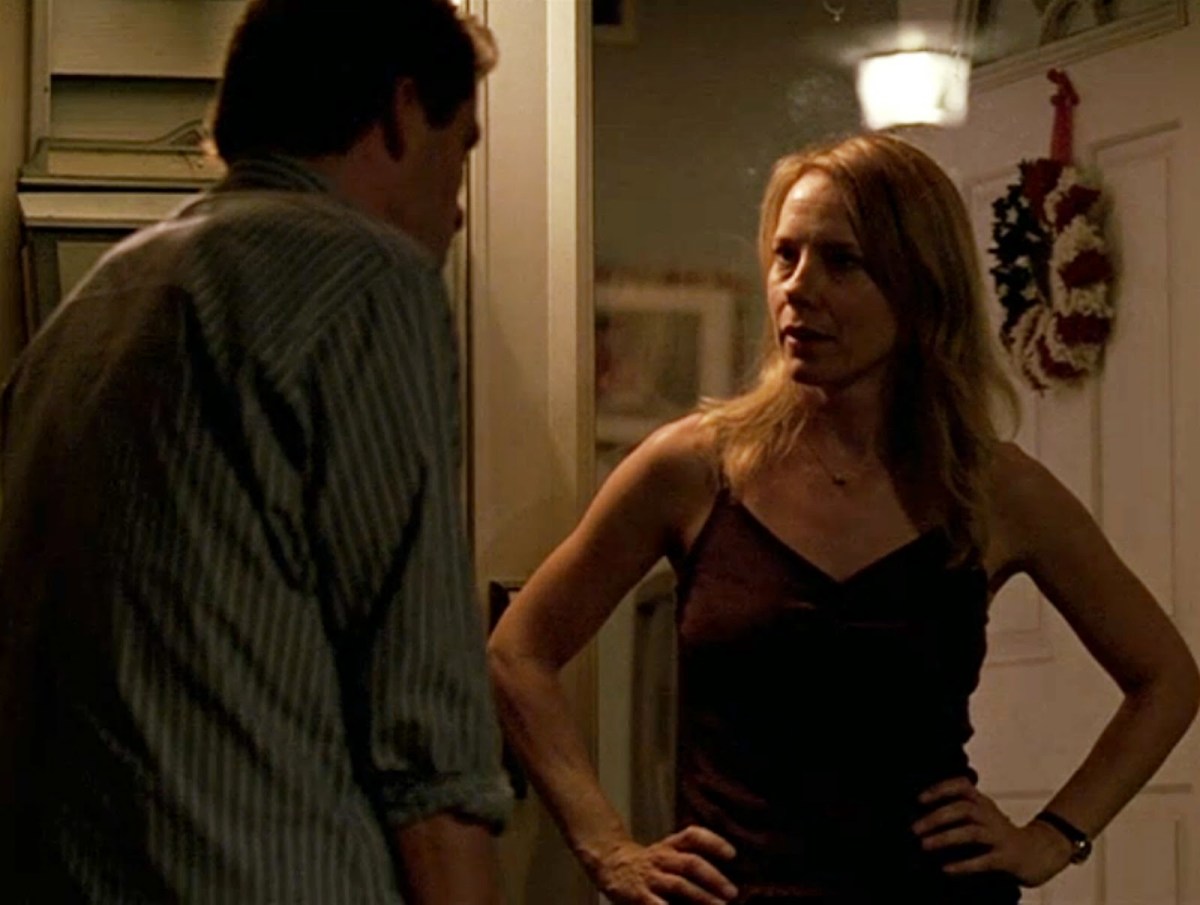
The scene I refer to titled, ‘Family, Jimmy, Family’ is instrumental in telling Jimmy McNulty what he needs to hear and what other workaholics need to hear: “The job won’t save you.” It takes five seasons but Beadie Russell, a Baltimore Port Authority police officer, introduced in season two, but for which her and Jimmy start to become romantically involved does what no one else in the show has the courage to do, tell Jimmy that the job isn’t everything.

“In the end, they’re not going to be there either.” Beadie sums it up in less than a minute with this scene but reminds Jimmy that the drinking pals at the bar, the workmates who he shares a patrol car with and shares stories, or even the girls he’s met for quick flings, they won’t be there when he really needs it. Yes, you can have fun, enjoy their company, and make the most of the work hours, but those people won’t be there for you when it comes to your health, wellness, and your overall fulfillment as a person. Beadie indicates to Jimmy that his workaholic behavior and his propensity for alcohol won’t save him and won’t give him the internal satisfaction he is always looking for.

“Family, that’s it. Family, and if you’re lucky, one or two friends who are the same as family. That’s all the best of us get. Everything else just…” Beadie pauses at the end of this scene and lets it all sink in for Jimmy. She knows she has reached him and lets him know that at your funeral or in your last days, you won’t have the girls you dated, the workmates or bosses, or the casual bar buddies you swap stories with there. If you’re lucky, you may have close family to care for you and maybe one or two close friends and that’s the truth of this scene not just for Jimmy McNulty of ‘The Wire’ but for all of us.

Beadie makes it clear that everything else goes away at some point once the job is done, the glasses are empty, and everybody goes their separate ways. Nothing is permanent but maybe your family will be there for you through most of it, thick and thin of life, if you’re lucky and until your dying day if you are truly blessed in that regard. Jimmy knows by the end of the scene that he needs to shift his priorities based on his body language.

He does not say anything back to Beadie, but he knows what she is saying as his new girlfriend is 100% true. It’s been a while since anyone has laid it out to him that clearly, but she gets through to him by telling him the unvarnished truth that he has refused to face up until that point. Like Beadie, we all need someone to cut through the nonsense and tell us what we really need to hear and if you watch this scene from ‘The Wire’, it’s not just Jimmy who this scene can reflect upon but maybe for our own lives too.

We all want to have productive work lives, make friends, and enjoy the fruits of our labor, but we must remember that it all does go away, and that family can be the most important and reliable thing we have throughout our lives if we’re lucky. Workmates, casual buddies and flings, and even friends come and go, but family can sustain us if we nurture those relationships and don’t let them atrophy and go away too.

Beadie reminds Jimmy to not let the work and the environment around his work consume him entirely. She saves him from himself to some degree but telling him what he needs to hear before he spirals out of control as a functioning alcoholic and workaholic. I think we all need a Beadie Russell in our lives to tell us what we need to hear rather than what we want to hear so that we can get that needed support to help reassess our priorities in life and change ourselves for the better.

Anatomy of a Scene – ‘Capital Gains’ (The Wire)

“Additionally, the subplot involving one of the show’s lead characters, Jimmy McNulty, taking a bribe adds depth to the show’s narrative, reflecting the complex moral compromises made by the working class to survive in a system that often leaves them behind and without any viable mobility upwards.”

The opening scene of “The Wire” Season Two serves as a powerful commentary on socio-economic disparities that continue in modern-day America. This scene that I would like to highlight, through both its characters and setting, sets the tone for exploring themes of economic hardship, corruption, and the American Dream’s elusive nature. Additionally, the subplot involving one of the show’s lead characters, Jimmy McNulty, taking a bribe adds depth to the show’s narrative, reflecting the complex moral compromises made by the working class to survive in a system that often leaves them behind and without any viable mobility upwards.

The scene itself opens with a bleak view of the channel leading to the port of Baltimore, which various imagery reflecting the industrial decline and economic stagnation affecting the middle class of the city. Characters are introduced through their mundane yet telling actions, highlighting their struggles and aspirations. Jimmy McNulty’s character, a police detective with a perennial professional chip on his shoulder amid his own set of personal challenges, becomes embroiled in a morally dubious activity by the end of the scene, further complicating the framing of certain characters being ‘purely good’ and others being ‘purely bad.’ With ‘The Wire’, there are many shades of gray in morality and understanding the reasoning behind characters’ actions.

The cinematography of this scene uses dark, muted tones to emphasize the grim reality of the workers’ lives. The ambient sounds of the port’s gray and murky waters, combined with a somber soundtrack of foreboding ahead, enhance the sense of despair and frustration with the status quo. These visual and audio elements work in tandem to create an atmosphere that underscores the themes of economic hardship and moral compromise that permeates the iconic show’s second season.

The central theme of this scene revolves around the precipitous decline of traditional industries such as manufacturing, shipbuilding, and longshoring in Baltimore, and its deleterious impact on the middle class there from its decline. The scene underscores the economic disparities and the futile chase for financial stability, a stark contrast to the wealth and power depicted elsewhere in the series and for which the middle class is forced to shield the wealthy or protect them from the errors of their poor decision making. McNulty’s acceptance of a bribe is a poignant example of the lengths to which some individuals without economic security will go to make ends meet, even if it means compromising their ethics in the face of financial malaise and stagnation.

The middle-class workers, portrayed prominently in season two, with a sense of resignation to their fates and perseverance despite the odds, contrast sharply with the wealthy individuals who appear disconnected from these struggles including in this scene as they dance, drink, and party onwards. The boat that they drift across the deteriorating port and city channel is aptly named ‘Capital Gains’ for which they profit off selling those companies and laying off the works who help make the economy run. They get rich from the assets, stocks, bonds, and other ‘capital gains’ they trade and sell while the working class shoulder the increasingly large burden of doing the hard, dirty, and often unappreciated work that is the real ‘labor’ keeping the economy and the nation moving forward without enough money to show for their hard work and efforts.

These interactions between the characters in this scene and elsewhere in the show highlight the inherent power imbalance and the lack of upward mobility for the middle class. McNulty’s character epitomizes the moral gray areas navigated by those who find themselves caught between maintaining their integrity and dealing with the necessity of surviving economically. His own willingness to take a bribe reflects a broader theme of systemic corruption and the desperate measures taken by the working class to stay afloat when the rest of the economy gets hollowed out all for more ‘capital gains’ and ‘stock buybacks.’

Officer Jimmy McNulty’s involvement in taking a bribe exemplifies the complex dynamics of survival within the working class. Faced with limited options and a pressing need to provide for themselves and their families, individuals like McNulty often resort to unethical practices. This subplot highlights the pervasive nature of corruption and the moral compromises made by those who feel trapped by their circumstances. It illustrates how the working class is sometimes complicit in perpetuating a system that exploits them, driven by the necessity to secure their economic survival.

The scene mirrors contemporary issues such as job insecurity, wage stagnation, and the shrinking middle class. It critiques the capitalist system that often leaves the working class in a perpetual state of struggle while the wealthy thrive. McNulty’s actions can be seen as a microcosm of larger societal issues, where individuals are forced to compromise their values due to economic pressures. This reflects the broader reality of modern-day America, where financial hardship can lead to ethical lapses and the erosion of moral standards.

From that opening scene onwards, season two of “The Wire” further delves into the lives of dock workers in Baltimore, painting a vivid picture of the economic decline faced by the American working class. The season explores themes of globalization, the loss of blue-collar and good-paying jobs, and the resulting social and economic fallout. The working class is depicted as being left behind in the wake of economic shifts, with their traditional livelihoods eroded by technological advancements and policy changes favoring the wealthy and corporate interests.

The narrative highlights the systemic failures that contribute to the marginalization of the working class. Characters are often portrayed as victims of circumstances beyond their control, struggling to navigate a landscape where opportunities are scarce, and the cost of living continues to rise. The season’s portrayal of the working class serves as a critique of the socio-economic structures that perpetuate inequality and hinder social mobility.

Since “The Wire” first aired on HBO, the American Dream has continued to remain elusive for many people in the United States. The show brought these emerging issues to light in the early 2000s, highlighting the struggles of the working class in a society increasingly marked by economic inequality and technological upheaval. “The Wire” was ahead of its time in addressing these themes, as income inequality has only worsened since then.

The gap between the rich and the poor has not been alleviated, and the systemic issues the show portrayed are still prevalent today. The depiction of the working class’s plight and the moral compromises they make to survive reflects ongoing societal challenges, not just in the U.S. but around the world. The show’s foresight in presenting these issues has made it a timeless piece, resonating with audiences who continue to witness the widening economic divide in modern America.

This scene from “The Wire,” coupled with McNulty’s own moral compromise, is a microcosm of the broader socio-economic issues facing modern-day America. Through its poignant depiction of the middle class’s struggles and the ethical dilemmas they face, it offers a critical perspective on the elusive nature of the American Dream. Season Two’s exploration of these themes highlights the systemic challenges that continue to affect the working class, underscoring the need for a deeper understanding and more equitable solutions to address these persistent economic and social disparities.

Anatomy of a Scene – ‘The NZT-48 Pill’

How often have you thought about the possibility of taking one pill per each day that would maximize your brain’s full potential? With the movie ‘Limitless’ with Bradley Cooper and Robert DeNiro, this film poses the answer in the form of ‘NZT-48’, which can allow you to access everything you’ve read, heard, and learned without any true effort. This kind of wonder drug is purely fictional but many people in real life seek this kind of legal short cut nowadays whether it’s to focus, to lose weight, to improve memory, or to retain more information. In the film’s early scenes such as the one that introduce this magic pill’s effects, we get to see what kind of effects NZT-48 has on Eddie Moura, the main character.

This limitless pill is introduced as one that can improve focus, memory, knowledge retention, tidiness, and even make your intelligence that much more advanced especially after repeated usage. The scene that I would highlight shows just how effective it can be in multiple areas and how well the director shows how its daily usage turns a struggling writer into a financial tycoon and published author in just a week’s time.

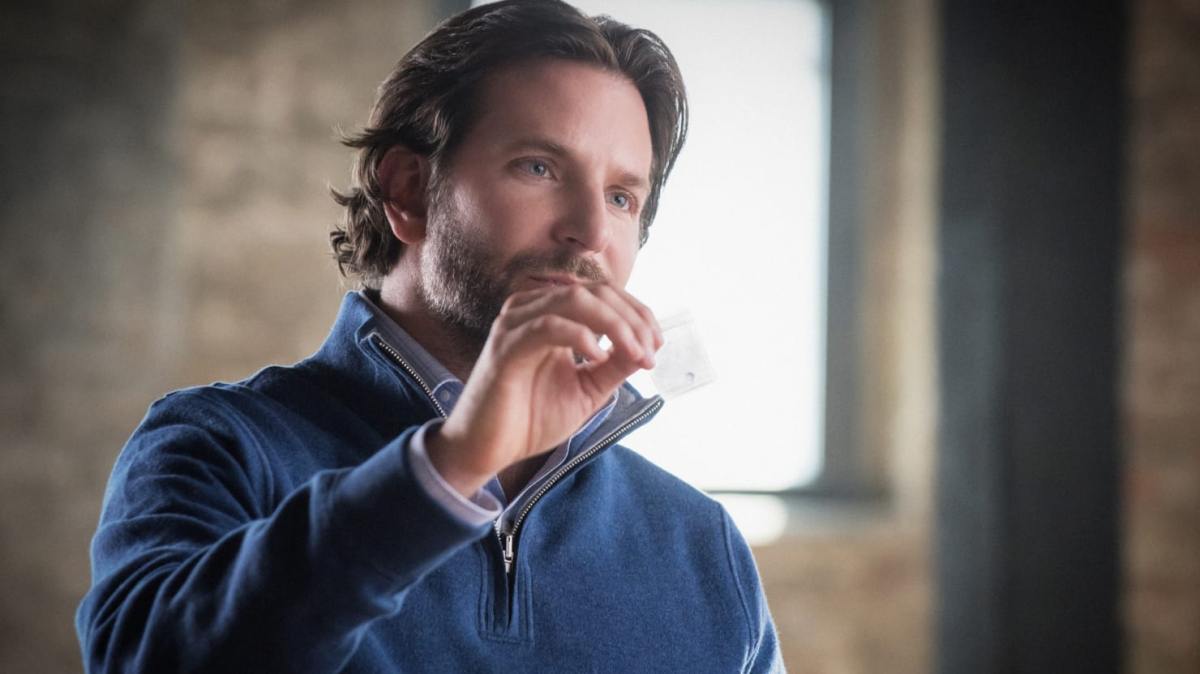
The scene starts out with Eddie Moura taking the NZT-48 pill for the first time even though he knows it comes with risks and side effects. He asks, “worth the risk?” by breaking the fourth wall with the audience, and says in the narration, “what would you do?” It’s a pertinent question because due to how many months, years, or decades it takes to be successful naturally without any enhancements, supplements, or advantages, how many of us watching the scene would want to take the easy way out in life even if there were risks involved? It’s part of the reason why this scene is so powerful because we know Eddie will face consequences for using this pill eventually but as we are told, the benefits of the pill may outweigh the consequences at first making it a tempting magic pill.

Eddie’s changes start out small as his pupils dilate and he starts seeing the world much more clearly than before. He’s clear-headed, not anxious socially, able to think and act clearly, and is aware of his own personality traits that need improvement. He gets a haircut, builds his wardrobe with a stylist leather jacket, cleans up his messy apartment, and starts to exercise more frequently and seriously.

From there, Eddie, a struggling writer, finds “a surge of motivation” from the pill to finish the novel he had been failing to finish for years and writes it all in just a few days’ time. Eddie doesn’t stop at that monumental achievement as a new novelist. He learns to play the piano in just three days, becomes a master poker player knowing how to play the odds in his favor and winning a lot of money against the house, and becomes fluent in most languages just by casually listening to them as he goes on a daily run with the headphones playing different vocabulary for him to instantly memorize.

Eddie uses his newfound social and language skills to seduce a beautiful woman and begin to network and build relationships to put his newfound wealth to good use in the stock market. He explains key economic concepts to those around him, can hedge bets on the pharmaceutical industry (partly responsible for his NZT-48 usage), and flies to a far-off beach to enjoy drinks and food at a private mansion with some of his new friends.

These may be selfish desires on Eddie’s part, but he’s able to diagnose exactly what the medical issue is with his aunt and how to fix the issue. “I suddenly knew everything about everything.” He is able to not only explain complicated medical diagnoses but is able to explain complicated concepts simply enough for everybody else to agree and understand. Eddie has access to everything and a 100% capacity to do what he wishes with his life. He has no fears, no anxieties from taking the magic pill and can hold a conversation with anybody about anything.

However, towards the end of the scene, we start to see the drawbacks of this magic pill in how Eddie must keep moving forward or it’ll feel like he’s dying or suffering. We see this briefly in how he drives a Maserati at maximum speed much to the delight of his companion, but for which he has no conception of how dangerously fast he’s going and what the drawbacks can be of his new heart-stopping lifestyle. “I felt like I was going to explode…”

“Anybody ever jump?” Eddie says to his newfound friends on a massive cliff overlooking the ocean. “Are you crazy?”, one woman asks of him given it’s a few hundred meters above sea level. Eddie’s heart is pulsating and while he’s lost his fear including of heights, he’s beginning to see that he can’t pull back on the adrenaline, the curiosity, and the sheer exhilaration the pill is giving him. The pill does have a side effect and it can be a deadly one of not being able to slow down and to live life normally. Eddie constantly must be upping himself and creating bigger and bigger goals for him to accomplish.

We see this play out in the rest of the film as Eddie seeks to become more wealthy, famous, and powerful with the help of his magic pill. As much as the audience sees how exciting and fulfilling Eddie’s life had become since using NZT-48, the film is a warning against how taking the short cut of a ‘magic pill’ or a quick and easy fix can come with devastating consequences. It is a warning on how taking the easy way out may feel good in the short run, it can have side effects that can bring us down as a result.

This scene is shot very well and is rememberable because it shows just how much potential we all have and it’s not from a pill like NZT-48 as it comes instead from within us. We may not be able to write a book in a few days or learn the piano or be a star poker player like Eddie, but we do have the discipline, abilities, and motivation within us to improve ourselves even if it takes longer in the form of months, years, or decades. We can all learn to exercise more consistently, learn a new language quicker with consistent practice, and be able to improve our style, our conversational skills, and build our finances and our talents over a period of time.

Eddie Moura may have needed NZT-48 to reach the heights of human achievement, but the film’s message, especially in this scene, is that while the ‘magic pill’ is fictional, we can strive to achieve more through our own discipline, consistency, and hard work. We may not be as good as Eddie at everything or be able to be as accomplished as quickly, but this scene does show how with consistent effort, hard work, and beliefs, we can reach our own pinnacle as Eddie did.

It’s a fictional scene and movie about one man’s insatiable desire to use this ‘magic pill’ repeatedly to be the man he always dreamed of being without any regard for what this addiction can cause harm to him and others in his life. It is a cautionary story for each of us that while he was able to achieve great things much more quickly, it did cost him a lot as a result. We ourselves can achieve almost as many great things through our own natural abilities and talents, without a ‘magic pill’ needed, and not have to deal with the consequences of using the shortcut taken by Eddie Moura because of that. To be as ‘Limitless’ as possible, you need to work as hard as you can as consistently as you can to do the best that you can.

Anatomy Of A Scene – “Our Integrity Sells For So Little…”

“In a film with such great and memorable scenes, one scene portrayed as a flashback stands out amongst the rest.”

V For Vendetta – ‘Valerie’s Letter’ Scene

In a film with such great and memorable scenes, one scene portrayed as a flashback stands out amongst the rest. V for Vendetta is a fictional movie based on a graphic novel by Alan Moore but its focus on what happens when a totalitarian dictatorship rises to power in the fact of domestic and international calamities is relevant to what’s happened throughout history.

To give some background on the scene, Evey Hammond, the secondary protagonist to the masked anarchist and freedom fighter, V, is captured due to her alleged support of V’s activities to overthrow the dictatorial government that has seized power over the United Kingdom. Her hair is shaved, she is forced into a tiny cell, and practically starved for food or water. She is held there until she is sentenced to death by firing squad unless she gives up V’s identity and his whereabouts.

Rather than do so, she stifles their inquisition into who the masked man with the Guy Fawkes mask is leading her to a certain death. As Evey is about to lose hope and give in to her demands, she finds a letter stuck in a small crevice within the jail cell’s walls, written by a young woman named Valerie, not much older than Evey when she was forced into captivity by the government.

Valerie’s written on toilet paper what appears to be her last will and testament before a likely execution, waiting others to know about the injustices that the Creedy-led government has committed against her and why she is sharing her story of what happened to her. Valerie begins the letter describing her normal childhood in Nottingham in England and how she didn’t mind the rain because her grandmother told her that “God was in the rain.”

Valerie discusses how in grammar school as a teenager she fell in love for the first time with Sarah, a classmate, and that she was homosexual. Sadly, Valerie was forced to endure her teacher’s bigotry and disapproval of her sexuality and Sarah breaking up with her as a result. Even more painful for Valerie was introducing her 2nd girlfriend, Christina, and coming out as a lesbian to her father and Mother.

Valerie had to strength to show her integrity and not lie to her parents about who she is as a person, but they did not accept her for who she was and rejected her and even threw her baby picture away. “I only told them the truth, was that so selfish? Our integrity sells for so little but is all we really have.” Valerie’s quote in this scene is what makes it so searing as a quote in that being truthful and showing integrity should be accepted and understood because it is not easy for those seen as ‘different’ to come out as being ‘different’ even though it is what makes us who we are. Valerie’s parents wanted her to be someone who she is not, and sadly refuse to accept her as she is. She kept true to herself and did not sell her integrity as a person, which is more than her parents can say, who abandon their daughter because they don’t accept who she is forgoing their love over something so short-sighted and ignorant of them.

Valerie did not let her teacher and her parents keep her from being who she is and in 2015, became an actress on a film, and ended up marrying her co-star on it. Her partner, Ruth, and Valerie, move to London together, start a rose garden, and begin their lives as a couple, and end up in the throes of the rise of a dictatorship throughout the United Kingdom as Adam Sutler comes to power due to war breaking out around the world. They fear for what their country is becoming as “different becomes dangerous” and Valerie does not understand “why they hate us so much.”

The dictatorial regime that takes power in the UK begins to take away people who are ‘different’ for ‘rendition’ and ‘detention’ without cause or just because they are ‘different’ from others. The Sutler regime uses the false platitude that because of growing insecurity internationally that he must withhold civil and human rights domestically. He consolidates his power and ends up arresting and detaining minorities, refugees, and homosexuals including Valerie’s partner, Ruth. Valerie is all alone and cries for how she will never see her beloved partner again because of this injustice.

“It wasn’t long before they came for me.” Another resonating quote from this powerful movie scene related to the quote of how they come for different groups of people until there is no one else left but me. The ending of this scene has its real-world historic parallels to other genocidal and abusive periods of time where crimes and injustices were committed against ethnic, religious groups and races, just because they were ‘different’, including genocide. Valerie is alone in her apartment when Sutler’s regime’s thugs come for her too. Like Evey, her head is shaved, she is held without doing anything wrong and against her will. Valerie ends up in a small jail cell like Evey and they both are alike too in that they stand for principles that make us humane to each other like equality, justice, and liberty. “For three years, I had roses and answered to no one.

During captivity, Valerie does not lose that last ‘inch of hope’ that she clings to from her free years of living her life as she wanted with whom she loved. “Every inch of me shall perish, but one. An inch.” Valerie implores that even though she only has a glimmer, or an inch of hope left, she will not let them take it from her despite how long she is locked up for. Valerie implores Evey to never give up, stay true to who you are, and cling to the hope that there is still good in the world worth fighting for.

Valerie, sadly, does not survive her detainment as it is inferred that she is experimented on by the regime and killed, but the letter survives, likely because of V himself. V knows Valerie as V knows Evey and his role in using roses for his victims comes from his own knowledge of the inspiration that Valerie was for him.

Valerie gave V hope to stand against Sutler’s regime and now that Evey has read Valerie’s story afterwards in the same prison cell, she will gain the same last “inch of hope” to keep fighting for herself and the world around her especially if she were ever to get free and leave Sutler’s prison. Valerie ends the letter to the person(s) who find her letter that it is important to have hope that things will change, and the world will get better. However, Valerie ends her last written words by saying that what is most important thing to her is to let that person reading know that she accepts them, and she loves them, whomever they may be. “Even though I do not know you, even though I may never meet you, laugh with you, cry with you, or kiss you…I love you, with all my heart. I love you.” -Valerie.

While many people around her sold their integrity by not accepting who she was as a person, disowning her, imprisoning her unjustly, forcing her to die in their detainment, Valerie never sold her integrity and she never stopped being herself, which is an inspiration to us all watching this excellent scene and film.

Anatomy of a Scene – ‘To Know Me Is To Fly With Me’

“He has found a job that allows him to be constantly on the road at a job he is good at without commitments or obligations that would keep him from being who he is.”

Some people are most comfortable on the ground, others down below beneath the sea. Ryan Bingham, however, is most comfortable up in the air. Ryan goes from city to city and from town to town racking up airline miles, staying in recognizable hotels, and sadly letting people go from jobs by helping them with the transition process to a new life. He does the dirty work, which can be quite tense and unforgiving. He does not do his job out of pleasure for helping companies fire people in-person but rather because he likes life on the road and is comfortable being in airports, rental cars, and hotels rather than in a cubicle or a factory day in and day out.

Without going into too much detail about the movie, ‘Up in The Air’, I’m going to focus on two scenes to encompass Ryan’s life on the road and how he should be known best. Ryan is single, not a family man, never been married, and does not go on at length about children because he does not have them. He is driven not by his family or his career per say but rather how his home is his backpack or suitcase and how if he stays still, he loses an essential part of who he is as a person. When other people brag about their kids’ latest success or their wife or husband’s latest accomplish, Ryan instead brags about his quest for ten million airline miles and how he has privileged status with his hotel rewards program.

While others would find Ryan’s lifestyle odd and unusual, he would consider their lifestyle to be the odd and unusual one. He has found a job that allows him to be constantly on the road at a job he is good at without commitments or obligations that would keep him from being who he is. While he enjoys being with people, he is also comfortable on his own and enjoys his own company. He believes that any other way to live would not be as satisfying and for what others dislike about traveling constantly, he relishes it. Ryan does not think anything, or anyone would derail him from continuing this lifestyle even after he reaches his ten million miles goal. If he were to stop, it may be only because he loses his job where he helps to fire people or if he met a woman who could live with his ‘unusual’ lifestyle.

“Fast Friends.”

As the scene ‘to know me is to fly with me’ demonstrates, Ryan’s friendships are often self-serving because he is often on the road and can’t have true friendships but rather ‘fast friendships.’ He is a new kind of person and must go along with his constantly shifting itinerary. Ryan is personable and likes to meet new people such as a man next to him in business class and can relate to another gentleman who likes to be on the road.

Ryan has traveled so much that he knows how to approach a conversation with a stranger sitting next to him. They can discuss family matters, where to go for good food in a specific city, and even about the dreams of the person he is sitting with. He may not have deep friendships but is personable and friendly enough to make a quick connection like he would a flight to a new city without skipping a beat.

Ryan can get the business card, say goodbye forever, and is busy enough to move on without feeling a sense of loss or sadness about not seeing that gentleman he had met and formed a connection with for a few hours just before. As Ryan indicates in his narration, he lives by ‘the margins of his itinerary’ and is committed to his schedule without missing a beat or feeling like he is out of step. Even where there is turbulence, bad airline food, or onerous airline security procedures, Ryan Bingham takes it all in stride. He is not dismayed by any of the various annoyances that plague the travel industry. It is where he feels most at home and is probably the only kind of life he would feel at home with.

“I am home.”

Another scene that compliments the ‘to know me is to fly with me’ deleted scene from the movie is where Ryan’s travel process is shown from beginning to end. Different from ‘fast friends’, Ryan’s job encompasses him helping companies too afraid to fire their employees directly by having him fly around the country and perhaps internationally to do it himself. He says that it’s easy to do it since “he’ll never see them again” but it does not seem like he takes pleasure in it and just uses it to travel for a living. Instead of ‘fast friends’, he may be making ‘fast discontents’ as they blame him for everything bad happening to them at that job even though it’s not his decision to fire them but their boss’s. While Ryan never sees them again like the friendly businessman sitting next to him on the plane, those brief moments of sad or happy coincidence just fall by the wayside when he focuses on his true passion of making the travel lifestyle of his as seamless as possible.

From organizing his TravelPro suitcase easily stored in the overhead bin in any normal jumbo-sized jet plane to making sure his ties and shirts are neatly folded to fit in his suitcase, Ryan fits the bill as a true traveler who knows what to do. “This is where I live.” Ryan says as he drops off his rental car, which he probably rented for free by using his compiled credit card miles. He avoids long check-in lines by having ‘priority access’ with his airline points allowing him such perks as a personalized greeting from one of the airline staff, which is part of sitting in the ’first class’ section of the airplane. While ‘Up in The Air’ was made before TSA Precheck and Global Entry came out as options to avoid long security and U.S. customs lines, you can believe Ryan would have been able to sign up for those perks as well for free due to his accrued airline miles.

From greeting the smiling airline staffer who is aware of his ‘privileged’ status to making it through the TSA check like it is second nature, Ryan is suited up to make himself presentable for the flight but does not forget to wear dress slip on shoes to make the onerous security check process a little bit faster and little less annoying. He gets out the two bins to put through the x-ray machine for his luggage, expertly has his laptop at the top of his carry-on bag ready to be placed in one of the bins and has the slip-on shoes out of his face so fast he does not struggle with getting them back on later. He even folds his suit jacket expertly in half, so it does not wrinkle at all as it goes through the machine and holds his boarding pass out in front of him through the metal detector, so the TSA security agents know he does not have “anything left in his pockets.”

“All the things you probably hate about traveling: the recycled air, the artificial lighting, the digital juice dispenses, the cheap sushi…are warm reminders that I am home. While most people would hate to have a job that makes them the face people have to see when they get fired or would not enjoy constantly being on the road most of the year, if not all of it, Ryan Bingham in ‘Up in The Air’ truly relishes it and would not have it any other way. There are Ryan Bingham’s in the world out there and they live a lifestyle that while unconventional and difficult, is a unique one that deserves some respect as it isn’t easily pulled off especially since as he said, the stuff most people hate about traveling, he really loves, and that is worth admiring about him.

Anatomy of A Scene – “I came in at the end…The best is over.”

“A lot of the best scenes in the show revolve around this conflicted mobster, Tony Soprano (played brilliantly by James Gandolfini), who suffers from both innate anxiety and depression, along with his dysfunctional families who intend to drag him down if he can’t help doing it himself.”

https://www.youtube.com/watch?v=0cQOej9nuho

‘The Sopranos’ is one of the most highly acclaimed television shows of all-time and is not just a show about a man caught between his real family and his mafia family but also about a certain period in American life. A lot of the best scenes in the show revolve around this conflicted mobster, Tony Soprano (played brilliantly by James Gandolfini), who suffers from both innate anxiety and depression, along with his dysfunctional families who intend to drag him down if he can’t help doing it himself.

There is a particular scene early in the 1st season where we are first getting to know the character of Tony Soprano and what makes him tick. The first scene in his therapist’s office, which would be a recurring motif throughout the show, has Tony trying to pin down the roots of his depression, which is what brought him to Dr. Jennifer Melfi (Lorraine Bracco) in the first place. Tony has no idea what is causing him the blues, pontificating openly that it could be “stress, maybe?” especially as he has recently started to have panic attacks occur out of nowhere.

Dr. Melfi asks him about what could be causing the stress he is feeling? Tony isn’t sure but believes that “it’s good to be at something at the ground floor.” Now, the audience can assume what he is referring to is the La Cosa Nostra or Italian-American mafia, which is on the decline as the show first aired in 1999 and could be on its way out. However, since Dr. Melfi isn’t aware yet who Tony Soprano is and what his life in the mafia like, she assumes he means about life in suburban America in the 1990s, which had a lot of amenities including bigger houses and bigger cars with a more privacy, but for which has left many Americans feel unfulfilled.

“I came in at the end…the best is over.” While Tony may be referring to the historical arc of the Italian mafia and how it’s in irrevocable decline, the show paints it to Melfi and the audience as something deeper yet not as pronounced. Melfi replies, “Many Americans, I think, feel that way”, implying that while the country has gotten materially wealthier and more prosperous to a degree, our family and perhaps spiritual life has been on the decline for quite some time and perhaps has led to a moral decline.

While Tony was inferred to be talking about the mafia and how he is now boss of his Soprano crime family unlike his father who never ‘reached the heights like him’ or wasn’t as successful materially in terms of his life in the suburbs, Tony still feels unfulfilled by his success.

While his father wasn’t as successful in the mafia life, he still passed it down to his son, but in those days, Tony feels as many Americans would relate to that there was more pride and togetherness in their communities among families of different backgrounds. In the atomized suburbs, it’s harder to connect with those in your family or to form as tight of cultural or religious or social bonds with people of your background.

“But in a lot of ways, he had it better. He (Tony’s father) had it better. He had his people. They had their standards. Their pride. Now, today, what do we got?” The scene also demonstrates that this was filmed in 1999, just at the turn to the 21st century, before 9/11 happened, the 2008 financial crisis, the election of Donald Trump as President, and the COVID-19 pandemic. Even on the cusp of 2000, the show demonstrates that not all was rosy in America and there was a sense of dissatisfaction back then with where the country was headed and that the ’best days may be behind us’ in more ways than one.

While the focus is on the decline of mob life in this scene and in the show, which does so consistently over six brilliant seasons, it also highlights a parallel loss of faith and trust in American institutions as well as the rise of greed, malaise, and apathy in our cultural attitudes, and a sense that maybe American decline is our future. While the scene is not overtly political, you have Tony reading the Newark Star-Ledger, a New Jersey daily paper, indicating that “President Clinton warns of Medicare going bust in Year 2000.”

The front-page newspaper headline tells you that even back then in 1999, there were worries about our institutions eroding, the promises meant to be kept at danger of being broken after many decades of effort, and the average middle-aged suburbanite feeling unsatisfied about the prospect of a dimmer future, especially for his or her children. While Tony’s parents were better off because of their closer family and community ties in the big city or the exurbs nearby, he was not able to say the same about his suburban life. Even at a time where his generation were able to still have had a better life materially and perhaps financially than their parents, would their children be worse off in both ways if the decline is to pass, both financially and spiritually?

Twenty-two years later since this scene first aired on HBO, it is interesting to look back at Tony’s anxieties as being prophetic rather than misplaced. Younger Americans of my generation and the generation behind me look at it reasonably and think that Tony Soprano, despite his crimes and misdeeds and his Mafia boss life, may have had one thing right: “I came in at the end, the best is over…” Now, the question remains, how do we deal with it as a country and as a people?