Interconnected

interconnected
“Will humanity become more or less interconnected during the 21st century?”

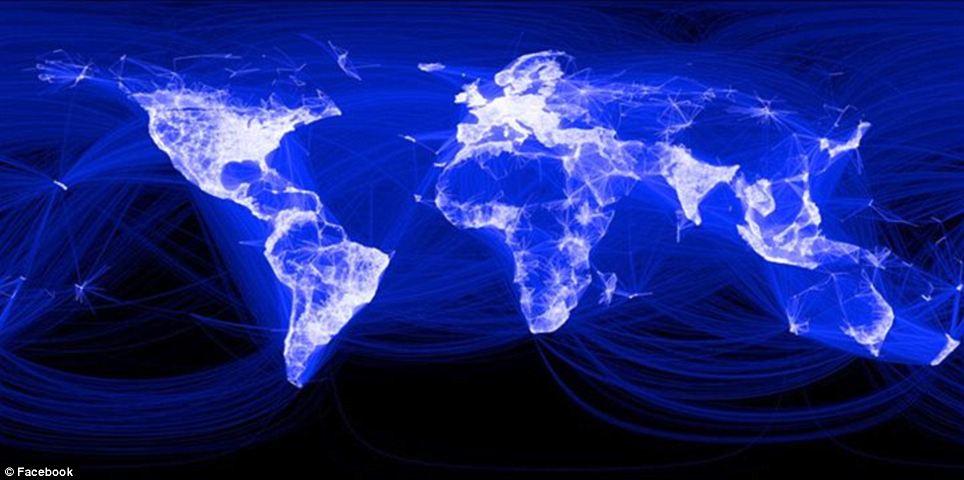
When the 21st Century is over and becomes apart of the history books, it will be known as the first truly interconnected, interdependent, and entangled era of human history. Compared to past eras, borders are more open, long-distance travel is common place due to modern aviation, and global commerce is more free than it ever has been. Globalization as a phenomenon has been made possible not just through open borders and advances in aviation but also due to the wonders of the Internet.

While many human beings can not physically cross borders or take modes of transport to other countries, the Internet has helped to minimize that gap of connection by allowing people from around the world to connect virtually at an increasing frequency. As the technology continues to improve and advance, the Internet has made our planet interconnected on a scale once considered unthinkable a generation ago.

I woke up one morning in New York, had my breakfast and juice, and then was able to log-in to Skype and chat with my good friend who is living in Beirut, Lebanon about his work there and how he has adjusted to living in the Mediterranean metropolis. After that, I sat down to have lunch and finished some homework for a 1:30 PM Spanish lesson with my teacher who is originally from Mexico but currently lives in Italy. Somehow, we were able to make the six-hour time difference work between me in New York and her in Italy. Before the day was over, I had two more Skype and Google Hangout based English lessons with my students from countries like Saudi Arabia and South Korea. Satisfied with my day of both teaching and learning, I settled the rest of my affairs and went down to the kitchen to prepare my dinner for the evening.

None of these lessons or exchanges of information would be possible between persons of different countries and backgrounds without the invention of the Internet. Too often, the average person either takes for granted the capabilities that allow us to stay connected on a worldwide scale or doesn’t take advantage of using this technology to bolster their abilities personally or professionally.

Professionally, as an ESL teacher, the fact that I have been able to use the Internet and web applications such as Skype, Google+, etc. to connect with numerous students from around the world virtually has been a real treat for me. Sometimes, my students with whom I’m working with online do not have the means or ability to work with a native English speaker / teacher in person in their own city or country. Those of us language teachers who commit time out of our lives to help others learn our native languages should be commended for making this a possibility. It is truly enjoyable for me to work with those students online from different countries who will share with me interesting tidbits about their cultures and societies.

Personally, I have been able to stay in touch and meet up again with friends of mine from different regions of the world thanks to staying connected through social media websites like Facebook, CouchSurfing, Twitter, etc. The Internet has allowed me to stay connected with international friends, both new and old, thanks to the rise of social media and its applications. It is funny to think that only fifty to hundred years ago, or even before the advent of the Internet, twenty years ago, the best that you could do is send a handwritten letter by mail or make an expensive call to any location overseas. Now, such communication to an international location is often very cheap or even free of charge depending on which application you decide to use.

While the advent of globalization has its positives and negatives, which are often debated and discussed endlessly, I believe that one net positive from globalization has been how the Internet and the “world wide web” has made humanity interconnected. This one trend of “Interconnectedness” for the 21st century is one that isn’t going to reverse course anytime soon and is going to be hard pressed to find itself limited in total amount of users or overall global popularity.

According to the World Bank’s recent report titled “World Development Report 2016: Digital Dividends”, the number of people worldwide who have access to the Internet has tripled from about 1 billion people in 2006 to about 3.5 billion people in 2016. This recent development is an extraordinary occurrence. This means that over 40% of humanity now has some type of access to the Internet which has become increasingly possible due to rise of mobile technology and the spread of 3G and 4G cellular networks.

As more and more people connect to digital markets of e-commerce, become new entrepreneurs and start to create their own small businesses, this will also allow more students to connect and learn with me here in New York and other teachers around the world to learn English or another foreign language. The possibilities of eventually having everyone connected to the Internet would be truly endless. It could lift millions more people out of poverty and create new economic opportunities where there were none before.

Some of the big questions to be answered in the coming decades is how do we as a global community work together to connect the remaining 60% of humanity to the Internet? How do we work together as governments, NGOs, and individuals to give people the means virtually to benefit economically and personally from the advent of the Internet? These are not easy questions to answer let alone solve. However, if humanity is to continue advancing and developing into the future, we must continue to become more interconnected to each other. That is a fundamental truth of the 21st century for which we all must be aware of.

Sources:

1.)  http://www.theguardian.com/technology/2016/jan/13/internet-not-conquered-digital-divide-rich-poor-world-bank-report

2.) http://www.worldbank.org/en/publication/wdr2016

Costeñol

se habla costeñol

The regional and local dialects of the major languages can be found in different countries around the world. Colombia is no exception to this rule. Within the Latin American dialect of Spanish and also the Colombian regional variations lays the innermost layer of what’s popularly known as Costeñol, the coastal dialect of Colombian Spanish. One of the first things I learned as a foreigner living here in the Atlántico department of Colombia was that the locals here have their own unique dialect, colloquialisms, and vocabulary that is different from other regions of Colombia.

As someone who has only formally studied the Castilian Spanish in my previous schools and university, it has been a challenge in adapting to the local dialect and how fast the words and sentences come out for me to try to translate and respond to. However, it’s been really fun for me to learn about the sayings and phrases used by Costenos during everyday life. A lot of these vocabulary words have already rubbed off on me where I now feel comfortable using them in both the right setting and context.

For those of you unfamiliar with both Spanish and Costeñol, here are ten words and phrases that you should familiarize yourself with if you decide to visit Barranquilla, Santa Marta, Cartagena, and/or the surrounding towns nearby.

1.) Adios: Usually used to mean “Goodbye” in Spanish-speaking countries, it’s quite common where I’m living now for you to great your neighbors and friends with ‘Adios’ when you walk by their house and would like to greet them formally on your way home. Almost always, they’ll return your ‘Adios’ with a smile and a wave or thumbs up.

2.) A la orden: Okay, this isn’t a phrase just for the Atlantic coast of Colombia but for the entire country regardless of the region, which is pretty cool if you ask me. Wherever you visit or live in Colombia, you will most definitely hear this phrase being used. It’s the most popular one I know of and I find it to be my favorite thus far.

3.) Bacano: A word used to describe something that’s cool, interesting, or exciting. When you see a friend pulling up in his new motorcycle, which would be a perfect time to use the word ‘bacano’ here.

4.) Buenas: More popular in the morning and in the afternoon, it’s customary to greet other Costenos with a ‘Buenas’ and a smile as you start your day. For those unfamiliar with Spanish, it’s a shortened version of the popular greetings of ‘Buenos Dias’ or ‘Buenos Tardes.’

5.) Chévere: See ‘bacano’ above. A bit more difficult to pronounce for the average gringo. However, chévere is very popular as well and has a similar meaning in terms of expressing how something or someone is cool, exciting, and fun.

6.) No Jodas: An exclamation of shock, surprise, or disbelief. My host mother here taught me this one most recently when she remarked on how fat the dog was getting. It made me laugh to hear her use it in front of me along with the explanation she gave me.

7.) No dar papaya: Literally, it means ‘don’t give papaya’ which is a euphemism meaning that you should resist flashing your Prada bag, iPhone or Camera in public for the entire world to see. It’s okay to have that stuff with you from time to time but don’t give someone an excuse to make you a target for a snatch and grab by having it on display all the time. One of the first phrases I learned here upon my arrival and one that I won’t soon forget.

8.) Que le vaya bien: Before someone leaves the house or the apartment, it’s important to let them know this salutation and wish them well on their way to the school, office, store, or elsewhere and that they will have a pleasant journey.

9.) Qué pena: Expressing how shameful or disappointing something is. If your favorite football team lost last night or you realized you forgot to wish your mother a happy birthday, a phrase like this will sum up how you’re feeling right there and then.

10.) Que mas?: When you see your neighbor or a friend walk by you on the street, it’s a very good time to use this popular phrase. Being able to communicate about how your day was or what’s been going on in your life in Spanish is one of the coolest aspects of living and working here in Colombia. This phrase especially for the coast is good at making that goal a reality.

11. Cogelo Suave: Last but not least, this phrase is the equivalent of a New Yorker saying “Take it easy.” Relax, have a coffee, and everything will be all right. When your friend is running thirty minutes late and you’re ready to call it quits on waiting for him. Say ‘Cogelo Suave’ to yourself and stick it out for a little while longer.

There are many other phrases and words that are used on the Atlantic coast of Colombia that I’m still not familiar with. However, I hope to learn more and more each day about this very unique and interesting dialect of the Spanish language. In order to learn Costeñol, you must be prepared to study and use it too.

The Benefits of Learning a Foreign Language

“There’s so many languages to learn and so little time to master them. What are you waiting for?”

 Learning a foreign language often gets overlooked by those people who like to travel to different countries and have fun adventures, unique experiences but refuse to learn the local tongue while they are traveling. However, A large part of truly integrating yourself into a foreign culture when living overseas is to develop a working proficiency in the local language. When you make the effort to learn the language, it truly makes a difference both to those in the new community and/or country in which you’re residing. If you consider yourself to be a worldly person who likes to travel, you must also seek to become well-versed in foreign languages.

 The locals will respect you more and you also stand out from the other tourists and expatriates who only know the basic phrases and words even though some of them have been there for a longer period of time than you. Especially in a professional context, learning foreign languages makes you stand out in many different types of businesses and industries today. I’ve met so many people from around the world during my recent experience of living overseas who are very successful and are fluent in three to four global languages including English, French, Spanish, etc. One of my personal goals in life is to be fluent in three to four languages excluding my native tongue of English.

 I’ve been pretty successful thus far in developing a good proficiency in Spanish, Turkish, and with some basic knowledge of German and Arabic. I hope to keep improving my foreign language background as I go through my 20’s. One of the best things about language learning is that it’s never too late to start and to see how far you can develop your proficiency in it. I’ve heard that it does get harder though as you become older and that it takes more and more work to learn a foreign language starting in your 30’s and beyond. Even if you don’t want to really become fluent, it makes all the difference really in just having those basic 25–50 words and phrases that you learned and memorized before you head off for your travels to new countries and foreign locales.

 There are a lot of cognitive benefits to knowing more than one language and there is a lot of research to back this statement up. (For example; Source –http://www.actfl.org/advocacy/what-the-research-shows) It helps your mind stay sharp and it allows you to see the world in a different way. It’s hard to describe but by thinking in multiple languages, it makes your mind much more agile and able to think creatively, and to analyze thoughts much more deeply.

 I think that every person should learn a foreign language even if it’s just the basic phrases and sayings. There are so many free and cheap ways to learn a foreign language these days. For example, Duolingo is an excellent web application that is free to try and use. There are also many websites nowadays where you can hire a native speaker of a foreign language to tutor you in a private lesson for an hour for only $15–20 which is quite affordable.

 The fact that foreign language learning goes neglected sometimes in the United States is a real shame. However, regardless of where you’re from, even though you may have never picked another language up when you were younger doesn’t mean it’s not still possible.(http://qz.com/453297/many-european-kids-…cans-zero/) Hopefully, everyone who reads this blog entry will think hard and long about giving foreign languages another go of it and to make it part of your personal development. It’s challenging yet rewarding and there are many benefits to it, both professionally and personally.