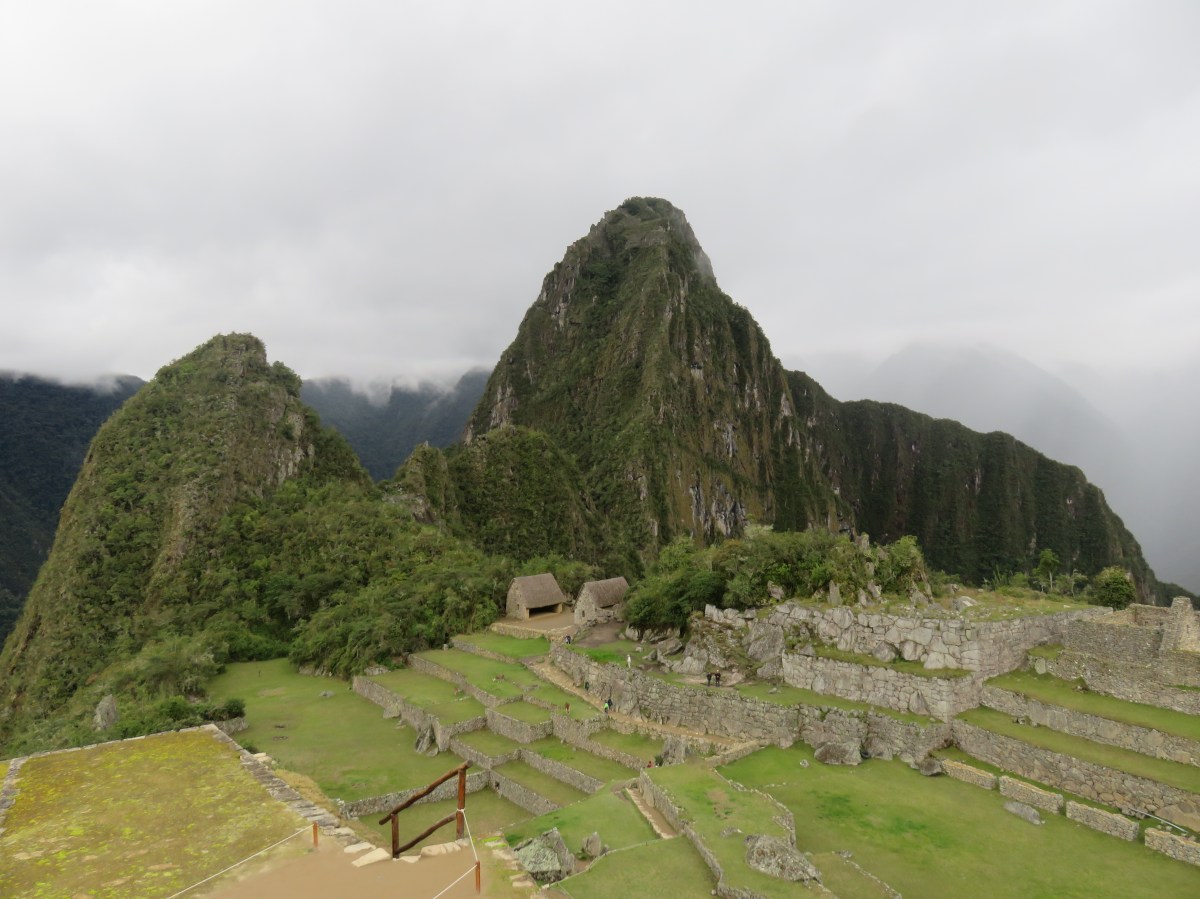
“The hardest yet most rewarding part of my visit: Hiking to the top of Huayna Picchu mountain.”
There are few places in the world, which you can truly regard as being special and awe-inspiring. We describe these places as being a ‘wonder’ of humanity and one that represents our brief yet influential time on this planet. Before I came to Machu Picchu, I believed that the only other place that would classify as a ‘wonder’ to me would be the archaeological site of Petra in southern Jordan. A ‘wonder’ both of history and of architecture that goes back thousands of years is what sets apart places like Machu Picchu in Peru and Petra in Jordan. These places that touch on the cultural and historical legacy of man are what drive us to be resolute in protecting these artifacts of mankind and making sure that they are around for future generations.
I consider myself to be incredibly lucky to have visited Machu Picchu just recently a couple of days ago. For those who don’t know, Machu Picchu is quite isolated from any major modern city or town but is possible to get to by train and bus due to the wonders of modern technology. Situated between towering mountains and located alongside the flowing Urubamba river, Machu Picchu is not only a wonder of Incan architecture and construction but is also a natural marvel due to the backdrop it has with the surrounding green mountains, wispy clouds, and the numerous kinds of plants that inhabit this part of Peru.
Among the things that stand out about Machu Picchu is that you feel isolated from the rest of the world. It may be the towering mountains that surround this archaeological site or it could be the fact that wispy clouds envelop your presence but you feel very that you’re secluded from other kinds of environment. The higher you climb in elevation, the world gets much quieter and you’re able to reflect more on not only the site of Machu Picchu that lays before you but also about life or whatever is on your mind in general.
I’m far from being an expert on ancient civilizations, especially the Incan civilization of which I know relatively little about but you have to give the people of this group considerable admiration and awe by the fact that they were able to build such a city in the most remote of places. The fact that it was possible for them to create an infrastructure out of rocks, stone, and wood in order to sustain themselves under ever-changing weather conditions is quite remarkable.
To be able to plant and harvest food, create a running water supply, and be able to construct encampments to house hundreds of Incans is very impressive to consider. Not only was there a high risk of death or injury to climb these mountains with heavy rocks or stones attached to your backs, it is likely that you would be on your own if you sustained serious injuries given that there were no modern medicines or hospitals or rely upon.
It is difficult for me to list a favorite thing about my trip to Machu Picchu. I really enjoyed climbing to the top of Huayna Picchu at 2,700 meters in total altitude despite my exasperated breath and tired knees. The views from this perching point above Machu Picchu are extraordinary and are something that I will never forget. Besides being able to take a bunch of pictures, it was great to sit and reflect on the wonder that lay before me. At a couple of thousand meters in the air, all your problems dissipate for a moment and you can truly hear the sound of the wind and the movements of the clouds. You can close your eyes and hear nothing but the sound of your own thoughts if you are so lucky.
Thanks to the efforts of the Peruvian Ministry of Culture, Machu Picchu is amazingly well preserved and should be around for future generations to enjoy. A limited amount of tourists, a couple of hundred in total per day can visit Machu Picchu and is a good idea to make sure that none of these famous Incan ruins will be damaged, tampered with, or destroyed. To lose such a precious treasure such as Machu Picchu or any other wonder of the world would be a tragedy for humanity and its’ history on this planet. While it was not cheap to get to Machu Picchu, I can fully understand why we as tourists pay the costs of admissions to visit these beautiful sites.
We do it to make sure that other people have the chance to experience these places firsthand and are able to share it with their children and grandchildren. I am quite lucky to have been able to visit such a wondrous place and I will remember my day at Machu Picchu quite fondly. If you’re reading this blog post and desire now to visit Machu Picchu, I would recommend that you do it with the knowledge that you do some research about the place, respect it during your visit, and do your best to take the experience in not just through your camera lens or smartphone but through your own eyes and ears.
To me, Machu Picchu is more than a lost Incan city of hundreds of years ago; it is a beautiful and awe-inspiring place of natural scenery. With its’ many mountains, huge river, and hundreds of diverse plants, this place can help you reflect not only about the past but on the present and future of yourself, humanity, and the planet itself. With any tourist site that’s located in a unique location, precautions and steps must be undertaken to make sure you have an enjoyable visit. Please make sure you bring some sunscreen, an umbrella, appropriate clothing and a lot of water. The weather can be quite unpredictable at Machu Picchu and it would be good of you to prepare to experience all four seasons in just one day at the site. Best of luck to you reading this post if you decide to take the journey to Machu Picchu. I promise that you won’t regret it.
“San Andres Island: Located Northwest of mainland Colombia and closest to the coast of Nicaragua. Very small island as you can see from this map.
If you’re in a cold, winter climate right now and you’re looking to escape the frigid temperatures and snowy weather for a little while, you should consider the following two destinations for a vacation. Recently, I was lucky enough to take two, separate trips in December to the San Andres Island in Colombia and then to the coastal, colonial city of Cartagena, which is also located in Colombia. While these destinations are similar in many respects, they are still unique in a number of ways. Depending on what you’re looking for in a tropical destination, both San Andres and Cartagena have a lot to offer for the average traveler.
San Andres Island
After visiting the San Andres Island in early December, I consider it to be a hidden gem of the Caribbean. I write this because I find it to be much less of a tourist destination than other tropical islands such as the Bahamas, Bermuda, U.S. Virgin Islands, Aruba, etc. and small countries such as Jamaica, Cuba, and the Dominican Republic. What it lacks in notoriety and sheer size, San Andres is just as much of a Caribbean destination than other more popular islands.
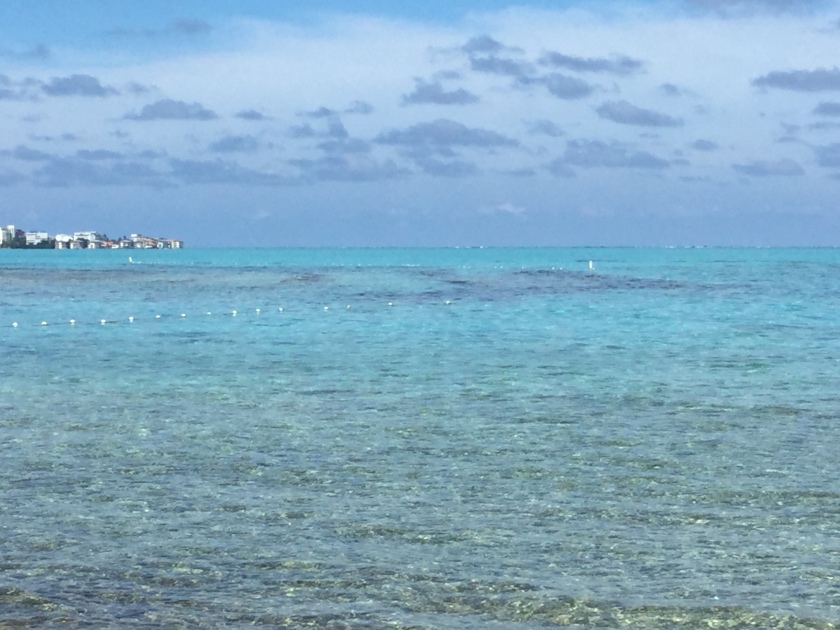
The island is rich in both biodiversity and sheer crystal blue beaches that you can swim in, go snorkeling, or go riding around in a boat or Jet Ski. San Andres is blessed with vibrant coral reefs, sand banks, and outer cays, which are easy to explore by foot or by boat. You can snorkel with the fishes or go scuba diving with them depending upon your personal preference. The island is smaller than most tropical destinations at only 26 square kilometers in total area but I consider it an advantage to be able to see a good amount of the island in only a week if that’s how long you plan to stay.
There are a number of ways to get around the island including local buses, which will do a circular loop around the island and can be hailed from anywhere you are in the main street. You can also rent your own scooter or golf buggy cart to get around the island for a day or more. Taxis are also plentiful in most areas but tend to be more expensive depending on where you’re going on the island.
Most restaurants, hotels are located in the northern part of the island and tend to be a little bit cheaper than Cartagena in terms of pricing. The great thing about San Andres is that there is a number of bed and breakfast places available, which are cheaper than the major hotel chains if you’re looking to save some money. The smaller hotel chains and the bed and breakfasts are usually located closer to the island’s less popular but still very beautiful beaches, which are also less touristy overall.
During the low season for San Andres’s tourism, it’s possible to find a beach where there are few tourists around and where there’s still white sand and crystal blue waters. All you would have to do is make sure you do your research and find out where these lesser-known beaches are and take public transportation or your own scooter there for the day. You won’t find these beaches in El Centro or in the north of the island.
Luckily, I was able to find a beach like that ten minutes south of where I was staying by bus, which was the highlight of my trip. If you’re looking to visit San Andres, make sure you visit during the low season and be ready to explore the island beyond just the touristy areas. In addition to being accessible by plane from Colombia, which is the owner of the island, you can also get to San Andres from the countries of Panama and Costa Rica. With the right planning and set-up, you’ll be able to walk to the nearest tropical beach when you stay in San Andres for your visit.
Cartagena
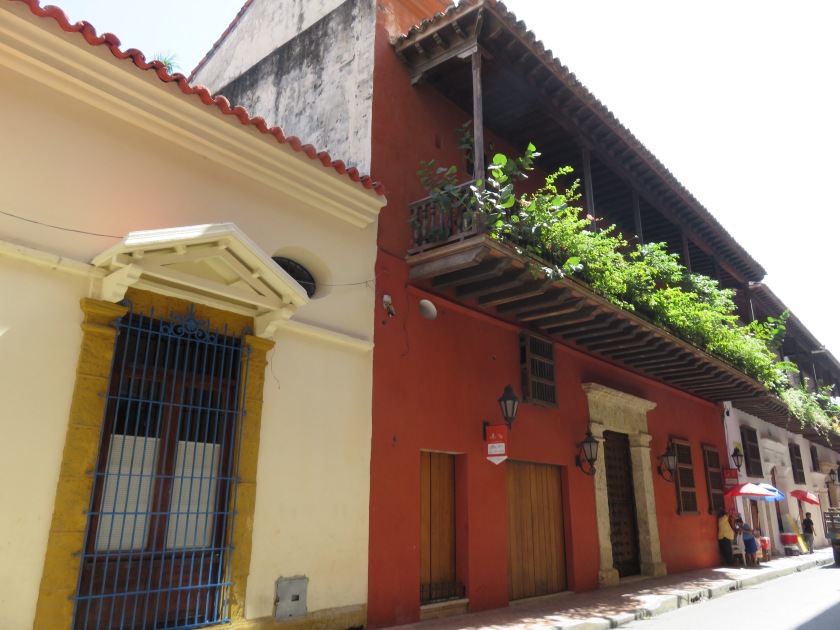
A city with an interesting mixture of colorful, colonial buildings and modern, towering skyscrapers, Cartagena is the most popular tourist destination in all of Colombia and has been growing in popularity in recent years. Known most for being the location of the oldest Spanish colony in the Americas, Cartagena offers a lot of history, culture, and diversity to those tourists who visit its’ colonial streets, coastal beaches, or plentiful hotels. Cartagena is very easy to get to by bus, by boat, or by plane with its’ modern international airport named after former President of Colombia, Rafael Nunez who was a Cartagenero.
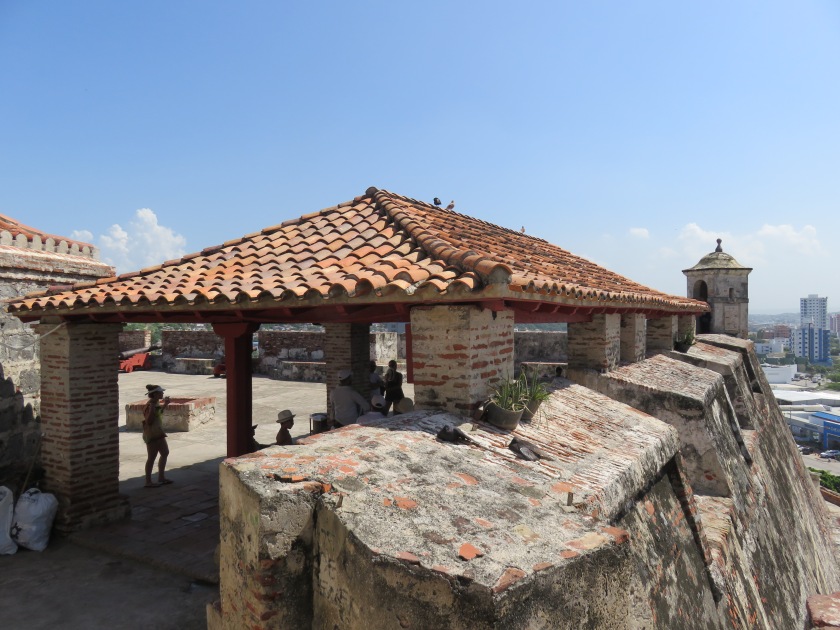
If you’re short on time, it would not be a complete trip to Cartagena without visiting sites like the Felipe de San Barajas Castle, which was a Spanish fortress designed to protect the city from foreign invaders and from scheming pirates. There’s also the walled colonial city with its’ colorful buildings, which have been somewhat transformed to offer restaurants, boutique hotels, and artisanal shopping to its many tourists. In my opinion, the walled colonial city still has a lot of character and its architecture is really pleasing to the eye. Costenas are among the friendliest people in Colombia and are truly welcoming to the sheer amount of tourists that come to the city each year.
While I was not able to go there during my recent trip, the La Popa hill has great views of Cartagena and you can take a tour of a monastery there with a history dating back to the 17th century. While Cartagena has a number of beaches, the best ones take some effort to get to, which can take a whole day trip back and forth. The most famous beach in the area is La Playa Blanca located on the Baru Island, where you can find white sand beaches and the crystal blue water that can’t be easily found elsewhere in Cartagena. Lastly, Cartagena is a big city with over a million residents and thousands of tourists. If you don’t get to do everything in one trip, you can rest assured knowing that it’s a city that is worth more than one visit.
Comparison
Overall, I had an excellent time during my two separate visits to Cartagena and San Andres Island. Both of these destinations have a lot to offer to the average tourist and are relatively affordable and easy to get to from other parts of the Americas. If you’re looking for a warm destination with friendly and open people, these two locations should be high on your list.
If I were to give recommendations based on what each place can offer as its’ specialty, you’ll want to give San Andres the edge in terms of its’ beaches and its’ water sports activities. The manageable size of the island to navigate along with its various modes of transportation makes it easy for the traveler to explore different beaches, coral reefs, and outer cays without having to go very far. San Andres is also a bit cheaper of a destination in terms of average lodging and food costs compared with Cartagena.
While San Andres has the advantage with its’ beaches and its’ overall costs, Cartagena shines when it comes to the history of the city, its’ open and friendly people along with the numerous options for dining and lodging. In all of the cities of Colombia, the walled colonial city of Cartagena is very special along with the San Felipe de Barajas Castle. The restaurant and nightlife scene is also much more vibrant giving the average tourist a lot to do, see, and explore at nighttime compared with San Andres.
I would suggest that while Cartagena has a number of accessible beaches, the special ones like Playa Blanca take some time to get to and are not located within the city. When it comes to crystal blue waters and white sand beaches, San Andres Island is a destination that offers that in a number of locations without too much effort needed.
The beauty of these two destinations is that they each have something special to offer the tourist, the traveler, or the backpacker. If you’re looking for beautiful beaches and water sports activities, head to San Andres Island but if you’re looking to learn more about history, culture and to experience good restaurants and nightlife, head to the city of Cartagena. Either destination has its’ own specialties and advantages. You won’t regret your time in either destination and it will be a good travel experience that you’ll have fond memories about.
This second post in the new ‘Cuisine Spotlight’ series will focus on another favorite dish of mine here in Colombia, which is known simply as ‘Cazuela.’ Despite the unassuming name, this popular South American dish is quite diverse in what it can offer you when it comes to mealtime. Depending upon what you’re craving, a good cazuela can be made up of seafood, beef, chicken, etc. as its main base food. ‘Cazuela’ is a Spanish word, which roughly translates into ‘Casserole’ in English.
Similar to a casserole, a cazuela dish is a mix and match of different kinds of foods with tasty results. Usually, cazuela is considered to be a soup made up of different vegetables and meats mixed together. You can’t have cazuela without some flavored cooking stock put in there to form the soup-like appearance. Depending upon which South American country you’re visiting or living in, there will be a different spin on what cazuela looks, smells, and tastes like.
In Chile, cazuela comes with a piece of meat, which can either be turkey, pork, chicken, or beef. Specifically, a leg of chicken or some beef ribs will be the meat in the cazuela dish. Underneath the meat would be a piece of pumpkin and individual pieces of potato with a base of white rice doused in the flavored cooking stock. For the vegetables, it varies depending upon the cook’s preference but there’s usually celery, carrots, green beans, cabbage, etc. that are sliced and diced up to be soaked in the cooking stock and added to the rice and meat. In the summer time, some Chileans will add some sweet corn to the vegetable mix. The Chilean version of cazuela is known as being very similar to the ‘Olla podrida’, which is a colonial dish from Spain that has gained in popularity in Chile and other South American nations.
Cazuela is also quite popular in Peru, the southern neighbor of Colombia. Cazuela is often prepared in the Amazonas region of Peru and is made in different ways depending on which area of the department you’re in. For the meat, there are often more creative choices like hen and sheep that are added to cabbage, rice, carrots, and the broth juice. Usually, this kind of cazuela is cooked over a flame in a sauce pot as its mixed together and served to a large group of people.
Beyond just being a soup or a casserole, Cazuela can also be made into a traditional kind of pie as it is in Puerto Rico. During Christmas season, the Cazuela pie is made up of sweet potato, pumpkin, and coconut milk. It’s quite a popular desert that is easy to make and is popular for its’ sweet flavor and light texture.
Multiple countries in Spain, Ecuador, and Colombia have embraced the ‘Cazuela de Mariscos’, which is made up of a number of different kinds of seafood. The Colombian version is easy to make and is known for being a thick kind of soup and also is rumored to be an ‘aphrodisiac.’ The seafood that comes in the soup includes calamari squid, prawns, clams, shrimp, and small pieces of fish.
The kind of ingredients you want to add are olive oil, salt, pepper, thyme, bay leaves, coconut milk, white wine, some seasoning, heavy cream and minced garlic. To top it off, you need some vegetables including carrots, celery, red pepper, tomatoes, and bouillons. You got to mix up everything together, serve it in a clay pot or bowl, and enjoy the delicious broth and food. Sometimes, you can find that there are cazuelas for shrimp or prawns separately which can come with rice and a heavy broth mixed together with the seafood.
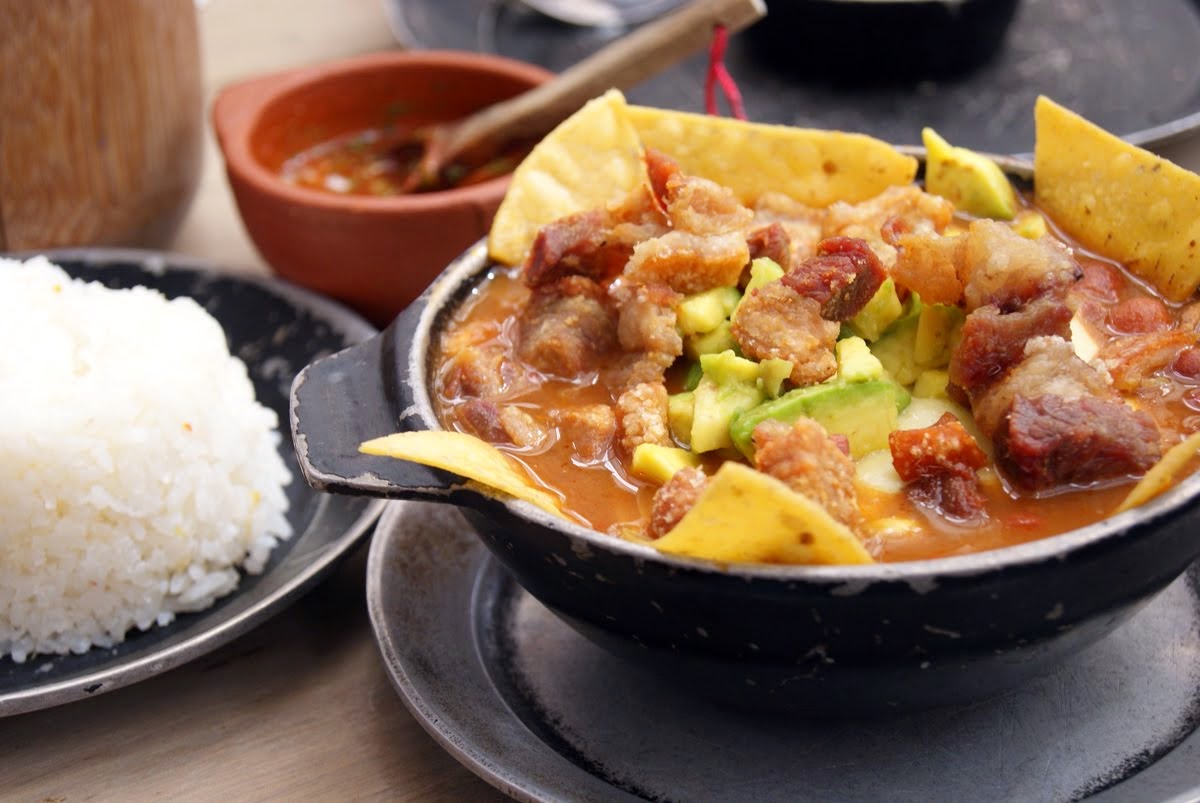
The type of cazuela that I have become most familiar with over the past couple of months is the ‘cazuela antioquena.’ You can find it throughout the department of Antioquia and most commonly in the city of Medellin. I find it to be unique compared to other kinds of cazuelas given the emphasis on ingredients that are known well to Paisas making it a local favorite.
You start with a base of Antioquian brown beans mixed in with some white rice. On top of that is the meat, which are usually ‘chicharron’ or fried pork belly and some cooked chorizo. Instead of more common vegetables like celery and carrot, this favorite dish of Antioquia comes with pieces of avocado and some cut-up sweet plantains. To add some flavor, the Colombian creole sauce known as ‘Hogao’ is mixed among the meat, plantains, avocado, rice, and beans.
Like many other local dishes here, a small arepa is added to the mix, and placed at the top of the ‘cazuela antioquena’ to be eaten with the rice, beans, chorizo and whatever else would go along well with the arepa. Second only to the ‘Bandeja Paisa’, the ‘cazuela antioquena’ is likely to be a fulfilling dish for lunch that can satisfy your cravings for some local cuisine.
It’s likely that you’ll run into some kind of ‘cazuela’ if you’re traveling or living in South America. The various kinds of cazuela unique to a certain country or region makes it an exciting dish due to its diversity. Whether it’s meat, seafood, vegetables, rice, and beans in the cazuela, it’s important to bring a big appetite to the table because it’s likely to fill you up and leave you satisfied.