Some People Grow Old but Don’t Grow Up

“However, when you realize that aging responsibly is a choice rather than a given and it comes down to acting and being responsible as an effort, you’ll begin to see why not everybody has that trait nor do they even try to emulate it.”

Growing older is inevitable and hopefully all of us reading this article will live long, healthy lives because getting an elder age is never guaranteed in life. While growing old is inevitable naturally, becoming emotionally mature and experiencing personal growth are choices that not everyone makes or even want to try. We all know someone in our lives who acts like they are still in their 20s when they are pushing 40 or decides to avoid acting like their given age altogether even when they’re a grown adult and have been for a while. Some people age without maturing and it can be difficult to wrap your head around why that is the case. However, when you realize that aging responsibly is a choice rather than a given and it comes down to acting and being responsible as an effort, you’ll begin to see why not everybody has that trait nor do they even try to emulate it.

Just because the years pile on top of each other doesn’t mean that you’ve learned anything about life, responsibility, or self-awareness. I’ve known people who do act their age or even beyond their years and I’ve known others who never mature emotionally or try to do so when they are double my age or even more senior. The skills that one must exercise in adulthood are not innate as we are taught when we are young. Adulthood involves having self-awareness, being accountable for one’s actions, both good and bad, and emotionally regulating your behavior especially around loved ones and friends. Some people collect birthdays like stamps but never collect wisdom or thoughtfulness or responsibility. Being a full-fledged adult takes more than paying your taxes and holding a job, it’s about having adult characteristics too, which are either magnified by our life experiences or diminished by the lack thereof.

Some adults act like teenagers when they gossip about others, dodge responsibility, chase instant gratification endlessly, and avoid anything that feels ‘grown up.’ Sadly, even when the adult in question has children or is supposed to be a caretaker for an elderly relative or parent, they often shirk that responsibility too even when they have no excuse for it. Some examples to look out for with people who never grow up in adulthood are when they never or seldom apologize for bad behavior, always blame others for their misfortune, avoid financial responsibility, prioritize the party lifestyle, or choose material gains over building healthy relationships.

If someone is always complaining or gossiping or is constantly unreliable at the workplace, in their friendships, and in their romantic life, they might want to look at themselves in the mirror rather than point the finger at someone else to blame. The ‘Peter Pan’ effect seems to be getting amplified by social media rather than diminished where people care more about hedonistic pursuits than doing their own inner work on a consistent basis to be a more responsible adult.

Acting immature and irresponsible as an adult doesn’t just hurt the person but also can wreck their friendships, relationships, and career. Age alone doesn’t excuse behavior and even when we look up to our elders especially as they are more senior than us in not just age, but rank, title, or other status, that doesn’t excuse poor behavior at the end of the day. Emotional immaturity can create tension and misunderstandings that can destroy a team, a group, a leadership committee, and more personal relationships. If you’ve ever dealt with an unreliable friend, a partner who wouldn’t apologize, or a coworker who couldn’t handle criticism or any negative feedback, you’re likely aware of how immature some adults can be. If you’re like me, you’ve likely been frustrated by someone older than you who acted like a teenager or a child.

In a world which continued to be obsessed with youth, fun, and overall frivolity, it’s easier now than ever to want to put off growing up with society rewarding those who never do especially in roles of leadership and social prominence. These cultural pressures including social media, influencer lifestyles, and late adulthood indulgences mask a deeper issue of society glamorizing irresponsibility, lack of responsibility to one another, or pursuing eternal youth when adults should be pursuing wisdom, accountability, and emotional maturity. Those who embrace personal growth and emotional intelligence may not be “cool” or “fun” or have the best “vibes”, but you need serious and responsible adults in charge and being accountable to one another.

Growing up means owning your mistakes, apologizing when you were wrong, learning from your errors, and treating others with kindness and empathy, especially when it’s hard. I find it rare nowadays from my own personal life to see others around me apologize for their poor behavior or to do so sincerely to make amends but that is a huge part of being a real adult. When you apologize sincerely, it shows that you care about being a mature person.

This kind of responsible adult behavior also extends t0 managing your finances and relationships responsibly, navigating conflict constructively, and thinking deeply about how your actions and words affect other people. Maturity isn’t perfect but it involves trying, falling, and trying again. Each day, I want you to think about how you can be a more responsible adult who is in tune with your emotions, able to be responsible for your actions, and being able to practice some self-awareness.

What’s the payoff for growing up and not just growing old? Well, you’ll have deeper connections, real life satisfaction, and the kind of confidence about knowing who you are rather than projecting a false image of who you want to be all the time. To me, meaningful relationships and positive friendships, having career stability and growth, and showing mental resilience in the face of adversity, which faces every adult regardless of who you are all benefits of true adulthood. Those who don’t grow up and still act like they are 15 at 50 or 30 at 75 are going to feel stuck in an earlier life stage forever and will be envious, unfulfilled, or jealous of how others achieve more peace of mind because of their emotional balance. Growth may be hard and even painful at times but it’s worth it in the long run especially when it comes to navigating life as you get older.

Yes, getting older is inevitable though that is a privilege that not everybody gets to have too, but choosing to grow up consciously is what makes life meaningful, memorable, and worth living. Immaturity may be satisfying at first to avoid being responsible, accountable, or needing to make sacrifices but the costs will eventually weigh the benefits especially as you naturally continue to age. We all have the choice on how we age and how we can grow and mature with each age. It is a lifelong process where there is both progress and setbacks bit for which it is important to leave a positive memory behind for those who can speak about your character, your maturity, and your overall manner as a human being. Remember to not just collect birthdays as the years pass by, collect wisdom, courage, and the kind of growth that lasts until your last day.

A Café Full of Blank Faces

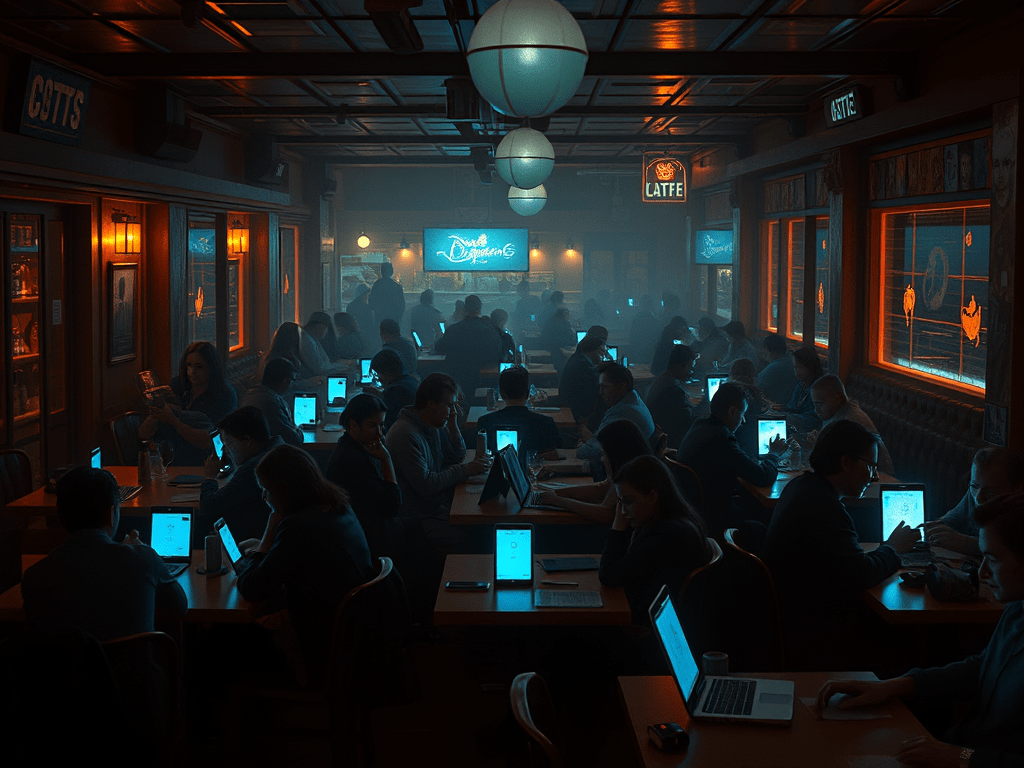
“This surreal experience of mine in the local coffee shop was seeing mostly everyone except for myself wrapped up exclusively in their device, mobile, computer, or another kind of technology rather than interacting with their immediate surroundings.”

Surreal moments often catch you off guard and recently, one hit me in a coffee shop that I like to frequent. These moments are important to reflect on for better or worse though, to see how society has changed immeasurably and perhaps permanently. This surreal experience of mine in the local coffee shop was seeing mostly everyone except for myself wrapped up exclusively in their device, mobile, computer, or another kind of technology rather than interacting with their immediate surroundings.

It was shocking, usually there are a few people browsing their phones casually, catching up on work with their laptops, or just tracking their health data on their digital watch. However, when I looked around and saw that it was basically a sea of screens as each person was locked into their digital world rather than focused on the people there. It was a dystopian scene that is burned into my memory now so much so that I had to explore this societal change further.

In the U.S. especially, it seems like cafes or coffee houses are more for interacting with the digital realm rather than the physical realm, which is quite different from Europe and Latin America where the priority is to meet people or gather with friends or family. It is usually a mix, but in the U.S., cafes seem to have reached a turning point. They focus more on having people be there to work and endure loud or constant music being played in the background, and having people isolated rather than connecting with one another.

While there are still numerous cafes where people are still likely to do poetry slams, play trivia, and are welcoming gathering spaces, my concern is with how eerie it can be when some cafes are solely about work and technology rather than connection and leisure. There are some solutions out there and some bars I’ve heard are even implementing ‘no phones’ as an entry rule to help people to interact with each other rather than their own devices in a shared space.

I personally hope that the ‘no phones’ movement can spread to cafes, community centers, and other third spaces that are increasingly difficult to find in the U.S., especially where you don’t need to pay to sit down, talk, or get to know one another. Having a ‘no technology’ rule for set hours in cafés seems like a great idea to me, especially before or after work hours and making sure that cafes and co-working spaces are not merging to be the same. Community events with no phones would help people sharpen their social skills, minimize distractions, and connect without any devices competing for their attention.

It was jarring for me to see almost the whole café on some sort of device or another except for myself (even though I do tend to check my phone quickly here and there). However, I was meeting someone there so I wanted my attention to be paid to them as much as possible and I am for a technology ban so the connection we would form would be that much easier. Having a rule of ‘no phones’ in cafes or at least ‘no tech’ hours would probably make people happier, more sociable, and allow cafes to sell more to people who would have their undivided attention.

We used to get our dopamine from our social connections and that has been increasingly replaced by responsive AI chatbots, persistent social media notifications, and algorithms focused on our every need. It’s a losing battle right now but we may be at a precipice where people including myself realize that this isn’t sustainable and it isn’t healthy for society to indulge in without limits, even for adults.

One of my favorite shows growing up was ‘Friends’ and ‘Seinfeld’, where the all-American diner or the local café was a spot to hang out, talk, play music, and catch up on each other’s lives. These shows from the 1990s-2000s could not possibly be replicated today because the scenes would be showing almost everyone on their phone or laptop and the dialogues would be flat or lackluster. I want cafés, diners, and bars to be more than background noise for our technological devices. Instead, these places should be spaces to connect, to share, and to find a moment of human interaction in a world increasingly dominated by screens.

Cafés, diners, and bars should be refuges from screens, spaces to connect, share, and find a moment of human interaction in a world dominated by devices. It’s time to reclaim these public places, not just for nostalgia, but for our social health. We still need public places to provide a respite from the hustle and bustle of daily life, to let us express ourselves freely, to meet new people, to practice community, and maybe even make some new friends.