‘Limitless’ – Film Review and Analysis

What if there was a special pill out there that you could take once a day that would suddenly allow you to tap into all your brain’s potential? What if you were able to recall everything you had ever learned, every language you had ever studied, and every fight move you ever watched? How would your life change if you able to fully actualize your abilities to your full potential, both physically and mentally? Now, you may think of these as silly questions but Limitless as a film does so in an entertaining and thought-provoking manner.

Instead of working hard, taking risks, and pushing ourselves to be better people, Limitless proposes a fictional scenario where a special pill, taken just once a day, can make all the difference. You don’t have to do any heavy lifting as the pill you take while unlock all your hidden potential allowing you to be free to pursue your dreams and goals. Sounds too good to be true, doesn’t it? Well, Limitless lets the audience decides if this illustrious pill is worth the risk involved and whether you would even truly need a pill to become the best version of yourself.

Released in 2011 by Director Neil Burger, Limitless is a mixture of genres blending together to be quite a unique concoction including science fiction, drama, and even some action. The star actor in the film, Bradley Cooper, plays Eddie Morra, who is a struggling author living in New York City who is going through a serious case of writer’s block. Eddie is your typical Average Joe kind of character struggling to make his dreams and goals a reality. The viewer of the film is meant to feel a bit bad for Eddie’s situation since he seems to be doing his best to become a successful author.

However, from Eddie’s unkempt appearance including shaggy hair and heavy bags under his eyes, one’s sympathy for Eddie is undermined by the fact that he can’t even take care of himself physically let alone his apartment, which is a mess filled with strewn about clothes and dirty dishes. The main problem that we learn about Eddie is that he is a well-meaning guy, but he looks for shortcuts and is undisciplined to the point where he is behind on rent payments and his girlfriend is about to leave him.

Instead of changing his ways internally by looking at ways to make himself have more self-discipline and willpower, he instead looks for a shortcut to get himself out of his career, relationship, and financial woes. Eddie runs into Vernon, the brother of his ex-wife, who deals him a strange, new nootropic drug named NZT-48, which Vernon says will help Eddie unlock his brain’s capacity at 100%. Eddie is skeptical at first until he takes one pill and realizes that it is not just a joke and that he is now able to remember everything through enhanced memory and is able to write for hours without losing his concentration. He can also clean his messy apartment, befriend the landlord’s wife, and start to get his life in order.

Because of what this one pill did for him, Eddie goes back to Vernon for more NZT to keep his peak mental capacity going. Horrifically, he discovers Vernon murdered by people also looking for the NZT as well. Eddie is able to find Vernon’s secret stash, which allows him to keep using the nootropic drug to make his life bigger and better. While concerned about what just happened, Eddie becomes addicted to the NZT because of how effortlessly it improves his life and how much more successful he can be without really putting hard work into it.

The old adage of ‘Be careful what you wish for’ is prevalent throughout Limitless as Eddie increasingly puts himself and his girlfriend, Lindy (Abbie Cornish), into greater and greater danger. By needing to use more and more of the drug, Eddie gets addicted to both the potential and the power he gains from enhancing his mental abilities. He become stubborn enough to put himself in harm’s way all to risk it for a chance to becoming a powerful, successful, and wealthy man. Despite being at odds with an finance and investment tycoon, Carl van Loon (played by the legendary Robert De Niro), and being chased around New York City by loan sharks affiliated with the Russian mafia, Eddie’s life is doing a complete 360.

Because of the NZT, he has no shyness or doubts in his interpersonal skills. He gets Lindy, his girlfriend back into his life, he picks up multiple foreign languages including Italian and Mandarin Chinese, and he is able to build up his body through working out and martial arts. In addition, he can concentrate for hours on end and remembers everything he’s ever read, seen, or heard making him a mathematics whiz and an investment genius overnight.

The accumulation of wealth, power, and status can take a lifetime for some people with most never achieving the level that Eddie does in the film. NZT allows him to do it overnight but at a seemingly great risk to his health and survival. The NZT pill is wanted by van Loon and the Russian mafia with Eddie standing in their way. The climax of the film focuses on whether he will be able to use the pill and its abilities to outsmart those around him who would take it from him and leave him to die.

Eddie Mora is a flawed character who is seduced by a powerful nootropic that slowly but surely takes over his life. Actions have consequences and Eddie started mixing with the wrong people. Due to his frustrations with his life and not wanting to suffer to reach his goals, you could argue that he took the easy way out and it could cost him dearly. Had he persevered with his writing and started to take personal responsibility for where he was in life, perhaps he would have never gone to a drug dealer for the NZT in the first place.

This movie may not be one of the best movies of all-time but it is entertaining and carries a few nuggets regarding how any of us should not look for shortcuts in life when things get hard. Taking the easy way out comes with unintended consequences that may be more severe than we realize even when the payoff is really tempting. Eddie, instead of doubling down on his goals and becoming more disciplined and utilizing greater willpower in order to better his life, took the easy way out because he was not built of strong moral fiber. As a result, Eddie gets mixed in with the wrong people and risks his life for a drug that he can not live without.

Any of us, if we are not careful, can be seduced by quick wins and five-minute solutions when true personal development, both mentally and physically, takes years and even decades to get to a high level. While luck can help us along the way to shorten the road to success, it is perseverance, willpower, and the right mindset that can take us further in the long run.

You don’t need any kind of pill to produce a novel (strong shots of espresso maybe), to learn multiple languages, or to get into great physical shape. What’s holding you back are your excuses and your lack of action. With consistent effort and hard work, the goals that Eddie achieves because of NZT in this film can be achieved by the average person without needing what he needed. First, you need to believe in yourself and then you need to write down your goals and come with a plan of action to become successful. As mentioned earlier, true progress in personal development does not happen overnight but can take months and even years. With sustained effort and hard work, you’ll reach your goals and you’ll do it in the right way.

While far from a perfect film, Limitless is entertaining and thought-provoking regarding human nature and what the average person will do to change their lives by taking the easy way out. The story of ‘Limitless’ is a referendum on hoping for a magic pill to solve your problems rather than working through them by your own grit, sweat, and toughness.

The character of Eddie Morra fell to his own short-sighted belief in wanting success by any means necessary but I hope you, if you watch this film realize that it’s far more satisfying to achieve your dreams and your goals through your own hard work rather than looking for an easy fix in the form of a magic solution peddled by others, which may not work or get you into trouble.

I do want to recommend Limitless for the impressive visuals, the acting by Bradley Cooper and Robert De Niro, and the important life lessons that it imparts on the audience by the time the final credits of the film begin to roll.


‘The Grey’ – Film Review and Analysis

The actor Liam Neeson has become one of the main action figures in Hollywood, starring in such popular films as ‘Taken’, ‘Batman Begins’, and ‘Gangs of New York.’ However, while these roles were a bit one-dimensional or short lived in terms of his supporting role, you get to see the full scope of his talents in a powerful and dramatic role in the 2012 film, ‘The Grey.’ In this fictional drama, we get to see a man pushed to his mental and physical limits and how he is able to come to grips with such weighty topics such as his own mortality and his religious beliefs.

Not only is ‘The Grey’ a great film when it comes to its views on mortality, religion, and the depths of human nature when pushed to its limits. The cinematography, direction, pacing and setting in the film help make it stand out. There’s something in this film for everybody who is a fan of serious cinema especially when it comes to character backstory, action scenes, and touching moments of vulnerability and camaraderie. ‘The Grey’ doesn’t sugarcoat anything as well and does not shy away from addressing real life struggles such as depression, a search for meaning, and the futility of having bad luck run roughshod over one’s life.

Man can only control so much in his life and that includes what happens to those who he loves, how he adapts and survives when it exposed to the worst elements of nature and of the animal kingdom. Sometimes, the only choice that you have is to fight, persevere, and struggle to the last breath even when things look bleak. Neeson and the other men in the film have to grapple with a lot of bad events that make it a hopeless situation to get out of. There is no choice though and all of them have to do their best to make it out alive especially to the ones they love.

John Ottway, the main character in the film played by Liam Neeson, is a guy you want with you in the oil fields of Alaska. We know little about his backstory in the film, but it is revealed that he struggles with depression, meaning, and his faith in a higher power. He dreams of a woman who is his wife and the audience are not sure if he is still with her or if they divorced or each other or if something fatal has befallen her.

We assume that he is in Alaska working as a marksman protecting oil workers from the wolves and that he is doing this job for lack of better options and to preserve some remaining meaning in his life. Part of the brilliance of this film is that it doesn’t reveal everything too quickly about why Ottway is in Alaska or what happened to his wife. ‘The Grey’ does not ignore the great sense of suspense that can be built up over the course of the film to make a true compelling drama that captures and holds your attention until the end.

Ottway and the other men are facing grey wolves who see them as a threat and it’s not possible for the men to communicate to these wolves that they are friends and not foes. The animal kingdom suffers no man especially when he is in their territory. They can’t communicate with each other so it’s a battle for survival between man and wolf. While the grey wolves in real life are harmless and do not hunt humans, ‘The Grey’ takes some creative liberties with this fact in order to have a compelling film. Despite the criticism from animal rights groups, if you enter the area of a wolf’s pack den, you are likely asking for trouble regardless if you didn’t mean to do so, man or animal alike.

After a freak plane crash, Ottway and the other oilmen must fend for survival in harsh conditions while they are stalked by wolves including its alpha leader who see the men as threats to be reckoned with. Ottway has killed wolves before to protect the oilmen when they’re working in the fields and he knows what they are like. Against ever increasing odds of survival, he proves to be a great example of how to lead men in times of crisis and peril. His leadership, throughout the film, proves pivotal in giving the men a shot to get out of the Alaskan wilderness and back to their families. Even though it seems at the beginning of the film that Ottway has lost his will to live due to the situation with his wife, the freak plane crash and his survival from it propels him to try and save the men and outwit the wolves if possible.

Still though, ‘The Grey’ is a serious and realistic film about how far faith will carry you out of a real crisis. There is an underlying atheistic outlook of the movie that may rub some people the wrong way, but I found it to be needed. In life, when you face a tragedy, a crisis, or a perilous event, faith can only do so much, and you have to claw and fight your way out of it. I think ‘The Grey’ does a great job of showing how important it is to confront your fears, show true leadership, and fight as hard as possible against the odds to make it out alive of a bad and deteriorating situation.

Ottway’s character and his fight against the Alaskan wilderness and the wild wolves is a great metaphor of how each of us is fighting against our own personal demons and against events that are beyond our control in life. We each have a struggle to face and we have to do it on our own. If we have a wife or a crew by our side, that’s a great thing to have but that’s not always the case as it is in ‘The Grey.’ When you’re put into a bad situation and all hope is lost, you have to truly fight for survival and live like it’s your last day because it might just be it.

There’s an excellent quote from ‘The Grey’ that has a lot of resonance for how true it is regarding life’s fragility and how you have to live like it’s your last day and to do the best you can to survive against the odds. “Once more into the fray…into the last good fight I’ll ever know. Live and die on this day…live and die on this day.” This quote that Liam Neeson’s character recites throughout the film is not only a metaphor for his fight against the wolves and nature but his fight against depression and to make it through the day when all hope seems lost.

‘The Grey’ is a true survival film and it is excellently directed with a great starring performance by Liam Neeson. I believe it is an extremely underrated film and does a good job of bringing up various themes surrounding hope, faith, loss, and about life’s injustices. If you can check it out, I highly recommend giving ‘The Grey’ a view. It will be well worth your time.

Movie Recommendations – Volume I

‘Good Kill’ (2014)

220px-Good_Kill_poster

Good Kill is an excellent drama/thriller film that highlights the ethics and the cost involving drone warfare and how it can affect the servicemen and women who have to pull the trigger and live with the consequences. Starring Ethan Hawke, this film is a deep and probing look at how warfare conducted from thousands of miles away can still leave a lasting imprint on those who have a role in it even when they are not anywhere near the battlefield.

The film highlights correctly how while drone strikes may carry less collateral damage to civilian lives, there will always be the chance for the loss of innocent life and families being destroyed. Whether that’s an errant missile crashing into a wedding party or a group of children running by a targeted building within seconds of a missile being launched and getting caught in the crossfire, death from the skies will not only affect terrorists, but women and children too. Because drone strikes are less costly to governments and militaries, the rules of engagement can sometimes be abused to focus too often on low-level targets, who pose some actionable threat, but who could also be captured for intelligence purposes. A lack of international norms and standards regarding drone warfare leads to serious consequences in terms of possible abuse by governments who overuse it on secondary targets.

Airmen and women such as Ethan Hawke’s character and his colleagues, who conduct drone strikes, are shown to suffer from symptoms of post-traumatic stress disorder because they get to know their targets, see how they live, and struggle with having the power of death over them. High-resolution surveillance makes the act of killing personal despite the fact that these servicemen are thousands of miles away. When a drone strike goes wrong and innocent civilians are killed, it leaves a long-lasting psychological effect on the military personnel involved.

They may not see their victims when they are flying an F-16, but they are aware of what collateral damage is when they see the dead bodies of women, children being shown on the high definition screen. Military service members do not last long as drone pilots due to the immense mental strain placed on them especially when they did not sign-up for conducting warfare with a joystick. Alcoholism, depression, and family problems have occurred due to pilots being asked to conduct drone strikes in the name of national security. All of these issues are highlighted in Good Kill making it more than just your average film about war, but also about an excellent look on how the human condition is affected from holding life or death decisions over those who never see it coming.

‘Roma’ (2018)

220px-Roma_theatrical_poster

Roma is more than just your average film about a family. It is excellent in its scope and ambition in covering a tumultuous period in Mexican history and for highlighting the issues of family, race, and class within the larger society. What I enjoyed most about this film was that it felt personal and it is based off of the childhood of the director Alfonso Cuaron. The way the story unfolds feels as if it has been lived out before.

Cuaron’s work and that of his film crew that was done with the cinematography, film editing, and screenplay is extremely impressive and goes to show the audience just how film is another form of human artwork that can display beauty, meaning, and pure emotion.

Amidst the story of this family are real-life events in Mexican history that overlap with the film without overwhelming the intimacy of the story being told. For example, The Corpus Christi Massacre or “El Halconazo” in 1971 are intertwined with Cleo’s search for a crib for his newborn baby to be.

Nobody in this film is perfect and true human error of both behavior and character are laid bare. Amongst the flawed characters in this film are redemptive qualities about them and how they fight and struggle to overcome betrayal, disappointments, and tragedy. The film is gripping in that it is about real life and there is no sugarcoating. In Roma, no one is immune from setbacks and struggles, and that is what makes the audience invests in the story being told even more.

Compared to many other films that I have seen, few have touched me more on an emotional level than Roma. The realistic dialogue, the set pieces, the chain of events, and the character development all lend to its longevity as one of the best films of the decade. If you have a Netflix subscription, do yourself a favor and watch Roma. You won’t regret the chance to view this pure work of art and I would not be surprised if it sweeps the awards at the Oscars. It is that good of a film and a noteworthy achievement by director Alfonso Cuaron.

‘A Private War’ (2018)

Unknown

This is a biographical film without feeling overwhelming or too much tied up in the protagonist. This film does a good job in covering the life of the deceased war correspondent, Marie Colvin, who reported from multiple war zones over two decades including Sri Lanka, Iraq, Libya, Syria. Marie was a fearless and bold reporter who did the under-appreciated work of reporting the facts on the ground when it came to what was going on in these war zones.

The film portrays her as someone who battled the terrible things that she witnessed and the horrors that she could not avoid. She struggled with her dependency on alcohol, cigarettes, was divorced twice and also had her bouts with post-traumatic stress disorder (PTSD) as many war correspondents deal with when they return home from a war zone. Rosamund Pike, the lead actress in A Private War does an incredible job in accurately portraying who Marie Colvin was in how she mimics both her mannerisms and her speaking style throughout the film’s entirety.

Despite losing an eye, suffering from PTSD, and struggling with maintaining her friendships and relationships away from the battlefield, Mrs. Colvin dedicated her life to reporting the truth and the facts from war zones around the world so that everyone would else would know the costs of war.

While she was afraid and while she was fearful, she had the courage to press on and do her duty in informing the public on what was going on. While she was killed during the siege of Homs, Syria, her memory lives on with this film and the work that she did for two decades in holding the powerful accountable for the wars that they started. In an era where journalists are being denigrated and dismissed with increasing impunity, it’s refreshing to see a film that pays tribute to a war correspondent who gave her life to the cause of reporting the facts so that people would be more informed on what was going on and to also care about why it was happening.  

The Brilliance of a Speech – Charlie Chaplin

Charlie Chaplin, one of the great film figures of the 20th century and known for his silent work in film, took a great leap of faith and showed moral courage by his performance parodying Adolf Hitler in ‘The Great Dictator.’ This film was the first one where Chaplin had any actual dialogue even though he had been in numerous silent films in previous decades from the 1910s through the 1930s. By that time of the late 1930s, Chaplin had achieved worldwide success and critical acclaim as an actor and a comedian but at that tumultuous time in world affairs, he knew he had the responsibility to speak out about growing militant nationalism that was surging in both Europe and Asia.

Compared to the modern times in which we live, Chaplin was taking a big risk with both his career and his personal safety by mixing politics and world events in his roles in ‘The Great Dictator.’ Because this film was the first of his to use sound and the fact that still in 1940, it was not common to condemn and criticize the rise of fascism and Nazism in Europe by Hollywood. Even though World War II had begun, and the U.S. had remained neutral up until that point, Charlie Chaplin brought to life through satire and comedy just how ridiculous dictators like Hitler and Mussolini were in their desire to conquer territory and expand their rule.

It was unknown to Chaplin and the other people involved in making ‘The Great Dictator’ though that Hitler and the Nazis would create concentration camps and extermination chambers to kill over eleven million people, including six million Jewish men, women, and children. Chaplin, like few other actors of the time, was able in this satirical film to play both the main protagonist and the main antagonist. Both a Jewish barber and Adenoid Hynkel, Chaplin in both roles was able to lay out how clearly to the audience how prescient of a threat the rise of fascism in Europe was but also how important it was to poke fun still at the Nazi threat in order to be better able to confront it later on.

While 95% of ‘The Great Dictator’ is making fun of Hitler and the Nazi leadership, the last five minutes is a speech given by Chaplin playing the satirical role of Adenoid Hynkel in full costume but talking seriously about the need to confront Nazism and how it got to this low point in world history. This speech is extremely popular and brilliantly crafted to put it simply. It is no wonder that this film was commercially and critically acclaimed especially in the United States and in the United Kingdom. The invigorating words that Chaplin passionately and profoundly passes on directly to the audience of ‘The Great Dictator’ carries real weight to it especially by the end of the film where it’s been comical and relatively lighthearted up until that point. At the time of the film and of the year it was released, 1940, the horrors of World War II were far from being fully realized yet. However, the ending speech was not just foreboding of what was to come but it was also a forewarning to humanity that this can happen at any time and in any part of the world. Chaplin urges the audience to consider how it got to this point, how we can turn it all around, and how to avoid the dictators who pit us against each other and separate us into us vs. them.

“I’m sorry, but I don’t want to be an emperor. That’s not my business. I don’t want to rule or conquer anyone. I should like to help everyone – if possible – Jew, Gentile – black man – white. We all want to help one another. Human beings are like that. We want to live by each other’s happiness – not by each other’s misery. We don’t want to hate and despise one another. In this world there is room for everyone. And the good earth is rich and can provide for everyone. The way of life can be free and beautiful, but we have lost the way.”

Being able to take care of people and to treat each other with respect and dignity is crucial to one’s humanity regardless of race, ethnicity, or religious background. In Chaplin’s speech, he caters to the better angels of our nature and how we really should yearn to make each other’s live better and spread happiness, not hate. The Earth that we have been given is big enough for everyone regardless of who we are and is ‘rich’ in its natural resources and its ability to provide for everybody with food, water, etc. The natural state of man should be yearning for freedom and beauty, but sometimes we have to collectively steer ourselves back in that direction when we have ‘lost the way.’

“Greed has poisoned men’s souls, has barricaded the world with hate, has goose-stepped us into misery and bloodshed. We have developed speed, but we have shut ourselves in. Machinery that gives abundance has left us in want. Our knowledge has made us cynical. Our cleverness, hard and unkind. We think too much and feel too little. More than machinery we need humanity. More than cleverness we need kindness and gentleness. Without these qualities, life will be violent, and all will be lost….”

Greed has turned men against one another, has caused hate to fill our souls, and has led us down the paths to misery and bloodshed. Similar to the pre-WWII period, we live in a time of rapid technological change where ‘speed’ is the essence of progress, but this same ‘speed’ has led to the consequence of alienating ourselves from others with these ‘advances in technology.’ While we live in abundant times, there are many out there who still ‘want’ for more because of increasing inequalities. Too much knowledge without wisdom can lead to cynicism. There is a lot of cleverness in the world but what really matters is how you treat other people and that ‘kindness’ and gentleness’ too often takes a back seat to ‘cleverness’ and showing your ego off to others. When there is not enough humanity, Chaplin tells us, life is violent, brutal, and the progress we have made can be reversed all too easily.

“The aeroplane and the radio have brought us closer together. The very nature of these inventions cries out for the goodness in men – cries out for universal brotherhood – for the unity of us all. Even now my voice is reaching millions throughout the world – millions of despairing men, women, and little children – victims of a system that makes men torture and imprison innocent people.”

Substitute the iPhone and social media for ‘the aeroplane and the radio’, and this part of Chaplin’s speech is just as relevant as it was in 1940 with regards to technological change and its effects on humanity. While these devices and inventions can bring us together in an effort to achieve ‘universal brotherhood’, these same tools can be used to drive us apart from one another and lead to more universal forms of control, subjugation, and surveillance if we are not careful. Reaching out using technology to help men, women, and children in trouble thousands of miles away is what we should be striving for especially when they are in danger of being tortured, imprisoned, and killed.

“To those who can hear me, I say – do not despair. The misery that is now upon us is but the passing of greed – the bitterness of men who fear the way of human progress. The hate of men will pass, and dictators die, and the power they took from the people will return to the people. And so long as men die, liberty will never perish.”

Misery is temporary and so is greed which cannot go on forever because it stands in the way of both human progress and human development. Those men who benefit from hatred and violence also fear the progress of humanity because it will prevent them from taking all of the resources, money, and land for themselves. Dictators like all humans will eventually die and disappear from the face of the Earth and the power that was taken from the people will eventually be returned to them. There is always a chance for liberty to exist as long as the people have hope and as long as dictators can have their power be taken from them by force or by the passing of time. The torch of liberty can only be fully extinguished if people give up hope or if one dictator is exchanged for another dictator like nothing ever changed.

“Soldiers! don’t give yourselves to brutes – men who despise you – enslave you – who regiment your lives – tell you what to do – what to think and what to feel! Who drill you – diet you – treat you like cattle, use you as cannon fodder. Don’t give yourselves to these unnatural men – machine men with machine minds and machine hearts! You are not machines! You are not cattle! You are men! You have the love of humanity in your hearts! You don’t hate! Only the unloved hate – the unloved and the unnatural! Soldiers! Don’t fight for slavery! Fight for liberty!”

Dictators and authoritarian brutes do not care about the soldiers who they command and use them as pawns in their game of chess with other nations. These ‘leaders’ give the soldiers commands and teach them what to think, do, and feel, but they don’t instruct them on why they are fighting or what they are fighting for? The men who order soldiers to battle think like ‘machines’ rather than as human being. Men are born with the love of humanity in their hearts and were not born already hating others. Only those who are ‘unloved’ and ‘unnatural’ can be led to hate others (often by dictators). Soldiers enslave themselves to dictators and other leaders by fighting without questioning and instead should fight for the liberty of all human beings to live in peace, pursue their dreams, and better the world. The only fight worth having, Chaplin argues in the speech, is the ‘fight for liberty!’

“In the 17th Chapter of St Luke, it is written: “the Kingdom of God is within man” – not one man nor a group of men, but in all men! In you! You, the people have the power – the power to create machines. The power to create happiness! You, the people, have the power to make this life free and beautiful, to make this life a wonderful adventure.”

“The Kingdom of God is within man.” We are born imperfect as human beings but in order to create peace, prosperity, and liberty, it is within us alone to make. Only when all men unite together and not just one group or one man alone, there is nothing that we can’t accomplish together. For one, the power to create technology and machines is one that we have exercised for the past few centuries now. This power can be used for terrible things but if we unite together as one humanity then there is the power to do great good such as to pursue happiness, justice, and to make life free and beautiful for all peoples. One man can’t do it alone nor can a group of men from a country or region, but we must be all together united in the struggle to create a better future. These ‘machines’ that man creates can be used for evil or for good, and it is ultimately up to us in how to use the technology we have to further the progress of mankind.

“Then – in the name of democracy – let us use that power – let us all unite. Let us fight for a new world – a decent world that will give men a chance to work – that will give youth a future and old age a security. By the promise of these things, brutes have risen to power. But they lie! They do not fulfill that promise. They never will!”

Democracy and not dictatorship are the only power we need to unite under a banner of shared humanity. Dictators look to divide and conquer but democracy urges unity and peace among all nations in order to create a decent world. Being able to work and create is what men desire to give future generations a shot at a good life and to aid the elderly in age to have a secure retirement. Brutes promise a lot of things to their peoples under the guise of democracy, but they do not care for democracy or its principles of liberty, equality, and justice for all. Brutes are dictators and authoritarians who lie to the people in order to free themselves financially and politically, so their own families, friends, and connected elites can benefit. They never fulfill the promises that they were elected to handle, and they use the people’s trust to enrich themselves and consolidate power for themselves while criticizing anyone who thinks differently from them.

Dictators free themselves but they enslave the people! Now let us fight to fulfill that promise! Let us fight to free the world – to do away with national barriers – to do away with greed, with hate and intolerance. Let us fight for a world of reason, a world where science and progress will lead to all men’s happiness. Soldiers! in the name of democracy, let us all unite!

When dictators rise to ultimate power, they keep that power for themselves and quite literally ‘enslave the people.’ This was the case in World War II with Hitler and Mussolini and is still the case today almost eighty years later. Chaplin argues that the only way the world and its seven billion inhabitants can be truly free is to do away with the borders we have imposed on ourselves to cause unnecessary tension, conflict, and violence, and to stop greed, hate, and intolerance in all of its forms or before it becomes too powerful to resist.

Democracy, liberty, equality, and justice are everlasting principles for human freedom but they must be fought for and obtained with each generation. These principles are not perfect either and they must be reformed and improved upon so that all humans can benefit from these ideals. Only in a world with reason, education (science and other subjects), the quest for humane progress can happiness and self-satisfaction be achieved. In order to prevent dictators from seizing power, democracy must be strengthened not just by ‘soldiers’ but by ‘citizens’ of all nations. Only when we unite together to disavow of false prophets like dictators and rather work together in a fair and free democratic system can we ensure the continued progress of man, woman, and child through the decades, generations, and centuries to come.

Charlie Chaplin’s ‘The Great Dictator’ was a brilliant speech that tried to warn the world about the coming world war that would be the deadliest in human history. His words still carry immense weight and troubling foreboding in our world today. I hope and pray that we continue to heed his speech for its vision of a better, free, and just world or we could once again find ourselves staring into the abyss of future conflict, violence, and destruction….

You can read the full speech here: https://www.charliechaplin.com/en/articles/29-The-Final-Speech-from-The-Great-Dictator-

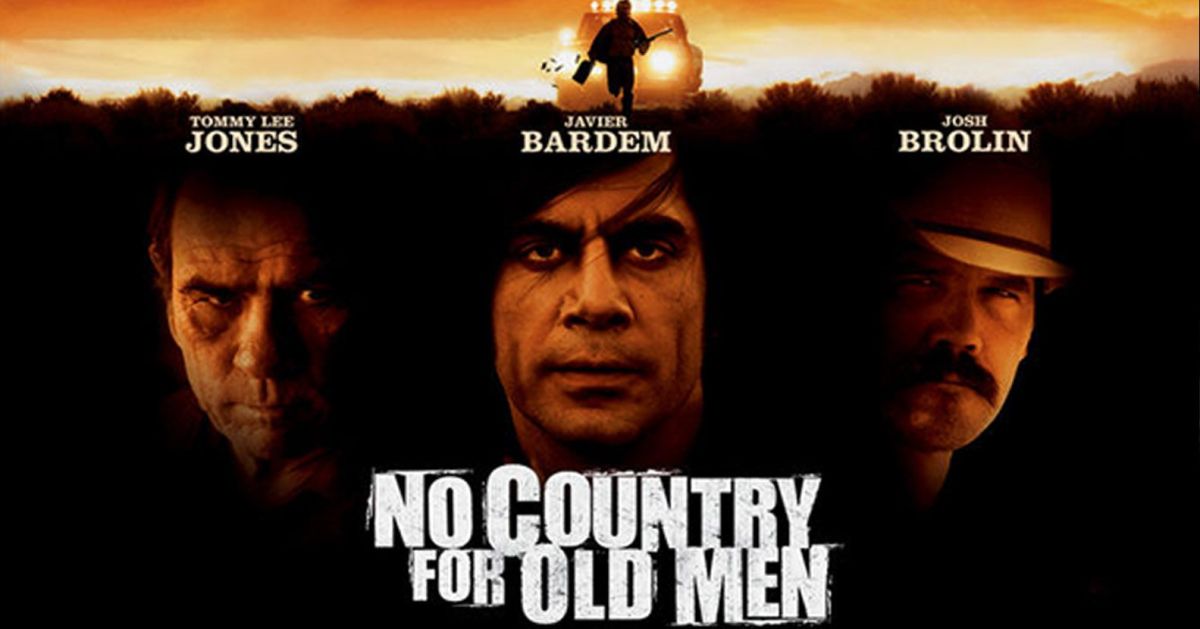
‘No Country for Old Men’ – Film Review and Analysis

Cormac McCarthy, a distinguished American author of such noteworthy novels of ‘The Road’ and ‘Blood Meridian’, is not as well known for ‘No Country for Old Men’, but it is an excellent and renowned novel in its own right. Out of the movies that have been based off of his work, ‘No Country for Old Men’, released in 2007, is considered to be the best book to film adaptation done so far when it comes to the written works of Mr. McCarthy.

Like his other novels, ‘No Country for Old Men’ focuses on the darker parts of human nature including violence, corruption, and the evil that people can do to one another without just cause. ‘No Country for Old Men’ was a hit at the box office and has an all-star cast including Josh Brolin, Javier Bardem, and Tommy Lee Jones. This film was directed by the Coen brothers and received critical acclaim including four Academy Awards including Best Picture and Best Supporting Actor for Bardem. While not the most upbeat and positive film, it’s a film that probes questions regarding fate v. coincidence, if destiny is pre-ordained, and how much the world is beyond our control despite our wishes and desires for it to be different than it actually is.

‘No Country for Old Men’ takes place in Texas, USA in 1980 after the conclusion of the Vietnam War, one of the bloodiest conflicts in American history, and which is referenced at points throughout the film. Each of the three main characters have personal experience committing violence although they do so for different reasons. Anton Chigurh, the name of the film’s antagonist is a man born without a conscience and is a hired killer. However, he doesn’t simply kill because he is getting paid with money to do so but rather because it comes naturally to him and sees himself as an instrument of fate. It does matter whether or not you are ‘innocent’ or not but if you happen to cross paths with him on the road, at a hotel, in a convenience store, he will judge your fate based on the basis of a coin toss flip. Chigurh’s chilling approach to life and how it is totally beyond any of your collective will and actions is an eerie recurrence throughout the film that the Coen brothers use to make him one of the greatest film villains of all-time.

Most relatable as a main character in ‘No Country for Old Men’, Llewelyn Moss (played by Josh Brolin) is a married man, Vietnam war veteran, and welder who enjoys hunting as a Texan. He is not a perfect person but he tries to do the right thing most of the time and is unfortunately a victim of fate as well during the film. On a hunting trip in the west Texas desert, he ends up seeing the aftermath of a drug deal gone bad with men and dogs both badly wounded and dead at the scene. His overall fate is set in motion when he takes two million dollars that does not belong to him and stashes it away.

As an audience member, you know that’s not the right action for him to take because it ends up causing him to be tracked by Chigurh as he is the contract killer hired to kill Moss and bring back the money. It’s not only that Chigurh who is after Moss for the money and this main character is up against fate which has conspired against him due to the stolen money that didn’t belong to him. Moss, at his heart, is a survivalist and wants to live on yet his actions cause himself and his wife to be put into serious danger.

Because of their predicament, Sheriff Ed Tom Bell, a Terrell County mainstay who is closer to retirement and death then he would like to admit is good at his job but is not sure that he can keep up with the violence and evil that he sees around him and which seems to be getting worse and not better. Throughout this film, Ed Tom is one step behind Chigurh and is unable to help Moss as directly as he can as sheriff because he is overmatched and isn’t able to keep up with a part of the country that isn’t always meant for ‘old men’ to live happily ever after.

“What you got, ain’t nothing new. This country’s hard on people. You can’t stop what’s coming. It ain’t all waiting on you. That’s vanity.” Sheriff Bell, throughout the film, becomes disenchanted with the way the world is and how senseless violence is unavoidable and can’t always be stopped. His ability to influence or change events is weakening and as an older sheriff, he’s slowing down and wondering what his ultimate fate will be whether its dying of old age or getting killed by a psychopath like Chigurh. Ed Tom Bell as a character in this film is aware that as human beings, we can only have control over the world around us and that we are limited to the choices we make regarding good and evil but our choices can also be sometimes constrained by the hand we are dealt by life itself and our circumstances. When it comes to the violence of the world, it is something that can never be truly vanquished as long as there is evil in the hearts of men.

The most prominent theme of the film relates to fate and self-determination. Each of the main characters chooses to see those two concepts differently. Anton Chigurh uses the cover of a ‘fateful’ coin toss to leave it up to the fates of his potential victims regardless if he was hired to kill them or not. He brutally rationalizes his violence through the use of ‘fate’ as if they had it coming all of their life. Llewelyn Moss, a simple hunter and welder, makes flawed choices as any normal person would but struggles to outrun his fate based on some bad decisions he made regarding money that was stolen and would be considered ‘blood money.’

Moss is a survivalist at heart but knows that he can only do so much physically and mentally to outrun his fate based on the choices he actually made that led him there. Ed Tom Bell, is the most morally sound character of the film but comes to the realization that he can only deal with the world as it is rather than the world he would like it to be. The choices he makes are his own but the world and its depravity and violence are out of his control and he can only react to those events rather than prevent them from ever occurring.

In various films of theirs, The Coen Brothers often present a bleak and nihilistic view about the world. ‘No Country for Old Men’ is their most serious and brutal look at the nature of violence, how deeply it seems to be embedded in the American landscape, and how everyone regardless if they are good or evil is subject to a fate that is out of their earthly control.

Overall, ‘No Country for Old Men’ is a great film in that it probes a number of moral questions relating to mankind’s capacity for both good and evil. The cinematography is stunningly impressive, the acting is excellent by every character and Bardem especially deserved to win an Academy Award for his chilling role as Anton Chigurh. This film is not meant for those with weak stomachs because the violence is both brutal and frightenly realistic. The Coen Brothers make movies mainly for mature audiences and this film is no exception.

The music of the film carries little weight and there is not much of a soundtrack and that is done on purpose collectively to build up tension and have the audience invest in every scene to see what happens next. It’s hard to classify this movie to a specific genre but it definitely could be best summarized as a dramatic thriller. The directing is excellent overall and ‘No Country for Old Men’ is truly loyal to its unique setting of west Texas and the U.S. – Mexico borderlands. If you would like to see a movie that deals in shades of grey rather than black and white, you will enjoy ‘No Country for Old Men’. However, be forewarned that it does not have a cliché happy Hollywood ending, which is refreshing since men and women do not always get to live to a ripe, old age.

‘There Will Be Blood’ – Film Review and Analysis

‘There Will Be Blood’ is a masterful, enticing film about how greed, corruption, and arrogance can destroy a man’s soul. Definitely one of the best films of this young 21st century, There Will Be Blood will be remembered for generations to come for its’ acting, cinematography, and direction. There are a number of things that make this film memorable including its’ cast, director, and musical composition.

In addition to all of that, the plot is written well, the characters are intriguing, and themes are still timely when compared to the modern era. While not the most popular film when it was first released, ‘There Will Be Blood’ has become a bit of a cult classic since it came out in 2007, over ten years ago. The film was nominated for eight Academy Awards and won two of them for ‘Best Cinematography’ and ‘Best Actor’ for Daniel Day-Lewis.

Considered the best Actor of his generation, Day-Lewis is a unique talent who can transform him into vastly different performing roles and deliver outstanding and award-winning performances. In addition to winning the Best Actor award for ‘There Will Be Blood’, Day-Lewis also won Academy awards for the films ‘Lincoln’ and ‘My Left Foot’, which were the exact opposite kind of roles to play as an actor.

Daniel Day-Lewis is able to stay in character for months or years on end to totally immerse him in both the story and the lines that he memorizes. It’s a truly impressive accomplishment to win one Academy Award but Day-Lewis was able to win three and is nominated for a 4th award for his most recent role in ‘Phantom Thread.’ Other noteworthy aspects of this film is the directing by Paul Thomas Anderson and the musical score by Jonny Greenwood who both set the tone for this movie’s themes and plot line.

Unbeknownst to most, the film’s screenplay and overall plot was adapted from American novelist Upton Sinclair’s novel Oil! Which focuses on the oil boom in the western United States during the late 19th to early 20th centuries, and the men who made themselves wealthy from the discovery. Instead of covering a topic as deep and complicated about the oil rush over a few decades in a dramatic film, Paul Thomas Anderson chooses a protagonist named Daniel Plainview (played by Daniel Day-Lewis) to be the lens through which the audience witnesses the birth of the lifeblood for the modern American economy.

Anderson’s goals for this film in my opinion were to show how the U.S. and its’ oilmen were not so innocent when it came to the pursuit of wealth. In the quest to reap the profits of the oil boom, there was a lot of backstabbing, double-crossing, and short-shrifting between different competing companies. This film takes a hard look at how the protagonist Daniel Plainview loses his soul in the pursuit of wealth and prestige. In addition, There Will Be Blood is an examination of the push – pull relationship between capitalism and religion and how they are often linked together to pursue their goals.

There Will Be Blood’s setting takes place at the turn of the 20th century. Daniel Plainview, the main protagonist starts out as an ordinary silver miner looking to become wealthy from that pursuit. However, this changes in 1902 when he discovers oil near Los Angeles, California, and decides to create his own drilling company. At the beginning of the film, Daniel can seem to be like any normal prospector of that era and also selfless in the fact that he adopts the son of a fellow co-worker who was killed in an accident. The boy is named H.W. and Daniel seems to care and cherish the child. However, the audience soon finds out that it is not love that Daniel strives to have in his life but rather wealth and influence in the oil industry.

Daniel promotes himself as a ‘family man’ largely in order to curry favor with other businessmen and potential employees of his company. The main antagonist to Daniel is Eli Sunday, a preacher in nearby Little Boston, California, who wishes to get a good sum of money from Plainview in order to build his church. In exchange, Daniel gets access to all of the land under the town in order to build wells to drill for oil where there is a vast amount underneath their feet. Despite the fact that they have an agreement in the exchange of land for money, Daniel betrays the deal and berates Eli for his religious beliefs and the exploitation of his son’s deafness for his own financial gain. It is clear to the audience that both men are out for themselves but need each other in order to acquire wealth or a religious following.

Such as has been the case at times throughout history, religion and capitalism have been intertwined in an unholy marriage leading to disastrous results. Daniel uses Eli in order to get all of the oil wealth from under the town while lying about the amount of money he would give Eli or the town itself to build up their infrastructure. Eli uses Daniel’s money to build his mega-church but exploits H.W.’s misfortune of becoming deaf as a means to accuse Daniel of being a ‘bad father’ and a ‘sinner’ even though the freak accident was out of his control.

If I had to highlight two example scenes for somebody to check out before watching this movie, it would be the ‘I’m an oil man’ speech by Daniel Plainview to the townsfolk of Little Boston. You can see from this speech and from the overall scene that he does not care so much for the people in the town or what he can do to help them. The music combined with his lying through the teeth boasts show that he is not being genuine and is in this pursuit of oil for himself and himself alone.

“I’m an oil man speech”: https://www.youtube.com/watch?v=AHz-zZoBnbc

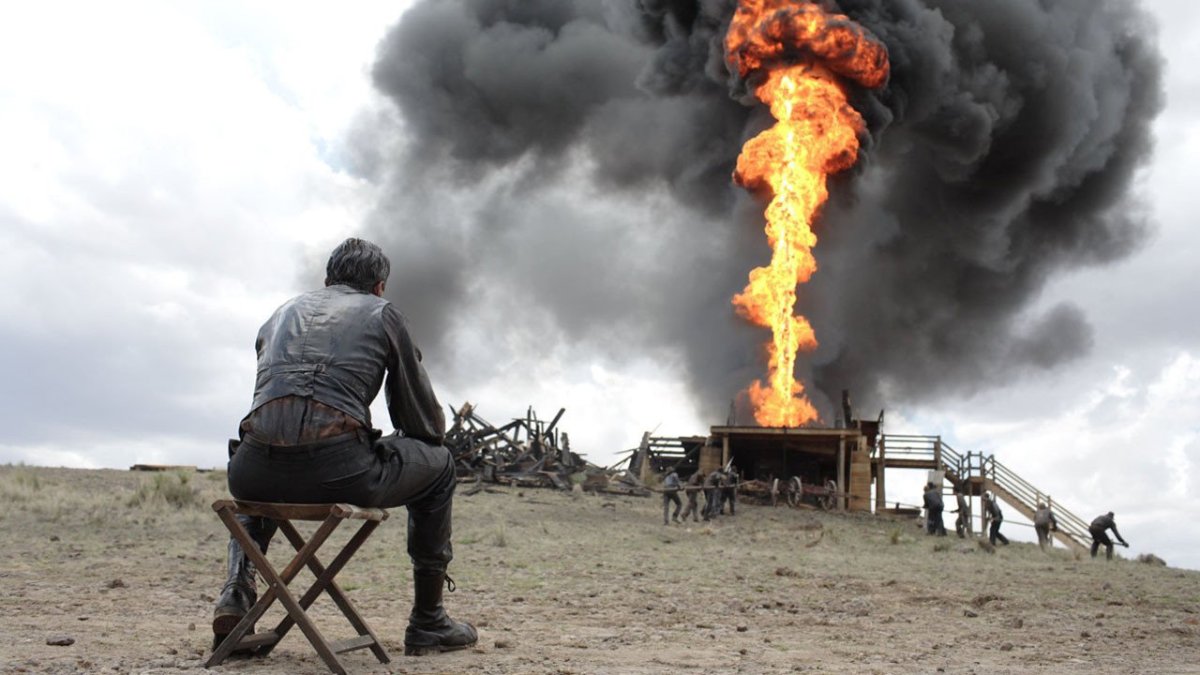
The other scene to highlight from this film is known as the ‘Fire’ scene, which is a brilliantly shot and executed scene. It’s amazing in its’ portrayal of the discovery of mass amounts of oil under a well indicating that Daniel Plainview is to become a very wealthy man. However, it’s at the same point in this scene where he realizes that his son, H.W. is to become deaf due to an accident near the well. At this scene, you can see Daniel change as a person to become more focused on his future as a ‘oilman’ than one as a ‘family man’ to H.W., his adopted son.

‘There Will Be Blood’ Fire scene: https://www.youtube.com/watch?v=GKJAH-XBNNs&t=240s

Throughout the film’s events, you can see that Daniel does not care about family or religion at all. While he enjoys the company of H.W., he holds over the fact that he is not his biological son and does not want to give him any financial support to strike it out on his own. Daniel has no care for organized religion besides getting permission to gain workers and oil from underneath the town’s feet while contributing the bare minimum to Eli’s church or the rest of the town. As his last name reveals, ‘Plainview’ has a plain view about human nature that is very pessimistic and jaded.

Daniel only cares to get as much out of people as to benefit himself and his company personally. You wonder though by the end of the film what is in it for Daniel besides money and alcohol. He may have become a wildly successful prospector and oilman but what does it all mean if he is left alone and friendless. If you’re going to go into business, why not do it for the benefit of others and not just yourself? However, the view of Daniel Plainview is that life is a zero-sum game and that you can’t trust anybody but yourself.

Eli Sunday, while a pragmatic preacher and someone who seems to care about the townsfolk of which who are part of his church, still does a deal gone south with Daniel Plainview in the pursuit of easy money. Eli is easily bullied by Daniel but still goes around trying to convince him to change his ways and repent as a sinner. While Eli means well and wants the best for the church and his town, he does not go about it in the right way leaving him at the mercy of Plainview.

While Eli Sunday and Daniel Plainview are both excellent at what they do, you have to consider that they are both very flawed human beings. They may have built a popular church to preach in (Sunday) or massive oil wells to enrich themselves (Plainview) but life will still be lacking for them if they have no love and compassion surrounding those achievements. That may be the main message for the person viewing this film. Wealth, notoriety, and personal prestige are not everything in life and that there are other things that you should focus on that really touch your soul as a human being.

“There’s a whole ocean of oil under our feet, and nobody can get at it except for me!” There Will Be Blood is an excellent story about extreme capitalism and religion gone wrong. Both protagonists pursuit of their own selfish goals hurts the other characters in this film. However, what would modern America be like without the preachers and the oilmen? While not as dramatic as this fictional movie, the discovery of oil and the spread of the gospel are intertwined with American history.

‘Training Day’ – Film Review and Analysis

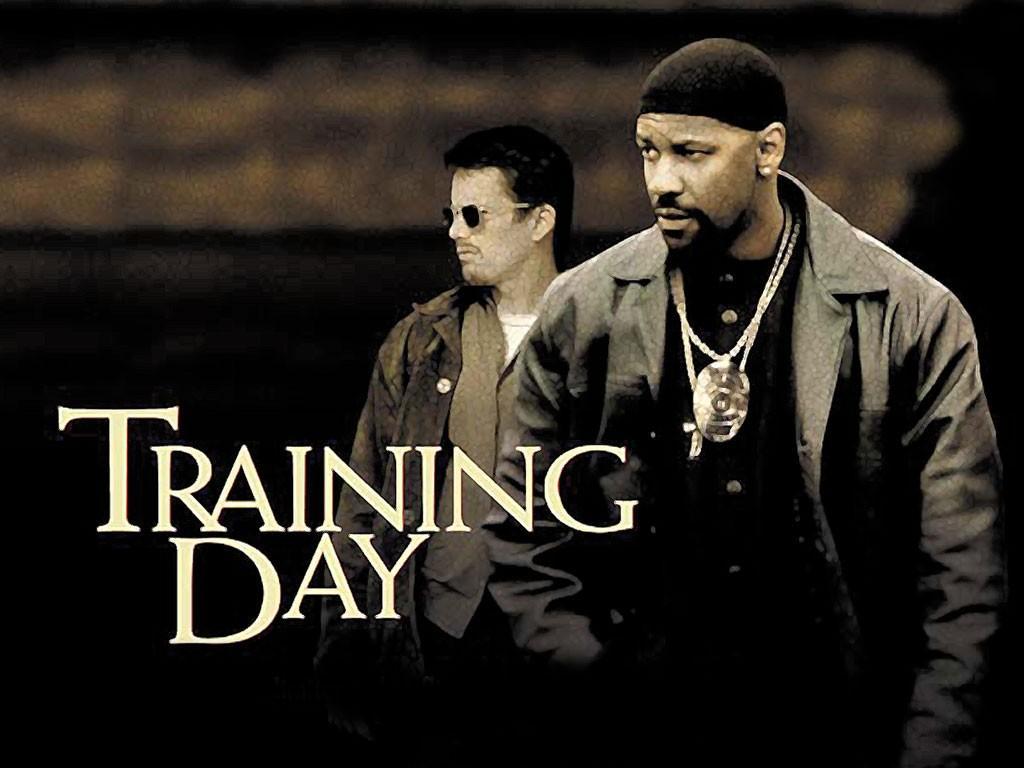
‘Training Day’ is the kind of movie that highlights two people who somehow cross paths as they are on opposite sides of morality. The men are shown to be both flawed in their own ways but still have a direct impact on each other as they spend more time together. Throughout this film, both men are trying to outwit each other in the hopes that they’ll come out on top. Because of this gamesmanship, this is no simple training day but rather a series of events that end up changing both of their lives for better and for worse.

The two main characters, one of them who could be considered a youthful idealist, is trying to better his community and his city by enforcing the law by the book. The other man has been around the block and knows about the grittiness of the job more so than his impressionable, younger rookie partner. He is a pessimist who discards the idealism that he likely brought with him when he originally joined the police force. He has abused his power as a law enforcement agent, is looking to maintain his authority and grow his wealth through intimidation and threats.

“It takes a wolf to catch a wolf” is a powerful quote from ‘Training Day’ that shows that in order to bring somebody down, you have to act and imitate who they are. The problem with this attitude is that sometimes you end up becoming your own worst enemy. However, to simply be a sheep is leading yourself to the slaughter as well especially when you’re dealing with the criminal underworld.

In order to survive as a detective, both men know that you need to be confident in yourself, steadfast in your beliefs, and willing to confront ‘the wolves’ out there if you want to catch one. It could be argued that the protagonist of this film starts out as a sheep and ends up becoming a wolf in order to catch the antagonist, a true wolf who has caught the wolves for many years. This kind of symbolism embedded within ‘Training Day’ makes it a classic film worthy of repeated viewings.

‘Training Day’, released in 2001 is a crime drama / thriller directed by Antoine Fuqua which follows two LAPD detectives who patrol and fight crime in gang-heavy neighborhoods. The film stars Denzel Washington as Alonzo Harris, a veteran detective and police officer who prefers wearing street clothes over a formal uniform and a badge. Ethan Hawke, who plays Jake Hoyt, a new detective and Alonso’s new partner who is entrusted in learning from Alonzo on his first day of detective training.

This film has earned excellent reviews over the years and is considered one of the best movies of the 2000’s. It achieved critical acclaim and success in theaters as Denzel Washington earned a Best Actor award for his role as Alonzo Harris. Truly, one of the best parts of the film is Washington’s acting and how he brings the corrupt yet smooth talking cop character to life. Det. Harris is a classic villain who ranks as one of the best antagonists in film history for his duplicity to others and displaying his indefatigable charisma while doing it.

From the opening scene of the movie, you can tell that Jake Hoyt is out of his league when it comes to matching up against Alonzo Harris. Unfortunately, not much of Alonso or Jake’s backstory is given in the film as well as how they came to become partners together. However, you can see early they are both polar opposites of each other in terms of their ideals, morals, and overall character. Jake is a young guy who’s trying to make his mark as a police officer and trying to do everything by the book as instructed by his superiors at the academy.

He is idealistic, fair-minded, and perhaps a bit naïve to the murky shades of gray that make up the world. Meanwhile, the audience can tell that Alonso has been on the wrong side of the streets for a while and has become purely jaded by his work as a narcotics detective. Instead of serving and protecting the people in his community and city, he cares only about his image, the reach of his authority, and the ability to make illegal money without compromising his career. What once was left of the idealism and the drive to do good by becoming a police officer has long been washed away. You could argue that Jake is a sheep while Alonso is a wolf who is going to prey on him.

The ultimate goal of Alonso is to bend Jake to his will by manipulating his moral code and his willingness to stay clean as a police officer. While Jake starts out the film as being a bit reticent, gullible, and naïve to what Alonso is doing to him, he is able to change over the course of the film to fight for his future, his career, and his life. The transformation of Jake Hoyt from a ‘sheep’ to a ‘wolf’ able to stand up to Alonso is one of the greatest displays of character development in film.

The great drama of ‘Training Day’ is to see both men push each other to the limits both mentally and physically to see who will be left standing after the training day and night is over. While Alonso lost his soul and is trying to corrupt those around him, Det. Jake Hoyt needs to harness his strengths, moral fiber, and intelligence to best Alonso at his own game.

At first, Alonso seems like an ideal partner to be with if you are in the police force. However, Jake and the audience find out that he is anti-social, manipulative, and willing to take what he wants without remorse. The challenge throughout the film for Jake is how does he change into a ‘wolf’ without losing his own moral code. Complicating matters for Detective Hoyt is the fact that Alonso isn’t the only corrupt police officer to deal with and that it goes to higher levels in both local and state government who know what Alonso is up to.

While some officials turn a blind eye to Alonso’s money-grabbing, wrongful beatings and killings, and others in the police force actually join in on it, Jake takes a moral stand and wants to bring Alonso to justice. However, we find out that Alonso is in fact his own worst enemy and the bad karma that he’s acquired over his years of corrupt wheeling and dealing will come back to haunt him.

Everyone’s luck eventually runs out and Alonso finds himself on the wrong end of a bad gambling streak with organized crime. For all of his manipulation, wrongdoing, and anti-social behavior, its’ Alonso’s desire for control over others including Jake that leads himself to ruin. To the opposite, Jake becomes a stronger person and a more effective police officer as the film progresses. He stops two men on the street from physically abusing a high school girl, which pays off for him later after he faces another near fatal betrayal from Alonso.

The concept of karma plays out for Jake, as he is able to resist the corrupting influence of Alonso and remain on the right side of the law by doing his job even under great personal pressure. Instead of letting the power and authority entrusted in him get to his head, Jake is able to become not just a better police officer than Alonso by the end of the film but a better human being.

While Alonso wasn’t always a corrupt cop, ‘Training Day’ makes you wonder what could have happened to this man to turn him into what he was originally fighting against. Overall, this movie is a morality tale of two men who have different intentions when it comes to being a police officer, which puts them at odds with each other. Their impression of the other man continually changes as they learn more about who exactly is the ‘sheep’ and who is the ‘wolf’ as their training day plays out.

‘Traffic’ – Film Review and Analysis

‘Traffic’ (2000) is one of those films that was way ahead of its’ time when it was first released over a decade and a half ago. It is a film that makes you think deeply hours or even days after you first watch it. ‘Traffic’ should be viewed more than once to really understand all of the nuances and subtleties embedded in its’ individual stories underneath its’ overarching central themes.

When compared to most other movies of the crime drama genre, ‘Traffic’ gained a lot of particular praise for the way its’ director and screenwriter were able to successfully weave multiple plotlines, characters, and settings together that slightly overlap with each other but are seamless enough as to not overburden the viewer with unrealistic connections.

‘Traffic’ is a movie that respects the intelligence of its’ audience and isn’t afraid to tackle the controversial topic of the ‘War on Drugs.’ It’s quite surprising when you think about how this movie was released back in 2000, but is still just as relevant and timely of an issue today as it was back when it was first released to the public. When ‘Traffic’ came out, it gained universal recognition and critical acclaim, and after viewing it for the first time, it’s easy to see why it was so noteworthy.

Steven Soderbergh directed ‘Traffic’, and Stephen Gaghan wrote its screenplay. Mr. Gaghan, who was responsible for another multi-layered film with multiple plotlines in ‘Syriana’ (2005), which also starred an ensemble cast of actors dealing with a different timely issue of oil and geopolitics in the Middle East. Unbeknownst to most people, ‘Traffic’ won numerous awards including for Oscar awards for Best Director, Best Supporting Actor, Best Adapted Screenplay, and Best Film Editing. This ensemble cast of actors for ‘Traffic’ is very impressive and includes star names such as Michael Douglas, Don Cheadle, Benicio del Toro, Dennis Quaid, and Catherine Zeta Jones.

At its’ core, ‘Traffic’ focuses on the illegal drug trade going on in both the United States and Mexico. One of the brilliant things about this film is the fact that each character in the movie represents a different perspective on the drug war whether they are a user, enforcer, trafficker, lawyer, or politician. It’s unlikely that a film like ‘Traffic’ would be made today but it’s distinctive editing, multi-use of colors depending on which of the three stories are being highlighted, and the political relevance of its’ themes could keep a lot of viewers away these days.

Its’ importance and timeliness today can’t be overstated as this film doesn’t try to impose a point of view on the audience. ‘Traffic’ would rather cause the individual viewer to ask questions, seek out more knowledge about the issue, and weigh the different opinions expressed by the characters throughout the movie. The three-color grades that are used for the three different stories are probably one of the most interesting things that I’ve ever seen when it comes to film editing. Each story in ‘Traffic’ could be its’ own movie in its’ own right, and the film is lengthier than most in terms of run time at two hours and twenty minutes total.

To briefly highlight the substance of the three stories without spoiling the whole movie, let’s go over each one to introduce the arch of the overall plot to prospective viewers out there. The first story is mainly set in Mexico City and other parts of the country, which highlights the efforts of two Mexican police officers that are trying to do their job as enforcers of the law under difficult circumstances. While trying to bring down local cartels in the easiest way possible, the two officers, one of them, Javier Rodriquez (played by Benicio del Toro) come up against corruption, and crime within their own ranks, which makes their ability as officers to keep their areas safe difficult with money and influence blurring the line between the good guys and bad guys.

Officer Rodriguez (del Toro) wants to do his best to keep his job, but to also hold his fellow policemen and elements of the Mexican army accountable for their actions without compromising his safety. He knows that ending the drug war is futile but he wants to keep his immediate community safe and that of its’ inhabitants. This is especially true if it means that the local kids in his neighborhood can play baseball at night with new stadium lights and not be at risk of joining gangs instead in their free time.

The second storyline in ‘Traffic’ takes place between the nexus of small town Ohio and the capital city of Washington, DC in the United States. A conservative judge, Robert Wakefield (played by Michael Douglas), is appointed to head the President’s Office of National Drug Control Policy, and he becomes an unofficial ‘drug czar.’ Mr. Wakefield doesn’t seem to be enthused with the new position he’s been given due to the long hours, lack of support, and political skepticism from the official circles within Washington. He tries to make the most of fighting the ‘war on drugs’ even if he knows deep down that it is truly unwinnable. Because he is away from his family for long periods of time, he is unaware that his daughter in high school has developed a drug problem over the past six months and is struggling with a heroin addiction now.

On top of dealing with being a father and the leader of a national drug control policy effort, he struggles to be a open and forthcoming husband to his wife. Compared to other characters in the film, Wakefield changes the most in his views on the ‘war on drugs’ as the audience can see that his mindset changes when this issue becomes personal and not just professional. With his daughter’s future and life at stake, the ‘war on drugs’ becomes less of an abstract war and more of a battle to save his family from falling apart.

The third and last storyline takes place mostly in southern California in the San Diego area where two DEA agents are conducting an underground investigation. The investigation, led by Agents Ray Castro and Montel Gordon (played by Don Cheadle), eventually leads to the successful capture and arrest of a top drug dealer, Eduardo Ruiz, who pretends to be a fisherman as his cover.

This arrest is instrumental in helping along the trial of suspected drug lord, Carl Ayala, who is thought to be the leading distributor of illegal drugs for one of the biggest cartels in the world. Ruiz is important to be kept alive and in good shape so that he can testify to the illegal activities of Ayala and his empire, but that is harder for the DEA than they ever imagined. With Ayala’s possible imprisonment and/or cooperation, the DEA agents are hoping to bring down this cartel, once and for all.

However, since Ayala and his wife, Helen (played by Catherine Zeta Jones), have a lot of wealth and influence still, they are able to put a damper on the DEA’s plans with the help of the shady family lawyer, Arnie Metzger (played by Dennis Quaid). DEA Agent Gordon and his partner are unable throughout the film to cope with the long tentacles of the drug cartels, and the amount of money and hit men the Ayala’s are able to use to threaten the safety of the DEA’s witness and the potential success of the prosecution against Ayala. You could imagine that this particular story in the film does not come with a happy ending.

Any of the three unique yet intertwined storylines of ‘Traffic’ could be ripped from newspaper headlines from over the past forty years. Ever since the beginning of the ‘war on drugs’ back in the 1970’s, there has been endless debate about whether there have been any successes or mainly just the upholding of the status quo. ‘Traffic’ doesn’t try to impose a simple yes or no answer to the ‘war on drugs’ question.

Rather, this film intelligently asks its’ audience to weigh the outcomes of these different stories that are affected by the drug trade, and the viewer is supposed to make that decision for themselves. When it comes to special movies like ‘Traffic’, there are no simple black and white solutions. There are many shades of grey in all of these human stories, and it takes deep insight, critical thinking, and analysis in order for slow changes of the status quo to actually occur.

While this is a fictional movie, it is made clear by the film itself that a lot of these characters are based off of actual people who make up all sides of the ‘war on drugs.’ Overall, the one key thing that the ending of this film makes clear to the audience is that there are no winners in the drug war, only losers, and it takes an impactful movie like ‘Traffic’ to make that fact absolutely clear.

‘Lord of War’ – Film Review and Analysis

Arguably one of the best movies of the 2000’s and Nicholas Cage’s best performance as a lead actor, The film ‘Lord of War’, released in 2005, is a realistic and unfiltered take in the role of illegal arms dealers, who facilitate the sale and transfer of arms trafficking throughout the international arms industry, which continues to be one of the world’s most profitable endeavors. ‘Lord of War’, while nonfictional in its’ story is actually based off of the lives and exploits of different real-life arms smugglers. ‘Lord of War’ is directed by Andrew Niccol, and stars a cast of Nicholas Cage, Jared Leto, Ethan Hawke, and Bridget Moynahan.

Nicholas Cage plays Yuri Orlov, the son of Ukrainian refugees from the Soviet Union, where he and his brother, Vitaly, help their parents out in their Ukrainian restaurant as cooks and helpers. While Vitaly is somewhat satisfied with this simple life of cooking borscht and washing dishes, Yuri wants to achieve the ‘American Dream’ and get out of Brighton Beach, Brooklyn, where he grew up after leaving Ukraine. He struggles to grasp at any real business opportunity in order to get out of the shadow of his ordinary life in Brooklyn.

However, one day when he is dining at a restaurant in Brighton Beach, the business idea he needs comes to life for Yuri in the form of a Russian mobster killing two would-be assassins and fending off their attack with AK-47 Kalashnikov rifles. Yuri believes that there is a lot of money to made in international arms sales and decides to go into business despite the protests of his brother, Vitaly, and the fact that his parents don’t know what he’s up to.

One scene in particular that stands out in Yuri’s beginning as an illegal arms dealer is when he tells his brother that since there are so many McDonald’s and gun stores in America already, he needs his business to be international in its’ focus. At first, Yuri feels that dealing arms is comparable to serving food at a restaurant. He justifies his nefarious business by narrating to the audience that its’ providing for a part of human nature in his opinion, the instinct to kill and harm others, as documented by the “earliest human skeletons who had spears in their heads and rib-cages.”

While Vitaly, Yuri’s brother has moral reservations about what Yuri is doing, he decides to join him later on as they crisscross the globe during the late 1980’s and into the 1990’s dealing with corrupt governments, genocidal dictators, and other more ruthless arms dealers as their competition. As Yuri becomes more popular and wealthy with the illegal arms business, he runs up against a by-the-book, incorruptible, and idealistic Interpol agent, Jack Valentine (Ethan Hawke), who tries unsuccessfully to track Yuri’s business dealings down by air and by sea.

Despite the fact that his brother, Vitaly, becomes a drug addict, and is an unreliable business partner, Yuri continues to run his illegal arms business as a one-man show. While a fictional story, ‘Lord of War’ is based off of real life conflicts and real life people who were involved in the illegal arms trade. These conflicts include the 1982 Lebanon War, the Soviet Union’s War in Afghanistan against the Mujahadeen, the civil war in Liberia during the 1990’s, etc. The movie does not gloss over the dissolution of the Soviet Union and the impact that the end of this cold war conflict had on the rest of the world in terms of arms sales. Yuri is able to become a very wealthy and powerful arms dealer in the film due to his family connections in Ukraine and the sheer weaponry, and arsenal that the Soviet military left unused.

Like his arms business, which is run under false pretenses, he does the same with his love life as he falls for a fashion model and childhood crush, Ava Fontaine (Bridget Moynahan), who he sets himself up with under the guise of a false photo shoot. Despite the fact that his parents don’t know about his illegal dealings, he lies to his new wife regularly, and his brother ends up in a drug rehabilitation center, Yuri does not give up on the arms business because he likes it, is good at it and is unable to go straight in legal business endeavors. However, in the wake of all of his ‘success’, innocent men, women, and children get killed by the guns, bombs, ammunition, tanks, planes, etc. that he sells and profits off of. As the film progresses, the director makes clear that Yuri has sold his soul in this dirty trade and it may cost him his life or the lives of others close to him if he doesn’t stop.

In a way, the audience who watches ‘Lord of War’ could be most closely aligned with the perspective of the Interpol agent, Jack Valentine. He knows that Yuri is a bad person and he wants to bring him down, but will it make any difference to bring one sole arms dealer down when billions of dollars are exchanged around the world each year through both legal and illegal arms sales. Like Jack, the audience may question the nobility of bringing down one arms sales dealer like Yuri when there are dozens of them out there, and Presidents / Prime Ministers of the major countries are the biggest arms dealers of them all.

Yuri never takes full responsibility for his business dealings during the film even if the sale of his arms causes bloodshed and death. He remarks bluntly to his brother, Vitaly during one scene: We don’t talk about it. How many car salesmen talk about their work? How many cigarette salesmen talk about their work? Both their products kill more people every year than mine, at least mine comes with a safety switch. Those guys can leave their work at the office, so can I.”

In Yuri’s opinion, he may be evil, but he’s ‘necessary evil’ because there are other people or governments out there like him involved in the business, but sometimes they ‘can’t have their fingerprints on the gun.’ Despite the pressures placed on him by family, friends, and the law, Yuri is committed to doing what he does best without having the moral imperative to stop. As I don’t want to reveal the ending, the first time you see it, you may be shocked but this film doesn’t deal in black and white, and that’s what I love about it.

There are numerous shades of grey that go along with the black and white, and the ending of ‘Lord of War’ falls within those shades of gray. ‘Lord of War’ doesn’t have your typical Hollywood ending, and that’s partly what it makes it such an alluring film. On top of the exquisite directing, acting by Nicholas Cage, Jared Leto, Ethan Hawke, etc. and the deep political and philosophical themes behind this film, I highly recommend it.

I’ll leave you with a quote from the film that is very poignant and is still true twelve years after ‘Lord of War’ was released in movie theaters. “While private gun-runners continue to thrive, the world’s biggest arms suppliers are the U.S., the U.K., Russia, France, and China…they are also the five permanent members of the United Nations Security Council.”

‘Field of Dreams’ – Film Review and Analysis

terencemann
“Oh…People will come, Ray. People will most definitely come.”

Field of Dreams is a quintessential classic American film and a movie that gets better with repeated viewings. Field of Dreams is almost thirty years old but has aged like a fine wine since it was released in 1989. This film is a unique mixture of the fantasy, sports, and drama genres and shows how crucial the game of baseball is to American culture. While some people who watch Field of Dreams think that this film is an original story, it is actually based off a novel by W.P. Kinsella titled, ‘Shoeless Joe’, which was critically acclaimed as well.

Part of the reason why Field of Dreams was so successful is because of the great cast of actors and actresses that helped make the film so popular. This was one of Kevin Costner’s most famous roles and also stars Amy Madigan, James Earl Jones, Ray Liotta, and the late and legendary Burt Lancaster who starred in his final role in this movie. Another fact that most fans of this film wouldn’t know about is that Field of Dreams was nominated for three Academy Awards including Best Original Score, Best Adapted Screenplay and Best Picture.

Of all the places in the world to hear a voice whisper the phrase, “If you build it, he will come…” a large cornfield in the middle of Iowa wouldn’t be your first guess most likely. However, that is exactly the premise behind Field of Dreams. A local farmer, Ray Kinsella, who has a troubled relationship with his father, John Kinsella, a former baseball player who wanted his son to follow in his footsteps feels guilt at what a strained relationship he had with his father before he passed away.

Ray then sees a vision of his cornfield being turned into a baseball field and decides to go along with this vision by turning his farm into a real baseball field. Ray is an adamant defender of ‘Shoeless’ Joe Jackson who believes he was actually innocent and didn’t do anything wrong despite the fact that he was banned from baseball due to the 1919 Black Sox Scandal. Ray’s father, John, was also a big defender of ‘Shoeless’ Joe Jackson and that’s the one major thing that Ray and his father could agree upon. His daughter, Karin, and his wife, Annie, are skeptical of Ray’s plan to build a baseball field at first but end up trusting his judgment after some convincing.

After Ray completes the building of his baseball field in Iowa, many months go by and the bills for maintaining the field start to pile up causing Ray and his family to feel some serious financial stress. When all hope seems to be lost regarding his vision, Karin spots a baseball player moving through the baseball field one night and Ray recognizes the player as being no one other than ‘Shoeless’ Joe Jackson (played brilliantly by Ray Liotta). John, Ray’s father was a big fan of ‘Shoeless’ Joe Jackson and would be thrilled to know that Ray’s vision came true and Mr. Jackson was here out on his farm in Iowa absolutely thrilled to being playing baseball again. Shoeless Joe ends up bringing some of his teammates from the Black Sox who were also banned from baseball due to the 1919 scandal and they start practicing together on Ray’s field.

Unfortunately, not everyone in Ray’s family can see the baseball players on the field. Ray’s brother-in-law, Mark, warns Ray about how much of a financial drain the baseball field is on his farm and Ray may have to foreclose on the property unless he is able to generate some money from it. Mark thinks Ray has gone crazy because he keeps referencing the baseball players on the field who Mark is unable to see. Luckily, Ray’s wife, Annie, and Ray’s daughter Karin can see the baseball players and believe Ray to be doing the right thing leaving Mark quite flustered and angry.

Ray ends up hearing another voice whisper through the field telling Ray to ‘ease his pain.’ After seeing how the local town wants to ban the books of one of his favorite authors from the 1960’s, Terence Mann, Ray ends up doing some more research about his favorite author and discovers that one of Mann’s dreams was to play for the Brooklyn Dodgers professionally. One of the reasons why Ray ended up quitting baseball even though his father wanted him to play professionally was because he read one of Terence Mann’s books when he was a teenager and never played catch with his father, John, again.

Ray and Annie both have a dream about Mr. Mann one night in which Ray is attending a baseball game at Fenway Park together with Terence. With Annie’s support, Ray goes all of the way to Boston to seek out Mr. Mann even though he has become a curmudgeon recluse over the past few decades and mainly keeps to himself. With a lot of convincing, Ray takes Terence to a baseball game at Fenway where they both end up hearing another voice telling the two of them to ‘go the distance.’ They also see the statistics of a baseball played of Archibald ‘Moonlight’ Graham who starred in only one game for the New York Giants but never had an actual at-bat. Ray and Mr. Mann do more research about Graham and end up driving together on their way to Minnesota to go see him.

When Ray and Mr. Mann travel all the way to Minnesota, they realize that Moonlight Graham became a doctor and had passed away over fifteen years ago in 1972. When Ray goes for a walk one evening, he realizes that he has transported himself to that time before Moonlight ‘Archie’ Graham had died and encounters him on the street where they have a conversation about his short-lived baseball career. The older Moonlight Graham is content to be a doctor but wishes for that one chance to face a major league pitcher.

After Ray and Terence leave Minnesota, they encounter a young hitchhiker on the road who introduces himself as Archie Graham. The two of them are amused by this crazy coincidence and take him with them to Iowa. During the ride, Ray confides in Terence Mann that his father was disappointed in Ray for throwing away his baseball career and for denouncing his father’s hero, ‘Shoeless’ Joe Jackson as a criminal. One of Mr. Mann’s books led to Ray putting down the baseball bat as well. Ray really wishes to make up with his father and make things right again if he had a dream to spare.

The amazing thing is that this young Archie Graham character gets to play on Ray’s baseball field in Iowa. In this only “major league” play, he is able to hit the ball into the outfield and get a sacrifice fly run in for his team miraculously after winking at the opposing pitcher as he always wanted to do even as an old man. Facing financial pressure from Mark and his associates, Ray thinks about selling the field to save his farm but Terence Mann encourages Ray to re-consider.

Considered to be one of the greatest monologues in modern film, James Earl Jones gives an amazing speech regarding the central role that baseball has played as America’s pastime and how it has formed our culture, and made the nation stronger during times of peril and tragedy. “People will come, Ray, people will most definitely come…” Terence Mann’s beautiful speech to Ray convinces him to keep the baseball field and not sell it off because he knows that baseball fans will come to Iowa to see their childhood heroes play America’s beloved game.

Mark, acting increasingly incensed, causes Ray’s daughter, Karin to fall from the bleaches, but Archie Graham who has a sense of both his past and future to come, steps off this magic baseball field to save Karin from choking. Mark then becomes a believer and sees all of these historical baseball players and encourages Ray not to sell the baseball field. He most likely believes that the field could be a major cash crop within itself and that people will most definitely come to see it. The older Moonlight Graham thanks Ray for the chance to make his dream to come true and that he doesn’t regret how he became a doctor too.

Terence is invited to leave with the baseball players one day to go through the cornfields to a destination that is unknown. Ray is going to miss Terence but trusts his judgment that it could ‘make one hell of a story one day’ about ‘Shoeless Joe Jackson coming to Iowa.’ Ray has his own family and can’t go with Terence who may be entering a realm or destination beyond our comprehension as the audience. Still though, he’s confident about his next destination and isn’t worried about not coming back.

One day, A younger version of Ray’s father shows up on the baseball field and Shoeless Joe Jackson references that the voice in Ray’s head was not Joe’s but rather Ray himself wanting to have a better relationship with his father and to ‘ease his pain.’ In the climatic scenes that can make even the most stone-hearted person cry, John is reunited with his son, Ray, on the baseball field, and he even gets introduced to Ray’s wife and his granddaughter, Karin, who he never knew in life.

John Kinsella remarks to Ray how “it’s so beautiful here, it’s like a dream come true.” The young John, asks Ray if this is heaven. Ray replies simply that, “It’s Iowa.” Even though John believes it still could be heaven, Ray asks if there is a heaven having never experienced it. John replies, “Oh yeah…it’s the place where dreams come true.” An uplifting emotional moment takes place in this scene as Ray Kinsella looks around at his beautiful farm, his wife and daughter happy and smiling, and to be reunited with his estranged father again as being a sign that maybe they, in fact, are all in heaven together.

Ray is so overcome with emotions at being with John again that before John leaves to go through the cornfields as the sun sets, he strikes up the courage to ask his dad to have a catch with him as they did in the old days. They start to throw to each other and Ray is struggling to believe that this is actually happening until John throws him the baseball, which Ray catches in his glove, and he can actually feel the soft baseball in his mitt knowing that his dream finally came true.

This last scene of ‘Field of Dreams’ is an iconic one and shows the power and love of the relationship of a father and son. Despite their differences, they still want to share the tradition of having a catch together after all of those years had passed between them. As the final scene fades out, you can see thousands of red lights emanating from the cars who are lining up to visit the ‘Field of Dreams’ and see their old childhood heroes play the game of baseball. People most definitely will come if you build it.

A truly remarkable film, ‘Field of Dreams’ is hard to get through without tearing up and having some tissues near you. More so than just Ray and John’s relationship, many characters have their dreams realized because of this baseball field. Archie ‘Moonlight’ Graham gets to swing the bat for the first time, ‘Shoeless’ Joe Jackson gets to play baseball again as apart of his shamed Black Sox team, and Terence Mann gets to see what’s on the other side of those Iowa cornfields. The powerful musical score by the dearly departed James Horner stirs your emotions with every scene, and you can feel the weight of Ray and John’s relationship with each sound of the orchestra. James Earl Jones steals the show by giving one of the best monologues about baseball and its’ importance within the history of America.

If you love the game of baseball and you enjoy a story about achieving your dreams when they seem out of reach, then you should watch ‘Field of Dreams.’ They really don’t make too many Hollywood films like Field of Dreams anymore and even though it was released in 1989, it’s still an American classic, which has stood the test of time. If you ever go to Iowa, that special baseball field is still there to visit. If you’re a father or a son, you’ll also really connect with this film and it will touch you in your heart and in your soul.