


Be Wary of Bread and Circuses

“There’s nothing wrong with distractions and wanting to enjoy an event, a spectacle, or indulge a bit but in the times that we’re living in, it’s important to realize that focusing only on ‘bread and circuses’ is something we can no longer afford to do.”

Who doesn’t enjoy sports or entertainment or both? People since the dawn of time have enjoyed being entertained or have been spectators or participants in games, sports, or other spectacles. At best, it is a thrilling adrenaline rush to be part of it to the roar of hundreds or thousands of people. At worse, it is a pleasant distraction from the humdrum of our daily life and our routines. There’s nothing wrong with distractions and wanting to enjoy an event, a spectacle, or indulge a bit but in the times that we’re living in, it’s important to realize that focusing only on ‘bread and circuses’ is something we can no longer afford to do.

The concept and phrasing of “bread and circuses or in Latin known as, “panem et circenses”, comes from the Roman Empire and belongs to the Roman poet Juvenal. Juvenal criticized how the Roman leadership would use free food such as bread and grant entertainment such as the gladiator events and other spectacles of the coliseum to distract the citizenry from societal and economic decay. While the Roman empire declined and fell as all empires do, today, in our modern world, we have major sporting events such as the FIFA World Cup and the NFL Super Bowl. Reality Television shows remain quite popular, and the media spends hours on celebrity scandals and gossip rather than focus on systemic issues affecting each of us daily.

Why is this an issue today as it was almost 200 years ago? I would argue that we are living through an era of upheaval including political instability, economic inequality, the effects of climate change, and the rise of authoritarianism. Distraction such as ‘bread and circuses’ help to keep people distracted from these ongoing issues and is a powerful tool to be utilized by those holding power. While sports and entertainment can be healthy outlets, it does not go well for a society when it is all-consuming, and people are overly reliant on it each day for fulfillment or pleasure. An active citizenry must remain focused on issues that affect them and their families as if they are paying attention and are engaged, positive change is more likely to occur as a result.

Political leaders can use major sporting events to help push their agendas forward as the times surrounding such events are the easiest to enact policies that are controversial but in which public attention is directed elsewhere. Politicians and leaders can also engage in controversies surrounding sporting events and how it related to ‘culture wars’ and ‘celebrity feuds’ to divert from ongoing political scandals or economic problems. Major sporting events are also used to stir national pride in a country and can be used to distract from real issues that the country is facing as well.

Sports and entertainment are big money for corporations and for wealthy individuals. Sports can reflect ongoing economic inequalities especially when multimillion-dollar commercials are paid for by a company rather than in investing in their own workforce’s compensation. Money spent in the billions of dollars each year on sports betting, gambling, or on tickets could have been funneled towards programs focusing on social well-being in health care, education, or infrastructure.

Celebrities and athletes should be compensated well for the work they do but there is an issue when ordinary workers who help make events, games, and other spectacles run smoothly are not paid a living wage. Thousands of workers are making decent pay, but it pales in comparison to what the ‘stars’ are making especially when they are the one preparing their food, keeping them safe with security measures, and helping stock the shelves and sell the merchandise.

There is also the ongoing debate in society about taxpayer money funding massive students and events that are not benefiting the surrounding community or the city itself. A lot of that money gets funneled to corporations in the ‘naming rights’ and to the ‘billionaires’ who see their net worth grow up as the sports franchise becomes more valuable over the years. A society where income inequality is high and is rising will be reflected in sports and entertainment as well. While there are some economic benefits to be made by the average person in these industries, a large sum of the gains to go to the wealthiest owners, players, and stars while the wealth does not ‘trickle down’ much, if at all.

While some of these issues do get coverage in the media although increasingly sparingly, I would argue that general news media, especially in recent years, has become sensationalistic and has focused on ‘click bait’ content rather than on serious investigative journalism. News outlets have prioritized celebrity feuds, sports gossip, and other trivial controversies that pale in comparison in terms of importance compared to real issues going on with the wider society. Viral content gets more clicks and eyeballs, especially on social media, and that’s where the focus has turned especially in recent years. Too much information at one time also presents most people from being able to decipher of what’s real vs. what’s fake and what to pay attention to because ‘information overload’ makes it hard to pinpoint what is likely to affect them the most and is worth paying attention to.

Similarly to the issues I’ve mentioned that ‘bread and circuses’ distract from each day, one issue that is the most immediate and wide scale in terms of ongoing effects is the accelerating climate crisis. Major sports and entertainment events all have an environmental cost and leave a sizable carbon footprint. When you tally up, the travel emissions, energy consumption because of the game or event, and the waste involved from having thousands of people in attendance, communities who support the events or games must deal with the aftermath, including both the financial and environmental costs.

While these massive events like the Super Bowl, the FIFA World Cup, and the Olympics due to pledge to be more sustainable and environmentally friendly, many companies do not end up footing the bill for the carbon emitted or the energy used. They can do so because the companies help sponsor the events and contribute enough money to them, so they aren’t as liable to help with the environmental aftereffects. Looking at two recent examples with the 2016 Rio Olympics and the 2022 FIFA World Cup in Qarar, these two events led to increased carbon emissions (FIFA) and environmental aftereffects. (Olympics)

While I am supportive of sports and entertainment and have been a fan of both, I still recognize the need to tone it back these days because excessive consumption of either will not help our society and our world be better. Sports and reality TV may seem as important as real issues, but they are not and never will be. People must stay engaged in what’s going on in their community, their country, and their world. As consumers of news, we also have the individual and collective power to choose which news outlets we give our time and our money to as well. If frivolities and ‘bread and circuses’ is all a news organization is offering, then it’s not a real news organization to begin with.

 Advocating for solutions to real issues, being a reliable voter, and volunteering in your community consistently can help keep the ‘bread and circuses’ to a more tolerable level. We all want to experience gratification and rewards in our lives and sports, or entertainment do both in providing that kind of dopamine hit but it’s a cheap one, and it’s not something we do ourselves. Political activism, working for social change, and developing our problem-solving abilities is real gratification in whatever issue you want to work on in our world. It’s not as instant and far from being easy but improving anything in society will take effort, discomfort, patience, and a lot of perseverance. Make sure you advocate for what you care about because celebrities and sports figures may not do the same, if at all.

You should stay focused on what’s important in the news, be civically engaged and encourage others in your life to do so. Remember to balance your consumption of entertainment and sports along with awareness of the issues and problems affecting you, your families, and your communities. Watching the Super Bowl is fine and I just did so recently as I have most years of my life, but if we continue to ignore political scandals, economic problems, and societal injustices, there won’t be much to celebrate in our society beyond that one day of the calendar year, where two teams of millionaires play a game that you can’t even be part of or even afford to go to.
A Most Difficult Year

“The first year I can remember in my lifetime where expectations are dashed, lives are thrown off course, and uncertainty is the norm rather than the exception is 2020.”

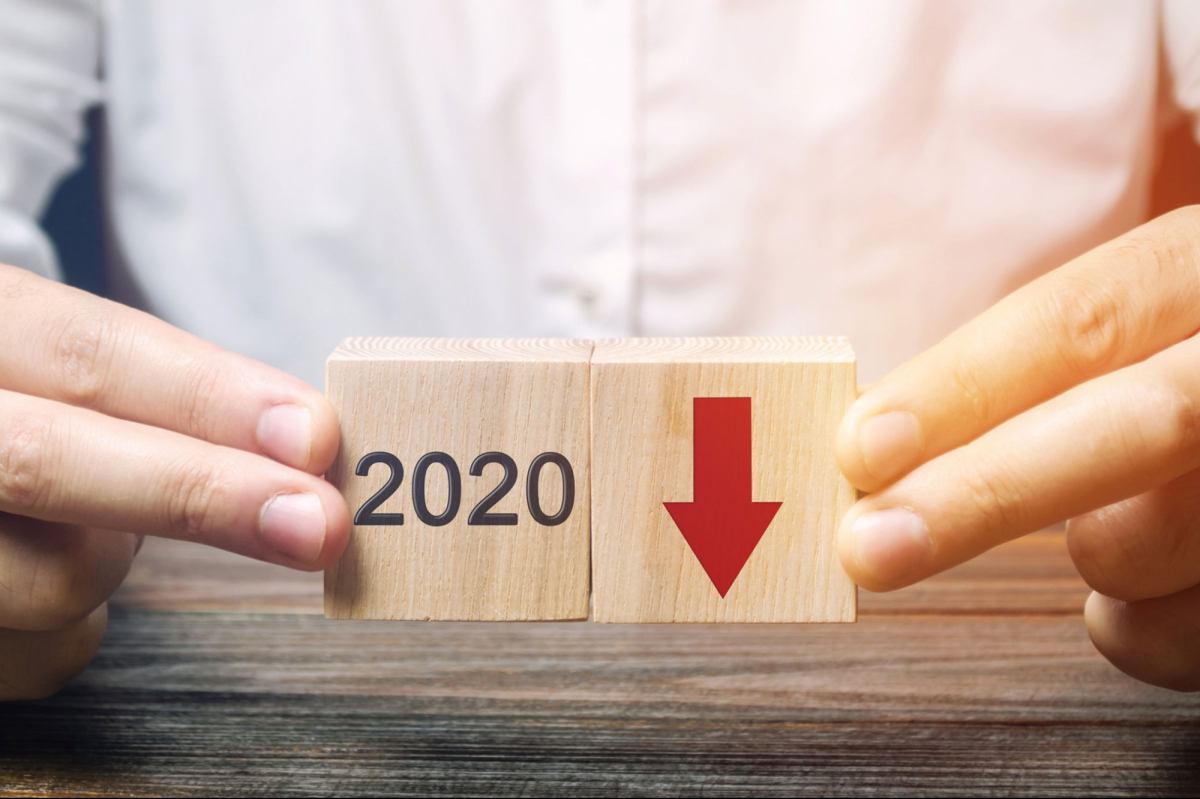
When you begin a new year, you expect the most out of it in terms of happiness, health, and opportunities. You hope for the best and pray to avoid the worst. However, there are going to be years that don’t live up to expectations and if anything, topple over any kind of expectations you had to begin on January 1st. The first year I can remember in my lifetime where expectations are dashed, lives are thrown off course, and uncertainty is the norm rather than the exception is 2020.

For the vast majority of people, 2020 has been a year to forget and to put behind us. Still though, there is a lot that we can and should learn from this year to make the next one a more forgiving and hopeful year. 2020 was a most difficult year and one long, seemingly almost never-ending ‘Black Mirror’ episode but I take solace in the fact that those of us who made it through this year are more resilient, better able to deal with uncertainty, and able to be happy with less instead of more.

We will always remember 2020 and while I am looking forward to putting it behind me, there are certain lessons to be drawn from a year like this one to ensure we never have a year as uniquely horrible as this one if only we start to change our behaviors and our actions collectively as a society. Beyond climate change, racial injustice, rampant inequalities, and a raging pandemic, there is also the sense that we are failing each other not just in terms of our institutions but also in terms of our commitment towards one another. Revitalizing faith, trust, and kindness as fundamental tenets of our society will be an important benchmark in seeing how much we have learned from the ills of 2020 and how not to repeat these failures in a future crisis of our own making.  

In a time where our institutions are increasingly unable to meet the challenges placed upon them, I hope we will recommit to them additional resources rather than letting them atrophy and decay after the pandemic is over. I think most of us have learned how necessary it is to have functioning and responsive institutions in a crisis and how much we can be hurt by not having them be available to us especially when time is of the essence. Institutions will only work as much as we allow them to so it’s up to us collectively to believe in them, to fund them properly, and to have leaders who will tell us the truth, understand our needs, and be able to respond effectively. When our institutions fail us, we are all put in the precarious position of relying heavily on our friends and our families, which is sometimes a luxury that not everyone has available to them.

Our personal connections cannot help us though when it comes to securing masks, getting us tests, or giving us financial relief when we have no other option. A pandemic shows us how vital it is to have both local and national institutions in place who can help and are there to help rather than leaving every man or woman for him or herself causing us to act more selfish or more distrustful of others. Pandemics can bring the best out of people and they can bring the worst out of people. It is my belief that this pandemic has shown us how much our institutions have become dysfunctional, how our leaders have been corrupted, and how our society has become way too individualistic especially in a time where cooperation and unity are so desperately needed.

Individuals have been heroic for all of us whether its health care workers, grocery store clerks, delivery people, teachers, first responders, etc. who have shown more care and urgency than many larger institutions who have taken months to actually do anything substantive to help people. They are doing their job well under extremely difficult circumstances and hopefully after this year, we will reward them more not just with our thanks but also with better treatment in terms of financial payment, respect, and providing them with more resources when they need them.

Those people on the frontlines like the rest of us have had to become much more resilient in the face of such difficult circumstances. As I have mentioned before in previous articles, Resiliency is one of the most important traits you can have in a year that has been so difficult. The ability to overcome challenges, break down barriers, and surpass obstacles has been so important in 2020 where our resiliency has been tested each and every day practically. Some have had to be more resilient than others, but we have all had to play our part in keeping each other healthy and safe.

Resiliency is also about keeping your spirits up, not letting yourself get too down, and reminding yourself that tough times don’t last forever but tough people do. If you thought you were going to make it through your entire life without facing a challenging or historic year, you would be mistaken. Whether it’s the Great Depression, World War II, or the tumultuous upheavals brought on by the 1960s or the end of the Cold War, each generation is inevitably going to face moments where their resiliency is tested, where comfort is hard to find, and where good days may be hard to come by.

However, if we can get through the hard years in our life like 2020, there’s not much you cannot overcome if you are able to maintain your resiliency. 2020 teaches us that life can go sideways, and that uncertainty is more part of the human conditions than we would like to admit. While we strive for some sense of predictability or comfort in our lives, we inherently know that is just not possible and that we are never guaranteed tomorrow. I hope 2020 also teaches us not to take anything for granted especially our health or our financial security.

Inevitably, we must always plan for uncertainty because it may be coming to us when we least expect it as it did in the early months of 2020. Whether it’s trying to save more money, keeping ourselves that much more physically fit, or keeping some extra food around the house in case of an emergency, I hope that we will plan for uncertainty to come our way again because you never know when it can rear its ugly head again.

Learning how to be more resilient and also knowing how to face uncertainty have been keys to overcoming 2020 but it’s also been about how to be more kind to others. You never know what someone else is going through, how they have been affected by the pandemic, and what they are risking by coming in to work every day when they can’t stay home. If you can’t be kind, then you shouldn’t say anything to anyone. Now, more than ever, it’s important to be kind to one another, to look out for your fellow man, to donate money if you are able to, and even if you’re feeling particularly generous, donate your time and effort to a food bank or a homeless shelter to help those most in need right now.

Also, be sure to check in on those people most close to you whether it’s a close friend, a family member, or someone who you are close to at your workplace or school. Now is the time to make sure everyone is doing as well as can be, that they are not isolated without hearing your voice or seeing your face virtually indefinitely. It is very hard to spend the holidays alone so now is the best time before a new year begins to check in on those people who matter to you the most. Lastly, do not forget to support your local businesses during these hard times whether it’s the mom-and-pop store down the street or your favorite restaurant since they could all use the business right now and it’s the right thing to do to support the economy.

Kindness is going to be even more important in the coming year than ever. Between economic troubles, a continuing pandemic, and political strife, it’s best to be kind always and to empathize with what other people are going through even if they are complete strangers. Give help to those you need and fight for those with less. Make sure you continue to hold people accountable for their actions whether it’s your neighbor next door or the mayor of your town or city. Only by strengthening the bonds of trust through kindness, honesty, and transparency can we begin to heal the divisions and disparities within our society.

The pandemic and other events in 2020 have shown us how important it is to work together, to look for one another, to do unto others as we would have them do unto us, and to deal with uncertainty and stay resilient as much as possible. I hope things get better for all of us in 2021 and I want to encourage everyone to follow the public health guidelines throughout next year.

Keep wearing a mask, stay socially distant, wash your hands frequently, take care of yourself physically with enough exercise and healthy eating. Make your New Year’s resolutions too if you believe in them so as to strive for new goals and opportunities in 2021. Be kind to others again, stay positive, and don’t let adversity throw you into despair.

I wish all of my readers a very Happy New Year and for a healthy, prosperous, and safe 2021 to come to each and every one of us.