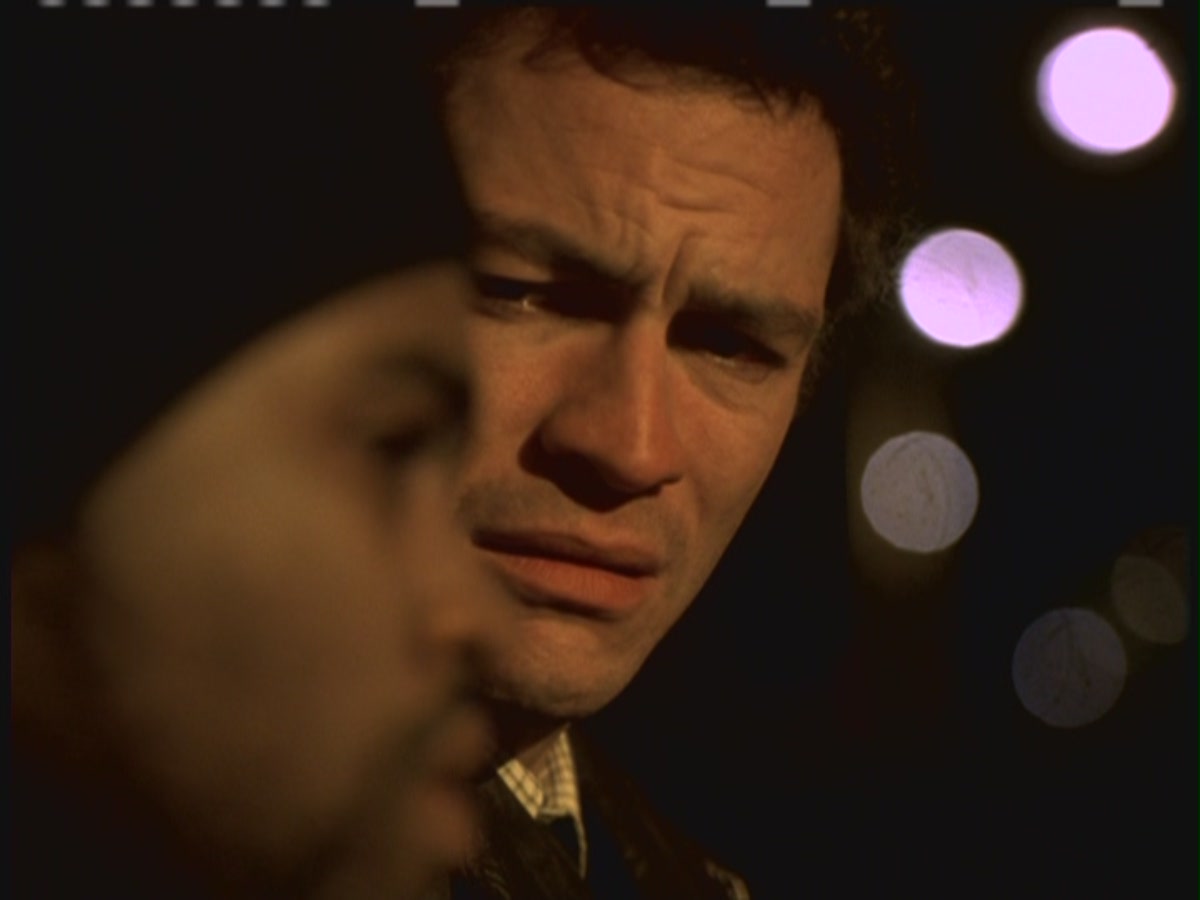
Anatomy of a Scene – ‘Family, Jimmy, Family’ (The Wire)

“This scene that I’ve titled, ‘Family, Jimmy, Family’ feels like it’s not just about the character, Jimmy McNulty, one of the leading roles of the show and a deeply flawed one at that but also could reflect on our own lives and who we prioritize in them.”

Sometimes, it takes a great work of fictional television to cause the viewer to do some soul searching themselves. ‘The Wire’ is not only an excellent crime drama and takes a critical lens to different facets of American society, but there are also multiple scenes that stand out for how they deliver truths to each of their characters for what they themselves are ignorant of or choose to forget. One of those scenes is short but whose succinctness of its message and point-blank delivery is something that you could do a deep analysis of. This scene that I’ve titled, ‘Family, Jimmy, Family’ feels like it’s not just about the character, Jimmy McNulty, one of the leading roles of the show and a deeply flawed one at that but also could reflect on our own lives and who we prioritize in them.

For a little bit of background before diving into the scene itself, which takes place in ‘The Wire’ Season 5, Jimmy McNulty is an obsessive workaholic and a functional alcoholic. His thirst for booze rivals his own thirst for self-satisfaction in being able to solve murders as a detective in the Baltimore Police Department. While he does crave justice, he craves adulation, admiration, and boosting his ego too because of his natural talents with regards to being a lead detective. However, without getting into too many details, the stress of the job, the clashes with his bosses, and the long hours cause him to drink heavily, carouse with random women, and cause him to lose control of his relationship with both his ex-wife and his children.

Jimmy loves being a detective, the purpose that comes with the badge, and the colleagues who he handles cases with. It’s also about the camaraderie that he finds in the work, the all-consuming nature of the work, and by outsmarting criminals and thugs who think they have successfully outwitted him and the police. The thing with letting work consume you is that it takes over your life and suffocates the rest of your identity with it. Jimmy is a great detective but throughout the show, the job takes a toll on his personal life and about separating work from his time out of work. When you have nothing but the job and the people in it, is it really a good life?

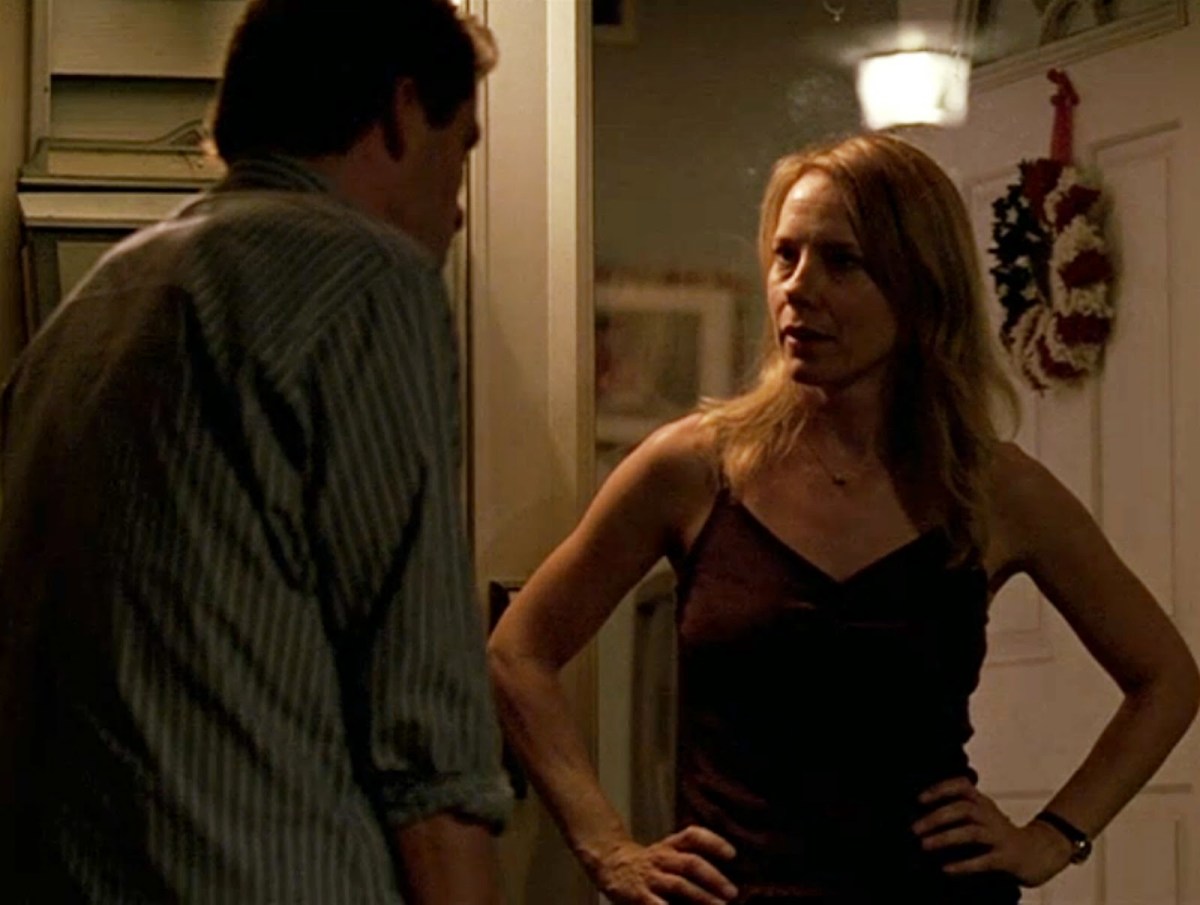
The scene I refer to titled, ‘Family, Jimmy, Family’ is instrumental in telling Jimmy McNulty what he needs to hear and what other workaholics need to hear: “The job won’t save you.” It takes five seasons but Beadie Russell, a Baltimore Port Authority police officer, introduced in season two, but for which her and Jimmy start to become romantically involved does what no one else in the show has the courage to do, tell Jimmy that the job isn’t everything.

“In the end, they’re not going to be there either.” Beadie sums it up in less than a minute with this scene but reminds Jimmy that the drinking pals at the bar, the workmates who he shares a patrol car with and shares stories, or even the girls he’s met for quick flings, they won’t be there when he really needs it. Yes, you can have fun, enjoy their company, and make the most of the work hours, but those people won’t be there for you when it comes to your health, wellness, and your overall fulfillment as a person. Beadie indicates to Jimmy that his workaholic behavior and his propensity for alcohol won’t save him and won’t give him the internal satisfaction he is always looking for.

“Family, that’s it. Family, and if you’re lucky, one or two friends who are the same as family. That’s all the best of us get. Everything else just…” Beadie pauses at the end of this scene and lets it all sink in for Jimmy. She knows she has reached him and lets him know that at your funeral or in your last days, you won’t have the girls you dated, the workmates or bosses, or the casual bar buddies you swap stories with there. If you’re lucky, you may have close family to care for you and maybe one or two close friends and that’s the truth of this scene not just for Jimmy McNulty of ‘The Wire’ but for all of us.

Beadie makes it clear that everything else goes away at some point once the job is done, the glasses are empty, and everybody goes their separate ways. Nothing is permanent but maybe your family will be there for you through most of it, thick and thin of life, if you’re lucky and until your dying day if you are truly blessed in that regard. Jimmy knows by the end of the scene that he needs to shift his priorities based on his body language.

He does not say anything back to Beadie, but he knows what she is saying as his new girlfriend is 100% true. It’s been a while since anyone has laid it out to him that clearly, but she gets through to him by telling him the unvarnished truth that he has refused to face up until that point. Like Beadie, we all need someone to cut through the nonsense and tell us what we really need to hear and if you watch this scene from ‘The Wire’, it’s not just Jimmy who this scene can reflect upon but maybe for our own lives too.

We all want to have productive work lives, make friends, and enjoy the fruits of our labor, but we must remember that it all does go away, and that family can be the most important and reliable thing we have throughout our lives if we’re lucky. Workmates, casual buddies and flings, and even friends come and go, but family can sustain us if we nurture those relationships and don’t let them atrophy and go away too.

Beadie reminds Jimmy to not let the work and the environment around his work consume him entirely. She saves him from himself to some degree but telling him what he needs to hear before he spirals out of control as a functioning alcoholic and workaholic. I think we all need a Beadie Russell in our lives to tell us what we need to hear rather than what we want to hear so that we can get that needed support to help reassess our priorities in life and change ourselves for the better.
‘The Perfect Storm’ – Film Review and Analysis

“In the fantastic 2000 film, ‘The Perfect Storm’, you get to see what it is like to be a full-time swordfish boat captain and his crew out of Gloucester, Massachusetts, who rely on catching enough fish, and specifically big swordfish, to make ends meet.”

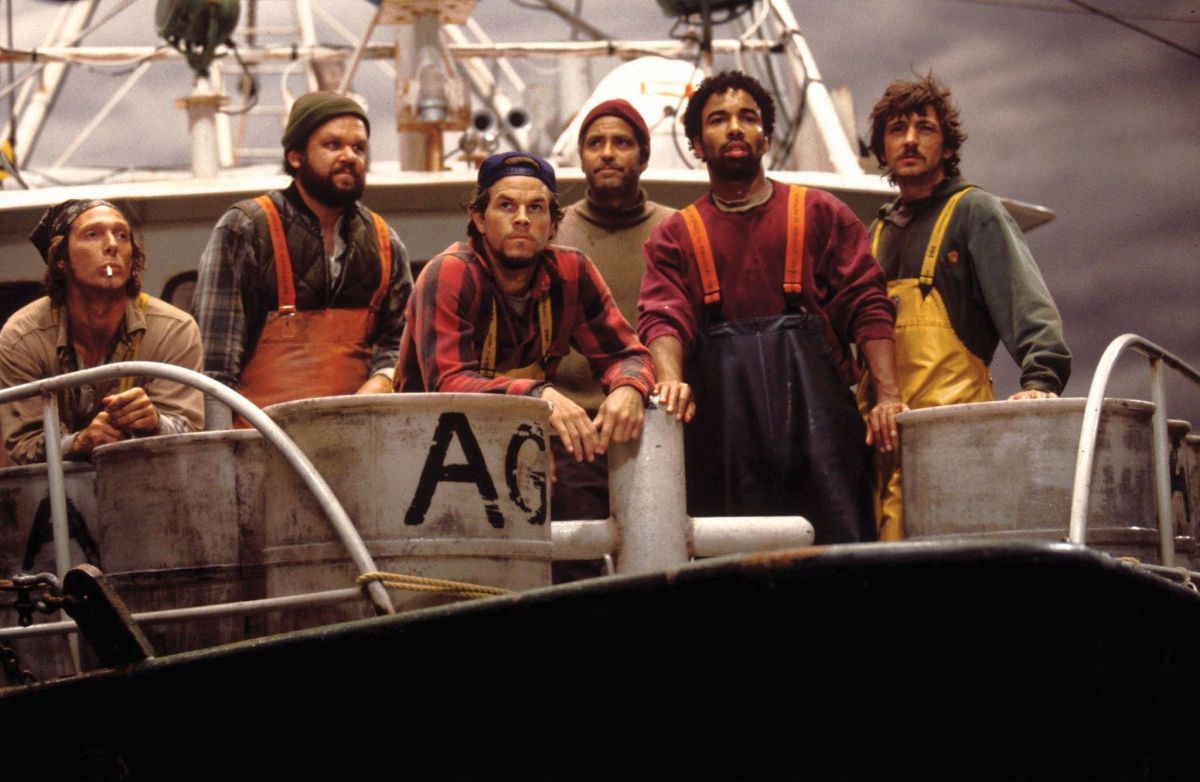
How far would you go to risk it all? If you had a family to provide for, a roof to keep over your head, or in need of enough money to make it through the next week or month, would you take up a livelihood that would often put your life at risk. If you are a fisherman or a fisherwoman especially those men and women who go hundreds or thousands of miles from home to do so, you know what it’s like to put your life at risk for your life’s work. In the fantastic 2000 film, ‘The Perfect Storm’, you get to see what it is like to be a full-time swordfish boat captain and his crew out of Gloucester, Massachusetts, who rely on catching enough fish, and specifically big swordfish, to make ends meet.

Whether or not you may be familiar with the lives of the fishermen and women who make catching fish their livelihoods, you cannot argue with how vital their jobs are to local economies like Gloucester. It’s not just Massachusetts but you consider the role fishing or crabbing or shrimping plays in states like Maine, Alaska, Louisiana, and elsewhere, which can provide a comfortable life for some while others struggle to make it depending on both the size and quality of their daily or weekly catch.

‘The Perfect Storm’ film, which is based upon a non-fiction novel of the same name, which was originally published in 1997 by talented American author Sebastian Junger, details the very rare occurrence in storm weather history from 1991, when a large-scale nor-easter or what’s known as an extratropical cyclone absorbed Hurricane Grace coming from off the coast of the southeastern United States. A lot of coastal damage and flooding occurred from this rare occurrence, but the worst effects happened to those vessels caught in between as the storms absorbed each other’s strength out in the north Atlantic.

Back in 1991, when technology was not as advanced, fishing boats did not have an advanced GPS and had to rely on old school maps, and did not have access to the latest weather reports. The one thing keeping them from being in the dark ages was an antenna and a fax allowing them to get reports via radio or from a machine. For the Andrea Gail fishing vessel, tragically, they were not able to avoid the worst of the ‘Perfect Storm’ and tragically, six men out of Gloucester lost their lives at the end of October 1991.

More than 24 years after the film’s release, it is considered maybe not as accurate to Junger’s book in terms of what were the last moments of the Andrea Gail or what the decision-making was like when Captain Frank William ‘Billy’ Tyne decided to go further out into the Flemish Cap beyond the Grand Banks where he and his crew usually fished in order to go above and beyond to bring back a catch that all of Gloucester would be able to appreciate.

While I admit that I have not read the book yet but hope to do so soon, ‘The Perfect Storm’ is one of those rare Hollywood disaster films that does not trivialize the risk that these men and women take to make a living as fishermen/women. ‘The Perfect Storm’ does a good job in fleshing out Billy Tyne and his five crew members, Robert ‘Bobby’ Shatford, Dale ‘Murph’ Murphy, David ‘Sully’ Sullivan, Michael ‘Bugsy’ Moran, and Alfred Pierre, and honors their memory by the actors who portray them such as George Clooney, Mark Wahlberg, and John C. Reilly.

The film sets up the story quite well including how a smaller than average catch or a lesser return on investment can put a strain on a captain and crew to go out sooner than they would want in the hopes that they can change their luck with the fishing ‘gods.’ It’s clear that these men and women are brave, bold, and love what they do regardless of the risk involved. They know the risk involved, are willing to do what it takes to feed their families and to put a roof over their heads, and even though the risks may outweigh the benefits, as Captain Billy Tyne says as part of the film’s opening monologue, “you know what? you’re a goddamn sword boat captain, is there anything better in the world?”

As ‘The Perfect Storm’ makes clear, this job is more than just a job, it’s a livelihood and a lifestyle for fishing communities like Gloucester, Massachusetts, which has had generations of fishermen for over four centuries since before the United States of America became a country. It is part of the identity of those towns and communities like Gloucester. When fishing is all that, you knew as a child from your parents, grandparents, and beyond, why wouldn’t it be what you attach your livelihood to as an adult?

In 1991, I’d imagine that the job itself had higher risk, but higher rewards given how lucrative it could be when the seas were not overfished or not as affected by climate change as they are now in 2024. The film does not judge the sword boat fishermen for the risks they make during that fateful period in late October 1991 because we will never hear from the six men who lost their lives then tragically.

We only have glimpses into their thought processes or the lack of information they had to make at the time. They not only had to contend with the stress of an ice machine breaking down, but also with not being able to fish as well in the Grand Banks, have an arrogant boss who owned the boat and was expecting them to deliver or face the consequences of losing their place on the Andrea Gail. A crew is also forced together in tight quarters for days or weeks at a time and they may end up disliking or fighting each other. There are also mishaps with a misplaced fishing trap, an errant wave casting a man overboard, or even catching an accidental shark that can harm or kill you if you are not careful.

Being a sword boat fisherman or woman is not for the weary or the weak-hearted. It is for sturdy, strong, and risk-takers who love what they do because they do what they love. It is not usually a job that you can get very wealthy from, but it can provide stability, a livelihood, and help you provide for your wife or husband or for a family if you do well enough. The film does an excellent job on not making the actors who play the six men of the Andrea Gail who lost their lives in ‘The Perfect Storm’ as caricatures but they really feel as they do exist and still exist today in terms of what they do for a living.

Their backgrounds, their motivations, their fears, and their doubts are fully fleshed out over the course of the film. The story is intriguing especially since it happened and was a tragic event in 1991 that affected millions of people in North America. We also think about how storms such as hurricanes are still with us today and are affecting people around the country regardless of if we believe that it can happen to us or not. We are always at the whims of mother nature, and we must realize that it’s important to be prepared for whatever it may throw at us regardless of if we are on land, sea, or air.

The men of the Andrea Gail knew that their job entailed risks, but they also knew that the love of the work, the livelihood and purpose it brought them, and how much it meant to others for what they did will help enshrine their memory in the hearts of their fellow Gloucester men and women forever as well as around the country and the world. Each man had love not just for the ocean, but also a love for their friends, family, and loved ones, which shines through in the film adaptation of ‘The Perfect Storm.’

One of the most beautiful parts of the film for me is when one of the youngest crewmen on the Andrea Gail, Robert ‘Bobby’ Shatform, who loses his life in the storm, tells his girlfriend Christina in a dream where she envisions him being there with her, for the last time, “Remember I’ll always love you, Christina, I’ll love you now, and I’ll love you forever. There’s no Goodbye, only love.”

The lives of the six men who were lost tragically at the end of October 1991 live on forever in the hearts and memories of the people they loved and for the lives they touched in Gloucester and elsewhere. The movie, ‘The Perfect Storm’ is a great tribute to who they were, what they did for a living, and the courageous and bold actions they took to make a living and to help feed others in that community and elsewhere with their lives as fishermen.

I hope you’ll watch this excellent film and read the book it’s based on as I hope to do so for the latter soon. Between an excellent cast, great story pacing, stirring music from the dearly departed composer James Horner, beautiful cinematography, and impactful visuals that have held up to this day almost 25 years later since the film’s original release, ‘The Perfect Storm’ is an excellent movie and one of my favorite films I’ve ever watched.

I’ll leave you with the entire portion of the excellent monologue from the film’s opening and closing scenes to describe the lived experience of being a fisherman or women out on the sea and the pure joy and peace it can bring them when they are heading out to the sea:
“The fog’s just lifting, you throw off your bowline, throw off your stern, you move out the South Channel, past Rocky Neck and Ten pound Island, past Niles Pond — where I skated as a kid — on to Black Bess Point, blow your airhorn, and throw a wave to the lighthouse keeper’s kid on Thatcher Island — then the birds arrive — Blackbacks and Herring Gulls, Big Dump Ducks and Green-Legged Coots. The sun hits you; you head north and open up to twelve — steaming now — the guys are busy and you’re in charge…And you know what? You’re a goddamn sword boat captain. Is there anything better in the world?”

‘Leave the World Behind’-Book and Film Comparison

“Whether you prefer the visual spectacle of cinema or the intimate exploration of characters through Rumaan Alam’s written narrative, “Leave the World Behind” provides a gripping tale that will leave you questioning the boundaries of trust and the resilience of humanity when catastrophe strikes.”

‘Leave The World Behind’ is a thought-provoking novel, written by Rumaan Alam, first published in 2020. The story of both the book and the film adaptation revolves around two families who are forced to come together in an unexpected turn of events. Both mediums for this story explore the themes such as fear, trust, and the complexities of human relationships. Recently, in 2023, ‘Leave the World Behind’ was adapted into a film, released on the Netflix streaming platform, which has captivated audiences with its compelling narrative, largely based on the book version.

Set against a backdrop of uncertainty and increasing tension that progresses through both the novel and the film versions, ‘Leave the World Behind’ guides the audience through a suspenseful and gripping narrative. The story begins with Amanda, Clay, and their two teenage children, Rose, and Archie, who live in New York City, who based on Amanda’s yearning to ‘leave the world behind’ for a little while at the beginning of the story, head off on a vacation to a remote house they have rented on Long Island. The stage is set for tranquility, summer relaxation, and family bonding, but their idyllic respite is soon interrupted by unforeseen circumstances.

Soon after their arrival, an elderly couple, Ruth and G.H., surprisingly appear at the doorstep. In the movie, Ruth is the daughter of G.H. or George but in the novel, she is his wife. However, in the main storyline, they claim to be the owners of the rented property, leaving Amanda and Clay in a state of confusion and unease. The intrusion tests the boundaries of trust and raises a myriad of questions such as the circumstances beyond which Ruth and G.H. have fled the city to come back to their summer house.

During a series of unprecedented events, the two families find themselves isolated from the world and confronted by their own fears. In addition to the Sandford and Scott families, for which both the novel and film focus on, the World acts as its own character, representing the unknown and unpredictable circumstances that affect the protagonists, who may want to escape from it but are sucked into the growing chaos and the calamities that are befalling it.

The novel unfolds in a secluded Long Island vacation home miles away from the urban chaos, yet the families cannot remain isolated from the chaos surrounding them forever. Its remoteness adds to the suspense as the families grapple with their limited resources, increasing isolation, and the unknown circumstances that encroach upon their peace.

Because of what’s going on in the world, the families have no access to any information that could help them piece together what’s going on. The phones are not working, the TV signal is out, and even a GPS or satellite phone connection is unable to be used as a fail-safe as the two families try to make sense of what’s going on in the outside world. Without spoiling either the book or the film adaptation, the main events of ‘Leave the World Behind’ entail the following:

Amanda, Clay, and their children settle into the remote vacation home with the joyful anticipation of a peaceful getaway. Ruth and G.H. arrive, insisting that they are the owners of the rented property, causing confusion and concern for Amanda and Clay. As the families try to make sense of Ruth and G.H.’s sudden arrival, they face a complete loss of communication with the outside world. This event further amplifies their vulnerability and isolation.

The families begin to experience a growing sense of unease as bizarre occurrences, such as power outages and mysterious sounds, escalate. Fear and paranoia start to consume their thoughts and actions. Together, the families must navigate the tensions and challenges that arise due to their forced cohabitation with each other. The increasing fear casts doubt on their ability to trust one another, as they slowly unravel the truth behind their predicament. Amanda, Clay, Ruth, and G.H. venture beyond the confines of the house in search of answers. They encounter strange phenomena, unexplained events, and a world teetering on the edge of chaos. The unknown becomes their companion, adding depth to their personal growth and transformation.

As the families face the conclusion of their isolated journey, the fate of the world hangs in the balance. The climax leaves readers questioning the boundaries of human connection and the fragility of our existence on the planet and our inability to control the changes that affect our world.

‘Leave The World Behind’ in both the film and the book offer a gripping narrative that delves into the complexities of human relationships and the primal fears that lurk within us. Rumaan Alam’s novel and its film adaptation effectively convey the story’s themes of uncertainty, trust, and the vulnerability of our connectedness to technology and modern conveniences. Through the characters of Amanda, Clay, Ruth, and G.H., both readers and moviegoers will be compelled to question their own responses to challenging circumstances, leading to a deeper understanding of the human condition, and how we react in times of crisis and stay resilient in the face of uncertainty.

Adaptations play a crucial role in bringing stories to life in different mediums. “Leave The World Behind” is an example of adding to the richness of the central story by being a captivating tale that can successfully be adapted into both a film and a book. The film adaptation of “Leave the World Behind” takes the audience on a thrilling and suspenseful journey, that is more of a thriller than a slow-moving drama that the book is. The novel version of “Leave the World Behind” focuses more than the film version on suspenseful and survival themes, offering a more immersive experience through its written narrative.

Despite the changes involved with making Rumaan Alam’s book into a Netflix movie, the overall themes have remained the same, which make both adaptations as appealing as possible because the core messages have not been lost in the transition.

Humanity’s capacity for survival is a major theme explored in both the film and book versions of “Leave the World Behind”. The characters face overwhelming challenges and unexpected circumstances, and their resilience and ability to adapt become crucial to being able to survive this world-changing event. This theme encourages reflection on our own strengths and perseverance in the face of adversity when the world seems to be falling apart.

Both the film and book versions delve into the complexities of trust and its relationship to isolation. In a world where human connections are vital to future survival; the characters confront their fears and insecurities. The uncertain nature of the situation prompts them to question the intentions of those around them, blurring the lines between friend and foe, and who can be trusted in this world gone awry.

The fear of the unknown is another prevalent theme in “Leave the World Behind”. As the characters navigate through an uncertain world, their fears and anxieties take center stage in how they view themselves and each other. The unfamiliar couple in the story serves as a catalyst for this fear of what’s out of the ordinary to start with, leaving the audience questioning their true intentions, and adding an element of suspense and intrigue.

While both the film and book versions of “Leave the World Behind” explore these core themes, they differ in their execution and portrayal. The film adaptation of “Leave the World Behind” brings the desolate post-apocalyptic setting to life with captivating visuals, action sequences affecting the characters, and more information regarding the reason why the world is in trouble, enhancing the sense of isolation and uncertainty. The use of cinematography and special effects heightens the tension and adds a visually engaging aspect to the overall story.

The novel provides a deeper exploration of the characters’ thoughts and emotions, allowing readers to truly immerse themselves in their journey and who they are as individuals. The power of written language enables readers to form a more intimate connection with the characters, enhancing the suspense and impact of the story, as well as what their internal dialogue is telling the reader as they go through the events affecting the world. As a differentiator, the film employs quick cuts and intense sequences to maintain a fast-paced narrative, while the book offers a more leisurely pace, allowing readers to savor the intricacies of the plot, and unravel the layers of suspense at their own pace.

Character development differs between the film and book versions as well. The film adaptation relies on visual cues and actions to convey the characters’ emotions, while the book delves deeper into their inner thoughts and motivations. This distinction provides a more nuanced understanding of the characters and their personal journey in the book. In conclusion, “Leave the World Behind” in both its film and book versions, presents an intriguing and suspenseful story that explores themes of dealing with survival, maintaining trust with others, having resilience under duress, and managing one’s fear. The film both captivates with its visual shots and its thrilling sequences, broadening our understanding from the book of how the world is really ending, while the novel offers a more immersive and introspective experience of how the characters are changing from chapter to chapter.

Whether you prefer the visual spectacle of cinema or the intimate exploration of characters through Rumaan Alam’s written narrative, “Leave the World Behind” provides a gripping tale that will leave you questioning the boundaries of trust and the resilience of humanity when catastrophe strikes. Discover the power of when adaptation is done well in storytelling and explore the captivating novel and movie adaptation of “Leave the World Behind.”

‘Extrapolations’ – TV Series Review and Analysis

“Recent wildfires in Canada that have caused the worst air pollution in decades across the Northeast U.S. this week have made me think about how our lives are becoming more and more impacted by the effects of climate change.”

Recent wildfires in Canada that have caused the worst air pollution in decades across the Northeast U.S. this week have made me think about how our lives are becoming more and more impacted by the effects of climate change. Growing wildfires, powerful hurricanes, sea level rise, melting glaciers, species extinction, and more acidic oceans are all causes for concern for people around the world and no country or people is likely to be exempt from at least one of the effects that have already been documented. What happens though in the next 50 years when we don’t take enough action now and in the past to reverse a possible future of no return?

That question is the premise for the first mainstream drama to focus on a future where climate change wins the battle that we are currently on track to lose if we don’t make drastic changes to our impact on the world around us. ‘Extrapolations’ is not a run of the mill documentary about climate change nor is it a disaster film that has become popular in Hollywood regarding disastrous storms. Instead, it is a rather intelligent take on the world soon when humanity cannot prevent global temperatures from staying at or below a 1.5-degree Celsius increase. The show covers what happens when humanity fails in its objective to keep the warming of the planet to a tolerable level. What starts out as 1.5 degrees Celsius becomes 2 degrees than 3 degrees until we become way past the point of no return past mid-century when 3.5 – 4 degrees Celsius is where the planet is headed.

Throughout the show’s eight episodes, we see the effects on the planet from Miami, Florida to New York City to London to Tel Aviv, Israel to Mumbai, India. From sea level rise wiping out the most popular nightlife areas in Miami including a historic synagogue to the constant wildfires that engulf Israel and the Middle East to limited outdoor time in Mumbai each day due to the overbearing heat and polluted air that causes deleterious effects to one’s health, the writers paint a grim yet realistic picture on what will happen if our climate change efforts fail miserably. More so than just the settings that are portrayed accurately in terms of how these popular cities may face their own negatives based on their geographic location, the characters in ‘Extrapolations’ have fully developed backgrounds, and you really get to know each of them over the course of the TV series.

There is a wide berth of society who are represented in this show from the wealthy billionaire who is interested in maximizing profits and takes advantage in his corporation from a dying planet to the Rabbi who is trying to wrestle with his faith in God as his synagogue slowly floods from the rising sea. What ‘Extrapolations’ does well is that it acknowledges that no one is purely innocent or purely guilty because of how badly climate change has warped the planet. Everyone is responsible in their own way, some more than others, but humanity is to blame for how we did not act quickly or unite fast enough to overcome our differences to reverse the worst effects to come.

The human effects of climate change are also explored such as how we are affected when we cannot go outside or must stay indoors to avoid heart or lung issues, why the extreme heat can prevent any work or leisure to take place, and how loneliness, depression, and atomization becomes more common when we despair at the worsening state of the planet.

My favorite episode in the eight-part TV series is ‘2066: Lola’ where we see how much augmented and virtual reality has come by then so that people are paid essentially to pretend to other people as a gig job and earn credits or money that can help improve their lives and insulate themselves more from climate change’s effects. The desire to connect with other people to distract ourselves from a dying planet is truly the TV series’ most impactful episode and makes you think about how much the emergence of augmented reality will make us both lonelier than ever and wanting to connect with others in untraditional and sometimes unseemly ways.

‘Extrapolations’ as a show really gets the A-list attention for a futuristic take on climate change’s effects on humanity with movie stars like Meryl Streep, Forest Whitaker, Kit Harrington, Edward Norton, Matthew Rhys, Gemma Chan, David Schwimmer, etc. All eight episodes are boosted by a stellar cast who really pour their hearts into the performances they give. I believe that they all truly cared about the project and how important it is to have a show like this become the center of attention. While Apple has been rightly condemned for some corporate practices that are harmful to the planet, it is a major TV show and movie distributor and should be commended for being the first major studio to have a series that doesn’t shy away from the brutal honesty of where we are headed if we don’t mitigate the worst effects of climate change to come.

If you are reading this article in 2023, you already know that the sea levels are starting to rise, wildfires are growing in both size and scale, bigger and stronger hurricanes that are also becoming more powerful, and deadly heat waves are becoming more common. While the first episode in this series takes place in 2037 and the last one ends in 2070, climate change is already here in 2023 as recent news events make clear and it has been affecting us for quite some time.

I encourage ‘Extrapolations’ to be watched by viewers with an open mind but also a commitment to do better for the planet. Do not shy away to act and make your voice heard regarding climate change after watching the series. You may think you know how bad it can get in the future from watching this series but ‘Extrapolations’ importance as a show is that it is as clear as day to where we will end up if we don’t hit the collective climate target goal of 1.5 degrees Celsius or keep as close to 1.5 degrees as possible.

While the show does mention possible stopgaps and solutions that can mitigate the damage, by that time in the 21st century, these solutions are risky with side effects on the planet that can only be speculated about. While the billionaire tycoon character was likely modeled after a few people who are prominent in our current age, as the show makes clear, the blame does not fall on him alone. We all can do our part by taking action to reduce our own carbon emissions, to encourage others to petition for policies and solutions now instead of 10 to 50 years down the line.

If the show has one central message after its eight impactful episodes, we all have stake in making sure this planet is livable for future generations. Even if you won’t be around to see the worst of climate change, we all should do our part, advocate for solutions now, and to hold people in power and of great wealth accountable if they do not action as well on a larger scale. The clock is ticking and as ‘Extrapolations’ highlights from 2037 to 2070, it can go downhill and get worse than what are experiencing already in 2023. Let’s not make the show a reality but keep it as a cautionary tale of what would have happened if we did not act strongly enough in these first decades of the twenty-first century.

I recommend ‘Extrapolations’ based on its great acting, stunning visuals, excellent writing, and interesting plots, but most importantly, because it focuses on the biggest issue of our time and one that we cannot ignore or downplay anymore.   

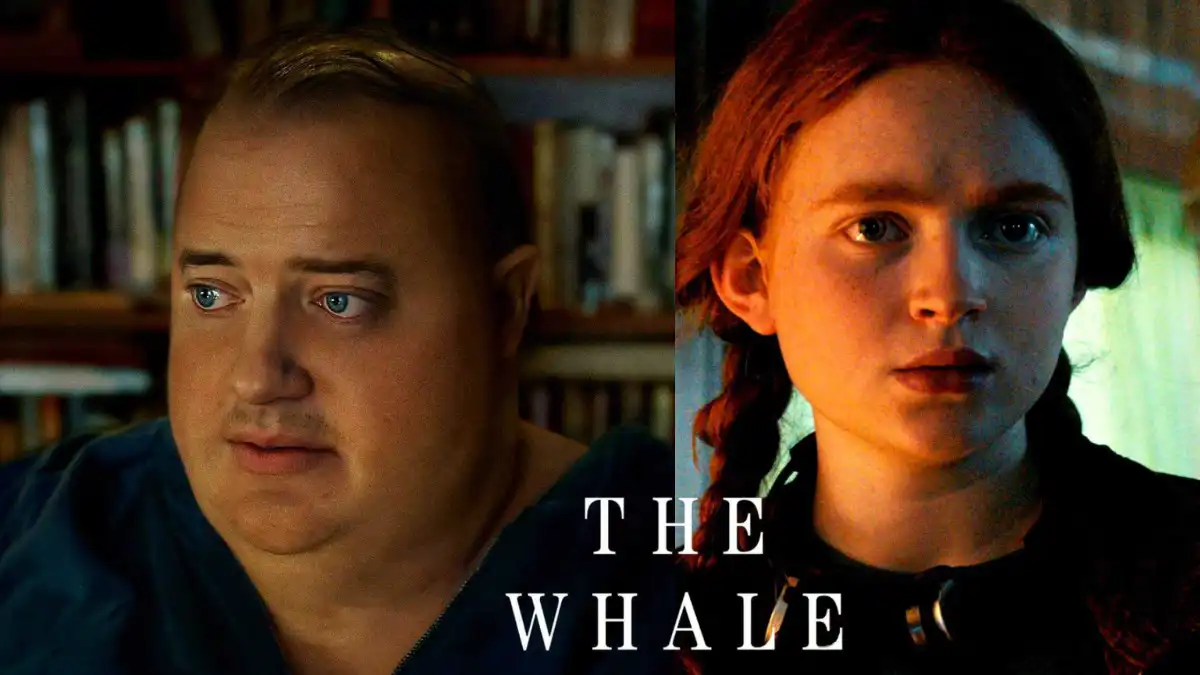
‘The Whale’ – Film Review and Analysis

“‘The Whale’, directed by director Darren Aronofsky shows us how low someone can go when things go wrong in life but also how our lowest lows can also bring out the best of us when it is most important.”

2022 may be over but I am still thinking about the most emotionally impactful movie of the past year, which deserves its own review and analysis. Likely to be nominated for a few Academy Awards at the least an Oscar for Best Actor nomination for Brendan Fraser, ‘The Whale’ is a powerful film about a man’s desire to try to right past wrongs in some way before it is too late. ‘The Whale’, directed by director Darren Aronofsky shows us how low someone can go when things go wrong in life but also how our lowest lows can also bring out the best of us when it is most important.

Aronofsky’s filmography from ‘Requiem for a Dream’ to ‘The Wrestler’ to ‘Black Swan’ to ‘The Foundation’ to now ‘The Whale’ all deal with flawed characters looking to right past wrongs or to find redemption in the most meaningful way(s) before they are past the point of no return. Aronofsky so brilliantly can capture psychological drama and tension in each sense in his movies that by the end, you’re so emotionally affected by it all that it can be hard to wrap your head around what you just watched. As a director, he is excellent at painting a picture of a person or people in distress and how while they may have had good intentions, they are almost too far gone to seek redemption or a new start.

Different from Aronofsky’s past films, ‘The Whale’ is adapted from a play of the same name dating back to 2012 so the screenplay that is written and the way the film is set up is exactly how a play would be seen on the big screen. There are few characters, the plot does not get too murky or complicated, and the setting remains the same largely throughout the whole film.

Film critics today may dismiss this film as lacking scale and scope in its ambition, but I was drawn to how beautifully it portrays what could be real people living real lives. ‘The Whale’ may be a film and fiction but it likely portrays real situations and real tragedies that some people unfortunately come to pass in their life. The film deals with multiple real world issues affecting people from obesity to alcoholism to lost loves to broken up families that most people in life can see how that can throw someone’s life off a cliff and make it almost impossible to recover.

‘The Whale’, as the title makes clear is about a severely obese man named Charlie who weighs around 600 pounds and suffers from multiple health issues because of his weight issue. He is estranged from his teenage daughter, separated from his alcoholic wife, and unable to turn the video screen as an online English professor because of his weight condition that may affect how his students see him. His only interaction is with his friend, Liz, who is also a nurse who comes to take care of Charlie especially with his multiple health issues causing him to be near death and at risk of heart failure.

Charlie has become a tragic figure in that he only has Liz left in his life after suffering the loss of the man who he fell in love with. Because of that love, he sacrificed his marriage with his previous wife and his relationship with his daughter for. After the affair he had with his student, Alan, who is also the brother of Liz, for whom she was adopted by a family and her father who was a pastor in the New Life Church. Liz was able to escape the church’s cultish tendencies but Alan’s possible guilt from being disowned by the Church and perhaps his family as well for his homosexuality and relationship with Charlie caused him to end his own life.

This terrible series of events punished Charlie and his eating condition after the death of Alan exacerbated his obesity and caused him major depression and an inability to form relationships with others beyond his caretaker and friend, Liz. Charlie is not looking for any pardoning of ‘sins’ from God or the Church that disowned Alan but rather the sole forgiveness of his daughter for whom he last saw when she was eight years old. Ellie is not a child anymore but is a rebellious and sullen teenager who misses her father and lashes out at her mother, who deals with her problems by downing a bottle of liquor, rather than raising her daughter to be better. Charlie is no saint in the matter in that he did commit adultery with Alan and led him to neglect his daughter, Ellie, and to push his wife away as well.

He never made amends for having caused them both grief and pain with his impulsive decision. His love for Alan eclipsed his love for his daughter, which he struggles in the film to get back. When the New Life Church’s doctrine and his family’s discontent with Alan’s sexuality, Alan’s suicide caused Charlie to spiral further to eat uncontrollably and to negate his relationships even more by becoming a total recluse who cannot even leave the house because of his body weight and inability to walk or drive a car.

‘The Whale’ also highlights how Charlie is not looking for pity from others or for forgiveness. He knows how much his life has gotten out of hand, but he is hoping to do ‘one thing in his life’ right before it’s too late for him. He believes that while his daughter acts out and despises what he has done, that there is still hope for her and that can she achieve her potential but to more importantly to ‘be a good person.’ It may be too late for Charlie to turn it around in life much to Liz’s, his wife’s, and even Ellie’s disappointment, but Charlie knows that redemption is possible for each of them and that even if he is not there, he will try to leave money for his daughter to have a future, or to tell his wife that he is regretful for him leaving them for his affair, and that he apologizes to Liz for what he has done to himself with the loss of her adopted brother that has strained their friendship in the aftermath.

Charlie does not want to be saved by God or religion or from himself but he wants to know that his life through the birth of his daughter is one thing that he got right in life and that while he wasn’t there for her before when she needed him, he can try to make amends before he leaves the world, and to encourage her to be better than he was, to be better off in life, and to be kind to others. He may have lost hope for himself, but he has never lost hope for his daughter.

Similar to how Charlie encourages his English students to be honest with their written essays, he tries to be honest with Ellie in why he did what he did, how he could have been a better husband to his wife, Mary, and how he let Liz down after the tragic death of Alan. Not everyone can be this honest, but Charlie has nothing left to lose, nothing much to gain, and with not a lot of life ahead of him except imminent death due to his body’s condition.

Despite all the concurring factors, Charlie is trying to regain his humanity and his family back as much as he can recoup after it had been lost even if he has become ‘The Whale’. While he may be misunderstood and loathed like the whale in the book Moby Dick by Herman Melville, he is not beyond redeeming himself in the eyes of others and providing some closure for himself in a life that had gone so far astray yet for which he had also been able to give something out of love back to the world to live on in the form of his daughter, Ellie.  

“Got to, This is America, Man…” – Anatomy of a Scene

“‘The Wire’ is the greatest television show of all-time. Even as the show nears the 20th anniversary since when it first aired on American cable television network, HBO, it still rings as culturally relevant and as emotionally stirring as it was when it first debuted in the Summer of 2002. While technology may be different now, the characters would not be the same, the setting could be different from the show, the overall themes, and messages from ‘The Wire’ as well as the institutions that the show focused on for five great seasons have not changed that much.”

‘The Wire’ is the greatest television show of all-time. Even as the show nears the 20th anniversary since when it first aired on American cable television network, HBO, it still rings as culturally relevant and as emotionally stirring as it was when it first debuted in the Summer of 2002. While technology may be different now, the characters would not be the same, the setting could be different from the show, the overall themes, and messages from ‘The Wire’ as well as the institutions that the show focused on for five great seasons have not changed that much.

I could write a thesis on ‘The Wire’ and devote at least 10,000 words on the show in terms of an in-depth breakdown on how it’s the modern equivalent to a Shakespeare tragedy or drama. However, in this ‘Anatomy of a Scene’, I am going to focus on one of my favorite scenes in this classic television show. This scene is the opening one for the entire five-season series and discusses a core tenet of the show not just about what kind of ‘game’ that the characters play, but also the ‘game’ inherent to the setting of Baltimore, Maryland as well as America as a country.

The opening scene, more than any other scene, even if it is the 1st, one pinpoints exactly what ‘The Wire’ is about. In the first shots, you can see a young man lay face down dead on the ground on some dark city street with the police collecting evidence and a main character, who is a detective, questioning a potential witness. The associate of the victim talks about how they were involved with street gambling and how it was not fair that it was not right to kill the victim, non-ironically known as ‘snot boogie’ to the game’s players. The victim of the crime has a real name but is endeared to the rest of the game’s players by that nickname alone.

As the witness explains to Detective Jimmy McNulty of Baltimore Police, ‘Snot Boogie’ was the victim of the crime, but his associate did not expect him to be killed for stealing from the other players of the street game for playing craps. The associate tells McNulty that the victim is known for stealing and grabbing the money to run away but they never want beyond just ‘beating his ass’ up a bit.

While it is a grim description of the dangers of gambling illegally on the streets, the witness to McNulty’s murder case explains that there is an unwritten rule to the ‘game’ of street gambling and that ‘Snot Boogie’ should not have been murdered for stealing from the other players. Nobody ever tried to kill the victim even after he was found guilty of stealing money from the street game players even if they did often catch him and beat him for having done it multiple times.

The witness refuses to tell McNulty who killed his associate in this game and does not want to go to court even though he believes it was disgraceful how ‘Snot Boogie’ was killed because they always let him play even though he would always steal from them.
“I got to ask ya, if every time Snot Boogie would grab the money and run away…why’d you even let him in the game?”
“…What?”
“If Snot Boogie always stole the money, why did you always let him play?”
“Got to, This America, man.”

McNulty looks incredulously as the witness tells him this reasoning because at its face, it does not make much sense for a guy who steals from folks repeatedly to continue playing a dangerous and illegal craps street game. It’s clear to both characters that life itself, and life in America is far from being fair at the end of the day especially a man got killed, which was against to how the game was being played, according to the witness, even if he was stealing from them.

Even if the game is fair or is rigged to some degree, it occurs to the witness and then McNulty after he sees the guy’s reasoning that even if the game was not meant to be won and the result would always be the same, you still let the game play out. The game may not be fair like life itself in general or in America, but it must be played by everyone. It may not be a fair shot and there is no equal outcome, but there is equal opportunity out there for each player to be involved even if someone cheats, steals, and comes back to play again. The game exists for everyone to be given a shot at it and if they don’t, that’s against the principle of life itself and life in America.

There are tragic consequences to this craps game for Snot Boogie who loses his life senselessly as well as for the men who will go to jail for it or lose all their money, but the game goes on and it’s open to everyone. Like the witness explains, the game deserves to be played by everyone equally although the outcome may not be something everyone will like or even will cost some people dearly. This excellent opening scene opens with the most prominent themes of The Wire perfectly and almost seems like a graphic novel come to life. Its visuals are striking, the characters are who you can relate to on a human level, and there is a lot of foreshadowing about the rest of the show and its messages to the viewers from this tone-setting scene.

‘The Wire’ is a show about the early stages of 21st century America in its first decade of the 2000s but it is as still as relevant about 20 years later. The metaphor of this opening scene for not just a couple of guys in a craps game gone wrong in the street can pair directly too what can happen when capitalism can go off the rails when someone tries to beat the rules or try to gain an advantage when they are put at a disadvantage to begin with. If the game is rigged from the get-go even if you’re given a shot at it, what’s the point in playing by the rules? If you can beat the system even if there are dire consequences, is it not worth trying?

‘Snot Boogie’s associates knew he was a thief and a cheater because they believed that he still deserved a shot at winning like everyone else even though it was likely rigged so he would never make it after multiple tries. As the opening scene of the greatest television show of all-time shows the viewer, everybody can play the game even if they are a cheater in the sense of having equal opportunity, but what happens when no one is held accountable when the odds are stacked against them from the start of the game and there is no other way to win than by cheating the system and facing serious consequences?

The show may not be defined by its iconic opening scene but as you find as you watch the entire series, the metaphor for what that scene represents about the show and about the ethic that binds American society together long after you finish watching each of its five seasons.

Anatomy of a Scene – Suds on the Roof

“For Andy, getting three beers a piece and to have some suds as him and the guys work outdoors in the heat is worth the perilous personal risk that he put himself through to make it happen.”

Sometimes, it pays to speak up and be heard even if you’re a convicted felon. Andy Dufresne (played by Tim Robbins) is a few years into his prison stint at Shawshank State Prison in rural Maine. He proclaims his innocence to Red (played by Morgan Freeman, his good friend in the prison, who still has a hard time believing him even though the two have become close first as Andy’s provider of cigarettes and posters of centerfold actresses and models but has become more of a confidant despite being skeptical of Andy’s claims of innocence. He tells Andy “Everyone in Shawshank is innocent, don’t you know that?”

As Red also explains, prison is no fairytale world and Andy runs into a rough crowd of prisoners who sexually assault and physically beat him to a pulp. Prison becomes very routine in that Andy tries to fend off his attackers, does his duty at the massive laundry room, and collects rocks in the yard to shape and polish with his rock hammer as a hobby to pass the time. Red also exclaims in the film, “Prison time is slow time…and a man will do almost anything to keep himself occupied.”

It is through his budding friendship with Red and his connections to the outside world that they can finally break the monotony of prison life and to have a small taste of freedom by bribing a few of the prison guards with cigarettes and whiskey to win the job of tarring the license plate factory roof. While it is arduous, backbreaking, and tiresome; it’s also Summer in Maine, a “fine month to be working outside”, and comes with more outside time in the prison and other special privileges, according to Warden Norton. With a small bribe and maybe some extra names in the sorting hat, Andy, Red, and their associated group of inmates win the job with no other prisoners being suspicious of how they won the prized work outside.

This scene that I like to call ‘Suds on the Roof’ focuses on the men at work with the hot tar with the summer heat bearing down on them. The head of the Prison guards gets fleshed out as a character when we learned that his brother died as a rich man being worth over $1 million dollars, which in the early 1950s would be 20x the amount today in 2021. Byron Hadley, being the vindictive, petty, and cruel man that he is likes to play the victim on how he is only getting $35,000 from his brother despite calling him an ‘asshole’ to the other guards and complaining on how it’s not enough or how the government and others will take some of that money he didn’t earn but inherited. This is a brilliant detail at the beginning of the scene to show just how pathetic and small he could be as a character, which is great writing by the film’s writers, because you begin to grow to detest how vile a person that Byron Hadley is.

Andy Dusfresne, our main character in ‘The Shawshank Redemption’ overhears Byron’s ‘tale of woe’ about inheriting money from his recently deceased brother and seeks to take advantage of the situation by knowing that his tax and finance knowledge as a banker may play to his advantage. The way he stops mopping the tar, walking over awkwardly, and coming up from behind with the guards’ backs turned away from him is terror-inducing when you first see this scene. Andy’s crew, including Red, implore and yell at Andy to keep ‘his eyes on the mop’ and not to antagonize a vicious man that Byron is because they know from experience how senselessly brutal and violent, he can be to the inmates for no reason at all.

Andy, in this scene, he is as cool as a cucumber and basically tunes out their pleas of him to keep mopping and ignore Hadley’s tale of woe. Andy goes up to Hadley and says a few choice words that almost get him killed within the next few seconds. “Mr. Hadley, do you trust your wife?” That simple sentence has a lot of implications such as that she may be cheating on Byron and has been unfaithful to him but it’s really about Andy asking about their financial relationship although his poor choice of words almost leads to Byron throwing him off the roof of the license plate factory and then calling it an ‘accident’ with the outside world beyond Shawshank none the wiser about his actual premeditated cause to murder Andy.

“Because if you do trust her…there’s no reason that you can’t keep that $35,000!” …In just a few seconds, Andy’s quick thinking and knowledge of one tax-free gift to your spouse or wife helps keep Byron from throwing Andy off the roof to certain death. Andy is trying to save Byron some money and exclaims quickly that he can give his money up to $60,000 in a tax-free gift hence why Andy awkwardly started to ask him if he trusts her implying if he would trust her with such a large sum of money and if she would take care of it properly for him. Byron knows Dufresne as all the guards do as a ‘smart banker’ who ‘killed his wife’ and is worried that what Andy is advising him to do would be illegal and get him in trouble with the IRS and the law.

Andy assures him that this tax-free gift is entirely legal and if he doesn’t believe Andy, Byron can ask the IRS to check and make sure. Byron still looks down on Andy and doesn’t need his help to get all the money, but Andy replies fast that unless he wants to pay lawyers or a financial advisor to do it, which would cost a lot of money, Andy exclaims while hanging from the edge of the rooftop that he would do it for Byron nearly free of charge! Andy only needs the forms to start preparing him and the only cost that he asks for in return are a few beers for him and each of his “co-workers”, which is a hilarious aside that Andy would refer to his convicted inmate friends as co-workers rather than fellow prisoners. Even though they are in prison for life, most of them, they still form bonds of friendship to survive in terrible conditions, with a sociopathic warden and a vicious head prison guard preparing to harm or even kill them if they step out of line.

Now, the most surprising thing about this scene is that the ‘nearly free of charge’ refers to a specific brand of beer, “Bohemia style” as Red puts it and for them to be “icy cold” especially to quench the thirst of the hard-working prison crew toiling to tar the roof day in and day out. Andy, in a sense, wants to feel like he is doing his banking job again and instead of receiving a salary for just himself as he did before, he instead wagers his life to get beers not only for himself but for his crew of friends he recently established. He is selfless in this way in that he does not think only of himself but thinks of those others who deserve that small moment of freedom by drinking “cold ones” on the roof at “ten o’clock in the morning.” For Andy, getting three beers a piece and to have some suds as him and the guys work outdoors in the heat is worth the perilous personal risk that he put himself through to make it happen. For Andy, it was to help him feel a bit less like a convict in a prison on a life sentence and a little more like a free man, if only for a short while.

I believe Andy wanted to feel a bit more normal such as like him and his friends were tarring the roof of their own houses and to sit with the sun on their shoulders and feel free and have a bit of happiness in grim circumstances that they find themselves in day in and day out with little hope to their chances of getting out of prison. As Red indicates towards the end of the scene, they can make Byron, the guard, seem magnanimous or even ignored altogether because they have sun and they have cold beers and they have each other, which is more than the convict crew has had all together in years probably.

Andy is selfless to the end in this scene showing his true character as not of a cruel murderer but someone who even if unclear yet to the audience was wrongfully convicted, whose intentions were pure, and who missed his previous life as a banker and wanted to “feel normal again, if only for a short while” as Red so eloquently puts it. In this scene, we begin to see Andy’s true nature as a human being: awkward and clumsy at first but very brave, empathetic, and a kind heart that not only Red’s friends realize from his selfless act but that the guards also see even if they have to follow Hadley’s orders in dealing with him. Andy was offered a ‘cold one’ at the end of the scene but tells one of the convict tarring crew that he gave up drinking.

Red speculates to the audience watching as to why Andy would refuse the beers that he almost died to get but then realizes in the narration that it wasn’t about getting the beers at all or helping Hadley get wealthier, it was to have that freedom to choose again, to have a choice without asking for permission all the time from the guards, and to feel a bit of life again within the drab and gray walls of Shawshank. The freedom of choice is directly related to having free will, which was taken away completely from Andy and other prisoners. He wanted to restore it again briefly to have a bit of normalcy and break up the sheer monotony and harshness of prison life.

Andy would like to think and have again for a moment where he is not a mere convict but a human being worthy of some simple dignity, choice, and a small taste of freedom for some brief moments asking for those cold beers and if he must almost die for that freedom, it was worth it to him in the end. That feeling of ‘normalcy’ to Andy as Red puts it was the real driver for him to put himself at risk and to feel good about it after, to smile and feel some small sense of happiness that had been missing for so long. Lastly, Andy did not just do it for himself but to help his friends who had sustained his spirit in the drab prison even after being beaten, abused, and almost worked to death in the laundry room. It is not he who deserves to feel somewhat normal again alone but his crew as well who worked tirelessly to mop hot tar in the summer without any prospect of real rewards or gratitude. The beers were not just for him but for Red and for the others to feel like ‘free men’ and to be the ‘lords of all creation’ in their minds and in their hearts, if only for a short while.

Anatomy of a Scene – Miracle Ceasefire

How we as humanity cling to hope is our investment into the future that better and brighter days are ahead as long as we persevere, push forward, and leave our world a little bit better for the next generation. ‘Children of Men’ is great because it poses the answer to the question of how does humanity hope for a future when no babies are being born?

The world without hearing children’s voices, laughter, and even cries can be a dark and hopeless place. That central message of the now classic movie ‘Children of Men’ (2006) has stayed with me especially in the current times of a pandemic that we are living in. How we as humanity cling to hope is our investment into the future that better and brighter days are ahead as long as we persevere, push forward, and leave our world a little bit better for the next generation. ‘Children of Men’ is great because it poses the answer to the question of how does humanity hope for a future when no babies are being born?

When you think deeply about it, humanity is restored generation after generation thanks to our youth, their ideas, their drive, their desire to not repeat the mistakes of the past and to learn from history. When you take humanity’s future away, what is there left to fight and live for? It is a powerful premise and one for which I am glad Director Alfonso Cuaron decided to focus on. His movie does not pull any punches and shows humanity at its worst when women are no longer able to have children.

Without children, playgrounds and swing sets remain empty. Refugees and immigrants are persecuted and forced into detention camps, suicide pills are common place, environmental degradation is the norm rather than an obscenity, and violent factions fight it out with the government in a post-apocalyptic United Kingdom where suicide bombings are an increasingly common occurrence as Theo (Clive Owen) discovers when he is almost the victim of one in one of the earliest scenes. Perhaps the most frightening part of the whole movie is that no one has figured out why women can’t have babies anymore and the novel that the film is based on is also clear when it shies away from saying why men can’t help in the reproduction process anymore.

In ‘Children of Men’, no child has been born for 18 years and it can be hard to retain hope after that long that things will change. The world is in a downward spiral and things get worse as the youngest person alive, Diego, is killed by an angry crowd. Theo takes solace in the fact that he has a good job at the government ministry and has a funny friend who goes by the name Jasper. Still, you can tell that Theo has lost faith in humanity especially after the death of his infant son due to a flu pandemic and his estranged relationship with Julian, his wife. However, when Julian tells Theo about Kee, a pregnant African woman, who may be carrying the first baby in almost two decades, everything changes, and Theo finds his purpose again to live and to fight for a tomorrow. Theo dedicates himself to protecting Kee and her future baby and wants to get her to safety, which means getting her to the Human Project, a group of the world’s best scientists discussing how best to make humans fertile again.

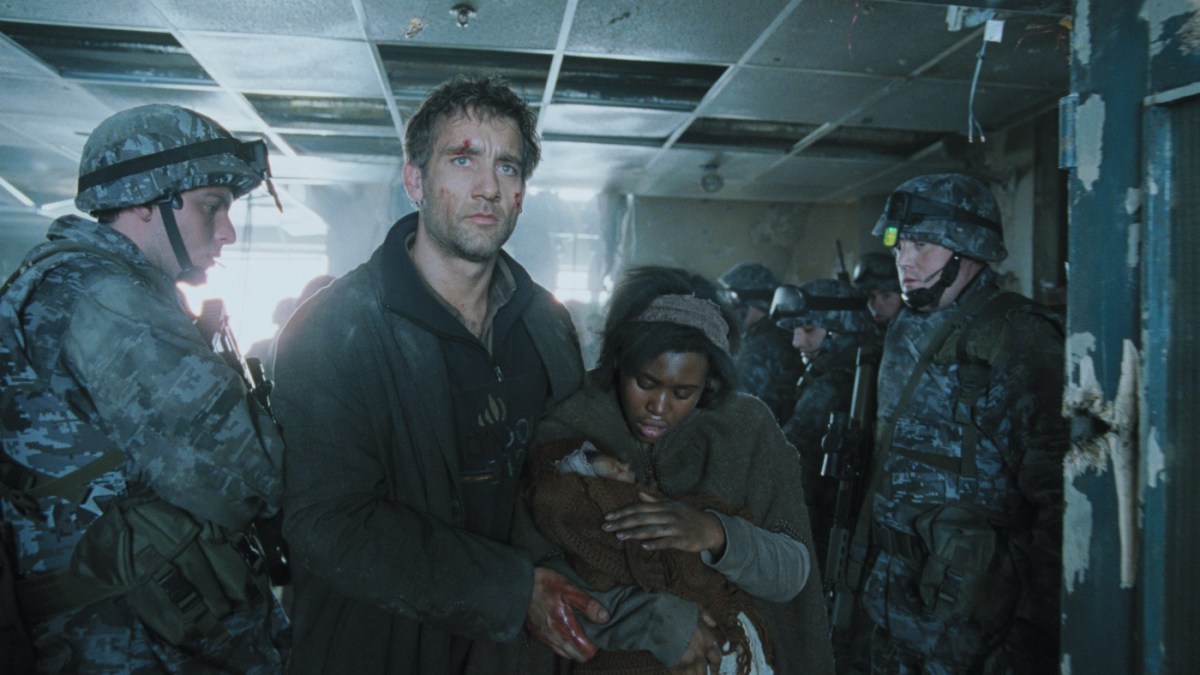
Theo’s journey with Kee involves getting her out of a refugee camp, escaping men who want to keep Kee’s baby for political purposes and who are also armed combatants, and avoiding fascist police forces who intend to get in their way. To escape the escalating urban violence around them as both the government and rebels fight it out in bombed out Bexhill, Theo and Kee take shelter in a refugee settlement in a former apartment building. The three of them come close to being killed and the baby’s cries echo throughout the building much to the stunned shock, joy, and awe it inspires among the refugees, the rebel forces, and the government troops.

The way the cinematographer follows Kee’s baby and Kee around in a wide tracking shot is absolutely beautiful making it one of the most memorable scenes in cinema history. “How is she?”, Theo asks Kee. “Annoyed.” Kee replies. A refugee woman reaches out her hand to touch the baby and another woman sings a sweet song in her native language. Prayers and aspirations are given to the baby as Theo and Kee walk through the crowd. The rebel soldiers acknowledge the baby as they get away from the advancing troops behind them. The government’s military soldiers are in absolute shock as one soldiers’ yell at his army unit: “Ceasefire! Ceasefire!” All of them stop shooting at once and look upon Kee’s baby in disbelief, many of them never having seen a human child before in person.

To see the armed men in tanks and heavy weapons and their technological mastery stop, think, and realize how humanity and its future must be preserved and let free without being in danger. Not much can stop a war from continuing but a baby’s cries can most certainly pause it for a few minutes as this brilliant scene exemplifies. An immediate symbol of hope for humanity and its possible redemption is realized in its newest addition and it is a wonderful allegory to how despite our differences, any human around the world will stop to comfort, aid, and protect for a baby as we would do for our own children or grandchildren or even nieces and nephews.

Those men who don’t see the baby continue to fire at each other in the distance but any soldier, man, or woman who hears the baby crying lowers their weapon, pays their respect, and let Theo and Kee have safe passage as they represent a glimpse of hope finally for humanity’s future rather than its eventual extinction. Some of the soldiers pray to their God and others peer in to get a look at the baby with their own eyes but all are silent and in disbelief thinking that finally there might be hope again.

After a minute or two of calm and as Kee and Theo are about to get away, a rocket RPG hits the government soldiers and the men ignore the baby again and get back to fighting the rebel forces in the building that Kee and Theo just left. To me, that is a tragic symbol of how once we have something out of sight and out of mind, we go back to fighting each other instead of uniting around a common cause. As that RPG fires, I think to myself watching this scene how somebody always has to ruin it for everybody else. Unfortunately, Kee’s baby does not lead right away to world peace and a cessation of arms. However, it is enough time for the two of them to escape and have a fighting chance of reaching the Human Project.

A baby’s cries are more powerful and everlasting than any weapon, any political cause, and any division between humanity. While human nature cannot be totally pacified by children and babies being born, it allows us to fight for better days and for a future freer of pain, sorrow, and tragedy.

I hope that when you watch this scene, you’ll realize that even in our current age when fertility is not extinct and is not a present issue that we are still fighting to preserve hope for the next generation and generations to come. Whether it is preventing pandemics, stemming the worst effects of climate change, or preventing nuclear war between nations, we all have a responsibility to be stewards like Theo in protecting the babies of the future against any manmade harm that could befall them due to our own neglect and ignorance.

Please do watch this ‘Miracle Ceasefire’ scene and the rest of ‘Children of Men’ when you have the chance. It is an excellent film to see and this scene may be the best one of the entire film. Hope and redemption are only as strong as our ability to have a better future.

Anatomy of a Scene – The Dream

“In his 30+ years as a police officer, he means well but he has noticed an increasingly brutal fact that is inescapable. The world has become more unforgiving, violent, and it is hard for him to make an impact whereas at the beginning of his career, he sought to make it a better place.”

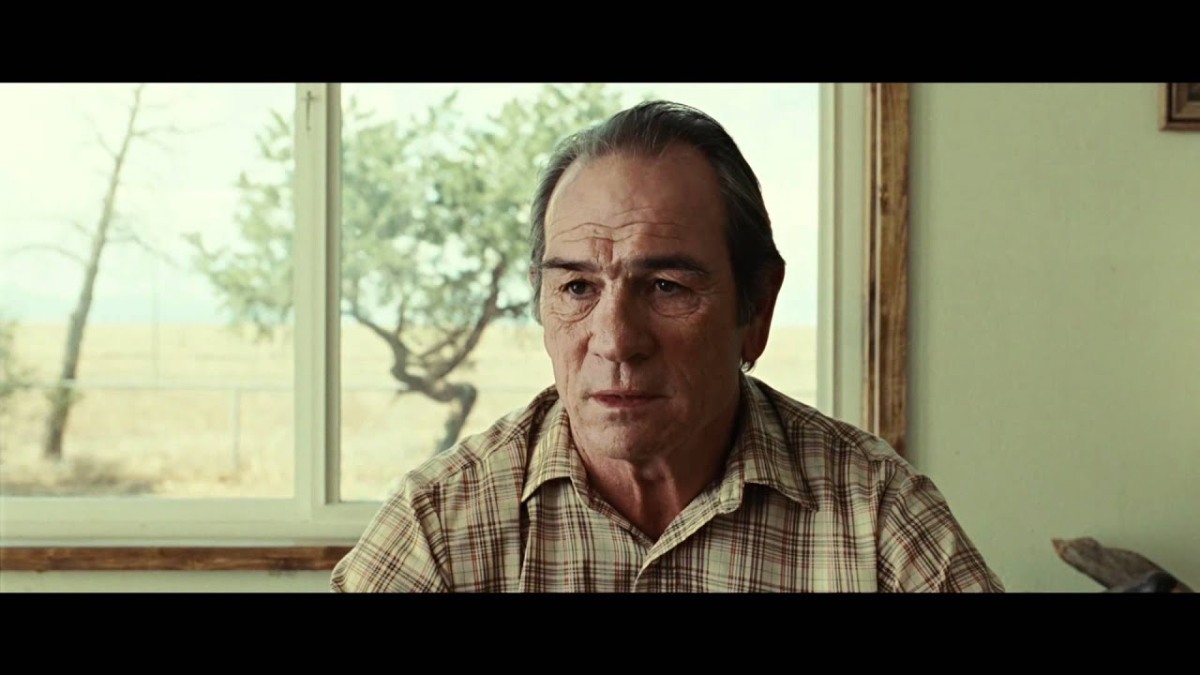
Tommy Lee Jones is an elderly police officer overmatched in the excellent ‘No Country for Old Men’ (2017). He is overmatched for a number of reasons including not being able to keep up with the actions of violent men who show no compassion or no remorse. Throughout the film, he is always just a step behind the sociopathic Anton Chigurh and fails to either apprehend him or to prevent him from killing innocent people. In his 30+ years as a police officer, he means well but he has noticed an increasingly brutal fact that is inescapable. The world has become more unforgiving, violent, and it is hard for him to make an impact whereas at the beginning of his career, he sought to make it a better place.

Ed Tom Bell is your average protagonist who means well, wants to do right in his work, and believes he can do good but finds himself overmatched and overwhelmed by what he is asked to do. When he thinks of his future, he wonders what is left for him and if retirement will bring him peace or have him think back on what could be.

The dream scene begins with Ed Tom, now retiring, looking out of his window at his farm’s seemingly barren landscape with a sole tree to his left through the window behind him. A man of seemingly few hobbies and fewer words, he thinks about his day ahead and thinks about the possibility of riding around on his horse. Not too enthused about it, he also asks his wife if he should help around the house. Seemingly because he is less than skilled at this work, his wife believes it’s better that “he not.” He asks if his wife will join him riding but she is still working and a member of society actively.

Resigned to his fate as a retiree instead of being an active police officer, he reflects to his wife that he’s had dreams and he wants to share them. She says that he has time for them now and that she’ll be polite while he remembers them. He goes ahead and states that there were ‘two dreams’, they were ‘peculiar’ and both of them involved his father who has long passed away. Ed Tom is an older man than his father ever was indicating his father passed away at a younger age that of which Ed Tom will live to be longer.

The first dream is almost like a flash as most of our dreams tend to be with the details muddled and hard to recall. Ed Tom only states that he meets up with his young father in town and he leaves him some money perhaps as a way of his father being there for him even if he wasn’t present physically in his life. Similar to losing his father early in life, Ed Tom believes he lost his money in the dream as well leaving him without help as his father’s early death may have inadvertently done.

The second dream is much more imaginative and involve Ed Tom and his father living in ‘older times’ perhaps when the West was not settled and was lawless. He is no longer a police officer maintaining law and order but rather a horse rider having adventures with his father as he wishes they perhaps would have had time for had he lived longer.

This second dream is much more vivid as Ed Tom recalls how it is cold, they are going through a mountain pass together. They ride together in the snow among the mountains of the night until his father rides past him with no explanation and his blanket wrapped tight against him. This is confusing to Ed Tom at first knowing how hard it is to be without his father who he loves and must face the cold world without him as if he has been abandoned again. Though he may have lost his father, Ed Tom recalls how his father was carrying ahead a fire and a horn of a golden moon color, which gave him comfort despite the fact that he was not with him riding together.

“He was going on ahead, fixing to make a fire.” Ed Tom believes his father in the dream is out there doing this noble act in the middle of all the dark and cold, which is brutal to handle. “I knew whenever I got there, he’d be there…then I woke up.” The hope that Ed Tom haves is that his father even though it seems like he abandoned him as the son is that he really is instead looking out for him and paving the road ahead with light so he would not abandon his hope.

He believes that his father even though he may not be there with him wants him to keep going ahead and to meet him eventually instead of becoming deterred. He paves the way for his son to chase the flame of his absence and to resolve to not let the dark encapsulate him fully. Ed Tom’s expression about the dream is one of resigned sadness that his father is no longer around but also one of lingering strength to believe his death was not in vain and that he will reunite with him one day. His father, like him later, use their lives to keep the flame and the light moving forward even when surrounded by the darkest aspects of human nature.

Like any dream scene in a movie, this one has a deeper meaning behind it related to one man’s grief involving the loss of not only his livelihood but of his hope for a brighter future for humanity. Having seen the horrors that people inflict on one another, he may be resigned to that fact but he also believes his father would have wanted him to keep the flame ‘alive’ and to keep carrying it forward throughout his life even if things looked bleak. His death did not stop Ed Tom from keeping the flame moving in his own life and to carrying it forward in the hopes that he would bring it to his father someday when they would eventually be reunited in another lifetime or in another dream that seemed real.

Movie Recommendations – Volume IV

Movie Recommendations – December 2019

The Report (2019)

download

With an excellent cast, brilliant cinematography and direction, ‘The Report’ (2019) is one of the most underrated films of this year. Casting a wide net from the early days after 9/11 to the 2nd term of the Obama Administration, the film covers the work of Senate Intelligence Committee staffer Daniel Jones and his team’s tireless efforts to bring the scope of the CIA’s ‘enhanced interrogation techniques’ program into the public light. Focusing on not just the legality of the program but its effectiveness as well as its handlers, the film does a great job in bringing that story to a wider audience who may not have read the report or even heard about it. Part of the appeal of the film is that it creates a real sense of drama and real-world significance that often lacks in other Hollywood films about Washington. You really do sympathize with the characters and understand the weight that is on their shoulders handling a report of both national and international significance.

The fact that the report or at least a summary of it was made public is a great victory for transparency, the truth, and for holding those in power accountable for their actions. In terms of actual justice for those who may have perpetuated crimes and/or human rights violations, the film makes it clear that justice was not served but hopefully because those crimes were laid out to bare through this report, we will be finally able to learn that torture does not in fact work and that by refraining from these ‘enhanced interrogation techniques’ in the future, we do not become a monster in order to defeat a monster.

Ford v. Ferrari (2019)

download (1)

Ford v. Ferrari is an excellent film that is sure not to bore you when you see it on the big screen. It’s got that classic kind of Hollywood racing film and it does a good job of keeping you excited throughout the movie especially if you have never heard of the story before. It can be hard to make a racing film carry emotional weight, but the stakes are kept high throughout and there’s never a dull moment. Each major character has something on the line whether it’s their pride, their future success, their family, or their car brand’s ability to be the best in the world. A stellar cast of Matt Damon, Christian Bale, and Jon Bernthal deserve a stellar script and a stellar story and luckily, Ford v. Ferrari is ready to provide that and then some.

Even if you are not a fan of racing, you’ll enjoy the story behind this film especially when it comes to the time-old theme of proving yourself against the odds. An unlikely American auto company focused on station wagons and comfort is able to stand up to the challenge thrown down by the legendary Ferrari auto company who had dominated stock-car racing for decades. An unlikely hotheaded driver is able to overcome his doubts and his hotheaded instincts to become the key to a potential victory of Ford v. Ferrari. An American racing legend, Carroll Shelby (Matt Damon) is able to put his racing days behind him due to his heart condition to focus on the new mission of building an amazing Ford racing car that could put them over the top against Ferrari and establish his company’s success as a budding entrepreneur. This film shows you that you don’t just need talent and the will to win but you also need heart and a belief in your team to get the job done. An excellent film that I really recommend while it’s in theaters.

The Irishman (2019)

download (2)

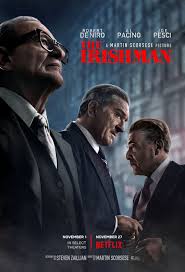
I know you may be asking yourself: Another mafia movie? Hasn’t this particular genre been exhausted already? The answer is both yes and no. It is a ‘yes’ because it’s the same old story of a rise and an eventual fall of mobsters who thought that they could get away with their crimes and most eventually ended up dead or in prison. It is a good film overall about hubris, vanity, pride, and how a man can justify his sins when both family and society is against you by saying that he was just ‘following orders.’ I say ‘No’ as well because any Scorsese mafia movie is going to be a classic in some way and this one in particular does an excellent job of highlighting the connections of the legendary and controversial Teamsters union leader Jimmy Hoffa to the Pennsylvania mafia. The unique story of Jimmy Hoffa has never really been explored that well in American cinema and I have to admire Al Pacino a lot for his performance of the emphatic and conniving union leader.

Not to be outdone, Joe Pesci who is a legend in film makes his first film in what seems like a decade and does an excellent job playing the mafia crime boss Russell Bufalino. Robert DeNiro plays the role of Frank Sheeran, a World War II, mafia accomplice, and Jimmy Hoffa bodyguard who is a tragic character in a way. Like any good Scorsese movie, the film asks the audience about how far a person can go to betray their ‘friends’ as they ‘follow orders’ and at what cost is it to do morally heinous acts and still act for forgiveness from family and from God.

The film’s almost 3 and a ½ hour runtime is my biggest gripe as it does drag at times and some scenes could have been cut out without detracting from the overall story. Still though, it’s a great Scorsese film that will add to the legendary acting careers of De Niro, Pacino, and Pesci. I would not be surprised if this film walks away with the ‘Best Picture’ Academy Award even if another film may end up deserving it more.

Knives Out (2019)

MV5BMGUwZjliMTAtNzAxZi00MWNiLWE2NzgtZGUxMGQxZjhhNDRiXkEyXkFqcGdeQXVyNjU1NzU3MzE@._V1_

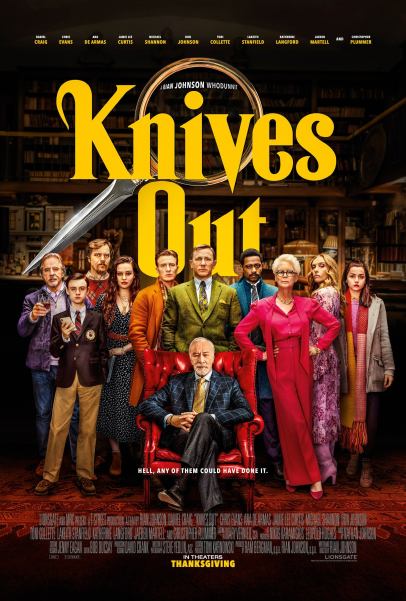
A murder mystery film that you actually care about? Daniel Craig talking in a Southern drawl while figuring out the case in a tweed suit? An all-star cast that actually acts in this film like an all-star cast? What movie could this be? This movie is ‘Knives Out’, a film about a mystery that Agatha Christie would endorse regarding the suspect suicide of Harlan Thrombey (Christopher Plummer) who is a wealthy crime novelist found dead after a family party and foul play might have been involved. Each of the family members is a suspect and the top-notch private detective recently published in The New Yorker, Benoit Blanc believes one of the family members may be responsible for having murdered him. Besides the family itself, one non-family member is also a suspect, Harlan’s nurse, Ana Cabrera (played by the excellent Ana de Armas, an actress on the rise) who was with Harlan the last time he was seen alive.

If this is not an intriguing premise for a murder mystery, you may want to skip this one, but you shouldn’t because it is that good. This film is more than a modern murder mystery brought to the big screen, but it also intelligently discusses the issue of immigration in the United States and also lampoons extremist views on both sides during the film’s more lighthearted moments. The film also covers family relations through the generations, what someone is or isn’t entitled to, how social class can divide people rather than unite them, and how somebody can stand up for themselves when the crowd (or family in this case) is out to get them for their own benefit. Don’t sleep on ‘Knives Out’, which is a definite crowd pleaser and a satisfying ending that could result in future films. I, for one, hope Daniel Craig will be in more films where he can use a Southern drawl from Kentucky as it was surprisingly convincing and must have took a lot for him to emulate. Highly recommend this one which is in theaters now.