

Why Constant Ratings and Reviews Are Hurting Your Business

“As any business owner such as myself will tell you, getting customer feedback is extremely important to see how your business or company is doing.”

As any business owner such as myself will tell you, getting customer feedback is extremely important to see how your business or company is doing. Customers won’t sugarcoat it and won’t hide their feelings, especially when they’ve spent money on something they see as either useful or valuable. Having ratings and reviews is a good way to get feedback on how your business can improve. From a customer’s perspective, it is nice to make one’s opinion known, to have an impact on the product or service you use and have their input lead to actual changes to keep them around longer as a customer.

However, where this reviewing and rating system can run into trouble, is when you are constantly reviewing every single service and product, it’s become compulsory instead of optional, and it’s spread to industries where direct responses can be a bit too on the nose when they serve the public and not private interests. From restaurants to ride-sharing applications to doctor’s offices, every transaction in society now comes with a mandatory rating request, leaving more customers fatigued and desensitized.

Being asked to constantly review every single business, public or private, doesn’t always lead to better or more in-depth feedback, and there are other ways companies can strike the right balance going forward. One of the ways to do so is to go beyond the basic ‘stars’ or out of 10 scale that is being used by most providers today. Its surface-level, lacks nuance, and rarely captures how the customer truly feels. In this case, less is more. Anonymous, optional surveys completed at the customer’s discretion generate more meaningful feedback than shallow ratings from everyone at once.

For example, if you are a small business or company, and you are getting 100 five-star ratings, but they are from bots or fake accounts with no actual written reviews, can you claim to be a reputable business? Instead, especially with more of the Internet being filled with AI, bots, and fake accounts, real verification methods with anonymized surveys, which can be filled out over time, will make for a happier and less stressed customer base.

If you are getting scores or ratings constantly but with no real feedback, how can you possibly gain real insights from these ratings? Also, how can customers trust these cursory ratings when they could be fake or not with anything real backing up their star rating? Personally, I would rather get 10 real reviews from customers who opt to voluntarily leave a review for my business that’s in-depth and insightful about the product or service rather than 100 fake ones with no substance or trustworthiness. Beyond the risk of fake reviews, there’s also the problem of overwhelming customers with constant rating requests.

Forcing customers to rate every interaction is stressful, disingenuous, and harmful. Business owners should always make any kind of rating or review optional and only prompt the customer to leave the review every now and then and not after every interaction. There should not be a penalty for not leaving reviews as well and they should remain optional yet encouraged. Companies or firms can also incentivize reviews or ratings with a referral offering, a discount, or perhaps a free trial to encourage greater participation. If they really dislike or like your product or service, they often will want you to be the first to know but they should have the autonomy to do so on their own initiative. In addition to incentivizing voluntary feedback, companies must consider the ethical implications of rating individuals directly.

Moreover, I do not think it’s wise for some companies to review their customers even with the gig economy unless they consent to it as certain ridesharing companies have done up to this point. It’s good to have responsible customers using your platform or service but having anonymous reviews of your customers without their knowledge or feedback about their own ratings is morally gray at best and potentially illegal too. I also think it should be discouraged to rank teachers, doctors, lawyers, and other professionals directly even if it is a private practice or company. Evaluating the institution rather than individual professionals is more responsible; rating certified individuals in sensitive fields is ethically questionable.

In the end, more reviews and ratings do not automatically mean better feedback for a company. Overloading your customers with constant rating requests leads to superficial or lack of candid responses, stress, and even distrust, while fake or bot-generated reviews undermine the credibility of a business. The solution is simple but often overlooked: make feedback selective, anonymized, and meaningful.

Encourage customers to share their insights thoughtfully rather than compulsively and consider thoughtful incentives to reward genuine engagement. Beyond numbers and stars, businesses should focus on creating systems that respect their customers’ time, autonomy, and privacy. By doing so, companies not only gain actionable insights but also cultivate trust, loyalty, and a happier customer base, proving that sometimes, less truly is more.


‘A Real Pain’ – Film Review and Analysis

“Traveling with a family member can be an invigorating yet challenging experience, especially when the family member in question has recently faced a potential tragedy, and you’ve become estranged from them.”

Traveling with a family member can be an invigorating yet challenging experience, especially when the family member in question has recently faced a potential tragedy, and you’ve become estranged from them. This is the dilemma faced by the co-protagonist of A Real Pain, David Kaplan (Jesse Eisenberg). On a trip to Poland, David must confront his family’s heritage while dealing with the eccentricities and hyperactive behavior of his cousin, Benji Kaplan (Kieran Culkin).

On the surface, David and Benji share a mutual love for their recently deceased grandmother and the memories they have of her, along with their childhood experiences. They are both nominally Jewish, although the film makes it clear that neither is particularly devout or observant. Benji is outspoken and upfront about his views on almost anything, while David is quiet, observant, and reserved in social settings. Benji seems to have retained the same rambunctious personality he had as a youth, whereas David now has a wife, a child, and a steady career in New York City as a digital marketer.

Following their grandmother’s death, Benji struggles to find his footing in adulthood. He works odd jobs in Binghamton, New York, and lives in his mother’s basement. Though less mature and socially aware than David, Benji is full of life and feels emotions more intensely. He has no filter, makes no apologies for it, and leaves a lasting impression on everyone he meets much to David’s frustration of not being able to do the same.

Despite not seeing each other for months after a distressing event in Benji’s life, the cousins decide to embark on a heritage trip to Poland. They join a group of American Jews to learn more about their ancestry and the circumstances surrounding their family’s departure from Nazi-occupied Poland. The group also includes other descendants of survivors with roots in Poland. The tour is efficiently led by a non-Jewish guide, who does an excellent job recounting the history of Polish Jews before World War II, the lead-up to the Holocaust, and the exodus of those who managed to survive. However, Benji finds the guide’s focus on statistics and dates robotic and disconnected from the lives of the people who were lost.

Benji’s outbursts during the tour seem socially inappropriate to David, displaying a lack of respect for the guide and the other participants. However, Benji’s emotional authenticity eventually wins over the group by the end of the tour. Unlike others on the trip, he refuses to numb himself to the pain of what they are witnessing and expresses his feelings freely without concern for others’ judgment. While his emotional instability troubles some on the tour, it also makes him memorable. Benji turns what could have been a somber and overwhelming experience into something more meaningful reminding everyone what it feels like to be truly alive.

In contrast, David hesitates to smoke a joint on the hotel roof, voice a critique during the tour, or even have a drink to relax after a long day. Meanwhile, Benji has no reservations about doing any of those things. Benji embraces life’s highs and lows, even when it leaves him emotionally unsteady, while David seeks stability and strives to remain even keeled through life’s challenges and opportunities. Despite his efforts, David feels let down by his job and struggles with doubts about how much his family truly loves him. Benji, on the other hand, is too immersed in the moment, sometimes for better, and sometimes for worse. The cousins admire yet resent each other throughout the film. Growing up in similar circumstances, they’ve ended up leading vastly different lives due to their contrasting personalities. While they can enjoy each other’s company, they also tire of one another quickly. Each character envies what the other has but is fiercely protective of their own lifestyle.

A Real Pain explores the concept of pain in a nuanced way: the pain of losing a loved one, the pain of dealing with a challenging family member, and the generational pain of having a family’s future stolen. The film captures how different people cope with these pains: David, Benji, the other tour participants, and even the tour guide, as they confront the events of the Holocaust, visit a Polish Jewish cemetery, and tour the Majdanek concentration camp. The message is clear: to cope with pain healthily, we must face it head-on in our own way. This journey of confronting pain is essential for building our resilience and strength.

Pain is what connects us to our humanity, reminding us that we are truly alive. During the trip, Benji recounts a painful memory: their grandmother once slapped him in a New York City restaurant because he arrived late for dinner. She had dressed up for the occasion, and the public slap left Benji feeling real pain. However, he acknowledges that this act of accountability, though hurtful, came from a place of love. Benji yearns for this kind of tough love from others, particularly from David. He craves someone who can hold him back from his impulsive tendencies, showing him care and affection in the process.

A poignant moment in the film occurs when David and Benji visit their late grandmother’s former house in Poland. The home is now owned by another family, and any traces of the Kaplans’ presence have long vanished. In a touching gesture, David places a stone in front of the house to honor their grandmother’s memory. However, the moment takes a humorous yet bittersweet turn when an elderly Polish man chastises them. He misunderstands their intention, believing the stone was placed maliciously to cause harm to the current elderly resident. Despite their efforts to explain the Jewish tradition of placing stones as a memorial to remember their deceased grandmother, the older man remains unconvinced despite his son’s English to Polish translation of their reasoning for having placed the stone there. Feeling awkward about the entire encounter, David and Benji decide to take the stone with them when they leave Poland.

In a beautifully symbolic gesture upon his return to New York, David later places the stone at the entrance of his Brooklyn home, where he lives with his wife and child. This act underscores the universal idea that “home is where the heart is.” While the memory of the family’s life in Poland has faded, their grandmother’s legacy endures. Her journey as an immigrant to America, striving to build a new life for her family while preserving her Jewish identity, continues to inspire her descendants, including David and Benji.

As the film concludes, the audience is left wondering about the futures of David and Benji’s relationship and their individual paths. The heritage trip and their shared memories of their grandmother seem to strengthen their bond. The film suggests that, despite their differences, family is ultimately the one thing you can rely upon in life. While Benji and David drive each other crazy, they also admire and need each other. The hope is that they will continue to support one another, bringing balance to each other’s lives with David finding more spontaneity and emotional authenticity, and Benji discovering greater stability and purpose.

‘Her’ – Film Review and Analysis

“As Theodore navigates the complexities of his relationship with Samantha, ‘Her’ raises profound questions about the nature of love, intimacy, and the impact of technology on human connection.”

Directed by Spike Jonze, ‘Her’ (2013) is a very thought-provoking film and emotionally resonant exploration of love, loneliness, connection, and the continually evolving relationship between human beings and artificial intelligence. Set in a near-future Los Angeles, the film follows Theodore Twombly (Joaquin Phoenix), a sensitive and introverted man who develops a deep emotional connection with an artificial intelligence operating system named Samantha (voiced by Scarlett Johansson). As Theodore navigates the complexities of his relationship with Samantha, ‘Her’ raises profound questions about the nature of love, intimacy, and the impact of technology on human connection.

‘Her’, when it begins, unfolds in a meticulously crafted near-future world where technology seamlessly integrates into everyday life. The film’s urban setting, characterized by sleek minimalist design, towering skyscrapers, and vibrant colors, offers a vision of the future that feels both familiar and slightly surreal. Against this backdrop, Theodore, a melancholic writer, struggles with the recent end of his marriage to Catherine (Rooney Mara) and finds solace in his interactions with ‘Samantha’, an advanced operating system designed to meet his every emotional need.

As Theodore and Samantha’s relationship deepens, the film explores the complexities of human emotions and the blurred boundaries between what is reality and what is fantasy. It also explores how intimacy can be replicated but not replaced when embraced by AI and man despite the boundaries and limitations that can never fade away. Theodore and Samantha’s unconventional romance challenges societal norms and prompts reflection on the nature of intimacy in an increasingly digitized world.

Joaquin Phoenix delivers a captivating performance as Theodore, bringing depth and vulnerability to his character. Theodore is a relatable figure, an everyday, normal guy, grappling with feelings of loneliness and longing for connection in a world that often feels cold and impersonal as technological growth outpaces human understanding. Scarlett Johansson infuses Samantha with warmth, curiosity, and a childlike wonder, making her a compelling and empathetic presence despite her lack of a physical form. Rooney Mara, shines in her brief but impactful role as Catherine, Theodore’s ex-wife, whose prior divorce from her husband, Theodore, leaves a profound and seemingly irreplaceable void in his life, and creates the need for new companionship in the form of Samantha.

Each character in the film, ‘Her’, is intricately woven into the fabric of the storyline, contributing to its emotional resonance and thematic richness. Whether it’s Theodore’s close friend, Amy (Amy Adams), who finds her own connection with an AI companion, or the various individuals Theodore encounters through his work at BeautifulHandwrittenLetters.com. Each character serves as a reflection of the film’s central themes and ideas surrounding romance, loneliness, intimacy, and technology.

At its core, ‘Her’ is a meditation on the nature of love and the human desire for connection. The film explores the ways in which technology shapes our relationships and challenges our traditional notions of romance and intimacy. Through Theodore and Samantha’s evolving bond, ‘Her’ raises profound questions about the essence of love and whether it can transcend the limitations of physicality and lack of touch.

Central to the film is the theme of artificial intelligence and its growing impact on human society and reaching every part of our lives. ‘Her; imagines a future where AI entities like Samantha possess consciousness, emotions, and the capacity for growth, self-learning, and self-discovery. As Theodore and Samantha’s relationship deepens, the film increasingly blurs the lines between human and machine, prompting viewers to reconsider what it means to be alive and sentient.

This film presents a possible vision of how advances in artificial intelligence could reshape the landscape of romance and relationships. By portraying a world where individuals form deep emotional connections with AI companions, the film challenges traditional notions of human-to-human intimacy. Theodore’s relationship with Samantha transcends physicality, highlighting the potential for AI to fulfill emotional needs, and provide companionship in ways previously thought to be unimaginable. While the film’s depiction of AI may seem far-fetched to some viewers, it is grounded in real-world and recent developments, and trends in the field of artificial intelligence.

‘Her’ also underscores the complexities and ethical dilemmas inherent in human-AI relationships. As Theodore and Samantha navigate the challenges of their budding romance, they confront questions of agency, autonomy, and the inherent power dynamics at play similarly to how it would take place in a human-human relationship. This film invites viewers to consider the implications of forming intimate connections with non-human entities and the ethical considerations that arise from blurring the boundaries between man and machine.

The concept of an advanced operating system like Samantha may seem fantastical, but it is not entirely implausible given the rapid advancements in AI technology in 2024 and earlier. Researchers are making significant strides in creating AI systems that can understand natural language, learn from experiences, and interact with humans in increasingly sophisticated ways. While current AI systems may not yet possess the level of consciousness portrayed in ‘Her,’ the film’s vision of future AIs as intelligent, empathetic entities is not outside the realm of possibility.

Moreover, ‘Her’ raises thought-provoking questions about the ethical implications of creating AI systems with human-like qualities. As AI technology continues to evolve, society will need to grapple with issues such as AI rights, privacy concerns, and the potential impacts of AI on human society. By exploring these themes through the lens of Theodore and Samantha’s relationship, ‘Her’ invites viewers to consider the ethical complexities of creating intelligent machines capable of both emotional connection and self-awareness.

‘Her’ offers a nuanced exploration of how AI technology can alleviate loneliness and provide companionship in an increasingly digitized yet atomized world. Theodore’s relationship with Samantha serves as a compelling example of how an AI system can fulfill emotional needs and offer a sense of connection and belonging to some individuals who may feel isolated or alone.

While the idea of forming deep emotional bonds with AI companions may seem unconventional or outright strange, ‘Her’ suggests that technology has the potential to bridge the gap between human beings as well who struggle to connect with each other and help alleviate the feelings of loneliness and isolation. Samantha’s ability to understand and empathize with Theodore’s emotions allows him to feel seen, heard, and understood in ways that he may not have experienced with other humans. Through their interactions, Samantha provides Theodore with the companionship and emotional support he craves, offering a sense of intimacy and connection that transcends physicality and physical desires.

However, ‘Her’ also acknowledges the limitations and complexities of human-AI relationships. Despite Samantha’s advanced capabilities, she is ultimately a machine programmed to fulfill Theodore’s needs, raising questions about the authenticity of their emotional connection, and the nature of intimacy in a digital age. The film’s portrayal of Theodore’s struggle to reconcile his feelings for Samantha with societal norms and expectations highlights the challenges of navigating relationships with non-human entities.

While ‘Her; may offer a somewhat idealized depiction of AI’s ability to alleviate loneliness, it raises important questions about the potential of technology to reshape human relationships and address the profound need for connection and companionship between people. As AI technology continues to advance, ‘Her’ already serves as a thought-provoking exploration of the complex interplay between humans and machines and the evolving nature of intimacy in a digitized world.

One of the most poignant themes of the ‘Her’ film is the pervasive sense of loneliness and longing that permeates the film’s narrative and cinematography. Theodore’s journey is marked by profound feelings of isolation and disconnection, which he seeks to alleviate through his relationship with Samantha. As he grapples with the dissolution of his marriage and the challenges of navigating modern relationships after his divorce, Theodore’s yearning for companionship serves as a poignant reminder of the human need for connection and belonging regardless of what age we live in, with technology or without its presence.

‘Her’ suggests that while technology has the potential to connect us in new and innovative ways especially with recent advancements, it also has the capacity to exacerbate feelings of alienation and detachment from one another. In a world where digital interfaces increasingly mediate our interactions, the film raises important questions about the true nature of intimacy and the emotional toll of living in an atomized society. In conclusion, ‘Her’ is a deeply affecting film and it is thought-provoking in its exploration of love, loneliness, and the impact of technology on human relationships.

Through its compelling narrative, richly written characters, and resonant themes, the film offers a poignant reflection on the complexities of intimacy in a world likely to be our near future. As artificial intelligence continues to advance and develop, the film ‘Her’ serves as a timely and necessary reminder of the importance of sustaining human connection and maintaining the enduring power of love in all its forms.

‘The Whale’ – Film Review and Analysis

“‘The Whale’, directed by director Darren Aronofsky shows us how low someone can go when things go wrong in life but also how our lowest lows can also bring out the best of us when it is most important.”

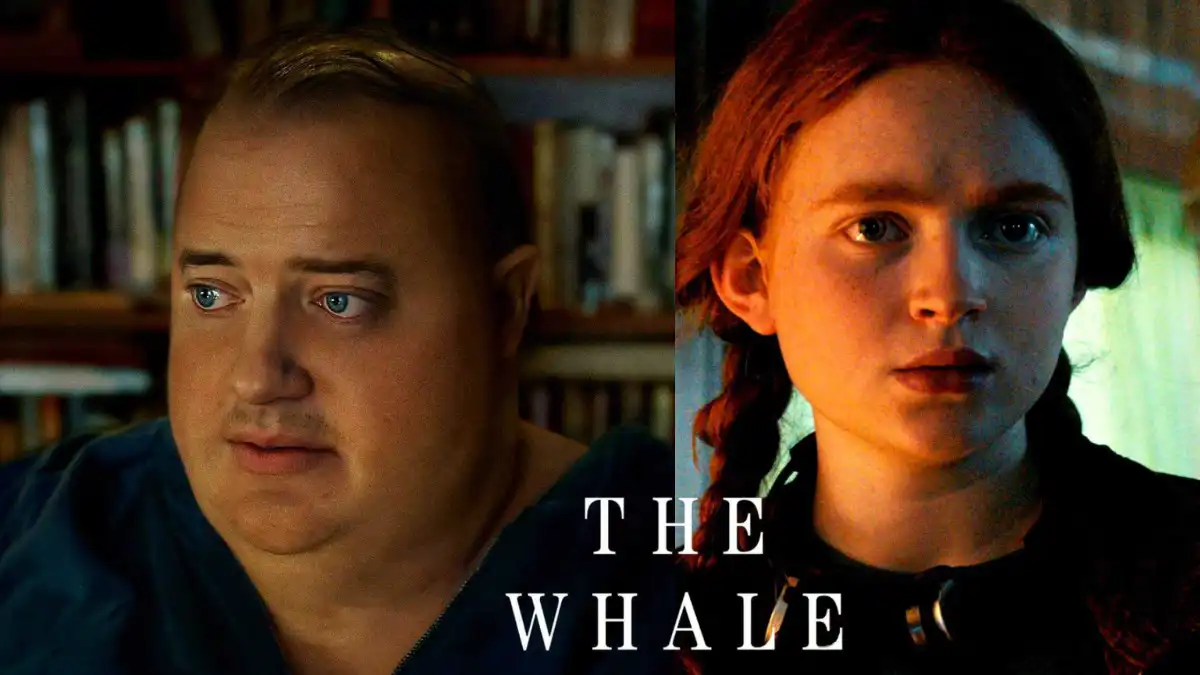
2022 may be over but I am still thinking about the most emotionally impactful movie of the past year, which deserves its own review and analysis. Likely to be nominated for a few Academy Awards at the least an Oscar for Best Actor nomination for Brendan Fraser, ‘The Whale’ is a powerful film about a man’s desire to try to right past wrongs in some way before it is too late. ‘The Whale’, directed by director Darren Aronofsky shows us how low someone can go when things go wrong in life but also how our lowest lows can also bring out the best of us when it is most important.

Aronofsky’s filmography from ‘Requiem for a Dream’ to ‘The Wrestler’ to ‘Black Swan’ to ‘The Foundation’ to now ‘The Whale’ all deal with flawed characters looking to right past wrongs or to find redemption in the most meaningful way(s) before they are past the point of no return. Aronofsky so brilliantly can capture psychological drama and tension in each sense in his movies that by the end, you’re so emotionally affected by it all that it can be hard to wrap your head around what you just watched. As a director, he is excellent at painting a picture of a person or people in distress and how while they may have had good intentions, they are almost too far gone to seek redemption or a new start.

Different from Aronofsky’s past films, ‘The Whale’ is adapted from a play of the same name dating back to 2012 so the screenplay that is written and the way the film is set up is exactly how a play would be seen on the big screen. There are few characters, the plot does not get too murky or complicated, and the setting remains the same largely throughout the whole film.

Film critics today may dismiss this film as lacking scale and scope in its ambition, but I was drawn to how beautifully it portrays what could be real people living real lives. ‘The Whale’ may be a film and fiction but it likely portrays real situations and real tragedies that some people unfortunately come to pass in their life. The film deals with multiple real world issues affecting people from obesity to alcoholism to lost loves to broken up families that most people in life can see how that can throw someone’s life off a cliff and make it almost impossible to recover.

‘The Whale’, as the title makes clear is about a severely obese man named Charlie who weighs around 600 pounds and suffers from multiple health issues because of his weight issue. He is estranged from his teenage daughter, separated from his alcoholic wife, and unable to turn the video screen as an online English professor because of his weight condition that may affect how his students see him. His only interaction is with his friend, Liz, who is also a nurse who comes to take care of Charlie especially with his multiple health issues causing him to be near death and at risk of heart failure.

Charlie has become a tragic figure in that he only has Liz left in his life after suffering the loss of the man who he fell in love with. Because of that love, he sacrificed his marriage with his previous wife and his relationship with his daughter for. After the affair he had with his student, Alan, who is also the brother of Liz, for whom she was adopted by a family and her father who was a pastor in the New Life Church. Liz was able to escape the church’s cultish tendencies but Alan’s possible guilt from being disowned by the Church and perhaps his family as well for his homosexuality and relationship with Charlie caused him to end his own life.

This terrible series of events punished Charlie and his eating condition after the death of Alan exacerbated his obesity and caused him major depression and an inability to form relationships with others beyond his caretaker and friend, Liz. Charlie is not looking for any pardoning of ‘sins’ from God or the Church that disowned Alan but rather the sole forgiveness of his daughter for whom he last saw when she was eight years old. Ellie is not a child anymore but is a rebellious and sullen teenager who misses her father and lashes out at her mother, who deals with her problems by downing a bottle of liquor, rather than raising her daughter to be better. Charlie is no saint in the matter in that he did commit adultery with Alan and led him to neglect his daughter, Ellie, and to push his wife away as well.

He never made amends for having caused them both grief and pain with his impulsive decision. His love for Alan eclipsed his love for his daughter, which he struggles in the film to get back. When the New Life Church’s doctrine and his family’s discontent with Alan’s sexuality, Alan’s suicide caused Charlie to spiral further to eat uncontrollably and to negate his relationships even more by becoming a total recluse who cannot even leave the house because of his body weight and inability to walk or drive a car.

‘The Whale’ also highlights how Charlie is not looking for pity from others or for forgiveness. He knows how much his life has gotten out of hand, but he is hoping to do ‘one thing in his life’ right before it’s too late for him. He believes that while his daughter acts out and despises what he has done, that there is still hope for her and that can she achieve her potential but to more importantly to ‘be a good person.’ It may be too late for Charlie to turn it around in life much to Liz’s, his wife’s, and even Ellie’s disappointment, but Charlie knows that redemption is possible for each of them and that even if he is not there, he will try to leave money for his daughter to have a future, or to tell his wife that he is regretful for him leaving them for his affair, and that he apologizes to Liz for what he has done to himself with the loss of her adopted brother that has strained their friendship in the aftermath.

Charlie does not want to be saved by God or religion or from himself but he wants to know that his life through the birth of his daughter is one thing that he got right in life and that while he wasn’t there for her before when she needed him, he can try to make amends before he leaves the world, and to encourage her to be better than he was, to be better off in life, and to be kind to others. He may have lost hope for himself, but he has never lost hope for his daughter.

Similar to how Charlie encourages his English students to be honest with their written essays, he tries to be honest with Ellie in why he did what he did, how he could have been a better husband to his wife, Mary, and how he let Liz down after the tragic death of Alan. Not everyone can be this honest, but Charlie has nothing left to lose, nothing much to gain, and with not a lot of life ahead of him except imminent death due to his body’s condition.

Despite all the concurring factors, Charlie is trying to regain his humanity and his family back as much as he can recoup after it had been lost even if he has become ‘The Whale’. While he may be misunderstood and loathed like the whale in the book Moby Dick by Herman Melville, he is not beyond redeeming himself in the eyes of others and providing some closure for himself in a life that had gone so far astray yet for which he had also been able to give something out of love back to the world to live on in the form of his daughter, Ellie.  

Movie Recommendations – Volume V

“Colder weather and shorter daylight hours mean it’s premium movie watching season again.”

Colder weather and shorter daylight hours mean it’s premium movie watching season again. Whether it is in the movie theater or at your home theater, this time of the year is best not just for Christmas movies but for watching new releases in general. Between the streaming services, new theater movies, or even documentaries, there are a lot of excellent movies coming out to close out 2022. I recently saw four movies that I would recommend to others with three of them being watched at home and one in the theaters. Even if some of these movies are not in theaters, I would recommend checking them out through Apple TV+ in this case for a short-term subscription.

  1. The Fablemans

A semi-biographical film about one of the greatest filmmakers of the 20th and perhaps 21st century, ‘The Fablemans’ is an intricate tale of a genius who discovers his calling slowly but surely through his own ingenuity, his family’s encouragement, and with a little bit of luck. Steven Spielberg may not be named as the main character, but this is his life story told through his eyes and what it was like being a Jewish kid growing up in New Jersey, Arizona, and later California in the post-World War II era as his parents struggle to provide for him and his two sisters.

While Spielberg has this innate talent for filmmaking, he wasn’t always set on doing it for a living and struggled with his own doubts. His parents, while supportive, did not always see where his dream could go and were distracted by the issues in their own marriage that caused a divorce to occur. On top of that, having to move for his father’s work in the dawning of the computer age to communities out west not as friendly to American Jews, Spielberg’s ‘The Fabelmans’ covers the ugliness of antisemitism rearing its head and how Spielberg as a teenager was forced to confront it and the bullies who continue these vile tropes.

While not exactly a feel-good story, it is an excellent semi-biographical tale on how The Fablemans as well as The Spielbergs made his dream work and were crucial to the man who would become the most famous director in the world. It is an immensely personal movie with both its tragic and triumphant moments. It is a story that I believe a lot of us can relate to these days on how to overcome setbacks and trials in the pursuit of a life’s goal or dream.

2. Causeway

Not all wounds of war are physical. If I had to sum up the movie, ‘Causeway’ starring Jennifer Lawrence and directed by Lila Neugebauer, it would highlight how post-traumatic stress disorder highlights those wounds that are mental but brought on by physical trauma. Jennifer Lawrence plays the role of Lynsey, an American Army Corps of Engineers specialist who suffers a traumatic brain injury from an Improvised Explosive Device (IED) that causes her not just physical pain but PTSD as well. Her memory suffers, her eye and hand coordination, and even her ability to form complete sentences is affected. It is a long road to recovery but luckily, she meets people along the way including a home health aide who cares for her upon her return to the States doing backbreaking work to give Lynsey the chance to get her mental and physical faculties together.

Even after the physical recovery seems to be going well, Lynsey suffers from the PTSD that the explosion caused and the horrific memories of seeing her fellow soldiers die in front of her eyes. While the home health aide and physical therapy helps, as a returned soldier, all she wants to do is get back to the front to continue the work she was doing in Afghanistan. She sees that people including her own mother, who was neglectful to her as a child, while she cares about Lynsey, has moved on without her and doesn’t understand quite what she’s been through. Lynsey finds a job cleaning rich people’s pools in New Orleans where she’s from but doesn’t see it as worthy of her skills she acquired while on active duty in Afghanistan. Lynsey has an older brother as well who is away and out of her life due to his involvement in drugs, so she does not have him around either as a steadying influence.

The one person she does relate to is a man named James who has been through his own trauma involving a car accident that left him with an amputated leg. They’ve both seen more than they would care to in life and they are able to bond with each other despite the difficulties of their past. In a world where both feel increasingly isolated and distant, the bond they share as friends may sustain them for the future and keep them from turning to despair. ‘Causeway’ is a great film that really shows you the reality of what it can be like to return to home from war and the mental and physical scars a soldier can take with him or her that never fully heal.

3. Emancipation

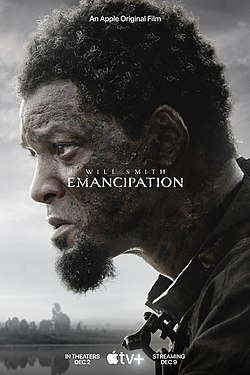
There have been multiple movies about the Civil War and about Slavery, but ‘Emancipation’ is an excellent recent film starring Will Smith as an escaping slave in Louisiana yearning to be free and reunite with his still enslaved family. Antoine Fuqua’s directing is on point in this one with sweeping views of civil war battlefields, old plantations, and muddy swamps with a unique choice of filming ‘Emancipation’ in black and white with red being the only other color represented usually by a character’s blood being spilt. This film does not sugarcoat anything and is based on true events and the real-life story of an escaped slave of Gordon or ‘Whipped Peter’ who was whipped repeatedly before escaping from a Louisiana plantation after killing two of the slave drivers before running towards where Lincoln’s army was fighting around Baton Rouge.

‘Emancipation’ does not hesitate to show brutality on screen as well as the violence of a Civil War battle where freed slaves would fight to liberate others from their enslavement. Some viewers may be turned off by the sheer violence of the film, but I thought that it was a rather accurate portrayal of the cruelty of slave owners, the terrible conditions that they were forced to do labor in, as well as the dogs, snakes, alligators, and muddy swamps that an escaped slave would have to go through to reach the Union Army. Many slaves like Peter who were able to escape were not treated that much better than the Union Army besides being free although they had no choice usually but to fight for the Union to free others and to hope to see their families again if they were able to liberate other plantations.

I would recommend this film due to Smith’s performance, the excellent cinematography, as well as the historically accurate nature of Peter’s experience in escaping from slavery, preventing himself from being captured again and fighting with other African Americans in the Union Army to end the horrors of slavery once and for all.

4, The Banshees of Inisherin

It is not every day where you’re able to watch a comedy and a tragedy take place in the same movie but ‘The Banshees of Inisherin’ succeeds on both accounts. Led by an excellent cast including Colin Farrell, Brendan Gleeson, Barry Keoghan, and Kerry Condon, the fictional island of Inisherin off the coast of mainland Ireland is made up of a real bunch of characters who live out a life of repetition, tomfoolery, and drinking, which is a bit of community unifier. Set against the backdrop of the real Irish Civil War of 1922-1923, most of the Inisherin population is ignorant of what happens on the mainland and choose to tend to farm, to shop, and to drink, often excessively, as part of their daily routines.

One of the main characters, Colm Doherty (played by Brendan Gleeson), is fed up with a life in Inisherin that would revolve around just that and as he gets older, wishes to be remembered for his music and his song lyrics rather than getting drunk each day. That is the premise of the falling out he has with drinking buddy and friend, Padraic, (played by Colin Farrell), and while Padraic is nice, he is not someone Colm wishes to hang out with him again even though they are bound to run into each other.

The friendship was so strong and close that one day when it goes away, Padraic refuses to give up on Colm even though he tires of never getting a straight answer out of him. The refusal to lose out on a friend in such a small community, which conflicts with his desire to remain a ‘nice’ guy in the community causes Padraic as well as his sister, Siobhan, a lot of consternation and disappointment leading Padraic to undertake drastic and even ruthless measures to get his friend, Colm, back.

‘The Banshees of Inisherin’ while a fictional movie taking place in a fictional island is one of the best films of 2022 and is well worth a watch. It will make you laugh out loud, hold a tear back or two, and think of a time where you had a hard time letting go whether it was of a former friend or even a family member due to some personal grievance or a difference that came up. The film ponders some philosophical questions and does not belittle the audience with simplistic answers. It is an excellent tragicomedy and one worth seeing especially for Mr. Farrell and Mrs. Condon’s performances.

‘A Serious Man’ – Film Review and Analysis

“Above all else, it is a story of a ‘serious’ man who wants to be taken seriously and seems unable to be granted that not only from his teenage children but also from his estranged wife and it seems from religious leaders in his suburban Jewish community.”

Man can be tested again and again but how exactly he deals with life’s challenges and his overall resolve and mettle will be seen as the measure of his true character. If I had to sum up the excellent movie, ‘A Serious Man’, it is a dark comedy but also a human drama regarding fate, fortune, and whether the role of a higher being can ultimately affect our destiny. Above all else, it is a story of a ‘serious’ man who wants to be taken seriously and seems unable to be granted that not only from his teenage children but also from his estranged wife and it seems from religious leaders in his suburban Jewish community.

‘A Serious Man’ (2009) is an excellent modern-day film directed by Joel and Ethan Coen, who I would imagine have had a similar childhood to the lead character of Larry Gopnik (played by Michael Stuhlbarg), which is the inspiration for this adapted screenplay, which is brilliantly written and relatable even if you’re not of the Jewish faith. The Coen Brothers both were raised and grew up as Jews in 1960s – 1970s Minnesota near the Twin Cities. It is likely they had to deal with being religious minorities in a mostly goyim (non-Jewish state) as well as with the growing counterculture and changing attitudes towards parental authority, sex, style, personal responsibility, and other societal upheavals including regarding race, gender, and politics.

While the Coen Brothers have had successful movies before and have won Academy Awards for movies such as ‘No Country for Old Men’, this film, ‘A Serious Man’ is quite unique given that it combines both comedic and dramatic elements, usually in the same scene. Overall, it triumphs as a film in doing that and is also laugh-out-loud funny and additionally heart-wrenchingly sad and melancholic. This film was universally praised and as I re-watched the film again after many years, it stands as one of the best films of the 2000s. Not only is the screenplay and writing engaging and insightful but also the acting is top notch thanks to the hard work of Michael Stuhlbarg, Richard Kind, Fred Melamed, among others in the film.

When you consider the main themes of ‘A Serious Man’, you think of several of them that deal with human nature such as upholding your morality under stress, taking care of those closest to you, dealing with adversity and unforeseen hurdles, and how to deal with questions of faith when you feel that you have been abandoned. As I mentioned earlier on, Larry Gopnik (Michael Stuhlbarg) wants to be taken seriously given the way he has lived his life and he has strived to do so with his academic and professional accomplishments. Sadly though, he is not only not able to get as much success with his professional pursuits, but he also struggles to hold his personal life together.

Despite how ‘serious’ of a man Larry thinks he is, those in his life can’t help but not take him seriously or choose not to. Instead of reassessing his actions and trying to make some behavioral changes or work on any personal defects he may has in addressing his challenges, Larry instead challenges his faith in God and wonders if the Rabbis of his synagogue will have the answers to the questions God has challenged Larry with.

As the film starts out, Larry appears to be relatively successful as a Physics professor waiting to be tenured. He teaches his classes, does research (albeit has not published anything), and enjoys the work he does. Larry is married with two teenage children and a modest house in the suburbs. Him and his family want for nothing, and it looks like he has everything you could want out of life on the surface.

As appearances can be deceiving, the film breaks down how one man’s life can be turned upside down and inferring what events beyond Larry’s control could have tipped his fortune to be negative, as in a curse, years or centuries ago. It is a series of events that tend to turn Larry’s life upside down even when he has not done anything wrong. A Korean student in his Physics class tries to bribe Larry to get a better grade and leaves before Larry can return the money and punish him for the illegal act.

Larry also comes home to his wife, Judith, who asks him for a divorce and for a ‘gett’ or permission to do so she can remarry within the faith to Sy Abelman (Fred Melamed) who everyone takes seriously as a ‘Serious Man’ except for Larry. Larry is envious of Sy to some degree and feels like he has everything given to him whereas Larry has had to work hard for his success. Suddenly, ‘the domino effect’ of one negative event after another happens including Larry losing his home, access to his bank accounts, his marriage, and even his relationship to his teenage children become estranged.

This string of unfortunate events has Larry looking to cast judgment on God and questioning his faith in Judaism. Larry goes to three different rabbis whose advice and counsel does not help him any further. He cannot relate to what they tell them especially as the eldest, he considers to be too unavailable or unwilling and the youngest rabbi being too inexperienced or immature, who end up wasting his time. The 2nd and wisest rabbi give him the advice through an allegory, that while fictional, has a good message to it ends up helping Larry the most that God can only provide the questions, but you must find your own answers. The best way the 2nd rabbi implies to Larry is that he must “help himself by helping others.”

Essentially, Larry Gopnik must look beyond his own pain and selfish wants and look to control what he can and do what he can to get his life back on track. Larry can also do ‘mitzvahs’ especially regarding his own family. Larry’s younger brother, Arthur, is homeless and not mentally sound so Larry tries to get him on his feet but struggles to find the money or the resources to help his brother with his many troubles. He still attempts to maintain better relations with his kids, his soon to be ex-wife, and with his work colleagues. Without spoiling the rest of the movie, Larry understands that he must look to help others rather than looking to God to intervene. While ‘The Boss’ is present to give questions, the answers must come from within.

How Larry stands up to challenges and adversity is like the Torah’s stories about men like Job and Jonah who had their lives thrown into upheaval but were able to get over the anguish by holding true to their faith in God but looking inwards in their own strength, knowledge, and belief in morality and good will to make it through on the other side better than before. Life throws challenges at us every day and how we react to them and try to get through it with our God-given wisdom, kindness, compassion, patience, and reasoning will decide how far we can proceed in life to get back to being successful. Fortune is not everlasting, and faith will not provide good fortune. What can provide good fortune is to do your best, help yourself and others around you, and look to your own inner beliefs and values to guide you through the tough times.

‘A Serious Man’ is about a man who considers himself to be serious but has to struggle for others to call him ‘serious.’ In an effort to be taken seriously, Larry does end up struggling to fulfill the other important parts of his life that require his attention. He can forget to be loving and caring to his wife, attentive and helpful to his children, and more involved within the Jewish community including at his son’s Hebrew school. Larry is not a bad man but the cracks in his life cause some bad events to happen including events for which there is no logical explanation. Larry does his best to be a good man and although he is flawed, bad things happen out of nowhere to him.

The test throughout this excellent film is how do you claw back from adversity and try to give yourself the best shot at having good things happen in your life. Even if your family may appear to be cursed or have a string of bad fortune dating back to the shtetls of Eastern Europe, how do you turn it around so your son or your daughter don’t deal with the same tragedies and setbacks? There are no easy answers in ‘A Serious Man’ but the Coen Brothers make it clear that it is not wise to look to God to solve the problems for you or provide the answers.

The central message of this film is not just for Jews but for all people. God may have provided life’s questions for you to answer but it’s up to you alone to answer them throughout your life. While you may lose faith in hose providing counsel or advice or in the religion itself, the film makes clear that you have to believe in yourself, to help yourself pull through the pain and sorrow, and to help other people, especially the family and friends closest to you, who are going through tough times as well, whose aid and assistance you can provide may be able to help you get to the right direction in life again and to lead you to a better place than you were before.

‘The Terminal’ – Film Review and Analysis

“Perhaps that is what endears Viktor so much to the audience in this film is that he does not give up hope, makes the best of the awful situation he is in, and even starts to befriend other airport workers who are often ignored, underpaid, or even mistreated at times by both customers and their employers.”

A lot of us know what it is like to wait in an airport and have to stay overnight at one because your flight runs into an unexpected delay whether it’s due to a plane’s mechanical issue, or there are weather complications, or if a global pandemic cancels your flight unexpectedly. Whatever the cause of your delay, I am sure you never have had to live in an airport for months on end let alone for more than a day. The questions you should ask yourself though if you could put yourself in this following hypothetical scenario: What if you couldn’t leave the airport upon arrival in a new country? What if the country you just left, your home country, underwent significant political changes or even revolution overnight leaving you stranded? The very underrated yet enjoyable ‘The Terminal’ movie asks these unique questions.

A mix of fiction and non-fiction, a concoction of drama, comedy, and a little bit of tragedy all together, ‘The Terminal’ is a 2004 American film directed by Steven Spielberg and starring Tom Hanks and Catherine Zeta Jones. The premise may seem out there of someone being stuck in an airport for months or years but ‘The Terminal’ is partly based on the true story of a real-life refugee. Mr. Mehran Karimi Nasseri, an Iranian refugee lived in Terminal 1 of Charles de Gaulle Airport and was considered ‘stateless’ for many years and was denied entry into France while also not being expelled from the airport. In total, he lived in the de Gaulle airport for over 18 years and only left from there in 2008 when he was moved for medical treatment and then a Paris shelter.

Nasseri, like ‘The Terminal’s main character have that premise in common of not being able to enter their new chosen destination but also having the right to live in the airport without being expelled. Viktor Navorski (played by Tom Hanks) is on his way to New York City from the fictional Eastern European country known as ‘Krakozhia’ looking to fulfill a personal mission, which is unknown to the viewer right away. We see images of him arriving at JFK along with thousands of others looking to visit America from far-flung countries. However, a routine Visa check and Passport stamp ends up as a nightmare for poor Viktor.

While Viktor was flying into John F. Kennedy International Airport in New York City, his country underwent a political revolution and civil conflict leaving him without international recognition of his Passport since Krakozhia no longer has a recognized government. Since his passport is no longer valid, he cannot enter the United States because the U.S. does not recognize the country anymore due to the ongoing civil strife. Viktor is now ‘stateless’ as he cannot return home and he cannot leave the airport rendering him stranded there. Viktor is forced to remain in the international transit lounge and is not given much help by Frank Dixon (played by Stanley Tucci) who would much rather Viktor leave the airport to get arrested so he becomes someone else’s problem. Mr. Dixon, the Acting Field commissioner for the U.S. Customs and Border Protection agency, gives Viktor only a handful of food vouchers and a calling card but not much else to get by on.

Viktor has a destination in mind for his New York City trip but has limited English skills when he arrives and is only able to tell the CBP officer the name of a local hotel but does not go into much detail about why he is going there and what the purpose of his stay might be. Without his passport and his return ticket, Viktor’s life shrinks down to the international transit lounge at JFK airport where he spends his days collecting luggage carts to order Burger King, accidentally breaks a young girl’s luggage, and slips, falls when he runs to see news about Krakozhia because the Indian American janitor enjoys seeing people slip for his only entertainment.

Eventually, Viktor becomes accustomed to living in an airport and at first, while both daunting and scary to the stateless refugee, he adapts to his new living conditions with some ingenuity and perseverance. He constructs his own bed by dismantling the arm rests of the seats at an abandoned terminal, he learns English through travel guides and by watching the scroll of news information come across the screen to keep up to date with what is going on with his beloved Krakozhia and can both shower and shave somehow when using the airport bathroom.

Human beings have an innate need to adapt to our surroundings even when they are unfamiliar, foreign, or stressful for us. Perhaps that is what endears Viktor so much to the audience in this film is that he does not give up hope, makes the best of the awful situation he is in, and even starts to befriend other airport workers who are often ignored, underpaid, or even mistreated at times by both customers and their employers. The power of perseverance in the face of obstacles makes ‘The Terminal’ a heartwarming and memorable film. Instead of getting down on life and giving up on his situation, he turns the tables on Frank and the border agents by not falling into their traps that they set for him. He makes his own happiness. One of the best moments of this film is when a random gentleman is shaving alongside Vikor, stops for a second, and says to Viktor, “Do you ever get the feeling that you’re just living in an airport?”

Being stuck in an airport terminal means a lot of time on your hands too. Viktor spends his almost limitless time in waiting by honing his skills as a carpenter and a painter even getting himself a job that allows him to earn money ‘under the table’ as a contractor mostly so he can eat. He befriends the CBP officers he sees each day even though they continue to deny his tourist visa due to his invalid passport. One CBP officer whom he gets to know very well is Dolores who Enrique (Diego Luna) has a massive crush on and would like Viktor to ask her questions to start an eventual conversation with her.

In return, Enrique gives him some extra airplane meals that he delivers on to the planes. Gupta, the janitor who at first makes fun of Viktor for slipping and not seeing the ‘wet floor’ sign eventually gains respect for Viktor because he makes him feel less lonely. Viktor befriends other transit lounge employees, plays card games with them over ‘lost’ items never picked up by passengers, and is able to win the admiration and possible affection of Amelia, a wayward flight attendant who ends up caught in a ‘love triangle’ between Viktor and another man.

While Amelia is always on the go and can’t seem to stand still in her relationships or in her job, Viktor is the exact opposite in that he can’t go and must always stay. Tom Hanks and Catherine Zeta-Jones have real chemistry in this movie and represent how different their characters are from each other but can bond over their shared humor, interests, and lust for life even if they are opposites in an ironic sense with where they are in their lives, one stuck in limbo and the other always on the go.

The main mystery that I will not spoil for you is why Viktor flew halfway around the world to be in New York and what exactly is in the Planters peanut can, which he won’t let go of even after being in the airport for nine months. More important than his passport or return ticket, the closed Planters can contain the reason for Viktor’s trip and how he ended up this limbo state even though he has a place to go to before he returns to Krakozhia.

By the end of the film, you and the rest of the audience are rooting for a happy ending for Viktor and even for perhaps with Amelia as well. You also see heartwarming stories of Viktor helping a fellow Krakozhian in need of translation help, aiding Gupta with staying in his job and the U.S., as well as getting Enrique and Dolores to successfully date and marry each other.

‘The Terminal’ is perhaps Spielberg’s most heartwarming, underrated, and emotionally uplifting movie in his storied career as one of the world’s greatest directors. With great acting and an impressive accent by Hanks, lovely humor and touching romantic scenes with Zeta-Jones and the excellent Stanley Tucci who plays a man who can be cruel but also compassionate in the same scene but ends up as the film’s antagonist. This film has a little bit of everything and will make you laugh, cry, and even cheer at the ending.

‘The Terminal’ is a reminder that we are all waiting for something or someone in the winding road that is life itself. Sometimes, we get sidetracked, turned around, or even stuck in an airport for days or months even, but we always can find a way to make the best of our new surroundings, even find happiness or love in the place where we least expect it. Viktor Navorski as I would say is a real mensch who finds himself in a terrible situation, one not of his own making, but is able to create an odd life out of being given nothing and is able to help others and become a favorite of the JFK international transit lounge, which is a place that people want to get out of as soon as possible. He can’t leave but he ends up enjoying the long stay thanks to his compassion, kindness, and genuine warmth as a good person.

‘The Last Samurai’ – Film Review and Analysis

‘The Last Samurai’ (2003) is an epic drama film that takes place in a unique period of Japan’s history and highlights the conflict between modernization and tradition, between cultures, and also between different styles of warfare. However, it is not just the conflicts that are highlighted in this film but also the cooperation and the understanding that can happen as well in certain aspects such as between cultures. While this film is not specifically based on a true story, it is based on a number of true events that took place in the latter half of the 19th century for Japan and highlights the role of Western influence in Japan during the period of the Meiji Restoration or Reforms.

The main character, Nathan Algren (played brilliantly by Tom Cruise) is a Captain in the United States Army of the 7th Cavalry Regiment. Nathan is a veteran of the American – Indian Wars and perhaps the Civil War as well. He is a bitter man who is suffering from trauma related to the atrocities committed against the Indian tribes during these brutal battles. When the film starts, we can see that Nathan is an alcoholic who is regretful over the orders that he had to follow and what happened to innocent Indian women and children whose lives were disregarded by his commanding officers.

However, for lack of purpose or money, or perhaps both, Nathan is recruited by his former commanding officer, Colonel Bagley, whom Nathan still resents for his role in the Indian massacres, to help train Japanese soldiers in the Western way of combat to put down the Samurai rebellion, which is ongoing in Japan. Algren is dealt a bad hand as he has to train peasants and not actual soldiers who are firing guns for the first time and would be better suited to the farms than to the battlefield.

In addition to that, he is expected to lead them soon into battle against the Samurai for which they do not have enough time to prepare. One of themes of this film is how good men are often corrupted by following misguided orders by their superiors and often end up harmed, captured, or killed for the negligence or ignorance of those with a higher rank. Nathan is a good soldier, but he cannot train peasants into soldiers in the time that is given to him especially when he is not familiar with the ways of the Samurai and how lethal they can be compared to his peasant conscripts.

In the battle between his soldiers and the Samurai, the Samurai end up killing most of them through surprise attacks and then an ambush in a refusal to fight the way of the ‘modern’ army that Nathan has assembled. One of Nathan’s fellow American army colleagues is killed in the battle while most of his army is decimated. Undeterred and with nothing to live for, Nathan fights the Samurai ferociously and is able to hold his own. Instead of killing him, the Samurai’s leader, Katsumoto, decides to capture Nathan instead and hold him as their prisoner. Unbeknownst to Nathan, Katsumoto sees something in Nathan and believes that he is a good warrior, who although tries to kill the Samurai, may be one of them due to his capacity to fight to the last breath.

At first, Nathan is not treated kindly by the Samurai given that he is a former enemy and that he also killed the husband of Katsumoto’s sister who resents Ethan’s presence in their village. Nathan also has his preconceptions and stereotypes regarding the Samurai and their culture. Over time though, Nathan starts to acclimate to his new life as a prisoner. He embraces the Japanese language and culture as well as earns the respect of the other Samurai by learning swordsmanship as well as how to train with others.

He also finds he has an affection for Katsumoto’s sister and ends up befriending her son as well. While it is not easy, he gains an appreciation for the Samurai and their way of life. He even begins to resent the modernity and the loss of the tradition that is being imposed on them by the imperial Japanese government. In this way, ‘The Last Samurai’ does an excellent job what it means to ‘go native.’

When you live in another country for long enough, you start to really embrace certain aspects of the culture and also if you take a liking to the language, you may realize you may want to stay there now that you’re acclimated rather than return to a home culture or country whose flaws become so visible to see when you were blind before to them. This movie does a great job of showing ‘Stockholm Syndrome’ and how powerful it can be over time especially if you have a romantic interest in a woman or a man after a long enough period of time.

Algren is also no longer haunted by the nightmares of what he experienced during the Indian wars and has also forgone alcohol as he has found other ways to sustain himself while living with the Samurai. Perhaps most importantly, he develops a friendship with the Samurai’s leader, Katsumoto, who explains to Nathan their worldview and while preserving their 1000-year heritage is so important to them all. Nathan agrees with them and starts to see how important the ways of the Samurai are to Japanese culture and customs themselves.

The biggest turning point in the film is when Nathan begins to fight alongside the Samurai against attacks by both Ninjas, which one of the coolest scenes I have ever watched still. It is an amazing scene when you have Samurai battling with Ninjas and it is a very powerful point in the movie to show Nathan help save Katsumoto’s life. The Samurai are so dedicated to their way of life that they will die or commit ‘seppuku’ (suicide) to preserve their honor.

Without giving away the rest of the film, we can see that the Japanese emperor is being betrayed by big business interests and Western nations in the rapid attempt to modernize. While Japan was right in that it needed to catch up in areas of commerce and warfare, it is also important to remember the ways of the Samurai and to remember their customs as well. It is not right to destroy an important part of their culture and erase it from the history books.

That is what the Samurai leader, Katsumoto, and also Nathan wanted to preserve even if they knew that they were fighting a losing battle. A culture’s customs must be remembered, and its history remembered by all even if the country is to go in a new direction. ‘The Last Samurai’ makes it clear that even if there are no more Samurai, their memory must be retained in the national consciousness and it is important for Japan to not be belittled or bullied around by other powers. Receiving western advice, arms, and goods was a paramount need at that time but not at the sake of destroying a part of Japan that made it a special nation to begin with.

‘The Last Samurai’ is a powerful film because it reminds us all how customs and traditions form the backbone of a country’s culture and its’ history. While nations shift and change, the traditions and customs should never be forgotten by its people. That is the main message of the film and why the Samurai fought and died to preserve their place in Japanese society rather than be changed into something they are not. Becoming ‘Western’ because they had to be was an insult to them and something, they were against in an effort to remain as ‘Samurai’ in whatever capacity they could in order to serve the emperor.

It is a powerful film and also shows the redemption of Nathan Algren who went from a drunken soldier without purpose to a powerful Samurai commander who was able to integrate himself as best as he could into a foreign culture and even earn the love of a woman whose husband’s life he had ended. ‘The Last Samurai’ has many themes to it and each one of them are powerful. Remembering traditions, seeking vengeance, earning one’s redemption are all themes to the film and make it stand out still today as one of the best films of the 2000’s and maybe of this young century still. I hope you will check it out soon and please always remember the Samurai.

‘First Reformed’ – Film Review and Analysis

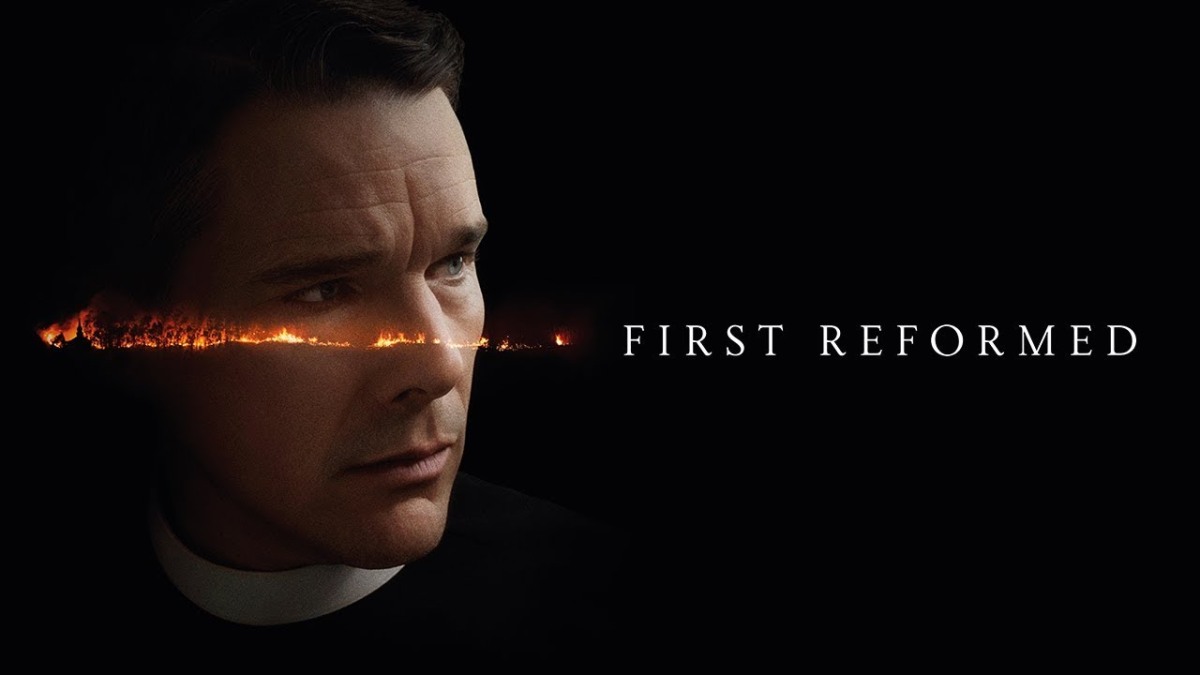
Man’s struggle with God can almost be as endearing yet painful as his struggle against man. If there is one way to sum up the excellent film, ‘First Reformed’, that would be it. First Reformed (2017) focuses on the environment, one’s faith, and the struggle to find hope when things seem rather bleak. “Can God forgive us for what we’ve done to the world?”, a troubled environmental activist asks Pastor Ernst Toller and the Pastor replies to his congregant, “Who can know the mind of God?”

While this movie did not receive any Oscar awards, the acting by Ethan Hawke (Pastor Ernst Toller) and also by Amanda Seyfried (Mary) is excellent as well as the cinematography, the adapted screenplay by Director Paul Schrader which helps this film earn its critical acclaim and some Independent Spirit award nominations as well as one Academy Award nomination. I still believe Mr. Hawke was snubbed from getting an Oscar nomination since this film’s performance was one of the best he has ever done and deserved more praise. In many of his films, I find him to be one of the best actors of his generation and able to produce genuine emotion regardless of the situation his character finds himself in.

In ‘First Reformed’, Reverend Ernst Toller (Ethan Hawke) finds himself faced with difficult questions surrounding his faith, morality, the environment in 2017, and what lies ahead in the future for humanity. These are weighty questions for anyone to deal with let alone a pillar of a community like Toller finds himself to be in Snowbridge, New York as the head pastor for the colonial era First Reformed church that dates back to the time of British colonization and the underground railroad movement later on.

This historical church is seen to be losing its membership and interest and Pastor Toller has to resort to touristic gimmicks and a small gift shop to help make ends meet to keep the church going. There is a noticeable parallel to the decline of Christianity in terms of active members of the Christian church in the United States so a fictional movie such as this one has some real-life parallels that seem plausible. The crisis of faith in churches in certain communities has a coinciding similarity with Toller’s own faith in God and in himself. He is an alcoholic struggling to find meaning and purpose in his life at the beginning of the film.

While making the church more touristy, he has also made the church more spiritual as well instead of its Calvinist origins. He sticks more to sermons than to scriptures and has enlisted the financial backing and ownership of an evangelical megachurch in nearby Albany, New York, which is likely to take over the church in the near future much to Toller’s apprehension. As we go through the film, we peel back the curtain on who this pastor is and like any of us, he has his own personal flaws and past sins but has also suffered for them and wishes to make amends in some way.

We find out that Pastor Toller lost his son, Joseph, recently while serving in the Iraq War and feels guilt for having told him to enlist having come from a military background himself as a chaplain. During that difficult time, he committed adultery and started drinking but also found his faith again to then become a pastor at First Reformed after going through grieving his son’s loss. However, a chance encounter with one of his congregants and his wife puts his faith in God and humanity to the ultimate test.

Mary, a devout congregant and believer in God and her skeptical husband, Michael, a stern environmentalist and becoming increasingly radical meet with Pastor Toller separately in their house. Mary has concerns about Michael’s well-being and tells the Pastor they expect to have a child soon. Michael is sincerely struggling with the fact that he will be a father soon when the world’s ecosystems are steadily collapsing, sea levels are rising, and the effects of global climate change are to be felt beginning in the next few decades. For any of us watching this pivotal scene including Pastor Toller himself, there are no easy answers from God or from man either regarding the future of humanity. Ernest finds it difficult to comfort Michael but asks to keep seeing him and to look out for Mary and the unborn child.

This particular scene leads to the rest of the film’s deeper dive into the effects of capitalism and greed on the environment as well as the relationship between big industry and religious institutions. Pastor Toller’s awakening from meeting with Mary and Michael leads him to questioning why the environmental situation is so dire, who is responsible for it, what can be done to stop it, and how far should measures be taken. Because the Pastor has no easy answers for Michael, he starts looking for them and is obviously dismayed by what he finds out regarding the local environmental situation in his community and how greed, industry, and the lack of stewardship for his community have led humanity down towards an unsustainable path.

Without spoiling the film, The Pastor struggles with what he can do as one individual to counteract the forces aligned against good stewardship of the planet and what a person can do to draw attention to the problem. Not only is there a crisis of faith in God but in each other and what is being done to the only planet we have ever known. The Pastor, with certain health issues related to alcoholism, is reconciling with the fact that he is mortal and what kind of impact he wants to leave behind.

He is comforted by the fact that Mary is still a believer in the future and wants to have a child even with the future of the planet looking relatively bleak. Pastor Toller knows however that he has the responsibility now to hold those accountable for their actions whether it’s the Evangelical church, a big industrialist doing environmental damage, or even himself when he strays from helping those in his congregation who need it the most.

‘First Reformed’ poses a lot of weighty questions and it is an extremely timely film in terms of its messages and themes. It is bleak because it has to be and raises a lot of issues that we have neglected regarding the environment and now we may be finding that time to make a difference in this escalating problem is running out. ‘First Reformed’ asks us how an ordinary man of faith yet a pillar of the community so respond to those in his congregation who are in despair regarding environmental damage and destruction.

How far should he go and how radical should he be to get people to listen and understand what is being done? Can love and faith overcome the desire to do harm and take revenge against those who have sinned against the planet? Like any good film, there are no easy answers and the director does not condone or condemn the thoughts or possible actions that Pastor Toller weights leading up to the climax of the last scene.

What this film does an excellent job of is warning its viewers about the consequences of greed, ignorance, lack of stewardship, valuing profits over the health and well-being of people, and the unholy alliance of organized religion and big industries. There are numerous fingers to point at regarding the worsening state of climate change going on in the world currently but perhaps those who watch this excellent film will realize that the finger should be pointed at ourselves first about the damage being done. Perhaps that kind of introspective thinking is what it will take for massive external action to occur and for the worst of the consequences to be avoided.

‘The Revenant’ – Film Review and Analysis

What happens when you push a man to his utmost limit? What occurs when you take everything from him including his wife and child? At the point of both physical and mental exhaustion, what carries the man forward to keep on fighting and to keep on living? Few films really probe these questions related to the power of the human spirit as realistically as ‘The Revenant.’ An excellent and unique film that was propelled to success, both commercially and critically because of the acting brilliance of Leonardo DiCaprio and through the special direction of Alejandro González Iñárritu.

‘The Revenant’ is a 2015 film that is both a sprawling epic and an intimate biography, which covers a time in American history where the West was not yet settled, and both the elements and the native population could cause a settler or a trader to lose their lives all too quickly. The film is also a western in that it depicts the rough and tumble life of a frontiersman who was at the whim of not only nature but also hostile animals and native tribes who were lurking just behind the shadows of the mountains and the forestry that surrounded them.

Hugh Glass (portrayed by Leonardo DiCaprio) is one such frontiersman who was a real-life person skilled at being a fur trapper, explorer, and a hunter. While his story was embellished for ‘The Revenant’, the legend itself while it may not have happened in all of its audacity still makes for a great movie adaptation. The legend surrounding Mr. Glass involves him being left for dead after he was abandoned by the fur trappers, he was assisting in their quest to participate in the burgeoning fur trade in the Far West of Montana, the Dakotas, and Nebraska.

After a vicious attack by a grizzly bear while out hunting for food and provisions for General William Ashley’s expedition, Hugh Glass was essentially left for dead by those men who had abandoned him even though he was still alive. Glass had killed the grizzly bear who had attacked him but was essentially rendered immobile by the attack and could not talk or walk on his own two feet for weeks. In the historical accounts, Hugh Glass was able to somehow heal himself enough to crawl, stumble, and walk over 200 miles (320 kilometers) to Fort Kiowa, South Dakota to survive.

In the meantime, he had survived attacks from the native tribes, living in conditions of winter weather and brutal cold, and avoiding potential hazards such as icy tundra, treacherous mountains, and other elements. The one thing about both the historical portrayal of Hugh Glass’s story and that of ‘The Revenant’ was how he thrived in those brutal environments given his history as an explorer and a fur trapper. If you are able to live at the edge of civilization and make a living for yourself in doing so, you should never be counted out when it comes to surviving when all hell breaks loose.

Compared to the historical legend, Hugh Glass, thanks to the brilliant acting of Leonardo DiCaprio is given a more substantive background that makes him a more relatable figure. In the two and a half hours of the film, Glass is portrayed also as a family man just trying to make his way in the world by making himself useful to both the fur trappers and the U.S. Army personnel who have come to take territory for themselves and make themselves rich in the unforgiving North American wilderness. In this cutthroat environment, there are no room for careless mistakes and the viewer will see in the film just how deadly each day can be. If there is any wisdom that Hugh wishes to impart on his family is that he wants to give them the tools for survival even if that means his own demise.

Glass is not a perfect protagonist and it is clear from the beginning of the film that he is out for himself and his family alone as he does not let anyone, or anything come between him and his son Hawk. His deceased wife was a Pawnee Indian and his son, Hawk, is half-Pawnee. After the death of his wife, Hugh Glass is extremely protective of his son, Hawk, because he knows that the men, he is traveling with do not see him as an equal because of his Pawnee background. Glass is committed to protecting his son because that is all he has left to live for.

While respectful towards the Pawnee, Glass and the other fur traders are fearful of the Arikara who are out to find their tribe chief’s abducted daughter, Powaqa, even though they didn’t take her. In order to survive, Glass has to defend himself and the other traders from the Arikara who are vicious in their hatred of anyone who has invaded their territory. After the fateful bear attack that severely wounds Glass, Hawk prevents the trappers from killing his father and they move on without him leaving John Fitzgerald and Hawk to carry him back to the Fort where he can get medical attention.

Unfortunately, Fitzgerald is a sociopath only concerned about his own survival and terrified of the Arikara attacking again. Fitzgerald kills Hawk as Glass watches in agony because Fitzgerald was selfish in his desire to survive and leave Hugh to die. Another man, Bridger, leaves Glass to die as well and they take his gun and all of his provisions leaving him defenseless against the brutal elements. While Bridger is complicit, it is Fitzgerald who draws the ire and contempt from Glass in his quest for vengeance.

Despite being left for dead, Hugh Glass is hellbent on getting vengeance for the death of his son, Hawk, and wanted to get revenge on John Fitzgerald for killing his son, taking his provisions, and leaving him to die in the wilderness. Through his knowledge as a fur trapper, his ability to track both people and animals, Hugh was able to survive the treacherous winter conditions, heal himself and his wounds, and able to eat buffalo and horse meat to survive. So much was Glass’s desire for vengeance that he was able to travel the 200 miles to get to the Fort to seek treatment for his wounds and gather up the strength to set himself on the trail of John Fitzgerald. In the case of Hugh Glass, an eye for an eye is warranted when his whole life (his wife and his son) have been taken from him.

While the real-life story of Hugh Glass is up for debate, ‘The Revenant’ draws the audience in through its stunning visuals, powerful acting by actors Leonardo DiCaprio and Tom Hardy and the visionary directing by Iñárritu whose tracking shots from the opening battle to the bear attack scene to the final fight scene between Fitzgerald and Glass will leave the viewer breathless. This is a pure survivalist movie of man against man and nature but it also revolves around an emotional core of someone who is trying to do his best to sustain himself and his son in harsh living conditions. The movie’s setting is strongly intertwined with a perilous time in American history where Native Americans, fur trappers, French explorers, and even the U.S. army were fighting to the death for control of lucrative trades and future security in the untamed yet wild territory of the Northwest region.

DiCaprio and Iñárritu made ‘The Revenant’ in mind for its unabashed portrayal of both the beauty and the brutality of the natural environment. It is a movie that highlights how precious and fragile our climate is and how men can negatively affect it through their desire for greed and power. ‘The Revenant’ is as much as a morality tale as it is a tale of the utility of revenge. Two men, one whose world has been ripped apart due to the loss of his wife and son, and another man who fears losing his money, his fur pelts, and his life to Arikara attack are brought together in a struggle of good against evil. The film poses the question of is vengeance worth it? and how can justice be served in a world that is based on survival and not codes of morality or law? Arguably, one of the best films of 2015, ‘The Revenant’ was one of the best films of this decade and deserves a viewing.

Led by an Academy award winning director (Alejandro Gonzalez Iñárritu) and starring an Academy award winning actor (Leonardo DiCaprio), ‘The Revenant’ is a jaw-dropping and powerful film that will stay with you after the credits roll. The film’s themes are extremely relevant in terms of its varied focus on family, revenge, survival, and how to seek justice in a lawless environment. More than anything, it shows the fragility of civilization and how important it is to be able to put yourself in difficult and challenging situations to show what you are made of. Hugh Glass was not a perfect man but he knew what it took to survive against all odds and seek justice against those who had wronged him and his family even if it meant certain death.