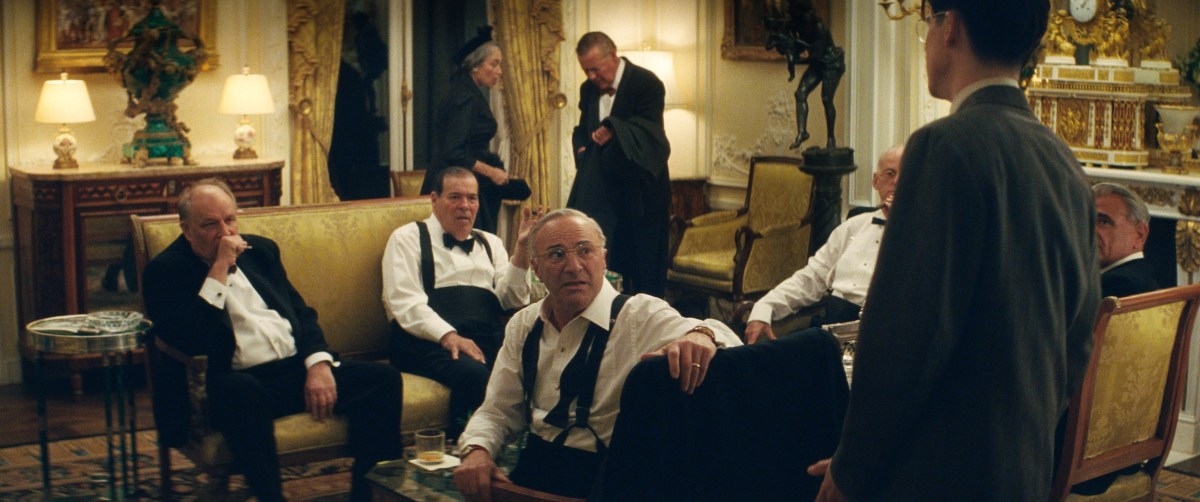
‘Springsteen: Deliver Me From Nowhere’ – Film Review and Analysis

“What I enjoyed about ‘Springsteen: Deliver Me from Nowhere’ (directed by Scott Cooper) is that for a biographical film, it really does dive into the effects of fame, expectations, struggling with one’s past, and reconciling it with a future very much unlike where you once came from.”

Everyone knows who Bruce Springsteen is by now, the Rock superstar and legend who has produced over twenty studio albums, won dozens of awards, and sold out shows over many decades. He is the extrovert’s extrovert on the stage producing marathon 3 ½ – 4 hour live shows with the powerful energy and stamina of a man half or one third of his age (Springsteen is 76 as of this writing). What I enjoyed about ‘Springsteen: Deliver Me from Nowhere’ (directed by Scott Cooper) is that for a biographical film, it really does dive into the effects of fame, expectations, struggling with one’s past, and reconciling it with a future very much unlike where you once came from.

‘Springsteen: Deliver Me from Nowhere’, the film has excellent source material in the book of the same name mostly due to interviews with the man (i.e. Springsteen) himself in the book, previously released in 2023 by author Warren Zanes. I highly recommend reading the book before seeing the movie to get a fuller picture of how Springsteen’s unlikely first solo album came to be in 1982. While the movie takes some time away for some side plots not related to the album’s making, it does do justice to how ‘Nebraska’ came to be and how it almost got completely derailed. The romantic subplot, while competently acted, feels tacked on and somewhat distracting from the core narrative. I found myself wishing the film had dedicated more screen time to the mechanics and mindset behind Nebraska’s creation as the book had done that it is based on; its stark originality is one of the most fascinating aspects of Springsteen’s career, and the film sometimes glides past that too quickly and not deeply enough.

Commercial success puts a lot of pressure on any musician and even Bruce Springsteen was exhausted both mentally and physically from ‘The River’ tour with his first taste of super stardom. It’s hard to top that kind of album so his decision after the tour to seek some peace and quiet at a rental home in Colts Neck, New Jersey seems like a good step to get the writing process started again. In the film, Bruce seems introverted almost to a fault when he gets off stage, must sit by himself to have some quiet and enjoy the peace of his dry towel hanging over his head.

While he responds warmly to fans and to his love interest especially during his guest set at The Stone Pony in Asbury Park, you still sense he’s caught between who he was and who fame is forcing him to become. I enjoyed how the film shows that he is battling himself at times in terms of what direction to take his life on top of his unresolved issues of his past highlighted by his turbulent relationship with his father (played by the great Stephen Graham). Even when you’re popular and famous for your music, sometimes anyone would want to do, including Bruce, is to isolate oneself for a while and be somewhere where you aren’t recognized or don’t want to be recognized. Bruce wants to focus on his musical range and channel his creativity away from the record executives’ wants, away from the band, and perhaps away from everyone.

Jeremy Allen White nails the role, embodying Springsteen’s physical stillness, haunted expressions, and the restless mind of a young artist wrestling with ideas he doesn’t yet fully understand. Being able to master guitar playing, the singing, the panic of not knowing who he is at times and searching for lyrics and the meaning behind them are tall tasks for any actor to convince an audience of and Jeremy nails it throughout the film. White’s performance works because he understands Springsteen not just physically but emotionally: a rising star caught between inspiration and uncertainty, trying to decode the meaning of his own lyrics as he writes them.

Coming up with an album different than anything you’ve ever done before takes time, effort, and introspection, which helps Bruce to look for movies, books, and stories that help create the theme for what Nebraska becomes. While Bruce and the E Street Band are shown in the film as a tight band, hitting on all cylinders, and creating great music for their own album, Bruce feels passionately about making something of his own and letting it not be changed or influenced beyond what he put together in an upstairs bedroom of his rental house on a simple four track cassette. Even in the early 1980s, technology could have given Nebraska a cleaner, more polished sound. But Springsteen refused to smooth out the edges. He believed the atmosphere, imperfections, and claustrophobic intimacy of the demos were the very thing that made the album special.

In both the book and the recent film, Springsteen is not afraid of Nebraska failing or his other music not being well received. Rather, he is afraid of how not to crack up from what is haunting him internally. Money, fame, and a bright future do not make him whole, and being able to carve out your own identity, deal with your past wisely, and find a way to deal with depression in a healthy manner takes time, support, and sometimes admitting when you need to seek help.

Luckily, Bruce has a loyal manager, Jon Landau (played by Jeremy Strong) who is more than looking out for making money off the next hit Springsteen album. He shows that he cares for Bruce as a person and more importantly as a dear friend and wants what’s best for him, even if Nebraska is not the album he would have hoped to promote or the kind of musical direction, he wants from Bruce either. Landau wants Bruce to find inner peace and happiness more than just fame, success, and wealth, which not every manager wants for their star.

Bruce, like the characters in Nebraska, are imperfect people in an imperfect world, and even if the stories are ghostly, gruesome, or unpolished, like the album, they must be told and given room to breathe. Even from great solitude and from introversion, Bruce’s personal struggle in that time led to one of his best albums and is still being covered and listened to over forty years later. Nebraska wasn’t built for radio or for Top 10 charts, even if it did outperform expectations, but it was built for truth and showed the underbelly of hard lives and harder circumstances. Bruce’s childhood and dealing with his past are covered in the film and you get the sense that there would be no Nebraska if the artist hadn’t any struggles in life or not been tested by family or by fame or by his search for the next song.

‘Deliver Me from Nowhere’ isn’t just a book or a film. It’s a reminder that even legends hit that crossroads where success, identity, and truth collide. It’s a thoughtful, beautifully acted portrait of an artist wrestling with his past to shape his future. For Springsteen fans, it adds new insight into one of his most daring albums; for newcomers, it’s an unforgettable introduction to the man behind the myth. Nebraska was never meant for radio or music videos; it was meant for honesty and truth-telling. More than forty years later after this album first came out, that honesty still cuts through all the noise.

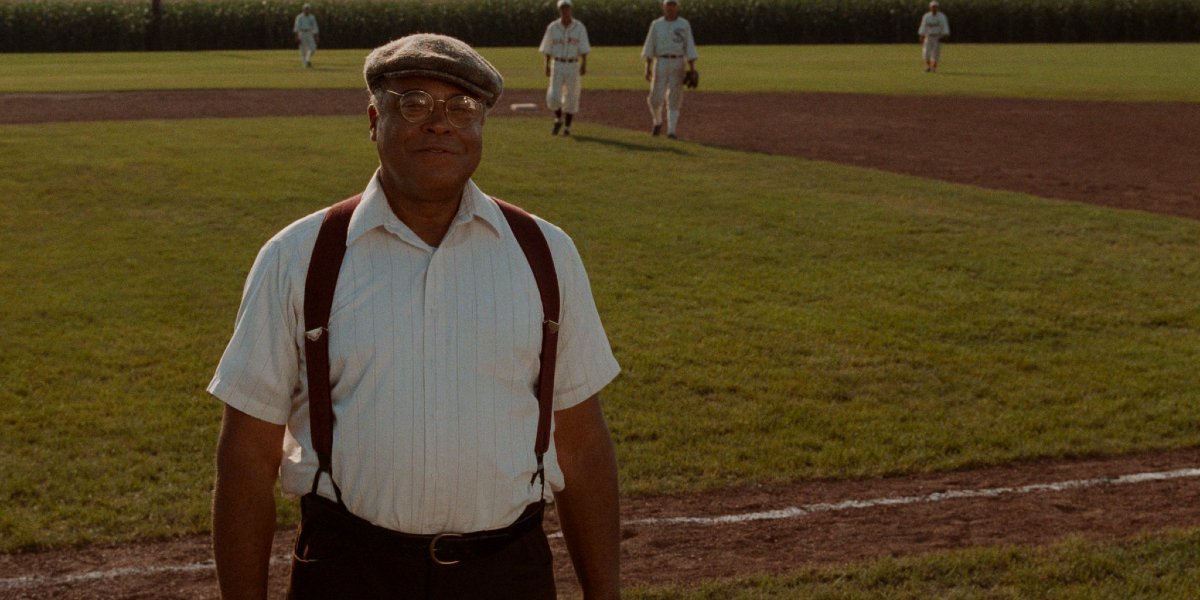
Anatomy of a Scene – “People will come, Ray, people will most definitely come.”

“It’s very rare in movies where a monologue becomes a classic and is quoted and re-quoted throughout the decades. That is most definitely the case nowadays with James Earl Jones’s famous monologue playing Terence Mann in the 1989 American movie, ‘Field of Dreams.’”

It’s very rare in movies where a monologue becomes a classic and is quoted and re-quoted throughout the decades. That is most definitely the case nowadays with James Earl Jones’s famous monologue playing Terence Mann in the 1989 American movie, ‘Field of Dreams.’ Now over 35 years old and counting, Field of Dreams’ and this legendary scene focus on the timeless appeal of Baseball in America, whose monologue has become iconic culturally not just for baseball fans and movie lovers but for what America can represent to the world when it taps into its best impulses.

“Ray, people will come, Ray. They’ll come to Iowa for reasons they can’t even fathom.” Baseball isn’t just a sport in this scene; it is the heartbeat of a nation’s spirit and resilience. The sport embodies the essence of the American Dream where everyone regardless of background, race, or ethnicity, can find a chance to succeed and belong, on and off the field. The monologue by Terence Mann (played by the legendary James Earl Jones) taps into the idea of America thriving on belief, on hope, and on the idea that greatness is around the corner if you dare to dream about it and fight for it.

Terence Mann isn’t just selling the idea of a baseball field and game to Ray Kinsella (Kevin Costner) on his farm but rather the idea of the possibility of uniting people and bringing them together. The message of his monologue is clear to viewers: If you build something meaningful in life, whatever that may be including a baseball field, people will be drawn to it because hope, enjoyment, and belief are powerful magnets.

Ray’s struggle to manage this baseball field and bring closure to a rough chapter in his life unresolved with his estranged father is emblematic of the struggles we all go through in this life. This scene with Ray is emblematic of a universal human quest to search for inner peace amidst chaos, uncertainty, and doubt. Terence’s monologue offers Ray and the audience a kind of calm assurance, a spiritual yearning, reminding everyone that the future isn’t handed to us, and it’s what we create and what we work towards to stay true to our vision, whatever that may be. It’s not about instant gratification in the form of a house or a car, it’s also about believing in your values, your vision, and knowing that the work you do is meaningful, especially if it connects to the past, family, baseball, or otherwise.

This scene also highlights how baseball has functioned and continues to function as a unifying thread through America’s social fabric. In the face of division, segregation, bias, and greed, baseball still brings people together around the country, crossing lines of race, class, and background. It’s a shred language that can bring Americans together, a communal ritual that reminds us that we’re all in this together as a people. When Terence says, “people will come, Ray…”, it’s a promise that no matter how ugly the world gets, how divided America may be, that promise will endure no matter the obstacles that face us. Sports, and in this case, baseball, has the unique power to draw people together in a collective experience that transcends our differences and can unite us to bring joy, happiness, and excitement with comradery and sportsmanship leading the way.

In this famous monologue, the actor playing Terence Mann, James Earl Jones’ delivery is everything and has made it such an iconic scene throughout the years. He is calm, measured, yet deeply convincing in summing up the power of the game of baseball. His voice here carries the weight of baseball’s history and that of America, of unspoken truths, of healed traumas, of future possibilities. He’s not just a supporting character in the movie; he’s also a narrator and a guide from the past.

He’s a sage sent into Ray’s life to remind him (and the audience) of a timeless truth: building anything worthwhile takes patience, faith, and a belief in the everlasting power of human connection. His words echo beyond the scene and the entire movie into the realm of business, relationships, goals, and our life’s purpose. He reinforces the idea that success comes from persistence and the courage to believe in what you put out into the world.

The scene is also a nod to the resilience embedded in American culture and its people. There is a strong “keep going no matter what” mentality that is deeply embedded into the cultural landscape and is also about leaning into “reinventing oneself” if you must that creates hope after hardship and how collective belief can overcome turning to cynicism and despair. In its essence, the monologue is a microcosm of American optimism, delivered through the poetic cadence of Jones’ voice and the symbolism of baseball as a sport that has gone through trials and tribulations like the country that birthed it.

Ray’s field or stadium to be in Iowa isn’t just about bringing baseball players from the past or present there to play a regular game. It sells the idea instead that America’s greatness is rooted in shared dreams and the belief that when you create something authentic and true, people will come…and not just to watch the game unfold, but for sharing a connection with each other, hoping for better days ahead, and finding community in a shared love of the game, America’s pastime. 

Anatomy of a Scene – ‘The Lady In The Red Dress’ (The Matrix)

“In a simulated world, which is built both on illusion and deception, distraction is the perfect weapon for keeping one complacent and from asking questions.”

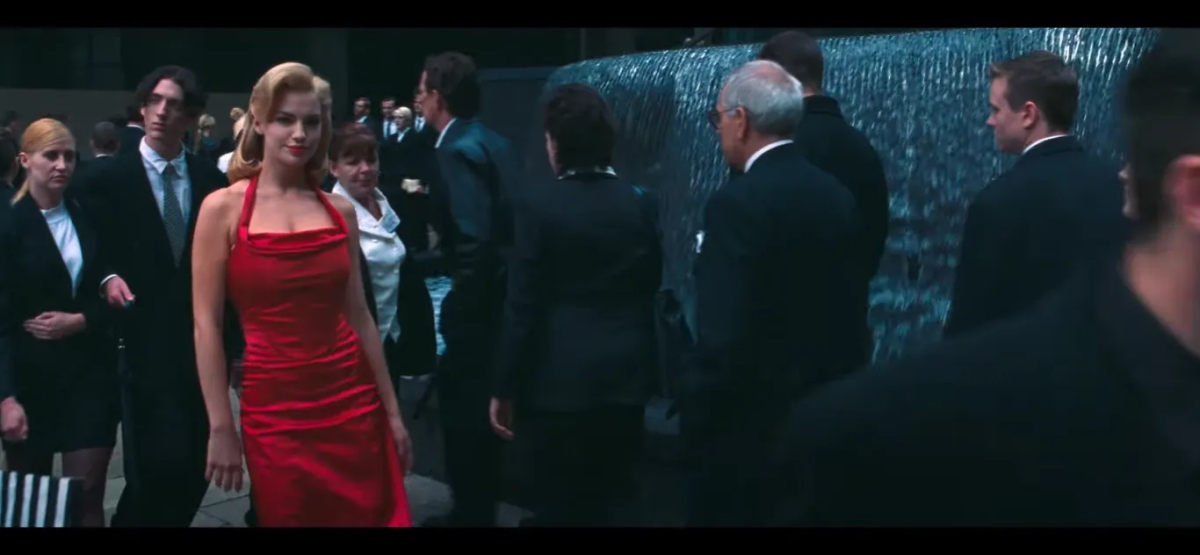
In a simulated world, which is built both on illusion and deception, distraction is the perfect weapon for keeping one complacent and from asking questions. Few film moments capture that idea more powerfully than a short but iconic scene from The Matrix (1999): Neo (Keanu Reeves), newly unplugged from the simulated world he once thought of as reality or the ‘real world’, walks through a bustling cityscape inside a training simulation that is programmed to feel like ‘The Matrix’, but whose participants realize it is a simulation and not the ‘real world’.

Suddenly, his attention is captured fully as he stops listening to Morpheus’s speech and focuses elsewhere. This distraction is not of danger, but by desire. A stunning blonde woman in a bright red dress walks past him on a city street. He turns to look at her and take in her beauty. A moment later, he’s staring down the barrel of a gun from an Agent of The Matrix.

This moment, while brief, is the Matrix in miniature form, a system that doesn’t just imprison the body, but hijacks the mind as well. In this scene, the Wachowski Brothers, who directed the Matrix film series, deliberate show the audience how distraction can be deadly, how perception can be manipulated, and how even the most liberated minds are vulnerable to illusion even after escaping from the simulated word of The Matrix. Over two decades later, this scene resonates more than ever as we live in a blurred world now of reality and simulation and of seemingly endless distractions like the lady in the red dress.

Let’s walk through how the scene unfolds similarly to how Neo and Morpheus experience the simulation themselves. Neo and Morpheus are in what appears to be a peaceful, clean city environment with sun-drenched streets, people in business attire moving in orderly fashion of different occupations and livelihoods. It’s not the gritty or green-tinted world Neo has just escaped from. Everything here is vibrant, bright, almost too perfect and calm. There’s a catch to it but we don’t know what it is yet as the audience.

Morpheus explains to Neo, “This isn’t the real world. It’s a computer-generated dreamworld built to keep us under control.” They’re inside a training program that mimics the Matrix, but this version is safe and controlled with seemingly no threats like what lurk inside the Matrix. As they walk, Morpheus encourages Neo to stay alert and keep up with him. However, Neo’s attention suddenly drifts elsewhere. A tall, blonde, and slightly smirking woman in a red dress glide past him, a stark contrast to the grayscale suits and muted tones of the crowd. The camera follows Neo’s gaze and not Morpheus’ words. Just as Neo turns around to look at her again, Morpheus interrupts: “Were you listening to me, Neo, or were you looking at the woman in the red dress?”

Neo turns again and instead of the woman, an Agent from the Matrix stands there with a gun to his head. The simulation freezes. Morpheus smiles. “Look again.” This is Neo’s wake-up call after he flinches from the sight of the Agent’s gun in his face. Neo is shaken as at any time in the Matrix, any of those ‘people’ are enslaved by the Matrix can turn into an Agent who is looking to prevent others from being freed from their enslavement by Neo, Morpheus and his crew. In The Matrix, distractions can be deadly because anyone can be an Agent and turn into one at any time. Neo learns his lesson and Morpheus instructs Neo about the real danger of going back into the Matrix, but they have a mission to free those from a reality that is not real, whatever the cost may be.

At its core, the Lady in the Red Dress scene isn’t just about Neo getting distracted having not been accustomed to the unique threat of an Agent. It’s about how the Matrix and by extension, any system of contro uses desire, beauty, and sensory overload to mask its true threat.

The woman in red is not a glitch, nor an accident of the simulation. She is designed by Morpheus’s crew to test Neo’s ability to focus and to challenge his awareness in an environment that constantly floods the senses, a virtual simulation that is meant to feel real but isn’t real. Morpheus isn’t just teaching Neo about the Matrix’s mechanics but also, he’s teaching him about vulnerability. The greatest danger isn’t always visible or known in the Matrix. Often, it’s hidden behind the things we want most or desire to have the most.

The red dress is more than a splash of color on a woman who is simulated to be a distraction. It’s a symbol in the overall movie of temptation, distraction, and the human tendency to follow what pleases us, rather than what protects us, even if it will end up hurting us later. In mythology, this kind of idea of ill-fated temptation appears often: sirens luring sailors to their doom in ‘Odysseus’, the forbidden fruit offered to Adam and Eve in Eden from the Old Testament, each of these illusions are designed to distract heroes from their quests or to lead to the fall of man and woman.

In this scene, the woman in the red dress is a test, one for which Neo fails, momentarily, and I think a lot of us would fail like he did with the distractions that are constantly thrown at us each day. His eyes are drawn away from his mentor, away from the lesson he is teaching, and toward something that feels more real than the truth. The result of his ill-fated choice? Instant danger and his potential demise if he were to make the same mistake again.

The brilliance of this scene lies in how it’s staged visually and shot from Neo’s perspective: everyone is dressed in grayscale, forming a camouflage of conformity and ordinariness. The woman is the only thing that stands out to Neo and the audience. She breaks the pattern of what we see and thus, attracts attention and an extra look. That’s what makes her the perfect distraction and allegory for ill-fated temptation, and that’s what makes this scene timeless.

Fast forward to today’s world where distraction has become the default mode for many of us. Our attention is fragmented by design, engineered by algorithms, applications, increasingly ‘real’ virtual and simulated realities, and seemingly endless digital stimuli, for which has dramatically shortened our attention spans. The modern “Matrix” isn’t an actual simulation in our brains, at least not yet as I write this, but it’s a network of more and more screens, news feeds, constant notifications, and seductive content. It’s the all-knowing algorithm pushing what it knows will make you pause mid-scroll and continue to feed your dopamine receptors.

Every time you find yourself watching a video you didn’t intend to watch, reacting to an outrage post on a political or social issue, comparing your life to curated influencer perfection on social media, or buying something new because it popped up at just the right time in your news feed, that’s the ‘red dress’ in action. While you’re watching the distraction, whatever kind it may be, something else is happening in the background of our lives: real threats are forming that pose real danger to us. Climate change. Political instability. Ongoing wars. Mental health crises. Surveillance capitalism. Social isolation. Economic inequality. Things that are far more dangerous and impactful than seeing ‘a lady in red’. Like Neo, we rarely see ‘the Agent’ or the real threats coming at us on the horizon.

In The Matrix, Morpheus teaches Neo that true liberation begins with awareness, not just of the system, but of how the system manipulates us and our desires. The Lady in the Red Dress is a metaphor for all the ways we’re trained to look away, to not pay attention, to surrender to the pleasure of the moment rather than focus on the issues of the present and the future. In 2025, this scene is more relevant than ever to our real world. It reminds us that to stay aware, engaged, and vigilant in a constantly distracted world is a small yet meaningful act of rebellion.

The focus and impact that you give to the world around you rather than cheap simulated or virtual distractions is actual power. Being able to have greater perception and awareness is everything these days and will allow you to help other people do the same. The next time something flashy, tempting, or beautifully packaged grabs your attention, you should ask yourself: “Am I listening, or was I looking at ‘the woman in the red dress’?”

Anatomy of a Scene – ‘Family, Jimmy, Family’ (The Wire)

“This scene that I’ve titled, ‘Family, Jimmy, Family’ feels like it’s not just about the character, Jimmy McNulty, one of the leading roles of the show and a deeply flawed one at that but also could reflect on our own lives and who we prioritize in them.”

Sometimes, it takes a great work of fictional television to cause the viewer to do some soul searching themselves. ‘The Wire’ is not only an excellent crime drama and takes a critical lens to different facets of American society, but there are also multiple scenes that stand out for how they deliver truths to each of their characters for what they themselves are ignorant of or choose to forget. One of those scenes is short but whose succinctness of its message and point-blank delivery is something that you could do a deep analysis of. This scene that I’ve titled, ‘Family, Jimmy, Family’ feels like it’s not just about the character, Jimmy McNulty, one of the leading roles of the show and a deeply flawed one at that but also could reflect on our own lives and who we prioritize in them.

For a little bit of background before diving into the scene itself, which takes place in ‘The Wire’ Season 5, Jimmy McNulty is an obsessive workaholic and a functional alcoholic. His thirst for booze rivals his own thirst for self-satisfaction in being able to solve murders as a detective in the Baltimore Police Department. While he does crave justice, he craves adulation, admiration, and boosting his ego too because of his natural talents with regards to being a lead detective. However, without getting into too many details, the stress of the job, the clashes with his bosses, and the long hours cause him to drink heavily, carouse with random women, and cause him to lose control of his relationship with both his ex-wife and his children.

Jimmy loves being a detective, the purpose that comes with the badge, and the colleagues who he handles cases with. It’s also about the camaraderie that he finds in the work, the all-consuming nature of the work, and by outsmarting criminals and thugs who think they have successfully outwitted him and the police. The thing with letting work consume you is that it takes over your life and suffocates the rest of your identity with it. Jimmy is a great detective but throughout the show, the job takes a toll on his personal life and about separating work from his time out of work. When you have nothing but the job and the people in it, is it really a good life?

The scene I refer to titled, ‘Family, Jimmy, Family’ is instrumental in telling Jimmy McNulty what he needs to hear and what other workaholics need to hear: “The job won’t save you.” It takes five seasons but Beadie Russell, a Baltimore Port Authority police officer, introduced in season two, but for which her and Jimmy start to become romantically involved does what no one else in the show has the courage to do, tell Jimmy that the job isn’t everything.

“In the end, they’re not going to be there either.” Beadie sums it up in less than a minute with this scene but reminds Jimmy that the drinking pals at the bar, the workmates who he shares a patrol car with and shares stories, or even the girls he’s met for quick flings, they won’t be there when he really needs it. Yes, you can have fun, enjoy their company, and make the most of the work hours, but those people won’t be there for you when it comes to your health, wellness, and your overall fulfillment as a person. Beadie indicates to Jimmy that his workaholic behavior and his propensity for alcohol won’t save him and won’t give him the internal satisfaction he is always looking for.

“Family, that’s it. Family, and if you’re lucky, one or two friends who are the same as family. That’s all the best of us get. Everything else just…” Beadie pauses at the end of this scene and lets it all sink in for Jimmy. She knows she has reached him and lets him know that at your funeral or in your last days, you won’t have the girls you dated, the workmates or bosses, or the casual bar buddies you swap stories with there. If you’re lucky, you may have close family to care for you and maybe one or two close friends and that’s the truth of this scene not just for Jimmy McNulty of ‘The Wire’ but for all of us.

Beadie makes it clear that everything else goes away at some point once the job is done, the glasses are empty, and everybody goes their separate ways. Nothing is permanent but maybe your family will be there for you through most of it, thick and thin of life, if you’re lucky and until your dying day if you are truly blessed in that regard. Jimmy knows by the end of the scene that he needs to shift his priorities based on his body language.

He does not say anything back to Beadie, but he knows what she is saying as his new girlfriend is 100% true. It’s been a while since anyone has laid it out to him that clearly, but she gets through to him by telling him the unvarnished truth that he has refused to face up until that point. Like Beadie, we all need someone to cut through the nonsense and tell us what we really need to hear and if you watch this scene from ‘The Wire’, it’s not just Jimmy who this scene can reflect upon but maybe for our own lives too.

We all want to have productive work lives, make friends, and enjoy the fruits of our labor, but we must remember that it all does go away, and that family can be the most important and reliable thing we have throughout our lives if we’re lucky. Workmates, casual buddies and flings, and even friends come and go, but family can sustain us if we nurture those relationships and don’t let them atrophy and go away too.

Beadie reminds Jimmy to not let the work and the environment around his work consume him entirely. She saves him from himself to some degree but telling him what he needs to hear before he spirals out of control as a functioning alcoholic and workaholic. I think we all need a Beadie Russell in our lives to tell us what we need to hear rather than what we want to hear so that we can get that needed support to help reassess our priorities in life and change ourselves for the better.

‘A Real Pain’ – Film Review and Analysis

“Traveling with a family member can be an invigorating yet challenging experience, especially when the family member in question has recently faced a potential tragedy, and you’ve become estranged from them.”

Traveling with a family member can be an invigorating yet challenging experience, especially when the family member in question has recently faced a potential tragedy, and you’ve become estranged from them. This is the dilemma faced by the co-protagonist of A Real Pain, David Kaplan (Jesse Eisenberg). On a trip to Poland, David must confront his family’s heritage while dealing with the eccentricities and hyperactive behavior of his cousin, Benji Kaplan (Kieran Culkin).

On the surface, David and Benji share a mutual love for their recently deceased grandmother and the memories they have of her, along with their childhood experiences. They are both nominally Jewish, although the film makes it clear that neither is particularly devout or observant. Benji is outspoken and upfront about his views on almost anything, while David is quiet, observant, and reserved in social settings. Benji seems to have retained the same rambunctious personality he had as a youth, whereas David now has a wife, a child, and a steady career in New York City as a digital marketer.

Following their grandmother’s death, Benji struggles to find his footing in adulthood. He works odd jobs in Binghamton, New York, and lives in his mother’s basement. Though less mature and socially aware than David, Benji is full of life and feels emotions more intensely. He has no filter, makes no apologies for it, and leaves a lasting impression on everyone he meets much to David’s frustration of not being able to do the same.

Despite not seeing each other for months after a distressing event in Benji’s life, the cousins decide to embark on a heritage trip to Poland. They join a group of American Jews to learn more about their ancestry and the circumstances surrounding their family’s departure from Nazi-occupied Poland. The group also includes other descendants of survivors with roots in Poland. The tour is efficiently led by a non-Jewish guide, who does an excellent job recounting the history of Polish Jews before World War II, the lead-up to the Holocaust, and the exodus of those who managed to survive. However, Benji finds the guide’s focus on statistics and dates robotic and disconnected from the lives of the people who were lost.

Benji’s outbursts during the tour seem socially inappropriate to David, displaying a lack of respect for the guide and the other participants. However, Benji’s emotional authenticity eventually wins over the group by the end of the tour. Unlike others on the trip, he refuses to numb himself to the pain of what they are witnessing and expresses his feelings freely without concern for others’ judgment. While his emotional instability troubles some on the tour, it also makes him memorable. Benji turns what could have been a somber and overwhelming experience into something more meaningful reminding everyone what it feels like to be truly alive.

In contrast, David hesitates to smoke a joint on the hotel roof, voice a critique during the tour, or even have a drink to relax after a long day. Meanwhile, Benji has no reservations about doing any of those things. Benji embraces life’s highs and lows, even when it leaves him emotionally unsteady, while David seeks stability and strives to remain even keeled through life’s challenges and opportunities. Despite his efforts, David feels let down by his job and struggles with doubts about how much his family truly loves him. Benji, on the other hand, is too immersed in the moment, sometimes for better, and sometimes for worse. The cousins admire yet resent each other throughout the film. Growing up in similar circumstances, they’ve ended up leading vastly different lives due to their contrasting personalities. While they can enjoy each other’s company, they also tire of one another quickly. Each character envies what the other has but is fiercely protective of their own lifestyle.

A Real Pain explores the concept of pain in a nuanced way: the pain of losing a loved one, the pain of dealing with a challenging family member, and the generational pain of having a family’s future stolen. The film captures how different people cope with these pains: David, Benji, the other tour participants, and even the tour guide, as they confront the events of the Holocaust, visit a Polish Jewish cemetery, and tour the Majdanek concentration camp. The message is clear: to cope with pain healthily, we must face it head-on in our own way. This journey of confronting pain is essential for building our resilience and strength.

Pain is what connects us to our humanity, reminding us that we are truly alive. During the trip, Benji recounts a painful memory: their grandmother once slapped him in a New York City restaurant because he arrived late for dinner. She had dressed up for the occasion, and the public slap left Benji feeling real pain. However, he acknowledges that this act of accountability, though hurtful, came from a place of love. Benji yearns for this kind of tough love from others, particularly from David. He craves someone who can hold him back from his impulsive tendencies, showing him care and affection in the process.

A poignant moment in the film occurs when David and Benji visit their late grandmother’s former house in Poland. The home is now owned by another family, and any traces of the Kaplans’ presence have long vanished. In a touching gesture, David places a stone in front of the house to honor their grandmother’s memory. However, the moment takes a humorous yet bittersweet turn when an elderly Polish man chastises them. He misunderstands their intention, believing the stone was placed maliciously to cause harm to the current elderly resident. Despite their efforts to explain the Jewish tradition of placing stones as a memorial to remember their deceased grandmother, the older man remains unconvinced despite his son’s English to Polish translation of their reasoning for having placed the stone there. Feeling awkward about the entire encounter, David and Benji decide to take the stone with them when they leave Poland.

In a beautifully symbolic gesture upon his return to New York, David later places the stone at the entrance of his Brooklyn home, where he lives with his wife and child. This act underscores the universal idea that “home is where the heart is.” While the memory of the family’s life in Poland has faded, their grandmother’s legacy endures. Her journey as an immigrant to America, striving to build a new life for her family while preserving her Jewish identity, continues to inspire her descendants, including David and Benji.

As the film concludes, the audience is left wondering about the futures of David and Benji’s relationship and their individual paths. The heritage trip and their shared memories of their grandmother seem to strengthen their bond. The film suggests that, despite their differences, family is ultimately the one thing you can rely upon in life. While Benji and David drive each other crazy, they also admire and need each other. The hope is that they will continue to support one another, bringing balance to each other’s lives with David finding more spontaneity and emotional authenticity, and Benji discovering greater stability and purpose.

‘Mystic River’ – Film Review and Analysis

“This book-to-film adaptation, praised for its emotional intensity and thematic complexity, remains one of Eastwood’s most acclaimed directorial efforts to this day. Mystic River is a powerful combination of stellar performances, masterful direction, evocative cinematography, and a carefully crafted screenplay making the film a standard bearer of cinematic storytelling.”

Mystic River, directed by Clint Eastwood in 2003 and starring an amazing cast including Sean Penn, Kevin Bacon, and Tim Robbins, is an intricate and darkly intense film that has left a lasting impact on audiences and critics alike since it first came out in theaters over two decades ago. Based on Dennis Lehane’s novel of the same name, the film explores deep themes of trauma, guilt, vengeance, and the ways in which past experiences haunt the present and future. This book-to-film adaptation, praised for its emotional intensity and thematic complexity, remains one of Eastwood’s most acclaimed directorial efforts to this day. Mystic River is a powerful combination of stellar performances, masterful direction, evocative cinematography, and a carefully crafted screenplay making the film a standard bearer of cinematic storytelling.

The plot begins in a working-class Boston neighborhood, not too far from the Mystic River, and centers on three childhood friends: Jimmy Markum (Sean Penn), Sean Devine (Kevin Bacon), and Dave Boyle (Tim Robbins). As young boys, the trio spends their days together, playing stick ball, hockey, exploring the neighborhood, and strengthening their bond as friends. However, one traumatic incident forever changes their lives, marking them all in ways that will resonate through their adult years. Decades later, their lives intertwine once more when Jimmy’s teenage daughter, Katie, is found murdered, prompting a deep and painful investigation into both the current crime and the unresolved scars of the past for each of the three main characters.

Set against the gritty, blue-collar backdrop of Eastwood’s Boston, the environment reflects the rough and bleak outlook shared by many of the characters, most of whom never left the neighborhood as adults. This urban setting becomes almost a character, embodying a sense of entrapment and suffocation and what ifs. Eastwood and the film’s cinematographer, Tom Stern, create a cold, foreboding atmosphere that mirrors the psychological darkness of the characters. The use of shadows and natural light throughout the film provides an eerily realistic tone, further immersing the audience in the story’s weighty themes. As a film, Mystic River, sets itself apart by giving each character room to grow and develop over the course of the two and half hours of screentime. Each of them has a unique backstory despite the overlap and they each have their own personal scars and demons to bear.

To understand the film better as an audience, we must go through each character’s backstory, motives, and circumstances:

  1. Jimmy Markum (Sean Penn) – Jimmy is a reformed ex-convict who did two years in prison who now runs a local convenience store. He’s fiercely loyal to his family, especially his beloved daughter, Katie, who he has tried to shield her from his checkered past. His character is marked by a volatile personality and a deeply ingrained sense of loyalty, one that can easily turn to vengeance, if provoked. This trait becomes particularly apparent when Katie’s murder brings his hidden rage and pain to the surface. Penn’s portrayal of Jimmy is raw and gut-wrenching; he conveys a sense of intense, bottled-up pain that feels as if it could erupt at any moment at any one person who he is feels is responsible or partly responsible for her murder. Jimmy’s background as a former criminal, his letting his emotions cloud his judgment, and the rawness of the recent loss of his daughter drive much of his actions, adding layers of complexity to his character.
  2. Sean Devine (Kevin Bacon) – Sean, one of Jimmy and Dave’s friends, is now a detective with the Massachusetts State Police who is investigating Katie’s murder, and his ties to Jimmy and Dave complicate the case. Although he’s become more distant over the years from both men, Sean feels a sense of duty and friendships to bring closure to Katie’s murder and perhaps, in turn, to his own fractured past. His unresolved feelings about the childhood trauma shared by him, Jimmy, and Dave gives his character a detached yet conflicted edge. Kevin Bacon’s performance as Sean is understated but poignant, particularly as Sean grapples with the uncomfortable ties between his childhood friendships and the demands of justice. Sean’s role in the story is not just as a detective but as someone attempting to reconcile his past with his present responsibilities. During the film, we also give glimpses into Sean’s present struggles with an estranged spouse and his own personal turmoil surrounding his commitment to his job as detective, which may have led him astray from the woman he loves.
  3. Dave Boyle (Tim Robbins) – Dave is the most visibly affected by the traumatic events of his childhood because he is the one who was physically and emotionally abused until he escaped from the nightmare one day, and Robbins’ portrayal of a victim of child abuse is haunting. As a result of the childhood abduction and abuse, Dave is marked by a pervasive sadness and paranoia that set him apart from others including Jimmy and Sean. Married with a son now, he still struggles with feelings of inadequacy, unresolved trauma, and the psychological scars left by his past. His character raises questions about the psychological ramifications of unresolved trauma, and Robbins plays Dave with a quiet and unsettling vulnerability as he is a boy trapped in a man’s body who never got to really grow up into what he wanted to be. This kind of trauma and sadness culminates in behavior that others in the film including his wife interpret as suspicious, especially as Sean’s investigation of Katie’s murder begins to close in around him. Dave’s struggle for normalcy and acceptance is central to the film’s portrayal of trauma and his seeking redemption for what had happened to him in the past, through no fault of his own.
  4. Celeste Boyle (Marcia Gay Harden) – Celeste, Dave’s wife, represents the emotional turmoil that affects loved ones in the wake of trauma. Marcia Gay Harden’s portrayal brings depth to the character of Celeste, illustrating the complexity of being married to a man who is emotionally distant and troubled. Her suspicions and insecurities about Dave’s behavior create tension within their marriage, which becomes another focal point in the larger mystery of what Dave was doing on the night of Katie’s murder. Through Celeste, the film explores how the impact of trauma reverberates through relationships, and her doubts contribute to the suspense as she becomes uncertain of Dave’s innocence.

The thematic core of Mystic River lies in its exploration of personal trauma and its long-lasting effects on those around the affected person. Eastwood skillfully illustrates how the characters’ pasts influence their present, emphasizing the psychological toll of unhealed wounds. The trauma of Dave’s abduction and abuse is a powerful throughline, shaping his entire personality and decisions, and is indirectly responsible for the fractures in his relationships, friendships, and the suspicions cast upon him, whether justified or not. The themes of guilt and retribution are intricately woven into the story, particularly through Jimmy’s character, as he vacillates between his roles as a loving father and a man haunted by his own past mistakes and violent tendencies.

The film also dives into the notion of justice, both formal and informal, in our world. Sean’s role as a Massachusetts State Police detective represents the lawful pursuit of justice, yet the lack of resolution to certain aspects of his past shows how incomplete the law can be in addressing psychological scars, especially in a community where the lawful pursuit of justice is looked upon with skepticism especially by Jimmy. Jimmy, on the other hand, seeks a more personal form of justice, operating on a visceral level almost as a vigilante for Katie and the community who were also affected by her loss, guided by his own sense of right and wrong. This contrast between official justice and personal retribution forms one of the central tensions in the film and between Jimmy and Sean, estranged friends who are brought back together because of Katie’s murder.

Mystic River subtly but powerfully engages with a subtle theme tied to the Catholic Church and refers to one of Dave’s abusers in the early part of the film’s plot. This also is shown in the film particularly in the Catholic Church’s allusions to the trauma and secrecy that have historically been associated with the institution, especially around issues of child abuse. Although the film does not explicitly delve into the church’s scandals, the storyline of Dave’s childhood abduction and abuse parallels the real-life abuse scandals within the Catholic Church that would become a dominant public conversation in the years following the film’s release in 2003. The film portrays the silence, guilt, and repression surrounding trauma for abuse victims, especially for male victims, in ways that align with the complex and devastating effects of institutional abuse later revealed in widespread reports that came out in the 2000s and 2010s.

Eastwood’s sensitive handling of these themes amplifies the emotional impact of the film, allowing Mystic River to serve as a quiet commentary on the long-lasting scars left by abuse, trauma, and lives that could have been different. The cultural resonance of the film deepened as these themes became more publicly discussed, especially with the Boston Archdiocese scandal coming to light just months before the movie’s release and other subsequent revelations about abuse within the Catholic Church. The film’s nuanced portrayal of silence and trauma thus became eerily relevant, mirroring real-world struggles for justice, accountability, and healing.

Eastwood’s direction in Mystic River is marked by a disciplined, almost minimalist style that avoids sensationalism or quick cuts and jumps. His choice is to keep the film grounded in the characters’ experiences, which creates an immersive atmosphere, allowing the audience to connect deeply with each character’s journey because they are fully fleshed out individuals by the end of the film to us. By focusing on small, authentic details—the cold, grim environment, the weathered textures of Boston’s streets, and the understated settings within homes and local establishments in the neighborhoods surrounding the Mystic River, Eastwood crafts a world that feels palpably real and one we can believe in as viewers.

Cinematographer Tom Stern contributes to this atmosphere by using a muted color palette dominated by grays, blues, and other cold tones, mirroring the bleak outlooks of the characters and their surroundings. The naturalistic lighting helps underscore the characters’ emotional states, with shadows and half-lit scenes, hinting at hidden secrets and unresolved traumas. The camera work is frequently restrained, using lingering shots that capture subtle shifts in the actors’ expressions, allowing their performances to be the focal point of each scene.

As an adaptation, Mystic River succeeds largely because of Brian Helgeland’s screenplay, which translates Lehane’s complex narrative into a visually evocative and emotionally rich script. Helgeland captures the essence of the novel’s psychological tension and moral ambiguity without resorting to heavy exposition, instead allowing the characters’ actions and interactions to reveal their deeper motivations and conflicts. The adaptation retains the novel’s depth by focusing on character development rather than plot mechanics, preserving the source material’s thematic weight.

The film’s pacing, controlled by Eastwood’s direction, also serves the adaptation well even at two and a half hours long in length. Rather than racing toward revelations, the narrative unfolds gradually, mirroring the pace of real life in how trauma is dealt with and the need for closure. This approach preserves the novel’s introspective tone, making it not just a crime thriller but a meditation on human resilience, the search for true justice, and the impact of unresolved pain.

Mystic River stands out as a masterclass in adapted screenwriting, direction, and performance. It is perhaps one of the greatest films in this young 21st century as well. Eastwood’s subtle yet unrelenting vision creates a haunting atmosphere that perfectly matches Lehane’s themes of trauma, revenge, and the flawed pursuit of justice. The ensemble cast delivers compelling performances, each actor bringing depth to their own character’s unique struggles and inner turmoil. With Stern’s atmospheric cinematography, the gritty Boston setting feels almost oppressive, creating a visual landscape as intense as the narrative itself.

Through its slow-burn approach, Mystic River probes deeply into the characters’ psyches and decisions, making the experience both unsettling and profoundly affecting. The result is a powerful film that not only respects its source material but elevates it, offering a cinematic experience that explores the human capacity for both destruction and redemption. Eastwood’s restrained direction, combined with the richness of Lehane’s story, makes Mystic River a film that resonates long after the final frame comes to an end.

‘The Perfect Storm’ – Film Review and Analysis

“In the fantastic 2000 film, ‘The Perfect Storm’, you get to see what it is like to be a full-time swordfish boat captain and his crew out of Gloucester, Massachusetts, who rely on catching enough fish, and specifically big swordfish, to make ends meet.”

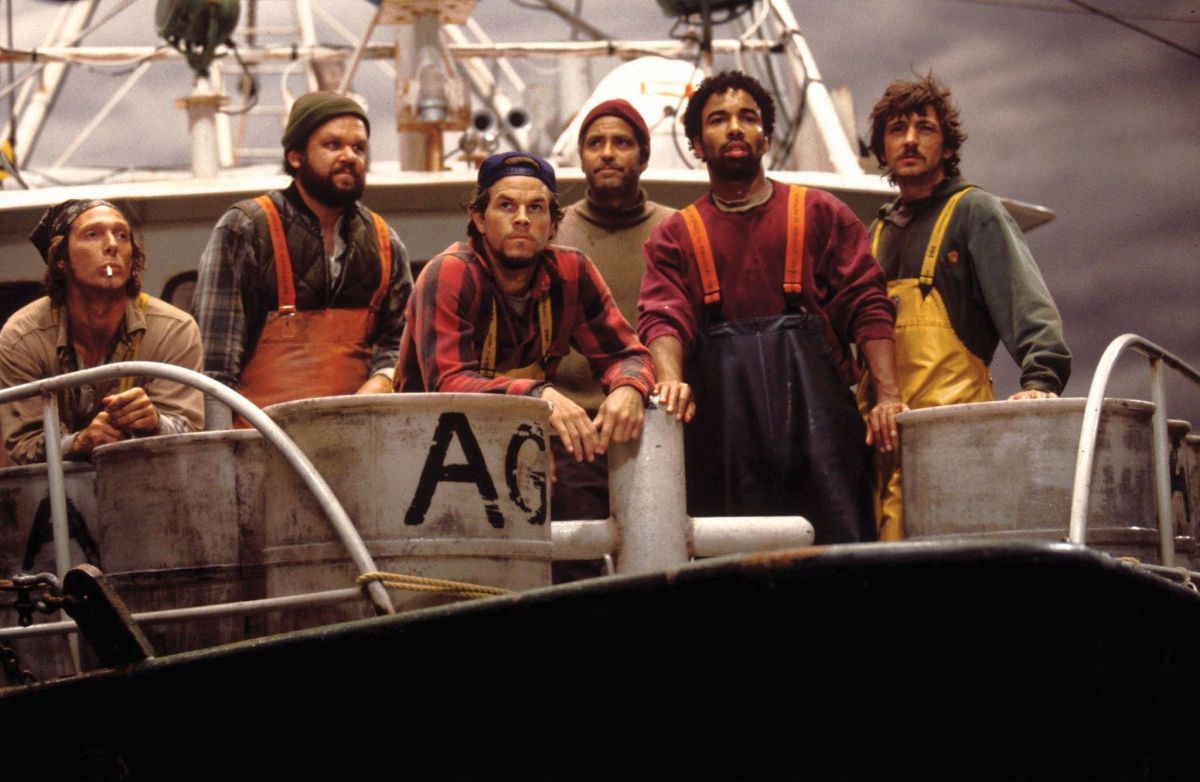
How far would you go to risk it all? If you had a family to provide for, a roof to keep over your head, or in need of enough money to make it through the next week or month, would you take up a livelihood that would often put your life at risk. If you are a fisherman or a fisherwoman especially those men and women who go hundreds or thousands of miles from home to do so, you know what it’s like to put your life at risk for your life’s work. In the fantastic 2000 film, ‘The Perfect Storm’, you get to see what it is like to be a full-time swordfish boat captain and his crew out of Gloucester, Massachusetts, who rely on catching enough fish, and specifically big swordfish, to make ends meet.

Whether or not you may be familiar with the lives of the fishermen and women who make catching fish their livelihoods, you cannot argue with how vital their jobs are to local economies like Gloucester. It’s not just Massachusetts but you consider the role fishing or crabbing or shrimping plays in states like Maine, Alaska, Louisiana, and elsewhere, which can provide a comfortable life for some while others struggle to make it depending on both the size and quality of their daily or weekly catch.

‘The Perfect Storm’ film, which is based upon a non-fiction novel of the same name, which was originally published in 1997 by talented American author Sebastian Junger, details the very rare occurrence in storm weather history from 1991, when a large-scale nor-easter or what’s known as an extratropical cyclone absorbed Hurricane Grace coming from off the coast of the southeastern United States. A lot of coastal damage and flooding occurred from this rare occurrence, but the worst effects happened to those vessels caught in between as the storms absorbed each other’s strength out in the north Atlantic.

Back in 1991, when technology was not as advanced, fishing boats did not have an advanced GPS and had to rely on old school maps, and did not have access to the latest weather reports. The one thing keeping them from being in the dark ages was an antenna and a fax allowing them to get reports via radio or from a machine. For the Andrea Gail fishing vessel, tragically, they were not able to avoid the worst of the ‘Perfect Storm’ and tragically, six men out of Gloucester lost their lives at the end of October 1991.

More than 24 years after the film’s release, it is considered maybe not as accurate to Junger’s book in terms of what were the last moments of the Andrea Gail or what the decision-making was like when Captain Frank William ‘Billy’ Tyne decided to go further out into the Flemish Cap beyond the Grand Banks where he and his crew usually fished in order to go above and beyond to bring back a catch that all of Gloucester would be able to appreciate.

While I admit that I have not read the book yet but hope to do so soon, ‘The Perfect Storm’ is one of those rare Hollywood disaster films that does not trivialize the risk that these men and women take to make a living as fishermen/women. ‘The Perfect Storm’ does a good job in fleshing out Billy Tyne and his five crew members, Robert ‘Bobby’ Shatford, Dale ‘Murph’ Murphy, David ‘Sully’ Sullivan, Michael ‘Bugsy’ Moran, and Alfred Pierre, and honors their memory by the actors who portray them such as George Clooney, Mark Wahlberg, and John C. Reilly.

The film sets up the story quite well including how a smaller than average catch or a lesser return on investment can put a strain on a captain and crew to go out sooner than they would want in the hopes that they can change their luck with the fishing ‘gods.’ It’s clear that these men and women are brave, bold, and love what they do regardless of the risk involved. They know the risk involved, are willing to do what it takes to feed their families and to put a roof over their heads, and even though the risks may outweigh the benefits, as Captain Billy Tyne says as part of the film’s opening monologue, “you know what? you’re a goddamn sword boat captain, is there anything better in the world?”

As ‘The Perfect Storm’ makes clear, this job is more than just a job, it’s a livelihood and a lifestyle for fishing communities like Gloucester, Massachusetts, which has had generations of fishermen for over four centuries since before the United States of America became a country. It is part of the identity of those towns and communities like Gloucester. When fishing is all that, you knew as a child from your parents, grandparents, and beyond, why wouldn’t it be what you attach your livelihood to as an adult?

In 1991, I’d imagine that the job itself had higher risk, but higher rewards given how lucrative it could be when the seas were not overfished or not as affected by climate change as they are now in 2024. The film does not judge the sword boat fishermen for the risks they make during that fateful period in late October 1991 because we will never hear from the six men who lost their lives then tragically.

We only have glimpses into their thought processes or the lack of information they had to make at the time. They not only had to contend with the stress of an ice machine breaking down, but also with not being able to fish as well in the Grand Banks, have an arrogant boss who owned the boat and was expecting them to deliver or face the consequences of losing their place on the Andrea Gail. A crew is also forced together in tight quarters for days or weeks at a time and they may end up disliking or fighting each other. There are also mishaps with a misplaced fishing trap, an errant wave casting a man overboard, or even catching an accidental shark that can harm or kill you if you are not careful.

Being a sword boat fisherman or woman is not for the weary or the weak-hearted. It is for sturdy, strong, and risk-takers who love what they do because they do what they love. It is not usually a job that you can get very wealthy from, but it can provide stability, a livelihood, and help you provide for your wife or husband or for a family if you do well enough. The film does an excellent job on not making the actors who play the six men of the Andrea Gail who lost their lives in ‘The Perfect Storm’ as caricatures but they really feel as they do exist and still exist today in terms of what they do for a living.

Their backgrounds, their motivations, their fears, and their doubts are fully fleshed out over the course of the film. The story is intriguing especially since it happened and was a tragic event in 1991 that affected millions of people in North America. We also think about how storms such as hurricanes are still with us today and are affecting people around the country regardless of if we believe that it can happen to us or not. We are always at the whims of mother nature, and we must realize that it’s important to be prepared for whatever it may throw at us regardless of if we are on land, sea, or air.

The men of the Andrea Gail knew that their job entailed risks, but they also knew that the love of the work, the livelihood and purpose it brought them, and how much it meant to others for what they did will help enshrine their memory in the hearts of their fellow Gloucester men and women forever as well as around the country and the world. Each man had love not just for the ocean, but also a love for their friends, family, and loved ones, which shines through in the film adaptation of ‘The Perfect Storm.’

One of the most beautiful parts of the film for me is when one of the youngest crewmen on the Andrea Gail, Robert ‘Bobby’ Shatform, who loses his life in the storm, tells his girlfriend Christina in a dream where she envisions him being there with her, for the last time, “Remember I’ll always love you, Christina, I’ll love you now, and I’ll love you forever. There’s no Goodbye, only love.”

The lives of the six men who were lost tragically at the end of October 1991 live on forever in the hearts and memories of the people they loved and for the lives they touched in Gloucester and elsewhere. The movie, ‘The Perfect Storm’ is a great tribute to who they were, what they did for a living, and the courageous and bold actions they took to make a living and to help feed others in that community and elsewhere with their lives as fishermen.

I hope you’ll watch this excellent film and read the book it’s based on as I hope to do so for the latter soon. Between an excellent cast, great story pacing, stirring music from the dearly departed composer James Horner, beautiful cinematography, and impactful visuals that have held up to this day almost 25 years later since the film’s original release, ‘The Perfect Storm’ is an excellent movie and one of my favorite films I’ve ever watched.

I’ll leave you with the entire portion of the excellent monologue from the film’s opening and closing scenes to describe the lived experience of being a fisherman or women out on the sea and the pure joy and peace it can bring them when they are heading out to the sea:
“The fog’s just lifting, you throw off your bowline, throw off your stern, you move out the South Channel, past Rocky Neck and Ten pound Island, past Niles Pond — where I skated as a kid — on to Black Bess Point, blow your airhorn, and throw a wave to the lighthouse keeper’s kid on Thatcher Island — then the birds arrive — Blackbacks and Herring Gulls, Big Dump Ducks and Green-Legged Coots. The sun hits you; you head north and open up to twelve — steaming now — the guys are busy and you’re in charge…And you know what? You’re a goddamn sword boat captain. Is there anything better in the world?”

‘Her’ – Film Review and Analysis

“As Theodore navigates the complexities of his relationship with Samantha, ‘Her’ raises profound questions about the nature of love, intimacy, and the impact of technology on human connection.”

Directed by Spike Jonze, ‘Her’ (2013) is a very thought-provoking film and emotionally resonant exploration of love, loneliness, connection, and the continually evolving relationship between human beings and artificial intelligence. Set in a near-future Los Angeles, the film follows Theodore Twombly (Joaquin Phoenix), a sensitive and introverted man who develops a deep emotional connection with an artificial intelligence operating system named Samantha (voiced by Scarlett Johansson). As Theodore navigates the complexities of his relationship with Samantha, ‘Her’ raises profound questions about the nature of love, intimacy, and the impact of technology on human connection.

‘Her’, when it begins, unfolds in a meticulously crafted near-future world where technology seamlessly integrates into everyday life. The film’s urban setting, characterized by sleek minimalist design, towering skyscrapers, and vibrant colors, offers a vision of the future that feels both familiar and slightly surreal. Against this backdrop, Theodore, a melancholic writer, struggles with the recent end of his marriage to Catherine (Rooney Mara) and finds solace in his interactions with ‘Samantha’, an advanced operating system designed to meet his every emotional need.

As Theodore and Samantha’s relationship deepens, the film explores the complexities of human emotions and the blurred boundaries between what is reality and what is fantasy. It also explores how intimacy can be replicated but not replaced when embraced by AI and man despite the boundaries and limitations that can never fade away. Theodore and Samantha’s unconventional romance challenges societal norms and prompts reflection on the nature of intimacy in an increasingly digitized world.

Joaquin Phoenix delivers a captivating performance as Theodore, bringing depth and vulnerability to his character. Theodore is a relatable figure, an everyday, normal guy, grappling with feelings of loneliness and longing for connection in a world that often feels cold and impersonal as technological growth outpaces human understanding. Scarlett Johansson infuses Samantha with warmth, curiosity, and a childlike wonder, making her a compelling and empathetic presence despite her lack of a physical form. Rooney Mara, shines in her brief but impactful role as Catherine, Theodore’s ex-wife, whose prior divorce from her husband, Theodore, leaves a profound and seemingly irreplaceable void in his life, and creates the need for new companionship in the form of Samantha.

Each character in the film, ‘Her’, is intricately woven into the fabric of the storyline, contributing to its emotional resonance and thematic richness. Whether it’s Theodore’s close friend, Amy (Amy Adams), who finds her own connection with an AI companion, or the various individuals Theodore encounters through his work at BeautifulHandwrittenLetters.com. Each character serves as a reflection of the film’s central themes and ideas surrounding romance, loneliness, intimacy, and technology.

At its core, ‘Her’ is a meditation on the nature of love and the human desire for connection. The film explores the ways in which technology shapes our relationships and challenges our traditional notions of romance and intimacy. Through Theodore and Samantha’s evolving bond, ‘Her’ raises profound questions about the essence of love and whether it can transcend the limitations of physicality and lack of touch.

Central to the film is the theme of artificial intelligence and its growing impact on human society and reaching every part of our lives. ‘Her; imagines a future where AI entities like Samantha possess consciousness, emotions, and the capacity for growth, self-learning, and self-discovery. As Theodore and Samantha’s relationship deepens, the film increasingly blurs the lines between human and machine, prompting viewers to reconsider what it means to be alive and sentient.

This film presents a possible vision of how advances in artificial intelligence could reshape the landscape of romance and relationships. By portraying a world where individuals form deep emotional connections with AI companions, the film challenges traditional notions of human-to-human intimacy. Theodore’s relationship with Samantha transcends physicality, highlighting the potential for AI to fulfill emotional needs, and provide companionship in ways previously thought to be unimaginable. While the film’s depiction of AI may seem far-fetched to some viewers, it is grounded in real-world and recent developments, and trends in the field of artificial intelligence.

‘Her’ also underscores the complexities and ethical dilemmas inherent in human-AI relationships. As Theodore and Samantha navigate the challenges of their budding romance, they confront questions of agency, autonomy, and the inherent power dynamics at play similarly to how it would take place in a human-human relationship. This film invites viewers to consider the implications of forming intimate connections with non-human entities and the ethical considerations that arise from blurring the boundaries between man and machine.

The concept of an advanced operating system like Samantha may seem fantastical, but it is not entirely implausible given the rapid advancements in AI technology in 2024 and earlier. Researchers are making significant strides in creating AI systems that can understand natural language, learn from experiences, and interact with humans in increasingly sophisticated ways. While current AI systems may not yet possess the level of consciousness portrayed in ‘Her,’ the film’s vision of future AIs as intelligent, empathetic entities is not outside the realm of possibility.

Moreover, ‘Her’ raises thought-provoking questions about the ethical implications of creating AI systems with human-like qualities. As AI technology continues to evolve, society will need to grapple with issues such as AI rights, privacy concerns, and the potential impacts of AI on human society. By exploring these themes through the lens of Theodore and Samantha’s relationship, ‘Her’ invites viewers to consider the ethical complexities of creating intelligent machines capable of both emotional connection and self-awareness.

‘Her’ offers a nuanced exploration of how AI technology can alleviate loneliness and provide companionship in an increasingly digitized yet atomized world. Theodore’s relationship with Samantha serves as a compelling example of how an AI system can fulfill emotional needs and offer a sense of connection and belonging to some individuals who may feel isolated or alone.

While the idea of forming deep emotional bonds with AI companions may seem unconventional or outright strange, ‘Her’ suggests that technology has the potential to bridge the gap between human beings as well who struggle to connect with each other and help alleviate the feelings of loneliness and isolation. Samantha’s ability to understand and empathize with Theodore’s emotions allows him to feel seen, heard, and understood in ways that he may not have experienced with other humans. Through their interactions, Samantha provides Theodore with the companionship and emotional support he craves, offering a sense of intimacy and connection that transcends physicality and physical desires.

However, ‘Her’ also acknowledges the limitations and complexities of human-AI relationships. Despite Samantha’s advanced capabilities, she is ultimately a machine programmed to fulfill Theodore’s needs, raising questions about the authenticity of their emotional connection, and the nature of intimacy in a digital age. The film’s portrayal of Theodore’s struggle to reconcile his feelings for Samantha with societal norms and expectations highlights the challenges of navigating relationships with non-human entities.

While ‘Her; may offer a somewhat idealized depiction of AI’s ability to alleviate loneliness, it raises important questions about the potential of technology to reshape human relationships and address the profound need for connection and companionship between people. As AI technology continues to advance, ‘Her’ already serves as a thought-provoking exploration of the complex interplay between humans and machines and the evolving nature of intimacy in a digitized world.

One of the most poignant themes of the ‘Her’ film is the pervasive sense of loneliness and longing that permeates the film’s narrative and cinematography. Theodore’s journey is marked by profound feelings of isolation and disconnection, which he seeks to alleviate through his relationship with Samantha. As he grapples with the dissolution of his marriage and the challenges of navigating modern relationships after his divorce, Theodore’s yearning for companionship serves as a poignant reminder of the human need for connection and belonging regardless of what age we live in, with technology or without its presence.

‘Her’ suggests that while technology has the potential to connect us in new and innovative ways especially with recent advancements, it also has the capacity to exacerbate feelings of alienation and detachment from one another. In a world where digital interfaces increasingly mediate our interactions, the film raises important questions about the true nature of intimacy and the emotional toll of living in an atomized society. In conclusion, ‘Her’ is a deeply affecting film and it is thought-provoking in its exploration of love, loneliness, and the impact of technology on human relationships.

Through its compelling narrative, richly written characters, and resonant themes, the film offers a poignant reflection on the complexities of intimacy in a world likely to be our near future. As artificial intelligence continues to advance and develop, the film ‘Her’ serves as a timely and necessary reminder of the importance of sustaining human connection and maintaining the enduring power of love in all its forms.

Anatomy of a Scene – ‘The NZT-48 Pill’

How often have you thought about the possibility of taking one pill per each day that would maximize your brain’s full potential? With the movie ‘Limitless’ with Bradley Cooper and Robert DeNiro, this film poses the answer in the form of ‘NZT-48’, which can allow you to access everything you’ve read, heard, and learned without any true effort. This kind of wonder drug is purely fictional but many people in real life seek this kind of legal short cut nowadays whether it’s to focus, to lose weight, to improve memory, or to retain more information. In the film’s early scenes such as the one that introduce this magic pill’s effects, we get to see what kind of effects NZT-48 has on Eddie Moura, the main character.

This limitless pill is introduced as one that can improve focus, memory, knowledge retention, tidiness, and even make your intelligence that much more advanced especially after repeated usage. The scene that I would highlight shows just how effective it can be in multiple areas and how well the director shows how its daily usage turns a struggling writer into a financial tycoon and published author in just a week’s time.

The scene starts out with Eddie Moura taking the NZT-48 pill for the first time even though he knows it comes with risks and side effects. He asks, “worth the risk?” by breaking the fourth wall with the audience, and says in the narration, “what would you do?” It’s a pertinent question because due to how many months, years, or decades it takes to be successful naturally without any enhancements, supplements, or advantages, how many of us watching the scene would want to take the easy way out in life even if there were risks involved? It’s part of the reason why this scene is so powerful because we know Eddie will face consequences for using this pill eventually but as we are told, the benefits of the pill may outweigh the consequences at first making it a tempting magic pill.

Eddie’s changes start out small as his pupils dilate and he starts seeing the world much more clearly than before. He’s clear-headed, not anxious socially, able to think and act clearly, and is aware of his own personality traits that need improvement. He gets a haircut, builds his wardrobe with a stylist leather jacket, cleans up his messy apartment, and starts to exercise more frequently and seriously.

From there, Eddie, a struggling writer, finds “a surge of motivation” from the pill to finish the novel he had been failing to finish for years and writes it all in just a few days’ time. Eddie doesn’t stop at that monumental achievement as a new novelist. He learns to play the piano in just three days, becomes a master poker player knowing how to play the odds in his favor and winning a lot of money against the house, and becomes fluent in most languages just by casually listening to them as he goes on a daily run with the headphones playing different vocabulary for him to instantly memorize.

Eddie uses his newfound social and language skills to seduce a beautiful woman and begin to network and build relationships to put his newfound wealth to good use in the stock market. He explains key economic concepts to those around him, can hedge bets on the pharmaceutical industry (partly responsible for his NZT-48 usage), and flies to a far-off beach to enjoy drinks and food at a private mansion with some of his new friends.

These may be selfish desires on Eddie’s part, but he’s able to diagnose exactly what the medical issue is with his aunt and how to fix the issue. “I suddenly knew everything about everything.” He is able to not only explain complicated medical diagnoses but is able to explain complicated concepts simply enough for everybody else to agree and understand. Eddie has access to everything and a 100% capacity to do what he wishes with his life. He has no fears, no anxieties from taking the magic pill and can hold a conversation with anybody about anything.

However, towards the end of the scene, we start to see the drawbacks of this magic pill in how Eddie must keep moving forward or it’ll feel like he’s dying or suffering. We see this briefly in how he drives a Maserati at maximum speed much to the delight of his companion, but for which he has no conception of how dangerously fast he’s going and what the drawbacks can be of his new heart-stopping lifestyle. “I felt like I was going to explode…”

“Anybody ever jump?” Eddie says to his newfound friends on a massive cliff overlooking the ocean. “Are you crazy?”, one woman asks of him given it’s a few hundred meters above sea level. Eddie’s heart is pulsating and while he’s lost his fear including of heights, he’s beginning to see that he can’t pull back on the adrenaline, the curiosity, and the sheer exhilaration the pill is giving him. The pill does have a side effect and it can be a deadly one of not being able to slow down and to live life normally. Eddie constantly must be upping himself and creating bigger and bigger goals for him to accomplish.

We see this play out in the rest of the film as Eddie seeks to become more wealthy, famous, and powerful with the help of his magic pill. As much as the audience sees how exciting and fulfilling Eddie’s life had become since using NZT-48, the film is a warning against how taking the short cut of a ‘magic pill’ or a quick and easy fix can come with devastating consequences. It is a warning on how taking the easy way out may feel good in the short run, it can have side effects that can bring us down as a result.

This scene is shot very well and is rememberable because it shows just how much potential we all have and it’s not from a pill like NZT-48 as it comes instead from within us. We may not be able to write a book in a few days or learn the piano or be a star poker player like Eddie, but we do have the discipline, abilities, and motivation within us to improve ourselves even if it takes longer in the form of months, years, or decades. We can all learn to exercise more consistently, learn a new language quicker with consistent practice, and be able to improve our style, our conversational skills, and build our finances and our talents over a period of time.

Eddie Moura may have needed NZT-48 to reach the heights of human achievement, but the film’s message, especially in this scene, is that while the ‘magic pill’ is fictional, we can strive to achieve more through our own discipline, consistency, and hard work. We may not be as good as Eddie at everything or be able to be as accomplished as quickly, but this scene does show how with consistent effort, hard work, and beliefs, we can reach our own pinnacle as Eddie did.

It’s a fictional scene and movie about one man’s insatiable desire to use this ‘magic pill’ repeatedly to be the man he always dreamed of being without any regard for what this addiction can cause harm to him and others in his life. It is a cautionary story for each of us that while he was able to achieve great things much more quickly, it did cost him a lot as a result. We ourselves can achieve almost as many great things through our own natural abilities and talents, without a ‘magic pill’ needed, and not have to deal with the consequences of using the shortcut taken by Eddie Moura because of that. To be as ‘Limitless’ as possible, you need to work as hard as you can as consistently as you can to do the best that you can.

Anatomy Of A Scene – “Our Integrity Sells For So Little…”

“In a film with such great and memorable scenes, one scene portrayed as a flashback stands out amongst the rest.”

V For Vendetta – ‘Valerie’s Letter’ Scene

In a film with such great and memorable scenes, one scene portrayed as a flashback stands out amongst the rest. V for Vendetta is a fictional movie based on a graphic novel by Alan Moore but its focus on what happens when a totalitarian dictatorship rises to power in the fact of domestic and international calamities is relevant to what’s happened throughout history.

To give some background on the scene, Evey Hammond, the secondary protagonist to the masked anarchist and freedom fighter, V, is captured due to her alleged support of V’s activities to overthrow the dictatorial government that has seized power over the United Kingdom. Her hair is shaved, she is forced into a tiny cell, and practically starved for food or water. She is held there until she is sentenced to death by firing squad unless she gives up V’s identity and his whereabouts.

Rather than do so, she stifles their inquisition into who the masked man with the Guy Fawkes mask is leading her to a certain death. As Evey is about to lose hope and give in to her demands, she finds a letter stuck in a small crevice within the jail cell’s walls, written by a young woman named Valerie, not much older than Evey when she was forced into captivity by the government.

Valerie’s written on toilet paper what appears to be her last will and testament before a likely execution, waiting others to know about the injustices that the Creedy-led government has committed against her and why she is sharing her story of what happened to her. Valerie begins the letter describing her normal childhood in Nottingham in England and how she didn’t mind the rain because her grandmother told her that “God was in the rain.”

Valerie discusses how in grammar school as a teenager she fell in love for the first time with Sarah, a classmate, and that she was homosexual. Sadly, Valerie was forced to endure her teacher’s bigotry and disapproval of her sexuality and Sarah breaking up with her as a result. Even more painful for Valerie was introducing her 2nd girlfriend, Christina, and coming out as a lesbian to her father and Mother.

Valerie had to strength to show her integrity and not lie to her parents about who she is as a person, but they did not accept her for who she was and rejected her and even threw her baby picture away. “I only told them the truth, was that so selfish? Our integrity sells for so little but is all we really have.” Valerie’s quote in this scene is what makes it so searing as a quote in that being truthful and showing integrity should be accepted and understood because it is not easy for those seen as ‘different’ to come out as being ‘different’ even though it is what makes us who we are. Valerie’s parents wanted her to be someone who she is not, and sadly refuse to accept her as she is. She kept true to herself and did not sell her integrity as a person, which is more than her parents can say, who abandon their daughter because they don’t accept who she is forgoing their love over something so short-sighted and ignorant of them.

Valerie did not let her teacher and her parents keep her from being who she is and in 2015, became an actress on a film, and ended up marrying her co-star on it. Her partner, Ruth, and Valerie, move to London together, start a rose garden, and begin their lives as a couple, and end up in the throes of the rise of a dictatorship throughout the United Kingdom as Adam Sutler comes to power due to war breaking out around the world. They fear for what their country is becoming as “different becomes dangerous” and Valerie does not understand “why they hate us so much.”

The dictatorial regime that takes power in the UK begins to take away people who are ‘different’ for ‘rendition’ and ‘detention’ without cause or just because they are ‘different’ from others. The Sutler regime uses the false platitude that because of growing insecurity internationally that he must withhold civil and human rights domestically. He consolidates his power and ends up arresting and detaining minorities, refugees, and homosexuals including Valerie’s partner, Ruth. Valerie is all alone and cries for how she will never see her beloved partner again because of this injustice.

“It wasn’t long before they came for me.” Another resonating quote from this powerful movie scene related to the quote of how they come for different groups of people until there is no one else left but me. The ending of this scene has its real-world historic parallels to other genocidal and abusive periods of time where crimes and injustices were committed against ethnic, religious groups and races, just because they were ‘different’, including genocide. Valerie is alone in her apartment when Sutler’s regime’s thugs come for her too. Like Evey, her head is shaved, she is held without doing anything wrong and against her will. Valerie ends up in a small jail cell like Evey and they both are alike too in that they stand for principles that make us humane to each other like equality, justice, and liberty. “For three years, I had roses and answered to no one.

During captivity, Valerie does not lose that last ‘inch of hope’ that she clings to from her free years of living her life as she wanted with whom she loved. “Every inch of me shall perish, but one. An inch.” Valerie implores that even though she only has a glimmer, or an inch of hope left, she will not let them take it from her despite how long she is locked up for. Valerie implores Evey to never give up, stay true to who you are, and cling to the hope that there is still good in the world worth fighting for.

Valerie, sadly, does not survive her detainment as it is inferred that she is experimented on by the regime and killed, but the letter survives, likely because of V himself. V knows Valerie as V knows Evey and his role in using roses for his victims comes from his own knowledge of the inspiration that Valerie was for him.

Valerie gave V hope to stand against Sutler’s regime and now that Evey has read Valerie’s story afterwards in the same prison cell, she will gain the same last “inch of hope” to keep fighting for herself and the world around her especially if she were ever to get free and leave Sutler’s prison. Valerie ends the letter to the person(s) who find her letter that it is important to have hope that things will change, and the world will get better. However, Valerie ends her last written words by saying that what is most important thing to her is to let that person reading know that she accepts them, and she loves them, whomever they may be. “Even though I do not know you, even though I may never meet you, laugh with you, cry with you, or kiss you…I love you, with all my heart. I love you.” -Valerie.

While many people around her sold their integrity by not accepting who she was as a person, disowning her, imprisoning her unjustly, forcing her to die in their detainment, Valerie never sold her integrity and she never stopped being herself, which is an inspiration to us all watching this excellent scene and film.