

What is ‘True Wealth’?

“I believe the key is being able to maximize wealth in both facets as much as possible without sacrificing one or the other too much.”

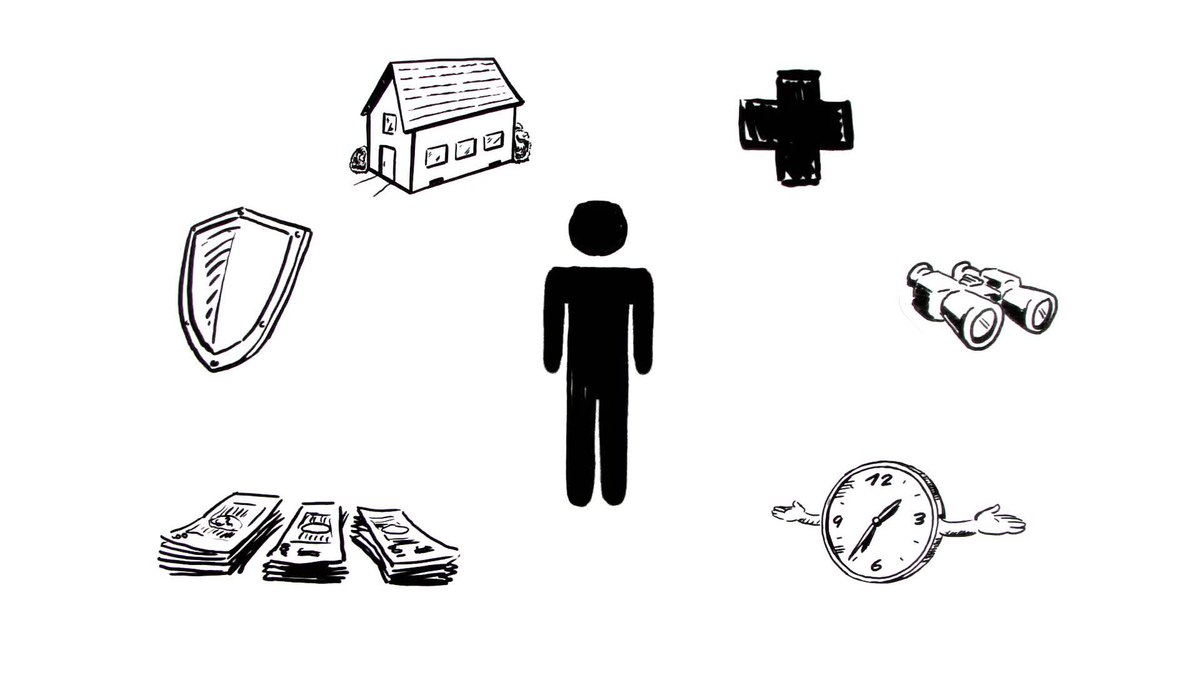
There is a standard definition of ‘wealth’ as a concept: An abundance of valuable possessions, money, or other resources to the degree that it causes prosperity. However, what is prosperity to you may not be prosperity to others. I like to think of wealth is not an abundance not just of material possessions or of money or of how much you can acquire but also how much you value what inherently belongs to you. What I mean by that is your time, your health, and your freedom. While building wealth is key to having success in life, there are other facets to wealth that we can neglect if you are not careful.

Wealth will come with sacrifices whether it is your time, your freedom, or your health as there are tradeoffs involved. You’ll find that to become more prosperous, you may have to sacrifice time, freedom, or health to build that wealth up whether in the form of money, resources, or material possessions. I believe the key is being able to maximize wealth in both facets as much as possible without sacrificing one or the other too much.

In order to gain more money, you may have to sacrifice your time in the sense that you exchange your time to earn money or you are not as free to do what you want each day because you have to work a job, grow your business, or learn new skills in order to earn the money to become wealthy. The same could be said of your health whereas you may have to sacrifice the time you could use to invest in your own health to build material or resource wealth with the time you put in to earn money or other assets. That time that could be used to be spent at the gym, on a run, going on a hike, or practicing a sport could go to your job or your business or investing into a new asset.

If you can find out what you truly value and what you want to maximize in terms of your wealth, make sure you prioritize it to have true wealth for you. For example, if fancy cars, big houses, and a lot of material possessions appeal to you, maybe you don’t mind putting a lot more time into working for that, putting your health on the backburner, and sacrificing certain freedoms to do what you must instead of what you want to. On the contrary, if you care less about possessions, material wealth, but still want to be comfortable in terms of money or investments, then maybe you can work less, focus on your health and free time more, and exercising more freedoms to do what you want with the extra time you have as a result.

You should decide what kind of wealth is best for you. What truly will make you happy, what you are passionate about in life, and what you want to get most out of life, you’ll be able to build that true wealth. I think the key for anyone is to maximize the 24 hours in a day, 7 days in a week as much as possible. If you can build your wealth passively to get some of your time back, that is a key advantage in my view to having true wealth too. When you can be financially successful by having multiple sources of income, multiple options to build wealth, and with some or a lot of autonomy in your work or business pursuits, that really can be an advantage in not only being successful but happy too.

Wealth is not just about being financially well off but also about being well off in other areas including health, time, and exercising freedom in what you do and how you do it. There is a distinct difference between someone who must rely on others for their wealth building and someone who is able to create their own opportunities or build their own means of wealth in a business, in real estate, or in investments that can create more freedoms rather than slowly eliminate them.

You can have as many possessions as possible, houses, cars, and money in the world but if you have no free time, no health, or no autonomy in what you do or how you earn that wealth, then you may need to reassess if that is the true wealth that you want out of life. I hope that you’ll rethink what wealth means to you because only you can decide what you would like to prioritize as you build it. You must consider that sacrifices will have to be made, that time, money, and health are all commodities that can be saved or lost depending on what you prioritize these days.

I only ask that you realize that having the freedom to do what you want and when you want is underrated. It is a form of wealth within itself along with keeping your health in good shape as long as possible even if you must sacrifice some time or freedom as a result. Consider that you can be very wealthy in the material sense but if you are unhealthy, working all the time, and have to answer to others in order to keep building that wealth, are you truly wealthy or is it only one kind of wealth that you have?

Think about what you are willing to sacrifice, what you are willing to earn, and how to passively build on the wealth you want to earn to save more time and freedoms that can be used for health, time spent with family and/or friends, or enjoying what the world has to offer outside of your own wealth building. Wealth takes many forms as I mentioned so remember that while we often think of money, cars, houses, and other assets, we should remember that wealth can be time spent away from an office to enjoy a vacation, wealth can be an extra hour in the day to use the gym or go for a hike, wealth can be starting businesses that matter to you with hours of work that you set for yourself and only you can hold yourself accountable for. Think about the wealth that you want to build throughout your life and how you want to make it work for you.
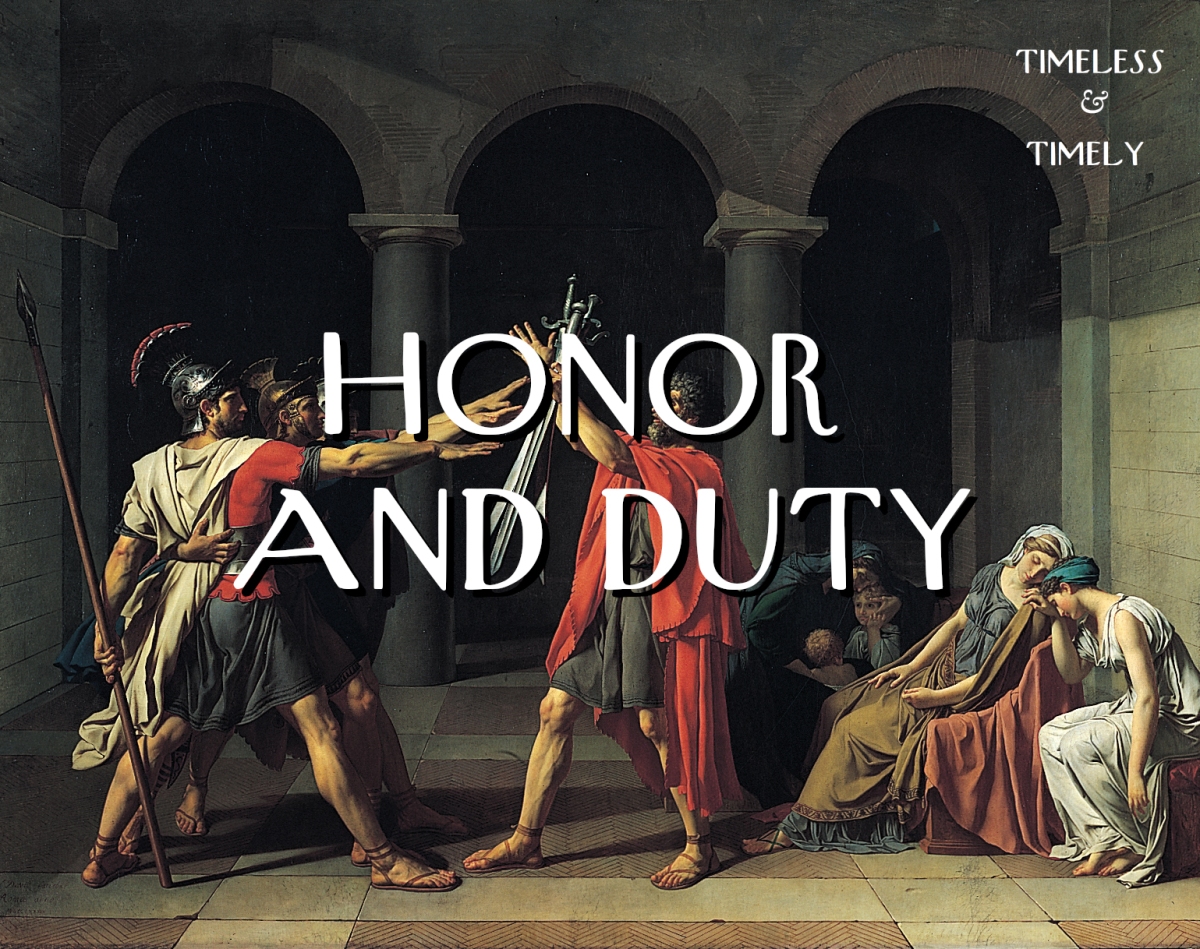
On Duty and Honor

“Two concepts that are not discussed very often today in our culture, but for which go hand in hand to have a purposeful life are duty and honor.”

Two concepts that are not discussed very often today in our culture, but for which go hand in hand to have a purposeful life are duty and honor. Duty is the obligation, either moral or legal, to uphold your responsibilities and to take upon tasks and actions when called upon. Duties are be thrust upon you such as being part of jury or registering to be eligible for military service but also done voluntarily such as keeping your community clean by picking up trash, giving money to a charity, being part of the local school board or town forum.

There are many variations on duty, but what they all have in common is to think of more than just yourself and to be responsible to those people around you. We are duty-bound by law in many such cases, but we are also duty-bound by morals and values that are passed on from generation to generation.

Being dutiful is conscientiously being able to know what your duties in life are, pursue them vigorously, and to conduct them in a moral manner. Duties may not be easy or fun to fulfill, but we have them in place so that society can function at a higher level. If no one was duty-bound to others, selfishness, greed, and egocentric behavior would replace it, which would cause the larger community and society to collapse over time. Lack of duties breeds this kind of behavior whether they are mandatory or not. If everyone is out for themselves and not able to look after others or think of their behavior’s effect on other people, it would create what we know to be as a ‘dog eat dog’ world.

When you fulfill your duties, legally bound or morally footed, you uphold the basic contract as a citizen and as a human being, to help improve your community and the society to some degree. If everyone fulfills their duties, trust, confidence, and belief in each other will be much more assured. If nobody does what is required or expected of them, nothing substantive can get done. The more duties we fulfill and the more we look out for another rather than ourselves, the better off we are to be when we commit to these obligations.

Duties can be granted and often must be enforced to be fulfilled but if we each uphold the duties we are given and see each other as all being on the same page, other duties that we voluntarily take on can be added on if we see that the system is working, and people are putting in their fair share. If a few individuals, especially if they leaders or representatives of their community, are found to be neglectful of their duties, and especially lied about fulfilling such duties, it can easily cascade to where the average person sees this and will unfortunately not find the duties they have been given as being as necessary to commit to if they see those who put them into place or have mandated them do not fulfill them as well.

Regardless of where you find yourself in the overall society, a leader, a citizen, a representative, a voter, etc., we are all held to the same duties and obligations that we commit ourselves to by law or by morality. If we all uphold those duties through acts of good faith and completing tasks that are insured to us, the better off everyone will be.

However, if duties are neglected, discouraged, or done away with even if they are mandated, the whole society will suffer as a result due to a loss of trust, faith, or belief in what upholds this basic sense of equality that we have to be beholden to the same duties as everyone else is regardless of age, sex, race, religion, ethnicity, etc. Now, it is commendable to do your duty, but it is even better to do so with honor.

Being honorable or conducting oneself with honor is taking the duties you are given to uphold or the tasks that come with such duties is to perform such duties with integrity, accountability, and trustworthiness. It is one thing to do your duty and it is another thing to do your duty well.

You can think of someone who is elected to be a representative of a community, town, city, or nation who will use the position for egotistical purposes and to twiddle the time away while doing nothing of honor to make sure the people who elected him or her will benefit as a result. They have been given the honor of representing their community or a nation and have squandered it by neglecting the privilege of having such a position to do good on behalf of others. There is no honor in that even if they are technically fulfilling the duty of public service.

Duties can be bestowed on soldiers, politicians, community leaders, public figures of influence, religious clergy, teachers, etc. and they can perform them because they have been trained or are seen as qualified to fulfill them. However, the question arises is if they are doing their duties with honor? Some will only do the bare minimum and will only think of themselves while having their position of power or influence wrapped up. Others will use their newfound duties to abuse their position for financial or social gain and lie to say that they did not do anything dishonorable to begin with.

Luckily, there will be those people in positions of status who will conduct themselves honorably and seek to uphold that trust bestowed upon them by being transparent, accountable, and forthright. A good leader or example of someone who conducts themselves with honor is that they do not only do their duties as expected of them, but they also seek out those in a similar position or authority who are not doing their duties. They will not only conduct themselves with honor intact but make sure they are holding others in their position accountable and to find out if their honor is there.

If not, that person of authority or influence would work to ensure that the individual without honor even while having done their duties albeit in a lackluster manner are held to account. To uphold that trust across a society where we all must do our duties and to do so with honor, those without honor should lose their given duties when it is found that they are not holding themselves to that standard. When we each hold ourselves to an honorable standard by doing the duties bestowed upon us to the best of our abilities, then the larger community or society will benefit as a result.

Without duties, there is no honor to be had. If duties are being done without honor, no functioning society will result. It is important to understand how much these two concepts feed off each other. One cannot exist without the other and if one concept is neglected, the other will suffer as a result. We all must commit the duties and obligations bestowed upon us whether by law or by creed, but duties must also be performed to high standards, both morally and ethically. Performing one’s duties without honor cannot work and nor can having honor without upholding one’s duties.  

Gross Domestic Product v. Gross National Happiness

“Most of us know what Gross Domestic Product (GDP) is having learned it at some point in high school or in college. The total value of all finished goods, products, and services produced within a country’s borders over a specific time period such as a quarter (three months) or a year. Economists commonly use GDP as a model for economic health when it comes to an individual country.”

Most of us know what Gross Domestic Product (GDP) is having learned it at some point in high school or in college. The total value of all finished goods, products, and services produced within a country’s borders over a specific time period such as a quarter (three months) or a year. Economists commonly use GDP as a model for economic health when it comes to an individual country. If GDP grows positively or increases over time, then generally you could assume that the economy is doing well or is at least maintaining its equilibrium. However, when the GDP of a country is declining or has been stagnant for multiple years, economists are likely to assume there is a problem of some sort.

There are economic terms related to Gross Domestic Product as a recession (two straight quarters of negative GDP growth) leading to an economy to contract rather than grow. We also know of an economic depression where an economy contracts for years and is often associated with double-digit negative growth and/or high unemployment, inflation rates. What is less talked about is how do we measure the health and well-being of citizens within a country’s borders.

What other measurement besides GDP could measure a country on a national scale? While GDP measures the economic health, the actually mental health of a country’s citizens has been measured by a little-known survey conducted by the small land-locked, mountainous country of Bhutan, which is a Buddhist kingdom that is located at the eastern part of the Himalaya mountains. This national survey is given out only every five years to the citizens of Bhutan, of which there are only 750,000 people living in the small country. Instead of a simple 0 to 10 survey on if you are happy on a scale, the survey is quite comprehensive in its questions.

The government of Bhutan asks over 300 questions in the survey and can take multiple hours to complete. Questions are compensated a day’s working wage to answer the questions and it strives to measure all forms of human capital and not just the economic capital measured by GDP. The survey has nine different domains, 33 social indicators, and hundreds of variables. The categories of the survey include education, health, culture, time use, psychological well-being, community development, environmental practices, and overall living standards. This GNH survey has become a cornerstone of Bhutan’s presence on the world stage and has gained notoriety since it was introduced in 1998 as a form of alternative human development.

About 8,000 households in Bhutan answer the survey every five years, which is conducted by the Centre for Bhutan Studies and GNH research. Questions can range from being general about prayer and/or meditation habits to being specific about if you ‘trust your neighbors’ to if you ‘fight with your family at all.’ The measuring of the country’s happiness began in 1972 when the fourth king of Bhutan, Jigme Singye Wangchuck, declared that the “Gross National Happiness is more important than gross domestic product” for the country.

Bhutan has seen numerous changes over almost fifty years since the movement towards measuring GNH began. The same king helped ensure a parliamentary democracy was established in 2008 with the constitution and political reforms putting him in a more ceremonial role. Bhutan has strived to actually use the survey to help improve certain aspects of the lives of its citizens such as having free education, health care, and getting electricity at no extra cost. Bhutan’s new democracy is messy like any young democracy would be, but Bhutan is known for attracting increased numbers of tourists before the COVID-19 pandemic began and for being largely self-sufficient in terms of food production and for being a peaceful, inwardly looking nation.

The concept of Gross National Happiness is related to the country’s prominent religion of Buddhism with the focus on being content with less, not being so concerned with materialism or economic gains, and to be calm, cool, and collected when facing life’s many challenges. Seeking harmony with one’s friends, family, and neighbors is also another key part of the GNH survey. Bhutan is a beautiful, land-locked country, which has provided its citizens with a number of basic needs such as education, health care, and peaceful relations with its neighbors with having a smaller GDP than many other nations.

The paradox of a country such as Bhutan is that it may be the only country to internally measure happiness in some formal way, but it still ranks in the median in terms of national happiness by outside surveys. Norway was ranked 1st by the United Nation in its 2020 World Happiness Report, which had a different format and questioning style than Bhutan’s, but for which is a relatively new kind of survey that Bhutan’s GNH survey helped to inspire. While Norway topped the list, Bhutan ranked 97th out of the 153 nations surveyed, which may not inspire much confidence, but the country does face ongoing challenges especially with its GDP.

Bhutan ranks as a ‘least developed’ country by the United Nations and is dealing with the effects of climate change, high income inequality, increasing youth unemployment, and an uncertain energy future due to the effects of environmental degradation. Bhutan’s GDP is only $2.2 billion and while material wealth and economic growth are not integral to the GNH survey, it likely has a role to play in affecting the happiness of its citizens.

The 2015 GNH Survey by Bhutan reported that “91.2% of people reported experiencing happiness, and 43.4% of people said that they are deeply happy.” From my reading of the survey, Bhutan is committed to improving the happiness of its people by having such an insightful and detailed survey and while their national happiness has room for improvement, they have taken that crucial first step to actually evaluating if its citizens are happy or not, which is quite unique when compared to other nations around the world.

The first step to solving the problem is realizing there is one. If a country focuses only on GDP as a measure not only for economic health but for the health of their citizens in other ways, then they are making a false dichotomy. Economies are naturally going to rise and fall in growth rates but the same can be said of people’s own happiness over time. The key is to first be aware of how happy people are by having a comprehensive yet accessible way to measure that elusive emotion as best as you can. Bhutan is a model for not seeing only its Gross Domestic Product as a sign of national progress.

Any nation can be wealthy and still be extremely unhappy and a nation can be poor but still be happy. The same could be also for a poor nation being unhappy as a rich nation being very happy. The key to 21st century economics will be to figure out how to find that balance between economic success and people’s happiness. You can have the average citizen make a lot of money and be considered a ‘success’ but what if the schools in their town are lousy, the health care is too expensive and of low quality, and the community is distrustful of one another.

Bhutan has taken the initiative as a country for seeing happiness as being an important part of a nation’s well-being, which can be measured in various ways. While their GDP is very small, they recognize that economic growth is not simply everything that a country should be known for. If you have a certain amount of money in the economy, where are you putting the national product towards? How will you know how to spend the money gained from your citizens through taxes without knowing what their grievances are and what they unhappy with?

Having Gross National Happiness be part of a country’s consciousness involves asking difficult yet necessary questions from the population on different aspects of their lives. Bhutan has taken that crucial step towards asking their citizens what they are happy with, what they are not happy with, and what could be improved in their lives. When you have that necessary information coming in, the government can then take steps to allocate the tax money and other revenue they have available to put it towards where its’ needed most. If government services need to be improved, they’ll know from their citizenry that it’s a priority. If living standards need to be improved such as providing more housing, better food, or less pollution, they will have that awareness from knowing more from the GNH data that they are receiving.

Lastly, a government like Bhutan’s can work closely with the parliament, civil servants, non-governmental organizations, and civil society leaders to take the survey’s results and work together on a common set of facts and figures to start to improve the country in needed areas where people are unhappy about. If other governments can learn from Bhutan when it comes to Gross National Happiness, it’s that it can be measured from your citizens in a comprehensive way and that each government can learn from its citizens how their people’s lives can be improved and in what ways beyond just how much money their people are producing each year.

Sources:

https://www.npr.org/sections/parallels/2018/02/12/584481047/the-birthplace-of-gross-national-happiness-is-growing-a-bit-cynical

https://www.grossnationalhappiness.com

https://www.happiness-report.s3.amazonaws.com/2020/WHR20.pdf