The Megacity: A Cacophony of Humanity

“Only from above can you see how such massive populations can occupy relatively small portions of the Earth, while vast stretches of land remain sparsely populated.”

Flying into a megacity offers a unique perspective on its scale as I have done countless times over the years. From the window seat of an airplane, it’s impossible to fully grasp the size of cities like Istanbul, Mexico City, São Paulo, New York, or Los Angeles—cities that house tens of millions of people. Only from above can you see how such massive populations can occupy relatively small portions of the Earth, while vast stretches of land remain sparsely populated.

In these cities, one can sense how humanity has evolved over the centuries, transitioning from primarily agricultural societies to industrial powerhouses, and now, to the complexities of a post-industrial world. The growth of cities, especially megacities, reflects humanity’s ongoing desire to improve civilization, particularly in the realms of efficiency, innovation, and social equity.

In the 21st century, megacities are projected to grow at an unprecedented rate, particularly in Africa and Asia. New cities are expected to join the ranks of those already housing tens of millions of people, with some approaching populations of 100 million. This trend of urbanization is part of a broader pattern that dates to ancient civilizations. From Ancient Rome and Babylon to Athens, our cities have always concentrated power, knowledge, culture, commerce, and industry in urban centers. With a global population of 8 billion and rising, megacities are a relatively recent development, but they reflect historical trends toward greater urbanization. This process will likely continue throughout the 21st century.

More than ever, megacities are testing grounds for technological advancements and infrastructure developments that will shape the future. Whether it’s high-speed rail, autonomous vehicles, smart electricity grids, or renewable energy sources, these cities are ideal laboratories for innovation. Given their size and complexity, megacities allow for large-scale experiments in sustainability, from energy-efficient buildings to advanced waste management systems. These cities are also at the forefront of efforts to address current environmental challenges, integrating technologies that reduce their carbon emission footprint and improve water and energy use.

With millions of people living in near proximity, megacities serve as testing grounds for the social systems that underpin modern life: healthcare, education, and public safety. Cities with large populations can quickly reveal whether social safety nets are effective or in need of reform. These urban centers provide a direct feedback loop for policy ideas and social services, offering a unique opportunity to evaluate and improve the systems that impact the quality of life. The success or failure of these initiatives in megacities often sets the tone for broader national or even global policy shifts.

Megacities are also microcosms of global culture, where different languages, customs, and traditions coexist, creating a vibrant and diverse urban fabric. This cultural mixing is a hallmark of humanity’s increasing interconnectedness. Cities with millions of people can foster greater cooperation, creativity, and tolerance, but they also present various challenges. Integrating diverse cultures and languages in ways that promote social cohesion can be difficult, especially when disparities in wealth, power, and opportunity persist. However, megacities are often sites of cultural innovation and collaboration, where new ideas are born and tested on a global stage.

Cities are often the birthplace of new political ideas and social policies. When these policies succeed, they can be scaled up and implemented nationwide or even worldwide. Urban areas, being more densely populated and diverse, offer the ideal environment for experimenting with solutions to systemic issues, such as education reform, income inequality, or civic engagement. The ability to gather immediate feedback from a large and diverse population means that cities can rapidly assess the effectiveness of new public policies, making them key players in shaping the future of society.

The rapid urbanization of the world since the industrial age brings with it both opportunities and challenges. As cities continue to grow and scale, they will increasingly become the focal points for innovations and social experiments that shape the trajectory of human civilization. At their core, cities reflect humanity’s inherent desire to evolve, improve, and create something greater than us. The drive for progress embodied in the ambition, growth, and efficiency of urban areas mirrors our collective aspiration for a better future. However, this continued growth plans to bring more complexities. As megacities expand, they face the challenge of providing a good quality of life for millions of people while managing the unintended consequences of scale, such as overcrowding, pollution, and social inequality.

The success or failure of megacities in the 21st century has global implications. As urban centers grapple with present challenges like climate change, wealth inequality, and the effects of economic globalization, the solutions they implement or fail to implement will have ripple effects across the globe. From Tokyo to Cairo, from Bogotá to Kinshasa, these cities are testing grounds for humanity’s ability to adapt to a rapidly changing world. The development of megacities is not just a local issue or an urban issue; it is a global concern that reflects our collective ability to meet the challenges of the 21st century.

The paradox of progress is that while we strive to improve our cities and societies, we must recognize the complexities of providing a high quality of life for growing populations. The ambition to create more efficient, sustainable, and equitable urban environments must be balanced with the practical realities of physical infrastructure, resource management, and social integration. If megacities are successful in making responsible choices now, they will be better equipped to meet these challenges in the future. The decisions made today will shape the cities of tomorrow and, by extension, the world at large.

As the world becomes increasingly urbanized, the fate of megacities and urban areas will be intertwined with the well-being of all people. What happens in these cities, whether positive or negative, will affect everyone, whether they live in rural, suburban, or exurban areas. The interconnectedness of our societies means that the success or failure of urban areas will have far-reaching consequences. We must ensure that the policies and solutions developed in megacities are inclusive and benefit all members of society. The prosperity of our cities is not just the concern of city dwellers, but it is a global concern too. This becomes particularly evident to me when I fly over a city or megacity, witnessing its sprawling lights and endless streets, and realizing that the future of our civilization is unfolding in these urban spaces.

Is ‘The Grass Always Greener’ On The Other Side?

“There is a sense of whimsy about wishing what would your life be like if you had made a different decision or if a different opportunity had come your way.”

The popular English language expression on ‘the grass is always greener on the other side’ is a common refrain when discussing the possibilities of where one could see themselves in a different reality or circumstance other than their own. There is a sense of whimsy about wishing what would your life be like if you had made a different decision or if a different opportunity had come your way. You may even want to switch places with someone else you know or someone you admire or someone you read about. Beyond that, it could also be wanting to live in a different city or country or to experience a different culture or set of customs other than the one you were born into or grew up in.

I find that there is nothing wrong with daydreaming about the possibilities for change or how to make your life better or more successful. I do think it is a good thing to be reflective as well on how others live, what you can take from their example or even discard based on your own perspective, and to not be afraid to even experiment with making different choices in life based on what others have done ahead of you. It is good to be inspired by other people, read about their lives, and to change your own approach to how you live, where you work, how you act, and what you can be within reason.

I think, however, that it is important to not be fantasizing all the time about how others live or envious of other people without knowing the full story. Being obsessed with mimicking or copying other people is also a recipe for disaster in my view. It is okay to be influenced by others around you who are making a positive impact and living life in a successful and moral manner. However, it does not justify being a ‘copycat’ or a ‘sycophant.’ Often, we must think for ourselves, make our own decisions, and to live a life true to our own morals, values, and code. Doing what others do just because they think it is ‘popular’, ‘cool’ or ‘successful’ is not what a mature individual should be following.

You may think that the other person or group of people has it all figured out, but the reality is much more complicated than that. You may envy the house, the car, the lifestyle, or the personality they have but often, you only know the surface of what you can see about that person. The same goes for endlessly admiring another city, country, or culture. It is okay to admire and adopt those customs, the food, the language, and the beliefs, but it’s important to take a step back to see what is compatible with you and what you would rather not adapt as your own self-expression.

As another saying goes, ‘walk a mile in another person’s shoes’, that is not a bad thing to do in life. Still, to automatically wish to live like them, be like them, and change who you are entirely is losing your own conception of self in the process. I am a fan of learning about other people, their backgrounds, their cultures, and their viewpoints, but that should be a way for you to more fully accentuate who you are as a result rather than change you are entirely. It’s good to see how others live, why they live like that, and be the more educated and worldly for it, but there’s a limit to how much we can live like those people.

Instead, use those variety of experiences, either lived or learned, to water ‘your own grass’ to be ‘greener and livelier.’ Instead of envy, jealousy or obsession, be more concerned with how to live a life that’s truer to yourself and what you wish to achieve. Think about what you’ve learned, seen, or heard, to adapt that to benefit your own life. Adopt those practices that will make your life better and make you a better person. Use your expansive knowledge based on living in different places, meeting different people, or studying different topics to make your life much more fulfilling and richer. We never truly have all the information regarding the lives of others and often we just see a snapshot of it rather than the full picture.

This is the same when we visit a place or even live there for a little bit of time. Even with that knowledge of a place and a people, we are not born there, or grew up there, and it limits our perception of what is going on there to some degree. Regardless of if you’re envious, apprehensive, dismissive, or neutral about a person, place, or culture, you should not automatically think that where you are or the ‘grass’ on your side is better or worse than theirs because you really can’t even make a real judgment.

You can always ‘walk in other’s person’s shoes’ for some time but you’ll never fully live in their shoes as they do. The same goes with where, why, and how we live and comparing it to others’ lives we learn about as they may want to have our life and we may want to have theirs, but we should remember that we will never have the full picture regarding their life’s circumstances. Instead of envying the ‘grass on the other side’ that we are constantly exposed to in person and online, you should remember to focus primarily on watering, fixing, and shaping your own ‘grass’ under your own feet and in your life to make it a more fulfilling, joyful, and happy kind of life to live.  

Book Recommendations – Volume XI

“There’s nothing better than sitting under your favorite tree in a backyard or out on the balcony with the sun in your face reading an engaging and enlightening book. As I have mentioned previously, Summer is the best season for reading and since a lot of other summer activities are postponed or cancelled, why not catch up on some reading?”

There’s nothing better than sitting under your favorite tree in a backyard or out on the balcony with the sun in your face reading an engaging and enlightening book. As I have mentioned previously, Summer is the best season for reading and since a lot of other summer activities are postponed or cancelled, why not catch up on some reading? Regardless if the book is fiction or non-fiction, spending a few hours each day reading a good book can make the time pass by quicker and get rid of any kind of twiddle-your-thumbs moments that can happen when you don’t have a movie, concert, or sporting event to distract you. While live events may be out of order this summer, your bookshelf is dying to have you open up a book, sit down on your favorite couch or chair, and let your mind wander to an imaginary or a real place to pass the time.

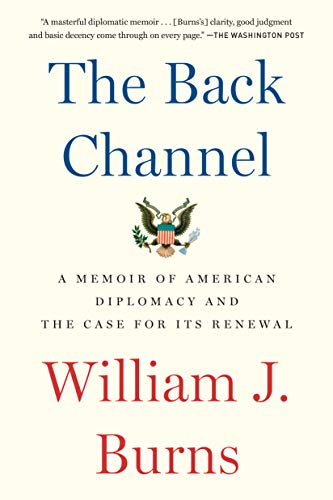
  1. The Back Channel: A Memoir of American Diplomacy and The Case for Its Renewal by William J. Burns

William J. Burns might be one of the best diplomats the United States has ever had. With over thirty years of experience and having served in two of the most important regions of the world, Mr. Burns’s story is an example of the good that diplomatic efforts can do in resolving conflicts, promoting peace, and ensuring cooperation among both allies and adversaries. He is one of only two career diplomats to have ever earned the title of ‘Deputy Secretary of State’ and he gave advice and counsel to five U.S. Presidents and ten Secretaries of State.

Mr. Burns’s storied career includes Ambassadorships to both Jordan and Russia and he held numerous Assistant Secretary positions within the State Department during his three-decade tenure. He was partly responsible for ceasefire agreements between the Israelis and the Palestinians, for helping to eliminate Libya’s nuclear weapons program, and for helping to reset U.S. relations with Russia in the early 2010s. He also shares insights in this book that were previously not publicly known involving his views on the Iraq War, the Civil War in Syria, and of the Russian aggression against Ukraine at the end of his tenure.

This 400+ page memoir is simply a must-read for anyone interested in how diplomacy works and how vital it is to maintain within a government’s foreign policy. In a time now where it has been underinvested and mismanaged, Burns’s book illuminates how big of a difference it can make and how one man’s impact can be felt throughout an entire foreign policy apparatus due to his vigorous study of culture, languages, and history in order for him to be taken seriously. The book is not only educational but is also gripping in terms of his recall of major events throughout his diplomatic career as well as the written cables that explain them. It is a real page turner and should be required reading for any student of international relations and who hopes to become a diplomat in their own future career.

2. On the Plain of Snakes: A Mexican Journey by Paul Theroux

Cooperation, friendship, and understanding is important among friends, but it is even more important among your neighbors. The US-Mexico relationship has been fraught with mistrust and tension especially during the years of the Trump administration. The best way to do away with stereotypes and misgivings about each other is to visit the lesser known places of a country and visit the non-touristy areas. Paul Theroux may be the best living American travel writer today.

From his experience as a Peace Corps volunteer in Malawi in the 1970s to his trek in the American Deep South, Paul Theroux has traveled around the world over five decades and counting. His latest novel about his travels in Mexico is a must-read for Americans and anyone else looking to understand Mexico from an outside lens. While not an exhaustive take on the complex country and its people, Theroux’s book, somewhat observant and otherwise felt like you’re in the middle of his travels is both illuminating and powerful.

Paul Theroux is really a true traveler and even though this is the first of his travel novels that I have read, this one felt very timely as it was released in 2019 during a time of souring relations between the two North American neighbors. Theroux spares no miles or kilometers in seeing all of Mexico that he can. From the desert Region of Sonora in the North to the Mexico mundo of Mexico City to the Southeast of the country where he visits the Zapatistas, this is an extremely educational look at modern Mexico.

Theroux’s book highlights the issues that Mexico is going through from immigration from the Northern Triangle to the ever-present threat of the drug cartels to the hopes of Mexico’s indigenous populations who believe that they have been left behind as other villages and towns hollowed out while the economic gains went elsewhere. It’s not just the issues that Theroux shines a lens on but also the beauty of the country’s culture and its warm people. As an elderly traveler, Theroux is treated with great respect and even reverence as ‘Don Pablo.’

He is welcomed as a guest, kept safe by complete strangers, and invited to interview Mexicans who normally would not talk to foreign travelers. Theroux travels all the way from Massachusetts across the border where few Americans are found to cross. He does so in his own car on his own dime and does not travel with any security or any kind of companionship. He learns Spanish and teaches writing to Mexican students. He is a refreshing kind of traveler, one who remembers to show people through a human lens and to not deal with harmful stereotypes.

Overall, ‘On the Plain of Snakes’ is an excellent travel novel for anyone interested in learning more about Mexico’s people, its culture, its struggles, and its hopes for a better future.

3. Rule Makers, Rule Breakers: How Tight and Loose Cultures Wire Our World by Michele J. Gelfand

This book has been my favorite one of 2020 and I only heard of it through a weekly David Brooks column in The New York Times Opinion section. The differences and similarities between cultures and societies is a topic that has fascinated me for years. As someone who has lived in both loose and tight countries as Mrs. Gelfand so brilliantly classifies, it is fascinating to see her extensive research come into fruition and how these loose and tight countries affect our outlook on everything from celebrations to driving to health care to tattoos.

Tight countries are cultures where norms are preserved and breaking them is frowned upon. Societal cohesion is encouraged and straying from norms is open to punishment. Loose countries are cultures where norms are often broken and breaking them usually comes with a shrug or a lack of care. Why do Germans always stop at a red light even when its 3 AM? Why do Brazilian clocks never run on time? Why do Japanese trains always run on time? Why do Singaporean laws ban gum from being chewed?

These tight and loose differences do not just extend to countries but also to states, cities, organizations, businesses and even within us. This book of ‘tight and loose’ norms highlights how we feel about any subject and how that is reflected in how we act with others. There is no right or wrong answer as to whether living in a tight culture is better or if living in a loose culture is better. Mrs. Gelfand excellently points out in each chapter how they both have their advantages and disadvantages depending upon the norm being considered.

Our upbringing, our environment, our country’s history, etc. all have effects on how ‘tight’ a culture is or how ‘loose’ a culture is. There can also be changes to a culture depending if there are big events like a terrorist attack, a pandemic, a natural disaster, etc. Cultures can tighten or loosen depending upon what is going on in the country and how people are being affected by these natural or manmade shifts to our lives.

Having seen both ‘tight cultures’ and ‘loose cultures’ up close and personal, this book has been a revelation to me in terms of explaining what I thought about only in my theories that I concocted after traveling from country to country but never really expressing it as well as she has in this great book. Mrs. Gelfand has done extensive research across many countries and continents to explain why some countries have more ‘rule makers’ and why other countries have ‘rule breakers.’ In order for our own cultures to shift from one spectrum to the other, we have to first understand why the country’s culture is the way it is and if it can shift, what benefits are there to tightening up or loosening up depending on what is going on in our lives and in our society at the time?