

There’s a particular look on the face of an American tourist watching Italians eat lunch. It’s a mix of envy, suspicion, and quiet panic — like the expression a border collie makes when the sheep stop moving. “Why are they sitting down? Why is there wine? Why does this take ninety minutes on a Tuesday?” The American instinct is to assume this is somehow unserious, a charming inefficiency that explains why “they” don’t run the world anymore. The Italian instinct, watching the American eat a sad desk salad over a keyboard as they still scroll through their Outlook inbox, is roughly the same look in reverse, except theirs comes with pity.
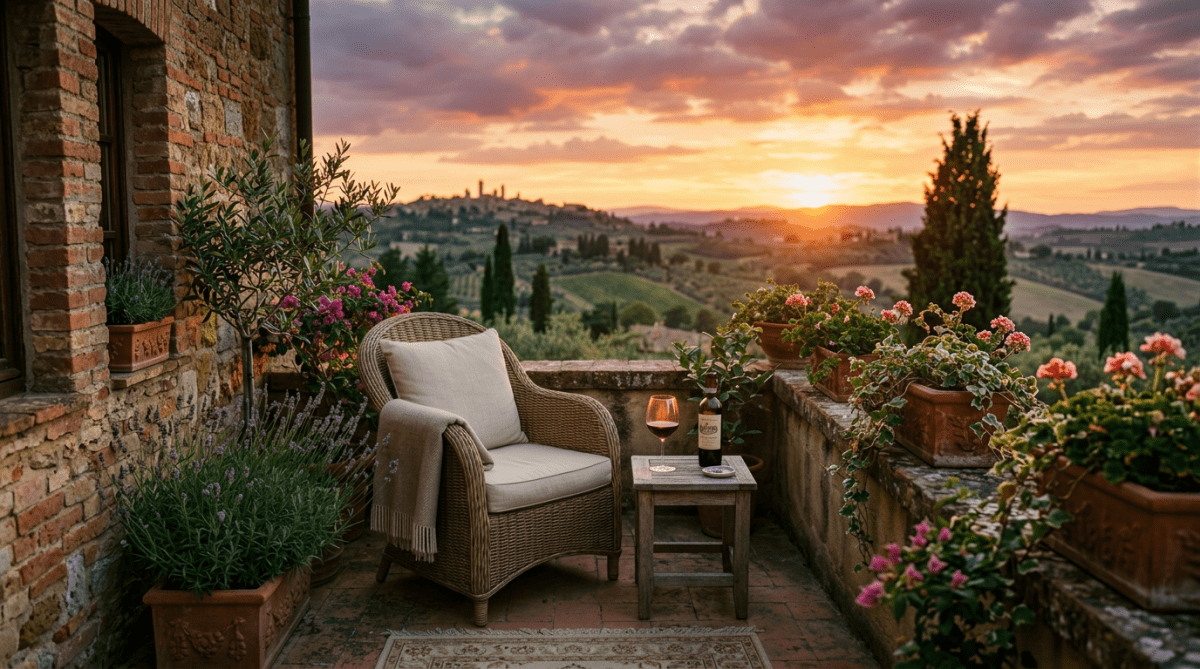
‘La dolce vita‘ or ‘the sweet life’ in English has been so thoroughly merchandised by travel magazines and Instagram that the phrase now mostly evokes linen pants and Aperol spritzes against a Positano sunset. That version is a vacation, not the culture itself. The actual concept is far more radical, and far more boring: it’s a daily, granular insistence that pleasure, beauty, presence, and human connection are not rewards to be earned after the work is done. They are the work, in the sense that they’re the point of being alive. Everything else is logistics.
Americans have a complicated relationship with this idea of work-life balance, and it seems to have regressed since the COVID pandemic has ended. We’ve built an entire economy, geography, and moral framework on the opposite premise that leisure is suspicious until proven to enhance productivity, that meals are fuel stops rather than meals to be enjoyed, that beauty is a luxury good rather than a daily requirement, and that the highest compliment you can pay a person is ” he’s / she’s so busy” or “he / she is such a hard worker at their job.” Adopting even fragments of la dolce vita or ‘the sweet life’ mentality in this context isn’t a lifestyle tweak. It’s mild cultural sedition, which is exactly why it’s worth doing.
Before going further, it’s worth clearing away what the phrase has become. La dolce vita in its current English usage is mostly a marketing layer like a vibe sold by linen brands, boutique hotels, and travel writers who need a shorthand for “expensive Mediterranean leisure.” The Fellini film that gave us the phrase was really about decadence and spiritual emptiness, which is a delicious irony nobody mentions when they’re captioning a photo of a Negroni.
The real thing, as practiced rather than performed, is less photogenic and more philosophical. It rests on a handful of assumptions that quietly contradict the American cultural operating system. First, that pleasure is not a reward but a baseline, something that deserves to be woven into ordinary days, not stored up for vacations. Second, meals are social and temporal events and should linger for a while, not refueling stops mostly spent alone or with people you are forced to have lunch with. Third, that beauty in your immediate environment like the cup you drink from, the square you walk through, the shirt you put on for no reason is a daily necessity, not a luxury. Fourth, that time spent with other people you care about, in person, without a professional or otherwise hidden agenda, is not “downtime” but the substance of a life. And fifth, perhaps most foreign to American ears: that being unproductive is not a moral failure, but rather slowing things down for a bit to savor life for what it is.
What ‘la dolce vita’ is not and what has been mistaken for: laziness, hedonism, anti-ambition, or a rejection of work. Italians work just as hard as anyone. Plenty of them work too much. However, work shouldn’t colonize every other category of existence. There’s a fence around it. Americans tend to assume the fence is the problem and that it prevents greatness. The Italian counterargument is that without the fence, you don’t get greatness; you just get a tired, lonely person who answers emails and makes spreadsheets until they die.
The American resistance to this kind of approach isn’t personal weakness or laziness but rather it’s structural, and it goes back centuries. The Protestant work ethic, however secularized, still runs underneath the culture like plumbing. Work isn’t just what you do; it’s evidence of your moral standing. Rest, by the same logic, requires justification. You don’t see your life as time to be inhabited; you see it as productivity to be optimized, with leisure as the reward you’ve theoretically earned but rarely can take because you feel guilty about it.
Layer on top of that is the physical environment. Postwar America bulldozed walkable neighborhoods, especially in most major cities, and built the suburbs, which is a geography that makes spontaneous social life functionally impossible. You cannot accidentally bump into a friend on your way home from the bakery if there is no bakery, no sidewalk(s), and no home you arrive at except by car. The “third place” in a walkable town or community like the café, plaza, pub, or stoop where unstructured human contact happens has been largely engineered out of American daily life. What remains is home and work, with a windshield between them.
Then, there’s the cultural premium on busyness as identity and with being identified by “what do you do?” that defines “who you are” as an individual. “How are you?” “Busy!” and we hear this as a thing to brag about, not a confession that we are overworked. We’ve inverted the older signal: in most of human history, leisure denoted status. In America, exhaustion does. Even our leisure has been infected as we optimize our hobbies, track our sleep, gamify our walks, turn vacations into itineraries that require recovery afterward or a vacation from our vacation.
The cruelest part is how this gets internalized in our overall outlook on life. Sitting at a café for an hour without a laptop, a book, or a goal feels actively wrong to most Americans. There’s a faint moral itch; shouldn’t I be doing something with my time? that Italians and other cultures simply do not have. Recognizing that itch as a disease rather than a virtue is step one.
You cannot import Rome, Italy into Bethesda, Maryland. However, you can import behaviors, and the behaviors are surprisingly portable. Some of my fondest memories are of long afternoons drinking tea by the Bosporus Strait in Istanbul, savoring freshly made coffee on a farm in Colombia, and passing the hours with no destination on evening strolls through major European and Latin American cities. Remember to start small and start with things that don’t require permission from your employer, your spouse, or your municipality.
The proper coffee ritual. Stop drinking coffee in the car or taking your coffee ‘to go’ from a drive-thru or on an application. Drink it sitting down, in a real cup (no Styrofoam), for ten minutes minimum, doing nothing else. That’s the challenge I ask you. This single change reframes the morning from a launch sequence into an actual beginning, where the world slows down and you can really think deeply without distractions. No use of the phone for ten minutes is a bonus if you can have that kind of self-control too.
The ‘passeggiata’ or ‘after meal walk’. The Italian after-dinner walk has no destination, no fitness target, no podcast, no phone. You walk because it’s evening, because digestion exists, because the neighborhood is worth being in. Twenty minutes minimum and make sure you can do it in a walkable area first. Bring a person if you have one and preferably do it around sunset.
Lunch, that isn’t sad. Eating at your office desk is the single most depressing American workplace practice and it produces measurably worse afternoons as a result. Leave the building or the facility, if you can. Eat something you’d describe to a friend that you would recommend to him or her. If you work from home, set the table and eat well. Yes, even for one.
Aperitivo hour. The deliberate transition from work-self to evening-self. A drink (doesn’t have to be alcoholic), a snack, sitting down, no screens, ideally with another human. It marks the day’s end and the night’s beginning. Without this kind of transition, work bleeds into dinner bleeds into Netflix bleeds into bed.
Sundays as actual Sundays. Not “meal prep and laundry and grocery run” day. Make sure to save time for at least one long meal, a walk, a nap, a book, and time with people you like. The protestant pull will be strong; resist it at least once a month.
Fare niente. “The art of doing nothing.” Sit. People watch. Meditate. Interact with nature. Look out the window. Touch grass, as the kids say. Don’t optimize each moment. This is the hardest one for many Americans because it triggers the productivity itch most acutely, which is precisely why it’s the most valuable to incorporate into your life.
Remember that you may be on your own when you adopt your own slice of ‘la dolce vita’ as best as you can. Your job will not endorse this. American work culture treats “I’m taking my full lunch” as either rebellion or weakness. Salaried knowledge workers have absorbed an unspoken rule that being reachable is the job. Carving out an actual hour in the middle of the day requires either seniority, audacity, or a willingness to be slightly misunderstood and possibly all three.
Your friends are also overscheduled. The ‘passeggiata’ works in Italy partly because everyone else is also outside at the same time, doing the same thing. In an American suburb, you are walking alone past dark houses where people are inside watching television. Building the social density that makes these rituals feel natural rather than performative is a lifelong project, not an average Tuesday decision. Your built environment is hostile. If you live somewhere designed for cars, you will have to drive to the place where you sit and have coffee. The friction is real, and it explains why these practices feel easier when you travel as the environment is doing half the work.
The shame response is the deepest obstacle. Most Americans, sitting at a café for an unhurried hour, will feel a low hum of guilt within twenty minutes. I should be answering that email. I should be at the gym. I should be using this time. That voice is not your conscience. It’s cultural conditioning, and it will get quieter only with repetition. Finally, here’s an honest admission: Some elements of la dolce vita genuinely require structural conditions such as walkable cities, shorter workweeks, robust social ties, strong labor protections that no individual American can produce alone. You can adopt fragments of this lifestyle, but you cannot adopt the whole lifestyle unless these conditions adapt to foster better work-life balance in the greater society.
Given all these obstacles, the move is not “transform your life” but “claim one hour back.” A practical sequence for someone trying this without quitting their job or moving to Tuscany:
Pick one ritual, not all of them at once. The most common mistake is trying to overhaul the morning, the lunch, the evening, and the weekend simultaneously. Choose one part of the day to make yours again. Master it. Let it become unremarkable before adding the next part to be more enjoyable.
Start with the meal you control most. For most people, this is breakfast or dinner. Lunch is usually hostage to a workplace, especially when you’re forced into an office. If you can make one meal a day a non-optimized, sit-down, non-screen affair, you’ve already changed something structural about your lifestyle.
Find or create one third place within walking distance of you. A café, a bar, a park bench, a library, a bookstore; somewhere that isn’t home and isn’t at work, where you can be a regular patron. If nothing exists within walking distance, this becomes a clue about whether your geography is serving you and whether you and your neighbors can get together to change these structural conditions working against you in your own community.
Build one non-negotiable hour per day for yourself. Same time, same boundary. Not “when I have time” as that hour will never appear. Treat it like a meeting with someone you respect and don’t want to let down. It’s healthy for you, your family, and your health long-term.
Audit your current “relaxation” patterns. Be honest with yourself: is scrolling on your phone for an hour restful, or is it just numbing you? La dolce vita draws a sharp distinction between rest that restores you and consumption that sedates you. Most American leisure is the latter pretending to be the former. Please understand the difference to actually ‘rest well’ and do so consistently.
Accept the awkward phase at first. The first few weeks of this approach will feel slightly wrong, and you’ll catch yourself reaching for the phone, the emails, the drive to maximize productivity. That discomfort is the old operating system protesting this lifestyle change. Let it protest. Sit through it. On the other side is a version of your daily life that you might want to be inside of and that you look forward to each week.
Living ‘La Dolce Vita’ is not just a lifestyle but also a mindset for how you choose to spend your free time and with whom you spend it with. It’s not optimizing every moment but rather making the most of them by living in them and not just thinking about one moment leads to the next. Anyone should go to Italy if they have the chance to experience it for themselves but even if you don’t ever get to, you can experience ‘the sweet life’ by savoring more about life whether it’s a well-cooked meal, a delicious coffee in a park, and spending time just with your own thoughts and watching the world pass you by. It takes time to adjust to this kind of mentality, but you’ll end up finding that there is just as much beauty in doing nothing as there is in doing something.

