Having The Zero-To-Zero Mindset

“Essentially, it is a perspective that encourages us to start fresh, wipe the slate clean, and approach each day with the determination to put wins on the board.”

As the calendar flips to the new year of 2024, many of us find ourselves eager to leave behind the challenges and setbacks of the past year and embark on a fresh journey. It’s a time when our New Year’s resolutions are made, goals are set, and aspirations run high. However, sustaining the motivation throughout the year can be a daunting task, especially when faced with the inevitable obstacles that life throws our way.

I am going to discuss the concept of what a goalkeeper I know from a previous recreational soccer league I played in, introduced me to the term of having a “zero-to-zero” mindset. Essentially, it is a perspective that encourages us to start fresh, wipe the slate clean, and approach each day with the determination to put wins on the board. Drawing inspiration from the world of sports, particularly the role of the goalkeeper in soccer, I will focus on the strategies to stay motivated and persevere, even when the odds seem insurmountable.

The zero-to-zero mindset involves viewing each day as a new opportunity, unburdened by the failures or successes of the past, like putting a bad or good soccer game behind you. It’s about adopting a mindset where the scoreboard resets to zero every morning, allowing us to focus on the present and the potential for success in the day ahead. This perspective enables us to shed the weight of past mistakes, disappointments, or even our achievements, fostering a sense of renewal and revitalization.

In the context of personal development and goal setting, the zero-to-zero mindset encourages a forward-thinking approach. Rather than dwelling on our past failures or basking in the glory of previous triumphs, we can channel our energy into the actions required to achieve their objectives. This mindset promotes resilience, adaptability, and a willingness to learn from both successes and setbacks.

To better understand the essence of the zero-to-zero mindset, we can draw parallels from the world of football or as I like to call it, soccer. The role of the goalkeeper in a soccer match is analogous to the individual striving to stay motivated and achieve their goals.

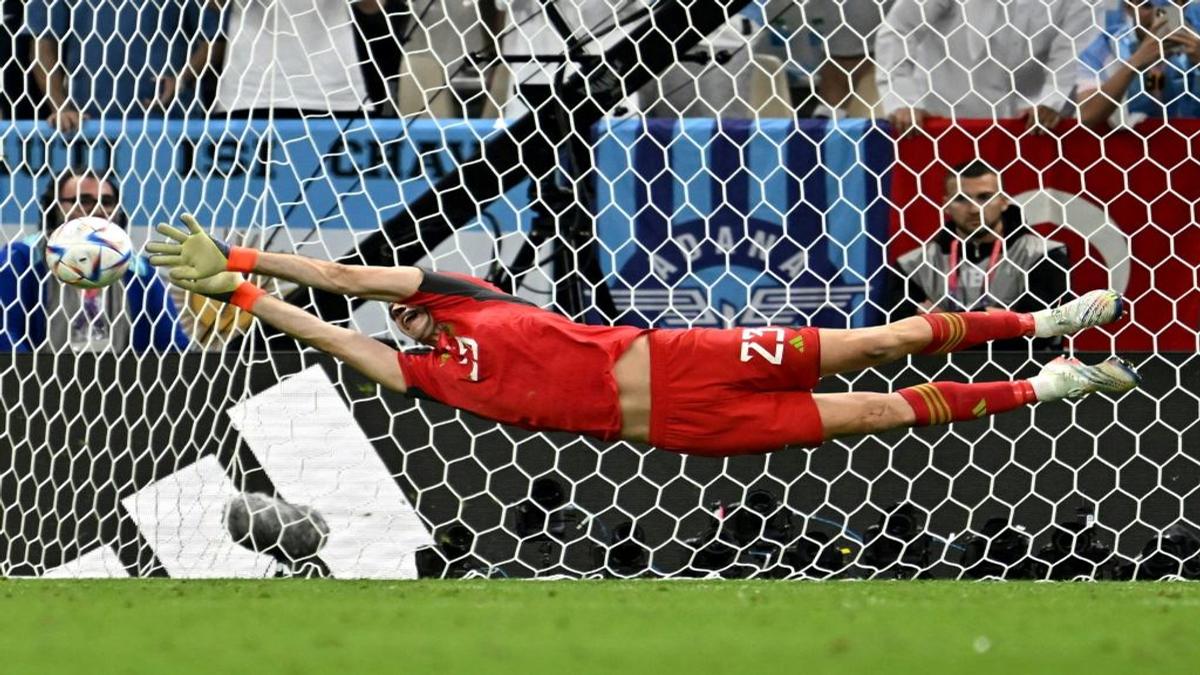
Any goalkeeper’s primary responsibility is to prevent the opposing team from scoring goals. They are the last line of defense, and their performance often determines the outcome of the game. Importantly, a goalkeeper maintains a constant vigilance, irrespective of the score line itself. Whether their team is ahead by two, five, or ten goals or vice versa on the losing end, a goalkeeper understands that complacency can lead to a sudden turnaround in fortune.

In applying this analogy to personal development, we can draw valuable lessons from the goalkeeper’s mindset. Just as the goalkeeper stays focused on thwarting any attempts to score, individuals pursuing their goals must remain vigilant against complacency and overconfidence. The zero-to-zero mindset encourages a relentless commitment to progress, acknowledging that even a comfortable lead can be eroded if one loses sight of the bigger picture.

The concept of putting wins on the board encapsulates the proactive and strategic approach required to achieve goals. Rather than waiting for success to come to us, adopting the zero-to-zero mindset prompts us to actively pursue victories, no matter how small, to build momentum and confidence. Just as a goalkeeper makes critical saves to keep their team in the game, individuals must make strategic decisions and take deliberate actions to secure wins in their personal and professional pursuits.

To put wins on the board in soccer and in life itself, it is crucial to break down larger goals into smaller and more manageable tasks. These incremental goals serve as milestones that provide a sense of accomplishment and progress. Achieving these smaller victories contributes to a person’s overall success and reinforces the zero-to-zero mindset by emphasizing the importance of each step in the journey.

Recognizing and celebrating small victories is essential for maintaining motivation. Whether it’s completing a challenging task at work, learning a new skill at school, or overcoming a physical or mental obstacle, acknowledging these accomplishments reinforces a positive mindset in your life. Celebration acts as a motivator and encourages individuals to persist in their efforts and build on their successes.

The zero-to-zero mindset recognizes that setbacks are inevitable in life as in soccer. Instead of viewing failures as insurmountable obstacles, individuals should approach them as opportunities to learn and grow from them. Like a goalkeeper analyzing the opponent’s goals to improve their technique, people can glean valuable insights from their failures, which can refine and further shape their strategies for future successes.

Flexibility and adaptability are essential components of the zero-to-zero mindset. Just as a goalkeeper adjusts their tactics based on the opposing team’s moves, one must be willing to adapt their approach in response to changing circumstances. This flexibility ensures a dynamic and resilient pursuit of goals, even in the face of unexpected challenges.

Embracing a growth mindset is foundational to the zero-to-zero mentality. Individuals with a growth mindset perceive challenges as opportunities to develop their abilities rather than being seen as threats to their competence. This perspective fosters a love of learning, resilience in the face of setbacks, and a belief that hard work and sheer effort will lead to improvement.

In soccer, the goalkeeper is not alone in their quest to prevent goals. They work in tandem with a defensive line that shares the responsibility of thwarting the opponent’s attacks. Similarly, in the pursuit of personal and professional goals, everybody can benefit from a support network that includes their friends, family, mentors, and colleagues. The zero-to-zero mindset extends beyond the individual, urging not only oneself, but others to embrace the spirit of renewal and progress.

Just as a goalkeeper communicates with the defense to coordinate strategies, people should engage with their support network. Open communication fosters collaboration, allowing individuals to share their goals, seek advice, and receive constructive feedback. This collective effort enhances the likelihood of success and reinforces the zero-to-zero mindset for everyone.

The goalkeeper not only focuses on their own performance but also encourages and motivates their teammates consistently to maintain a collective defensive effort. Similarly, individuals should inspire and support those around them in their pursuits. By fostering a positive and encouraging environment like teammates on the soccer field do for each other, we can contribute to a shared sense of purpose and motivation within our friend groups and social circles.

Goalkeepers often serve as leaders on the field, like a general or a commander, setting an example for their teammates through their dedication and work ethic. Similarly, the average person, when they step into a leadership role, can inspire others by embodying the zero-to-zero mindset in their own actions and behaviors. Leading by example involves demonstrating resilience, embracing challenges, celebrating victories, and above all else, motivating others to adopt a similar approach in their own endeavors.

In the journey of personal and professional fulfillment, the zero-to-zero mindset serves as a powerful tool for staying motivated to achieve one’s goals. Drawing inspiration from the goalkeeper’s role in soccer, everybody can approach each day as a new opportunity to put wins on the board or getting goals in the net. By setting incremental goals, celebrating small victories, learning from failures, being adaptable, and cultivating a growth mindset, anyone can actively shape their path to success and achievement.

Lastly, the zero-to-zero mindset extends beyond our individual efforts, because when we urge collaboration, encourage motivation, and practice good leadership, we can help create a supportive and strengthened community. Just as a goalkeeper communicates with their defense to thwart the opposing team’s attacks, each person can benefit from engaging with their support network to amplify their collective efforts to achieving something great together.

As we embrace the new year with the zero-to-zero mindset, let us recognize the great potential for growth, renewal, and success that each day ahead of us holds in 2024. By adopting this promising perspective, we empower ourselves to navigate the challenges ahead, put wins on the board, and make the most of the opportunities that arise in our personal and professional lives.

US Open 2022

Camera: iPhone 12

Location: Billie Jean King US Tennis Association Center; Flushing Meadows, Queens, New York, United States

Sunset at Audi Field

Camera: iPhone 12

Location: Audi Field, Home of DC United, Washington, District of Columbia

Phillies Baseball at Citizens Bank Park

Camera: iPhone 12

Location: Citizens Bank Park; Philadelphia, Pennsylvania, United States

Nighttime Game at Camden Yards

Camera: iPhone 12

Location: Orioles Park at Camden Yards; Baltimore, Maryland, United States

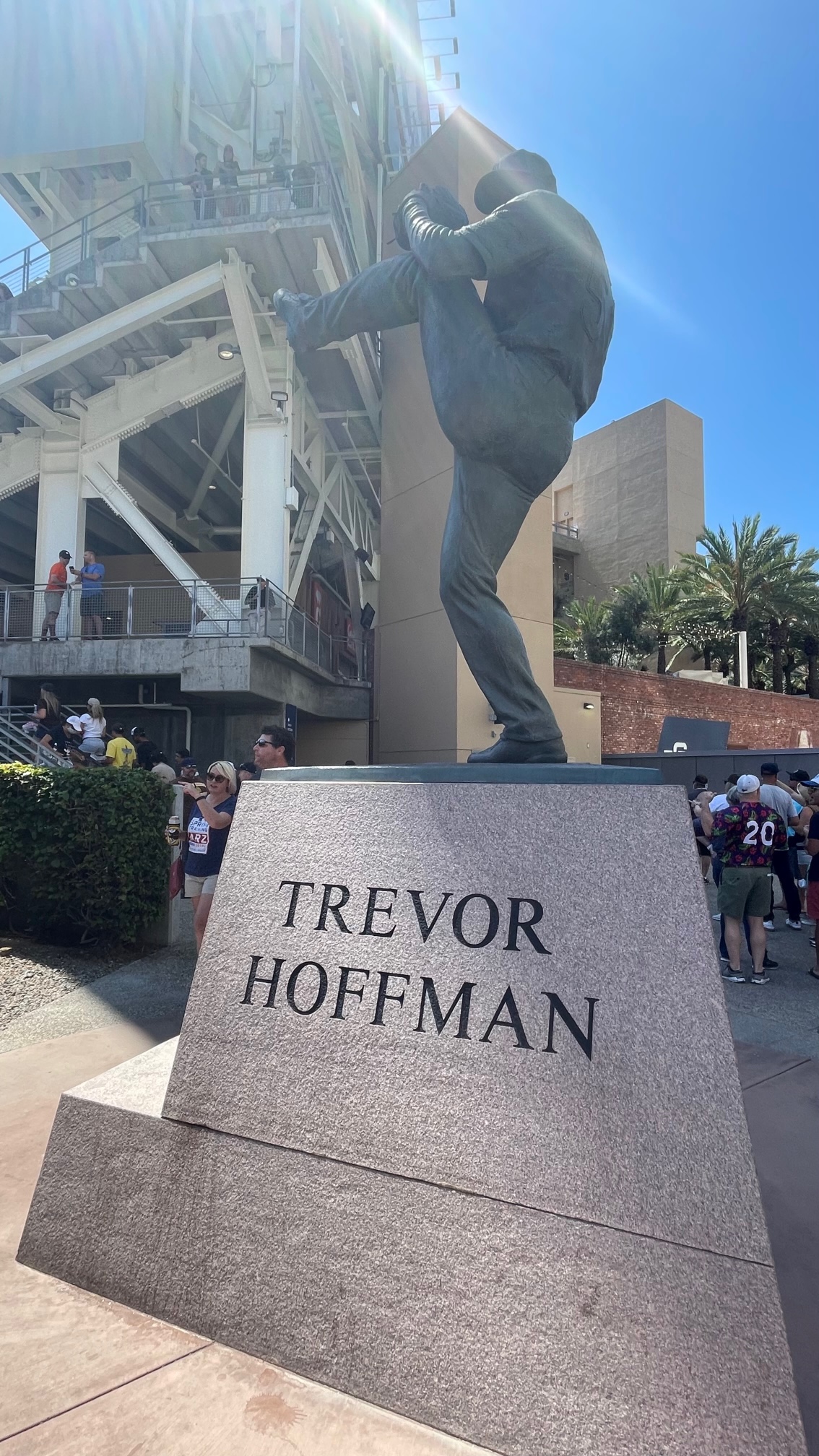
Padres Game at Petco Park

Camera: iPhone 12

Location: San Diego, California, United States

DC United! DC United!

Camera: iPhone 12

Location: Audi Field; Washington, District of Columbia, USA

My Thoughts on the ‘Muhammad Ali’ PBS Documentary

“Float like a butterfly, sting like a bee. Rumble, young man, rumble. Ahhhhhh!” This catchphrase from the Greatest boxer of all-time, Muhammad Ali, still ring in my ears as I write about the legend.”

“Float like a butterfly, sting like a bee. Rumble, young man, rumble. Ahhhhhh!” This catchphrase from the Greatest boxer of all-time, Muhammad Ali, still ring in my ears as I write about the legend. After 8-hours of rarely seen footage, insightful interviews from those people who knew him best, and catchy music and news events highlighting the era and period in which the Greatest grew up in, the Muhammad Ali documentary on PBS (American public television) is a real knockout. There is too much television and movies out there to choose from especially with the streaming services but the Muhammad Ali documentary, recently released in September of 2021 is worth a watch.

Eight hours in total length, split into four ‘rounds or parts, the documentary chronicles the entire 74-years old in which Muhammad Ali or Cassius Clay walked among us mere mortals from his childhood in Louisville to his rise to boxing stardom dating from Rome to New York City to Manila to his old age, where he sadly struggled through the progression of the fatal Parkinson’s disease. Ali was a man who was almost too unreal to believe he had existed because of all he said, accomplished, and did during his life.

If you looked in an English idiom dictionary for the expression, ‘larger than life’, a picture and short description about Muhammad Ali should be there as well. The swagger he had when he walked in a room, his way with words as a poet and the ability to dress down his opponent with insults as powerful as his punches, and his commitment to not only his religion but the people around him such as a friends, family, and even random strangers who he would often give money, food, or anything they needed when they were going through a tough time.

Ali was not just talented in the ring, but he was also extremely intelligent, wise beyond his years, and able to be charismatic with many people he would meet. Most boxers would keep to themselves back in the 1960s or 1970s and would not embrace trash-talking, denigrating their opponents, or making bold claims that they weren’t sure would come to fruition. Muhammad Ali did the exact opposite and he built up a reputation to the point where billions of people knew who he was from America to Africa and from Asia to South America. His rants became legendary, and his diatribes were shown to garner a huge amount of press to sell his fights. In my view, he made boxing a global sport and he connected with all people regardless of race, ethnicity, national origin, or religion. He had love for everybody except for the men he would fight against.

The difference with Muhammad Ali compared to other braggart boxers is that he would often back up his predictions by making them real especially in his early days beating boxers like Sonny Liston and Floyd Patterson. He would not only predict that he would win his fight, but he specifically predicted the round in which his poor opponent would be knocked out. His legend grew the more he talked trash and made fun of his opponents and he backed it up in the ring by winning constantly. If he were not Muhammad Ali in terms of talent, hard work, and pure drive to be great, as a boxer, he would have faded away quickly, He simply was a once-in-a-century talent who kept boxing as a world sport in his era and it was the height of its popularity as a sport in America.

Ali, perhaps because of his family upbringing, his change of religion to Islam, or because of an innate sense of right and wrong was a plain-spoken activist who didn’t mince words. He was against racism in all its forms, was against the Vietnam War, and stood up for the poor and disenfranchised people around the world who were without the same opportunities that he had been able to take advantage of because of his boxing talent. While he was a devout member of the group, the Nation of Islam, and had his differences with both Malcolm X and Martin Luther King Jr., because of his affiliation with that group, he often strived to be a critical thinker on issues of race and religion and would dutifully follow his conscience often when expressing himself in public, as he often did in the national and global spotlight.

Sadly, Muhammad Ali, in pursuit of fame, fortune, and women, made serious mistakes along the way to become the greatest boxer of all-time. The constant time spent on the road, the brutal training regimens, the temptations he succumbed to with extramarital affairs, and even his disregard for friendships such as with Malcolm X or neglecting his wife(wives) or children due to his first love of boxing. He was an imperfect man who committed many sins as he puts it in the documentary.

However, even his sins did not stop him from putting in the work to commit more good deeds than sins throughout his life and for which when it came down to his estimation of himself as a Muslim at the end of his life, he felt comfort knowing he committed more rights than wrongs upon his death. The difference too with Ali is that he knew he had done wrong and tried to make amends later in life for his misdeeds. He apologized and atoned for his womanizing, unnecessary insults of other boxers, and his previous disavowal of friends and family like Malcolm X when they conflicted with his loyal membership to the Nation of Islam.

When I think about this documentary, the way it was able to catalog every major event in Ali’s life while simultaneously describing how he must have felt or acted the way he did during those pivotal moments in his life make this documentary the greatest one made about ‘The Greatest’ himself. Few documentaries go into that much detail, use relevant interviews and narration, while maximizing the quality of historical footage to draw the viewer in. If you are new to the good works of Ken Burns, Sarah Burns, Lynn Novick, David McMahon, and the rest of his wonderful documentary team, he is one of America’s greatest filmmakers in this genre.

Having done previous documentaries on ‘Baseball’, ‘Jackie Robinson’, and the other famous American boxer, ‘Jack Johnson’, you can tell that Ken and his team feel as comfortable documenting American sports history as much as his other documentaries on American politics and war history too. The sheer years of effort it takes to create an eight-hour long documentary like this one on ‘Muhammad Ali’ shows you how dedicated to the craft of documentary making Ken Burns and his team are. They have been doing it for over forty years now and it seems like they get better and better with each new documentary. If this documentary is the first you’ve seen by Ken Burns, do yourself a favor and watch the other sports history documentaries and check out his other ones on other aspects of American history.


What I enjoy most about documentaries about sports or political figures done by Ken Burns and team is that they highlight major events, victories, and defeats of that person or the team, but they also make sure to put that figure or people fit in with the swirling tide of history and timeline through the music soundtrack, the relevant footage, and the interviews with those people from the same era or who know that era in history.

The ‘Muhammad Ali’ documentary is not just about ‘The Greatest’ himself but about the times he lived in as an American and how he changed the country just as he was changed by the country himself. He influenced America more than most figures throughout the 20th century and will be remembered by future generations. He will be known not simply as the greatest boxer of all-time but also as a man who stood up for his principles, fought or did not fight for what he believed in, and enacted positive social changes by helping the poor, the disenfranchised, or even the stranger on the street.

He was a larger-than-life figure who transcended both sports, politics, and culture, and this ‘larger than life’ documentary pays great homage to one of the most celebrated and remembered Americans in the nation’s 246-year long and counting history.

A Day at Citi Field

Camera: iPhone 12

Location: Citi Field; Queens, New York City, USA

The Cathedral of Baseball

Camera: iPhone 12

Location: Yankee Stadium; The Bronx, New York City, USA