

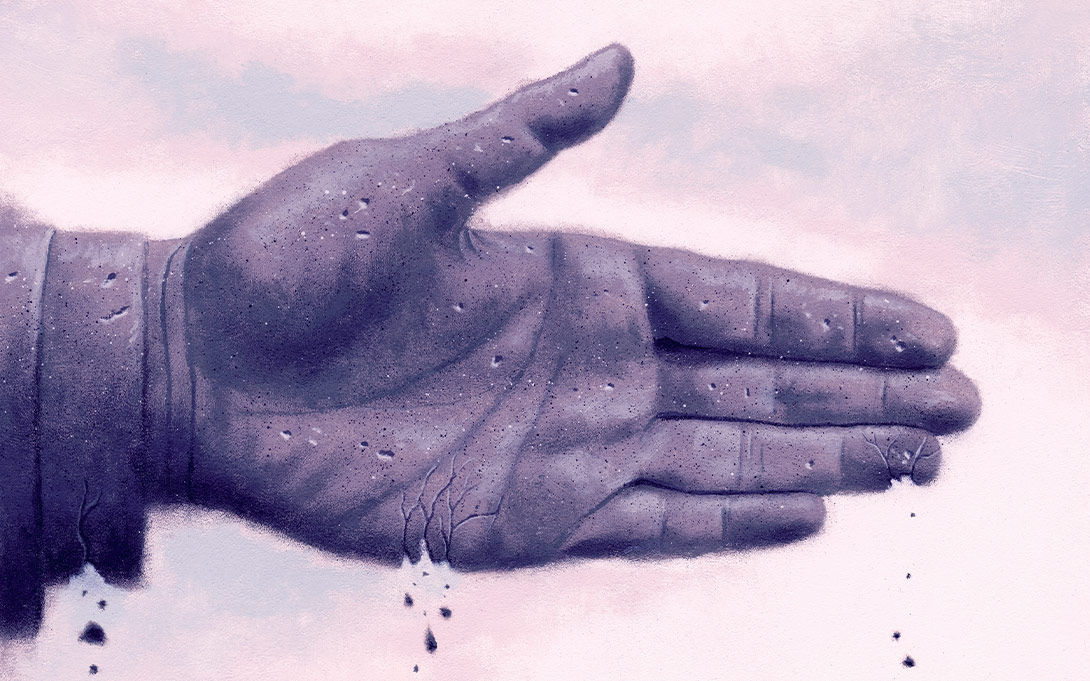
Why A Lack of Trust Is So Corrosive to Institutions

“When trust begins to erode, an institution’s ability to function effectively suffers. Increasingly, we see examples of trust being abused, leaders failing to uphold their responsibilities, and organizations struggling to maintain the confidence of the people they serve.”

Without trust, you have nothing. I’ve written before about how trust forms the foundation of any functioning institution, whether it is a government, a business, a school, or a nonprofit organization. When trust begins to erode, an institution’s ability to function effectively suffers. Increasingly, we see examples of trust being abused, leaders failing to uphold their responsibilities, and organizations struggling to maintain the confidence of the people they serve.

Some institutions manage to recover from these failures, while others find themselves trapped in a cycle of dysfunction and destruction. Institutional decay rarely happens overnight. There are warning signs that emerge long before an institution reaches a breaking point. Recognizing these signs is the first step toward understanding why institutions fail, and whether their decline can be reversed.

Trust starts with the leadership at the top and when they make mistakes and don’t acknowledge them or learn from them, break promises to subordinate employees or staff, or violate the rules without facing any consequences, people begin to question whether an institution’s stated values actually mean anything beyond the words written on a piece of paper. Consistent standards must be applied across the board from the lowest to the highest title and when accountability is absent or uneven, depending on who someone is in or who they are connected to, then the damage starts to be done to the larger institution. The damage can also become embedded when there are no consequences given because that individual occupies a certain position, has certain connections, or is politically useful to others rather than being held to the same standards as everyone else in the institution.

Communication becoming absent or less transparent within an institution can also lead to severe damage over time. When leaders don’t communicate, become invasive, or when important decisions are made without any transparency involved, trust can be eroded between members of that organization accordingly. People’s expertise or experiences aren’t taken meaningfully into account often and they are sidelined by those individuals who would rather make decisions on their own without soliciting any meaningful feedback. It is understood that not every decision can be made publicly and confidentiality has a legitimate role to protect information or identities that should not be shared, but absolutely secrecy and a lack of transparency within an institution in terms of decision making can create suspicion due to not being involved in these internal processes.

When people within an institution struggle to be heard, they will stop raising concerns or flagging any issues that could end up costing the institution later. There should be room within institutions for disagreements and debates, especially if it means that concerns or objections are heard rather than completely dismissed from the outset. This is why employees are allowed to form unions, students are allowed to question teachers or principals about a lack of resources, civil servants can share information freely with their superiors without fear of retaliation. These feedback loops are key to keeping any institution functioning for the long haul and without them, trust will erode and then completely go away with enough time. When meetings become more about listening than engagement or when directives become absolute without cause or evidence, then the internal culture will deteriorate over time. Institutions can function normally but still not be healthy when they are not engaging every member to have them contribute healthily or give feedback openly.

Institutions are known to lose their credibility when similar behaviors produce different consequences depending on who is involved or what their title is. People within the institution will then start to believe that success depends less on hard work, competence, or integrity, and that it’s more about favoritism, connections, or proximity to leadership. Morale will plummet internally, legitimacy will be seen as suspect externally, and it takes years or even decades to get back to the prior baseline.

As a response, when trust erodes or goes absent, opposition may form and reforms may happen from outside pressures, but what’s most likely is that there will be quiet withdrawal. People within the institution will not be as engaged, they will do the bare minimum to keep their jobs as they know they will not be rewarded, promoted, or encouraged to do more, because they don’t have that kind of pull within the institution. You can see this when employees ‘quiet quit’ their jobs, citizens disengage from voting or other civic engagements, and members stop participating in organizations they feel they no longer have a voice in.

Yes, the institution will still exist in some form, but it will no longer be a healthy one when the bare minimum is all that you can do because doing anything more is frowned upon or discouraged by those who hold the levers of power and influence. People may continue showing up to be part of the institution, paying their taxes, or completing their work assignments, but their willingness to contribute beyond the minimum has disappeared.

Trust, once lost, is difficult or impossible to recover. It cannot be restored through fancy slogans, public relations campaigns, or demands that people simply have faith in their institutions again. It must be earned through consistent action, accountability, and a willingness to confront uncomfortable truths. Institutions that recognize the warning signs of declining or absent trust have an opportunity to address their shortcomings before the damage becomes irreversible. Those that ignore them risk creating a cycle in which dysfunction breeds further distrust, and distrust makes meaningful reform increasingly difficult.

Ultimately, the question is not whether institutions will make mistakes. They will and that’s okay because any institution is made up of fallible human beings. The question remains whether both the leaders and the average participants in the institution itself possess the integrity, competence, and humility to correct them when the principles and values start to erode. Without those self-correcting qualities or with pressure from the outside, an institution may retain its name, its offices, and its formal authority, but gradually lose the confidence of the people who give it purpose.

Stop Romanticizing Stories of Overcoming Adversity Due to Societal Dysfunction

“We all should be striving to succeed but if you find yourself cheering for a success story that could have been avoided in the first place had there been a stable safety net and to have prevented the problem from arising in the first place, that is where more of our attention should be focused on as people.”

Look, I love a feel-good story as much as the next guy. I like it when someone can pull themselves out of poverty or difficult circumstances to achieve wild success for themselves and their next of kin. This is the kind of positive story that is often reported on in American media and popular culture. We love the story of the underdog rising above challenges to achieve something great. It seems to be practically embedded in our national DNA. However, the Achilles heel that we often refuse to acknowledge or focus on as a nation is how dysfunctional it can be to rise above a broken or fractured safety net to escape poverty, homelessness, or even medical debt. We all should be striving to succeed but if you find yourself cheering for a success story that could have been avoided in the first place had there been a stable safety net and to have prevented the problem from arising in the first place, that is where more of our attention should be focused on as people.

 I bring this issue up as this has been the kind of a ‘feel-good yet kind of messed up’ story that garners sympathy and appreciation from the average person throughout my life. For example, I was watching a nationally televised baseball game recently as I like to do sometimes and heard the television commentators for this game focus on the rags-to-riches story of one of the players on the field who has become wildly successful after going through tough times that involved both him and his family.

The baseball player in question had a newborn son arrive around the time of the COVID pandemic’s outbreak, who suffered from a series of seizures, which required a lengthy hospital stay and weekly checkups from the doctors there. The player himself could not play baseball due to cancellation of the MLB season at the time in 2020 and lost his health insurance at the same time his newborn son’s seizures started occurring. Because health insurance is tied to employment in America, the baseball player lost his health insurance at the worst possible time. They did not have enough money left over for housing after paying out of pocket costs for the medical care for their son. As a result, the baseball player and his family were rendered homeless for a while, living out of their family car in a Wal-Mart parking lot at one point in central Florida.

Luckily, even in this case of the dysfunctional health care system failing both this player and his family, having been left in the dust for a while, professional baseball, being the national pastime resumed a few months later in 2020, the baseball player regained his medical insurance and was able to pay off the medical debt due to his success in Major League Baseball over the past few years. I admire this player and his family’s resilience in the face of adversity and am glad his son is doing well now. The player is now a naturalized U.S. citizen also and visits children’s hospitals in the area where he plays to support families going through similar ordeals.

While this story in America had a happy ending after much sadness and anxiety for the family in question, I can’t help but think of the TV commentators’ from this baseball game’s lack of awareness about the societal dysfunction that leads to a whole family living out of their car in a Wal-Mart in central Florida with no safety net to speak of because one of them lost their job, through absolutely no fault of their own, which was tied to their health insurance coverage. It bothered me a great deal personally to not hear from the TV commentary to not mention at all the lack of universal health care in this country or the fact that you can incur thousands of dollars or more of medical debt so a son or daughter can get the treatments or surgeries needed to overcome seizures or other major medical issues.

While this story had a happy ending due to the player’s evolving skillset and MLB’s massive popularity, there are millions of Americans suffering out there currently due to a lack of a durable safety net to fill in the gaps in health and education. Come back stories to break through adversity are great and make for nice commentary but not everyone has had such luck and success navigating the American health care system.

Whether it’s GoFundMe or another online platform, many families have to rely on the kindness of strangers to help them pay down massive medical, educational, or other debt, which is never an enviable position to be in. We should not have to rely on complete strangers to fund necessary medical procedures or to get life-saving medications paid for in the United States. No one should have to forgo their home or apartment to go homeless to pay for medical bills either and be forced to live with their family in a car or on the street. I’m all for people striving to make the best of their abilities in their chosen profession but layoffs, firings, or other unfortunate events can happen leaving us jobless and without health insurance directly as a result.

I’m not going to discuss which kind of system to have regarding how insurance or how higher education can run in America but I do know that you shouldn’t have to rely on having a job at all times to get affordable health care and if you don’t have insurance when a procedure is needed, you should never go bankrupt trying to pay off your medical bills. We can argue forever about the size, scope, and scale of how a universal health care system can support the country while everybody pays their fair share into its functionality, but we should never reach the point where a platform like GoFundMe is needed to fill in the gap when it comes to someone’s health care coverage. The point of this article is not to discuss how such a new system would work or how it can be implemented but rather to address how this current dysfunctional system (or lack thereof) has been allowed to fester and continue without any solutions or improvements recently.

Lastly, feel-good stories are a good way for average people to relate to one another regardless of if you’re a professional baseball player or a janitor, but we should be taking the right lessons from these stories. We should be applauding the person and family’s resilience and their success in navigating the massive challenge, but we should also question on how we could let such dysfunction run a key part of our society or how we can allow this system to continue given that it bankrupts average people because they lost their job through no fault of their own.

Sometimes, in life, you must ask hard questions and those can include how we fix societal dysfunction and how we can be part of the solution in our own way as citizens. Asking these kinds of questions, holding our political leaders accountable, and focusing on the ‘why it happened?’ rather than the ‘how it happened?’ will help to cause some real change to happen and for these stories to become rarities in American society rather than sadly, all too common place, that we hear almost every day here.