

Seeing The Multiplicity of Human Realities Through Travel

“To me, it’s also about seeing alternate realities in the sense that you get to witness how people around the world have distinct ways of living, thinking, and experiencing the world that challenge and even change your own perspective.”

I have always thought of travel as more than just changing your physical location to another place. To me, it’s also about seeing alternate realities in the sense that you get to witness how people around the world have distinct ways of living, thinking, and experiencing the world that challenge and even change your own perspective.

There’s the saying that you should want to “put yourself in someone else’ shoes” and travel is the best way to do that. By relocating ourselves if even for a few days, a week, or more, you can get a deeper understanding of the seemingly almost endless varieties of the human experience and reflect on the limits or possibilities inherent in our own worldview.

As Mark Twain once famously wrote, “Travel is fatal to prejudice, bigotry, and narrow-mindedness.” Travel allows us to gain access to a parallel world in a sense where the values of the people, the rhythms of their lives, and their daily routines or priorities differ from our own or they could surprisingly be similar or even the same as our own. In our own town, city, or country, we have such a tight conception of what everyday life should look like that travel allows us to see beyond our own way of living to see how other people live even if just for a short while.

As mentioned earlier, the reality of time and the pace of life can differ depending on the culture and it can help to reshape our own perception of time or daily rhythm that we are most accustomed to. We may think our quality of life is best based on how we spend our time each day, but travel allows us to see the alternatives out there or the different realities that are out there to experience.

For example, if you go to Italy or Spain, you’ll likely be able to have a long lunch, take an hour or two to go home and rest, and there’s a desire to not rush to do things if there’s no need to do it right away. The emphasis on leisure, family time, or catching up with friends can have a huge impact on our own perception of what’s important with our time after seeing what others think is better for mental well-being and what is actually a good use of one’s time. Focusing on ‘time is money’ or ‘efficiency matters most’ is certainly a reality that is out there but there are other alternatives that people around the world embrace and enjoy each day.

Individualism vs. Collectivism is another way to view the priorities that communities have when it comes to how the society is structured and what the role of the community is. How people connect, what they connect over, and when they connect is a useful observation to make when it comes to seeing the reality of community and connection in your travels. Some cultures prioritize family gatherings and a communal approach to problem solving and making decisions collectively. Others including in the United States focus on being independent, relying on yourself, and making something of yourself without relying on your family or community.

Social structures can differ in terms of how strong or weak the social safety net is and if it is prioritized at all. You can get a good sense of how strong a social structure is when you travel based on the use of public spaces, the embracing of local or national festivals, and how the least well-off people are treated in the society. Each culture in my view values community and social cohesion but travel exposes us to different realities regarding how strong or weak the communal ties are and if there is a sense of togetherness or isolation because of how the community or society is.

Every culture also has their reality of what they value and prioritize especially when it comes to how they interact with the world around them, specifically the material world. Different cultures have conceptions of what is essential and what is superfluous to living. You will likely see that each culture has different priorities in terms of consumption and materialism based on their own priorities but also what the culture tells them to prioritize.

Some cultures are okay with minimalism and cleanliness while others highlight material gain and being consumer driven. It is good to be able to travel to see these different realities of materialism vs. minimalism and how you fall on that spectrum. Some cultures are also more spiritual, in tune with nature and environmentalism, and what exactly constitutes personal happiness, fulfillment, and whether consumption falls within those values or whether it is better to have enough, or to go without as much as possible than to have too much.

Each culture also embraces its reality of what constitutes history, memory, and whether they are oriented more to the present, past, or the future. Societies each try to deal with the past in their own way to create a present identity and how to think about their collective future. Having a collective memory is a way to keep your culture relevant and to bring people together as well. All over the world, museums, memorials, and monuments are dedicated to fostering cultures’ collective memory, responsibility, and how to keep the culture going into the future.

We also have ancient ruins that are still there surrounded by modern life, reminding each culture regarding the rise and fall of past civilizations, and how each culture goes through these cycles of prosperity and decline. Historical awareness helps societies shape their values and keep their cultures alive into the future. When you travel, think about if the culture you are experiencing values the past the most or if it is geared more towards the present or even the future. Preservation of history, memory, and cultural artifacts helps us understand any culture or society’s priorities as well.            

By traveling, you are exposing yourself to the multiplicity of human realities, which comes about because of how many different cultures and societies are out there with differing perspectives on time, consumption, values, community, and history itself. It is good to see these realities in person, even if for a quick trip, to not just explore the world for a bit, but to question your own values, beliefs, and worldview. Our assumptions about a culture, a society, and the world at large are often misguided or incomplete. Traveling allows us to redefine the boundaries of our own existence and help us come closer to understanding more what it truly means to live in this world.
Treating Every Day as a Gift

“While it does no good to dwell endlessly on our own mortality and ponder how long we get to have our existence on this planet, we should take heed each day when we wake up in the morning and when we lie down at night just how special it is to be alive and breathing.”

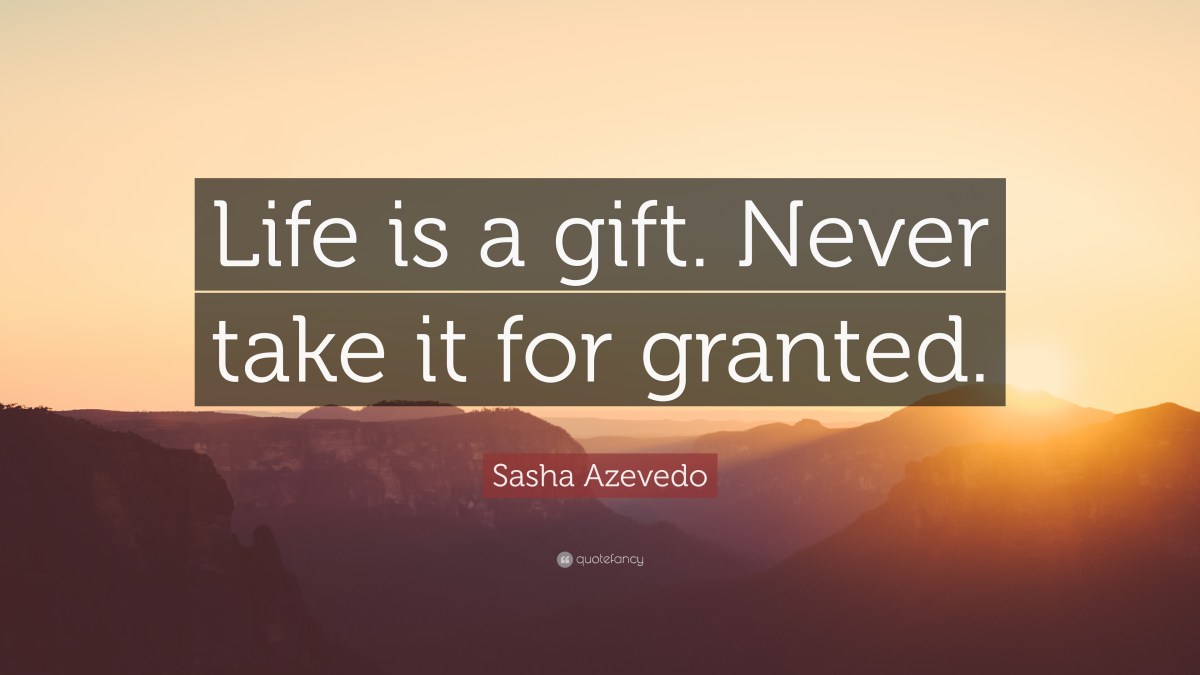
Recent events in my life have reminded me just how fragile and precious life itself is to me. As you get older and the years start to speed up rather than slow down, you start to realize more and more just how fast time flies and how fleeting life can be. While it can be easy to get bogged down in the day-to-day routines and the busyness of what we have in our own schedules, there’s no denying that we only have so long to live, and we should remember that we are not going to be around forever. It does no good to dwell endlessly on our own mortality and ponder how long we get to have our existence on this planet. We should take heed each day when we wake up in the morning and when we lie down at night just how special it is to be alive and breathing.

Our mere existence at miraculous odds through multiple generations of ancestors who came before us is a clear reminder how miraculous it is to have the gift of life. It can be easy to lose perspective on how the state of being alive rather than the opposite is so special, unique, and wonderful that we can take it for granted. Even when life inevitably throws its challenges, obstacles, and setbacks at you, it is important to slow down, take a deep breath, and remember that this too shall pass, and that having life is always worth the struggles and suffering involved.

I believe that instead of getting caught up in going through the motions, checking all the boxes, and waiting for the next day to begin, try to take a minute or even a few minutes to reflect on the fact that you are in the here and now, reading this article, being able to breathe, eat, drink, and be part of humanity as so many who have come before you. Life is a miracle when you really think about it, and you only have one life to live. Make peace with the fact that life is not forever, our bodies are mortal, and what we should not let trivialities, gossip, and regrets swallow us up as we live and breathe.

Remember to make peace and share love with those closest to you because they such as yourself are mortal too and will not be around forever. Try not to hold grudges, feed off your resentments, dwell endlessly on what’s past in your life. You should try as much as you can to be present in the moment, appreciate what blessings life has given you, and enjoy the beauty and wonder of what living in this world means. We all know that life isn’t perfect and that many days in our lives are a struggle where we might be treading water unsure of where we’re headed, what the meaning of it all is, and how can live a life that others will remember.

Try not to dwell on those questions endlessly but rather strive to be the best person you can be. If you’re a brother, be a better brother. If you’re a mother or a father, be a better parent to your child or children. If you’ve done wrong, atone for what you did and seek forgiveness from others. You can never truly right past wrongs, but you can strive to be better in your life from there on out. Be willing to tell your family and your friends that you care and love them if they have been there for you as much as you have been there for them. Life is precious and fleeting not only for us as the narrative of our own journey through this world but also for those others we love and cherish who we share our precious life with.

Treating every day as a gift even when life is hard will make you more appreciative, grateful, and reflective on what truly matters during our existence. We do not know when our time will come to say goodbye to this world so you should always strive to live true to who you are and to leave this world better than you found it. I encourage you to take a moment or two before you get out of bed or fall asleep to reflect on what life you have led so far.

If you are content with your life and have made the most of it, you are on your way to building a fulfilling canvas that will be bright, colorful, and detailed. If you are not content with how life has gone, think about what joys you’ve had so far, how life could be more fulfilling, and what you can do to improve upon it as it is never too late to make our one life the best it can be. Do not get discouraged by mortality and that our existence may be finite.

Take comfort in knowing that your life, however small it may seem in the grand scheme of our universe, influenced those around you and that the world was changed by your place in it. You may not be remembered a thousand years from now after you’re gone, but you will always know deep down inside what kind of life you led while you were here, in its good and bad times, joys and sorrows, its pleasures and pains. Hopefully, you may be able to rest in eternal peace knowing that the life you had lived, regardless of its days, months, years, or even a century or more, it was worth the gift of life itself.  

What We Need vs. What We Want

Understanding that you must be able to divide up the two categories fairly and also be able to balance them healthily with our seemingly limitless desires at times is key to being a fully formed individual.

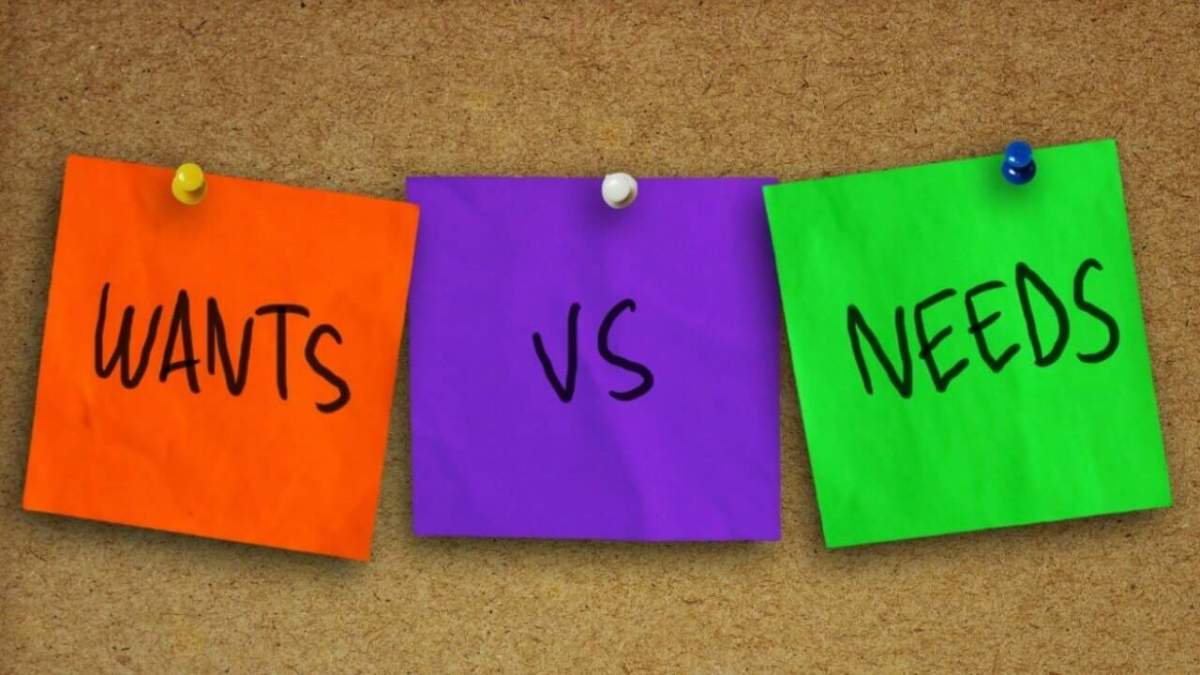
A key part of adulthood is being able to know the differences between knowing ‘what we want’ vs. knowing ‘what we need.’ Understanding that you must be able to divide up the two categories fairly and also be able to balance them healthily with our seemingly limitless desires at times is key to being a fully formed individual. As children, we are taught to temper our desires to manageable levels and to remember to not be selfish especially when it conflicts with the needs of others.

We are flawed as humans in that we often let our wants overtake our immediate needs and that we cannot distinguish the two in terms of actual importance. I may want a new suit but if I only have so much money, do I really need it? Am I being selfish by buying a suit when I already have a perfectly good one at you? These questions are especially important to pose when you have limited money or time to contribute towards either your needs or wants. What we focus on each day shows us if we care more about ‘needs’ or ‘wants.’

It has to be non-negotiable in your own life how your needs come first and will always come first. Your wants have to be considered in terms of whether you actually need them and how much they will actually add that much to your life. When it comes to your wants, you should not only be thinking about their utility in the short-term but also in the long-term. Will you be that much better off not just a day later, a week later, or a year later when you satisfy those wants? A short-term want will be fleeting and may end up not even be worth it whereas a long-term want like starting a business, getting your degree, or moving overseas are often worthwhile investments and satisfactory wants that will put you ahead in your life. If you do want to fulfill your wants, they should be in the interest of you moving forward, learning new things, and developing your interests.

Short-term wants are good every now and then like a new bicycle, a nice meal out with friends, or a trip to a day spa, but the gratification will be short-term, and you can’t rely on those wants to fulfill you in the long-term. Long-term wants are harder to achieve but they often have higher levels of satisfaction. These wants aren’t automatically given to you and you have to work for them but it’s often worth the effort more so than just things being handed to you automatically. Your wants have to be kept in moderation too because if you let your wants overwhelm your needs, you may be left with less than you had before. An adult keeps their wants in check and prioritizes their needs first to make sure that their life is headed in the right direction. Long-term gains have to always take priority over short-term gratification, which may give you happiness but won’t give you fulfillment in the long run.

Your needs in daily life should always come first in terms of securing them. Whether it is water to drink, clean air to breathe, food to eat, and a roof over your head; they are all part of the equation to keep you in good spirits and in good health. Do not let your wants take away from your immediate needs because when it comes down to it, your wants may come and go but your needs are your needs and that never really changes. Abraham Maslow’s ‘hierarchy of needs’ was pretty much on the money in terms of distinguishing what are most urgent needs are and beyond that, what could be considered wants. We have the physical needs of eating, drinking, sleeping, maintaining homeostasis (not too warm or too cold) but beyond that, we start to go into the wants territory of seeking out self-actualization as well as having a steady purpose in life.

We all need human connection along with friends and family who care about us but that is not given to everybody and that kind of need is something that you have to work for and what you have to ‘want’ in a way. We all need safety and security to carry out our lives but that is something that we have to work towards to and that is not guaranteed when we are born. What we need may not been given to us like friends and family or the security of a place we live in and we may have to take action to turn those needs into a reality by wanting them badly enough.

In Maslow’s ‘Hierarchy of Needs’, our basic needs must be taken care of first as the pyramid shows us but then you have our psychological needs such as love, relationships, friendships, and feelings of accomplishment and goal-setting. As you go up the pyramid, you get into the ‘self-fulfillment’ needs category of achieving our potential, reaching our set goals, and becoming the best version of ourselves through self-actualization. This category is tricky, but we may feel that we need to be fulfilled that way; how hard are you willing to work to achieve that and how much do you really want to achieve it?

I would argue that our basic needs of food, drink, shelter, warmth, etc. are real needs but our psychological or self-fulfillment needs are different in that while each of us need them in our life, they are really ‘wants’ that you have to earn and to work for. Our basic needs are not given to us either, but they are of such urgency that we will do almost anything to have them guaranteed and it often subsumes our other ‘needs’ like love, friendship, or career goals.

What we need to live is our number one priority. Everything after that is supplementary in life. What we want Is important but it’s clear that our wants are endless at times and we need to prioritize with our limited time and/or money what matters to us most to achieve or to have. Being able to prioritize while understanding this internal battle is key to being a fully formed individual capable of holding our wants at bay while getting our needs taken care of.

Lastly, it is important to distinguish between short-term needs and long-term needs. Short-term needs should always take priority over long-term needs, but you can work towards both at the same time. You can hunt for food and still have companionship with a loved one at the same time. You can watch your vegetables grow while you’re studying for your next course exam or replying to emails. However, if your immediate needs are unmet or neglected, your long-term needs will have to take a backseat because they are just not as critical as what short-term needs are in terms of daily occurrence. You need to eat and drink water a lot more than you need to see your family and friends as an adult. I’m sure you would love to see them every day but it’s more likely you would see them once a week or a month or maybe less if you’re really busy.

Your immediate needs can be balanced with long-term needs, however, if you can’t cook for yourself, make money to support yourself, or be able to clean and take care of yourself physically, not many or very few of your long-term needs can be met after. As an adult, you need to take care of the daily details before you can reach your lifelong dreams and goals. What we need vs. what we want is a constant battle taking place in our mind. If we don’t pay attention to how to win this battle by trusting in our innate knowledge of what we are capable of doing to achieve them one by one and what are healthy priorities to focus on, you won’t be able to get very far in life with either your needs or your wants.

Life’s Fleeting Moments

Why is that sunrises and sunsets are often so captivating and moving? Perhaps it’s the uniqueness of the colors blending and merging together to form a painting-like setting that can’t be reproduced elsewhere. Maybe it’s the sense of satisfaction that comes from seeing a new day born or see the old day fade to its end. However, I tend to think the beauty of these happenings lies in another part of its overall appeal.

While some aspects of sunrises and sunsets bring a lot of beauty and perspective to life, I think the main reason why sunrises, sunsets, and even the random rainbow appeal to the human psyche is because these events represent fleeting moments that last for only a few seconds or minutes. They are impermanent, awe-inspiring, and hard to experience often. Sunrises and sunsets are ephemeral events that can be easy to miss and require one’s full attention to really appreciate them.

These sunrise and sunset events are what I like to call ‘fleeting moments’ and they are truly special. I say this because they do not last, and they require you to really pay attention and let your distractions float away. You have to be in the moment and that is increasingly difficult for most people to do nowadays. We are constantly bombarded by sensory overload that is often man-made and unnatural. Advertisements, loud noises, screeching vehicles, bumps in the roads we drive, these can cause us to lose sight of what’s truly important in life. Taking measure every now and then of why these fleeting moments are important to experience not only reminds us of the beauty of life but also how impermanent our time here really is. When you compare the fleeting moments of life to the routine moments in life, it really is no contest to as to which kind of moment is the preferred option to experience in full.

Categorically, the rewards of these fleeting moments are among the best in life because we all know that they are not common. Among the daily monotony and chores that encompass our routines, taking a few moments to appreciate being alive and being at peace are really what we all should be striving for even if these moments are fleeting. The fleeting moments are hard to capture but when you do, they bring the most joy and happiness that you can possibly have. As I mentioned in a previous article, there is a rule of diminishing marginal returns that we should be aware of and that’s why the more common we experience certain things in life, the less we really value them.

It’s quite a paradox when you think about it. The most enjoyable moments in life are the ones that we cannot plan for or anticipate, but that is part of the beauty of life and of living. Going back to my sunrise and sunset example, if they happened every hour instead of every day, that would be boring, right? You would probably start yawning after the fourth sunrise and the third sunset. Fleeting moments are special inherently because they are temporary, and you may not be able to enjoy them forever. Fleeting moments can also be part of your daily routine but ones that can only last a few seconds or a few minutes.

For some of us, it could be the first sip of a fresh cup of coffee at the beginning of the day or for others, it could be a hot shower after a long day of hiking. We know that the 2nd or 3rd cup of coffee like the 2nd or 3rd shower would not be as pleasurable or as enjoyable because then it becomes routine and our mind adjusts to it happening. However, the fleeting moment when your lips touch the coffee or when your face is enveloped with shower water, then it’s almost pure ecstasy for your body and mind. While these moments are definitely fleeting, they are the most enjoyable. Keeping them as part of your routine is important so that you will feel better both mentally and physically.

What we should all keep in mind is how to maximize the most enjoyment from these temporary moments because we know they don’t come around every minute or every hour of each day. My thinking on this is to really put all distractions away for those moments so you can be living fully and freely. When you are having a nice dinner with friends, make a habit to engage yourself in the conversation rather than daydream about what you’re doing afterwards. When you are watching the sun rise or set, put the phone away and just watch the colors merge together to form the painting-like canvas. Let your stress and worries melt away as much as possible to really enjoy these moments. There are so many distractions out there, but your sense of contentedness will be much higher if you are able to have the willpower yourself to be in the here and now wherever that may lead you.

Laughter among friends, patting a baby’s back, a spontaneous rainbow, a beautiful vista after a long climb, holding the hands of a beloved family member, these are the moments you want to remember throughout life. They are fleeting in length and a small amount of sand in the hourglass known as one’s lifespan, but they are precious and powerful. If you can take the time to work, to play, to sleep, to eat, then you can take the time to live in the moment and appreciate beauty and joy when it comes your way.

Being able to live fully by being in the moment will set you on a path of fewer regrets the further you go through life. Letting yourself experience moments of happiness and joy without distraction or worries will improve your well-being. It is a conscious effort to stay in the moment, but the rewards are well worth it. If you have to meditate, exercise, or even do yoga to help yourself stay present, then do so but don’t let life’s fleeting moments pass you by.