A Chance Encounter

When it comes to traveling, most people often remember the places they’ve been, the food they ate, and the fun activities they did during their trips. However, what often gets lost in the shuffle is the ability to appreciate and remember the interesting people you meet during your travels, usually at the most random of times and in the most random of places. The best part of traveling can often be those chance encounters on the road that lead to you gaining a new friend, who might be a local from the country you’re visiting or another fellow foreigner who’s exploring the same places as you by coincidence.

One such encounter happened to me very recently during my first trip to Peru. I got up very early at around four in the morning to catch the train from the Peruvian village of Ollantaytambo to the town of Machu Picchu, which is located a couple of hundred feet below the famous ruins of the ancient Incan city of Machu Picchu. Running on just five hours of sleep and anxious to make sure that I had all my paperwork in store for the visit to Machu Picchu, I was not in a talkative mood and feeling pretty lethargic.

I boarded the train at around 5 am and was even more dismayed by the fact that I was assigned an ‘aisle’ seat instead of my usual preference for a ‘window’ seat. Rather than being able to view the beautiful, cascading Andean mountains and the river running through them beneath the train tracks, I would only be able to glance a peak of the scenery by arching my head over, behind, or in front of the person next to me who would soon be occupying my prized window seat.

Still though, I reminded myself internally to not be such a downer and to be grateful that I would soon be departing for one of the wonders of the modern world, which very few people get to visit during their lifetimes. I am also a big fan of train travel, and Peru Rail provided quite a comfortable ride to and from the town of Machu Picchu. Eventually, a man carrying two big toys in his hands asked in Spanish, “Con permiso” politely as he motioned that he was coming through to sit down in the open window seat next to me. I obliged politely and looked on with curiosity at he placed these large two toys on the tray table in front of him nonchalantly.

I thought to myself at the time that it was a curious sight to see a grown man holding two toys that a child would play with, and to especially be sitting by himself with them and not with a son or daughter nearby. The toys themselves captured my attention because they were two of my favorite toys that I owned when I was a child myself. If you have ever seen the ‘Toy Story’ movies, you’ll know that those characters were popular when I was growing up in the 1990’s and even until today due to the series’ recent surge in popularity.

I loved ‘Toy Story’ as a kid and I still do especially given the fact that I saw the movie ‘Toy Story 4’ a couple of years ago and that was just before I graduated from college. The two toys themselves were replicas of the two main characters, Buzz Lightyear and Sheriff Woody, who I had owned in my younger days. I spent many afternoons watching Buzz lift off and having Woody swing his plastic lasso around like a real cowboy would do. Some toys, even when you’re an adult, hold a deep connection for you and bring back a lot of memories that have since receded a long time ago.

Now, suddenly, my interest had been peaked in the man sitting next to me due to the toys that he was bringing with him to Machu Picchu. I started by telling him in Spanish how I used to love playing with those same toys of Buzz and Woody when I was a child. He was very friendly in responding to my curiosity and stated that; yes, he likes the toys a lot too and bought them for his two-year old son recently for his birthday. That put in place another piece of the puzzle for me as I realized that this man was not traveling to Machu Picchu by himself but was sharing this unique experience with his wife and his children.

For being such an early time in the morning to have a conversation, the man whose name I learned was Jorge (first name changed for privacy reasons) was polite, friendly, and patient with my imperfect Spanish. It’s one thing to speak in a foreign language when you’re fully awake in the middle of the afternoon and it’s a much more challenging task to be coherent in a foreign language at 5:30 in the morning when you are lethargic and groggy. However, I was able to communicate with Jorge pretty easily and he was able to practice some of his English as well. Like myself, Jorge also works in the education sector. He is a secretary at a primary / secondary school in Peru, and has been doing this job for over ten years. He is passionate about education and was curious about my experiences as an English teaching fellow in Medellin, Colombia.

From what I could tell about Jorge, he was a caring husband and father. He showed me pictures of his two young children on his iPhone with the traditional ceremonies that they would go through at their primary school. It was pretty interesting to see how they would dress up these little kids in traditional Peruvian clothing for these school events. Jorge must have taken a liking to me because even when one of the cabin crew for the Peru Rail train asked Jorge if he would like someone to move from the other row so he could sit with his wife and his children, he politely declined as I think he was really enjoying the conversation we were having. It also didn’t hurt that his family members were only sitting a row behind him so he could easily reach them if there was anything they needed, including if his little boy happened to want to play with Buzz and Woody again.

It was extremely interesting for me to hear from Jorge as a local and native citizen of Peru about his experiences visiting different parts of his country. He gave a lot of interesting insights about the regional differences between food, people, and the culture depending on where in Peru you were visiting. On this recent trip, I was only able to explore Lima and Cusco, but due to Jorge’s recommendations, I have a pretty good idea of where I would go in Peru for my next visit. I was happy to chat with Jorge about what it was like to grow up and live in New York, as well as talking about popular American music and movies that we both have a mutual fondness for. Despite having been born thousands of miles from each other on different continents and with different cultural backgrounds, we were able to bond as human beings because our similarities in terms of personality and interests were greater than our inherent differences of culture and country of birth.

Perhaps most notable for me about getting to know Jorge was how mature he was for his age. Jorge is only six years older than me but has a steady job, a wife and two young children. A lot of people my age and older are forgoing those traditional responsibilities of life but it says a lot about a man who provides for his family and is able to do things for them like take them on a trip to Machu Picchu. Men like Jorge are admirable in that they are responsible, mature, and do not shy away from their commitments. While all men carve their own path in life, they should try to exemplify the same traits as my new Peruvian friend Jorge has done. Maturity, responsibility, and a kindness to strangers like myself; these are the best traits to emulate when you witness them in another person. That’s how you become a true adult and someone who can be the leader of a family. It’s easy to say that my hour and a half spent talking to Jorge taught me more than just about old toys, it taught me a lot about adulthood and what it means to be a good man.

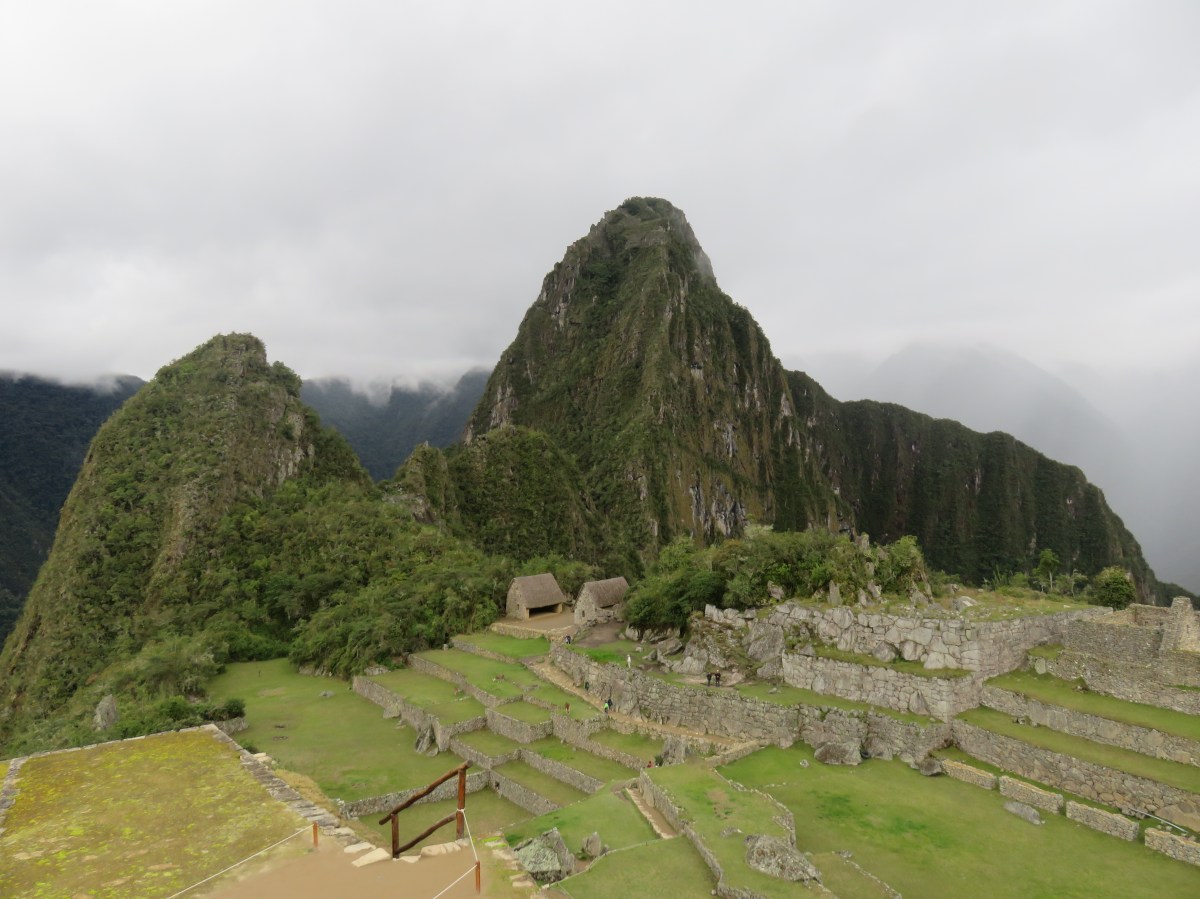
As we pulled into the Machu Picchu station, Jorge was very gracious and said that if I ever wanted to experience the best of Peruvian cuisine in Lima, where he and his family live, I was more than welcome to join them in the future. I told them that I would be happy to extend the same offer to them if they were ever in Medellin or even in New York if I was back there again. We exchanged our Facebook information, said our goodbyes, and parted ways as we both left the train to our final destinations. I continued on to my full-day visit to Huayna Picchu / Machu Picchu (which was amazing by the way, but that’s for another blog post).

You may ask by now if you’ve read this whole post: Ben, why did you decide to tell me about a chance encounter with a Peruvian guy on a train to Machu Picchu? The answer to your question is quite simple: It’s because traveling isn’t just about eating new foods, seeing cool places, or doing awesome activities. I enjoy all of the above and then some but traveling is also about getting to know the locals like Jorge and learning more about their country and their culture from their perspective.

Traveling is and always has been about broadening one’s horizons and getting outside of your comfort zone. For me, I’ve always been on the shy side personally but by traveling especially by myself, I’m forced to meet new people and start a conversation. I can only say that it’s done wonders for me in terms of building my confidence, improving my self-reliance, and lowering my anxiety when it comes to meeting new people. Traveling is more than just the experiences you’ve had and the places you’ve seen but it’s also about the new people you meet. Your memories will include the people you meet and you’ll look back on those same memories very fondly one day. You may never see that person again but at least you’ll know that they made your trip a little bit more special and rewarding because you met them in the first place.

I hope that as a reader of my blog that you’ll take this story to heart and remember to not be shy when it comes to meeting new people, regardless of whether you’re traveling or are at a party where you don’t know anybody there. The best stories come out of those experiences where you can met someone cool or unique and have a good time getting to know them. You may even be able to make a lifelong friend just by being willing to open your mouth and make the words come out.

Cartagena v. San Andres Island – A Comparison

24d0cbb9d14b491b89c035b207c4597c
“San Andres Island: Located Northwest of mainland Colombia and closest to the coast of Nicaragua. Very small island as you can see from this map.

If you’re in a cold, winter climate right now and you’re looking to escape the frigid temperatures and snowy weather for a little while, you should consider the following two destinations for a vacation. Recently, I was lucky enough to take two, separate trips in December to the San Andres Island in Colombia and then to the coastal, colonial city of Cartagena, which is also located in Colombia. While these destinations are similar in many respects, they are still unique in a number of ways. Depending on what you’re looking for in a tropical destination, both San Andres and Cartagena have a lot to offer for the average traveler.

San Andres Island

After visiting the San Andres Island in early December, I consider it to be a hidden gem of the Caribbean. I write this because I find it to be much less of a tourist destination than other tropical islands such as the Bahamas, Bermuda, U.S. Virgin Islands, Aruba, etc. and small countries such as Jamaica, Cuba, and the Dominican Republic. What it lacks in notoriety and sheer size, San Andres is just as much of a Caribbean destination than other more popular islands.

The island is rich in both biodiversity and sheer crystal blue beaches that you can swim in, go snorkeling, or go riding around in a boat or Jet Ski. San Andres is blessed with vibrant coral reefs, sand banks, and outer cays, which are easy to explore by foot or by boat. You can snorkel with the fishes or go scuba diving with them depending upon your personal preference. The island is smaller than most tropical destinations at only 26 square kilometers in total area but I consider it an advantage to be able to see a good amount of the island in only a week if that’s how long you plan to stay.

There are a number of ways to get around the island including local buses, which will do a circular loop around the island and can be hailed from anywhere you are in the main street. You can also rent your own scooter or golf buggy cart to get around the island for a day or more. Taxis are also plentiful in most areas but tend to be more expensive depending on where you’re going on the island.

Most restaurants, hotels are located in the northern part of the island and tend to be a little bit cheaper than Cartagena in terms of pricing. The great thing about San Andres is that there is a number of bed and breakfast places available, which are cheaper than the major hotel chains if you’re looking to save some money. The smaller hotel chains and the bed and breakfasts are usually located closer to the island’s less popular but still very beautiful beaches, which are also less touristy overall.

During the low season for San Andres’s tourism, it’s possible to find a beach where there are few tourists around and where there’s still white sand and crystal blue waters. All you would have to do is make sure you do your research and find out where these lesser-known beaches are and take public transportation or your own scooter there for the day. You won’t find these beaches in El Centro or in the north of the island.

Luckily, I was able to find a beach like that ten minutes south of where I was staying by bus, which was the highlight of my trip. If you’re looking to visit San Andres, make sure you visit during the low season and be ready to explore the island beyond just the touristy areas. In addition to being accessible by plane from Colombia, which is the owner of the island, you can also get to San Andres from the countries of Panama and Costa Rica. With the right planning and set-up, you’ll be able to walk to the nearest tropical beach when you stay in San Andres for your visit.

Cartagena

A city with an interesting mixture of colorful, colonial buildings and modern, towering skyscrapers, Cartagena is the most popular tourist destination in all of Colombia and has been growing in popularity in recent years. Known most for being the location of the oldest Spanish colony in the Americas, Cartagena offers a lot of history, culture, and diversity to those tourists who visit its’ colonial streets, coastal beaches, or plentiful hotels. Cartagena is very easy to get to by bus, by boat, or by plane with its’ modern international airport named after former President of Colombia, Rafael Nunez who was a Cartagenero.

If you’re short on time, it would not be a complete trip to Cartagena without visiting sites like the Felipe de San Barajas Castle, which was a Spanish fortress designed to protect the city from foreign invaders and from scheming pirates. There’s also the walled colonial city with its’ colorful buildings, which have been somewhat transformed to offer restaurants, boutique hotels, and artisanal shopping to its many tourists. In my opinion, the walled colonial city still has a lot of character and its architecture is really pleasing to the eye. Costenas are among the friendliest people in Colombia and are truly welcoming to the sheer amount of tourists that come to the city each year.

While I was not able to go there during my recent trip, the La Popa hill has great views of Cartagena and you can take a tour of a monastery there with a history dating back to the 17th century. While Cartagena has a number of beaches, the best ones take some effort to get to, which can take a whole day trip back and forth. The most famous beach in the area is La Playa Blanca located on the Baru Island, where you can find white sand beaches and the crystal blue water that can’t be easily found elsewhere in Cartagena. Lastly, Cartagena is a big city with over a million residents and thousands of tourists. If you don’t get to do everything in one trip, you can rest assured knowing that it’s a city that is worth more than one visit.

Comparison

Overall, I had an excellent time during my two separate visits to Cartagena and San Andres Island. Both of these destinations have a lot to offer to the average tourist and are relatively affordable and easy to get to from other parts of the Americas. If you’re looking for a warm destination with friendly and open people, these two locations should be high on your list.

If I were to give recommendations based on what each place can offer as its’ specialty, you’ll want to give San Andres the edge in terms of its’ beaches and its’ water sports activities. The manageable size of the island to navigate along with its various modes of transportation makes it easy for the traveler to explore different beaches, coral reefs, and outer cays without having to go very far. San Andres is also a bit cheaper of a destination in terms of average lodging and food costs compared with Cartagena.

While San Andres has the advantage with its’ beaches and its’ overall costs, Cartagena shines when it comes to the history of the city, its’ open and friendly people along with the numerous options for dining and lodging. In all of the cities of Colombia, the walled colonial city of Cartagena is very special along with the San Felipe de Barajas Castle. The restaurant and nightlife scene is also much more vibrant giving the average tourist a lot to do, see, and explore at nighttime compared with San Andres.

I would suggest that while Cartagena has a number of accessible beaches, the special ones like Playa Blanca take some time to get to and are not located within the city. When it comes to crystal blue waters and white sand beaches, San Andres Island is a destination that offers that in a number of locations without too much effort needed.

The beauty of these two destinations is that they each have something special to offer the tourist, the traveler, or the backpacker. If you’re looking for beautiful beaches and water sports activities, head to San Andres Island but if you’re looking to learn more about history, culture and to experience good restaurants and nightlife, head to the city of Cartagena. Either destination has its’ own specialties and advantages. You won’t regret your time in either destination and it will be a good travel experience that you’ll have fond memories about.

Cartagena

img_1278img_1282img_1289img_1285img_1300img_1312img_1316img_1328img_1334img_1329img_1345img_1346img_1349img_1360img_1363

Camera: Canon PowerShot SX710 HS

Location: Cartagena, Colombia

San Andres Island

img_0284

img_0289img_0295

img_0299

img_0312img_0315img_0309

img_0326img_0341

img_0333img_0349img_0351

CameraiPod Touch, 6th Generation

Location: San Andres Island, Colombia

Cuisine Spotlight – Cazuela

This second post in the new ‘Cuisine Spotlight’ series will focus on another favorite dish of mine here in Colombia, which is known simply as ‘Cazuela.’ Despite the unassuming name, this popular South American dish is quite diverse in what it can offer you when it comes to mealtime. Depending upon what you’re craving, a good cazuela can be made up of seafood, beef, chicken, etc. as its main base food. ‘Cazuela’ is a Spanish word, which roughly translates into ‘Casserole’ in English.

Similar to a casserole, a cazuela dish is a mix and match of different kinds of foods with tasty results. Usually, cazuela is considered to be a soup made up of different vegetables and meats mixed together. You can’t have cazuela without some flavored cooking stock put in there to form the soup-like appearance. Depending upon which South American country you’re visiting or living in, there will be a different spin on what cazuela looks, smells, and tastes like.

In Chile, cazuela comes with a piece of meat, which can either be turkey, pork, chicken, or beef. Specifically, a leg of chicken or some beef ribs will be the meat in the cazuela dish. Underneath the meat would be a piece of pumpkin and individual pieces of potato with a base of white rice doused in the flavored cooking stock. For the vegetables, it varies depending upon the cook’s preference but there’s usually celery, carrots, green beans, cabbage, etc. that are sliced and diced up to be soaked in the cooking stock and added to the rice and meat. In the summer time, some Chileans will add some sweet corn to the vegetable mix. The Chilean version of cazuela is known as being very similar to the ‘Olla podrida’, which is a colonial dish from Spain that has gained in popularity in Chile and other South American nations.

Cazuela is also quite popular in Peru, the southern neighbor of Colombia. Cazuela is often prepared in the Amazonas region of Peru and is made in different ways depending on which area of the department you’re in. For the meat, there are often more creative choices like hen and sheep that are added to cabbage, rice, carrots, and the broth juice. Usually, this kind of cazuela is cooked over a flame in a sauce pot as its mixed together and served to a large group of people.

Beyond just being a soup or a casserole, Cazuela can also be made into a traditional kind of pie as it is in Puerto Rico. During Christmas season, the Cazuela pie is made up of sweet potato, pumpkin, and coconut milk. It’s quite a popular desert that is easy to make and is popular for its’ sweet flavor and light texture.

Multiple countries in Spain, Ecuador, and Colombia have embraced the ‘Cazuela de Mariscos’, which is made up of a number of different kinds of seafood. The Colombian version is easy to make and is known for being a thick kind of soup and also is rumored to be an ‘aphrodisiac.’ The seafood that comes in the soup includes calamari squid, prawns, clams, shrimp, and small pieces of fish.

The kind of ingredients you want to add are olive oil, salt, pepper, thyme, bay leaves, coconut milk, white wine, some seasoning, heavy cream and minced garlic. To top it off, you need some vegetables including carrots, celery, red pepper, tomatoes, and bouillons. You got to mix up everything together, serve it in a clay pot or bowl, and enjoy the delicious broth and food. Sometimes, you can find that there are cazuelas for shrimp or prawns separately which can come with rice and a heavy broth mixed together with the seafood.

The type of cazuela that I have become most familiar with over the past couple of months is the ‘cazuela antioquena.’ You can find it throughout the department of Antioquia and most commonly in the city of Medellin. I find it to be unique compared to other kinds of cazuelas given the emphasis on ingredients that are known well to Paisas making it a local favorite.

You start with a base of Antioquian brown beans mixed in with some white rice. On top of that is the meat, which are usually ‘chicharron’ or fried pork belly and some cooked chorizo. Instead of more common vegetables like celery and carrot, this favorite dish of Antioquia comes with pieces of avocado and some cut-up sweet plantains. To add some flavor, the Colombian creole sauce known as ‘Hogao’ is mixed among the meat, plantains, avocado, rice, and beans.

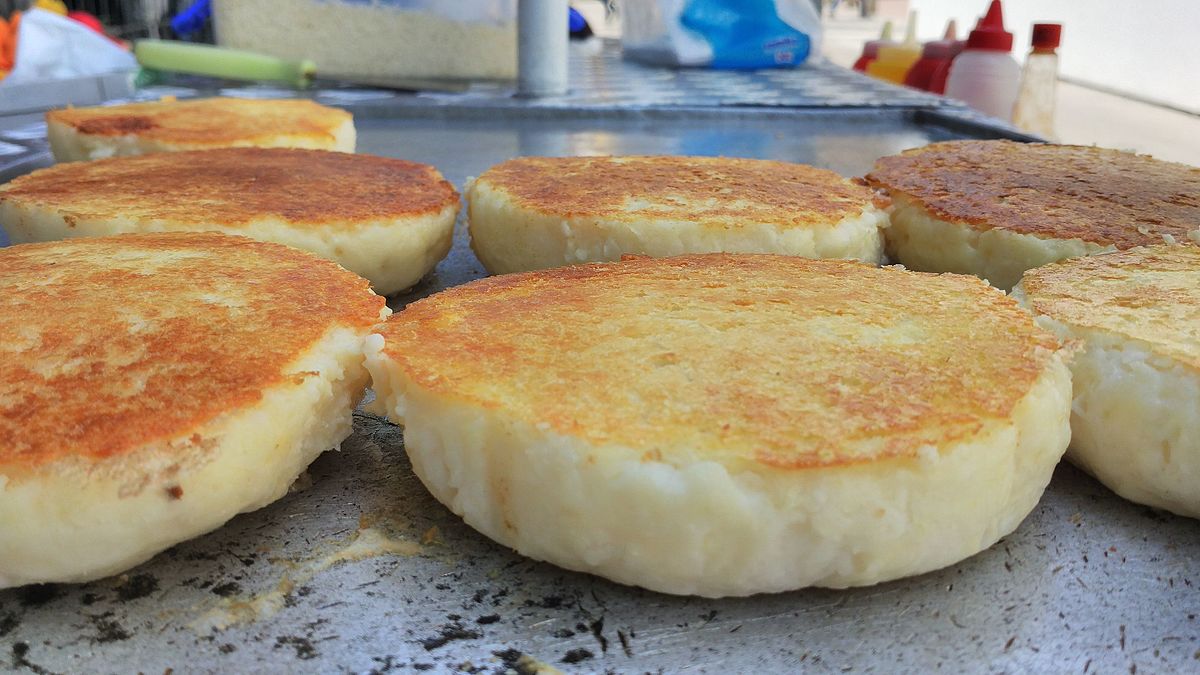
Like many other local dishes here, a small arepa is added to the mix, and placed at the top of the ‘cazuela antioquena’ to be eaten with the rice, beans, chorizo and whatever else would go along well with the arepa. Second only to the ‘Bandeja Paisa’, the ‘cazuela antioquena’ is likely to be a fulfilling dish for lunch that can satisfy your cravings for some local cuisine.

It’s likely that you’ll run into some kind of ‘cazuela’ if you’re traveling or living in South America. The various kinds of cazuela unique to a certain country or region makes it an exciting dish due to its diversity. Whether it’s meat, seafood, vegetables, rice, and beans in the cazuela, it’s important to bring a big appetite to the table because it’s likely to fill you up and leave you satisfied.

Valle del Cocora

img_1096

img_1103img_1105

img_1109

img_1110

IMG_1115.JPG

img_1125img_1111

img_1133img_1120

img_1187

img_1207

CameraCanon PowerShot SX710 HS

Location: Valle del Cocora; Salento, Quindio, Colombia

The Coffee Farm

14670823_10157522264220262_1820118778880301811_n1

14642343_10157522265030262_5816986866725143352_n

14702280_10157522265815262_3994102608413372427_n

14717321_10157522265800262_4156217177090237585_n

14691066_10157522266565262_1971029569822532956_n

14671307_10157522268405262_5203996779598185093_n

14642029_10157522268820262_8150422294198330640_n

14670825_10157522269660262_3561982785140579043_n

14729082_10157522270370262_458012479311699869_n14702320_10157522271640262_2442392730177033051_n

14590244_10157522272060262_3747618828295631682_n14717242_10157522272180262_8225771911386585992_n

CameraCanon PowerShot SX710 HS

Location: Hacienda Venecia Coffee Farm; Manizales, Caldas, Colombia

View From The Top

Tired and thirsty, my friend and I had finally reached the glorious peak at ‘La Piedra’ or ‘El Peñol del Piedra’, which loosely translates in English to ‘The Stone.’ It was quite a physically taxing climb up to the top of the rock as my legs burned and my feet became sore as my friend and I ascended the 750 steps along with some steep hiking up a good-sized hill to get to the base of the ‘La Piedra’ rock.

I came to Guatepe partly after hearing from friends in Medellin on how beautiful and unique it was and after seeing various pictures of the stunning landscapes that make up this tranquil part of Antioquia. I was skeptical of the place and didn’t think that it would live up to the hype but I am happy to say that I was completely wrong. Out of all the places I’ve visited and the landscapes I’ve traversed, Guatepe is a really special place to visit. The area is made up of dozens of intertwining, clear blue lakes surrounded by the greenest forestry you could imagine with soil rich in different colors. My friend compared it to the southern United States and thought that it was similar to the state of North Carolina. To me, that’s part of the beauty of Colombia in that there are so many varied landscapes. You could sometimes wonder whether or not you’re in a different country entirely depending on if you’re in Atlantico or in Antioquia.

The landscapes were beautiful, the air was clean, the people were friendly, and the view from the top of ‘La Piedra’ was unbeatable. A 360-degree vista of all of the lakes, hills, and greenery that make up Guatepe was quite breathtaking and peaceful to behold. It helped that my friend and I had great weather to enjoy where the skies were clear blue and the bright sun was shining down on us.

It was really pleasant to take pictures, to soak up the view, and to have a cold drink after the long journey to the top. I consider myself to be in pretty good shape but walking up the steep 750 steps is not for everyone and it really is quite the challenge. While it’s not insurmountable, your feet and legs feel the pain and you wonder when the full view is going to come into play. At ‘La Piedra’, they really make the tourists and the visitors to the rock work for it. There are no escalators or elevators. You have to pay for admission and if you don’t make it to the top, you don’t get your money back. Like a lot of things in life, you have to invest yourself physically and mentally in order to reap the benefits.

Similar to many other moments in life, I reflected on those 750 steps of ‘La Piedra’ as being a necessary yet temporary struggle to reach the top and enjoy the view. For me, it wouldn’t have been as worthwhile at all to check out ‘La Piedra’ if there were an escalator or an elevator to shortcut the journey. I believe that I enjoyed the view from the top of ‘La Piedra’ much more given the fact that I was tired, hungry, and in need of a rest. The struggle was tough enough for me that as a result, the ultimate reward became more fulfilling. If the climb up had been much easier, it simply would have been less rewarding. Because the views from this rock were magnificent, I was willing to climb the 750 steps to get to the top. Sometimes in life, the struggle is worth the reward.

Whether it’s traveling to a new country, starting a new job, moving to a new place, or working on a blog, there’s going to be some struggles and setbacks involved. Sometimes, you’re going to have to decide whether the sacrifices you make and the challenges you have to overcome are enough to justify the rewards. Nothing in life is as easy as it seems and if it appears that way, you may be let down when the reward or success you’ve seen from it doesn’t feel as good as a result. It’s important to realize that working hard and trying new things can lead to failure but it can also lead to a success that’s more whole and fulfilling.

Putting blood, sweat, and tears, into a project, a job, or a relationship takes a lot of work but you can rest easy knowing that it was your labor, which brought it into fruition. If everything in life is simply handed to you, you may feel happy and experience pleasure from it in the short-term but it’s likely to make you miserable in the long-term. Being able to exert yourself in the world physically or mentally can give you a much more lasting feeling of success and contentment. While I would have been happy with the ‘view from the top’ had there been an elevator for tourists like me to go to the top, I felt much more relieved and excited from the view after step #750 because it was the sweat and the toil to get up there physically that filled me with contentedness and satisfaction.

Before I left Guatepe, I wanted to see more of the area so I rented a kayak in the morning and set out by myself. I untied the canoe, got ahold of the equipment and the oars, and pushed the kayak out into the open waters. The day before, I had viewed Guatepe from the top but now I was back on level ground exerting myself physically stroke by stroke on a two-seater kayak in order to enjoy the scenery, and the peaceful quiet of a Sunday morning.

For anybody who’s done kayaking by themselves before should know, it’s a struggle at first to steer the kayak and to move in sync with the tide. Like the day before, I was challenging myself physically and thus, I felt more rewarded when I was able to glide by the birds chirping, the local residents fishing, and taking in the sheer greenery of Guatepe. I have to say it was a good way to end my weekend trip to that part of Antioquia, which is a truly beautiful and well-preserved area of Colombia.

I hope to get across to my readers that it’s very likely in life that you’ll get the most satisfaction from those challenges you endured and personally overcome. Whether it’s that huge rock in Guatepe you climbed or that successful business you started on your own time and with your own money, these efforts will create sustainable happiness and noticeable self-confidence. It’s not easy to get to the top and that’s why you have to work hard and exert yourself in order to enjoy the view.


Guatepe and La Piedra

img_0818img_0819

img_0834img_0825

img_0849

img_0872img_0883img_0904img_0913img_0949

img_0948

img_0964img_0973img_0975img_0977

CameraCanon PowerShot SX710 HS

Location: Guatepe, Antioquia, Colombia

A Weekend In Santa Marta

IMG_0733
“Santa Marta Marina”

Santa Marta is an undiscovered gem of a city located on the northeastern tip of Atlantic coast of Colombia. I say that it’s an ‘undiscovered gem’ because it usually flies under the radar when compared to its’ coastal counterparts of Cartagena and Barranquilla. Still though, for Colombians and foreigners alike on vacation, Santa Marta has a lot to offer its’ visitors. I was drawn to Santa Marta a couple of months ago when I visited its’ neighboring town of Minca, which is also quite beautiful and full of lush scenery up in the mountains. Unfortunately, I did not get to spend much time in Santa Marta so I decided that during my 2nd time living in Colombia, I could not pass up the chance to visit this city if I had the chance.

Luckily, due to the recent religious holiday observed in Colombia which falls on a Monday, I was able to make my return to the Atlantic coast via Santa Marta for a long weekend and I had a great time overall. Even with three full days, I felt like I could have done and seen even more so if you’re planning on coming to Santa Marta, five days or so and that should be enough to cover everything. Due to the fact that I live in Medellin, which is surrounded by mountains with no sea in sight, I took full advantage of my time on the coast by hitting up the local beaches, sampling some great seafood and doing some hiking.

Santa Marta is a small and navigable city, which made it easier to visit for a long weekend. The locals I met were extremely helpful to me, and especially the taxi drivers who were patient with my handwritten directions. The historic center of Santa Marta was well preserved in my opinion and very walkable. There are a lot of bars and restaurants located around the Parque de Los Novios, which made it easy for me to choose places to eat and drink. Beyond that, you can easily go to La Quinta de San Pedro Alejandrino, which is place where the liberator of most of South America died in 1830. The hacienda is a museum, resting place, and has a really nice art gallery as well.

My recent trip mostly focused on visiting the different beaches located in Santa Marta, Rodadero, and Parque Tayrona. Santa Marta has many public beaches, which I found to be refreshing because there are a lot of hotels and private apartments located close to the sea but families and locals can mix with tourists to enjoy the beaches as well in the city. I found that to be a great idea and a contrast to other places, which have private beaches that only guests of the hotel or apartment can use freely. The public beach in Santa Marta is clean and nice to swim in but it can become quite crowded especially on holiday weekends.

The highlight of my trip was a visit to Parque Tayrona, one of the biggest and most popular national parks in Colombia. Well-preserved, pristine beaches, and great hiking opportunities, Parque Tayrona is the reason a lot of tourists come to Santa Marta in the first place. The park offers a lot of beautiful natural scenery of mountains, trees, and small rivers, which you can hike through for a day or more. Some visitors choose to spend a night or more in the park because it’s too big and vast to spend only a day there. The beaches are especially gorgeous because they are quite unspoiled and have no trash or residue of human presence for the most part. The water is clear, blue, and enjoyable to swim in. There’s a powerful rip-toe and large waves so be careful if you are to go swimming in some of the beaches there.

The particular beach that I visited, which is called Arrecifes, was barely inhabited and I enjoyed my time swimming, sunbathing, and listening to the clear sound of the waves without a care in the world. It was a very rewarding feeling to soak myself in the waters of the Atlantic again after a long day of waiting to get into the park and hiking through the park. For a couple of hours, I had the whole beach to myself so I was able to hear the sounds of the waves uninterrupted without any outside noise or voices to disturb the flow of nature. If there is one regret I have about the park is that I did not have enough time to see other beaches and that I should have woken up earlier to get into the park without waiting in line. If you plan on coming to Tayrona, make sure to get there by 8 or 9 AM, otherwise you will be waiting for a while to get in.

Before I left Santa Marta, I made sure to check out Rodadero, which was very different from Santa Marta and felt more like Miami Beach. High-rises, hotels, and apartments make up quite the skyline for this small city, which sits between the mountains and the coast. Rodadero is a great hub for restaurants and nightlife but also has nice public beaches which locals and tourists can enjoy alike. On my last day in the area, I decided to check out Playa Blanca, which was well worth the boat trip. Having a nice, private cabana that kept me out of the sun was welcome after two previous days in the sun. If you can’t make it to Parque Tayrona, spending the day in Rodadero is a great back up plan especially if you can make it to Playa Blanca where it’s less crowded and the water is crystal blue.

In addition to swimming and sunbathing, there are a multitude of activities to take part in. The fishing village of Taganga, which is nice to check out for a day due to its’ coastal style boardwalk also offers diving classes if you’re into learning that skill. There are also numerous tour groups offering snorkeling, hiking trips in the Santa Marta area for reasonable prices. If you’re feeling more leisurely, you can go jet skiing, banana boat riding, canoeing, and paddle boarding if that suits your fancy. The multitude of activities and places to visit in the area make it clear that Santa Marta is worth at least five days or so if you want to explore each nook and cranny of what the area has to offer. You simply can’t be bored if you decide to visit.

Despite being relatively undiscovered when compared to Aruba, the Bahamas, Bermuda, and other vacation getaways, Santa Marta is a city on the rise and its’ making a lot of progress in developing its’ tourism infrastructure. There are many cranes working on building the next hotel or apartment complex especially in Rodadero. The Santa Marta airport, which may be the smallest airport I’ve ever visited is getting a makeover and is going through a lot of construction in order to make it a hub for Colombians and tourists alike. With investments in infrastructure and education, Santa Marta will continue to grow in popularity.

I hope that tourists will continue to get along with the locals and respect the great natural beauty of the area especially in Parque Tayrona. The one thing that was difficult for me to deal with was the coastal humidity, which will cause you to sweat like no other. Be prepared to be hot but you get used to it eventually. Lastly, using AirBNB to meet some locals was really nice and I highly recommend the online service to my readers. Just make sure to do your research first and choose places to stay, which are conducive to your travel needs. A holiday weekend well spent in my opinion and I have a feeling that I will be back in Santa Marta one day soon. Parque Tayrona and Rodadero were my favorite parts of the trip and I’m sure others will enjoy those places too if they choose to visit this great area of the country.