‘Springsteen: Deliver Me From Nowhere’ – Film Review and Analysis

“What I enjoyed about ‘Springsteen: Deliver Me from Nowhere’ (directed by Scott Cooper) is that for a biographical film, it really does dive into the effects of fame, expectations, struggling with one’s past, and reconciling it with a future very much unlike where you once came from.”

Everyone knows who Bruce Springsteen is by now, the Rock superstar and legend who has produced over twenty studio albums, won dozens of awards, and sold out shows over many decades. He is the extrovert’s extrovert on the stage producing marathon 3 ½ – 4 hour live shows with the powerful energy and stamina of a man half or one third of his age (Springsteen is 76 as of this writing). What I enjoyed about ‘Springsteen: Deliver Me from Nowhere’ (directed by Scott Cooper) is that for a biographical film, it really does dive into the effects of fame, expectations, struggling with one’s past, and reconciling it with a future very much unlike where you once came from.

‘Springsteen: Deliver Me from Nowhere’, the film has excellent source material in the book of the same name mostly due to interviews with the man (i.e. Springsteen) himself in the book, previously released in 2023 by author Warren Zanes. I highly recommend reading the book before seeing the movie to get a fuller picture of how Springsteen’s unlikely first solo album came to be in 1982. While the movie takes some time away for some side plots not related to the album’s making, it does do justice to how ‘Nebraska’ came to be and how it almost got completely derailed. The romantic subplot, while competently acted, feels tacked on and somewhat distracting from the core narrative. I found myself wishing the film had dedicated more screen time to the mechanics and mindset behind Nebraska’s creation as the book had done that it is based on; its stark originality is one of the most fascinating aspects of Springsteen’s career, and the film sometimes glides past that too quickly and not deeply enough.

Commercial success puts a lot of pressure on any musician and even Bruce Springsteen was exhausted both mentally and physically from ‘The River’ tour with his first taste of super stardom. It’s hard to top that kind of album so his decision after the tour to seek some peace and quiet at a rental home in Colts Neck, New Jersey seems like a good step to get the writing process started again. In the film, Bruce seems introverted almost to a fault when he gets off stage, must sit by himself to have some quiet and enjoy the peace of his dry towel hanging over his head.

While he responds warmly to fans and to his love interest especially during his guest set at The Stone Pony in Asbury Park, you still sense he’s caught between who he was and who fame is forcing him to become. I enjoyed how the film shows that he is battling himself at times in terms of what direction to take his life on top of his unresolved issues of his past highlighted by his turbulent relationship with his father (played by the great Stephen Graham). Even when you’re popular and famous for your music, sometimes anyone would want to do, including Bruce, is to isolate oneself for a while and be somewhere where you aren’t recognized or don’t want to be recognized. Bruce wants to focus on his musical range and channel his creativity away from the record executives’ wants, away from the band, and perhaps away from everyone.

Jeremy Allen White nails the role, embodying Springsteen’s physical stillness, haunted expressions, and the restless mind of a young artist wrestling with ideas he doesn’t yet fully understand. Being able to master guitar playing, the singing, the panic of not knowing who he is at times and searching for lyrics and the meaning behind them are tall tasks for any actor to convince an audience of and Jeremy nails it throughout the film. White’s performance works because he understands Springsteen not just physically but emotionally: a rising star caught between inspiration and uncertainty, trying to decode the meaning of his own lyrics as he writes them.

Coming up with an album different than anything you’ve ever done before takes time, effort, and introspection, which helps Bruce to look for movies, books, and stories that help create the theme for what Nebraska becomes. While Bruce and the E Street Band are shown in the film as a tight band, hitting on all cylinders, and creating great music for their own album, Bruce feels passionately about making something of his own and letting it not be changed or influenced beyond what he put together in an upstairs bedroom of his rental house on a simple four track cassette. Even in the early 1980s, technology could have given Nebraska a cleaner, more polished sound. But Springsteen refused to smooth out the edges. He believed the atmosphere, imperfections, and claustrophobic intimacy of the demos were the very thing that made the album special.

In both the book and the recent film, Springsteen is not afraid of Nebraska failing or his other music not being well received. Rather, he is afraid of how not to crack up from what is haunting him internally. Money, fame, and a bright future do not make him whole, and being able to carve out your own identity, deal with your past wisely, and find a way to deal with depression in a healthy manner takes time, support, and sometimes admitting when you need to seek help.

Luckily, Bruce has a loyal manager, Jon Landau (played by Jeremy Strong) who is more than looking out for making money off the next hit Springsteen album. He shows that he cares for Bruce as a person and more importantly as a dear friend and wants what’s best for him, even if Nebraska is not the album he would have hoped to promote or the kind of musical direction, he wants from Bruce either. Landau wants Bruce to find inner peace and happiness more than just fame, success, and wealth, which not every manager wants for their star.

Bruce, like the characters in Nebraska, are imperfect people in an imperfect world, and even if the stories are ghostly, gruesome, or unpolished, like the album, they must be told and given room to breathe. Even from great solitude and from introversion, Bruce’s personal struggle in that time led to one of his best albums and is still being covered and listened to over forty years later. Nebraska wasn’t built for radio or for Top 10 charts, even if it did outperform expectations, but it was built for truth and showed the underbelly of hard lives and harder circumstances. Bruce’s childhood and dealing with his past are covered in the film and you get the sense that there would be no Nebraska if the artist hadn’t any struggles in life or not been tested by family or by fame or by his search for the next song.

‘Deliver Me from Nowhere’ isn’t just a book or a film. It’s a reminder that even legends hit that crossroads where success, identity, and truth collide. It’s a thoughtful, beautifully acted portrait of an artist wrestling with his past to shape his future. For Springsteen fans, it adds new insight into one of his most daring albums; for newcomers, it’s an unforgettable introduction to the man behind the myth. Nebraska was never meant for radio or music videos; it was meant for honesty and truth-telling. More than forty years later after this album first came out, that honesty still cuts through all the noise.
Anatomy of a Scene – ‘The Lady In The Red Dress’ (The Matrix)

“In a simulated world, which is built both on illusion and deception, distraction is the perfect weapon for keeping one complacent and from asking questions.”

In a simulated world, which is built both on illusion and deception, distraction is the perfect weapon for keeping one complacent and from asking questions. Few film moments capture that idea more powerfully than a short but iconic scene from The Matrix (1999): Neo (Keanu Reeves), newly unplugged from the simulated world he once thought of as reality or the ‘real world’, walks through a bustling cityscape inside a training simulation that is programmed to feel like ‘The Matrix’, but whose participants realize it is a simulation and not the ‘real world’.

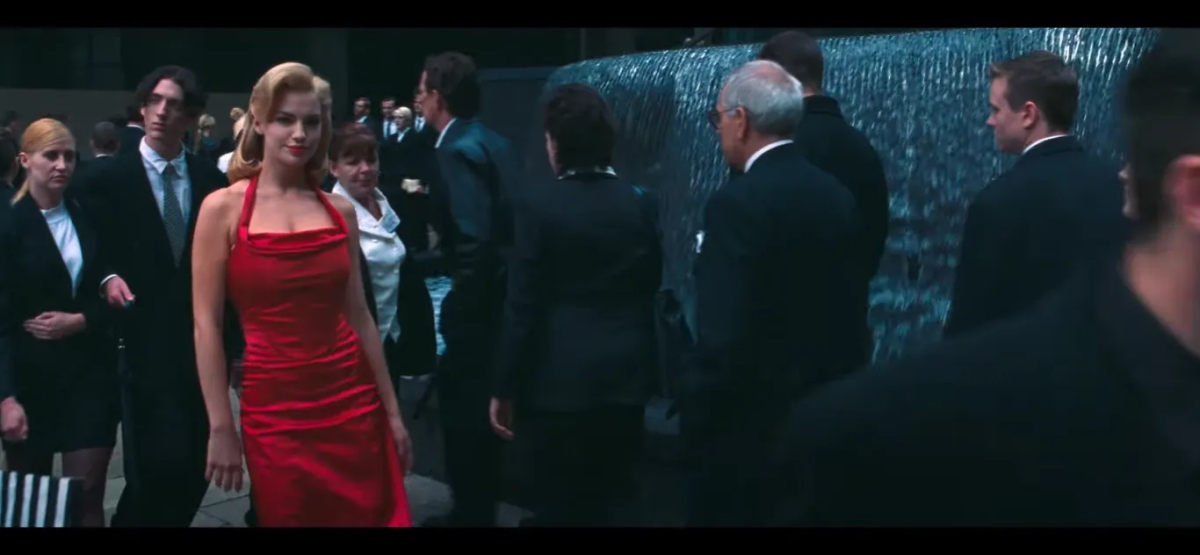
Suddenly, his attention is captured fully as he stops listening to Morpheus’s speech and focuses elsewhere. This distraction is not of danger, but by desire. A stunning blonde woman in a bright red dress walks past him on a city street. He turns to look at her and take in her beauty. A moment later, he’s staring down the barrel of a gun from an Agent of The Matrix.

This moment, while brief, is the Matrix in miniature form, a system that doesn’t just imprison the body, but hijacks the mind as well. In this scene, the Wachowski Brothers, who directed the Matrix film series, deliberate show the audience how distraction can be deadly, how perception can be manipulated, and how even the most liberated minds are vulnerable to illusion even after escaping from the simulated word of The Matrix. Over two decades later, this scene resonates more than ever as we live in a blurred world now of reality and simulation and of seemingly endless distractions like the lady in the red dress.

Let’s walk through how the scene unfolds similarly to how Neo and Morpheus experience the simulation themselves. Neo and Morpheus are in what appears to be a peaceful, clean city environment with sun-drenched streets, people in business attire moving in orderly fashion of different occupations and livelihoods. It’s not the gritty or green-tinted world Neo has just escaped from. Everything here is vibrant, bright, almost too perfect and calm. There’s a catch to it but we don’t know what it is yet as the audience.

Morpheus explains to Neo, “This isn’t the real world. It’s a computer-generated dreamworld built to keep us under control.” They’re inside a training program that mimics the Matrix, but this version is safe and controlled with seemingly no threats like what lurk inside the Matrix. As they walk, Morpheus encourages Neo to stay alert and keep up with him. However, Neo’s attention suddenly drifts elsewhere. A tall, blonde, and slightly smirking woman in a red dress glide past him, a stark contrast to the grayscale suits and muted tones of the crowd. The camera follows Neo’s gaze and not Morpheus’ words. Just as Neo turns around to look at her again, Morpheus interrupts: “Were you listening to me, Neo, or were you looking at the woman in the red dress?”

Neo turns again and instead of the woman, an Agent from the Matrix stands there with a gun to his head. The simulation freezes. Morpheus smiles. “Look again.” This is Neo’s wake-up call after he flinches from the sight of the Agent’s gun in his face. Neo is shaken as at any time in the Matrix, any of those ‘people’ are enslaved by the Matrix can turn into an Agent who is looking to prevent others from being freed from their enslavement by Neo, Morpheus and his crew. In The Matrix, distractions can be deadly because anyone can be an Agent and turn into one at any time. Neo learns his lesson and Morpheus instructs Neo about the real danger of going back into the Matrix, but they have a mission to free those from a reality that is not real, whatever the cost may be.

At its core, the Lady in the Red Dress scene isn’t just about Neo getting distracted having not been accustomed to the unique threat of an Agent. It’s about how the Matrix and by extension, any system of contro uses desire, beauty, and sensory overload to mask its true threat.

The woman in red is not a glitch, nor an accident of the simulation. She is designed by Morpheus’s crew to test Neo’s ability to focus and to challenge his awareness in an environment that constantly floods the senses, a virtual simulation that is meant to feel real but isn’t real. Morpheus isn’t just teaching Neo about the Matrix’s mechanics but also, he’s teaching him about vulnerability. The greatest danger isn’t always visible or known in the Matrix. Often, it’s hidden behind the things we want most or desire to have the most.

The red dress is more than a splash of color on a woman who is simulated to be a distraction. It’s a symbol in the overall movie of temptation, distraction, and the human tendency to follow what pleases us, rather than what protects us, even if it will end up hurting us later. In mythology, this kind of idea of ill-fated temptation appears often: sirens luring sailors to their doom in ‘Odysseus’, the forbidden fruit offered to Adam and Eve in Eden from the Old Testament, each of these illusions are designed to distract heroes from their quests or to lead to the fall of man and woman.

In this scene, the woman in the red dress is a test, one for which Neo fails, momentarily, and I think a lot of us would fail like he did with the distractions that are constantly thrown at us each day. His eyes are drawn away from his mentor, away from the lesson he is teaching, and toward something that feels more real than the truth. The result of his ill-fated choice? Instant danger and his potential demise if he were to make the same mistake again.

The brilliance of this scene lies in how it’s staged visually and shot from Neo’s perspective: everyone is dressed in grayscale, forming a camouflage of conformity and ordinariness. The woman is the only thing that stands out to Neo and the audience. She breaks the pattern of what we see and thus, attracts attention and an extra look. That’s what makes her the perfect distraction and allegory for ill-fated temptation, and that’s what makes this scene timeless.

Fast forward to today’s world where distraction has become the default mode for many of us. Our attention is fragmented by design, engineered by algorithms, applications, increasingly ‘real’ virtual and simulated realities, and seemingly endless digital stimuli, for which has dramatically shortened our attention spans. The modern “Matrix” isn’t an actual simulation in our brains, at least not yet as I write this, but it’s a network of more and more screens, news feeds, constant notifications, and seductive content. It’s the all-knowing algorithm pushing what it knows will make you pause mid-scroll and continue to feed your dopamine receptors.

Every time you find yourself watching a video you didn’t intend to watch, reacting to an outrage post on a political or social issue, comparing your life to curated influencer perfection on social media, or buying something new because it popped up at just the right time in your news feed, that’s the ‘red dress’ in action. While you’re watching the distraction, whatever kind it may be, something else is happening in the background of our lives: real threats are forming that pose real danger to us. Climate change. Political instability. Ongoing wars. Mental health crises. Surveillance capitalism. Social isolation. Economic inequality. Things that are far more dangerous and impactful than seeing ‘a lady in red’. Like Neo, we rarely see ‘the Agent’ or the real threats coming at us on the horizon.

In The Matrix, Morpheus teaches Neo that true liberation begins with awareness, not just of the system, but of how the system manipulates us and our desires. The Lady in the Red Dress is a metaphor for all the ways we’re trained to look away, to not pay attention, to surrender to the pleasure of the moment rather than focus on the issues of the present and the future. In 2025, this scene is more relevant than ever to our real world. It reminds us that to stay aware, engaged, and vigilant in a constantly distracted world is a small yet meaningful act of rebellion.

The focus and impact that you give to the world around you rather than cheap simulated or virtual distractions is actual power. Being able to have greater perception and awareness is everything these days and will allow you to help other people do the same. The next time something flashy, tempting, or beautifully packaged grabs your attention, you should ask yourself: “Am I listening, or was I looking at ‘the woman in the red dress’?”

‘A Real Pain’ – Film Review and Analysis

“Traveling with a family member can be an invigorating yet challenging experience, especially when the family member in question has recently faced a potential tragedy, and you’ve become estranged from them.”

Traveling with a family member can be an invigorating yet challenging experience, especially when the family member in question has recently faced a potential tragedy, and you’ve become estranged from them. This is the dilemma faced by the co-protagonist of A Real Pain, David Kaplan (Jesse Eisenberg). On a trip to Poland, David must confront his family’s heritage while dealing with the eccentricities and hyperactive behavior of his cousin, Benji Kaplan (Kieran Culkin).

On the surface, David and Benji share a mutual love for their recently deceased grandmother and the memories they have of her, along with their childhood experiences. They are both nominally Jewish, although the film makes it clear that neither is particularly devout or observant. Benji is outspoken and upfront about his views on almost anything, while David is quiet, observant, and reserved in social settings. Benji seems to have retained the same rambunctious personality he had as a youth, whereas David now has a wife, a child, and a steady career in New York City as a digital marketer.

Following their grandmother’s death, Benji struggles to find his footing in adulthood. He works odd jobs in Binghamton, New York, and lives in his mother’s basement. Though less mature and socially aware than David, Benji is full of life and feels emotions more intensely. He has no filter, makes no apologies for it, and leaves a lasting impression on everyone he meets much to David’s frustration of not being able to do the same.

Despite not seeing each other for months after a distressing event in Benji’s life, the cousins decide to embark on a heritage trip to Poland. They join a group of American Jews to learn more about their ancestry and the circumstances surrounding their family’s departure from Nazi-occupied Poland. The group also includes other descendants of survivors with roots in Poland. The tour is efficiently led by a non-Jewish guide, who does an excellent job recounting the history of Polish Jews before World War II, the lead-up to the Holocaust, and the exodus of those who managed to survive. However, Benji finds the guide’s focus on statistics and dates robotic and disconnected from the lives of the people who were lost.

Benji’s outbursts during the tour seem socially inappropriate to David, displaying a lack of respect for the guide and the other participants. However, Benji’s emotional authenticity eventually wins over the group by the end of the tour. Unlike others on the trip, he refuses to numb himself to the pain of what they are witnessing and expresses his feelings freely without concern for others’ judgment. While his emotional instability troubles some on the tour, it also makes him memorable. Benji turns what could have been a somber and overwhelming experience into something more meaningful reminding everyone what it feels like to be truly alive.

In contrast, David hesitates to smoke a joint on the hotel roof, voice a critique during the tour, or even have a drink to relax after a long day. Meanwhile, Benji has no reservations about doing any of those things. Benji embraces life’s highs and lows, even when it leaves him emotionally unsteady, while David seeks stability and strives to remain even keeled through life’s challenges and opportunities. Despite his efforts, David feels let down by his job and struggles with doubts about how much his family truly loves him. Benji, on the other hand, is too immersed in the moment, sometimes for better, and sometimes for worse. The cousins admire yet resent each other throughout the film. Growing up in similar circumstances, they’ve ended up leading vastly different lives due to their contrasting personalities. While they can enjoy each other’s company, they also tire of one another quickly. Each character envies what the other has but is fiercely protective of their own lifestyle.

A Real Pain explores the concept of pain in a nuanced way: the pain of losing a loved one, the pain of dealing with a challenging family member, and the generational pain of having a family’s future stolen. The film captures how different people cope with these pains: David, Benji, the other tour participants, and even the tour guide, as they confront the events of the Holocaust, visit a Polish Jewish cemetery, and tour the Majdanek concentration camp. The message is clear: to cope with pain healthily, we must face it head-on in our own way. This journey of confronting pain is essential for building our resilience and strength.

Pain is what connects us to our humanity, reminding us that we are truly alive. During the trip, Benji recounts a painful memory: their grandmother once slapped him in a New York City restaurant because he arrived late for dinner. She had dressed up for the occasion, and the public slap left Benji feeling real pain. However, he acknowledges that this act of accountability, though hurtful, came from a place of love. Benji yearns for this kind of tough love from others, particularly from David. He craves someone who can hold him back from his impulsive tendencies, showing him care and affection in the process.

A poignant moment in the film occurs when David and Benji visit their late grandmother’s former house in Poland. The home is now owned by another family, and any traces of the Kaplans’ presence have long vanished. In a touching gesture, David places a stone in front of the house to honor their grandmother’s memory. However, the moment takes a humorous yet bittersweet turn when an elderly Polish man chastises them. He misunderstands their intention, believing the stone was placed maliciously to cause harm to the current elderly resident. Despite their efforts to explain the Jewish tradition of placing stones as a memorial to remember their deceased grandmother, the older man remains unconvinced despite his son’s English to Polish translation of their reasoning for having placed the stone there. Feeling awkward about the entire encounter, David and Benji decide to take the stone with them when they leave Poland.

In a beautifully symbolic gesture upon his return to New York, David later places the stone at the entrance of his Brooklyn home, where he lives with his wife and child. This act underscores the universal idea that “home is where the heart is.” While the memory of the family’s life in Poland has faded, their grandmother’s legacy endures. Her journey as an immigrant to America, striving to build a new life for her family while preserving her Jewish identity, continues to inspire her descendants, including David and Benji.

As the film concludes, the audience is left wondering about the futures of David and Benji’s relationship and their individual paths. The heritage trip and their shared memories of their grandmother seem to strengthen their bond. The film suggests that, despite their differences, family is ultimately the one thing you can rely upon in life. While Benji and David drive each other crazy, they also admire and need each other. The hope is that they will continue to support one another, bringing balance to each other’s lives with David finding more spontaneity and emotional authenticity, and Benji discovering greater stability and purpose.

‘Mystic River’ – Film Review and Analysis

“This book-to-film adaptation, praised for its emotional intensity and thematic complexity, remains one of Eastwood’s most acclaimed directorial efforts to this day. Mystic River is a powerful combination of stellar performances, masterful direction, evocative cinematography, and a carefully crafted screenplay making the film a standard bearer of cinematic storytelling.”

Mystic River, directed by Clint Eastwood in 2003 and starring an amazing cast including Sean Penn, Kevin Bacon, and Tim Robbins, is an intricate and darkly intense film that has left a lasting impact on audiences and critics alike since it first came out in theaters over two decades ago. Based on Dennis Lehane’s novel of the same name, the film explores deep themes of trauma, guilt, vengeance, and the ways in which past experiences haunt the present and future. This book-to-film adaptation, praised for its emotional intensity and thematic complexity, remains one of Eastwood’s most acclaimed directorial efforts to this day. Mystic River is a powerful combination of stellar performances, masterful direction, evocative cinematography, and a carefully crafted screenplay making the film a standard bearer of cinematic storytelling.

The plot begins in a working-class Boston neighborhood, not too far from the Mystic River, and centers on three childhood friends: Jimmy Markum (Sean Penn), Sean Devine (Kevin Bacon), and Dave Boyle (Tim Robbins). As young boys, the trio spends their days together, playing stick ball, hockey, exploring the neighborhood, and strengthening their bond as friends. However, one traumatic incident forever changes their lives, marking them all in ways that will resonate through their adult years. Decades later, their lives intertwine once more when Jimmy’s teenage daughter, Katie, is found murdered, prompting a deep and painful investigation into both the current crime and the unresolved scars of the past for each of the three main characters.

Set against the gritty, blue-collar backdrop of Eastwood’s Boston, the environment reflects the rough and bleak outlook shared by many of the characters, most of whom never left the neighborhood as adults. This urban setting becomes almost a character, embodying a sense of entrapment and suffocation and what ifs. Eastwood and the film’s cinematographer, Tom Stern, create a cold, foreboding atmosphere that mirrors the psychological darkness of the characters. The use of shadows and natural light throughout the film provides an eerily realistic tone, further immersing the audience in the story’s weighty themes. As a film, Mystic River, sets itself apart by giving each character room to grow and develop over the course of the two and half hours of screentime. Each of them has a unique backstory despite the overlap and they each have their own personal scars and demons to bear.

To understand the film better as an audience, we must go through each character’s backstory, motives, and circumstances:

  1. Jimmy Markum (Sean Penn) – Jimmy is a reformed ex-convict who did two years in prison who now runs a local convenience store. He’s fiercely loyal to his family, especially his beloved daughter, Katie, who he has tried to shield her from his checkered past. His character is marked by a volatile personality and a deeply ingrained sense of loyalty, one that can easily turn to vengeance, if provoked. This trait becomes particularly apparent when Katie’s murder brings his hidden rage and pain to the surface. Penn’s portrayal of Jimmy is raw and gut-wrenching; he conveys a sense of intense, bottled-up pain that feels as if it could erupt at any moment at any one person who he is feels is responsible or partly responsible for her murder. Jimmy’s background as a former criminal, his letting his emotions cloud his judgment, and the rawness of the recent loss of his daughter drive much of his actions, adding layers of complexity to his character.
  2. Sean Devine (Kevin Bacon) – Sean, one of Jimmy and Dave’s friends, is now a detective with the Massachusetts State Police who is investigating Katie’s murder, and his ties to Jimmy and Dave complicate the case. Although he’s become more distant over the years from both men, Sean feels a sense of duty and friendships to bring closure to Katie’s murder and perhaps, in turn, to his own fractured past. His unresolved feelings about the childhood trauma shared by him, Jimmy, and Dave gives his character a detached yet conflicted edge. Kevin Bacon’s performance as Sean is understated but poignant, particularly as Sean grapples with the uncomfortable ties between his childhood friendships and the demands of justice. Sean’s role in the story is not just as a detective but as someone attempting to reconcile his past with his present responsibilities. During the film, we also give glimpses into Sean’s present struggles with an estranged spouse and his own personal turmoil surrounding his commitment to his job as detective, which may have led him astray from the woman he loves.
  3. Dave Boyle (Tim Robbins) – Dave is the most visibly affected by the traumatic events of his childhood because he is the one who was physically and emotionally abused until he escaped from the nightmare one day, and Robbins’ portrayal of a victim of child abuse is haunting. As a result of the childhood abduction and abuse, Dave is marked by a pervasive sadness and paranoia that set him apart from others including Jimmy and Sean. Married with a son now, he still struggles with feelings of inadequacy, unresolved trauma, and the psychological scars left by his past. His character raises questions about the psychological ramifications of unresolved trauma, and Robbins plays Dave with a quiet and unsettling vulnerability as he is a boy trapped in a man’s body who never got to really grow up into what he wanted to be. This kind of trauma and sadness culminates in behavior that others in the film including his wife interpret as suspicious, especially as Sean’s investigation of Katie’s murder begins to close in around him. Dave’s struggle for normalcy and acceptance is central to the film’s portrayal of trauma and his seeking redemption for what had happened to him in the past, through no fault of his own.
  4. Celeste Boyle (Marcia Gay Harden) – Celeste, Dave’s wife, represents the emotional turmoil that affects loved ones in the wake of trauma. Marcia Gay Harden’s portrayal brings depth to the character of Celeste, illustrating the complexity of being married to a man who is emotionally distant and troubled. Her suspicions and insecurities about Dave’s behavior create tension within their marriage, which becomes another focal point in the larger mystery of what Dave was doing on the night of Katie’s murder. Through Celeste, the film explores how the impact of trauma reverberates through relationships, and her doubts contribute to the suspense as she becomes uncertain of Dave’s innocence.

The thematic core of Mystic River lies in its exploration of personal trauma and its long-lasting effects on those around the affected person. Eastwood skillfully illustrates how the characters’ pasts influence their present, emphasizing the psychological toll of unhealed wounds. The trauma of Dave’s abduction and abuse is a powerful throughline, shaping his entire personality and decisions, and is indirectly responsible for the fractures in his relationships, friendships, and the suspicions cast upon him, whether justified or not. The themes of guilt and retribution are intricately woven into the story, particularly through Jimmy’s character, as he vacillates between his roles as a loving father and a man haunted by his own past mistakes and violent tendencies.

The film also dives into the notion of justice, both formal and informal, in our world. Sean’s role as a Massachusetts State Police detective represents the lawful pursuit of justice, yet the lack of resolution to certain aspects of his past shows how incomplete the law can be in addressing psychological scars, especially in a community where the lawful pursuit of justice is looked upon with skepticism especially by Jimmy. Jimmy, on the other hand, seeks a more personal form of justice, operating on a visceral level almost as a vigilante for Katie and the community who were also affected by her loss, guided by his own sense of right and wrong. This contrast between official justice and personal retribution forms one of the central tensions in the film and between Jimmy and Sean, estranged friends who are brought back together because of Katie’s murder.

Mystic River subtly but powerfully engages with a subtle theme tied to the Catholic Church and refers to one of Dave’s abusers in the early part of the film’s plot. This also is shown in the film particularly in the Catholic Church’s allusions to the trauma and secrecy that have historically been associated with the institution, especially around issues of child abuse. Although the film does not explicitly delve into the church’s scandals, the storyline of Dave’s childhood abduction and abuse parallels the real-life abuse scandals within the Catholic Church that would become a dominant public conversation in the years following the film’s release in 2003. The film portrays the silence, guilt, and repression surrounding trauma for abuse victims, especially for male victims, in ways that align with the complex and devastating effects of institutional abuse later revealed in widespread reports that came out in the 2000s and 2010s.

Eastwood’s sensitive handling of these themes amplifies the emotional impact of the film, allowing Mystic River to serve as a quiet commentary on the long-lasting scars left by abuse, trauma, and lives that could have been different. The cultural resonance of the film deepened as these themes became more publicly discussed, especially with the Boston Archdiocese scandal coming to light just months before the movie’s release and other subsequent revelations about abuse within the Catholic Church. The film’s nuanced portrayal of silence and trauma thus became eerily relevant, mirroring real-world struggles for justice, accountability, and healing.

Eastwood’s direction in Mystic River is marked by a disciplined, almost minimalist style that avoids sensationalism or quick cuts and jumps. His choice is to keep the film grounded in the characters’ experiences, which creates an immersive atmosphere, allowing the audience to connect deeply with each character’s journey because they are fully fleshed out individuals by the end of the film to us. By focusing on small, authentic details—the cold, grim environment, the weathered textures of Boston’s streets, and the understated settings within homes and local establishments in the neighborhoods surrounding the Mystic River, Eastwood crafts a world that feels palpably real and one we can believe in as viewers.

Cinematographer Tom Stern contributes to this atmosphere by using a muted color palette dominated by grays, blues, and other cold tones, mirroring the bleak outlooks of the characters and their surroundings. The naturalistic lighting helps underscore the characters’ emotional states, with shadows and half-lit scenes, hinting at hidden secrets and unresolved traumas. The camera work is frequently restrained, using lingering shots that capture subtle shifts in the actors’ expressions, allowing their performances to be the focal point of each scene.

As an adaptation, Mystic River succeeds largely because of Brian Helgeland’s screenplay, which translates Lehane’s complex narrative into a visually evocative and emotionally rich script. Helgeland captures the essence of the novel’s psychological tension and moral ambiguity without resorting to heavy exposition, instead allowing the characters’ actions and interactions to reveal their deeper motivations and conflicts. The adaptation retains the novel’s depth by focusing on character development rather than plot mechanics, preserving the source material’s thematic weight.

The film’s pacing, controlled by Eastwood’s direction, also serves the adaptation well even at two and a half hours long in length. Rather than racing toward revelations, the narrative unfolds gradually, mirroring the pace of real life in how trauma is dealt with and the need for closure. This approach preserves the novel’s introspective tone, making it not just a crime thriller but a meditation on human resilience, the search for true justice, and the impact of unresolved pain.

Mystic River stands out as a masterclass in adapted screenwriting, direction, and performance. It is perhaps one of the greatest films in this young 21st century as well. Eastwood’s subtle yet unrelenting vision creates a haunting atmosphere that perfectly matches Lehane’s themes of trauma, revenge, and the flawed pursuit of justice. The ensemble cast delivers compelling performances, each actor bringing depth to their own character’s unique struggles and inner turmoil. With Stern’s atmospheric cinematography, the gritty Boston setting feels almost oppressive, creating a visual landscape as intense as the narrative itself.

Through its slow-burn approach, Mystic River probes deeply into the characters’ psyches and decisions, making the experience both unsettling and profoundly affecting. The result is a powerful film that not only respects its source material but elevates it, offering a cinematic experience that explores the human capacity for both destruction and redemption. Eastwood’s restrained direction, combined with the richness of Lehane’s story, makes Mystic River a film that resonates long after the final frame comes to an end.

Anatomy of a Scene – ‘The NZT-48 Pill’

How often have you thought about the possibility of taking one pill per each day that would maximize your brain’s full potential? With the movie ‘Limitless’ with Bradley Cooper and Robert DeNiro, this film poses the answer in the form of ‘NZT-48’, which can allow you to access everything you’ve read, heard, and learned without any true effort. This kind of wonder drug is purely fictional but many people in real life seek this kind of legal short cut nowadays whether it’s to focus, to lose weight, to improve memory, or to retain more information. In the film’s early scenes such as the one that introduce this magic pill’s effects, we get to see what kind of effects NZT-48 has on Eddie Moura, the main character.

This limitless pill is introduced as one that can improve focus, memory, knowledge retention, tidiness, and even make your intelligence that much more advanced especially after repeated usage. The scene that I would highlight shows just how effective it can be in multiple areas and how well the director shows how its daily usage turns a struggling writer into a financial tycoon and published author in just a week’s time.

The scene starts out with Eddie Moura taking the NZT-48 pill for the first time even though he knows it comes with risks and side effects. He asks, “worth the risk?” by breaking the fourth wall with the audience, and says in the narration, “what would you do?” It’s a pertinent question because due to how many months, years, or decades it takes to be successful naturally without any enhancements, supplements, or advantages, how many of us watching the scene would want to take the easy way out in life even if there were risks involved? It’s part of the reason why this scene is so powerful because we know Eddie will face consequences for using this pill eventually but as we are told, the benefits of the pill may outweigh the consequences at first making it a tempting magic pill.

Eddie’s changes start out small as his pupils dilate and he starts seeing the world much more clearly than before. He’s clear-headed, not anxious socially, able to think and act clearly, and is aware of his own personality traits that need improvement. He gets a haircut, builds his wardrobe with a stylist leather jacket, cleans up his messy apartment, and starts to exercise more frequently and seriously.

From there, Eddie, a struggling writer, finds “a surge of motivation” from the pill to finish the novel he had been failing to finish for years and writes it all in just a few days’ time. Eddie doesn’t stop at that monumental achievement as a new novelist. He learns to play the piano in just three days, becomes a master poker player knowing how to play the odds in his favor and winning a lot of money against the house, and becomes fluent in most languages just by casually listening to them as he goes on a daily run with the headphones playing different vocabulary for him to instantly memorize.

Eddie uses his newfound social and language skills to seduce a beautiful woman and begin to network and build relationships to put his newfound wealth to good use in the stock market. He explains key economic concepts to those around him, can hedge bets on the pharmaceutical industry (partly responsible for his NZT-48 usage), and flies to a far-off beach to enjoy drinks and food at a private mansion with some of his new friends.

These may be selfish desires on Eddie’s part, but he’s able to diagnose exactly what the medical issue is with his aunt and how to fix the issue. “I suddenly knew everything about everything.” He is able to not only explain complicated medical diagnoses but is able to explain complicated concepts simply enough for everybody else to agree and understand. Eddie has access to everything and a 100% capacity to do what he wishes with his life. He has no fears, no anxieties from taking the magic pill and can hold a conversation with anybody about anything.

However, towards the end of the scene, we start to see the drawbacks of this magic pill in how Eddie must keep moving forward or it’ll feel like he’s dying or suffering. We see this briefly in how he drives a Maserati at maximum speed much to the delight of his companion, but for which he has no conception of how dangerously fast he’s going and what the drawbacks can be of his new heart-stopping lifestyle. “I felt like I was going to explode…”

“Anybody ever jump?” Eddie says to his newfound friends on a massive cliff overlooking the ocean. “Are you crazy?”, one woman asks of him given it’s a few hundred meters above sea level. Eddie’s heart is pulsating and while he’s lost his fear including of heights, he’s beginning to see that he can’t pull back on the adrenaline, the curiosity, and the sheer exhilaration the pill is giving him. The pill does have a side effect and it can be a deadly one of not being able to slow down and to live life normally. Eddie constantly must be upping himself and creating bigger and bigger goals for him to accomplish.

We see this play out in the rest of the film as Eddie seeks to become more wealthy, famous, and powerful with the help of his magic pill. As much as the audience sees how exciting and fulfilling Eddie’s life had become since using NZT-48, the film is a warning against how taking the short cut of a ‘magic pill’ or a quick and easy fix can come with devastating consequences. It is a warning on how taking the easy way out may feel good in the short run, it can have side effects that can bring us down as a result.

This scene is shot very well and is rememberable because it shows just how much potential we all have and it’s not from a pill like NZT-48 as it comes instead from within us. We may not be able to write a book in a few days or learn the piano or be a star poker player like Eddie, but we do have the discipline, abilities, and motivation within us to improve ourselves even if it takes longer in the form of months, years, or decades. We can all learn to exercise more consistently, learn a new language quicker with consistent practice, and be able to improve our style, our conversational skills, and build our finances and our talents over a period of time.

Eddie Moura may have needed NZT-48 to reach the heights of human achievement, but the film’s message, especially in this scene, is that while the ‘magic pill’ is fictional, we can strive to achieve more through our own discipline, consistency, and hard work. We may not be as good as Eddie at everything or be able to be as accomplished as quickly, but this scene does show how with consistent effort, hard work, and beliefs, we can reach our own pinnacle as Eddie did.

It’s a fictional scene and movie about one man’s insatiable desire to use this ‘magic pill’ repeatedly to be the man he always dreamed of being without any regard for what this addiction can cause harm to him and others in his life. It is a cautionary story for each of us that while he was able to achieve great things much more quickly, it did cost him a lot as a result. We ourselves can achieve almost as many great things through our own natural abilities and talents, without a ‘magic pill’ needed, and not have to deal with the consequences of using the shortcut taken by Eddie Moura because of that. To be as ‘Limitless’ as possible, you need to work as hard as you can as consistently as you can to do the best that you can.

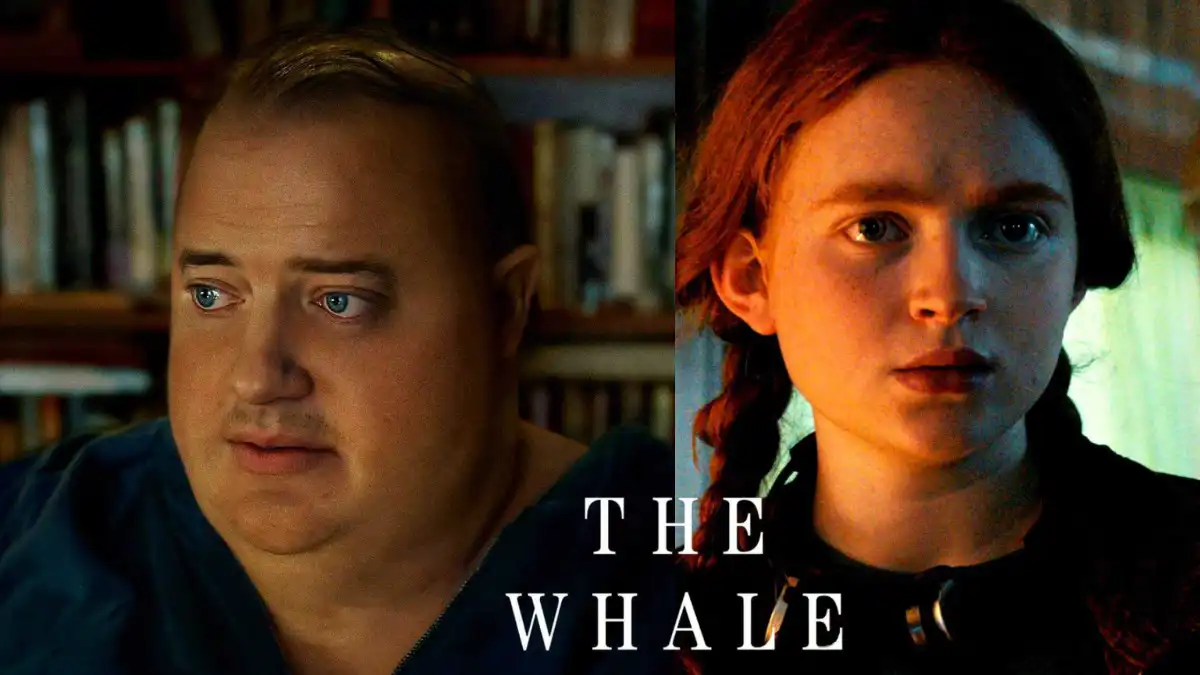
‘The Whale’ – Film Review and Analysis

“‘The Whale’, directed by director Darren Aronofsky shows us how low someone can go when things go wrong in life but also how our lowest lows can also bring out the best of us when it is most important.”

2022 may be over but I am still thinking about the most emotionally impactful movie of the past year, which deserves its own review and analysis. Likely to be nominated for a few Academy Awards at the least an Oscar for Best Actor nomination for Brendan Fraser, ‘The Whale’ is a powerful film about a man’s desire to try to right past wrongs in some way before it is too late. ‘The Whale’, directed by director Darren Aronofsky shows us how low someone can go when things go wrong in life but also how our lowest lows can also bring out the best of us when it is most important.

Aronofsky’s filmography from ‘Requiem for a Dream’ to ‘The Wrestler’ to ‘Black Swan’ to ‘The Foundation’ to now ‘The Whale’ all deal with flawed characters looking to right past wrongs or to find redemption in the most meaningful way(s) before they are past the point of no return. Aronofsky so brilliantly can capture psychological drama and tension in each sense in his movies that by the end, you’re so emotionally affected by it all that it can be hard to wrap your head around what you just watched. As a director, he is excellent at painting a picture of a person or people in distress and how while they may have had good intentions, they are almost too far gone to seek redemption or a new start.

Different from Aronofsky’s past films, ‘The Whale’ is adapted from a play of the same name dating back to 2012 so the screenplay that is written and the way the film is set up is exactly how a play would be seen on the big screen. There are few characters, the plot does not get too murky or complicated, and the setting remains the same largely throughout the whole film.

Film critics today may dismiss this film as lacking scale and scope in its ambition, but I was drawn to how beautifully it portrays what could be real people living real lives. ‘The Whale’ may be a film and fiction but it likely portrays real situations and real tragedies that some people unfortunately come to pass in their life. The film deals with multiple real world issues affecting people from obesity to alcoholism to lost loves to broken up families that most people in life can see how that can throw someone’s life off a cliff and make it almost impossible to recover.

‘The Whale’, as the title makes clear is about a severely obese man named Charlie who weighs around 600 pounds and suffers from multiple health issues because of his weight issue. He is estranged from his teenage daughter, separated from his alcoholic wife, and unable to turn the video screen as an online English professor because of his weight condition that may affect how his students see him. His only interaction is with his friend, Liz, who is also a nurse who comes to take care of Charlie especially with his multiple health issues causing him to be near death and at risk of heart failure.

Charlie has become a tragic figure in that he only has Liz left in his life after suffering the loss of the man who he fell in love with. Because of that love, he sacrificed his marriage with his previous wife and his relationship with his daughter for. After the affair he had with his student, Alan, who is also the brother of Liz, for whom she was adopted by a family and her father who was a pastor in the New Life Church. Liz was able to escape the church’s cultish tendencies but Alan’s possible guilt from being disowned by the Church and perhaps his family as well for his homosexuality and relationship with Charlie caused him to end his own life.

This terrible series of events punished Charlie and his eating condition after the death of Alan exacerbated his obesity and caused him major depression and an inability to form relationships with others beyond his caretaker and friend, Liz. Charlie is not looking for any pardoning of ‘sins’ from God or the Church that disowned Alan but rather the sole forgiveness of his daughter for whom he last saw when she was eight years old. Ellie is not a child anymore but is a rebellious and sullen teenager who misses her father and lashes out at her mother, who deals with her problems by downing a bottle of liquor, rather than raising her daughter to be better. Charlie is no saint in the matter in that he did commit adultery with Alan and led him to neglect his daughter, Ellie, and to push his wife away as well.

He never made amends for having caused them both grief and pain with his impulsive decision. His love for Alan eclipsed his love for his daughter, which he struggles in the film to get back. When the New Life Church’s doctrine and his family’s discontent with Alan’s sexuality, Alan’s suicide caused Charlie to spiral further to eat uncontrollably and to negate his relationships even more by becoming a total recluse who cannot even leave the house because of his body weight and inability to walk or drive a car.

‘The Whale’ also highlights how Charlie is not looking for pity from others or for forgiveness. He knows how much his life has gotten out of hand, but he is hoping to do ‘one thing in his life’ right before it’s too late for him. He believes that while his daughter acts out and despises what he has done, that there is still hope for her and that can she achieve her potential but to more importantly to ‘be a good person.’ It may be too late for Charlie to turn it around in life much to Liz’s, his wife’s, and even Ellie’s disappointment, but Charlie knows that redemption is possible for each of them and that even if he is not there, he will try to leave money for his daughter to have a future, or to tell his wife that he is regretful for him leaving them for his affair, and that he apologizes to Liz for what he has done to himself with the loss of her adopted brother that has strained their friendship in the aftermath.

Charlie does not want to be saved by God or religion or from himself but he wants to know that his life through the birth of his daughter is one thing that he got right in life and that while he wasn’t there for her before when she needed him, he can try to make amends before he leaves the world, and to encourage her to be better than he was, to be better off in life, and to be kind to others. He may have lost hope for himself, but he has never lost hope for his daughter.

Similar to how Charlie encourages his English students to be honest with their written essays, he tries to be honest with Ellie in why he did what he did, how he could have been a better husband to his wife, Mary, and how he let Liz down after the tragic death of Alan. Not everyone can be this honest, but Charlie has nothing left to lose, nothing much to gain, and with not a lot of life ahead of him except imminent death due to his body’s condition.

Despite all the concurring factors, Charlie is trying to regain his humanity and his family back as much as he can recoup after it had been lost even if he has become ‘The Whale’. While he may be misunderstood and loathed like the whale in the book Moby Dick by Herman Melville, he is not beyond redeeming himself in the eyes of others and providing some closure for himself in a life that had gone so far astray yet for which he had also been able to give something out of love back to the world to live on in the form of his daughter, Ellie.  

Movie Recommendations – Volume V

“Colder weather and shorter daylight hours mean it’s premium movie watching season again.”

Colder weather and shorter daylight hours mean it’s premium movie watching season again. Whether it is in the movie theater or at your home theater, this time of the year is best not just for Christmas movies but for watching new releases in general. Between the streaming services, new theater movies, or even documentaries, there are a lot of excellent movies coming out to close out 2022. I recently saw four movies that I would recommend to others with three of them being watched at home and one in the theaters. Even if some of these movies are not in theaters, I would recommend checking them out through Apple TV+ in this case for a short-term subscription.

  1. The Fablemans

A semi-biographical film about one of the greatest filmmakers of the 20th and perhaps 21st century, ‘The Fablemans’ is an intricate tale of a genius who discovers his calling slowly but surely through his own ingenuity, his family’s encouragement, and with a little bit of luck. Steven Spielberg may not be named as the main character, but this is his life story told through his eyes and what it was like being a Jewish kid growing up in New Jersey, Arizona, and later California in the post-World War II era as his parents struggle to provide for him and his two sisters.

While Spielberg has this innate talent for filmmaking, he wasn’t always set on doing it for a living and struggled with his own doubts. His parents, while supportive, did not always see where his dream could go and were distracted by the issues in their own marriage that caused a divorce to occur. On top of that, having to move for his father’s work in the dawning of the computer age to communities out west not as friendly to American Jews, Spielberg’s ‘The Fabelmans’ covers the ugliness of antisemitism rearing its head and how Spielberg as a teenager was forced to confront it and the bullies who continue these vile tropes.

While not exactly a feel-good story, it is an excellent semi-biographical tale on how The Fablemans as well as The Spielbergs made his dream work and were crucial to the man who would become the most famous director in the world. It is an immensely personal movie with both its tragic and triumphant moments. It is a story that I believe a lot of us can relate to these days on how to overcome setbacks and trials in the pursuit of a life’s goal or dream.

2. Causeway

Not all wounds of war are physical. If I had to sum up the movie, ‘Causeway’ starring Jennifer Lawrence and directed by Lila Neugebauer, it would highlight how post-traumatic stress disorder highlights those wounds that are mental but brought on by physical trauma. Jennifer Lawrence plays the role of Lynsey, an American Army Corps of Engineers specialist who suffers a traumatic brain injury from an Improvised Explosive Device (IED) that causes her not just physical pain but PTSD as well. Her memory suffers, her eye and hand coordination, and even her ability to form complete sentences is affected. It is a long road to recovery but luckily, she meets people along the way including a home health aide who cares for her upon her return to the States doing backbreaking work to give Lynsey the chance to get her mental and physical faculties together.

Even after the physical recovery seems to be going well, Lynsey suffers from the PTSD that the explosion caused and the horrific memories of seeing her fellow soldiers die in front of her eyes. While the home health aide and physical therapy helps, as a returned soldier, all she wants to do is get back to the front to continue the work she was doing in Afghanistan. She sees that people including her own mother, who was neglectful to her as a child, while she cares about Lynsey, has moved on without her and doesn’t understand quite what she’s been through. Lynsey finds a job cleaning rich people’s pools in New Orleans where she’s from but doesn’t see it as worthy of her skills she acquired while on active duty in Afghanistan. Lynsey has an older brother as well who is away and out of her life due to his involvement in drugs, so she does not have him around either as a steadying influence.

The one person she does relate to is a man named James who has been through his own trauma involving a car accident that left him with an amputated leg. They’ve both seen more than they would care to in life and they are able to bond with each other despite the difficulties of their past. In a world where both feel increasingly isolated and distant, the bond they share as friends may sustain them for the future and keep them from turning to despair. ‘Causeway’ is a great film that really shows you the reality of what it can be like to return to home from war and the mental and physical scars a soldier can take with him or her that never fully heal.

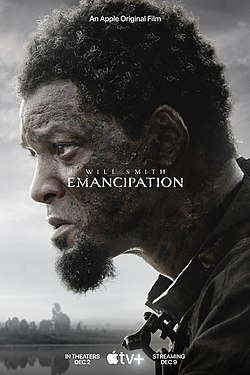
3. Emancipation

There have been multiple movies about the Civil War and about Slavery, but ‘Emancipation’ is an excellent recent film starring Will Smith as an escaping slave in Louisiana yearning to be free and reunite with his still enslaved family. Antoine Fuqua’s directing is on point in this one with sweeping views of civil war battlefields, old plantations, and muddy swamps with a unique choice of filming ‘Emancipation’ in black and white with red being the only other color represented usually by a character’s blood being spilt. This film does not sugarcoat anything and is based on true events and the real-life story of an escaped slave of Gordon or ‘Whipped Peter’ who was whipped repeatedly before escaping from a Louisiana plantation after killing two of the slave drivers before running towards where Lincoln’s army was fighting around Baton Rouge.

‘Emancipation’ does not hesitate to show brutality on screen as well as the violence of a Civil War battle where freed slaves would fight to liberate others from their enslavement. Some viewers may be turned off by the sheer violence of the film, but I thought that it was a rather accurate portrayal of the cruelty of slave owners, the terrible conditions that they were forced to do labor in, as well as the dogs, snakes, alligators, and muddy swamps that an escaped slave would have to go through to reach the Union Army. Many slaves like Peter who were able to escape were not treated that much better than the Union Army besides being free although they had no choice usually but to fight for the Union to free others and to hope to see their families again if they were able to liberate other plantations.

I would recommend this film due to Smith’s performance, the excellent cinematography, as well as the historically accurate nature of Peter’s experience in escaping from slavery, preventing himself from being captured again and fighting with other African Americans in the Union Army to end the horrors of slavery once and for all.

4, The Banshees of Inisherin

It is not every day where you’re able to watch a comedy and a tragedy take place in the same movie but ‘The Banshees of Inisherin’ succeeds on both accounts. Led by an excellent cast including Colin Farrell, Brendan Gleeson, Barry Keoghan, and Kerry Condon, the fictional island of Inisherin off the coast of mainland Ireland is made up of a real bunch of characters who live out a life of repetition, tomfoolery, and drinking, which is a bit of community unifier. Set against the backdrop of the real Irish Civil War of 1922-1923, most of the Inisherin population is ignorant of what happens on the mainland and choose to tend to farm, to shop, and to drink, often excessively, as part of their daily routines.

One of the main characters, Colm Doherty (played by Brendan Gleeson), is fed up with a life in Inisherin that would revolve around just that and as he gets older, wishes to be remembered for his music and his song lyrics rather than getting drunk each day. That is the premise of the falling out he has with drinking buddy and friend, Padraic, (played by Colin Farrell), and while Padraic is nice, he is not someone Colm wishes to hang out with him again even though they are bound to run into each other.

The friendship was so strong and close that one day when it goes away, Padraic refuses to give up on Colm even though he tires of never getting a straight answer out of him. The refusal to lose out on a friend in such a small community, which conflicts with his desire to remain a ‘nice’ guy in the community causes Padraic as well as his sister, Siobhan, a lot of consternation and disappointment leading Padraic to undertake drastic and even ruthless measures to get his friend, Colm, back.

‘The Banshees of Inisherin’ while a fictional movie taking place in a fictional island is one of the best films of 2022 and is well worth a watch. It will make you laugh out loud, hold a tear back or two, and think of a time where you had a hard time letting go whether it was of a former friend or even a family member due to some personal grievance or a difference that came up. The film ponders some philosophical questions and does not belittle the audience with simplistic answers. It is an excellent tragicomedy and one worth seeing especially for Mr. Farrell and Mrs. Condon’s performances.

‘Triple Frontier’ – Film Review and Analysis

“Heist movies in Hollywood are a dime a dozen these days and can be quite predictable as well as not very engaging in terms of the characters and their backstories. ‘Triple Frontier’, a film released in early 2019 by Netflix takes the genre and makes it fresh again.”

Heist movies in Hollywood are a dime a dozen these days and can be quite predictable as well as not very engaging in terms of the characters and their backstories. ‘Triple Frontier’, a film released in early 2019 by Netflix takes the genre and makes it fresh again. The film explains the background of the characters, their individual motivations for conducting the heist, and the twists and turns along with a few surprises that happen along the way that will make the audience feel like it’s worth watching until the very end.

Not only is the film shot well with great cinematography, pacing, and direction so you know what is always going on even with the quick-paced action, it’s an intelligent heist movie, which is well thought out and involves a greater mission that the characters have despite their own personal motivations. The scope of ‘Triple Frontier’ or ‘Tres Fronteiras’ in Spanish is unique in that the film is set in the tri-border region of Colombia, Peru, and Brazil so it is an excellent way for the various sets to highlight this unique region of the world. From tree-covered jungles to rocky highlands to snowy mountain tops, the initial heist phase of the movie is bolstered by the 2nd half’s battle against not just external enemies but also by geographic factors.

The heart of the ‘Triple Frontier’ film is the story of the protagonists themselves. Each of them from different backgrounds but united by their special forces’ experiences, which bind them together as brothers. While the story does not get into their past experiences together, the film does a good job selling how close the bond is between the five of them is and how much they still care for each other. Civilian life has treated each of the five men differently but what they hold in common is their desire to improve their lives and go back to doing what they do best. Each of them is financially struggling to get by whether it is by dealing with a costly divorce, or by beating a misdemeanor drug charge, or by needing to fight in mixed martial arts to make more money, or by making dozens of motivational speeches to current soldiers to make ends meet.

The leader of the group, Santiago ‘Pope’ Garcia, is not so much as motivated by the money but rather to capture a notorious drug lord and leader of a prominent cartel in the ‘Triple Frontier’ who has been able to evade Pope for years as well as his Colombian counterparts. Pope has a hard time trusting the locals he is meant to led and needs a group of soldiers as well as his friends to ‘watch his six’ and help deliver Lorea for him. Pope has a local informant, Yovanna, helping him locate Lorea’s whereabouts and he just needs a solid team behind him to lead the raid as well as the heist but who better than his four ex-special forces colleagues who he knows can get the job done.

As with most things regarding a heist, it takes expert planning, a reconnaissance mission, as well as expert timing to make sure that things don’t go sideways when it comes time to exfiltration. After hearing from Yovanna that ‘the house is the safe’, and Lorea hides his money not in offshore banking accounts but in his fortress in the Amazonian jungle, Pope has the intelligence he needs to move forward with the heist. While each of the men have their own personal motivations to go on the heist with Pope, they are unified at first by their innate need for the large sums of money that can make them set for life and never have to worry about bills, MMA fights, or tedious motivational speeches ever again.

While each of Pope’s men question the ability for the heist to go smoothly, they feel like they owe it to each other to get it done especially each of them have a set of skills including one being a pilot (Francisco ‘Catfish’ Morales), one being a leader of the squad (Tom ‘Redfly’ Davis), a reconnaissance guy (William ‘Ironhead’ Miller), and the last being a stealth expert able to enact unarmed takedowns, (Ben ‘Benny’ Miller). Without each of his compatriots, Pope knows he cannot get the job done. With the help of Lorea’s money, Pope knows he can get Yovanna, his informant, and her brother out of the region safely without compromising their lives in the process.

While viewers would consider each of the men ‘greedy’ and ‘selfish’, the film makes their decision much more complex than that. They each know that his Lorea and his men pose a danger to the region and that they have a responsibility to look out for one another as brothers given the bonds, they formed with each other as previously active servicemembers. However, seeing as each of these five men have never experienced what it is to have $1 million at their disposal let alone tens or hundreds of millions, the film excellently portrays what it’s like when you finally stumble upon a smorgasbord of money never seen before and how that kind of greed can overwhelm someone, even the leader of the entire heist squad.

Money, like anything in life, when it’s too much with you or weighing you down, can cause things to go haywire when its impact is fully felt. Without spoiling the film for those readers who have not seen it, it’s not just the heist that could go wrong but also how to get the money back to themselves or their families after risking everything in the process. You can also carry so much physical money before you have too much where it starts to drag you down or also others with you, which could also put them in harm’s way if you are not careful. Each of the five men are very skilled in what they do, are loyal to each other, yet are fallible like the rest of us, and how they deal with their own greed, jealously, ego(s), and adversity in seeing the heist through carries the money to be one of the best of 2019, and a film to revisit for multiple viewings.

‘Triple Frontier’ is better than your average heist film for multiple reasons but most of all because it’s a very human film on how to overcome your own fears, doubts, shortcomings, to make sure your friend or brothers makes it back alive. The men are not good or bad men per say but are flawed in that they have given a lot to their country and the world, and now look to get what they desire in return, even if it may end up costing them dearly. The movie is not ‘black or white’ in terms of morality like other heist movies but rather shows the ‘grays’ in how people make decisions not just based on ‘self-interest’ but in a desire to be useful to the group and to put their skills to use.  

While it would be easy to say that ‘greed’ is a central theme that the film is based around, I would argue that the central theme is more about confronting our own nature and how to deal with murky aspects of right and wrong, and how that while money makes the world go around, that does not substitute for the guy or girl next to you who will fight with you, and even die for you. There are some things that money cannot buy and the film exemplifies that in its squad of five men, who while money is their motivation, they quickly learn that it is also a weight that will drag you down if you let it, and is no substitute to the man next to you, whose life is worth more than all the money you can carry, who is impossible to replace, and for which is truly worth fighting for and dying for, if necessary.

‘Up In The Air’ – Film Review and Analysis

“The choices he has made haven’t caught up to him yet, but he is on the path he has chosen that while unorthodox to most leaves him satisfied and content with who he is.”

Ryan Bingham has chosen a different life path than most people he knows. Instead of staying in his hometown, reveling in the glories past of high school and the diner down the road, he wanted to leave his roots and his family for his true passion in life: being up in the air and striving for excellence as a motivational speaker. The choices he has made haven’t caught up to him yet, but he is on the path he has chosen that while unorthodox to most leaves him satisfied and content with who he is.

Bingham (played by George Clooney) is at a crossroads in middle age where he has forgone the responsibilities that are normally achieved by most people his age with a house and a picket fence, being married, and maybe having children. He has forgone all that for an industry on the rise sadly at the time the film is set in and for being out on the road and up in the air for 250+ days of the year. He advocates for a life in motion because if he is not moving, he is not actually living.

His work like his constant travel is an unorthodox industry where he works as a human resources consultant traveling both domestically and internationally to do the dirty work of firing or ‘letting go’ employees in person and providing them with transition packet(s) that the company that’s firing them is leaving them with to help them in the ‘transition’ period. It is a rough job that due to the 2008-2009 global recession has made his HR consultancy firm as needed as ever. The one industry at the time that is gaining jobs rather than losing jobs, Ryan finds himself at risk of having his life of work travel outsources to advancements in video technology (about ten years before Zoom and Skype became mainstream).

While Ryan Bingham is not at risk of getting laid off like so many other working Americans during the period of the Great Recession, the worst since the Great Depression of the 1930s, Bingham is at risk of losing his life of travel on the road due to firing people via telecommunications video instead. To make matters worse, his boss Craig Gregory (Jason Bateman) is tasking him with having a new hire out of Yale University, Natalie Keener (Anna Kendrick) shadow his in-person firings for a few months as the company, CTC, makes the transition to virtual consulting instead of letting those employees go in-person from now on.

That is not the only change that threatens to upend Ryan’s life choice as he has met a charming, attractive woman who has the same lifestyle as him and appears to see life as he does with less commitments and more choice. Alex Goran (Vera Farmiga) is the constantly traveling business woman for whom Ryan may have finally met his match. While they started out as a casual fling, Ryan begins to develop feelings for her as he ponders his uncertain future of life on the road as well as the fact that once he achieves his life goal of ten million airline miles accumulated may not have much to strive for.

Ryan and Natalie may not show it at first but the firings and the emotional weight of being responsible for upending people’s lives cause them stress, anxiety, and a desire to break free of their own pains in doing the job they have chosen. While Ryan is content with travel on the road, he hears from his estranged sister, Kara, that his other, younger sister, Julie is getting married. Ryan left home when he first could leave and never looked back, and his family still remembers that. He is the ‘black sheep’ of the family, known to pursue his own gratification while letting his relationships deteriorate over the years.

Having Alex as a love interest has reignited his desire to see his sisters again and to be there for the wedding in northern Wisconsin. Him and Alex are still a bit of a mystery to each other, but they enjoy each other’s company, and he invites her to join him as the +1 guest, not wanting to be the ‘guy alone at the bar’ watching all the couples enjoy a dance together. There are these moments of vulnerability interspersed through ‘Up in The Air’ that remind the audience that all these characters have their own flaws and shortcomings. They are not perfect people, and the film does not judge them outright but allows the audience to decide if they are admirable or detestable or a bit of both. What I love most is that the film director and writers allow us to decide if we agree with Ryan’s choices or if we would have chosen to go the other route in life that he has neglected.

Sometimes, it is never too late to choose a different path than the one that we have set out for ourselves. However, whether we can pull back from previous choices made and to get a fresh start on a new path, is one of the underlying themes of ‘Up in The Air.’ Ryan can try to start a real relationship with Alex, make amends with his sisters and be more present in their lives, and still achieve his 10-million-mile goal but life can get in the way so it’s possible he will not be as successful in salvaging both his relationships, his career goals, and his need for travel. Even if he thinks he can be successful at keeping everybody in his life happy, he may have to make sacrifices as in life, it can be nearly impossible to keep all options available to you.        

The priorities we make now while end up defining us far into the future and there may come a time where the sacrifices, we make in one area may lead to a lack of connection or attachment or fulfilment in another area. Throughout the film during Ryan’s motivational speeches, he talks about the ‘stuff’ in life weighing us down whether it’s our relationships, our possessions, and even our desires. He makes the point in the audience that ‘life can be better footloose’ and not as tied down to suffer from it. However, what the film makes clear is that when you find real happiness in a relationship, can you pivot to slowing down with that heavier backpack you carry around because you feel fulfilled to do so? Can Ryan make room for a real relationship with Alex or his sisters to give up life on the road so his backpack will be heavier, but he’ll still be happier as a result, and maybe that what’s he was missing all this time around?

While Ryan is a ‘road warrior’ and enjoys not being attached to anyone or anything, who will be there for him if he must stay at his scant one-bedroom apartment in Omaha or if he were to be fired from his job where he fires other people. The film brilliantly shows real people who’ve been through real loss in terms of their jobs and livelihoods, and how while it is almost impossible to get through it, they could not keep going on without their responsibility to their families or the love that their families show for them in those tough times. In life, it always helps to have a good support system or to have good people like family motivating you to get you through the tough times.

Ryan may be prepared for a life unattached now, but he may find as he gets older, that his choice to not have many or any attachments at all may lead to the loneliness and pain that then can come from facing life’s hurdles alone, especially when you don’t truly get to know the person because you are so busy traveling and can’t make time for them at all. As Ryan says to his sister Julie’s husband-to-be, Jim, on their wedding day to help him get over his ‘cold feet’ at getting married, “Life’s better with company.”

Anatomy of a Scene – ‘To Know Me Is To Fly With Me’

“He has found a job that allows him to be constantly on the road at a job he is good at without commitments or obligations that would keep him from being who he is.”

Some people are most comfortable on the ground, others down below beneath the sea. Ryan Bingham, however, is most comfortable up in the air. Ryan goes from city to city and from town to town racking up airline miles, staying in recognizable hotels, and sadly letting people go from jobs by helping them with the transition process to a new life. He does the dirty work, which can be quite tense and unforgiving. He does not do his job out of pleasure for helping companies fire people in-person but rather because he likes life on the road and is comfortable being in airports, rental cars, and hotels rather than in a cubicle or a factory day in and day out.

Without going into too much detail about the movie, ‘Up in The Air’, I’m going to focus on two scenes to encompass Ryan’s life on the road and how he should be known best. Ryan is single, not a family man, never been married, and does not go on at length about children because he does not have them. He is driven not by his family or his career per say but rather how his home is his backpack or suitcase and how if he stays still, he loses an essential part of who he is as a person. When other people brag about their kids’ latest success or their wife or husband’s latest accomplish, Ryan instead brags about his quest for ten million airline miles and how he has privileged status with his hotel rewards program.

While others would find Ryan’s lifestyle odd and unusual, he would consider their lifestyle to be the odd and unusual one. He has found a job that allows him to be constantly on the road at a job he is good at without commitments or obligations that would keep him from being who he is. While he enjoys being with people, he is also comfortable on his own and enjoys his own company. He believes that any other way to live would not be as satisfying and for what others dislike about traveling constantly, he relishes it. Ryan does not think anything, or anyone would derail him from continuing this lifestyle even after he reaches his ten million miles goal. If he were to stop, it may be only because he loses his job where he helps to fire people or if he met a woman who could live with his ‘unusual’ lifestyle.

“Fast Friends.”

As the scene ‘to know me is to fly with me’ demonstrates, Ryan’s friendships are often self-serving because he is often on the road and can’t have true friendships but rather ‘fast friendships.’ He is a new kind of person and must go along with his constantly shifting itinerary. Ryan is personable and likes to meet new people such as a man next to him in business class and can relate to another gentleman who likes to be on the road.

Ryan has traveled so much that he knows how to approach a conversation with a stranger sitting next to him. They can discuss family matters, where to go for good food in a specific city, and even about the dreams of the person he is sitting with. He may not have deep friendships but is personable and friendly enough to make a quick connection like he would a flight to a new city without skipping a beat.

Ryan can get the business card, say goodbye forever, and is busy enough to move on without feeling a sense of loss or sadness about not seeing that gentleman he had met and formed a connection with for a few hours just before. As Ryan indicates in his narration, he lives by ‘the margins of his itinerary’ and is committed to his schedule without missing a beat or feeling like he is out of step. Even where there is turbulence, bad airline food, or onerous airline security procedures, Ryan Bingham takes it all in stride. He is not dismayed by any of the various annoyances that plague the travel industry. It is where he feels most at home and is probably the only kind of life he would feel at home with.

“I am home.”

Another scene that compliments the ‘to know me is to fly with me’ deleted scene from the movie is where Ryan’s travel process is shown from beginning to end. Different from ‘fast friends’, Ryan’s job encompasses him helping companies too afraid to fire their employees directly by having him fly around the country and perhaps internationally to do it himself. He says that it’s easy to do it since “he’ll never see them again” but it does not seem like he takes pleasure in it and just uses it to travel for a living. Instead of ‘fast friends’, he may be making ‘fast discontents’ as they blame him for everything bad happening to them at that job even though it’s not his decision to fire them but their boss’s. While Ryan never sees them again like the friendly businessman sitting next to him on the plane, those brief moments of sad or happy coincidence just fall by the wayside when he focuses on his true passion of making the travel lifestyle of his as seamless as possible.

From organizing his TravelPro suitcase easily stored in the overhead bin in any normal jumbo-sized jet plane to making sure his ties and shirts are neatly folded to fit in his suitcase, Ryan fits the bill as a true traveler who knows what to do. “This is where I live.” Ryan says as he drops off his rental car, which he probably rented for free by using his compiled credit card miles. He avoids long check-in lines by having ‘priority access’ with his airline points allowing him such perks as a personalized greeting from one of the airline staff, which is part of sitting in the ’first class’ section of the airplane. While ‘Up in The Air’ was made before TSA Precheck and Global Entry came out as options to avoid long security and U.S. customs lines, you can believe Ryan would have been able to sign up for those perks as well for free due to his accrued airline miles.

From greeting the smiling airline staffer who is aware of his ‘privileged’ status to making it through the TSA check like it is second nature, Ryan is suited up to make himself presentable for the flight but does not forget to wear dress slip on shoes to make the onerous security check process a little bit faster and little less annoying. He gets out the two bins to put through the x-ray machine for his luggage, expertly has his laptop at the top of his carry-on bag ready to be placed in one of the bins and has the slip-on shoes out of his face so fast he does not struggle with getting them back on later. He even folds his suit jacket expertly in half, so it does not wrinkle at all as it goes through the machine and holds his boarding pass out in front of him through the metal detector, so the TSA security agents know he does not have “anything left in his pockets.”

“All the things you probably hate about traveling: the recycled air, the artificial lighting, the digital juice dispenses, the cheap sushi…are warm reminders that I am home. While most people would hate to have a job that makes them the face people have to see when they get fired or would not enjoy constantly being on the road most of the year, if not all of it, Ryan Bingham in ‘Up in The Air’ truly relishes it and would not have it any other way. There are Ryan Bingham’s in the world out there and they live a lifestyle that while unconventional and difficult, is a unique one that deserves some respect as it isn’t easily pulled off especially since as he said, the stuff most people hate about traveling, he really loves, and that is worth admiring about him.