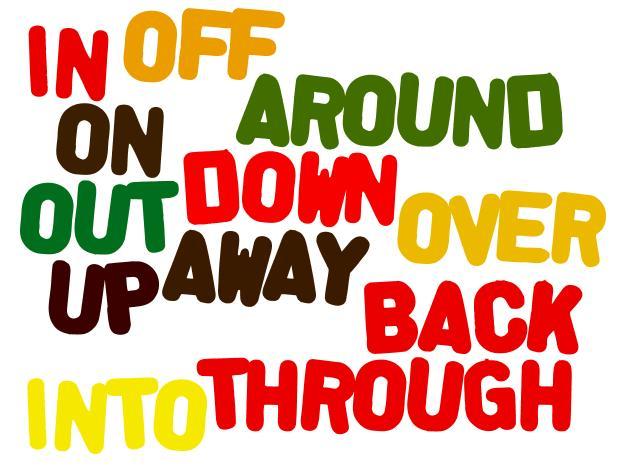
English Corner – Prepositions

The ‘English Corner’ will be a new blog post series from me with a new post every month to help English language learners to better understand the vocabulary, grammar, and syntax in order to better develop their own proficiency. I have over two years of experience of teaching the English language to non-native speakers, both online and in person. I hope to use these posts to help you, the reader, improve your understanding of English, and also develop your fluency.

If you have any questions about this ‘English Corner’ post, please leave a comment and I will answer them to the best of my ability. Any constructive feedback is appreciated and I hope that this will become a popular series of posts within my website. If you enjoy my ‘English Corner’ series, you can also request private English lessons with me through the WordPress message system.

One of the biggest struggles that new learners of the English language will encounter during their studies is mastering the grammatical concept of the ‘Preposition.’ The most common issue that a lot of my ESL students have come across is how to better understand and memorize the grammar rules of the ‘Preposition.’

It’s nearly impossible to memorize all of the ‘Prepositions’ and their specific uses in English. I find that it’s best to examine certain examples where the individual preposition is being used in the sentence and for what context does it most apply fittingly. It’s important to remember that a preposition is considered to be a part-of-speech that comes before a noun type of phrase and connects it to another part of the sentence. The name of ‘Preposition’ can be broken down into pre-position which gives us a good hint that this part-of-speech needs to be placed before the noun. There are different types of noun phrases such as the noun phrase (the short boy), the noun (meat), the pronoun (us), and the ‘gerund or before the verb in –ing form’ (dancing).

The most common prepositions are on, in, to, for, with, by, and. There are numerous other prepositions and for a full list of them, I highly recommend going to this link: https://www.englishclub.com/grammar/prepositions-list.htm

There are three types of relationships that the preposition has with the rest of the sentence. They are relationships in time, in space, and of a certain method.

For some examples of prepositions in these three different relationships, let’s look at the following sentences:

  • The soccer ball is on the floor. (relationship in space)

Note: The physical location of the soccer ball is located on the floor. ‘On’ is a good example of a preposition that is used to demonstrate the relationship in space between itself and the noun.

  • You will meet him in October to discuss the business deal. (relationship in time)

Note: When it comes to date / time / place, a preposition like in is perfect for highlighting the relationship of time when it comes to a noun like ‘October.’ For months, days, weeks, and other words for time, it’s important to use the correct preposition to express this relationship.

  • I sent the wedding invite to you by postal mail. (relationship of method)

Note: When describing a method with a preposition, using by is the most popular and the most useful. Whether its’ mailing a package, or writing a reply to your boss, this kind of preposition will come in handy especially when it comes to connecting the gerund (verb + ing) to the part of speech.

There are several kinds of relationships that are expressed with the help of prepositions but the most common relate to space, time, and method.

Prepositions can either be one word (after, in, by, etc.) or a couple of words, which makes them more complex in their overall nature. (according to, despite that, because of, etc.)

Prepositions will usually come in the middle of a sentence to connect two parts of a whole sentence. However, there are exceptions and sometimes they will appear at the beginning or end of a sentence.

Examples:

Which person did you talk to?

To which person did you talk?

____________________________________________

Another important distinction between prepositions is related to whether they involve place or time.

Prepositions of place describe the relation of an object or thing to another object or thing in terms of space.

This chart below provided by http://www.englishclub.com explains this phenomenon along with a list of corresponding prepositions of place:
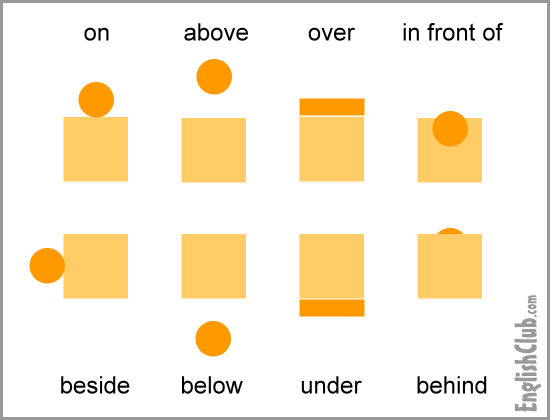
prepositions-of-place

Here are some example sentences for preposition of place:

  • My dinner plate is on the table.
  • The boy hid under his bed.
  • He stood in front of the door.
  • The bird flew above the crowd.
  • He looked over his assembled troops on the battlefield.

Prepositions of time usually involve prepositions like at, in, on, by, etc. We use at to describe a specific time or date. We use in to highlight months, years, decades, and long periods of time. The last preposition of on is the most specific and deals with days of the week, and dates in time. By is the least common preposition of time but can be used to express important due dates when it comes to days and weeks.

Here are some example sentences for preposition of time:

  • I have a salsa class at 8 pm tonight.
  • In September, I started my new job.
  • We ended our job strike on Tuesday because our demands were met.
  • You need to finish this project by next week.
  • We will be back from our vacation by Friday night at 11 PM.

This chart below from http://www.englishlearnsite.com is very useful in giving us more examples on how to use these prepositions of time in the correct manner without getting frustrated.
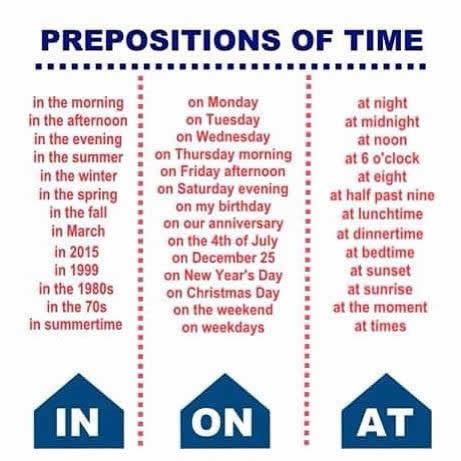
prepositions-of-time

Prepositions are an important grammatical concept to master in order to become fluent in the English language. I hope this first ‘English Corner’ session was helpful to you as a reader of my website. Remember that a preposition is always followed by a noun, and never by a verb. Prepositions usually appear in the middle of a sentence but sometimes at the beginning or end too. Placing your prepositions before the ‘noun’ and after the subject/verb will help you greatly with regards to your English grammar.

I hope you enjoyed this first edition of ‘English Corner’ and I look forward to sharing another topic with all of my visitors again soon.
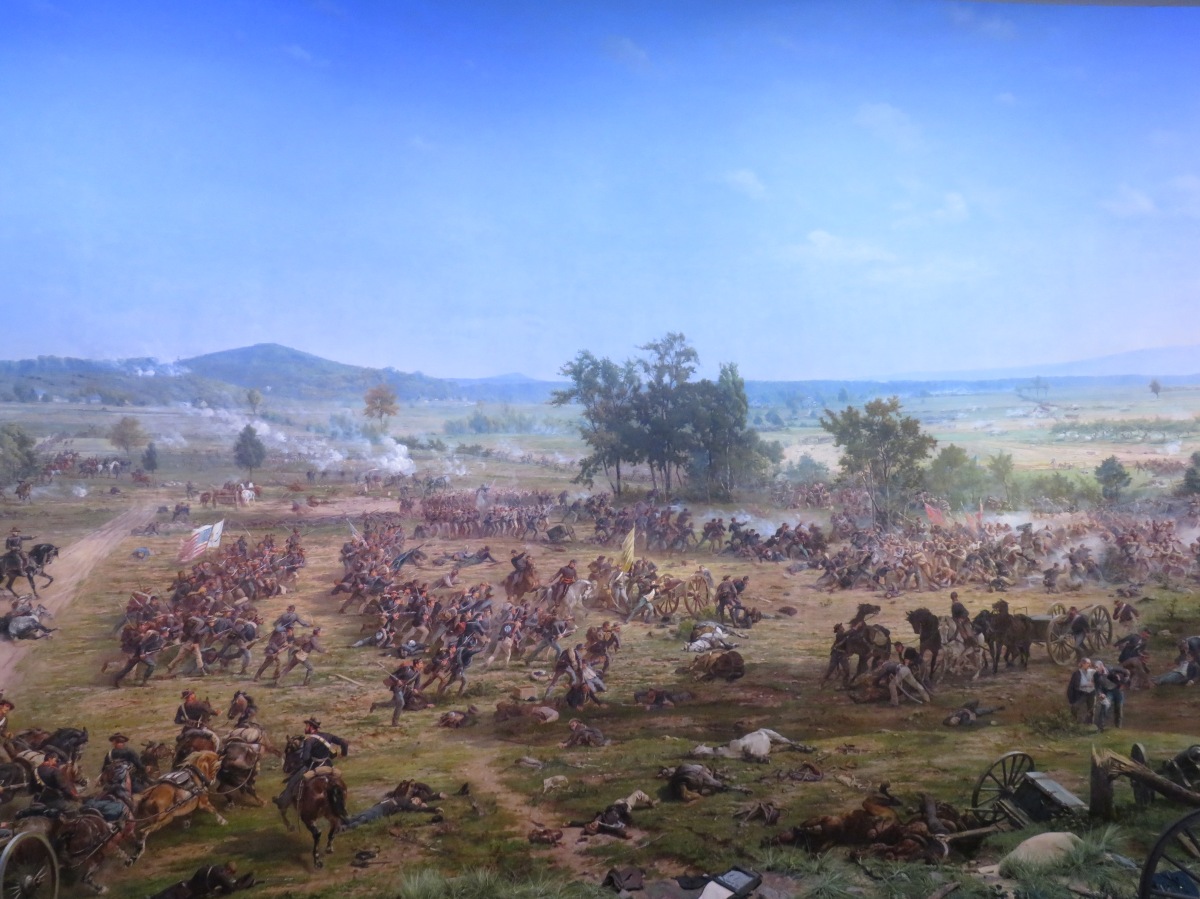
The Last Full Measure

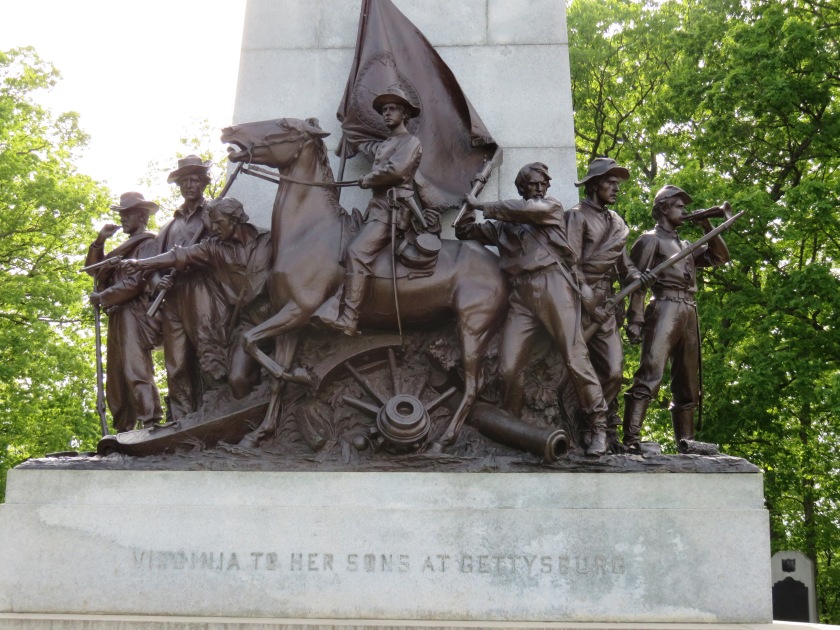
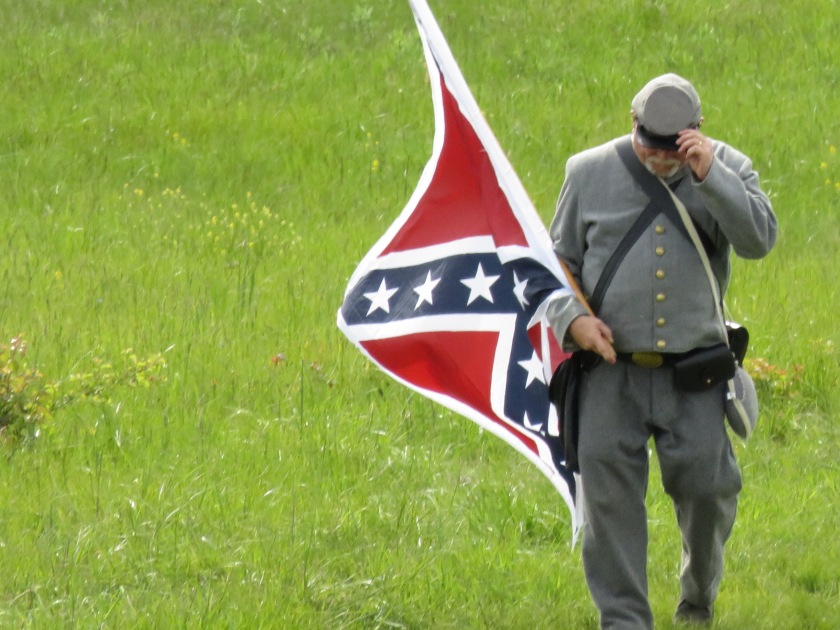
This past weekend, I was able to visit Gettysburg, Pennsylvania, the site of the most notable battle of the American Civil War, and one of the biggest battles in American military history. The battle of Gettysburg is also notable for being the main turning point of the Civil War. The outcome of the battle concluded with the Army of Northern Virginia, led by General Robert E. Lee, being prevented from invading further into the Northeast. Lee and his army were forced to retreat back into Virginia after the battles’ end and never again stepped foot in Union-controlled territory.

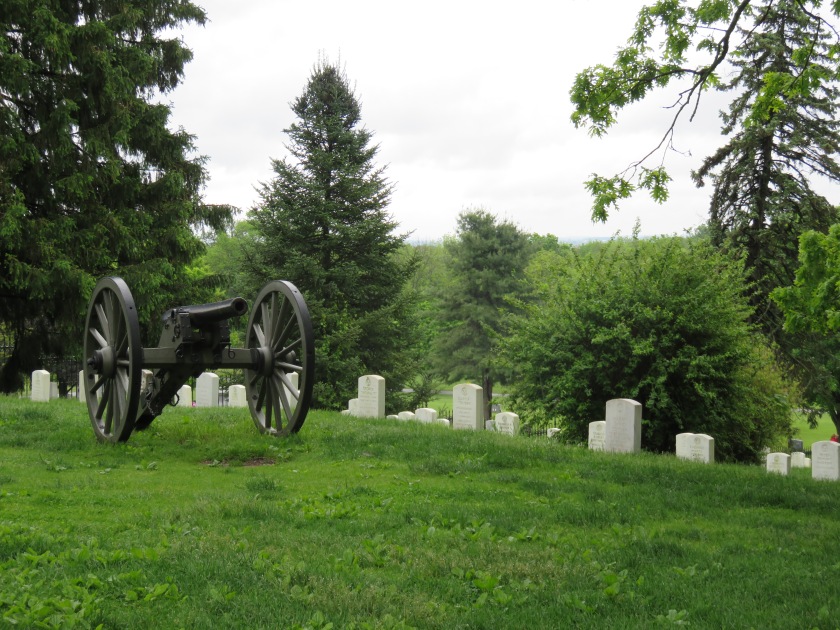
Set over a period of three days from July 1st – July 3rd of 1863, over 51,000 men from the Union and Confederate armies were killed, wounded, captured, or declared missing. It was the largest land battle ever fought in North America. More than 160,000 soldiers from both sides fought in the battle during those three tumultuous days with the town of Gettysburg and its civilians’ being caught in the crossfire. The battle of Gettysburg was fought on fields, marshes, hills, and sloping ridges over 10 square miles and around 6,000 total acres. In addition to the battlefield, Gettysburg is also home to a national soldiers’ cemetery close to the battlefield where the thousands of Union and Confederate troops, now long passed away, are ensconced in their final resting place.

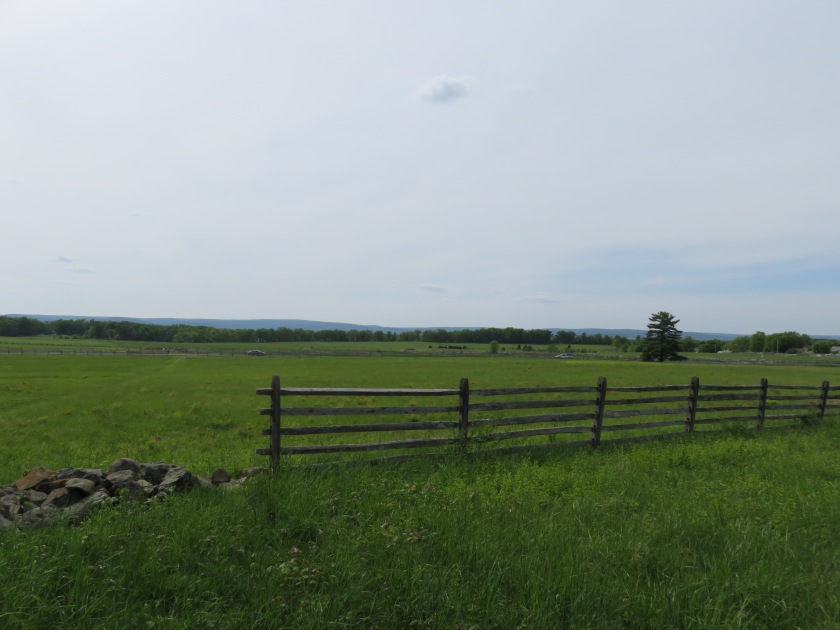
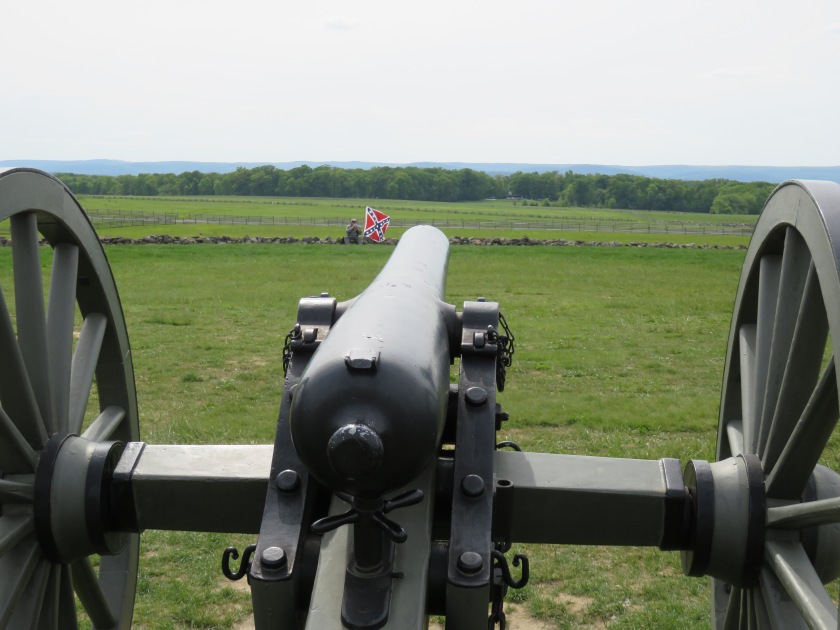
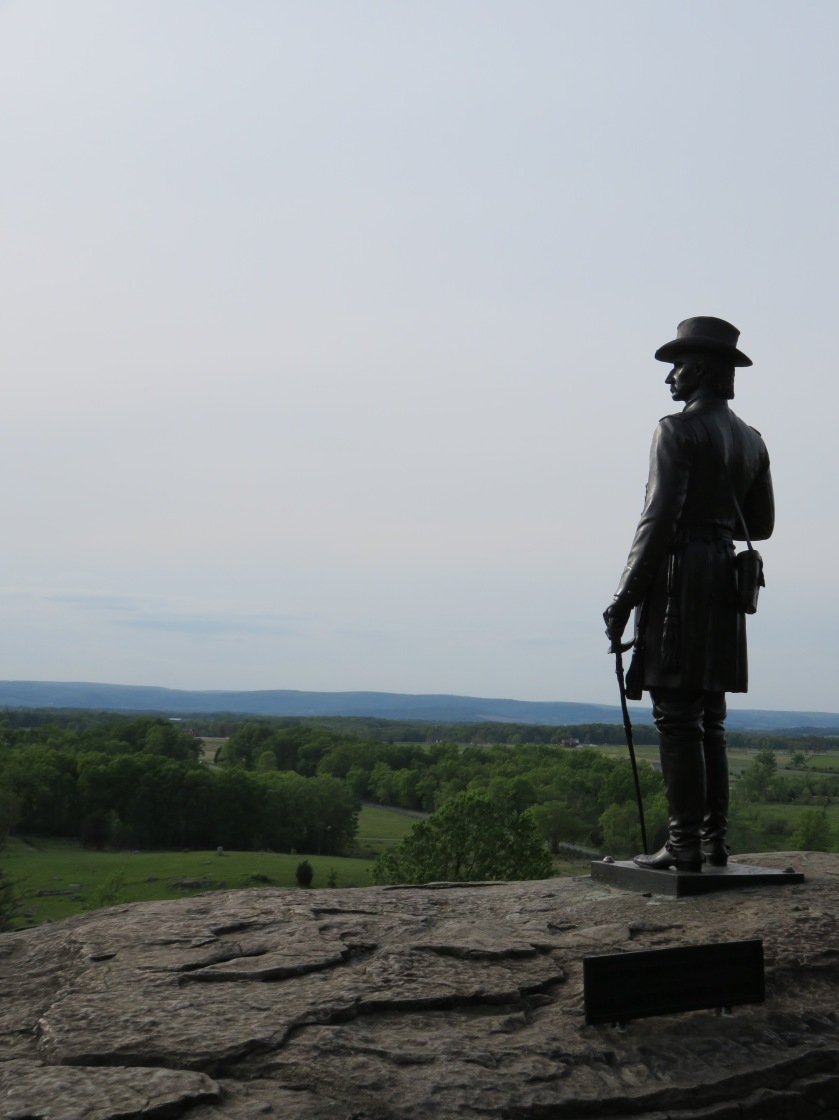
The first thing one notices about Gettysburg is just how quiet and peaceful it is. One would have never guessed that a major battle had been fought here or that thousands of lives had been lost while fighting for their principles and values. The battlefield of Gettysburg, now devoid of soldiers and horses, still retains its wooden barriers, its replica cannons, and artillery. The National Park Service should be commended for restoring the grounds of the battlefield and keeping it clean for the more than one million plus tourists who visit the national military park each year.

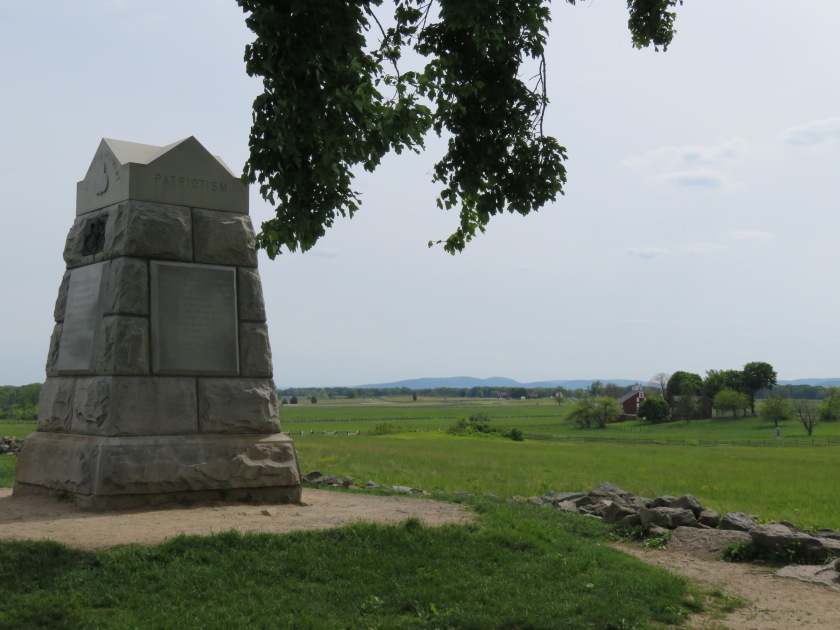
What I was most surprised and pleased about during my visit was the amount of memorials, monuments, and tributes paid to the thousands of soldiers on the Union and Confederate sides. The armies, brigades, corps, divisions, etc. from each of the thirty states on both sides of the Civil War are each commemorated and memorialized in some form.

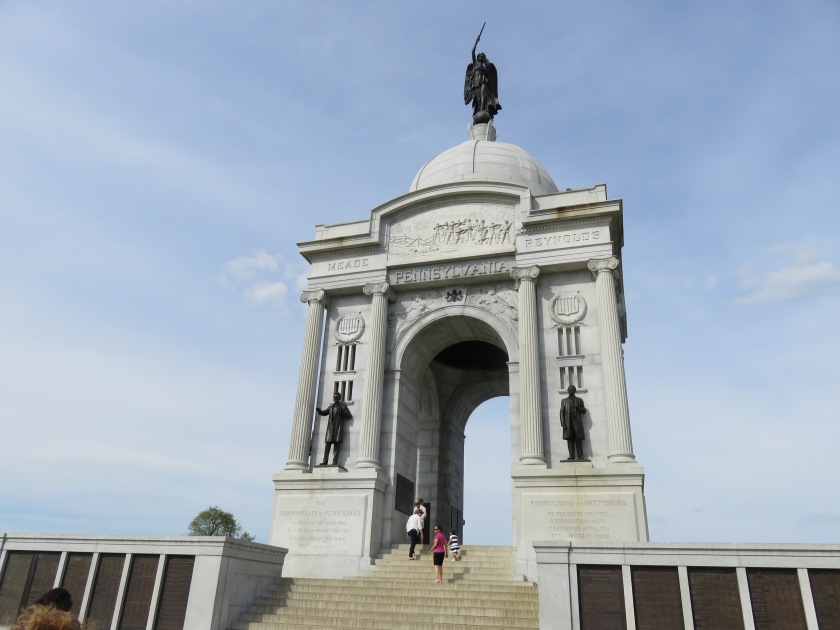
The most striking memorial to me was Pennsylvania’s state monument, the biggest and most awe-inspiring of them all. The Pennsylvania monument lists all of the soldiers’ names that fought for the commonwealth in the battle of Gettysburg. This monument in particular is Greco-Roman in design and has tributes to President Abraham Lincoln, and to notable soldiers and commanders from Pennsylvania. It also overlooks the entire battlefield of Gettysburg and can be seen from every part of the area.

Another notable memorial from the Gettysburg National Military Park can be found at the Gettysburg National Cemetery. In the center of the cemetery and overlooking the thousands of graves lying in repose is the Soldiers’ National Monument. This monument pays tribute to the soldiers who lost their lives at Gettysburg and is unique in quoting an allegory at its’ base that states, “Peace and plenty under freedom…following a heroic struggle.” In addition, this soldiers’ monument depicts the concept of ‘Liberty’ signified by a woman who carries a sword of war, while holding a wreath of peace. At the base, there are four separate statues representing ‘War, History, Peace, and Plenty’ in a chronological, circular order. In total, there are over 1,300 monuments, memorials and tributes at Gettysburg. It’s nearly impossible to see them all without spending a week or more at the battlefield because they are spread out over miles and miles of land. This is why it is known for being “the largest collection of outdoor sculpture in the world.”

You cannot come to Gettysburg without learning about the Gettysburg Address, and the process that led to President Lincoln delivering this famous and historic speech. While the spot where Abraham Lincoln gave the speech is not open to the public at this time, you can still see into the cemetery to view the general speech area. In addition, park rangers from the National Park Service are available for questions about the Gettysburg Address and a tour of the cemetery upon formal request. There’s also a bronze statue and monument of Lincoln’s bust along with an emblazoned copy of the entire Gettysburg Address close to the cemetery’s entrance.

American history was one of my favorite subjects from my high school days. The ability to go and visit historical battlefields like Gettysburg, Normandy, Lexington and Concord brings the history to life for me. I’ve been lucky enough so far to see some of the most notable locations of the American Revolution, Civil War, and World War II.

By visiting these places, you gain a great sense of gratitude and reverence around the conflicts, which these men fought and died in. You can better understand the costs and sacrifices that come with making war. Its’ also good to appreciate what we have today in our united country. There were times in our collective past as a nation when the concept of a ‘United States’ was very much in peril. Hopefully, we can continue to avoid the mistakes of the past, and learn from these dreadful conflicts.

The importance of seeking a brighter and peaceful future for our nation and the world is what I took from my visit to Gettysburg. These memorials, monuments, and the military park remind visitors and patrons alike why peace is something to strive for, even if it comes at a great cost. Sometimes, peace can only come through means of warfare, and that is why we give thanks to those men who gave their “last full measure of devotion.”

To learn more about the Gettysburg National Military Park, you can visit these websites for more information:

1.) https://www.nps.gov/gett/index.htm

2.) http://www.gettysburgfoundation.org

Gettysburg

IMG_0490

IMG_0430

IMG_0436IMG_0434

IMG_0444

IMG_0439

IMG_0457

IMG_0464

IMG_0521

IMG_0498

IMG_0499

IMG_0500

IMG_0532

IMG_0543

IMG_0529

CameraCanon PowerShot SX710 HS

LocationGettysburg National Military Park; Gettysburg, Pennsylvania

A Wealth of Knowledge

knowledge-translation-and-exchange1
“The sharing and exchange of knowledge is easier now than it has ever been in human history.”

There has been no other time in human history than in today’s era where the average person with access to the Internet can seemingly have unlimited amounts of information available to him or her. When you truly think about the magnitude of it, untold amounts of data are being created every day. According to IBM, “The current estimate is 2.5 quintillion bytes of data per day and over 90% of the data in the world today has been created in the past two years alone.”

A common response nowadays from both family and friends when I ask a question to them about a random query is not a straight-forward answer but rather an off-handed suggestion to “Google it.” Living in this era of ‘Big Data’ can be quite overwhelming to the average person but one could also look into it as an opportunity to gain knowledge and further ones’ understanding on a limitless amount of subjects with the simple click of a mouse. The Internet is an amalgamation of thousands of libraries of Alexandria at the beck and call of one’s fingertips.

Compared to past ages when information and knowledge was more exclusive and harder to come by, today’s era allows everyone with an Internet connection to search and find information to their heart’s content. Instead of going to a library to find what you need on a subject, websites like Google, Wikipedia, and other online encyclopedias have largely replaced the main role of the physical library. I remember when I was younger and in my high school days having to seek out certain books in order to write a research paper or complete a book report.

However, now more than ever, you can easily find the sources of information you need online in order to facilitate your research and evidence. While I love libraries and hope that they never go out of style, the reality is that online encyclopedias and eBooks are largely replacing their original purpose. In order for libraries to stay relevant, they need to start incorporating computers, free Wi-Fi, and technical classes in order to remain useful.

From the 18th to the 20th centuries, universities and colleges across America were the standard bearers and purveyors of higher education. Originally for the elite, wealthy, and well connected, those students who were able to get accepted and afford undergraduate and graduate studies believed that they would have an advantage in the job market and in achieving the American Dream. More recently, as colleges and universities have become more inclusive than exclusive, tuition prices have inversely risen as well.

While higher education has become accessible to more and more young Americans, it also has become more expensive especially over the past decade. These events have led to an ongoing debate as to whether college is really worth the price tag and whether the average student gains anything from earning a four-year degree. With student loan debt at an all-time high of $1.3 trillion in 2015 in the United States and tuition rates at both public and private universities continuing to rise, people are beginning to look for alternatives to the current higher education system.

Over the past decade, there has been a drastic proliferation of massive open online courses (MOOCs) provided by both private companies and traditional universities. At a much lower price and sometimes free, people from all over the world can sign-up for these courses and partake in lectures, tests, quizzes, and papers as if they were actual enrolled undergraduate and graduate students at the physical form of the university. As the credentials and certifications bestowed upon these courses continue to increase and become more widely accepted, we may begin to see ‘the end of college’ as we know it.

Examples like Khan Academy, edX, Coursera, Udacity, etc. and other MOOCs have leveled the playing field. Tech entrepreneurs from Silicon Valley have allowed students from all over the world to access unlimited online courses to further their academic knowledge at a lower price. With the subsequent rise in online university programs for undergraduates and graduates, the physical college experience of dormitories, lecture halls, football stadiums, etc. may become less appealing to students as tuition prices continue to increase. While the social and networking benefits of college life are numerous, they may not be enough to compete with this era of free information that we are living in.

Compared to past decades, we’re living in a time when access to the Internet is at an all-time high and is increasingly rapidly due to the rise of mobile technology. Traditional havens of knowledge such as the library or the public university will have to adapt to stay relevant in this unlimited information age. In a worldwide job market that is evolving rapidly and where the average child today will work in an industry not yet created, the free exchange of knowledge must continue to spread through the worldwide web.

Countless others and I have benefited from taking online coding courses on ‘Codeacademy’ to learning new languages on ‘Duolingo.’ As MOOCs and online universities continue to develop their courses and credentials, we may begin to see an era where the average person can earn a degree or two without breaking the bank. MOOCs are cheaper, less time intensive, and can adapt more easily to the rapidly changing employment market.

A well-educated population is now more possible now than ever with the wealth of knowledge and information that is available. That fact is evident but it also is up to the individual to be willing to search for that information and actually apply it. Instead of getting frustrated with people asking me to ‘Google’ the answer, I find that it’s worth the hassle because it’s often true that I will find the answers I’m looking for and in greater detail than if I were to ask a friend or family member for a quick description. That’s the power of the Internet. That’s the wealth of knowledge that we are able to take advantage of.

Sources

Sites Mentioned

Costeñol

se habla costeñol

The regional and local dialects of the major languages can be found in different countries around the world. Colombia is no exception to this rule. Within the Latin American dialect of Spanish and also the Colombian regional variations lays the innermost layer of what’s popularly known as Costeñol, the coastal dialect of Colombian Spanish. One of the first things I learned as a foreigner living here in the Atlántico department of Colombia was that the locals here have their own unique dialect, colloquialisms, and vocabulary that is different from other regions of Colombia.

As someone who has only formally studied the Castilian Spanish in my previous schools and university, it has been a challenge in adapting to the local dialect and how fast the words and sentences come out for me to try to translate and respond to. However, it’s been really fun for me to learn about the sayings and phrases used by Costenos during everyday life. A lot of these vocabulary words have already rubbed off on me where I now feel comfortable using them in both the right setting and context.

For those of you unfamiliar with both Spanish and Costeñol, here are ten words and phrases that you should familiarize yourself with if you decide to visit Barranquilla, Santa Marta, Cartagena, and/or the surrounding towns nearby.

1.) Adios: Usually used to mean “Goodbye” in Spanish-speaking countries, it’s quite common where I’m living now for you to great your neighbors and friends with ‘Adios’ when you walk by their house and would like to greet them formally on your way home. Almost always, they’ll return your ‘Adios’ with a smile and a wave or thumbs up.

2.) A la orden: Okay, this isn’t a phrase just for the Atlantic coast of Colombia but for the entire country regardless of the region, which is pretty cool if you ask me. Wherever you visit or live in Colombia, you will most definitely hear this phrase being used. It’s the most popular one I know of and I find it to be my favorite thus far.

3.) Bacano: A word used to describe something that’s cool, interesting, or exciting. When you see a friend pulling up in his new motorcycle, which would be a perfect time to use the word ‘bacano’ here.

4.) Buenas: More popular in the morning and in the afternoon, it’s customary to greet other Costenos with a ‘Buenas’ and a smile as you start your day. For those unfamiliar with Spanish, it’s a shortened version of the popular greetings of ‘Buenos Dias’ or ‘Buenos Tardes.’

5.) Chévere: See ‘bacano’ above. A bit more difficult to pronounce for the average gringo. However, chévere is very popular as well and has a similar meaning in terms of expressing how something or someone is cool, exciting, and fun.

6.) No Jodas: An exclamation of shock, surprise, or disbelief. My host mother here taught me this one most recently when she remarked on how fat the dog was getting. It made me laugh to hear her use it in front of me along with the explanation she gave me.

7.) No dar papaya: Literally, it means ‘don’t give papaya’ which is a euphemism meaning that you should resist flashing your Prada bag, iPhone or Camera in public for the entire world to see. It’s okay to have that stuff with you from time to time but don’t give someone an excuse to make you a target for a snatch and grab by having it on display all the time. One of the first phrases I learned here upon my arrival and one that I won’t soon forget.

8.) Que le vaya bien: Before someone leaves the house or the apartment, it’s important to let them know this salutation and wish them well on their way to the school, office, store, or elsewhere and that they will have a pleasant journey.

9.) Qué pena: Expressing how shameful or disappointing something is. If your favorite football team lost last night or you realized you forgot to wish your mother a happy birthday, a phrase like this will sum up how you’re feeling right there and then.

10.) Que mas?: When you see your neighbor or a friend walk by you on the street, it’s a very good time to use this popular phrase. Being able to communicate about how your day was or what’s been going on in your life in Spanish is one of the coolest aspects of living and working here in Colombia. This phrase especially for the coast is good at making that goal a reality.

11. Cogelo Suave: Last but not least, this phrase is the equivalent of a New Yorker saying “Take it easy.” Relax, have a coffee, and everything will be all right. When your friend is running thirty minutes late and you’re ready to call it quits on waiting for him. Say ‘Cogelo Suave’ to yourself and stick it out for a little while longer.

There are many other phrases and words that are used on the Atlantic coast of Colombia that I’m still not familiar with. However, I hope to learn more and more each day about this very unique and interesting dialect of the Spanish language. In order to learn Costeñol, you must be prepared to study and use it too.