The Value of Perseverance

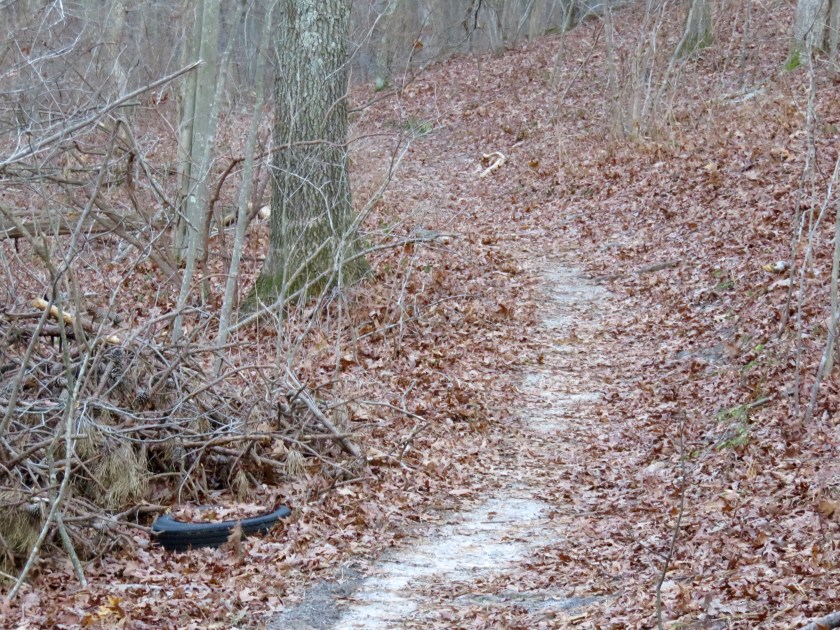
“The road to the top is paved with obstacles but the view is worth the struggle.”

Perseverance: Noun. Steadfastness in doing something despite difficulty or delay in achieving success. (Source: Webster Dictionary)

One of my favorite words in the English language recently is the one I just listed above along with the definition. Perseverance. The innate will to finish what you started, and to become successful despite all of the obstacles thrown at you. Life can be pretty difficult to deal with sometimes and it’s hard to remain committed to your goals, hopes, and dreams.

I’m writing you to tell you, dear reader, that despite the long odds, and struggles that you may encounter in your life, you have to push on each and every day to make it one step closer to becoming successful and making those dreams come true. It won’t happen overnight and there will be setbacks and false starts, but your will and determination will set you apart from others in getting to where you want to be in life.

Whether success to you is in monetary form in making a lot of money and having a lot of possessions, or changing the world by helping the poor or cleaning up the environment, or simply just raising a family and passing on the torch to the next generation, perseverance will be needed in order to make any of these hopes a reality. As the saying goes, “Rome was not built in a day. “

Remember, Each day, each month, and each year: you have to make small deposits in the game of life. Progress takes time and don’t be discouraged if you don’t achieve your success overnight. Remaining true to yourself and your vision of the future is important. Make sure that you surround yourself with those people (friends or family) who are supportive of you and your goals.

Do not let yourself be dragged down by others who would wish you ill or divert you away from your path. Even if you fail and suffer at first, never ever give up. I happen to believe that everyone’s luck changes and that if you keep pushing forward and you work hard at anything in life, success will become a reality. Steve Jobs, Bill Gates, Michael Jordan, Abraham Lincoln, etc. are a few of the countless examples of famous individuals who struggled and failed in life at first but were able to persevere and overcome obstacles to become great and successful. One’s willpower and determination goes a long way in seeing who will make it in life and those who will just skate by in mediocrity.

Your teachers, mentors, friends, and family will be there for you and will help guide you to future success but it is up to you, and you alone to make something of yourself. Each day you should ask yourself: How can I make myself better?, What do I want to achieve?, How can I be a better person?, etc. Even if you fail multiple times, use it as motivation to do better and better each time.

Do not throw in the towel. Life is short and we do not have unlimited time on planet Earth. Make the most out of the opportunities given to you, and if none have been given or handed to you, take them and run with it. Only after blood, sweat, and tears will any of us achieve to what we set out to do. That’s the way it always has been and will be in the future. The road to success has always been paved with hardships and setbacks but that does not mean that we should give up or stop trying. To persevere is to set yourself apart from the rest, and I hope that each and every one of you reading this blog will keep that in mind.


Duke Ellington: A Retrospective

'Jazz Legend' Duke Ellington: Playing the Piano (Circa -1940's)
‘Jazz Legend’ Duke Ellington: Playing the Piano (Circa -1940’s)

Edward Kennedy Ellington is rightly considered to be one of the leading figures and original titans of Jazz music. In addition to writing over 1,500 compositions, he was one of the most successful bandleaders and pianists of his time. To this day, he has stood the test of time and is one of the most influential musicians of the 20th century as well. Along with being a major figure in Jazz, Ellington’s music also delved into other musical genres such as blues, gospel, classical music and popular film scores.

His career was one of the longest of all the Jazz legends, spanning about 50 years from the 1920s to the 1970s. He was a versatile musician and was extremely dedicated to this work. In addition to running his big band and orchestra, Ellington composed new songs, put on many world tours and also scored the music for stage musicals and films. Many of his instrumental works have become Jazz standards that the average listener should be well aware of and familiar with many of Ellington’s compositions.

His ability to be an entertainer as well as a performer helped elevate Jazz to a level where it was considered to be equal or even more influential than most other genres of music during the early 20th century. He was the first musician to really incorporate the idea of using a big band and/or orchestra to really propel jazz/swing as being distinct forms of music with their own style and substance. Ellington came from a modest upbringing in a middle class black neighborhood in Washington D.C. and was considered by others to charismatic, compassionate and a brilliant and dedicated musician. He is as well known for his ability to entertain people as he is for his excellent piano playing.

Ellington would often refer to the music he played not as jazz but as “American” or “Negro” music and helped his orchestra’s musicians and others to develop their own jazz standards and compose for them. Some of the names for which he helped out so graciously were for Johnny Hodges’s “Jeep’s Blues”, Cootie Williams’ “Concerto for Cootie” and Juan Tizol’s “Caravan.” Many of his band members stayed with him throughout the five decades for which they were active. In addition to his band members, Ellington also worked alongside other musicians of the time such as Billy Strayhorn, Count Basie, Louie Armstrong, Coleman Hawkins, Charles Mingus, and Max Roach. Some of Ellington’s best known songs include, “It Don’t Mean A Thing If It Ain’t Got That Swing”, “Mood Indigo”, “Black and Tan Fantasy”, “Sophisticated Lady” and “Satin Doll” among many others. While which song exactly made the Duke most famous is a hotly debated topic, some argue that it is “Mood Indigo” which thrust him upon the world stage and gave him global fame for the rest of his career. When Ellington was once asked, what made him inspired to write, record and play music, he replied, “My men and my race are the inspiration of my work. I try to catch the character and mood and feeling of my people.”

Location played an important role in influencing Duke Ellington’s musical contributions to society. With each song he wrote and composed, he would try to tell a story about his community, his life and his race. It is no coincidence due to the Duke’s popularity and his wide following throughout America as one of the first prominent black musicians that he was often times referred to as a “race man.” People referred to him as this because of the cultural and social impact that he had as a popular musician representing the African-American community at a time when there were few black performers and entertainers in music. This was particularly due at the time to Jim Crow laws and general intolerance, racism towards the African-American community in many parts of the United States. Duke Ellington in a way broke through the color barrier along with Louis Armstrong because of those who came before them when it came to music in America during the early 1900’s. Ellington was an instrumental musician in bringing Jazz music outside of New Orleans to towns and cities across the country especially in New York City when he hit the big time and made his home starting in 1927, at the famous “Cotton Club” in Harlem. From that and other clubs, his big band/orchestra set the bar high when it came to playing brilliant jazz, swing, classical and other forms of music. Over the course of his career, He made jazz and swing music into American music as he traveled around the world for thousands of performances in Europe, the Middle East, Africa and Asia.

There is no doubt to the average learner and student of Jazz that Duke Ellington is one of it’s most important figures in its’ history. He was the genre’s most important composer, one of its’ most highly regarded performers and band leaders who employed many talented black and white musicians believing that everyone should have the chance to play regardless of the color of their skin. Ellington’s compositions are studied and played over and over by many musicians today and his prowess at the piano is often overlooked but was also instrumental in talking about his legacy as a musician. It’s fair to say that there will only ever be one “The Duke” and those who follow his lead. His work is also very important in describing American culture and music. His legacy is still vibrant today as many young people continue to pursue the arts and perform in music groups. They strive to play jazz and other types of music because of men like the Duke himself.

Book Recommendations – Volume I

As the Fall season turns into Winter and people start going into hibernation mode as the weather gets cold and snowy, here is my 1st volume of book recommendations that will last you through the next few months:

catch-22_cover

 1.) Catch 22 by Joseph Heller is my favorite book of all-time and has been ever since I read it at the young age of 16. This was the first novel that I had read which was satirical in content and utilized the concept the dark humor, which made it an enjoyable and fun read. Main characters such as Yossarian, Orr, Chaplain, Nately, Snowden, etc. were all really well-developed so you know who they were and their individual backgrounds before the end of the novel. It did help that for the first part of the book, each of the first eleven chapters were told from a different character’s perspective rather than focusing on Capt. John Yossarian for every chapter.

Describing the events from different points of view through the third-person in a non-chronological order really made it unique in a way. This made Catch-22 an easier read as this kind of format gave me as the reader the chance to put the different events together into a singular plotline rather than spell it all out for me as other non-fiction novels usually do. This novel also introduced to me several important themes that I have thought about or come into conflict with in my own life. Examples of some of these themes being: Absurdity, ridiculousness of bureaucracy, questioning one’s religious faith, and the power, influence of greed and capitalism over others.

freedom-cover

2.) Freedom by Jonathan Franzen is another favorite and an excellent fiction novel focusing on an American family, the Berglund’s, and the complex relationships that they have with each other, their friends, and their lovers. Their story takes place over the course of one generation from the late 1970’s up until the beginning year of the Obama administration, in 2009. Each family member is well represented in Franzen’s novel with the narrative flow going from Walter (the father) to Patty (the mother), and then on to the children of Joey and Jessica. Franzen also develops his supporting characters to be an integral part of the story such as Richard Katz, Lalitha, Connie, and Jenna who all play a role in the unfolding of the novel. Freedom also successfully goes back and forth from first-person to third-person narrative quite easily and without any major hiccups.

One of my favorite things about this novel is that incorporates into the plot the major events in American history and society that have happened over the past generation. Examples of these events in the book include the burgeoning environmentalist movement, 9/11, the Iraq war, and the rise of social media. I believe Franzen does a great job of bringing out the peculiarities and absurdities that encompasses American suburban life and he really shows you how the family changes over the years due to these outside events but also the changing relationships that mark these people’s lives. A fascinating novel overall, I highly recommend it.

unwindingbook

3.) The Unwinding: An Inner History of the New America by George Packer is my favorite non-fiction novel and a book that should be read by any American who wants to understand the current state of our society, culture and our politics. Packer is an excellent reporter for The New Yorker who previously wrote a book about the struggles of the U.S. endeavor in Iraq in The Assassin’s Gate. Packer got the inspiration for writing this novel after he comes home from Iraq and witnesses the 2008 financial crisis and the collapse of the markets. Along with the auto industry, Fannie Mae and Freddie Mac, he realizes that the major institutions that have held America together with a sense of unity were falling all around him. The author does an excellent job of focusing on three ordinary Americans and detailing their personal history from the beginning of ‘The Unwinding’ in the late 1970’s up until the 2012 election.

These three people are Dean Price, a struggling tobacco farmer in North Carolina who wants to revitalize the farmland by providing biofuel to school buses; Tammy Thomas, a black woman from Youngstown, Ohio who becomes a community organizer after losing her job multiple times from the closure of the factory plants along this rust belt city; and Jeff Connaughton, who comes to Washington as a staffer for Senator Joe Biden but becomes disillusioned by the lobbying, big finance levers that are pulling the strings of our politicians and leaders. One of my favorite things about this book is that Packer contrasts these three ordinary Americans with the giants of American pop culture, politics, music, and society by giving brief chapters devoted to the success of individuals of Oprah, Peter Thiel, Sam Walton, Jay-Z, Newt Gingrich, Alice Waters, etc. A must read in my opinion.

thesocialanimal

4.) The Social Animal by David Brooks is another great non-fiction novel that I have read and re-read over the past couple of years. Out of all the books on this list, it has probably influenced me the most as a person. I usually disagree with Brooks’ op-ed columns in The New York Times due to his conservative leanings but when it comes to sociology, human psychology and understanding the sub-conscious, Brooks has done the research and it really shows through in this book. The most fascinating aspect of this book is how he sets it up as a fictional novel with a male and a female character named Harold and Erica respectively.

Mr. Brooks uses a lot of recent research and findings to assert conclusions and summaries while charting an imaginary course for these two characters’ lives from Birth/Early Life to Death. My favorite chapter of the book and an area that relates to me personally is when Brooks describes the recent phenomenon of ‘The Odyssey Years’ or a person’s twenties where they are deciding what to do with career, marriage, and whether or not to have children. Brooks contrasts the ‘On The Road’ vs. ‘It’s A Wonderful Life’ type of lifestyles that young people often choose between as they come out of the Odyssey years. He details the differences of how to live such as ‘Single v. Married’ and decides its better for a person to establish roots in a community rather than going from place to place indefinitely. He makes a compelling argument using recent research for explaining what molds us into who we become in each major stage of our lives.

howardzinn
5.) A People’s History of the United States by Howard Zinn should be mandatory reading for any high school student in America who’s enrolled in a U.S. history class. Unfortunately, it wasn’t required reading for me in my Advanced Placement course which was a shame. Luckily, I was able to read it during my senior year of high school when a family member recommended the book to me and left me with a copy. The lasting appeal of Zinn’s novel is that unlike many other history books, it deals with the lives of ordinary Americans struggling through the different, tumultuous periods of our short history and the author does an excellent job of relying upon interviews, data, and statistics to give their side of the story.

Learning about the struggles of the Native Americans, the Women’s Rights movement, Civil Rights movement and other marginalized Socialists and Labor Rights activists like Eugene V. Debs was illuminating for millions of readers and myself. If only more politicians and the elite would read Zinn’s words, perhaps we as Americans would learn not to repeat the mistakes of the past and truly realize the notion of “Equality for all.” Lastly, one chapter of A People’s History that I continue to believe is very prescient even today is titled, “The Coming Revolt of The Guards” where Zinn hints at the discontent of American society even back in the early 2000’s due to the collapse of organized labor, growing wealth inequality, and the marginalization of the poor. Even though it’s a non-fiction book rooted in the past, Mr. Zinn had a lot of words of warning for our collective future.

Winter Is Coming

"Does this look like fun to you? Winter will never be my favorite season of the year."
“Does this look like fun to you? Winter will never be my favorite season of the year.”

The days are getting shorter and the nights are getting longer. There’s a chill in the air and the leaves are falling. This can only mean one thing to what’s on the horizon again: Winter. It’s not my favorite season of the year. In fact, it’s probably my least favorite season. However, this doesn’t mean that I don’t like the snow or the fact that it gets cold for a couple of months. I know for a lot of you out there reading this that it’s probably your favorite season and I can understand that point of view. I just can’t agree with you though.

I think that it’s the most boring of the four seasons and that there really isn’t much to do. I would like to think that I’m not the only one who goes into hibernation for a few months around this time of year. I’m mostly indoors and catching up on movies, television, reading good books, other indoor activities, etc. that I neglected when it was sunny and warm outdoors. It doesn’t help that there’s basically only seven or eight hours of sunlight as opposed to the twelve to fourteen hours of sunlight during the spring and summer.

Growing up in an area located relatively close to the beach and the ocean, I couldn’t help but fall into disfavor with the winter season. I love the cool breeze, the seafood, the waves splashing and the warm sand. It doesn’t help my seasonal bias with the fact that I have never went skiing or snowboarding in my life which is a shame within itself. Perhaps, trying out some winter sports would change my opinion on this great debate. I’ll never understand those people who would rather be brutally cold than oppressively hot. I’ve always chosen being apart of the latter unfortunate situation. If it’s really warm, I can just go to the local pool or make myself a cold drink but if it’s really cold, I usually have less of a desire to be outdoors and remain inside, which can make me go stir crazy at times. I also really enjoy having more hours of sunlight to enjoy and I don’t think I’m alone in this.

I have never really gotten used to the fact that during the month of January especially, it can become completely dark out by 5 PM. Surprisingly, the changing seasons can even affect a person’s mood and emotional state. Seasonal Affective Disorder (SAD) is a real medical diagnosis these days and usually occurs during the bleak, colder, darker months of the year, *cough* winter! *cough.* When have you ever heard of someone having the blues or being down in the dumps as a direct result of it being the spring or the summer? “SAD” doesn’t really happen at all during these seasons especially if the ice cream man comes around the neighborhood looking to handing out treats to the locals.

Now, don’t get me wrong. I don’t hate winter and I have some fond memories from my past of snowball fights, snow angels and hot chocolate after hours of playing in the snow. However, maybe it’s apart of childhood that we enjoy this particular season but now the tediousness of shoveling snow, experiencing flight delays, having cold/flu symptoms, etc. as an adult are complicating those previous happy memories from when I was younger. At least there are still the holidays (Thanksgiving, Christmas and the New Year); Winter will always have those advantages going for it in my mind.

The Decline of News Reporting in the Age of Social Media

"Famous news anchor Walter Kronkite didn't have Twitter or Facebook back then but that didn't stop him from becoming 'America's Most Trusted Man.'"
“Famous news anchor Walter Kronkite didn’t have Twitter or Facebook back then but that didn’t stop him from becoming ‘America’s Most Trusted Man.'”

The online “blogosphere” and social media has significantly weakened news reporting and political discourse in the United States. There are many reasons for this phenomenon emerging and it does not seem to be getting any better soon as technology continues to develop and advance at a rapid pace. Today, the main problems are the fact that serious journalists and reporters care more about ‘breaking the story’ first on platforms such as Twitter and Facebook before other competing news outlets instead of getting the story correct along with all of the facts.

In addition, there are many ‘talking heads’ and bloggers’ out there reporting and analyzing the news so that it makes it even more difficult than ever to know which person to listen to and who actually has the expertise and background knowledge to be really reporting the news without any inherent bias or slanted opinions. Lastly, since the early 2000’s, many news networks and websites have emerged with the support of major corporations whom have been created with the sole purpose of advocating for the ‘liberal’ or conservative’ side of any political or social issue.

These three problems have caused the political conversation in the United States to become more and more divided. The two major political parties continue to be highly partisan and refuse to work with each other to improve the functioning of the U.S. government and its ability to help and aid its citizens. There have been many instances in the past five to ten years where news reporters on social media have made ilogicial conclusions and given their audience false facts and assumptions based on the information they were getting when a news story first breaks. For example, the terrible Boston Marathon bombings that occurred a few years ago were first fraught with a lot of inaccuracies and falsehoods when the news reports would come in just after the terrorist attack has occurred.

Most recently, during the early moments of the tragic mass shooting that happened in Roseburg, Oregon, numerous media outlets scrambled immediately to report the correct amount of dead and/or injured people on social media. Many of the news outlets reported false numbers at first because they refused to wait for local law enforcement officials to give them the official numbers. If you follow news organizations on social media, you often have to take the initial reporting of a major news event or crisis with a huge grain of salt. Initial reports from different news outlets can be false or exaggerated.

Many different news outlets rushed to Twitter, Facebook, and elsewhere on social media to be the first with the details of this terrible event but instead of verifying and fact-checking these breaking events and waiting to be sure that they were right about the news, many online websites would publish the information they received as quickly as possible in order to have the distinction of being the ‘first’ to report the news even if it wasn’t true.

More than ever, major news networks are relying on ‘talking heads’ and ‘political commentators’ to talk about heated issues in the American political sphere instead of putting reporters and journalists on the ground to gather facts and report about the big issues. Instead, many news networks, newspapers, and websites have grown their opinion (op-ed) article section and have taken money and resources away from those reporters and journalists who would like to report the news instead of just ‘interpreting’ and ‘analyzing’ it to death.

The proliferation of ‘bloggers’ and ‘social media commentators’ has distracted the average American from getting the main facts of a news story. It has caused most citizens to be unable to tell the difference between an actual journalist who does his or her research and checks the facts of the story and those bloggers who don’t actually report the news that happens. It is growing trend among mass media outlets to slant it to their own viewpoint and that of their audience without taking into account the actual story and the idea that there may be more than one side to a news issue or topic. I fear that some of the mainstays of good journalism such as thorough fact-checking, and fair and honest reporting from the mass media will continue to decline in the future due to the rise of social media.

Disclaimer: These views and/or opinions are inherently mine alone and do not reflect those of any other unaffiliated outside party, organization, and/or company.

Reverse Culture Shock In The USA

“Adjusting to one’s home country and culture can take a while. This graph sums it up quite well.”

After being away from the United States, my home country, for the past year, I have been dealing with ‘reverse culture shock’ since I have returned as many people who come back to their home culture experience after an extended time overseas. There is a natural recovery and adjustment process but it takes time to get back into the swing of things. As a writer, I like to gather my thoughts on paper about what I have noticed about my home country since returning from my time spent overseas. These observations have helped me to deal with my ‘reverse culture shock’ so far and to comment on what could be improved or changed to make my country better. I have traveled to 20 other countries, and have lived in Turkey and Costa Rica thus far so I believe I have some knowledge about how the U.S. compares to the rest of the world in different ways.

I would like to note that I do love my country and have enjoyed being born and growing up here. The United States is a great country and I only wish to see it become better and better in the future. I intend to use this blog post to merely bring up some outstanding issues and problems that the U.S. must deal with as a whole. No country I’ve lived in or have been to will ever be perfect and every country has different flaws/issues to work out. That’s part of the reason why I love to travel and explore the world. It’s interesting to see the variation among cultures and societies along with how they tackle their own internal and external problems to make their own countries better. Listed below are the items that I write in detail about which have caused me some ‘reverse culture shock’ since my return to the United States in late July of 2015.

  1. Lack of Using the Metric System in the 21st Century: The U.S. is one of only three nations in the world who don’t fully use the Metric System (International System of Units, SI). Liberia, Myanmar are currently our only counterparts in this anomaly. There’s no excuse for that and it harms our international commerce procedures and our ability to conduct foreign relations properly.
  2. Lack of High Speed Rail, and Efficient Public Transportation: This can be quite jarring after visiting developed nations like Germany, France and also from what I have read about China and Japan who are way ahead of the U.S. in developing high-speed rail networks. Part of this is the fault of state governors who refuse federal stimulus funding for high-speed rail projects. (Examples: Wisconsin, Florida, Ohio, etc.)
  3. Large and Unhealthy Food Portions: This may be part of the reason for the ongoing obesity problem in the country. I’m all for enjoying a good meal of course but I think the food portions I’ve had in the U.S. have been the biggest than all of the other countries that I’ve visited so far. I also believe that having ‘free refills’ and ‘soda fountains’ at restaurants, while a tempting proposition, is not something that should be offered to promote a healthy diet.
  4. Reliance on Tipping (Mandatory?) to pay workers’ wages: I’m fine with throwing in an extra 10% on top of my meal and tax for good service but I don’t believe it should be 15-20% every time in order for these workers to meet and go above their very low hourly Minimum Wage as ‘tipped workers’. I believe that these service workers in the U.S. should be paid a higher minimum wage altogether by law and that they should be guaranteed a good wage each shift rather than fighting for tips each day.
  5. Obesity crisis and an astounding proportion of adults/children who are overweight: It’s a drain on an already expensive health care system and contributes to our total health care expenses. There needs to be more emphasis in our society on daily exercise and getting out of the house for both children and adults. Healthier eating and taking a walk/going for a run each day can go a long way to helping to solve this problem. I believe that companies and schools should play a larger role in keeping their employees/students in good physical shape with certain incentives.
  6. Heavy reliance on cars, trucks and other motor vehicles to get around suburban and urban areas: There is a lack of walking around towns and cities because there is much more sprawl and open space in the U.S. However, I believe that having trams/streetcars, more extensive public bus transportation systems in both suburban and urban areas could relieve part of the traffic jams and gridlock that affects a lot of the country nowadays.
  7. Big Businesses and Corporations get the benefit of the doubt too often: When it comes to beating out smaller businesses and enterprises, these big box stores are winning out. These major companies contribute to this problem by monopolizing their industry and not allowing others to compete in a free market environment. This, in part, contributes to suburban sprawl because these huge megastores contribute to the layout that contributes to the car culture. (i.e. Wal-Mart, Bed Bath and Beyond, Dick’s Sporting Goods, Best Buy). I can’t remember the last time I’ve seen a family-owned coffee shop in my town or neighborhood. There are three Starbucks’ around though for a good cup of joe…
  8. General lack of curiosity about foreign cultures and peoples: Many Americans do not speak a 2nd language or don’t pay attention to international affairs beyond what they learned about briefly in high school and college. This is a generalization but I still believe it applies to the majority of people within this vast country. Still, only about 30-35% of Americans own a Passport. I would encourage more Americans to travel and see the world especially if they’re younger. Taking a “gap year” before or after college would be a good way to travel and there are ‘work-study’ programs available for Americans to take advantage of in western European countries (Ireland, UK, etc.) along with Australia.
  9. Very conservative laws about alcohol possession and consumption: “21” as the minimum legal age for consuming alcohol makes no sense to me especially considering you can start operating a motor vehicle at 16, join the military at 18 and also vote for President and other elected officials at that same age. Having someone check your ID to get into bars/clubs or at a sporting event to purchase beer or wine is also ridiculous. I’ve seen people in their 40’s and 50’s get carded when they are clearly over the legal age here. The United States is one of the few countries where the drinking age is 21 along with Pakistan, the UAE, and Indonesia.
  10. Mind-numbing advertisements: I have noticed that there are way too many drug commercials (Cialis, Prozac, Ambien etc.) that appear on television especially during the day. In the U.S., We are constantly bombarded in our homes, in public events, on public transportation, etc. with these silly advertisements. It’s predictably a way for marketers to get people to feel insecure enough about themselves to want to buy things to fill some kind of missing “void” in our lives.
  11. Political Gridlock / No ability to get big things done legislatively: The recent threats of a government shutdown, the debt ceiling threats, continuous gerrymandering, the electoral college deciding a Presidential election instead of the popular vote, too much of an influence of organized money in politics in the upcoming 2016 elections, (Citizens United decision). These occurrences harm our ability to boost our education system, solve long-term Medicare and Medicaid solvency along with the broken immigration system and the need for more investments in our antiquated transportation and infrastructure systems.
  12. Expensive costs of Higher Education: A lot of Western countries completely subsidize higher education institutions but the United States has seen a rapid growth in the amount of students going into debt to pay for college and graduate school. There have also have been cuts over the years to the Public University systems in certain states such as California. Wages have not kept up with inflation and the pace of tuition increases is out of control. $1 trillion of total student debt is disturbing and is a poor reflection of our country’s priorities.
  13. High level of income inequality between the richest and poorest Americans: The top 1% of Americans earns about 20% of the total national income. This is unacceptable and shows a widening gulf between the wealthy and poor. This level of inequality is at its’ highest since the gilded age of the 1920’s. Many economists say this is one, if not the top economic issue facing the country into the future. If not dealt with, our country runs the risk of turning into an actual “banana republic.”
  14. Too much emphasis on Military Spending: The U.S. continues to spend more on its military and armed forces at about 650 billion dollars total. This is 40% of the total world share and is more than the next 11-12 nations combined. It may only account for 4% of the total Gross Domestic Product but has much more of an influence on the federal budget than State, HUD, Education, HHS, EPA combined. The Cold War has been over for twenty years and the wars of the 21st century will be fought through specialized forces, by drones, or over the cyber-web so there’s no need for such an expansive budget into the future. It’s important to maintain a strong military but a nation should have other priorities as well and balance them out successfully.
  15. Our prison system needs real reform: The United States has the largest incarceration rate in the world. 2.3 million citizens are in its jails which is 22% of the world’s total amount of incarcerated prisoners, (Source: World Prison Population). Unfortunately, we are ahead of other nations such as Russia, Iran, China, UAE, etc. when it comes to this rather dubious distinction. While the Netherlands is closing down prisons because of a lack of need, my country continues to build up a massive private prison industry which is unheard of in most other industrialized nations. This is, in part, a result of the failed “War on Drugs” which involves serious sentencing measures for non-violent drug offenders. Recently, politicians in both major parties in the U.S. have called for prison and sentencing reform but no concrete legislation has been passed by Congress and signed by the President up until this point.

A Short Guide to Teaching English Overseas

Teach English Abroad! I promise that you won’t regret it.

 This past year, I had my first teaching English as a foreign language overseas experience. I would like to give my loyal readers some insight into what it was like and I can also give you some tips/advice that I could have used when I first signed up to teach English in a foreign country.

 First of all, there’s a lot of different options when it comes to getting your teaching certificate. I would recommend taking either an online TEFL/TESOL course which would take about ten to twelve weeks and cost between $1,000-$1,500. If you want to go full-time and get it done quicker, you can most likely take an in-class course for about forty hours a week and be finished in about a month or so but it will cost you closer to $2,000.

I got my TEFL/TESOL certificate through the International TEFL Academy which is a great organization and you can find out more information about them through a simple Google search. I’ve had friends of mine sign up for a course both online and in-person and it paid off for them with real, good-paying jobs.

 Now, don’t be fooled because there are some organizations out there that are not legitimate and will try to rip you off. Between my Bachelor’s degree and my TEFL/TESOL certificate, I was good to go though and ready to apply to schools around the world. Be ready to work hard and do a decent amount of homework, and in-class training in order to achieve your TEFL certificate. It’s really easy to get good grades in your course as long as you put the effort and hard work in to earn your qualification. I believe the CELTA certificate is more advanced and could lead to more opportunities but I’m not sure how big of a difference it makes really.

 For example, if you’re an English teacher who is interested in teaching in Spain, the program that is sponsored by the Spanish government is a great option if you would like to teach English in Europe. Honestly though, besides Spain and Italy, not many Western European countries are going to pay you very well to teach English. If I were you, dear reader, I would look into Poland, Czech Republic, and/or Hungary if you’re feeling more adventurous.

There’s also Latin America, Southeast Asia, and other Eastern European countries but they don’t really pay too high if that is your main concern. China, Japan, and the Middle East are the biggest payouts even if you have just a TEFL Certificate and a Bachelor’s degree but the cultural differences are large and the living standards vary from country to country. I can’t tell you where to teach but if you do your research and talk to others about their experiences, you may have a better idea of where you want to go. It depends on your lifestyle and your cultural preferences.

 I chose to teach over the past year in Istanbul, Turkey because I was already familiar with the country and culture due to a previous experience living here a few years ago for my studies. I knew the language and the locals relatively well and I got a really good job offer to come here. Some schools will pay for your living accommodations which can help you in terms of saving money and being able to travel around Europe and elsewhere. Please make sure that you research about the school’s reputation and try to interview with them in person or through Skype before signing any paperwork/contracts. Be sure to look over the whole contract before signing on legally to a school for a year or more.

 There have been many young people who have been screwed over in the past because they did not read the fine print. Always make sure to know what you’re getting into in terms of salary, work permit, visa help, accommodations, etc. I was pretty happy with the choice I made although there were hiccups and missteps along the way. I had competing offers to work in Shanghai, Hong Kong, and elsewhere but I am content with where I chose to go. Lastly, eight weeks of paid vacation a year is a really good deal compared to most jobs out there on the market internationally.

 There are downsides to this lifestyle though in that the working culture can be quite different than you are used to and things often are done at a slower pace than Americans / Westerners are used to. Upper management at some schools can be frustrating to deal with at times and will have different work policies than the ones you’re used to in your native country.

Teaching English is a job like any other and it can be quite stressful and to teach children, you will need to develop patience and a lot of understanding. It’s not entirely a vacation from the real world as some folks make it out to be. I worked 40–45 hours a week and had to prepare lesson plans and help create exams. However, I had a great experience in getting a deeper understanding of Turkish culture, meeting new people, making new friendships, traveling when I could to different countries, and becoming a more mature and confident person. I lived comfortably on my local salary and I had free enough time where I could go out and socialize with my friends.

 For someone in their early 20’s, I think it’s a great thing to do and you’ll learn a lot about yourself and the world around you. Just do your research, think about what country fits you best, learn the language, and reap the benefits. It’s not easy moving and living in another country. It’s not for everyone too but if you’re adventurous and want to explore new places, I highly recommend it to all of you reading.

 If you have any other questions about teaching English as a foreign language, please feel free to message me or reply to this post. For more resources on getting a TEFL/TESOL certificate or finding a teaching English job, I would go to these websites, some of which I mentioned to you already above:

http://www.internationalteflacademy.com
http://www.tefl.com/
http://eslcafe.com/
https://www.teachaway.com/
http://www.tfchina.org/en/index.aspx
http://www.transitionsabroad.com/listing…road.shtml

Happy Hunting!

The Benefits of Learning a Foreign Language

“There’s so many languages to learn and so little time to master them. What are you waiting for?”

 Learning a foreign language often gets overlooked by those people who like to travel to different countries and have fun adventures, unique experiences but refuse to learn the local tongue while they are traveling. However, A large part of truly integrating yourself into a foreign culture when living overseas is to develop a working proficiency in the local language. When you make the effort to learn the language, it truly makes a difference both to those in the new community and/or country in which you’re residing. If you consider yourself to be a worldly person who likes to travel, you must also seek to become well-versed in foreign languages.

 The locals will respect you more and you also stand out from the other tourists and expatriates who only know the basic phrases and words even though some of them have been there for a longer period of time than you. Especially in a professional context, learning foreign languages makes you stand out in many different types of businesses and industries today. I’ve met so many people from around the world during my recent experience of living overseas who are very successful and are fluent in three to four global languages including English, French, Spanish, etc. One of my personal goals in life is to be fluent in three to four languages excluding my native tongue of English.

 I’ve been pretty successful thus far in developing a good proficiency in Spanish, Turkish, and with some basic knowledge of German and Arabic. I hope to keep improving my foreign language background as I go through my 20’s. One of the best things about language learning is that it’s never too late to start and to see how far you can develop your proficiency in it. I’ve heard that it does get harder though as you become older and that it takes more and more work to learn a foreign language starting in your 30’s and beyond. Even if you don’t want to really become fluent, it makes all the difference really in just having those basic 25–50 words and phrases that you learned and memorized before you head off for your travels to new countries and foreign locales.

 There are a lot of cognitive benefits to knowing more than one language and there is a lot of research to back this statement up. (For example; Source –http://www.actfl.org/advocacy/what-the-research-shows) It helps your mind stay sharp and it allows you to see the world in a different way. It’s hard to describe but by thinking in multiple languages, it makes your mind much more agile and able to think creatively, and to analyze thoughts much more deeply.

 I think that every person should learn a foreign language even if it’s just the basic phrases and sayings. There are so many free and cheap ways to learn a foreign language these days. For example, Duolingo is an excellent web application that is free to try and use. There are also many websites nowadays where you can hire a native speaker of a foreign language to tutor you in a private lesson for an hour for only $15–20 which is quite affordable.

 The fact that foreign language learning goes neglected sometimes in the United States is a real shame. However, regardless of where you’re from, even though you may have never picked another language up when you were younger doesn’t mean it’s not still possible.(http://qz.com/453297/many-european-kids-…cans-zero/) Hopefully, everyone who reads this blog entry will think hard and long about giving foreign languages another go of it and to make it part of your personal development. It’s challenging yet rewarding and there are many benefits to it, both professionally and personally.

The Doors: A Retrospective

"Today, The Doors are considered to be one of the greatest musical groups of the 20th century…and for good reason."
“Today, The Doors are considered to be one of the greatest musical groups of the 20th century…and for good reason.”

One of the greatest bands to have ever existed in the 20th century, The Doors, are one of my favorite musical artists. I recently started listening to them about a year or so ago and have never looked back. They make a lot of the popular music produced in this day and age seem shallow and shortsighted in comparison. Part of the band’s appeal is the deep, existential lyrics of their songs that are woven through each and every one of their albums.

Jim Morrison, the lead vocalist, is the catalyst that made ‘The Doors’ what they were because of his un-disputable talent as a lead front-man and also as a great singer. In addition to producing excellent records in the studio, ‘The Doors’ were an electric presence on the stage and at their live venues where Morrison would captivate the audience with his eccentric motions and his crazy, inebriated antics. However, Ray Manzarek, Robby Krieger, and John Densmore each contributed so much to the band itself that Jim would have been nothing without their musical talents.

Part of the appeal of The Doors to me has always been Ray’s enthusiastic and sensual keyboard/organ melody on a lot of the classic songs in the band’s collection. Robby contributed a lot of the writing for the lyrics to most of ‘The Doors’ song catalogue that Jim often mistakenly gets the credit for. Today, you don’t see these kinds of bands anymore that push the limits of experimental Rock and Roll. This particular genre was truly a late 1960’s to early 1970’s phenomenon partly due to the members’ heavy usage of psychotropic drugs that influenced musical groups such as ‘The Doors’, ‘Jefferson Airplane’, ‘Jimi Hendrix’, ‘Janis Joplin’, etc. Because of the uniqueness and the short period of time in which these groups surfaced and then diminished, a lot of these musical artists and groups still hold a high place in the hierarchy of Rock and Roll music.

Certain figures such as Janis Joplin, Jimi Hendrix, and Jim Morrison have become American cultural icons due to their talent, but also for their erratic and unpredictable behavior, and the early deaths of these musical artists with suspicious circumstances attached to them has made them apart of the infamous ’27 Club’.

Above all else, ‘The Doors’ were one of the few bands that took an existentialist look at life, love, sex, death, and other mature topics that today’s mainstream musical groups rarely touch upon. It should come as no surprise then that the band’s name is taken from one of English author Aldous Huxley’s most famous works of literature: ‘The Doors of Perception.’ I think that is partly why I have become such a big fan of their music. They wrote about perceiving the human experience and all that it entails.

The Joy of Reunions

We weren't quite as rowdy as these guys but they knew how to make a reunion special.
We weren’t quite as rowdy as these guys but they knew how to make a reunion special.

It is a very underrated yet a very joyous feeling to be able to meet up with friends who you have not seen in a long time. It is almost like you are meeting them again for the first time or that sometimes it feels like they never left your life in the first place. Unfortunately, people who you have met and befriended before in your life sometimes move around the country or around the world and it’s possible to lose touch with them.

I was lucky enough to see close friends of mine again in New York City a few weekends ago after not seeing them for over a year or so since I was overseas teaching English in Istanbul, Turkey. It was an ecstatic feeling being able to see all of these friends of mine who I had not seen in a long time and the memories came flooding back to me like it was just yesterday.

 The idea of a reunion plays into the very nature of human beings and how we are social animals above all else. We urge to be connected with each other especially after having not seen one another in a while. When we do reconnect, it’s like we had never gone our separate ways in life and the memories come flooding back. My experiences in life simply wouldn’t be the same if I didn’t have good friends to share with it.

In all honesty, the people who you surround yourself throughout your life affect the experiences you have more than you would think. I believe that life experiences have a peculiar importance in not going through them by yourself because if you don’t have anyone to do it with, how will you ever be able to understand the significance of the event or the meaningfulness of it at the time. This goes along with traveling abroad, eating, drinking, dancing, and any other social activity that we human beings engage in throughout the course of our lives and they should be shared with others above all else.

Reunions can be spontaneous and you never when they’re going to happen again. It is important to savor those chances to meet up with those people again that you have not seen in a long time. That way you will always know that there will be someone or a group of people in different parts of the country or in different areas of the world that you might be able to see again if you ever see yourself relatively close to them geographically.

During this recent reunion, I felt many positive emotions brimming to the surface and I remember trying to savor each of those elated moments that night. I enjoyed every laugh, every inside joke, every story we each shared together and it really made me very happy and content to be able to see these friends again. It made me want to keep in touch with them even more and to see their faces again as well if the opportunity ever presented itself. Distance and time are strong barriers but can be overcome quite easily in this day and age if you try hard enough. It is safe to say that I am already looking forward to the next reunion.