

Anatomy of a Scene – ‘The Lady In The Red Dress’ (The Matrix)

“In a simulated world, which is built both on illusion and deception, distraction is the perfect weapon for keeping one complacent and from asking questions.”

In a simulated world, which is built both on illusion and deception, distraction is the perfect weapon for keeping one complacent and from asking questions. Few film moments capture that idea more powerfully than a short but iconic scene from The Matrix (1999): Neo (Keanu Reeves), newly unplugged from the simulated world he once thought of as reality or the ‘real world’, walks through a bustling cityscape inside a training simulation that is programmed to feel like ‘The Matrix’, but whose participants realize it is a simulation and not the ‘real world’.

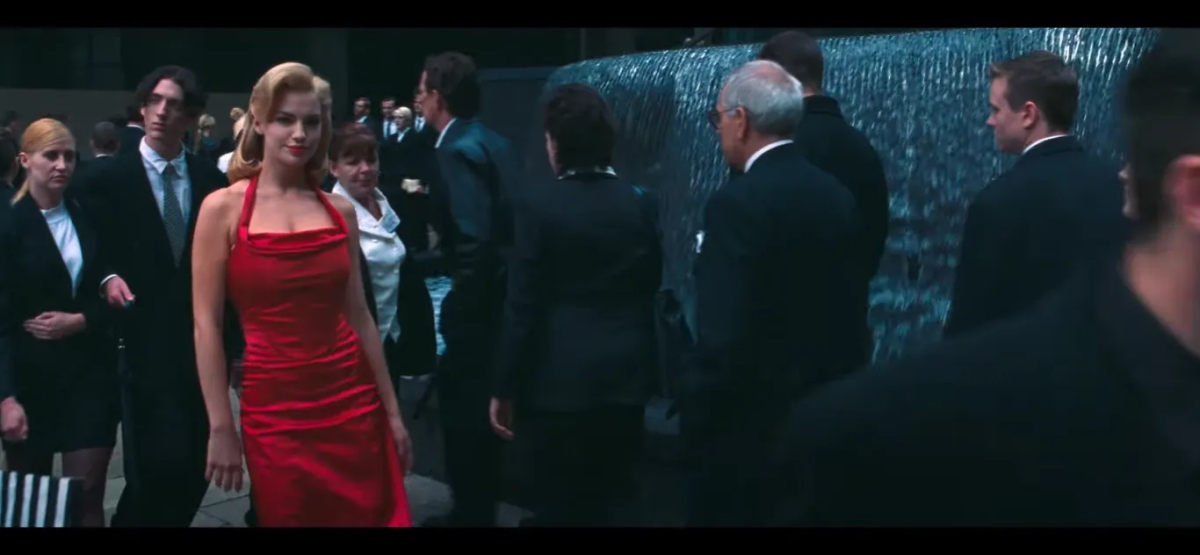
Suddenly, his attention is captured fully as he stops listening to Morpheus’s speech and focuses elsewhere. This distraction is not of danger, but by desire. A stunning blonde woman in a bright red dress walks past him on a city street. He turns to look at her and take in her beauty. A moment later, he’s staring down the barrel of a gun from an Agent of The Matrix.

This moment, while brief, is the Matrix in miniature form, a system that doesn’t just imprison the body, but hijacks the mind as well. In this scene, the Wachowski Brothers, who directed the Matrix film series, deliberate show the audience how distraction can be deadly, how perception can be manipulated, and how even the most liberated minds are vulnerable to illusion even after escaping from the simulated word of The Matrix. Over two decades later, this scene resonates more than ever as we live in a blurred world now of reality and simulation and of seemingly endless distractions like the lady in the red dress.

Let’s walk through how the scene unfolds similarly to how Neo and Morpheus experience the simulation themselves. Neo and Morpheus are in what appears to be a peaceful, clean city environment with sun-drenched streets, people in business attire moving in orderly fashion of different occupations and livelihoods. It’s not the gritty or green-tinted world Neo has just escaped from. Everything here is vibrant, bright, almost too perfect and calm. There’s a catch to it but we don’t know what it is yet as the audience.

Morpheus explains to Neo, “This isn’t the real world. It’s a computer-generated dreamworld built to keep us under control.” They’re inside a training program that mimics the Matrix, but this version is safe and controlled with seemingly no threats like what lurk inside the Matrix. As they walk, Morpheus encourages Neo to stay alert and keep up with him. However, Neo’s attention suddenly drifts elsewhere. A tall, blonde, and slightly smirking woman in a red dress glide past him, a stark contrast to the grayscale suits and muted tones of the crowd. The camera follows Neo’s gaze and not Morpheus’ words. Just as Neo turns around to look at her again, Morpheus interrupts: “Were you listening to me, Neo, or were you looking at the woman in the red dress?”

Neo turns again and instead of the woman, an Agent from the Matrix stands there with a gun to his head. The simulation freezes. Morpheus smiles. “Look again.” This is Neo’s wake-up call after he flinches from the sight of the Agent’s gun in his face. Neo is shaken as at any time in the Matrix, any of those ‘people’ are enslaved by the Matrix can turn into an Agent who is looking to prevent others from being freed from their enslavement by Neo, Morpheus and his crew. In The Matrix, distractions can be deadly because anyone can be an Agent and turn into one at any time. Neo learns his lesson and Morpheus instructs Neo about the real danger of going back into the Matrix, but they have a mission to free those from a reality that is not real, whatever the cost may be.

At its core, the Lady in the Red Dress scene isn’t just about Neo getting distracted having not been accustomed to the unique threat of an Agent. It’s about how the Matrix and by extension, any system of contro uses desire, beauty, and sensory overload to mask its true threat.

The woman in red is not a glitch, nor an accident of the simulation. She is designed by Morpheus’s crew to test Neo’s ability to focus and to challenge his awareness in an environment that constantly floods the senses, a virtual simulation that is meant to feel real but isn’t real. Morpheus isn’t just teaching Neo about the Matrix’s mechanics but also, he’s teaching him about vulnerability. The greatest danger isn’t always visible or known in the Matrix. Often, it’s hidden behind the things we want most or desire to have the most.

The red dress is more than a splash of color on a woman who is simulated to be a distraction. It’s a symbol in the overall movie of temptation, distraction, and the human tendency to follow what pleases us, rather than what protects us, even if it will end up hurting us later. In mythology, this kind of idea of ill-fated temptation appears often: sirens luring sailors to their doom in ‘Odysseus’, the forbidden fruit offered to Adam and Eve in Eden from the Old Testament, each of these illusions are designed to distract heroes from their quests or to lead to the fall of man and woman.

In this scene, the woman in the red dress is a test, one for which Neo fails, momentarily, and I think a lot of us would fail like he did with the distractions that are constantly thrown at us each day. His eyes are drawn away from his mentor, away from the lesson he is teaching, and toward something that feels more real than the truth. The result of his ill-fated choice? Instant danger and his potential demise if he were to make the same mistake again.

The brilliance of this scene lies in how it’s staged visually and shot from Neo’s perspective: everyone is dressed in grayscale, forming a camouflage of conformity and ordinariness. The woman is the only thing that stands out to Neo and the audience. She breaks the pattern of what we see and thus, attracts attention and an extra look. That’s what makes her the perfect distraction and allegory for ill-fated temptation, and that’s what makes this scene timeless.

Fast forward to today’s world where distraction has become the default mode for many of us. Our attention is fragmented by design, engineered by algorithms, applications, increasingly ‘real’ virtual and simulated realities, and seemingly endless digital stimuli, for which has dramatically shortened our attention spans. The modern “Matrix” isn’t an actual simulation in our brains, at least not yet as I write this, but it’s a network of more and more screens, news feeds, constant notifications, and seductive content. It’s the all-knowing algorithm pushing what it knows will make you pause mid-scroll and continue to feed your dopamine receptors.

Every time you find yourself watching a video you didn’t intend to watch, reacting to an outrage post on a political or social issue, comparing your life to curated influencer perfection on social media, or buying something new because it popped up at just the right time in your news feed, that’s the ‘red dress’ in action. While you’re watching the distraction, whatever kind it may be, something else is happening in the background of our lives: real threats are forming that pose real danger to us. Climate change. Political instability. Ongoing wars. Mental health crises. Surveillance capitalism. Social isolation. Economic inequality. Things that are far more dangerous and impactful than seeing ‘a lady in red’. Like Neo, we rarely see ‘the Agent’ or the real threats coming at us on the horizon.

In The Matrix, Morpheus teaches Neo that true liberation begins with awareness, not just of the system, but of how the system manipulates us and our desires. The Lady in the Red Dress is a metaphor for all the ways we’re trained to look away, to not pay attention, to surrender to the pleasure of the moment rather than focus on the issues of the present and the future. In 2025, this scene is more relevant than ever to our real world. It reminds us that to stay aware, engaged, and vigilant in a constantly distracted world is a small yet meaningful act of rebellion.

The focus and impact that you give to the world around you rather than cheap simulated or virtual distractions is actual power. Being able to have greater perception and awareness is everything these days and will allow you to help other people do the same. The next time something flashy, tempting, or beautifully packaged grabs your attention, you should ask yourself: “Am I listening, or was I looking at ‘the woman in the red dress’?”

Be Wary of Bread and Circuses

“There’s nothing wrong with distractions and wanting to enjoy an event, a spectacle, or indulge a bit but in the times that we’re living in, it’s important to realize that focusing only on ‘bread and circuses’ is something we can no longer afford to do.”

Who doesn’t enjoy sports or entertainment or both? People since the dawn of time have enjoyed being entertained or have been spectators or participants in games, sports, or other spectacles. At best, it is a thrilling adrenaline rush to be part of it to the roar of hundreds or thousands of people. At worse, it is a pleasant distraction from the humdrum of our daily life and our routines. There’s nothing wrong with distractions and wanting to enjoy an event, a spectacle, or indulge a bit but in the times that we’re living in, it’s important to realize that focusing only on ‘bread and circuses’ is something we can no longer afford to do.

The concept and phrasing of “bread and circuses or in Latin known as, “panem et circenses”, comes from the Roman Empire and belongs to the Roman poet Juvenal. Juvenal criticized how the Roman leadership would use free food such as bread and grant entertainment such as the gladiator events and other spectacles of the coliseum to distract the citizenry from societal and economic decay. While the Roman empire declined and fell as all empires do, today, in our modern world, we have major sporting events such as the FIFA World Cup and the NFL Super Bowl. Reality Television shows remain quite popular, and the media spends hours on celebrity scandals and gossip rather than focus on systemic issues affecting each of us daily.

Why is this an issue today as it was almost 200 years ago? I would argue that we are living through an era of upheaval including political instability, economic inequality, the effects of climate change, and the rise of authoritarianism. Distraction such as ‘bread and circuses’ help to keep people distracted from these ongoing issues and is a powerful tool to be utilized by those holding power. While sports and entertainment can be healthy outlets, it does not go well for a society when it is all-consuming, and people are overly reliant on it each day for fulfillment or pleasure. An active citizenry must remain focused on issues that affect them and their families as if they are paying attention and are engaged, positive change is more likely to occur as a result.

Political leaders can use major sporting events to help push their agendas forward as the times surrounding such events are the easiest to enact policies that are controversial but in which public attention is directed elsewhere. Politicians and leaders can also engage in controversies surrounding sporting events and how it related to ‘culture wars’ and ‘celebrity feuds’ to divert from ongoing political scandals or economic problems. Major sporting events are also used to stir national pride in a country and can be used to distract from real issues that the country is facing as well.

Sports and entertainment are big money for corporations and for wealthy individuals. Sports can reflect ongoing economic inequalities especially when multimillion-dollar commercials are paid for by a company rather than in investing in their own workforce’s compensation. Money spent in the billions of dollars each year on sports betting, gambling, or on tickets could have been funneled towards programs focusing on social well-being in health care, education, or infrastructure.

Celebrities and athletes should be compensated well for the work they do but there is an issue when ordinary workers who help make events, games, and other spectacles run smoothly are not paid a living wage. Thousands of workers are making decent pay, but it pales in comparison to what the ‘stars’ are making especially when they are the one preparing their food, keeping them safe with security measures, and helping stock the shelves and sell the merchandise.

There is also the ongoing debate in society about taxpayer money funding massive students and events that are not benefiting the surrounding community or the city itself. A lot of that money gets funneled to corporations in the ‘naming rights’ and to the ‘billionaires’ who see their net worth grow up as the sports franchise becomes more valuable over the years. A society where income inequality is high and is rising will be reflected in sports and entertainment as well. While there are some economic benefits to be made by the average person in these industries, a large sum of the gains to go to the wealthiest owners, players, and stars while the wealth does not ‘trickle down’ much, if at all.

While some of these issues do get coverage in the media although increasingly sparingly, I would argue that general news media, especially in recent years, has become sensationalistic and has focused on ‘click bait’ content rather than on serious investigative journalism. News outlets have prioritized celebrity feuds, sports gossip, and other trivial controversies that pale in comparison in terms of importance compared to real issues going on with the wider society. Viral content gets more clicks and eyeballs, especially on social media, and that’s where the focus has turned especially in recent years. Too much information at one time also presents most people from being able to decipher of what’s real vs. what’s fake and what to pay attention to because ‘information overload’ makes it hard to pinpoint what is likely to affect them the most and is worth paying attention to.

Similarly to the issues I’ve mentioned that ‘bread and circuses’ distract from each day, one issue that is the most immediate and wide scale in terms of ongoing effects is the accelerating climate crisis. Major sports and entertainment events all have an environmental cost and leave a sizable carbon footprint. When you tally up, the travel emissions, energy consumption because of the game or event, and the waste involved from having thousands of people in attendance, communities who support the events or games must deal with the aftermath, including both the financial and environmental costs.

While these massive events like the Super Bowl, the FIFA World Cup, and the Olympics due to pledge to be more sustainable and environmentally friendly, many companies do not end up footing the bill for the carbon emitted or the energy used. They can do so because the companies help sponsor the events and contribute enough money to them, so they aren’t as liable to help with the environmental aftereffects. Looking at two recent examples with the 2016 Rio Olympics and the 2022 FIFA World Cup in Qarar, these two events led to increased carbon emissions (FIFA) and environmental aftereffects. (Olympics)

While I am supportive of sports and entertainment and have been a fan of both, I still recognize the need to tone it back these days because excessive consumption of either will not help our society and our world be better. Sports and reality TV may seem as important as real issues, but they are not and never will be. People must stay engaged in what’s going on in their community, their country, and their world. As consumers of news, we also have the individual and collective power to choose which news outlets we give our time and our money to as well. If frivolities and ‘bread and circuses’ is all a news organization is offering, then it’s not a real news organization to begin with.

 Advocating for solutions to real issues, being a reliable voter, and volunteering in your community consistently can help keep the ‘bread and circuses’ to a more tolerable level. We all want to experience gratification and rewards in our lives and sports, or entertainment do both in providing that kind of dopamine hit but it’s a cheap one, and it’s not something we do ourselves. Political activism, working for social change, and developing our problem-solving abilities is real gratification in whatever issue you want to work on in our world. It’s not as instant and far from being easy but improving anything in society will take effort, discomfort, patience, and a lot of perseverance. Make sure you advocate for what you care about because celebrities and sports figures may not do the same, if at all.

You should stay focused on what’s important in the news, be civically engaged and encourage others in your life to do so. Remember to balance your consumption of entertainment and sports along with awareness of the issues and problems affecting you, your families, and your communities. Watching the Super Bowl is fine and I just did so recently as I have most years of my life, but if we continue to ignore political scandals, economic problems, and societal injustices, there won’t be much to celebrate in our society beyond that one day of the calendar year, where two teams of millionaires play a game that you can’t even be part of or even afford to go to.

Being An Active Listener

“I would like to highlight the significance of having active listening skills in contemporary society, its myriad of benefits, its role in fostering respect and empathy for other people, and the pitfalls of distraction in the digital age.”

With the frenzied pace of modern life, where everyone seems to be talking but few are truly listening, the act of active listening has become increasingly crucial to partake in. In a society inundated with seemingly unlimited information and plagued by short attention spans, the ability to listen intently and engage with others through attentive body language has emerged as a rare and invaluable skill, both personally and professionally. I would like to highlight the significance of having active listening skills in contemporary society, its myriad of benefits, its role in fostering respect and empathy for other people, and the pitfalls of distraction in the digital age.

Active listening is more than just hearing words come out of the other person’s mouth; it is about comprehending fully the message being conveyed, acknowledging the speaker’s perspective, and responding thoughtfully when they are done. In a world where communication often takes place through digital screens and abbreviated text messages, genuine human connection can easily be lost, especially when it’s not done face-to-face. However, active listening provides a counterbalance to this growing trend, allowing people to connect on a deeper level and work on building more meaningful relationships.

One of the primary benefits of active listening is the ability to facilitate effective and thorough communication. By listening attentively without interrupting, one can better understand the thoughts, feelings, and intentions of the other person behind the words spoken. This type of listening comprehension lays the foundation for productive dialogue, enabling participants to exchange ideas, resolve conflicts, and collaborate more effectively. Whether in personal relationships, professional settings, or in the public discourse, the ability to listen actively fosters mutual understanding and helps to facilitate constructive communication.

Moreover, being an active listener is a sign of respect and shows that you have real empathy towards other people. When we give someone our undivided attention, we convey that their words and experiences are truly valued. This kind of validation not only strengthens interpersonal bonds but also nurtures a sense of belonging and significance. In a society where people often feel isolated and unheard from, the simple act of listening actively can make a profound difference in someone’s life or even just their day. By demonstrating empathy and understanding, active listeners create a supportive and caring environment where individuals feel safe to express themselves authentically.

Additionally, active listening enhances our capacity for empathy and compassion. When we truly listen to others, we gain insight into their emotions, perspectives, and lived experiences. This expanded awareness cultivates empathy, allowing us to relate to others on a deeper level and appreciate the diversity of our individual experiences. Through active listening, we transcend our own preconceptions and biases and open ourselves up to new ideas and perspectives. In doing so, we foster a more inclusive and empathetic society where differences are accepted and acknowledged rather than feared and ignored.

Furthermore, active listening promotes personal growth and self-awareness. By paying attention to the thoughts and feelings that arise within us as we listen to others, we gain valuable insights into our own beliefs, values, and biases. This self-reflection enables us to identify areas for our own personal growth and development, fostering greater self-awareness and more emotional intelligence. Also, by engaging in active listening, we cultivate a habit of mindfulness and presence, allowing us to fully immerse ourselves in the present moment and appreciate the richness of undisturbed human interaction.

In today’s digital age, the temptation to multitask and divide our attention is constant. With smartphones constantly buzzing with notifications and social media feeds demanding our immediate attention, it can be challenging to stay fully present during conversations. However, the consequences of being distracted can be profound, leading to misunderstandings, missed opportunities, and damaged relationships and friendships. When we allow ourselves to be distracted by our phones, laptops, tablets, or other devices while interacting with others, we signal that they are not worthy of our full attention. This lack of full presence undermines the quality of the communication involved and diminishes the level of trust and respect between two or more individuals.

While active listening holds immense value, there are certain pitfalls to avoid ensuring its full effectiveness. One common mistake is the tendency to mentally prepare responses while the other person is speaking, rather than fully absorbing their message. This kind of anticipation without thinking can lead to misunderstandings and missed opportunities for genuine connection. Additionally, interrupting or interjecting with personal anecdotes can derail the conversation and detract from the speaker’s unique experience. To mitigate these kinds of challenges, it is essential to cultivate mindfulness and self-awareness during interactions, even if you really have something urgent to add to the conversation.

To avoid this kind of pitfall, you should be actively monitoring your thoughts and impulses, resisting the urge to jump to conclusions or offer unsolicited advice without being asked for it. Instead, you can practice patience and humility, allowing the speaker to express themselves fully before formulating your response. By maintaining open body language and making eye contact, we can signal our engagement and receptivity, encouraging the speaker to continue sharing their uninterrupted thoughts and feelings. When we are being mindful of these potential pitfalls and committing to being an active listener with sincerity and respect, we can foster deeper connections and enrich our friendships and relationships with other people.

Therefore, it is essential to prioritize presence and mindfulness in all your interactions with others. By consciously setting aside any distractions and giving our full attention to the person speaking to us, we demonstrate full respect and consideration for their thoughts and feelings. In addition, by resisting the urge to check our phones or engage in other activities while listening to that person, we create a real space for authentic connection and meaningful dialogue. By doing this, we honor the inherent dignity and worth of every individual, fostering a culture of respect and empathy that they will be able to return in kind if they follow your good example.

Active listening is a key cornerstone of effective communication, respect, and empathy in today’s world. Listening attentively without interrupting, showing engaged body language, thinking up a response until after they’ve finished talking, and giving our full attention to the speaker helps create a foundation for meaningful dialogue and authentic connection, which is becoming increasingly rare. In our society marked by digital distractions and fleeting, shallow interactions, the ability to listen actively is more important than ever to cultivate day-in and day-out. When we embrace the art of active listening, we can foster deeper relationships, cultivate greater empathy and understanding, and create a more compassionate and inclusive world for everyone.

Retaining The Ability to Connect

How many times have you been out, either alone or with a friend or family member, and you have noticed in the café or restaurant a couple or a group of people just staring at their phones rather than each other? I’ve noticed this occurring multiple times and more often than not in the past year or so. Now, it’s not great to be out in public on your own on your phone either but it seems rather ironic to be out in public with a friend or a family member and you are both on your phone at the same time rather than living in the moment and being engaged with each other instead of their device.

It’s one thing as well for friends to be on their phones at the same time perhaps to keep up with their other friends but it’s quite silly for me to see couples out in public staring down at their phones when they should be connecting with each other. What is the point of going out to a café or to a restaurant or any other public place if you would rather interact with your handheld device than the person sitting right in front of you?

I can see if one of the two or more people in the group need to respond or send a text, check on a work e-mail, or take an important call but it is quite ridiculous when both people or all people in the group have nothing better to do than to look at their phones. There are a number of ways that I want to suggest in this article on how to retain that important ability to connect with another person especially out in public rather than connecting on social media, be social yourself with the person(s) you are with.

1.The Lost Art of People Watching: There is really something to be said about just wondering what other people are doing and checking out how they are going about their daily lives. Now, I am not suggesting you and your group or friend(s) just stare at somebody and make them uncomfortable. That’s not it at all. What I would recommend is to really just watch how people go running, cook your food, clean up the streets, deal with other restaurant patrons, etc.

For example, if you are at a park with someone else, it’s nice to make conversation about the joggers, the musicians, the frisbee players, the traffic police, etc. It’s a good way to stay engaged in conversation without turning to the phone to be entertained. Watching the world go by is a pleasurable activity and it can make you appreciate the rhythms of daily life. You should not be ‘people watching’ so intently that you make those who know they are being watched notice you doing so! Try to do so casually and without staring too intently. That’s a good way to do it in the mature way.

2. Leave the Phones at Home: What better way to have a good time with somebody then to leave the phone at home. It can be mutually agreed upon beforehand and you can both figure out where to meet up the old-fashioned way: by consulting a map or checking Google before leaving the house. It is really easy to leave the phone at home when you have the logistics squared away in terms of time, date, and where to meet. It’s also easier by car as well when you can leave the phone in your car for the two or three hours you are spending with them and can come back to it later to help you navigate home.

This is a really underrated way of maintaining that personal connection with someone and also strengthening it by flexing that resistance muscle and resisting the temptation of the phone by putting it both out of sight and at least, temporarily out of mind. I think both of you will be glad to rid yourselves of the phone for a few hours or even a whole day and the conversation and the activity will be much more rewarding. You will also remember what happened a lot more because you just were that much more engaged in what was happening because that person and the activity you did together had your full and undivided attention.

3. One Phone, One Group: If you feel the need to compromise about phones in a group, a good way to fix the issue or at least put a stopgap to it is have one phone for everybody in the sense that you are using that phone for everybody to see or use such as making a quick phone call away from the group, checking out travel pictures together, or doing a fun game through an application. Instead of everyone bringing their phones to the group meetup, if one person does it, you’ll have to share and be social about it. Obviously, you do not want others to see your private text messages and contacts on your personal phone but there are ways to do it and still be secure in having others use it.

I really do suggest having some group games on there or using it for showing off pictures and talking about travel or activity plans that you have all done. Another way to be social about a phone is to hook it up to somebody’s speaker and listen to different music together. It can even be some kind of a game where each person chooses a different song in a circle-like setting and your friends or family have to guess the musical artist or the name of the song itself. Being social and using your phone do not have to be separate from each other but the best way to make that happen is to only have one phone per group rather than one phone per person if you want to keep that ability to connect.

4. Enjoy the Silence and Nature: If you have been out with someone or a group for a few hours and you all happen to run out of things to say to each other, don’t go back to the phone! Instead, simply enjoy the silence and each other’s company. You do not have to fill every waking moment together with a witty remark or a sarcastic joke. Sometimes, it’s nice to be alone in your thoughts, people watching together, or just living in the moment and enjoying the ambiance of the place where you are at. This also applies to enjoying nature especially if you are outdoors. You both or the group will not need your phones when you are listening to the birds chirping, watching the monkeys climb to the peak of the trees, or checking out the beautiful mountain or sea view vistas.

You may say, “well, Ben, how can I enjoy nature when I do not have my phone to take a picture of the beauty?” That’s a good question but there’s an easy and simple solution to that problem as well. It’s known as bringing a camera that you like and rely upon and practice taking real photographs. I think it’s often better to take pictures of nature and scenery with a real camera than your phone even though camera phones have become quite popular. Practicing your photography skills with a real camera is a great way to use the tip well and to your advantage.

Photography can be a group activity and will allow both of you or your whole group to take better pictures, enjoy the nature around you, and listen carefully for the silence of the world around you. Lastly, you do not always have to be talking with each other to be connected. That is a false construct invented by our culture really that you have to be engaged with each other socially by always talking. Friends and/or loved ones of many years know so much about each other that they can really be there with one another in silence without filling the void with a conversation 100% of the time.

5. Shame the Phone User(s): This tip will be the most controversial of my suggestions, but I stand by it as having done so myself on a few occasions. The best way to avoid two people from using their phone at one time is to shame politely the first person who pulls out their phone first. Now, ‘shame’ has a negative connotation as it should have in our culture but a little dose of shame in my opinion is not the worst thing in the world especially when what that person is doing is impolite or inconsiderate. If the person you are out with, especially on a date, is constantly checking their phone every five minutes or is not engaged with you socially, then you have the right to shame them for it and ask them to stop.

If they continue with that kind of behavior, instead of doing it right back to them and escalating the tensions, it would be best to just say goodbye and let them know that you don’t appreciate them being on their phone. There are sometimes in life when you have to be both direct and firm with those who are in your social circle, even friends and family members. Respect is a key component in any relationship so if that person doesn’t value you enough to put their phone away like you are for an hour or even more unless it’s an emergency, then they simply do not deserve your time or the money spent to hang out together. Shaming the phone user in public when you’re with them is principally about setting healthy boundaries which are key in our relationships.

Also, you should hold yourself to the same standards and put the phone away as well lest that person you’re with get offended, walk away, or shame you into being more socially conscientious. Turn the phone off, put it in a locker, tell them that text or Instagram message can wait but above all else, shame them politely and remind them that we should be connecting and enjoying each other’s company and not off in a virtual world with other people. Maintaining that sense of cordiality will ensure better relationships and less wasted time staring at your phones in public.

Our healthy and lasting relationships are a key part of our mental health and our outlook on life. I believe that social media is still making us less social and while these networks do connect people on the surface, they do not foster deep friendships or relationships. Social media are like the gateways to having connections with others but you and only you are responsible for fostering and harvesting those connections to grow and become deeply rooted over time. You and the other person(s) who want to connect must do your best to put your phones away and focus on connecting directly by following some or all of these tips I have suggesting especially keeping the phone out of sight and out of mind temporarily.

Flexing your willpower and retaining that ability to connect will make you a happier and a healthier person overall. Your attention span is likely to improve as well as your friendships and/or relationships. I also believe and the research would show that your anxiety, feelings of depression, or of loneliness will decrease the more time you spend connecting with a person in person instead of through a virtual network. This ability to retain deep connections with people is a profound struggle in this age of instant yet flighty connections.

There are easy ways to counteract this trend though by letting go of the temptation when possible, embracing the silence and the natural world, and by politely reminding the person(s) you are with how it is good social etiquette to give someone their undivided attention when you are together in a public place or setting. If you struggle or have a setback, do not beat yourself up too much about it. Keep doing your best, lessen your use of your phone in the first place, and let the people in your life know how much they mean to you by giving them more of your attention and your love.