‘Lord of War’ – Film Review and Analysis

Arguably one of the best movies of the 2000’s and Nicholas Cage’s best performance as a lead actor, The film ‘Lord of War’, released in 2005, is a realistic and unfiltered take in the role of illegal arms dealers, who facilitate the sale and transfer of arms trafficking throughout the international arms industry, which continues to be one of the world’s most profitable endeavors. ‘Lord of War’, while nonfictional in its’ story is actually based off of the lives and exploits of different real-life arms smugglers. ‘Lord of War’ is directed by Andrew Niccol, and stars a cast of Nicholas Cage, Jared Leto, Ethan Hawke, and Bridget Moynahan.

Nicholas Cage plays Yuri Orlov, the son of Ukrainian refugees from the Soviet Union, where he and his brother, Vitaly, help their parents out in their Ukrainian restaurant as cooks and helpers. While Vitaly is somewhat satisfied with this simple life of cooking borscht and washing dishes, Yuri wants to achieve the ‘American Dream’ and get out of Brighton Beach, Brooklyn, where he grew up after leaving Ukraine. He struggles to grasp at any real business opportunity in order to get out of the shadow of his ordinary life in Brooklyn.

However, one day when he is dining at a restaurant in Brighton Beach, the business idea he needs comes to life for Yuri in the form of a Russian mobster killing two would-be assassins and fending off their attack with AK-47 Kalashnikov rifles. Yuri believes that there is a lot of money to made in international arms sales and decides to go into business despite the protests of his brother, Vitaly, and the fact that his parents don’t know what he’s up to.

One scene in particular that stands out in Yuri’s beginning as an illegal arms dealer is when he tells his brother that since there are so many McDonald’s and gun stores in America already, he needs his business to be international in its’ focus. At first, Yuri feels that dealing arms is comparable to serving food at a restaurant. He justifies his nefarious business by narrating to the audience that its’ providing for a part of human nature in his opinion, the instinct to kill and harm others, as documented by the “earliest human skeletons who had spears in their heads and rib-cages.”

While Vitaly, Yuri’s brother has moral reservations about what Yuri is doing, he decides to join him later on as they crisscross the globe during the late 1980’s and into the 1990’s dealing with corrupt governments, genocidal dictators, and other more ruthless arms dealers as their competition. As Yuri becomes more popular and wealthy with the illegal arms business, he runs up against a by-the-book, incorruptible, and idealistic Interpol agent, Jack Valentine (Ethan Hawke), who tries unsuccessfully to track Yuri’s business dealings down by air and by sea.

Despite the fact that his brother, Vitaly, becomes a drug addict, and is an unreliable business partner, Yuri continues to run his illegal arms business as a one-man show. While a fictional story, ‘Lord of War’ is based off of real life conflicts and real life people who were involved in the illegal arms trade. These conflicts include the 1982 Lebanon War, the Soviet Union’s War in Afghanistan against the Mujahadeen, the civil war in Liberia during the 1990’s, etc. The movie does not gloss over the dissolution of the Soviet Union and the impact that the end of this cold war conflict had on the rest of the world in terms of arms sales. Yuri is able to become a very wealthy and powerful arms dealer in the film due to his family connections in Ukraine and the sheer weaponry, and arsenal that the Soviet military left unused.

Like his arms business, which is run under false pretenses, he does the same with his love life as he falls for a fashion model and childhood crush, Ava Fontaine (Bridget Moynahan), who he sets himself up with under the guise of a false photo shoot. Despite the fact that his parents don’t know about his illegal dealings, he lies to his new wife regularly, and his brother ends up in a drug rehabilitation center, Yuri does not give up on the arms business because he likes it, is good at it and is unable to go straight in legal business endeavors. However, in the wake of all of his ‘success’, innocent men, women, and children get killed by the guns, bombs, ammunition, tanks, planes, etc. that he sells and profits off of. As the film progresses, the director makes clear that Yuri has sold his soul in this dirty trade and it may cost him his life or the lives of others close to him if he doesn’t stop.

In a way, the audience who watches ‘Lord of War’ could be most closely aligned with the perspective of the Interpol agent, Jack Valentine. He knows that Yuri is a bad person and he wants to bring him down, but will it make any difference to bring one sole arms dealer down when billions of dollars are exchanged around the world each year through both legal and illegal arms sales. Like Jack, the audience may question the nobility of bringing down one arms sales dealer like Yuri when there are dozens of them out there, and Presidents / Prime Ministers of the major countries are the biggest arms dealers of them all.

Yuri never takes full responsibility for his business dealings during the film even if the sale of his arms causes bloodshed and death. He remarks bluntly to his brother, Vitaly during one scene: We don’t talk about it. How many car salesmen talk about their work? How many cigarette salesmen talk about their work? Both their products kill more people every year than mine, at least mine comes with a safety switch. Those guys can leave their work at the office, so can I.”

In Yuri’s opinion, he may be evil, but he’s ‘necessary evil’ because there are other people or governments out there like him involved in the business, but sometimes they ‘can’t have their fingerprints on the gun.’ Despite the pressures placed on him by family, friends, and the law, Yuri is committed to doing what he does best without having the moral imperative to stop. As I don’t want to reveal the ending, the first time you see it, you may be shocked but this film doesn’t deal in black and white, and that’s what I love about it.

There are numerous shades of grey that go along with the black and white, and the ending of ‘Lord of War’ falls within those shades of gray. ‘Lord of War’ doesn’t have your typical Hollywood ending, and that’s partly what it makes it such an alluring film. On top of the exquisite directing, acting by Nicholas Cage, Jared Leto, Ethan Hawke, etc. and the deep political and philosophical themes behind this film, I highly recommend it.

I’ll leave you with a quote from the film that is very poignant and is still true twelve years after ‘Lord of War’ was released in movie theaters. “While private gun-runners continue to thrive, the world’s biggest arms suppliers are the U.S., the U.K., Russia, France, and China…they are also the five permanent members of the United Nations Security Council.”

Cultural Spotlight – Vallenato

For my last blog post regarding Colombian culture for a while, I’d like to focus on a form of dance that is very popular there, especially on the Caribbean coast. Similar to cumbia, vallenato is a form of Colombian folk music that is both traditional and innovative in its’ instrumentation, interpretation. If we were to translate vallenato to English, it would roughly mean, “born in the valley,” which refers to vallenato’s roots coming from the Caribbean region of Colombia.

The valley that is being referenced as having started this popular music is located between Sierra Nevada de Santa Marta and the Serrania de Perija. Vallenato is also partly named after the Colombian city of Valledupar where this genre of music originated. Vallenato has become so popular not just in Colombia but also in rest of Latin America making it apart of mainstream Latin music that is apart of the cultural heritage of that country and that region of the world.

Vallenato originated from the tradition of farmers who would travel from Colombian village to village on long journeys in their quest to sell cattle in local fairs or look for greener pastures for them. During these trips, the farmers would sing together, play guitars and other instruments like gaita flutes (kuisis), which were indigenous to the local culture. Since these farmers would travel often, they would often bring news and information to the different towns that they visited. Sometimes, these messages to the village folk would be delivered in the song form so that the towns would know what’s going on nearby in the valley.

Vallenato is an eclectic mix of different kinds of world music such as Spanish, African, and Amerindian. Vallenato songs started to become common during the early 1900’s from the Caribbean region of Colombia. The early forms of vallenato would come with instruments such as gaita flutes, guacharaca (percussion), caja, bass guitar, and acoustic guitar. Additionally, you could make the sounds more European by adding instruments like the accordion or the piano.

Since the early days of vallenato, the accordion has become an increasingly large part of the sound of the songs of this particular genre of music. While vallenato was originally a genre of music for lower class folk and farmers in particular, it has since become popular across all spectrums and social classes within Colombian society. Many subgenres have come out of traditional vallenato such as romantic vallenato, commercial vallenato, and new wave vallenato.

Since the heart of the vallenato genre deals with telling stories, it is a very social form of music. You can drink liquor, enjoy a nice meal, and even dance with a partner to this genre. Listening to vallenato can go well with having a family party, attending a festival, or checking out a carnival. Vallenato has become so popular that there are two main festivals devoted to it: the Vallenato Legend Festival and the Cradle of Accordions festival. Valledupar has also become one of Colombia’s most famous cities given the fact that it was the birthplace of one of its most popular music genres, Vallenato.

When it comes to vallenato, you cannot have a song without the caja, the guacharaca, and the accordion to flesh out the sound and rhythm. The caja, is a small drum, that you can place between your knees and play with your bare hands. This drum was originally brought over by the Europeans during colonization and was mainly used by African slaves for entertainment.

The guacharaca, a wooden, ribbed stick that most looks like sugar cane can be rubbed together with a small fork in order to create a scraping sound. This instrument is meant to imitate the sound of the guacharaco bird from the Cesar region of Colombia, who is known to hunt for food and dance to perform the mating ritual. Lastly, you can’t forget to use the accordion of German origin in order to get the different tones needed to fill out the vallenato sound. By using the right buttons and hitting the right reeds, you should be able to get the rhythm down.

Speaking of the rhythms of vallenato, there are four different beats that create a rhythmic structure and a melody chord structure to form the basis for a song. The four rhythms are known as son, paseo, merengue, and puya. The son and paseo are played in a 2/4 time while the merengue and puya are played in a 6/8 time or ¾ time structure. ‘Son’ is known as being the slowest and most somber movement of vallenato and also has a heavy cadence. ‘Paseo’ is probably the most widely recorded rhythm of vallenato is known as being the most consistent of the four rhythms.

When it comes to ‘puya’, it’s the easiest rhythm of vallenato for each musician to have a solo with one of the three main instruments. It also has a faster up-tempo and is the oldest of the four rhythms. ‘Merengue’, which is not the same type of music as the original genre, but is the fourth and last vallenato rhythm, and was brought to Colombia by some African tribal groups. It’s a more narrative style of vallenato and is played in decimas, which is a 10-line format with Spanish internal rhythms the came over to Colombia originally during the 16th century.

There have been many composers, singers, and groups of Vallenato bands that have emerged over the past century who have helped to contribute to this genre of music. Perhaps the most famous Colombian composer of Vallenato was Rafael Escalona, who composed a number of famous songs and was one of the co-founders of the Vallenato Legend Festival along with Consuelo Araujo and Alfonso Lopez Michelsen.

Many Vallenato groups have also become orchestras in both their large size and instrumentation. The most popular of these orchestras are Binomio de Oro de America, Carlos Vives y la provincia, and Los Diablitos del Vallenato. You also can’t talk about Vallenato without mentioning Silvestre Dangond, who has become maybe the most famous modern day singer and composer of songs in this genre.

He has become popular not only in his native Colombia but also in Latin America and worldwide. While originally a genre of music from Colombia, Vallenato has expanded its’ popularity to Latin America and the rest of the world to share with its’ listeners both the joys, sadness, and romance of life itself.

‘Field of Dreams’ – Film Review and Analysis

terencemann
“Oh…People will come, Ray. People will most definitely come.”

Field of Dreams is a quintessential classic American film and a movie that gets better with repeated viewings. Field of Dreams is almost thirty years old but has aged like a fine wine since it was released in 1989. This film is a unique mixture of the fantasy, sports, and drama genres and shows how crucial the game of baseball is to American culture. While some people who watch Field of Dreams think that this film is an original story, it is actually based off a novel by W.P. Kinsella titled, ‘Shoeless Joe’, which was critically acclaimed as well.

Part of the reason why Field of Dreams was so successful is because of the great cast of actors and actresses that helped make the film so popular. This was one of Kevin Costner’s most famous roles and also stars Amy Madigan, James Earl Jones, Ray Liotta, and the late and legendary Burt Lancaster who starred in his final role in this movie. Another fact that most fans of this film wouldn’t know about is that Field of Dreams was nominated for three Academy Awards including Best Original Score, Best Adapted Screenplay and Best Picture.

Of all the places in the world to hear a voice whisper the phrase, “If you build it, he will come…” a large cornfield in the middle of Iowa wouldn’t be your first guess most likely. However, that is exactly the premise behind Field of Dreams. A local farmer, Ray Kinsella, who has a troubled relationship with his father, John Kinsella, a former baseball player who wanted his son to follow in his footsteps feels guilt at what a strained relationship he had with his father before he passed away.

Ray then sees a vision of his cornfield being turned into a baseball field and decides to go along with this vision by turning his farm into a real baseball field. Ray is an adamant defender of ‘Shoeless’ Joe Jackson who believes he was actually innocent and didn’t do anything wrong despite the fact that he was banned from baseball due to the 1919 Black Sox Scandal. Ray’s father, John, was also a big defender of ‘Shoeless’ Joe Jackson and that’s the one major thing that Ray and his father could agree upon. His daughter, Karin, and his wife, Annie, are skeptical of Ray’s plan to build a baseball field at first but end up trusting his judgment after some convincing.

After Ray completes the building of his baseball field in Iowa, many months go by and the bills for maintaining the field start to pile up causing Ray and his family to feel some serious financial stress. When all hope seems to be lost regarding his vision, Karin spots a baseball player moving through the baseball field one night and Ray recognizes the player as being no one other than ‘Shoeless’ Joe Jackson (played brilliantly by Ray Liotta). John, Ray’s father was a big fan of ‘Shoeless’ Joe Jackson and would be thrilled to know that Ray’s vision came true and Mr. Jackson was here out on his farm in Iowa absolutely thrilled to being playing baseball again. Shoeless Joe ends up bringing some of his teammates from the Black Sox who were also banned from baseball due to the 1919 scandal and they start practicing together on Ray’s field.

Unfortunately, not everyone in Ray’s family can see the baseball players on the field. Ray’s brother-in-law, Mark, warns Ray about how much of a financial drain the baseball field is on his farm and Ray may have to foreclose on the property unless he is able to generate some money from it. Mark thinks Ray has gone crazy because he keeps referencing the baseball players on the field who Mark is unable to see. Luckily, Ray’s wife, Annie, and Ray’s daughter Karin can see the baseball players and believe Ray to be doing the right thing leaving Mark quite flustered and angry.

Ray ends up hearing another voice whisper through the field telling Ray to ‘ease his pain.’ After seeing how the local town wants to ban the books of one of his favorite authors from the 1960’s, Terence Mann, Ray ends up doing some more research about his favorite author and discovers that one of Mann’s dreams was to play for the Brooklyn Dodgers professionally. One of the reasons why Ray ended up quitting baseball even though his father wanted him to play professionally was because he read one of Terence Mann’s books when he was a teenager and never played catch with his father, John, again.

Ray and Annie both have a dream about Mr. Mann one night in which Ray is attending a baseball game at Fenway Park together with Terence. With Annie’s support, Ray goes all of the way to Boston to seek out Mr. Mann even though he has become a curmudgeon recluse over the past few decades and mainly keeps to himself. With a lot of convincing, Ray takes Terence to a baseball game at Fenway where they both end up hearing another voice telling the two of them to ‘go the distance.’ They also see the statistics of a baseball played of Archibald ‘Moonlight’ Graham who starred in only one game for the New York Giants but never had an actual at-bat. Ray and Mr. Mann do more research about Graham and end up driving together on their way to Minnesota to go see him.

When Ray and Mr. Mann travel all the way to Minnesota, they realize that Moonlight Graham became a doctor and had passed away over fifteen years ago in 1972. When Ray goes for a walk one evening, he realizes that he has transported himself to that time before Moonlight ‘Archie’ Graham had died and encounters him on the street where they have a conversation about his short-lived baseball career. The older Moonlight Graham is content to be a doctor but wishes for that one chance to face a major league pitcher.

After Ray and Terence leave Minnesota, they encounter a young hitchhiker on the road who introduces himself as Archie Graham. The two of them are amused by this crazy coincidence and take him with them to Iowa. During the ride, Ray confides in Terence Mann that his father was disappointed in Ray for throwing away his baseball career and for denouncing his father’s hero, ‘Shoeless’ Joe Jackson as a criminal. One of Mr. Mann’s books led to Ray putting down the baseball bat as well. Ray really wishes to make up with his father and make things right again if he had a dream to spare.

The amazing thing is that this young Archie Graham character gets to play on Ray’s baseball field in Iowa. In this only “major league” play, he is able to hit the ball into the outfield and get a sacrifice fly run in for his team miraculously after winking at the opposing pitcher as he always wanted to do even as an old man. Facing financial pressure from Mark and his associates, Ray thinks about selling the field to save his farm but Terence Mann encourages Ray to re-consider.

Considered to be one of the greatest monologues in modern film, James Earl Jones gives an amazing speech regarding the central role that baseball has played as America’s pastime and how it has formed our culture, and made the nation stronger during times of peril and tragedy. “People will come, Ray, people will most definitely come…” Terence Mann’s beautiful speech to Ray convinces him to keep the baseball field and not sell it off because he knows that baseball fans will come to Iowa to see their childhood heroes play America’s beloved game.

Mark, acting increasingly incensed, causes Ray’s daughter, Karin to fall from the bleaches, but Archie Graham who has a sense of both his past and future to come, steps off this magic baseball field to save Karin from choking. Mark then becomes a believer and sees all of these historical baseball players and encourages Ray not to sell the baseball field. He most likely believes that the field could be a major cash crop within itself and that people will most definitely come to see it. The older Moonlight Graham thanks Ray for the chance to make his dream to come true and that he doesn’t regret how he became a doctor too.

Terence is invited to leave with the baseball players one day to go through the cornfields to a destination that is unknown. Ray is going to miss Terence but trusts his judgment that it could ‘make one hell of a story one day’ about ‘Shoeless Joe Jackson coming to Iowa.’ Ray has his own family and can’t go with Terence who may be entering a realm or destination beyond our comprehension as the audience. Still though, he’s confident about his next destination and isn’t worried about not coming back.

One day, A younger version of Ray’s father shows up on the baseball field and Shoeless Joe Jackson references that the voice in Ray’s head was not Joe’s but rather Ray himself wanting to have a better relationship with his father and to ‘ease his pain.’ In the climatic scenes that can make even the most stone-hearted person cry, John is reunited with his son, Ray, on the baseball field, and he even gets introduced to Ray’s wife and his granddaughter, Karin, who he never knew in life.

John Kinsella remarks to Ray how “it’s so beautiful here, it’s like a dream come true.” The young John, asks Ray if this is heaven. Ray replies simply that, “It’s Iowa.” Even though John believes it still could be heaven, Ray asks if there is a heaven having never experienced it. John replies, “Oh yeah…it’s the place where dreams come true.” An uplifting emotional moment takes place in this scene as Ray Kinsella looks around at his beautiful farm, his wife and daughter happy and smiling, and to be reunited with his estranged father again as being a sign that maybe they, in fact, are all in heaven together.

Ray is so overcome with emotions at being with John again that before John leaves to go through the cornfields as the sun sets, he strikes up the courage to ask his dad to have a catch with him as they did in the old days. They start to throw to each other and Ray is struggling to believe that this is actually happening until John throws him the baseball, which Ray catches in his glove, and he can actually feel the soft baseball in his mitt knowing that his dream finally came true.

This last scene of ‘Field of Dreams’ is an iconic one and shows the power and love of the relationship of a father and son. Despite their differences, they still want to share the tradition of having a catch together after all of those years had passed between them. As the final scene fades out, you can see thousands of red lights emanating from the cars who are lining up to visit the ‘Field of Dreams’ and see their old childhood heroes play the game of baseball. People most definitely will come if you build it.

A truly remarkable film, ‘Field of Dreams’ is hard to get through without tearing up and having some tissues near you. More so than just Ray and John’s relationship, many characters have their dreams realized because of this baseball field. Archie ‘Moonlight’ Graham gets to swing the bat for the first time, ‘Shoeless’ Joe Jackson gets to play baseball again as apart of his shamed Black Sox team, and Terence Mann gets to see what’s on the other side of those Iowa cornfields. The powerful musical score by the dearly departed James Horner stirs your emotions with every scene, and you can feel the weight of Ray and John’s relationship with each sound of the orchestra. James Earl Jones steals the show by giving one of the best monologues about baseball and its’ importance within the history of America.

If you love the game of baseball and you enjoy a story about achieving your dreams when they seem out of reach, then you should watch ‘Field of Dreams.’ They really don’t make too many Hollywood films like Field of Dreams anymore and even though it was released in 1989, it’s still an American classic, which has stood the test of time. If you ever go to Iowa, that special baseball field is still there to visit. If you’re a father or a son, you’ll also really connect with this film and it will touch you in your heart and in your soul.

‘Collateral’ – Film Review and Analysis

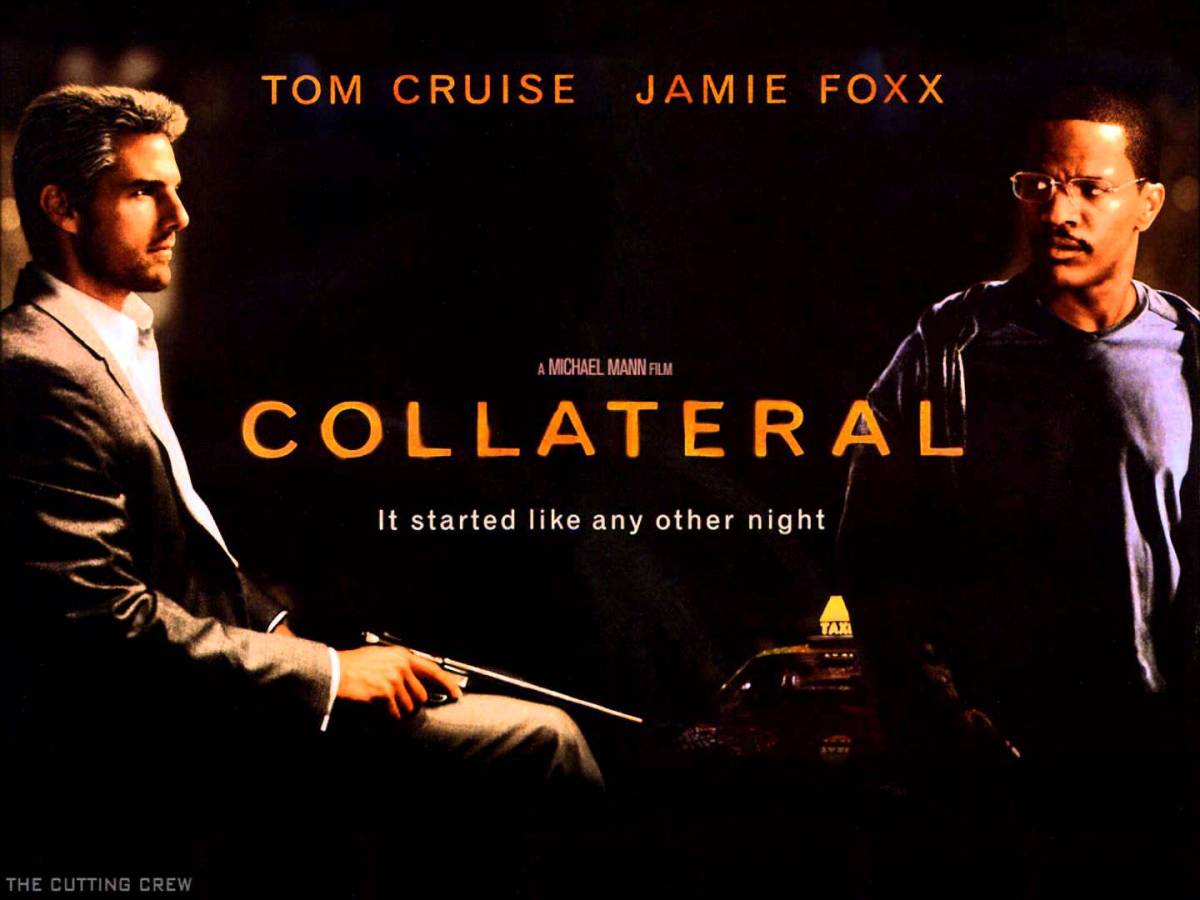
It’s not often the case that a Hollywood film can go beyond its’ genre to relay a deeper message about the human condition and why people are the way they are. ‘Collateral’ (2004) is one of those movies that is able to achieve just that by making the audience member such as myself care about the characters as well as appreciate the deeper meanings beyond the dialogue and the setting.

While there are numerous crime thriller films out there, ‘Collateral’ is able to go above and beyond the clichés and be original in its’ own right. Part of this is due to the fact that Tom Cruise and Jamie Foxx give outstanding performances for their respective characters along with the rest of the credit that should be given to director Michael Mann who relishes being a director for crime noir dramas that are set in Los Angeles. While ‘Collateral’ was not an Oscar award winning film unfortunately, its’ characters, the setting, the action sequences, the directing, and the overall message that the plot sends to the audience make it a unique and reputable movie that deserves a viewing or two.

Without going into too much detail, the plot of ‘Collateral’ stars two men who come from very different circumstances and live very different lives. However, the Cosmos align to have them meet for the first time at night in Los Angeles. “Vincent” played by Tom Cruise, has just arrived in Los Angeles from the airport and is looking for someone to take him around the city. What better way to see L.A. than to do so by taxi so Vincent goes to the nearest taxi stand to seek one out for a ride. That’s where the plot of the film begins as Max, played by Jamie Foxx, accepts Vincent as a new passenger after ignoring his presence initially. Vincent, dressed in a gray suit with gray hair could be just like any other businessman in Los Angeles but he’s not what he appears to be. Max starts to realize this as the night goes on but not until after he drops off Vincent at his first but not his last destination.

Vincent is more than just the new guy in town here for business. He’s a contract killer and a hitman who is in Los Angeles for one night only in order to carry out a series of hits. After bearing witness to the first of Vincent’s murders, Max is forced into being Vincent’s chauffeur for the rest of the night as he has four more contract hits to carry out for his boss, “Felix”, played brilliant by actor Javier Bardem. Vincent’s goal for the night is to carry out the rest of the contract hits successfully and then get a flight out of Los Angeles as the sun rises after his boss pays him handsomely for his ‘work’. Max’s goal for the rest of the night is to get out of this situation alive without getting killed by Vincent or being seen by the police as an accomplice of Vincent who is dragging him along as he commit these vicious murders in cold blood.

Mixed up in all of this madness is “Annie”, played by Jada Pinkett Smith, who is a prosecutor in the U.S. Justice Department who works out of their office in Los Angeles. She ends up being the first passenger of the evening in Max’s cab before the fates intertwine and Vincent comes along to change Max’s life forever. The only good part of Max’s night is when he meets Annie and they hit it off enough to the point where he is able to get her phone number but it is uncertain whether or not he will have the confidence to call her and make plans.

Unfortunately, Vincent, the contract killer, has Annie in his sights as one of his five targets setting off a series of events that put Max and Vincent on a tense collision course. On top of all of this, you have members of both the FBI and the Los Angeles Police Department noticing what Vincent and Max have been up to which causes more violence and bloodshed to occur. “LAPD Detective Ray Fanning and FBI Investigator Frank Pedrosa” (played by Mark Ruffalo, and played by Bruce McGill) are the ones leading the investigation into these random but coordinated killings popping up all over Los Angeles in the dead of night orchestrated by Vincent with Max as his unwilling accomplice.

There’s no character in this film that isn’t in danger or who may come into harms way and that is partly what makes the title of the film fitting as called ‘Collateral’ because everybody in this movie feels the damage caused by Vincent in some way. Max has feelings for Annie so he wants to do the most he can to protect her before she become apart of the ‘collateral’ damage that is being inflicted by Vincent.

Michael Mann, the director of ‘Heat’ (1995) previously and of this film ‘Collateral’, does an excellent job of making the setting of Los Angeles feel like its’ own character that sets the tone for the movie as well as provide an analogy for what the characters of Max and Vincent are like. Los Angeles is a sprawling urban city of more than four million people and has highways, tunnels, and bridges that loop and wind through the various neighborhoods that can only be connected by car.

For Max, Los Angeles is the only home he’s ever known but for Vincent, it’s a sprawling, disconnected mess of alienated people who don’t know or care about each other even if the collective Gross Domestic Product (GDP) of their city is more than most countries on the planet. Vincent regales Max about a story of someone who dies on the Los Angeles Metro one day and nobody else on the transit system notices for many hours, which proves his supposed point about the city’s culture of alienation. Similar to L.A., Max and Vincent are disconnected from other people in their own ways. Max is shy and reticent with new people he meets and doesn’t go after what he wants while Vincent is a sociopathic killer who doesn’t have much regard for people in general.

There’s one excellent scene in this film where Vincent and Max chide and prod each other as to why they are who they are. Vincent wants Max to call Annie, the girl whose number he got earlier in the evening, because “Life is short. One day it’s gone…” Max doesn’t reply regardless of what Vincent’s opinion is of his dating life. Later on in the scene, they both see a lone grey wolf walking through the streets of Los Angeles presumably searching for food or for some sort of purpose. In so many ways, this is symbolic of who Vincent and Max both are.

Vincent knows his purpose is to kill people because it’s what he ‘does for a living’ but this job alienates him from his humanity and causes him to be a lone wolf. Max is unsure of his purpose in life and wants desperately to be more than a simple taxi driver. He has dreams to start his own limo company one day but never takes the first step to making that dream come true and actually become a reality.

Even though they are two different men from very different circumstances, they are able to see what they should become if they weren’t so set in their ways. Max is a compassionate person who cares for others but is stuck without a purpose and isn’t able to take control of his life. Vincent is a sociopath who can’t relate to other human beings but knows what his one true purpose in life is and this allows him to feel some control over his existence, which he deems as being ‘meaningless’ in the long run.

Even with the fact that they detest each other, they begin to understand the flaws in their own character and how they could be different if they gave themselves a chance. Max could be more spontaneous and avoid having a repetitive life if he chose to be something more than a taxi driver. There’s no changing that Vincent is a cold-blooded killer but you start to see the circumstances that created his monstrous self. He never knew his mother, and his father was an alcoholic who beat him mercilessly and let young Vincent to grow up in foster homes. Max, nor the audience, can show much sympathy for Vincent’s plight but you start to realize that he is not just a simple-minded killing machine.

While life may be meaningless for Vincent, he still thinks that Max should live it to the fullest and ‘carpe diem’ before it’s too late for him. Max gets Vincent to ask himself why he is a sociopathic killer and gets him to reveal a little about his troubled family as well as to why he is a nihilist. In response, Vincent gets Max to ask why he never did anything to make the Limo Company to become a reality. He implores him to think deeply about making his dream come true because someday it may never come to pass if you don’t do anything to make it happen in the first place.

‘Collateral’ is a great crime thriller that is extremely well written, has great acting, and is directed and choreographed superbly by Michael Mann and his team. Beyond that, ‘Collateral’ is a film that makes you question certain things about life and the limits that we put on ourselves. The nihilism and disconnectedness of both Los Angeles and the main characters of Max and Vincent is both surreal and powerful. This is not your typical Hollywood drama and that’s a good thing. This movie is not a blockbuster and feels more like an independent film that came in way under budget.

‘Collateral’ is a gripping take on two men who are forced together by fate to go through a night together that will change them forever. I highly recommend this movie based on the excellent writing, acting, directing, and the strong storyline that keeps the viewer interested. Jamie Foxx and Tom Cruise do an excellent job and have great chemistry together, which is what makes ‘Collateral’ really shine, and have longevity as a unique film over a decade later. If you get the chance sometime, you should really see this movie.

Cultural Spotlight – Salsa

El_Cantante
Hector Lavoe, ‘El Cantante’ (1946 – 1993)

If you’re walking in any city in Colombia or in most parts of Latin America and you start to feel the rhythm and the beat to some up-tempo music that sounds as if jazz and ‘son cubano’ had a baby, it would be known to the world as ‘Salsa.’ Salsa music has only been around for over five decades but has had a lasting impact on the world of music and its’ popularity has stayed consistent in the countries and regions where it was first introduced. While some folks may argue that old-school music genres like jazz, swing, and the blues are on the decline these days; that is simply not the case when it comes to Salsa.

Contrary to popular belief, Salsa did not originate in Puerto Rico, Cuba, or even Colombia. This form of music came out of the communities of immigrants in New York City during the 1960s from Cuba to Puerto Rico who wanted to introduce a new take on ‘son cubano’ music that had been around for a few decades and to bring it to new audiences before who had never been exposed to that kind of genre before.

The music of Salsa has been highly influenced by previous Cuban genres such as ‘son cubano, son montuno, guaracha, mambo, bolero, etc. as well as certain Puerto Rican genres such as ‘bomba, and plena.’ It also should be noted that Salsa was heavily influenced by the American musical genre of Jazz and certain experts have noted Salsa as being a form of Latin jazz. Salsa is a very flexible genre and can incorporate many different forms of music together in order to be innovative and unique. Even rock, r&b, blues, and funk have found their way into the rhythms, beats, and lyrics of Salsa music.

If there were a form of musical expression to represent the Americas whether it was North America or South America, it would be jazz. Salsa music would not be what it is today without previous music genres influencing the sounds and songs to change and adapt as the decades passed by. However, without the early Salsa bands made up of newcomer immigrants from the Cuban and Puerto Rican communities who came to New York City and America for a better life, Salsa would also not be the popular genre that it has become today. From the 1930s to the 1960s, these new immigrants brought joy, happiness, and excitement to both their local communities and cities from Boston to Cali.

From the streets of the South Bronx to the barrios of Cali, Salsa would spread from New York City to Colombia to Peru to all over Latin America. Salsa has become a global music genre today with people all over the world sharing together their passion and love for this unique form of self-expression. You can find Salsa classes and music clubs in most major cities all over the world. It doesn’t matter where you’re from, if you’re new to dancing, or can’t understand the lyrics, Salsa is a music genre open to everybody. Some of the big names in Salsa are Johnny Pacheco, creator of the Fania all-stars band, Hector Lavoe, Willie Colon, Bobby Valentin, Eduardo Palmieri, Marc Anthony, etc.

The instrumentation used in Salsa music is incredibly diverse and can really depend on what kind of style you’re going for whether it’s ‘salsa romantica’ or ‘salsa dura.’ It also depends upon how fast the tempo is and what the chord / verse arrangement is too. The most popular kinds of instruments used in Salsa music are percussion and brass instruments. It’s very rare where string instruments are used unless its’ an acoustic or electric guitar. When it comes to the most widely used instruments, they are usually the piano, the bongo drums, the congas, trumpet, trombone, claves, and different guitars.

Since the genre of Salsa has spread to many parts of the Western Hemisphere, there are many different styles of Salsa dancing that make the music more enjoyable for people to participate in by moving their bodies in various ways. While there is no clear consensus on which style of Salsa is the best or most popular, there’s the Cuban style, the New York style, Puerto Rican style, Los Angeles style, and Cali style from Colombia. Each style of Salsa is a little bit different from each other so once you master one of these types, there is another one out there to learn in order to keep your knowledge up to date. There are few parts of the world that haven’t been touched by Salsa music, which makes it one of the most fun and enjoyable kinds of dances to learn. Whether you’re in Peru, Colombia, Cuba, the Dominican Republic or the United States, you’ll have a chance to dance Salsa if you look hard enough.

By listening to Salsa music and learning how to dance to the rhythms and the beats of this genre, you really learn a lot about Latin American culture. Listen carefully to the lyrics, study the history of both the song and dance, and you’ll be able to gain insight as to why this has become one of the most popular music genres on the planet today. Few things make the average person happier than being able to cut loose on the dance floor and Salsa as a genre succeeds in doing that beyond measure.

During my time here in Colombia, I’ve enjoyed going out to learn Salsa in some classes, and putting the moves I’ve learned into practice when I go out on Saturday nights to a Salsa club. It’s really a joy to dance and sing to the point of exhaustion until your feet can’t move anymore while the beads of sweat roll down your neck. Salsa, to me, is a celebration of living life to the fullest and expressing the movements of your body the way you’re supposed to do. If you haven’t given Salsa music or dancing a chance yet, start to do so today. I promise you won’t regret the experiences you gain by enjoying this popular genre.

Book Recommendations – Volume IV

Wintertime is often the best time to settle down with a cup of hot coffee / tea and open up a new book or fire up your Kindle to catch up on some reading. When it’s cold and snowy out, there is no better way to pass the time than to sit down with a good book in order to learn something new or to be entertained by a particular story. If you’re looking for some good recommendations, here are three books that I have read recently that I think avid readers would enjoy especially if you like non-fiction material. If you happen to read any of these three recommendations, please let me know what you thought of these books in the comments section below.

markmansonbook

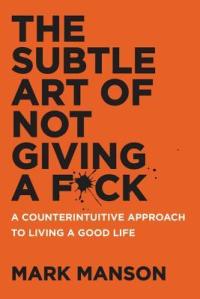
1.) The Subtle Art of Not Giving A F*ck by Mark Manson is a current New York Times bestseller and is not your typical self-development book. I have been following Mark’s writings for a couple of years now and I hold him in high regard. He has helped change my life for the better with his unconventional life advice and his second book is a great read. Contrary to some self-help books that advertise a philosophy of feeling good all the time and always being positive, Mark instead advocates for a more balanced approach to life. It’s important to embrace the negatives and setbacks in life because you’ll be a stronger and a more mature person for it.

It’s a common truth that not everything will go well in life so it’s better to make due with that than to have a ‘pie in the sky’ attitude all of the time. Mark asks the reader to think about the fact that going through negative experiences is actually a positive experience and can teach us a lot about ourselves. Having solely positive experiences without any adversity or setbacks is itself a negative experience as well because you didn’t struggle and fight for it, which means that it wasn’t that much of a big deal in retrospect. Learning from our past mistakes and our failures is just as important, if not more so, as having massive success according to Mark’s thesis.

The title of the book itself, The Subtle Art of Not Giving a F*ck, doesn’t imply that we as human beings shouldn’t care about anything going on in our lives but rather that we should be more selective about the things that we can truly control and have some input in. You shouldn’t give a f*ck about everything, only the things that matter the most to you and that truly impact your life in some way. Overall, this book is a really thoughtful perspective on living one’s life in a mature and thoughtful manner and has some really practical advice for any demographic of reader.

lightsoutbook

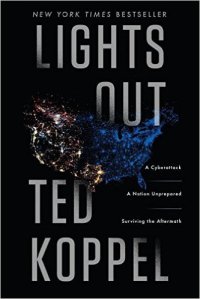
2.) Lights Out: A Cyberattack, A Nation Unprepared, Surviving the Aftermath by Ted Koppel is a well-researched, thought out look about the cyber security challenges facing the United States especially when it comes to the national energy grid that makes it possible for Americans to live a 21st century lifestyle. I remember watching Ted Koppel on ABC’s Nightline when I was a child and he always impressed me with his ability to look at a story he was reporting on from all angles and do a thorough job with interviewing different people involved with the issue. This book written by Mr. Koppel is no exception. Mr. Koppel does great investigative reporting on what is being done and what isn’t being done to prevent such a cyber attack from happening.

With the increasing amount of focus being put on cyber security as it affects different businesses, individuals, and governments, this book is a must-read as it considers the areas in which we are most vulnerable to attack. Mr. Koppel looks at how we can address the current gaps in cyber security such as when it comes to our different energy grids across the United States and what should be done about it in order to prevent an attack from happening in the near future. Mr. Koppel interviews a wide variety of people involved with cyber security from the Secretary of Homeland Security to leaders of the Mormon church in Salt Lake City to ‘preppers’ across the U.S. who make it a lifestyle habit of preparing themselves and their families with emergency supplies and goods in case a cyber attack happens and the electric grid goes down.

The frightening possibility of a regional and national blackout happening in the United States is discussed in detail as to what would be the consequences and how long it would take for the electric grid to go back online. The current picture isn’t very rosy and a lot of work needs to be done according to Mr. Koppel. Hopefully, the policy makers and leaders of government take notice of this book as it is both a warning and a call to action for those people in power to do more about this situation and to help protect against such a potential disastrous scenario.

hillbillyelegybook

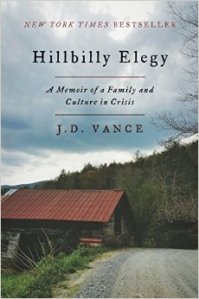
3.) Hillbilly Elegy: A Memoir of a Family and Culture in Crisis by J.D. Vance was one of the most important books of 2016 for its’ insight into a part of the United States that rarely gets much in-depth coverage. This book is a mix of a personal memoir of Mr. Vance’s life who is a native of the hills of Kentucky and who grew up in southern Ohio and also a retrospective on the economic and social conditions that are affecting Appalachia to this day. Mr. Vance goes into great detail about the struggles of the white, working class, both self-inflicted and those wounds placed on them by economic decline and societal decay that’s out of their control. It’s a community that doesn’t get much fanfare but who still have a political impact as showcased in the recent 2016 election.

Even with a troubled family that both uplifts him and casts him down, Mr. Vance through his hard-work and intellect makes it out of Appalachia and was a member of the Marine corps, a law school graduate and now a successful writer. However, it could be argued that he is the exception and not the norm when it comes to the current state of Appalachian communities. Upward mobility can be hard to believe in for today’s America with stories like Mr. Vance’s becoming less and less common. For this course to reverse itself, economic vitality has to come back to forgotten regions like the Rust Belt and Appalachia. The current social malaise and dispirited communities may be able to improve if the local economy were to improve for families like the Vance’s.

You root for the people of Appalachia highlighted in this memoir who have been dealt a bad hand in life but still try to make the best of things and want to help their family members achieve the American dream, even if it appears out of reach to most. One such example that sticks in my mind from this book is ‘Mamaw’, Mr. Vance’s grandmother and one of the few steady and pragmatic influences in his life that helped make him who he is today. To change a community and a society, it starts with the family but it doesn’t end there. Families in these communities need a future and they need prospects, both educational and job-wise. Let’s see if this book has an impact as well on the policymakers, think tanks, and government leaders. It’s a must-read and I highly recommend it.


‘The Shawshank Redemption’ – Film Review and Analysis

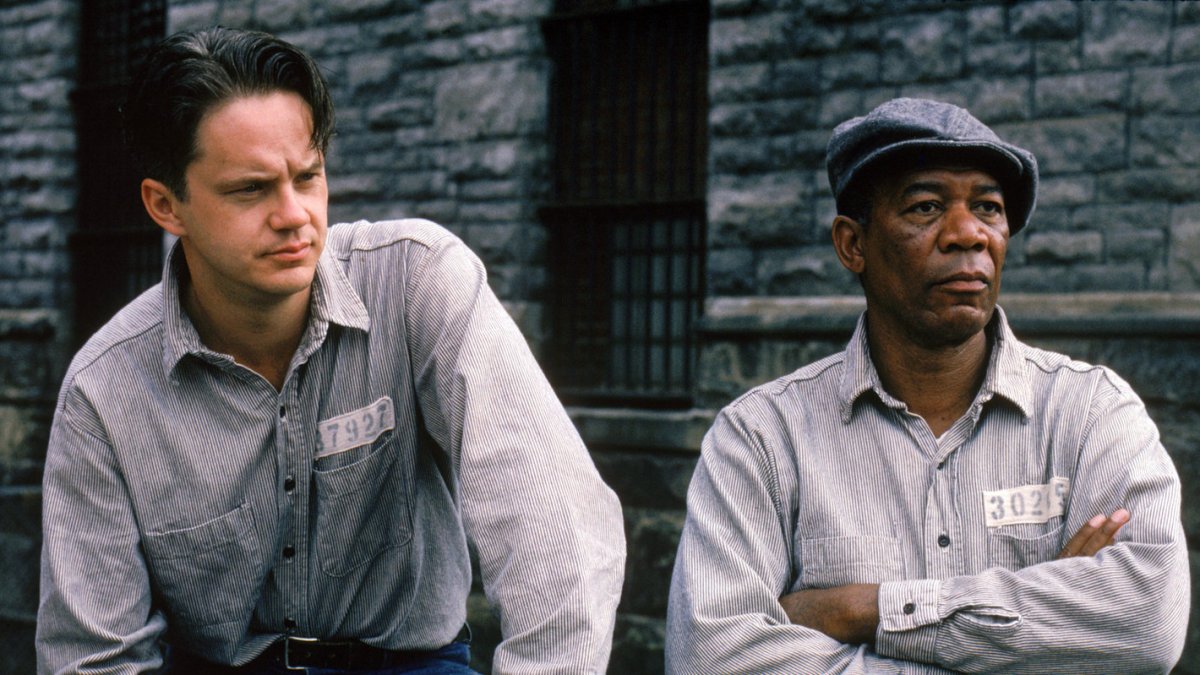
Few other modern films capture the power of the human spirit more than The Shawshank Redemption. Directed by Frank Darabont, released originally in 1994, and starring Morgan Freeman as Ellis ‘Boyd’ Redding, Tim Robbins as Andy Dufresne; this film was not originally successful in movie theaters when it was released to the general public.

However, since then, The Shawshank Redemption has become a cult classic which has skyrocketed in popularity even after its’ release twenty years later. It is often considered by film critics to be one of the best Hollywood movies of the 20th century. Personally, I have watched this film multiple times and consider it to be my all-time favorite movie. If I’m channel surfing late at night and I see that The Shawshank Redemption is on AMC, HBO, or another movie network, I’ll often stop what I’m doing to watch the film already in progress. It’s that good of a movie and is timeless in its’ themes and its’ overall message.

More so than just the brilliant acting by Mr. Freeman and Mr. Robbins, along with the great directing by Frank Darabont, the cinematography is quite flawless and the film has a consistent flow to it. It also has an engaging plot and setting that suits the overall themes quite well. The Shawshank Redemption is a very human story with a lot of powerful, and emotional scenes that have captivated millions of viewers. It’s rare to come across a film today that can tug at your heartstrings and make you really feel deep emotions about a fictional story and characters. The Shawshank Redemption is able to pass that test and remind you of what it means to be human. The film highlights the triumphs, the tragedies, and the deeper meaning that we seek within our own lives.

Andy Dufresne is a young, smart, and ambitious banker in Portland, Maine who is accused and later convicted of murdering his wife and her extramarital lover. At first, he appears to the audience as a cold, detached, and remorseless person who very well could have committed that awful crime. The other main character, Ellis ‘Boyd’ Redding, a long-time prisoner at Shawshank state prison is unimpressed by Andy’s appearance at first sight and remarks how “a stiff breeze would blow him over.” As the saying goes though, “Don’t judge a book by its’ cover.”

Throughout the film, we learn through the eyes of Red more about Andy and what he’s like in terms of his true personality and character. We don’t know whether he killed his wife or not because he pronounces his innocence to Red and the other prisoners. Red is resigned to his life in prison and tries to make the best of it by being ‘the guy who can get you things.’ His friendship with Andy blossoms due to a simple, haphazard moment when Andy asks Red for a rock hammer to carve chess pieces. It’s an unusual request but it gets the two men to talk to each other and to break down the stereotypes that Red has of Andy, and Andy has of Red.

Andy must deal as best as he can with his new life as a prisoner whom may in fact be innocent of the crime that he was convicted of. As Red states knowingly in the film, “Prison is no fairy tale world.” Andy has to cope with the vindictive warden of Shawshank prison, played by Bob Gunton as well as the malicious head prison guard, Captain Byron Hadley, who is played by Clancy Brown. He also must fend off some sadistic fellow prisoners who wish him physical harm and sexual violence. It is clear to the viewer that Andy, despite the injustices he has encountered in Shawshank and outside of Shawshank prison, maintains the ‘hope’ that he’ll survive his ordeal and eventually win his freedom. Despite his friend, Red, warning him about the dangers of seeking hope in a place where none can be found, Andy reminds Red that “Hope is a good thing, maybe even the best of things, and no good thing ever dies.”

The most memorable scenes of this film still stick out to me after all of these years. My favorite is the famous ‘Suds on the Roof’ scene when Andy risks his life to give his fellow prisoners a one-time allowance of beers while they tar the roof of a factory by giving the prison guard, Hadley, some financial advice on how to deal with the IRS. Andy knew how much it would means to his fellow prisoners if they could enjoy a beer or two while doing hard work in the hot Maine summer sun. In that scene, he also showed a lot of bravery by confronting Hadley about if “he trusts his wife with money or not.”

Another notable scene that stands out to me is how Andy continuously asks the state of Maine for extra money to give to the Shawshank prison in order to build a memorial library in honor of another prisoner, Brooks Hatlen, who committed suicide regrettably after finishing up his sentence. Andy keeps writing letters for months on end but finally receives the funds he needs after a few years to build the memorial library. Because of this library, many prisoners like young Tommy Williams, who Andy takes a liking to, end up reading books and even receiving their High School GEDs (General Equivalency Degree).

Lastly, there is an extremely beautiful scene where Andy is collecting records for the prison library and ends up putting an Italian opera record over the loudspeakers for all of the prisoners to hear. He locks himself in the room so the guards and the warden can’t get to him. For a few minutes, the opera music flows openly through the walls and the bars of the prison. As Red puts it succinctly in the movie, “For the briefest of moments, every last man in Shawshank felt free…”

After nineteen years in prison and many tumultuous events, Andy knows that his destiny no longer is meant just for the walls and bars of Shawshank prison. He dreams of a coastal city in Mexico known as Zihuatanejo, where he can run a hotel and begin his life anew. Andy implores Red to join him one day and help him out with his business since he’s a man who “knows how to get things.” While Andy remains hopeful and optimistic even when his future seems grim, Red is skeptical and dismissive of Andy’s “pipe dream.”

Despite the long odds, Andy doesn’t let the negativity get him down and puts effort toward realizing his dream of getting out of Shawshank and making his way to Mexico. This courage and perseverance shown by Andy has a lasting effect on Red by the end of the movie as they have become close friends who have known each other for almost twenty years. Red realizes the innate truth behind Andy’s belief in everlasting hope and to “get busy livin’ or get busy dyin.’”

Some people who have not taken the time to watch The Shawshank Redemption regard it naively as just another prison movie. However, this summarization is far from the truth. Similar to The Green Mile, it’s a story about finding hope in the least hopeful of places and never giving up on life when it seems rather cruel or unjust. It also has a constant theme about the power of male friendship and how Andy and Red have bonded together over the years despite their initial differences.

The Shawshank Redemption was never a summer blockbuster or a critically acclaimed behemoth of a film but it is widely regarded now as one of the best American films of all-time. Many people have cited this movie as having changed their lives for the better when they were going through difficult times in their personal or professional lives. Above all else, The Shawshank Redemption is a story about one man’s ability to remain hopeful during the most difficult and harsh circumstances. As Red states at the end of the film, “Get busy livin’ or get busy dyin.’ That’s goddamn right.”


‘Lost In Translation’ – Film Review and Analysis

suntory-time
“For a relaxing time, make it…Suntory time.”

One of the great films of the 2000’s, Lost In Translation is a film that is often underrated but which deserves a lot of praise and acclamation. Directed and produced by Sofia Coppola, daughter of the highly acclaimed director Francis Ford Coppola, Lost In Translation is the story of two Americans of different ages who are visiting Japan for different reasons but who are struggling with similar existential crises.

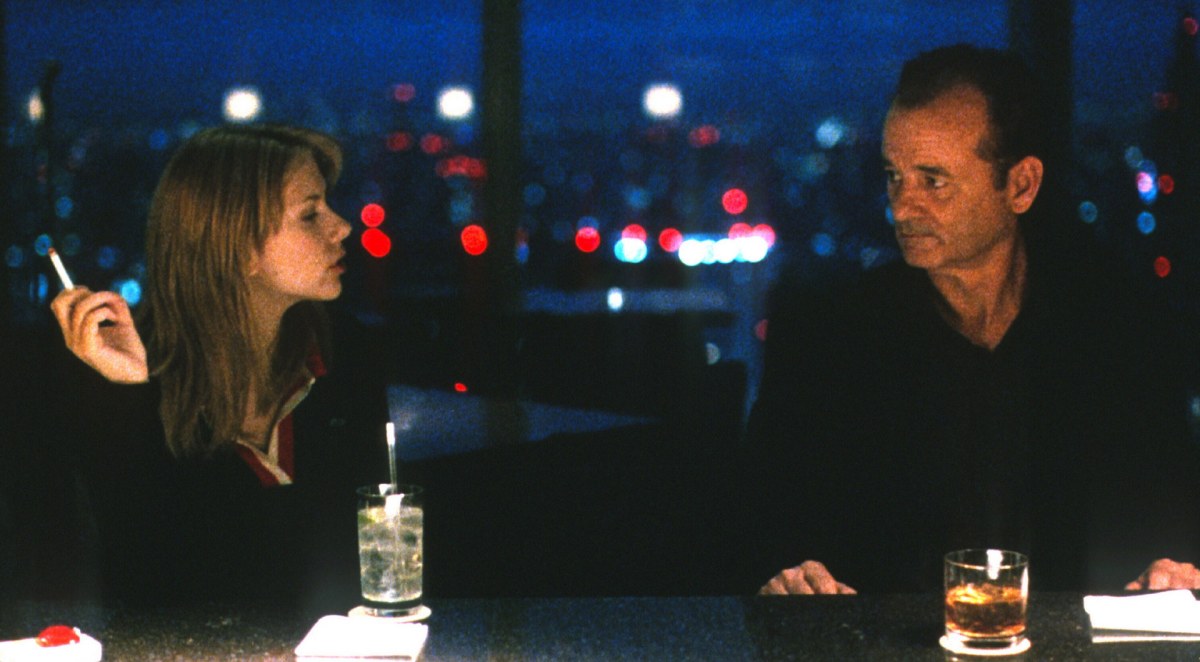
Bob Harris, played by the wonderful Bill Murray, is an aging actor and movie star from Hollywood who is struggling with a mid-life crisis. He comes to Tokyo to film whiskey commercials and appear on some popular Japanese talk shows. In one of her first roles on film, the talented Scarlett Johansson plays Charlotte, a young college graduate from Yale, who is struggling to figure out what she wants to do in her life.

While Bob and Charlotte come from different backgrounds and are of different ages, they are both struggling with adult concerns such as marriage, work, and the search for overall meaning. Bob has been married for twenty-five years whereas Charlotte has only been marries for two years. While they are at different stages in their marriages, both of them have doubts about being or staying with their partners. In addition, once they meet each other in the hotel lounge for the first time, they are drawn to each other’s personality, humor, and the fact that they are adjusting to Japanese culture for the first time.

One of the best things about Lost In Translation is the way Tokyo, Japan becomes a character in the film. The city is a sprawling metropolis with a population of over twenty million people that seems to go on forever. Since Charlotte’s husband is a director and is busy shooting for a new film and Bob’s wife is five thousand miles away, they both find time to explore and immerse themselves in the bright lights and diverse sounds of Tokyo.

The most illustrative scenes in describing the developing relationship of Bob and Charlotte take place in the karaoke bars and the hibachi restaurants where they try to adapt to the culture shock and the persistent jet-lag together. Despite being married, they feel alone and unhappy in their relationships for different reasons.

They take solace and comfort in each other’s company as they navigate the intricacies of Japanese language and culture. They start off as complete strangers in the hotel bar but then become friends over the course of their stay. Bob also acts as a life mentor to Charlotte who is in her early 20’s by giving her lessons on life, marriage, and what it’s like to have children. Bill Murray’s character comes across as someone who’s halfway through life and is honest to Charlotte about the ups’ and downs’ of it all.

Charlotte’s youth and curiosity about the world helps to change Bob too as he rediscovers the joys and thrills of being care-free and being able to laugh with someone who puts no pressure on him. After appearing on cheesy talk shows and doing uninspiring whiskey commercials, Bob is able to have fun and enjoy himself around Charlotte. From the one-sided phone conversations you hear from Bob and his wife back in Los Angeles, neither of them seem happy or fulfilled about their marriage. I don’t want to spoil the ending for those of you who haven’t watched the film but it is possible that Bob and Charlotte will find romance or love when they least expected it to happen.

I have to admit that the first time I saw Lost In Translation, it made me really want to visit Japan. The nightlife and crowded streets of Tokyo interest me quite a bit. I was also intrigued by a scene from the movie that was set in Kyoto, where Charlotte takes a high-speed train to the city to see the Shinto temples and the beautiful cherry blossoms. The cinematography and settings of the film are very moving and beautiful. Lost In Translation has a reputation of being a serious and deep film with little humor mixed in.

However, I would disagree with this assessment because there are a lot of scenes of light-hearted humor especially when Bob Harris, Bill Murray’s character is on the set for a Japanese commercial. Many things are ‘lost in translation’ as he looks for guidance and help from his translator but she never gives him the full story of what the Japanese director wants. There are other humorous scenes where Bob appears as a guest on a goofy talk show with a quirky host. Another classic moment is when a Japanese escort is sent to Bob’s hotel room and asks Mr. Bob Harris to “lip her stockings.” It’s a subtle English faux pas but I found it hilarious the first time I watched it.

Two strangers who meet in a hotel bar and get to know each other over a drink is not a new movie concept. However, the relationship that develops after that chance meeting is what makes Lost In Translation a great film. The on-screen chemistry between the two great actors, Bill Murray and Scarlett Johansson also draws the viewers in to the plot. There can be few other cities as magical, crazy, and hypnotizing as modern Tokyo.

The neon lights, huge skyscrapers, and hoards of people make it a unique setting, which is rarely used in Hollywood films. Lost In Translation isn’t your typical romance movie and it doesn’t have a clear-cut ending. What it does offer the viewer are the special moments of two lost souls making a deep connection with each other in a foreign city, and enjoying those experiences during the short time that they have together.


Book Recommendations – Volume III

After a five-month break, I’m back with another edition of “Book Recommendations.” I’ve had some free time on my hands lately which has allowed me to read these really great books. I would like to share my latest selections with my visitors and hope that you will check these books out for yourself.

Note: I have also posted the links to these books so you can check them out on Amazon.com. You simply need to click on the books’ images below in order to be re-directed to the Amazon page of the book itself. Enjoy.

1.) And Then All Hell Broke Loose: Two Decades In The Middle East by Richard Engel, Chief Foreign Correspondent for NBC News

As someone who has studied the Middle East region extensively in college and has made a few trips to the region (Turkey, Israel, Jordan), I continue to enjoy learning about this tumultuous part of the world despite its rough past and present.

This book by Richard Engel is excellent because it comes from someone who understands the complexities and historical background of the region. He is also a great correspondent and storyteller who weaves his own history of working in the Middle East alongside the tumultuous events over the past two decades, which have fundamentally transformed the region.

Mr. Engel has been a foreign correspondent in the Middle East for over twenty years now. In this book, he clearly displays his vast knowledge of its’ history, culture, societies, and the troubles that continue to plague the region. Engel is fluent in Arabic, Italian, and Spanish. He has worked for NBC News and other major news organizations for over two decades. He re-tells his firsthand experiences and stories of starting out as a freelance journalist for the Agence France-Presse in the late 1990’s during the time of Mubarak’s Egypt. He goes on to discuss his experiences of working and living in Iraq during the collapse of Saddam’s regime and the subsequent U.S. occupation of Iraq.

In addition, Mr. Engel has also spent a lot of time covering the fall of Muammar Gaddafi in Libya and the recent civil war in Syria. Richard Engel has also endured some trauma during his career as he was captured and kidnapped by ISIS in late 2012. For the readers of his book, we get personal insight into the hellish situations he has been drawn into through his accounts of witnessing the deaths and injuries of many of his journalist colleagues over the past twenty years. This book is fundamentally a more personal story as he recounts how his 20 years of covering the Middle East had affected his marriage, his friendships, and his mental state.

What I like most about this book is that Mr. Engel gives you the historical background and the straight facts of what happened in the region and why it happened. You can tell that he was both physically and emotionally affected by the wars and insurgencies that he bravely covered for the U.S. media. More than anything else, it is a well-written account of what it means to be a journalist in a very difficult region of the world for journalists. Richard Engel doesn’t preach about what should have happened or what could have been different in terms of the politics but he simply relays his past experiences for those of us who want a more personal, firsthand account of what it is like to cover the Middle East.

2.) Kitchen Confidential: Adventures in the Cultural Underbelly by Anthony Bourdain

A world-renowned traveler, famous television show host, coolest American alive over 50 years of age. You can also add best selling-author to this list as if it wasn’t long enough. These are just a few of the titles that Mr. Bourdain has earned over the course of his life. However, most people forget that he was a very successful chef in New York City and elsewhere during the 1980’s and 1990’s. He is especially known for being the executive chef at the famed restaurant of ‘Les Halles’ in Manhattan, NY.

Due to his years in the kitchen, Kitchen Confidential is an in-depth, intriguing look into the actual process of how the food we eat in restaurants ends up on our plates. You may not feel very hungry after reading this book due to the expose on some food industry practices that could be considered unsatisfactory in terms of health regulations. I know now that I won’t ever order fish or any other seafood from a restaurant if it’s a Monday.

This book is an unfiltered look into life as a cook and Bourdain hilariously delves into stories from his past and the characters he encounters in the various kitchens he’s worked in. He discusses how he worked alongside drug dealers, degenerates, thieves, loose cannons, etc. in the kitchen but that didn’t detract from the excellent chefs that they made themselves out to be. If anything, Bourdain argues, their eccentricities and attention to details help make these people into great cooks.

Kitchen Confidential is also useful in that Bourdain gives tips and advice to his readers on how to cook and prepare food better. His advice ranges from what kind of knives are best to which simple gadgets make the most difference in having a decent kitchen to cook in. If you like his travel shows and his antics as a TV host, you will most certainly enjoy this book.

3.) Connectography: Mapping The Future of Global Civilization by Parag Khanna

The race to win the 21st century will not be a race between militaries, or of competing arms but of overall connectivity. Mr. Khanna argues that whichever country becomes the most connected to the global supply chains of trade, finance, technology, infrastructure, etc. will stand to benefit most in our current globalized world. A geopolitical strategist, consultant, and world traveler, Mr. Khanna displays his in-depth knowledge of international affairs and geopolitics from his past travels and from his extensive research.

From Ukraine to the UAE and from China to Nigeria, Mr. Khanna details how national borders are no match for the global supply chains that are increasingly emerging. Physical boundaries of geography are becoming less important than the priorities of developing high-speed rail lines, building intercontinental pipelines, expanding the World Wide Web, along with increasing energy outputs and resource trading among many different nations.

While some prominent figures in politics are advocating for resurgent nationalism and wall-building, Mr. Khanna understands that this perspective is detrimental in a world which is becoming more fundamentally connected. In the 21st century, countries and continents need each other now more than ever. With ten trillion dollars and growing being spent per year on infrastructure, transportation, energy, and communications, this trend is likely to continue unabated.

Among the notable ideas in this great book that Mr. Khanna highlights are the emerging North American Union with related maps in the book showing how the United States, Canada, and Mexico are becoming more interdependent. China is also connecting itself to many of its neighbors in Eurasia through gas, oil pipelines and freight rail networks.

In Connectography, Mr. Khanna gives us an in-depth perspective on the world’s growing interdependence and how its’ affecting our everyday lives. While there are numerous challenges to this worldwide trend, which are also highlighted in the book, Mr. Khanna strikes on a final note of optimism. Even with the difficulties and struggles of climate change, terrorism, civil wars, etc., only a more inclusive, connected global society can meet these challenges head on and succeed together.

‘The Godfather’ – Film Review and Analysis

don-vito
“I’ve spent my life trying not to be careless. Women and children can be careless, but not men.”

One of the great classic American films of the 20th century, The Godfather, directed by the legendary Francis Ford Coppola and based off of the novel of the same title by Mario Puzo is often considered to be the most influential film that created the ‘organized crime’ or mafia/gangster genre in cinemas.

Since its’ release in theaters in 1972, it has garnered a cult following among fans who led to ‘The Godfather’ becoming a trilogy with Parts Two and Three both released in following years. Because of its significance culturally and historically, the Library of Congress preserved it in the United States National Film Registry in 1990. Because of its success at the box office and with film critics alike, ‘The Godfather’ garnered many Academy Award nominations and won four Academy Awards including ‘Best Actor’ for Marlon Brando and ‘Best Picture’.

In addition to adding to the legendary career of Brando, ‘The Godfather’ also introduced to Hollywood a young Al Pacino and a very talented Robert Duvall. Both men would have extremely successful careers in American film but I believe that it was ‘The Godfather’ which helped catapult their early careers into noteworthy stardom.

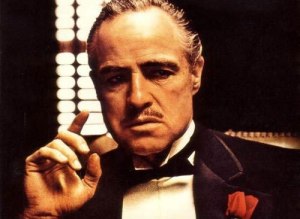
Drawing parallels to the real life ‘Five Families’ of New York that dominated the Italian mafia during the 20th century, the fictional Corleone family, led by Don Vito Corleone, is highlighted as being the ‘pariah’ and at odds with the other crime families throughout the film. Vito Corleone, played by Marlon Brando, acts like the quintessential mob boss whose cunning and intellect has made him to this day a very quotable character that has become apart of American popular culture.

In The Godfather, we see Vito nearing the end of his reign as boss of the family and looking for his eventual successor. Vito has three sons: Sonny, the oldest whose lack of foresight and hotheaded temper makes him a liability albeit is the favorite initially to replace Vito as Don of the Corleone family. Fredo is the middle child and is a consistent womanizer. Considered neither to be reliable nor intelligent, Fredo is kept to the side often and is not a suitable person to lead the family due to his lack of cunning and intellect. Michael, a U.S. Army Veteran and the youngest child of Vito Corleone is portrayed as being very innocent and often has requested to be kept out of the family business if he can avoid it.

However, as the viewers of the film can understand and interpret, a mafia family reels everyone in to its business whether or not it’s intentional. One of the best aspects of The Godfather is watching the changes in Michael’s behavior and demeanor as extenuating circumstances involving the family forces his hand and he is forced to take on more responsibilities and duties as a Corleone and the son of Vito. His loss of innocence and the transformation that occurs with Michael from dignified U.S. Army Veteran to cunning, ruthless Mafia boss is a great strength of this timeless film.

For those critics who are against violent Mafia films and choose not to watch them, that is fine but it should be considered that there is more to this movie than meets the eye. Above all else, it is the story of a father trying to repent for the sins of the past and trying to keep his sons from avoiding the same mistakes that he has made.

The relationship between Vito and his son, Michael in particular is memorable for how Vito expects so much from Michael considering he is the most levelheaded and intelligent of the Corleone brothers. There is one great scene in the film where Vito and Michael are discussing the ongoing drama of the war between “The Five Families.” Vito laments to Michael on how he is sorry that he was thrust into the mafia business when he expected his son instead to become “Governor Corleone” or “Mayor Corleone.” Michael simply looks at his father lovingly, and says: “We’ll get there, pop. We’ll get there.”

Other classic scenes that I enjoyed involve the courtship between Michael and a beautiful Sicilian woman named Apollonia. What I liked most was highlighting the very old-school dating process of asking Apollonia’s father for permission to date and then later marry his daughter with all respect given. It’s a touching moment in the film, which reveals that Michael’s humanity has not been totally wiped out because of the mafia. It was also great of Director Coppola to show the traditional procession of the Sicilian wedding and how all of the townspeople were involved in wishing Michael and Apollonia well.

Without trying to spoil the rest of the film for those of you readers who haven’t watched The Godfather yet, I can’t recommend it enough to avid movie fans. The directing by Francis Ford Coppola, the cinematography, the acting performances by Al Pacino, Marlon Brando, Robert Duvall, James Caan, etc. are phenomenal and they deserved every heap of credit that was bestowed upon them at the Oscars and elsewhere.

The Godfather is simply more than just a mafia film in my opinion. It is a story about a complex family, fathers and sons, human nature, and the thirst for power and respect. Have an open mind and see this film if you get the chance. I promise that you won’t regret it even if the running time is three hours in total. You can always tell your friends and family that I wrote a blog post that you couldn’t refuse to read.