Why You Should Learn to Cook in Your 20’s

You’ve got the good job. You live in a nice apartment. You are able to move out of your parents’ house. You’re lucky enough to consider yourself to be pretty independent and self-sufficient in your 20’s, which isn’t so easy to come by these days. However, have you learned how to cook? Can you feed yourself without needing to go to a restaurant or to order from Domino’s?

I consider that being able to learn how to cook is one of the most important skills any young adult should have a good proficiency in by the time they turn 30. You don’t need to be on the level of Anthony Bourdain or Emeril Lagasse but you should be able to know a decent amount of recipes and be able to cook yourself a couple of homemade meals each week. There are a number of good reasons as to why it’s important to learn how to cook in your 20’s and I’ll cover a few of them in this post.

1.) You’ll save money.

Regardless of where you’re living in the world, it’s often the case that buying groceries from the local market or supermarket and cooking meals for yourself will be less expensive than going out to eat for lunch or dinner or even both meals. The costs really add up after a while from eating out all of the time or from ordering a lot of meals to be delivered to your door. In your 20’s, many people are trying to save up money for graduate school, or to buy a car or to lease an apartment so if you’re able to buy food for yourself and then cook it, you’re way ahead of the game and you’ll probably save a good amount of money each month. Any kind of savings that you can create in your 20’s will make a sizable impact down the road and cooking your own meals is one of the best ways to have a positive impact on your personal budget each month.

2.) It’s healthier for you.

Let’s be honest: ordering out or eating out at a restaurant are not the healthiest options to do repeatedly. While there are healthy options out there, they are usually the exception and not the rule. Eating a takeout pizza with extra cheese from Domino’s is simply not as preparing a fresh salad from scratch for your dinner. Unless you go to a higher-end restaurant, a lot of restaurants these days use a lot of sugar, salt, or other preservatives that can lead you to put on some extra weight if you’re not careful. Knowing how to cook forces you to create your own daily diet without having any outside influence. You’ll be more responsible for your intake of different foods and learning how to properly balance your diet with fruits, vegetables, dairy products, grains, meats, etc. This is a skill that is better to be learned in your 20’s so that it can be a healthy habit that can stay with you for the rest of your life. You’re making a conscious choice every time you prepare and cook your own food and that’s a great skill to have.

3.) You’ll become more independent and self-reliant.

Being comfortable with your cooking skills and knowing that you’ll never go hungry or rely on others to cook your food is a great thing for your self-esteem. The confidence that you’ll gain as you get better at cooking is something that can transfer over to your parts of your life. It’s a skill that you can share with other people whether it’s your friends, your parents or other members of your family. A lot of your 20’s is learning how to function as an individual who is independent from other people and one of the best ways to do that is to learn how to cook a good meal. It may take time and a lot of effort but the rewards will be ever present throughout your life. You can make other people in your life happier and healthier by cooking for them and they’ll appreciate the fact that you can take care of yourself in the kitchen.

4.) It’s easier now than ever.

With modern technology like the stove, the gas oven, and the many utensils and kitchenware you can buy for pretty cheap, learning how to cook is easier now than ever. In addition, any aspiring cook has the entirety of the Internet at their disposal. Whether it’s learning the basics for the first time or trying out a new recipe, there is a limitless amount of information out there that can help you achieve your cooking goals. There are hundreds of videos on YouTube that can walk you through a recipe step by step and there are thousands of unique recipes that you can look up on a moment’s notice through Google that can make cooking more fun and creative.

Centuries ago, cooking food was much more of a daily ordeal with the average meal taking a full day to prepare but due to the advent of modern technology, it really is easier now than ever. For example, I learned of a website recently called Blue Apron, which actually delivers all of the fresh ingredients for the different recipes you want to make without you leaving your apartment or house to scavenge for the ingredients at the local market. There are also a number of companies out there such as Whole Foods that can deliver all of your groceries to your door making it even easier and more cost effective to cook your own meals.

5.) It makes you more creative.

With thousands of recipes to choose from and with different ingredients to mix and match with your favorite foods, cooking is really an art just like painting or music. You can experiment as much as you want and really tailor your meal to your own preferences. When you order food at a restaurant, it’s really up to the chef’s own taste on how he puts your meal together. When you cook for yourself, you’re giving back control to yourself. You can work with your hands and you can slice and dice as you please.

While you may struggle at first with getting the recipes down to a science, you’ll keep getting better and better the more you practice and that’s what makes it so fun. Even if you burn the chicken or undercook the spaghetti, you can learn from your mistakes and know what to do better the next time. Cooking is a skill that really utilizes both your mind and your body. While it takes a lot of effort and time to master, the results are often delicious.

Put away the Chinese takeout menu, and put that apron on. It’s time to take these reasons into consideration as you begin your cooking career. Even if you’re a single guy or gal living in the heart of the city with restaurants abound, you should still give yourself the joy of cooking. You’ll thank yourself later when you have a wife or children to cook for at home and you can put together a meal that’s more than just scrambled eggs or spaghetti. Now, if you’ll excuse me, I’ve got to make myself dinner.

The Art of Traveling Solo

The famous English author, J.R.R. Tolkien, once wrote in his poem “All that is gold does not glitter” a line that should be noted for its’ truth and its’ profundity. The 2nd line of the poem states, “Not all those who wander are lost.” This is a fitting statement for those of us travelers who have stepped foot in another city or country being completely on our own. It’s not something that can be easily done and requires a bit of mental fortitude to be able to enjoy it despite the inherent challenges.

While most travelers like to go from place to place in packs, big groups, or in guided tours, I believe that it is necessary to try out traveling alone especially if you have prior experience in traveling to other cities and countries. Once you are comfortable with the art of traveling itself, I think it’s a good idea to challenge yourself by traveling alone. I won’t choose to judge you if you decide to never try it by I respect any fellow traveler more when they tell me that they have been by themselves in a new country for days, weeks, months, and even years at a time.

In order to travel alone successfully, I would recommend that a person be able to adapt or inherently have a few traits or characteristics that will put them more at ease with the idea. First, you have to be comfortable being alone. You have to be able to embrace the solitude of your thoughts and to be more observant of the world. This is a hard thing to accomplish for strictly extroverted people who thrive off of the energy of being around others. However, if you’re a strict introvert or fall somewhere in the middle of those two broad categories like myself, then you won’t find traveling solo as hard as pure extroverts. Sometimes, you will have to be alone in a restaurant, in a museum, or in your train/plane/taxi.

I think there’s a benefit to this because then you’re more likely to focus on the place you’re traveling to and be able to better absorb the culture, customs, and especially the food/drinks of the new place you’re traveling to. When you’re with your friends and family on a trip, you’re often wrapped up in what they’re thinking, what you’re going to do with them for the day, if they’re having a good time or not, etc. With friends and family, you’re in a mini-bubble that’s hard to break out of. When you’re traveling with another person or a group in general, you’re less likely to appreciate other aspects of the trip. How can you focus on the sheer beauty of the Coliseum in Rome, Italy when your close friend is trying to discuss the latest Game of Thrones episode with you?

Some critics of traveling solo also forget about the fact that you will still meet people during your travels to new places. You’ll only truly be alone if you never open your mouth and be social. It’s easier now than ever to connect with new people and make new friends due to the wonders of the Internet. Due to the popularity of websites like AirBNB, Couchsurfing, and the ubiquitous amount of hostels in every part of the globe, even if you travel alone for an extended period of time, it’s still easy to meet people due to the sharing economy’s emphasis on affordable, shared living spaces.

I also couldn’t forget the sheer amount of other opportunities to have language exchanges, expat gatherings, and to just make the effort to open your mouth to someone and start a conversation. I find that it’s easier to meet people on the road than it is when I’m at home because they’re curious about where you’re from, how long you have been traveling for, and what you are doing in their country, etc. and you’ll also be curious about the same things.

During my recent trip to Santa Marta, which was done solo, I was able to befriend my kind AirBNB host from Bogota, hang out with the locals at a bar, and practice my beginner Portuguese with a Brazilian woman from Rio de Janeiro. When you’re traveling alone, you really have to put yourself out there and be more social. That’s not easy for a lot of people but it’s important to try it at least once. If you have any kind of social anxiety or shyness, you’ll be able to overcome it more and more due to solo travels.

Traveling alone is something that you have to ease into over time. I think it’s wise to start with a day trip to a nearby city where you don’t know anyone and then eventually work your way up to visiting a new country by yourself for a few days or a week. Personally, the longest that I’ve traveled by myself for has been about two weeks. I’d like to eventually reach that level of a month or more on the road without anyone holding my hand. Traveling alone forces you out of your comfort zone and mentally challenges you. You have to navigate a new city and country, practice the language by yourself, and be able to handle flights, trains, and buses without the guidance of others.

While this is not easy and takes practice, you’ll feel more confident and sure of yourself as a result. The times where you could have been taking selfies with your friends or partying until the wee hours of the morning are instead focused on having a nice coffee by the river or taking your time in an art museum by going through the galleries at your own pace. Traveling solo is a good time to be selfish as you can set your schedule, your own destinations, and decide where you want to go and when you want to go. There’s nobody holding you back and that’s quite liberating. I often get a feeling of true freedom while traveling alone that’s not easily replicated.

Even if there was no one else physically with me, I have nice memories of my past solo travels. The moment when I woke up on my train to Krakow, Poland in the early morning to open my window to see fresh snow on the ground and the sun rising as we entered the train station. The feeling of pure relaxation as I enjoyed a nice mid-day cappuccino with a view of the Prague skyline in the Czech Republic, and the absolute quiet I felt as I sat on the beach in Parque Tayrona, Colombia and heard nothing but the soft, sea breeze and the waves splashing against my feet. These are the memories that I will cherish and never forget. That is why I enjoy the art of solo traveling.

Fear of The Unknown

visually-expressed-thoughts-by-carlos-lang-24
“I couldn’t have said it better myself.”

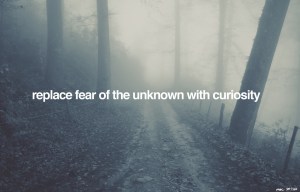
Why do people sometimes have a fear of the unknown? As human beings, we each have our own unique doubts, fears, and phobias that develop as we deal with the world and its’ challenges. Whether they are fears related to heights, spiders, snakes, or even speaking in front of a large audience, it’s part of what makes us human to have fears. Facing and confronting your fears is not an easy struggle and it takes courage, compassion, and emotional maturity to get past your phobias. One of the most common fears that most of us have from time to time is ‘Fear of the Unknown.’

To have a strong desire to control your circumstances, your path in life, and your future is only natural. However, it’s clear that some things can never be fully known and that there will be changes that we will have to cope with. Trying to control everything and everybody around you is a recipe for disaster. Facing the unknown without fear is not easy but it is necessary in order to become a more mature and more centered person. Fear of the unknown is related to other fears that people have which have a connection to one another such as the fear of death, the fear of getting old, the fear of being homeless, the fear of life changes, etc.

There’s a popular saying that goes, “You always fear what you don’t understand.” This quote ties into a central idea that people fear most what they cannot change, anticipate, or prevent from happening. Some examples of this phenomena include economic recessions, societal changes, job loss, personal loss, election results, retirement planning, health problems, environmental concerns, etc. All of these phenomenon tie into the overall ‘fear of the unknown’ for the average man or woman. None of these phenomena can be controlled or even changed by one individual. Since we cannot usually have a great effect on preventing these fears from becoming real or taking place in our lives, what can we do or what should we do?

It’s best not to resist the changes that are bound to happen at some point in our lives. We simply cannot know everything that is to occur in the future and it would be useless to try to plan for everything ahead of time. Most of the time, it’s best to go with the flow, try best not to fight what comes your way, and to make the most out of things. Do not give in to fear, hate, doubt, disappointment, and anger, which are all negative consequences that come with fearing the unknown and the unseen. Having fear about what can happen a week, a month, a year, or a decade from today is a waste of time because you simply can’t know what exactly lies ahead in the future.

The older I get, the more I realize how important it is to be adaptable and malleable to the future. Trying to plan everything out is a waste of time and energy. While seeking stability, security for yourself and others is an important part of the human condition. Sometimes, you need to cope with some instability and insecurity that will come your way. Another notable saying that people rely on for strength is the popular quote; “Whatever doesn’t kill you makes you stronger.” Persistent fear of what’s to come is not productive, not enjoyable, and not healthy for anyone in the long-term.

What happens to most people when they feel a palpable sense of fear? Well, there are a number of common symptoms and ailments that one can experience as a result. Your heart rate starts to increase, and your breath will become shorter and more harried. You may begin to panic, and feel an enormous sense of tension in your body. You’re going to be anxious and stressed about the unknown and what you’re going to do about it. The more extreme symptoms of feeling fear involve nausea, fainting, vomiting, crying, and shaking uncontrollably. I mention these reactions to fear not to scare my readers but so you can better learn to recognize these symptoms and try to control and alleviate them as best as you can.

Now that we know what the ‘Fear of the Unknown’ is and how to classify it along with the related symptoms, how can we cope we this fact of life? The most important thing to keep in mind when confronting this particular fear is to stay positive about what’s to come. Not everything in life will go smoothly and there will be challenges ahead. However, it’s important to remove the negative associations, conclusions that your mind will come up with sometimes when it comes to thinking and planning for the unknown. A little bit of anxiety and stress is natural when it comes to facing the future but it should not affect your daily activities and your personal relationships.

You’ll have a more peaceful state of mind when you react to the strange and unforeseen future with a positive and upbeat outlook. It’s best to focus on your goals, stay focused, and don’t get sidetracked about what might or what not happen to you in the future. Changing your thoughts and your mindset through meditation for five to ten minutes on a daily basis can also be a great self-help remedy for getting rid of your fear of the unknown.

Embracing a new environment, new friends, and new work opportunities can also keep your imagination in the right state of mind. If your sense of anxiety and fear of the unknown is extremely strong and hard to break, it may be best to consider neurolinguistic programming, cognitive behavioral therapy, and even certain medications if the problem becomes that severe. However, these kinds of remedies should be used only as a last resort.

Having a sense of ownership and direction in our lives is extremely important. However, we cannot control everything especially the unknown that lies ahead. Whether its’ moving to a new city or country, jumping into a dark lake, starting a new job or hiking up a mountain, these are all instances in life that can give us reasons to worry and to be anxious. However, by controlling our thoughts and emotions, and having the ability to stay positive regardless of the circumstances will keep you both mentally and physically fit.

As the 32nd President of the United States, Franklin D. Roosevelt stated famously during his 1st inaugural address to the American people on the subject of facing the Great Depression, “Let me assert my firm belief that the only thing we have to fear is…fear itself.”

Interconnected

interconnected
“Will humanity become more or less interconnected during the 21st century?”

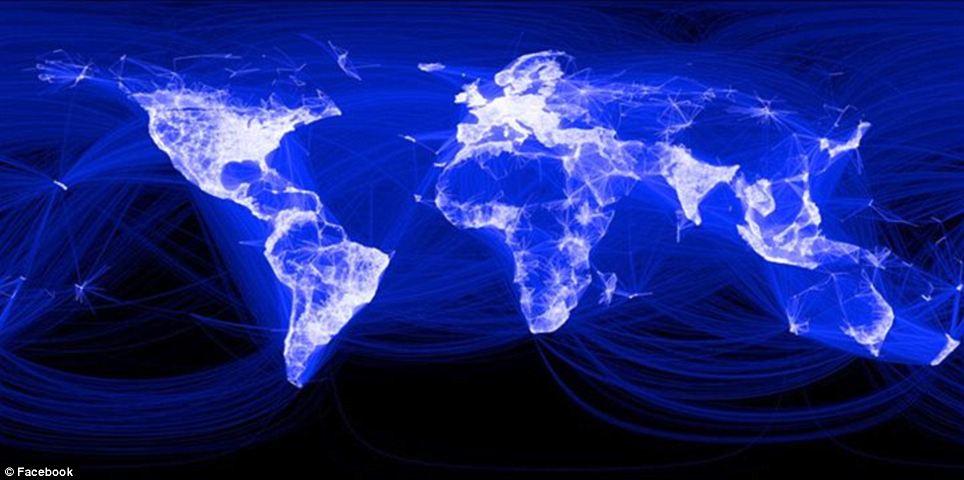
When the 21st Century is over and becomes apart of the history books, it will be known as the first truly interconnected, interdependent, and entangled era of human history. Compared to past eras, borders are more open, long-distance travel is common place due to modern aviation, and global commerce is more free than it ever has been. Globalization as a phenomenon has been made possible not just through open borders and advances in aviation but also due to the wonders of the Internet.

While many human beings can not physically cross borders or take modes of transport to other countries, the Internet has helped to minimize that gap of connection by allowing people from around the world to connect virtually at an increasing frequency. As the technology continues to improve and advance, the Internet has made our planet interconnected on a scale once considered unthinkable a generation ago.

I woke up one morning in New York, had my breakfast and juice, and then was able to log-in to Skype and chat with my good friend who is living in Beirut, Lebanon about his work there and how he has adjusted to living in the Mediterranean metropolis. After that, I sat down to have lunch and finished some homework for a 1:30 PM Spanish lesson with my teacher who is originally from Mexico but currently lives in Italy. Somehow, we were able to make the six-hour time difference work between me in New York and her in Italy. Before the day was over, I had two more Skype and Google Hangout based English lessons with my students from countries like Saudi Arabia and South Korea. Satisfied with my day of both teaching and learning, I settled the rest of my affairs and went down to the kitchen to prepare my dinner for the evening.

None of these lessons or exchanges of information would be possible between persons of different countries and backgrounds without the invention of the Internet. Too often, the average person either takes for granted the capabilities that allow us to stay connected on a worldwide scale or doesn’t take advantage of using this technology to bolster their abilities personally or professionally.

Professionally, as an ESL teacher, the fact that I have been able to use the Internet and web applications such as Skype, Google+, etc. to connect with numerous students from around the world virtually has been a real treat for me. Sometimes, my students with whom I’m working with online do not have the means or ability to work with a native English speaker / teacher in person in their own city or country. Those of us language teachers who commit time out of our lives to help others learn our native languages should be commended for making this a possibility. It is truly enjoyable for me to work with those students online from different countries who will share with me interesting tidbits about their cultures and societies.

Personally, I have been able to stay in touch and meet up again with friends of mine from different regions of the world thanks to staying connected through social media websites like Facebook, CouchSurfing, Twitter, etc. The Internet has allowed me to stay connected with international friends, both new and old, thanks to the rise of social media and its applications. It is funny to think that only fifty to hundred years ago, or even before the advent of the Internet, twenty years ago, the best that you could do is send a handwritten letter by mail or make an expensive call to any location overseas. Now, such communication to an international location is often very cheap or even free of charge depending on which application you decide to use.

While the advent of globalization has its positives and negatives, which are often debated and discussed endlessly, I believe that one net positive from globalization has been how the Internet and the “world wide web” has made humanity interconnected. This one trend of “Interconnectedness” for the 21st century is one that isn’t going to reverse course anytime soon and is going to be hard pressed to find itself limited in total amount of users or overall global popularity.

According to the World Bank’s recent report titled “World Development Report 2016: Digital Dividends”, the number of people worldwide who have access to the Internet has tripled from about 1 billion people in 2006 to about 3.5 billion people in 2016. This recent development is an extraordinary occurrence. This means that over 40% of humanity now has some type of access to the Internet which has become increasingly possible due to rise of mobile technology and the spread of 3G and 4G cellular networks.

As more and more people connect to digital markets of e-commerce, become new entrepreneurs and start to create their own small businesses, this will also allow more students to connect and learn with me here in New York and other teachers around the world to learn English or another foreign language. The possibilities of eventually having everyone connected to the Internet would be truly endless. It could lift millions more people out of poverty and create new economic opportunities where there were none before.

Some of the big questions to be answered in the coming decades is how do we as a global community work together to connect the remaining 60% of humanity to the Internet? How do we work together as governments, NGOs, and individuals to give people the means virtually to benefit economically and personally from the advent of the Internet? These are not easy questions to answer let alone solve. However, if humanity is to continue advancing and developing into the future, we must continue to become more interconnected to each other. That is a fundamental truth of the 21st century for which we all must be aware of.

Sources:

1.)  http://www.theguardian.com/technology/2016/jan/13/internet-not-conquered-digital-divide-rich-poor-world-bank-report

2.) http://www.worldbank.org/en/publication/wdr2016

Dealing with Adversity

Historical-Perspective-When-Adversity-breeds-Resilience-top-I.J.-Singh
“There is always something positive that comes out of something negative.”

“Remind thyself, in the darkest moments, that every failure is only a step toward success, every detection of what is false directs you toward what is true, every trial exhausts some tempting form of error, and every adversity will only hide, for a time, your path to peace and fulfillment.”
―Og Mandino

Anybody who has ever lived has faced adversity and struggles that test one’s resolve and fortitude. How someone deals with these challenges and setbacks can show you their true character. I used to live under the assumption that everything will go smoothly if you work hard, play by the rules, and do your best. Recent events in my life have shown this hypothesis to not be true. Life is not fair sometimes and it is extremely important to adapt to this fact rather than to fight it head on.

We can curse our misfortunes but it is much better to move on and look to the future. The worst thing that someone dealing with adversity can do is to wallow in self-pity and to be endowed with guilt. The past won’t change but the future is still in your hands to shape. I am glad that I am aware of the realities of the world now while I’m still young rather than to be surprised by them at a later age. If a goal you strived for vanishes into thin air or a dream that you thought would be yours disappears, it does no good to consider what might have been but to plan instead on what could still be.

I would be lying if I didn’t say that over these past two weeks I’ve felt a range of emotions ranging from anger to sadness. I was in denial at first about what happened to me and why it happened to me. Initially, I could not accept what I could not change. I went through the five stages similar to the popular model of ‘Denial, Anger, Bargaining, Depression, and Acceptance.’ Luckily, I did not suffer a personal loss or suffer from a serious ailment but I was crushed by the news that I would not be continuing on the adventure that I started eighteen months ago when I filled out my first application form.

It is difficult to deal with these painful emotions and feelings but it is far better to embrace them rather than to let them bottle up inside of you and fester on and on. I would have loved to continue the good work that I was doing and to finish the job that I had signed up for. Unfortunately, life has other plans for me and I am willing to embrace the challenges that lie ahead. Luckily, we live in a world where there are plenty of opportunities and possibilities available to those of us who are willing to work hard and to use our knowledge.

Clearly, I am not the only person to ever suffer setbacks and misfortunes. Many exemplary leaders and icons of history were unsuccessful in their initial hopes and dreams before greatness found them later on in their lives. The 16th President of the United States, Abraham Lincoln, had many personal misfortunes and professional failures happen to him before he became elected to the highest office in the land. He lost lovers and family members, failed in business, was defeated multiple times for elected office, and dealt with mental health struggles all throughout his life.

However, he never gave up because he knew what he was worth, had faith in himself and his abilities. He displayed a strong intellect and a strong drive to be great. President Lincoln had a lasting impact on my country and the world. This would not have been possible if he had simply given up when he encountered all of these adversities and disappointments. His story is a continual inspiration for me and for others who have been dealt a personal or professional blow to their lives.

How would our world be different today if inventors like Edison had given up after his 900th try at inventing the lightbulb or if geniuses like Einstein had listened to those teachers / headmasters who told him that he was lazy, dumb, and not worth the effort? If you don’t have confidence or don’t believe in yourself, you are not going to get very far in life.

While it’s pleasant to have other people think highly of you and give you praise, there will be other times where they’ll tell you that you’re not good enough and that you don’t belong there. If there is anything that I want the readers of this blog post to realize is that you can’t let anybody else stand in the way of your goals and dreams. They may have good intentions and think that they know what’s best for you but you have to decide that for yourself.

When I was younger, I was naïve to think that everything would go smoothly in my life and that I could control every outcome. Especially after what happened to me recently, I know that this notion is unrealistic. There are certain aspects of your life that you have some control over and there are other aspects that are completely out of your control. I do not regret the past nine weeks that I spent in Colombia, and I am proud of the good work that I was doing. I am happy for my fellow CII-8 trainees and wish them all the best as they become volunteers and move on to their communities for the next two years of service. I was grateful for the opportunity and have some good memories from this experience that I will remember fondly.

The future is unclear at the moment but I look forward to the opportunities and possibilities that lay ahead. I know that I will continue to write and develop this personal blog that I started eight months ago. I believe that there are many adventures that lie ahead for me in my life. I will continue to have faith in myself and my abilities. Dealing with this particular adversity will make me a stronger and more mature person in the long run. I have a strong mind, a strong body and I am confident that I will get through this momentary setback. Your past does not define you and the future is yours for the taking. Always remember that.

Self-Sufficiency

self-sufficiency-quotes-2
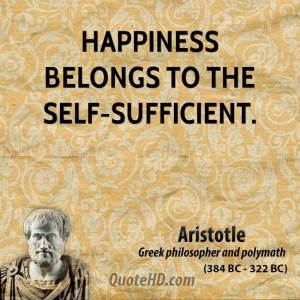
“If Aristotle is wrong about this, then I don’t want to be right.”

Self-sufficiency: “Able to supply one’s own or its’ own needs without external assistance.” (Noun – Dictionary.com)

Overlooked and misunderstood by many, the concept of self-sufficiency is important for realizing one’s potential as a person and for achieving true independence and maturity. Especially for those of us including myself whom are going through the 20’s, this is a period in our lives where we must rely on ourselves first for our success and prosperity before we reach out to others for help. I believe that it’s natural to ask for the mental and emotional support from your friends and family but there comes a time in a man and woman’s life where they must strike it out on their own and attempt to realize their self-sufficiency.

For different people, being self-sufficient could mean different things. It could be paying off your student loans or enrolling in a trade school to learn skills in order to become more employable. For others, it could be owning/renting your first apartment (without roommates), shopping and/or growing your own food, and changing a flat tire / getting your oil changed. Millennials are often criticized as the ‘Peter Pan’ generation considering that we come back to live with our parents after college in order to save money. I can’t say that this is a good trend but it is mostly due to a tough economy and a lack of good job opportunities, especially for those who were affected by the ‘Great Recession’ of 2007-2009 and still are to this day.

Rather than being discouraged and dismayed by the recent economic troubles affecting our generation, it is important to realize the opportunities that are out there. For realizing opportunities and achieving self-sufficiency in different areas, the Internet is perhaps the greatest tool out there for changing your future. We are quite lucky in that it is incredibly easy and free to access an almost infinite amount of information, both educational and informative, that can change our course in life if you are able to do the research and put the work in.

I can honestly say that learning self-sufficiency is vital in this day and age. Being able to take care of your body, your mind, your apartment/house, your car are all-important to be a fully functioning adult. In addition, managing and developing your finances, having healthy relationships, working successfully with co-workers, clients, and bosses are all steps on the path to self-sufficiency.

Most people stumble into ‘adulthood’ and will fail to become self-sufficient in their lives and suffer negative emotional and psychical health as a result. Resolve to yourself that you will take the steps necessary to become a mature adult who can take care of business and be able to function in society.

A lot of the problems and maladies of society originate from a lack of self-sufficiency and a heavy reliance on others (friends, family, and neighbors) to help them out continuously. I mentioned before that mental, emotional support from others including friends and family is necessary and even should be encouraged. However, don’t rely on others as a crutch because the people in your life won’t be there forever. They love you and want you to succeed in life but it is your job to make it happen. Your family and friends can’t hold your hand and walk you through every problem and setback you will experience. It is a common fact of wisdom that life will beat you down and keep you there if you let it. Achieving self-sufficiency in the necessary areas of life will make you happier, stronger, more resilient, and a better person overall.

Once you become self—sufficient and confident in your abilities, it is natural that you might want to share this with another person such as a wife, husband, and children. That is a reflection of your realization that you have become a full adult and can handle the responsibilities of helping future generations to become self-sufficient as well. Even if you do not marry or have kids, it’s possible to impact others and lead them down the road to self-sufficiency as well. Mentoring young people, being a leader in the community, and encouraging others to succeed can help lead others down the path of self-sufficiency as well.

After achieving self-sufficiency in your life, you can truly focus on the hobbies and interests that challenge and stimulate you. Human beings thrive in life when we conquer both internal and external challenges. Learning an instrument, studying a foreign language, dedicating yourself to a project at work or at home, or achieving mastery in different subjects are all great ways to keep yourself stimulated and happy.

People become unhappy when all they do is consume and don’t do anything to make themselves better. When all you do is watch TV and films but don’t know how to make them, or eat at fine restaurants but don’t know how to cook the food itself, and listen to music without knowing how to play an instrument or how its’ actually produced. Becoming self-sufficient is a result of handling the struggles and challenges of life with confidence and resolve.

In addition, having hobbies and interests in the pursuit of continuous knowledge and wisdom is extremely important to becoming a whole person. Anxiety, depression, and other issues manifest themselves when people can’t take care of themselves mentally, physically, and emotionally. Don’t be one of those people. Work hard to become a mature and capable adult in our society. I promise that you won’t regret it.

The Ripple Effect

chocolates-forrest-gump-1814922-397-264
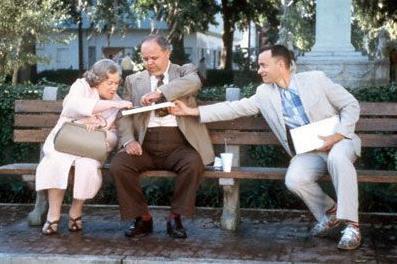
Which chocolate will you decide to choose?

Throughout the course of our lives, actions and events occur that we don’t see coming or have little control over. While these small events and actions seem unimportant at the time, their results continue to spread and manifest in changing things about yourself, and your path in life. This is known as the ‘Ripple Effect’, and is often overlooked by certain people who refuse to recognize that actions have consequences and what we say or do now has lasting effects on who we will become in the future.

The most famous example signifying the ‘Ripple Effect’ is when drops of water or other objects, fall into a larger pool of water causing ‘ripples’ to manifest themselves while affecting the initial state and changing its physical makeup. Similar in overall meaning to the ‘Ripple Effect’ is the ‘Butterfly Effect’ and also the ‘Domino Effect’ often cited in sociological terminology.

The older you get, the more you realize that certain things in life are going to be outside your control. Some people refuse to recognize this fact and try to direct and manage everything in life to prevent any surprises, twists, or turns that will come your way. However, this approach is a recipe for disaster because it is a fact that we cannot control everything that happens to us and that it is pointless to try to do so.

I don’t want to turn this into a “Predestination v. Free Will” debate because that is too black and white for a world that has a lot of grey matter. If you had asked me about the concepts ‘Free Will’, ‘Destiny’, and ‘Fate’ when I was ten years younger, I would have said that I have complete control over my life and that my destiny is totally in my hands. At my current age and the older I get, I believe that it is a intertwining mix of destiny and your own will that sees you through both the highs and lows of life.

From my own personal experiences, especially as I enter my mid-20’s, there have been many unexpected occurrences that have changed my life in different ways which would have been unimaginable to me in the past. I never would have thought that I would become an ESL teacher, move overseas and travel to different countries, and change my career path for the time being. There are cities that I have visited, cool experiences that I have had, and lessons that I have learned about life that would not have had happened had I stayed in the same town, kept my first job after college, and not gone out of my way to meet new people, make new friends.

It’s occurred to me now more than ever that we should not plan for everything in the future because the future is not up to us and life can throw unexpected curveballs when we least expect it. Instead of ‘cursing our fate’ and ‘falling into gloom and doom’ about the things we cannot control: (job security, natural disasters, deaths of family and friends), we should make an effort to change what we can control to benefit out lives: (relationships, where we live, and our physical and mental health.)

‘Free Will’ for human beings is limited as is ‘Pre-Destination.’ I would like to believe that I have some control over my life and the direction(s) it can take. However, I cannot change anything about my past and I am limited in what I can do about my future. Do not feel totally helpless about your future because you still have the power of decision-making, reasoning, and foresight, which can help you with your personal and professional goals.

It’s much easier to be angry at the world and to curse about the wrongs that have been committed against you but it won’t do much to make you feel better or to improve your future. Instead of feeling powerless, take charge and do your best with what you have now. Make every day a chance to improve yourself in some way so that your future will be a little bit brighter than before.

Never give up, and if challenges and set-backs come your way, meet them head-on and have the resolve to face them given your previous experiences in life. As was once said famously by the character, Forrest’s mother, in the critically acclaimed film, Forrest Gump, “Life is like a box of chocolates, Forrest, you never know what you’re going to get.” Even if you get a bad chocolate every now and then, there will still be plenty more to choose from.