

The Fan Pricing Crisis – How Sports and Entertainment Are Pricing Out Their Biggest Supporters

“There is a clear difference between paying a premium for a rare experience and being priced out of that experience, which most people find themselves facing today.”

If the value of a product or service is in high demand and the supply is limited, you’re going to be paying a lot for that good or service. I accept that inevitable fact of life and have paid that in my own life numerous times, especially for a concert, a sporting event, or even a last-minute show. Performers, artists, and athletes put their blood, sweat, and tears into their craft and they need that consistent revenue from fans for their livelihoods. I’m supportive of this kind of system, but what I am increasingly frustrated by is when dynamic pricing models, monopolistic practices, and sheer lack of affordability across these different types of entertainment have combined to cause inflated prices to occur for the average fan, where you can’t get in the arena.

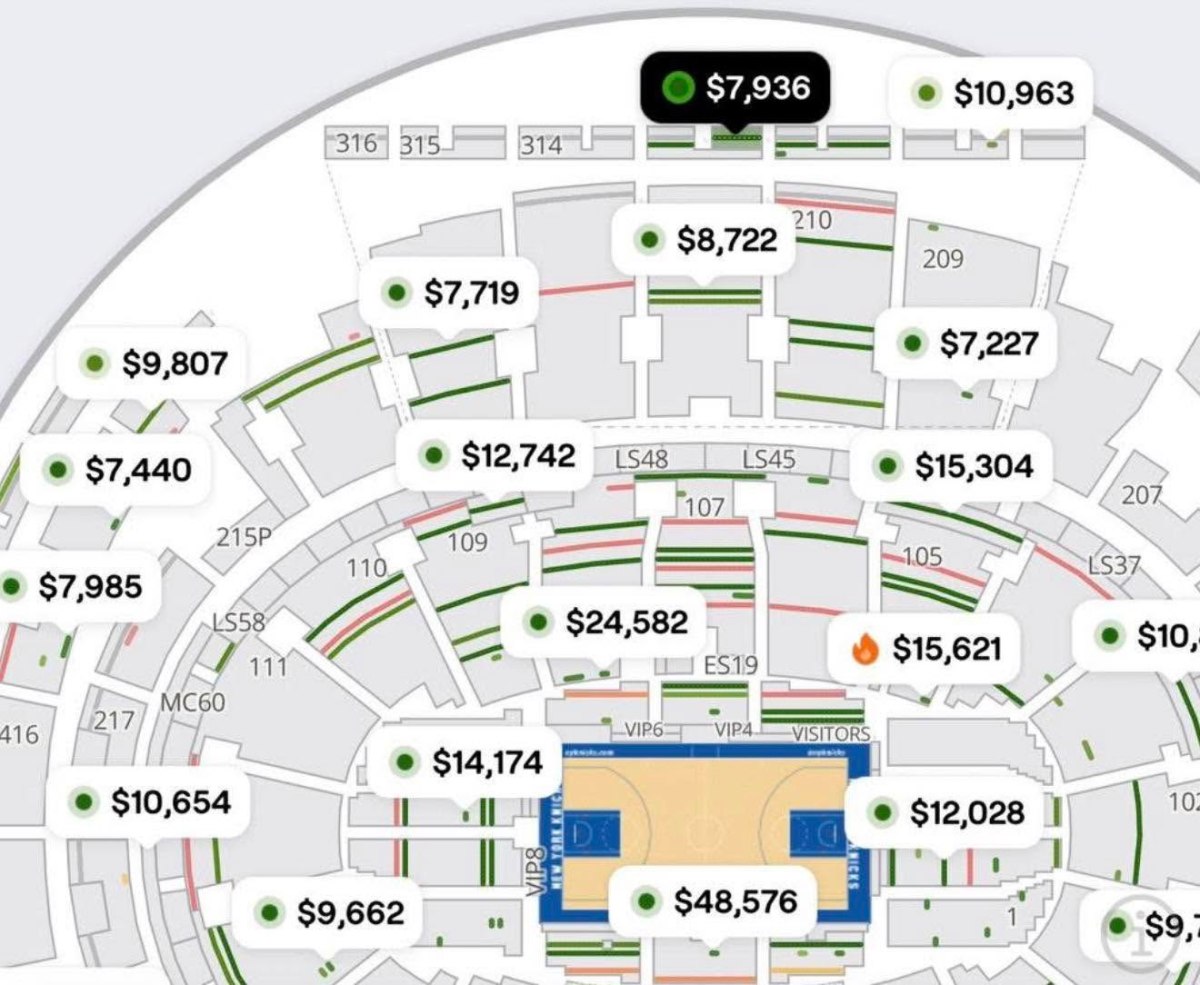
Prices for special events like the Super Bowl, the FIFA World Cip, and the NBA Finals are always going to be inflated, but I find that they have become overinflated. Many special events don’t even match the cost of those events should charge if they matched the inflation-adjusted value compared to the event ten or twenty years ago. For example, When the New York Knicks last reached the Finals against the San Antonio Spurs in 1999, a typical Finals ticket generally ranged from roughly $150–$500 face value, with premium seats running higher. In the secondary market, many tickets sold for hundreds rather than thousands of dollars at that time. Adjusted for inflation, that ticket price would be approximately $300–$950 in 2026 dollars. However, if you look at any secondary market site as I write this article in June 2026, it costs between 3k-10k for nosebleed seats and there’s nothing available under $3,000, showing that these prestigious events are no longer affordable, except for the very wealthy in our society.

The issue is not that prices rise when demand exceeds supply, which is to be expected especially for special concerts or rare sporting events. That is a basic economic reality of supply and demand in a capitalist system. The current issue is that modern ticketing systems have evolved in ways that extract the maximum possible amount of money from consumers through dynamic pricing algorithms, excessive service fees, speculative resale markets, and limited competition among ticketing providers. There is a clear difference between paying a premium for a rare experience and being priced out of that experience, which most people find themselves facing today.

This unfortunate situation is especially the case since there’s nothing available for the average middle-class fan in their price range, including the sections that are further away from the action. Increasingly, average fans of median or lower income are finding themselves out of luck for any special entertainment events and even for regular concerts or theater performances. Notable performers including Taylor Swift, Bruce Springsteen, and Beyonce have taken advantage of the dynamic pricing situation to charge more for their concerts even as their fans find themselves squeezed not just by the ticket prices but also for paying concessions, parking, and even needing to fly or drive to the concert on top of the cost for entry to the event.

One of the most controversial developments in modern entertainment has been the rise of dynamic pricing, which is very much an American phenomenon at this point, but could become popular elsewhere soon. Like airline tickets or hotel rooms, ticket prices can now fluctuate dramatically based on demand. A seat that costs $250 in the morning may cost $750 by the afternoon simply because an algorithm determines that consumers are willing to pay more and track people’s spending patterns over time.

While defenders of dynamic pricing argue that this approach reflects market realities, critics are right to point out that these systems often reward sheer wealth rather than loyalty to the team, the athlete, or the musician. Fans who have supported a team, artist, or event for decades frequently find themselves competing against corporate buyers, professional resellers, and affluent consumers with far deeper pockets. These buyers don’t usually care about the team or the artist and will often surge the pricing to make a profit off the ticket and sell to the highest bidder rather than to lower the price for someone of moderate means who is a true fan or supporter of the event they want to see, but will never get the chance to do so now.

Sports and entertainment have historically served as one of the few places where people from different economic backgrounds could gather and share a common experience together without barriers between them. Yet as prices continue to rise and these kinds of events become geared to the top 1-10% of our society including private suites and with whole parts of the arenas or stadiums blocked off to the wealthiest, these events increasingly resemble luxury products reserved for those people with significant disposable income only.

The danger is not merely economic in terms of fostering greater inequality and already has resulted in a K-shaped economy in the United States as many economists have noted lately. There is cultural damage being done as well, which could be even more damaging to how different social classes relate to each other going forward. When the average fan or supporter can no longer attend a championship game, a major concert, or a global sporting event, something valuable is lost as a result. The shared experiences that once united different communities become increasingly exclusive and reflect a stratified society rather than preserve a rare opportunity to bring everyone together to celebrate an event or a person that unites us together.

The question that policymakers, leagues, promoters, and ticketing companies should be asking is not how much revenue can be extracted from consumers. It is whether future generations of fans will be able to participate in the events they love at all. I have no problem with people making money from what they do and selling at a higher price to reflect the sheer demand and the perceived value of their product. However, pricing a major portion of your supporters and fan base out of these events will ultimately result in growing antipathy toward the sports teams, entertainers, leagues, and ticketing companies involved. Loyal fans are the foundation upon which these brands are built. When lifelong supporters can no longer afford to attend the very events that helped make them successful, a sense of alienation and disenfranchisement begins to replace loyalty. Over time, that erosion of goodwill may prove more costly than any short-term revenue gains generated through excessive and dynamic pricing.

For many New York Knicks fans including myself, the 2026 NBA Finals represent the first championship opportunity of our lifetimes. Yet many lifelong supporters who endured decades of losing cannot afford even the cheapest seat inside Madison Square Garden for a Finals game. When a once-in-a-generation moment becomes inaccessible to the very fans who helped sustain a franchise through its worst years (of which there were many), it is fair to ask whether the pricing system is still serving its intended purpose. While organizations and individual artists may celebrate record profits today, they should remember that every lifelong fan who is priced out is a future customer, advocate, and ambassador lost. The strength of any sports league, artist, or event ultimately depends not on how much money can be extracted from its audience, but on how many people still feel they belong there.
El Clasico Paisa

A packed stadium filled with 40,000+ screaming and diehard fans imbued with a fiery passion that is seldom seen in most sporting events around the world. No, my friends, this is a special event and one that deserves the rare title of a ‘clasico’ or classic in English. However, this isn’t your ordinary clasico or derby. This isn’t Manchester United v. Manchester City or FC Barcelona v. Real Madrid. This is the Medellin derby or ‘El Clasico Paisa’, an affair that has been raging for almost seventy years. They share the same stadium and play in the same national league. Their fans come from the same city and live in the same neighborhoods.

However, when it’s ‘clasico day’ in Medellin, the differences between the two local teams could not be starker. It’s blue and red v. green and white, history / traditions v. championship / past glories. This rivalry is more than just about football. It’s about your allegiance to a team, to its’ players, to its’ customs, and to its’ culture. ‘El Clasico Paisa’ is the long-standing rivalry between the teams of Independiente Medellin and Atletico Nacional. It’s the most important derby in all of Colombia and all of South America from its’ prior reputation.

Its’ one of the biggest rivalries in all of FIFA and I was lucky enough to witness this ‘clasico’ this past Sunday. Bragging rights are on the line whenever these two teams face off. They face each other a couple of times per season in the ‘Liga Aguila’, Colombia’s national league, because they are usually both very successful and find themselves ranked in the Categoria Primera A. Having won multiple championships in the past and most recently the famed ‘Copa Libertadores’ which is the South American edition of the UEFA Champions League, Atletico Nacional are the favorites of Colombian football these days.

Having watched a few of Nacional’s matches and having been a fan of their players and their uniforms, I learned about the upcoming derby about a week before kickoff time. Unfortunately, I did not strike when the iron was hot so I left my chances of getting a ticket up until the day of the match. Luckily, in Colombia, you can scalp tickets up until a few hours from local sellers at the Stadium. While the prices are marked up a bit, I found the one I haggled for to be fair and decided to go through with my purchase. During my time of living in Colombia, I wanted to make sure that I got to see a few matches especially given how huge the sport is here in South America.

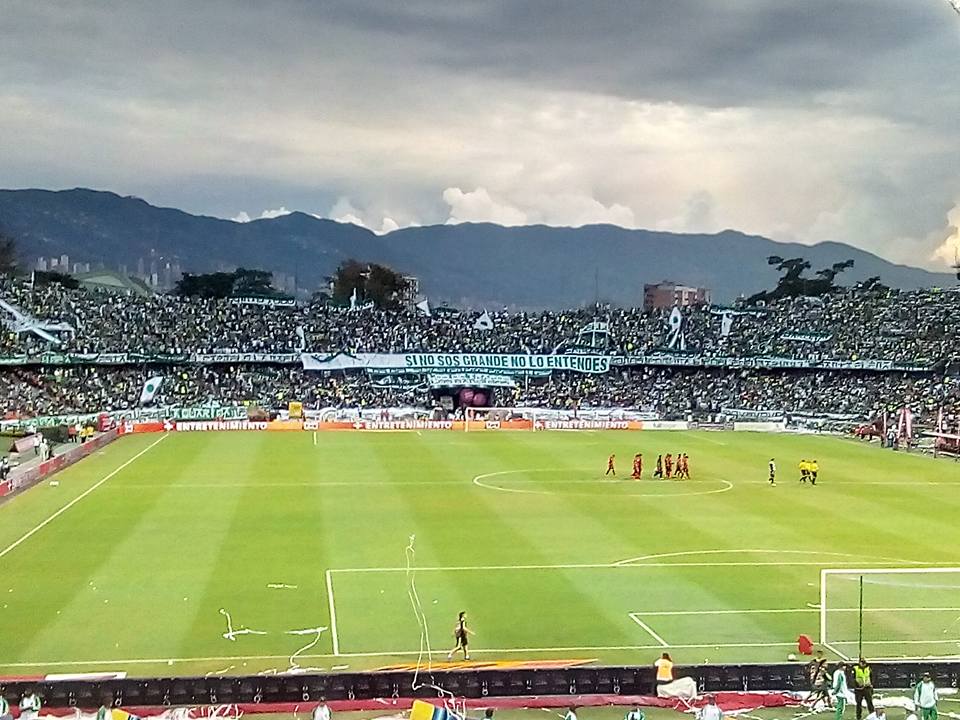
The vibe and atmosphere in the Atanasio Girardot stadium before kickoff was simply electric and you could feel the sheer energy pulsating throughout the crowd. It was so filled to capacity that it was standing room only for the entire match. Luckily, I had a good vantage point of the entire field from about five rows up in the upper deck and was located near the exit in case the fans near me got out of control. From the opening minute to the last whistle blown, Fans on both sides chanted their teams’ songs, unfurled huge banners of support, waved flags, and cheered their heroes on until their voices were hoarse.

Despite being a supporter of Atletico Nacional, the ticket I bought last minute from a street vendor was located in the heart of the Independiente Medellin section. While I was uncomfortable with this arrangement at first given that I wanted Nacional to win the ‘clasico’, I have to give credit to the Medellin fans that were outnumbered by a count of 2:1 inside the stadium. They were loud, confident, and didn’t give into doubt or disappointment even when Nacional scored upon their team around the 65th minute making it an eventual 1-0 Nacional victory.

Win or loss, Independiente Medellin fans are still behind their players 100%. This loyalty to the team goes back over a hundred years when they were founded in 1912. While they have history on their side, Medellin does not have the more recent success or amount of championships that Atletico Nacional has accumulated in recent years. With the recent victory over Independiente del Valle in the 2016 Copa Libertadores, Atletico Nacional is the team to beat in the Liga Aguila in Colombia. Historically, in the ‘El Clasico Paisa’, Atletico Nacional has played Independiente Medellin 291 times with Nacional winning 119 matches to Medellin’s 92 matches.

They have ended in a draw 80 times total. Interestingly enough, the Copa Colombia has been played 16 times between both teams with Medellin having an advantage in this category with seven wins to Nacional’s five wins. Part of what makes this ‘clasico’ special is that both teams have a history that goes back almost seventy years. They are two of the most prominent and well-known football clubs in Colombia with a rivalry that is unmatched in South America.

Having been to football matches in both Germany and Turkey where the atmosphere was enjoyable, seeing a match here in Medellin was on another level. The passion of the fans was the craziest I have ever seen and they truly live through their team’s successes and failures. Unfortunately, certain fans take the results of the ‘clasico’ matches too seriously and there have been a few sad deaths and injuries that have taken place.

Luckily, both sides were not too hostile to each other during the most recent ‘clasico’ that I attended. They were shouts, curses, and a few bad fingers raised towards either side but nothing that escalated into all-out brawling and hooliganism. I had never seen that large of a police force at a football match before but the local police take it very seriously given what’s occurred in the past. There were also riot police present in full tactical gear but I don’t believe any tear gas was fired and everybody went home safely including myself after the match had concluded.

While I was happy that Atletico Nacional won 1-0, I had bonded during the match with the Medellin fans and enjoyed cheering, chanting, and jumping up and down with them. They are a passionate lot and they are all diehard fans. I hope to attend another ‘clasico’ soon where I can wear my green and white jersey and cheer on my Nacional in their fan section. When you’re in the opposing team’s fan section and your wearing the other team’s colors, it’s always a bad idea and trouble may find you whether you like it or not. Before the ‘clasico’, I was smart enough to wear a neutral grey shirt and jeans because I wasn’t sure in which section of the stadium my seat would be. It is a very lucky thing indeed that I didn’t wear my Nacional jersey in the Medellin fan section or otherwise I might not be writing this blog post about the ‘clasico’ today.

All kidding aside, while the football match wasn’t the best or most exciting I’ve ever seen played before, the atmosphere was incredible and it was the most-lively match from the fans’ perspective that I’ve ever witnessed. It truly was a sight to behold with both sides yelling, screaming, jumping, and dancing in the hopes that their team might end up on the winning side. I can understand now why South America is such a football hub. It is the number one sport and sometimes the only sport that matters to its’ fans. If you’re ever in Colombia or specifically in Medellin, I suggest you buy a ticket and go see ‘El Clasico Paisa.’ I promise that you won’t regret this amazing experience but make sure to wear neutral clothes because you never know which fan section you’ll be seated in.