

The Fan Pricing Crisis – How Sports and Entertainment Are Pricing Out Their Biggest Supporters

“There is a clear difference between paying a premium for a rare experience and being priced out of that experience, which most people find themselves facing today.”

If the value of a product or service is in high demand and the supply is limited, you’re going to be paying a lot for that good or service. I accept that inevitable fact of life and have paid that in my own life numerous times, especially for a concert, a sporting event, or even a last-minute show. Performers, artists, and athletes put their blood, sweat, and tears into their craft and they need that consistent revenue from fans for their livelihoods. I’m supportive of this kind of system, but what I am increasingly frustrated by is when dynamic pricing models, monopolistic practices, and sheer lack of affordability across these different types of entertainment have combined to cause inflated prices to occur for the average fan, where you can’t get in the arena.

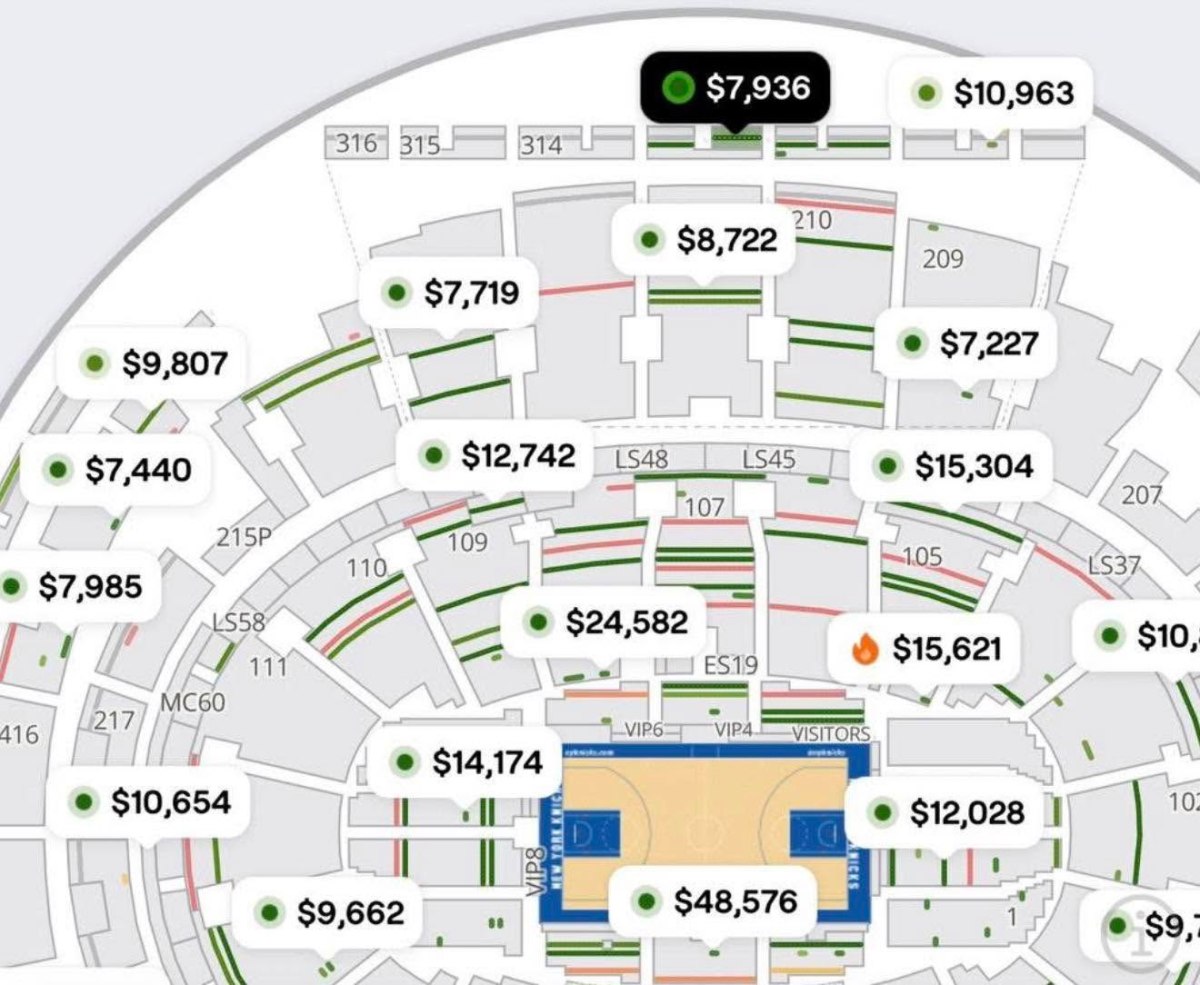
Prices for special events like the Super Bowl, the FIFA World Cip, and the NBA Finals are always going to be inflated, but I find that they have become overinflated. Many special events don’t even match the cost of those events should charge if they matched the inflation-adjusted value compared to the event ten or twenty years ago. For example, When the New York Knicks last reached the Finals against the San Antonio Spurs in 1999, a typical Finals ticket generally ranged from roughly $150–$500 face value, with premium seats running higher. In the secondary market, many tickets sold for hundreds rather than thousands of dollars at that time. Adjusted for inflation, that ticket price would be approximately $300–$950 in 2026 dollars. However, if you look at any secondary market site as I write this article in June 2026, it costs between 3k-10k for nosebleed seats and there’s nothing available under $3,000, showing that these prestigious events are no longer affordable, except for the very wealthy in our society.

The issue is not that prices rise when demand exceeds supply, which is to be expected especially for special concerts or rare sporting events. That is a basic economic reality of supply and demand in a capitalist system. The current issue is that modern ticketing systems have evolved in ways that extract the maximum possible amount of money from consumers through dynamic pricing algorithms, excessive service fees, speculative resale markets, and limited competition among ticketing providers. There is a clear difference between paying a premium for a rare experience and being priced out of that experience, which most people find themselves facing today.

This unfortunate situation is especially the case since there’s nothing available for the average middle-class fan in their price range, including the sections that are further away from the action. Increasingly, average fans of median or lower income are finding themselves out of luck for any special entertainment events and even for regular concerts or theater performances. Notable performers including Taylor Swift, Bruce Springsteen, and Beyonce have taken advantage of the dynamic pricing situation to charge more for their concerts even as their fans find themselves squeezed not just by the ticket prices but also for paying concessions, parking, and even needing to fly or drive to the concert on top of the cost for entry to the event.

One of the most controversial developments in modern entertainment has been the rise of dynamic pricing, which is very much an American phenomenon at this point, but could become popular elsewhere soon. Like airline tickets or hotel rooms, ticket prices can now fluctuate dramatically based on demand. A seat that costs $250 in the morning may cost $750 by the afternoon simply because an algorithm determines that consumers are willing to pay more and track people’s spending patterns over time.

While defenders of dynamic pricing argue that this approach reflects market realities, critics are right to point out that these systems often reward sheer wealth rather than loyalty to the team, the athlete, or the musician. Fans who have supported a team, artist, or event for decades frequently find themselves competing against corporate buyers, professional resellers, and affluent consumers with far deeper pockets. These buyers don’t usually care about the team or the artist and will often surge the pricing to make a profit off the ticket and sell to the highest bidder rather than to lower the price for someone of moderate means who is a true fan or supporter of the event they want to see, but will never get the chance to do so now.

Sports and entertainment have historically served as one of the few places where people from different economic backgrounds could gather and share a common experience together without barriers between them. Yet as prices continue to rise and these kinds of events become geared to the top 1-10% of our society including private suites and with whole parts of the arenas or stadiums blocked off to the wealthiest, these events increasingly resemble luxury products reserved for those people with significant disposable income only.

The danger is not merely economic in terms of fostering greater inequality and already has resulted in a K-shaped economy in the United States as many economists have noted lately. There is cultural damage being done as well, which could be even more damaging to how different social classes relate to each other going forward. When the average fan or supporter can no longer attend a championship game, a major concert, or a global sporting event, something valuable is lost as a result. The shared experiences that once united different communities become increasingly exclusive and reflect a stratified society rather than preserve a rare opportunity to bring everyone together to celebrate an event or a person that unites us together.

The question that policymakers, leagues, promoters, and ticketing companies should be asking is not how much revenue can be extracted from consumers. It is whether future generations of fans will be able to participate in the events they love at all. I have no problem with people making money from what they do and selling at a higher price to reflect the sheer demand and the perceived value of their product. However, pricing a major portion of your supporters and fan base out of these events will ultimately result in growing antipathy toward the sports teams, entertainers, leagues, and ticketing companies involved. Loyal fans are the foundation upon which these brands are built. When lifelong supporters can no longer afford to attend the very events that helped make them successful, a sense of alienation and disenfranchisement begins to replace loyalty. Over time, that erosion of goodwill may prove more costly than any short-term revenue gains generated through excessive and dynamic pricing.

For many New York Knicks fans including myself, the 2026 NBA Finals represent the first championship opportunity of our lifetimes. Yet many lifelong supporters who endured decades of losing cannot afford even the cheapest seat inside Madison Square Garden for a Finals game. When a once-in-a-generation moment becomes inaccessible to the very fans who helped sustain a franchise through its worst years (of which there were many), it is fair to ask whether the pricing system is still serving its intended purpose. While organizations and individual artists may celebrate record profits today, they should remember that every lifelong fan who is priced out is a future customer, advocate, and ambassador lost. The strength of any sports league, artist, or event ultimately depends not on how much money can be extracted from its audience, but on how many people still feel they belong there.
Standing Up to Double Standards

“I am all for having standards to abide and follow as they form the backbone of our laws, rules, and regulations, but what we need to avoid is having two sets of standards, which divides people and aggravates resentments.”

I discussed in a previous article of mine why setting standards around behavior, conduct, and fairness are important. I want to dive further given recent current events of which I could put to a few examples, but for which involve the recent internationally televised and particularly controversial awards show (not naming names here) as well as other prominent examples from politics and business that come to mind in past years on why having two sets of standards can be so deleterious for a society. I am all for having standards to abide and follow as they form the backbone of our laws, rules, and regulations, but what we need to avoid is having two sets of standards, which divides people and aggravates resentments.

We all can agree upon certain norms and standards that are set for us to build trust, reliability, and faith in our institutions and our society. However, when standards are ignored or watered down or not even followed by certain privileged parts of society, that can backfire in several ways including the loss of trust in the standards that were meant for all but are not followed by everyone.

When a few noteworthy individuals, who are looked upon as role models or are put into positions of power and/or influence, when they do not abide by the standards or thwart them openly, it causes others to realize that there are ‘double standards.’ Double standards can happen rarely, occasionally, or often enough that most people will start to realize that the rules set for them are not good enough for everybody and it can cause a ‘domino effect’ when more and more individuals choose to ignore the set standards if they see those with great power, wealth, or influence ignore the standards that they so diligently abide by and follow.

Certainly, there is no excuse to avoid set standards when wealthy and powerful people go out of their way to avoid or ignore them, but it does have effects on people’s faith and trust in those standards when some people because of privilege or background can just ignore or trample all over them. When there are “rules for thee, but not for me” and they are openly flaunted without consequence or punishment, our standards of behavior, conduct, and overall kinship will suffer. On top of that, when standards are diminished, degraded, or abused, that can cascade to our laws, rules, and regulations falling out of favor with more and more people as a result.

The most influential, wealthy, and powerful people in society may not feel they have a moral and a legal obligation to abide by standards but if they choose to ignore or chastise them, there will be negative ripple effects that can come about when others who follow, support, or condone them makes excuses to avoid those standards too and to create their own that are weaker or unenforceable. Double standards involve two sets of standards; often contradictory or competing or negating each other, which can cause unfair practices or inequal application to different groups of people.

If you do not happen to have the chosen background, power, privilege, or wealth to have your own set of standards, you will see the injustice and grievances more clearly when you see the standards not apply to everyone equally even when they still apply to you and your peers. The worst consequences of having two sets of standards with the new set of standards being weak or non-existent or outright morally wrong is when some people act willfully ignorant of the standards that society has fought to uphold, normalize, and spread to everyone equally.

They can end up applauding the 2nd set of standards, ignore the wrongdoing being done, or even condone the action(s) of that individual as being morally upright even when they know in their heart that what that person did is inexcusable. While standards of behavior and conduct can be ignored or demeaned, they never truly go away and while we can choose to forget them or ignore them or mock them, those who uphold these standards will do their best to make sure to point out the ‘double standards’ occurring and how that makes our society worse off as a result.

When you see these ‘double standards’ pop up and there’s nothing you can do about it to change that abuse of the standard, don’t stay quiet about it and do your best to voice your discontent with that ‘double standard’ having reared its ugly head. If you can’t get rid of that ‘double standard’ or hold those of privilege or in power accountable for flaunting their disregard for one set of standards, make sure you do not forget their hypocrisy or their lack of respect for the rules and the laws that keep society functioning.

Standards can change, evolve, and become more just over time, but having two sets of standards will always muddy the proverbial waters and cause discontent, anger, and resentment to brew beneath the surface. Being able to call out the ‘double standards’ when they emerge is crucial to making sure this kind of injustice does not grow or become normalize is very important. If the ‘double standard’ is embraced rather than done away with, the best that can be done is to bring attention to it, try to influence those people who can get rid of it, and then do your best to make sure it never comes back. Once the set ‘standards’ break off into two or more groups or two or more social classes or more backgrounds, it can be hard to put everybody back on the same set of standards in terms of accountability.

People of great power, influence, and wealth are under an extremely heavy lens by the rest of us, which is why they should be ever more careful to strive to be good examples in how they comport themselves even if they never wanted the attention or focus on them. How they act, behave, live, or cause a scene in public can reverberate in how others do the same in their own lives, which may not seem entirely logical but people behave based on the standards that they see around them and when one individual or a group of people betray those strong standards by weakening, abusing, or creating their own lackluster standards for themselves alone, other people will notice and will cause ‘double standards’ to emerge more and more often causing the bonds of societal brotherhood, respect, and love that can hold the society together like a strong glue to slowly weaken, wither, and potentially break off.

A Belief in Karma

“These ideals play into the belief in karma that can be complex to follow but to myself means that what you put out into the world will often come back to affect you as a result.”

We are all born with our own innate sense of fairness that can develop as we get older. From childhood where we learn to share our toys in the playground with our classmates and friends to adulthood where we share our workspace with colleagues or our kitchen with roommates or our homes with loved ones. People have this innate sense of fairness that ties into larger ideals of justice, equality, and righteousness.

These ideals play into the belief in karma that can be complex to follow but to myself means that what you put out into the world will often come back to affect you as a result. Karma is a belief that how you treat others or how you interact with the world will have an effect of the world giving you what you put out in return.

While karma is not an innate reason why we strive to be fair, just, and equal in our actions towards other people, the belief in it can play our notion of fairness because if we don’t treat someone well or treat them fairly, you have a better chance of them not reciprocating or someone else not treating you fairly, as a result. There is a popular English expression that relates to Karma known as, “what goes around, comes around.”

For children, if you hog all the toys and don’t share, then no one is going to want to play with you or want to be your friend. As adults, if you repel people with your attitude or behavior towards them, it may cause you to suffer in your social relations but in your ability to hold a job or to have a productive life. Believing in Karma is not religious, but it takes a lot of lessons from religious and spiritual belief systems.

What we put out into the universe may not affect us right away, but it may come back in some other form when we least expect it. People fear not just the karma that could come because of their decisions, behaviors, and actions, but also how it affects their conscience and their memories. When you don’t have good karma, you’re likely to suffer other consequences such as bad memories, a muddled conscience, and harmful habits that could cause you to retreat from the world because of poor interactions with it.

While some people don’t believe in karma and don’t think their actions can have a ricochet effect on them, they still have a conscience and emotions that will be negatively affected from their bad behavior. Sometimes, karma is not enough to deter bad behavior, but it can be a motivating factor for people to act better because they don’t want it to come back on them if they have built up bad karma that would backfire.

Karma has its origins in Buddhism and while many people are not Buddhists, they can see the principle of ‘cause and effect’ at work in their lives. Even from a young age, we become aware that if we don’t share toys or listen to the teacher, it will likely lead to negative consequences as a result. We learn subconsciously to be good to not only feel good but to receive what’s good in return. That does not mean that if we only put out good deeds or actions or words into the world, that we will always receive such reciprocity. That is a naïve viewpoint, but we shouldn’t do good just for karma’s sake. We should do good to be good people and to automatically have a positive effect on the world in whatever small and measurable way that can in our lives.

Karma can make us better people but primarily, it would be best to follow our conscience first as well as our sense of right and wrong, which I do believe we innately have as babies but learn to hone more and more as we get older with education in character and conduct. Karma is an important layer that is part of our overall belief system, which allows us to be better people and to try to do as much good in the world as possible in the hopes that not only will it come back to us, but it will ripple out in its effect of leading to other good actions by others to boost other peoples’ karma. We want to spread the good karma around so that’s the only karma that can come back on all of us.

When you think of karma from a societal or global perspective, it makes sense in that good actions have a collective effect in that the planet will be better off as a result if we all do good by it. The karma that comes back on us from recycling, lowering our carbon output, taking care of nature and animal species, and limiting our negative impacts environmentally, that kind of karma leads to a healthier planet and a better existence for all of us.

Karma is not just for the individual but for a society and even the whole planet’s inhabitants. If we put out good into the world through better actions, behavior, and deeds, the karma we receive in return will often be better as a result. If you believe in karma, you believe in a deeper sense of overall fairness and justice. You believe that good begets good and fair begets fair. As the civil rights leader, activist, and visionary Martin Luther King, Jr. would say, “The arc of the moral universe is long, but it bends towards justice.”            

If more of us believe that our good morals and beliefs will lead to greater justice, than the world will likely have more justice as a result. What we put effort into our behaviors, emotions, and deeds will have an impact and an effect on the rest of us. I truly believe in Karma as a guiding principle and although it may not conclude what exactly our impact will be on one another each and every time, how we generally interact with other day by day does lead to karmic consequences, for better or for worse.