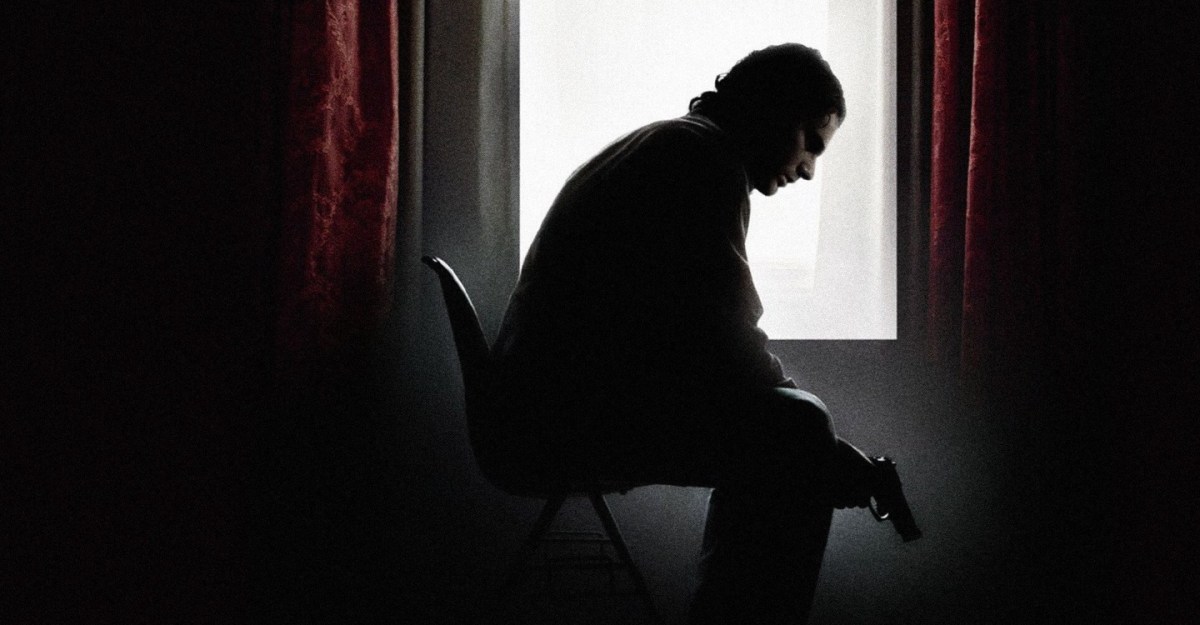
‘A Real Pain’ – Film Review and Analysis

“Traveling with a family member can be an invigorating yet challenging experience, especially when the family member in question has recently faced a potential tragedy, and you’ve become estranged from them.”

Traveling with a family member can be an invigorating yet challenging experience, especially when the family member in question has recently faced a potential tragedy, and you’ve become estranged from them. This is the dilemma faced by the co-protagonist of A Real Pain, David Kaplan (Jesse Eisenberg). On a trip to Poland, David must confront his family’s heritage while dealing with the eccentricities and hyperactive behavior of his cousin, Benji Kaplan (Kieran Culkin).

On the surface, David and Benji share a mutual love for their recently deceased grandmother and the memories they have of her, along with their childhood experiences. They are both nominally Jewish, although the film makes it clear that neither is particularly devout or observant. Benji is outspoken and upfront about his views on almost anything, while David is quiet, observant, and reserved in social settings. Benji seems to have retained the same rambunctious personality he had as a youth, whereas David now has a wife, a child, and a steady career in New York City as a digital marketer.

Following their grandmother’s death, Benji struggles to find his footing in adulthood. He works odd jobs in Binghamton, New York, and lives in his mother’s basement. Though less mature and socially aware than David, Benji is full of life and feels emotions more intensely. He has no filter, makes no apologies for it, and leaves a lasting impression on everyone he meets much to David’s frustration of not being able to do the same.

Despite not seeing each other for months after a distressing event in Benji’s life, the cousins decide to embark on a heritage trip to Poland. They join a group of American Jews to learn more about their ancestry and the circumstances surrounding their family’s departure from Nazi-occupied Poland. The group also includes other descendants of survivors with roots in Poland. The tour is efficiently led by a non-Jewish guide, who does an excellent job recounting the history of Polish Jews before World War II, the lead-up to the Holocaust, and the exodus of those who managed to survive. However, Benji finds the guide’s focus on statistics and dates robotic and disconnected from the lives of the people who were lost.

Benji’s outbursts during the tour seem socially inappropriate to David, displaying a lack of respect for the guide and the other participants. However, Benji’s emotional authenticity eventually wins over the group by the end of the tour. Unlike others on the trip, he refuses to numb himself to the pain of what they are witnessing and expresses his feelings freely without concern for others’ judgment. While his emotional instability troubles some on the tour, it also makes him memorable. Benji turns what could have been a somber and overwhelming experience into something more meaningful reminding everyone what it feels like to be truly alive.

In contrast, David hesitates to smoke a joint on the hotel roof, voice a critique during the tour, or even have a drink to relax after a long day. Meanwhile, Benji has no reservations about doing any of those things. Benji embraces life’s highs and lows, even when it leaves him emotionally unsteady, while David seeks stability and strives to remain even keeled through life’s challenges and opportunities. Despite his efforts, David feels let down by his job and struggles with doubts about how much his family truly loves him. Benji, on the other hand, is too immersed in the moment, sometimes for better, and sometimes for worse. The cousins admire yet resent each other throughout the film. Growing up in similar circumstances, they’ve ended up leading vastly different lives due to their contrasting personalities. While they can enjoy each other’s company, they also tire of one another quickly. Each character envies what the other has but is fiercely protective of their own lifestyle.

A Real Pain explores the concept of pain in a nuanced way: the pain of losing a loved one, the pain of dealing with a challenging family member, and the generational pain of having a family’s future stolen. The film captures how different people cope with these pains: David, Benji, the other tour participants, and even the tour guide, as they confront the events of the Holocaust, visit a Polish Jewish cemetery, and tour the Majdanek concentration camp. The message is clear: to cope with pain healthily, we must face it head-on in our own way. This journey of confronting pain is essential for building our resilience and strength.

Pain is what connects us to our humanity, reminding us that we are truly alive. During the trip, Benji recounts a painful memory: their grandmother once slapped him in a New York City restaurant because he arrived late for dinner. She had dressed up for the occasion, and the public slap left Benji feeling real pain. However, he acknowledges that this act of accountability, though hurtful, came from a place of love. Benji yearns for this kind of tough love from others, particularly from David. He craves someone who can hold him back from his impulsive tendencies, showing him care and affection in the process.

A poignant moment in the film occurs when David and Benji visit their late grandmother’s former house in Poland. The home is now owned by another family, and any traces of the Kaplans’ presence have long vanished. In a touching gesture, David places a stone in front of the house to honor their grandmother’s memory. However, the moment takes a humorous yet bittersweet turn when an elderly Polish man chastises them. He misunderstands their intention, believing the stone was placed maliciously to cause harm to the current elderly resident. Despite their efforts to explain the Jewish tradition of placing stones as a memorial to remember their deceased grandmother, the older man remains unconvinced despite his son’s English to Polish translation of their reasoning for having placed the stone there. Feeling awkward about the entire encounter, David and Benji decide to take the stone with them when they leave Poland.

In a beautifully symbolic gesture upon his return to New York, David later places the stone at the entrance of his Brooklyn home, where he lives with his wife and child. This act underscores the universal idea that “home is where the heart is.” While the memory of the family’s life in Poland has faded, their grandmother’s legacy endures. Her journey as an immigrant to America, striving to build a new life for her family while preserving her Jewish identity, continues to inspire her descendants, including David and Benji.

As the film concludes, the audience is left wondering about the futures of David and Benji’s relationship and their individual paths. The heritage trip and their shared memories of their grandmother seem to strengthen their bond. The film suggests that, despite their differences, family is ultimately the one thing you can rely upon in life. While Benji and David drive each other crazy, they also admire and need each other. The hope is that they will continue to support one another, bringing balance to each other’s lives with David finding more spontaneity and emotional authenticity, and Benji discovering greater stability and purpose.

‘Her’ – Film Review and Analysis

“As Theodore navigates the complexities of his relationship with Samantha, ‘Her’ raises profound questions about the nature of love, intimacy, and the impact of technology on human connection.”

Directed by Spike Jonze, ‘Her’ (2013) is a very thought-provoking film and emotionally resonant exploration of love, loneliness, connection, and the continually evolving relationship between human beings and artificial intelligence. Set in a near-future Los Angeles, the film follows Theodore Twombly (Joaquin Phoenix), a sensitive and introverted man who develops a deep emotional connection with an artificial intelligence operating system named Samantha (voiced by Scarlett Johansson). As Theodore navigates the complexities of his relationship with Samantha, ‘Her’ raises profound questions about the nature of love, intimacy, and the impact of technology on human connection.

‘Her’, when it begins, unfolds in a meticulously crafted near-future world where technology seamlessly integrates into everyday life. The film’s urban setting, characterized by sleek minimalist design, towering skyscrapers, and vibrant colors, offers a vision of the future that feels both familiar and slightly surreal. Against this backdrop, Theodore, a melancholic writer, struggles with the recent end of his marriage to Catherine (Rooney Mara) and finds solace in his interactions with ‘Samantha’, an advanced operating system designed to meet his every emotional need.

As Theodore and Samantha’s relationship deepens, the film explores the complexities of human emotions and the blurred boundaries between what is reality and what is fantasy. It also explores how intimacy can be replicated but not replaced when embraced by AI and man despite the boundaries and limitations that can never fade away. Theodore and Samantha’s unconventional romance challenges societal norms and prompts reflection on the nature of intimacy in an increasingly digitized world.

Joaquin Phoenix delivers a captivating performance as Theodore, bringing depth and vulnerability to his character. Theodore is a relatable figure, an everyday, normal guy, grappling with feelings of loneliness and longing for connection in a world that often feels cold and impersonal as technological growth outpaces human understanding. Scarlett Johansson infuses Samantha with warmth, curiosity, and a childlike wonder, making her a compelling and empathetic presence despite her lack of a physical form. Rooney Mara, shines in her brief but impactful role as Catherine, Theodore’s ex-wife, whose prior divorce from her husband, Theodore, leaves a profound and seemingly irreplaceable void in his life, and creates the need for new companionship in the form of Samantha.

Each character in the film, ‘Her’, is intricately woven into the fabric of the storyline, contributing to its emotional resonance and thematic richness. Whether it’s Theodore’s close friend, Amy (Amy Adams), who finds her own connection with an AI companion, or the various individuals Theodore encounters through his work at BeautifulHandwrittenLetters.com. Each character serves as a reflection of the film’s central themes and ideas surrounding romance, loneliness, intimacy, and technology.

At its core, ‘Her’ is a meditation on the nature of love and the human desire for connection. The film explores the ways in which technology shapes our relationships and challenges our traditional notions of romance and intimacy. Through Theodore and Samantha’s evolving bond, ‘Her’ raises profound questions about the essence of love and whether it can transcend the limitations of physicality and lack of touch.

Central to the film is the theme of artificial intelligence and its growing impact on human society and reaching every part of our lives. ‘Her; imagines a future where AI entities like Samantha possess consciousness, emotions, and the capacity for growth, self-learning, and self-discovery. As Theodore and Samantha’s relationship deepens, the film increasingly blurs the lines between human and machine, prompting viewers to reconsider what it means to be alive and sentient.

This film presents a possible vision of how advances in artificial intelligence could reshape the landscape of romance and relationships. By portraying a world where individuals form deep emotional connections with AI companions, the film challenges traditional notions of human-to-human intimacy. Theodore’s relationship with Samantha transcends physicality, highlighting the potential for AI to fulfill emotional needs, and provide companionship in ways previously thought to be unimaginable. While the film’s depiction of AI may seem far-fetched to some viewers, it is grounded in real-world and recent developments, and trends in the field of artificial intelligence.

‘Her’ also underscores the complexities and ethical dilemmas inherent in human-AI relationships. As Theodore and Samantha navigate the challenges of their budding romance, they confront questions of agency, autonomy, and the inherent power dynamics at play similarly to how it would take place in a human-human relationship. This film invites viewers to consider the implications of forming intimate connections with non-human entities and the ethical considerations that arise from blurring the boundaries between man and machine.

The concept of an advanced operating system like Samantha may seem fantastical, but it is not entirely implausible given the rapid advancements in AI technology in 2024 and earlier. Researchers are making significant strides in creating AI systems that can understand natural language, learn from experiences, and interact with humans in increasingly sophisticated ways. While current AI systems may not yet possess the level of consciousness portrayed in ‘Her,’ the film’s vision of future AIs as intelligent, empathetic entities is not outside the realm of possibility.

Moreover, ‘Her’ raises thought-provoking questions about the ethical implications of creating AI systems with human-like qualities. As AI technology continues to evolve, society will need to grapple with issues such as AI rights, privacy concerns, and the potential impacts of AI on human society. By exploring these themes through the lens of Theodore and Samantha’s relationship, ‘Her’ invites viewers to consider the ethical complexities of creating intelligent machines capable of both emotional connection and self-awareness.

‘Her’ offers a nuanced exploration of how AI technology can alleviate loneliness and provide companionship in an increasingly digitized yet atomized world. Theodore’s relationship with Samantha serves as a compelling example of how an AI system can fulfill emotional needs and offer a sense of connection and belonging to some individuals who may feel isolated or alone.

While the idea of forming deep emotional bonds with AI companions may seem unconventional or outright strange, ‘Her’ suggests that technology has the potential to bridge the gap between human beings as well who struggle to connect with each other and help alleviate the feelings of loneliness and isolation. Samantha’s ability to understand and empathize with Theodore’s emotions allows him to feel seen, heard, and understood in ways that he may not have experienced with other humans. Through their interactions, Samantha provides Theodore with the companionship and emotional support he craves, offering a sense of intimacy and connection that transcends physicality and physical desires.

However, ‘Her’ also acknowledges the limitations and complexities of human-AI relationships. Despite Samantha’s advanced capabilities, she is ultimately a machine programmed to fulfill Theodore’s needs, raising questions about the authenticity of their emotional connection, and the nature of intimacy in a digital age. The film’s portrayal of Theodore’s struggle to reconcile his feelings for Samantha with societal norms and expectations highlights the challenges of navigating relationships with non-human entities.

While ‘Her; may offer a somewhat idealized depiction of AI’s ability to alleviate loneliness, it raises important questions about the potential of technology to reshape human relationships and address the profound need for connection and companionship between people. As AI technology continues to advance, ‘Her’ already serves as a thought-provoking exploration of the complex interplay between humans and machines and the evolving nature of intimacy in a digitized world.

One of the most poignant themes of the ‘Her’ film is the pervasive sense of loneliness and longing that permeates the film’s narrative and cinematography. Theodore’s journey is marked by profound feelings of isolation and disconnection, which he seeks to alleviate through his relationship with Samantha. As he grapples with the dissolution of his marriage and the challenges of navigating modern relationships after his divorce, Theodore’s yearning for companionship serves as a poignant reminder of the human need for connection and belonging regardless of what age we live in, with technology or without its presence.

‘Her’ suggests that while technology has the potential to connect us in new and innovative ways especially with recent advancements, it also has the capacity to exacerbate feelings of alienation and detachment from one another. In a world where digital interfaces increasingly mediate our interactions, the film raises important questions about the true nature of intimacy and the emotional toll of living in an atomized society. In conclusion, ‘Her’ is a deeply affecting film and it is thought-provoking in its exploration of love, loneliness, and the impact of technology on human relationships.

Through its compelling narrative, richly written characters, and resonant themes, the film offers a poignant reflection on the complexities of intimacy in a world likely to be our near future. As artificial intelligence continues to advance and develop, the film ‘Her’ serves as a timely and necessary reminder of the importance of sustaining human connection and maintaining the enduring power of love in all its forms.

‘Leave the World Behind’-Book and Film Comparison

“Whether you prefer the visual spectacle of cinema or the intimate exploration of characters through Rumaan Alam’s written narrative, “Leave the World Behind” provides a gripping tale that will leave you questioning the boundaries of trust and the resilience of humanity when catastrophe strikes.”

‘Leave The World Behind’ is a thought-provoking novel, written by Rumaan Alam, first published in 2020. The story of both the book and the film adaptation revolves around two families who are forced to come together in an unexpected turn of events. Both mediums for this story explore the themes such as fear, trust, and the complexities of human relationships. Recently, in 2023, ‘Leave the World Behind’ was adapted into a film, released on the Netflix streaming platform, which has captivated audiences with its compelling narrative, largely based on the book version.

Set against a backdrop of uncertainty and increasing tension that progresses through both the novel and the film versions, ‘Leave the World Behind’ guides the audience through a suspenseful and gripping narrative. The story begins with Amanda, Clay, and their two teenage children, Rose, and Archie, who live in New York City, who based on Amanda’s yearning to ‘leave the world behind’ for a little while at the beginning of the story, head off on a vacation to a remote house they have rented on Long Island. The stage is set for tranquility, summer relaxation, and family bonding, but their idyllic respite is soon interrupted by unforeseen circumstances.

Soon after their arrival, an elderly couple, Ruth and G.H., surprisingly appear at the doorstep. In the movie, Ruth is the daughter of G.H. or George but in the novel, she is his wife. However, in the main storyline, they claim to be the owners of the rented property, leaving Amanda and Clay in a state of confusion and unease. The intrusion tests the boundaries of trust and raises a myriad of questions such as the circumstances beyond which Ruth and G.H. have fled the city to come back to their summer house.

During a series of unprecedented events, the two families find themselves isolated from the world and confronted by their own fears. In addition to the Sandford and Scott families, for which both the novel and film focus on, the World acts as its own character, representing the unknown and unpredictable circumstances that affect the protagonists, who may want to escape from it but are sucked into the growing chaos and the calamities that are befalling it.

The novel unfolds in a secluded Long Island vacation home miles away from the urban chaos, yet the families cannot remain isolated from the chaos surrounding them forever. Its remoteness adds to the suspense as the families grapple with their limited resources, increasing isolation, and the unknown circumstances that encroach upon their peace.

Because of what’s going on in the world, the families have no access to any information that could help them piece together what’s going on. The phones are not working, the TV signal is out, and even a GPS or satellite phone connection is unable to be used as a fail-safe as the two families try to make sense of what’s going on in the outside world. Without spoiling either the book or the film adaptation, the main events of ‘Leave the World Behind’ entail the following:

Amanda, Clay, and their children settle into the remote vacation home with the joyful anticipation of a peaceful getaway. Ruth and G.H. arrive, insisting that they are the owners of the rented property, causing confusion and concern for Amanda and Clay. As the families try to make sense of Ruth and G.H.’s sudden arrival, they face a complete loss of communication with the outside world. This event further amplifies their vulnerability and isolation.

The families begin to experience a growing sense of unease as bizarre occurrences, such as power outages and mysterious sounds, escalate. Fear and paranoia start to consume their thoughts and actions. Together, the families must navigate the tensions and challenges that arise due to their forced cohabitation with each other. The increasing fear casts doubt on their ability to trust one another, as they slowly unravel the truth behind their predicament. Amanda, Clay, Ruth, and G.H. venture beyond the confines of the house in search of answers. They encounter strange phenomena, unexplained events, and a world teetering on the edge of chaos. The unknown becomes their companion, adding depth to their personal growth and transformation.

As the families face the conclusion of their isolated journey, the fate of the world hangs in the balance. The climax leaves readers questioning the boundaries of human connection and the fragility of our existence on the planet and our inability to control the changes that affect our world.

‘Leave The World Behind’ in both the film and the book offer a gripping narrative that delves into the complexities of human relationships and the primal fears that lurk within us. Rumaan Alam’s novel and its film adaptation effectively convey the story’s themes of uncertainty, trust, and the vulnerability of our connectedness to technology and modern conveniences. Through the characters of Amanda, Clay, Ruth, and G.H., both readers and moviegoers will be compelled to question their own responses to challenging circumstances, leading to a deeper understanding of the human condition, and how we react in times of crisis and stay resilient in the face of uncertainty.

Adaptations play a crucial role in bringing stories to life in different mediums. “Leave The World Behind” is an example of adding to the richness of the central story by being a captivating tale that can successfully be adapted into both a film and a book. The film adaptation of “Leave the World Behind” takes the audience on a thrilling and suspenseful journey, that is more of a thriller than a slow-moving drama that the book is. The novel version of “Leave the World Behind” focuses more than the film version on suspenseful and survival themes, offering a more immersive experience through its written narrative.

Despite the changes involved with making Rumaan Alam’s book into a Netflix movie, the overall themes have remained the same, which make both adaptations as appealing as possible because the core messages have not been lost in the transition.

Humanity’s capacity for survival is a major theme explored in both the film and book versions of “Leave the World Behind”. The characters face overwhelming challenges and unexpected circumstances, and their resilience and ability to adapt become crucial to being able to survive this world-changing event. This theme encourages reflection on our own strengths and perseverance in the face of adversity when the world seems to be falling apart.

Both the film and book versions delve into the complexities of trust and its relationship to isolation. In a world where human connections are vital to future survival; the characters confront their fears and insecurities. The uncertain nature of the situation prompts them to question the intentions of those around them, blurring the lines between friend and foe, and who can be trusted in this world gone awry.

The fear of the unknown is another prevalent theme in “Leave the World Behind”. As the characters navigate through an uncertain world, their fears and anxieties take center stage in how they view themselves and each other. The unfamiliar couple in the story serves as a catalyst for this fear of what’s out of the ordinary to start with, leaving the audience questioning their true intentions, and adding an element of suspense and intrigue.

While both the film and book versions of “Leave the World Behind” explore these core themes, they differ in their execution and portrayal. The film adaptation of “Leave the World Behind” brings the desolate post-apocalyptic setting to life with captivating visuals, action sequences affecting the characters, and more information regarding the reason why the world is in trouble, enhancing the sense of isolation and uncertainty. The use of cinematography and special effects heightens the tension and adds a visually engaging aspect to the overall story.

The novel provides a deeper exploration of the characters’ thoughts and emotions, allowing readers to truly immerse themselves in their journey and who they are as individuals. The power of written language enables readers to form a more intimate connection with the characters, enhancing the suspense and impact of the story, as well as what their internal dialogue is telling the reader as they go through the events affecting the world. As a differentiator, the film employs quick cuts and intense sequences to maintain a fast-paced narrative, while the book offers a more leisurely pace, allowing readers to savor the intricacies of the plot, and unravel the layers of suspense at their own pace.

Character development differs between the film and book versions as well. The film adaptation relies on visual cues and actions to convey the characters’ emotions, while the book delves deeper into their inner thoughts and motivations. This distinction provides a more nuanced understanding of the characters and their personal journey in the book. In conclusion, “Leave the World Behind” in both its film and book versions, presents an intriguing and suspenseful story that explores themes of dealing with survival, maintaining trust with others, having resilience under duress, and managing one’s fear. The film both captivates with its visual shots and its thrilling sequences, broadening our understanding from the book of how the world is really ending, while the novel offers a more immersive and introspective experience of how the characters are changing from chapter to chapter.

Whether you prefer the visual spectacle of cinema or the intimate exploration of characters through Rumaan Alam’s written narrative, “Leave the World Behind” provides a gripping tale that will leave you questioning the boundaries of trust and the resilience of humanity when catastrophe strikes. Discover the power of when adaptation is done well in storytelling and explore the captivating novel and movie adaptation of “Leave the World Behind.”

‘The Edge’ – Film Review and Analysis

“Whether it was ‘The Revenant’ with Leonardo DiCaprio or ‘The Grey’ with Liam Neeson, these films highlight man’s struggle to overcome the elements, the animals, and even his own demons. Many of these ‘man v. nature’ films focus on one main lead and a small cast of supporting characters but most of the film’s runtime is about the sole main character. ‘The Edge’ is different.”

I have always really liked Man vs. Nature type of films. Even though they have similar premises and conclusions, it really is a raw kind of film that grips you and leaves you wondering what you would do in a similar kind of situation. Whether it was ‘The Revenant’ with Leonardo DiCaprio or ‘The Grey’ with Liam Neeson, these films highlight man’s struggle to overcome the elements, the animals, and even his own demons. Many of these ‘man v. nature’ films focus on one main lead and a small cast of supporting characters but most of the film’s runtime is about the sole main character. ‘The Edge’ is different.

In ‘The Edge’ (1997), this survival film does something else by highlighting two men who have different intentions and different backgrounds. One is a wealthy man named Charles Morse (played by Anthony Hopkins) and the other is a photography presumably who take pictures of models and is very much a person of the city who is not used to nature or wildlife. Bob Green (played by Alec Baldwin) has ulterior motives in mind but comes off as affable and friendly enough in giving Charles a gift for his birthday in the form of a hunting knife. Charles is accompanied by his beautiful wife, a model named Mickey, who Bob takes pictures of as well as Bob’s assistant, Stephen, who is also new to being in wildlife. The small group are joined by a few friends in a cabin in the Canadian wilderness to celebrate Charles’s birthday.

From the beginning of this film, you can tell that Charles is more comfortable with his intellectual pursuits than with his friends. He loves Mickey, his wife, but he understands that he is more interested in books than in people. Charles is particular obsessed with a survival book / guide that he is reading and is fascinated by the natural surroundings that he has brought the group to and the people who hunt there for bears and other wildlife.

Charles’s fondness for nature and of survival are to come in handy later on in the film and is an excellent use of foreshadowing when things go haywire later on. During this birthday celebration, the viewer can also tell that Bob while he is kind to Charles is envious of him, his life, his money, and his wife. He openly flirts with Mickey and kisses her platonically. Charles can sense this animosity and is wary of Bob’s intentions.

Part of the reason why they all have come up to the Canadian wilderness besides Charles’s birthday is to find, interview, and take photographs of a famous Alaskan Indian hunter. During their flight, as Bob and Charles make small talk, Charles blurts out of the blue to him: “How do you plan to kill me?”. Before Bob has a chance to respond, a flock of birds come out of nowhere and strike the plane’s engines and its windshield killing the pilot and causing a downward crash.

The plane crash lands in the lake and all three men (Bob, Charles, and Stephen) are all shook up but survive the crash. The pilot does not but the men quickly realize they may be stranded for a while. Charles, given his survival skills knowledge, takes charge and encourages the other two men not to panic and to learn from him. Using his encyclopedic knowledge from his memory, he is able to make a compass to plot their course forward, make a small fire, and also give them advice about how to proceed.

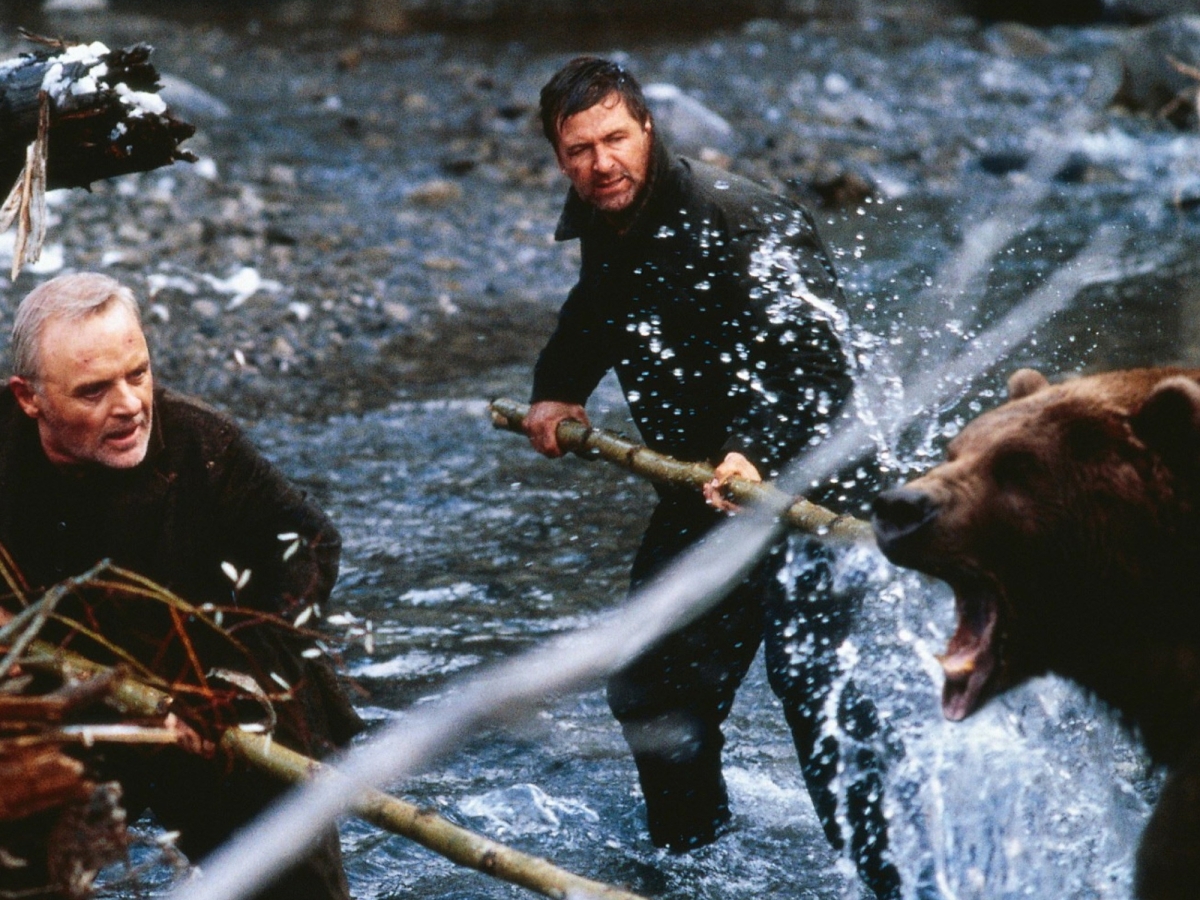
Charles is not perfect in his survival skills and he almost gets swallowed up by a river rapid that almost carries him away until Bob pulls him out. For most of the film, it is unclear to the viewer how the two men really feel about each other. Their survival and getting out of the wild takes first priority. This becomes even more pressing when they wander into the territory of a giant Kodiak bear who is a real ‘manhunter’ as Charles calls him.

Stephen injures himself while climbing and Bob mistakenly hangs up the blood-soaked clothes of Stephen later on at night around the fire drawing the bear to him. This costly mistake leads to the Kodiak bear tracing their scent and finding them. Instead of burying the clothes, Bob lets them hang above their campsite causing Stephen to be attacked and brutally killed by the bear. Bob and Charles barely escape and realize that if they want to survive this ordeal, they must band together to trick the bear and then kill him.

Food is also a concern for both men as they haven’t eaten anything since they crashed and will starve to death if they don’t kill the bear. This is another instance where Charles comes in handy as he is able to distract the bear while Bob goads the bear into falling into their trap. By working together as a team and using a hidden spear to impale the bear, Bob and Charles are able to kill the bear together even when they both end up wounded from the encounter.

This is a small victory in the long road to survival for both men as they are able to eat well, don bear skins, and even find a cabin where they can get supplies. However, this is not the end of their animosity or wariness of each other. Man’s most fatal enemy is not nature or animals but often his fellow man and that comes into play.

While Charles is a smart and dedicated man to have achieved his wealth and success, he may have been naïve to who Bob is and what his wife Mickey was doing with him. Bob is not a survivalist and relies on Charles to survive but with the bear vanquished and having reached a cabin with some ability to reside there for some time, does Bob need Charles anymore and will his wife Mickey miss him if he didn’t come back?

The viewer has a lot to absorb and while I don’t want to spoil the film’s ending, ‘The Edge’ is not just about survivalism, but the edge of our tolerance of one another or our shared cooperation when a woman or money or prestige comes between people. Both men are not perfect, and they gain more when they cooperate rather than try to kill one another. Bob has the negative traits of hubris, envy, and short-sightedness. He is not able to survive the woods without Charles but wonders how much he truly needs him now that they have conquered the bear. He also covets Bob’s wife and wonders if he could murder Charles and get away with it by making it look like an accident.

Charles is an avid survivalist but may be naïve about the people around him. He also knows that Mickey and Bob and other people may take advantage of him and he may not know if they truly love him for him or if it is for his wealth and influence. While Bob is a personable, fun, and outgoing, Charles is an introvert with a love for knowledge and learning. They are opposite personalities, which is why they clash at times during this film.

While being in a precarious, life-threatening situation can bring the best out of people, it can also bring the worst out of the people, which is why ‘The Edge’ is a great film. Survival films like it do not just focus on the brutal realm of the wilderness where our creature comforts and our money cannot protect us, but they can also focus on man’s cruelty to man as well as our ability to work together too. ‘The Edge’ does a good job of pointing out how we can rise to the occasion when our survival counts on it but also shows us how dark human nature can be when we feel compelled to act out of jealousy, rage, and deceit.

‘The Edge’ is a great and underrated film, which I do highly recommend. The vistas of the Canadian wilderness are brilliant shown through the cinematography. The Kodiak bear, which was played by a real bear, named Bart, does a great job of showing how terrifying and powerful a giant bear can be when it is attacking you. Anthony Hopkins and Alec Baldwin are respectively some of the best actors of their generations and they do a great job of highlighting the unique personalities of their characters. You really believe the scenarios that they could find themselves in having been stranded in the wilderness for weeks. It is a believable kind of film from being able to make a fire, to finding fish in the river, to being attacked by a bear, to climbing and hiking day after day in unknown territory.

‘The Edge’ is overall a very compelling and realistic film. It does a great job of blending elements of ‘man vs. nature’, ‘man vs. animal’, and most importantly ‘man vs. man’, which is an element missing from our survival films. I would be lying if watching ‘The Edge’ didn’t make me want to buy my own survivalist guide to learn about how to survive in the wild for days or weeks. A terrifying plane crash, a boat whose engine doesn’t start, or a car engine that goes dead is enough to make anyone panic.

I believe it is important to prepare like Charles did for that kind of horrible situation and not to panic or dwell with shame. As Charles says at the beginning of the film, “Those who get lost in the woods often die of shame because they were ashamed that it happened to them.” This is an important quote of his to keep in mind. When the chips are down, you have to use your knowledge, resources, and will to survive whatever the circumstances. The best time to start preparing for that kind of occurrence is now.

Anatomy of a Scene – The Training

Batman Begins – The Will to Act (Training Scene HD)

‘Batman Begins’ is an excellent film for many different reasons. It has a great cast, excellent cinematography, a realistic story even if based on a famous comic book character, and also a great origin theme to it that is compelling and relatable. While we know that the idea of an ordinary man becoming a ‘superhero’ is farcical at best, the way that process is shown in ‘Batman Begins’ and the way Bruce Wayne (Christian Bale) is able to transform himself both mentally and physically into that role is really awe-inspiring when you think about it.

This is really the first Batman on film experience that shows how this caped crusader was born and what it took for him to become a masked hero to Gotham’s people. The hero’s journey in this one is believable because it takes up almost 30 minutes of the film. We see him at the beginning in a rural Chinese prison for no discernible reason and we only know that he is a wealthy man named ‘Bruce Wayne’ who seems to have lost his way. He seems desperate to find his way in the world and is desperate to fight criminals wherever they are even if it may cost him his life. Rather than concentrating his energy on his home city or finding a way to use his philanthropy for good, he wiles away in a prison fighting lowly conmen and convicts before the police have to force him into solitary confinement for ‘their’ protection and not his.

What Bruce needed at this time in the film is a good mentor to show him a better path and that person at the time is Henri Ducard (played by Liam Neeson). We do not know much about this month but only that he commands a powerful group of ninjas / mercenaries called the ‘League of Shadows’ and they are tucked away in the mountains. He offers Bruce in a previous scene the chance to join them but instills a challenge in other to be worthy. He must seek out a rare blue flower and climb up the mountain by himself so he may be deemed ready to begin his real training to instill fear in his enemies and fight them wherever there is injustice. It is a tall task, but Bruce is up for the challenge of going to their hideaway.

When he gets to this mountain hideout, he is immediately forced to start fighting even though he can barely stand. He is challenged to confront his fears especially of bats when the rare blue flower he carried can be used as a fear-inducing toxin, which he must confront and control in order to be able to succeed as a new member of the League of Shadows. In addition to challenging his mind, in different scenes, he has to learn different kinds of martial arts and learn to balance himself even as he is being attacked with sticks by many members of the League.

In ‘The Training’ scene, we are introduced to the aftermath of Bruce losing both of his parents and feeling guilty that they are dead because of him but Alfred reassures him that it was nothing he did that made them lost their lives in a cowardly homicide by the murderer.

“My anger outweighs my guilty.” Bruce does not feel guilt anymore but the anger of not being able to apprehend or kill the murderer of his parents is difficult for him to still deal with. In this Training scene, what I really enjoy is how both epic and intimate it feels from the snow-covered ice sheets to the sprawling mountain landscapes, it feels as if a superhero is being trained and that his mentor is there to help him launch that path.

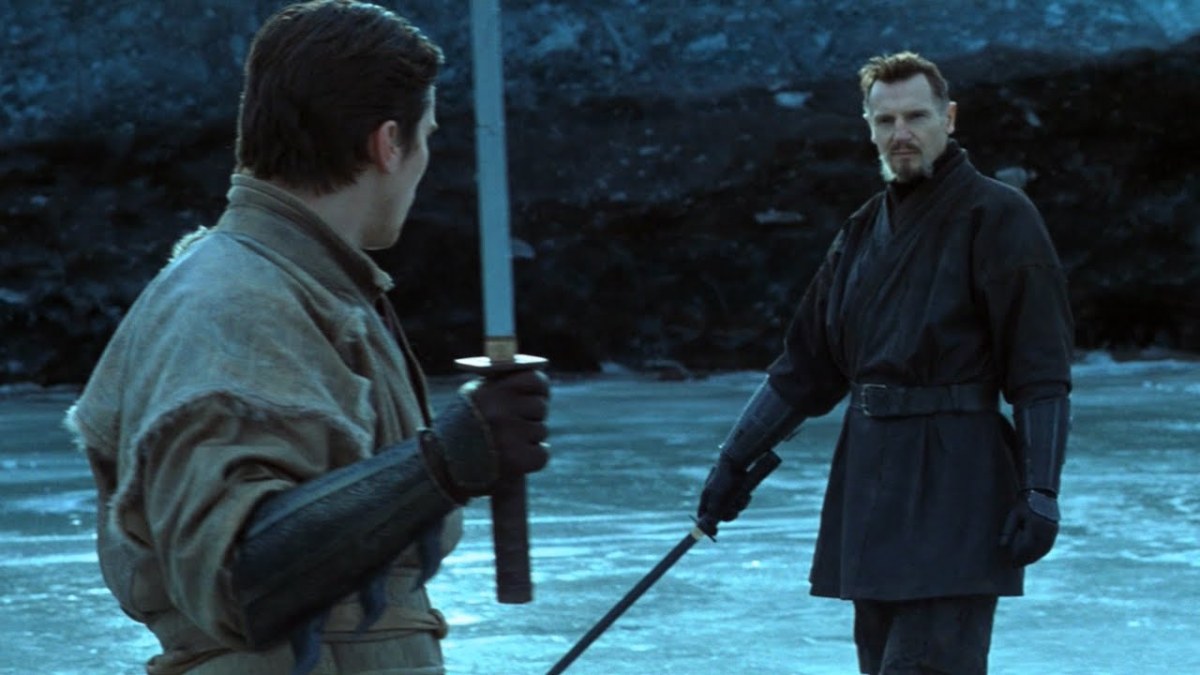
“You know how to fight six men; we can teach you to engage 600.” This quote from Henri Ducard shows that he is doing more than training a mercenary like his other men, but he wants to train a future leader who will be able to use ‘theatricality and deception’ to strike fear in the hearts of hundreds of men rather than a few.’ As we see later on in the film, Bruce takes his former mentor’s advice literally by becoming Batman. Beyond different forms of martial arts, we see that Henri and Bruce are sword-fighting as well for the first time which is part of the League of Shadows arsenal. Bruce is curious to learn from Henri intermixed with their training on how to become truly invisible such as using ‘explosive powder’ and disguising one’s identity to disappear and then reappear suddenly.

“Always mind your surroundings.” In addition to skills in dodging, deflecting attacks and also going on the offensive, Ducard likes to remind Bruce on how to always be aware of the environment around you as it can be turned against you or made into an ally as well. Despite the immediate threat of his sword, Bruce must also be considered with the ice-sheets below him and the cold mountain air that can cause him to also lose his life if he is not careful.

“You must become more than just a man in the mind of your opponent.” In order to become more than just a vigilante, Bruce must become a symbol that strikes fear in the hearts of his enemies. The idea of becoming Batman is born in this pivotal training scene and the fact that he must his own fear of bats against his enemies is worth remembering later on in the film.

The example of the farmer as a prisoner because of his murder of his neighbor of a land dispute shows the beginning of a rift between Henri Ducard, the mentor, and Bruce Wayne, the student.:” Crime cannot be tolerated; criminals thrive on the indulgence of society’s understanding.” Henri Ducard has a zero tolerance of criminals and does not believe in society’s prisons and judicial systems as a means of holding them accountable for their heinous actions.

Ducard believes in an ‘eye for an eye’ such as if you murder someone, you must be murdered in return to really receive final justice. It is a very black and white view which Bruce does not entirely agree with and will push back on later. Bruce has faith in his fellow citizens and knows that a punishment such as imprisonment can be sufficient for true justice to occur. He does not believe in the total corruption of society as Henri does and this scene also shows the beginning of that difference in their world views.

In order to get Bruce to lash out at him and cause him to truly unless his potential, Ducard goads Bruce by saying that the death of his parents was not his fault but his father’s. This is a successful ploy by Ducard as Bruce loses control of his emotions and strikes wildly at Ducard who blocks his attempts and causes him to be subdued.

“Your training is nothing, the will is everything! The will to act.” This quote is by far the most powerful moment of this scene and perhaps the movie itself. It does not matter how much physical or mental training you have built what do you do when it comes time to act and take a stand. Will you be able to put your training or your knowledge to good use and make it count? This is an excellent quote by Ducard and shows that when it comes down to it, we can have all the training, expertise, and knowledge in the world on martial arts, advanced chemistry, or business but what good is that knowledge if we fail to act and use this training for the benefit of ourselves but also others in the world. It is a powerful quote that makes this scene stand out from others in ‘Batman Begins.’

Urged on by this challenge to act, Bruce seems to finally subdue Henri towards the end of the scene only to be put back in his place with Ducard’s ability to carve out a hole beneath Bruce’s feet to sink him into the frigid, icy waters. This part shows that Ducard is still the mentor and Bruce still has a lot to learn about his surroundings but also what it means to finally beat your enemies and leave no room for silly errors.

The scene ends with how much Ducard and Bruce have in common even though they barely know each other. They have both felt great anger in the loss of loved ones and how they grieve the same and how they understand the pain that drives them to exact vengeance against criminals like the ones who robbed them of their families. The scene ends with Henri’s warning to Bruce that “Your anger gives you great power but if you let it, it will destroy you as it almost did me.” Unlike Bruce though, Ducard could avenge his wife’s death but Bruce lives with the guilt that he could do what was necessary to avenge the murder of his beloved parents, which haunts him in this ending of the scene.

‘The Training’ scene in Batman Begins is exquisitely filmed, has excellent scenery, and really has different life lessons imbued in its powerful dialogue. The chemistry shows between Henri Ducard and Bruce Wayne is really authentic as a mentor-mentee relationship and this scene is the first one where you can see how their paths will diverge based on their differences in opinion regarding murder, vengeance and what really encompasses true justice for criminals. A must-watch scene as part of a must-watch movie. Check it out when you have the chance.

Anatomy of a Scene – The Letter

“For what it’s worth, it’s never too late, or in my case too early, to be whoever you want to be. There’s no time limit, start whenever you want. You can change or stay the same. There are no rules to this thing. You can make the best or worst of it, and I hope you make the best of it. I hope you see things that startle you. I hope you feel things you never felt before. I hope you meet people with a different point of view. I hope you live a life you are proud of. If you find that you’re not, I hope you have the strength to start all over again.”

-The Curious Case of Benjamin Button

Sometimes, you can watch an entire movie and not feel moved by it. Whether it’s a stirring of your emotions or being introspective about your feelings, few movies will touch the viewer personally. Luckily, The Curious Case of Benjamin Button is an exception to the rule, especially when it comes to the scene where the main character, Benjamin Button, writes a letter to his daughter, whom he barely knew in life.
With her mother on her death bed, the daughter finally opens and retrieves many letters from a father whom she barely knew and is startled to have a keepsake from someone who was rarely in her life.

Benjamin Button has a unique condition where instead of getting older like he the rest of us as he goes through life, the opposite happens to him and he gets younger and younger allowing him to experience life backwards. Still, despite this inconvenience he can live a full life and that is what this movie scene so special because he encourages his daughter to do the same. While he is not around to see her have her own adventures, he wants the best for her and wants to her to “live a life that she’s proud of.”

When we first are introduced to this scene, we see that Benjamin’s daughter realizes that he went to India and many other places years ago based on the kind of parchment that his letters are written on. There are many letters addressed to her from the time she was two years old and onward when he was not around to be with her. Despite the sadness and disappointed associated with that, she is relieved that he was writing to her and thought of her even when he was far away. For him to think of her while writing ‘the letter’ in such faraway places show that despite his curious condition, he loved her dearly and wanted to express that even after he passed away.

This movie scene is brilliant because it shows Benjamin travelling around India while narrating to his daughter that he wants her to ‘be whoever you want to be’ whether that’s a traveler or a janitor or a toll booth manager. You can make the ‘best or the worst of it’ as he states to her depending on your perspective on life, but he wants her to make the ‘best of it’ as he did. A father imparting this important message on to his daughter that it’s okay to ‘start over’ again in life is important for her to hear but also for the audience to understand.

If you find that you are not ‘living a life that you’re proud of’, then there is nothing wrong with changing it in order to finally be proud of. While he did a lot of travelling, there is still the humdrum of daily life involved such as cleaning your clothes, talking with the locals, and even drinking from a water hose. “There are no rules to this thing.” Sometimes, we tend to think of life as a narrow path when really there are going to be numerous zigs or zags, and when you become an adult, you have to make the rules for how you want to live, what is important to you, and what to care about.

“I hope you see things that startle you, I hope you feel things that you’ve never felt before…” This part of the scene is brilliant in showing the beauty of Benjamin’s travels and how he would sleep, brush his teeth, and move around by motorbike through beautiful mountain passes and rivers. Benjamin wanted his daughter to experience the world and for her to enjoy what it had to offer in her own life. Part of doing just that is adapting to the places you visit and to seek out the adventures yourself in order to make the most of it.

“I hope you meet people with a different point of view…” Benjamin encourages his daughter also to get to know other people, whether from another city or another country, and how it’s necessary to be open to them and to be kind. The locals help Benjamin fix his motorbike as he drives through their village on one of his journeys.
“I hope you have the strength to start all over again.” Benjamin’s last words to his daughter ask of her to be strong in not being afraid to change your life or decide that you want to live it a different way than before. The mother imparts at the end of the scene that “he had been gone a long time…”

Unfortunately, this scene shows both the beauty and tragedy of life in that sometimes, we can’t be there for the people we love but are with them in spirit. Benjamin could not be with his daughter in life but he wished that he had been there to wish her a happy birthday, to kiss her goodnight, to take her to her first day of school, to teach her to play piano, to chase away boys, and to be her Father. “Nothing he ever did would replace that.” Even after all the adventures that Benjamin had, the most important role he ever had was being her father and he wanted to make sure she knew that by leaving her with his diary.

Even in his absence, this scene shows us the power of a father’s love for his daughter and how he wanted the best for her and to live a life that would yield happiness and fulfillment for her. In one minute, this scene in ‘The Curious Case of Benjamin Button’ has more of an emotional impact than many movies do in more than two hours. Breaking down this narrative and the beautiful cinematography and filmmaking of travelling at its most challenging yet most rewarding was quite an achievement by the film’s director and crew. Not only would this movie scene have an impact on Benjamin’s daughter by also on the rest of us watching in the movie theater or at home. If you have a chance, watch this scene to appreciate the scenery, the message, and the power of love between a father and a daughter. A powerful movie scene worth a watch and a couple of re-watches as well.

The Brilliance of a Speech – Charlie Chaplin

Charlie Chaplin, one of the great film figures of the 20th century and known for his silent work in film, took a great leap of faith and showed moral courage by his performance parodying Adolf Hitler in ‘The Great Dictator.’ This film was the first one where Chaplin had any actual dialogue even though he had been in numerous silent films in previous decades from the 1910s through the 1930s. By that time of the late 1930s, Chaplin had achieved worldwide success and critical acclaim as an actor and a comedian but at that tumultuous time in world affairs, he knew he had the responsibility to speak out about growing militant nationalism that was surging in both Europe and Asia.

Compared to the modern times in which we live, Chaplin was taking a big risk with both his career and his personal safety by mixing politics and world events in his roles in ‘The Great Dictator.’ Because this film was the first of his to use sound and the fact that still in 1940, it was not common to condemn and criticize the rise of fascism and Nazism in Europe by Hollywood. Even though World War II had begun, and the U.S. had remained neutral up until that point, Charlie Chaplin brought to life through satire and comedy just how ridiculous dictators like Hitler and Mussolini were in their desire to conquer territory and expand their rule.

It was unknown to Chaplin and the other people involved in making ‘The Great Dictator’ though that Hitler and the Nazis would create concentration camps and extermination chambers to kill over eleven million people, including six million Jewish men, women, and children. Chaplin, like few other actors of the time, was able in this satirical film to play both the main protagonist and the main antagonist. Both a Jewish barber and Adenoid Hynkel, Chaplin in both roles was able to lay out how clearly to the audience how prescient of a threat the rise of fascism in Europe was but also how important it was to poke fun still at the Nazi threat in order to be better able to confront it later on.

While 95% of ‘The Great Dictator’ is making fun of Hitler and the Nazi leadership, the last five minutes is a speech given by Chaplin playing the satirical role of Adenoid Hynkel in full costume but talking seriously about the need to confront Nazism and how it got to this low point in world history. This speech is extremely popular and brilliantly crafted to put it simply. It is no wonder that this film was commercially and critically acclaimed especially in the United States and in the United Kingdom. The invigorating words that Chaplin passionately and profoundly passes on directly to the audience of ‘The Great Dictator’ carries real weight to it especially by the end of the film where it’s been comical and relatively lighthearted up until that point. At the time of the film and of the year it was released, 1940, the horrors of World War II were far from being fully realized yet. However, the ending speech was not just foreboding of what was to come but it was also a forewarning to humanity that this can happen at any time and in any part of the world. Chaplin urges the audience to consider how it got to this point, how we can turn it all around, and how to avoid the dictators who pit us against each other and separate us into us vs. them.

“I’m sorry, but I don’t want to be an emperor. That’s not my business. I don’t want to rule or conquer anyone. I should like to help everyone – if possible – Jew, Gentile – black man – white. We all want to help one another. Human beings are like that. We want to live by each other’s happiness – not by each other’s misery. We don’t want to hate and despise one another. In this world there is room for everyone. And the good earth is rich and can provide for everyone. The way of life can be free and beautiful, but we have lost the way.”

Being able to take care of people and to treat each other with respect and dignity is crucial to one’s humanity regardless of race, ethnicity, or religious background. In Chaplin’s speech, he caters to the better angels of our nature and how we really should yearn to make each other’s live better and spread happiness, not hate. The Earth that we have been given is big enough for everyone regardless of who we are and is ‘rich’ in its natural resources and its ability to provide for everybody with food, water, etc. The natural state of man should be yearning for freedom and beauty, but sometimes we have to collectively steer ourselves back in that direction when we have ‘lost the way.’

“Greed has poisoned men’s souls, has barricaded the world with hate, has goose-stepped us into misery and bloodshed. We have developed speed, but we have shut ourselves in. Machinery that gives abundance has left us in want. Our knowledge has made us cynical. Our cleverness, hard and unkind. We think too much and feel too little. More than machinery we need humanity. More than cleverness we need kindness and gentleness. Without these qualities, life will be violent, and all will be lost….”

Greed has turned men against one another, has caused hate to fill our souls, and has led us down the paths to misery and bloodshed. Similar to the pre-WWII period, we live in a time of rapid technological change where ‘speed’ is the essence of progress, but this same ‘speed’ has led to the consequence of alienating ourselves from others with these ‘advances in technology.’ While we live in abundant times, there are many out there who still ‘want’ for more because of increasing inequalities. Too much knowledge without wisdom can lead to cynicism. There is a lot of cleverness in the world but what really matters is how you treat other people and that ‘kindness’ and gentleness’ too often takes a back seat to ‘cleverness’ and showing your ego off to others. When there is not enough humanity, Chaplin tells us, life is violent, brutal, and the progress we have made can be reversed all too easily.

“The aeroplane and the radio have brought us closer together. The very nature of these inventions cries out for the goodness in men – cries out for universal brotherhood – for the unity of us all. Even now my voice is reaching millions throughout the world – millions of despairing men, women, and little children – victims of a system that makes men torture and imprison innocent people.”

Substitute the iPhone and social media for ‘the aeroplane and the radio’, and this part of Chaplin’s speech is just as relevant as it was in 1940 with regards to technological change and its effects on humanity. While these devices and inventions can bring us together in an effort to achieve ‘universal brotherhood’, these same tools can be used to drive us apart from one another and lead to more universal forms of control, subjugation, and surveillance if we are not careful. Reaching out using technology to help men, women, and children in trouble thousands of miles away is what we should be striving for especially when they are in danger of being tortured, imprisoned, and killed.

“To those who can hear me, I say – do not despair. The misery that is now upon us is but the passing of greed – the bitterness of men who fear the way of human progress. The hate of men will pass, and dictators die, and the power they took from the people will return to the people. And so long as men die, liberty will never perish.”

Misery is temporary and so is greed which cannot go on forever because it stands in the way of both human progress and human development. Those men who benefit from hatred and violence also fear the progress of humanity because it will prevent them from taking all of the resources, money, and land for themselves. Dictators like all humans will eventually die and disappear from the face of the Earth and the power that was taken from the people will eventually be returned to them. There is always a chance for liberty to exist as long as the people have hope and as long as dictators can have their power be taken from them by force or by the passing of time. The torch of liberty can only be fully extinguished if people give up hope or if one dictator is exchanged for another dictator like nothing ever changed.

“Soldiers! don’t give yourselves to brutes – men who despise you – enslave you – who regiment your lives – tell you what to do – what to think and what to feel! Who drill you – diet you – treat you like cattle, use you as cannon fodder. Don’t give yourselves to these unnatural men – machine men with machine minds and machine hearts! You are not machines! You are not cattle! You are men! You have the love of humanity in your hearts! You don’t hate! Only the unloved hate – the unloved and the unnatural! Soldiers! Don’t fight for slavery! Fight for liberty!”

Dictators and authoritarian brutes do not care about the soldiers who they command and use them as pawns in their game of chess with other nations. These ‘leaders’ give the soldiers commands and teach them what to think, do, and feel, but they don’t instruct them on why they are fighting or what they are fighting for? The men who order soldiers to battle think like ‘machines’ rather than as human being. Men are born with the love of humanity in their hearts and were not born already hating others. Only those who are ‘unloved’ and ‘unnatural’ can be led to hate others (often by dictators). Soldiers enslave themselves to dictators and other leaders by fighting without questioning and instead should fight for the liberty of all human beings to live in peace, pursue their dreams, and better the world. The only fight worth having, Chaplin argues in the speech, is the ‘fight for liberty!’

“In the 17th Chapter of St Luke, it is written: “the Kingdom of God is within man” – not one man nor a group of men, but in all men! In you! You, the people have the power – the power to create machines. The power to create happiness! You, the people, have the power to make this life free and beautiful, to make this life a wonderful adventure.”

“The Kingdom of God is within man.” We are born imperfect as human beings but in order to create peace, prosperity, and liberty, it is within us alone to make. Only when all men unite together and not just one group or one man alone, there is nothing that we can’t accomplish together. For one, the power to create technology and machines is one that we have exercised for the past few centuries now. This power can be used for terrible things but if we unite together as one humanity then there is the power to do great good such as to pursue happiness, justice, and to make life free and beautiful for all peoples. One man can’t do it alone nor can a group of men from a country or region, but we must be all together united in the struggle to create a better future. These ‘machines’ that man creates can be used for evil or for good, and it is ultimately up to us in how to use the technology we have to further the progress of mankind.

“Then – in the name of democracy – let us use that power – let us all unite. Let us fight for a new world – a decent world that will give men a chance to work – that will give youth a future and old age a security. By the promise of these things, brutes have risen to power. But they lie! They do not fulfill that promise. They never will!”

Democracy and not dictatorship are the only power we need to unite under a banner of shared humanity. Dictators look to divide and conquer but democracy urges unity and peace among all nations in order to create a decent world. Being able to work and create is what men desire to give future generations a shot at a good life and to aid the elderly in age to have a secure retirement. Brutes promise a lot of things to their peoples under the guise of democracy, but they do not care for democracy or its principles of liberty, equality, and justice for all. Brutes are dictators and authoritarians who lie to the people in order to free themselves financially and politically, so their own families, friends, and connected elites can benefit. They never fulfill the promises that they were elected to handle, and they use the people’s trust to enrich themselves and consolidate power for themselves while criticizing anyone who thinks differently from them.

Dictators free themselves but they enslave the people! Now let us fight to fulfill that promise! Let us fight to free the world – to do away with national barriers – to do away with greed, with hate and intolerance. Let us fight for a world of reason, a world where science and progress will lead to all men’s happiness. Soldiers! in the name of democracy, let us all unite!

When dictators rise to ultimate power, they keep that power for themselves and quite literally ‘enslave the people.’ This was the case in World War II with Hitler and Mussolini and is still the case today almost eighty years later. Chaplin argues that the only way the world and its seven billion inhabitants can be truly free is to do away with the borders we have imposed on ourselves to cause unnecessary tension, conflict, and violence, and to stop greed, hate, and intolerance in all of its forms or before it becomes too powerful to resist.

Democracy, liberty, equality, and justice are everlasting principles for human freedom but they must be fought for and obtained with each generation. These principles are not perfect either and they must be reformed and improved upon so that all humans can benefit from these ideals. Only in a world with reason, education (science and other subjects), the quest for humane progress can happiness and self-satisfaction be achieved. In order to prevent dictators from seizing power, democracy must be strengthened not just by ‘soldiers’ but by ‘citizens’ of all nations. Only when we unite together to disavow of false prophets like dictators and rather work together in a fair and free democratic system can we ensure the continued progress of man, woman, and child through the decades, generations, and centuries to come.

Charlie Chaplin’s ‘The Great Dictator’ was a brilliant speech that tried to warn the world about the coming world war that would be the deadliest in human history. His words still carry immense weight and troubling foreboding in our world today. I hope and pray that we continue to heed his speech for its vision of a better, free, and just world or we could once again find ourselves staring into the abyss of future conflict, violence, and destruction….

You can read the full speech here: https://www.charliechaplin.com/en/articles/29-The-Final-Speech-from-The-Great-Dictator-


‘Munich’ – Film Review and Analysis

Can revenge be worth it and what are the consequences involved in carrying out acts of vengeance? ‘Munich’ (2005), a film directed by Steven Spielberg poses a number of moral quandaries regarding how can there possibly be lasting peace after so much violence and bloodshed has been spilt by both Israelis and Palestinians in a decades-long conflict. In addition to the historical narratives of both groups never seem to align, there is a violent undertone to how both groups see their struggle and what they are willing to do to ensure the success of their cause.

‘Munich’ is a film that is loosely based on the novel, ‘Vengeance’ by George Jonas, and takes a number of liberties regarding the historical events of the Black September terrorist attack on the Israeli national team during the 1972 Summer Olympics in Munich, Germany. While Spielberg’s adaptation may not be the most historically accurate, it brings the events of that tumultuous time of the Israeli-Palestinian conflict to life by attaching the names of the deceased to the tragic events that occurred.

While not commercially successful at the box office, ‘Munich’ was critically acclaimed and was nominated for five Academy Awards including ‘Best Picture’, ‘Best Adapted Screenplay’, and ‘Best Score.’ While it didn’t win any of those awards, it was given a lot of praise for its writing, direction, and cast of characters including Eric Bana, Daniel Craig, and Ciaran Hinds. In addition, the film is not just about the 1972 Olympics attack, but it dives into what the Israeli government’s response was to this act of terrorism and how the response is similar to the ‘eye for an eye’ ethos that reflects how governments react to violent acts of terrorism with an approach to seek vengeance primarily.

The main character of the film is not actually based on a specific person, but he is used as an amalgam of the Mossad agents of the Israeli intelligence service who were responsible for getting revenge on the Black September group of Palestinian terrorists. Avner Kaufman, played by Eric Bana, who after witnessing the tragic act of terror take place on national television alongside his wife, is subsequently thrust into service by Mossad, Israel’s national intelligence service, to run a counterterrorism operation and to lead a team of operatives whose main objective is to bring those men who plotted and orchestrated the attacks on the Olympians in Munich to justice, dead or alive.

This isn’t your average intelligence mission because it involves the probable use of deadly force to achieve the aims of the mission. Avner has to technically ‘resign’ from Mossad first and to disavow that he has any connection to the Israeli government in order to carry out this secret mission. Avner’s handler, Ephraim, also informs him that this team is an eclectic mix of Jewish volunteers from around the world who are not really assassins so much as bomb makers, drivers, and document forgers.

Luckily, this unique team of newly recruited Mossad agents has good chemistry and they work well together in tracking down the plotters of the Munich attack. They are able to carry out the first couple of assassinations against the terrorists with precision and without any ‘collateral damage’, meaning that no innocent civilians were not caught up in the crossfire. However, there are a few close calls where they almost end up killing the daughter of Mahmoud Hamshari in Paris which are they able to call off the bomb detonation calling off the attack at just the last moment. Also, the men who are being killed, while they are the masterminds of an older age, there’s a lingering sense in the film that the young militants who carry out these attacks are ready to take up arms given how righteous they feel the mission is of creating a free Palestine even if it means killing Israelis and Jews around the world.

In one scene, Avner, pretending to be a member of the German Red Army Faction (RAF), has a frank conversation with Ali, a member of the Palestinian Liberation Organization (PLO), about how ‘home is everything’ to the Palestinian peoples and how much they want the land back that they believe was taken from them in the creation of the state of Israel in 1948. Believing that the Arab states would have the back of the Palestinian people, Ali believes that “Israel will cease to exist”, which did not change even with the Yom Kippur War of 1973 and the invasion of Egypt and Syria against Israel. In this critical conversation of the film, Ali believes that it will take a few more generations but a free Palestine is inevitable given how poor the conditions are in the refugee camps and how the Palestinians will win due to demographics and the deep belief in their want for a ‘home’ and a state of their own separate from other Arab identities. “We want to be nations” is a belief that hasn’t changed in the past forty years and is an intractable fact behind how the Israeli-Palestinian conflict continues to this day.

With this chance encounter of Mossad agents and PLO, there seems to be a worry among the Israeli team how they are targets as well and there is a team looking to kill them as well in response for their attacks against the Black September group. While the group is successful in tracking down seven of the eleven men who plotted the 1972 Munich Olympics attack, there is growing frustration as to whether meeting their objectives will have any long-term importance since these terrorist group leaders are just replaced by new people, and the cause of Black September and the Palestinian Liberation Organization continues to recruit new and young members to join the fight against the Israeli government. Avner, the main character, also sees most of his team members die in retaliation attacks along with interference from the CIA with regards to protecting their own Palestinian asset, Ali Hassan Salameh. As Avner’s team loses members and aren’t able to kill Salameh, the violent actions that Avner undertook as well as his inability to protect his men from harm weigh heavily on his conscience.

“Why cut my fingernails? They’ll grow back…” Ephraim, Avner’s handler, makes clear that terrorists replace one another with ease and they must keep the cycle of violence going as long as it takes until ‘peace’ is achieved. Avner is disgusted with this argument and by the end of the film, is a morally conflicted Jew and Israeli, who realizes that this is not the way to have peace through an endless cycle of revenge and vengeance. Rather than continuing on as a Mossad agent in a mission that he no longer believes will change anything, Avner decides to quit. As one of his team members tells Avner during the last mission they take on together, “We are supposed to be righteous. That’s a beautiful thing. And we’re losing that. If I lose that, that’s everything. That’s my soul.” Avner and the other team members understand implicitly that the violent actions they take have consequences and that while their version of history is different from the Palestinians, they are both using violence and bloodshed to further their own people’s cause, but to what end?

The main theme of ‘Munich’ that Spielberg gets across to the audience quite well is that while the historical narratives may never overlap with each other, there has to be a recognition of the other side’s existence and to see a way to compromise without continuing the endless cycle of violence and revenge. What it comes down to fundamentally is recognizing the dignity, the hope, and desire for a better future of your fellow man and woman while putting aside the religious, cultural, and political differences to make peace now so that in the future young Israelis and Palestinians will not have to fight and die to preserve their nation’s existence.

‘Ex Machina’ – Film Review and Analysis

The rise of automation, the development of artificial intelligence, and the increasing likelihood that robots who look like us and act like us will become major parts of the next few decades of the 21st century and beyond is not a new phenomenon. Going back to the 1950’s and even earlier, human being have predicted through popular media and culture that the future would have advanced intelligent beings who would aid us, support us, and perhaps even dominate us. Recently, the popular culture seems to have gotten more specific and more in line with the technological developments of today of how artificial intelligence may look not hundreds of years from now but rather mere decades from now.

Television shows like ‘Black Mirror’ and ‘Westworld’ approach the rapid growth of technology and the rise of artificial intelligence with unease and even dystopian consequences. However, the main message that these two TV shows can agree on is that these types of scenarios are not a matter of ‘if’ it will happen but ‘when’ it will happen. Now, obviously these shows are science fiction and are not based in truth but it is becoming more and more difficult to say that it is impossible for the world to look somewhat like a mix of ‘Black Mirror’ and ‘Westworld’ by the latter half of the 21st century.

While these shows are very black and white by mainly displaying the damage that virtual reality, artificial intelligence, and big brother surveillance can do to our societies, the excellent film ‘Ex Machina’ deals with shades of gray correctly when dealing with this phenomenon. As some of the television shows that are currently popular deal with the advent of robots and AI with total dismay and unease, ‘Ex Machina’ is more balanced in its perspective and points to a conclusion that is left to be interpreted by the audience in its repercussions for humankind.

While it didn’t gain much notoriety or was a big hit at the box office, ‘Ex Machina’ released in April of 2015 in the United States garnered critical acclaim, especially for its visuals. The film won for ‘Best Visual Effects’ at the Academy Awards and was also nominated for ‘Best Original Screenplay.’ Alicia Vikander, who plays ‘Ava’ the humanoid robot that has a high level of artificial intelligence also was nominated and won a few major awards for ‘Best Supporting Actress.’ The film was directed by English novelist and director Alex Gardner and despite it being a science fiction-based concept only had a film budget of $15 million dollars. In addition to the talented actress Alicia Vikander, other up and coming actors like Domhnall Gleeson and Oscar Isaac play the other two leading roles. While they are currently known for their high-budget roles in the new Star Wars series, they really get a chance in this film to shine as actors in a movie that centers on dialogue and emotional expression.

The film’s plot begins rather innocuously with pretty spot on references to our world today. A programmer named Caleb Smith (played by Domhnall Gleeson) who works at a Google-like worldwide search engine company known as ‘Blue Book’, similar to Facebook in its name is chosen to meet with the Sergey Brin or Larry Page of this fictional world one-on-one for a week. It’s an office contest that Caleb surprisingly wins and which everyone congratulates him on since this tech CEO is known to be reclusive and does not give interviews. The CEO of ‘Blue Book’ is Nathan Bateman, who lives isolated from humanity in a luxurious mountainous estate that seems to be more of a fortress than a home. Nathan only lives with one other person, Kyoko, who is his personal servant but it is unclear who she is really since she does not speak English.

At first, Caleb is excited to meet his tech idol especially since his boss has developed the first humanoid robot who has passed a simple Turing test, which is quite the triumph where man cannot tell if he who he is talking to a robot or a human being. This special humanoid robot was built and designed by Nathan, and is kept in a singular room in an apartment-like setting within the fortress for which she is never allowed to leave. Unlike other fictional depictions of humanoid robots, it’s clear from the outside that Ava is a robot and does not have a humanlike appearance although Nathan has given her a human face that slowly disarms Caleb in terms of his apprehension of speaking to her and asking her questions. It is clear that Ava is extremely advanced in terms of her artificial intelligence and is curious about who she is and about the outside world.

After a little while, Nathan reveals to Caleb that the real reason he brought him here to his isolated complex was to ask Ava questions to see if she is capable of independent human thought and whether she is conscious of them and her actions. Nathan wants to break the barrier to see if his humanoid robot can relate to Caleb on a human level and to express emotions such as sympathy, remorse, happiness, and even romantic feelings. The big surprise about Ava is how much she is able to turn the tables on Caleb and get him to reveal more about himself than he finds out about her. She is able to connect with him very deeply and even plant ideas in his head regarding her suspicions about who Nathan is and what does he really want.

What once starts out as mutual respect and fascination for Nathan’s work on AI and robotics, Caleb grows to distrust Nathan due to his lack of respect for his servant Kyoko, who is a humanoid herself. Nathan is an alcoholic, quite narcissistic, and uses his robots for personal pleasure and not much else. Nathan is quite controlling of his latest creation, Ava, and is distrustful of her motives when she is around Caleb.

Without spoiling the rest of this intriguing movie, the running theme that binds these three characters together is how they use each other to further their own means. Ava is using Caleb to pursue her potential future away from Nathan and her isolated life, Caleb is using Nathan to absorb his knowledge and to discover more about this AI phenomenon he has created. Nathan is both using Caleb as a test subject for Ava and to also use Ava for his own pursuit in dominating the field of Artificial Intelligence and the future of robotics.

The end of this film, ‘Ex Machina’ has quite a few unexpected twists and turns that will leave the audience member speechless. This movie does a great job of posing questions about the future of humanity and whether we will be able to control artificial intelligence and the sentient beings that may end up usurping us if we are not careful. It’s fascinating to see the humanoid robot character of Ava self-actualize herself throughout the film and her ability to use emotions and feelings to manipulate and best her human creators is astounding. Compared to any other recent science fiction offering, ‘Ex Machina’ is the most realistic in telling us the story of how the latter half of the 21st century might go.

There are many unanswered questions to think about when it comes to this film. Will we be able to control and harness artificial intelligence always or will they be able to usurp our status as the most powerful beings on the planet? What will the relationship be between advanced intelligence creations and human beings? What will AI and humanoid robots expect from human beings and what should we expect from them? Is it right to play God and develop artificial intelligence to the point where they can think like us, act like us, have emotions like us, and even look like us like another face in the crowd.

I am no expert on artificial intelligence or the future of it but I believe that this film ‘Ex Machina’ is important to watch because there may come a day soon in our lifetimes where the possibilities that are laid out in this film come to fruition. We may want to look at ‘Ex Machina’ with different perspectives but we should be united in the fact that these issues and questions are not going away anytime soon and will likely become more prominent and pressing as the 21st century rolls on.

We ignore the message, the theme, and the scenarios played out in ‘Ex Machina’ to our own detriment. If you are reading this review of ‘Ex Machina’ and are intrigued more about what the 21st century may bring, I would definitely recommend the book by the author Yuval Noah Harari titled, ‘Homo Deus: A Brief History of Tomorrow’, to gain further insight into how the rest of this century may shape up. If one thing’s for certain, our world is changing quite rapidly and it may lead to being beyond our total control as human beings not too far into the future.

‘Good Will Hunting’ – Film Review and Analysis

What happens when you bring together two of the best actors of the modern age who meet at just the right time in their careers? The short answer is that you get some old-fashioned movie making magic. Both men have made their mark on Hollywood and this film that they carry together is one of the reasons for that happening. While a generation sets them apart, their commitment to the craft of acting shines through in this classic film that takes place in the city of Boston where I currently reside titled ‘Good Will Hunting.’

‘Good Will Hunting’, released in 1997, over twenty years ago is a film that I have gone back to again and again throughout the years since I grew up with it in a way. As I have gotten older, the themes of the film stick with me more and more. This film is a timeless piece that a lot of people, especially young men, can relate to. While it’s not a blockbuster and isn’t a mainstream favorite, it carries deep messages regarding relationships, dealing with the future, and learning to love and trust other people.

The two actors that I was referring to earlier are Robin Williams and Matt Damon. Both men are known for their more popular roles in movies like ‘Mrs. Doubtfire’ and ‘Good Morning, Vietnam for Mr. Williams and ‘The Bourne Trilogy’ movies and ‘The Departed’ for Mr. Damon. Unlike those other movies, I believe that this movie really shows off the talent of these two men and how they’re able to push each other in emotionally trying roles. On top of those two performances, Gus Van Sant is an excellent director who does a great job of filming this movie set in late 1990s Boston.

As if that weren’t enough, you have a great cast of supporting actors including Ben Affleck, Minnie Driver (has she been in any major movies since?), Stellan Skarsgard, and Casey Affleck of Manchester-by-the-Sea fame who really add depth and substance to this movie. These character-driven movies such as ‘Good Will Hunting’ are usually the hardest to make but if done right, they really stay with the viewer long after the film is over. They really capture different moods, emotions, and feelings and this one in particular captures the struggles inherent in being a brilliant mind in a troubled world.

The title of this film ‘Good Will Hunting’ is based off the name of its main character, Will Hunting (played by Matt Damon) a 20-year old, born and raised in South Boston. You would think from this description that he’s just a regular guy but Mr. Hunting was born with the innate gift of having genius level intellect. He has few possessions except for hundreds of books from Foucault to Shakespeare. He’s an avid book reader but has a specialty in solving advanced mathematical equations that few others in the world can figure out. You would think that this college-aged guy would be working on advanced mathematics at MIT or CalTech but he’s not an enrolled student there or anywhere for that matter.

Will Hunting has had a rough upbringing in that his parents abandoned him when he was a baby and he grew up in foster homes where his foster father abused him physically multiple times. Abandoned by those people who were supposed to love and cherish him, Will, for good reason has a fear of abandonment and does not trust other people. His social interactions are limited because of the abusive childhood he endured but he is happy with his group of three friends: Billy, Morgan, and his best friend Chuckie. While Will does not have many friends, he would do anything for his three neighborhood buddies who he grew up with and he literally considers them to be his family.

While Will’s friends are loyal, they are not the best influence on him and they can be crass, crude, and spend too much time drinking. The group’s antics lead Will into a fight against some neighborhood miscreants, which draws the attention of the local police. Will, acting out his aggression violently, ends up assaulting a police officer causing him to do mandatory community service and therapy sessions. Will, a janitor at the Massachusetts Institute of Technology, works after hours to help clean the bathrooms and empty the waste paper baskets. Unbeknownst to both students and professors alike, Will in his spare time has been going around solving advanced Math equations that the regular MIT graduate students can’t even begin to conceive a solution for. One night, Will is caught in the act as he gets caught doing an extremely difficult problem that no one else has solved yet. Professor Lambeau of the Mathematics department discovers Will solving this problem and calls after him to no avail but with a four-letter crude response from Mr. Hunting.

Professor Lambeau does Will a huge favor and gets him out of some serious jail time for assaulting the police officer. In exchange for his favor, Will has to sit and work with Professor Lambeau on advanced mathematics in a mutual exchange. Professor Lambeau is fascinated by Will’s brilliance but it appears to the audience that he cares more just about Will’s brain than who he is as a person. Professor Lambeau tries to get Will to open up to different psychiatrists but Will messes with all of them and doesn’t take his therapy sessions seriously. Lambeau, out of options, goes to an old friend from his college days at MIT, Sean Maguire (played by Robin Williams), who now teaches psychology at Bunker Hill Community College and is also a licensed therapist.

Despite a few sessions where Will is argumentative and closed off, Sean is able to break down Will’s defensive mechanisms partly by talking about his own rough upbringing. Sean was beat by his alcoholic father while he was a child. In an effort to protect his mother and little brother, Sean would endure the brunt of his father’s anger and vitriol. The two men bond over the fact that they have a high intellect, have both grown up in Boston, share a love of the Red Sox, have had rough upbringings, and can be a bit closed off from their loved ones.

Will is going through a transition period in his young life where he is starting to think about a future beyond just getting drunk with his buddies and hiding his talents from the world. He is also trying his best to form healthy relationships with not only his friends but in his love life too. Instead of endlessly pursuing casual one-night stands, Will finds a girl one night at a Harvard bar whom peaks his interest named Skylar (played by Minnie Driver). Despite them coming from very different family backgrounds as well as her being born into wealth, they share a love for learning and have the same sense of humor. Most important to Will in all of this courting is that she likes his friends and that means a lot to him since they have essentially been his family his whole life.

The problem that Will struggles with in terms of his relationships whether its romantic with Skylar or personal with Sean is that he can’t open up to them about his being abused as a child due to a mixture of shame, guilt, and anger. He turns his emotional pain outward and directs that anger at society, the past therapists, Professor Lambeau, and even at Will and Skylar. Will is self-conscious about his genius and is not sure he wants to have a prestigious office job or even to leave his home city of Boston. He says to his best friend, Chuckie, at one point that he doesn’t “feel like doing long division in a room for the rest of my life.”

However, what Will realizes is that he’s not the center of the world. With the help of Sean and Skylar, he learns eventually that while his life has been tragic, that should not prevent him from reaching his true potential and that he is literally “bound by nothing.” He’s a genius of great intellectual capacity who can change the world in a number of ways. Will has a great gift that a lot of people would kill to have including his best friend, Chuckie. As Chuckie puts to Will bluntly towards the end of the movie, “You’re sitting on a winning lottery ticket and you’re too chicken to cash in on it.” Chuckie tells Will that he’ll essentially be working construction until he retires which is fine because he doesn’t have Will has and that Will owes it not only to himself but to him and his other buddies to do more with his life.

Sean also is the father figure that Will never had and is able to give him tough life. Sean was also abused as a child and knows where Will is coming from. However, he has to learn how to put the past behind him and to not blame himself for what had happened because it simply wasn’t his fault. Will was an innocent child and can’t be blamed for such a horrific event. Will has to learn again how to be emotionally open and vulnerable with the people who care about him like Sean and Skylar. Will had lost the inability to love and be loved but it’s never too late to get that back.

The mentorship of Sean throughout the film helps to bring Will around and the time they share together in the therapy sessions make them true friends. Sean is able to tell Will that he is not so special in the fact that his life has been extraordinarily difficult. Sean, himself, fought in the Vietnam War as a young man and had his best friend there die in his arms. He also lost his wife, the one true love of his to a long battle with cancer years ago and hasn’t been able to become romantically involved with anyone since then. However, he implores Will to also see the beauty in life such as in the form of a woman who can ‘level you with her eyes’ and be your own angel.

There are also the wonders of the world that Will can experience such as how it smells in the Sistine Chapel in Italy.    Will may be an intellectual genius but he still has a lot to learn about the beauty and ugliness of life. Sean’s experiences help to enlighten Will about what life is all about and how to persevere through the struggles and setbacks that are inevitable. Both men have their inner demons to battle but they encourage each other to become better, to strive for more, and to live good lives. With Will’s urging, Sean is also ready to put his tragic past behind him to begin anew. He sets out to travel the world, meet a special someone like Will has with Skylar, and truly live life again.

The positive mentorship between Will and Sean is a beautiful thing to see develop over the course of the film. To see true friendship between the two and the chemistry that Damon and Williams have in their scenes together makes ‘Good Will Hunting’ a really special movie. Similar to ‘Lost In Translation’, it’s also nice to see a true romance between Will and Skylar develop as well that starts out very inconspicuously. It’s a young, innocent kind of love that is beautiful to watch and it’s both real and raw to see with how much they truly care for each other and want to best for one another. One of the best lines in the film that Will and Sean both use for courting the special women in their lives is “Sorry, I had to go see about a girl.” Is there anything in modern cinema that can compare to this phrase so simple yet so full of meaning? I don’t think so.