

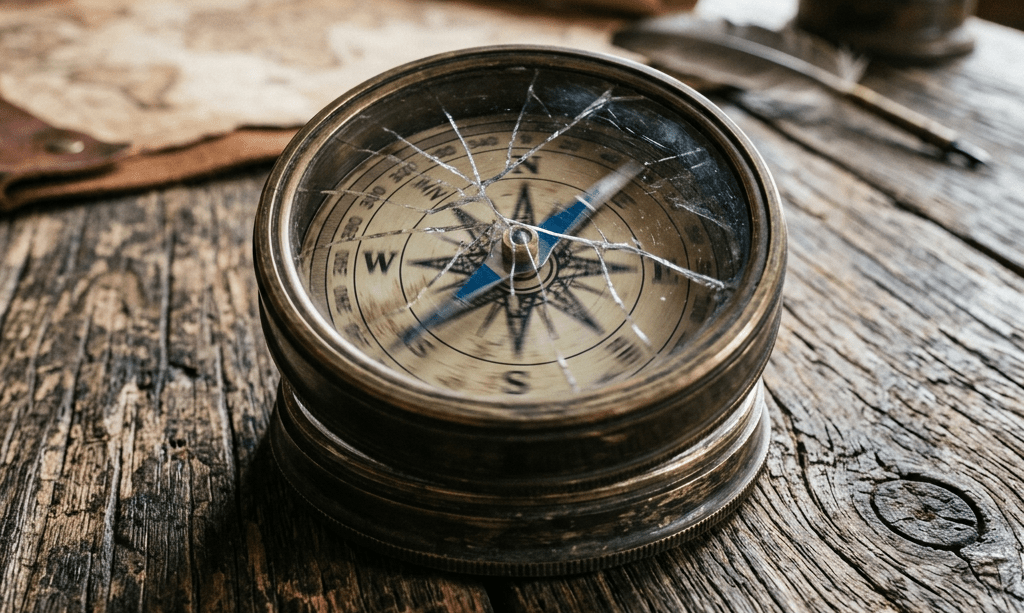
There was a time in my life when I was younger, and while not perfect, but real in my view, when people could disagree with politics yet still recognize a shared baseline of right and wrong. Today, that baseline feels increasingly unstable and it’s not because morality has disappeared, but because it has largely fragmented. There is no longer a shared moral consensus or compass that is keeping the glue that holds a functioning society together, which is harmful in the short run and devastating the longer it goes on.
We no longer argue from the same starting point when it comes to understanding what is moral and what is not. What one group sees as justice, another sees as inequity where this principle is not being equally distributed or followed. What one calls freedom for everyone; another calls it inflicted harm to a particular group who is having their freedoms limited as a result. These aren’t surface-level disagreements; they cut to the core of how people interpret truth, responsibility, and even reality itself.
A shared moral compass cannot survive in a system where consequences are inconsistent or not applied equally to everyone. When ordinary people are expected to follow rules and laws that the powerful and the well-connected routinely evade and mock, morality stops feeling like a standard and starts feeling like a tool, used or applied when convenient, and ignored when costly or detrimental to those people who have a lot to lose.
For example, the average employee notices when corporate leaders avoid consequences for actions that would destroy the career of an average employee. The average voter also notices when political figures excuse corrupt behavior from themselves, their allies, or their donors that they would condemn in their opponents or in their colleagues. They notice when public outrage seems selective, flaring up in some cases while remaining quiet in others showing a peculiar kind of hypocrisy that has only gained steam in recent years in a polarized political and social climate.
Over time, this kind of blatant inconsistency corrodes overall trust and fairness in one another. It sends a quiet but powerful message to everybody in society: morality is not universal and it is conditional and can be applied or not applied as such. As a result, more people begin to believe that the incentive to act morally weakens or erodes completely leaving an absence from that behavior, especially in our institutions. Why follow rules that others can bypass or not be held accountable to? Why uphold standards or norms that are not enforced equally to everyone in the society?
Part of this shift comes from the collapse of shared institutions, religion, local communities, even trusted media, that once anchored moral conversation. In their place, we’ve built personalized ecosystems of belief, reinforced by algorithms and tribal loyalty. The result is a culture where validation matters more than reflection, and outrage travels faster than understanding. However, the deeper issue isn’t disagreement, it’s disconnection. When people stop believing that others are arguing or acting in good faith, the possibility of persuasion disappears. Debate becomes performance, and morality becomes a tool for scoring points rather than seeking truth.
This doesn’t mean that most people suddenly abandon their values or morals entirely. It means those kinds of values become more tribal, more situational, and more defensive as a result. Morality becomes something we apply outward, toward others, rather than inward, toward ourselves. It becomes easier to justify our own actions while scrutinizing everyone else’s.
At the same time, we are facing a different kind of problem: a lack of education around how to think morally in the first place, which should start at a young age but for which schools and universities have long neglected in their curriculum. We’ve replaced moral education with moral reaction. People are often taught what to believe, what to support, and what to condemn but not how to reason through complex ethical situations or think critically about why enforcing standards, morals, and laws equally is so important. They inherit frameworks that have been established through centuries of precedent without examining them or understanding why they exist in the first place. Many people today absorb positions or opinions without questioning the principles or values behind them. In today’s environment that rewards speed and certainty, there is little incentive to slow down and reflect on how or why one should act in any given situation.
This untenable situation creates a kind of moral fragility that becomes more relevant each day. When individuals encounter perspectives that challenge their beliefs, they are more likely to react defensively than to engage thoughtfully on how someone came to develop those perspectives. This is not necessarily because they are unwilling to think critically, but because they were never taught how to navigate moral ambiguity. In a world where many issues are not black and white, that gap becomes a serious problem for the next generation(s) to solve on their own without guidance from previous generations.
Education systems, broadly speaking, prioritize absorbing complex information and developing technical skills. Those matter in developing one’s career and prospects in the 21st century. However, the current curriculum by and large often leaves out something just as important: the ability to weigh competing values, to recognize bias, and to wrestle honestly with difficult moral and ethical questions. Without that foundation, people default to the loudest voices, the most emotionally charged narratives, or the groups they feel most aligned with to guide their own morality. Perhaps most worrying to me is that we really do not teach ethics, values, having a strong moral compass or how to recognize a lack or absence of that kind of compass in other people in society regardless of who they are or what their status is.
Layer on top of that the digital media environment is designed to amplify and cause division, and the problem continues to compound each day. Social media platforms reward content that provokes strong reactions and outrage. Nuance doesn’t spread as easily as certainty and thoughtful disagreement doesn’t travel as far as selective outrage. Over time, this shapes not only what people see, but how they think. It encourages a style of moral engagement that is quick, reactive, and shallow.
Where does that leave the future of morality? The loss of a shared moral compass does not mean society is doomed to fail or deteriorate. Still, it does mean the work ahead will be harder and be exceedingly difficult if this issue is not treated with the seriousness that it deserves. Rebuilding common ground and shared morality in a fragmented world requires more than louder arguments or sharper critiques. It requires a shift in how we approach and teach morality itself.
First, there must be a renewed emphasis on consistency, especially when it comes to applying morals to those who hold power, influence, or wealth. Rules, ethics, and norms cannot be optional at the top and mandatory for the rest of us. Accountability must apply across the board, or it loses its legitimacy with society. That doesn’t mean perfection in diagnosing who’s being moral and who is not and the consequences that the latter should face. It means a genuine effort to close the gap between what we say we value and how those values are enforced.
Second, we need to take moral education more seriously and to invest much more money, time, and effort in its teaching, especially to young people. This approach should not be done in the sense of telling people what to think, but in teaching them how to think. That includes engaging with different ethical frameworks, debating morality and how it is applied, understanding trade-offs, and developing the ability to question one’s own assumptions. It also means creating third spaces, whether in schools, communities, or in public discourse, where people can wrestle with difficult ideas without immediately being reduced to labels or judged harshly for what they see is moral or not.
Finally, there must be a cultural shift toward fomenting intellectual humility. That doesn’t mean abandoning convictions or pretending that all viewpoints are equally valid. It means recognizing that our understanding is limited, that we are capable of being wrong, and that other people, even those we strongly disagree with, may be operating from a framework that makes sense to them given their education, their background, and their life experiences.
A shared moral compass doesn’t require total agreement all the time on what is ‘morality’. It requires enough overlap to make conversation possible, enough trust to assume good faith, and enough consistency to believe that the standards we claim matter and they apply to everybody once agreed upon and instituted within the rules, laws, and regulations of that society as such.
Right now, that foundation feels shaky and declining across the world. The loss of a shared moral compass doesn’t mean society is doomed to regress further. It does mean though that we face a harder task ahead: rebuilding common ground in a world that increasingly rewards division and rancor. That kind of consensus building starts not with louder arguments, but with a willingness to question our own certainty and to listen, seriously, to those we instinctively dismiss and disagree with.
The question isn’t just whether we can rebuild a shared sense of morality and virtue immediately given the gravity of the current situation; it’s whether we’re willing to do the slower, less rewarding work required to get there in the future and establish it for the long term. Otherwise, we will continue down a path where right and wrong mean something different depending on who you ask and which person it applies to. If everything is debatable, eventually nothing is binding, including morals. A society where nothing is binding is one that cannot hold together.

