My Thoughts on Voltaire’s Most Relevant Quote Today

“His quote underscores the perilous connection between irrational beliefs and destructive actions, an infamous dynamic that has been exploited throughout history and remains a pressing concern today around the world.”

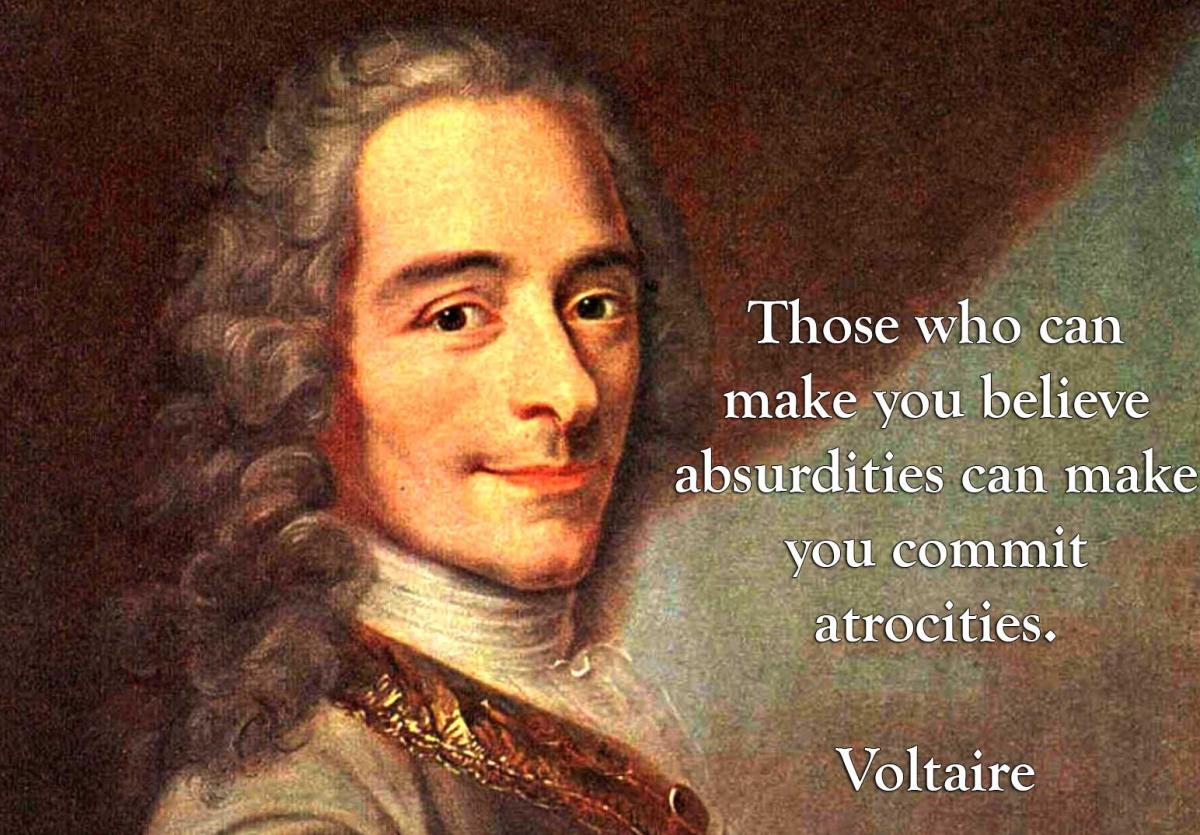
The famous French philosopher and writer, Voltaire, is known for his various works from poetry to stories to essays in the 18th century but Voltaire’s quote, “Those who can make you believe absurdities, can make you commit atrocities,” carries a profound meaning for the modern world in 2025. It serves as both a warning and a call to be vigilant against the forces of misinformation, manipulation, lies, and prejudice. His quote underscores the perilous connection between irrational beliefs and destructive actions, an infamous dynamic that has been exploited throughout history and remains a pressing concern today around the world.

At its core, Voltaire’s quote on ‘absurdities causing atrocities’ highlights the susceptibility of human beings to believe falsehoods when they are presented compellingly and repeatedly particularly by figures of authority or influence or power. In the digital age of social media and instant communications, this vulnerability is amplified by the unprecedented speed and reach of information instantaneously. Social media platforms, news outlets, and even AI-generated content contribute to a landscape where disinformation and blasphemy can thrive. Absurdities, once relegated to the fringes of our society, can now gain mainstream traction in a matter of minutes or hours.

A stark example of this phenomena is the spread of conspiracy theories. From unfounded claims about global health crises to political propaganda, these theories manipulate emotions and exploit fears, dividing societies, and undermining trust in our institutions. The belief in absurdities, whether it’s a denial of scientific evidence or the vilification of certain groups of people unjustly, creates fertile ground for acts of hatred and violence to occur.

To protect against the dangers of absurd beliefs that are spread rapidly without fact checking, fostering critical thinking is more important than ever. Education systems should do a better job of prioritizing media literacy, teaching students and even professionals how to evaluate sources, discern biases, and question narratives. In 2025, where now AI-driven content can mimic credible sources and change them slightly, the ability to think critically is more vital than ever.

Fact-checking organizations and regulatory measures can also play a role especially when social media companies refuse to do it themselves as was evidenced by Meta founder, Mark Zuckerberg, refusing to have his platform offer fact checking to users on what gets posted on the platform. Social media platforms should be held accountable for curbing the spread of disinformation especially when they do nothing to curb it. Transparency in the algorithms that they are using along with stricter content moderation policies are necessary to mitigate potential harm to users and information consumers. However, these efforts should also be balanced with protecting freedom of expression and speech to avoid creating new forms of digital censorship.

At the individual level, fostering open dialogue and empathy is crucial. Encouraging conversations that bridge ideological divides can reduce the allure of echo chambers that can bring out the worst in others. People are less likely to fall prey to absurdities when they are exposed to diverse perspectives and any differences are addressed through mutual understanding.

Voltaire’s quote also speaks to the unseemly process of ‘othering’ where certain groups are dehumanized or treated as inherently inferior based on lies and slander. This phenomenon has been a precursor to some of history’s darkest chapters. When absurd beliefs about the “other” are accepted and not dismissed or countered with facts, atrocities can become justified in the eyes of the perpetrators.

Historical examples abound and there are dozens of them I could write about. The Holocaust during World War II is a chilling reminder of how anti-Semitic propaganda and pseudoscientific absurdities fueled the systematic extermination of over six million Jews and millions of other minority groups. Nazi ideology relied on first dehumanizing Jewish people, portraying them as threats to society. This ‘othering’ laid the foundation for the eventual genocide that occurred.

Similarly, the Rwandan Genocide in 1994 illustrates how media propaganda can incite mass violence. Hutu extremists used radio broadcasts to spread hate speech against the Tutsi minority, describing them as “cockroaches” and urging their extermination. The absurd belief that the Hutu extremists had about an ‘existential threat’ posed by the Tutsi population led to the massacre of approximately 800,000 people within 100 days, one of the darkest years in the 20th century.

In more recent history, the treatment of Rohingya Muslims in Myanmar serves as another example. The dissemination of false online narratives about the Rohingya group, portraying them as invaders and terrorists, was used to justify violence and forced displacement from their homes. The role of social media, particularly Facebook, in amplifying hate speech highlights the modern implications of Voltaire’s warning about believing absurdities eventually leading to atrocities.

As we continue to navigate the complexities of a globalized and interconnected world, Voltaire’s words remind us of our shared responsibility to uphold truth, justice, and basic humanity. Combating absurd beliefs requires collective action across educational, technological, and cultural spheres in our society. Governments, organizations, and individuals must work together to challenge disinformation and promote inclusivity and respect.

Empathy, acts of kindness, and compassion are all potent antidotes to prevent ‘othering.’ Recognizing the shared humanity of all people, regardless of race, religion, or background, diminishes the power of divisive and toxic narratives that are not true. History teaches us that atrocities thrive in the absence of understanding or dialogue. By fostering connections and celebrating diversity while respecting and acknowledging our differences from one another, societies can resist the allure of absurdities and the horrors they could potentially enable.

Anyone can make an impact in preventing the spread of falsehoods, blasphemy, or scapegoating as this begins at the grassroots level, such as within our own neighborhoods and communities. To achieve this goal, individuals and groups must actively engage people in fostering environments of mutual respect and accountability. Open communication and dialogue are key to identifying and addressing harmful narratives before they gain traction and spread futher.

When you encounter falsehoods or lies, it is important to call them out in a civilized manner. This means addressing the issue without resorting to any aggression or personal attacks. Instead, provide clear, evidence-based counterarguments and facts that encourage reflection rather than defensiveness. For example, sharing verified data, fact-checking done through reliable sources, or calmly asking thought-provoking questions can shift the conversation towards the truth.

Community leaders, educators, and influencers have a unique role in setting an example for their neighbors, students, and followers. By promoting fact-checking, highlighting diverse perspectives, and actively countering divisive and hateful rhetoric, they can cultivate a culture of inclusion, tolerance, and critical inquiry. Grassroots initiatives, such as hosting workshops on improving media literacy, how to do fact checking, or creating forums for dialogue with people of different backgrounds, can also help inoculate communities against the spread of absurdities.

Additionally, I believe it is very important to foster empathy through personal storytelling and connections that can counteract scapegoating. For example, over the decades, thousands of Holocaust survivors have shared their story of how they were able to survive atrocities that came about because large groups of people in their society started believing or tolerating absurd claims based on lies and falsehoods. Hearing the lived experiences of marginalized or affected individuals from Rwanda to Myanmar to the Sudan humanizes them and challenges stereotypes. This approach can dismantle the ‘us versus them’ mentality that fuels both hatred and violence.

Ultimately, building resilient communities requires consistent effort and constant dedication. By prioritizing education, empathy, and open dialogue with others, we can better guard against the dangers of falsehoods and prevent absurdities from taking root or spreading. In doing our part, we uphold the principles of truth, justice, and fairness that Voltaire so fervently championed.

In conclusion, Voltaire’s insight is as relevant in 2025 as it was in the 18th century when his quote was born. Believing absurdities paves the way for atrocities to occur, but by embracing critical thinking, rejecting hate, and nurturing empathy, humanity can rise above these challenges that remain with us today sadly. The famous quote from Voltaire is not just a warning for us but a guidepost for maintaining a world grounded in truth, justice, and compassion for one another.

Some Thoughts On “This Too Shall Pass”

“The main message of the quote is meant to be comforting to those who hear the words strung together either in a poem, a speech, a song, or a fable, and it is supposed to let us all know that whatever we are experiencing or feeling at the moment, whether it is positive or negative, good or bad, happy or sad, “this too shall pass.”

A favorite quote of mine in the English language, originally adapted from Farsi / Persian centuries ago, has been used by both Sufi poets and American presidents alike to describe the impermanence of everything. The main message of the quote is meant to be comforting to those who hear the words strung together either in a poem, a speech, a song, or a fable, and it is supposed to let us all know that whatever we are experiencing or feeling at the moment, whether it is positive or negative, good or bad, happy or sad, “this too shall pass.”

The human condition is ever evolving and what we experience one moment, one hour, or one day can be drastically different later from what was before. Nothing is permanent as we all know because one of the first things we become sentient of is our own mortality and our own impermanence on Earth. While this can fill us with existential dread and despair, it can be a blessing too because the pain, the suffering, and other negative emotions we experience in this life are not for forever. Just as we can’t be experiencing euphoria in the form of only good things happening every moment of our life, the same can be said for having everything go wrong throughout life.

What happens to us in life is largely beyond our control but what we can control is how we react to life and its challenges. In addition, we should remind ourselves that tough times are not forever and if you stay in the game, you keep moving forward, you give yourself a chance of pulling yourself out of a bad rut or a down time. I find it healthy emotionally to remember the Persian and now translated to English saying of, “this too shall pass.” It is a good reminder for us all about the impermanence of all things we experience including life itself.

In addition, this quote of “this too shall pass” can be correlated to “carpe diem” because we must do our best to enjoy life despite its challenges because we never know how many days will be given to live this life. You may not know what life will throw your way day by day, but you should be prepared to make the most of it, to ‘seize’ it, and to have an impact on it in whatever way you can.

The impermanence of everything in life should make us savor the good moments more whenever they come to us. We can remind ourselves that the bad times don’t last forever too and that good times can be just around the corner if we believe in ourselves to turn things around. Being more grateful, more appreciative, more kind, and being a better person even when we don’t feel like karma or life itself is reflecting the good that we’re doing should not mean we stop trying. The reward of life is to live it to the fullest and to do it well even with the inevitable ups and downs, the highs and lows that come with it.

We must refuse to give up or surrender when the bad times in life challenge us, sometimes beyond what we would ever want to endure. We must believe in doing good and being good even when bad things or times happen to us. Life is a gift; however we are affected by existing and living day by day, we must make the most of it and to continue making our lives better even when times are tough on us. Those four words of “this too shall pass” have comforted people in different cultures and in different languages throughout the centuries.

The human condition is not the same day by day and what we experience today will not be what we experience tomorrow. Time can blend, routines can become suffocating, and experiences can become mundane in life, but it is up to you and you alone first to make changes to your life, to make different choices to how you react to life, and to form different habits that could make what looks like a permanent situation turn into a temporary blip in your life trajectory. We may think that we are on a set course, but we have agency, and nothing is permanent, and we can make our lives what we wish if we decide to act and make change to go from good to bad or bad to good depending on how we act on both our actions and choices.

“This too shall pass” is a timeless piece of wisdom that resonates deeply with the human experience and has done so for centuries. At its core, this universal phrase has served as a powerful reminder to all human beings of the impermanence of all things and of life itself. By acknowledging that both good and bad moments are fleeting, we cultivate a healthier and balanced perspective on life. When faced with the challenges life throws at us each day, remembering that “this too shall pass” helps us to endure the hardships with greater resilience, humility, and patience. It encourages us to stay grounded, knowing that difficult times will not last forever. This outlook can alleviate the weight of anxiety and stress, providing a sense of hope, belief, and a clear mind to navigate through life’s adversities.   

Similarly, this kind of wisdom also teaches us to cherish the happy and joyful moments more fully, understanding that they are both precious and temporary. It fosters an appreciation for the present moment we are living in, urging us to savor the beauty and happiness we encounter even in a minute way. By internalizing this phrase in our lives, we become more mindful and grateful for the positive experiences in our lives when they occur.

Incorporating “this too shall pass” into our mindset every day can lead to a more balanced emotional and mental state. This quote promotes resilience by reassuring us during tough times and maximizing our joy by reminding us to live in the present, whether good or bad. Ultimately, this simple yet profound wisdom from earlier times in the history of humanity helps us embrace the ebb and flow of life with grace and humility, transforming how we approach both our triumphs and our trials.

A Life Well Lived According to Emerson

“Emerson was not a man who saw success in only the material or popular means that is often the case of how individuals measure success today. Instead, Emerson believed success in life was about much more than fame, fortune, and overall popularity.”

Whenever I am looking for inspiration in my own life whether it comes to how to develop myself professionally or to be better on a personal level with others, I like to refer to the excellent quote on success and on a well-lived life by American essayist, philosopher, abolitionist, and 19th century transcendentalist Ralph Waldo Emerson. Emerson was not a man who saw success in only the material or popular means that is often the case of how individuals measure success today. Instead, Emerson believed success in life was about much more than fame, fortune, and overall popularity.

Emerson saw success and life itself as leaving the world a little better than when you found it. He believed in the importance of caring for nature, of having good relationships with other people, of honing your craft professionally in whatever you were passionate about, and of caring for family or friends who could rely upon your kindness and care. This quote by Ralph Waldo Emerson has always been a favorite of mine because while it was a conventional means of measuring a life well lived or a ‘successful’ life in the 19th century; I believe that too often today, we measure a ‘good life’ in shallow and often selfish ways.

In the era of the transcendentalist movement, there was much more to life than accruing things for material worth, or showing off how much money you had, or thinking that because you have more you are then better than someone else. On the contrary, Emerson and other thinkers of that movement believed in progressive ideals of equality, justice, and fairness. They believed in giving back to others in whatever way was possible and to do so consistently. While it was not a religious movement, it was based around individual actions to help a larger community or society.

It did not shun personal success or individual wants or needs as being unnecessary, but it asked people to believe in the power of working together to a common goal or cause, treating your fellow man or women with respect, fairness, and dignity, and to believe in giving back through charity, through helping others, and to be of good character not just in words but in actual deeds. Emerson like others were idealists and believed in the goodness of humanity despite the dark impulses that can lead us astray. While we are unique individuals of free will, we must never forget to care for our family or our friends, or nature itself which is gift not to be squandered.

The actual quote by Ralph Waldo Emerson is a long yet impactful one that touches on many different parts of one’s success in life that must not be ignored. When most people define success in a singular manner and often involving their own joy and happiness, Emerson does quite the contrary by arguing that success or a good life is based on how we leave the world after we depart from the Earth and what do we do in life to leave those around us better off than they were before. Above all else, Emerson asks the reader to imagine how they can impact the world in their own way for the betterment of not just themselves but for others as well and humanity.

In the quote, he does not ignore our hierarchy of mental needs such as the need to be respected by others, to laugh often with friends, to be appreciated for what we do, to be able to overcome adversity such as suffering betrayal, which is inevitable at points in our lives but to also appreciate the beauty around us because it is temporary in life as well. Fulfilling that life well lived according to Emerson is not just about being there for others but also being there for ourselves mentally by having our emotional needs met and fulfilled with joy, happiness, laughter, kindness, respect, and overcoming negative emotions such as betrayal and deceit.

“What is success?…
To laugh often and much; to win the respect of intelligent people and the affection of children; to earn the appreciation of honest critics and endure the betrayal of false friends; to appreciate the beauty; to find the best in others; to leave the world a bit better, whether by a healthy child, a garden patch Or a redeemed social condition; to know even one life has breathed easier because you have lived. This is to have succeeded!”

― Ralph Waldo Emerson

When you look at this memorable quote from Emerson, he prioritizes in life partaking in individual joy in the form of laughter most importantly. He also indicates the need to be respected by other people especially who you choose to associate with as being intelligent either emotionally or figuratively. He also discusses the need to be compassionate towards children, whether they are your own or not. Knowing that critics are inevitable in various avenues of life, Emerson seeks that any individual appreciate the critics who are honest about him or her and asks the reader of the quote to be mindful of those who want you to improve and to try to do right by them in becoming better at what you do.

Emerson also asks that while some friends are necessary to have in life; we must be prepared for betrayals that can occur from those who you thought were friends but were rather only looking out for themselves. Even though others, even friends and family members will let us down at times, we should still seek to see the good in others and to try to get the best out of everyone we meet. Human beings are fallible creatures, Emerson would say, but we should try to look for signs of redemption and efforts of good faith because people deserve to show you that they have good in them, and they can rectify their wrong doings often when they are given a real chance.

Despite facing inevitable criticism, betrayal, and disappointments throughout life, we must stop and take time to appreciate life itself for all its natural beauty. It will calm us down, put our lives in perspective, and think of a world much bigger than our own internal musings. Because of the sheer beauty surrounding us that we can often fail to fully appreciate, this divine beauty should inspire us to be caretakers of this world that we inherited at our birth and to be true guardians of the planet for the next generations. He includes in his musings on success in life to include leaving the world ‘a bit better.’ As individuals, we can only do so much for the state of the world, but if we all pitch in to do our part, that will cause massive change to occur on a societal and global level.

Leaving the world, a bit better is not just about recycling or not littering or being aware of how you’re affecting the natural world with consumption but it’s also about beautifying the world too. Whether it is cleaning a park littered with trash or creating a garden patch for others to enjoy or deciding to walk instead of driving a car, little actions like these by individuals can leave the world better off than before. I saw this kind of contagious effect working with others as a volunteer lately in helping to create a new vegetable and flower garden for a youth center in Washington, DC. Getting your hands dirty, beautifying a small part of the neighborhood, and having others pitch in to help is one of the best feelings one can have in life. It’s not often in our lives when we get to see a positive change happen in real life but creating a garden or even beautifying a park has a large ‘ripple effect’ that can change the world for the better even if it is on a small scale.

Emerson lasts mentions that if you have a child or care for one in your custody that to ensure their health and happiness is one of the great joys of living and contributes to improving the world in a measurable way. Giving back to nature and to other people is a consistent theme in this quote by Emerson and to redeem a societal condition such as creating a garden, raising a child, or being a mentor to a friend who needs your help will not only be doing good for you but for others as well. Ralph Waldo Emerson finishes his quote to sum up success in life and having a good life as coming down to fundamentally whether because you lived, did others live easier because of your presence? Was someone or something healthier, happier, or more fulfilled because you were there? These are important questions to ask yourself. In your life, are you just in it for the fame, fortune, and your own personal gratification? Or are you living your life to leave a legacy that can do some good in the world in some measurable way?

Emerson never mentions personal gratification such as having a lot of money or being popular as keys to a life well-lived and I agree with him. Emerson prioritizes the fact that after we depart from this Earth, what will we be remembered by? What contribution to others and our society did we make? Are people in our lives better or worse off because of your existence? That is what true ‘success’ means in the long-run and that a life well-lived should be based around. I hope that you take this excellent quote by Ralph Waldo Emerson to heart as I have. It’s a brilliant piece of wisdom that gives each of us steps to make the most of our remaining days on this Earth. Let the joy, laughter, beauty, conscientiousness, and unselfishness among other characteristics that he mentions as being the keys to a life well-lived guide you in all your days here.

English Corner – Colons

The colon is very useful in the English language, but it is also considered to be a bit underused as a means of punctuation within the world of grammar. You have to understand the circumstances for which a ‘colon’ can be used as well as a few examples of when it can show up in a regular sentence. If you can master colons, you can definitely count yourself as being advanced as an English learner. It will take time, but I hope that this tip will help you get a little bit better in making the colon work to your advantage as a writer.

What is a colon? Well, a colon indicates the meaning of what you want to say as well as to list what is necessary for the reader or the listener to understand. Colons and semicolons are very different in terms of meaning and use. They should never be used in the same sentence and are very rarely used together.

There are a number of uses for colons, but the three top ones would be the following:

Use #1: To introduce two or more items and to list them together separated by a comma(s).

Examples:

  1. You should do the following tonight: Practice your instrument, study for the test, and help clean the dishes.
  2. He got what he wanted today: A big promotion and an increase in his salary.
  3. Remember what we talked about: work hard, tell the truth, and always give it your best effort.

Use #2: To start a letter or an e-mail to somebody.

  1. Dear Mrs. Jones:
  2. To Whom It May Concern:
  3. To My Beloved ________:

Use #3: To introduce a quote or a short summary of a few sentences:

  1. John F. Kennedy once spoke: “Ask not what your country can do for you, ask what you can do for your country.”
  2. The author of Huckleberry Finn, Mark Twain, wrote in the second chapter:

“Tom Sawyer went back to his bed and stared at the fence where Jim was painting for Tom’s father. Tom wondered whether his father and Jim were friends or even if they spoke to each other.” (Not a real quote from the book, just an example)

  1. The Presidential candidate was quoted as saying: “I agree that we must move forward on fighting climate change in order to create a better future for our people.”

As you can see now, there are three main uses for colons as well as some rules that have to be observed. Let us now look at some of the important rules for using colons and how to make sure that we abide by them.

Rules of Colon Usage

  1. Colons are used in the middle of most sentences and are usually followed by a list of items or words belonging to the same or similar categories.
  2. Colons can also be used between two sentences especially if the second sentence relates to the meaning of the first sentence.
  3. A colon should always be used to introduce a numbered or a bulleted list, such as for grocery items or different types of grammar concepts.
  4. As mentioned earlier, colons can be used to introduce a quote from a speaker who was reported to have said the following words and sentences. This kind of long quotation does not need quotation marks if you have already introduced who the speaker is and what they are talking about followed by the comma (:).
  5. Colons can also be used at the beginning of a letter or an e-mail in both formal and informal settings for co-workers, bosses, friends, and family members. From seeing the examples above, you can note that instead of a comma (,), a colon (:) is being used instead to introduce the salutation or the greeting for the reader of the letter or e-mail.

These are the main rules for how to use colons and it’s important to keep in mind that a colon can:

  1. Never start a formal sentence.
  2. Never end a formal sentence.
  3. It is rare to have more than one colon used in a single sentence.
  4. Colons can be used between two sentences provided there is no period (.) separating them.
  5. While not very prominently used like a comma or a period, this form of punctuation has its uses which you should know how to utilize.

Colons are a tricky subject but once you understand both the main uses and the main rules, you will be well on your way to creating better sentences and more detailed quotes from the use of this punctuation. Similar to semicolons, colons are an advanced topic that separate an advanced English grammar learner from an intermediate learner. Once you can list items, introduce quotes, and start an e-mail off right, you will know that you are using colons correctly and for the right reasons.