‘Leave the World Behind’-Book and Film Comparison

“Whether you prefer the visual spectacle of cinema or the intimate exploration of characters through Rumaan Alam’s written narrative, “Leave the World Behind” provides a gripping tale that will leave you questioning the boundaries of trust and the resilience of humanity when catastrophe strikes.”

‘Leave The World Behind’ is a thought-provoking novel, written by Rumaan Alam, first published in 2020. The story of both the book and the film adaptation revolves around two families who are forced to come together in an unexpected turn of events. Both mediums for this story explore the themes such as fear, trust, and the complexities of human relationships. Recently, in 2023, ‘Leave the World Behind’ was adapted into a film, released on the Netflix streaming platform, which has captivated audiences with its compelling narrative, largely based on the book version.

Set against a backdrop of uncertainty and increasing tension that progresses through both the novel and the film versions, ‘Leave the World Behind’ guides the audience through a suspenseful and gripping narrative. The story begins with Amanda, Clay, and their two teenage children, Rose, and Archie, who live in New York City, who based on Amanda’s yearning to ‘leave the world behind’ for a little while at the beginning of the story, head off on a vacation to a remote house they have rented on Long Island. The stage is set for tranquility, summer relaxation, and family bonding, but their idyllic respite is soon interrupted by unforeseen circumstances.

Soon after their arrival, an elderly couple, Ruth and G.H., surprisingly appear at the doorstep. In the movie, Ruth is the daughter of G.H. or George but in the novel, she is his wife. However, in the main storyline, they claim to be the owners of the rented property, leaving Amanda and Clay in a state of confusion and unease. The intrusion tests the boundaries of trust and raises a myriad of questions such as the circumstances beyond which Ruth and G.H. have fled the city to come back to their summer house.

During a series of unprecedented events, the two families find themselves isolated from the world and confronted by their own fears. In addition to the Sandford and Scott families, for which both the novel and film focus on, the World acts as its own character, representing the unknown and unpredictable circumstances that affect the protagonists, who may want to escape from it but are sucked into the growing chaos and the calamities that are befalling it.

The novel unfolds in a secluded Long Island vacation home miles away from the urban chaos, yet the families cannot remain isolated from the chaos surrounding them forever. Its remoteness adds to the suspense as the families grapple with their limited resources, increasing isolation, and the unknown circumstances that encroach upon their peace.

Because of what’s going on in the world, the families have no access to any information that could help them piece together what’s going on. The phones are not working, the TV signal is out, and even a GPS or satellite phone connection is unable to be used as a fail-safe as the two families try to make sense of what’s going on in the outside world. Without spoiling either the book or the film adaptation, the main events of ‘Leave the World Behind’ entail the following:

Amanda, Clay, and their children settle into the remote vacation home with the joyful anticipation of a peaceful getaway. Ruth and G.H. arrive, insisting that they are the owners of the rented property, causing confusion and concern for Amanda and Clay. As the families try to make sense of Ruth and G.H.’s sudden arrival, they face a complete loss of communication with the outside world. This event further amplifies their vulnerability and isolation.

The families begin to experience a growing sense of unease as bizarre occurrences, such as power outages and mysterious sounds, escalate. Fear and paranoia start to consume their thoughts and actions. Together, the families must navigate the tensions and challenges that arise due to their forced cohabitation with each other. The increasing fear casts doubt on their ability to trust one another, as they slowly unravel the truth behind their predicament. Amanda, Clay, Ruth, and G.H. venture beyond the confines of the house in search of answers. They encounter strange phenomena, unexplained events, and a world teetering on the edge of chaos. The unknown becomes their companion, adding depth to their personal growth and transformation.

As the families face the conclusion of their isolated journey, the fate of the world hangs in the balance. The climax leaves readers questioning the boundaries of human connection and the fragility of our existence on the planet and our inability to control the changes that affect our world.

‘Leave The World Behind’ in both the film and the book offer a gripping narrative that delves into the complexities of human relationships and the primal fears that lurk within us. Rumaan Alam’s novel and its film adaptation effectively convey the story’s themes of uncertainty, trust, and the vulnerability of our connectedness to technology and modern conveniences. Through the characters of Amanda, Clay, Ruth, and G.H., both readers and moviegoers will be compelled to question their own responses to challenging circumstances, leading to a deeper understanding of the human condition, and how we react in times of crisis and stay resilient in the face of uncertainty.

Adaptations play a crucial role in bringing stories to life in different mediums. “Leave The World Behind” is an example of adding to the richness of the central story by being a captivating tale that can successfully be adapted into both a film and a book. The film adaptation of “Leave the World Behind” takes the audience on a thrilling and suspenseful journey, that is more of a thriller than a slow-moving drama that the book is. The novel version of “Leave the World Behind” focuses more than the film version on suspenseful and survival themes, offering a more immersive experience through its written narrative.

Despite the changes involved with making Rumaan Alam’s book into a Netflix movie, the overall themes have remained the same, which make both adaptations as appealing as possible because the core messages have not been lost in the transition.

Humanity’s capacity for survival is a major theme explored in both the film and book versions of “Leave the World Behind”. The characters face overwhelming challenges and unexpected circumstances, and their resilience and ability to adapt become crucial to being able to survive this world-changing event. This theme encourages reflection on our own strengths and perseverance in the face of adversity when the world seems to be falling apart.

Both the film and book versions delve into the complexities of trust and its relationship to isolation. In a world where human connections are vital to future survival; the characters confront their fears and insecurities. The uncertain nature of the situation prompts them to question the intentions of those around them, blurring the lines between friend and foe, and who can be trusted in this world gone awry.

The fear of the unknown is another prevalent theme in “Leave the World Behind”. As the characters navigate through an uncertain world, their fears and anxieties take center stage in how they view themselves and each other. The unfamiliar couple in the story serves as a catalyst for this fear of what’s out of the ordinary to start with, leaving the audience questioning their true intentions, and adding an element of suspense and intrigue.

While both the film and book versions of “Leave the World Behind” explore these core themes, they differ in their execution and portrayal. The film adaptation of “Leave the World Behind” brings the desolate post-apocalyptic setting to life with captivating visuals, action sequences affecting the characters, and more information regarding the reason why the world is in trouble, enhancing the sense of isolation and uncertainty. The use of cinematography and special effects heightens the tension and adds a visually engaging aspect to the overall story.

The novel provides a deeper exploration of the characters’ thoughts and emotions, allowing readers to truly immerse themselves in their journey and who they are as individuals. The power of written language enables readers to form a more intimate connection with the characters, enhancing the suspense and impact of the story, as well as what their internal dialogue is telling the reader as they go through the events affecting the world. As a differentiator, the film employs quick cuts and intense sequences to maintain a fast-paced narrative, while the book offers a more leisurely pace, allowing readers to savor the intricacies of the plot, and unravel the layers of suspense at their own pace.

Character development differs between the film and book versions as well. The film adaptation relies on visual cues and actions to convey the characters’ emotions, while the book delves deeper into their inner thoughts and motivations. This distinction provides a more nuanced understanding of the characters and their personal journey in the book. In conclusion, “Leave the World Behind” in both its film and book versions, presents an intriguing and suspenseful story that explores themes of dealing with survival, maintaining trust with others, having resilience under duress, and managing one’s fear. The film both captivates with its visual shots and its thrilling sequences, broadening our understanding from the book of how the world is really ending, while the novel offers a more immersive and introspective experience of how the characters are changing from chapter to chapter.

Whether you prefer the visual spectacle of cinema or the intimate exploration of characters through Rumaan Alam’s written narrative, “Leave the World Behind” provides a gripping tale that will leave you questioning the boundaries of trust and the resilience of humanity when catastrophe strikes. Discover the power of when adaptation is done well in storytelling and explore the captivating novel and movie adaptation of “Leave the World Behind.”

‘Extrapolations’ – TV Series Review and Analysis

“Recent wildfires in Canada that have caused the worst air pollution in decades across the Northeast U.S. this week have made me think about how our lives are becoming more and more impacted by the effects of climate change.”

Recent wildfires in Canada that have caused the worst air pollution in decades across the Northeast U.S. this week have made me think about how our lives are becoming more and more impacted by the effects of climate change. Growing wildfires, powerful hurricanes, sea level rise, melting glaciers, species extinction, and more acidic oceans are all causes for concern for people around the world and no country or people is likely to be exempt from at least one of the effects that have already been documented. What happens though in the next 50 years when we don’t take enough action now and in the past to reverse a possible future of no return?

That question is the premise for the first mainstream drama to focus on a future where climate change wins the battle that we are currently on track to lose if we don’t make drastic changes to our impact on the world around us. ‘Extrapolations’ is not a run of the mill documentary about climate change nor is it a disaster film that has become popular in Hollywood regarding disastrous storms. Instead, it is a rather intelligent take on the world soon when humanity cannot prevent global temperatures from staying at or below a 1.5-degree Celsius increase. The show covers what happens when humanity fails in its objective to keep the warming of the planet to a tolerable level. What starts out as 1.5 degrees Celsius becomes 2 degrees than 3 degrees until we become way past the point of no return past mid-century when 3.5 – 4 degrees Celsius is where the planet is headed.

Throughout the show’s eight episodes, we see the effects on the planet from Miami, Florida to New York City to London to Tel Aviv, Israel to Mumbai, India. From sea level rise wiping out the most popular nightlife areas in Miami including a historic synagogue to the constant wildfires that engulf Israel and the Middle East to limited outdoor time in Mumbai each day due to the overbearing heat and polluted air that causes deleterious effects to one’s health, the writers paint a grim yet realistic picture on what will happen if our climate change efforts fail miserably. More so than just the settings that are portrayed accurately in terms of how these popular cities may face their own negatives based on their geographic location, the characters in ‘Extrapolations’ have fully developed backgrounds, and you really get to know each of them over the course of the TV series.

There is a wide berth of society who are represented in this show from the wealthy billionaire who is interested in maximizing profits and takes advantage in his corporation from a dying planet to the Rabbi who is trying to wrestle with his faith in God as his synagogue slowly floods from the rising sea. What ‘Extrapolations’ does well is that it acknowledges that no one is purely innocent or purely guilty because of how badly climate change has warped the planet. Everyone is responsible in their own way, some more than others, but humanity is to blame for how we did not act quickly or unite fast enough to overcome our differences to reverse the worst effects to come.

The human effects of climate change are also explored such as how we are affected when we cannot go outside or must stay indoors to avoid heart or lung issues, why the extreme heat can prevent any work or leisure to take place, and how loneliness, depression, and atomization becomes more common when we despair at the worsening state of the planet.

My favorite episode in the eight-part TV series is ‘2066: Lola’ where we see how much augmented and virtual reality has come by then so that people are paid essentially to pretend to other people as a gig job and earn credits or money that can help improve their lives and insulate themselves more from climate change’s effects. The desire to connect with other people to distract ourselves from a dying planet is truly the TV series’ most impactful episode and makes you think about how much the emergence of augmented reality will make us both lonelier than ever and wanting to connect with others in untraditional and sometimes unseemly ways.

‘Extrapolations’ as a show really gets the A-list attention for a futuristic take on climate change’s effects on humanity with movie stars like Meryl Streep, Forest Whitaker, Kit Harrington, Edward Norton, Matthew Rhys, Gemma Chan, David Schwimmer, etc. All eight episodes are boosted by a stellar cast who really pour their hearts into the performances they give. I believe that they all truly cared about the project and how important it is to have a show like this become the center of attention. While Apple has been rightly condemned for some corporate practices that are harmful to the planet, it is a major TV show and movie distributor and should be commended for being the first major studio to have a series that doesn’t shy away from the brutal honesty of where we are headed if we don’t mitigate the worst effects of climate change to come.

If you are reading this article in 2023, you already know that the sea levels are starting to rise, wildfires are growing in both size and scale, bigger and stronger hurricanes that are also becoming more powerful, and deadly heat waves are becoming more common. While the first episode in this series takes place in 2037 and the last one ends in 2070, climate change is already here in 2023 as recent news events make clear and it has been affecting us for quite some time.

I encourage ‘Extrapolations’ to be watched by viewers with an open mind but also a commitment to do better for the planet. Do not shy away to act and make your voice heard regarding climate change after watching the series. You may think you know how bad it can get in the future from watching this series but ‘Extrapolations’ importance as a show is that it is as clear as day to where we will end up if we don’t hit the collective climate target goal of 1.5 degrees Celsius or keep as close to 1.5 degrees as possible.

While the show does mention possible stopgaps and solutions that can mitigate the damage, by that time in the 21st century, these solutions are risky with side effects on the planet that can only be speculated about. While the billionaire tycoon character was likely modeled after a few people who are prominent in our current age, as the show makes clear, the blame does not fall on him alone. We all can do our part by taking action to reduce our own carbon emissions, to encourage others to petition for policies and solutions now instead of 10 to 50 years down the line.

If the show has one central message after its eight impactful episodes, we all have stake in making sure this planet is livable for future generations. Even if you won’t be around to see the worst of climate change, we all should do our part, advocate for solutions now, and to hold people in power and of great wealth accountable if they do not action as well on a larger scale. The clock is ticking and as ‘Extrapolations’ highlights from 2037 to 2070, it can go downhill and get worse than what are experiencing already in 2023. Let’s not make the show a reality but keep it as a cautionary tale of what would have happened if we did not act strongly enough in these first decades of the twenty-first century.

I recommend ‘Extrapolations’ based on its great acting, stunning visuals, excellent writing, and interesting plots, but most importantly, because it focuses on the biggest issue of our time and one that we cannot ignore or downplay anymore.   

“Got to, This is America, Man…” – Anatomy of a Scene

“‘The Wire’ is the greatest television show of all-time. Even as the show nears the 20th anniversary since when it first aired on American cable television network, HBO, it still rings as culturally relevant and as emotionally stirring as it was when it first debuted in the Summer of 2002. While technology may be different now, the characters would not be the same, the setting could be different from the show, the overall themes, and messages from ‘The Wire’ as well as the institutions that the show focused on for five great seasons have not changed that much.”

‘The Wire’ is the greatest television show of all-time. Even as the show nears the 20th anniversary since when it first aired on American cable television network, HBO, it still rings as culturally relevant and as emotionally stirring as it was when it first debuted in the Summer of 2002. While technology may be different now, the characters would not be the same, the setting could be different from the show, the overall themes, and messages from ‘The Wire’ as well as the institutions that the show focused on for five great seasons have not changed that much.

I could write a thesis on ‘The Wire’ and devote at least 10,000 words on the show in terms of an in-depth breakdown on how it’s the modern equivalent to a Shakespeare tragedy or drama. However, in this ‘Anatomy of a Scene’, I am going to focus on one of my favorite scenes in this classic television show. This scene is the opening one for the entire five-season series and discusses a core tenet of the show not just about what kind of ‘game’ that the characters play, but also the ‘game’ inherent to the setting of Baltimore, Maryland as well as America as a country.

The opening scene, more than any other scene, even if it is the 1st, one pinpoints exactly what ‘The Wire’ is about. In the first shots, you can see a young man lay face down dead on the ground on some dark city street with the police collecting evidence and a main character, who is a detective, questioning a potential witness. The associate of the victim talks about how they were involved with street gambling and how it was not fair that it was not right to kill the victim, non-ironically known as ‘snot boogie’ to the game’s players. The victim of the crime has a real name but is endeared to the rest of the game’s players by that nickname alone.

As the witness explains to Detective Jimmy McNulty of Baltimore Police, ‘Snot Boogie’ was the victim of the crime, but his associate did not expect him to be killed for stealing from the other players of the street game for playing craps. The associate tells McNulty that the victim is known for stealing and grabbing the money to run away but they never want beyond just ‘beating his ass’ up a bit.

While it is a grim description of the dangers of gambling illegally on the streets, the witness to McNulty’s murder case explains that there is an unwritten rule to the ‘game’ of street gambling and that ‘Snot Boogie’ should not have been murdered for stealing from the other players. Nobody ever tried to kill the victim even after he was found guilty of stealing money from the street game players even if they did often catch him and beat him for having done it multiple times.

The witness refuses to tell McNulty who killed his associate in this game and does not want to go to court even though he believes it was disgraceful how ‘Snot Boogie’ was killed because they always let him play even though he would always steal from them.
“I got to ask ya, if every time Snot Boogie would grab the money and run away…why’d you even let him in the game?”
“…What?”
“If Snot Boogie always stole the money, why did you always let him play?”
“Got to, This America, man.”

McNulty looks incredulously as the witness tells him this reasoning because at its face, it does not make much sense for a guy who steals from folks repeatedly to continue playing a dangerous and illegal craps street game. It’s clear to both characters that life itself, and life in America is far from being fair at the end of the day especially a man got killed, which was against to how the game was being played, according to the witness, even if he was stealing from them.

Even if the game is fair or is rigged to some degree, it occurs to the witness and then McNulty after he sees the guy’s reasoning that even if the game was not meant to be won and the result would always be the same, you still let the game play out. The game may not be fair like life itself in general or in America, but it must be played by everyone. It may not be a fair shot and there is no equal outcome, but there is equal opportunity out there for each player to be involved even if someone cheats, steals, and comes back to play again. The game exists for everyone to be given a shot at it and if they don’t, that’s against the principle of life itself and life in America.

There are tragic consequences to this craps game for Snot Boogie who loses his life senselessly as well as for the men who will go to jail for it or lose all their money, but the game goes on and it’s open to everyone. Like the witness explains, the game deserves to be played by everyone equally although the outcome may not be something everyone will like or even will cost some people dearly. This excellent opening scene opens with the most prominent themes of The Wire perfectly and almost seems like a graphic novel come to life. Its visuals are striking, the characters are who you can relate to on a human level, and there is a lot of foreshadowing about the rest of the show and its messages to the viewers from this tone-setting scene.

‘The Wire’ is a show about the early stages of 21st century America in its first decade of the 2000s but it is as still as relevant about 20 years later. The metaphor of this opening scene for not just a couple of guys in a craps game gone wrong in the street can pair directly too what can happen when capitalism can go off the rails when someone tries to beat the rules or try to gain an advantage when they are put at a disadvantage to begin with. If the game is rigged from the get-go even if you’re given a shot at it, what’s the point in playing by the rules? If you can beat the system even if there are dire consequences, is it not worth trying?

‘Snot Boogie’s associates knew he was a thief and a cheater because they believed that he still deserved a shot at winning like everyone else even though it was likely rigged so he would never make it after multiple tries. As the opening scene of the greatest television show of all-time shows the viewer, everybody can play the game even if they are a cheater in the sense of having equal opportunity, but what happens when no one is held accountable when the odds are stacked against them from the start of the game and there is no other way to win than by cheating the system and facing serious consequences?

The show may not be defined by its iconic opening scene but as you find as you watch the entire series, the metaphor for what that scene represents about the show and about the ethic that binds American society together long after you finish watching each of its five seasons.

English Corner – The Basics of Writing

“You must first be aware of what exactly your writing will be used for or can be used for, so we need to think about the uses for writing and how best to express yourself.”

In this article, I am going to cover the basics of writing, and to do this, we need to first figure out how to use the printed word. You must first be aware of what exactly your writing will be used for or can be used for, so we need to think about the uses for writing and how best to express yourself.

There are numerous examples of how we print words correctly and what each kind of writing does with its own different style or substance to it. There are dozens of ways to use English words but the most important ones that come to my mind are articles, books, emails, and stories. Because of technology, we are exposed to English writing in numerous ways including text messages and emails, so I believe that when you’re writing in English, you need to be able to write articles, emails, and stories but you also need to be able to write text messages as utilizing technology when writing in English is a key part of using the language.

There are multiple ways to write for English and I want you all reading this article to be aware of the major literary elements. Further on, when you’re writing something fictional, it is important to be aware of which literary elements you’re using. Remember that it’s not real if you created it out of your own imagination. Nonfiction writing is real, but it’s based on historical current events, for example, when we think of nonfiction, we think of World War Two and in your writing as you’ll discover, you need to use some or all these literary elements to be taken seriously as a writer. You should always remember the 3 Ss of writing specifically: Style, Syntax, and Substance.

To begin with, it is important to be exposed to multiple literary elements but the most important of which is the plot or otherwise known as the storyline. There is also the tone, which is about the emotions you’re expressing such as whether you are sad or if you are angry, happy, or what exactly is the kind of tone your emotions are taking when writing. In addition to the emotions expressed, a good writer can both answer and describe the important question about “what is the setting?”

Any writer should know where your story is taking place whether it is in a city, a farm, or an island. The point of view of the written article should also be expressed if there is a narrator who is telling the story. Your audience should know about the characterization of the people or things involved such as “what are the personality traits of the characters and how do they act?” “What is their personality?” “What is their emotional status?” and for the general characterization, when you’re writing in English, you need to be aware of, especially for fictional writing, “how are you are developing your characters?” and “what is the mood of your writing, such as is it light or heavy in terms of mood?”

It’s different than tone in that mood is kind of like the combination of the setting and the plot along with the tone together. You should be asking yourself if your writing piece is a comedy or is it a drama or another genre? Be aware when you begin your written draft about “what kind of writing you are focusing on?” and to know, “which themes or main messages you’re trying to get across to the reader?”

For example, “are you trying to give them a political message a social message or are you trying to come up with a particular moral or a value to share with them?” The purpose of knowing about these literary elements is to expose yourself to these different ideas and then that will help you develop yourself as a writer because you will be familiar with the general plot or important viewpoint or main themes. This will come across in your writing very easily, but you must know what the literary elements represent and how they can be used.

Every writer has a different drafting process when they begin but there are some fundamental steps that you can take to be a better writer. You should go from beginning to end in terms of the structure of the draft and to be diligent in creating that process, which will make you more focused and organized, and you need to do your research as well to be successful. I think that is the most part important part of becoming a writer is doing your research. You need to take notes about what you’re going to be writing about and you need to focus on a few rough drafts before finalizing your piece of writing.

I would also highlight the benefits of having a native English speaker review your work, especially if you’re a non-native English speaker and you’re writing English as a second language. Keep in mind that becoming a good English writer is a marathon, not a sprint. It takes a lot of time to be a good writer as writing is difficult even for a native speaker.

You should also know that you’re going to make mistakes and you’re going to have errors. You’re going to have structural problems with your writing at first, but you need to keep trying. You need to keep writing and writing until it becomes almost second nature to you. I would encourage you to try out writing a paper or a report after getting these basics down. Being a good writer is a marathon, and not a sprint, which means it’s going to take a while. Lastly, when you know it’s not going to happen overnight, you know to take the writing process more seriously. Remember that you are not in a race and it’s best to draft, edit, revise, and write again before submitting your final written work especially for your job or for your school.

Like any important vocation in life, it’s going to take thousands of hours to become a good writer. However, if you get down the basics such as knowing about literary elements, figures of speech, and understanding the emotions and viewpoints involved, you will be successful in developing different written forms of work. Keep practicing daily, get input from others, and learn from your mistakes, and you will continue to improve with writing in English.

‘The Edge’ – Film Review and Analysis

“Whether it was ‘The Revenant’ with Leonardo DiCaprio or ‘The Grey’ with Liam Neeson, these films highlight man’s struggle to overcome the elements, the animals, and even his own demons. Many of these ‘man v. nature’ films focus on one main lead and a small cast of supporting characters but most of the film’s runtime is about the sole main character. ‘The Edge’ is different.”

I have always really liked Man vs. Nature type of films. Even though they have similar premises and conclusions, it really is a raw kind of film that grips you and leaves you wondering what you would do in a similar kind of situation. Whether it was ‘The Revenant’ with Leonardo DiCaprio or ‘The Grey’ with Liam Neeson, these films highlight man’s struggle to overcome the elements, the animals, and even his own demons. Many of these ‘man v. nature’ films focus on one main lead and a small cast of supporting characters but most of the film’s runtime is about the sole main character. ‘The Edge’ is different.

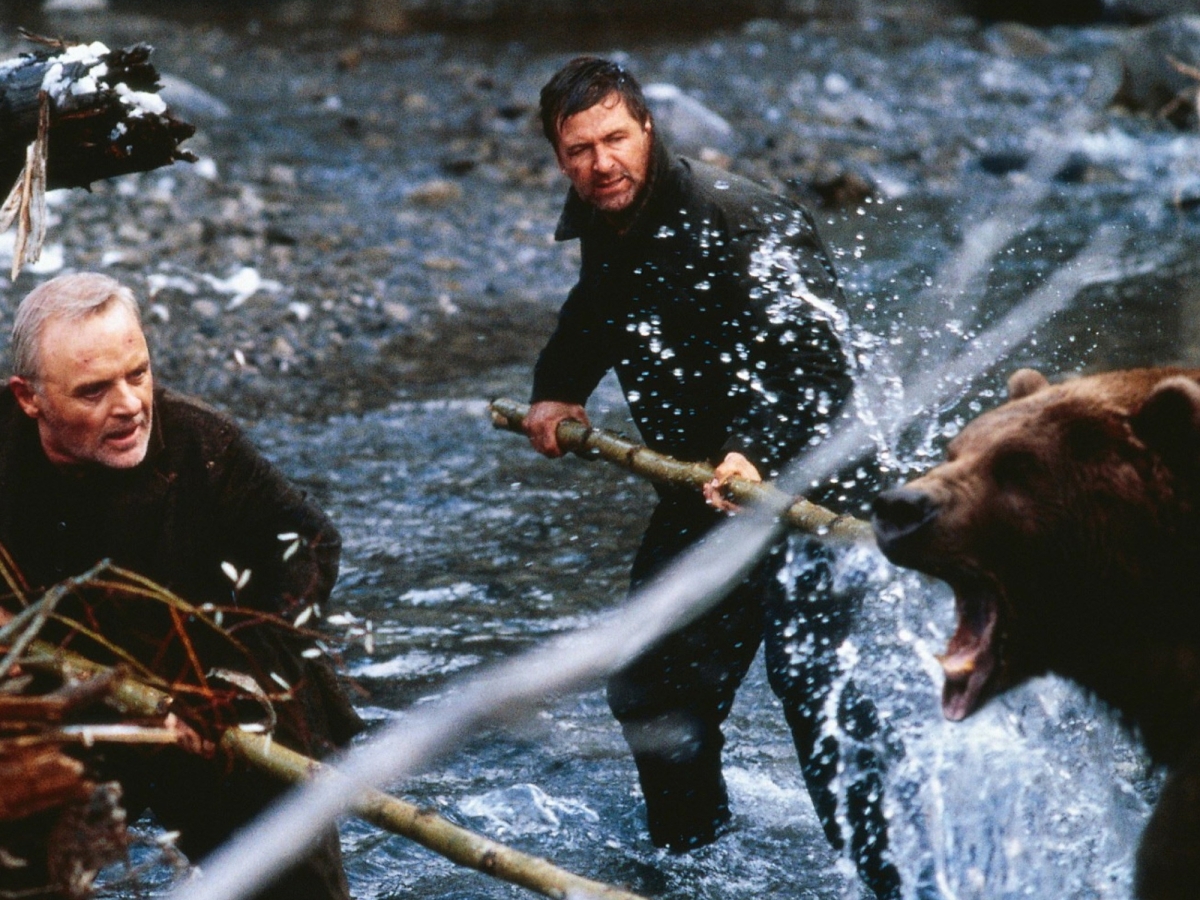
In ‘The Edge’ (1997), this survival film does something else by highlighting two men who have different intentions and different backgrounds. One is a wealthy man named Charles Morse (played by Anthony Hopkins) and the other is a photography presumably who take pictures of models and is very much a person of the city who is not used to nature or wildlife. Bob Green (played by Alec Baldwin) has ulterior motives in mind but comes off as affable and friendly enough in giving Charles a gift for his birthday in the form of a hunting knife. Charles is accompanied by his beautiful wife, a model named Mickey, who Bob takes pictures of as well as Bob’s assistant, Stephen, who is also new to being in wildlife. The small group are joined by a few friends in a cabin in the Canadian wilderness to celebrate Charles’s birthday.

From the beginning of this film, you can tell that Charles is more comfortable with his intellectual pursuits than with his friends. He loves Mickey, his wife, but he understands that he is more interested in books than in people. Charles is particular obsessed with a survival book / guide that he is reading and is fascinated by the natural surroundings that he has brought the group to and the people who hunt there for bears and other wildlife.

Charles’s fondness for nature and of survival are to come in handy later on in the film and is an excellent use of foreshadowing when things go haywire later on. During this birthday celebration, the viewer can also tell that Bob while he is kind to Charles is envious of him, his life, his money, and his wife. He openly flirts with Mickey and kisses her platonically. Charles can sense this animosity and is wary of Bob’s intentions.

Part of the reason why they all have come up to the Canadian wilderness besides Charles’s birthday is to find, interview, and take photographs of a famous Alaskan Indian hunter. During their flight, as Bob and Charles make small talk, Charles blurts out of the blue to him: “How do you plan to kill me?”. Before Bob has a chance to respond, a flock of birds come out of nowhere and strike the plane’s engines and its windshield killing the pilot and causing a downward crash.

The plane crash lands in the lake and all three men (Bob, Charles, and Stephen) are all shook up but survive the crash. The pilot does not but the men quickly realize they may be stranded for a while. Charles, given his survival skills knowledge, takes charge and encourages the other two men not to panic and to learn from him. Using his encyclopedic knowledge from his memory, he is able to make a compass to plot their course forward, make a small fire, and also give them advice about how to proceed.

Charles is not perfect in his survival skills and he almost gets swallowed up by a river rapid that almost carries him away until Bob pulls him out. For most of the film, it is unclear to the viewer how the two men really feel about each other. Their survival and getting out of the wild takes first priority. This becomes even more pressing when they wander into the territory of a giant Kodiak bear who is a real ‘manhunter’ as Charles calls him.

Stephen injures himself while climbing and Bob mistakenly hangs up the blood-soaked clothes of Stephen later on at night around the fire drawing the bear to him. This costly mistake leads to the Kodiak bear tracing their scent and finding them. Instead of burying the clothes, Bob lets them hang above their campsite causing Stephen to be attacked and brutally killed by the bear. Bob and Charles barely escape and realize that if they want to survive this ordeal, they must band together to trick the bear and then kill him.

Food is also a concern for both men as they haven’t eaten anything since they crashed and will starve to death if they don’t kill the bear. This is another instance where Charles comes in handy as he is able to distract the bear while Bob goads the bear into falling into their trap. By working together as a team and using a hidden spear to impale the bear, Bob and Charles are able to kill the bear together even when they both end up wounded from the encounter.

This is a small victory in the long road to survival for both men as they are able to eat well, don bear skins, and even find a cabin where they can get supplies. However, this is not the end of their animosity or wariness of each other. Man’s most fatal enemy is not nature or animals but often his fellow man and that comes into play.

While Charles is a smart and dedicated man to have achieved his wealth and success, he may have been naïve to who Bob is and what his wife Mickey was doing with him. Bob is not a survivalist and relies on Charles to survive but with the bear vanquished and having reached a cabin with some ability to reside there for some time, does Bob need Charles anymore and will his wife Mickey miss him if he didn’t come back?

The viewer has a lot to absorb and while I don’t want to spoil the film’s ending, ‘The Edge’ is not just about survivalism, but the edge of our tolerance of one another or our shared cooperation when a woman or money or prestige comes between people. Both men are not perfect, and they gain more when they cooperate rather than try to kill one another. Bob has the negative traits of hubris, envy, and short-sightedness. He is not able to survive the woods without Charles but wonders how much he truly needs him now that they have conquered the bear. He also covets Bob’s wife and wonders if he could murder Charles and get away with it by making it look like an accident.

Charles is an avid survivalist but may be naïve about the people around him. He also knows that Mickey and Bob and other people may take advantage of him and he may not know if they truly love him for him or if it is for his wealth and influence. While Bob is a personable, fun, and outgoing, Charles is an introvert with a love for knowledge and learning. They are opposite personalities, which is why they clash at times during this film.

While being in a precarious, life-threatening situation can bring the best out of people, it can also bring the worst out of the people, which is why ‘The Edge’ is a great film. Survival films like it do not just focus on the brutal realm of the wilderness where our creature comforts and our money cannot protect us, but they can also focus on man’s cruelty to man as well as our ability to work together too. ‘The Edge’ does a good job of pointing out how we can rise to the occasion when our survival counts on it but also shows us how dark human nature can be when we feel compelled to act out of jealousy, rage, and deceit.

‘The Edge’ is a great and underrated film, which I do highly recommend. The vistas of the Canadian wilderness are brilliant shown through the cinematography. The Kodiak bear, which was played by a real bear, named Bart, does a great job of showing how terrifying and powerful a giant bear can be when it is attacking you. Anthony Hopkins and Alec Baldwin are respectively some of the best actors of their generations and they do a great job of highlighting the unique personalities of their characters. You really believe the scenarios that they could find themselves in having been stranded in the wilderness for weeks. It is a believable kind of film from being able to make a fire, to finding fish in the river, to being attacked by a bear, to climbing and hiking day after day in unknown territory.

‘The Edge’ is overall a very compelling and realistic film. It does a great job of blending elements of ‘man vs. nature’, ‘man vs. animal’, and most importantly ‘man vs. man’, which is an element missing from our survival films. I would be lying if watching ‘The Edge’ didn’t make me want to buy my own survivalist guide to learn about how to survive in the wild for days or weeks. A terrifying plane crash, a boat whose engine doesn’t start, or a car engine that goes dead is enough to make anyone panic.

I believe it is important to prepare like Charles did for that kind of horrible situation and not to panic or dwell with shame. As Charles says at the beginning of the film, “Those who get lost in the woods often die of shame because they were ashamed that it happened to them.” This is an important quote of his to keep in mind. When the chips are down, you have to use your knowledge, resources, and will to survive whatever the circumstances. The best time to start preparing for that kind of occurrence is now.

Movie Recommendations – Volume III

Movie Recommendations – November 2019

MV5BMTcwMzU0OTY3NF5BMl5BanBnXkFtZTYwNzkwNjg2._V1_UX182_CR0,0,182,268_AL_

‘Eastern Promises’ (2007) is an excellent film focusing on the role of a mysterious hitman / bodyguard for the Russian Mafia who is forced to be drawn into a situation which forces him to take drastic measures to hide his true intentions. He must do this while protecting a woman who cares for a baby born out of wedlock whose mother died of a heroin addiction after being forced into prostitution. The man must choose where his loyalties lie as he becomes more and more intertwined with his allegiance to the mafia and his affection for the woman caring for the baby and her family.

The man is Nikolai Luzhin, played by the brilliant Viggo Mortensen, whose Russian accent and tattoos make him as feared as he is believable as a Russian gangster caught in the middle between his obligations to his mafia superiors and those of to the British-Russian midwife, Anna Khitrova, played by the excellent Naomi Watts, who pleads for his help and assurance of safety, when she comes upon the newborn baby of mysterious origins. The film’s title says it all in many ways as both of the main characters struggle to hold on to the ‘Eastern Promises’ they are sworn to uphold either by allegiance or by a simple diary left by a dying woman who fears for the future of her baby.

From beginning to end, the film ‘Eastern Promises’ is unique in its subject matter, its portrayal of the inner workings of the Russian mafia, and for the dramatic storyline that leaves you in suspense until the final scene. There are a few plot twists that make the experience even more enriching along with the brutal and realistic fight scenes that are enthralling. Above all else, Viggo Mortensen gives a thrilling performance for someone who had to exert a lot of effort to play a Russian gangster with the tattoos and the accent to show for it. I highly recommend this film.


download

‘Ad Astra’ (2019) was an underwhelming box office hit but it was critically acclaimed for a number of good reasons. There are a lot of well-done special effects, heavy themes, and good acting performances especially by the legendary Donald Sutherland and Tommy Lee Jones. While it has not gotten much press, I find it to be on par with other great science fiction movies about space that have come out in the past decade including Gravity, Interstellar, and The Martian.

 ‘Ad Astra’ is unique compared to those other films in terms of its plot line and its themes. Roy McBride (played by Brad Pitt) is a decorated and distinguished major in the U.S. Space Command, who is emotionally detached yet very good at what he does regarding being an astronaut. He has both fame and notoriety as the son of Clifford McBride (Tommy Lee Jones), who has been gone by Earth for 16 years and last heard from near Neptune from the last transmission. While he does not have a close relationship with his father, a new threat emerging from that part of the Solar System may be related to ‘Project Lima’ that his father captained. Roy is looking for answers and that is why he enlists to find his father, help save the Earth from these electrical surges, and even discover if we are in fact alone in the universe or not.

Without spoiling too much, this film ‘Ad Astra’ does a good job of showing the likely outcome of interstellar space travel to how Moon bases would shape up to be and how Mars would be used for research purposes among other missions. It also shows the dark side of human nature with rogue scavengers carrying out attacks, overt commercialization coming from Earth-based companies to turn the Moon into a shopping mall / food court, as well as the desire to leave Earth to colonize other planets when the one planet we have has all we need in terms of family, nature, and our search for meaning.

Roy’s character transformation throughout the film is the best part of the movie and he is a reliable narrator to show how space travel may change the course of humanity, but it does not change human nature. At the end of the film, you may be asking, why should we be asking if there is life on other planets when we should be valuing the life, we have here on Planet Earth?


MV5BNGVjNWI4ZGUtNzE0MS00YTJmLWE0ZDctN2ZiYTk2YmI3NTYyXkEyXkFqcGdeQXVyMTkxNjUyNQ@@._V1_

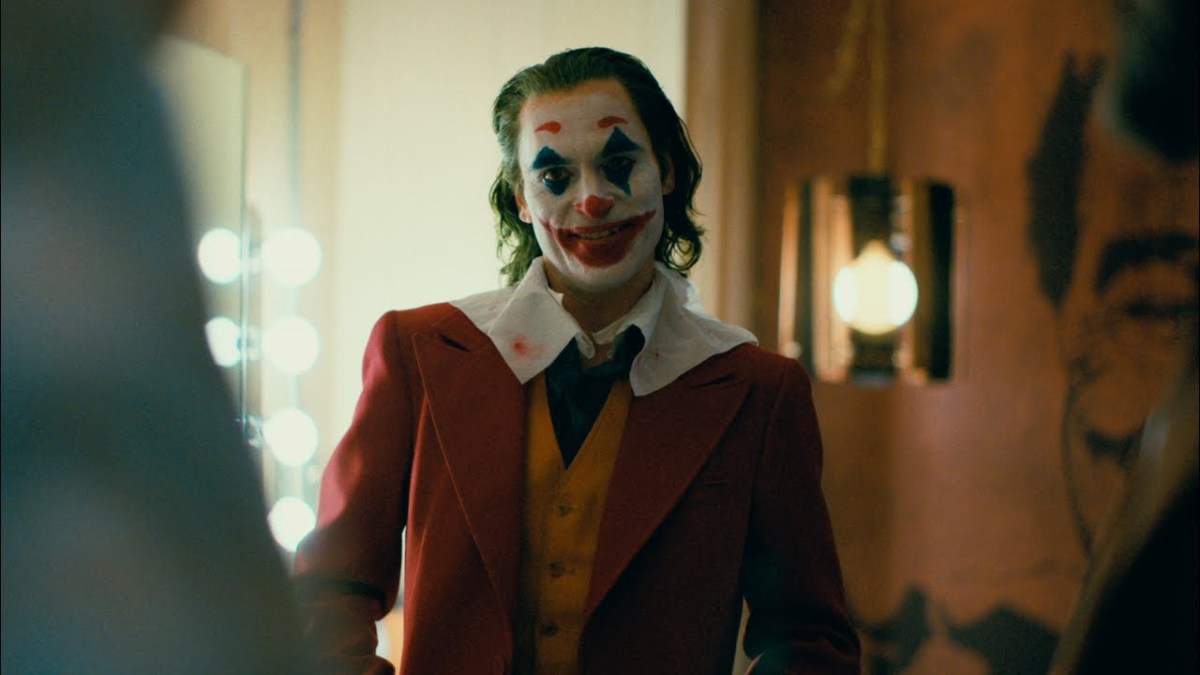
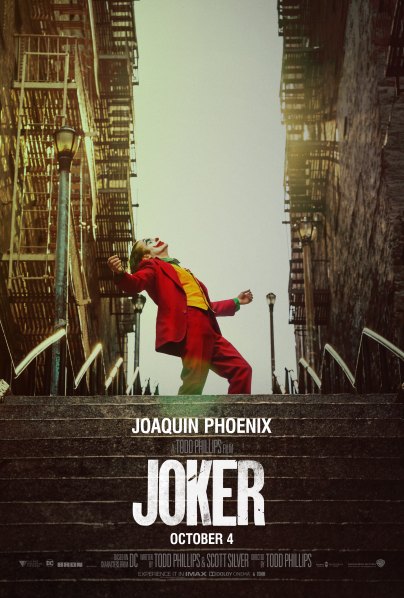
‘Joker’ (2019). What more can I say about a film that has garnered extensive media coverage, been on the subject of many debates, and been both acclaimed and scrutinized for many different reasons? All there is left to say is that one should see it for themselves and cast their own judgment. Overall, the film is a remarkable tour de force with excellent acting, cinematography, and direction along with a brilliant and moving soundtrack. Joaquin Phoenix is a shoo-in for winning Best Actor at next year’s Academy Awards and definitely deserves it. Any actor who can lose 60 pounds (32 kilograms) for a role, develop an insidious laugh, and show a huge range of emotions in all of one scene deserves huge praise and recognition.

I highly recommend seeing the film because it is more than just a movie about the world’s most famous fictional super villain. There are weighty themes that every audience member should think about such as the role of a society in producing a murderer and how we treat mental illness or the lack thereof. It is also about the gap between the rich and the poor as well as how we tend to live separate lives from each other based on our social status, which could lead to inevitable protests and unrest.

The film, in my opinion, does not condone the actions of Arthur Fleck or Joker (Joaquin Phoenix) but it holds a mirror up to the society that makes a man turn to madness and murder in that the very spot-on assumption that we too play a role in creating a monster like that. When certain people, especially the mentally ill, fall through the cracks, bad things can happen, and it is important to serve those people to get the help and care they need.

I think the main lesson of the film can also be that it is important to always do your best to treat others with kindness and respect because you do not know what is going on in their lives. While the ‘Joker’ is a monster and commits heinous acts worthy of severe punishment, this origin story shines a light on a society that fosters a man like him to turn to crime and murder to feel meaning and purpose. While ‘Joker’ is the one who pulls the trigger, it’s clear that had he gotten the help and support he needs as ‘Arthur Fleck’, there would be no ‘Joker’ to begin with.

‘Limitless’ – Film Review and Analysis

What if there was a special pill out there that you could take once a day that would suddenly allow you to tap into all your brain’s potential? What if you were able to recall everything you had ever learned, every language you had ever studied, and every fight move you ever watched? How would your life change if you able to fully actualize your abilities to your full potential, both physically and mentally? Now, you may think of these as silly questions but Limitless as a film does so in an entertaining and thought-provoking manner.

Instead of working hard, taking risks, and pushing ourselves to be better people, Limitless proposes a fictional scenario where a special pill, taken just once a day, can make all the difference. You don’t have to do any heavy lifting as the pill you take while unlock all your hidden potential allowing you to be free to pursue your dreams and goals. Sounds too good to be true, doesn’t it? Well, Limitless lets the audience decides if this illustrious pill is worth the risk involved and whether you would even truly need a pill to become the best version of yourself.

Released in 2011 by Director Neil Burger, Limitless is a mixture of genres blending together to be quite a unique concoction including science fiction, drama, and even some action. The star actor in the film, Bradley Cooper, plays Eddie Morra, who is a struggling author living in New York City who is going through a serious case of writer’s block. Eddie is your typical Average Joe kind of character struggling to make his dreams and goals a reality. The viewer of the film is meant to feel a bit bad for Eddie’s situation since he seems to be doing his best to become a successful author.

However, from Eddie’s unkempt appearance including shaggy hair and heavy bags under his eyes, one’s sympathy for Eddie is undermined by the fact that he can’t even take care of himself physically let alone his apartment, which is a mess filled with strewn about clothes and dirty dishes. The main problem that we learn about Eddie is that he is a well-meaning guy, but he looks for shortcuts and is undisciplined to the point where he is behind on rent payments and his girlfriend is about to leave him.

Instead of changing his ways internally by looking at ways to make himself have more self-discipline and willpower, he instead looks for a shortcut to get himself out of his career, relationship, and financial woes. Eddie runs into Vernon, the brother of his ex-wife, who deals him a strange, new nootropic drug named NZT-48, which Vernon says will help Eddie unlock his brain’s capacity at 100%. Eddie is skeptical at first until he takes one pill and realizes that it is not just a joke and that he is now able to remember everything through enhanced memory and is able to write for hours without losing his concentration. He can also clean his messy apartment, befriend the landlord’s wife, and start to get his life in order.

Because of what this one pill did for him, Eddie goes back to Vernon for more NZT to keep his peak mental capacity going. Horrifically, he discovers Vernon murdered by people also looking for the NZT as well. Eddie is able to find Vernon’s secret stash, which allows him to keep using the nootropic drug to make his life bigger and better. While concerned about what just happened, Eddie becomes addicted to the NZT because of how effortlessly it improves his life and how much more successful he can be without really putting hard work into it.

The old adage of ‘Be careful what you wish for’ is prevalent throughout Limitless as Eddie increasingly puts himself and his girlfriend, Lindy (Abbie Cornish), into greater and greater danger. By needing to use more and more of the drug, Eddie gets addicted to both the potential and the power he gains from enhancing his mental abilities. He become stubborn enough to put himself in harm’s way all to risk it for a chance to becoming a powerful, successful, and wealthy man. Despite being at odds with an finance and investment tycoon, Carl van Loon (played by the legendary Robert De Niro), and being chased around New York City by loan sharks affiliated with the Russian mafia, Eddie’s life is doing a complete 360.

Because of the NZT, he has no shyness or doubts in his interpersonal skills. He gets Lindy, his girlfriend back into his life, he picks up multiple foreign languages including Italian and Mandarin Chinese, and he is able to build up his body through working out and martial arts. In addition, he can concentrate for hours on end and remembers everything he’s ever read, seen, or heard making him a mathematics whiz and an investment genius overnight.

The accumulation of wealth, power, and status can take a lifetime for some people with most never achieving the level that Eddie does in the film. NZT allows him to do it overnight but at a seemingly great risk to his health and survival. The NZT pill is wanted by van Loon and the Russian mafia with Eddie standing in their way. The climax of the film focuses on whether he will be able to use the pill and its abilities to outsmart those around him who would take it from him and leave him to die.

Eddie Mora is a flawed character who is seduced by a powerful nootropic that slowly but surely takes over his life. Actions have consequences and Eddie started mixing with the wrong people. Due to his frustrations with his life and not wanting to suffer to reach his goals, you could argue that he took the easy way out and it could cost him dearly. Had he persevered with his writing and started to take personal responsibility for where he was in life, perhaps he would have never gone to a drug dealer for the NZT in the first place.

This movie may not be one of the best movies of all-time but it is entertaining and carries a few nuggets regarding how any of us should not look for shortcuts in life when things get hard. Taking the easy way out comes with unintended consequences that may be more severe than we realize even when the payoff is really tempting. Eddie, instead of doubling down on his goals and becoming more disciplined and utilizing greater willpower in order to better his life, took the easy way out because he was not built of strong moral fiber. As a result, Eddie gets mixed in with the wrong people and risks his life for a drug that he can not live without.

Any of us, if we are not careful, can be seduced by quick wins and five-minute solutions when true personal development, both mentally and physically, takes years and even decades to get to a high level. While luck can help us along the way to shorten the road to success, it is perseverance, willpower, and the right mindset that can take us further in the long run.

You don’t need any kind of pill to produce a novel (strong shots of espresso maybe), to learn multiple languages, or to get into great physical shape. What’s holding you back are your excuses and your lack of action. With consistent effort and hard work, the goals that Eddie achieves because of NZT in this film can be achieved by the average person without needing what he needed. First, you need to believe in yourself and then you need to write down your goals and come with a plan of action to become successful. As mentioned earlier, true progress in personal development does not happen overnight but can take months and even years. With sustained effort and hard work, you’ll reach your goals and you’ll do it in the right way.

While far from a perfect film, Limitless is entertaining and thought-provoking regarding human nature and what the average person will do to change their lives by taking the easy way out. The story of ‘Limitless’ is a referendum on hoping for a magic pill to solve your problems rather than working through them by your own grit, sweat, and toughness.

The character of Eddie Morra fell to his own short-sighted belief in wanting success by any means necessary but I hope you, if you watch this film realize that it’s far more satisfying to achieve your dreams and your goals through your own hard work rather than looking for an easy fix in the form of a magic solution peddled by others, which may not work or get you into trouble.

I do want to recommend Limitless for the impressive visuals, the acting by Bradley Cooper and Robert De Niro, and the important life lessons that it imparts on the audience by the time the final credits of the film begin to roll.

‘Good Will Hunting’ – Film Review and Analysis

What happens when you bring together two of the best actors of the modern age who meet at just the right time in their careers? The short answer is that you get some old-fashioned movie making magic. Both men have made their mark on Hollywood and this film that they carry together is one of the reasons for that happening. While a generation sets them apart, their commitment to the craft of acting shines through in this classic film that takes place in the city of Boston where I currently reside titled ‘Good Will Hunting.’

‘Good Will Hunting’, released in 1997, over twenty years ago is a film that I have gone back to again and again throughout the years since I grew up with it in a way. As I have gotten older, the themes of the film stick with me more and more. This film is a timeless piece that a lot of people, especially young men, can relate to. While it’s not a blockbuster and isn’t a mainstream favorite, it carries deep messages regarding relationships, dealing with the future, and learning to love and trust other people.

The two actors that I was referring to earlier are Robin Williams and Matt Damon. Both men are known for their more popular roles in movies like ‘Mrs. Doubtfire’ and ‘Good Morning, Vietnam for Mr. Williams and ‘The Bourne Trilogy’ movies and ‘The Departed’ for Mr. Damon. Unlike those other movies, I believe that this movie really shows off the talent of these two men and how they’re able to push each other in emotionally trying roles. On top of those two performances, Gus Van Sant is an excellent director who does a great job of filming this movie set in late 1990s Boston.

As if that weren’t enough, you have a great cast of supporting actors including Ben Affleck, Minnie Driver (has she been in any major movies since?), Stellan Skarsgard, and Casey Affleck of Manchester-by-the-Sea fame who really add depth and substance to this movie. These character-driven movies such as ‘Good Will Hunting’ are usually the hardest to make but if done right, they really stay with the viewer long after the film is over. They really capture different moods, emotions, and feelings and this one in particular captures the struggles inherent in being a brilliant mind in a troubled world.

The title of this film ‘Good Will Hunting’ is based off the name of its main character, Will Hunting (played by Matt Damon) a 20-year old, born and raised in South Boston. You would think from this description that he’s just a regular guy but Mr. Hunting was born with the innate gift of having genius level intellect. He has few possessions except for hundreds of books from Foucault to Shakespeare. He’s an avid book reader but has a specialty in solving advanced mathematical equations that few others in the world can figure out. You would think that this college-aged guy would be working on advanced mathematics at MIT or CalTech but he’s not an enrolled student there or anywhere for that matter.

Will Hunting has had a rough upbringing in that his parents abandoned him when he was a baby and he grew up in foster homes where his foster father abused him physically multiple times. Abandoned by those people who were supposed to love and cherish him, Will, for good reason has a fear of abandonment and does not trust other people. His social interactions are limited because of the abusive childhood he endured but he is happy with his group of three friends: Billy, Morgan, and his best friend Chuckie. While Will does not have many friends, he would do anything for his three neighborhood buddies who he grew up with and he literally considers them to be his family.

While Will’s friends are loyal, they are not the best influence on him and they can be crass, crude, and spend too much time drinking. The group’s antics lead Will into a fight against some neighborhood miscreants, which draws the attention of the local police. Will, acting out his aggression violently, ends up assaulting a police officer causing him to do mandatory community service and therapy sessions. Will, a janitor at the Massachusetts Institute of Technology, works after hours to help clean the bathrooms and empty the waste paper baskets. Unbeknownst to both students and professors alike, Will in his spare time has been going around solving advanced Math equations that the regular MIT graduate students can’t even begin to conceive a solution for. One night, Will is caught in the act as he gets caught doing an extremely difficult problem that no one else has solved yet. Professor Lambeau of the Mathematics department discovers Will solving this problem and calls after him to no avail but with a four-letter crude response from Mr. Hunting.

Professor Lambeau does Will a huge favor and gets him out of some serious jail time for assaulting the police officer. In exchange for his favor, Will has to sit and work with Professor Lambeau on advanced mathematics in a mutual exchange. Professor Lambeau is fascinated by Will’s brilliance but it appears to the audience that he cares more just about Will’s brain than who he is as a person. Professor Lambeau tries to get Will to open up to different psychiatrists but Will messes with all of them and doesn’t take his therapy sessions seriously. Lambeau, out of options, goes to an old friend from his college days at MIT, Sean Maguire (played by Robin Williams), who now teaches psychology at Bunker Hill Community College and is also a licensed therapist.

Despite a few sessions where Will is argumentative and closed off, Sean is able to break down Will’s defensive mechanisms partly by talking about his own rough upbringing. Sean was beat by his alcoholic father while he was a child. In an effort to protect his mother and little brother, Sean would endure the brunt of his father’s anger and vitriol. The two men bond over the fact that they have a high intellect, have both grown up in Boston, share a love of the Red Sox, have had rough upbringings, and can be a bit closed off from their loved ones.

Will is going through a transition period in his young life where he is starting to think about a future beyond just getting drunk with his buddies and hiding his talents from the world. He is also trying his best to form healthy relationships with not only his friends but in his love life too. Instead of endlessly pursuing casual one-night stands, Will finds a girl one night at a Harvard bar whom peaks his interest named Skylar (played by Minnie Driver). Despite them coming from very different family backgrounds as well as her being born into wealth, they share a love for learning and have the same sense of humor. Most important to Will in all of this courting is that she likes his friends and that means a lot to him since they have essentially been his family his whole life.

The problem that Will struggles with in terms of his relationships whether its romantic with Skylar or personal with Sean is that he can’t open up to them about his being abused as a child due to a mixture of shame, guilt, and anger. He turns his emotional pain outward and directs that anger at society, the past therapists, Professor Lambeau, and even at Will and Skylar. Will is self-conscious about his genius and is not sure he wants to have a prestigious office job or even to leave his home city of Boston. He says to his best friend, Chuckie, at one point that he doesn’t “feel like doing long division in a room for the rest of my life.”

However, what Will realizes is that he’s not the center of the world. With the help of Sean and Skylar, he learns eventually that while his life has been tragic, that should not prevent him from reaching his true potential and that he is literally “bound by nothing.” He’s a genius of great intellectual capacity who can change the world in a number of ways. Will has a great gift that a lot of people would kill to have including his best friend, Chuckie. As Chuckie puts to Will bluntly towards the end of the movie, “You’re sitting on a winning lottery ticket and you’re too chicken to cash in on it.” Chuckie tells Will that he’ll essentially be working construction until he retires which is fine because he doesn’t have Will has and that Will owes it not only to himself but to him and his other buddies to do more with his life.

Sean also is the father figure that Will never had and is able to give him tough life. Sean was also abused as a child and knows where Will is coming from. However, he has to learn how to put the past behind him and to not blame himself for what had happened because it simply wasn’t his fault. Will was an innocent child and can’t be blamed for such a horrific event. Will has to learn again how to be emotionally open and vulnerable with the people who care about him like Sean and Skylar. Will had lost the inability to love and be loved but it’s never too late to get that back.

The mentorship of Sean throughout the film helps to bring Will around and the time they share together in the therapy sessions make them true friends. Sean is able to tell Will that he is not so special in the fact that his life has been extraordinarily difficult. Sean, himself, fought in the Vietnam War as a young man and had his best friend there die in his arms. He also lost his wife, the one true love of his to a long battle with cancer years ago and hasn’t been able to become romantically involved with anyone since then. However, he implores Will to also see the beauty in life such as in the form of a woman who can ‘level you with her eyes’ and be your own angel.

There are also the wonders of the world that Will can experience such as how it smells in the Sistine Chapel in Italy.    Will may be an intellectual genius but he still has a lot to learn about the beauty and ugliness of life. Sean’s experiences help to enlighten Will about what life is all about and how to persevere through the struggles and setbacks that are inevitable. Both men have their inner demons to battle but they encourage each other to become better, to strive for more, and to live good lives. With Will’s urging, Sean is also ready to put his tragic past behind him to begin anew. He sets out to travel the world, meet a special someone like Will has with Skylar, and truly live life again.

The positive mentorship between Will and Sean is a beautiful thing to see develop over the course of the film. To see true friendship between the two and the chemistry that Damon and Williams have in their scenes together makes ‘Good Will Hunting’ a really special movie. Similar to ‘Lost In Translation’, it’s also nice to see a true romance between Will and Skylar develop as well that starts out very inconspicuously. It’s a young, innocent kind of love that is beautiful to watch and it’s both real and raw to see with how much they truly care for each other and want to best for one another. One of the best lines in the film that Will and Sean both use for courting the special women in their lives is “Sorry, I had to go see about a girl.” Is there anything in modern cinema that can compare to this phrase so simple yet so full of meaning? I don’t think so.

Book Recommendations – Volume VII

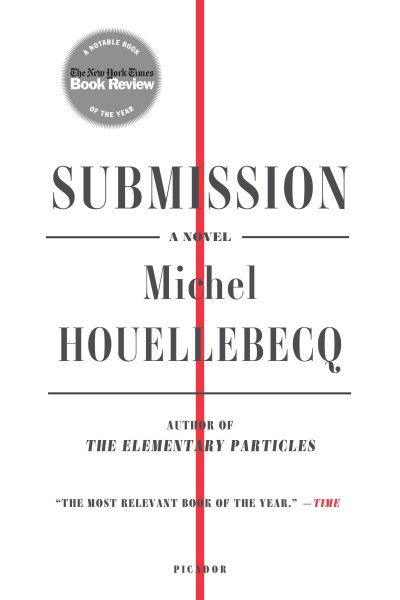
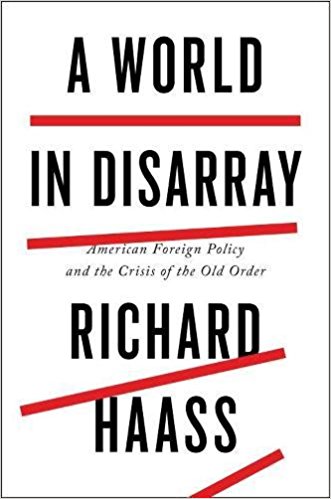
Over the past couple of months, I’ve been lucky enough to do some good reading. Each of these three books are enjoyable, interesting and which hold different lessons about the state of the world and humanity at large. These three books come highly recommended from myself and are well worth the time invested to read them. If you are looking for a few books to read, as spring becomes summer, below you will see the 7th edition of my book recommendations which highlights Submission by Michel Houellebecq, Sapiens: A Brief History of Humankind by Yuval Noah Harari, and A World in Disarray by Richard Haass.

71qwSzqHLcL

1.) Submission by Michel Houellebecq is an enjoyable and humorous take on French politics in the 21st The French author is known for his edgy content and his nihilistic take on modern life. Houellebecq is not known for writing about satire and for those who are a fan of his works, this novel was a sharp turn away from the other topics that he usually focuses on. Personally, I haven’t read the other novels associated with this writer but I really enjoyed this satirical look at French politics.

The premise of the novel is that there is a new political crisis in France. In order to stave off a win in the 2022 French presidential elections from Marine Le Pen’s National Front party, the Socialist party and the center-right Union for a Popular Movement party are forced to align with a newly formed Muslim Brotherhood party led by its charismatic leader, Mohammed Ben-Abbes in order to achieve victory as a coalition. The main character, Francois, is a middle-aged Literature professor at the Sorbonne is going through his own mid-life crisis. While he enjoys teaching at the university and cavorting physically with some of his students, he struggles to find meaning in his life and is distraught at the loss of both of his parents. This is on top of the fact that the rise of the Muslim Brotherhood party will affect his ability to keep his full pension and be able to keep his job.                                                                                                                       

On top of the probability of losing his teaching job at the Sorbonne as well as the fleeing of his steady Jewish girlfriend, Myriam, who leaves France for Israel in the face of rising anti-Semitism, Francois contemplates suicide but decides instead to seek refuge in a monastery in the town of Martel. Ironically, Francois, after going through a self-imposed exile for a few weeks, comes to realize that the world didn’t end when the Muslim Brotherhood party takes power. Instead of fighting the changes going on at the Sorbonne, Francois is intrigued by the fact that if he converts or ‘submits’ to Islam, he will be able to still find a prestigious job, keep his lucrative pension, and be able to have a few wives chosen for him since polygamy had become legal in France. The main character, Francois, is a spectator to the changing political landscape rather than an active player.

While this book is known for being controversial, I find it to be full of slapstick humor in making fun of the main character’s overly dramatic take on life. Francois is a mere spectator whose desire for alcohol, food, and sex overrides any core convictions that he may have politically. Mainly, Houellebecq is making fun of French intellectuals who can’t be bothered to invest in them beyond their own hedonistic desires.

His take on the political situation in France is an obvious dramatization and I don’t believe that he was looking to ruffle any feathers. The rise of an Islamic nationalist party in France in 2022 would be completely unrealistic which is what the author was making clear in focusing on the political satire associated with that idea. Overall, it is a witty, entertaining novel, which tells us more about human nature than it does about the precarious state of French politics in the 21st century.

51zJS6PmxbL._SX333_BO1,204,203,200_

2.) Sapiens: A Brief History of Humankind by Yuval Noah Harari is one of the best books I have ever read. In all likelihood, this is the kind of book that you can come back to multiple times and still enjoy it. This is not your average history book in that it focuses more on the big ideas and developments associated with each era of human history rather than diving into the endless details and events related to each period. Instead of a 4,000 page behemoth focused on human history, Harari does a great job in condensing the how and why of Homo sapiens into only 400+ pages.

While I was reading this book, it didn’t feel laborious at all and was a real page-turner. Harari’s main argument in the book is that the homo sapien (the modern human) were able to dominate the Earth because of our ability to cooperate and share with each other in large numbers. The downfall of pre-homo sapiens such as the Neanderthals along with various other extinct animals and plants was the result of the Cognitive Revolution, which occurred at around 70,000 BCE.

The exciting developments related to the establishment of shared human myths and imaginary mainstays such as money, religions, human rights, nation-states, etc. directly tied to Homo Sapien culture put sapiens on the path to long-term survival and flourishing. Harari convincingly argues that the history of humanity can be broken down into four parts: the Cognitive Revolution (the development of imagination), the Agricultural Revolution (the formation of collective societies), the Unification of humankind (the rise of empires and nations), along with the Scientific Revolution (the emergence of scientific knowledge) which is the stage where sapiens currently find ourselves in.

Harari believes that the rise of Homo sapiens as a species has had significant consequences on the planet we all inhabit as well as the harsh treatment of animals that has resulted from being at the top of the food chain. Also, while the Agricultural revolution led to the creation of large human societies and eventually sprawling empires, the shift from hunter gathering to farming caused the human diet and lifestyle to suffer as a direct result. Human beings after agriculture became less self-reliant and had to rely on a king, an emperor, or the state itself to provide food, water, and other necessities. Out of all of the developments in human history, the rise of agriculture was a fundamental shift in our thinking, which still affects us in the modern society we all inhabit today.

Overall, Sapiens is an excellent, informative, and timely read that I would recommend to anyone. It’s an easy book to pick up and a hard one to put down. I am currently reading another book of his, which is the sequel to Sapiens, this book and the one that follows it just shows how good of an author and intellectual that Mr. Harari is.

51mz0ftqxyL._SX329_BO1,204,203,200_

3.) A World in Disarray: American Foreign Policy and the Crisis of the Old Older by Richard Haass is a refreshing take on the topsy-turvy world of international relations in this current period. Mr. Haass, who is currently the President of the Council on Foreign Relations, has advised previous U.S. presidents and worked as the Director of Policy Planning at the U.S. State Department during the Bush Administration, is an expert on world affairs who has published multiple books and this one in particular could not be timelier.

While the U.S. remains the most powerful country in the world both economically and militarily, it has started to lose ground in terms of its ability to sway world opinion and events due to failures of U.S. foreign policy in the early years of the 21st century. The lack of success in denuclearizing of the Korean peninsula, the rise of Iran as a regional power in the Middle East, and the mixed results of the East Asia ‘pivot’ from the Obama administration have created a worldwide power vacuum. Also, due to the long and costly wars in Iraq and Afghanistan, both U.S. prestige and values were harmed by these adventures in the Middle East. Haass argues correctly that the post-WWII order that the United States and its European allies helped create is fraying due to the failure of its leaders, institutions, and policies to maintain stability across the globe.             

There are real challenges to contend with that the United States won’t be able to solve on its own. The threat of climate change, the challenge of cyber-security, and preventing the spread of nuclear weapons require a unified approach that has been lacking between the U.S. and its European allies. The events of Brexit, the Trump administration’s ‘America First’ isolationist policies, and the great power rivalries going on between Russia, China, and India have thrown the world in disarray. The days where the U.S. could have great influence and sway over events around the world may be drawing to a close. Haass sees that the U.S. is just one of the great global powers and must be willing to cooperate, collaborate with other powers in order to achieve results when the main issues of today are multilateral in nature.

In order for the world to follow America’s lead, Haass aptly understands that we must get our own house in order first. The rising national debt, the ongoing problems with investing in education, infrastructure, and health care prevent the United States from acting as an example to the rest of the world. A dysfunctional political process as well as a President who doesn’t believe in leading the international, post WWII order are preventing the United States from realizing its full potential as a global power.

For anyone who is new to international relations, A World In Disarray, is an excellent take on the history of the international system after World War II and how did we get to this point where the world seems more chaotic and unstable than ever. Mr. Haass understands the limits of American power and that in order to lead on the world stage; the U.S. must undertake reforms to benefit our own citizens at home. In order to solve complex, multilateral issues, the U.S. must value diplomacy and the relationships that we have with our allies. Where the U.S. used to be the only global superpower, after the fall of the Soviet Union, America is just one of the great powers now. In order to solve the multilateral issues of the 21st century, the United States cannot do it alone and we must be willing to use effective diplomacy and other forms of soft power to create peace and prosperity.

‘There Will Be Blood’ – Film Review and Analysis

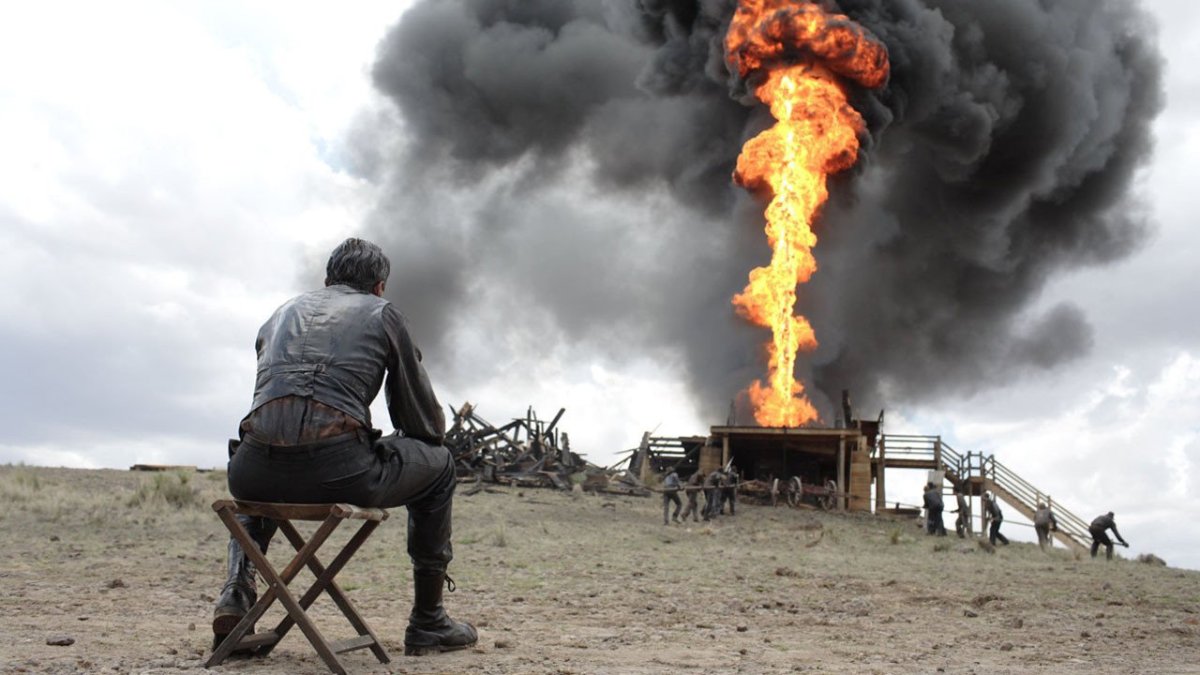
‘There Will Be Blood’ is a masterful, enticing film about how greed, corruption, and arrogance can destroy a man’s soul. Definitely one of the best films of this young 21st century, There Will Be Blood will be remembered for generations to come for its’ acting, cinematography, and direction. There are a number of things that make this film memorable including its’ cast, director, and musical composition.

In addition to all of that, the plot is written well, the characters are intriguing, and themes are still timely when compared to the modern era. While not the most popular film when it was first released, ‘There Will Be Blood’ has become a bit of a cult classic since it came out in 2007, over ten years ago. The film was nominated for eight Academy Awards and won two of them for ‘Best Cinematography’ and ‘Best Actor’ for Daniel Day-Lewis.

Considered the best Actor of his generation, Day-Lewis is a unique talent who can transform him into vastly different performing roles and deliver outstanding and award-winning performances. In addition to winning the Best Actor award for ‘There Will Be Blood’, Day-Lewis also won Academy awards for the films ‘Lincoln’ and ‘My Left Foot’, which were the exact opposite kind of roles to play as an actor.

Daniel Day-Lewis is able to stay in character for months or years on end to totally immerse him in both the story and the lines that he memorizes. It’s a truly impressive accomplishment to win one Academy Award but Day-Lewis was able to win three and is nominated for a 4th award for his most recent role in ‘Phantom Thread.’ Other noteworthy aspects of this film is the directing by Paul Thomas Anderson and the musical score by Jonny Greenwood who both set the tone for this movie’s themes and plot line.

Unbeknownst to most, the film’s screenplay and overall plot was adapted from American novelist Upton Sinclair’s novel Oil! Which focuses on the oil boom in the western United States during the late 19th to early 20th centuries, and the men who made themselves wealthy from the discovery. Instead of covering a topic as deep and complicated about the oil rush over a few decades in a dramatic film, Paul Thomas Anderson chooses a protagonist named Daniel Plainview (played by Daniel Day-Lewis) to be the lens through which the audience witnesses the birth of the lifeblood for the modern American economy.

Anderson’s goals for this film in my opinion were to show how the U.S. and its’ oilmen were not so innocent when it came to the pursuit of wealth. In the quest to reap the profits of the oil boom, there was a lot of backstabbing, double-crossing, and short-shrifting between different competing companies. This film takes a hard look at how the protagonist Daniel Plainview loses his soul in the pursuit of wealth and prestige. In addition, There Will Be Blood is an examination of the push – pull relationship between capitalism and religion and how they are often linked together to pursue their goals.

There Will Be Blood’s setting takes place at the turn of the 20th century. Daniel Plainview, the main protagonist starts out as an ordinary silver miner looking to become wealthy from that pursuit. However, this changes in 1902 when he discovers oil near Los Angeles, California, and decides to create his own drilling company. At the beginning of the film, Daniel can seem to be like any normal prospector of that era and also selfless in the fact that he adopts the son of a fellow co-worker who was killed in an accident. The boy is named H.W. and Daniel seems to care and cherish the child. However, the audience soon finds out that it is not love that Daniel strives to have in his life but rather wealth and influence in the oil industry.

Daniel promotes himself as a ‘family man’ largely in order to curry favor with other businessmen and potential employees of his company. The main antagonist to Daniel is Eli Sunday, a preacher in nearby Little Boston, California, who wishes to get a good sum of money from Plainview in order to build his church. In exchange, Daniel gets access to all of the land under the town in order to build wells to drill for oil where there is a vast amount underneath their feet. Despite the fact that they have an agreement in the exchange of land for money, Daniel betrays the deal and berates Eli for his religious beliefs and the exploitation of his son’s deafness for his own financial gain. It is clear to the audience that both men are out for themselves but need each other in order to acquire wealth or a religious following.

Such as has been the case at times throughout history, religion and capitalism have been intertwined in an unholy marriage leading to disastrous results. Daniel uses Eli in order to get all of the oil wealth from under the town while lying about the amount of money he would give Eli or the town itself to build up their infrastructure. Eli uses Daniel’s money to build his mega-church but exploits H.W.’s misfortune of becoming deaf as a means to accuse Daniel of being a ‘bad father’ and a ‘sinner’ even though the freak accident was out of his control.

If I had to highlight two example scenes for somebody to check out before watching this movie, it would be the ‘I’m an oil man’ speech by Daniel Plainview to the townsfolk of Little Boston. You can see from this speech and from the overall scene that he does not care so much for the people in the town or what he can do to help them. The music combined with his lying through the teeth boasts show that he is not being genuine and is in this pursuit of oil for himself and himself alone.

“I’m an oil man speech”: https://www.youtube.com/watch?v=AHz-zZoBnbc

The other scene to highlight from this film is known as the ‘Fire’ scene, which is a brilliantly shot and executed scene. It’s amazing in its’ portrayal of the discovery of mass amounts of oil under a well indicating that Daniel Plainview is to become a very wealthy man. However, it’s at the same point in this scene where he realizes that his son, H.W. is to become deaf due to an accident near the well. At this scene, you can see Daniel change as a person to become more focused on his future as a ‘oilman’ than one as a ‘family man’ to H.W., his adopted son.

‘There Will Be Blood’ Fire scene: https://www.youtube.com/watch?v=GKJAH-XBNNs&t=240s

Throughout the film’s events, you can see that Daniel does not care about family or religion at all. While he enjoys the company of H.W., he holds over the fact that he is not his biological son and does not want to give him any financial support to strike it out on his own. Daniel has no care for organized religion besides getting permission to gain workers and oil from underneath the town’s feet while contributing the bare minimum to Eli’s church or the rest of the town. As his last name reveals, ‘Plainview’ has a plain view about human nature that is very pessimistic and jaded.

Daniel only cares to get as much out of people as to benefit himself and his company personally. You wonder though by the end of the film what is in it for Daniel besides money and alcohol. He may have become a wildly successful prospector and oilman but what does it all mean if he is left alone and friendless. If you’re going to go into business, why not do it for the benefit of others and not just yourself? However, the view of Daniel Plainview is that life is a zero-sum game and that you can’t trust anybody but yourself.

Eli Sunday, while a pragmatic preacher and someone who seems to care about the townsfolk of which who are part of his church, still does a deal gone south with Daniel Plainview in the pursuit of easy money. Eli is easily bullied by Daniel but still goes around trying to convince him to change his ways and repent as a sinner. While Eli means well and wants the best for the church and his town, he does not go about it in the right way leaving him at the mercy of Plainview.

While Eli Sunday and Daniel Plainview are both excellent at what they do, you have to consider that they are both very flawed human beings. They may have built a popular church to preach in (Sunday) or massive oil wells to enrich themselves (Plainview) but life will still be lacking for them if they have no love and compassion surrounding those achievements. That may be the main message for the person viewing this film. Wealth, notoriety, and personal prestige are not everything in life and that there are other things that you should focus on that really touch your soul as a human being.

“There’s a whole ocean of oil under our feet, and nobody can get at it except for me!” There Will Be Blood is an excellent story about extreme capitalism and religion gone wrong. Both protagonists pursuit of their own selfish goals hurts the other characters in this film. However, what would modern America be like without the preachers and the oilmen? While not as dramatic as this fictional movie, the discovery of oil and the spread of the gospel are intertwined with American history.