The Rolling Stones: A Retrospective

mickjagger
72 years old and still going. Amazing.

For more than 50 years, The Rolling Stones have been the mainstays and stewards of the Rock n’ Roll universe. Founded in 1962, this English band transformed the music world, sold hundreds of millions copies of their albums, and have sold out countless arenas, stadiums, and concert halls. The original grouping of Mick Jagger (vocals), Keith Richards (guitar), Brian Jones (guitar), Bill Wyman (bass), Charlie Watts (drums), and Ian Stewart (piano) together help lead the emergence of Rock n’ Roll as the pre-eminent form of Western music during the 1960’s and 1970’s. Legendary and famous albums such as Let It Bleed (1969), Sticky Fingers (1971), and Exile on Main Street (1972) helped cement their legacy as ranking among the greatest live acts in Rock n’ Roll history.

When people ask me: Beatles or Stones? I simply reply, why do we have to choose between them? Why not appreciate both of these groups and appreciate how similar and how different they are. Both bands helped to represent the countercultural movement that took place in the 1960’s in both the United Kingdom and the United States. They represented the youth of the generation and the hopes for a better, freer, and more open world where you could listen, dance, and have some fun as you listen to their tunes.

While The Beatles aired on the side of creativity, experimenting with new genres, and sticking to the studio to express their musical talents, The Rolling Stones were and still are brash, bold, and loud. As a group, the blues and R&B genres heavily influenced them during their early years. Taking their cues from legends such as Chuck Berry, Lil’ Richard, and Buddy Holly, the Rolling Stones would not become the massive success they have been over the pasty fifty years without those blues pioneers who came before them.

Due to front man Mick Jagger’s exuberance, high energy, and eccentric dance moves, the Rolling Stones also gained a reputation for being an amazing live act that sold out stadiums and arenas around the world. It also helps that long-standing guitar legend Keith Richards has stayed by Jagger’s side all this time to play alongside him and the rest of the band.

With the talented support and musical stylings of the late, great Brian Jones, and Charlie Watts, the Rolling Stones have stuck together through many ups and downs over their long history. While many rock acts from The Beatles to The Eagles to The Doors have broken up due to untimely deaths, heated feuds between members, and egos clashing, The Rolling Stones have been an exception to the rule and have produced high-quality music and toured extensively without losing who they are and what they represent to the world.

While The Rolling Stones have gained all the money and fame, they still care about the fans. This band always gives their best effort regardless if they are playing in Rio de Janeiro or London. It’s a testament to their popularity where they have been able to play in all six continents of the world without skipping a beat. Their global reach was on display recently when they played a huge outdoor concert in their first trip to Havana, Cuba.

Over 500,000 people attended to see the Stones live in the flesh. Perhaps, most notable, the concert was free for all attendees so everyone could attend who wanted to without paying a high price. During the Castro years, bands like The Rolling Stones had their music bootlegged and spread throughout the Cuban isle even when the Castro government officially outlawed it. Mick Jagger declared the occasion to be “A new time” for Cuba signaling that the free expression of live music was going to continue and expand.

Whenever I listen to The Rolling Stones, their songs always lift my spirits up and instantly put me in a good mood. Tunes like “Jumping Jack Flash”, “Wild Horses”, “Start Me Up”, “Brown Sugar”, and “Satisfaction” will never go out of style and hopefully inspire future generations to pick up the guitar and sing into the microphone. Whenever I hear one of their songs, I still get the urge to dance and sing along.

Even though this is a retrospective post for a musical group that is still active and going strong, I think after fifty years of being legends of Rock n’ Roll, it is a good occasion to reflect on their wide-ranging impact on the world. To this day, I regret to inform my readers that I still have to yet to see The Rolling Stones live in concert. My hope is to make it happen before the band calls it quits for good. Given that Mick, Keith, Charlie, and Ronnie show no signs of slowing down even though they’re septuagenarians, I keep my hopes up that I’ll be rocking out to them in a live setting soon enough. Until then, let us all hope that they make it to their 60th anniversary as a band in 2022.


Interconnected

interconnected
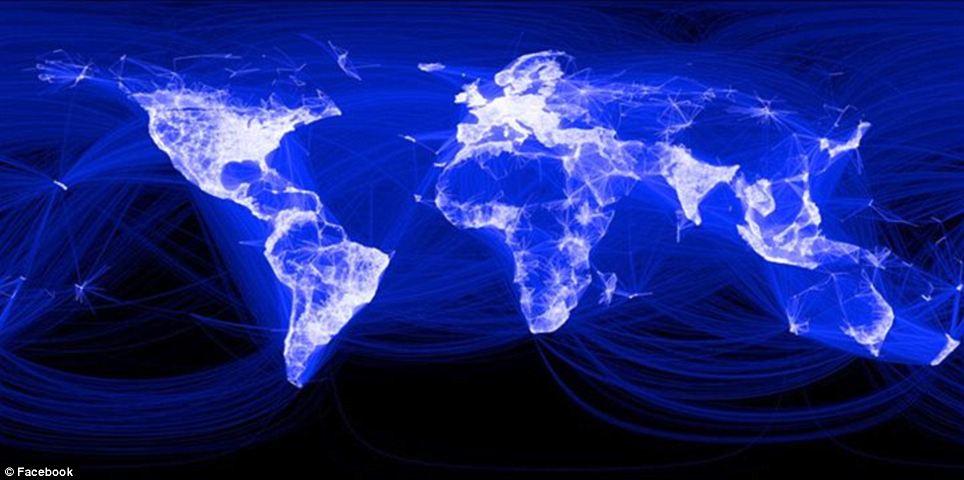
“Will humanity become more or less interconnected during the 21st century?”

When the 21st Century is over and becomes apart of the history books, it will be known as the first truly interconnected, interdependent, and entangled era of human history. Compared to past eras, borders are more open, long-distance travel is common place due to modern aviation, and global commerce is more free than it ever has been. Globalization as a phenomenon has been made possible not just through open borders and advances in aviation but also due to the wonders of the Internet.

While many human beings can not physically cross borders or take modes of transport to other countries, the Internet has helped to minimize that gap of connection by allowing people from around the world to connect virtually at an increasing frequency. As the technology continues to improve and advance, the Internet has made our planet interconnected on a scale once considered unthinkable a generation ago.

I woke up one morning in New York, had my breakfast and juice, and then was able to log-in to Skype and chat with my good friend who is living in Beirut, Lebanon about his work there and how he has adjusted to living in the Mediterranean metropolis. After that, I sat down to have lunch and finished some homework for a 1:30 PM Spanish lesson with my teacher who is originally from Mexico but currently lives in Italy. Somehow, we were able to make the six-hour time difference work between me in New York and her in Italy. Before the day was over, I had two more Skype and Google Hangout based English lessons with my students from countries like Saudi Arabia and South Korea. Satisfied with my day of both teaching and learning, I settled the rest of my affairs and went down to the kitchen to prepare my dinner for the evening.

None of these lessons or exchanges of information would be possible between persons of different countries and backgrounds without the invention of the Internet. Too often, the average person either takes for granted the capabilities that allow us to stay connected on a worldwide scale or doesn’t take advantage of using this technology to bolster their abilities personally or professionally.

Professionally, as an ESL teacher, the fact that I have been able to use the Internet and web applications such as Skype, Google+, etc. to connect with numerous students from around the world virtually has been a real treat for me. Sometimes, my students with whom I’m working with online do not have the means or ability to work with a native English speaker / teacher in person in their own city or country. Those of us language teachers who commit time out of our lives to help others learn our native languages should be commended for making this a possibility. It is truly enjoyable for me to work with those students online from different countries who will share with me interesting tidbits about their cultures and societies.

Personally, I have been able to stay in touch and meet up again with friends of mine from different regions of the world thanks to staying connected through social media websites like Facebook, CouchSurfing, Twitter, etc. The Internet has allowed me to stay connected with international friends, both new and old, thanks to the rise of social media and its applications. It is funny to think that only fifty to hundred years ago, or even before the advent of the Internet, twenty years ago, the best that you could do is send a handwritten letter by mail or make an expensive call to any location overseas. Now, such communication to an international location is often very cheap or even free of charge depending on which application you decide to use.

While the advent of globalization has its positives and negatives, which are often debated and discussed endlessly, I believe that one net positive from globalization has been how the Internet and the “world wide web” has made humanity interconnected. This one trend of “Interconnectedness” for the 21st century is one that isn’t going to reverse course anytime soon and is going to be hard pressed to find itself limited in total amount of users or overall global popularity.

According to the World Bank’s recent report titled “World Development Report 2016: Digital Dividends”, the number of people worldwide who have access to the Internet has tripled from about 1 billion people in 2006 to about 3.5 billion people in 2016. This recent development is an extraordinary occurrence. This means that over 40% of humanity now has some type of access to the Internet which has become increasingly possible due to rise of mobile technology and the spread of 3G and 4G cellular networks.

As more and more people connect to digital markets of e-commerce, become new entrepreneurs and start to create their own small businesses, this will also allow more students to connect and learn with me here in New York and other teachers around the world to learn English or another foreign language. The possibilities of eventually having everyone connected to the Internet would be truly endless. It could lift millions more people out of poverty and create new economic opportunities where there were none before.

Some of the big questions to be answered in the coming decades is how do we as a global community work together to connect the remaining 60% of humanity to the Internet? How do we work together as governments, NGOs, and individuals to give people the means virtually to benefit economically and personally from the advent of the Internet? These are not easy questions to answer let alone solve. However, if humanity is to continue advancing and developing into the future, we must continue to become more interconnected to each other. That is a fundamental truth of the 21st century for which we all must be aware of.

Sources:

1.)  http://www.theguardian.com/technology/2016/jan/13/internet-not-conquered-digital-divide-rich-poor-world-bank-report

2.) http://www.worldbank.org/en/publication/wdr2016

A Wealth of Knowledge

knowledge-translation-and-exchange1
“The sharing and exchange of knowledge is easier now than it has ever been in human history.”

There has been no other time in human history than in today’s era where the average person with access to the Internet can seemingly have unlimited amounts of information available to him or her. When you truly think about the magnitude of it, untold amounts of data are being created every day. According to IBM, “The current estimate is 2.5 quintillion bytes of data per day and over 90% of the data in the world today has been created in the past two years alone.”

A common response nowadays from both family and friends when I ask a question to them about a random query is not a straight-forward answer but rather an off-handed suggestion to “Google it.” Living in this era of ‘Big Data’ can be quite overwhelming to the average person but one could also look into it as an opportunity to gain knowledge and further ones’ understanding on a limitless amount of subjects with the simple click of a mouse. The Internet is an amalgamation of thousands of libraries of Alexandria at the beck and call of one’s fingertips.

Compared to past ages when information and knowledge was more exclusive and harder to come by, today’s era allows everyone with an Internet connection to search and find information to their heart’s content. Instead of going to a library to find what you need on a subject, websites like Google, Wikipedia, and other online encyclopedias have largely replaced the main role of the physical library. I remember when I was younger and in my high school days having to seek out certain books in order to write a research paper or complete a book report.

However, now more than ever, you can easily find the sources of information you need online in order to facilitate your research and evidence. While I love libraries and hope that they never go out of style, the reality is that online encyclopedias and eBooks are largely replacing their original purpose. In order for libraries to stay relevant, they need to start incorporating computers, free Wi-Fi, and technical classes in order to remain useful.

From the 18th to the 20th centuries, universities and colleges across America were the standard bearers and purveyors of higher education. Originally for the elite, wealthy, and well connected, those students who were able to get accepted and afford undergraduate and graduate studies believed that they would have an advantage in the job market and in achieving the American Dream. More recently, as colleges and universities have become more inclusive than exclusive, tuition prices have inversely risen as well.

While higher education has become accessible to more and more young Americans, it also has become more expensive especially over the past decade. These events have led to an ongoing debate as to whether college is really worth the price tag and whether the average student gains anything from earning a four-year degree. With student loan debt at an all-time high of $1.3 trillion in 2015 in the United States and tuition rates at both public and private universities continuing to rise, people are beginning to look for alternatives to the current higher education system.

Over the past decade, there has been a drastic proliferation of massive open online courses (MOOCs) provided by both private companies and traditional universities. At a much lower price and sometimes free, people from all over the world can sign-up for these courses and partake in lectures, tests, quizzes, and papers as if they were actual enrolled undergraduate and graduate students at the physical form of the university. As the credentials and certifications bestowed upon these courses continue to increase and become more widely accepted, we may begin to see ‘the end of college’ as we know it.

Examples like Khan Academy, edX, Coursera, Udacity, etc. and other MOOCs have leveled the playing field. Tech entrepreneurs from Silicon Valley have allowed students from all over the world to access unlimited online courses to further their academic knowledge at a lower price. With the subsequent rise in online university programs for undergraduates and graduates, the physical college experience of dormitories, lecture halls, football stadiums, etc. may become less appealing to students as tuition prices continue to increase. While the social and networking benefits of college life are numerous, they may not be enough to compete with this era of free information that we are living in.

Compared to past decades, we’re living in a time when access to the Internet is at an all-time high and is increasingly rapidly due to the rise of mobile technology. Traditional havens of knowledge such as the library or the public university will have to adapt to stay relevant in this unlimited information age. In a worldwide job market that is evolving rapidly and where the average child today will work in an industry not yet created, the free exchange of knowledge must continue to spread through the worldwide web.

Countless others and I have benefited from taking online coding courses on ‘Codeacademy’ to learning new languages on ‘Duolingo.’ As MOOCs and online universities continue to develop their courses and credentials, we may begin to see an era where the average person can earn a degree or two without breaking the bank. MOOCs are cheaper, less time intensive, and can adapt more easily to the rapidly changing employment market.

A well-educated population is now more possible now than ever with the wealth of knowledge and information that is available. That fact is evident but it also is up to the individual to be willing to search for that information and actually apply it. Instead of getting frustrated with people asking me to ‘Google’ the answer, I find that it’s worth the hassle because it’s often true that I will find the answers I’m looking for and in greater detail than if I were to ask a friend or family member for a quick description. That’s the power of the Internet. That’s the wealth of knowledge that we are able to take advantage of.

Sources

Sites Mentioned

The Conundrum of Choice

Life can be a lot like a cereal aisle sometimes. Too many choices, and not enough time.

No other mental task can be so challenging and exhausting yet invigorating as making a choice. The concept of “Choice” is a behavioral process that we each undergo hundreds of times each day and they can either be the most routine, mundane of decisions to be made or those that are very rare and of great importance. These choices that we make can either have the most immediate or long-term impacts on our lives.

I tend to sometimes naively overlook how important choice is in determining one’s destiny or fate in life. As human beings, we make so many choices each day that it’s difficult to discern from what’s valuable to what really doesn’t matter in the grander scheme of things. This also plays into one’s individual perception of what is and what isn’t important in life, which is a long debate that should be left for another thinker. I was walking through the local grocery store going through the vast, tall aisles and felt completely overwhelmed.

Who knew that choosing cereal these days could come with so many options to choose from? I was completely flummoxed at first and ended up just placing a random cereal in my cart out of frustration and bewilderment. This is an example of a choice that really is quite basic when you think of it but may have had it’s importance overstated since there are now more choices than ever.

Clearly, most people in this world today do not have access to these many choices as we do here in the United States and other developed countries but it makes you think that we should be lucky for all the choosing we get to do on a daily basis. We should not take for granted in our society how many choices we do have and how many decisions we can make as independent people who have the freedom to make these kinds of decisions.

 Many people living in the world today have very limited options and are unable to make choices because they are not allowed to or do not have the option to. Next time, you’re meandering in the cereal aisle for perhaps a bit longer than you should, think about the weight of this choice and whether or not it is worth the time or the effort because there are many other choices to be made throughout the day and they may be a bit more important than “Fruity Pebbles or Cheerio’s?”

Smartphones: Man’s New Best Friend?

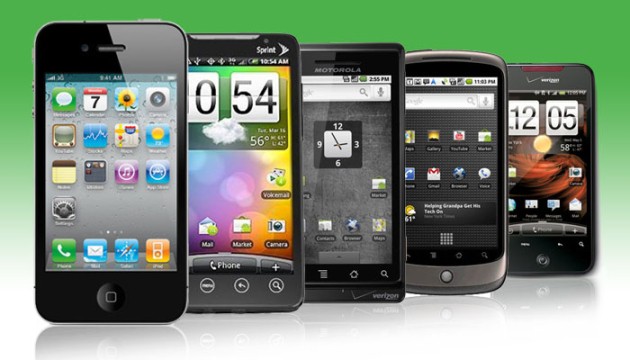
Our choices for which Smartphone we use keeps increasing each year...
“Our choices for which Smartphone we use keeps increasing each year…”

 There is no invention more prominent in today’s society than the Smartphone. It is used everyday for things as simple as making a call to as complex as using an application to pinpoint your exact location on Earth. I am the owner of an iPhone and it befuddles me to this day as to how a phone has come to be so advanced and influential within our daily lives.

There’s not a couple of minutes that go by when I’m out walking where I see people absolutely absorbed to what’s happening on their smartphones, completely oblivious to their immediate surroundings. I fear that is a trend that is only going to get worse as technology continues to advance in the future. It can be a bit tiresome and annoying to have a conversation or dinner with friends when some people are too busy answering a text or checking their twitter.

 Now, I’m not against checking one’s phone from time to time or killing some time by looking at it but person to person communications have been changed significantly by the smartphone and I’m not sure if it’s for better or worse. The great irony of the smartphone is that while it has improved communications through texting, calling, social networking, etc., person to person contact has seem to be quite harmed by this technology.

There have been countless instances where people have whipped out their smartphones out of sheer boredom, nervousness or on purpose when they are out on dates, at dinner or waiting in line for a coffee. I recently watched a news report where they reported an increase in smartphone-related car accidents where people were too occupied in texting while driving or others were too busy texting then to look both ways before crossing the street.

 I am sometimes guilty of paying too much attention to my smartphone and I am trying to limit the amount of times I use it during the day. It is a greatly useful tool and has made my life and the lives of others a lot easier. I do worry about the negatives though in terms of causing too much distraction and also harming the way people interact with each other on a personal basis. I read in a recent Newsweek article that a lot of Americans sleep with their smart phone. I was a bit incredulous about this but I guess that’s what it should come to when a smartphone can basically do anything that we need ten different devices to do before.

 I’ll leave you with a moment that left me quite skeptical about the positives of the smartphone; I was hanging out with friends and having a couple of laughs when there was a moment of stillness in the midst of conversation. One by one, each of them started to take out their phones and I was then left as the only one not gazing into the alluring screen of an iPhone and other smartphones. I was disappointed by kind of resigned to the fact that I have to get used to this tendency of people today to grab for their phones for instant stimulation but I do miss those days when I didn’t have to worry about a smartphone coming between another human being and I.