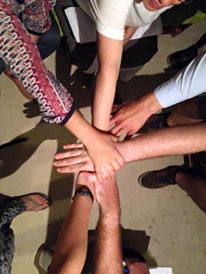
“What the American people want to see in their president is somebody who not necessarily can win every fight, but they want to see him stand up and fight for what he believes in, and takes his case to the American people.”
-Bernie Sanders
Camera: Canon PowerShot SX710 HS
Location: Washington Square Park; New York, New York
“The sharing and exchange of knowledge is easier now than it has ever been in human history.”
There has been no other time in human history than in today’s era where the average person with access to the Internet can seemingly have unlimited amounts of information available to him or her. When you truly think about the magnitude of it, untold amounts of data are being created every day. According to IBM, “The current estimate is 2.5 quintillion bytes of data per day and over 90% of the data in the world today has been created in the past two years alone.”
A common response nowadays from both family and friends when I ask a question to them about a random query is not a straight-forward answer but rather an off-handed suggestion to “Google it.” Living in this era of ‘Big Data’ can be quite overwhelming to the average person but one could also look into it as an opportunity to gain knowledge and further ones’ understanding on a limitless amount of subjects with the simple click of a mouse. The Internet is an amalgamation of thousands of libraries of Alexandria at the beck and call of one’s fingertips.
Compared to past ages when information and knowledge was more exclusive and harder to come by, today’s era allows everyone with an Internet connection to search and find information to their heart’s content. Instead of going to a library to find what you need on a subject, websites like Google, Wikipedia, and other online encyclopedias have largely replaced the main role of the physical library. I remember when I was younger and in my high school days having to seek out certain books in order to write a research paper or complete a book report.
However, now more than ever, you can easily find the sources of information you need online in order to facilitate your research and evidence. While I love libraries and hope that they never go out of style, the reality is that online encyclopedias and eBooks are largely replacing their original purpose. In order for libraries to stay relevant, they need to start incorporating computers, free Wi-Fi, and technical classes in order to remain useful.
From the 18th to the 20th centuries, universities and colleges across America were the standard bearers and purveyors of higher education. Originally for the elite, wealthy, and well connected, those students who were able to get accepted and afford undergraduate and graduate studies believed that they would have an advantage in the job market and in achieving the American Dream. More recently, as colleges and universities have become more inclusive than exclusive, tuition prices have inversely risen as well.
While higher education has become accessible to more and more young Americans, it also has become more expensive especially over the past decade. These events have led to an ongoing debate as to whether college is really worth the price tag and whether the average student gains anything from earning a four-year degree. With student loan debt at an all-time high of $1.3 trillion in 2015 in the United States and tuition rates at both public and private universities continuing to rise, people are beginning to look for alternatives to the current higher education system.
Over the past decade, there has been a drastic proliferation of massive open online courses (MOOCs) provided by both private companies and traditional universities. At a much lower price and sometimes free, people from all over the world can sign-up for these courses and partake in lectures, tests, quizzes, and papers as if they were actual enrolled undergraduate and graduate students at the physical form of the university. As the credentials and certifications bestowed upon these courses continue to increase and become more widely accepted, we may begin to see ‘the end of college’ as we know it.
Examples like Khan Academy, edX, Coursera, Udacity, etc. and other MOOCs have leveled the playing field. Tech entrepreneurs from Silicon Valley have allowed students from all over the world to access unlimited online courses to further their academic knowledge at a lower price. With the subsequent rise in online university programs for undergraduates and graduates, the physical college experience of dormitories, lecture halls, football stadiums, etc. may become less appealing to students as tuition prices continue to increase. While the social and networking benefits of college life are numerous, they may not be enough to compete with this era of free information that we are living in.
Compared to past decades, we’re living in a time when access to the Internet is at an all-time high and is increasingly rapidly due to the rise of mobile technology. Traditional havens of knowledge such as the library or the public university will have to adapt to stay relevant in this unlimited information age. In a worldwide job market that is evolving rapidly and where the average child today will work in an industry not yet created, the free exchange of knowledge must continue to spread through the worldwide web.
Countless others and I have benefited from taking online coding courses on ‘Codeacademy’ to learning new languages on ‘Duolingo.’ As MOOCs and online universities continue to develop their courses and credentials, we may begin to see an era where the average person can earn a degree or two without breaking the bank. MOOCs are cheaper, less time intensive, and can adapt more easily to the rapidly changing employment market.
A well-educated population is now more possible now than ever with the wealth of knowledge and information that is available. That fact is evident but it also is up to the individual to be willing to search for that information and actually apply it. Instead of getting frustrated with people asking me to ‘Google’ the answer, I find that it’s worth the hassle because it’s often true that I will find the answers I’m looking for and in greater detail than if I were to ask a friend or family member for a quick description. That’s the power of the Internet. That’s the wealth of knowledge that we are able to take advantage of.
“Perception” is an interesting word when you think deeply about it. No, I’m not just talking about your two eyes, and the vision that allows you to perceive the world visually. In other words, we can only perceive the experiences that we have or had in the past, the people we met, the places we visited and lived in, and the choices that we make or made.
Human beings are mortal which means we have limited time on this Earth to see and experience all that life has to offer. For some people, this is a very frightening and gloomy notion. However, others would see this fact as a way to get the most out of life and expand their perception of the world as much as possible.
A limited “perception” of life and the world has consequences when you think about it. If you don’t have the ability to put yourself into someone else’s shoes or to imagine or experience life as they do, then your ability to emphasize with them would be diminished. Yes, you can have sympathy for their plights or jubilation for their successes but you wouldn’t be able to connect with them on a deeper level.
A consistent problem in human nature is our lack of ability to put ourselves in someone else’s shoes and see life as they do. When we are unable to break down barriers between social classes, races, religions, and gender, disagreements and hostilities between these groups is likely to continue. From my perspective and my past travels, the similarities of humans around the world drastically outweigh the differences. That doesn’t mean that these differences are bad or that they should be eliminated. I happen to believe that cultural and social differences are part of what makes humanity unique and should not be demonized.
This leaves the question that my blog readers would wonder to themselves hopefully after reading this entry: How do I expand my perception of life and the world around me? Now, when I ask this question, I do not mean for you to go out to the nearest pharmacy and get yourself some contacts or a pair of prescription glasses.
What I mean and what I believe is that we humans have limited time on Earth and we can’t live forever to experience everything and to meet everybody around the world. However, there are ways to expand this perception by traveling the world, reading books, and meeting different kinds of people. These three concepts are not crazy ideas but rather novel concepts to create greater empathy in yourself and for others along with a more profound view of humanity as a whole.
Traveling has always had the highest return on investment for me and the experiences I have had have helped me view the world in a different way. I know that it’s not feasible for everyone to travel but if you can’t make a huge jump to another country, try to travel to different places and cities within your own country. Learning about the local culture and customs, enjoying the local cuisine, and indulging in the history and background of the society are important for any seasoned traveler.
You will start to view the world in shades of grey rather than pure black and white. You would also learn that cultures and societies are complex and that it takes a lot of time to immerse yourself in its deeper reaches. Most of all, you are communicating in a different language which is fascinating and complex in its own right. Above all else, you are seeing the commonalities and similarities that exist between your family and their family, your town and their town, and your country and their country.
Meeting new people from different backgrounds and places ties into traveling as well but it really makes your perception of the world grow. If you stay in the same town where you grow up and never leave, chances are that you’ll have a limited perception of people and life itself. Talking to different people, hearing their stories, cooking with them, and sharing a meal or drink has many benefits. You may be able to build a friendship that lasts for years even if you don’t speak the same language or come from the same culture.
By hearing their story and listening to them, you expand your own perception of the world and the people who inhabit it. You can get beyond the stereotypes and the clichés and really get into deeper social connections with people, especially in this interconnected world that we all live in.
Lastly, reading books is an integral park for learning about the world and facilitating a deeper perception. As individuals, we cannot experience everything or know everything there is to know. However, by reading about the stories of others who have come before you and who had lived, and died, you will gain greater knowledge and wisdom. Regardless of whether the book is fiction or non-fiction, you’re reading someone’s life story or reading about a subject that spans a part of human history.
Book by book, you are enlightening yourself by learning about the experiences and perceptions of others. By learning about the men and women who have come before you and who have lived exemplary and distinguished lives, you can take lessons from their existence and apply those lessons to your own life. If you can’t travel or meet different kinds of people, reading books by those authors who have and whom shared those unique experiences with their readers is the next best thing.
We all have one live to life, and you can only see what’s right in front of your eyes. Make sure that you continue to give yourself the opportunities and chances to indulge in the knowledge and wisdom that can be gained by expanding your perception of the world and its inhabitants. Travel, read books, and meet different people for as long as you may live. Only then will you gain true enlightenment and wisdom.
“There is always something positive that comes out of something negative.”
“Remind thyself, in the darkest moments, that every failure is only a step toward success, every detection of what is false directs you toward what is true, every trial exhausts some tempting form of error, and every adversity will only hide, for a time, your path to peace and fulfillment.”
―Og Mandino
Anybody who has ever lived has faced adversity and struggles that test one’s resolve and fortitude. How someone deals with these challenges and setbacks can show you their true character. I used to live under the assumption that everything will go smoothly if you work hard, play by the rules, and do your best. Recent events in my life have shown this hypothesis to not be true. Life is not fair sometimes and it is extremely important to adapt to this fact rather than to fight it head on.
We can curse our misfortunes but it is much better to move on and look to the future. The worst thing that someone dealing with adversity can do is to wallow in self-pity and to be endowed with guilt. The past won’t change but the future is still in your hands to shape. I am glad that I am aware of the realities of the world now while I’m still young rather than to be surprised by them at a later age. If a goal you strived for vanishes into thin air or a dream that you thought would be yours disappears, it does no good to consider what might have been but to plan instead on what could still be.
I would be lying if I didn’t say that over these past two weeks I’ve felt a range of emotions ranging from anger to sadness. I was in denial at first about what happened to me and why it happened to me. Initially, I could not accept what I could not change. I went through the five stages similar to the popular model of ‘Denial, Anger, Bargaining, Depression, and Acceptance.’ Luckily, I did not suffer a personal loss or suffer from a serious ailment but I was crushed by the news that I would not be continuing on the adventure that I started eighteen months ago when I filled out my first application form.
It is difficult to deal with these painful emotions and feelings but it is far better to embrace them rather than to let them bottle up inside of you and fester on and on. I would have loved to continue the good work that I was doing and to finish the job that I had signed up for. Unfortunately, life has other plans for me and I am willing to embrace the challenges that lie ahead. Luckily, we live in a world where there are plenty of opportunities and possibilities available to those of us who are willing to work hard and to use our knowledge.
Clearly, I am not the only person to ever suffer setbacks and misfortunes. Many exemplary leaders and icons of history were unsuccessful in their initial hopes and dreams before greatness found them later on in their lives. The 16th President of the United States, Abraham Lincoln, had many personal misfortunes and professional failures happen to him before he became elected to the highest office in the land. He lost lovers and family members, failed in business, was defeated multiple times for elected office, and dealt with mental health struggles all throughout his life.
However, he never gave up because he knew what he was worth, had faith in himself and his abilities. He displayed a strong intellect and a strong drive to be great. President Lincoln had a lasting impact on my country and the world. This would not have been possible if he had simply given up when he encountered all of these adversities and disappointments. His story is a continual inspiration for me and for others who have been dealt a personal or professional blow to their lives.
How would our world be different today if inventors like Edison had given up after his 900th try at inventing the lightbulb or if geniuses like Einstein had listened to those teachers / headmasters who told him that he was lazy, dumb, and not worth the effort? If you don’t have confidence or don’t believe in yourself, you are not going to get very far in life.
While it’s pleasant to have other people think highly of you and give you praise, there will be other times where they’ll tell you that you’re not good enough and that you don’t belong there. If there is anything that I want the readers of this blog post to realize is that you can’t let anybody else stand in the way of your goals and dreams. They may have good intentions and think that they know what’s best for you but you have to decide that for yourself.
When I was younger, I was naïve to think that everything would go smoothly in my life and that I could control every outcome. Especially after what happened to me recently, I know that this notion is unrealistic. There are certain aspects of your life that you have some control over and there are other aspects that are completely out of your control. I do not regret the past nine weeks that I spent in Colombia, and I am proud of the good work that I was doing. I am happy for my fellow CII-8 trainees and wish them all the best as they become volunteers and move on to their communities for the next two years of service. I was grateful for the opportunity and have some good memories from this experience that I will remember fondly.
The future is unclear at the moment but I look forward to the opportunities and possibilities that lay ahead. I know that I will continue to write and develop this personal blog that I started eight months ago. I believe that there are many adventures that lie ahead for me in my life. I will continue to have faith in myself and my abilities. Dealing with this particular adversity will make me a stronger and more mature person in the long run. I have a strong mind, a strong body and I am confident that I will get through this momentary setback. Your past does not define you and the future is yours for the taking. Always remember that.
As apart of my training program to become a Volunteer for Peace Corps – Colombia, my fellow trainees and I have worked hard over these past weeks and months in developing and implementing mini-projects in partnership with our community here in different ways.
Overall, there have been three community projects that we have been working on over these past two months. All of us trainees together have worked on a ‘Limpieza La Comunidad’ or ‘Cleaning up the Community’ project with local citizens in an effort to make the parks and the local river here cleaner and safer for everyone. So far, we have conducted two clean-ups so far during the weekends which have at the central park of our town and then most recently at the ecological park and the area near the football stadium.
It has been a real joy to work with the young people of the community especially. The children and teenagers, who have helped us with the clean-up process the most. They have been extremely enthusiastic and willing to pitch in to assist and work with us. I have worked with one child in particular, named Jesus, age eight, who has helped me specifically with picking up the trash and sweeping the leaves. For both times where we have had our clean-up project in different parks, Jesus has been there to be my partner and help me with my big trash bag. I hope that after we leave for our volunteer sites in mid-April that the children, teenagers, and young people of our current community will become the next leaders of this clean-up effort and will continue these projects and make a sustainable difference in their town.
In addition, my colleagues and I have been able to create two mini-projects related to English education here in the community. A few of my fellow trainees have started a ‘reading buddies’ after-school program where they have read books alongside children and teenagers over the past couple of weeks. Others and myself have worked hard to create a community English class based around conversation lessons that have taken place on Thursday nights and during the weekends.
My fellow trainees and I have split the hours of teaching between ourselves and now provide about three hours a week between the three of us in giving conversational lessons in basic English to those members of the community who want to learn and expressed sincere interest to us in attending our classes. I have been very pleased with the turnout for my community class on Thursday nights and the hard work, engagement that my students have had so far for learning conversational English.
Eight adults showed up for my first class last week and I hope that they will continue coming to class over the next few weeks. For this program, I also hope to designate a leader(s) to continue having English classes within the community. If possible, I will select an adult with the English skills necessary in order to teach his fellow Colombians and keep the class going into the future. I always think back about how lucky I was in the past to pursue my passion for foreign languages and how I was able to take Turkish and Arabic classes at night and also attend Spanish conversation groups as well. It has been great giving that same opportunity to those adults interested in learning my language and developing their conversational proficiency.
Lastly, my fellow trainees and I have successfully completed recently two separate training sessions for the English teachers in our community. The topics have focused around creating speaking and listening activities for their students in an interactive way, as well as working on the pronunciation of difficult sounds in the English language. Both ‘charlas’ or teacher training sessions have been well attended; the teachers were enthusiastic about sharing what they had learned from us and applying this knowledge in their classrooms for the future.
As our first projects finish up over the next few weeks, I can say that we made a meaningful impact in our community during our training program. Each of the trainees has worked hard, provided a lot of time and effort, and have developed good relationships with the local community too. I believe that we can hold our heads up high as we head into April 2016 and the beginning of our formal volunteer service here in Colombia.
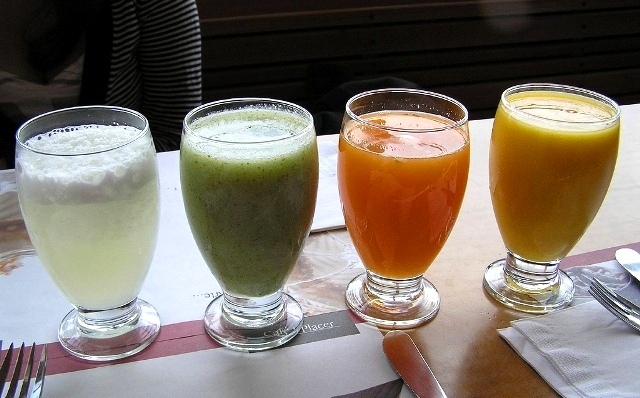
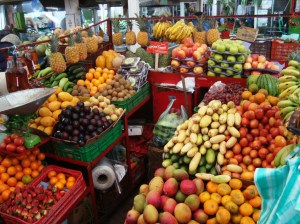
One of the joys of living here in Colombia is the diverse and plentiful selection of fruits to choose from. The choices are quite abundant and it is an integral part of the culture to imbibe in a cold and tasty fruit juice at the end of a long day.
As I mentioned before in my blog post titled, ‘The Heat Is On’, one of the best ways to deal with the heat and humidity is to cool down with a delicious fruit juice. It is also much healthier and refreshing than having soda or coffee instead. Over the past two months, I have done a great job of sampling the different choices of fruit juices and which ones I have a preference for. I’ve listed below the common fruit juices available here on the Atlantic coast and have also highlighted my personal favorites. The one juice that I have not tried thus far is the ‘Zanahoria’ or Carrot juice but I’m willing to give it a shot during the rest of my time here.
I hope that for those of you who plan on traveling to Colombia in the future will consider this ‘fruit juice’ list as a helpful guide to you. It can be a very hard choice to make when you’re at the ‘Fruteria’ and there are ten choices available but you’re not sure which one will be most refreshing.
Honestly, you can’t go wrong with any of the choices detailed below. Colombian fruit juices are freshly blended together rather than squeezed as is the case in the U.S. and elsewhere. In addition, the fruits are mixed with water or milk (smoothies) and topped off with a little bit of sugar. What results is a very fresh and tasty drink to keep you cool during those hot days and humid nights. The Colombian people take their fruit juices seriously and so do I.
Lulo: Orange on the outside with green and yellow pulp on the inside, Lulo has a citrus flavor that is very sour to eat. However, jugo de lulo, mixed with some sugar, is perhaps the most popular juice here on the Atlantic coast. Also known as Naranjilla in other parts of Latin America, the fruit is related to the tomatillo and some people would describe its flavor as somewhere between green apple, and lime. It’s up there with being one of my favorite juices here.
Guanabana: Another one of Colombia’s most popular fruit juices. Its’ thorny green skin is filled with white filling and black seeds, similar in appearance to the fruit known as the cherimoya. Its juice has a creamy flavor with hints of strawberry and pineapple, and goes well with water, milk, and sugar.
Tomate de Arbol: The ‘tomato of the tree’ in English is an egg-shaped fruit with a yellow filling that is distinct from the typical red tomato that you would find in the supermarket. It has one of the most unique flavors I’ve ever tasted, and is similar to a mix of passion fruit and tomato, and supposedly has many health benefits. I enjoy its unique flavor and its refreshing qualities.
Granadilla: This fruit is a close relative of the well-known passion fruit. On the outside, it looks like a small orange or mandarina, but when it is cracked open, it contains a gelatinous pulp filled with black seeds. The flavor is similar to that of the passion fruit, but sweeter, and the seeds are easily disposable by spitting them out amidst the delicious juices. When turned into a fruit juice, it’s pulpy yet satisfying on a hot and humid day.
Mamoncillo: On the outside, this fruit looks like a lime, but when cracked open, it reveals a pinky-orange flesh similar to that of a lychee. The flavor is a mix of the tartness of a lime with the mild sweetness of the lychee. When blended into a juice, it looks like an iced tea and has a light orange/beige color.
Maracuya: Another part of the passion fruit family along with the Granadilla. It has an oval-shape, can look a bit wrinkly, and makes for a delicious juice or ice cream flavor as well. Maracuya is a great source of Vitamin C and is also known to be a natural sedative too. It also is known to aid digestion of food in the stomach. Extremely similar to the look of orange juice, Maracuya has a yellow-orange color when turned into a juice.
Gulupa: A cousin of the aforementioned Maracuya and another passion fruit. It has a dark purple skin that becomes wrinkled when it is ripe for eating or drinking. Along with Maracuya, it has plenty of Vitamin C and can help ease stress and tension in the body. When blended into a juice, it has a yellow color and looks very similar to orange juice.
Zapote: One of Colombia’s toughest and most durable fruits. It can grow very fast and is resistant to heavy wind and drought conditions. Zapote is full of minerals and antioxidants and can help with ailments ranging from irritable bowel syndrome to gastritis. It is very high in fiber so be careful not to eat too many as it does act as a natural laxative. Like other fruits here, it goes well with sugar and has a pink-orange color in juice/smoothie form.
Borojo: Known to be a ‘Love Juice’, and possessing some aphrodisiac qualities, this juice has been well-known for centuries and can act like a natural Viagra if you’re in the mood. Nutritionists have claimed that ‘Borojo’ is one of the most nutrient-rich fruits in the world can help combat malnutrition. When mixed and blended into a fruit juice, it gives off a dark to light brown color.
Mora: Known as ‘Blackberry’ in English, this is my favorite juice to have here in Colombia. Rich in Vitamin C, antioxidants, and nutrients, it is the most refreshing drink I’ve encountered thus far. I also enjoy the dark red color of the juice and enjoy it after a long day outside. While not an exotic fruit or drink, it gets the job done and I enjoy the simplicity yet refreshing qualities of the juice itself.
While I only listed ten fruits / fruit juices to indulge in, there are over dozens of unique fruits here in Colombia to try out. Some of the most exotic and sought-after fruits reside here in Colombia and you usually can’t find them anywhere else. A lot of the fruits I mentioned in this post have great health benefits and are packed with nutrients. Different than the apple, banana, and grape, these ‘superfruits’ can cure ailments, keep you well, and give you more energy. If you decide to ever visit Colombia, eat the fruits and try the fruit juices. I promise you won’t regret it.
“If Aristotle is wrong about this, then I don’t want to be right.”
Self-sufficiency: “Able to supply one’s own or its’ own needs without external assistance.” (Noun – Dictionary.com)
Overlooked and misunderstood by many, the concept of self-sufficiency is important for realizing one’s potential as a person and for achieving true independence and maturity. Especially for those of us including myself whom are going through the 20’s, this is a period in our lives where we must rely on ourselves first for our success and prosperity before we reach out to others for help. I believe that it’s natural to ask for the mental and emotional support from your friends and family but there comes a time in a man and woman’s life where they must strike it out on their own and attempt to realize their self-sufficiency.
For different people, being self-sufficient could mean different things. It could be paying off your student loans or enrolling in a trade school to learn skills in order to become more employable. For others, it could be owning/renting your first apartment (without roommates), shopping and/or growing your own food, and changing a flat tire / getting your oil changed. Millennials are often criticized as the ‘Peter Pan’ generation considering that we come back to live with our parents after college in order to save money. I can’t say that this is a good trend but it is mostly due to a tough economy and a lack of good job opportunities, especially for those who were affected by the ‘Great Recession’ of 2007-2009 and still are to this day.
Rather than being discouraged and dismayed by the recent economic troubles affecting our generation, it is important to realize the opportunities that are out there. For realizing opportunities and achieving self-sufficiency in different areas, the Internet is perhaps the greatest tool out there for changing your future. We are quite lucky in that it is incredibly easy and free to access an almost infinite amount of information, both educational and informative, that can change our course in life if you are able to do the research and put the work in.
I can honestly say that learning self-sufficiency is vital in this day and age. Being able to take care of your body, your mind, your apartment/house, your car are all-important to be a fully functioning adult. In addition, managing and developing your finances, having healthy relationships, working successfully with co-workers, clients, and bosses are all steps on the path to self-sufficiency.
Most people stumble into ‘adulthood’ and will fail to become self-sufficient in their lives and suffer negative emotional and psychical health as a result. Resolve to yourself that you will take the steps necessary to become a mature adult who can take care of business and be able to function in society.
A lot of the problems and maladies of society originate from a lack of self-sufficiency and a heavy reliance on others (friends, family, and neighbors) to help them out continuously. I mentioned before that mental, emotional support from others including friends and family is necessary and even should be encouraged. However, don’t rely on others as a crutch because the people in your life won’t be there forever. They love you and want you to succeed in life but it is your job to make it happen. Your family and friends can’t hold your hand and walk you through every problem and setback you will experience. It is a common fact of wisdom that life will beat you down and keep you there if you let it. Achieving self-sufficiency in the necessary areas of life will make you happier, stronger, more resilient, and a better person overall.
Once you become self—sufficient and confident in your abilities, it is natural that you might want to share this with another person such as a wife, husband, and children. That is a reflection of your realization that you have become a full adult and can handle the responsibilities of helping future generations to become self-sufficient as well. Even if you do not marry or have kids, it’s possible to impact others and lead them down the road to self-sufficiency as well. Mentoring young people, being a leader in the community, and encouraging others to succeed can help lead others down the path of self-sufficiency as well.
After achieving self-sufficiency in your life, you can truly focus on the hobbies and interests that challenge and stimulate you. Human beings thrive in life when we conquer both internal and external challenges. Learning an instrument, studying a foreign language, dedicating yourself to a project at work or at home, or achieving mastery in different subjects are all great ways to keep yourself stimulated and happy.
People become unhappy when all they do is consume and don’t do anything to make themselves better. When all you do is watch TV and films but don’t know how to make them, or eat at fine restaurants but don’t know how to cook the food itself, and listen to music without knowing how to play an instrument or how its’ actually produced. Becoming self-sufficient is a result of handling the struggles and challenges of life with confidence and resolve.
In addition, having hobbies and interests in the pursuit of continuous knowledge and wisdom is extremely important to becoming a whole person. Anxiety, depression, and other issues manifest themselves when people can’t take care of themselves mentally, physically, and emotionally. Don’t be one of those people. Work hard to become a mature and capable adult in our society. I promise that you won’t regret it.
Speeding down, swerving in and out of traffic along the ‘Ruta Caribe’ at 100-120 km/h is the well-known and distinctive mode of transportation known as the ‘CooTrans Oriente.’ These auto-buses are affordable, widely used by the locals, and timely by arriving and departing every 20 minutes from town to town on their way to and from Barranquilla.
Established over twenty-five years ago here in the Atlantico department, CooTrans Oriente has become a mainstay when it comes to transporting people, goods, and services along the coast. Because of my Spanish classes and/or due to my technical training sessions, I am often riding the CooTrans Oriente multiple times per week so I have been accustomed to the norms and rules of this transportation enterprise here on the Atlantic coast.
I have taken a lot of buses in my life so far and most have been boring and uniform in design, color, and the attitude of both drivers and passengers. However, the CooTrans Oriente is unlike any other bus I’ve ever taken before. First of all, it’s colorful with every color represented in the spectrum from white to black, red to green being shown in the exterior of the bus. Each driver is allowed to design the interior and you can often see shag carpeting used for the steering wheel or for the gear shifter.
The conductors of the buses will pay tribute to Jesus Christ, God, and the Virgin Mary with religious scripture and sayings from the Bible. In addition, often, the drivers will highlight their family members and pay tribute to them by putting their names on the front dashboards in colorful font and lettering. CooTrans Oriente is a small company but it is extremely unique in allowing the drivers to personalize the buses, especially the designs for the interiors and the back windows.
It is very difficult to imagine bus drivers in the U.S. or in Europe being allowed to design their own buses or being able to display religious symbols or sayings so openly. Each bus is similar in its CooTrans Oriente lettering and the exterior has the same colors in mostly being red and blue. However, it’s a different story when it comes to the side and back windows. I have seen various tributes to video games like ‘Gears of War’ to displays of fandom for the popular ‘Juniors’ football team of Barranquilla to intricately designed religious murals depicting ‘The Last Supper.’ It is a real joy to just watch the buses go by and try to see the different symbols, designs, and murals that each make them unique.
More than just the colors and designs of CooTrans Oriente is the culture of the bus itself. Passengers will help each other out and have also helped me out tremendously. When I’m standing up on the bus after a long day of meetings or classes and I’m carrying two bags of groceries from the grocery store, a fellow passenger will allow me to put one of my bags on their laps to ease my carrying load a bit. It’s an extremely thoughtful and kind gesture, which I have not seen replicated elsewhere in the world thus far.
Also, it is common and allowed for venders to come on the bus to sell different snacks and drinks for those passengers thirsty and/or hungry enough to want to partake in especially if there’s a lot of traffic. There is also a more personal touch on this bus as you have an ‘Ayudante’ or helper who is present to take your money for the bus fare instead of loading your money on a card or putting the money in a machine near the driver as I’m used to from riding the buses back home.
Traveling on the CooTrans Oriente is quite an experience in of itself. Drivers will often offer a rolling stop to you when passing by the bus stop, which means you’ll have to hoist yourself and climb up the stairs quickly to catch the bus before it departs without you. Certain drivers will not follow the speed limit on the highway and will usually drive very quickly at 20-30 km/h above the normal speed for autobuses. This can be a bit harrowing to deal with at first but by driving very fast, you do catch an amazing wind breeze sitting by the windows which helps alleviate the Caribbean heat. The ‘Ruta Caribe’ for part of its highway only has a one-way express/lane for either direction. There is also no barrier in the expressway present, which would separate the drivers who are going in the opposite directions along the route.
There has been many times where the bus drivers will end up driving in the lane heading in the opposite direction to avoid traffic or speed ahead of the cars/motorcars/taxis in front of them to reach their final destination quicker. I have to be honest in that this rash decision-making honestly terrified me at first but the bus drivers here are extremely experienced and knowledgeable. They will only drive onto the lane heading the opposite direction if they don’t see any cars/trucks coming head on. I am not sure about the safety record of CooTrans Oriente but I do know that the seats are very comfortable and are made of some sort of leather material. So far, I haven’t witnessed or been involved with any accidents while riding the buses so I must say that the drivers here are quite good and that they know what they are doing.
Also, without any doubt, there will always be Colombian music played through the speakers for the passengers to enjoy during their travels. Sometimes, it’s Vallenato, and other times it’s Champeta, Cumbia, etc. There was one time recently where they had a music video playing with an actual TV at the front of the bus, which was pretty cool to see. The music video had scantily clad women dancing next to the main hip hop guy as he rapped in Spanish about their physical characteristics that he enjoys the most. None of the parents with children on the bus seemed to mind the video though.
Overall, I have enjoyed riding ‘CooTrans Oriente’ so far during my time here in Colombia and will continue to do so. The buses will take you to any part of Atlantico department from what I have noticed and it’s an affordable, cost-effective way to get around from town to town. The passengers, especially those sitting down, are very courteous and will help you out with your bags and even give up your seat for you. For female passengers, especially, the ‘Ayudante’ will lend his hand to help you ladies off of the bus and able-bodied men including myself will give up our seat for you whenever necessary as well.
In many ways, ‘CooTrans Oriente’ reflects the Caribbean Colombian culture. A deep love of their music, being colorful and animated, very open with kindness and warmth even to strangers, and having a wild side as well that comes out every now and then. There’s also the distinct feeling that like the people, the CooTrans Oriente doesn’t take itself too seriously, and knows how to have a good time even when driving down the highway at 120 km/h.
One undeniable fact about life here on the Atlantic coastal area of Colombia is the constant heat and humidity. For me, this has been the biggest adjustment that I have had to get used to over the past month or so. Considering it was 20 degrees Fahrenheit and extremely cold when I left New York in mid-January, it was quite the shock to my senses to be experiencing 90 degree weather and 70% humidity on a daily basis here in Colombia especially during the months of January and February, which I have always associated with the Winter season. However, one of the great things about human beings is that we are very adaptable to our environment and our bodies can adjust to different climates without too much trouble. For example: Instead of bundling up in layers, you wear light clothing and show more skin.
Especially in this day and age, it is much easier to deal with the climate then in decades or centuries past. Due to modern technology, it’s much easier to deal both with the heat and humidity than ever before. For my fellow Peace Corps trainees and for those of you out there who want to visit the Atlantic coast of Colombia in the future, I have listed some tips and advice on how to beat the heat:
Wear light shirts and pants, preferably of cotton material. Heavy clothing is heavily discouraged and it will give you a chance to upgrade your fashion choices by wearing what the locals wear. Jeans are common here culturally and because it is also much harder for the mosquitos to bite you if you cover your legs as well.
Before you leave the house or apartment, wear sunscreen that is strong and reliable. If you’re not careful, you can get a severe case of sunburn and heat stroke. Also, it’s important to put on mosquito repellant in the exposed parts of your body not covered by clothing when you’re walking or running outside in the heat.
Wear a hat and put on sunglasses to reduce the sun’s impact on your face and eyes. This has been great for me in protecting myself from any skin problems or eyesight issues because the sun is quite strong.
Make sure that you drink plenty of water and hydrate continuously throughout the day. Bags of water are commonly sold here and are great for re-hydration. I would avoid sodas, sports drinks because they are not the best for hydrating yourself. If you need some sugar, then they are good options but Water is king when it comes to keeping your body temperature in line. Lack of hydration can be a real problem here so make sure you’re drinking a couple of liters of water each day.
Try to reduce your activities, movements outside during the hours of 2 to 4 PM. In my own experiences here, the heat is strongest and the humidity most oppressive during the mid-day. I would recommend staying inside during those hours and keeping cool at the local café or library. Strenuous physical activity during these hours could be detrimental to your health. It’s also a good opportunity for a nice descanso (rest) if you have some free time after school is over.
Besides water, indulge in some ice cream and natural fruit juices to keep your energy levels up. This is my favorite item for this list as I am a sucker for ice cream and cool beverages. It cools you down and it’s a nice reward for yourself after a hard day or week on the job.
Travel and time permitting, going to a local villa for some time at the pool and indulging in some cool refreshments is an afternoon well spent on the weekend. Going to the pool is one of my favorite ways to beat the heat and it’s nice to swim, lounge around and relax with friends.
Take advantage of the mornings and evenings when it is much less hot and humid out. I’ve heard from my fellow trainees that running in the early morning or exercising in the evening is preferable. I would agree completely that you have to be flexible and try to pick the times of the day where the heat isn’t as extreme and you can exercise without sweating puddles.
Hanging out at the library or the local Internet cafe where you can read a good book, catch up on work, and/or use the Wi-Fi is another great option. These places usually have air conditioning and/or strong fans too to help keep you cool.
If you’re feeling adventurous, heading to the beach for a day trip or to the local mall, Movie Theater are other great ways to keep cool and round out the ‘Top Ten.’
Finally, do not forget to invest in having a big fan ready to use for those humid nights in your bedroom. Sleeping in 90-degree weather is not easy so make sure you have a fan at your disposal to rest more comfortably. I hope this list is useful for those reading who are thinking of visiting hot and humid places. Despite the challenges that warm climates present to the human body, I still prefer it to the cold and snowy weather that I grew up with in New York. In addition to that, shoveling two feet of snow can be a real pain in the butt.
This past weekend, I was able to make my first road trip here in Colombia with a few fellow Peace Corps trainees. When I found out that we would be going to visit a current volunteer in the Magdalena department, a different and very unique, beautiful part of Colombia that is much different from where I have been currently living in Atlántico.
It was quite the trip for the four of us trainees, as we had to use three different modes of transportation such as cars, taxis, and buses in order to get to our final destination. However, the scenery and landscape changes that we were able to see and enjoy could not be matched. Going from the savanna/dry flatlands of Atlántico to the lush tropical mountains and hillsides of Magdalena was quite fascinating for me. It was almost as if we had transported ourselves to a different country but in fact, we were only four or so hours away from our original starting point.
This small road trip was able to put into perspective for me just how biodiverse and unique Colombia is as a nation. I have only seen a little bit of the wide range of landscapes and scenery that this country has to offer but I have been really impressed with how different it is even when just describing the Atlantic coast. Along with China and the United States, Colombia ranks as one of the most bio-diverse and naturally rich countries in the world, which is amazing considering its size compared to those two aforementioned countries. I really do hope to see as much as Colombia as I can and to be able to see how diverse and unique it really is.
Getting back to the trip, it was smooth traveling for us all even when we had to take a car halfway up the mountain to about an altitude about 1,000 meters. Our host, a current Peace Corps volunteer in Colombia was generous, gracious, and showed us around the town of Minca and all it has to offer. When you’re up in the Sierra Nevada Mountains, you can indulge in a lot of different outdoor activities.
Minca recently has become a more popular tourist hotspot with cafes, restaurants, and small hostels being filled with French, German, and other European tourists. It is difficult to conclude whether or not the locals of Minca have benefited or not from this influx of tourists who have come to see the natural sights and sounds. I would argue that this is part of a growing trend for Colombia as more and more tourists come to explore the country given that the safety and security situation has been improving.
During our short stay in Minca, we were able to meet some of the locals who have benefited from the Peace Corps’ volunteer being there to help with their English. In addition to working full-time at the school, the volunteer here gives English lessons to adults and also those business owners who would like to have a decent level of proficiency for dealing with the incoming tourists. I really admired the hard work and effort that the volunteer has put in to the community there and the close comradery, affection that the local people have for the volunteer too.
In addition, the teachers and students at the school in Minca welcomed us with open arms and allowed us to observe their lessons, answer their questions, and answer our many questions as well. I believe that it will be vitally important for myself, as a volunteer-to-be is to establish a productive and successful working relationship with my Colombian counter-part. It’s also important to really get to know all of the students in the school on some level and be able to interact with them, which should help when it comes to classroom learning.
We were truly lucky to spend a day with a current Peace Corps volunteer and to observe them at work and at home to see what kind of life may await us for our two years of service. Minca is a really peaceful, unique town nestled in the Sierra Nevada Mountains. The beautiful vistas, and the cascading waterfalls will stay in my memory for a long time.
Even if my site placement puts me far from that type of location and environment, I definitely hope to be able to visit the Magdalena department of Colombia soon again. If for anything else for the fact that I really enjoy hiking up the mountains, breaking into a sweat, and then cooling off by diving into the cool, refreshing waters of the many waterfalls to be found there. Stay tuned for more road trips in the future. Colombia is a very big country and I hope to visit more places here in the future.