English Corner – Interjections

What is an Interjection? You may reading the title of this blog post and appear to be slightly confused. The concept may sound familiar to you but it’s possible that you may have forgotten the meaning of the word since you left high school English. If you’re learning English as a non-native speaker, you may be even more befuddled. Luckily, if you keep reading on, you’ll discover that ‘Interjections’ are more common than we think they are and play a huge role in English literature. There are also a number of examples when it comes to what are interjections and where they are used in a sentence. If your curiosity has been piqued, keep reading on to find out more about this underrated and underused form of speech.

To answer the question that I posed in the opening paragraph, an Interjection is considered to be one of the eight parts of speech along with nouns, verbs, pronouns, adjectives, adverbs, prepositions, and conjunctions. While interjections are unnecessary to be placed in most sentences and are considered to be the least important part of speech, you can still use it quite effectively to grab the reader’s attention especially when you’re writing a short story or novel.

You need nouns, verbs, and even adjectives to make a complete sentence that makes grammatical sense but you do not an interjection to make that happen. However, to convey the depths of emotion within a sentence, interjections are an important part of speech that must be used in those cases. You can express either emotions or feelings with interjections but they are not as grammatically important as other parts of speech. If you plan on using interjections in academic or professional forms of writing, I would not recommend doing that. Instead, interjections would be perfect for more artistic or creative forms of writing that allow you as the author to express your emotions or feelings to the readers.

When it comes to the placing of interjections within a sentence itself, there are a couple of options for you to consider. It is quite common to put an interjection like “Wow!” or “Oh no!” with an exclamation at the beginning of a sentence to signal that it is a strong emotion.

Examples:

Oh no! I forgot to do my homework last night!”

Wow! That was an exciting football match!”

Interjections don’t solely need to be at the beginning of a sentence but can also be found in the middle or at the end of a sentence. Emotions and feelings can be conveyed in any part of a sentence as long as it makes sense within the story or article you’re writing.

Example: So, it’s going to rain today, huh?

In this case, the interjection here is “huh?” which comes at the end of the sentence to express disappointment or bewilderment that it’s going to rain. When you use ‘huh’ as an interjection in English, it mainly conveys confusion rather than excitement or wonder, which would allow you to place an exclamation point after a different interjection (!) such as wow!

As for an interjection that can go in the middle of a sentence, let’s look at this example below.

Example: “According to what you just told me, my gosh, that’s the most intelligent argument you have ever made.”

You do not need an exclamation point in this case but you should understand that the author of this quote is expressing his sentiment that what the other person just said was very smart and insightful.

Last but not least, interjections can even be their own sentences on their own especially when they are followed by an exclamation mark (!) or a question mark (?). Even though, interjections are very short in length at only one or two words, with the emotion or feeling they convey, it can be its own sentence. The complete thought has already been expressed in terms of the emotion that the narrator or character is feeling. In this rare case, you do not need either a subject or an action to make a complete sentence. Some examples of an interjection making up an entire stand-alone sentence would be “Wow!” “Huh?”, or “Oh gosh!”

If you aren’t clear what interjections are at this point, let me give you some more common examples to help you out.

Examples: Hah, Boo, Ew, Dang, Darn, Gosh, Oh, Oh No, Ouch, Shoot, Uh-Oh, Ugh, Yikes.

There are over hundreds of examples of interjections that you can look up to start using in your own stories or articles. These examples above are just a few of the most commonly used ones that you’ll see in the English language. When it comes to interjections being used within larger sentences, there are some examples that I can show you to improve your comprehension.

Examples:

Yowza! That was a close call with those hooligans.

Hurray! We won the baseball league championship.

It was a great celebration, my goodness, you missed out on it.

Oh no! I forgot to do my Science project that was due today.

Boo! The creepy ghost scared my friends and I away from the haunted house.

Remember, it’s important to know when and where these interjections should be used. Academic and formal forms of writing should have no place for interjections because you are trying to convey facts and relevant information rather than emotions and feelings. However, when it comes to artistic or creative forms of writing, you can use as many interjections as you want.

While interjections are considered to be an unpopular and relatively unknown form of speech, they are actually used quite frequently and are very popular when you think about it. During those times when you are texting back and forth with your friends or you need to write a captivating fictional story, interjections play a large role in the English language and shouldn’t be overlooked.

Choosing the Right Travel Backpack for You

You have the money, you have the time, and you have some destinations in mind: you’re ready to live the nomadic lifestyle for a while and travel the world. This may be your dream life but the question is: are you prepared to make the jump? and do you have everything you need to make the journey? Having the right backpack with you could make the difference between having the time of your life or booking an early flight home.

Where’s Your Backpack?

Despite having the money, the time, and the destinations finalized in your mind, do you have the gear that you’ll need in order to complete the journey? Unless you plan on lugging a suitcase through the Andes or the Himalayas, you’re going to need a sturdy and reliable travel backpack. However, thankfully for you, there are more options now than ever when it comes to travel backpacks and they’re not as expensive as they used to be.

There are dozens of backpacks that I could write about but then this article would be ten thousand words total. Instead, I’m going to focus on three great options that you should seriously consider, one of them which that I have personally used during my travels throughout South America and can highly recommend to my readers.

You can check out a number of options if you visit the website titled, ‘Live Once Live Wild’ and see their ‘What is the Best Travel Backpack’? article which you can access here: http://liveoncelivewild.com/best-travel-backpack/. Regardless of which backpack you choose, you’ll have plenty of good options to choose from.

JanSport Katahdin 40L – Best Bargain

If you’re not looking to spend a lot of money but still want to get some good value out of a travel backpack, you may want to consider buying the JanSport Katahdin 40L. This backpack is made out of Polyester material so it can withstand the elements pretty well and it can store a good amount of camping gear as well as a laptop if you’re going to need to do some work when you’re on the road.

There’s a top loading main compartment, a padded hipbelt for comfort, and dual water bottle pockets on the sides in case you get thirsty. The price may vary depending upon which store you buy the JanSport Katahdin but if you go to (goo.gl/MuNVtX) you can get it on sale now for about $55, which is a pretty good discount considering the original price is about $80. While not as flashy as some other options on the market, this travel backpack has a good amount of features that make it worth a look when you’re shopping for a bargain option that still gets the job done.

Mountaintop 50L

If you can’t spend all that much money, the cheapest option you may want to divulge in would be the Mountaintop 50L. The best thing about this travel backpack is the amount of storage for your items and clothes that you can fit in there. You can do a lot with 50L of storage and there are a lot of deep pockets, expendable collars, a big front pocket, and even a hydration system that make up this backpack. It’s also a comfortable fit for your body and back.

There’s a good amount of cushion and comfort for you so that you won’t feel too uncomfortable during your journeys when you are carrying this backpack around. Even though this Mountaintop 50L is one of the cheapest options out there, it’s still a top rated travel backpack that has become increasingly popular over the past couple of years. If you’re looking to buy one of these bad boys, you can go to (goo.gl/dTCNXI) where you can buy one for only $45, which is extremely affordable compared to other options. As if that wasn’t enough, you can buy the Mountaintop 50L in different colors including red, blue, green, gold, etc.

Osprey Farpoint 55

A personal favorite of mine that I have used during my recent travels in South America is the Osprey Farpoint 55. Depending upon how big you want your backpack to be, Osprey has you covered by offering the average traveler the Farpoint 40, 55, and 70. The bigger your Osprey is, the more expensive it’s going to be to buy. Osprey’s are top-notch quality but they are among the costliest backpacks on the market. However, in return, your Osprey backpack will last for years because of its’ high quality. It’s made entirely of polyester, is resistant to most weather elements, and comes with a lot of storage and space including an extra daypack bag that’s attached to the front of your Osprey backpack.

You can choose from three different colors and you can find the price for the Farpoint 55 at (goo.gl/z3EvQc). As noted, the price of this backpack can range from $160 – $190 so it’s important you make sure to save some money up before you go ahead and click the ‘buy’ button.

If you want to check out some more backpack options for travel, go to your local camping store and it’s likely that you’ll find what you’re looking for. I hope you choose the backpack that you believe is right for you and I’ll see you out there on the road.


English Corner – Simple Future Tense

In the past couple of editions of the ‘English Corner’, we’ve gone from the past to the present in terms of understanding and using the grammar structures that encompass these lengths of time. Now, we’re going to take our knowledge of English grammar into the future by going over and analyzing the ‘Simple Future’ tense. If you have a good basis of understanding when it comes to the past tense and the present tense, you should have no trouble with the future tense, especially the ‘simple’ version of the tense to start out with.

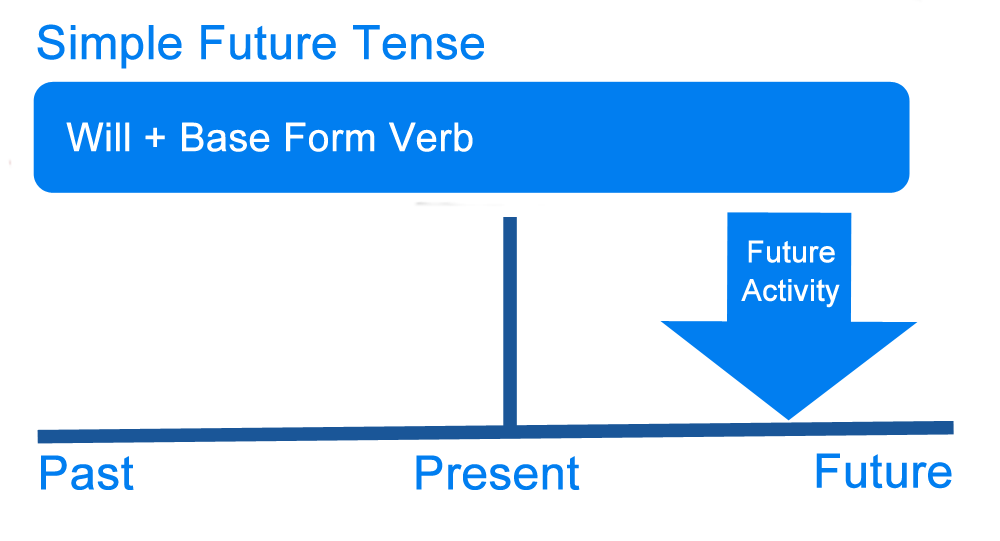
In order to master the simple future tense, we need to use the word ‘will’ and implement that word into the correct order of the sentence. This is why the simple future tense is sometimes known as the ‘will tense’ instead due to the importance of this particular word. In order to create the correct form of the simple future tense, we need to get the structure down without any problems.

As always in the English language, we are going to want to start our sentence even in the simple future tense with the ‘subject’ at the beginning whether it is ‘I, You, They, We, He / She, It, etc. After the subject comes the auxiliary verb first which in this case you are going to put the future indicator ‘will’ right after the subject. Once you have the subject and the auxiliary verb set up, you can then put the main verb after that to fill out the third part of the sentence. Lastly, you’re going to finish the sentence with the action taking place and the object that is being referred to. Overall, the structure of a ‘simple future’ tense sentence should be ‘subject + auxiliary verb + main verb + action (object).

Here are a few examples to consider:

  • I will go to the store today.
  • He will do his homework before tomorrow.
  • We will attend the theater musical later tonight.
  • They will finish the job as necessary.
  • She will study mathematics for her test tomorrow.

Sometimes, you’re going to want to make the simple future tense from its’ usual, positive form into the negative form which isn’t that much different except for one important difference. In order to make this grammar tense negative, you’re going to want to put the word ‘not’ between the auxiliary verb, which is the word ‘will’ and the main verb, which could be any number of verbs to express what you would like to be doing in the future.

If you want to go ahead and put the simple future tense into the question form, you’re going to want to exchange the usual placement of the subject for the auxiliary verb and switch them around with each other. In order to get a better understanding of the negative and question forms of the simple future tense, let us take a look at some examples that I have listed below:

Negative

  • I will not go to the store tomorrow.
  • He will not beg to keep his job.
  • You will not get a promotion unfortunately.

Questions

  • Will you do your homework please?
  • Will she go out with you to the dance this weekend?
  • Will we win the match if we practice hard today?

Another thing to be aware of when it comes to the simple future tense is that you don’t need to use ‘will’ in the auxiliary verb part of the sentence all of the time. To express the future, you can exchange ‘will’ for ‘shall’ in order to get your point across.

Examples

  • I shall not waver from this decision that I must make tomorrow.
  • I shall work my hardest to ace this job interview on Wednesday.

Beyond just writing correctly in the simple future tense, when it comes to the spoken form, you can be much more informal with your choice of words. If you’re speaking to someone about the future, you’re going to want to contract both the subject and the auxiliary verb. You should push them together to become one word with the help of a well-placed apostrophe. You don’t have to speak or write in the contracted form but you can do so if you’re being informal and don’t feel the need to sound everything out for the other person or for the audience.

Examples

I will –> I’ll

I’ll be sure to call you back after I’m done cooking.

You’ll need more time to study tonight since your exam is tomorrow.

In addition to contracting the positive form, you can also contract the negative form of ‘will’ with a slight difference in its’ wording. Instead of ‘will’ being contracted into ‘I’ll’, it becomes something else entirely.

Examples

I will –> I won’t

We won’t stop the strike until our demands are met.

They won’t stop playing their awful music in the house next door.

Now that we have the structure of the simple present tense down to a science, let’s focus on the ways in which we can use this grammar form to the best of our ability.

More often than not, the main reason we choose to use the simple future tense is because we have no plans or obligations ahead of us so we can choose to do things spontaneously instead without putting much thought into it. Sometimes, as human beings, we do things without much planning so using ‘will’ in a sentence to express a spontaneous action is quite useful. The decision that you make or the action that you take can occur right away or within a short notice.

Examples

  • I’ll bring you a drink.
  • We will go see the new Star Wars movie tonight.
  • They will leave after dessert is served.

It should be kept in mind that there are a few known exceptions where ‘will’ is actually the main verb in a sentence and the auxiliary verb is another word that can take its’ place to express a future action to take place. The primary example of this exception is the word ‘think’, which can exchange places with ‘will’ to become the auxiliary verb and to express what the subject may do in the future with regards to their plans or obligations.

Examples

  • I think I’ll buy a bike later today.
  • We think they’ll do the right thing and return the money.
  • She doesn’t think that you are guilty.

Another main use of the simple future tense is to try and predict the future. While these predictions aren’t foolproof and could end up being wrong, we try to be as certain as possible before using ‘will’ in a sentence to prove its’ inevitability. As human beings, we are prone to make mistakes but we try to predict the future as if it is set in stone.

Examples

  • It will snow heavily tomorrow.
  • He said the Yankees will win the World Series this season.
  • We will be victorious in the spelling bee next week.

Lastly, without changing the structure of the simple future tense, you can add the verb ‘to be’ after the important auxiliary verb ‘will’ to create some additional sentences with the same grammatical form. It is not necessary to use ‘be’ in a sentence with ‘will’ but it can help you to create additional examples such as the ones below.

Examples

  • I will be waiting for you outside the doctor’s office when you finish.
  • Will we be meeting at the ice skating rink at 8 PM?
  • They won’t be able to come tonight to dinner, should we reschedule?

Oftentimes, you can use ‘going to’, the present progressive (continuous) tense to express what plans or actions you have for the future. However, for now and for the next edition of ‘English Corner’, we are going to continue to focus on how to use ‘will’ to express the future including its’ continuous form, which we will review next month. Until then, keep studying your English and please let me know if you have any questions or comments!

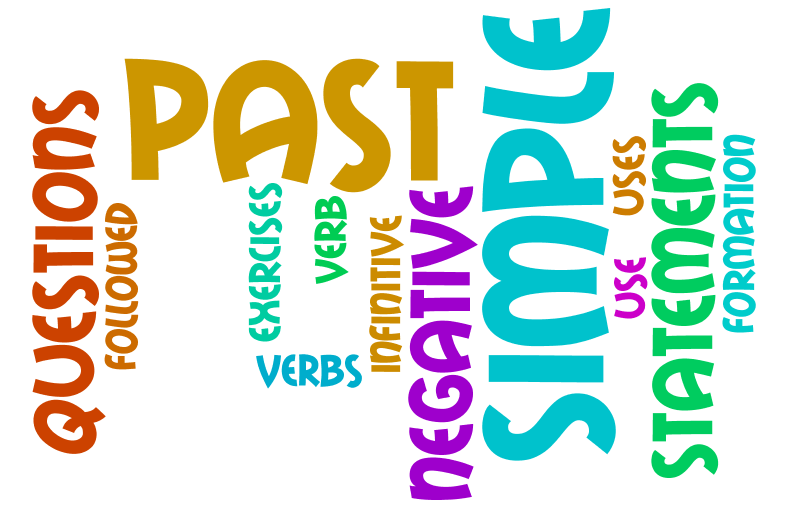
English Corner – Simple Past Tense

For this edition of ‘English Corner’, we’re going into the past to figure out and understand the ‘Simple Past Tense.’ In order to successfully master the English language, you need to be able to use the simple past tense correctly. Whether it’s talking about what you did yesterday or last week or even five years ago, the structure and formation of the simple past tense should not be overlooked. As we discussed previously with the simple present tense and the present progressive tense, having a good grasp of these basic grammar forms will help you to get better in English really quickly.

In this blog post, I’ll go over when and how we should use the simple past tense and you will be able to see a few examples of how to put this grammar tense into action. If you have any questions or comments, please leave them for me below the article, as I am happy to help anyone out who needs additional assistance with the simple past tense. After going through this grammar tense for this post, be on the lookout for the next edition of ‘English Corner’ when we go over the past progressive tense.

If you have heard about the ‘preterite tense’ but don’t know about the ‘simple past tense’, then you can be at ease knowing that they are one in the same. While there are different forms of the past tense, the ‘simple past tense’ has become the most commonly used form and is quite easy to master if you are able to understand and apply the structures and the different ways you can use the grammar tense in a sentence.

When it comes to creating the simple past tense, the structure is quite simple. There are three types of sentences that you can form with the simple past tense: positive, negative, and questions. For positive sentences, you’ll put the ‘subject’ first and then add the ‘main verb’, which will be in the simple past tense. For negative sentences, you put the subject first and then an auxiliary verb with the verb ‘to do’, put into the past tense, which becomes ‘did’ followed by the word ‘not’ afterwards to indicate the negation in the sentence. The last part of the ‘negative’ sentence with simple past is the ‘main verb’ so the structure should be ‘subject’ + ‘auxiliary verb and ‘not’ + ‘main verb’ to complete the sentence fully. The question form of the ‘simple past tense’ is very similar to the negative form but there’s one exception that makes them different from each other.

The ‘auxiliary verb’ comes first before the ‘subject’ and then after the subject comes the ‘main verb’ and the ‘object’, which completes the sentence’s overall purpose. Positive sentences for the simple past tense do not have any auxiliary verbs as the negative and question sentences do reply upon. The verb ‘to do’ is the most important one when it comes to forming the simple past sentence regardless if its’ a positive, negative, or question form of the grammar tense. Lastly, the negative sentences you create must have the ‘not’ word after the auxiliary verb and before the main verb in order for it to make grammatical sense.

Examples

Positive Sentences:

I did go to the mall last weekend. (to go)

         I did play with my friends at the park yesterday. (to play)

Negative Sentences:

I did not think you were polite at the lecture on Monday. (to think)

I did not believe you when you said the stock market crashed. (to believe)

Question Sentences:

Did you do your homework last night? (to do)

Did you tell her you were late for class? (to tell)

When it comes to the verb ‘to be’, there is a different structure for the simple past tense that the average ESL student should be made aware of. In order to put ‘to be’ in the past tense form, it’s either going to become ‘was’ or ‘were’ depending upon what subject is being used at the beginning of the sentence. For the positive form of the was/were usage of ‘to be’ in the past tense, you start with I/He/She/It (subjects) and then the verb, which in this case for singular subjects would be was, followed by the object of the sentence.

For sentences with subject plurals like We/They/You, you are going to change ‘to be’ from was to were to reflect the change followed by the action / object again. For the negative form, you’re just going to add ‘not’ between the main verb and the object at the end of the sentence. ‘Was or were’ are going to be placed at the beginning of a question sentence followed by the subject and the actions that are involved in the sentence.

Examples

Positive Sentences:

He was here yesterday evening at the dinner table. (to be)

         You were in Istanbul last weekend for a friend’s birthday. (to be)

Negative Sentences:

I was not at the park last night because I had work to do. (to be)

They were not at the party because they were not invited. (to be)

Question Sentences:

Was she nice to her date last Thursday night? (to be)

Were you happy with how you did on the Spanish exam? (to be)

Compared to the verb ‘to do’ in the simple past tense, ‘to be’ has no auxiliary verbs at all even for the question and negative forms of the verb tense. However, it is the same in that ‘not’ always comes after the main verb for a negative sentence. The subject also becomes the past tense form of the verb ‘to be’ while the main verb moves to the middle of the sentence and is actually the subject words such as he / she / they, etc.

If you simply would like to use the past simple tense with most of the verbs you’ll be using in your sentences, you will add the letter ‘d’ or ‘-ed’ to the end of the verb in order for it to make sense grammatically. There are a couple of examples we should take a look at it when it comes to forming the simple past tense of the verb with ‘d’ or ‘ed.’

Examples

  1. After school, he walked home in the rain.
  2. He danced really well with his date at the senior prom.
  3. She planned to go to Europe this summer but she couldn’t save up enough money.
  4. Because his mother was sick, he baked a chocolate cake.
  5. We went to the movies after we ate at a Mexican restaurant.

It’s important to note that there may be some irregular verbs that are formed differently when it comes to the simple past tense. For example, ‘go’ in the simple present tense will become ‘went’ when it comes to being grammatically correct in the simple past tense. Another verb like ‘eat’ will become ‘ate’ and ‘drink’ will also change slightly to become ‘drank.’ While most of the verbs only need a ‘d’ or an ‘ed’ to be properly simple past, there are a few irregular verbs that should be memorized for the fact that they are exceptions to the rule when it comes to going from present to past in terms of how the word is written and pronounced.

Now that we know how to use the structure of the simple past tense, you’ll also want to be aware of what kinds of uses do we have for this particular grammar tense. The main purpose of the simple past tense is to talk about the past meaning that we want to shed light about a thing, an action, or a situation that happened in the past. These events can be as recent in the past as in they happened last night or they can be events that occurred long ago such as discussing a sports championship that happened over a decade ago.

Examples

  1. I played my violin last night for my parents and brother. (short time ago)
  2. I had a great time living in Istanbul, Turkey back in 2015. (long time ago)

When we use the simple past tense, you cannot refer to events or actions that are happening currently in the present or are slated to happen anytime in the future. The simple past tense only focuses on those events and actions that were completed sometime in the past. It simply doesn’t matter if the event was finished ten years ago or ten seconds ago. The fact is that it’s still in the past and the sentence structure should reflect the grammatical tense that fits the place and time.

Lastly, it should be noted that the books you’ve read or the movies you seen who occur in the past are mainly going to use the simple past tense. The present perfect and simple present tense may be used in stories or movies as well but you’re going to want to pay attention and listen to the sentences with the simple past tense because they are going to be the most common.

If you want to practice your simple past tense after reading this article, I recommend listening to songs, reading books, watching movies that take place in the past. Besides speaking or writing about the past, participating in the active listening and / or reading about events or moments in the past will help to take your English language skills to the next level. I hope you enjoyed this ‘English Corner’ post and please leave a comment if you have any questions, queries, or comments.

English Corner – Present Progressive Tense

present_progressive_tense
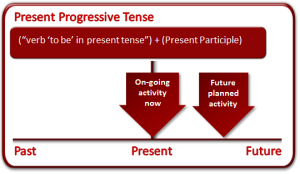
“If you’re not sure where the Present Progressive Tense fits into the timeline, I have a useful chart for you to study.”

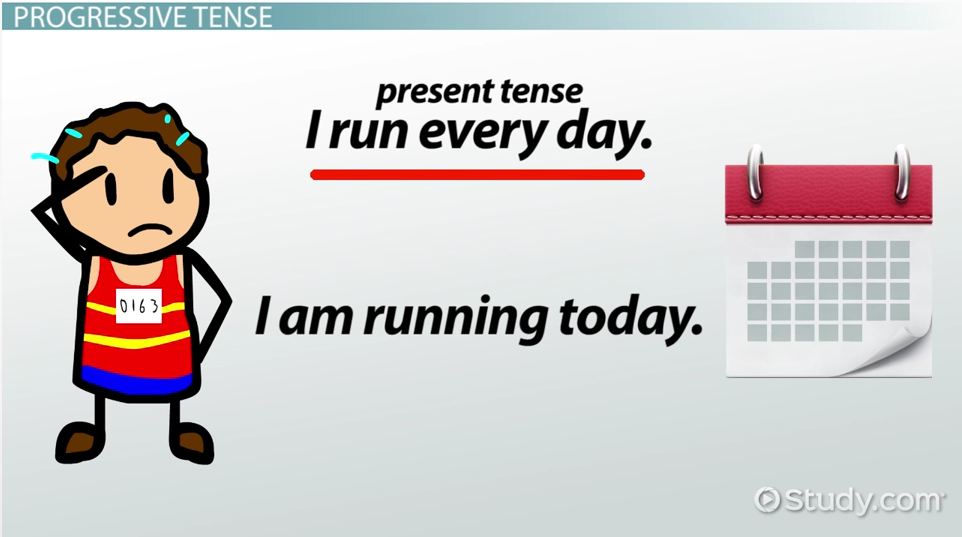
As a student of the English language, once you’re able to understand and use the ‘Simple Present Tense’ with proficiency and are ready to move on to the next grammar step, it would be wise to start learning about the ‘Present Progressive Tense.’ This particular grammar tense can help you to describe a number of different topics and can be used in a variety of ways. By studying the examples listed in this blog post and knowing when to apply the present progressive tense, you’ll be able to advance and get better in your study of English grammar rules.

The ‘Present Tense’ is divided into two kinds: the ‘Simple’ present tense and the ‘Continuous’ or ‘Progressive’ present tense. In order to fully understand the present tense grammar form, it’s important to understand both the ‘simple’ and ‘progressive’ aspects to this concept. Please follow along and read through this blog post if you’re a student of English grammar and want to better understand the ‘Present Progressive Tense.’ We will start by looking at a couple of examples regarding how this grammar tense is supposed to be structured. I would recommend that you copy these particular examples so you have some idea on how to use the present progressive tense in a sentence.

Examples

  1. I am going to the store today.
  2. We are planning on coming to your wedding tonight.
  3. What are you doing for dinner later this evening?

For the actual structure of the Present Progressive tense, it’s a little bit different when compared to the Simple Present tense. It’s necessary to begin the sentence with the ‘subject’ word whether it is “I, You, We, They, He / She, etc.” and you can also use the question form as well with “What, When, Where, Why, etc.” at the beginning of a sentence. The auxiliary verb, which is supposed to be conjugated in the Simple Present tense would come next and is modified depending upon which ‘subject’ word is used at the beginning of the sentence.

The auxiliary verb “to be” is the most popular form when it comes to the present tense so it is meant to be used often when it comes to creating the sentence. When you conjugate “to be” in the simple present form, you’ll end up with “is, are, am, etc.” depending upon the subject word. The auxiliary verb is always followed by the main verb, which is supposed to be displayed in present participle form. When we mention the present participle form, it basically involves the verb such as “do” and adding an “ing” to the end of the verb.

For negative sentences, the form of the present progressive sentence is a little bit different compared to regular sentences. It’s necessary to put the word ‘not’ in between the auxiliary verb and the main verb in order for the sentence to make grammatical sense.

Examples

  1. I am not dancing at the ball tonight.
  2. You are not playing basketball tomorrow.

If you’re thinking about making a question sentence with the present progressive tense, there’s a clear step that you need to take in order to make it work. The ‘subject’ at the beginning of the sentence must be exchanged for the ‘auxiliary verb’ due to a necessary change in the structure of the sentence in order to make the question work.

Examples

  1. Am I doing the right thing?
  2. Are you playing the piano for the recital?

As you can see, the ‘am’ which is the auxiliary verb comes at the beginning of the sentence this time and the ‘I’ word comes after and becomes secondary in terms of its’ placement. The positive and negative forms of the present progressive tense are quite similar to each other with the only difference being that the ‘not’ is added into the structure of the sentence in order to create that difference but the actual structure of the present progressive tense does not change at all. When it comes to the question form however, there is a change in the actual structure of the present progressive tense with the fact that the ‘subject’ and the ‘auxiliary verb’ essentially change places in order to form the actual question.

Now that we know the structure of the present progressive tense in its’ main forms of usage, how do we know when to put this grammatical tense into action? Well, it’s quite simple actually. There are some fundamental principles that guide the use of the present progressive tense in formal sentences. The present progressive tense can describe actions that are happening in real time and are continuing into the near future.

These could be actions or occurrences that are happening right now and have not been finished yet. These are actions that are in progress and have not reached the completion stage yet. This is why we add the –ing to our verbs to indicate that the action is ongoing and hasn’t reached an end yet.

Examples

  1. The wheels are spinning.
  2. The tables are turning.
  3. The guns are firing.

In addition to those actions that are occurring right now, there are also actions that have no set time frame or completion date yet but are ongoing and will require some time to finish. This is the most popular use for the –ing form and there are a lot of examples that can be construed from it.

Examples

  1. John is taking Salsa lessons.
  2. Martha is learning how to cook.
  3. Bob is starting a new job.

Despite being known as the ‘present progressive’ tense, this grammatical tense can also be used to describe actions or habits that will be occurring in the near future. In order to make this work though, you must add a word to indicate that something will happen in the future. Some examples of these words include ‘tonight, tomorrow, next week, this weekend, two days from now, etc. Usually, you are describing something that has been planned out to occur in the future with a specific date or timeframe in mind. People are long-term planners and thus, we are able to talk about actions that we will take in the future having made the plans ahead of time.

Examples

  1. I am going to attend university next August.
  2. I am planning to go to Mexico this winter.
  3. We are thinking about having our honeymoon in Hawaii next month.

The plan has already been set in motion and that’s why you’re discussing what you’re going to be doing but at a future time and place. It’s vital to remember that the present progressive tense does not exist without adding -ing to any verb regardless of which verb it is. The present progressive tense may not be the most popular grammatical tense but it is extremely important to practice, create examples, and master it both in its’ written form and its’ spoken form. Before you can go on to the ‘past’ and ‘future’ grammatical tenses, I believe that it’s necessary to have a good handle on the present progressive tense first before moving on to something else. Keep my explanations and examples in mind and look out for another ‘English Corner’ coming to you all soon.

The Blog Turns One

This week officially marks a year of my blog’s existence and I have to say that it’s been a rewarding and fulfilling experience overall. It started over seventy-five posts ago with my first look into the increasing presence of smartphones in today’s society with “Smartphones: Man’s New Best Friend?” and has continued up through this September with pictures during my recent trip to Guatepe, Antioquia, Colombia.

Over the past year, I’ve learned a lot about the writing process especially when it comes to topics like travel and self-development. While my writing and photography skills are still a work in progress, I believe that I am a better writer and photographer than I was a year ago. I have put a lot of time and effort into this blog over the past year and I am thankful to all of the readers, friends, and family who have supported it by reading the articles, leaving comments, and giving me constructive feedback.

I’ve been through some big life changes with moving home and then back to Colombia recently. This blog has changed to become more travel and culture focused since that’s where I am right now in my life but I hope to continue writing about self-development and even ESL topics. I’m quite proud of the work that has gone into this blog and hope that you as the reader have learned a lot or gained something from my writings. So far, I have had a couple of thousand unique visitors from many different countries along with thousands of individual views and that’s very exciting to see.

As this blog enters year two, I am hoping to invest more time and money into the layout and formatting as well as creating more content for the reader. The first year has been very rewarding for me and I hope to continue developing this blog and expanding the readership. As a writer who enjoys hearing constructive comments, feedback, and criticism, I hope that you will leave a comment telling me your thoughts and suggestions about the blog. I am open to any advice as long as its’ respectful and within reason. I will continue to have eight to ten posts per month in 2017 and will highlight more of my experiences of living, working in Colombia as well as some upcoming travels to different parts of South America.

If you’re new to this blog and don’t know much about me or my writings, I have organized an archives section which has the location of all seventy-five of my posts which have occurred in the past year. I also have a ‘Best Of’ Articles page where I highlight the ten blog posts that I like the most when it comes to culture, lifestyle, traveling, music/movies/books, and personal development. You can find the individual links to these ten top posts here: https://benjweinberg.com/best-of-articles/.

I am now one year into my blogging hobby and I am happy with the results so far. I hope that this website will continue to grow in terms of audience and expand in terms of its’ content. I want to say thank you to all the readers and supports of benjweinberg.com and I look forward to keeping in touch with you throughout the rest of the year and into 2017. Please feel free to leave a comment on this particular post if you would like to share your thoughts or express your opinion about the blog so far and where you might like to see it go in the next year. Cheers to the future and here’s hoping to a great 2nd year of this blog!

Fulltime Nomad – Istanbul, Turkey (Living Abroad Series)

Recently, I wrote an article and submitted pictures for a guest blog post on the travel website, Fulltime Nomad, as apart of their “Living Abroad Series.”

Johnny & Radhika of Fulltime Nomad were nice enough to let me share my thoughts and experiences on their website on what it was like to live in Istanbul, Turkey.

In the article, I talk about what life is like for a foreigner in Istanbul, the unique food and culture of the city, and how best to navigate the challenges and adaptations that come with living and working as an expatriate.

Here are a few excerpts from the article:

What did you love about living there?

“I loved a lot of things about living in Istanbul. I really enjoyed the Turkish cuisine with my favorites being menemen, iskender kebab, baklava, lahmacun, borek, etc. I could go on and on about the food in Istanbul but you’ll have to visit for yourself!

Being within walking distance of the Bosphorus was a real treat for me too. I’m a big fan of history so I liked learning more about the Ottoman Empire, the founding of the Turkish Republic, and visiting all of the great museums and monuments that Istanbul has to offer.”

What are the local people like? Were there any challenges that you faced?

“Istanbul is an enormous city with a lot of different people from different backgrounds mixing together. It’s similar to a lot of other major cities where there’s a lot of hustle and bustle so people may not be as warm or friendly as they would be in smaller towns or communities. However, there are a lot of smaller neighborhoods within Istanbul that are unique in that they feel smaller and people look out for each other. Overall, Turkish culture is very hospitable and kind. When you’re invited to a Turkish person’s home, be ready because they will feed you, enjoy your company, and care for you as a foreigner in their country.

The biggest challenges I faced were battling the horrendous Istanbul traffic on a daily basis and becoming advanced in the Turkish language. I tried to avoid it as much as possible by taking Istanbul’s rapidly developing metro system but it’s inevitable that you’ll hit traffic 90% of the time. That’s why I encourage people who come to visit Istanbul to stay close to the major tourism spots and/or near to the cool, hip neighborhoods. The Turkish language isn’t that hard for foreigners to learn but you really have to memorize the grammar structures and be prepared to work on your pronunciation and vocabulary skills. It’s not easy but the local people will respect and admire you very much if you try to learn Turkish.”

And, finally, any advice or encouragement for someone wanting to take the leap and live overseas?

“Do it. Have a plan and know what you’re getting into but I highly, highly recommend it. If you’re young, want to explore the world, and have a little money saved up; it’s a worthwhile investment. It’s a lot different living overseas than just being a tourist but it’s a much more special experience. You get to experience the culture more, go deeper into the language, and a gain a more mature perspective of the world.”

_____________________________________________

You can read my full article here: Full Time Nomad – Living in Istanbul

I want to thank Johnny & Radhika again for letting me be apart of their ‘Living Abroad’ blog post series. It was a real pleasure for me to write about my past experiences and memories of Istanbul.

If you’re interested in learning more about the digital nomad lifestyle, go to Fulltime Nomad to learn more about Johnny & Radhika’s story. You can also like them on Facebook at FulltimeNomad and follow them on Twitter, @FTNomad.