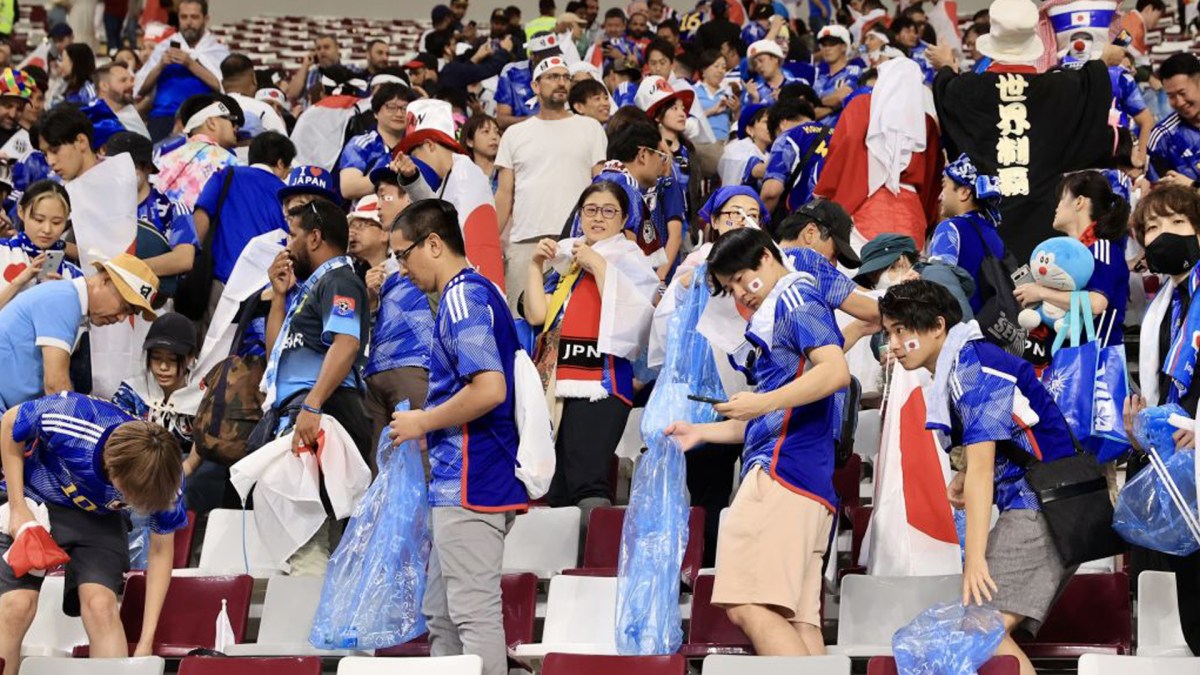
The final whistle blows at an international stadium as tens of thousands of fans rise, cheer, and file out either in celebration or in dismay about their national team’s performance at the Olympics or World Cup. However, in one section, something extraordinary happens. A group stays behind and does not leave their trash behind. Instead, they pull out trash bags. They start cleaning and not just their own mess, but everyone else’s too. This isn’t a publicity stunt. It’s not a requirement. It’s just normal for them. Meanwhile, across the world, another kind of crowd leaves behind a different legacy: half-eaten popcorn, plastic cups, and the quiet assumption that someone else will deal with it later. The difference between these two scenes isn’t about cleanliness, it’s about culture, responsibility, and what we believe we owe to each other.
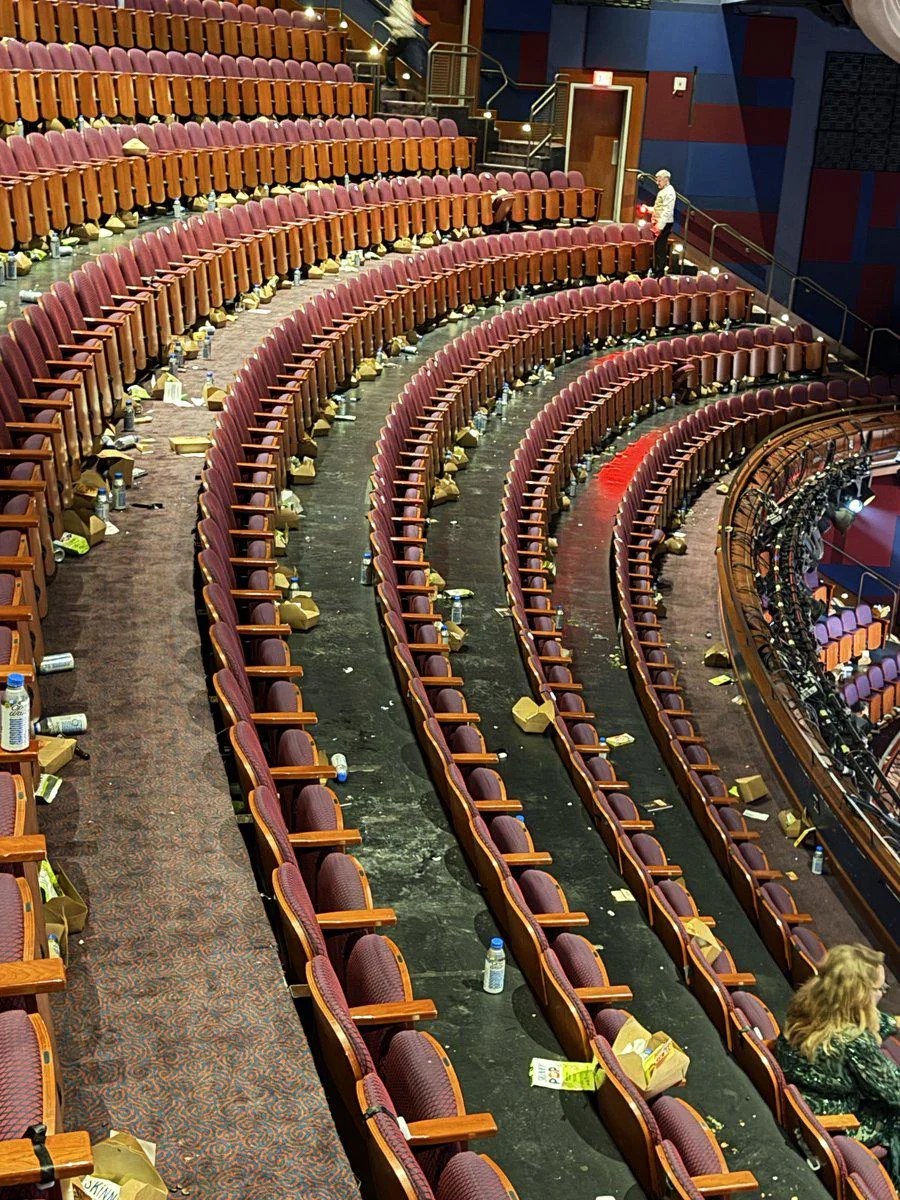
When I think of Japanese culture, what stands out to me is about the internalized responsibility to each other and to the greater society. I’ve seen videos and photos of it at international sporting events, but I’d imagine that responsibility is ingrained from an early age and while I haven’t been to Japan yet, I do believe there is a key distinction that separates their culture of cleanliness from others including my own. Recently at the 2026 Oscars, a photo went viral after Hollywood’s biggest night when popcorn boxes, candy wrappers, and soda cups were left behind at the Dolby Theatre, and instead of depositing the waste in trash bins after the awards ceremony was over, a lot of folks chose instead to let the custodians handle it. They could have deposited their trash themselves but in my view, American-style messiness (especially at large events or in public places) reflects an opposite culture of outsourced responsibility.
From my research, Japanese students from a young age are taught to pick up after themselves including in the classroom and in the workplace. Instead of relying on janitors or custodians, there is the ‘Osouji’ (cleaning) system where values like ownership, respect for shared space, forming good habits are emphasized by authority figures. While Americans including myself were taught to ‘don’t litter’, Japanese kids were also taught that ‘this is your mess and you are responsible for also taking care of it yourself.’ Another Japanese expression I have learned about known as ‘Atarimae’, which is the cultural expectation that cleanliness is both normal and expected from everyone. Even if they are not in Japan for a sporting event, Japanese fans will often clean up after themselves and their section after pure habit because it was ingrained in them from such an early age.
These fans don’t see themselves doing anything out of the ordinary or exceptional and while they are admired for it by other nationalities especially as guests or visitors, the Japanese fans often shrug and remark how it’s just a normal cultural practice for them even when they are not mandated to clean up after themselves in these stadiums. Often times in Western culture, we praise those who clean our streets, stadiums, and public areas, but we often pay them little for their hard work and instead of asking everyday citizens to pitch in to do it more often or to pay our custodians and cleaning staff better, we do neither and wonder why there is less communal responsibility as a result here.
In Japanese culture, especially in sporting culture, it doesn’t matter if their team won or lost, cleanliness and having respect for your surroundings is non-negotiable. This attitude also extends to the players themselves who clean their locker rooms, leave thank you notes to their hosts, and leave their space better than they found it, inspiring others with their example going forward. Character often shows itself most when nobody else is watching or expecting someone to go above and beyond but that’s exactly what these fans, players, and supporters are doing. Collectively, cleaning is seen as respect for the shared space and for other people around you. In these sporting events, the Japanese fans will not just clean their own immediate space but for others’ as well and work together as a team in the section or in the whole stadium.
Oftentimes, in Japan, “This is our space and we should take care of it together.” I’ve found that in the U.S. we ask others with pay or to volunteer to help solve the issue rather than see it as a collective responsibility. The Japanese proverb that is often cited focuses on “don’t leave a place worse than when you depart from it.” I believe this is something that while Japanese in origin should apply to the rest of us too. This one idea alone could help cities and countries adapt more, especially when it comes to reducing pollution or helping our growing waste problem. Incentivizing people to clean up after themselves, to not leave shared space messy, and to start imparting that message from a young age should not be specific to one culture but about promoting a global consciousness around this important issue.
In my own country, cleanliness can vary widely but there have been multiple times where I’ve seen trash left behind in stadiums, people don’t flush after themselves or leave the bathroom in good shape, concerts have sticky floors from spilled alcohol, overflowing bins in my neighborhood because the city doesn’t have enough of them or they are not held onto until the tourists go home, etc. I could go on and on but the dominant cultural mindset is that “there’s staff or people who will clean up after me” and while that is true, I still think it’s in poor form to not throw things out, to make a mess and not clean it up, and to pass on the problem to somebody else. I have been guilty of this myself and I’m not proud of it in terms of leaving trash behind in a stadium or movie theater, and I recognize that now. I hope to get better at it and tell friends and family politely to do the same as me.
When responsibility is outsourced to others, behavior will follow accordingly in this case. When we internalize a new behavior or see others change theirs, culture can shift over time especially regarding cleanliness. When people are seen to clean up after themselves especially foreigners in a football stadium who practice what they preach, others will follow this example and set a new trend. Culture isn’t something to be enforced but it can be mirrored when we see others who have expectations of themselves that we didn’t even think would be possible in our own culture.
Not everyone is perfect and I don’t want to stereotype a whole country regarding cleanliness practices, which can vary depending on the individual context. Social pressure and conformity expectations do have their own drawbacks in certain areas but I do believe that encouragement can be healthy in terms of promoting trash pickup, leaving a place better than you found it, and taking responsibility for your actions in a public place, these are not negative behaviors to me and I think we’d all be better off for encouraging these positive actions like the Japanese fans at a World Cup stadium.
Having lived in other countries, every country has a different relationship to cleanliness and what constitutes civic responsibility, but I do believe that a healthier, happier society is one where the individual thinks more of him or herself in a social context and is in harmony with their environment. We are not an island unto ourselves and what we do has an effect not only on our surroundings but on the wider planet we all share together. The question to summarize isn’t why Japanese fans clean stadiums. The question is why the rest of us don’t and what it would take to make that kind of behavior feel just as normal. Because culture doesn’t change through rules, regulations, or fines, it changes when enough people decide that leaving a place better than they find it isn’t extraordinary, it’s just what you choose to do.