‘Triple Frontier’ – Film Review and Analysis

“Heist movies in Hollywood are a dime a dozen these days and can be quite predictable as well as not very engaging in terms of the characters and their backstories. ‘Triple Frontier’, a film released in early 2019 by Netflix takes the genre and makes it fresh again.”

Heist movies in Hollywood are a dime a dozen these days and can be quite predictable as well as not very engaging in terms of the characters and their backstories. ‘Triple Frontier’, a film released in early 2019 by Netflix takes the genre and makes it fresh again. The film explains the background of the characters, their individual motivations for conducting the heist, and the twists and turns along with a few surprises that happen along the way that will make the audience feel like it’s worth watching until the very end.

Not only is the film shot well with great cinematography, pacing, and direction so you know what is always going on even with the quick-paced action, it’s an intelligent heist movie, which is well thought out and involves a greater mission that the characters have despite their own personal motivations. The scope of ‘Triple Frontier’ or ‘Tres Fronteiras’ in Spanish is unique in that the film is set in the tri-border region of Colombia, Peru, and Brazil so it is an excellent way for the various sets to highlight this unique region of the world. From tree-covered jungles to rocky highlands to snowy mountain tops, the initial heist phase of the movie is bolstered by the 2nd half’s battle against not just external enemies but also by geographic factors.

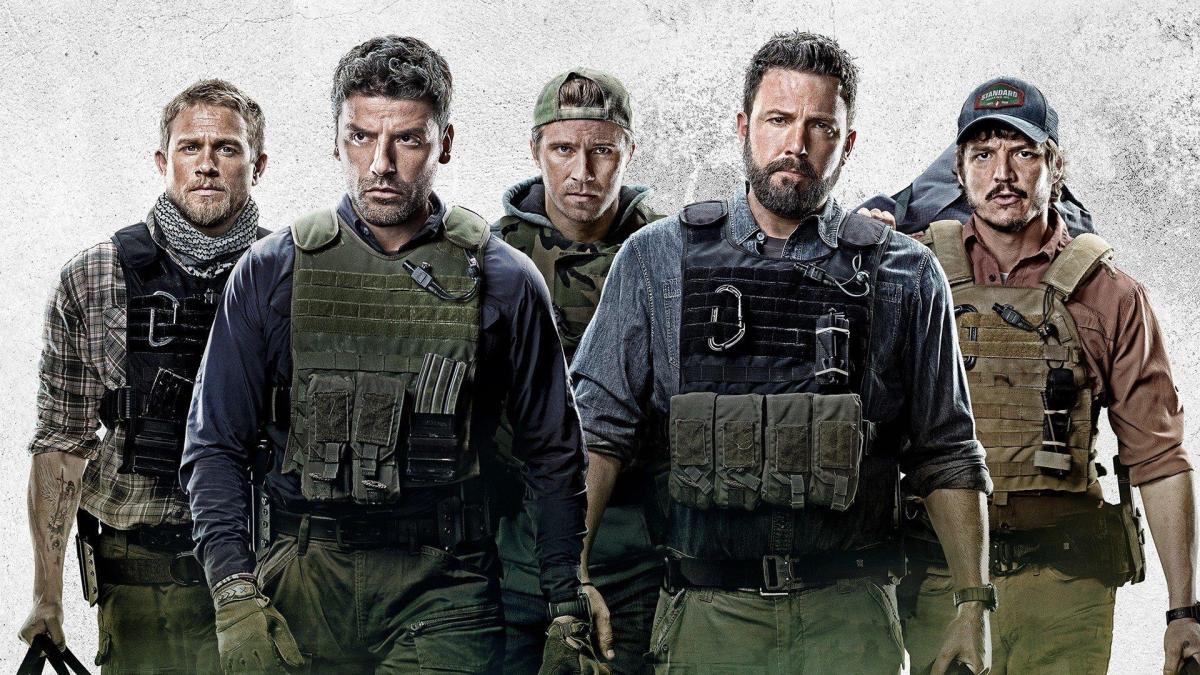
The heart of the ‘Triple Frontier’ film is the story of the protagonists themselves. Each of them from different backgrounds but united by their special forces’ experiences, which bind them together as brothers. While the story does not get into their past experiences together, the film does a good job selling how close the bond is between the five of them is and how much they still care for each other. Civilian life has treated each of the five men differently but what they hold in common is their desire to improve their lives and go back to doing what they do best. Each of them is financially struggling to get by whether it is by dealing with a costly divorce, or by beating a misdemeanor drug charge, or by needing to fight in mixed martial arts to make more money, or by making dozens of motivational speeches to current soldiers to make ends meet.

The leader of the group, Santiago ‘Pope’ Garcia, is not so much as motivated by the money but rather to capture a notorious drug lord and leader of a prominent cartel in the ‘Triple Frontier’ who has been able to evade Pope for years as well as his Colombian counterparts. Pope has a hard time trusting the locals he is meant to led and needs a group of soldiers as well as his friends to ‘watch his six’ and help deliver Lorea for him. Pope has a local informant, Yovanna, helping him locate Lorea’s whereabouts and he just needs a solid team behind him to lead the raid as well as the heist but who better than his four ex-special forces colleagues who he knows can get the job done.

As with most things regarding a heist, it takes expert planning, a reconnaissance mission, as well as expert timing to make sure that things don’t go sideways when it comes time to exfiltration. After hearing from Yovanna that ‘the house is the safe’, and Lorea hides his money not in offshore banking accounts but in his fortress in the Amazonian jungle, Pope has the intelligence he needs to move forward with the heist. While each of the men have their own personal motivations to go on the heist with Pope, they are unified at first by their innate need for the large sums of money that can make them set for life and never have to worry about bills, MMA fights, or tedious motivational speeches ever again.

While each of Pope’s men question the ability for the heist to go smoothly, they feel like they owe it to each other to get it done especially each of them have a set of skills including one being a pilot (Francisco ‘Catfish’ Morales), one being a leader of the squad (Tom ‘Redfly’ Davis), a reconnaissance guy (William ‘Ironhead’ Miller), and the last being a stealth expert able to enact unarmed takedowns, (Ben ‘Benny’ Miller). Without each of his compatriots, Pope knows he cannot get the job done. With the help of Lorea’s money, Pope knows he can get Yovanna, his informant, and her brother out of the region safely without compromising their lives in the process.

While viewers would consider each of the men ‘greedy’ and ‘selfish’, the film makes their decision much more complex than that. They each know that his Lorea and his men pose a danger to the region and that they have a responsibility to look out for one another as brothers given the bonds, they formed with each other as previously active servicemembers. However, seeing as each of these five men have never experienced what it is to have $1 million at their disposal let alone tens or hundreds of millions, the film excellently portrays what it’s like when you finally stumble upon a smorgasbord of money never seen before and how that kind of greed can overwhelm someone, even the leader of the entire heist squad.

Money, like anything in life, when it’s too much with you or weighing you down, can cause things to go haywire when its impact is fully felt. Without spoiling the film for those readers who have not seen it, it’s not just the heist that could go wrong but also how to get the money back to themselves or their families after risking everything in the process. You can also carry so much physical money before you have too much where it starts to drag you down or also others with you, which could also put them in harm’s way if you are not careful. Each of the five men are very skilled in what they do, are loyal to each other, yet are fallible like the rest of us, and how they deal with their own greed, jealously, ego(s), and adversity in seeing the heist through carries the money to be one of the best of 2019, and a film to revisit for multiple viewings.

‘Triple Frontier’ is better than your average heist film for multiple reasons but most of all because it’s a very human film on how to overcome your own fears, doubts, shortcomings, to make sure your friend or brothers makes it back alive. The men are not good or bad men per say but are flawed in that they have given a lot to their country and the world, and now look to get what they desire in return, even if it may end up costing them dearly. The movie is not ‘black or white’ in terms of morality like other heist movies but rather shows the ‘grays’ in how people make decisions not just based on ‘self-interest’ but in a desire to be useful to the group and to put their skills to use.  

While it would be easy to say that ‘greed’ is a central theme that the film is based around, I would argue that the central theme is more about confronting our own nature and how to deal with murky aspects of right and wrong, and how that while money makes the world go around, that does not substitute for the guy or girl next to you who will fight with you, and even die for you. There are some things that money cannot buy and the film exemplifies that in its squad of five men, who while money is their motivation, they quickly learn that it is also a weight that will drag you down if you let it, and is no substitute to the man next to you, whose life is worth more than all the money you can carry, who is impossible to replace, and for which is truly worth fighting for and dying for, if necessary.

‘Up In The Air’ – Film Review and Analysis

“The choices he has made haven’t caught up to him yet, but he is on the path he has chosen that while unorthodox to most leaves him satisfied and content with who he is.”

Ryan Bingham has chosen a different life path than most people he knows. Instead of staying in his hometown, reveling in the glories past of high school and the diner down the road, he wanted to leave his roots and his family for his true passion in life: being up in the air and striving for excellence as a motivational speaker. The choices he has made haven’t caught up to him yet, but he is on the path he has chosen that while unorthodox to most leaves him satisfied and content with who he is.

Bingham (played by George Clooney) is at a crossroads in middle age where he has forgone the responsibilities that are normally achieved by most people his age with a house and a picket fence, being married, and maybe having children. He has forgone all that for an industry on the rise sadly at the time the film is set in and for being out on the road and up in the air for 250+ days of the year. He advocates for a life in motion because if he is not moving, he is not actually living.

His work like his constant travel is an unorthodox industry where he works as a human resources consultant traveling both domestically and internationally to do the dirty work of firing or ‘letting go’ employees in person and providing them with transition packet(s) that the company that’s firing them is leaving them with to help them in the ‘transition’ period. It is a rough job that due to the 2008-2009 global recession has made his HR consultancy firm as needed as ever. The one industry at the time that is gaining jobs rather than losing jobs, Ryan finds himself at risk of having his life of work travel outsources to advancements in video technology (about ten years before Zoom and Skype became mainstream).

While Ryan Bingham is not at risk of getting laid off like so many other working Americans during the period of the Great Recession, the worst since the Great Depression of the 1930s, Bingham is at risk of losing his life of travel on the road due to firing people via telecommunications video instead. To make matters worse, his boss Craig Gregory (Jason Bateman) is tasking him with having a new hire out of Yale University, Natalie Keener (Anna Kendrick) shadow his in-person firings for a few months as the company, CTC, makes the transition to virtual consulting instead of letting those employees go in-person from now on.

That is not the only change that threatens to upend Ryan’s life choice as he has met a charming, attractive woman who has the same lifestyle as him and appears to see life as he does with less commitments and more choice. Alex Goran (Vera Farmiga) is the constantly traveling business woman for whom Ryan may have finally met his match. While they started out as a casual fling, Ryan begins to develop feelings for her as he ponders his uncertain future of life on the road as well as the fact that once he achieves his life goal of ten million airline miles accumulated may not have much to strive for.

Ryan and Natalie may not show it at first but the firings and the emotional weight of being responsible for upending people’s lives cause them stress, anxiety, and a desire to break free of their own pains in doing the job they have chosen. While Ryan is content with travel on the road, he hears from his estranged sister, Kara, that his other, younger sister, Julie is getting married. Ryan left home when he first could leave and never looked back, and his family still remembers that. He is the ‘black sheep’ of the family, known to pursue his own gratification while letting his relationships deteriorate over the years.

Having Alex as a love interest has reignited his desire to see his sisters again and to be there for the wedding in northern Wisconsin. Him and Alex are still a bit of a mystery to each other, but they enjoy each other’s company, and he invites her to join him as the +1 guest, not wanting to be the ‘guy alone at the bar’ watching all the couples enjoy a dance together. There are these moments of vulnerability interspersed through ‘Up in The Air’ that remind the audience that all these characters have their own flaws and shortcomings. They are not perfect people, and the film does not judge them outright but allows the audience to decide if they are admirable or detestable or a bit of both. What I love most is that the film director and writers allow us to decide if we agree with Ryan’s choices or if we would have chosen to go the other route in life that he has neglected.

Sometimes, it is never too late to choose a different path than the one that we have set out for ourselves. However, whether we can pull back from previous choices made and to get a fresh start on a new path, is one of the underlying themes of ‘Up in The Air.’ Ryan can try to start a real relationship with Alex, make amends with his sisters and be more present in their lives, and still achieve his 10-million-mile goal but life can get in the way so it’s possible he will not be as successful in salvaging both his relationships, his career goals, and his need for travel. Even if he thinks he can be successful at keeping everybody in his life happy, he may have to make sacrifices as in life, it can be nearly impossible to keep all options available to you.        

The priorities we make now while end up defining us far into the future and there may come a time where the sacrifices, we make in one area may lead to a lack of connection or attachment or fulfilment in another area. Throughout the film during Ryan’s motivational speeches, he talks about the ‘stuff’ in life weighing us down whether it’s our relationships, our possessions, and even our desires. He makes the point in the audience that ‘life can be better footloose’ and not as tied down to suffer from it. However, what the film makes clear is that when you find real happiness in a relationship, can you pivot to slowing down with that heavier backpack you carry around because you feel fulfilled to do so? Can Ryan make room for a real relationship with Alex or his sisters to give up life on the road so his backpack will be heavier, but he’ll still be happier as a result, and maybe that what’s he was missing all this time around?

While Ryan is a ‘road warrior’ and enjoys not being attached to anyone or anything, who will be there for him if he must stay at his scant one-bedroom apartment in Omaha or if he were to be fired from his job where he fires other people. The film brilliantly shows real people who’ve been through real loss in terms of their jobs and livelihoods, and how while it is almost impossible to get through it, they could not keep going on without their responsibility to their families or the love that their families show for them in those tough times. In life, it always helps to have a good support system or to have good people like family motivating you to get you through the tough times.

Ryan may be prepared for a life unattached now, but he may find as he gets older, that his choice to not have many or any attachments at all may lead to the loneliness and pain that then can come from facing life’s hurdles alone, especially when you don’t truly get to know the person because you are so busy traveling and can’t make time for them at all. As Ryan says to his sister Julie’s husband-to-be, Jim, on their wedding day to help him get over his ‘cold feet’ at getting married, “Life’s better with company.”

Our Many Faces

“We try to find those people or at least one person who we can share ourselves with and how to open up our ‘little weird worlds’ to them without being judged or criticized or made fun of.”

There is a touching scene in one of my favorite movies, ‘Good Will Hunting’, which focuses on Sean (played by Robin Williams), a former prodigious mathematician turned psychologist, who is mentoring Will Hunting (played by Matt Damon) but also providing guidance to a young man going through a tough time. Will is gifted but also has suffered physical abuse and mental trauma having lived with different foster families who did not treat him well. Sean notices Will not really sharing who he is fully and that is not just the case with Sean at first in their sessions but also with Will’s new girlfriend, Skylar.

Will is afraid to let his guard down and shows there are different levels or facets to he is but given his personal history, is afraid to let others into his world because he is worried that he’ll be hurt or abandoned again like his foster parents did to him. Sean tries to get through to Will on multiple occasions and so does Jerry, Sean’s old friend, who believes Will has great mathematical talent but is unwilling to work with him on his personal issues, which came to a forefront when Will got into a street fight with his friends and ended up assaulting a police officer.

In order to get Will to open up to him more, Sean attempts to tell Will why it is so important to show our true self or as I would like to call it here, our true face when we can because deep down that’s who we really are and it’s special to let someone in when we are vulnerable to get to know our full personality and who we are as individuals. Sean, in his personal anecdote, relays the story of how his dearly departed wife would fart when she was nervous and that only he as her husband would know that about her. Sean would sometimes hide the truth from her by saying it was him who farted even when it was so loud that it would wake the dog up when they were all sleeping in bed together.

“It’s the little things like that, that I miss the most.” Sean doesn’t reminisce primarily about their wedding, how they met perhaps, or about what they would do together on a date night. He would think about the things that made her his wife that no other person would know. In other words, Sean would see his wife’s true face or self because of how intimate of a relationship they had as husband and wife. Those little ‘idiosyncrasies or tics or habits that Sean knew about his wife is what made it such a special relationship even when she had passed away. Sean was encouraging Will to open up more to Skylar because it’s no use going through life without showing somebody you love your true self or face, which you likely hide from other people.

Will has friends, has his Mathematician mentor, Jerry, and his psychologist turned confidant, Sean, but these are different faces he presents to all of them, and the one true face Sean is encouraging him to show is with his girlfriend, Skylar. While Will can drink, talk construction, and reminisce with his buddies, he can’t show him his whole personality or face. In addition, Will can solve complicated Math problems and challenge himself intellectually with Jerry, he can’t do that with his friends. While Sean is a friend to Will and they can talk about sports and relationships and life, Will has a hard time confiding in Sean about his past and what he wants from himself.

I think all of us can relate to a movie like Good Will Hunting and a Character like Will Hunting. We try to find those people or at least one person who we can share ourselves with and how to open up our ‘little weird worlds’ to them without being judged or criticized or made fun of. It’s why we show different faces to our loved ones and our friends than we would with our work colleagues or a stranger. It’s hard to open up but we must do our best to be vulnerable with those we trust and whose relationship matters to us most. We can go days, weeks, months, or even longer without connecting with someone on a deep level, which is why it becomes even more special when we can share our peculiarities, our oddities, or the ‘good stuff’ as Sean would call it with someone we truly love and care about.

Similar to the character of Will Hunting, each of us can be hardened by life and find it difficult especially as we age to be vulnerable, to let people in to see the real ‘you’ without holding back, and to be accepted for it. A lot of times, we may be pretending with our other faces to please our boss, to support a colleague, to crack jokes with a friend, and even help a stranger out. It’s good to have those faces in public but it’s who we are in private with someone we care about or love that is our true face.

Thinking of the expression, ‘to put on a good face’, we often must withhold part of who we are at school, at an office, or at the local restaurant or bar, to hold back from showing 100% of what makes ‘you’ you. It’s not easy as Will and Sean illustrate in scenes from ‘Good Will Hunting’ how to show your real face and real personality to someone fully, especially if you have been burned before in the past and been hurt physically or mentally as a result.

We strive to be perfect and to not make mistakes in our daily dealings with others in both professional and personal interactions. However, it can be easy to forget in our lives to not be afraid to let our true face or our true self shine through as we each have our own flaws and our own ‘peccadillos’ that we set us apart from one another. The key challenge or opportunity in life, depending on how you look at it, is finding someone that we can be truly open and vulnerable with without putting on a different face.

Being able to let your guard down, share yourself fully with another person without fear, doubt, or anxiety, that can lead to some of the deepest joy or happiness in life as Sean had explained to Will in the film. While we may not be able to fully express ourselves day in and day out to most people we meet or interact with, hopefully, we can find the right person to spend as much time with as possible and for whom we can be 100% of who we are and what we are deep down inside.

‘A Serious Man’ – Film Review and Analysis

“Above all else, it is a story of a ‘serious’ man who wants to be taken seriously and seems unable to be granted that not only from his teenage children but also from his estranged wife and it seems from religious leaders in his suburban Jewish community.”

Man can be tested again and again but how exactly he deals with life’s challenges and his overall resolve and mettle will be seen as the measure of his true character. If I had to sum up the excellent movie, ‘A Serious Man’, it is a dark comedy but also a human drama regarding fate, fortune, and whether the role of a higher being can ultimately affect our destiny. Above all else, it is a story of a ‘serious’ man who wants to be taken seriously and seems unable to be granted that not only from his teenage children but also from his estranged wife and it seems from religious leaders in his suburban Jewish community.

‘A Serious Man’ (2009) is an excellent modern-day film directed by Joel and Ethan Coen, who I would imagine have had a similar childhood to the lead character of Larry Gopnik (played by Michael Stuhlbarg), which is the inspiration for this adapted screenplay, which is brilliantly written and relatable even if you’re not of the Jewish faith. The Coen Brothers both were raised and grew up as Jews in 1960s – 1970s Minnesota near the Twin Cities. It is likely they had to deal with being religious minorities in a mostly goyim (non-Jewish state) as well as with the growing counterculture and changing attitudes towards parental authority, sex, style, personal responsibility, and other societal upheavals including regarding race, gender, and politics.

While the Coen Brothers have had successful movies before and have won Academy Awards for movies such as ‘No Country for Old Men’, this film, ‘A Serious Man’ is quite unique given that it combines both comedic and dramatic elements, usually in the same scene. Overall, it triumphs as a film in doing that and is also laugh-out-loud funny and additionally heart-wrenchingly sad and melancholic. This film was universally praised and as I re-watched the film again after many years, it stands as one of the best films of the 2000s. Not only is the screenplay and writing engaging and insightful but also the acting is top notch thanks to the hard work of Michael Stuhlbarg, Richard Kind, Fred Melamed, among others in the film.

When you consider the main themes of ‘A Serious Man’, you think of several of them that deal with human nature such as upholding your morality under stress, taking care of those closest to you, dealing with adversity and unforeseen hurdles, and how to deal with questions of faith when you feel that you have been abandoned. As I mentioned earlier on, Larry Gopnik (Michael Stuhlbarg) wants to be taken seriously given the way he has lived his life and he has strived to do so with his academic and professional accomplishments. Sadly though, he is not only not able to get as much success with his professional pursuits, but he also struggles to hold his personal life together.

Despite how ‘serious’ of a man Larry thinks he is, those in his life can’t help but not take him seriously or choose not to. Instead of reassessing his actions and trying to make some behavioral changes or work on any personal defects he may has in addressing his challenges, Larry instead challenges his faith in God and wonders if the Rabbis of his synagogue will have the answers to the questions God has challenged Larry with.

As the film starts out, Larry appears to be relatively successful as a Physics professor waiting to be tenured. He teaches his classes, does research (albeit has not published anything), and enjoys the work he does. Larry is married with two teenage children and a modest house in the suburbs. Him and his family want for nothing, and it looks like he has everything you could want out of life on the surface.

As appearances can be deceiving, the film breaks down how one man’s life can be turned upside down and inferring what events beyond Larry’s control could have tipped his fortune to be negative, as in a curse, years or centuries ago. It is a series of events that tend to turn Larry’s life upside down even when he has not done anything wrong. A Korean student in his Physics class tries to bribe Larry to get a better grade and leaves before Larry can return the money and punish him for the illegal act.

Larry also comes home to his wife, Judith, who asks him for a divorce and for a ‘gett’ or permission to do so she can remarry within the faith to Sy Abelman (Fred Melamed) who everyone takes seriously as a ‘Serious Man’ except for Larry. Larry is envious of Sy to some degree and feels like he has everything given to him whereas Larry has had to work hard for his success. Suddenly, ‘the domino effect’ of one negative event after another happens including Larry losing his home, access to his bank accounts, his marriage, and even his relationship to his teenage children become estranged.

This string of unfortunate events has Larry looking to cast judgment on God and questioning his faith in Judaism. Larry goes to three different rabbis whose advice and counsel does not help him any further. He cannot relate to what they tell them especially as the eldest, he considers to be too unavailable or unwilling and the youngest rabbi being too inexperienced or immature, who end up wasting his time. The 2nd and wisest rabbi give him the advice through an allegory, that while fictional, has a good message to it ends up helping Larry the most that God can only provide the questions, but you must find your own answers. The best way the 2nd rabbi implies to Larry is that he must “help himself by helping others.”

Essentially, Larry Gopnik must look beyond his own pain and selfish wants and look to control what he can and do what he can to get his life back on track. Larry can also do ‘mitzvahs’ especially regarding his own family. Larry’s younger brother, Arthur, is homeless and not mentally sound so Larry tries to get him on his feet but struggles to find the money or the resources to help his brother with his many troubles. He still attempts to maintain better relations with his kids, his soon to be ex-wife, and with his work colleagues. Without spoiling the rest of the movie, Larry understands that he must look to help others rather than looking to God to intervene. While ‘The Boss’ is present to give questions, the answers must come from within.

How Larry stands up to challenges and adversity is like the Torah’s stories about men like Job and Jonah who had their lives thrown into upheaval but were able to get over the anguish by holding true to their faith in God but looking inwards in their own strength, knowledge, and belief in morality and good will to make it through on the other side better than before. Life throws challenges at us every day and how we react to them and try to get through it with our God-given wisdom, kindness, compassion, patience, and reasoning will decide how far we can proceed in life to get back to being successful. Fortune is not everlasting, and faith will not provide good fortune. What can provide good fortune is to do your best, help yourself and others around you, and look to your own inner beliefs and values to guide you through the tough times.

‘A Serious Man’ is about a man who considers himself to be serious but has to struggle for others to call him ‘serious.’ In an effort to be taken seriously, Larry does end up struggling to fulfill the other important parts of his life that require his attention. He can forget to be loving and caring to his wife, attentive and helpful to his children, and more involved within the Jewish community including at his son’s Hebrew school. Larry is not a bad man but the cracks in his life cause some bad events to happen including events for which there is no logical explanation. Larry does his best to be a good man and although he is flawed, bad things happen out of nowhere to him.

The test throughout this excellent film is how do you claw back from adversity and try to give yourself the best shot at having good things happen in your life. Even if your family may appear to be cursed or have a string of bad fortune dating back to the shtetls of Eastern Europe, how do you turn it around so your son or your daughter don’t deal with the same tragedies and setbacks? There are no easy answers in ‘A Serious Man’ but the Coen Brothers make it clear that it is not wise to look to God to solve the problems for you or provide the answers.

The central message of this film is not just for Jews but for all people. God may have provided life’s questions for you to answer but it’s up to you alone to answer them throughout your life. While you may lose faith in hose providing counsel or advice or in the religion itself, the film makes clear that you have to believe in yourself, to help yourself pull through the pain and sorrow, and to help other people, especially the family and friends closest to you, who are going through tough times as well, whose aid and assistance you can provide may be able to help you get to the right direction in life again and to lead you to a better place than you were before.

Anatomy of a Scene – ‘A Small Measure of Peace’

“To be at a certain place or with a certain person for the rest of your days and to be at ease with your decision, that contentedness is to have found the ‘small measure of peace’ that we can spend our entire lives trying to capture but only a few ever truly find.”

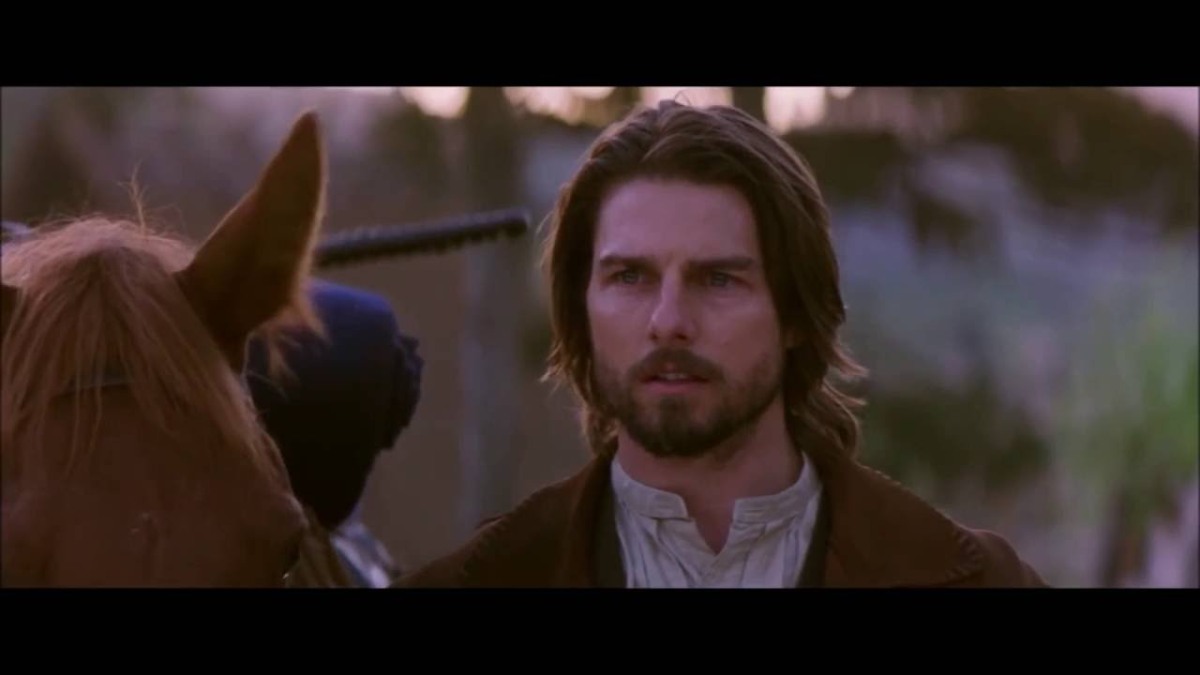
The Last Samurai (2003) – ‘A Small Measure of Peace’

There is a distinct moment in our lives when we realize that the fight is done, and the work is over. It is a pleasant realization that all you can do has been done and that you must take the rest of our days to welcome ‘a small measure of peace’ in one’s life, which is not easily found or embraced. To be at a certain place or with a certain person for the rest of your days and to be at ease with your decision, that contentedness is to have found the ‘small measure of peace’ that we can spend our entire lives trying to capture but only a few ever truly find.

It does not mean that the work is over but rather that the trials of our life have come to pass and that what we have fought for, bled for, or even cried for have now come to pass. While there may no final resting place until we depart from this Earth, finding a small patch of land to call your own, a garden or a farm for you to mend, and a woman (or a man) for whom you can love freely, that is the ‘small measure of peace’ to strive for obtaining, especially in one’s later years.

One man who was able to find his small measure of peace was Nathan Algren, who in ‘The Last Samurai’ can redeem himself, end his alcoholism, and fight with courage and honor in preserving the memory of the Samurai. While the Samurai age came to an end, Industrial Japan, and its Emperor, partly thanks to Nathan leading the Samurai into battle, to preserve their dignity and honor, were able to leave their mark on Japanese culture and history. While he may have been the last Samurai and a foreigner in Japan, he was able to rally them to a glorious end for which Imperial Japan would never forget.

“Tell me how he died.” “I will tell you…how he lived.” Even after losing his close confidant and friend in the final battle, the samurai Katsumoto, who took Nathan under his wing, told him the ways of the Samurai, and introduced him to the woman he came to love, Nathan wanted to preserve his memory to the young Emperor and to let the Imperial Japanese court know how special the age of the Samurai was and how it should not be forgotten.

“Nations, like Men, it is sometimes said…have their own destiny.” While nations choose to look forward to the future, they must also embrace the past to preserve their identity. What was once part of their culture may go away but it can leave an imprint and be remembered by generations to come. Japan’s destiny lies in looking to the future but always remembering the past, such as the age of the Samurai. Nathan Algren, the American who learned the ways of the Samurai, was able to throw off his own turbulent past as a Civil War captain by learning to fight with dignity and honor as a Samurai in a cause bigger than his own ego.

“As for the American Captain, no one knows what became of him…some say…he died of his wounds…others…that he returned to his own country…But I like to think…he may have, at last, found some small measure of peace…that we all seek…and few of us ever find.”

After trying to get himself killed or trying to deliberately drink himself to death, being able to survive as the last Samurai and tell of their traditions to keep the memory of Katsumoto alive, Nathan Algren was able to finally let go of the demons of his past and find the small measure of peace in a small Japanese village where he was first introduced to the only woman he truly loved. In her, Nathan finds a reason to stay alive, to make a life away from war and suffering, to be part of the woman’s village again, and perhaps start anew where he could be at peace with the past and have a pleasant future that is filled with love and peace.

As Nathan gathers his horse and rides down to Taka’s village, he is a man who is content, who is at peace, and who knows what exactly he must do for the rest of his living days. Taka and Nathan have a history together over the course of the film but by the ending scene, she is happy to see him alive and well again. Her beauty, grace, and femininity shine through as she gazes at Nathan, giving him a heartfelt smile, happy to see him in her presence again.

One look at each other says it all and they have been through so much in their time together that just to be making eye contact again is enough to fill up both of their hearts with joy. Like how Japan was willing to move forward to a new age while remembering the last Samurai, Nathan is also ready to be at peace with his past while looking to the future with Taka.

The Yearning for Nostalgia

“Whether it is an escape through our popular culture, a preference to revisit the past than to explore what may come in an unknown future, or to enjoy simply what we have been accustomed to, the power of nostalgia should not be underestimated.”

What is it about nostalgia that stirs such powerful emotions in us all? Why do we insist on revisiting, remaking, and reconstructing the past? This innate yearning that is part of being human, I would argue, is a part of gaining back some comfort and familiarity in an increasingly unfamiliar and complex world. Whether it is an escape through our popular culture, a preference to revisit the past than to explore what may come in an unknown future, or to enjoy simply what we have been accustomed to, the power of nostalgia should not be underestimated.

As the new year begins, looking at the popular culture, which reflects trends in our overall society, this yearning for nostalgia has only gotten more prominent in the recent years, especially with the continuing of the COVID-19 pandemic. There are multiple examples in pop culture where nostalgia is the rule rather than the exception. One example would include video games where remakes, sequels, and remastered games from the Halo series to Assassin’s Creed to Call of Duty are still the most popular even after being decades long in terms of their original creation.

Another example would be television shows where one of the most popular series released recently is ‘Cobra Kai’ whose origins come from the Karate Kid movies of the 1980s, but for which has had a rebirth with the same actors almost four decades later but also with new characters who compliment the original story. Other popular shows involve those from the ‘Star Wars’ and ‘Marvel’ series whose revitalizations include the bounty hunter Boba Fett (also from the 1980s as a character) and popularly known comic book heroes including ‘Loki’, ‘Captain America’, and ‘Hawkeye.’ While these comic book heroes may be new to some viewers, they also date back in their creation back to the 1990s or even earlier allowing their fans to indulge in their own nostalgia in seeing these comic book heroes come to the small screen.

I haven’t even mentioned the plethora of movies from ‘Licorice Pizza’ (1970s), ‘The Power of the Dog’ (1920s Western), ‘The Matrix: Resurrections’ (1990s-2000s), released just in the past few months who pay homage to the past from settings we are familiar with or at least recognize. While there are films and TV series that do focus on mankind’s possible future(s), such as ‘Station Eleven’ on HBOMax or ‘The Expanse’ on Amazon Prime, most popular media today focuses on either adapted stories or at least remakes of stories with slight changes or new ideas related to the same characters to keep its popularity going.

In 2022, nostalgia sells the best, which is why new Halo video games, new Spider-Man movies, and new Game of Thrones books still rule the day in terms of our popular media consumption. Now, that does not mean that our appetite for new and original ideas in our popular culture are going extinct, but you can tell that we live in an age of rampant nostalgia, which is the norm rather than taking a chance or a risk on a new story or new ideas.

I believe that this resurgent nostalgia does have its positives to give people some familiarity with what they already know from their own past and for which they have experience in liking already. In addition, it can take more time to warm up to a new story, a new idea, or a new experience when it’s easier to go with something or someone you already know. Stories can change or adapt or get better sometimes over times and just because we are familiar with a character, or a series does not mean that it automatically gets boring after a certain point.

However, it is much easier to rely on nostalgia rather than to forge a new path. In anything in life and not just popular culture, it’s not as challenging to look back on what we’ve done, where we’ve been, or what we’ve experienced than to go forward, challenge oneself, and try new things. The impulse to be comfortable with what’s familiar rather than the unknown is a powerful force and an impulse that can be hard to overcome without pushing yourself. Nostalgia does not create lasting comfort though usually and it can be rather stale to rely on reliving things, experiences, or places rather than to look forward to unknown occurrences in the future.

Sequels, remakes, reshoots, adapted materials are harder to make better than the originals and they also do not break any new ground. Whether it is film, music, art, books, or in general, it may be easier to rely on nostalgia for creation but if it does not work out, it can be harder to bounce back from that failure. If you do something original or unique instead, it will stand out much more currently, and while you may polarize people who have gotten so used to nostalgia everywhere, you can be more wildly successful in your endeavor potentially and create a new cultural touchstone.

One great example from this past year that generated not only a cultural touchstone, but a worldwide phenomenon from Seoul to London to New York was the Netflix original series, ‘Squid Game.’ While the popular show contained elements from other TV series from the past, it had its own flair to it with unique set design, memorable characters, and a compelling and timely plot. It was the #1 TV series on the global streaming platform for over a month or so and generated important conversations in the public sphere regarding capitalism, income inequality, and debt servicing. The creators of the series took a big gamble, and they could have failed but they put their heart and soul into this unique show, and it paid off in more ways than one.

‘Squid Game’ and other original programming are a lesson for us all to not let our imaginations be stymied by what’s familiar and already known. Even in an uncertain world being continually upended by a pandemic and the effects of climate change, people want to be challenged to discover what’s new and what’s important. There is room in this world for both what’s new and what’s nostalgic. I think our problems begin in society when we only crave what’s comfortable or only what’s nostalgic to us. If we only choose to focus on what we already know, we won’t be able to face what’s new or on the horizon for us. It is not good to dwell only on what’s past and to rehash forever and ever what we already like rather than not trying to discover what we may like or embrace in the future that can help us learn more about the world around us.

“…It’s Just A Business” – Anatomy of A Scene

“As one economic system is thrown into recession, other illicit ones, such as illegal gambling tend to flourish in its wake, which is what ‘Killing Them Softly’ does a good job of showing the effects of a recession leading to a boom in the illicit economy.”

“America is not a country, it’s just a business.”

‘Killing Them Softly’ is a 2012 movie that flew under the radar at the time of its release. It may seem on the surface as a movie about the mob regarding unpaid debts, illegal gambling rings, and retribution for those caught in the crossfire, but what makes this movie different is its allegory laid out in the film regarding its relation to the financial system. As the mafia tries to prop up its system of illegal gambling rings and extortion rackets by using different hired hitmen, there are radio and TV clips highlighting the role of different politicians trying to prop up the financial system in the wake of the 2008 financial crisis. To keep the system functioning, drastic measures are taken.

As the U.S. economy suffers, illegal activities flourish and there are those people who get caught up in resorting to crime to keep their head above water. When the illegal system malfunctions such as a Mafia protected card game gets robbed by criminals outside the system, Jackie Cogan (played by Brad Pitt) is called upon as an enforcer hired to restore order to prevent the local criminal economy to collapse.

When any economy, illicit or legal, are ripped from its foundations, there will be enforcers or politicians who will need to clean up the mess left behind. While the allegory is not spelled out in the film, As Jackie is left to clean up the mess of the robbed card game by getting revenge on the small-time criminals who wanted to disrupt the system, many scenes highlight how the U.S. economy needs to be bailed out due to the irresponsible actions of the bankers and financial traders who got the country into this mess. While it may not be the most pertinent allegory, Jackie Cogan, is there to maintain order in their own local illegal gambling racket, similar to how leading politicians in government are called upon to maintain order when the national financial system is ready to crash.

Jackie Cogan is on his own throughout the movie and must rely upon himself to fix the mess left behind from the mob-protected robbed card game’s aftermath. He knows other mob enforcers who could help but they’re jaded, bitter, or too worse for wear having done Jackie’s job multiple times before to keep the mafia afloat. Above all else, Jackie is in it for himself to get paid and survive in an economic situation that is affecting everyone, criminal or civilian.

U.S. political leaders, similarly, were asked to intervene on behalf of the government, to step in to save a system that was being abused by financial firms, but also individuals, who made irresponsible decisions, and even illegal ones, which caused the national economy to crash. To prevent the system from collapsing, former Presidents, George W. Bush, and then Barack Obama had to step in to save the economy even though the system itself was at fault.

In the wake of the financial crisis that still resulted from the bad decisions and greedy actions of its players, when there’s a resulting increase in unemployment and poverty as the film depicts along with the collapse of some communities, some people will inevitably turn to criminal and illegal activities including gambling, extortion, and drug dealing. As one economic system is thrown into recession, other illicit ones, such as illegal gambling tend to flourish in its wake, which is what ‘Killing Them Softly’ does a good job of showing the effects of a recession leading to a boom in the illicit economy.

Without spoiling too much of the film, the ending scene takes place with Jackie and the mafia’s head accountant meeting at a bar to discuss his payment rendered for being an enforcer to keep the Mob card game running afloat after the perpetrators were punished for robbing it. Jackie, like the head Mafia accountant, are using each other for the money and stability of their own enterprises. Jackie Cogan is in it for himself as other enforcers were not able to do what he does, and he wants to be rewarded for it.

The Mob accountant is looking to make sure his illegal enterprise stays afloat without paying more than he needs to. In this scene, Jackie raises the rate of how much he charges for committing the hits on the people who robbed the card game due to the ‘recession.’ The mob accountant counters by saying that what they would him are the ‘recession’ prices and that he’s getting what another enforcer who couldn’t do the job would normally get.

“You know this business is a business of relationships.” The accountant tells Jackie that they want to keep the relationship with him going since every other enforcer is unavailable so he should not ask for more money given he might need to help them again. Jackie isn’t fooled by this plea to continue their ‘working’ relationship because at the end of the day, it’s about getting paid by them and they could not care less what happens to the enforcers who clean up the mob’s mess.

The accountant is listening to the 2008 election night acceptance speech by then-Presidential candidate Barack Obama imploring Americans to see each other as ‘one people’ and ‘out of many, we are one.’ Jackie doesn’t buy it given the circumstances for which he lives out his life in America. The accountant labels him as a ‘cynical’ person but he has reason to be as ends up cleaning up messes violently and criminally to keep the gravy train for others rolling.

Jackie sees even one of the founding Fathers, Thomas Jefferson’ as a hypocrite because while he wanted freedom and liberty for all, he still owned slaves and wasn’t actually fighting for the ideals he espoused in the Declaration of Independence. Despite being known as an ‘American Saint’, Jackie believes Jefferson was out for himself and his own interests and that there are no unifying ideals that bind the country together besides the need for ‘money.’

“Don’t make me laugh…I’m living in America…and in America, you’re on your own. America is not a country, it’s just a business.” Jackie Cogan, after what he goes through in the film, is looking to get paid and survive at the end of the day. He is corrupted and evil but justifies his actions by telling himself and the audience that he’s on his own like many other people were in the financial crisis and must take this blood money from the mafia to make it in America.

When Jackie Cogan hears American politicians say that “we’re all in this together”, “we are one community, one nation”, he believes that no one is looking out for him, not even his mafia employers, and must fight for every dollar he can have because he would not survive otherwise. ‘Killing Them Softly’ is not just about a low-level mafia enforcer keeping a mob-run gambling ring going after doing contract kills on three people who robbed one of the games.

Throughout the film, whether its news clips, radio segments, or the desperate actions of its characters, ‘Killing Them Softly’ is primarily about the larger and looming allegory for the larger failures of the economic system who could not protect many of its citizens from financial ruin in the wake of the 2008 crisis. The effects of this past crisis reverberates even to this day, whose mess created such dire circumstances for people across the country to fend for themselves. While the small-town mafia and Wall Street can get propped up by those who intervene to save it, the film makes it a key point in this ending scene that for too many Americans, they believe they have been left behind by a financial system that does not work for them and for a culture where it’s “winner take all” and if you get left behind, nobody is going to be there to bail you out.

Anatomy of a Scene – Suds on the Roof

“For Andy, getting three beers a piece and to have some suds as him and the guys work outdoors in the heat is worth the perilous personal risk that he put himself through to make it happen.”

Sometimes, it pays to speak up and be heard even if you’re a convicted felon. Andy Dufresne (played by Tim Robbins) is a few years into his prison stint at Shawshank State Prison in rural Maine. He proclaims his innocence to Red (played by Morgan Freeman, his good friend in the prison, who still has a hard time believing him even though the two have become close first as Andy’s provider of cigarettes and posters of centerfold actresses and models but has become more of a confidant despite being skeptical of Andy’s claims of innocence. He tells Andy “Everyone in Shawshank is innocent, don’t you know that?”

As Red also explains, prison is no fairytale world and Andy runs into a rough crowd of prisoners who sexually assault and physically beat him to a pulp. Prison becomes very routine in that Andy tries to fend off his attackers, does his duty at the massive laundry room, and collects rocks in the yard to shape and polish with his rock hammer as a hobby to pass the time. Red also exclaims in the film, “Prison time is slow time…and a man will do almost anything to keep himself occupied.”

It is through his budding friendship with Red and his connections to the outside world that they can finally break the monotony of prison life and to have a small taste of freedom by bribing a few of the prison guards with cigarettes and whiskey to win the job of tarring the license plate factory roof. While it is arduous, backbreaking, and tiresome; it’s also Summer in Maine, a “fine month to be working outside”, and comes with more outside time in the prison and other special privileges, according to Warden Norton. With a small bribe and maybe some extra names in the sorting hat, Andy, Red, and their associated group of inmates win the job with no other prisoners being suspicious of how they won the prized work outside.

This scene that I like to call ‘Suds on the Roof’ focuses on the men at work with the hot tar with the summer heat bearing down on them. The head of the Prison guards gets fleshed out as a character when we learned that his brother died as a rich man being worth over $1 million dollars, which in the early 1950s would be 20x the amount today in 2021. Byron Hadley, being the vindictive, petty, and cruel man that he is likes to play the victim on how he is only getting $35,000 from his brother despite calling him an ‘asshole’ to the other guards and complaining on how it’s not enough or how the government and others will take some of that money he didn’t earn but inherited. This is a brilliant detail at the beginning of the scene to show just how pathetic and small he could be as a character, which is great writing by the film’s writers, because you begin to grow to detest how vile a person that Byron Hadley is.

Andy Dusfresne, our main character in ‘The Shawshank Redemption’ overhears Byron’s ‘tale of woe’ about inheriting money from his recently deceased brother and seeks to take advantage of the situation by knowing that his tax and finance knowledge as a banker may play to his advantage. The way he stops mopping the tar, walking over awkwardly, and coming up from behind with the guards’ backs turned away from him is terror-inducing when you first see this scene. Andy’s crew, including Red, implore and yell at Andy to keep ‘his eyes on the mop’ and not to antagonize a vicious man that Byron is because they know from experience how senselessly brutal and violent, he can be to the inmates for no reason at all.

Andy, in this scene, he is as cool as a cucumber and basically tunes out their pleas of him to keep mopping and ignore Hadley’s tale of woe. Andy goes up to Hadley and says a few choice words that almost get him killed within the next few seconds. “Mr. Hadley, do you trust your wife?” That simple sentence has a lot of implications such as that she may be cheating on Byron and has been unfaithful to him but it’s really about Andy asking about their financial relationship although his poor choice of words almost leads to Byron throwing him off the roof of the license plate factory and then calling it an ‘accident’ with the outside world beyond Shawshank none the wiser about his actual premeditated cause to murder Andy.

“Because if you do trust her…there’s no reason that you can’t keep that $35,000!” …In just a few seconds, Andy’s quick thinking and knowledge of one tax-free gift to your spouse or wife helps keep Byron from throwing Andy off the roof to certain death. Andy is trying to save Byron some money and exclaims quickly that he can give his money up to $60,000 in a tax-free gift hence why Andy awkwardly started to ask him if he trusts her implying if he would trust her with such a large sum of money and if she would take care of it properly for him. Byron knows Dufresne as all the guards do as a ‘smart banker’ who ‘killed his wife’ and is worried that what Andy is advising him to do would be illegal and get him in trouble with the IRS and the law.

Andy assures him that this tax-free gift is entirely legal and if he doesn’t believe Andy, Byron can ask the IRS to check and make sure. Byron still looks down on Andy and doesn’t need his help to get all the money, but Andy replies fast that unless he wants to pay lawyers or a financial advisor to do it, which would cost a lot of money, Andy exclaims while hanging from the edge of the rooftop that he would do it for Byron nearly free of charge! Andy only needs the forms to start preparing him and the only cost that he asks for in return are a few beers for him and each of his “co-workers”, which is a hilarious aside that Andy would refer to his convicted inmate friends as co-workers rather than fellow prisoners. Even though they are in prison for life, most of them, they still form bonds of friendship to survive in terrible conditions, with a sociopathic warden and a vicious head prison guard preparing to harm or even kill them if they step out of line.

Now, the most surprising thing about this scene is that the ‘nearly free of charge’ refers to a specific brand of beer, “Bohemia style” as Red puts it and for them to be “icy cold” especially to quench the thirst of the hard-working prison crew toiling to tar the roof day in and day out. Andy, in a sense, wants to feel like he is doing his banking job again and instead of receiving a salary for just himself as he did before, he instead wagers his life to get beers not only for himself but for his crew of friends he recently established. He is selfless in this way in that he does not think only of himself but thinks of those others who deserve that small moment of freedom by drinking “cold ones” on the roof at “ten o’clock in the morning.” For Andy, getting three beers a piece and to have some suds as him and the guys work outdoors in the heat is worth the perilous personal risk that he put himself through to make it happen. For Andy, it was to help him feel a bit less like a convict in a prison on a life sentence and a little more like a free man, if only for a short while.

I believe Andy wanted to feel a bit more normal such as like him and his friends were tarring the roof of their own houses and to sit with the sun on their shoulders and feel free and have a bit of happiness in grim circumstances that they find themselves in day in and day out with little hope to their chances of getting out of prison. As Red indicates towards the end of the scene, they can make Byron, the guard, seem magnanimous or even ignored altogether because they have sun and they have cold beers and they have each other, which is more than the convict crew has had all together in years probably.

Andy is selfless to the end in this scene showing his true character as not of a cruel murderer but someone who even if unclear yet to the audience was wrongfully convicted, whose intentions were pure, and who missed his previous life as a banker and wanted to “feel normal again, if only for a short while” as Red so eloquently puts it. In this scene, we begin to see Andy’s true nature as a human being: awkward and clumsy at first but very brave, empathetic, and a kind heart that not only Red’s friends realize from his selfless act but that the guards also see even if they have to follow Hadley’s orders in dealing with him. Andy was offered a ‘cold one’ at the end of the scene but tells one of the convict tarring crew that he gave up drinking.

Red speculates to the audience watching as to why Andy would refuse the beers that he almost died to get but then realizes in the narration that it wasn’t about getting the beers at all or helping Hadley get wealthier, it was to have that freedom to choose again, to have a choice without asking for permission all the time from the guards, and to feel a bit of life again within the drab and gray walls of Shawshank. The freedom of choice is directly related to having free will, which was taken away completely from Andy and other prisoners. He wanted to restore it again briefly to have a bit of normalcy and break up the sheer monotony and harshness of prison life.

Andy would like to think and have again for a moment where he is not a mere convict but a human being worthy of some simple dignity, choice, and a small taste of freedom for some brief moments asking for those cold beers and if he must almost die for that freedom, it was worth it to him in the end. That feeling of ‘normalcy’ to Andy as Red puts it was the real driver for him to put himself at risk and to feel good about it after, to smile and feel some small sense of happiness that had been missing for so long. Lastly, Andy did not just do it for himself but to help his friends who had sustained his spirit in the drab prison even after being beaten, abused, and almost worked to death in the laundry room. It is not he who deserves to feel somewhat normal again alone but his crew as well who worked tirelessly to mop hot tar in the summer without any prospect of real rewards or gratitude. The beers were not just for him but for Red and for the others to feel like ‘free men’ and to be the ‘lords of all creation’ in their minds and in their hearts, if only for a short while.

‘The Terminal’ – Film Review and Analysis

“Perhaps that is what endears Viktor so much to the audience in this film is that he does not give up hope, makes the best of the awful situation he is in, and even starts to befriend other airport workers who are often ignored, underpaid, or even mistreated at times by both customers and their employers.”

A lot of us know what it is like to wait in an airport and have to stay overnight at one because your flight runs into an unexpected delay whether it’s due to a plane’s mechanical issue, or there are weather complications, or if a global pandemic cancels your flight unexpectedly. Whatever the cause of your delay, I am sure you never have had to live in an airport for months on end let alone for more than a day. The questions you should ask yourself though if you could put yourself in this following hypothetical scenario: What if you couldn’t leave the airport upon arrival in a new country? What if the country you just left, your home country, underwent significant political changes or even revolution overnight leaving you stranded? The very underrated yet enjoyable ‘The Terminal’ movie asks these unique questions.

A mix of fiction and non-fiction, a concoction of drama, comedy, and a little bit of tragedy all together, ‘The Terminal’ is a 2004 American film directed by Steven Spielberg and starring Tom Hanks and Catherine Zeta Jones. The premise may seem out there of someone being stuck in an airport for months or years but ‘The Terminal’ is partly based on the true story of a real-life refugee. Mr. Mehran Karimi Nasseri, an Iranian refugee lived in Terminal 1 of Charles de Gaulle Airport and was considered ‘stateless’ for many years and was denied entry into France while also not being expelled from the airport. In total, he lived in the de Gaulle airport for over 18 years and only left from there in 2008 when he was moved for medical treatment and then a Paris shelter.

Nasseri, like ‘The Terminal’s main character have that premise in common of not being able to enter their new chosen destination but also having the right to live in the airport without being expelled. Viktor Navorski (played by Tom Hanks) is on his way to New York City from the fictional Eastern European country known as ‘Krakozhia’ looking to fulfill a personal mission, which is unknown to the viewer right away. We see images of him arriving at JFK along with thousands of others looking to visit America from far-flung countries. However, a routine Visa check and Passport stamp ends up as a nightmare for poor Viktor.

While Viktor was flying into John F. Kennedy International Airport in New York City, his country underwent a political revolution and civil conflict leaving him without international recognition of his Passport since Krakozhia no longer has a recognized government. Since his passport is no longer valid, he cannot enter the United States because the U.S. does not recognize the country anymore due to the ongoing civil strife. Viktor is now ‘stateless’ as he cannot return home and he cannot leave the airport rendering him stranded there. Viktor is forced to remain in the international transit lounge and is not given much help by Frank Dixon (played by Stanley Tucci) who would much rather Viktor leave the airport to get arrested so he becomes someone else’s problem. Mr. Dixon, the Acting Field commissioner for the U.S. Customs and Border Protection agency, gives Viktor only a handful of food vouchers and a calling card but not much else to get by on.

Viktor has a destination in mind for his New York City trip but has limited English skills when he arrives and is only able to tell the CBP officer the name of a local hotel but does not go into much detail about why he is going there and what the purpose of his stay might be. Without his passport and his return ticket, Viktor’s life shrinks down to the international transit lounge at JFK airport where he spends his days collecting luggage carts to order Burger King, accidentally breaks a young girl’s luggage, and slips, falls when he runs to see news about Krakozhia because the Indian American janitor enjoys seeing people slip for his only entertainment.

Eventually, Viktor becomes accustomed to living in an airport and at first, while both daunting and scary to the stateless refugee, he adapts to his new living conditions with some ingenuity and perseverance. He constructs his own bed by dismantling the arm rests of the seats at an abandoned terminal, he learns English through travel guides and by watching the scroll of news information come across the screen to keep up to date with what is going on with his beloved Krakozhia and can both shower and shave somehow when using the airport bathroom.

Human beings have an innate need to adapt to our surroundings even when they are unfamiliar, foreign, or stressful for us. Perhaps that is what endears Viktor so much to the audience in this film is that he does not give up hope, makes the best of the awful situation he is in, and even starts to befriend other airport workers who are often ignored, underpaid, or even mistreated at times by both customers and their employers. The power of perseverance in the face of obstacles makes ‘The Terminal’ a heartwarming and memorable film. Instead of getting down on life and giving up on his situation, he turns the tables on Frank and the border agents by not falling into their traps that they set for him. He makes his own happiness. One of the best moments of this film is when a random gentleman is shaving alongside Vikor, stops for a second, and says to Viktor, “Do you ever get the feeling that you’re just living in an airport?”

Being stuck in an airport terminal means a lot of time on your hands too. Viktor spends his almost limitless time in waiting by honing his skills as a carpenter and a painter even getting himself a job that allows him to earn money ‘under the table’ as a contractor mostly so he can eat. He befriends the CBP officers he sees each day even though they continue to deny his tourist visa due to his invalid passport. One CBP officer whom he gets to know very well is Dolores who Enrique (Diego Luna) has a massive crush on and would like Viktor to ask her questions to start an eventual conversation with her.

In return, Enrique gives him some extra airplane meals that he delivers on to the planes. Gupta, the janitor who at first makes fun of Viktor for slipping and not seeing the ‘wet floor’ sign eventually gains respect for Viktor because he makes him feel less lonely. Viktor befriends other transit lounge employees, plays card games with them over ‘lost’ items never picked up by passengers, and is able to win the admiration and possible affection of Amelia, a wayward flight attendant who ends up caught in a ‘love triangle’ between Viktor and another man.

While Amelia is always on the go and can’t seem to stand still in her relationships or in her job, Viktor is the exact opposite in that he can’t go and must always stay. Tom Hanks and Catherine Zeta-Jones have real chemistry in this movie and represent how different their characters are from each other but can bond over their shared humor, interests, and lust for life even if they are opposites in an ironic sense with where they are in their lives, one stuck in limbo and the other always on the go.

The main mystery that I will not spoil for you is why Viktor flew halfway around the world to be in New York and what exactly is in the Planters peanut can, which he won’t let go of even after being in the airport for nine months. More important than his passport or return ticket, the closed Planters can contain the reason for Viktor’s trip and how he ended up this limbo state even though he has a place to go to before he returns to Krakozhia.

By the end of the film, you and the rest of the audience are rooting for a happy ending for Viktor and even for perhaps with Amelia as well. You also see heartwarming stories of Viktor helping a fellow Krakozhian in need of translation help, aiding Gupta with staying in his job and the U.S., as well as getting Enrique and Dolores to successfully date and marry each other.

‘The Terminal’ is perhaps Spielberg’s most heartwarming, underrated, and emotionally uplifting movie in his storied career as one of the world’s greatest directors. With great acting and an impressive accent by Hanks, lovely humor and touching romantic scenes with Zeta-Jones and the excellent Stanley Tucci who plays a man who can be cruel but also compassionate in the same scene but ends up as the film’s antagonist. This film has a little bit of everything and will make you laugh, cry, and even cheer at the ending.

‘The Terminal’ is a reminder that we are all waiting for something or someone in the winding road that is life itself. Sometimes, we get sidetracked, turned around, or even stuck in an airport for days or months even, but we always can find a way to make the best of our new surroundings, even find happiness or love in the place where we least expect it. Viktor Navorski as I would say is a real mensch who finds himself in a terrible situation, one not of his own making, but is able to create an odd life out of being given nothing and is able to help others and become a favorite of the JFK international transit lounge, which is a place that people want to get out of as soon as possible. He can’t leave but he ends up enjoying the long stay thanks to his compassion, kindness, and genuine warmth as a good person.

Anatomy of a Scene – ‘At A Crossroads’

“Sometimes, the only way to move forward in life is to look for a sign or in this case, a person to help guide you in the right direction.”

“You look lost.” “I do?” “Where you headed?”, “Well, I was just about to figure that out.”

There are moments in life where the road ahead looks vague and uncertain, where we struggle to figure out what happens next or what should we do next. You can have a map with you, and you have an idea of where you want to go but there are four directions ahead and you’re not sure whether to go north, south, east, or west. Sometimes, the only way to move forward in life is to look for a sign or in this case, a person to help guide you in the right direction.

A brilliant movie in its own right, ‘Cast Away’ is about a man whose life is upended by mother nature and who will never be the same again. Without spoiling too much of the movie, Chuck (the main character) loses years away from his wife, his job, and his lifestyle and while he was away from it all, the world moved on without him. Most heartbreakingly, he cannot get back the time he lost working for FedEx or being with his wife or integrating back into his former lifestyle after having his life upended by mother nature.

Similar to how oftentimes in our lives, people move on without us. Friendships sometimes end, romantic partnerships fizzle out, and loved ones can grow distant from us on purpose or by accident. The message of the ‘Crossroads’ scene that I have included above is that life goes on with or without us and if we are still here on the planet, we cannot hold on too tightly to the past and must instead try to chart a new path forward even when that is often difficult to do.

This particular movie scene is one that a lot of us can relate to right away. You’ve finished your education, maybe you’ve quit a job, or you decided to retire and are wondering, ‘what’s next?’, which is an essential question of the human condition. It is hard to pause when you’ve had a routine upended or a part of your life just end one day, and you are not sure what will come next. You may have a couple of choices pulling you in different directions and you are looking for a sign of what to do next. Sometimes, that sign comes to you based on a significant item, object, or memory that pulls you in a certain direction but oftentimes, we just have to make the best decision that we have based on our thoughts and assumptions on the way forward. After making ‘crossroads’ decisions of my own in life, what’s important to realize is you have to make some choice and not stagnate in your own worries about what could happen. The worst decision would be to make no choice at all and let your life stay in a perpetual kind of limbo. Chuck was close to doing just that in ‘Cast Away’ before he found the sign that he needed in an unlikely place.

This ‘Crossroads’ scene starts exactly with that image of a crossroads on a non-descript road in middle America, which could be Kansas but is actually somewhere in rural Texas. Chuck, our protagonist, looks lost as he gets out of his car at this dirt crossroads, takes a big gulp of water in the hot Texan sun, and gets his large USA map out to chart his next decision. He just left the house of someone whose package with ‘angel wings’ helped him a lot during his isolation from civilization and for which he brought back their package as a way of thanking him or her. The people in Chuck’s life have moved on without him and he is not sure what comes next given he is a free man after years away from people but at the same time has lost his wife, his job, and his previous lifestyle to one fateful event that was out of his control, and which seemed like an act of God or mother nature.

Any part of this scenario would frighten and subdue even the most resilient person in the world, but Chuck is resilient albeit perplexed on how he ended up where he is without a sign of a compass to chart his way forward. When Chuck reaches this four-way crossroads and stops to check his map, a woman in a red, flatbed truck comes up to greet him and see if he needs any help and if ‘he is lost.’ She tries to give him advice on whether to go north to Canada, west to California, or eastward bound to the coast but he seems resilient if not a bit stubborn after being on his own for so long. Still though, the redheaded woman is kind and sweet in her manner and she says back to Chuck, “well, alright, good luck, cowboy!”

As the sweet-natured woman starts to drive away in her truck, Chuck notices something he’s seen before. A pair of yellow angel wings at the back of her truck’s bumper that he’s seen before on the package he had with him all those years. He knows now that the package he delivered was the one to her house and it was her package! A range of emotions hit Chuck all at once as he becomes shocked, bemused, and then pensive as if he should follow her or not.

Most intriguingly, towards the end of this scene, chuck now with the first sign in a while of where he might go next in life, stands in the middle of the four-way crossroads thinking about the woman whose package had such a big impact on him in his years-long solitude and how likely it is that he finds her attractive as well as kind. The camera pans out to show him in the middle of the crossroads looking at the different directions where he could possibly go next but then the camera lingers on his face as he moves to the direction where he really wants to go. It is the redhead’s truck’s direction down the long, sloping road ahead and Chuck begins to smile as he finally knows where to the long road of his life should end up next.

It is a very poignant and moving scene as we all must make decisions like Chuck in terms of where we want to go next in life. These decisions are hard to make and sometimes involve real regrets but also lead to joy, peace, and happiness. We must do our best to choose wisely in life, but like Chuck did, we must look for the signs where and when we can, and then we must make a choice because not making a choice is not living at all, it is merely existing and that is no way to go through life.