Hello, I am an Entrepreneur in Online Education focusing on English as a Second Language Studies. I offer online courses and eBooks on English grammar, Business English, and English writing. I also recently released my first personal development guide.
You can find all of these offerings below and please sign-up for updates to come! Thanks.
This second post in the new ‘Cuisine Spotlight’ series will focus on another favorite dish of mine here in Colombia, which is known simply as ‘Cazuela.’ Despite the unassuming name, this popular South American dish is quite diverse in what it can offer you when it comes to mealtime. Depending upon what you’re craving, a good cazuela can be made up of seafood, beef, chicken, etc. as its main base food. ‘Cazuela’ is a Spanish word, which roughly translates into ‘Casserole’ in English.
Similar to a casserole, a cazuela dish is a mix and match of different kinds of foods with tasty results. Usually, cazuela is considered to be a soup made up of different vegetables and meats mixed together. You can’t have cazuela without some flavored cooking stock put in there to form the soup-like appearance. Depending upon which South American country you’re visiting or living in, there will be a different spin on what cazuela looks, smells, and tastes like.
In Chile, cazuela comes with a piece of meat, which can either be turkey, pork, chicken, or beef. Specifically, a leg of chicken or some beef ribs will be the meat in the cazuela dish. Underneath the meat would be a piece of pumpkin and individual pieces of potato with a base of white rice doused in the flavored cooking stock. For the vegetables, it varies depending upon the cook’s preference but there’s usually celery, carrots, green beans, cabbage, etc. that are sliced and diced up to be soaked in the cooking stock and added to the rice and meat. In the summer time, some Chileans will add some sweet corn to the vegetable mix. The Chilean version of cazuela is known as being very similar to the ‘Olla podrida’, which is a colonial dish from Spain that has gained in popularity in Chile and other South American nations.
Cazuela is also quite popular in Peru, the southern neighbor of Colombia. Cazuela is often prepared in the Amazonas region of Peru and is made in different ways depending on which area of the department you’re in. For the meat, there are often more creative choices like hen and sheep that are added to cabbage, rice, carrots, and the broth juice. Usually, this kind of cazuela is cooked over a flame in a sauce pot as its mixed together and served to a large group of people.
Beyond just being a soup or a casserole, Cazuela can also be made into a traditional kind of pie as it is in Puerto Rico. During Christmas season, the Cazuela pie is made up of sweet potato, pumpkin, and coconut milk. It’s quite a popular desert that is easy to make and is popular for its’ sweet flavor and light texture.
Multiple countries in Spain, Ecuador, and Colombia have embraced the ‘Cazuela de Mariscos’, which is made up of a number of different kinds of seafood. The Colombian version is easy to make and is known for being a thick kind of soup and also is rumored to be an ‘aphrodisiac.’ The seafood that comes in the soup includes calamari squid, prawns, clams, shrimp, and small pieces of fish.
The kind of ingredients you want to add are olive oil, salt, pepper, thyme, bay leaves, coconut milk, white wine, some seasoning, heavy cream and minced garlic. To top it off, you need some vegetables including carrots, celery, red pepper, tomatoes, and bouillons. You got to mix up everything together, serve it in a clay pot or bowl, and enjoy the delicious broth and food. Sometimes, you can find that there are cazuelas for shrimp or prawns separately which can come with rice and a heavy broth mixed together with the seafood.
The type of cazuela that I have become most familiar with over the past couple of months is the ‘cazuela antioquena.’ You can find it throughout the department of Antioquia and most commonly in the city of Medellin. I find it to be unique compared to other kinds of cazuelas given the emphasis on ingredients that are known well to Paisas making it a local favorite.
You start with a base of Antioquian brown beans mixed in with some white rice. On top of that is the meat, which are usually ‘chicharron’ or fried pork belly and some cooked chorizo. Instead of more common vegetables like celery and carrot, this favorite dish of Antioquia comes with pieces of avocado and some cut-up sweet plantains. To add some flavor, the Colombian creole sauce known as ‘Hogao’ is mixed among the meat, plantains, avocado, rice, and beans.
Like many other local dishes here, a small arepa is added to the mix, and placed at the top of the ‘cazuela antioquena’ to be eaten with the rice, beans, chorizo and whatever else would go along well with the arepa. Second only to the ‘Bandeja Paisa’, the ‘cazuela antioquena’ is likely to be a fulfilling dish for lunch that can satisfy your cravings for some local cuisine.
It’s likely that you’ll run into some kind of ‘cazuela’ if you’re traveling or living in South America. The various kinds of cazuela unique to a certain country or region makes it an exciting dish due to its diversity. Whether it’s meat, seafood, vegetables, rice, and beans in the cazuela, it’s important to bring a big appetite to the table because it’s likely to fill you up and leave you satisfied.
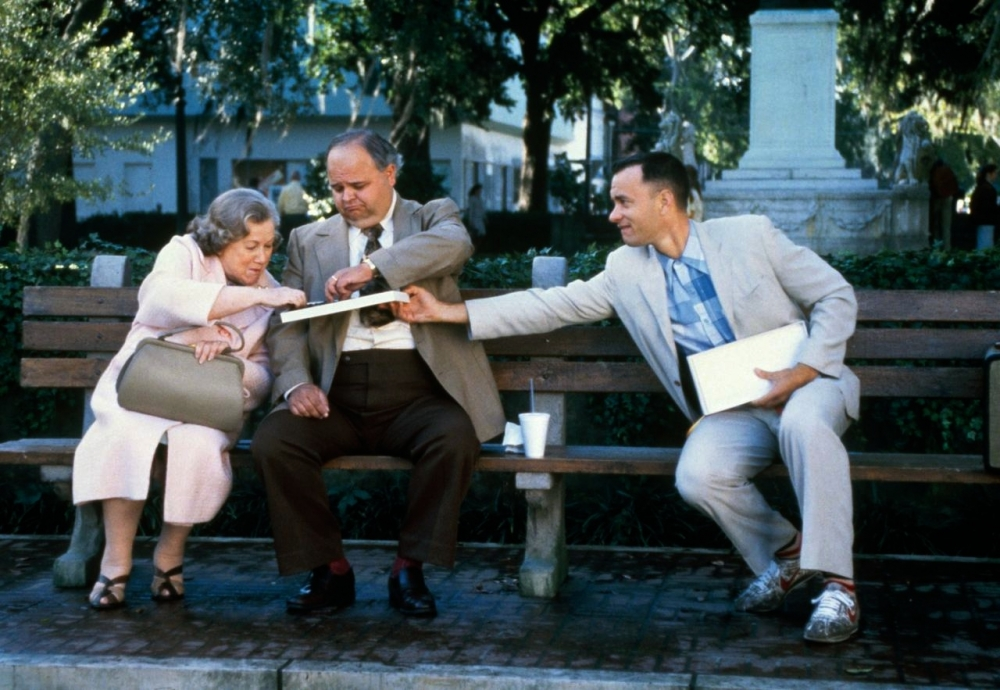
“Life is like a box of chocolates, Forrest, you never know what you’re gonna get.”
One film that captures both your imagination and your heartstrings is the classic American film, Forrest Gump. Released in theaters over two decades ago in 1994, it has become one of the most beloved films of all time and enjoyed high amounts of praise from both critics and moviegoers alike. The film was notable for the fact that it won many different awards and accolades such as the Academy Awards for Best Picture, Best Director for Robert Zemeckis, Best Actor for Tom Hanks, among many other distinctions. I would argue that this film along with Big helped to launch Tom Hanks as one of Hollywood’s rising stars and set him on a monumental acting career, which included many future box office hits. Five years ago, the U.S. Library of Congress recognized Forrest Gump as being a film that is historically, culturally, and aesthetically significant and selected it for preservation in the United States National Film Registry.
Forrest Gump is about an everyman who has a slight disability of not being as smart as everyone else with an IQ of 75. However, despite him learning this fact as a child and being bullied about it, he manages to not let this handicap ruin his life but instead learns to preserve and make the most of things. The story of Forrest Gump takes place over the tumultuous and transformative decades of the 1950s, 1960s, 1970s, and 1980s when America went through a number of political, social, and economic changes. One of the true delights of this film is seeing how many of these changes Forrest witnesses and is actually apart of.
During the film, we see him shaking his hips with Elvis Presley at his mom’s guesthouse in Alabama, serving in the U.S. Army after being drafted in the Vietnam War, starting a fight during the midst of a Black Panther group meeting, and meeting Presidents Kennedy, Johnson, and Nixon. Despite his lack of formal intelligence, Forrest does not let that stop him from being an ‘All-American’ college football player, a veteran of the Vietnam War, a shrimp boat, a wealthy man due to his investments in a little company called Apple Inc, and lastly and most important, a loving son, friend, father, and husband. In addition to serving in Vietnam and witnessing Elvis Presley in person, Forrest also helps a black woman become the first African-American to integrate into an all-white school, helps to break the seal on the Watergate scandal when he sees people breaking into DNC headquarters, and becomes an international ping-pong star while helping to improve relations between the United States and the People’s Republic of China. He’s an every man who takes life as it comes regardless of the good or bad and finds himself involved in extraordinary events that shape American history.
As Forrest gets wrapped up in these events over the course of the film, he takes an almost child-like innocence to them even in the cases of war, violence and prejudice. He’s aware of these things and knows right from wrong but tries to live a simple and uncomplicated life despite all he’s been through. He wants to be a good son to his mother; he desires to be with the love of his life, Jenny, to have good friendships with his fellow soldier Bubba and Lieutenant Dan, and to be a responsible father to his son at the end of the movie. He may lack intelligence in terms of critical thinking and solving problems; he has the ability to display maturity, show emotional intelligence and is able to show kindness and love towards others despite his differences with them.
While he may not know his father, and his wife Jenny disrespected and left him in the cold over the years when she was dealing with her own demons, he has the ability to look past these grievances and live a good and fulfilling life. Forrest endures other traumas and heartbreak in the Vietnam War when he sees his fellow soldiers and friends killed or disabled like his good friend Bubba and his lieutenant, Dan Taylor. While he could have given up on life or become bitter and disenchanted, Forrest instead finds new purposes in playing ping-pong around the world, starting a very profitable shrimp boat company with his old Lieutenant Dan, and runs around the United States for three years straight to help get past those losses and betrayals that has haunted him. Forrest is an example of a man who never gives up and keeps moving forward despite his past. He simply does not let his past define him. Like all of us, he’s been giving good and bad fortune but he makes the best of things regardless of the circumstances.
During the long run scene of Forrest’s, people become inspired by his example and ask him for advice and guidance. He doesn’t have much to say to them but they happen to find comfort in the fact that he’s doing this just for its’ own sake. Forrest simply can’t help them all figure life as they have to each follow their own path and find inspiration wherever they can. Once one path ends, another one opens up to be explored afterwards. As Forrest states when reporters ask him why he’s running, “I just felt like running.” Sometimes, you don’t need a reason to be doing something if you feel like it.
While many other people are inspired and are given hope from Forrest’s example, Forrest is inspired by other people such as his mother played by the wonderful Sally Field, along with his fellow soldier Bubba and his Lieutenant Dan. His mother teaches him about love, respect, and finding your own path in life. She gives Forrest a quote on her death-bed that he takes to heart and has become one of the most famous movie quotes of all-time. “Life is like a box of chocolates, Forrest, you never know what you’re gonna get.” Forrest asks his mom what his destiny may be. She tells him that he can’t answer that for him and ask he needs to figure that out for himself. She does let him know that it was her destiny to be his momma and that she’s very proud of the man that he has become.
Forrest’s relationship throughout the film with Jenny is complicated and unfortunate as the ways their lives converge and diverge leads to pain and heartbreak but also compassion and understanding. Jenny is Forrest’s first and only love. They grow up together and spend time getting to know each other. Forrest is a breath of fresh air for Jenny who has to deal with an abusive father at home. Even through college, they remain close but still friends.
Jenny’s path through life takes her to some lonely places and she deals with abusive boyfriends, drug abuse, and hostile friends like the Black Panther party. Even with her flaws, Forrest still loves her as always and asks her to marry him. She eventually agrees to be his bride making him the happiest man in the world. Tragically, their marriage is cut short by the fact that Jenny has HIV/AIDS and has become really sick. However, the love that Jenny shares for Forrest allows them to have a son together before she passes away. While a devastating loss for Forrest like it was to lose his mother and Bubba, his best friend, Forrest’s destiny is renewed in the love he has for his son, Forrest Jr. as he takes care of him after Jenny’s death.
Forrest Gump is a special movie that has resonated with millions of people around the world. Many folks have been inspired by the message of this movie and have gone to improve their lives in enumerable ways. The story of Forrest Gump is a story of hope, love, perseverance, respect, and tolerance. Anybody who watches Forrest Gump will get something out of the movie because of its’ overall message. Like the feather that floats by Forrest at the beginning and ending of the film, you make the most of what we’re dealt with in life and it’s you alone who can shape your destiny through the choices you make, the people you befriend, and the impact you create. We may all be floating on the breeze like a feather unsure of where we’re going but we can steer the direction of that feather to new places and new conclusions.
Forrest Gump is a special character in a special movie that rekindles for viewers what they love about the big screen by showing our capacity as human beings to love, cry, laugh, and share good times and bad with those friends and family as Forrest does. Anybody who watches Forrest Gump can relate to Forrest and what he goes through. That is what makes this movie such an endearing, popular film and why it will last for many more years as one of the most iconic pieces of work in American cinema.
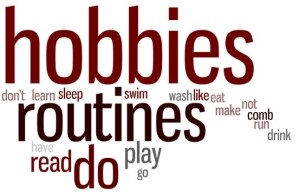
“Hobbies, routines, and daily habits are key actions that are described by the simple present tense.”
If you’re a student of the English language, chances are good that you’re familiar with the ‘Present Tense’ grammar form. In order to form basic sentences in your writing or to make yourself understood verbally when speaking to a native speaker, it’s important to learn the ‘Present Tense’ especially before moving on to the ‘Past’ and ‘Future’ tenses which is slightly more advanced and complicated to master.
The ‘Present Tense’ is divided into two forms: the ‘Simple’ present tense and the ‘Continuous’ or ‘Progressive’ present tense. In order to fully understand the present tense grammar form, it’s important to understand both the ‘simple’ and ‘continuous’ aspects to this concept. Please follow along and read through this blog post if you’re a student of English grammar and want to better understand the ‘Simple Present Tense.’ For next month’s edition of English Corner, we will focus on the ‘Present Continuous Tense’ and how that grammar tense is formed correctly.
The Simple Present tense is regarded as being the easiest to learn and most vital tense to master in order to the basics of English grammar down. For example, the simple present tense uses verbs like “to be” and changes the form into singular or plural depending on if you are referring to one more person or more.
For Example:
He is on his way to the store to pick up some fruits and vegetables.
They are at the ballpark tonight to watch the baseball game.
We can see from these examples how the verb “to be” is put into the simple present tense using the word ‘is’ or ‘are’ depending on if the subject of the sentence is singular or plural. For the subject ‘He’, the corresponding simple present tense form of “to be” would be is which is singular. For the subject ‘They’, the corresponding simple present tense form of “to be” would be are which is plural. With the subject word ‘I’ which is singular, we will use the word am which is singular but is different from the word ‘is’ which is used for ‘he’, ‘she’, or ‘it.’ The subject words of ‘they’, ‘you’ or ‘we’ would be used for the word ‘are’ as mentioned before.
The structure of the present simple tense is quite easy to form correctly when compared to other English tenses. You simply need to put the subject and the main verb together to form the basis of a sentence. This goes for positive sentences which don’t have a negative connotation or which form the basis of a question.
For Example:
1) I do like to swim with my friends at the lake.
The subject for this sentence is the word ‘I’ and the verb form is ‘do’ and it is possible sometimes to follow one verb with another verb or two verbs, as is the case with this sentence. ‘Do’ and ‘like’ can be together as well as ‘to swim’ and then to finish off the sentence with ‘my friends’ who are the objects and ‘at the lake’ which is the location along with a prepositional phrase.
The first verb in a sentence when there are other verbs after is known as the auxiliary verb, which comes before the main verb(s). Once again, it’s important to note that ‘I do’ can change form into becoming ‘He does’ or ‘She does.’ It is a common rule that the verb must be modified to change depending on which subject word in English is being used.
If you need to make a simple present sentence negative, it’s important to add the word ‘not’ after the auxiliary verb of ‘to do.’
For Example:
1) I do not like to dance because the basic moves are hard for me.
2) He does not want to go to work because he does not like his boss.
Regardless of the subject word being ‘I’ or ‘He’, there will always be a ‘not’ after the auxiliary verb. You can have multiple verbs being used in a simple present sentence as well. There is no limit to the amount as long as the sentence makes grammatical sense to the audience.
In order to form a question using the simple present tense, the order of the sentence needs to change slightly in order to reflect this shift. Instead of the ‘subject word’ leading off the sentence, the auxiliary verb of ‘to do’ must be at the beginning. You can either put ‘do’ or ‘does’ at the beginning of a simple present tense sentence. After that, you can place the subject word whether it is ‘I’ or ‘you’ right after the auxiliary verb. In this case, after the auxiliary verb and the subject comes the main verb and then finally the object which is wrapped up with a question mark to finish the sentence.
For Example:
1) Do you like to go skiing?
2) Does he know who you are?
It’s important to remember that the positive form of a simple present tense sentence doesn’t have an auxiliary verb in it while there is one in both the negative and the question form of the sentence. With the main verb for the positive form, it’s important to add an ‘s’ to the end of the word especially if it’s a third-person subject like ‘it’, ‘he’ or ‘she’ in order to make the sentence grammatically correct.
For Example:
He likes to dance salsa on Saturday night.
She knows that it’s important to study for the Chemistry exam.
When it comes to the negative and question forms of the simple present tense, certain rules must be observed. The auxiliary verb form must be used in both cases and also needs to be conjugated. The main verb form does not change and often comes in its’ normal form which is ‘to ____’. For negative sentences, the word not must come between the auxiliary verb and the main verb for the sentence to be coherent. Lastly, The auxiliary verb has to come at the beginning of a question sentence while the subject comes afterwards which is a reversal of what you would see in a positive or negative form of the simple present tense.
In terms of using the simple present tense correctly, it’s best usage comes in terms of describing general times and situations. Action verbs like ‘to do’, ‘to eat’, ‘to work’, ‘to dance’, and ‘to swim’, etc. are apart of the simple present tense umbrella of usage. This grammar tense is instrumental in describing a statement, which is always true as well as describing actions, which are continuous, habitual, or come from a routine. The simple present tense is most often associated with the verb ‘to be’ which can describe whom somebody is, what they do, where are they going, and why they are unique. The simple present tense can describe those actions, which happen in all forms of time whether it is the past, present, and future.
Out of all English grammar forms, the ‘Simple Present’ tense forms the base of a simple sentence. For any Basic English language student out there, it’s a necessity to master this concept before moving on to other forms of the present tense. After successfully understanding the methodology and the usage behind the simple present tense, an English learner will be ready to move on to the next challenge: The ‘Present Continuous’ tense.
Tired and thirsty, my friend and I had finally reached the glorious peak at ‘La Piedra’ or ‘El Peñol del Piedra’, which loosely translates in English to ‘The Stone.’ It was quite a physically taxing climb up to the top of the rock as my legs burned and my feet became sore as my friend and I ascended the 750 steps along with some steep hiking up a good-sized hill to get to the base of the ‘La Piedra’ rock.
I came to Guatepe partly after hearing from friends in Medellin on how beautiful and unique it was and after seeing various pictures of the stunning landscapes that make up this tranquil part of Antioquia. I was skeptical of the place and didn’t think that it would live up to the hype but I am happy to say that I was completely wrong. Out of all the places I’ve visited and the landscapes I’ve traversed, Guatepe is a really special place to visit. The area is made up of dozens of intertwining, clear blue lakes surrounded by the greenest forestry you could imagine with soil rich in different colors. My friend compared it to the southern United States and thought that it was similar to the state of North Carolina. To me, that’s part of the beauty of Colombia in that there are so many varied landscapes. You could sometimes wonder whether or not you’re in a different country entirely depending on if you’re in Atlantico or in Antioquia.
The landscapes were beautiful, the air was clean, the people were friendly, and the view from the top of ‘La Piedra’ was unbeatable. A 360-degree vista of all of the lakes, hills, and greenery that make up Guatepe was quite breathtaking and peaceful to behold. It helped that my friend and I had great weather to enjoy where the skies were clear blue and the bright sun was shining down on us.
It was really pleasant to take pictures, to soak up the view, and to have a cold drink after the long journey to the top. I consider myself to be in pretty good shape but walking up the steep 750 steps is not for everyone and it really is quite the challenge. While it’s not insurmountable, your feet and legs feel the pain and you wonder when the full view is going to come into play. At ‘La Piedra’, they really make the tourists and the visitors to the rock work for it. There are no escalators or elevators. You have to pay for admission and if you don’t make it to the top, you don’t get your money back. Like a lot of things in life, you have to invest yourself physically and mentally in order to reap the benefits.
Similar to many other moments in life, I reflected on those 750 steps of ‘La Piedra’ as being a necessary yet temporary struggle to reach the top and enjoy the view. For me, it wouldn’t have been as worthwhile at all to check out ‘La Piedra’ if there were an escalator or an elevator to shortcut the journey. I believe that I enjoyed the view from the top of ‘La Piedra’ much more given the fact that I was tired, hungry, and in need of a rest. The struggle was tough enough for me that as a result, the ultimate reward became more fulfilling. If the climb up had been much easier, it simply would have been less rewarding. Because the views from this rock were magnificent, I was willing to climb the 750 steps to get to the top. Sometimes in life, the struggle is worth the reward.
Whether it’s traveling to a new country, starting a new job, moving to a new place, or working on a blog, there’s going to be some struggles and setbacks involved. Sometimes, you’re going to have to decide whether the sacrifices you make and the challenges you have to overcome are enough to justify the rewards. Nothing in life is as easy as it seems and if it appears that way, you may be let down when the reward or success you’ve seen from it doesn’t feel as good as a result. It’s important to realize that working hard and trying new things can lead to failure but it can also lead to a success that’s more whole and fulfilling.
Putting blood, sweat, and tears, into a project, a job, or a relationship takes a lot of work but you can rest easy knowing that it was your labor, which brought it into fruition. If everything in life is simply handed to you, you may feel happy and experience pleasure from it in the short-term but it’s likely to make you miserable in the long-term. Being able to exert yourself in the world physically or mentally can give you a much more lasting feeling of success and contentment. While I would have been happy with the ‘view from the top’ had there been an elevator for tourists like me to go to the top, I felt much more relieved and excited from the view after step #750 because it was the sweat and the toil to get up there physically that filled me with contentedness and satisfaction.
Before I left Guatepe, I wanted to see more of the area so I rented a kayak in the morning and set out by myself. I untied the canoe, got ahold of the equipment and the oars, and pushed the kayak out into the open waters. The day before, I had viewed Guatepe from the top but now I was back on level ground exerting myself physically stroke by stroke on a two-seater kayak in order to enjoy the scenery, and the peaceful quiet of a Sunday morning.
For anybody who’s done kayaking by themselves before should know, it’s a struggle at first to steer the kayak and to move in sync with the tide. Like the day before, I was challenging myself physically and thus, I felt more rewarded when I was able to glide by the birds chirping, the local residents fishing, and taking in the sheer greenery of Guatepe. I have to say it was a good way to end my weekend trip to that part of Antioquia, which is a truly beautiful and well-preserved area of Colombia.
I hope to get across to my readers that it’s very likely in life that you’ll get the most satisfaction from those challenges you endured and personally overcome. Whether it’s that huge rock in Guatepe you climbed or that successful business you started on your own time and with your own money, these efforts will create sustainable happiness and noticeable self-confidence. It’s not easy to get to the top and that’s why you have to work hard and exert yourself in order to enjoy the view.
This week officially marks a year of my blog’s existence and I have to say that it’s been a rewarding and fulfilling experience overall. It started over seventy-five posts ago with my first look into the increasing presence of smartphones in today’s society with “Smartphones: Man’s New Best Friend?” and has continued up through this September with pictures during my recent trip to Guatepe, Antioquia, Colombia.
Over the past year, I’ve learned a lot about the writing process especially when it comes to topics like travel and self-development. While my writing and photography skills are still a work in progress, I believe that I am a better writer and photographer than I was a year ago. I have put a lot of time and effort into this blog over the past year and I am thankful to all of the readers, friends, and family who have supported it by reading the articles, leaving comments, and giving me constructive feedback.
I’ve been through some big life changes with moving home and then back to Colombia recently. This blog has changed to become more travel and culture focused since that’s where I am right now in my life but I hope to continue writing about self-development and even ESL topics. I’m quite proud of the work that has gone into this blog and hope that you as the reader have learned a lot or gained something from my writings. So far, I have had a couple of thousand unique visitors from many different countries along with thousands of individual views and that’s very exciting to see.
As this blog enters year two, I am hoping to invest more time and money into the layout and formatting as well as creating more content for the reader. The first year has been very rewarding for me and I hope to continue developing this blog and expanding the readership. As a writer who enjoys hearing constructive comments, feedback, and criticism, I hope that you will leave a comment telling me your thoughts and suggestions about the blog. I am open to any advice as long as its’ respectful and within reason. I will continue to have eight to ten posts per month in 2017 and will highlight more of my experiences of living, working in Colombia as well as some upcoming travels to different parts of South America.
If you’re new to this blog and don’t know much about me or my writings, I have organized an archives section which has the location of all seventy-five of my posts which have occurred in the past year. I also have a ‘Best Of’ Articles page where I highlight the ten blog posts that I like the most when it comes to culture, lifestyle, traveling, music/movies/books, and personal development. You can find the individual links to these ten top posts here: https://benjweinberg.com/best-of-articles/.
I am now one year into my blogging hobby and I am happy with the results so far. I hope that this website will continue to grow in terms of audience and expand in terms of its’ content. I want to say thank you to all the readers and supports of benjweinberg.com and I look forward to keeping in touch with you throughout the rest of the year and into 2017. Please feel free to leave a comment on this particular post if you would like to share your thoughts or express your opinion about the blog so far and where you might like to see it go in the next year. Cheers to the future and here’s hoping to a great 2nd year of this blog!