Memories Are The Only Form of Immortality For Our Loved Ones

“Instead, we should be more focused on the only form of immortality that should matter, which is living on in the memories and thoughts of our loved ones for as long as possible.”

When we think about immortality, we should not think about it in the literal sense that anybody on Earth is ever going to live forever no matter how many scientific advances are made in the future. While people continue to research and work on expanding their given lifespan to eventually never find themselves at death’s door, life is meant to be finite, and that’s the case no matter how long we are given to live that one life. Instead, we should be more focused on the only form of immortality that should matter, which is living on in the memories and thoughts of our loved ones for as long as possible.

No matter who you are in the world, everyone has lost a loved one in their life at some point, whether it was a family member, a friend, or an acquaintance and the grieving process is different for everybody. What anyone who has had that special connection with someone else wouldn’t give to have had another talk, another meal, another time with that loved one is truly priceless but for which we can never get back when they’re gone. Because we don’t ever get that time back with our loved one regardless of who they are or what they did during their life, we should focus instead on remembering the good times and memories that were shared together.

It’s key to really jot those memories down, reflect on them, keep items or trinkets that remind you of your lost loved ones, and think also about the places where they lived or visited. No one is ever truly gone if you carry them with you throughout your life and teach your offspring or other family members about who that beloved person was and what they personally meant to you. While immortality in the abstract sense of a person living forever is not possible and will likely never come to pass, focus instead of making your loved one(s) immortal by thinking about them, preserving your photos and videos of them, telling people about them when appropriate, and keeping them in your heart and in your mind.

Hopefully, the memories you had together were mainly positive and the times you shared were both happy and joyful. Also, you shouldn’t try to make someone immortal in your thoughts and memories who wronged you or made you feel bad even if it was a family member or a friend. Relationships, even amongst family and friends, can be extremely complicated so your willingness to have someone become ‘immortal’ in the metaphorical sense, who was in your life but is now gone should be completely voluntary.

Perhaps that is the closest thing we must experiencing true immortality. We cannot stop death, we are also not supposed to stop death when we consider the religious and societal implications of that futile effort, and we cannot know whether any of us will ever exist again in another form. However, we should remember if we loved or cared for that person who is now gone from our lives physically.

We can still tell stories and tales about them. We can look at saved photographs years later and still smile at the person staring back at us, regardless of how young or old they were when the photos were taken. We can visit the places they once loved and think about the times that were shared with them there. If possible, we can also tell the next generation who they were, what they accomplished, what made them laugh, and why they mattered so much to you.

Eventually, even our own lives will become memories for someone else and hopefully several people in your family and friend group will remember you long after you’re gone because of how important an impact you made in their lives when you were there. That is both beautiful and sobering to think about when we think about the topic of death. We are temporary stewards on this Earth, but the effect that we can have on other people can outlive us for years or even decades later. In that sense, perhaps the best form of immortality is not living forever ourselves but leaving enough of ourselves behind so that others will remember us long after we are gone.

Casco Viejo

Camera: iPhone 12

Location: Casco Viejo Historic District; Panama City, Panama

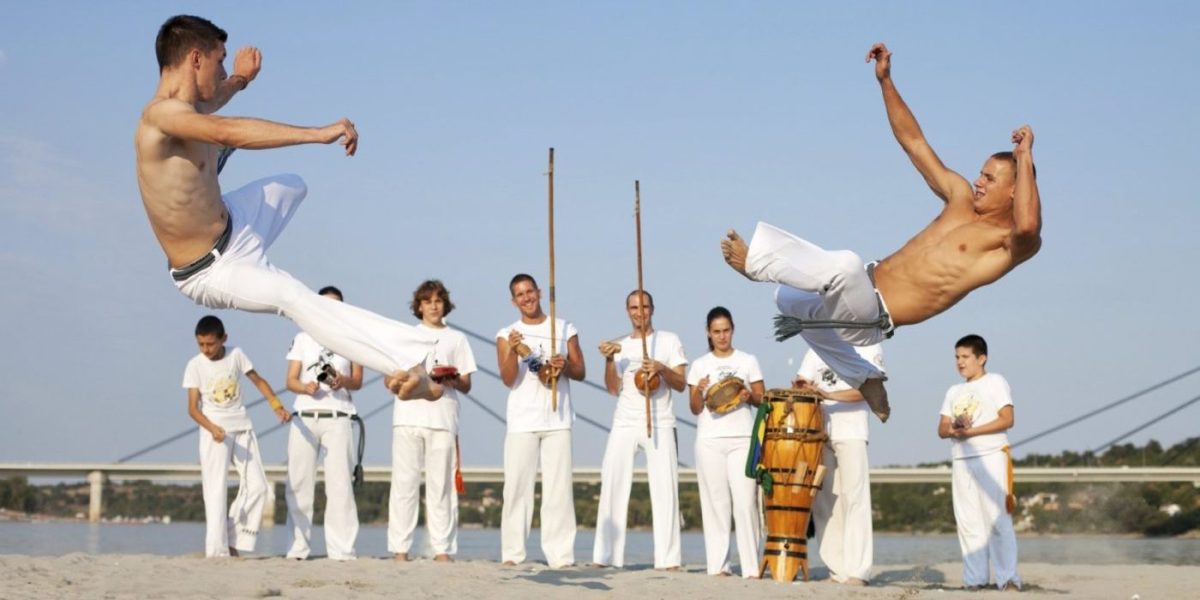
Cultural Spotlight – Capoeira

Capoeira is a very unique cultural aspect of Brazil and one that while it has its origins elsewhere has become very Brazilian in its customs, history, and usage. With different elements of dance mixed in with parts of martial arts, Capoeira is unlike any other form of movement in the Western Hemisphere. Not only is Capoeira based on dance and martial arts, it is also formed from a foundation of acrobatics and music to accompany the many movements. The amount of exercise involved in becoming a true Capoeira artist means that you will definitely break a sweat while getting physically fit if you intend to practice this unique art form on a daily basis.

Capoeira is known for having its origins in different parts of west Africa but was developed after the beginning of the Transatlantic slave trade in the 16th century. After enslaved Africans were first brought to Brazil by the Portuguese settlers, it became a way for the slaves to stay physically fit and strong if they ever decided to flee and run away from their slave masters. If they wanted to collaborate and rebel, they could use their capoeira skills to help defend themselves from possible attack or capture from the slave masters as well.

Capoeira uses the full body and so you can use both your arms, hands, legs, and feet to do a large number of movements. The movements are acrobatic, complex, and fluid and based often off of the music and rhythms that are being played for the dancers. Hands often stay on the ground as inverted kicks are flown in the air. The ginga is the focal point or main focus of any capoeira movement and is usually the beginning of any fluid kick or handstand to come.

The capoeiristas’ are those martial artists or dancers who perform the movements often with other capoeirista while being surrounded by a group of observers who are either playing music or encouraging the capoeiristas on to continue their rhythmic movements to match the other participant. The origin of the word ‘capoeira’ comes from the Tupi language words of ka’a (forest) and pau (round) referring to the low-lying vegetation areas where fugitive African slaves would hide from their masters when they would try to make an escape. Most of the African slaves who started capoeira in Brazil were originally from Angola.

After the end of slavery in Brazil in 1888, the new republic outlawed capoeira throughout the country. If you were caught practicing capoeira anywhere in public, practitioners would be thrown in jail, tortured, or even killed. This prohibition continued throughout most of the 20th century even if it was sometimes tolerated in universities and in private places during times of both democratic and military rule in Brazil. Still though, the Afro-Brazilian communities especially in the Northeast kept capoeira alive during these forbidden times and even renamed capoeira to be called ‘Luta Regional Baiana’ which means the regional fight of Bahia in order so that practitioners could practice their form of capoeira without outside interference.

In the recently enslaved communities of Quilombos who had liberated themselves to be free and self-reliant in parts of Brazil during the 18th and 19th centuries, capoeira became a way of defending themselves in case of war or conflict with Portuguese colonial troops or Brazilian soldiers. By using the martial art to dodge potential attacks and/or captures, the Quilombos were a formidable fighting force who used capoeira to defend their communities and their land at often great cost.

The key to capoeira from my own observations in Brazil is to never stop your movements and to always be thinking of how to dodge, kick, sweep, and even take down your opponent. The ginga movement of being fluid is both an attack and defense mechanism to make sure you are constantly ready to either take your opponent by surprise or to evade their own attack. Most attacks in capoeira are done with leg sweeps, swirling kicks, or knee strikes but can also involve the elbow or head. However, most forms of capoeira today are done as simulations and to train for a game or a competition rather than war or actual combat.

To the public who view capoeira in a non-violent lens, these presentations in the roda or circle are just for show and involve games of aerial acrobatics rather than being more about striking or deflecting physical attacks. The circle involves musical instruments specifically for the game between capoeiristas and there is singing, and dancing involved with everyone in the circle participating at some point. Capoeira instruments include the berimbau, which can be played from very slow to very fast depending upon the rhythms requested as well as other instruments such as pandeiros, atabaques, agogo, and the ganza. The row of musicians in the roda (circle) is called a ‘bateria’ and the touch of the berimbau instrument in particular fuels the speed, aggressiveness, or style of the capoeira game.

Similar to Carnaval and Feijoada, Capoeira is one of Brazil’s most famous and impressive exports to the rest of the world. Every year, thousands of tourists come from around the world including serious non-Brazilian practitioners travel to different parts of Brazil to practice its most famous martial art. The capoeira masters (mestres) often teach the Portuguese language in addition to the movements of capoeira so the foreign student can really immerse themselves in the cultural background and history of this traditional martial art. The capoeira demonstrations are perhaps more acrobatic than physical when in public but in private, you would have to guess that it is much more intense and much more serious in terms of displaying physical prowess than what is shown to the public.

After the 1970s, this unique part of Brazilian culture was on its way to not only being accepted by the people but being embraced and taught to the next generations. A powerful way of resolving conflict, promoting social cohesion, and learning about physical fitness, capoeira is great at bringing the community together in a positive way while showing how important it is to recognize and value past traditions. From the roots of West Africa to groups of escaped Afro-Brazilian slaves whose cultural practices were almost extinguished over the centuries due to subjugation, maltreatment, and neglect, capoeira like their rights to human freedom and basic dignity made a powerful comeback which is still being fought for and advanced to this day.

Pelourinho

PHOTO-2020-04-02-09-13-04PHOTO-2020-04-02-09-13-04 (1)PHOTO-2020-04-02-09-13-04 (2)PHOTO-2020-04-02-09-13-05PHOTO-2020-04-02-09-13-06PHOTO-2020-04-02-09-13-06 (1)PHOTO-2020-04-02-09-13-08PHOTO-2020-04-02-09-13-08 (2)PHOTO-2020-04-02-09-13-08 (1)PHOTO-2020-04-02-09-13-10PHOTO-2020-04-02-09-13-10 (1)PHOTO-2020-04-02-09-13-11PHOTO-2020-04-02-09-13-11 (1)PHOTO-2020-04-02-09-13-12PHOTO-2020-04-02-09-13-12 (1)

Camera: Samsung Galaxy J2 Core

Location: Pelourinho; Salvador, Bahia, Brazil