‘Revolutionary Road’ – Film Review and Analysis

The epic saga of Jack and Rose continues in the form of two young, suburbanite lovebirds in Connecticut who discover that married life may not be what they thought it would be. If anyone has seen the movie ‘Titanic’, you’ll notice that ‘Revolutionary Road’ features the same actors, Kate Winslet and Leonardo Dicaprio as romantically involved but not as star-crossed lovers but rather as a newly married couple. While this is a totally different film and in a different time period, part of what makes ‘Revolutionary Road’ a great and memorable film is the acting by DiCaprio and Winslet.

Once again, they are the leading roles in a movie where the acting can make or break the film. Similar to their previous movie together in ‘Titanic’, ‘Revolutionary Road’ is a character-driven film with intense emotional moments and a message that stays with you deeply after the final credits roll. Michael Shannon, a very well-renowned actor almost steals the show from Leonardo and Kate as John Giving, the brilliant yet disturbed son of the Wheelers’ neighbors, the Giving’s. Helen Giving (played by Kathy Bates) and her husband help the Wheelers to buy their home at 115 Revolutionary Road in suburban Connecticut.

‘Revolutionary Road’, released in 2008, was directed by Sam Mendes who has also directed other classic American movies including ‘Road to Perdition’ and ‘American Beauty.’ Mendes is a talented director who does an excellent job finding the right actors to fit the character-driven roles that they have to sell to the audience. In a way, ‘Revolutionary Road’ seems like a period piece precursor to the movie, ‘American Beauty’ in terms of its’ suburban setting and overall themes of dissatisfaction of life and a yearning for change.

Similar to his other movies, Mendes enlists Thomas Newman, my favorite movie composer to conduct the powerful and moving score to the film. The cinematography also draws you in especially in the penultimate moments where you see Frank Wheeler (DiCaprio) running frantically out of remorse down Revolutionary Road after the climax of the movie. The movie’s title doesn’t give the audience too much detail on what it could be about or what the film focuses on. It is enough however to peak your curiosity especially with the two leading actors involved and the film does not disappoint in this aspect. Awarded with both Golden Globe and Academy Award nominations, ‘Revolutionary Road’ was a critical success even though it didn’t really light up the box office when it was released.

Unbeknownst to most, the film ‘Revolutionary Road’ was based off of the novel by Richard Yates of the same name. While the book was released in 1961, Yates wrote it as a referendum on the conformity of the 1950’s and how families across America were settling down in suburbs that were safe and secure yet did not leave much to the imagination. It’s a great work of fiction and the movie ‘Revolutionary Road’ sticks to the material quite well.

Like most couples of that age, Frank and April Wheeler meet at a friend’s party in 1948. Frank is a longshoreman and a former soldier during World War II while April is an aspiring actress when they first get to know each other. Frank’s father worked for 20 years for a sales company known as Knox Machines and sees himself in the same position unless he can think of something else. Frank is someone who is bored by the monotony of his work and desires to do something bigger with his life. Ironically, the less he cares about his sales job, the more the bosses like what he’s been doing. Frank falls in love with April and they marry each other.

The courtship and how well they actually knew each other before marrying is not covered in the film but it’s clear that they were both young when they married. The audience is left to infer that they really didn’t know each other all that well and what they expected out of their lives. After they get married, it is mentioned that April is pregnant with the couples’ first child. Because of the cheapness of land and the need for more space like many other American couples in the 1950’s, the Wheelers move to 115 Revolutionary Road in suburban Connecticut.

When April and Frank move in to Revolutionary Road, they are first welcomed by the realtor, Helen Givings (played by Kathy Bates) and her husband Howard Givings. The new couple is deemed to be perfect for this idyllic suburban town by the Givings even though their son, John (Michael Shannon), is unhappy with the way the Wheelers are living to each other. Lacking an understanding of normal social cues, John rants about the ‘hopeless emptiness’ of suburban living and questions the soundness of their marriage in front of them.

While the audience can see John Givings as initially crazy, as the film goes on, he actually starts to make the most sense out of anyone in the film. To The Wheelers, their other neighbors, the Campbells, are what they would aspire to be as the perfect suburban couple. They are a friendly couple, content with their lives, and seemingly in love with each other. However, as we go through the film, we realize that each couple: the Wheelers, the Givings, and even the Campbells are putting on a mask.

Out of the three couples in this film, we do spend the most time with the Wheelers who it seems were never truly meant through each other. They may have connected initially but they seem to us as two very different people. April is very footloose, wanting to enjoy life, and experience the world while Frank is content with who he is, what his career will be, and his contentedness with being a father. They are also not quite settled in their livelihoods when we meet as April is struggling to gain traction as an Actress and Frank is bored stiff at his sales job. Instead of supporting each other through the tough times, it remains a point of contention that either person hasn’t succeeded as much as they would like. While it seems that they are both not content with living in the suburbs or being married, they also have their two children to think about.

Because they are married and have children, it’s nearly impossible for them to uproot their lives as April suggests. A running theme throughout the film is their desire to move elsewhere including Paris which April endorses immediately yet Frank sees as being unrealistic. When you have people who depend on you, bills to pay, and jobs that get in the way, it’s hard to move anywhere including overseas. Their collective boredom at living in the suburbs starts to manifest itself elsewhere as they start to get bored with each other by seeking out extramarital affairs, excessive drinking, smoking, etc. to dull their pain. Instead of trying to work out their marriage problems or seek ways to better their lives separately, they drag each other through the mud with shouting matches and other more extreme actions.

While Paris is an escape for the two of them from their jobs, their repetitive jobs, and their monotonous suburban lifestyle, it’s clearer that they want to escape and get away from each other. As John Lennon famously stated, “Life is while happens when you’re busy making other plans.” Frank and April Wheeler never truly accept that their lives are not truly their own and they do have to make compromises when it comes to money, children, lifestyle, etc. When they plan to actually move to Paris, April gets pregnant again and Frank is offered a lucrative promotion at his sales job. Instead of accepting their new reality together, they lash out at each other and cause a lot of pain and suffering in the process.

You can see from the film that Frank and April Wheeler were not compatible people in terms of their relationship or marriage. As April bluntly opines to Frank during one of their fights, “You were just some guy that made me laugh at a party once.” It becomes clear to the audience that they would be happier living separate lives with Frank living as a successful salesman at his father’s former company in New York City while April tries to make it on her own as an actress working in Paris or Los Angeles. Both of them are not cut out for the married, suburban lifestyle but they are also equally not cut out for each other. They can use the suburbs, their children, their job situations as excuses but at the heart of the issue is their flawed relationship.

American society in the 1950’s helped to put a lot of pressure on young couples like the Wheeler’s to get married, have children, and then move to the suburbs where it’s safe and secure. However, it’s clear that this type of lifestyle is not for everyone. Some people are not meant to be married or to have children. Others are meant to live in cities or travel for their work. I can imagine that the cultural attitude in the 1950’s shunned this kind of critical thinking and encouraged a more conformist lifestyle that stifled people’s personal hopes, wants, and ambitions. You could say that the following decade, the 1960’s, changed American life forever in its expectations of people and how they could and should live their lives.

In closing, this film is a realistic and sobering look at how relationships and marriages can fail sometimes and that it can be very painful to live a life that’s not in line with your personal wants and needs.

‘There Will Be Blood’ – Film Review and Analysis

‘There Will Be Blood’ is a masterful, enticing film about how greed, corruption, and arrogance can destroy a man’s soul. Definitely one of the best films of this young 21st century, There Will Be Blood will be remembered for generations to come for its’ acting, cinematography, and direction. There are a number of things that make this film memorable including its’ cast, director, and musical composition.

In addition to all of that, the plot is written well, the characters are intriguing, and themes are still timely when compared to the modern era. While not the most popular film when it was first released, ‘There Will Be Blood’ has become a bit of a cult classic since it came out in 2007, over ten years ago. The film was nominated for eight Academy Awards and won two of them for ‘Best Cinematography’ and ‘Best Actor’ for Daniel Day-Lewis.

Considered the best Actor of his generation, Day-Lewis is a unique talent who can transform him into vastly different performing roles and deliver outstanding and award-winning performances. In addition to winning the Best Actor award for ‘There Will Be Blood’, Day-Lewis also won Academy awards for the films ‘Lincoln’ and ‘My Left Foot’, which were the exact opposite kind of roles to play as an actor.

Daniel Day-Lewis is able to stay in character for months or years on end to totally immerse him in both the story and the lines that he memorizes. It’s a truly impressive accomplishment to win one Academy Award but Day-Lewis was able to win three and is nominated for a 4th award for his most recent role in ‘Phantom Thread.’ Other noteworthy aspects of this film is the directing by Paul Thomas Anderson and the musical score by Jonny Greenwood who both set the tone for this movie’s themes and plot line.

Unbeknownst to most, the film’s screenplay and overall plot was adapted from American novelist Upton Sinclair’s novel Oil! Which focuses on the oil boom in the western United States during the late 19th to early 20th centuries, and the men who made themselves wealthy from the discovery. Instead of covering a topic as deep and complicated about the oil rush over a few decades in a dramatic film, Paul Thomas Anderson chooses a protagonist named Daniel Plainview (played by Daniel Day-Lewis) to be the lens through which the audience witnesses the birth of the lifeblood for the modern American economy.

Anderson’s goals for this film in my opinion were to show how the U.S. and its’ oilmen were not so innocent when it came to the pursuit of wealth. In the quest to reap the profits of the oil boom, there was a lot of backstabbing, double-crossing, and short-shrifting between different competing companies. This film takes a hard look at how the protagonist Daniel Plainview loses his soul in the pursuit of wealth and prestige. In addition, There Will Be Blood is an examination of the push – pull relationship between capitalism and religion and how they are often linked together to pursue their goals.

There Will Be Blood’s setting takes place at the turn of the 20th century. Daniel Plainview, the main protagonist starts out as an ordinary silver miner looking to become wealthy from that pursuit. However, this changes in 1902 when he discovers oil near Los Angeles, California, and decides to create his own drilling company. At the beginning of the film, Daniel can seem to be like any normal prospector of that era and also selfless in the fact that he adopts the son of a fellow co-worker who was killed in an accident. The boy is named H.W. and Daniel seems to care and cherish the child. However, the audience soon finds out that it is not love that Daniel strives to have in his life but rather wealth and influence in the oil industry.

Daniel promotes himself as a ‘family man’ largely in order to curry favor with other businessmen and potential employees of his company. The main antagonist to Daniel is Eli Sunday, a preacher in nearby Little Boston, California, who wishes to get a good sum of money from Plainview in order to build his church. In exchange, Daniel gets access to all of the land under the town in order to build wells to drill for oil where there is a vast amount underneath their feet. Despite the fact that they have an agreement in the exchange of land for money, Daniel betrays the deal and berates Eli for his religious beliefs and the exploitation of his son’s deafness for his own financial gain. It is clear to the audience that both men are out for themselves but need each other in order to acquire wealth or a religious following.

Such as has been the case at times throughout history, religion and capitalism have been intertwined in an unholy marriage leading to disastrous results. Daniel uses Eli in order to get all of the oil wealth from under the town while lying about the amount of money he would give Eli or the town itself to build up their infrastructure. Eli uses Daniel’s money to build his mega-church but exploits H.W.’s misfortune of becoming deaf as a means to accuse Daniel of being a ‘bad father’ and a ‘sinner’ even though the freak accident was out of his control.

If I had to highlight two example scenes for somebody to check out before watching this movie, it would be the ‘I’m an oil man’ speech by Daniel Plainview to the townsfolk of Little Boston. You can see from this speech and from the overall scene that he does not care so much for the people in the town or what he can do to help them. The music combined with his lying through the teeth boasts show that he is not being genuine and is in this pursuit of oil for himself and himself alone.

“I’m an oil man speech”: https://www.youtube.com/watch?v=AHz-zZoBnbc

The other scene to highlight from this film is known as the ‘Fire’ scene, which is a brilliantly shot and executed scene. It’s amazing in its’ portrayal of the discovery of mass amounts of oil under a well indicating that Daniel Plainview is to become a very wealthy man. However, it’s at the same point in this scene where he realizes that his son, H.W. is to become deaf due to an accident near the well. At this scene, you can see Daniel change as a person to become more focused on his future as a ‘oilman’ than one as a ‘family man’ to H.W., his adopted son.

‘There Will Be Blood’ Fire scene: https://www.youtube.com/watch?v=GKJAH-XBNNs&t=240s

Throughout the film’s events, you can see that Daniel does not care about family or religion at all. While he enjoys the company of H.W., he holds over the fact that he is not his biological son and does not want to give him any financial support to strike it out on his own. Daniel has no care for organized religion besides getting permission to gain workers and oil from underneath the town’s feet while contributing the bare minimum to Eli’s church or the rest of the town. As his last name reveals, ‘Plainview’ has a plain view about human nature that is very pessimistic and jaded.

Daniel only cares to get as much out of people as to benefit himself and his company personally. You wonder though by the end of the film what is in it for Daniel besides money and alcohol. He may have become a wildly successful prospector and oilman but what does it all mean if he is left alone and friendless. If you’re going to go into business, why not do it for the benefit of others and not just yourself? However, the view of Daniel Plainview is that life is a zero-sum game and that you can’t trust anybody but yourself.

Eli Sunday, while a pragmatic preacher and someone who seems to care about the townsfolk of which who are part of his church, still does a deal gone south with Daniel Plainview in the pursuit of easy money. Eli is easily bullied by Daniel but still goes around trying to convince him to change his ways and repent as a sinner. While Eli means well and wants the best for the church and his town, he does not go about it in the right way leaving him at the mercy of Plainview.

While Eli Sunday and Daniel Plainview are both excellent at what they do, you have to consider that they are both very flawed human beings. They may have built a popular church to preach in (Sunday) or massive oil wells to enrich themselves (Plainview) but life will still be lacking for them if they have no love and compassion surrounding those achievements. That may be the main message for the person viewing this film. Wealth, notoriety, and personal prestige are not everything in life and that there are other things that you should focus on that really touch your soul as a human being.

“There’s a whole ocean of oil under our feet, and nobody can get at it except for me!” There Will Be Blood is an excellent story about extreme capitalism and religion gone wrong. Both protagonists pursuit of their own selfish goals hurts the other characters in this film. However, what would modern America be like without the preachers and the oilmen? While not as dramatic as this fictional movie, the discovery of oil and the spread of the gospel are intertwined with American history.

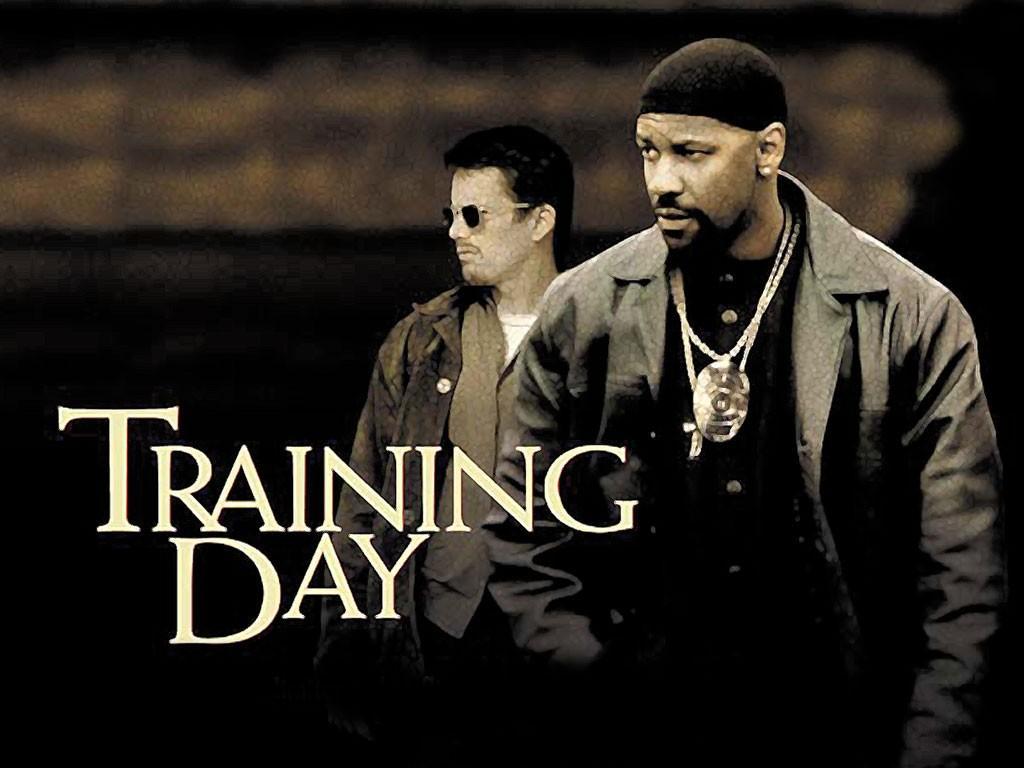
‘Training Day’ – Film Review and Analysis

‘Training Day’ is the kind of movie that highlights two people who somehow cross paths as they are on opposite sides of morality. The men are shown to be both flawed in their own ways but still have a direct impact on each other as they spend more time together. Throughout this film, both men are trying to outwit each other in the hopes that they’ll come out on top. Because of this gamesmanship, this is no simple training day but rather a series of events that end up changing both of their lives for better and for worse.

The two main characters, one of them who could be considered a youthful idealist, is trying to better his community and his city by enforcing the law by the book. The other man has been around the block and knows about the grittiness of the job more so than his impressionable, younger rookie partner. He is a pessimist who discards the idealism that he likely brought with him when he originally joined the police force. He has abused his power as a law enforcement agent, is looking to maintain his authority and grow his wealth through intimidation and threats.

“It takes a wolf to catch a wolf” is a powerful quote from ‘Training Day’ that shows that in order to bring somebody down, you have to act and imitate who they are. The problem with this attitude is that sometimes you end up becoming your own worst enemy. However, to simply be a sheep is leading yourself to the slaughter as well especially when you’re dealing with the criminal underworld.

In order to survive as a detective, both men know that you need to be confident in yourself, steadfast in your beliefs, and willing to confront ‘the wolves’ out there if you want to catch one. It could be argued that the protagonist of this film starts out as a sheep and ends up becoming a wolf in order to catch the antagonist, a true wolf who has caught the wolves for many years. This kind of symbolism embedded within ‘Training Day’ makes it a classic film worthy of repeated viewings.

‘Training Day’, released in 2001 is a crime drama / thriller directed by Antoine Fuqua which follows two LAPD detectives who patrol and fight crime in gang-heavy neighborhoods. The film stars Denzel Washington as Alonzo Harris, a veteran detective and police officer who prefers wearing street clothes over a formal uniform and a badge. Ethan Hawke, who plays Jake Hoyt, a new detective and Alonso’s new partner who is entrusted in learning from Alonzo on his first day of detective training.

This film has earned excellent reviews over the years and is considered one of the best movies of the 2000’s. It achieved critical acclaim and success in theaters as Denzel Washington earned a Best Actor award for his role as Alonzo Harris. Truly, one of the best parts of the film is Washington’s acting and how he brings the corrupt yet smooth talking cop character to life. Det. Harris is a classic villain who ranks as one of the best antagonists in film history for his duplicity to others and displaying his indefatigable charisma while doing it.

From the opening scene of the movie, you can tell that Jake Hoyt is out of his league when it comes to matching up against Alonzo Harris. Unfortunately, not much of Alonso or Jake’s backstory is given in the film as well as how they came to become partners together. However, you can see early they are both polar opposites of each other in terms of their ideals, morals, and overall character. Jake is a young guy who’s trying to make his mark as a police officer and trying to do everything by the book as instructed by his superiors at the academy.

He is idealistic, fair-minded, and perhaps a bit naïve to the murky shades of gray that make up the world. Meanwhile, the audience can tell that Alonso has been on the wrong side of the streets for a while and has become purely jaded by his work as a narcotics detective. Instead of serving and protecting the people in his community and city, he cares only about his image, the reach of his authority, and the ability to make illegal money without compromising his career. What once was left of the idealism and the drive to do good by becoming a police officer has long been washed away. You could argue that Jake is a sheep while Alonso is a wolf who is going to prey on him.

The ultimate goal of Alonso is to bend Jake to his will by manipulating his moral code and his willingness to stay clean as a police officer. While Jake starts out the film as being a bit reticent, gullible, and naïve to what Alonso is doing to him, he is able to change over the course of the film to fight for his future, his career, and his life. The transformation of Jake Hoyt from a ‘sheep’ to a ‘wolf’ able to stand up to Alonso is one of the greatest displays of character development in film.

The great drama of ‘Training Day’ is to see both men push each other to the limits both mentally and physically to see who will be left standing after the training day and night is over. While Alonso lost his soul and is trying to corrupt those around him, Det. Jake Hoyt needs to harness his strengths, moral fiber, and intelligence to best Alonso at his own game.

At first, Alonso seems like an ideal partner to be with if you are in the police force. However, Jake and the audience find out that he is anti-social, manipulative, and willing to take what he wants without remorse. The challenge throughout the film for Jake is how does he change into a ‘wolf’ without losing his own moral code. Complicating matters for Detective Hoyt is the fact that Alonso isn’t the only corrupt police officer to deal with and that it goes to higher levels in both local and state government who know what Alonso is up to.

While some officials turn a blind eye to Alonso’s money-grabbing, wrongful beatings and killings, and others in the police force actually join in on it, Jake takes a moral stand and wants to bring Alonso to justice. However, we find out that Alonso is in fact his own worst enemy and the bad karma that he’s acquired over his years of corrupt wheeling and dealing will come back to haunt him.

Everyone’s luck eventually runs out and Alonso finds himself on the wrong end of a bad gambling streak with organized crime. For all of his manipulation, wrongdoing, and anti-social behavior, its’ Alonso’s desire for control over others including Jake that leads himself to ruin. To the opposite, Jake becomes a stronger person and a more effective police officer as the film progresses. He stops two men on the street from physically abusing a high school girl, which pays off for him later after he faces another near fatal betrayal from Alonso.

The concept of karma plays out for Jake, as he is able to resist the corrupting influence of Alonso and remain on the right side of the law by doing his job even under great personal pressure. Instead of letting the power and authority entrusted in him get to his head, Jake is able to become not just a better police officer than Alonso by the end of the film but a better human being.

While Alonso wasn’t always a corrupt cop, ‘Training Day’ makes you wonder what could have happened to this man to turn him into what he was originally fighting against. Overall, this movie is a morality tale of two men who have different intentions when it comes to being a police officer, which puts them at odds with each other. Their impression of the other man continually changes as they learn more about who exactly is the ‘sheep’ and who is the ‘wolf’ as their training day plays out.

‘Children of Men’ – Film Review and Analysis

What would happen to our world if women were no longer able to have babies? How would human society, nations, and the globe as a whole react to such a consequential event to humanity? A dystopian take on the state of a world without children is the focus of the 2006 critically acclaimed film titled, ‘Children of Men’, directed by Alfonso Cuaron. This film stars Clive Owen, Julianne Moore, Michael Caine, and Chiwetel Ejiofor in its leading roles. The film is based off of a novel of the same name, ‘Children of Men’, which was written by author P.D. James in 1992.

The screenplay and the story have both been adapted from the novel but the striking visuals and the memorable cinematography make it fit for the big screen treatment. Despite a limited release and low profit earnings when it first came out, Children of Men has stayed in the public consciousness due to its timely socio-political themes on immigration, the environment, terrorism, and political violence. With the election of Donald Trump as U.S. President and the unlikely occurrence of Brexit, the message and themes of the film have turned out to be quite relevant. Although this film is set in the United Kingdom in the future year of 2027, despite the non-issue with the infertility of women, the issues that humanity is dealing with in 2017 are tied directly to different issues that the film brings up in its’ plotline.

Theo Faron, a civil servant for the British government and former activist, seems to have given up his fight for a better future. With humanity on the brink of extinction and with most of the countries’ governments having collapsed, there doesn’t seem to be any hope left. As one of the characters, Miriam, explains to Theo in the film, “As the sound of the playgrounds faded, despair set in. Very odd, what happens in a world without children’s voices.” Theo and his ex-wife, Julian, estranged for years after the death of their infant child, Dylan, are reunited due to a refugee named Kee. Julian and the Fishes, an anti-government and pro-refugee group involved in an uprising, would like to take Kee to the Human Project.

She is known to be the only woman in the world who is pregnant with the world’s first child in eighteen years, and is very valuable. However, things are not as they seem with the Fishes and their motives for helping Kee. Theo, in this film, is a lone character who promises to help Julian to bring Kee to the Human Project to ensure the future of humanity against all odds. Instead of using Kee as a political prop to help their cause against the government, Theo decides to help her escape from the Fishes, bring her to the British coast, and protect the future of humanity. Along the way, the viewer of the film sees the consequences of a world without babies. Where once there was no hope, Theo gains his sense of purpose and faith again as he hopes to redeem himself by getting Kee to safety and away from both the British government and the Fishes group.

Starting from the opening scene where the main character, Theo, is taken aback from a suicide bomb blast in the heart of London after just having left the café where the attack happened, you get a sense of what you’re in for with this movie. There’s a sense of hopelessness, dread, and despair as the audience is thrust into the focus of the movie as it’s made clear that the youngest person on Earth was eighteen years old meaning that something seriously has gone wrong to make that a reality. Although it’s never directly addressed in the movie, a few of the characters speculate that the reasons women can’t have babies anymore vary from environmental degradation to genetic experiments to too much pollution / radiation. The reason for women’s infertility is never addressed but the film makes it clear that the world is without hope because of the fact that there are no children to carry on the future of the human race.

Humanity faces certain extinction and the United Kingdom where the film’s setting is, instead of maintaining its’ parliamentary form of democracy has regressed into a totalitarian police state. Because it is one of the few surviving nations left on Earth, the country has developed a strict anti-immigration and anti-refugee policy. Any refugees or immigrants from outside the U.K. are rounded up and sent to detention camps, which have very poor and inhospitable conditions. The situation is so dire that the Fishes, labeled as a terrorist group, are fighting a guerrilla war campaign against the government to fight for immigrant rights.

The Fishes, with Julian, Theo’s ex-wife as their leader seem like the good guys but they have nefarious intentions in mind when it comes to the righteousness of their cause especially after they discover the first pregnant woman, Kee, in eighteen years. Throughout the movie, Theo is shown to be caught in the middle between the tyrannical government and the nefarious freedom fighter groups who are both trying to get hold of Kee for their own political gain.

The Human Project, believed to be a group of the world’s leading scientists, are thought to be the best people to help Kee with the baby and to perhaps study why she out of all the women on the planet was able to give birth to a child. Theo, having seemingly lost all hope and reason for living after the death of his baby, Dylan, believes again in the cause of getting Kee to be in the safe hands of the Human Project and to keep her from falling into the hands of either the Fishes group or the government. One of the main themes in this film is Theo’s regaining of hope and his quest for redemption after losing his only son years ago with his ex-wife, Julian.

The director, Alfonso Cuaron, does a great job of setting the scene of a dystopian future where humanity has lost all hope. A pill that allows people to commit suicide peacefully called ‘Quietus’ is mass advertised, terrorist attacks are an almost daily occurrence, and the immigrants, refugees who come to Britain are kept in detention camps separate from the rest of the population because the borders of the country have been closed down. In a plot and setting so dark, the only light to hold on to is Kee and her newborn to be. In a particular moving moment, Kee decides to name her baby girl after Theo’s deceased child, Dylan, showing just how much she really cares for the man who is getting her to the Human Project. It’s no coincidence that Kee herself is a refugee from a West African nation where the first humans emerged.

One of the best scenes in the film occurs when Kee, Theo, and the newborn baby are trying to leave a bombed out building where the rebels and the government are fighting each other in an urban war. The only thing that stops the bombs from falling and the bullets from firing are the sounds of a newborn baby echoing throughout the building and the street. This particular scene is a reminder of how special the sounds of a children’s cries are to the vitality of the world and how without them, it’s likely that humanity would descend into a downward spiral of chaos and violence. When all of the soldiers stopped for a few minutes to stop fighting, they realized that there was still hope in the world and that life can continue. It’s a very special scene for a special movie.

In addition to great directing, and great acting, Children of Men has some of the best cinematography of any movie in modern history. The single tracking shots, and there are quite a few throughout the film are ridiculously well done and help the viewer feel the tension and suspense in every scene. The soundtrack, the setting, and the messages of the film are extremely powerful and relevant to today’s world. I believe the director does a great job of asking the audience about how susceptible we are to either the rule of a totalitarian government or to the whims of absolutist extremist groups when societal collapse is imminent.

When there are no children or future generations, what is there worth fighting for? How also do we prevent ourselves from scapegoating other groups when things go bad? Maybe the issue is not infertility per say but rather climate change, the rise of artificial intelligence, or war between nations, how do we prevent ourselves from losing hope when things look bleak? The film, Children of Men, makes the argument that we should never lose hope especially in dire times. The future must be protected however especially as shown by the role the character, Theo, plays in helping Kee in her quest to meet members of The Human Project.

Ironically, there have been news stories out about the precipitous drop in men’s sperm counts over the past forty years in countries such as the United States. While this may not lead to total infertility, researchers labeled it as a cause for concern due to the overall trend of less fertility in men. In addition, birth rates are down below replacement level rates in multiple Western countries causing concern among scientists. Similar to the theories laid out in ‘Children of Men’, it is unclear why male infertility may be on the rise but it may be due to a number of factors, both environmental and otherwise. Where as Children of Men focused on women being infertile and not being able to have babies, the possibility of men being infertile in the future should be a cause for concern. (Source: http://www.newsweek.com/2017/09/22/male-infertility-crisis-experts-663074.html)

It is difficult to see why Children of Men did not win any of the Academy awards that it was nominated for. It’s an excellent, thought-provoking film that raises questions to the audience that are difficult to answer. If you have the chance to rent or buy this movie, please do so because it is widely regarded as one of the best movies of the 21st century.

‘Traffic’ – Film Review and Analysis

‘Traffic’ (2000) is one of those films that was way ahead of its’ time when it was first released over a decade and a half ago. It is a film that makes you think deeply hours or even days after you first watch it. ‘Traffic’ should be viewed more than once to really understand all of the nuances and subtleties embedded in its’ individual stories underneath its’ overarching central themes.

When compared to most other movies of the crime drama genre, ‘Traffic’ gained a lot of particular praise for the way its’ director and screenwriter were able to successfully weave multiple plotlines, characters, and settings together that slightly overlap with each other but are seamless enough as to not overburden the viewer with unrealistic connections.

‘Traffic’ is a movie that respects the intelligence of its’ audience and isn’t afraid to tackle the controversial topic of the ‘War on Drugs.’ It’s quite surprising when you think about how this movie was released back in 2000, but is still just as relevant and timely of an issue today as it was back when it was first released to the public. When ‘Traffic’ came out, it gained universal recognition and critical acclaim, and after viewing it for the first time, it’s easy to see why it was so noteworthy.

Steven Soderbergh directed ‘Traffic’, and Stephen Gaghan wrote its screenplay. Mr. Gaghan, who was responsible for another multi-layered film with multiple plotlines in ‘Syriana’ (2005), which also starred an ensemble cast of actors dealing with a different timely issue of oil and geopolitics in the Middle East. Unbeknownst to most people, ‘Traffic’ won numerous awards including for Oscar awards for Best Director, Best Supporting Actor, Best Adapted Screenplay, and Best Film Editing. This ensemble cast of actors for ‘Traffic’ is very impressive and includes star names such as Michael Douglas, Don Cheadle, Benicio del Toro, Dennis Quaid, and Catherine Zeta Jones.

At its’ core, ‘Traffic’ focuses on the illegal drug trade going on in both the United States and Mexico. One of the brilliant things about this film is the fact that each character in the movie represents a different perspective on the drug war whether they are a user, enforcer, trafficker, lawyer, or politician. It’s unlikely that a film like ‘Traffic’ would be made today but it’s distinctive editing, multi-use of colors depending on which of the three stories are being highlighted, and the political relevance of its’ themes could keep a lot of viewers away these days.

Its’ importance and timeliness today can’t be overstated as this film doesn’t try to impose a point of view on the audience. ‘Traffic’ would rather cause the individual viewer to ask questions, seek out more knowledge about the issue, and weigh the different opinions expressed by the characters throughout the movie. The three-color grades that are used for the three different stories are probably one of the most interesting things that I’ve ever seen when it comes to film editing. Each story in ‘Traffic’ could be its’ own movie in its’ own right, and the film is lengthier than most in terms of run time at two hours and twenty minutes total.

To briefly highlight the substance of the three stories without spoiling the whole movie, let’s go over each one to introduce the arch of the overall plot to prospective viewers out there. The first story is mainly set in Mexico City and other parts of the country, which highlights the efforts of two Mexican police officers that are trying to do their job as enforcers of the law under difficult circumstances. While trying to bring down local cartels in the easiest way possible, the two officers, one of them, Javier Rodriquez (played by Benicio del Toro) come up against corruption, and crime within their own ranks, which makes their ability as officers to keep their areas safe difficult with money and influence blurring the line between the good guys and bad guys.

Officer Rodriguez (del Toro) wants to do his best to keep his job, but to also hold his fellow policemen and elements of the Mexican army accountable for their actions without compromising his safety. He knows that ending the drug war is futile but he wants to keep his immediate community safe and that of its’ inhabitants. This is especially true if it means that the local kids in his neighborhood can play baseball at night with new stadium lights and not be at risk of joining gangs instead in their free time.

The second storyline in ‘Traffic’ takes place between the nexus of small town Ohio and the capital city of Washington, DC in the United States. A conservative judge, Robert Wakefield (played by Michael Douglas), is appointed to head the President’s Office of National Drug Control Policy, and he becomes an unofficial ‘drug czar.’ Mr. Wakefield doesn’t seem to be enthused with the new position he’s been given due to the long hours, lack of support, and political skepticism from the official circles within Washington. He tries to make the most of fighting the ‘war on drugs’ even if he knows deep down that it is truly unwinnable. Because he is away from his family for long periods of time, he is unaware that his daughter in high school has developed a drug problem over the past six months and is struggling with a heroin addiction now.

On top of dealing with being a father and the leader of a national drug control policy effort, he struggles to be a open and forthcoming husband to his wife. Compared to other characters in the film, Wakefield changes the most in his views on the ‘war on drugs’ as the audience can see that his mindset changes when this issue becomes personal and not just professional. With his daughter’s future and life at stake, the ‘war on drugs’ becomes less of an abstract war and more of a battle to save his family from falling apart.

The third and last storyline takes place mostly in southern California in the San Diego area where two DEA agents are conducting an underground investigation. The investigation, led by Agents Ray Castro and Montel Gordon (played by Don Cheadle), eventually leads to the successful capture and arrest of a top drug dealer, Eduardo Ruiz, who pretends to be a fisherman as his cover.

This arrest is instrumental in helping along the trial of suspected drug lord, Carl Ayala, who is thought to be the leading distributor of illegal drugs for one of the biggest cartels in the world. Ruiz is important to be kept alive and in good shape so that he can testify to the illegal activities of Ayala and his empire, but that is harder for the DEA than they ever imagined. With Ayala’s possible imprisonment and/or cooperation, the DEA agents are hoping to bring down this cartel, once and for all.

However, since Ayala and his wife, Helen (played by Catherine Zeta Jones), have a lot of wealth and influence still, they are able to put a damper on the DEA’s plans with the help of the shady family lawyer, Arnie Metzger (played by Dennis Quaid). DEA Agent Gordon and his partner are unable throughout the film to cope with the long tentacles of the drug cartels, and the amount of money and hit men the Ayala’s are able to use to threaten the safety of the DEA’s witness and the potential success of the prosecution against Ayala. You could imagine that this particular story in the film does not come with a happy ending.

Any of the three unique yet intertwined storylines of ‘Traffic’ could be ripped from newspaper headlines from over the past forty years. Ever since the beginning of the ‘war on drugs’ back in the 1970’s, there has been endless debate about whether there have been any successes or mainly just the upholding of the status quo. ‘Traffic’ doesn’t try to impose a simple yes or no answer to the ‘war on drugs’ question.

Rather, this film intelligently asks its’ audience to weigh the outcomes of these different stories that are affected by the drug trade, and the viewer is supposed to make that decision for themselves. When it comes to special movies like ‘Traffic’, there are no simple black and white solutions. There are many shades of grey in all of these human stories, and it takes deep insight, critical thinking, and analysis in order for slow changes of the status quo to actually occur.

While this is a fictional movie, it is made clear by the film itself that a lot of these characters are based off of actual people who make up all sides of the ‘war on drugs.’ Overall, the one key thing that the ending of this film makes clear to the audience is that there are no winners in the drug war, only losers, and it takes an impactful movie like ‘Traffic’ to make that fact absolutely clear.

The Need for Critical Thinking

Facts are a tricky thing, but the importance and recognition of them is vital in order to consider yourself a critical thinker. In this era of ‘alternative facts’ and opinionated media, it’s necessary to be able to read, analyze, and think about all of the information that you’ve been taking in and figure out for yourself if it’s truthful or nonsense. In this day and age, opinions are easy to find everywhere but what have become harder to find are the cold, hard facts. The famous expression, “take it with a grain of salt” can be applied to you if you want to be a critical thinker.

The first thing you have to do, as a critical thinker is to be able to sort out the facts from the falsehoods. You should be able to use more than one source of information and before you use those sources of information, you need to verify that they are both unbiased and trustworthy. The evidence that you gather for these facts have to be based off of real sources, who have compiled the information and verified its’ authenticity.

For example, if you’re a Chemistry student and you’re trying to do an experiment on making a chemical volcano, would you choose to get the information from an actual scientist who has their PhD and teaches Chemistry at a local university or would you trust the advice of a best friend in your Science class instead?

While it’s desirable to be a good friend and trust them because they would like to help you most likely, it’s likely their advice will pale in comparison to the Chemistry professor with the PhD who wrote a ‘how to’ article on chemical experiments in the latest edition of ‘Science Weekly.’ If you’re a critical thinker, you would choose option #2 100% of the time because you would like to create an experiment that’s going to be the best that it can be and using your friend’s advice won’t get you to that point.

Regardless of what professional or educational field that you decide to pursue, you’re going to need critical thinking. Being inherently skeptical at first of the information you’re receiving is important to do because you need to be able to discern if what you’re reading, watching, listening to, etc. is factual. In your daily life, you’re going to need to identify prejudice, bias, propaganda, etc. that you’re likely to encounter in your daily life. You have to do your best to discern fact from fiction even if it takes some time. You could decide to ingest every bit of information that you see in the news or at the office as being factual but it would benefit you instead to deep a bit digger by doing your research, verify the source(s), bounce it off other pieces of information to see if there’s a pattern, and then decide if it’s factual.

A true critical thinker is not lazy and does not take shortcuts. He or she goes the extra mile to gather the right information, prioritize it to give it credence in your decision-making, and then recognize, solve the problems in order to move on to the next goal. If you’re in a field where you’re working with data on the computer, you have to be able to interpret it, evaluate it, and then use it for your business or company’s needs. By being able to communicate effectively and clearly is also a necessity when it comes to being able to take those fresh facts you’ve verified and then pass it on to the next person so they know that they’re not being misled by you.

As a critical thinker, it’s also necessary to disregard generalizations made about complex topics, which require in-depth research and analysis. Instead, critical thinking also necessitates the ability to draw conclusions from the evidence and the facts that you have gathered. Then, you have to be able to pass those conclusions on to the right people so they know what’s true and what’s false.

Conclusions that you’ve made in the past can sometimes change in the present or in the future so it’s vital to not be stubborn about your beliefs. Critical thinking requires that you also be flexible in your beliefs especially if you’re able to take in new evidence, and logic. A man or a woman who does not change their views on anything despite overwhelming evidence to the contrary cannot consider himself or herself to be a true critical thinker. While it can be difficult to let go of your innate biases and prejudices, you still should be open-minded and be able to accept the truth and the facts even if they contradict with yours.

If your mother, someone who you loved and respected, happened to have told you one day that the sky was the color red instead of blue, would you accept her statement at face value or would you go outside of the house to check, verify her statement to see if it was true or false? If you are not a critical thinker and a great son, you would choose option #1 and believe that statement without actually checking to see if it’s true. If you are a critical thinker but still a good son, you would choose option #2 and tell your mother later that the sky is actually blue because you went outside to see its’ color for yourself. Even if your mom might be offended by your conclusion, she would still love and respect you for being a critical thinker as is necessary.

To put it bluntly, there are a lot of people out there in different industries that are not critical thinkers and they’re hoping the same about you. I don’t want to name names but you’re likely to encounter them in your neighborhood, your city, and your city. However, if you’re able to develop the right personal habits and characteristics, you’ll be able to set yourself apart as a real critical thinker rather than just a person who believes what he hears, reads, or listens to all of the time regardless of the source it’s coming from.

Those habits involve being a problem solver, an evidence gatherer, a decision maker, a rational thinker, being able to reason with others, and an inquisitive learner above all else. While critical thinking isn’t mandatory in life, you’ll still go a lot further and succeed more when you put those skills and habits to use when compared to those who don’t. If you’re an open-minded, intelligent, mature, and inquisitive person, you’ll turn out to be a good critical thinker and a positive example for others to follow.

‘Lord of War’ – Film Review and Analysis

Arguably one of the best movies of the 2000’s and Nicholas Cage’s best performance as a lead actor, The film ‘Lord of War’, released in 2005, is a realistic and unfiltered take in the role of illegal arms dealers, who facilitate the sale and transfer of arms trafficking throughout the international arms industry, which continues to be one of the world’s most profitable endeavors. ‘Lord of War’, while nonfictional in its’ story is actually based off of the lives and exploits of different real-life arms smugglers. ‘Lord of War’ is directed by Andrew Niccol, and stars a cast of Nicholas Cage, Jared Leto, Ethan Hawke, and Bridget Moynahan.

Nicholas Cage plays Yuri Orlov, the son of Ukrainian refugees from the Soviet Union, where he and his brother, Vitaly, help their parents out in their Ukrainian restaurant as cooks and helpers. While Vitaly is somewhat satisfied with this simple life of cooking borscht and washing dishes, Yuri wants to achieve the ‘American Dream’ and get out of Brighton Beach, Brooklyn, where he grew up after leaving Ukraine. He struggles to grasp at any real business opportunity in order to get out of the shadow of his ordinary life in Brooklyn.

However, one day when he is dining at a restaurant in Brighton Beach, the business idea he needs comes to life for Yuri in the form of a Russian mobster killing two would-be assassins and fending off their attack with AK-47 Kalashnikov rifles. Yuri believes that there is a lot of money to made in international arms sales and decides to go into business despite the protests of his brother, Vitaly, and the fact that his parents don’t know what he’s up to.

One scene in particular that stands out in Yuri’s beginning as an illegal arms dealer is when he tells his brother that since there are so many McDonald’s and gun stores in America already, he needs his business to be international in its’ focus. At first, Yuri feels that dealing arms is comparable to serving food at a restaurant. He justifies his nefarious business by narrating to the audience that its’ providing for a part of human nature in his opinion, the instinct to kill and harm others, as documented by the “earliest human skeletons who had spears in their heads and rib-cages.”

While Vitaly, Yuri’s brother has moral reservations about what Yuri is doing, he decides to join him later on as they crisscross the globe during the late 1980’s and into the 1990’s dealing with corrupt governments, genocidal dictators, and other more ruthless arms dealers as their competition. As Yuri becomes more popular and wealthy with the illegal arms business, he runs up against a by-the-book, incorruptible, and idealistic Interpol agent, Jack Valentine (Ethan Hawke), who tries unsuccessfully to track Yuri’s business dealings down by air and by sea.

Despite the fact that his brother, Vitaly, becomes a drug addict, and is an unreliable business partner, Yuri continues to run his illegal arms business as a one-man show. While a fictional story, ‘Lord of War’ is based off of real life conflicts and real life people who were involved in the illegal arms trade. These conflicts include the 1982 Lebanon War, the Soviet Union’s War in Afghanistan against the Mujahadeen, the civil war in Liberia during the 1990’s, etc. The movie does not gloss over the dissolution of the Soviet Union and the impact that the end of this cold war conflict had on the rest of the world in terms of arms sales. Yuri is able to become a very wealthy and powerful arms dealer in the film due to his family connections in Ukraine and the sheer weaponry, and arsenal that the Soviet military left unused.

Like his arms business, which is run under false pretenses, he does the same with his love life as he falls for a fashion model and childhood crush, Ava Fontaine (Bridget Moynahan), who he sets himself up with under the guise of a false photo shoot. Despite the fact that his parents don’t know about his illegal dealings, he lies to his new wife regularly, and his brother ends up in a drug rehabilitation center, Yuri does not give up on the arms business because he likes it, is good at it and is unable to go straight in legal business endeavors. However, in the wake of all of his ‘success’, innocent men, women, and children get killed by the guns, bombs, ammunition, tanks, planes, etc. that he sells and profits off of. As the film progresses, the director makes clear that Yuri has sold his soul in this dirty trade and it may cost him his life or the lives of others close to him if he doesn’t stop.

In a way, the audience who watches ‘Lord of War’ could be most closely aligned with the perspective of the Interpol agent, Jack Valentine. He knows that Yuri is a bad person and he wants to bring him down, but will it make any difference to bring one sole arms dealer down when billions of dollars are exchanged around the world each year through both legal and illegal arms sales. Like Jack, the audience may question the nobility of bringing down one arms sales dealer like Yuri when there are dozens of them out there, and Presidents / Prime Ministers of the major countries are the biggest arms dealers of them all.

Yuri never takes full responsibility for his business dealings during the film even if the sale of his arms causes bloodshed and death. He remarks bluntly to his brother, Vitaly during one scene: We don’t talk about it. How many car salesmen talk about their work? How many cigarette salesmen talk about their work? Both their products kill more people every year than mine, at least mine comes with a safety switch. Those guys can leave their work at the office, so can I.”

In Yuri’s opinion, he may be evil, but he’s ‘necessary evil’ because there are other people or governments out there like him involved in the business, but sometimes they ‘can’t have their fingerprints on the gun.’ Despite the pressures placed on him by family, friends, and the law, Yuri is committed to doing what he does best without having the moral imperative to stop. As I don’t want to reveal the ending, the first time you see it, you may be shocked but this film doesn’t deal in black and white, and that’s what I love about it.

There are numerous shades of grey that go along with the black and white, and the ending of ‘Lord of War’ falls within those shades of gray. ‘Lord of War’ doesn’t have your typical Hollywood ending, and that’s partly what it makes it such an alluring film. On top of the exquisite directing, acting by Nicholas Cage, Jared Leto, Ethan Hawke, etc. and the deep political and philosophical themes behind this film, I highly recommend it.

I’ll leave you with a quote from the film that is very poignant and is still true twelve years after ‘Lord of War’ was released in movie theaters. “While private gun-runners continue to thrive, the world’s biggest arms suppliers are the U.S., the U.K., Russia, France, and China…they are also the five permanent members of the United Nations Security Council.”

English Corner – Interjections

What is an Interjection? You may reading the title of this blog post and appear to be slightly confused. The concept may sound familiar to you but it’s possible that you may have forgotten the meaning of the word since you left high school English. If you’re learning English as a non-native speaker, you may be even more befuddled. Luckily, if you keep reading on, you’ll discover that ‘Interjections’ are more common than we think they are and play a huge role in English literature. There are also a number of examples when it comes to what are interjections and where they are used in a sentence. If your curiosity has been piqued, keep reading on to find out more about this underrated and underused form of speech.

To answer the question that I posed in the opening paragraph, an Interjection is considered to be one of the eight parts of speech along with nouns, verbs, pronouns, adjectives, adverbs, prepositions, and conjunctions. While interjections are unnecessary to be placed in most sentences and are considered to be the least important part of speech, you can still use it quite effectively to grab the reader’s attention especially when you’re writing a short story or novel.

You need nouns, verbs, and even adjectives to make a complete sentence that makes grammatical sense but you do not an interjection to make that happen. However, to convey the depths of emotion within a sentence, interjections are an important part of speech that must be used in those cases. You can express either emotions or feelings with interjections but they are not as grammatically important as other parts of speech. If you plan on using interjections in academic or professional forms of writing, I would not recommend doing that. Instead, interjections would be perfect for more artistic or creative forms of writing that allow you as the author to express your emotions or feelings to the readers.

When it comes to the placing of interjections within a sentence itself, there are a couple of options for you to consider. It is quite common to put an interjection like “Wow!” or “Oh no!” with an exclamation at the beginning of a sentence to signal that it is a strong emotion.

Examples:

Oh no! I forgot to do my homework last night!”

Wow! That was an exciting football match!”

Interjections don’t solely need to be at the beginning of a sentence but can also be found in the middle or at the end of a sentence. Emotions and feelings can be conveyed in any part of a sentence as long as it makes sense within the story or article you’re writing.

Example: So, it’s going to rain today, huh?

In this case, the interjection here is “huh?” which comes at the end of the sentence to express disappointment or bewilderment that it’s going to rain. When you use ‘huh’ as an interjection in English, it mainly conveys confusion rather than excitement or wonder, which would allow you to place an exclamation point after a different interjection (!) such as wow!

As for an interjection that can go in the middle of a sentence, let’s look at this example below.

Example: “According to what you just told me, my gosh, that’s the most intelligent argument you have ever made.”

You do not need an exclamation point in this case but you should understand that the author of this quote is expressing his sentiment that what the other person just said was very smart and insightful.

Last but not least, interjections can even be their own sentences on their own especially when they are followed by an exclamation mark (!) or a question mark (?). Even though, interjections are very short in length at only one or two words, with the emotion or feeling they convey, it can be its own sentence. The complete thought has already been expressed in terms of the emotion that the narrator or character is feeling. In this rare case, you do not need either a subject or an action to make a complete sentence. Some examples of an interjection making up an entire stand-alone sentence would be “Wow!” “Huh?”, or “Oh gosh!”

If you aren’t clear what interjections are at this point, let me give you some more common examples to help you out.

Examples: Hah, Boo, Ew, Dang, Darn, Gosh, Oh, Oh No, Ouch, Shoot, Uh-Oh, Ugh, Yikes.

There are over hundreds of examples of interjections that you can look up to start using in your own stories or articles. These examples above are just a few of the most commonly used ones that you’ll see in the English language. When it comes to interjections being used within larger sentences, there are some examples that I can show you to improve your comprehension.

Examples:

Yowza! That was a close call with those hooligans.

Hurray! We won the baseball league championship.

It was a great celebration, my goodness, you missed out on it.

Oh no! I forgot to do my Science project that was due today.

Boo! The creepy ghost scared my friends and I away from the haunted house.

Remember, it’s important to know when and where these interjections should be used. Academic and formal forms of writing should have no place for interjections because you are trying to convey facts and relevant information rather than emotions and feelings. However, when it comes to artistic or creative forms of writing, you can use as many interjections as you want.

While interjections are considered to be an unpopular and relatively unknown form of speech, they are actually used quite frequently and are very popular when you think about it. During those times when you are texting back and forth with your friends or you need to write a captivating fictional story, interjections play a large role in the English language and shouldn’t be overlooked.

‘Field of Dreams’ – Film Review and Analysis

terencemann
“Oh…People will come, Ray. People will most definitely come.”

Field of Dreams is a quintessential classic American film and a movie that gets better with repeated viewings. Field of Dreams is almost thirty years old but has aged like a fine wine since it was released in 1989. This film is a unique mixture of the fantasy, sports, and drama genres and shows how crucial the game of baseball is to American culture. While some people who watch Field of Dreams think that this film is an original story, it is actually based off a novel by W.P. Kinsella titled, ‘Shoeless Joe’, which was critically acclaimed as well.

Part of the reason why Field of Dreams was so successful is because of the great cast of actors and actresses that helped make the film so popular. This was one of Kevin Costner’s most famous roles and also stars Amy Madigan, James Earl Jones, Ray Liotta, and the late and legendary Burt Lancaster who starred in his final role in this movie. Another fact that most fans of this film wouldn’t know about is that Field of Dreams was nominated for three Academy Awards including Best Original Score, Best Adapted Screenplay and Best Picture.

Of all the places in the world to hear a voice whisper the phrase, “If you build it, he will come…” a large cornfield in the middle of Iowa wouldn’t be your first guess most likely. However, that is exactly the premise behind Field of Dreams. A local farmer, Ray Kinsella, who has a troubled relationship with his father, John Kinsella, a former baseball player who wanted his son to follow in his footsteps feels guilt at what a strained relationship he had with his father before he passed away.

Ray then sees a vision of his cornfield being turned into a baseball field and decides to go along with this vision by turning his farm into a real baseball field. Ray is an adamant defender of ‘Shoeless’ Joe Jackson who believes he was actually innocent and didn’t do anything wrong despite the fact that he was banned from baseball due to the 1919 Black Sox Scandal. Ray’s father, John, was also a big defender of ‘Shoeless’ Joe Jackson and that’s the one major thing that Ray and his father could agree upon. His daughter, Karin, and his wife, Annie, are skeptical of Ray’s plan to build a baseball field at first but end up trusting his judgment after some convincing.

After Ray completes the building of his baseball field in Iowa, many months go by and the bills for maintaining the field start to pile up causing Ray and his family to feel some serious financial stress. When all hope seems to be lost regarding his vision, Karin spots a baseball player moving through the baseball field one night and Ray recognizes the player as being no one other than ‘Shoeless’ Joe Jackson (played brilliantly by Ray Liotta). John, Ray’s father was a big fan of ‘Shoeless’ Joe Jackson and would be thrilled to know that Ray’s vision came true and Mr. Jackson was here out on his farm in Iowa absolutely thrilled to being playing baseball again. Shoeless Joe ends up bringing some of his teammates from the Black Sox who were also banned from baseball due to the 1919 scandal and they start practicing together on Ray’s field.

Unfortunately, not everyone in Ray’s family can see the baseball players on the field. Ray’s brother-in-law, Mark, warns Ray about how much of a financial drain the baseball field is on his farm and Ray may have to foreclose on the property unless he is able to generate some money from it. Mark thinks Ray has gone crazy because he keeps referencing the baseball players on the field who Mark is unable to see. Luckily, Ray’s wife, Annie, and Ray’s daughter Karin can see the baseball players and believe Ray to be doing the right thing leaving Mark quite flustered and angry.

Ray ends up hearing another voice whisper through the field telling Ray to ‘ease his pain.’ After seeing how the local town wants to ban the books of one of his favorite authors from the 1960’s, Terence Mann, Ray ends up doing some more research about his favorite author and discovers that one of Mann’s dreams was to play for the Brooklyn Dodgers professionally. One of the reasons why Ray ended up quitting baseball even though his father wanted him to play professionally was because he read one of Terence Mann’s books when he was a teenager and never played catch with his father, John, again.

Ray and Annie both have a dream about Mr. Mann one night in which Ray is attending a baseball game at Fenway Park together with Terence. With Annie’s support, Ray goes all of the way to Boston to seek out Mr. Mann even though he has become a curmudgeon recluse over the past few decades and mainly keeps to himself. With a lot of convincing, Ray takes Terence to a baseball game at Fenway where they both end up hearing another voice telling the two of them to ‘go the distance.’ They also see the statistics of a baseball played of Archibald ‘Moonlight’ Graham who starred in only one game for the New York Giants but never had an actual at-bat. Ray and Mr. Mann do more research about Graham and end up driving together on their way to Minnesota to go see him.

When Ray and Mr. Mann travel all the way to Minnesota, they realize that Moonlight Graham became a doctor and had passed away over fifteen years ago in 1972. When Ray goes for a walk one evening, he realizes that he has transported himself to that time before Moonlight ‘Archie’ Graham had died and encounters him on the street where they have a conversation about his short-lived baseball career. The older Moonlight Graham is content to be a doctor but wishes for that one chance to face a major league pitcher.

After Ray and Terence leave Minnesota, they encounter a young hitchhiker on the road who introduces himself as Archie Graham. The two of them are amused by this crazy coincidence and take him with them to Iowa. During the ride, Ray confides in Terence Mann that his father was disappointed in Ray for throwing away his baseball career and for denouncing his father’s hero, ‘Shoeless’ Joe Jackson as a criminal. One of Mr. Mann’s books led to Ray putting down the baseball bat as well. Ray really wishes to make up with his father and make things right again if he had a dream to spare.

The amazing thing is that this young Archie Graham character gets to play on Ray’s baseball field in Iowa. In this only “major league” play, he is able to hit the ball into the outfield and get a sacrifice fly run in for his team miraculously after winking at the opposing pitcher as he always wanted to do even as an old man. Facing financial pressure from Mark and his associates, Ray thinks about selling the field to save his farm but Terence Mann encourages Ray to re-consider.

Considered to be one of the greatest monologues in modern film, James Earl Jones gives an amazing speech regarding the central role that baseball has played as America’s pastime and how it has formed our culture, and made the nation stronger during times of peril and tragedy. “People will come, Ray, people will most definitely come…” Terence Mann’s beautiful speech to Ray convinces him to keep the baseball field and not sell it off because he knows that baseball fans will come to Iowa to see their childhood heroes play America’s beloved game.

Mark, acting increasingly incensed, causes Ray’s daughter, Karin to fall from the bleaches, but Archie Graham who has a sense of both his past and future to come, steps off this magic baseball field to save Karin from choking. Mark then becomes a believer and sees all of these historical baseball players and encourages Ray not to sell the baseball field. He most likely believes that the field could be a major cash crop within itself and that people will most definitely come to see it. The older Moonlight Graham thanks Ray for the chance to make his dream to come true and that he doesn’t regret how he became a doctor too.

Terence is invited to leave with the baseball players one day to go through the cornfields to a destination that is unknown. Ray is going to miss Terence but trusts his judgment that it could ‘make one hell of a story one day’ about ‘Shoeless Joe Jackson coming to Iowa.’ Ray has his own family and can’t go with Terence who may be entering a realm or destination beyond our comprehension as the audience. Still though, he’s confident about his next destination and isn’t worried about not coming back.

One day, A younger version of Ray’s father shows up on the baseball field and Shoeless Joe Jackson references that the voice in Ray’s head was not Joe’s but rather Ray himself wanting to have a better relationship with his father and to ‘ease his pain.’ In the climatic scenes that can make even the most stone-hearted person cry, John is reunited with his son, Ray, on the baseball field, and he even gets introduced to Ray’s wife and his granddaughter, Karin, who he never knew in life.

John Kinsella remarks to Ray how “it’s so beautiful here, it’s like a dream come true.” The young John, asks Ray if this is heaven. Ray replies simply that, “It’s Iowa.” Even though John believes it still could be heaven, Ray asks if there is a heaven having never experienced it. John replies, “Oh yeah…it’s the place where dreams come true.” An uplifting emotional moment takes place in this scene as Ray Kinsella looks around at his beautiful farm, his wife and daughter happy and smiling, and to be reunited with his estranged father again as being a sign that maybe they, in fact, are all in heaven together.

Ray is so overcome with emotions at being with John again that before John leaves to go through the cornfields as the sun sets, he strikes up the courage to ask his dad to have a catch with him as they did in the old days. They start to throw to each other and Ray is struggling to believe that this is actually happening until John throws him the baseball, which Ray catches in his glove, and he can actually feel the soft baseball in his mitt knowing that his dream finally came true.

This last scene of ‘Field of Dreams’ is an iconic one and shows the power and love of the relationship of a father and son. Despite their differences, they still want to share the tradition of having a catch together after all of those years had passed between them. As the final scene fades out, you can see thousands of red lights emanating from the cars who are lining up to visit the ‘Field of Dreams’ and see their old childhood heroes play the game of baseball. People most definitely will come if you build it.

A truly remarkable film, ‘Field of Dreams’ is hard to get through without tearing up and having some tissues near you. More so than just Ray and John’s relationship, many characters have their dreams realized because of this baseball field. Archie ‘Moonlight’ Graham gets to swing the bat for the first time, ‘Shoeless’ Joe Jackson gets to play baseball again as apart of his shamed Black Sox team, and Terence Mann gets to see what’s on the other side of those Iowa cornfields. The powerful musical score by the dearly departed James Horner stirs your emotions with every scene, and you can feel the weight of Ray and John’s relationship with each sound of the orchestra. James Earl Jones steals the show by giving one of the best monologues about baseball and its’ importance within the history of America.

If you love the game of baseball and you enjoy a story about achieving your dreams when they seem out of reach, then you should watch ‘Field of Dreams.’ They really don’t make too many Hollywood films like Field of Dreams anymore and even though it was released in 1989, it’s still an American classic, which has stood the test of time. If you ever go to Iowa, that special baseball field is still there to visit. If you’re a father or a son, you’ll also really connect with this film and it will touch you in your heart and in your soul.

‘Sideways’ – Film Review and Analysis

notdrinkingmerlot
“Miles is not drinking any Merlot!”

Sideways (2004) is an excellent film about the topsy-turvy nature of middle-age life and how to cope with the curveballs that life throws at us to challenge us. Critically acclaimed at the time and nominated for many awards, Sideways, directed by Alexander Payne is a good tale about male friendship, how to deal with mid-life problems, and finding love and purpose during difficult times.

The very title of the film ‘Sideways’ is symbolic of the best way in which wine bottles should be preserved by being laid on its’ side in order to age properly. Also, men and women who are going through their mid-life ‘sideways’ must embrace the challenges that lie ahead and the changes that come to them with this part of life in order to grow and mature as a person.

The basic premise of the film ‘Sideways’ involves two middle-aged men who are close friends, Miles Raymond (played by Paul Giamatti) and Jack Cole (starring Thomas Haden Church) that decide to take a week long Bachelor’s trip up to the wine country of Napa Valley in California to celebrate Jack’s upcoming wedding and the end of his singledom. Both of these men are in their forties and have a sinking feeling that the best of life is behind them.

Miles is in a depressive state due to the fact that he feels like a failed writer due to the uncertain future success of his yet-to-be published book. While he has a steady job as a high school English teacher, he feels unfulfilled by his life and wants to achieve greater success as a novelist but has yet to break through. On top of that, he has gone through a recent divorce that he has yet to recover from fully and is newly single.

Luckily or unluckily for Miles, he has a friend, Jack, who is hoping to have a good time for his last few days as a single man. Jack Cole, Miles’ friend is an actor who may be past his prime. While he used to be a TV soap opera star years ago, now, he is mostly relegated to doing voiceovers for silly commercials and seems to be getting tired of the acting business. Jack loves his fiancé but has the problem of not being able to control him when it comes to women.

Unlike Miles, Jack is not a big wine connoisseur and is more into playing golf and hooking up with a local woman before he takes those fateful steps down the aisle. Jack is hoping to not screw up his marriage but he obviously misses the single life while his friend, Miles dreads being single again. Jack may love his fiancée but he is also hoping to get involved with the real estate business that his soon-to-be father-in-law is running in Los Angeles, which Jack wants to be apart of in order to get away from acting once and for all.

Beyond just writing novels and teaching his students, Miles’s true passion in life is wine, which is why he proposes Jack that they go to Napa Valley to drink some great wine, play some golf, and eat some good food together. While Jack enjoys all of those activities, he has other plans in mind for his last days as a single guy leading to hilarious and disturbing results for the both of them. Before Jack wants to get married, he wants one last fling as a ‘single’ guy before he becomes the husband to his wife. In the meantime, Miles encounters a woman he never expected to meet.

Maya, (played by Virginia Madsen), is a kind and intelligent waitress at a local restaurant in Napa Valley known as ‘The Hitching Post II.’ She is someone who Miles has encountered before during his previous solo trips to Napa Valley. While they were friendly to each other, it’s only on this Bachelor’s trip to the wine country where Miles with the help of Jack’s support gets to know Maya better. Maya and Miles really hit it off with each other especially over their shared love of good wine and they start to develop a relationship.

Luckily for Jack, Maya knows a local wine keeper, Stephanie, (played by Sharon Oh), who has a lot of the characteristics that Jack likes in a woman. The two men end up dating and hooking up with both women but with unforeseen and negative consequences. Jack’s adulterous philandering almost catches up with him and causes Miles a lot of unneeded stress. Miles also suffers during this trip from the lack of hope for his novel in finding a publisher to sell and advertise it.

He also struggles to give up on his ex-wife, Vicki, who he did cheat on leading to their divorce and breakup. The almost breaking point for Miles comes when he finds out that his ex-wife, Vicki, got re-married and has a newborn daughter causing him to regret his divorce from her. While his wife has moved on from him, he still struggles with the fact that his book is going nowhere, he is single in his 40’s, and has no legacy or children at the moment.

Despite all of mid-life struggles that both Miles and Jack go through during the film, they remain loyal and true friends despite the pain and suffering they cause each other. Miles and Jack are almost complete opposites of each other in terms of their personality and character. Miles is serious yet forlorn and an intelligent, well-spoken man while Jack is a cocky womanizer who never really grew out of his teenage years.

However, despite their differences from each other, they do help lift each other out from their problems. Jack gives Miles encouragement to keep working on his novel and to self-publish it if he has to. He wants Miles to succeed at starting a relationship with Maya and really gets him to start going out with her. Miles saves Jack from himself multiple times throughout the film and even though Jack’s integrity is compromised, Miles is there to clean up the damage and makes sure that his friend follows through on his marriage commitment to his fiancée, Stephanie.

Every character in this film is flawed in some way and even though each of them, both men and women, are in their forties, they still have some growing up to do and don’t have everything figured out when it comes to life. Each of these characters has their own personal demons with Miles having depression and a lack of success in his passion and Jack being an adulterer and a compulsive liar.

While they are not perfect men and the women they are involved with make that clear to them, they are still good guys at heart and want to do the right thing. Life has thrown them ‘Sideways’ and they are trying to keep up with all of the curveballs that they must dodge and move forward against. It is really no surprise to me that similar to ‘Lost In Translation’, this film has become a cult classic that can warrant multiple viewings.

While it may not be your typical feel good movie, it’s a ‘real’ film about ‘real’ people who are trying to succeed both personally and professionally against the odds. If you decide to watch ‘Sideways’ for the first time, you’re going to be rooting for each of these characters to find happiness. They are endearing to us as the audience because they make mistakes and have setbacks just like those of us watching the film. In addition to the brilliant acting especially by Virginia Madsen, Paul Giamatti, and Thomas Haden Church, the adapted screenplay is brilliantly written and thought out.

Even though most viewers would consider it a dark, morose film, it also has a lot of comedy in it and some great lines about wine. There are a lot of moments in ‘Sideways’ that will make you sad, happy, angry, and even make you relate to the characters themselves. A great film overall directed by Alexander Payne, Sideways was released way back in 2004 but still remains a popular and heart-warming film that will leave you satisfied. I highly recommend checking ‘Sideways’ out when you get the chance and to remember after watching the whole film to never order a tall glass of Merlot again.