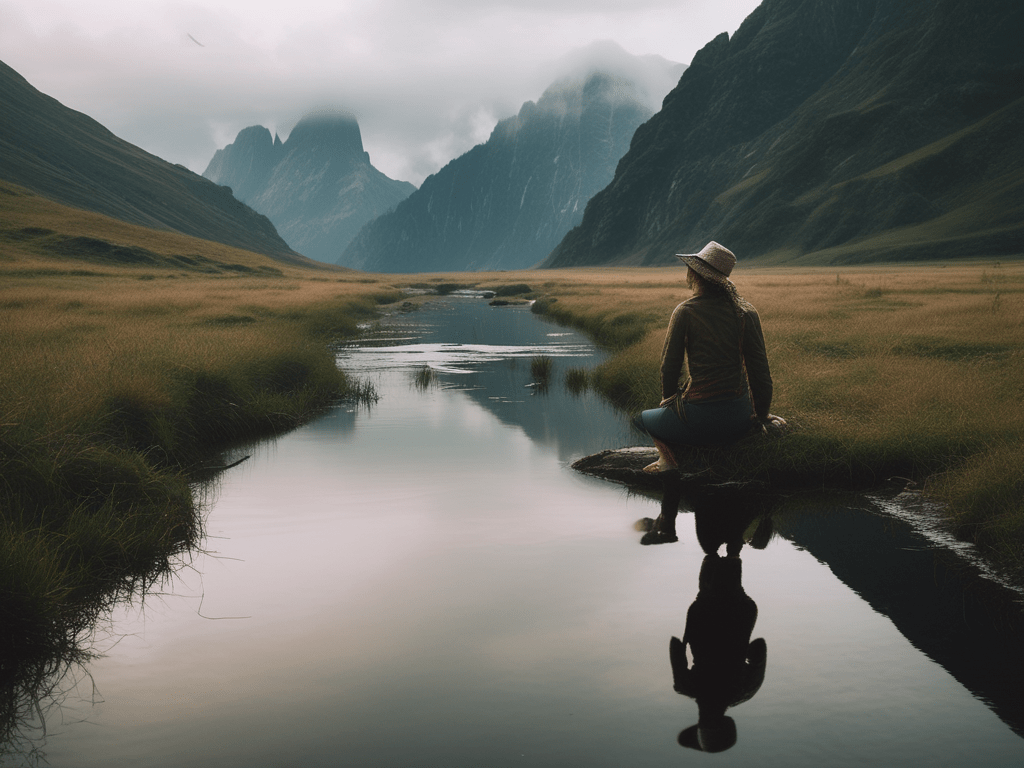
“Still though, it’s hard for me after dozens of trips and hundreds of places visited to not have that feeling of melancholy wash over me after I come home again.”
There is a comedown feeling that happens after the end of a trip, regardless of how long or short it is. All the planning, the effort, the money spent, and the adrenaline rush that goes into relocating yourself elsewhere creates a unique feeling that is hard to replicate. Often, the trip will go smoothly, and you’ll have fond memories to look back on long after it’s over. Still though, it’s hard for me after dozens of trips and hundreds of places visited to not have that feeling of melancholy wash over me after I come home again.
Luckily, it is not a deep melancholy, but it is a melancholy of missing the feeling of being on an adventure or not knowing that the next day will bring. It’s the pure excitement of the unknown, of yearning to experience a new thing or event or place, and about being more open than usual to meeting new and often interesting people you encounter during your travels. Being able to settle back into your usual routine can be a bit of a downer after the rush of going from place to place, city to city, and being footloose for a while.
Despite a routine not being the most fun to go back into, it is necessary to reestablish a routine again as it can provide some comfort after a trip rather than doting on the past trip, however fun and exhilarating it may be. I do believe we need a routine in our lives often, rather than be rudderless and without anything to focus on. If our travels are temporary and we do not live life on the road on a permanent basis, easing back into our daily lives takes time but if we don’t have anything to refocus our attention on after a trip, the melancholy can be even more profound and difficult to deal with.
It is a good idea to develop your hobbies, interests, and your goals even more after a trip to accomplish what you want to set out to do with the time you have been given. Devoting yourself to something you’re working on or taking time to achieve something you want for yourself is a good way to deal with the blues that can happen after your travel is over. Being able to have ‘travel’ as something you enjoy doing is important, but it should not be the only thing you have going for you in your life. We cannot only be one-dimensional in our focus no matter how much we enjoy taking ourselves on the road.
Being able to share your travels with others is important because it helps hone and shape our memories. You may not be able to talk about your trip as much as you would like if you would like but it is good to share with your family and friends how it went because it’s likely they will want to know how it went. Beyond that, make sure to take care of your mementos, souvenirs, keepsakes, and other items you brought back with you, because they will give you a comforting feeling from having been to that place or done that activity, and it is good to reflect on the travels you’ve done in a sustainable way. I also like to organize my photos, create canvas prints, and even share videos from the places I’ve been and to keep them in my own records to reflect on to remember better of where I was, who I was back then, and how I felt about the trip.
Lastly, keep thinking of ways to travel again to go back to the place(s) you loved again or try new places you want to visit. Travel should be a passion that sustains you throughout life and you should know that it is a marathon, not a sprint. I like to casually look at where I want to go next as I do like to plan, and I always like to have something to look forward to. Think about the culture, the language, and the people who live in the place you’re going to and start studying up in advance to learn more about what it will be like there potentially and how to prepare yourself for the trip you want to take next.
The most rewarding travel experiences for me have been those that I spent time learning the language (if need be), studying the places I want to visit as part of the itinerary, and devoting time to knowing the history and the culture a bit there. Travel is more than just taking photos and eating good food to me. While those are both enjoyable to do on a trip, I do make a conscious and concerted effort to know a bit about where I am going, and to learn as much as I can before I step on the bus, plane, or train. As travel writers have noted, it’s not the destination that is the central reward but the journey it takes to get there.
Remember, when you get back home, it’s not the end of your traveling days. You may have put the suitcase away and the mementos on the shelf, but you’ll be back on the road again, and sooner than you may think. Embrace what you’ve done, enjoy being home for a little while and seeing friends, family again while keeping up a routine, and start planning for your next trip when you can. Travel may not be your permanent mode of living as it isn’t for most people, but once you go somewhere, even if only for a short while, you’re still a traveler for life, and that is something that will never change.
“However, while staying outdoors will become less and less pleasurable, this is definitely the time of the year to dive into your reading and to get back into the swing of things when it comes to reading good books.”
The end of the Summer is always a bittersweet one. With mixed feelings, August turns to September, fall season will soon be upon us and the daylight will become shorter while the cold weather is drawing near. However, while staying outdoors will become less and less pleasurable, this is definitely the time of the year to dive into your reading and to get back into the swing of things when it comes to reading good books. Colder weather, shorter days, and back to work / school will cause our minds to re-focus our attentions on the tasks at hand in our lives but we should not forget at night or on the weekends to kick back, relax, and enjoy a good book.
These four books that I’ve chosen are all non-fiction, but they tackle different subjects and are relevant to different academic or personal interests such as history, sociology, travel, or entrepreneurship. Each author brings something different to the table as well and the writing style is different along with the kind of narration you can expect. I can definitively say that each of these books is educational and you would not go wrong with reading any of the following books in the upcoming Fall season.
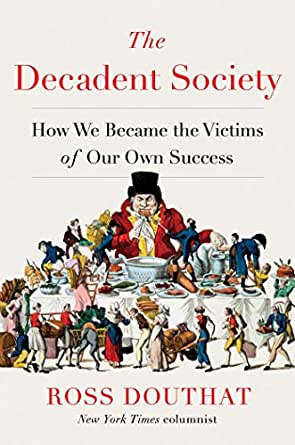
The Decadent Society: How We Became Victims of Our Own Success by Ross Douthat
New York Times op-ed writer and author Ross Douthat is not optimistic about the future. Given that the present involves polarization, stalemates, and a lack of technological innovation, what does humanity have to look forward to? That is the main argument of Douthat’s book ‘The Decadent Society’ on how we may have reached the limits of our own ‘progress’ and that modernity is less fulfilling than we thought it would be. Douthat’s view is that our current culture, innovations, and motivations like originality and that we have become too complacent as a society.
Douthat cites falling birth rates, more reliance on video games / virtual reality, lack of new businesses being started along with increasing government dysfunction leading us all to be ‘comfortably numb’ as the famous Pink Floyd song goes. Douthat’s diagnosis of our current cultural and political malaise is quite convincing from citing Star Wars remakes to the fact that the Trump and Clinton families have stayed relevant for decades in politics with a lack of a fresh face to get us out of our national ennui.
While our ‘modernity’ has left us more comfortable than satisfied, Douthat struggles to mention ways that we can get out of the malaise or the needed policy or cultural changes that should take place to push our horizons more and our boundaries as a society. This was my one main gripe with the book as in the 2nd half or towards the end, a little optimism or forward-thinking would have gone over well but perhaps that was done on purpose. Douthat is not optimistic that much will change in the future and that perhaps it is best to accept our current ‘decadence’ as being set in stone or perhaps to prepare for a fall from grace that would shake more of us out of our slumber. I hope either scenario is not the case. ‘Decadence’ in my perspective gets boring after a while and human beings are creative and innovative at our core so hopefully our current malaise is not permanent as Douthat argues but rather a temporary blip on human history.
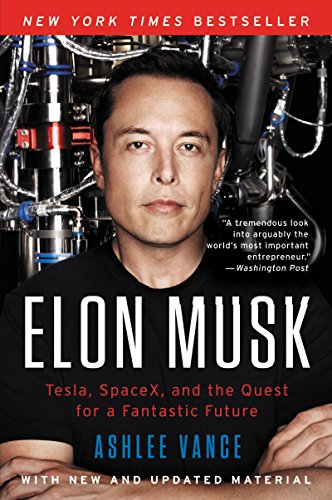
2. Elon Musk: Tesla, SpaceX and the Quest for a Fantastic Future by Ashlee Vance
Perhaps the great ‘irony’ of our age will be that a President or a Senator won’t be the one to lead us out of our current decadence. Perhaps it will instead be a foreign-born entrepreneur who rose from nothing to build multiple successful ventures that could transform the way we transport ourselves and how we interact with the cosmos. Entrepreneur Elon Musk may be the one to help lead us out of decadence and he seems to be on the way to making a dent in the wall that prevents us from creating the future. As many people don’t realize, Mr. Musk did not have an easy childhood, moved around multiple times, and even was a mediocre student at times but what he has that all entrepreneurs need is grit, resolve, and determination. To create something out of nothing and build your vision to make it a reality is where Elon has succeeded where many others have failed.
Musk clearly did not do it on his own whether it was Zip2, PayPal, or SolarCity but he was able to create a team and even companies to carry out his lofty vision. His tolerance for risk as an entrepreneur both financially and personally is simply beyond most people’s comprehension. Elon Musk is an entrepreneur so dedicated to making his companies a success that he will pour millions of dollars from a previous venture into his next one to ensure its longevity. Elon is currently the third richest person in the world and this autobiography gives rare insight into what it took for Musk to get to this point today with more than two decades of setbacks, failures, and even a few lawsuits here and there to overcome.
Ashlee Vance does an excellent job highlighting who Musk is as a person, what drives him, how his childhood and family affected him, who were the people around him, how could Tesla and SpaceX change life in the future and how big of an impact could they really have. Vance is illustrative in showing the whole of Elon Musk, both the good and bad, of the visionary entrepreneur. While he disdains any notion of socialism in government policy, he has received millions in government subsidies to help his businesses; His commitment to succeed can sometimes cause him to fall out with others who feel they were not treated well or were not given the recognition that they thought they deserved. A good biography shows both the triumphs and the warts of a man and this one is no different. Overall, this biography is an excellent look into the man behind both Tesla and SpaceX who continues on his quest to change the world by molding its future.
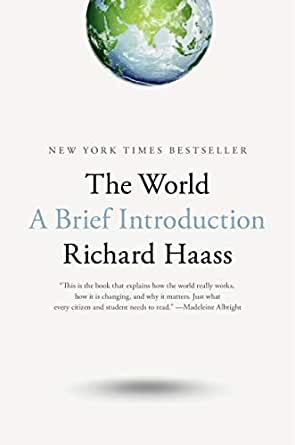
3. The World: A Brief Introduction by Richard Haass
This book is a love letter to International Relations in 2020 (pre-COVID) by the President of the Council on Foreign Relations Richard Haass. For those new to this field, it is a very enlightening and comprehensive book to ground someone especially in high school or their 1st year in college to know about the basics of the world in terms of foreign affairs and what are some of the main challenges of the 21st century for nation-states. While primarily a guide to the world for those new to international relations, I found that it is a good refresher for more advanced or experienced students of international affairs.
I enjoyed the historical overview, the breakdown of the regions in a succinct manner, and the number of economic, security, and development challenges that the world is grappling with at the beginning of the third decade of the 21st century. Richard Haass would definitely be an excellent professor to have in your Introduction to International Relations / International Relations Theories and this book would be a good starter text to have.
Clocking in at around 400 pages total, no major detail is spared, and no region of the world is left uncovered. If you are not familiar with an issue in IR or a region where you don’t know the culture or the language, Haass’s book is a good way to familiarize yourself and to stay up to date with what is going on regionally or thematically. For those of you in high school interested in the world and geopolitics, this book is a good place to start. For those of you starting college and planning to major in international relations, it is likely you will be reading this book not before too long.
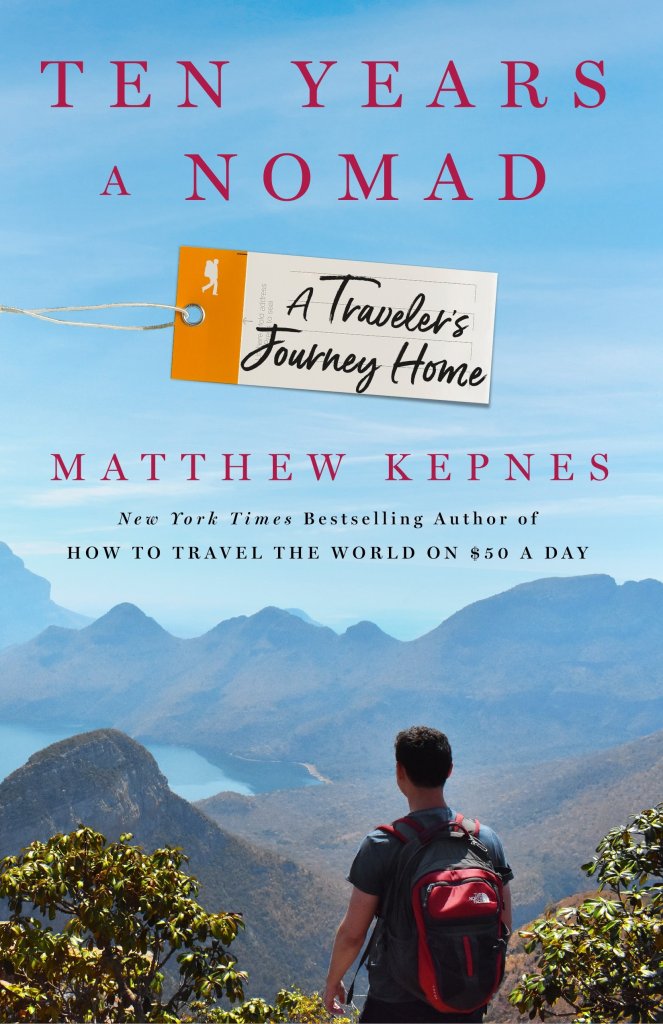
4. Ten Years a Nomad: A Traveler’s Journey Home by Matthew Kepnes
Home is whatever place you can find yourself comfortable in over a long enough period of time. I remember reading this piece of wisdom in Matthew Kepnes’s book and finding it to be quite the piece of truth. As a fellow traveler and shorter-term ‘nomad’ myself, Matthew’s travel memoir appealed to me because of its raw honesty and vulnerability. Life at home is comfortable but it can get dull and repetitive. Life on the road is new and exhilarating but can also lead to a sense of fatigue moving from place to place without settling down roots or losing friends and relationships as you feel the call to move somewhere else.
In my experience, Travel memoirs can be rather hit or miss but this one by Mr. Kepnes is on the mark in terms of the ups and downs of long-term travel and also about staying in a country for a year or more. I was personally away from home in my 20s for over three years and I can only imagine how ten years on the road would fundamentally change who I am, what I value, and how I want to live my life.
I really admire Matthew’s deep understanding on the joys of travel and how lucky we are to be on the road when we can. Travel is a privilege that especially now, we tend to have taken for granted. Once you get started on the path outside your town or country, it can be impossible to put the genie back in the bottle. That nomadic yearning to live life on your own terms, on your own pace is a flickering light that can burnish again with renewed intensity often times when we least expect it. This memoir highlights how rewarding travel can be, how much it can develop your personality and your worldview, and why it is so important to listen to your gut at times to know what you want in life.
Some of us travelers are meant to have one foot out of the door at all times and when we stay in one place too long, we tend to get stir crazy. I think what Matthew learned is how important it is to find that balance of being a nomad at heart but finding roots somewhere while keeping the freedom he gained over many years of hard work of being an independent writer, a recognized travel expert, and an overall creator with an ability to work remotely, which may becoming more and more common into the future.
You may think starting the journey is the hardest step to take when you’re going out on the road, but I find it’s true instead how coming home is often the hardest thing you’ll do when the journey comes to an inevitable end at some point. The good thing that Matthew notes in his memoir is that the nomad or the traveler is always within us even after the journey ends and that eternal flame can be rekindled making it easier and easier to get out on the road in the future to have more journeys without feeling that fear of the first step as happens on the first journey out of our comfort zone.