Five Steps to Surviving City Life

Having spent the past eight years of my life living in different cities both here in the United States and overseas, you get accustomed to life in an urban environment and how to make the best of it. If you’re coming from a rural town or a suburb, adapting to a city can take months or even years when you’re not used to the frenetic scenes, fast-paced traffic, and always on the go mentality. A fact of this day and age is that the urban population around the world keeps increasing and a good amount of industries, jobs including in the high tech world are based out of cities.

According to the United Nations, over half of the world’s population, currently live in an urban environment. The exact percentage at this time is about 54% of the planet’s inhabitants. That percentage is expected to steadily increase to 66% of the world’s population by the year 2050. It is also estimated that over 2.5 billion more people will be living in the cities by mid-century and these people will be mostly concentrated in the continents of Asia and Africa. The 21st century may be remembered as the first truly urban century across the entire planet.

I bring these statistics and predictions up to you, dear reader, not to scare you but to enlighten you about what city life is like. The chances are good that if you’re reading this article that during your lifetime you’ll have to either live in a city or travel there occasionally for work or tourism purposes. By following the five steps outlined in my article, you’ll be able to adapt quicker to urban life and have an easier time adjusting to a city overall. As someone who has consistently lived in cities big and small since I was 18, I am speaking from almost a decade of experience now. Living in a city can be quite difficult at first but it can also be very rewarding both personally and professionally. I hope that these steps will help you to make better choices, live healthier, and stay out of trouble with the locals.

Here are my five steps to surviving city life:

  • Adapt to the local norms and customs.

Whether it’s waiting for someone to get off the train before you get on or standing to the right to let people pass you on the left as they go down the escalator, observing local norms and customs in cities is very important. From the experience I have of living in cities, it’s better to blend in than to stand out. When it comes to the dress code, metro etiquette, or how to tip at the restaurant, it’s best to “do what the Romans do.”

It may take some time to adjust and if you’re new in the city, people will understand that you’re not aware as to how things work exactly. In order to save yourself a lot of trouble and angst, it’s best not to fight against the way things are even if you disagree with them. Cities are essentially a living culture that is adaptable to change only when a significant part of the population there wants things to become different. The best way to get used to living in a new city is to be observant, asks the locals if you have any questions, and do your best to understand the local transportation system which leads me to my next step.

  • Use public transportation.

Depending on which city you’re living in, there’s likely to be a public transportation system made up of buses, trains, and local taxis. In addition, there’s also the new popularity of Uber, Lyft, and other ride-sharing services. In the modern city, there are plenty of ways to get around for cheaper than it costs to rent or own a car. The utility of walking or riding your bike in the city is also a great option and more environmentally friendly.

There are a few exceptions in terms of cities where it’s more sprawling and you would need to have a car but the majority of cities around the world encourage public transportation and its best not to have a car. If you need to get out of a car, there are rental car agencies galore as well as car sharing services that the urban dweller can use to get away from the hustle and bustle. In my opinion, owning a car in a city is expensive and a money sink. Between the cost of parking, the parking rules, and the higher cost of gasoline, it’s simply not worth it.

When you move to a new city, it’s important to take the time to learn the public transportation system especially for buses and trains. If you can afford to pay more, living in the center of the city will be more advantageous to getting around with public transportation. If you live on the outskirts of a city or outside of the city, then it’s more likely that you’ll need to have a car.

  • Do your best to meet new people.

Moving to a new city can be quite stressful and even lonely at times. If you’re new in the city and do not know anyone, that can be a real challenge. Luckily, I would say with the advent of the Internet, there are numerous groups out there especially for younger people in their 20s and 30s to meet like-minded people with similar interests and hobbies. One of the most popular websites for meeting new people is ‘Meetup.com.’

There are hundreds of groups in these cities that cater to professionals, artists, writers, entrepreneurs, sports fans, music fans, etc. Depending on how big the city you’re living in, the chances are good that you’ll find a group or two where you will have something in common with the people in the Meetup group. These groups are free to join usually and it’s a great way to make connections. I’m also quite partial to Couchsurfing, a website designed to help travelers around the world to get to know each other better and exchange stories about life on the road.

Usually, there are Facebook groups and local websites especially in the United States that focus on being social through sports. Whether its soccer (football), volleyball, kickball, etc., joining a social sports club is a good way to meet new people. The best way to meet people in a city though is just by opening your mouth and starting a conversation with someone who is a local. “I’m new here, what are the fun things to do in __________?” (name of city) That question alone should get the ball rolling.

  • Use common sense (Crime, Pollution, Weather).

Using common sense when it comes to living in a city is extremely important. Part of it comes down to doing your research about the neighborhood you’ll be living in, figuring out if there are any crime and/or safety issues to be aware of. Some cities also have an issue with air pollution and/or water pollution so it’s good to ask around about if it is safe to drink the water or if you need a mask to cover your face to breathe during certain times of the day. Being able to know what kind of climate a city has throughout the year is also key. There is a lot of information out there about the weather / climate zones that a city is located in.

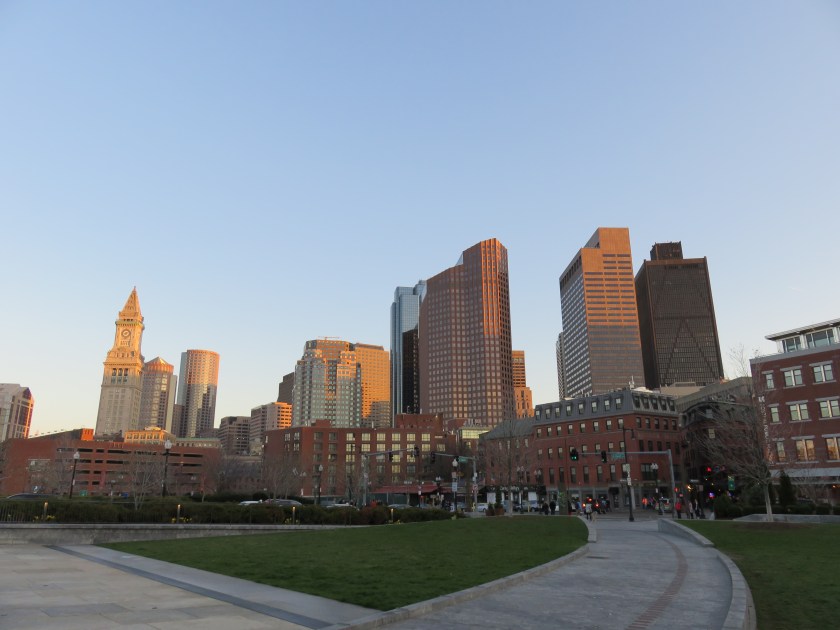
For example, I knew that in Medellin, Colombia, there is a rainy and a dry season that changes depending upon the time of year. Otherwise, there would be no winter, snow, and the city would have a spring-time like climate otherwise. When I moved to Boston, I changed my mind set to reflect the new urban environment I would be living in. Instead of springtime weather year around, I would have to adjust to living in seasonal conditions again with colder winters and more humid summers.

Out of all the things that people overlook when moving to a new city in their country or outside of their country; it is adapting to the weather and climate conditions. Doing your research about crime, pollution, and the weather along with asking the locals is key to mastering this particular step. Also, it is key to know a little bit of information about each of the neighborhoods in your city and whether they are pretty safe or not. If you have children, knowing about the city schools should be high on your priority list.

  • Get out of the city occasionally.

I know from my own personal experiences that city life can be really rewarding but also quite stressful. You’re interacting with hundreds of strangers each day who you don’t know that well and are often going through life at a frantic pace. It can be overwhelming to our senses especially when it comes to all of the light, noise, traffic, and the amount of people nearby. Cities can also feel claustrophobic at times. That is why my last step focuses on getting out of your comfort zone to leave the city every now and then. Mixing it up to be in a more rural area with mountains or in a small town by the sea can really do you a world of good. In all honesty, cities are not the most natural environment for human beings to be in all of the time.

Collectively, we really need to be in nature whether its’ in the woods, in the mountains, or by the sea. Going for a hike, doing some fishing at the lake, or relaxing with a book at the beach are really good ways to help our mental health especially if you spend 90% of your time in a city. On top of that, being able to get some exercise and being outdoors will do you a world of good both mentally and physically. Even if it costs you some money and a rental car, leaving the city can be very beneficial to surviving city life. If you’re reading this article and haven’t been to either the mountains, the lakes, the rivers, or the beaches in a while, consider doing so if possible.

I’m quite confident that if you follow each of these five steps, you’ll be able to survive life in the city. Even if you’re only able to one or two of them, you’re setting yourself on the right path to developing a healthier mindset when it comes to urban living. I hope this article helps you and feel free to leave me a comment below if you have any further questions. I’d be happy to answer to the best of my ability.


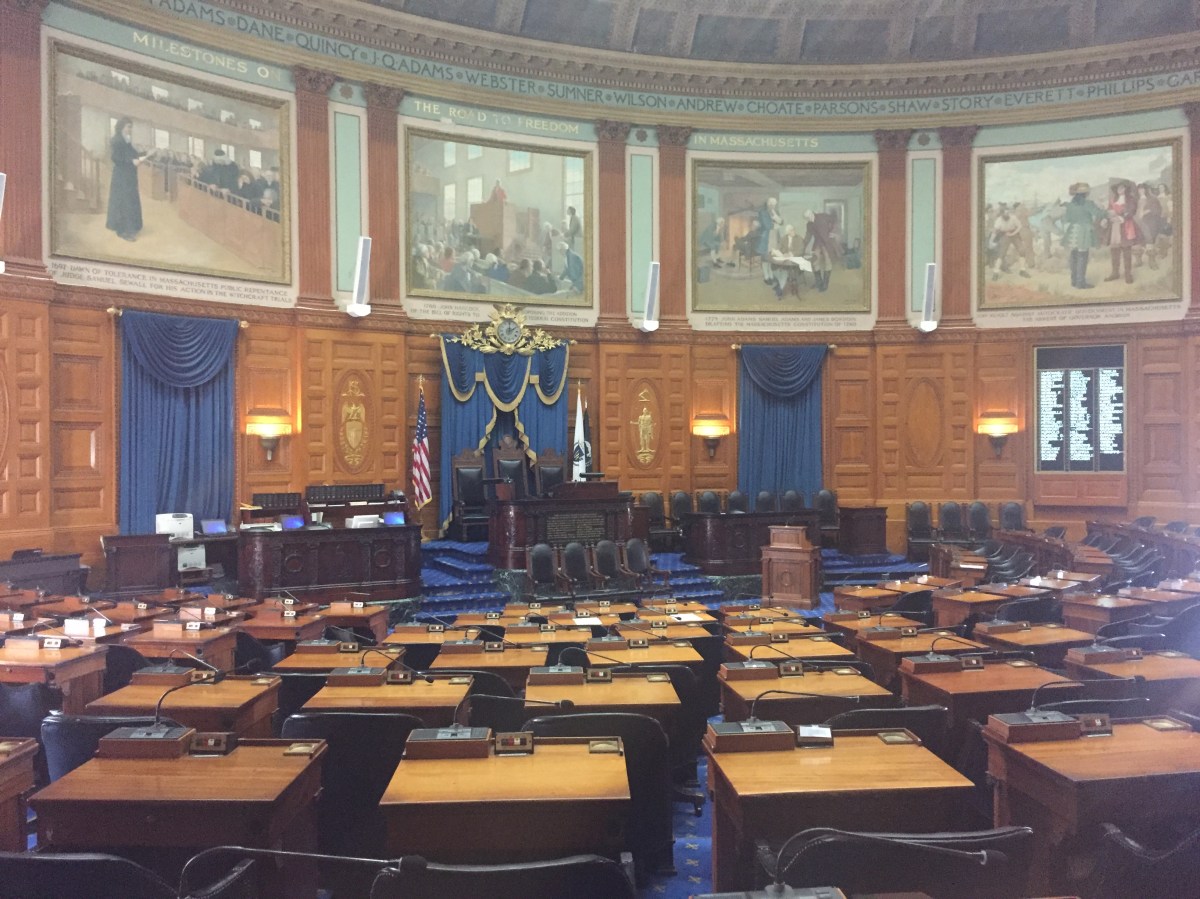
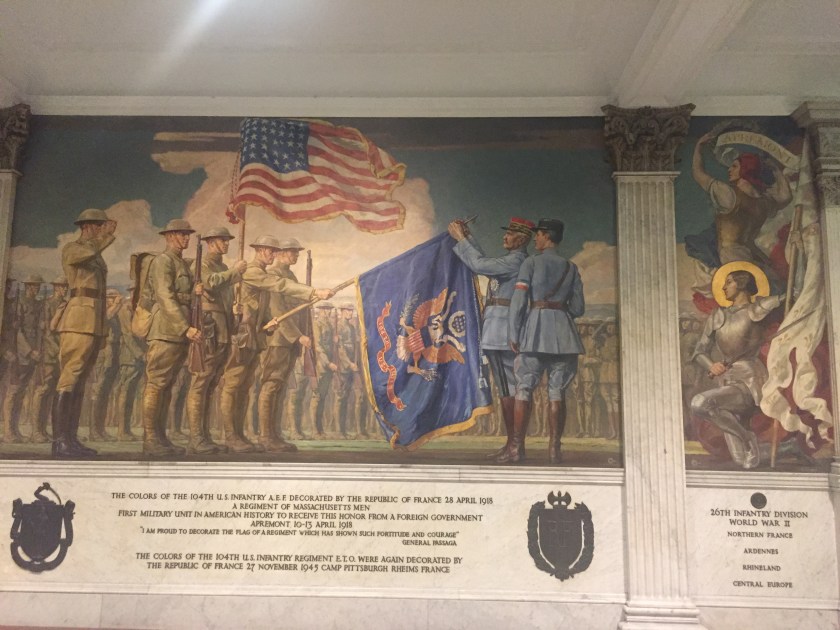
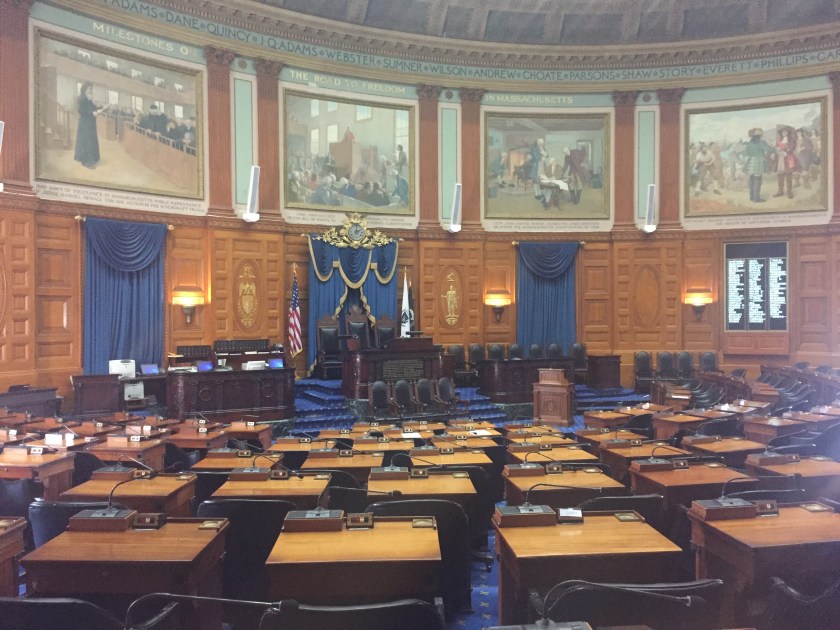
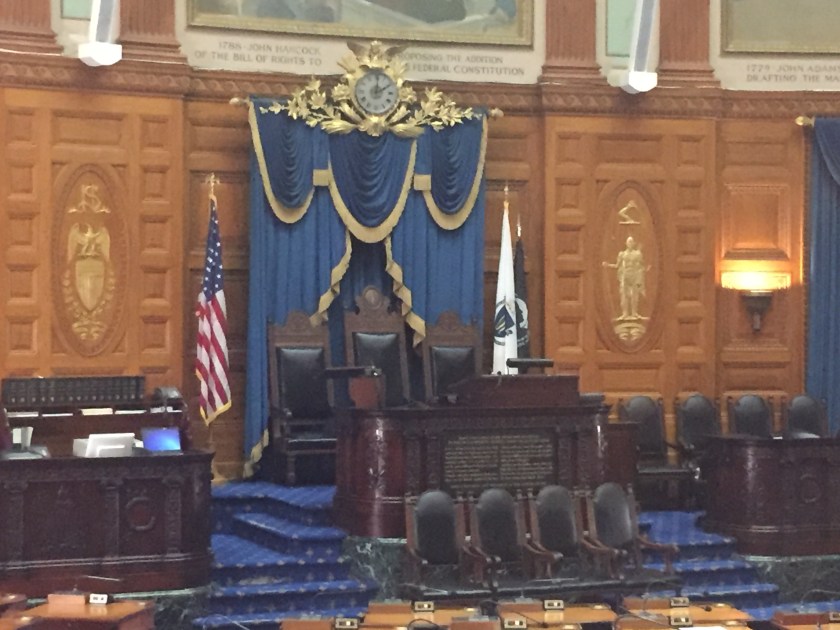
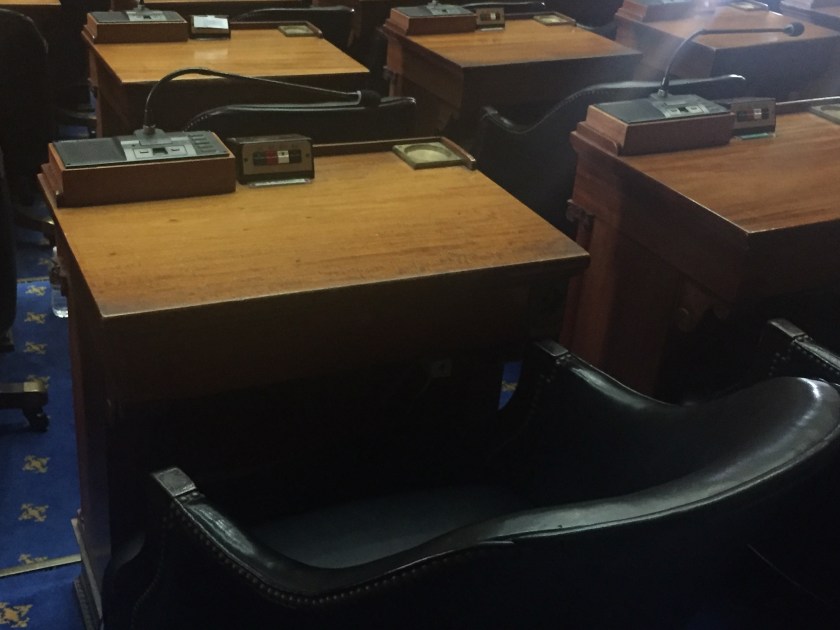
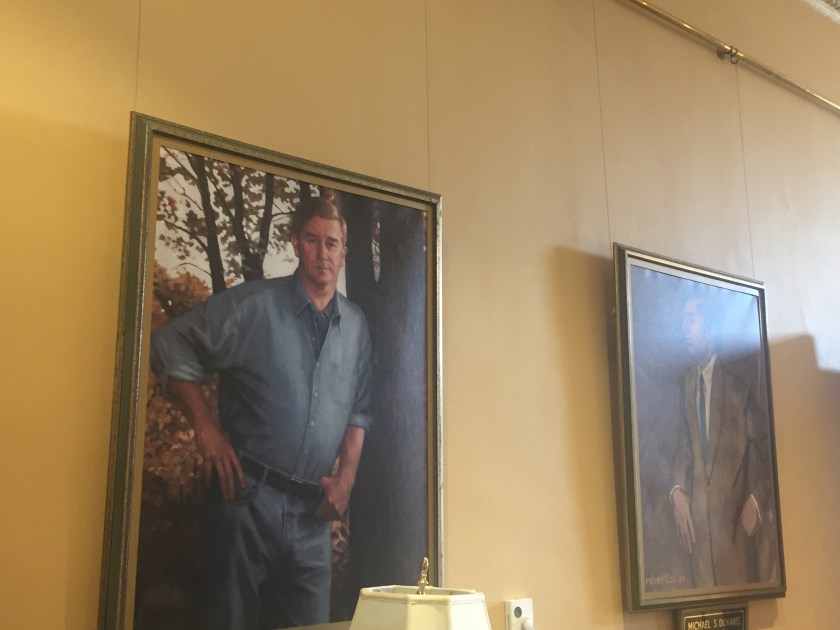
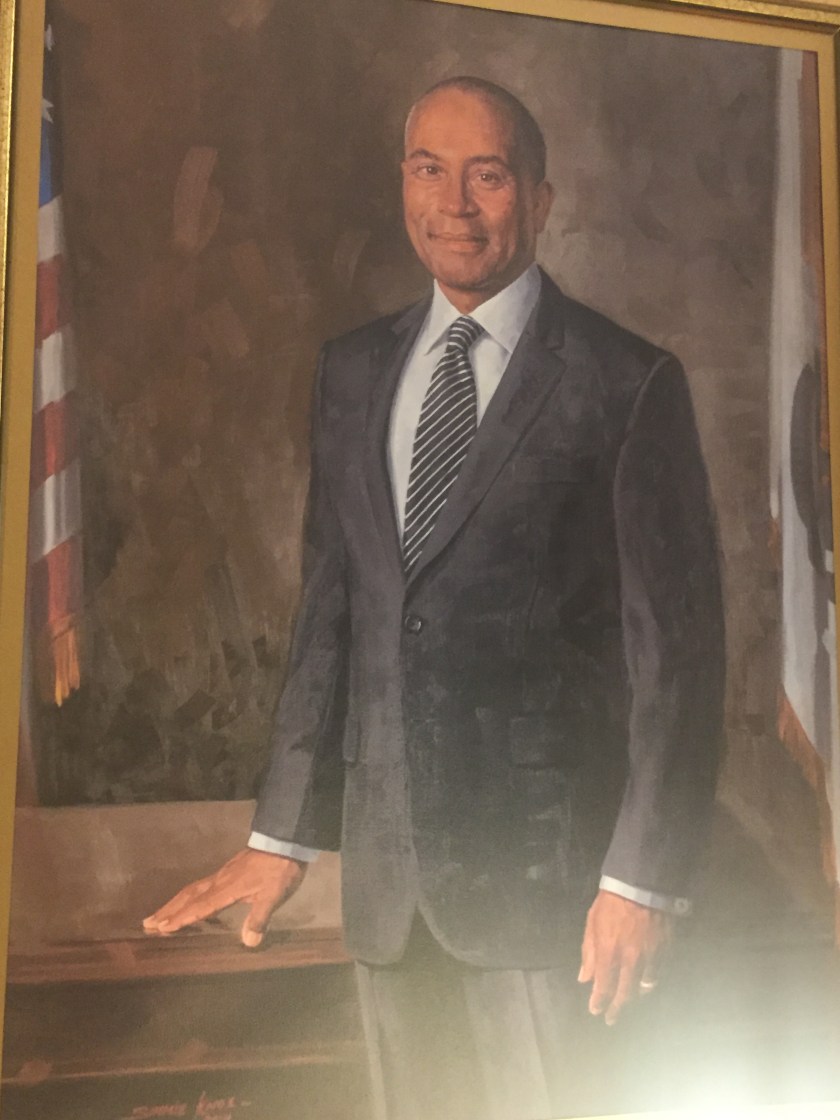
The Massachusetts State House

IMG_0139IMG_0140IMG_0141IMG_0142IMG_0146IMG_0147IMG_0148IMG_0149IMG_0150IMG_0151IMG_0160IMG_0161IMG_0162IMG_0145IMG_0143

CameraiPhone 6

Location: Massachusetts State House; Boston, Massachusetts

Patriots’ Day Weekend In Boston

IMG_0157

IMG_0160

IMG_0178

IMG_0219

IMG_0224.JPG

IMG_0260

IMG_0274

IMG_0287IMG_0290

IMG_0298

IMG_0320

IMG_0329

IMG_0348

IMG_0308

IMG_0313

CameraCanon PowerShot SX710 HS

Locations: Lexington, Massachusetts; Concord, Massachusetts; Boston, Massachusetts; Wellesley, Massachusetts

A Future To Believe In

It is very rare in American politics these days to have a candidate running for high office who is sincere, genuine, and committed to his principles and ideals. A candidate who will not bow to the special interests, who will look out for all citizens and not just the wealthy few, and who has the ideas to make the United States a more fair, equal, and prosperous country. Because of these reasons, I am supporting  Bernie Sanders’ candidacy for President and why I will be voting for him in the upcoming Democratic primary in New York on April 19th.

While there is no such thing as the “perfect Presidential candidate”, Senator Bernie Sanders is the best choice not only for the Democratic Party but for the nation as a whole. He has served not only as a U.S. Senator for Vermont, but also as a member of the U.S. House of Representatives, and the Mayor of Burlington before that. For over thirty years, Senator Sanders has been a faithful and dutiful public servant. Over the course of his political career, he has always been a staunch defender for the rights of working class people, the middle class, and the poor.

From a young age of 22 when he was apart of the historic ‘March on Washington for Jobs and Freedom’ along with Dr. King and other civil rights leaders, he has continuously fought for equality of opportunity and greater freedom for minorities, women, and the LGBT community. What is also notable to mention from his past was his willingness to participate in an anti-segregation protest in Chicago in 1963. Because he stood up for his beliefs, he ended up being arrested and was taken away by the police for living up to those principles of fairness, justice, and equality.

Mr. Sanders has made his Presidential campaign “of the people, by the people, and for the people.” He refuses to take money from SuperPACs unlike his Democratic and Republican rivals. He also does not accept donations from big corporations and the millionaires, billionaires of the country. He wishes to nominate Supreme Court justices who will attempt to overturn the disastrous Citizens United decision, which allowed large corporations the ability to donate huge sums of money to their favored candidates for elected office. I applaud his commitment to making his campaign about the individual supporters, donors rather than about corporate sponsorship and special interest contributions. More so than any other Presidential candidate in recent history, he has shown a commitment to running a national campaign that’s fueled and powered by the average voter.

In addition, I believe in his policy proposals for a national minimum wage of $15 per hour, a Medicare-for-all policy that would ensure universal health care for all U.S. citizens, and to reduce the incarceration rate significantly over time to end the unfortunate distinction of being the country that has the biggest prison population in the world. Over the past few weeks since I returned from Colombia, it has been a pleasure for me to knock on doors, make phone calls, and to volunteer for his campaign at the Washington Square Park rally on April 13th.

About 30,000 people attended one of the largest rallies of the 2016 election season at Washington Square Park this past Wednesday night to see Senator Bernie Sanders speak about his vision for America. As a volunteer at the event, I helped with crowd control by keeping the huge lines orderly and moving cordially. The atmosphere was filled with excitement and anticipation. The mood of the people attending the rally was happy and even joyous at times. It was a cold evening in lower Manhattan but you could feel the energy and the passion people felt about this particular campaign. In addition to Senator Sanders’ rousing one-hour stump speech, notable celebrities, public officials and figures also lent their voices during the massive rally. The most notable names were Tim Robbins, Spike Lee, Rosario Dawson, and Shailene Woodley.

I enjoyed the rally immensely and I was lucky enough to be close to the stage after a hectic day of volunteering and keeping order among the large crowds of people waiting in line. I shook Senator Sanders’ hand after the end of his speech and wished him well in Tuesday’s New York primary. It was an exciting moment for me and I was glad to be apart of such a large and historic campaign event. I can only hope that this rally will lead to a large turnout and a successful result at the polling places across New York State in just a few days from now.

While I usually avoid writing blog posts about politics, I have to make an exception in this case because I feel strongly about Bernie Sanders’ candidacy and believe that he is the best choice not only for the Democrats but for the country too. Similar to Candidate Obama in 2008, Candidate Sanders has created a lot of enthusiasm, held huge rallies, and has earned support from diverse groups of voters due to his campaign’s message and consistency.

Time will tell if his candidacy will be successful enough to be nominated as the Democratic Party’s standard-bearer and to continue on to the 2016 general election against the Republican nominee. However, so far, he has shocked all of his doubters and made it further than anyone would have originally thought possible. Despite what may happen in Tuesday’s New York primary and beyond, I know that I will continue to “Feel The Bern.”

______________________________________

Disclaimer: The views and opinions expressed in this blog post represent solely my own and do not reflect or represent those of any outside party, organization, company, or group. Thank you.


A New Adventure Awaits

peace_corps
U.S. Peace Corps in Colombia – I’m excited to serve and ready for this journey to begin.

In just one week from now, I will begin my training to become a Volunteer for the United States Peace Corps in Colombia starting in mid-January of 2016. For my three months of training, I will be living in a town called Santo Tomas, which is about 45 minutes outside of Barranquilla. For my work and living situation, after I’m sworn in as a Peace Corps Volunteer, I will be located in a site close to the Atlantic Coast of Colombia close to the cities of either Barranquilla, Santa Marta, or Cartagena. The school where I will be teaching and the community that I will be living in has not been announced yet due to the fact that I haven’t completed my training yet.

This will not be my first time living overseas for an extended period of time. Previously, I lived in Istanbul, Turkey last year as an ESL teacher at a private high school. I also studied for a semester at Bogazici University in Istanbul as well when I was in college. My first overseas living experience occurred when I was 16 years old in Costa Rica where I studied Spanish for a summer there in a language homestay program. I have become quite comfortable with adjusting to a new lifestyle and territory by now. However, it still may take me a few months to adapt to the new culture and hot climate.

My family and my friends have been very supportive of my decision over the past year and a half to pursue service in the U.S. Peace Corps. It’s not easy to be away from your family and friends for a long period of time but they all know about the good work that I will be doing in Colombia. They understand the importance of volunteering and serving. I would not be where I am today without the support of my father, mother, and my brother especially. They have been great to me throughout the whole application and selection process.

My main project while serving in Colombia will be developing, and improving upon the ‘Teaching English for Livelihoods’ program. I hope to work with local Colombian teachers to advance the English curriculum and materials that they are using to teach the students. I believe that with hard work and effort, we can make real progress in creating an effective way of teaching English and improving the English proficiency levels of the Colombian students. I also would like to expand upon tutoring and after-school programs related to English learning and making sure that the students see learning English as fun and useful to them.

I look forward to being apart of a new school and a new community. I am excited to explore my surroundings and to learn about the Colombian culture and their customs. I will be very happy to work with my Colombian colleagues as well at the school and hope that I can make a real difference in improving the English level of the students that I hope to help during my service. I want to immerse myself in becoming fluent in Spanish, learning the local dances, and tasting the Colombian cuisine as well.

My motivation to join Peace Corps was because of a number of different factors. I had a desire to volunteer and serve a purpose greater than myself. I felt that I could contribute a lot to the Peace Corps’ Education sector given my previous background and experiences as an ESL teacher. I wanted to explore a new country and a new culture as well. Spanish was the first foreign language that I learned as well so I hope to use this exciting opportunity to become fluent and to connect more easily with the locals in my community. It was also important to me to volunteer and contribute to the wider world in some way. I hope I can be an example to other Americans who want to be part of something bigger than themselves but are not sure where to begin.

When I leave Colombia, I want to leave behind a school and community that is better off than it was before I arrived. My main goal is to help the local teachers to develop an effective English language curriculum that will last for many years after I depart them. I hope to foster better relations between Americans and Colombians through my actions and my relationships that I hope to build between our two peoples.

I wish to help as many students as possible with their English language skills whether its through tutoring, after-school programs, etc. so that they can become bilingual and have a brighter future. Above all else, I would like to make new, lasting friendships and to be considered an honorary member of their community by the time I leave.

I leave in less than a week and I’m excited to begin and complete my training over the next three months. All I have left is the final packing of my bags and I’m off to Miami for the staging event!

There will be a change of focus for my blog from this point forward as I will focus on writing about my experiences and adventures living in Colombia. I hope to write about the cuisine, customs, culture, and food of my adopted country for the next 27 months. I hope that you will follow me on this exciting journey. Thank you very much for your continuing viewership and support. (Muchas Gracias y Saludos para todos! Vamonos!)

Made In America?

free-trade-cartoon

Have you ever noticed this small yet important detail when you’re out at the store buying a consumer good whether it’s a pair of pants, a carpet, or some brand new shoes? For those of you who are confused right now, there’s a tag attached to the item indicating that the final product was “Made in …..” which indicates the origin of the country the good has come from. I doubt that most people notice this small detail when they’re out shopping and it’s probably not their biggest concern.

However, I do believe it’s very important as consumers to know where our goods and services are coming from and to what sort of quality they are made. It’s also important to ask the question of these companies who make these consumer products, both foreign and domestic, how well are they treating their employees and what do they pay them for their hard work? Do they receive good health benefits and vacation time? Are the working conditions in their factories and shops safe and hospitable?

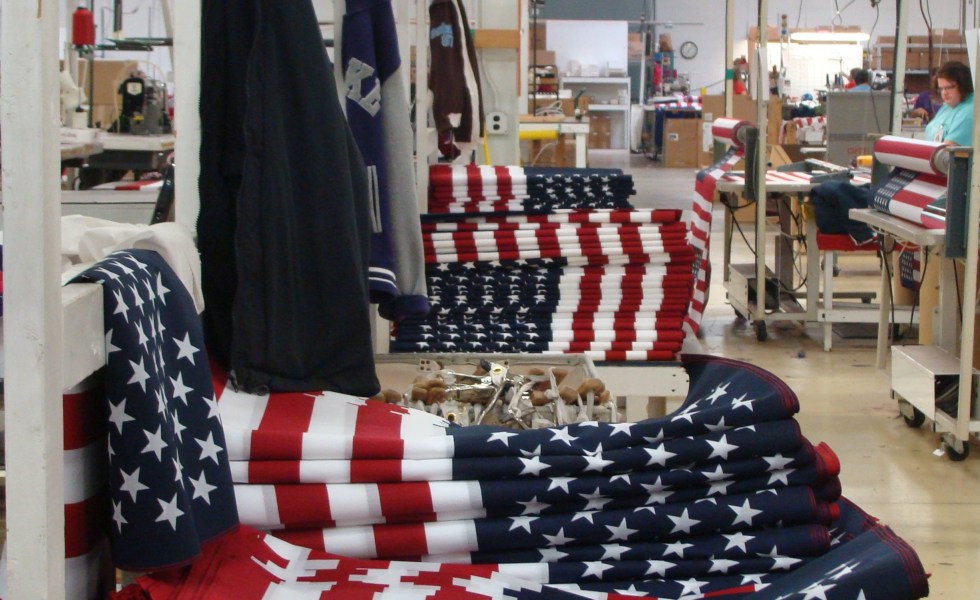
I have noticed that most of the clothing, household items, and electronic products that I have bought were not made in the United States. I am not against wearing or buying consumer goods that were created and manufactured in other countries. However, I do worry that we are relying too heavily on these foreign-made products in our daily lives instead of having some of these same goods made in the U.S.A., which could improve the lives of many people looking for decent-paying jobs. Many abandoned and dilapidated factories, plants, and mills could be re-opened again if we change the way we look at free trade.

According to the official and most recent numbers on United States International Trade Data, there was a sizable overall trade deficit in goods and services of $43.9 billion dollars in October of 2015. Since ‘The Great Recession of 2007-2008’, the trade balance has not changed greatly in terms of lowering the overall deficit. Over the past five years alone, the monthly trade deficit has ranged from $40 to $65 billion. There has been very little sign of this trade imbalance being decreasingly significantly or being entirely eliminated recently. This means that the U.S. is importing a much larger quantity of goods than we are exporting overseas. While some people would argue that this is not a big deal, I would say that in order to grow the economy at a higher output and decrease unemployment further, increasing our exports overseas with the stamp “Made in America” should be a higher priority especially with the upcoming presidential election.

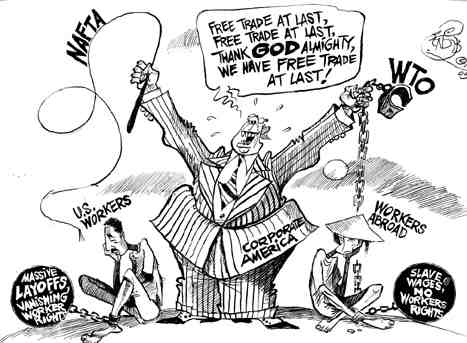
With the decline in American manufacturing, the U.S. has increasingly looked to its trading partners overseas to fill the void that has been created. Due to free-trade agreements such as NAFTA and the recent passing of the Trans-Pacific Partnership, many American companies and jobs have moved overseas causing the trade deficit to increase over the past generation. This has led to many good-paying middle class jobs with health and other benefits to disappear. There has also been a steady decline in the Unions and their total membership and influence within the U.S.

Examples of the shift towards the growing importation of manufactured goods and products that used to be made in here at home can be found in companies such as Wal-Mart and Apple. These iconic companies that were created by Americans such as Steve Jobs and Sam Walton have changed significantly like many others since their early days. They have become multi-national in nature and have expanded their facilities and operations to multiple countries around the world. Even though their company headquarters are in Silicon Valley and in the heartland of Arkansas, these companies are not taxed like other U.S. companies and carry out their manufacturing and production of goods from overseas suppliers.

American workers are known to be more expensive to train and hire than those workers found in countries such as China, Vietnam, and Cambodia. That’s an unfortunate truth that has led many companies to take the easy way out by calculating how much they would save due to the fact that foreign labor is cheaper. For these firms, there is little to no need to worry about strict labor laws that don’t exist outside the U.S. and other parts of the Western world. For example, huge multi-national companies such as Apple have used subsidiary companies like the ‘Foxconn Technology Group’ for years in order to manufacture their iPhones and other high-tech products. There have been many investigative reports done by The New York Times and other news outlets about the harsh working conditions, poor salary, long hours, and reported suicides and riots occurring at these plants in China.

In a lot of developing countries, the taxes associated with doing business are much cheaper which allows a lot of big manufacturing firms to operate there more freely. Even though multinational companies have to pay U.S. taxes on the profits that they earn from products that they make and sell in other countries, Apple and others can avoid paying these taxes by re-investing their profits made from outside the U.S. on overseas factories, stores, warehouses, etc. Because of that, they won’t have to pay the higher taxes. It’s a significant loophole that hasn’t been closed yet and allows U.S. companies to store billions in profits overseas. “Apple is not alone in this strategy. U.S. companies have $2.1 trillion in foreign profit stashed overseas, according to Capital Economics.”

Once the multi-national companies decide to move their manufacturing and production operations overseas, it’s very difficult to bring them back to the U.S. Competitors like China have the infrastructure and a vast amount of workers willing to work in the factors for these supplier companies. It is the responsibility of companies like Apple to break their agreements with manufacturing giants like Foxconn if they ever decided to move their production operations back to the U.S. However, Apple would have to invest in billions of dollars to build these new factories and pay these workers a fair wage with benefits. This proposition is entirely unlikely to occur in the near future for Apple, Wal-Mart, GE, and others to move their manufacturing back to the U.S. due to the higher taxes, the higher costs of the workers and their desire to make the most profits that they can secure.

Free trade is a complicated subject but I decided to write about this issue because I think as consumers, we should know where our money is going. I am guilty like many other Americans in supporting these popular multi-national companies who have gotten away with sketchy business practices and who have shied away from creating jobs here in the U.S. However, it’s never too late to be informed about where your clothes, your cars, and your electronics come from. Do your research and be informed about these issues.

Globalization and free trade have lifted millions of people out of poverty and allowed many countries to boost their economies but it’s also led to a higher amount of competition, the stagnation of wages, and many environmental concerns. I am not a protectionist and I believe that some free trade is good. However, it’s more important than ever that we support fair trade and business practices from these companies. Workers around the world should be treated fairly with good wages, good health and vacation benefits, and they shouldn’t be taken advantage of whether they are located in Saigon or Detroit.

We have free trade with other countries so that we can exchange goods and services with them to better our economies and our peoples. Lets’ not create a situation where we are importing more goods than we should be at the expense of the American worker and taxpayer. These companies need to be held accountable for what they do both here in the U.S. and overseas.

I would encourage everyone reading this entry to think about where your goods and products come from. If you have the chance and opportunity to do so, I would argue that you should try to buy from the U.S. companies making the goods and services right here in America. I am not against buying foreign goods either but we have to know whether these large companies out there are playing by the rules and are not being exploitative.

By ‘Buying American’, it’s good to show those small businesses and firms that we still support them and that we want them to succeed. If you would like to support buying American-made goods and products, check out this website: http://madeinusachallenge.com/ (Made In America – Master List)

Sources

Reverse Culture Shock In The USA

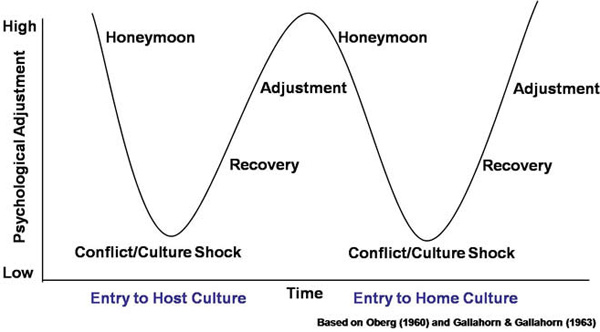
“Adjusting to one’s home country and culture can take a while. This graph sums it up quite well.”

After being away from the United States, my home country, for the past year, I have been dealing with ‘reverse culture shock’ since I have returned as many people who come back to their home culture experience after an extended time overseas. There is a natural recovery and adjustment process but it takes time to get back into the swing of things. As a writer, I like to gather my thoughts on paper about what I have noticed about my home country since returning from my time spent overseas. These observations have helped me to deal with my ‘reverse culture shock’ so far and to comment on what could be improved or changed to make my country better. I have traveled to 20 other countries, and have lived in Turkey and Costa Rica thus far so I believe I have some knowledge about how the U.S. compares to the rest of the world in different ways.

I would like to note that I do love my country and have enjoyed being born and growing up here. The United States is a great country and I only wish to see it become better and better in the future. I intend to use this blog post to merely bring up some outstanding issues and problems that the U.S. must deal with as a whole. No country I’ve lived in or have been to will ever be perfect and every country has different flaws/issues to work out. That’s part of the reason why I love to travel and explore the world. It’s interesting to see the variation among cultures and societies along with how they tackle their own internal and external problems to make their own countries better. Listed below are the items that I write in detail about which have caused me some ‘reverse culture shock’ since my return to the United States in late July of 2015.

  1. Lack of Using the Metric System in the 21st Century: The U.S. is one of only three nations in the world who don’t fully use the Metric System (International System of Units, SI). Liberia, Myanmar are currently our only counterparts in this anomaly. There’s no excuse for that and it harms our international commerce procedures and our ability to conduct foreign relations properly.
  2. Lack of High Speed Rail, and Efficient Public Transportation: This can be quite jarring after visiting developed nations like Germany, France and also from what I have read about China and Japan who are way ahead of the U.S. in developing high-speed rail networks. Part of this is the fault of state governors who refuse federal stimulus funding for high-speed rail projects. (Examples: Wisconsin, Florida, Ohio, etc.)
  3. Large and Unhealthy Food Portions: This may be part of the reason for the ongoing obesity problem in the country. I’m all for enjoying a good meal of course but I think the food portions I’ve had in the U.S. have been the biggest than all of the other countries that I’ve visited so far. I also believe that having ‘free refills’ and ‘soda fountains’ at restaurants, while a tempting proposition, is not something that should be offered to promote a healthy diet.
  4. Reliance on Tipping (Mandatory?) to pay workers’ wages: I’m fine with throwing in an extra 10% on top of my meal and tax for good service but I don’t believe it should be 15-20% every time in order for these workers to meet and go above their very low hourly Minimum Wage as ‘tipped workers’. I believe that these service workers in the U.S. should be paid a higher minimum wage altogether by law and that they should be guaranteed a good wage each shift rather than fighting for tips each day.
  5. Obesity crisis and an astounding proportion of adults/children who are overweight: It’s a drain on an already expensive health care system and contributes to our total health care expenses. There needs to be more emphasis in our society on daily exercise and getting out of the house for both children and adults. Healthier eating and taking a walk/going for a run each day can go a long way to helping to solve this problem. I believe that companies and schools should play a larger role in keeping their employees/students in good physical shape with certain incentives.
  6. Heavy reliance on cars, trucks and other motor vehicles to get around suburban and urban areas: There is a lack of walking around towns and cities because there is much more sprawl and open space in the U.S. However, I believe that having trams/streetcars, more extensive public bus transportation systems in both suburban and urban areas could relieve part of the traffic jams and gridlock that affects a lot of the country nowadays.
  7. Big Businesses and Corporations get the benefit of the doubt too often: When it comes to beating out smaller businesses and enterprises, these big box stores are winning out. These major companies contribute to this problem by monopolizing their industry and not allowing others to compete in a free market environment. This, in part, contributes to suburban sprawl because these huge megastores contribute to the layout that contributes to the car culture. (i.e. Wal-Mart, Bed Bath and Beyond, Dick’s Sporting Goods, Best Buy). I can’t remember the last time I’ve seen a family-owned coffee shop in my town or neighborhood. There are three Starbucks’ around though for a good cup of joe…
  8. General lack of curiosity about foreign cultures and peoples: Many Americans do not speak a 2nd language or don’t pay attention to international affairs beyond what they learned about briefly in high school and college. This is a generalization but I still believe it applies to the majority of people within this vast country. Still, only about 30-35% of Americans own a Passport. I would encourage more Americans to travel and see the world especially if they’re younger. Taking a “gap year” before or after college would be a good way to travel and there are ‘work-study’ programs available for Americans to take advantage of in western European countries (Ireland, UK, etc.) along with Australia.
  9. Very conservative laws about alcohol possession and consumption: “21” as the minimum legal age for consuming alcohol makes no sense to me especially considering you can start operating a motor vehicle at 16, join the military at 18 and also vote for President and other elected officials at that same age. Having someone check your ID to get into bars/clubs or at a sporting event to purchase beer or wine is also ridiculous. I’ve seen people in their 40’s and 50’s get carded when they are clearly over the legal age here. The United States is one of the few countries where the drinking age is 21 along with Pakistan, the UAE, and Indonesia.
  10. Mind-numbing advertisements: I have noticed that there are way too many drug commercials (Cialis, Prozac, Ambien etc.) that appear on television especially during the day. In the U.S., We are constantly bombarded in our homes, in public events, on public transportation, etc. with these silly advertisements. It’s predictably a way for marketers to get people to feel insecure enough about themselves to want to buy things to fill some kind of missing “void” in our lives.
  11. Political Gridlock / No ability to get big things done legislatively: The recent threats of a government shutdown, the debt ceiling threats, continuous gerrymandering, the electoral college deciding a Presidential election instead of the popular vote, too much of an influence of organized money in politics in the upcoming 2016 elections, (Citizens United decision). These occurrences harm our ability to boost our education system, solve long-term Medicare and Medicaid solvency along with the broken immigration system and the need for more investments in our antiquated transportation and infrastructure systems.
  12. Expensive costs of Higher Education: A lot of Western countries completely subsidize higher education institutions but the United States has seen a rapid growth in the amount of students going into debt to pay for college and graduate school. There have also have been cuts over the years to the Public University systems in certain states such as California. Wages have not kept up with inflation and the pace of tuition increases is out of control. $1 trillion of total student debt is disturbing and is a poor reflection of our country’s priorities.
  13. High level of income inequality between the richest and poorest Americans: The top 1% of Americans earns about 20% of the total national income. This is unacceptable and shows a widening gulf between the wealthy and poor. This level of inequality is at its’ highest since the gilded age of the 1920’s. Many economists say this is one, if not the top economic issue facing the country into the future. If not dealt with, our country runs the risk of turning into an actual “banana republic.”
  14. Too much emphasis on Military Spending: The U.S. continues to spend more on its military and armed forces at about 650 billion dollars total. This is 40% of the total world share and is more than the next 11-12 nations combined. It may only account for 4% of the total Gross Domestic Product but has much more of an influence on the federal budget than State, HUD, Education, HHS, EPA combined. The Cold War has been over for twenty years and the wars of the 21st century will be fought through specialized forces, by drones, or over the cyber-web so there’s no need for such an expansive budget into the future. It’s important to maintain a strong military but a nation should have other priorities as well and balance them out successfully.
  15. Our prison system needs real reform: The United States has the largest incarceration rate in the world. 2.3 million citizens are in its jails which is 22% of the world’s total amount of incarcerated prisoners, (Source: World Prison Population). Unfortunately, we are ahead of other nations such as Russia, Iran, China, UAE, etc. when it comes to this rather dubious distinction. While the Netherlands is closing down prisons because of a lack of need, my country continues to build up a massive private prison industry which is unheard of in most other industrialized nations. This is, in part, a result of the failed “War on Drugs” which involves serious sentencing measures for non-violent drug offenders. Recently, politicians in both major parties in the U.S. have called for prison and sentencing reform but no concrete legislation has been passed by Congress and signed by the President up until this point.