

How Iceland Replenishes the Mind, Body, and Soul

“Iceland is one of those countries that can combine stunning landscape contrasts with sheer natural beauty, putting the average traveler at ease and offering you unique opportunities to rejuvenate physically, mentally, and spiritually through its landscapes, culture, and way of life.”

Few places on Earth these days can put you in supremely natural environments for which you can really feel at ease in nature that has been properly conserved and taken care of. You can be far away from technology, city life, and cover a wide variety of landscapes in just a few hours. Iceland is one of those countries that can combine stunning landscape contrasts with sheer natural beauty, putting the average traveler at ease and offering you unique opportunities to rejuvenate physically, mentally, and spiritually through its landscapes, culture, and way of life.

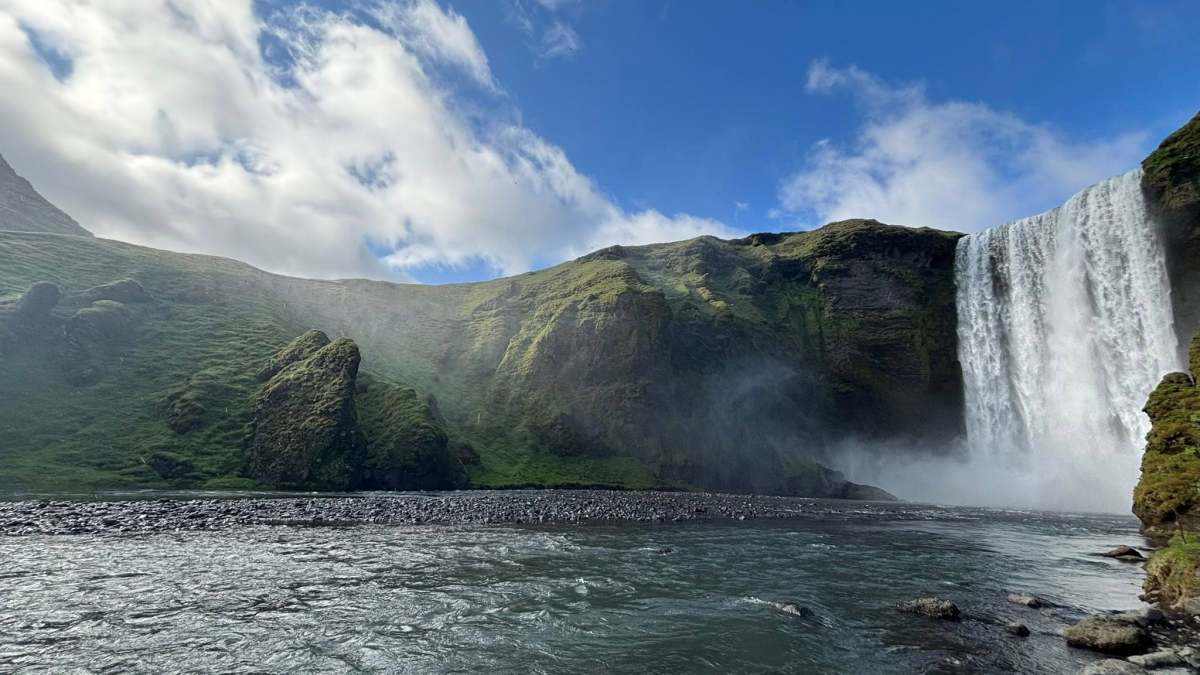
It hits you the moment to fly into Keflavik International Airport like you stepped on to a new planet that is both desolate but alluring in its other worldly landscapes. You see the molten rocks, the green moss, and the blue lagoons, and think to yourself, where did I just end up? The whole country can captive you on a trip like few others can by offering ways to put your mind, body, and soul at ease. Away with the office, away from the hustle and bustle, and able to tap fully into nature and your surroundings like few other places I’ve ever been to personally.

Being able to hike, swim, kayak, rock climb, and engage in a variety of other outdoor activities throughout the year makes Iceland a physical playground to enjoy. You can rest or exert yourself or do both to give your body a healthy experience on top of being able to put your mind at ease by being away from your devices by tapping into your natural surroundings because they are just that engaging and varied. Iceland provides your soul a reset where you can forget your own troubles and that of the world’s for a while to focus on feeling better, relaxing, or living in the moment, and experiencing what it is to be disconnected.

When it comes to reinvigorating yourself physically, you have a wide variety of ways to do so while in Iceland. You can enjoy a large variety of geothermal pools and hot springs such as the Blue Lagoon, Secret Lagoon, Sky Lagoon, etc. In the Summer months, there are also several pools around the country that may be open to the public including tourists to relax and enjoy the long summer nights, where daylight is every present. After having partook in a few lagoon visits in my recent trip, I can say for sure that your body feels cleaned and refreshed after soaking in the mineral-rich waters and combining that with the country’s culture of saunas, steam houses, and the occasional cold plunge.

It is an impressive combination of thermal relaxation letting you fully destress and decompress for a few hours but with residual health benefits for months or years to come. In addition, Iceland prides itself on healthy, local, and pesticide-free cuisine from fresh seafood to Skyr yogurt, as well as farm-to-table and greenhouse-to-table dishes. As mentioned earlier, there are tons of outdoor activities promoting physical health such as hiking, golfing, swimming, horseback riding, and rock climbing among others.

Everyone needs peace and quiet in their life and Iceland provides that in spades. I believe the country can nourish the mind by allowing you to bask in the solitude that you can find in Iceland’s varied landscapes from waterfalls, glaciers, black sand beaches, and fjords. There are numerous psychological benefits to disconnect every now and then from modern technology and the stresses of urban life and I felt a lot better not being on my phone during my time in Iceland. Though I did need my phone for photos and GPS, the beautiful surroundings allowed me to put my phone away and really live in the moment to enjoy the gorgeous landscapes I was able to visit.

The pace of life is also much slower in Iceland and there is a cultural emphasis on being mindful, engaging with other people, and slow living. When you drive there, you don’t see road rage, people yield to each other in traffic, and the rules of the road are observed since there is no ‘rushing around’ without end that you find in other cultures. Because of the natural beauty and slower pace of life, there are many more opportunities to reflect and think while enjoying the expansive natural visits. Taking time away from technology and the ‘hustle and bustle’ can allow you to reflect on life and enjoying the moment more fully.

Our soul needs to experience awe and joy. I believe Iceland’s natural phenomena and beauty from the Northern Lights to the Midnight Sun really can provide that to each person who visits. This kind of perspective is reflected in Icelandic sagas, myths, and folklore about having reference for nature, being in touch with those people in your life who matter to you and living in a sustainable or balanced way with nature. Iceland is an extremely environment conscious country and should be commended for being clean, approaching net zero carbon emissions, and working to be sustainable in its relationship with nature.

People in Iceland live in harmony with each other and with nature from what I noticed and are a progressive nation in that they are tight knit, looking out for their neighbors, and want everyone to be lifted in their society. These kinds of actions culturally are good for the soul and the soul of any nation. While the weather can be rather unpredictable, costs can be high to visit, and the lack of sun in the Winter is challenging, Iceland is a spectacularly beautiful and welcoming country that I hope to visit in the future.

Iceland is a holistic country to visit that can really make you better off in mind, body, and soul for having spent some time there. It is a rejuvenating kind of travel experience that I hope you’ll consider giving a chance for yourself. We need these kinds of retreats in life where you have real time to relax, reflect, disconnect and focus on yourself without outside distractions. Whether its soaking in the blue lagoon, hiking on top of a glacier, or going fishing on a charter boat to catch fresh seafood for your next meal, Iceland is a country where you can really be at ease with yourself and the world around you. Take a week or two from your busy schedule and come discover the land of Fire and Ice; I promise you won’t regret it.

Trust Is The Foundation

“Trust is the bedrock that glues our society together. It is the foundation for which our relationships are built on.”

Without trust, there can be nothing. Trust is the bedrock that glues our society together. It is the foundation for which our relationships are built on. Once that bedrock is ruptured, it can never fully heal again. This is why we place such a high value on it because it can be hard to find or even replicate whether in business or in work or in our lives in general. We learn from a young age the value of keeping our word, being accountable for our actions, and being part of a team or a whole.

If we cannot make a promise, we shouldn’t keep it. We learn not to overpromise, undersell, or to bite off more than we can chew in what we can be relied upon for. Whether it is a secret between friends, a business deal that should remain private, or our duty to uphold a certain standard in our professional lives, the ideal of trust is at the center of how we are expected to act and behave. Trust can be earned over time and can take months, years, or even decades to build on it but while it is hard to gain trust initially, it can last a very long time with repeated adherence.

However, once the trust is broken between people or groups or societies, it can never truly be fully healed again as it once was. While verbal trust is a key part of our lives, we often go above and beyond to string together the bonds of trust more deeply. We shake hands to formalize a deal, sign the terms and conditions of an agreement, have legal papers, lawyers, and the ‘fine print’ drawn up, so the trust given and received is as clear as day. There are multiple ways to establish trust with each other but there are just as many ways that trust can be broken too if you are not careful.

It is not just our work lives or business success that depends on the trust established within them but also our personal relationships. If you are not seen as trustworthy but those people who are closest to you, it is likely that will extend outwards to other kinds of relationships in your life. It is vital to maintain your trustworthiness across the board regardless of how fleeting the ties to the other person or group are. While our relationships, business dealings, and professional ties will all begin and come to an end, our reputation precedes us throughout our lives, and it is important to keep your trustworthiness intact as you navigate the years and decades of who you meet and who you establish connections with.

Trust is not only about keeping your word or telling the truth to someone else or acting in an honest matter, but it is also about not promising something that you can’t deliver on or embellishing or making up falsehoods to earn the other person’s trust. You may think you are able to take an action or provide something or to promise a result but if you cannot guarantee it 100%, it’s best to pull back and let that person or group know that it is not entirely possible. How often have you heard that expression, “don’t make a promise that you know you can’t keep.”

It’s not only about breaking a promise that shatters trust but also trying at something that you said would happen and guaranteeing its success without being realistic about the odds or about if you could deliver the intended result without error, delay, or setbacks. You not only have to be honest with other people to establish trust but also honest with yourself and what you can and what you cannot do for them.

Our own ego can sometimes hurt our own trustworthiness because we are biased in believing we can do more or be more or accomplish more than what we can do when we make a promise. It can be difficult to reign back our promises to others and to pull back our own ego when it comes to what we are capable of. However, it is necessary to keep our trust alive with the other group or person with whom you are dealing with. I believe it is better to hurt our own ego when it comes to being realistic about the promises or the actions, we can accomplish rather than to lie or to embellish or to delay the unrealistic promises that were made, which hurts that trust or even breaks it completely. When the trust is broken, the other person won’t think you’re honest or reliable or even a good person so that is why trust itself is the foundation for which any kind of relationship is built upon.

Trust being the foundation of an individual’s relationships is key, but it also portends to our society and our world. Shared values, beliefs, and rules are built on trust in that if you will follow them and obey them so will everyone else living in that society. If that trust is broken in the sense that there are rules for me and you, but not for them, then that trust in one another starts to erode. Basic civility, courteousness, respect for laws and rules, and overall trust builds society up and when promises are broken, when double standards are common, and when one party or group holds unfair advantages over another group, without any kind of recourse or change made to make the society fairer, then the society will suffer as a result.

It is no accident that more productive and successful societies and countries function at a higher level, and it comes down a high level of trust between its citizens regardless of age, gender, race, socioeconomic background, etc. When trust is shared by all to play by the rules and do the right thing for each other, then that society and/or country will flourish as a result. How can a society establish strong economic ties, pass new laws that are enforced for all, and foster a strong education system that works for all? if it is not built on that fundamental trust that we are to look out for one another rather than to take advantage of one another instead.

If you can read this article knowing that your trust for your fellow man or woman is high and that they can rely on you as you would rely on them, then you’re in good shape where you are with the trust of your society. However, if your trust in your fellow man or woman is waning and you are skeptical of other people’s intentions often, well, then unfortunately, your society has a lot of work to do to rebuild and strengthen that fundamental trust. You should be part of that change by helping to build up the trust in one another again where you are at rather than to keep poking holes in the foundation or to tear it down completely. The choice is yours to make.

Gross Domestic Product v. Gross National Happiness

“Most of us know what Gross Domestic Product (GDP) is having learned it at some point in high school or in college. The total value of all finished goods, products, and services produced within a country’s borders over a specific time period such as a quarter (three months) or a year. Economists commonly use GDP as a model for economic health when it comes to an individual country.”

Most of us know what Gross Domestic Product (GDP) is having learned it at some point in high school or in college. The total value of all finished goods, products, and services produced within a country’s borders over a specific time period such as a quarter (three months) or a year. Economists commonly use GDP as a model for economic health when it comes to an individual country. If GDP grows positively or increases over time, then generally you could assume that the economy is doing well or is at least maintaining its equilibrium. However, when the GDP of a country is declining or has been stagnant for multiple years, economists are likely to assume there is a problem of some sort.

There are economic terms related to Gross Domestic Product as a recession (two straight quarters of negative GDP growth) leading to an economy to contract rather than grow. We also know of an economic depression where an economy contracts for years and is often associated with double-digit negative growth and/or high unemployment, inflation rates. What is less talked about is how do we measure the health and well-being of citizens within a country’s borders.

What other measurement besides GDP could measure a country on a national scale? While GDP measures the economic health, the actually mental health of a country’s citizens has been measured by a little-known survey conducted by the small land-locked, mountainous country of Bhutan, which is a Buddhist kingdom that is located at the eastern part of the Himalaya mountains. This national survey is given out only every five years to the citizens of Bhutan, of which there are only 750,000 people living in the small country. Instead of a simple 0 to 10 survey on if you are happy on a scale, the survey is quite comprehensive in its questions.

The government of Bhutan asks over 300 questions in the survey and can take multiple hours to complete. Questions are compensated a day’s working wage to answer the questions and it strives to measure all forms of human capital and not just the economic capital measured by GDP. The survey has nine different domains, 33 social indicators, and hundreds of variables. The categories of the survey include education, health, culture, time use, psychological well-being, community development, environmental practices, and overall living standards. This GNH survey has become a cornerstone of Bhutan’s presence on the world stage and has gained notoriety since it was introduced in 1998 as a form of alternative human development.

About 8,000 households in Bhutan answer the survey every five years, which is conducted by the Centre for Bhutan Studies and GNH research. Questions can range from being general about prayer and/or meditation habits to being specific about if you ‘trust your neighbors’ to if you ‘fight with your family at all.’ The measuring of the country’s happiness began in 1972 when the fourth king of Bhutan, Jigme Singye Wangchuck, declared that the “Gross National Happiness is more important than gross domestic product” for the country.

Bhutan has seen numerous changes over almost fifty years since the movement towards measuring GNH began. The same king helped ensure a parliamentary democracy was established in 2008 with the constitution and political reforms putting him in a more ceremonial role. Bhutan has strived to actually use the survey to help improve certain aspects of the lives of its citizens such as having free education, health care, and getting electricity at no extra cost. Bhutan’s new democracy is messy like any young democracy would be, but Bhutan is known for attracting increased numbers of tourists before the COVID-19 pandemic began and for being largely self-sufficient in terms of food production and for being a peaceful, inwardly looking nation.

The concept of Gross National Happiness is related to the country’s prominent religion of Buddhism with the focus on being content with less, not being so concerned with materialism or economic gains, and to be calm, cool, and collected when facing life’s many challenges. Seeking harmony with one’s friends, family, and neighbors is also another key part of the GNH survey. Bhutan is a beautiful, land-locked country, which has provided its citizens with a number of basic needs such as education, health care, and peaceful relations with its neighbors with having a smaller GDP than many other nations.

The paradox of a country such as Bhutan is that it may be the only country to internally measure happiness in some formal way, but it still ranks in the median in terms of national happiness by outside surveys. Norway was ranked 1st by the United Nation in its 2020 World Happiness Report, which had a different format and questioning style than Bhutan’s, but for which is a relatively new kind of survey that Bhutan’s GNH survey helped to inspire. While Norway topped the list, Bhutan ranked 97th out of the 153 nations surveyed, which may not inspire much confidence, but the country does face ongoing challenges especially with its GDP.

Bhutan ranks as a ‘least developed’ country by the United Nations and is dealing with the effects of climate change, high income inequality, increasing youth unemployment, and an uncertain energy future due to the effects of environmental degradation. Bhutan’s GDP is only $2.2 billion and while material wealth and economic growth are not integral to the GNH survey, it likely has a role to play in affecting the happiness of its citizens.

The 2015 GNH Survey by Bhutan reported that “91.2% of people reported experiencing happiness, and 43.4% of people said that they are deeply happy.” From my reading of the survey, Bhutan is committed to improving the happiness of its people by having such an insightful and detailed survey and while their national happiness has room for improvement, they have taken that crucial first step to actually evaluating if its citizens are happy or not, which is quite unique when compared to other nations around the world.

The first step to solving the problem is realizing there is one. If a country focuses only on GDP as a measure not only for economic health but for the health of their citizens in other ways, then they are making a false dichotomy. Economies are naturally going to rise and fall in growth rates but the same can be said of people’s own happiness over time. The key is to first be aware of how happy people are by having a comprehensive yet accessible way to measure that elusive emotion as best as you can. Bhutan is a model for not seeing only its Gross Domestic Product as a sign of national progress.

Any nation can be wealthy and still be extremely unhappy and a nation can be poor but still be happy. The same could be also for a poor nation being unhappy as a rich nation being very happy. The key to 21st century economics will be to figure out how to find that balance between economic success and people’s happiness. You can have the average citizen make a lot of money and be considered a ‘success’ but what if the schools in their town are lousy, the health care is too expensive and of low quality, and the community is distrustful of one another.

Bhutan has taken the initiative as a country for seeing happiness as being an important part of a nation’s well-being, which can be measured in various ways. While their GDP is very small, they recognize that economic growth is not simply everything that a country should be known for. If you have a certain amount of money in the economy, where are you putting the national product towards? How will you know how to spend the money gained from your citizens through taxes without knowing what their grievances are and what they unhappy with?

Having Gross National Happiness be part of a country’s consciousness involves asking difficult yet necessary questions from the population on different aspects of their lives. Bhutan has taken that crucial step towards asking their citizens what they are happy with, what they are not happy with, and what could be improved in their lives. When you have that necessary information coming in, the government can then take steps to allocate the tax money and other revenue they have available to put it towards where its’ needed most. If government services need to be improved, they’ll know from their citizenry that it’s a priority. If living standards need to be improved such as providing more housing, better food, or less pollution, they will have that awareness from knowing more from the GNH data that they are receiving.

Lastly, a government like Bhutan’s can work closely with the parliament, civil servants, non-governmental organizations, and civil society leaders to take the survey’s results and work together on a common set of facts and figures to start to improve the country in needed areas where people are unhappy about. If other governments can learn from Bhutan when it comes to Gross National Happiness, it’s that it can be measured from your citizens in a comprehensive way and that each government can learn from its citizens how their people’s lives can be improved and in what ways beyond just how much money their people are producing each year.

Sources:

https://www.npr.org/sections/parallels/2018/02/12/584481047/the-birthplace-of-gross-national-happiness-is-growing-a-bit-cynical

https://www.grossnationalhappiness.com

https://www.happiness-report.s3.amazonaws.com/2020/WHR20.pdf