English Corner – Introduction to Modals

There are many different kinds of modals to study but in this ‘English Corner’ blog post, we’re going to start out with an introduction dealing with the modals of ability. Modals of ability are the most common and the most important to master firstly. Modals are verbs usually and the ones that I am going to be focused on in this article are can, could, be able to, may, might.

Modal verbs act as auxiliary verbs in your average sentence and can express different ideas. These ideas include expressing one’s ability, one’s possibility, and sometimes necessity. Modal verbs often have more than one meaning and can be significant in a variety of ways. A simple form of a verb always follows a modal verb in a regular sentence as well.

Example:

  • Ben can do his homework.

The modal verb ‘can’ is followed by the simple form of the verb ‘to do’ followed by the object part, which refers to his homework.

An Introduction to Modals can be broken down into three separate parts: modals for ability, modals for possibility, and modals for permission. Each type of modals is unique in their own way but they each help to express oneself in some form or another.

For ‘Modals of Ability’, you can express your own ability or that of someone else by using the words ‘can, be able to, could’ in order to highlight your ability to do something.

Present Ability: I can speak three languages.

Negative Form: I cannot read this book.

Past Ability: Jack could play on the swings when he was a child but not anymore.

Negative Past Ability: Jane couldn’t go to the dance last night because she was sick.

In any regular sentence, the verb after the modal ‘can, could, be able to’ is always in the simple form and always follows the auxiliary (modal) verb. It’s important to note that the simple verb after the modal verb never changes either.

Examples:

-Ben can doing his homework. X

-Ben can to do his homework. X

-Ben can did his homework. X

All of these examples listed above give us the understanding we need to see that the simple form of the verb such as ‘to do’ never changes from its’ original intention. ‘Ben can do his homework’ is the only correct answer in this case.

In order to turn the ability modal into a question, it’s also quite easy to do. The form of the sentence should look like ‘modal verb + subject + main verb + object…? For any of the ability modals whether it’s can, could, etc., you can use them in the form of a question.

Examples:

  1. Can she play the flute?
  2. Could you go to the store to pick up some fruit?
  3. Are you able to do your homework tonight?

‘Able to’ is an exception in that as a modal of ability verb, the structure of the question form looks like: ‘to be’ + subject + able to + main verb + object…?’

For Modals of Possibility, it’s important to understand how to express ‘possibility’ in a sentence through showing what’s possible and what’s not possible for someone or something. The modals of possibility include ‘may, might, and could’ now and in the future. All of these three modals have the same meaning and can be used interchangeably regardless of the type of sentence.

Examples:

  • I might be late to the business meeting tomorrow.
  • You may want to re-take the exam next year.
  • You could get into college if you study harder.

Possibility cannot be expressed for the past but only for the present and the future when it comes to grammar.

For ‘Modals of Permission’, you can express ways to ask for or to give permission in a regular sentence. In order to create this modal sentence, we need to use the modals of ‘may, could, and can’, which are also apart of permission and ability modals. Permission modals are very polite and formal so it’s important to know how to write and verbally use them correctly in a sentence.

Examples:

  • May I go to the bathroom please?
  • Could I borrow your lawnmower today?
  • Can he have the last piece of chocolate cake?

For the main verb that comes after the subject and before the modal verb, it’s always going to be in its’ regular, simple form which never changes. When it comes to modals of permission, it’s important to remember that using ‘may’ especially at the beginning of the sentence is the most formal of the three options. Also, if someone were to answer you to grant that permission so you can go to the bathroom or to use your lawnmower, you can answer with:

-Yes, you may or No, you may not.

There’s also the possible positive or negative response to the modal question with ‘Yes, you can’ or ‘No, you can’t.’

While not the most popular grammar topic, there are many kinds of modals and knowing some of them especially those modals concerning permission, ability, and possibility is key to improving your English proficiency. This article is simply an introduction to modals and in the coming weeks and months; I hope to highlight other types of modals that are likely to come up in your grammar studies. “You can do it!”
 

English Corner – Personal Pronouns

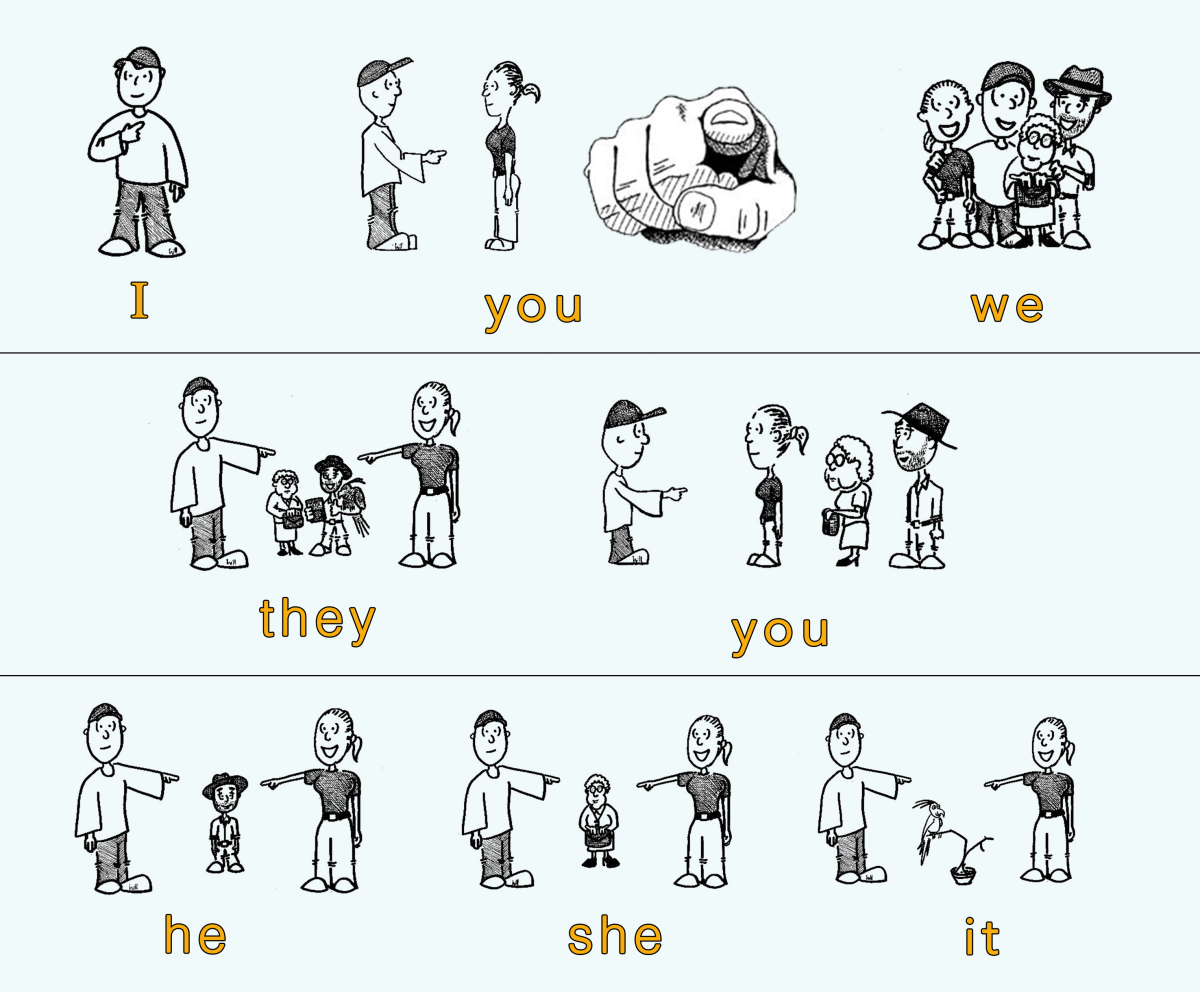
When you begin to learn the English language and specifically English grammar, it is very important to be able to address people whether it’s a man, a woman, or a collective group of people. You won’t be able to become personal with people unless you understand and know about personal pronouns.

The good news is that learning about personal pronouns is quite easy and doesn’t take much time compared to other grammar topics. Personal pronouns can be divided into two separate categories: subject pronouns and object pronouns. It’s important to recall that we use pronouns in place of a full noun. Pronoun words tend to be shorter than regular nouns in terms of syllables and length too.

The subject pronouns are as follows in the list below:

I         (Singular)

You   (Plural)

He     (Singular)

She     (Singular)

It         (Singular)

We      (Plural)

They   (Plural)

These subject pronouns are personal and apply to both singular and plural subjects. The singular subject pronouns are ‘I, he, she, it’ while the plural subject pronouns are ‘you, we, they.’ Regardless if you are using the present, past, or future tense of the verb form, the singular pronouns stay singular and the plural pronouns stay plural.

The object pronouns are as follows in the list below:

Me    (Singular)

You   (Plural)

Him   (Singular)

Her   (Singular)

It       (Singular)

Us     (Plural)

Them (Plural)

These object pronouns are also to be used for personal reasons and apply to both singular and plural subjects. The singular object pronouns are ‘me, him, her, it’ while the plural subject pronouns are ‘you, us, them.’ Regardless if you are using the present, past, or future tense of the verb form, the singular pronouns stay singular and the plural pronouns stay plural when it comes to objects. If you study both the subject and object pronouns consistently, you’ll be able to tell which words are singular and which words are plural.

It’s important to remember that in the English language, gendered nouns are not as prominently used compared to other languages such as Spanish or Italian. However, he / him is always used to refer to a man or boy while she / her is used to refer to a woman or girl. ‘It’ is often used to refer to a non-human entity such as an animal (whose gender is unknown) or an object like a desk.

Another key thing to keep in mind is that ‘you’ is a singular pronoun in terms of it referring to just one person, thing, or object. However, ‘you’ goes along with the plural form of a verb such as ‘to be’ making it more of a plural pronoun. For example, instead of putting ‘you’ and ‘is’ (to be) together, you would instead put ‘you’ and ‘are’ (to be) together, which is the plural form of the verb and not the singular form.

‘You is smart’ is a sentence that is not grammatically correct in English while ‘You are smart’ is correct instead. I like to call this English rule of personal pronouns the ‘You’ exception. Similar to ‘I, He, She, It’, ‘You’ is singular in its’ meaning yet it can be used with the plural form of the verb ‘to be’ instead of the singular form. Due to this exception, ‘You’ should be grouped more with ‘We, They’, which are both plural subject pronouns rather than with the former singular subject pronouns.

Here are some examples to show you how the singular and plural subject pronouns can be formed in complete yet simple sentences:

Subject Pronouns (Singular)

  1. I am doing okay.
  2. He is feeling good.
  3. She is playing tennis.
  4. It is raining outside.

Subject Pronouns (Plural)

  1. You are being mean.
  2. They are going to the movies.
  3. We are hungry for dinner.

From the examples above, you can see that the singular subject pronouns go with the ‘am, is’ form of the verb ‘to be’ in the simple present tense while the plural subject pronouns all use the ‘are’ form of the verb ‘to be.’ By following the examples above, you’ll have a better understanding of how to use the subject pronouns correctly in order to be personal in English.

One of the main differences between the subject and object pronouns is that the ‘subject’ pronouns begin the sentence while the ‘object’ pronouns often come at the end of the sentence. The English language follows a structure of ‘subject – verb – object’ and that is a formula of a basic sentence that rarely changes. The singular ‘object’ pronouns are words like ‘me, him, her, it’ while the plural ‘object’ pronouns are words like ‘you, us, them.’ As mentioned before, the word ‘you’ falls into the plural category with object pronouns like it does for the subject pronouns.

Here are some examples to show you how the singular and plural object pronouns can be formed in complete yet simple sentences:

Object Pronouns (Singular)

  1. The horse jumped over me.
  2. Think about him.
  3. Sing loudly with her.
  4. They did it.

Object Pronouns (Plural)

  1. I like
  2. The reservation is for us.
  3. We were here before

Without being able to address anyone or anything properly, your English will not advance that much. If you want to be comfortable forming sentences either verbally or in the written form, you must study and master the personal pronouns to the best of your ability.

———————

If you’re looking to improve your English through private lessons with me on a one-to-one basis please check out my ‘Learn English with Ben‘ page here: https://benjweinberg.com/learn-english-with-ben/

You can also check out my ‘English Grammar’ courses on Teachable.com here: https://benjweinberg.com/my-grammar-courses/

English Corner – Prepositions of Place

In this ‘English Corner’ blog post, we are going to go deeper into the topic of prepositions, which we have covered previously but I want to highlight the specific ‘prepositions of place’ that are a large part of this expansive grammatical topic. The thing to keep in mind when reading this article is to focus mainly on the examples listed below to see how, when, and why these preposition words such as ‘at, on, and in’ are used. There are different reasons that are given when it comes to each of the ‘preposition of place’ words and how they end up being used in a sentence. Later on, I will highlight the ‘prepositions of time’ and how they are utilized when compared to the ‘prepositions of place.’

When it comes to ‘prepositions of place’, the main point of this type of prepositions is to show where something or someone is located, usually in a physical sense. The three major words that are ‘prepositions of place’ are ‘at, in, and on’, which also come up the most frequently in terms of usage. ‘At’ is used in a very specific manner in terms of being referred to for a specific location, place, or position.

Here are some examples where we can use ‘at’ as a ‘preposition of place’ in the right way:

  1. I was at Jonathan’s birthday party last night.
  2. We lived together at 8 Drury Lane for two years.
  3. They danced with each other for the first time at the Senior Prom.

When you use the prepositional word ‘on’, the meaning and usage for it is a little bit different than ‘at.’ For ‘on’, you’re going to use it to indicate the position of an object, thing, or person on a horizontal or vertical surface such as a desk, table, floor, etc.

Here are some examples of how we can the preposition ‘on’ in a sentence:

  1. The boy is playing on the playground.
  2. The basketball was bouncing on the court surface.
  3. I put my cowboy hat on the kitchen table.

Similarly to ‘at’, ‘on’ can also be used for positioning when it comes to streets, roads, and avenues.

Example: I used to live on Beacon Street.

The last major ‘preposition of place’ would have to be ‘in’ which is quite frequent in its’ usage. In terms of its’ meaning, the preposition ‘in’ is used for something or someone that is enclosed or surrounded.

Here are some examples of how we can use the preposition ‘in’ in a sentence:

  1. The check is in the mail.
  2. The letters are in the mailbox.
  3. She is in the high-speed train going home from work.

In addition to discussing enclosed or closed off places and spaces, the preposition ‘in’ can also refer to a position within a general area such as a town, city, country, region, country, continent, etc.

Example: I used to live in Istanbul, Turkey but now I live in London, England.

It’s important that the average English learner be made aware that there are many more prepositions of place besides the main ones, which are ‘at, in, on.’ There are many other prepositions of place words, and it would be an exhaustive list to go over the meaning and usage of each one. However, it would be better to highlight another couple of preposition of place words that come up frequently but not as often as ‘in, on, at.’ The other ‘preposition of place’ words would be after, among, behind, between, in front of, next to, beside, by, over, above, under, below, and beneath. Here are some examples of sentences that use these other preposition of place that were just mentioned above:

  1. The dog jumped over the wheelbarrow.
  2. He was hanging out by the pool on his off day from work.
  3. She checked under her bed to see if her pet gerbil was there.

There are dozens of examples that could be made with prepositions of place. However, it’s best to focus mainly on the particular prepositions of place such as ‘at, on, in’ and to understand clearly when, why, and how we use them correctly. While a sub-topic within ‘prepositions’, knowing what prepositions of place are and how to use them correctly in the grammatical sense will help you to become a better English learner and student.

———————

If you’re looking to improve your English through private lessons with me on a one-to-one basis please check out my ‘Learn English with Ben‘ page here: https://benjweinberg.com/learn-english-with-ben/

You can also check out my ‘English Grammar’ courses on Teachable.com here: https://benjweinberg.com/my-grammar-courses/

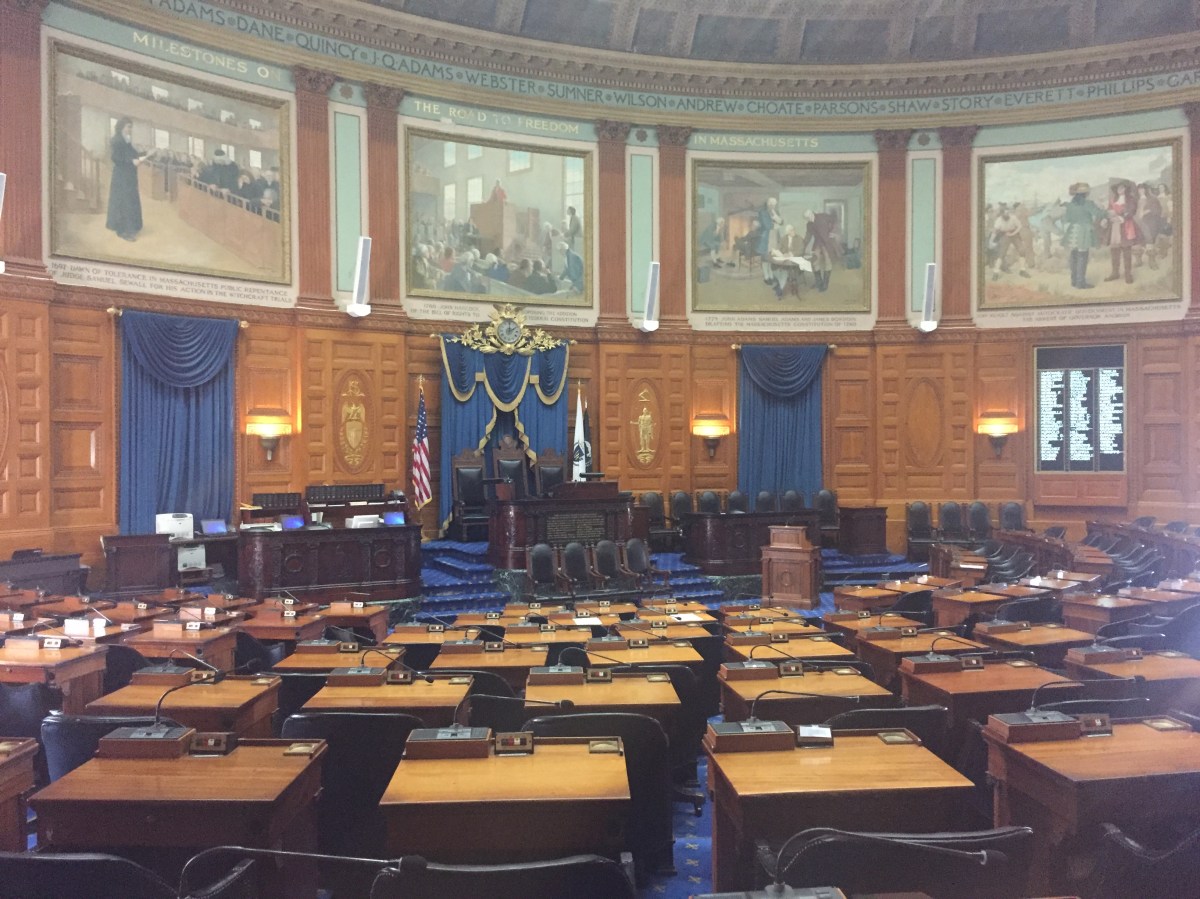
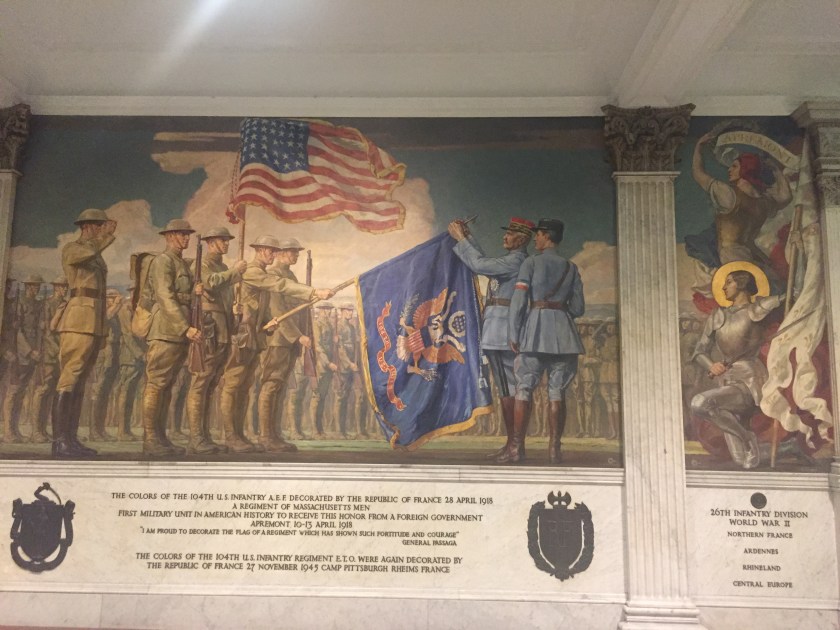
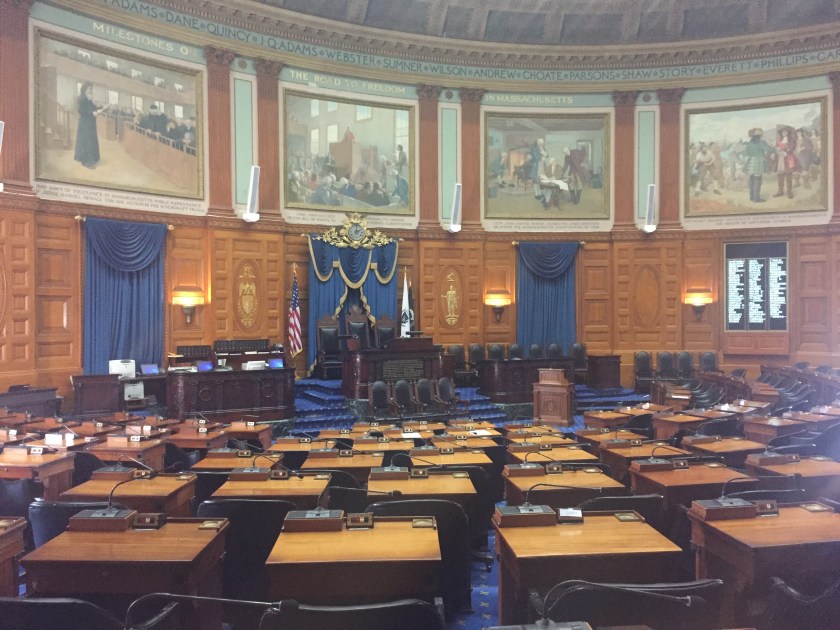
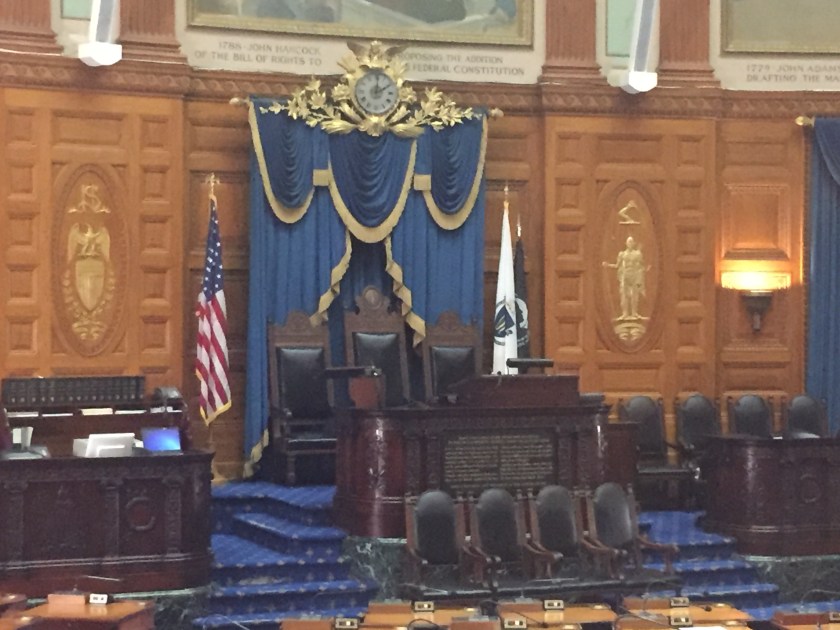
The Massachusetts State House

IMG_0139IMG_0140IMG_0141IMG_0142IMG_0146IMG_0147IMG_0148IMG_0149IMG_0150IMG_0151IMG_0160IMG_0161IMG_0162IMG_0145IMG_0143

CameraiPhone 6

Location: Massachusetts State House; Boston, Massachusetts

English Corner – Idioms

If you are looking for a mainstay of most living languages, you should look no further than the concept of the ‘Idiom.’ The Idiom is the closest thing that humans have in terms of a universal connector among the diversity inherent in all forms of spoken language. The most important thing to understand about the idiom is that you are not supposed to take them literally but you are still supposed to take them seriously. There’s a deeper, implied meaning beyond any idiom regardless of the language it’s spoken in. This is especially the case in the English language where there are hundreds, if not thousands of idioms that can be used for any matter or circumstance.

Idioms can be extremely diverse in their range and can refer to any amount of unique subjects or topics. Idioms can also be used very locally, regionally, or nationally depending upon the language and the culture it comes from. A dialect, jargon, or accent can also lend to the idioms used by a certain group of people who share common interests and/or beliefs. Idioms can be used in reference to business, politics, science, art, music, and other parts of daily life.

It can be tough to decipher which idioms are the most used in the English language but there are a few of them that stand out in terms of their popularity and their different ways of usage. Most people who speak English are likely to be familiar with these idioms below or have used them themselves.

Examples

  1. Don’t count your chickens before they hatch.

Meaning: Don’t get ahead of yourself before things are accomplished.

  1. Have a chip of my shoulder.

Meaning: You’re bothered or annoyed by something that won’t go away.

  1. Don’t jump to conclusions.

Meaning: While not taking this statement literally, you shouldn’t pass judgment on someone or something before you receive all of the facts.

  1. A dime a dozen.

Meaning: Very common, easily found anywhere and everywhere.

  1. An ace in the hole.

Meaning: A secret advantage or a benefit that no one else knows about and is going to be used soon against an opponent or adversary.

Sentences

  1. The science project isn’t finished yet because we still have to build the volcano. Don’t count your chickens before they hatch.
  2. I don’t like critics doubting my basketball skills. They really give me a chip on my shoulder.
  3. We don’t know whether or not he’s telling the truth about his new invention, Let’s not jump to conclusions.
  4. These Amazon ‘Alexa’ AI devices are a dime a dozen. You can find them everywhere and they are really popular.
  5. I have Matt Ryan as my starting Quarterback in Fantasy Football this weekend. He’s my ace in the hole.

Idioms can refer to someone’s actions and the consequences of those actions highlighted in example idioms such as ‘Pay the piper’ and ‘Rub somebody the wrong way.’ Idioms can refer to people in general when you say that they are ‘sick as a dog’ or ‘six feet underground.’ Lastly, colors in English can often become part of idioms themselves such as when you describe somebody as feeling upset or depressed as having ‘the blues.’ You know that the person isn’t actually ‘blue’ in their color but rather they have ‘the blues’, which is referred to as when somebody isn’t feeling well. There is a whole musical genre that is devoted to this kind of mellow music called the ‘Blues.’ ‘Out of the blue’ is another example of a color kind of idiom that refers to something happening when you least expect it to.

It can be very difficult to get the hang of idioms especially if your proficiency level is at a low level. First, you need to be able to conjugate verbs, have a good grasp on the vocabulary by knowing a lot of different words, and then you need to be able to understand the meaning behind the idioms and use them with other native speakers in the right way. The idioms being used depends upon the region, the culture, and the social group you find yourself in. That is why there are such a sheer variety of idioms that can be used in any given situation regardless of the language that the idiom falls under. Idioms cut across language and cultural barriers and can have similar meanings to each other depending upon the situation.

The best way in which to comprehend and start using English idioms is to talk with native speakers who will use them throughout a conversation even if they don’t realize it at times. The more conversations you have with English speakers, the more idioms you will pick up on and remember. They will most likely want to help you out so do not be afraid to ask questions if you don’t understand the meaning of the idiom or why it’s being used in a certain sentence.

Before you start using idioms yourself, you want to be absolutely clear that you’re using the idiom within the right context for the right meaning. It can be a bit embarrassing if you tell your American friend who is starring in a Broadway play that you want him to ‘jump the gun’ instead of to ‘break a leg.’ Idioms take time to understand, use, and master but they are an important part of learning any language, including English.
______________________________________________
If you have liked what I have written in this ‘English Corner’ post, and you are interested in improving your English language skills whether its’ with speaking, writing, or just boosting your knowledge of grammar, I would be happy to help you reach your language learning goals. Check out Learn English With Ben to book a private lesson with me today!

English Corner – Imperatives

Using the ‘imperative’ is similar to using the bare infinitive and has the same form as the singular or plural ‘you’ when it comes to forming it. The imperative clause is used for many reasons and is flexible in terms of its’ usage. Some of the reasons for using the imperative include when you want to tell somebody else to do something, giving them advice, making suggestions, creating requests, enforcing commands, or handing out orders and/or instructions. This means that you can tell people do things or to not do things and you are usually not referring to anyone in particular when you give out these imperatives.

There is no specific subject indicated when it comes to the imperative form of sentences. It’s rather about addressing who is listening to you whether it’s one listener or multiple listeners, and the speaker is addressing a general subject rather than a specific subject. The base form of the verb in its’ present form is usually the most common way to create an imperative sentence. You can make the imperative as direct as possible or make it more indirect as to not hurt someone’s feelings, which will make him or her less likely to do something for you.

Let us take a look at some of the reasons why we use the imperatives as mentioned earlier as well as cite some specific examples when it comes to the reasons being used.

  1. To give advice or suggestions

Examples:

-Go to the gym three times a week to lose weight.

-Eat fruits and vegetables daily to stay healthy.

  1. To give directions or instructions

Examples:

-Turn right at the street corner and walk 400 meters to the store.

-Cut the tomatoes into small pieces and add them to the guacamole.

  1. To give orders or commands

Examples:

-Fire the missiles!

-Shoot the ball!

-Be silent now!

  1. To give warnings

Examples:

-Put your cell phone on to airplane mode.

-Wear your seatbelt.

  1. To make polite requests

Examples:

-Please eat your peas and carrots, Karen.

-Be quiet during the movie please.

  1. To offer invitations

Examples:

-Join us for the birthday party, John.

-Come with him to the dance tonight.

It’s important to not refer to the subject as ‘you’ regardless if your imperative is singular or plural in its nature. Instead, it would be better to refer to the specific individual by their name or be more general than that by omitting the subject totally from the sentence.

If you really want your ‘imperative’ to stand out, it would be best to add the word ‘do’ to the beginning of your command, request, or instruction. The word ‘do’ really adds emphasis to your imperative and helps to create a sense of urgency that is not easily replicated with other word substitutes. The word ‘do’ has a powerful meaning in the English language that makes it an important part of mastering imperatives. Here are a few examples that uses ‘do’ in an imperative sentence effectively:

Examples:

  1. Do be kind and gentle to your grandmother.
  2. Do the right thing and help that old lady carry her groceries home.
  3. Do finish your exam on time!

Having been able to use the word ‘do’ in an imperative sentence in the ‘positive’ form, you should also be able to use ‘do’ in its’ negative form. In order to use ‘do’ negatively, you need to add the word ‘not’ right after ‘do’ to create ‘do not’ as the beginning of the imperative sentence. You can also combine ‘do not’ together to create ‘don’t’ to create an even more powerful and emphatic command or request. Here are some examples that you can use with ‘do not’ or ‘don’t’ to create imperative sentences.

Examples:

  1. Do not smoke inside the restaurant.
  2. Don’t give alcohol to underage minors.
  3. Don’t loiter in front of the grocery store.

An important thing to remember when it comes to using imperatives correctly is not to use them if you’re addressing your employer, a family member or relative, or a police officer / authority figure. Imperatives are very direct and you can come off as being harsh or rude in English if you don’t understand when and where to use this type of sentence.

It’s necessary to know who you’re talking with and how well you know them before you start to give out a formal request, a dire command, or a stern warning. Hopefully, with this edition of ‘English Corner’, you’ll know a lot more about ‘imperatives’ and how to form and use them correctly in polite conversation.

Book Recommendations – Volume V

Similarly to the months to come during the heart of wintertime, the current summer season is a great chance to catch up on reading new books or books you have yet to finish. Whether you’re at the beach, hanging out in the backyard, or are going on a long road trip, reading a good book is a good way to pass the time.

My last ‘Book Recommendations’ post came in February so it’s time for another volume of recommendations for you to consider when it comes to your next book purchases. While you may not be interested in the same book genres or same authors as myself, I still encourage you to read a book before the end of the summer. Whether it’s through Amazon, your local mom and pop bookstore, or at a book fair, you owe it to yourself to put down the iPhone and pick up a good book instead.

1.) Killing Pablo: The Hunt for the World’s Greatest Outlaw by Mark Bowden (2001) is a non-fiction, and detailed take on the combined efforts by the Colombian and United States governments to bring down the infamous Pablo Escobar, head of the Medellin cartel. Mr. Bowden, known foremost for his take on the Battle of Mogadishu between U.S. special forces and Somali militants in the critically acclaimed novel, Black Hawk Down (1999) is a great journalist with over thirty years of covering recent events involving war, peace, and international affairs.

Mr. Bowden is a reporter and a journalist who does his research when it comes to Killing Pablo, and this book is a real page-turner. The author covers both the early years of Pablo’s empire to his international rise as the #1 drug kingpin in the world to his eventual downfall at the home of Search Bloc and Los Pepes. With many interviews from U.S. and Colombian government officials, as well as a lot of research into the terrible events that transpired in the 1980s and 1990s, Mark Bowden gives a comprehensive account of the manhunt for Pablo Escobar, and how his eventual death came to be.

There is often a lot of speculation and rumors surrounding the Medellin cartel that are unfounded which is why reading ‘Killing Pablo’ is a refreshing take on what really happened and who was involved in the drug kingpin’s demise. This is a great book if you’re interested in learning the true story behind the rise and fall of Pablo Escobar.

51VGfzTSErL._SX329_BO1,204,203,200_
Killing Pablo: The Hunt for The World’s Greatest Outlaw by Mark Bowden

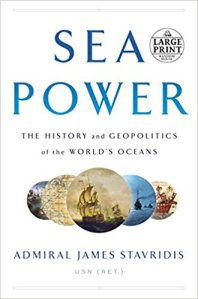
2. Sea Power: The History and Geopolitics of the World’s Oceans by Admiral James Stavridis, USN (Ret.) is an excellent and comprehensive look at each of the world’s major bodies of water, and how they each affect world geopolitics in different ways.

With over thirty years of experience in the United States Navy having commandeered every kind of amphibious vessel that you can think of, Admiral Stavridis has the life experience and intellectual background necessary to make this book quite a compelling read. As the only admiral in the history of NATO to serve as its’ Supreme Allied Commander, Mr. Stavridis is well poised to look at the state of the world through its’ largest and most valuable commodity, the oceans and the seas that make up over 70% of this planet.

If you’re new to geopolitics or don’t know much about the significance of the world’s oceans, Admiral Stavridis breaks down the history, the culture, and the geopolitical importance of each body of water throughout the book. From the Arctic Ocean to the Mediterranean Sea, the author discusses who are the countries involved in the area, what should the role of the United States be, and how can we ensure that this body of water stays conflict free, and friendly to international commerce into the far future.

Since the release of this book in June of 2017, it has risen to the top of many best sellers’ lists and for good reason. In a geopolitical area that doesn’t get much focus, Admiral Stavridis reminds us of the sheer importance of the world’s oceans and seas. In a 21st century world filled with uncertainty and ambiguity, The admiral’s book is a clear-cut, well-reasoned take on the geopolitics of the oceans, and how their collective future is tied to each and every one of us.

41ewMAemkRL._SX328_BO1,204,203,200_
Sea Power: The History and Geopolitics of the World’s Oceans by Admiral James Stavridis, USN (Ret.)

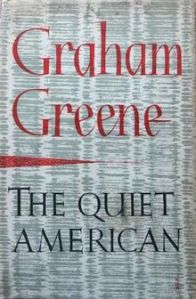
3. The Quiet American by Graham Greene is an exceptional book that is well written, has deep and complex characters, and involves a time period in world history that is often overlooked. The novel takes place during the early 1950s as the French Army is entangled in skirmishes and indirect conflict with the Vietminh. Meanwhile, the new presence of American aid workers including a young economic attaché, Alden Pyle, whose motives for being in French colonial-era Vietnam are considered to be suspect to the narrator, a British journalist named Thomas Fowler. Not only do the two men come into conflict regarding the future of Western influence in Vietnam but they also are at odds in a romantic triangle with a Vietnamese woman known as Phuong.

The two main characters, Fowler and Pyle, could not be more different in their outlook. Fowler is cynical about the West’s involvement in Vietnam, and is jaded by politics and war. Pyle is a young, idealistic, and naïve American who is reserved in his personal manners, but is unafraid to interfere in Vietnamese affairs by acting as a ‘third force’ to help bring change to the country by economic and military means.

Phuong is the young Vietnamese woman who is caught between Fowler and Pyle, as she is desired by both men but for different reasons. While Fowler regards her simply as his lover, Pyle wants to protect her. It is implied in the book that Pyle’s desire for Phuong is reflected in his desire to have a non-communist South Vietnam through any means necessary. Fowler does not go along with Pyle’s thinking and regards his belief in ‘American exceptionalism’ to be shortsighted.

An interesting novel and an engaging read, The Quiet American has become a mainstay in popular fictional literature and has been adapted into two major motion pictures, one in 1958, and more recently in 2002, which starred Michael Caine (Fowler) and Brendan Fraser (Pyle). This fictional novel is based off of real events in the 1950s when French colonial rule in Vietnam was coming to an end.

QuietAmerican
The Quiet American by Graham Greene

While reading books during the summer season may seem like a chore to some people, for others, it’s a great time to kick back, relax, and dive into different genres, and characters that offer a refreshing reprieve from the humdrum of our busy lives.


The Need for Critical Thinking

Facts are a tricky thing, but the importance and recognition of them is vital in order to consider yourself a critical thinker. In this era of ‘alternative facts’ and opinionated media, it’s necessary to be able to read, analyze, and think about all of the information that you’ve been taking in and figure out for yourself if it’s truthful or nonsense. In this day and age, opinions are easy to find everywhere but what have become harder to find are the cold, hard facts. The famous expression, “take it with a grain of salt” can be applied to you if you want to be a critical thinker.

The first thing you have to do, as a critical thinker is to be able to sort out the facts from the falsehoods. You should be able to use more than one source of information and before you use those sources of information, you need to verify that they are both unbiased and trustworthy. The evidence that you gather for these facts have to be based off of real sources, who have compiled the information and verified its’ authenticity.

For example, if you’re a Chemistry student and you’re trying to do an experiment on making a chemical volcano, would you choose to get the information from an actual scientist who has their PhD and teaches Chemistry at a local university or would you trust the advice of a best friend in your Science class instead?

While it’s desirable to be a good friend and trust them because they would like to help you most likely, it’s likely their advice will pale in comparison to the Chemistry professor with the PhD who wrote a ‘how to’ article on chemical experiments in the latest edition of ‘Science Weekly.’ If you’re a critical thinker, you would choose option #2 100% of the time because you would like to create an experiment that’s going to be the best that it can be and using your friend’s advice won’t get you to that point.

Regardless of what professional or educational field that you decide to pursue, you’re going to need critical thinking. Being inherently skeptical at first of the information you’re receiving is important to do because you need to be able to discern if what you’re reading, watching, listening to, etc. is factual. In your daily life, you’re going to need to identify prejudice, bias, propaganda, etc. that you’re likely to encounter in your daily life. You have to do your best to discern fact from fiction even if it takes some time. You could decide to ingest every bit of information that you see in the news or at the office as being factual but it would benefit you instead to deep a bit digger by doing your research, verify the source(s), bounce it off other pieces of information to see if there’s a pattern, and then decide if it’s factual.

A true critical thinker is not lazy and does not take shortcuts. He or she goes the extra mile to gather the right information, prioritize it to give it credence in your decision-making, and then recognize, solve the problems in order to move on to the next goal. If you’re in a field where you’re working with data on the computer, you have to be able to interpret it, evaluate it, and then use it for your business or company’s needs. By being able to communicate effectively and clearly is also a necessity when it comes to being able to take those fresh facts you’ve verified and then pass it on to the next person so they know that they’re not being misled by you.

As a critical thinker, it’s also necessary to disregard generalizations made about complex topics, which require in-depth research and analysis. Instead, critical thinking also necessitates the ability to draw conclusions from the evidence and the facts that you have gathered. Then, you have to be able to pass those conclusions on to the right people so they know what’s true and what’s false.

Conclusions that you’ve made in the past can sometimes change in the present or in the future so it’s vital to not be stubborn about your beliefs. Critical thinking requires that you also be flexible in your beliefs especially if you’re able to take in new evidence, and logic. A man or a woman who does not change their views on anything despite overwhelming evidence to the contrary cannot consider himself or herself to be a true critical thinker. While it can be difficult to let go of your innate biases and prejudices, you still should be open-minded and be able to accept the truth and the facts even if they contradict with yours.

If your mother, someone who you loved and respected, happened to have told you one day that the sky was the color red instead of blue, would you accept her statement at face value or would you go outside of the house to check, verify her statement to see if it was true or false? If you are not a critical thinker and a great son, you would choose option #1 and believe that statement without actually checking to see if it’s true. If you are a critical thinker but still a good son, you would choose option #2 and tell your mother later that the sky is actually blue because you went outside to see its’ color for yourself. Even if your mom might be offended by your conclusion, she would still love and respect you for being a critical thinker as is necessary.

To put it bluntly, there are a lot of people out there in different industries that are not critical thinkers and they’re hoping the same about you. I don’t want to name names but you’re likely to encounter them in your neighborhood, your city, and your city. However, if you’re able to develop the right personal habits and characteristics, you’ll be able to set yourself apart as a real critical thinker rather than just a person who believes what he hears, reads, or listens to all of the time regardless of the source it’s coming from.

Those habits involve being a problem solver, an evidence gatherer, a decision maker, a rational thinker, being able to reason with others, and an inquisitive learner above all else. While critical thinking isn’t mandatory in life, you’ll still go a lot further and succeed more when you put those skills and habits to use when compared to those who don’t. If you’re an open-minded, intelligent, mature, and inquisitive person, you’ll turn out to be a good critical thinker and a positive example for others to follow.

English Corner – Future Perfect Tense

We’re going back to the future for this edition of ‘English Corner.’ The ‘future perfect tense’ is our last main form of the perfect tense. The future form of the perfect tense is the most specific in terms of its’ usage and formation. While not the most important grammar tense to learn, if you want to be able to describe actions in the future that have already been completed, it’s necessary to have a good working knowledge of the ‘future perfect tense’ and to be able to use it proficiently. First, let’s take a look at its’ formation and usage before looking at some examples of the future perfect tense in action.

The future perfect tense is a very specific grammatical tense and is only used in a few situations. The 1st situation in which it is used is to describe how long an action will take until some point and time in the future, regardless if its’ near or far from the present time. The 2nd situation is when it’s used to describe at what time or point will a specific action be finished in the future.

Often times, the future perfect tense is used in conjunction with the present simple tense in order to form a grammatically accurate sentence. It’s important to note that when using the future perfect tense, you should have a good knowledge of how to utilize days, weeks, months, years, and other time-related vocabulary in order to be successful in making these kinds of sentences.

Let’s take a look at some examples of the future perfect tense utilizing the simple present tense + the word ‘for’ to describe the length of time in which a specific action is being taken.

Examples

  • When we finish our group project, it will have taken us three weeks total.
  • At five o’clock, I will have worked in this office for eight hours straight.

A good ‘future perfect’ sentence should include a future indicative word, which deals with a period of time such as ‘by.’ This is imperative because you can then describe an action being done by a certain time in the future but being more specific with using ‘by’ to hold yourself or other subjects to a general deadline whether it’s on an hourly, daily, weekly timetable.

Examples

  • By the time I’m 30 years old, I will have completed my Masters’ degree.
  • By next Tuesday, Your boss will have needed you to finish your environmental report for the office.

In addition, it should also be pointed out that the future perfect tense is formed with a combination of the simple future tense with verbs like ‘to be’. In the future perfect tense, ‘to be’ becomes ‘will be’ combined along with the past participle in the regular form (verb + -ed) to go after the verb being used to complete the sentence.

Here are some other examples when the future perfect tense is being used in the positive form:

Examples

  • Jane will have cooked dinner by 7 PM tonight.
  • We will have left the stadium before the lightning storm comes.
  • By Christmas time, parents will have bought presents for their children.

If you would like to shorten the word ‘will’ and combine it with the subject phrase, you can do so quite easily. All you have to do is change ‘will’ to ‘ll’ and put the subject word (I, we) together with ‘ll and then make the future perfect sentence as you normally would.

Examples

  • I’ll have studied the English grammar tenses for many months before taking the TOEFL exam.
  • They’ll have left China by the time you arrive in Japan.

In order to make the future perfect tense ‘negative’ in its formation, you simply need to put the word ‘not’ in between the future indicative word of ‘will’ and the verb ‘to have’, and then the past participle would follow afterwards towards the end of the sentence. You can also make the negative form of the future perfect tense contracted by combining ‘will’ and ‘not’ together to form ‘won’t.’ It’s all a matter of preference but if you’re choosing to use this grammatical tense in formal settings, you should err on the side of caution and use ‘will not’ instead of ‘won’t.’

Examples

  • I will not have surprised her at the birthday party because she already knew about it ahead of time.
  • She won’t have helped me out with my paper because she’s been busy doing other things.
  • It will not have stopped snowing by the time I leave my meeting at 9 PM.

When you have to put the future perfect tense into the question form, you simply need to place the word ‘will’ before the subject word especially if you’re focusing on simple yes or no questions. English learners should not hesitate to use the future perfect tense with ‘Wh-‘ based questions because that is acceptable in its’ formation and usage as well.

Examples (Yes or No – Questions)

  • Will I have improved my test scores by next semester?
  • Will it have snowed in New Hampshire by December?
  • Will you have told the truth to the Grand Jury for the next trial?

Examples (Wh – Questions)

  • Why will he have got married to Luisa before this Fall?
  • When will she have been in Colombia for two months?
  • How will you have met your girlfriend by tonight?

During those times when we think about ourselves, other people and the actions that we take in the future, we need to be able to understand, use, and master the future perfect tense. While these actions may be completed, we need to have some insight into what circumstances did these actions occur especially when it comes to time and place. To project ourselves into the future, we need the future perfect tense to make that happen.

The future perfect tense can make us reflect upon an action or an event that will be completed sometime into the future and beyond the present, but it’s not certain as to when that will happen. Using time expressions are a necessity with the future perfect tense, so make sure that you practice a lot so you can be able to merge these two grammatical concepts together to form functional and unique sentences.

English Corner – Past Perfect Tense

Now that we’ve gone over the present perfect tense with the last post, let’s go back into the past. I’m going to cover the how, when, and why’s of when we use the past perfect tense and how to do so with the correct form and usage. While not the most well know or often used grammatical tense, by improving your knowledge and understanding of the ‘past perfect tense’, you’ll be able to take your English proficiency to new heights. Remember this blog post in the future because it may help you for years to come.

The past perfect tense goes deeper than other past tenses in that you’re going to be referring to two separate yet interrelated events that occurred at some point in the past but at different times and places. The past perfect tense, like other past tenses, refers to an action, event, or thing that took place at a time earlier than now or in the present. The past perfect tense goes further in that it connects two events in the past and ties them together because they are somehow interrelated to some degree. This grammar tense refers to one past event happening before the other event and it’s usually clear which event happened first and which event happened second.

When it comes to the past perfect tense, the first event will be mentioned at the beginning of the sentence and then the second event will be mentioned towards the end of the same sentence and is noted as having happened after the first event.

Examples

  1. Alex had gone out to eat dinner when his phone rang suddenly.
  2. When they had arrived to the birthday party, the cake was already being eaten.
  3. She was already exhausted at 10 o’clock that night because she had studied for the Chemistry exam all day.
  4. You had finished the 5K race when I was just getting started.

Forming the past perfect tense for usage in sentences is quite simple. There is always going to be two parts to forming this particular grammar tense that you should be aware of. Firstly, you’re going to use the verb ‘to have’ in the past tense form, which would change into the word had. Right after the word ‘had’, you’re going to add the past participle of the main verb to be used in the heart of the sentence.

As listed in the examples above, the ‘had + past participle’ combination should come one right after the other to form the past perfect grammar tense. You can use verbs like started, studied, finished, danced, etc. to go along with the past tense form of ‘to have.’ There are only some slight changes to be made to the past perfect tense when it comes to the negative or question form of this grammatical tense. I’ll also use another example of the ‘positive’ form of the past perfect tense to compare the three versions together.

Example – Positive

  1. I had realized my mistake in the equation but it was too late to change.

Example – Negative

  1. John hadn’t thought that it was a big deal to skip the gym this week.

Example – Question

  1. Had they worked hard enough to earn the Nobel Peace Prize? (+)
  2. Hadn’t you sung before with the city choir before tonight’s performance? (-)

It’s quite common when it comes to the negative form of the ‘past perfect tense’ to contract ‘had not’ into ‘hadn’t’ to express it. It’s not obligatory to contract the negative form of the verb ‘to have’ but it’s quite common to use especially if the sentence is informal in nature. In the negative question form of the ‘past perfect tense’, you can also be free to contract the ‘to have’ verb if you feel that it is necessary although it is not mandatory to do.

The word ‘had’, positive or negative form, will always go at the beginning of the sentence if it is in the form of a question for the past perfect tense. While that’s a lot to keep in mind, if you follow the examples listed above for positive, negative, and question form, you’ll be able to catch on quickly in terms of the structure and usage of the past perfect tense.

The last thing to keep in mind is that similar to the ‘present perfect tense’, the past perfect tense also makes usage of the word ‘just’ to describe events that ‘just’ happened in the past recently and could be used to relate to another event in the same sentence.

Examples

  1. I just had put on some coffee when my friend arrived to the house.
  2. The airplane had just departed when I came to the airport gate.

The past perfect tense can be used under a specific circumstance and it can be quite valuable to master when describing multiple events that occurred recently. When it comes to a historical timeline to study or errands that your close friend ran during the day that he wants to tell you about, a working knowledge of the past perfect tense in English could help you in a number of ways. By understanding the structure, the forms, and the usage of this grammatical tense, you should be able to pick it up yourself to be used in polite conversation or for your next story.