


Cameras: Canon PowerShot SX710 HS and iPhone 8
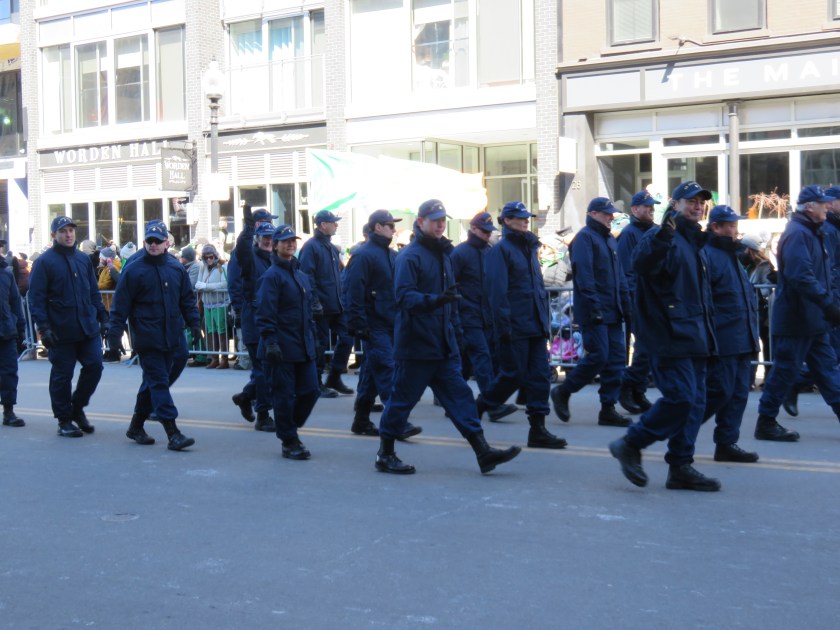
Location: Providence, Rhode Island

Cameras: Canon PowerShot SX710 HS and iPhone 8
Location: Providence, Rhode Island
Having spent the past eight years of my life living in different cities both here in the United States and overseas, you get accustomed to life in an urban environment and how to make the best of it. If you’re coming from a rural town or a suburb, adapting to a city can take months or even years when you’re not used to the frenetic scenes, fast-paced traffic, and always on the go mentality. A fact of this day and age is that the urban population around the world keeps increasing and a good amount of industries, jobs including in the high tech world are based out of cities.
According to the United Nations, over half of the world’s population, currently live in an urban environment. The exact percentage at this time is about 54% of the planet’s inhabitants. That percentage is expected to steadily increase to 66% of the world’s population by the year 2050. It is also estimated that over 2.5 billion more people will be living in the cities by mid-century and these people will be mostly concentrated in the continents of Asia and Africa. The 21st century may be remembered as the first truly urban century across the entire planet.
I bring these statistics and predictions up to you, dear reader, not to scare you but to enlighten you about what city life is like. The chances are good that if you’re reading this article that during your lifetime you’ll have to either live in a city or travel there occasionally for work or tourism purposes. By following the five steps outlined in my article, you’ll be able to adapt quicker to urban life and have an easier time adjusting to a city overall. As someone who has consistently lived in cities big and small since I was 18, I am speaking from almost a decade of experience now. Living in a city can be quite difficult at first but it can also be very rewarding both personally and professionally. I hope that these steps will help you to make better choices, live healthier, and stay out of trouble with the locals.
Here are my five steps to surviving city life:
Whether it’s waiting for someone to get off the train before you get on or standing to the right to let people pass you on the left as they go down the escalator, observing local norms and customs in cities is very important. From the experience I have of living in cities, it’s better to blend in than to stand out. When it comes to the dress code, metro etiquette, or how to tip at the restaurant, it’s best to “do what the Romans do.”
It may take some time to adjust and if you’re new in the city, people will understand that you’re not aware as to how things work exactly. In order to save yourself a lot of trouble and angst, it’s best not to fight against the way things are even if you disagree with them. Cities are essentially a living culture that is adaptable to change only when a significant part of the population there wants things to become different. The best way to get used to living in a new city is to be observant, asks the locals if you have any questions, and do your best to understand the local transportation system which leads me to my next step.
Depending on which city you’re living in, there’s likely to be a public transportation system made up of buses, trains, and local taxis. In addition, there’s also the new popularity of Uber, Lyft, and other ride-sharing services. In the modern city, there are plenty of ways to get around for cheaper than it costs to rent or own a car. The utility of walking or riding your bike in the city is also a great option and more environmentally friendly.
There are a few exceptions in terms of cities where it’s more sprawling and you would need to have a car but the majority of cities around the world encourage public transportation and its best not to have a car. If you need to get out of a car, there are rental car agencies galore as well as car sharing services that the urban dweller can use to get away from the hustle and bustle. In my opinion, owning a car in a city is expensive and a money sink. Between the cost of parking, the parking rules, and the higher cost of gasoline, it’s simply not worth it.
When you move to a new city, it’s important to take the time to learn the public transportation system especially for buses and trains. If you can afford to pay more, living in the center of the city will be more advantageous to getting around with public transportation. If you live on the outskirts of a city or outside of the city, then it’s more likely that you’ll need to have a car.
Moving to a new city can be quite stressful and even lonely at times. If you’re new in the city and do not know anyone, that can be a real challenge. Luckily, I would say with the advent of the Internet, there are numerous groups out there especially for younger people in their 20s and 30s to meet like-minded people with similar interests and hobbies. One of the most popular websites for meeting new people is ‘Meetup.com.’
There are hundreds of groups in these cities that cater to professionals, artists, writers, entrepreneurs, sports fans, music fans, etc. Depending on how big the city you’re living in, the chances are good that you’ll find a group or two where you will have something in common with the people in the Meetup group. These groups are free to join usually and it’s a great way to make connections. I’m also quite partial to Couchsurfing, a website designed to help travelers around the world to get to know each other better and exchange stories about life on the road.
Usually, there are Facebook groups and local websites especially in the United States that focus on being social through sports. Whether its soccer (football), volleyball, kickball, etc., joining a social sports club is a good way to meet new people. The best way to meet people in a city though is just by opening your mouth and starting a conversation with someone who is a local. “I’m new here, what are the fun things to do in __________?” (name of city) That question alone should get the ball rolling.
Using common sense when it comes to living in a city is extremely important. Part of it comes down to doing your research about the neighborhood you’ll be living in, figuring out if there are any crime and/or safety issues to be aware of. Some cities also have an issue with air pollution and/or water pollution so it’s good to ask around about if it is safe to drink the water or if you need a mask to cover your face to breathe during certain times of the day. Being able to know what kind of climate a city has throughout the year is also key. There is a lot of information out there about the weather / climate zones that a city is located in.
For example, I knew that in Medellin, Colombia, there is a rainy and a dry season that changes depending upon the time of year. Otherwise, there would be no winter, snow, and the city would have a spring-time like climate otherwise. When I moved to Boston, I changed my mind set to reflect the new urban environment I would be living in. Instead of springtime weather year around, I would have to adjust to living in seasonal conditions again with colder winters and more humid summers.
Out of all the things that people overlook when moving to a new city in their country or outside of their country; it is adapting to the weather and climate conditions. Doing your research about crime, pollution, and the weather along with asking the locals is key to mastering this particular step. Also, it is key to know a little bit of information about each of the neighborhoods in your city and whether they are pretty safe or not. If you have children, knowing about the city schools should be high on your priority list.
I know from my own personal experiences that city life can be really rewarding but also quite stressful. You’re interacting with hundreds of strangers each day who you don’t know that well and are often going through life at a frantic pace. It can be overwhelming to our senses especially when it comes to all of the light, noise, traffic, and the amount of people nearby. Cities can also feel claustrophobic at times. That is why my last step focuses on getting out of your comfort zone to leave the city every now and then. Mixing it up to be in a more rural area with mountains or in a small town by the sea can really do you a world of good. In all honesty, cities are not the most natural environment for human beings to be in all of the time.
Collectively, we really need to be in nature whether its’ in the woods, in the mountains, or by the sea. Going for a hike, doing some fishing at the lake, or relaxing with a book at the beach are really good ways to help our mental health especially if you spend 90% of your time in a city. On top of that, being able to get some exercise and being outdoors will do you a world of good both mentally and physically. Even if it costs you some money and a rental car, leaving the city can be very beneficial to surviving city life. If you’re reading this article and haven’t been to either the mountains, the lakes, the rivers, or the beaches in a while, consider doing so if possible.
I’m quite confident that if you follow each of these five steps, you’ll be able to survive life in the city. Even if you’re only able to one or two of them, you’re setting yourself on the right path to developing a healthier mindset when it comes to urban living. I hope this article helps you and feel free to leave me a comment below if you have any further questions. I’d be happy to answer to the best of my ability.
Nouns, as they are popular known in English, are a fundamental building block in English grammar. Nouns are a fundamental part of speech in English. They can be found in nearly every sentence, every phrase, and make a vast amount of words. If you’re familiar with basic English grammar, you’ll know that the basic definition of a noun is that it is a person, place, thing, or idea. When it comes to the topic of singular and plural nouns, we have two separate categories to break our nouns into. In order to understand nouns, we need to know about the difference between singular and plural nouns.
To make the distinction between singular and plural nouns, we must first understand the definition of both concepts. The singular noun describes only one person, place, thing, or idea. The plural noun, in contrast, names more than one person, place, thing, or idea. It’s pretty easy to tell the difference then to distinguish between singular and plural nouns. When you think of singular nouns, think of the word ‘single’, which is similar in both meaning and how the word is written. Let us take a look at some examples to better illustrate what singular and plural nouns are.
Singular: Cat, Dog, Whale, Donkey
Plural: Cats, Dogs, Whales, Donkeys
As you can see from the examples above, the way that we distinguish the singular noun words from the plural noun words is the addition of the ‘s.’ In order to make a noun plural, you’re most often going to add the letter ‘s’ to the end of the word.
However, it’s important to keep in mind that there are certain singular noun words that don’t become plural from adding ‘-s’ to the end of the word and are irregular in their change. Let’s look at some examples of the change made from singular nouns to irregular plural nouns below.
Singular: Bench, Ash, Bus
Plural: Benches, Ashes, Buses
From these examples, you can see that in order to make the singular nouns to become plural, you need to add ‘-es’ to the end of the word and not just ‘-s.’ Specifically, for those singular nouns that end in s, x, z, ch, sh, you’re always going to add ‘-es’ after those letters to make the singular noun plural.
For those singular nouns that end in the letter ‘-y’, in order to make that same noun plual, you need to drop the ‘-y’ and add ‘-ies’ to make the plural noun. Here are some examples.
Singular: Baby, Candy, Party
Plural: Babies, Candies, Parties
As you can see, the ‘y’ is dropped and the ‘ies’ is added to make these words plural.
It’s also important to be aware that there are a few cases where singular nouns can become plural without adding s, es, ies, etc. These are unique words but they become plural nouns through different changes. Here are some examples below:
Man –> Men
Woman –> Women
Mouse –> Mice
There are also some nouns that don’t make any changes to their structure at all and maintain the same form whether they are singular or are plural.
Here are some word examples where they stay the same: deer, sheep, fish.
Some nouns can also maintain a plural form with an ‘-s’ ending but never be able to have a singular noun form given their structural makeup.
These words include: news, sports, billiards.
Other nouns will only have a singular form without a ‘-s’ ending but won’t be able to become plural due to their structural makeup as well.
These words include: bowling, music, badminton.
Having an understanding of and being able to use singular and plural nouns proficiently in English is extremely important. Luckily, this topic is one of the most straightforward to follow and to memorize. There are variations to the rules that make a singular noun plural so it’s vital to study the possible changes that can be made. Whether it’s adding a simple ‘s’ to the end of the word or changing the whole structure of the word such as mouse à mice, studying this grammar topic will take time and effort. Do your best with singular and plural nouns because it is a fundamental part of English speech.












Camera: Canon PowerShot SX710 HS
Location: South Boston, Massachusetts
One of the key debates in English grammar is the role of the ‘serial’ comma or what’s otherwise popularly known as the ‘oxford’ comma. Depending on whom you might ask, there are constructive arguments to be made as to why the Oxford comma is useful or why it may not be necessary at all. It all depends upon your personal preference in using or not using this kind of comma but it is important to be aware of how it is used and why it is used. Having proper grammar is a key part into developing one’s fluency in English and the Oxford comma is often considered to be necessary to developing that skillset.
The Oxford or serial comma is the last comma for a list of things, people, or places. I’ve listed some examples as to make it clear what this kind of comma is. The Oxford comma is always the last comma and cannot be classified as a serial comma if there is only one comma in the sentence. There has to be at least two or more commas in the sentence to have an Oxford comma take its’ place as the serial comma.
Examples
As you can see from the examples, the Oxford comma is highlighted and bolded as the last of the commas in the sentence whether the subject(s) are people, things, or places. The thing with the Oxford comma to understand is that it is not mandatory to use and that there is a lot of debate over whether it should be even used at all. The use of the Oxford comma is stylistic and different style guides differ in terms of their views on the serial comma.
For example, the AP style guide for English grammar does not mandate the use of the Oxford comma. However, this is in contrast to other style guides such as the Chicago Manual of Style or The Elements of Style, which mandate and support the use of the Oxford comma. Certain professional organizations and agencies such as the United States Government Printing Office and the American Medical Association are supportive of the Oxford comma and encourage its’ use in their employees. Depending upon whom you work for or what line of work you’re in, views on the Oxford comma are likely to differ.
The debate over the Oxford comma extends to across the pond in the United Kingdom where there is also a divide over if it should be used at all. The Oxford Style Manual and the MHRA Style guide support the use of the Oxford comma whereas well-known national publications such as The Times Style Manual and The Economist Style Guide oppose the use of the Oxford comma. When it comes to the serial (Oxford) comma, British and American style guides both fall on opposing sides of this debate.
The main argument in support of using the Oxford comma is based around how it can clear up any ambiguity that comes with using ‘and’ instead of another comma to finish up the sentence. Supporters of the Oxford comma generally wants to make them understood without confusing the audience regardless if they’re writing a newspaper article or a research paper. I’ll give you an example to see how a sentence’s meaning could be ambiguous without the Oxford comma being used.
Example
I love my siblings, George Clooney and Katy Perry.
Because there’s no Oxford comma here, it’s definitely strange if you read it out loud. Instead of the intended meaning being that you love your siblings separately and then you also love George Clooney and Katy Perry who are known celebrities, it comes off as being that your siblings are George Clooney (brother) and Katy Perry (sister) which is likely not true.
Let’s look at the same example with the Oxford comma implemented into the ending of the sentence.
Example
I love my siblings, George Clooney, and Katy Perry.
From this re-written example with the Oxford comma included, it becomes more clearly that the subject known, as ‘I’ loves his or her siblings, George Clooney, and Katy Perry. It’s clearly distinguished in this case that the siblings are not the famous celebrities and that they are separate people. However, if you are really opposed to the Oxford comma, you can re-structure the sentence so that it can make sense grammatically and you won’t have to insert the serial comma for it to work.
Example
I love George Clooney, Katy Perry and my siblings.
In this re-written example, you don’t need the Oxford comma to clear up the ambiguity.
Unlike other debates, this debate within English grammar about the Oxford comma will never end. There are always going to be supporters and opposition to its usage. However, it’s important that every English learner or teacher be adaptable to its usage or non-usage. If your student wants to use the Oxford comma, they should be able to because it’s apart of how they learned English grammar and they are technically allowed to do so. If the teacher doesn’t want to teach the Oxford comma to their English students, they also should not have to if they don’t believe in it. We can learn and teach English in a world where the Oxford comma can exist and not exist.














Camera: Canon PowerShot SX710 HS
Location: Isabella Gardner Stewart Museum; Boston, Massachusetts
Anything that is done in the creative process takes effort and hard work. Any work of art, any piece of music, any lengthy novel took days, weeks, months, and even years to create. The creative process allows any person to express oneself in any way they see fit. The idea to keep in mind is that it is best for somebody to discover what he or she would like to create based on what his or her interests are. They then must discover for themselves what exactly they are good at creating and what they have a passion for doing. Being creative cannot be forced on someone.
The person in question has to decide what they enjoy doing and how far their talent can take them. Sometimes, the person can discover his creative vocation on his or her own but other times, it’s often the recommendation of a close friend or family member who gives the person inspiration to continue on with their craft. The key to remember about the creative process is that it can add value to people’s lives and also provide substantive meaning for any human being.
Being creative allows you to step outside of yourself and observe the external world in some way to shape it in a way that you see fit. Whether it is painting, writing, sculpting, etc., you’re putting yourself out there to see how you can do it differently and how can you create something truly unique. The creative possibilities out there are infinite and it’s important to choose a hobby or interest that appeals to you and which you can devote serious time to.
Some other traits that you can develop besides being observant and aware of the world around you are to become more collaborative and open to learning from others. A creative person will learn from others who have come before him or her in order to develop themselves as an artist, writer, builder, etc. Without copying them directly or replicating their kind of work, a creator will take what they have learned and studied to develop their own style or add value to their field. You don’t have to become the next Mozart or Rembrandt but you should try to innovate or change up the creative field so as to do something that will be remembered in the future.
Collaborating with other creative people and working alongside them or just to learn from them can make you more skilled in your work. You can learn a lot of valuable lessons from other creative people and they can mentor you based on their years of experience if you’re just starting out. Even if you suffer setbacks or false starts, knowing that you have a network of people similar to you in your creative world who can give you advice or a new perspective will give you the extra motivation to continue forward and learn from your mistakes. Through collaboration, you’ll learn to be less defensive and tame your ego so that you can learn and become better at your creative vocation.
Harnessing your creative energies can make you more outgoing, more connected to the world and can make you more humble. In a world that seems to be moving faster and faster, being able to slow down, observe your surroundings, and collect your thoughts is a great way to fuel your creative impulses. While we cannot control much outside of our own choices and decisions, harness your creative abilities will give you a sense of control over the external world. You can also gain a lot of satisfaction from putting something out into the world even if it never gains popular recognition. To keep it as a healthy endeavor, exercising your creative abilities should never be done for the possible fame, fortune, or notoriety of it but rather for your own benefit.
Without any kind of creative outlet, humans can stagnate both mentally and physically. People can often be placed into two categories: producers and consumers. We have the capacity to do both but we are often told by the larger society and culture to consume, consume, and consume some more. While there’s nothing wrong with consumption within reason, being able to channel our energies into a productive endeavor can be good for both the mind and the body. This is especially the case when you’re working to solve a problem or to make life better for people. You don’t know what your own potential or capacity for creativity is until you begin to do it. Everybody has the ability to be creative but they have to figure out where they can contribute the most to an idea, a project, or a work of art.
There has never been a better time in human history to be a creative individual. The advent of the Internet and global social networking has allowed people of all backgrounds to express themselves in various ways. More than ever, the average person is a website, a YouTube channel, an eCommerce shop away from sharing their creativity with the world at the click of a button. While the creative process is long, challenging, and comes with no certain reward, the benefits to a person’s mental and physical health cannot be overstated. The Einsteins, Beethovens, and Rembrandts of the world knew that their creative contributions would change the world in one way or another. They did it not just for the world though but their own sense of fulfillment and purpose. Instead of asking themselves what they could receive from the world, they thought instead of what they could contribute to the world with their individual talents.
Being creative, innovative, and experimental comes with risks but also a number of rewards. Even if you fail or don’t reach your goals, you will still learn a lot about yourself as well as what you are capable of. The key is to keep working at it to find out what you are skilled at whether that’s being an artist, a writer, an architect, an engineer, etc. Everybody has a creative flame within them that can be harnessed and molded. You just have to figure out for yourself how to develop, practice, and become proficient in your craft throughout the creative process.









Camera: iPhone 8
Location: Barclays Center; Brooklyn, New York
Having a deep knowledge of verbs is crucial in order to develop one’s English vocabulary especially when it comes to differentiating between their varied forms. In order to understand verbs in general, we need to know that there are both ‘regular’ and ‘irregular’ verbs depending upon how their past tense and past participle are formed. It can be difficult to distinguish between the two types, as there is no set rule on what specifically makes a verb regular while another one can be irregular. In the case of this particular grammar topic, memorization and practice will make you better at using the correct form of the verb and to have a list of the verbs to study whenever possible.
When it comes to regular verbs, you should know that most verbs are regular verbs and that it’s very easy to change them to the past tense or the past participle. You’re simply going to add ‘-d’ or ‘-ed’ to the end of the verb in order to make it regular in the past tense. A good example of a regular verb would be ‘to play.’ In order to keep ‘play’ as a regular in either the past tense or in the past participle, you would add ‘-ed’ to the end of this word to make it ‘played.’
Example: “I played soccer with my friend Jeremy last night.”
Sometimes, you don’t even need to add –ed to the end of the regular verb but rather just the letter ‘-d’ to make it grammatically correct. A good example of that would be for the verb ‘to dance.’ In this case, you could add ‘-d’ to ‘dance’ to make it ‘danced’ for it to be a regular verb in the past tense.
Example: “We danced as a couple for the first time on our wedding night.”
Short List of Regular Verbs
Talk
Create
Walk
Want
Use
Help
Move
Call
Live
Follow
In each of these ten regular verbs, the simple past and the past participle are both the same and come with an –ed at the end of the verb. When it comes to a few select regular verbs, you may change a ‘y’ in the word for ‘-ied.’ For example, ‘try’ is the regular form of the verb in the present but to change it to the past tense, you need to drop the ‘y’ and add ‘ied’ to become ‘tried.’ Also, the regular verb ‘stop’ is an exception in that you add an additional ‘p’ after ‘stop’ as well as put on ‘-ed’ after the ‘p’ to create ‘stopped’ for the simple past and past participle. Regular verbs may have some variation to their formation but not as much when compared to irregular verbs.
Unfortunately, to the consternation to those English learners looking for an easy fix to the regular v. irregular verb debate, there is no magic wand or solution to know a rule to differentiate the two categories. It is known to most that there are over two hundred and fifty irregular verbs in the English language, which is a manageable amount for the average learner to remember since there are thousands of active verbs in the English language. While there is no strict formula or rule behind what separates a regular vs. an irregular verb, there are some fairly common forms of the irregular verb to be aware of.
Short List of Irregular Verbs
Arise
Become
Choose
Deal
Drink
Eat
Forget
Leave
Lose
Mean
Examples:
(Simple Present – Simple Past – Past Participle)
Break – Broke – Broken
Swim – Swam – Swum
Drive – Drove – Driven
Bear – Bore – Borne
Begin – Began – Begun
Examples:
When it comes to irregular verbs, there are three types of verbs that we can remember in terms of formation.
The first type is when the verb is the same for the simple present, simple past, and even the past participle. (Examples: put, hit, read)
Put – put – put, hit – hit – hit, read – read – read
The second type is when the verb is the same for two of the three grammar forms. (Examples: sit, keep, lend)
Sit – sat – sat, keep – kept – kept, lend – lent – lent
The third and last type is when the verb is formed directly for each of the three grammar tenses. (Examples: know – grow – freeze)
Know – knew – known, grow – grew – grown, freeze – froze – frozen
Regular and irregular verbs can be even trickier when you realize that a verb can be both regular and irregular at the same time. Now, while that isn’t very common, it can happen every now and then so it’s important to familiarize yourself with those few examples that can be both regular and irregular as a verb.
Examples:
Burn – burned – burned (regular)
Burn – burnt – burnt (irregular)
Learn – learned – learned (regular)
Learn – learnt – learnt (irregular)
Smell – smelled – smelled (regular)
Smell – smelt – smelt (irregular)
In the case of these verbs, the difference between what’s regular and irregular is the ending of the word. Instead of adding an ‘-ed’ to the simple past or the past participle, you can add an ‘-t’ to the verb to make it irregular.
Overall, the topic of regular and irregular verbs can cause some confusion to the average English learner. However, the best way to be better adept at this topic is to really study these grammar tables and to consult your dictionary as well. Building up your vocabulary by using these verbs in your sentences will help you better understand whether or not it is regular or irregular in terms of its’ usage in the past.
Having a list of both regular and irregular verbs is key in terms of mastering the usage of them. There are also only two hundred and fifty irregular verbs so with time and effort; you will be able to separate them out from the thousands of regular verbs in the English language. Patience, diligence, and a good dictionary will help you become proficient in learning and using both regular and irregular verbs.
‘There Will Be Blood’ is a masterful, enticing film about how greed, corruption, and arrogance can destroy a man’s soul. Definitely one of the best films of this young 21st century, There Will Be Blood will be remembered for generations to come for its’ acting, cinematography, and direction. There are a number of things that make this film memorable including its’ cast, director, and musical composition.
In addition to all of that, the plot is written well, the characters are intriguing, and themes are still timely when compared to the modern era. While not the most popular film when it was first released, ‘There Will Be Blood’ has become a bit of a cult classic since it came out in 2007, over ten years ago. The film was nominated for eight Academy Awards and won two of them for ‘Best Cinematography’ and ‘Best Actor’ for Daniel Day-Lewis.
Considered the best Actor of his generation, Day-Lewis is a unique talent who can transform him into vastly different performing roles and deliver outstanding and award-winning performances. In addition to winning the Best Actor award for ‘There Will Be Blood’, Day-Lewis also won Academy awards for the films ‘Lincoln’ and ‘My Left Foot’, which were the exact opposite kind of roles to play as an actor.
Daniel Day-Lewis is able to stay in character for months or years on end to totally immerse him in both the story and the lines that he memorizes. It’s a truly impressive accomplishment to win one Academy Award but Day-Lewis was able to win three and is nominated for a 4th award for his most recent role in ‘Phantom Thread.’ Other noteworthy aspects of this film is the directing by Paul Thomas Anderson and the musical score by Jonny Greenwood who both set the tone for this movie’s themes and plot line.
Unbeknownst to most, the film’s screenplay and overall plot was adapted from American novelist Upton Sinclair’s novel Oil! Which focuses on the oil boom in the western United States during the late 19th to early 20th centuries, and the men who made themselves wealthy from the discovery. Instead of covering a topic as deep and complicated about the oil rush over a few decades in a dramatic film, Paul Thomas Anderson chooses a protagonist named Daniel Plainview (played by Daniel Day-Lewis) to be the lens through which the audience witnesses the birth of the lifeblood for the modern American economy.
Anderson’s goals for this film in my opinion were to show how the U.S. and its’ oilmen were not so innocent when it came to the pursuit of wealth. In the quest to reap the profits of the oil boom, there was a lot of backstabbing, double-crossing, and short-shrifting between different competing companies. This film takes a hard look at how the protagonist Daniel Plainview loses his soul in the pursuit of wealth and prestige. In addition, There Will Be Blood is an examination of the push – pull relationship between capitalism and religion and how they are often linked together to pursue their goals.
There Will Be Blood’s setting takes place at the turn of the 20th century. Daniel Plainview, the main protagonist starts out as an ordinary silver miner looking to become wealthy from that pursuit. However, this changes in 1902 when he discovers oil near Los Angeles, California, and decides to create his own drilling company. At the beginning of the film, Daniel can seem to be like any normal prospector of that era and also selfless in the fact that he adopts the son of a fellow co-worker who was killed in an accident. The boy is named H.W. and Daniel seems to care and cherish the child. However, the audience soon finds out that it is not love that Daniel strives to have in his life but rather wealth and influence in the oil industry.
Daniel promotes himself as a ‘family man’ largely in order to curry favor with other businessmen and potential employees of his company. The main antagonist to Daniel is Eli Sunday, a preacher in nearby Little Boston, California, who wishes to get a good sum of money from Plainview in order to build his church. In exchange, Daniel gets access to all of the land under the town in order to build wells to drill for oil where there is a vast amount underneath their feet. Despite the fact that they have an agreement in the exchange of land for money, Daniel betrays the deal and berates Eli for his religious beliefs and the exploitation of his son’s deafness for his own financial gain. It is clear to the audience that both men are out for themselves but need each other in order to acquire wealth or a religious following.
Such as has been the case at times throughout history, religion and capitalism have been intertwined in an unholy marriage leading to disastrous results. Daniel uses Eli in order to get all of the oil wealth from under the town while lying about the amount of money he would give Eli or the town itself to build up their infrastructure. Eli uses Daniel’s money to build his mega-church but exploits H.W.’s misfortune of becoming deaf as a means to accuse Daniel of being a ‘bad father’ and a ‘sinner’ even though the freak accident was out of his control.
If I had to highlight two example scenes for somebody to check out before watching this movie, it would be the ‘I’m an oil man’ speech by Daniel Plainview to the townsfolk of Little Boston. You can see from this speech and from the overall scene that he does not care so much for the people in the town or what he can do to help them. The music combined with his lying through the teeth boasts show that he is not being genuine and is in this pursuit of oil for himself and himself alone.
“I’m an oil man speech”: https://www.youtube.com/watch?v=AHz-zZoBnbc
The other scene to highlight from this film is known as the ‘Fire’ scene, which is a brilliantly shot and executed scene. It’s amazing in its’ portrayal of the discovery of mass amounts of oil under a well indicating that Daniel Plainview is to become a very wealthy man. However, it’s at the same point in this scene where he realizes that his son, H.W. is to become deaf due to an accident near the well. At this scene, you can see Daniel change as a person to become more focused on his future as a ‘oilman’ than one as a ‘family man’ to H.W., his adopted son.
‘There Will Be Blood’ Fire scene: https://www.youtube.com/watch?v=GKJAH-XBNNs&t=240s
Throughout the film’s events, you can see that Daniel does not care about family or religion at all. While he enjoys the company of H.W., he holds over the fact that he is not his biological son and does not want to give him any financial support to strike it out on his own. Daniel has no care for organized religion besides getting permission to gain workers and oil from underneath the town’s feet while contributing the bare minimum to Eli’s church or the rest of the town. As his last name reveals, ‘Plainview’ has a plain view about human nature that is very pessimistic and jaded.
Daniel only cares to get as much out of people as to benefit himself and his company personally. You wonder though by the end of the film what is in it for Daniel besides money and alcohol. He may have become a wildly successful prospector and oilman but what does it all mean if he is left alone and friendless. If you’re going to go into business, why not do it for the benefit of others and not just yourself? However, the view of Daniel Plainview is that life is a zero-sum game and that you can’t trust anybody but yourself.
Eli Sunday, while a pragmatic preacher and someone who seems to care about the townsfolk of which who are part of his church, still does a deal gone south with Daniel Plainview in the pursuit of easy money. Eli is easily bullied by Daniel but still goes around trying to convince him to change his ways and repent as a sinner. While Eli means well and wants the best for the church and his town, he does not go about it in the right way leaving him at the mercy of Plainview.
While Eli Sunday and Daniel Plainview are both excellent at what they do, you have to consider that they are both very flawed human beings. They may have built a popular church to preach in (Sunday) or massive oil wells to enrich themselves (Plainview) but life will still be lacking for them if they have no love and compassion surrounding those achievements. That may be the main message for the person viewing this film. Wealth, notoriety, and personal prestige are not everything in life and that there are other things that you should focus on that really touch your soul as a human being.
“There’s a whole ocean of oil under our feet, and nobody can get at it except for me!” There Will Be Blood is an excellent story about extreme capitalism and religion gone wrong. Both protagonists pursuit of their own selfish goals hurts the other characters in this film. However, what would modern America be like without the preachers and the oilmen? While not as dramatic as this fictional movie, the discovery of oil and the spread of the gospel are intertwined with American history.