Cause, Chaos, and Consequence: Ripple vs. Butterfly Effect Explained

“I’ve written about the Ripple Effect before but while they sound like each other, The Butterfly Effect is far from being the same thing as a concept. They are philosophical cousins to be honest but while they are related, they were both raised in different households.”

I’ve written about the Ripple Effect before but while they sound like each other, The Butterfly Effect is far from being the same thing as a concept. They are philosophical cousins to be honest but while they are related, they were both raised in different households.

To give some further background on the Ripple Effect, it is one action that causes a series of consequences that spread outward like ‘ripples on the water.’ These are both linear and observable consequences that are clear to see, like water droplets hitting the ocean. For an example of this phenomenon, if you donate to a college scholarship fund, that money would directly help a student go to a college or university. Maybe that student goes on to start a non-for-profit because of the help you gave to help hundreds of other students who were in the same position as he or she was when you donated the money. The effects of your one action spread out logically from the original action taken. The ripple effect has been used in the social sciences, in business development, and in personal decision-making each day.

When it comes to the Butterfly Effect, the definition of it pertains to a very small or slight change in the initial conditions of someone’s day or a event that was rather small or insignificant at the time that ends up causing unpredictable and massive effects down the line affecting untold numbers of people. The key idea for this phenomenon is that events can be nonlinear and cause chaotic consequences when you think the effects would have been minimal or nonexistent instead. For an example, a butterfly flapping its wings in Mexico could theoretically start a chain of atmospheric events that cause a tornado to occur across the border in Texas. The Butterfly Effect is often used in describing chaos theory, meteorology, or how complex systems work together succinctly or can become dysfunctional rather rapidly.

AspectRipple EffectButterfly Effect
DefinitionOne action causes a series of predictable consequencesTiny change leads to massive, unpredictable outcomes
Nature of ImpactLinear and logicalChaotic and nonlinear
PredictabilityGenerally predictableHighly unpredictable
ExampleHelping one student who then impacts othersBeing late to an event and missing a life-changing meeting
Field of OriginSocial sciences, psychology, personal developmentChaos theory, meteorology, complex systems
Visual MetaphorPebbles dropped in water creating wavesButterfly flapping wings triggering a tornado
Control Over OutcomeModerate to high: effects unfold over timeLow: small causes can lead to wildly disproportionate results
Typical UsageCause-and-effect logic in planning or strategyDescribing randomness or complexity in systems

Regarding the main difference between The Ripple Effect and The Butterfly Effect, ripple effects are much more predictable to the average person, and you can trace the causality more easily. Butterfly effects and their events are unpredictable, chaotic, and can happen when you least expect them yet have been put into motion for quite some time. To sum it up, Ripple effects have an obvious cause and effect that are easy to explain and observe while butterfly effects show how tiny inputs or changes can lead to wildly disproportionate outcomes.

To explain how this would play out in the real world, a Ripple Effect in one’s personal life would be deciding to go to the gym three times a week consistently. You start to feel healthier, have more energy, sleep better at night, improve your mood, you’re more productive at work, which leads to a monetary raise or even a promotion in your title. That one small but consistent change to your lifestyle with a new habit consistently done can ‘ripple’ out across your whole life in a predictable way given the known yet useful benefits of consistent exercise. 

As for the Butterfly Effect example when it comes to your personal life, let’s say you show up five minutes late to an important networking event. As a result, you may miss meeting someone who could have been a business partner for your new venture. Your career ends up going in a completely different direction because of that missed opportunity. Because of that, you end up having to move and live in a different city, with different friends, and a different lifestyle, all because of that five-minute delay that happened once in your life. This is a key example of an unpredictable event with unforeseen consequences. You probably or will never realize how your life changed as a result unless someone observing your life full-time could tell you about the chain reaction that occurred because of that late networking event arrival.

We can also look back at history for key examples where the ripple and butterfly effects were present in what happened in retrospect. With regards to the ripple effect, the Civil Rights movement in the United States leads to the Civil Rights Act being passed by Congress. This law causes desegregation to take place in public schools, which opens more education and job opportunities for minority students and eventually leads to more diverse leadership in both government and business. It’s a chain of predictable and traceable events that go back a few decades, but for which still resonates up through the modern era.

A famous example of the Butterfly Effect in action from world history was when an obscure Serbian nationalist, Gavrilo Princip, assassinated the Archduke Franz Ferdinand of Austria, in 1914. After that momentous but surprising event happened, Austria-Hungary declared war on Serbia, alliances with France and Russia kicked in, which lit the spark that consumed Europe during the first World War.

This momentous event of World War I then led to the fall of empires like the Ottoman and British empires over time, the stale peace that led to World War II, and then the rise of Communism and the Cold War. Would a war have started regardless of if Franz Ferdinand had not been assassinated that day? Most likely, but there was a chance that it would not have happened had the assassination not occurred. That one moment created chaos and unforeseen consequences that no one in Europe or around the world could have foreseen at that time in 1914.

Understanding the differences between the ripple effect and the butterfly effect isn’t just academic, it’s practical for your own life. In our personal lives and careers, most of us try to make thoughtful choices, expecting reasonably predictable outcomes. That’s the ripple effect in action: you invest time in learning a skill, and it pays off in future opportunities. However, life doesn’t always play by those rules. Sometimes, a seemingly insignificant decision, sending a message, missing a meeting, crossing paths with someone new, spirals into consequences no one could’ve predicted. That’s the butterfly effect crashing into the party to say it has arrived. Knowing both concepts helps us become more intentional with what we can control while remaining humble about what we can’t control. It’s the mental toolkit for navigating both stability and chaos in this uncertain world.

The truth of the matter is that life is shaped by both ripples and butterflies. Some of your actions will create steady waves of impact over time while other choices might unleash unpredictable storms. That doesn’t mean you should live in perpetual fear of chaos or paralysis over tiny choices. It does mean though that we should approach life with a mixture of clarity and curiosity: plant the seeds you can in life, but don’t be shocked if something unexpected grows.

As the saying goes, “We make plans, and the universe laughs.” Still, you should plan anyway and be prepared with the awareness that every choice matters, even when the outcome doesn’t go according to plan. You might be one ripple away from changing your community or your world, or one butterfly flap from a wild new chapter in your life.

The Bill Always Comes Due

“It is an inevitability that we all must face and even when we try to push it out of our mind, that responsibility is there to provide lest we face any consequences that comes with not paying the bill.”

When we think about the moment of slight anxiety or stress involved with sitting in a restaurant, you’re satiated from a great meal of great food and drinks, maybe you’re surrounded by friends and family on a special night together, in all that joy and happiness, you still have that thought in the back of your mind, “the bill always comes due.”

There is no way of avoiding it and you’re going to have to pay it, one way or another. It is an inevitability that we all must face and even when we try to push it out of our mind, that responsibility is there to provide lest we face any consequences that comes with not paying the bill.

While you are under the expectations that any food, drinks, or other service at a restaurant always will come at a cost, we as consumers try to not think about that at all to be here and now in the present to enjoy what we have ordered with the company that we keep. It is a key characteristic of human nature that we often avoid thinking about the future even when we do at present is likely to carry its own kind of consequences. I use ‘the bill coming due’ as an anecdote for how what we choose to do, how we act, what we focus on and prioritize, will lead to what kind of bill we end up paying in the future.

Just like you would not want to pay a restaurant bill you cannot afford by understanding your budget and what you can afford to order off the menu of that particular reasonably priced restaurant, we should be aware of the fact that there are other ‘bills’ that can come due in the future that can cost us more than we bargained for if we are not careful about it. What we do in the present can help us manage our bills and how we handle our future by dealing with it in a responsible and mature manner now.

Let’s think about our health and how we manage it as there will be some kind of ‘bill’ handed down to us as we get older. It can be a clean ‘bill’ of health as your physician or doctor will tell you if everything goes well or it can instead be an array of expensive tests, surgeries, or procedures that lead to a hefty medical ‘bill’ that will cost us dearly beyond what we can afford, even if you have some form of insurance. How do we avoid this kind of ugly ‘bill’ of health? Well, I won’t dive into specifics as I am not a medical physician but how you eat, if you exercise, whether you stay active in your daily life, can help us pay off that ‘bill’ in advance or make it that much smaller to manage in the long run. There are common sense ways to manage the ’bill’ of health as it will come due at some point, and you have a measure of control over it in the present to make sure it does not bankrupt you or cost you with your health in the future.

In a similar way, one’s ‘wealth’ and how you manage it in the present can help you pay the various ‘bills’ that come due on a monthly, yearly, or longer basis. When you use part of your paycheck and weekly or monthly earnings to pay down outstanding debt or to save up for an emergency or to help yourself learn an employable skill, you are making sure that you will be able to pay for any bill that can come due because you have accrued your wealth and investments in a way where you will never be broke from these ‘bills’ coming due.

If you make other choices instead where you spend every dollar you make and beyond that, get into debt with various bill collectors including the credit cards and other loans you have taken out, the bills that come due will be beyond your accrued means, and you may be struggling for the rest of your life to get out from the ‘bills’ coming due that you have to pay or face serious financial consequences.

You do not want your health, wealth, or ability to earn a living to suffer because you cannot handle both present and future bills to come. You should make sure to think of the future to save, invest, and earn for a ‘rainy day’ fund that can overcome an unforeseen or unexpected bill coming due. Again, I am not making any specific financial recommendations to you as I am neither a financial planner or investor, but I do want to impart some common sense and wisdom in how to avoid future ‘bills’ by planning to save and invest for the future in some measurable way so the bills coming due will be paid for entirely without any stress or anxiety.

Lastly, it is unfortunate where we live in a society where it can cost exorbitant amounts to educate oneself for the workforce and for financial success, indebting ourselves in the process. I believe education is worth investing in if you are able to afford the bills to come due, but if you are in a cycle where you can’t get out of accrued bills or debt because you went for higher or professional education, please make sure that the investment that you make in the present will help pay off the debt in the future. The worst thing to do is invest in an education that does not end up paying for itself later and help with all the bills coming due to that investment.     

Make sure you focus on those employable skills or to be a subject matter expert or practitioner, in an important area that will pay off because you invested in your education in a useful area. I know of a lot of people who cannot get themselves out of a debt or pile of bills, even with their extra years of education, because what they learned what not useful for the job market, and now they are stuck with bills that will never be paid off.

I am not against the idea of paying for more education but please make sure it is aligned with your future career or business goals. If you are not sure of what you want to invest financially in an education, there are many free tools and videos that can help you understand better of what opportunities are out there. I think it’s important to think hard about what bills you want to take on for your education because it is no good to have a debt burden that will prevent you from future job or educational opportunities because you have bills coming due that you must sacrifice your ideal career or business for.

Whether it is health, wealth, or education, you will have to pay the bills that come due, even if they come at an unknown future date. Make sure you invest in each area within reason that you will be able to afford to do so without suffering later for bills or obligations that you took on that you found were beyond your capacity.

Do not sacrifice your future by what you do in the present. Make sure you practice good health habits, invest in your wealth accrual with whatever route that you find is best for your goals, and to reasonably access educational opportunities that can create excellent business or career opportunities that you will not have to sacrifice either your health or your wealth to achieve. Remember that the bill(s) always come due at the end, but that does not mean life should not be enjoyed or taken advantage of, but to do so in responsible manner, where your present is secured in each of these three areas, and as a result, your future is prosperous, healthy, and full of opportunities.

The Unfortunate Rise of Anti-Social Behavior

“Clearly, I am not happy with the recession in societal norms and values and fear it is becoming all too common these days as a lot of people have forgotten to know how to act in public in a civilized and dignified manner.”

How many times have you been on a plane, a train, or a bus recently and noticed someone on a loud phone call, listening to loud music without headphones, or even kicking your seat and not apologizing? I would say it’s happened to most of us at some point, but these kinds of rude behaviors seem to become more common post-pandemic. The receding of the pandemic did not just cause the deaths of millions of people, long-lasting economic damage, but most recently an erosion in social norms and values. Clearly, I am not happy with the recession in societal norms and values and fear it is becoming all too common these days as a lot of people have forgotten to know how to act in public in a civilized and dignified manner.

As the pandemic has receded, selfish and unruly behavior has increased in my view, and it has been well documented in popular forms of media. How many videos or audio clips have you seen of airline passengers fighting with flight attendants or gate agents? There have also been scenes of people stealing and looting from stores in mass causing chain stores and the local mom and pop shop to have armed and unarmed security patrolling the toiletries aisle. For the rest of us who play by the rules, it’s unfortunate that we must deal with the agitation of greater security and more surveillance because others have to act in such a selfish and anti-social manner.

While there is some blame to go around including growing wealth inequality, the cost-of-living crisis that continues to worsen, and a lack of proper education in the school system on basic behavior and etiquette, it does not excuse being negligent of how to behave in public especially for an adult who should know better. I would like to think that we all are taught whether by parents, guardians, or by teachers themselves the difference between right and wrong, how to behave oneself when others are around, and that stealing, cursing, and dismissing others in public as unseemly behavior. The pandemic has worn a lot of us down physically, mentally, and financially but it does not excuse anti-social acts and/or behaviors against your fellow man or women.

Together, in a society, we should remember both the spoken and unspoken rules of how to behave and it seems like a few of us need to re-learn that or we have to strengthen these rules in our institutions and in our laws to fight against this rising tide in unseemly behavior. There are consequences to your actions and while we should continue to notice these anti-social behaviors and call them out, there must be a strengthening in terms of preventing those from breaking these rules and to hold them accountable when they happen.

A good example of an anti-social behavior I’ve noticed is in major U.S. cities including New York City and Washington, DC. Fare beating and or jumping the gate to avoid paying the fares to keep our transit system from functioning well is something I condemn strongly. Unfortunately, since the pandemic, there has been a spike in people not wanting to pay their transit fare and getting caught on camera while not doing so. Multiple times, the station agents and transit police do not apprehend these individuals to cite them for the fines or at least verbally reprimand them for their actions. If you do not enforce the fines or at least the rules, it emboldens this kind of anti-social behaviors and people will keep them doing them.

Recently, increasing the fines and changing the fare gates to be more difficult to physically jump or avoid has become a solution to this fare beating issue, but it is more than just changing the gates or enforcing the fines, there should be more ways to let people know in public service announcements (PSAs) or through schools, community centers, or in the home that this behavior is not tolerable.

I very much encourage free transit programs for those of lower economic status and for young people who are going to school or work as an alternative way to invest in those people who need the financial assistance and may not understand how fare beating is unacceptable. Increasing fines and security presence for stealing, farebeating, loud music in public, is not so much a solution, but rather a band-aid on anti-social behavior that may discourage these actions but won’t go fare in terms of ending it.

In a society, I believe people need both ‘the carrot and the stick’ in the sense that good behaviors should be encouraged and even rewarded such as cleaning up after yourself, lining up in a proper manner, helping the elderly and disabled. We should do as much to encourage healthy social behaviors as much as discouraging and shaming unhealthy anti-social behaviors.

For myself, I have a pet peeve of people playing music in public places in my near vicinity without earphones or headphones or keeping it to a low volume at the minimum. It gives me no great pleasure to call anyone out on this kind of behavior, but it was never acceptable before the pandemic to do so, and it should not become a new norm in this post-pandemic world. If it bothers me or causes me to not focus on my reading or my work, I will be happy to call this selfish kind of behavior out. It’s up to the individual on how they act but it used to be a given that you wouldn’t disturb others’ peace in public and keep your music, gossip, or phone calls to yourself or at a low volume. I’m not exactly for policing of rules or regulations as an ordinary citizen but if it disturbs my peace or my ability to enjoy my train, plane, or bus ride, I do have to call it out or let someone know of the issue.              

My overall hope on this rise in anti-social behavior is just as much as we focus on enforcement and punishment to a reasonable degree of these actions that we do a much better job as well on teaching people in society why we have these rules, how they benefit us all in a public setting, and to educate people why we have fares, quiet hours, no music in public places, etc. so the average person will know why they have to act in this way for the betterment and peace of us all.

A Roll of The Dice

“There is always going to be a risk involved when rolling the dice or making the choice in life as there is when it comes to choosing one of two possible decision or even one of multiple decisions.”

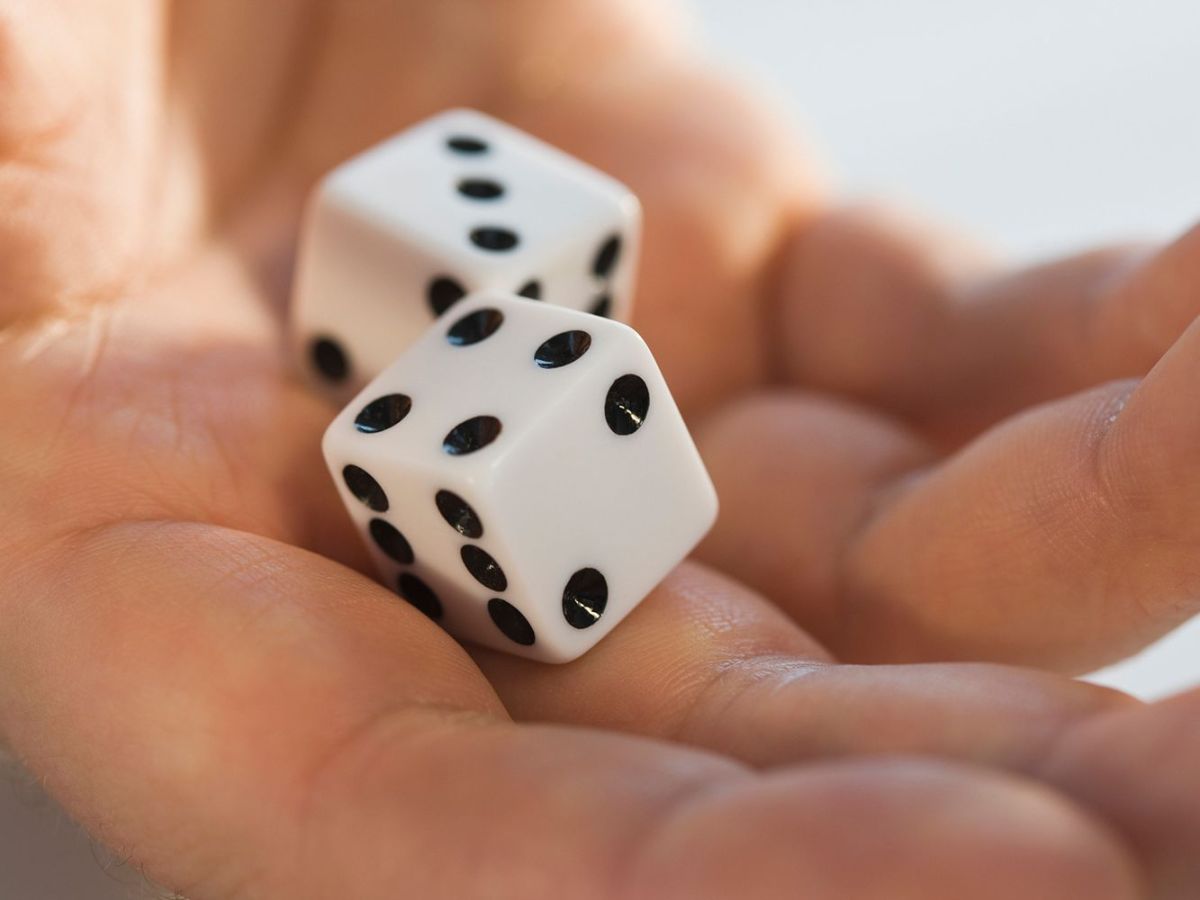
When many of us think about versus chance, the English expression, “A roll of the dice” comes to mind. When you are faced with two or more choices and you must act, it’s like rolling the dice and hoping to get lucky in a table game at a casino. There is always going to be a risk involved when rolling the dice or making the choice in life as there is when it comes to choosing one of two possible decision or even one of multiple decisions.

Life involves a lot of non-linear choices to make and that inevitably involves taking chances on it. There’s no bigger example for me of taking a chance metaphorically than the rolling of a dice like at a craps table. Dice can have multiple choices on them or two choices only, one of which that it will land on, the other it will miss, but there is only one outcome without any alternative once the dice stops rolling.

Many of our day-to-day decisions involve choosing, taking that action, and going in one and only direction after the decision is made like the dice being rolled. While we would like to choose both options to see where they lead us, the chances of doing so are unrealistic and impossible. Like the dice that we roll, in life, we only can choose one of two or more possibilities. Dice can have more than two choices and while your standard dice has six sides to it, life usually has us choose between more than a few options as well with only one possible choice being the outcome to follow.

The metaphor of rolling the dice is apt when you consider that for the average person, choice overload leads to indecision or no decision at all. The most stressful part of a person’s day is not making the choice itself but rather when they are not given a choice or if they have too many choices to choose from. There is real fear and anxiety in people thinking they made the wrong decision and if they have multiple choices, the likelihood of feeling stress goes up because the choice is not simplified, and they must weigh different outcomes rather than just two or a few of them.

When the choices we have in front of us are two or four or six, we suffer less from ‘analysis paralysis’ or from indecision itself. While you can still second guess yourself later, if you are still able to think your decisions through and make an educated guess or choice, you won’t feel as stressed or anxious. I think that’s why the adage of ‘flipping a coin’ or ‘rolling the dice’ appeals to people because sometimes, the randomness and leaving it up to chance is better than putting actual effort into our decisions.

That’s partly why gambling is such an intrinsic part of most cultures in that you can still act by flipping the coin, rolling the dice, pulling the lever, but you don’t have any real choice to make because you’re leaving the choice up to someone else like an algorithm, a card dealer, or fate itself. People like autonomy over their decisions but they also enjoy leaving things out of their hands and letting ‘fate’ decide what happens next.

Of course, ‘fate’ usually has its outside influence on the choice that is made whether that’s the wind gust blowing the coin on a different side you expected, the casino letting the algorithm or computer decide who wins or who loses, or more generally, the environment around you that has an impact on the outcome. Fate itself is not without its own influence on the outcome so if you think that there is anything in this world that is truly impartial or just unbiased to the core, I tend to disagree and believe that whether it’s leaving things up to ‘chance’ or ‘fate’ itself, nothing is ever truly random in its consequence and that no outcome is without its own chance of interference.

You may have rolled the dice, pulled the lever, tossed the coin, picked a card from a deck, but there are other factors at play that keep ‘fate’ from being truly blind in its outcome. Even when leaving things up to ‘chance’, you still acted up until that point and the fact that you put yourself in that situation means the outcome itself afterwards even if you call it ‘fate’ was a consequence of your actions only but it is rather true instead that the immediate environment, the people around you, and a number of other external factors that had an influence on the ‘fate’ of that outcome.

Rolling dice, playing cards, and gambling give people a thrill because your action can lead to random winnings or losings but that’s basically the illusion of it all. Fate in life like a rolling of the dice may seem random but there are outside factors in place that may seem like it was ‘destiny’, ‘fate’ or ‘random luck’ but involved several actions, decisions, beliefs that led to the present moment.

Instead of trusting in ‘fate’ to guide us or for our choices to always be led to pure ‘chance’, we lose the power of our choices and the education of our decisions. We cannot always leave things to ‘chance’ and must look beyond picking randomly or choosing out of a hat to guide us in life. While I disagree with taking on too many choices or nitpicking every decision you make, you must always be thinking things through, educating yourself, and being willing to learn from your mistakes.

Choices inevitably cause consequences, both good and bad, and we cannot foresee where our choices may lead. However, if we leave too much up to ‘fate’ or ‘luck’ as we call it, then we will never really mature or grow as people. People should do their best to have autonomy over their decisions and to not take them lightly. Yes, it can be fun to roll a dice or flip a coin to make our choices, but life is too serious to be gambling on our choices like that. Rolling the dice may seem like an easy way to go through life like picking random numbers out of a hat but that’s not how the real-world works. When we evaluate our choices, think through decisions that have big consequences, and trust in our believes to guide us through the consequences of those decisions, we will be better off as individuals for having taken control of our lives rather than leave it all up to ‘chance.’