Does He or She or It Spark Joy for You?

“Just like keeping a clean house or organizing your closet is what helped American homeowners create joy in their home lives, I fully believe Kondo’s asking of “does it spark joy?” can be reframed for our friendships, relationships, and our hobbies.”

I’ll be honest in that I never really watched Marie Kondo’s famous show, “Tidying Up”, and while I do respect her commitment to reducing clutter and helping hoarders get rid of their extra junk, I am going to focus more on who or what sparks joy for you beyond just household items. Just like keeping a clean house or organizing your closet is what helped American homeowners create joy in their home lives, I fully believe Kondo’s asking of “does it spark joy?” can be reframed for our friendships, relationships, and our hobbies.

You should never want to exert too much effort into someone or something that doesn’t provide ‘joy’ or at least ‘contentedness’ and while ‘joy’ like any feeling is ephemeral, we should work to maximize the ‘joy’ we feel in life. If you are not getting that ‘joy’ at all from that relationship, that friend, or that job, you got to do some soul searching to see if it’s worth the effort involved to keep it going. You can’t choose your family, your coworkers, or even where you live at times so instead of finding ‘joy’ only there, find those things and people that are voluntarily in your life and where you can better evaluate if they are worth your time.

If you find you are spending your limited time with people who are as dull as dishwater or are even putting you down, you need to cast them aside like old clothes that Marie Kondo would want you to discard from your closet. Now, this does not mean being mean, cutting off contact without a reason, or just straight up ending on bad terms, it’s rather about letting them know that the relationship, the friendship, or the hobby you’re doing isn’t worth the effort anymore. Very few things in life are permanent and if it does not spark any kind of joy for you, you should not keep pursuing it to no fulfilling end.

Instead, I believe it is key to find those people or those activities that continue to give you some joy or happiness. I would classify it as giving you a ‘real shot of life’ and making you feel more alive. It’s not an easy thing to be conscientious of but you’ll often know when someone or something is breathing life into you rather than leaving you drained of it.

Not everything or everyone you interact with in life will give you that ‘spark of joy’ or a ‘shot of life’ but your job is to work hard in those interactions that you do control such as a friendship or a relationship to choose wisely and to do so discerningly. Your boss or your tax attorney is rarely going to spark that ‘joy’ but you’re going to have to interact with them regardless because it’s necessary in life. What you can do instead in your free time is to maximize ‘joy’, ‘happiness’ or just ‘fulfillment’ with people, places, and hobbies that make you feel most alive.

It really is a rare thing in our technologically driven, profit maximizing, socially shallow, and standardized daily routine to find those people who leave a big impression on you, but you got to put yourself out there to receive those kinds of connections. Build a life around trying to find interesting people who inspire you, who make you laugh, who you want to learn from, who you enjoy being around, and for you to be the same to them.

Life is too short to be around ‘joyless’ people who you could choose not to be around instead and to commit yourself to prioritizing those people who make you happy or joyful because of how they make you feel. The same can be said of those activities, hobbies, or interests that brighten your day and that you can look forward to. Routine in adulthood is monotonous, contrite, and not joyful, but you can still find those moments, those hobbies, and those people who make your life that much richer and more colorful.

At the end of the day, Marie Kondo had it right. Joy should be the filter through which we decide what stays and what goes in our life. The difference is that life’s clutter isn’t just found in closets or drawers of hoarders whose houses are too full; rather, it’s in the people we chase, the jobs we keep, and the habits we cling to long after they’ve stopped serving us. Maybe the real act of tidying up isn’t just folding shirts; it’s clearing out the emotional junk that keeps us from feeling alive and fulfilled. When you ask yourself what sparks joy as Marie Kondo does to her clients, don’t stop at your wardrobe or your closet. Ask it instead about your world, your personal life, your hobbies and don’t be afraid to get rid of the extra clutter.

Why You Need Something To Look Forward To In Life

“Life is not just about paying bills, taking care of errands, and going to and from work or school. No, life is more than just going through the motions.”

Life is not just about paying bills, taking care of errands, and going to and from work or school. No, life is more than just going through the motions. As an adult especially, you must have a life beyond the daily grind. You must be going out of your way to make time to enjoy life and to have something to look forward to, as frequently as possible. Life is short and days, weeks, and months can pass you by without taking full advantage of it. As you get older, it becomes not just about being successful and finding purpose but finding enjoyment out of it before your time is up here.

Enjoyment doesn’t have to lead to you spending your money needlessly. It could be going on a walk, a hike, or chatting with a friend on a park bench. You can enjoy the sunrise, the sunset, or take the time to exercise and feel good about yourself as a result. These are all things that you can look forward to without spending your hard-earned money. While there is nothing wrong with using money to have fun and relax a bit, it’s not the end all be all with looking forward to a gift, a purchase, or a subscription. If it brings you happiness and you’re responsible for it, monetary or not, you should always be marking your calendar each day to at least one thing or event or person you’re looking forward to interacting with.

Clearly, man or woman is not a machine and grinding endlessly just to sustain us alone is not healthy in the long-term. You can be a hard worker and still take the time to enjoy life even when you have a busy schedule. However, you need to also set boundaries and be willing to look at your time honestly to figure when and where you can fit this downtime in. You can easily get overwhelmed with errands, chores, duties, work, and other obligations and not carve out any time for yourself but that is no way to go through this life.

We all need our down time to reset, enjoy, and relax without feeling guilty for having done so. No one in your life is going to plan out your fun experiences or down time for you so you need to be actively doing so yourself. Managing your calendar well is part of that and being conscious of what brings you joy and happiness. Other people will often dictate for you what they think will bring you fulfillment outside of work or school, but you need to decide for yourself the best uses for your free time.

For some people, that could be playing tennis on a weekly basis, for others, it could be catching up with different friends over a drink or coffee over the course of a month. You should always be looking to make time for your fun and enjoyment as you see it best. It takes effort, communication, and planning but it’s better than just going through the motions without breaking up the daily grind a bit.

Being able to plan a vacation, a concert, a hike, or just time spent with loved ones is what really will fuel you through the ups and downs of professional and academic life. You need interests, hobbies, experiences, and people you like to get more out of life beyond the briefcase or backpack. We were not meant to live to work and earn our daily bread alone. Take the time out when you can to have something to look forward to doing, experiencing, or enjoying, whatever that may be, guilt free.

There will always be plenty of hours to give for that job, that class, or that bill payment, but there is less time for our free time by and large. That is why it’s important to plan out your free time well, to have a life beyond the grind, and to create fun, joy, and laughter wherever you can, whenever you can. Enjoy your free time and make the most of it because it’s not for forever and you need to make the most of the time we are given to pursue our own happiness.

Maslow’s Hierarchy of Needs and The True Quality of Life

“Maslow’s hierarchy of needs has always been a good reference for me in describing what exactly makes us have a safe, secure, happy, and fulfilling life. I do believe we need to have our hierarchy of needs in mind as people when we focus on what’s best for our fellow man or women and how to build a prosperous society.”

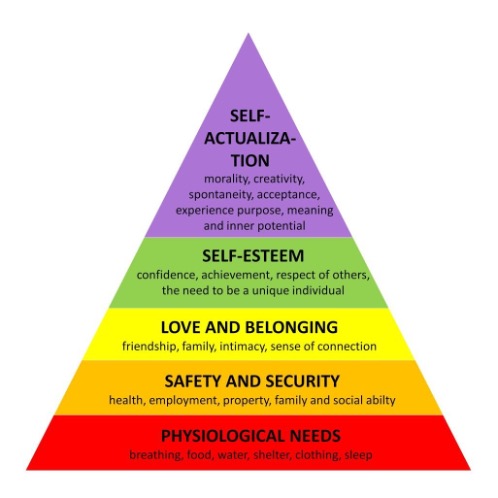
Everybody wishes to have a high quality of life but what exactly does that mean? We hear the term ‘quality of life’ a lot but what goes into the ‘quality’ of it and what makes for a satisfying ‘life’? Maslow’s hierarchy of needs has always been a good reference for me in describing what exactly makes us have a safe, secure, happy, and fulfilling life. I do believe we need to have our hierarchy of needs in mind as people when we focus on what’s best for our fellow man or women and how to build a prosperous society.

                                                                                                Source: SimplyPsychology.com

While I don’t wish to compare my own views on what true ‘quality of life’ is compared to Abraham Maslow’s ‘hierarchy of needs’ as shown in the pyramid diagram above, but it’s important to look at what makes a society flourish. I agree with Maslow at the base of the pyramid is the most important to ensure a life has some quality with it.

The societies that have the strongest base for ‘physiological needs’ usually are the happiest and satisfied with their quality of life. For example, you cannot focus on ‘safety and security’ as much as you can when you can’t even guarantee that the water you drink is clean and the air that you breathe is clean. Everything else on Maslow’s pyramid goes out the window if you are hungry, thirsty, don’t have a roof over your head or cannot clothe yourself or your family.

A lack or absence of ‘physiological needs’ is often found in the poorest or least developed of our societies and can still plague even our wealthiest and most developed societies. The key thing for all societies is that we should have an attitude of wanting to guarantee the ‘highest quality of life’ we can deliver to all people rather than just the few who can afford it financially. I do believe any society and its leadership is responsible for delivering on both ‘physiological needs’ and on ‘safety and security’ and once that is achieved, it will lead to better conditions whereas we go up Maslow’s pyramid, love, belonging, self-esteem, and self-actualization tend to be easier to achieve as well. True quality of life is knowing that if you fall on hard times, not by your fault, you’ll be looked after by your society and your government while you look to get back on your feet.

I don’t believe it’s anything farfetched or overly utopian to believe in everyone having the right to breathe clean air, drink clean war, have enough food each day, and have a roof over one’s head. I also think that while education and health care may not be on ‘physiological needs’, it ranks close in that regard to build that functional society. Everyone should be able to afford a good education and find good health care where they live and societies that accomplish this for their people are rewarded back and then some with citizens who are thriving as a result. Societies that are more educated, healthier, and with more opportunities to succeed tend to be those that have a true quality of life in my view.

You may be thinking that true quality of life is about having a big bank account, a bigger house, all the gadgets and electronics you could ever want, and all your material desires within reach, but to me, that would not go along at all with Maslow’s hierarchy. Having that stuff may make you happier but it doesn’t reflect a true quality of life in any society. If the roads are falling apart, people around you are suffering and in poverty, and you can go bankrupt for seeking medical care or a higher education, your quality of life will also suffer as a result even if you’re not directly affected by it.

When we are looked after or cared by others in the society who can ensure we have a good education, good health care, and to have affordable housing, the quality of life for everyone will go up. We are not islands unto ourselves alone and we are reflections of how we treat others. If you’re reading this article, think more about how your society or country could have a better quality of life not just for yourself but for the people living there too.

I ask that you believe in your ability to create change whether that’s advocating for more environmental regulations, prioritizing people’s access to basic needs including food and housing and thinking more about how we can include people in making them feel they belong in the society. We should collectively work towards providing more opportunities to everyone, so they don’t feel left out. Any healthy society has those public places to gather, discuss, and hopefully fix the quality-of-life issues going on in their community, town, city, or country.  

I don’t judge a society by how wealthy it is, how big the houses people live in are, or how much they have in material goods and services available. I judge a society by how they treat the least well-off members, how they prioritize the public good or not, and what they are doing to improve the overall quality of life rather than ignoring it or having it steadily decline under their watch.

It’s important for us to start thinking about not just ourselves and our own quality of life but those of our fellow man and woman. When they are worse off than us, let’s lift them up and look out for them instead of shunning them or isolating them instead. We should always be advocating for a ‘true quality of life’ where everybody is given the opportunity to succeed, grow, live healthy and happy lives, and pursue their dreams.

We all will be better off for having invested in the basic tenets of civilized society such as education, health care, transit, housing, and healthy food supply rather than just guarantee them for the few who can afford it. The higher the quality of life is not just for us but for every member of our society, the more likely we will all flourish together and reach our highest fulfillment.

What Is Your Spice of Life?

“You may be able to find this in your studies, your daily vocation, or even your career, but for many of us, what you do to earn a living may not make up what you are excited most about in the act of living. We often must look elsewhere outside what we do day to day to find our ‘spice of life.’”

How do we explore the full richness of life? This is the kind of age-old question that philosophers and writers have asked for many centuries. What truly fulfills us and makes us enjoy what life has to offer? I would argue that it’s more important than ever to find the ‘spice’ in life that makes you excited, engaged, and fulfilled. You may be able to find this in your studies, your daily vocation, or even your career, but for many of us, what you do to earn a living may not make up what you are excited most about in the act of living. We often must look elsewhere outside what we do day to day to find our ‘spice of life.’

To get your ‘spice of life’ these days, you have to be willing to put yourself out there and try different things. What gets you excited, motivated, and fulfills you today may not be what motivates you years or decades down the line. You should remember that you won’t enjoy everything you do or try forever so it’s important to stay open minded about other possibilities and to not be tethered to one hobby or interest only. Some people have lifelong loves for different activities, hobbies, or sports, which is great, but you may not be able to do it for the rest of your life so keep it in mind that you don’t get attached to one single activity, hobby, or sport because you may not be able to commit to it forever or be as productive or successful at it in the long term.

I think it is wise to keep your identity pliable not just for one job or one academic calling but to be open to learning new things, to experimenting with new ideas, and to trying out different activities that you have some basic interest in. You won’t love everything you do, and you may only do it for a few months or a few years, but it is much better than the alternative of not having done anything at all. Our collective attention spans have become so short due to modern technology that we don’t even try new things or are patient with it because we are too distracted by the latest gadget or technological development.

True fulfillment and satisfaction can come from mastery of a subject or an activity for which you pored countless hours into and never gave up at it. You can also find the ‘spice of life’ from having fun with it and doing it just for enjoyment alone and not to master it completely. Life has a lot to offer and it’s important to keep that in mind beyond our careers and our education. We may have limited time to do what we want to do but we must prioritize that time because without our own choice(s) in what we want to do, we will not find any fulfillment at all. We can find fulfillment both in our day-to-day pursuits but also in those pursuits we do each week or each month without a set schedule in mind.

To find consistent joy in life is not easy, but it can be done by not giving up, by trying out new things, and by doing those things consistently for a little while to see if it is giving you happiness or fulfillment. Being able to give an activity or a hobby at least a few weeks or a month to try it out is key. If you find you are getting bored with something and don’t enjoy it as much or as often, it is okay to put it on the back burner, but don’t be afraid to try something else. Our likes and dislikes change as we go through life, but it is important to keep finding that ‘spice’ in our lives that gets us excited, keeps us motivated, and brings us joy.

Remember to never completely giving up on finding your own passions and fulfillment in life. It is not easy and is something you must continually motivate yourself to do but it can help your life satisfaction out to have something that you enjoy outside of what you have to do each day. Having nothing to enjoy or have fun doing could remove all the ‘spice’ or ‘zest’ that makes life worth living and you want to avoid getting into that kind of scenario. Be ready to try new things, find activities to do by yourself or with others, and be open minded in what you think you would enjoy.

It helps to make a list of activities or things that you have done that you would like to do again as well as those activities or things you’ve never done before but would like to try. There are tons of activities, hobbies, sports, or things to do in this world and you just have to try a few at a time to retain the ‘spice of life.’ Make sure you live life to the fullest in this way and I promise that you will not be disappointed by making the conscious choice to try new things.

Getting Off The Hedonistic Treadmill

“It is important to explore the pitfalls of exclusively chasing after hedonistic pleasures and why it’s crucial to get off the hedonistic treadmill.”

In our modern world that often seems primarily consumed by the pursuit of pleasure and instant gratification, the philosophy of ‘hedonism’, which advocates for the maximization of pleasure and the minimization of pain, has found its way into the hearts and minds of many people in our society. However, if we undergo a critical examination of the pursuit of hedonism for its own sake, it reveals a complex interplay between short-term pleasure and long-term well-being. It is important to explore the pitfalls of exclusively chasing after hedonistic pleasures and why it’s crucial to get off the hedonistic treadmill.

The hedonistic treadmill is a concept that is defined by how a person can be on a constant pursuit of pleasure, akin to running on a treadmill that never stops like a hamster looking to constantly drink from the waterspout in its cage or have a morsel of food released that it can devour. Despite one’s efforts to increase their well-being by seeking pleasure, individuals find themselves in a perpetual cycle where the happiness derived from hedonistic pursuits is fleeting, short-lived, and can’t match their prior pleasure intake. This treadmill effect occurs because as people experience pleasure, their expectations rise, and what once brought joy and satisfaction becomes the new baseline for the future. Consequently, a person must constantly seek higher and more intense pleasures to maintain the same level of satisfaction as they had experienced before.

At the heart of hedonism is the pursuit of dopamine hits, defined as ‘the brain’s reward neurotransmitter’ that is released in response to pleasurable stimuli. Whether it’s indulging in rich foods, drinks, smoking a cigar or cigarette, engaging in impulsive behaviors like skydiving, sports betting, or seeking another kind of immediate gratification, the dopamine rush provides a temporary sense of euphoria that we seek to replicate more and more. However, relying on these short-term pleasures can have detrimental effects on our long-term well-being.

The more individuals indulge in hedonistic behaviors solely for the sake of having pleasure, the more our brains become desensitized to the dopamine rush. This desensitization leads to a reduced ability to experience pleasure from the same stimuli over time. As a result, individuals may find themselves trapped in a cycle of escalating hedonistic pursuits, constantly searching for more intense experiences, to recapture the initial pleasure that they felt when experiencing it for the first time.

Hedonism fosters a tolerance to pleasure, where the same stimuli that once brought joy or happiness lose its effectiveness. This tolerance often drives individuals to seek novel and riskier experiences to elicit the same level of satisfaction. The pursuit of novelty, especially in different areas of pleasure, can lead to reckless behaviors, as individuals become increasingly desensitized and crave ever more intense experiences to maintain their hedonistic highs.

The relentless pursuit of hedonistic pleasure can take a toll on our mental health. The fleeting nature of pleasure on the hedonistic treadmill can contribute to feelings of emptiness, anxiety, and even depression when the anticipated happiness doesn’t materialize or quickly dissipates. The constant need for more pleasure can create a vicious cycle that undermines mental well-being and prevents the cultivation of lasting contentment.

Hedonism, when pursued exclusively, can create an illusion of fulfillment. Individuals may mistake the pursuit of immediate pleasures for overall life satisfaction, only to realize that the pursuit itself was devoid of deeper meaning. The fleeting nature of hedonistic pleasure leaves individuals yearning for a greater sense of purpose and fulfillment that goes beyond the momentary highs of pleasure-seeking.

In the relentless pursuit of hedonistic pleasures, individuals may inadvertently neglect the development and maintenance of their personal and professional relationships. The focus on self-gratification can lead to a disregard for the emotional needs and connections with others, hindering the development of supportive social networks that are essential for long-term well-being.

Hedonic adaptation is a psychological phenomenon wherein individuals return to a baseline level of happiness despite the positive or negative changes in their lives. This adaptation undermines the long-term effectiveness of hedonistic pursuits, as the pleasure derived from external sources tends to be temporary in nature. Understanding hedonic adaptation highlights the futility of relying solely on external stimulus for achieving lasting happiness and emphasizes the importance of internal factors such as mindset, gratitude, selflessness, and purpose.

While hedonism focuses on the pursuit of pleasure, ‘eudaimonia’, a concept rooted in Ancient Greek philosophy, emphasizes the pursuit of a meaningful and purposeful life. Eudaimonia involves living in a state of well-being, which aligns with one’s own values and contributes to personal growth but also the welfare of others in your life. Eudaimonia encourages individuals to seek their fulfillment through meaningful pursuits that go beyond momentary pleasures. By engaging in activities that align with your personal values and contributes to your personal growth, one can foster a deeper and more enduring sense of well-being.

Unlike hedonism, which can leave individuals vulnerable to the whims of external circumstances such as if the pleasure is achieved or not, eudaimonia promotes resilience. By focusing on internal strengths, values, and personal growth, individuals can weather life’s challenges with a sense of purpose and a resilient mindset.

Eudaimonia places a strong emphasis on the cultivation of positive and meaningful relationships at its core philosophy. Unlike the isolating nature of hedonistic pursuits for one’s own personal gratification, it is better to be building and maintaining connections with other people in your life, which contributes significantly to one’s long-term well-being.

The pursuit of hedonism for its own sake, driven by the relentless chase for dopamine hits, from lust to money to material items, can lead individuals into a never-ending cycle of escalating pleasures on the hedonistic treadmill. The ephemeral nature of these pleasures, coupled with the diminishing sensitivity to any kind of pleasure gained and an escalating tolerance to its achievement, poses a serious threat to any person’s long-term well-being and overall mental health.

It is crucial that we all recognize the limitations of pursuing hedonism, especially as the number one purpose in one’s life above all other priorities. I believe it is necessary to consider alternative paths to well-being, such as eudaimonia. By embracing a life of meaning, purpose, and both deeper and positive relationships, anybody can break free from the hedonistic treadmill and cultivate a more enduring and fulfilling sense of overall well-being. While pleasure has its place in a balanced life of moderating one’s impulses and desires, it should not be the sole driver of one’s overall pursuit of happiness. Ultimately, a life well-lived is one that combines pleasure with purpose, which creates a sustainable foundation for long-term contentment and fulfillment.

What Is The Real Rate of Return on Investment?

“As you get older, you realize just how valuable time as a commodity is. You tend to start measuring the cost-benefit analysis or the return on investment that you are receiving not just regarding finances and how you spend or invest your money but also on how you spend your time.”

As you get older, you realize just how valuable time as a commodity is. You tend to start measuring the cost-benefit analysis or the return on investment that you are receiving not just regarding finances and how you spend or invest your money but also on how you spend your time. Unfortunately, this is a topic that we do not prioritize or learn about very well at a young age. Often, you must figure out what are the best ways to use your time wisely and your money.

There are numerous tools out there to help guide you find the real rate of return on your investment, but you must be the one making the decision on what you prioritize. We know for a fact that our time on this Earth is limited from the day we are born. Having such knowledge shouldn’t be morbid or despairing, but rather help us to prioritize how we spend our lives in search of a good use of our time, our money, and much more.

Now, not everything that we do in life should be correlated with a ‘cost-benefit analysis’ or ‘opportunity cost’ involved. Such behavior should be discouraged if you’re obsessing over how you spend every waking minute each day. You should be leaving some room for spontaneous actions that you enjoy regardless of if it’s geared towards health, wealth, and personal satisfaction. There are times each day where we have to commit to actions that take time when we would rather be doing something else and that is what adulthood entails sometimes.

The true focus is what can we do with our time that is free, which will help us in the long-term. If we have goals of wealth, health, and pursuing our own happiness, your time should be spent in looking in investing each day in building yourself up in each of these areas. For example, when we look at investing in our health, we know there are concrete things that can be done, which will help us with a return on having a healthier body, a healthier mind, and managing our stress and anxiety.

We may have to join a gym, change our diet, sleep more, and make time for exercising, and these are the kinds of investments, if done consistently, that can pay off in the long-term. These investments that I cite will not guarantee a longer life, but it is giving yourself the best possible chance of living a healthier life, especially if you are focusing on multiple investments.

In this case, the real return on investment may not be seen right away but you are likely to see some results if you’re consistent with your investments on a long-term basis. You can measure how your diet is helping you lose weight, how your sleep patterns have changed, and how much time you spend at the gym, the yoga studio, or in playing sports. These investments are measurable but the results on these investments will eventually show up in a real rate of return that will put you on a path that leads to a healthier life in the long-term. Returns are not guaranteed but if you are putting in the work over a long enough period, I believe the chances are good that you will be better off than you were years or even decades ago.

Similarly, how we save and invest financially for our long-term financial future, we can do the same with our health and our happiness. Everyone has different financial goals, and I won’t talk about specific investment advice to give, but you can always estimate to a degree what kind of percentage return you’re likely to get from your investments over a year or a decade or a century in terms of growth. These real returns will come to you but if you’re not consistently investing in building your wealth, those real returns will not be as impactful or as fruitful as you would have hoped. It goes to show that with either health, wealth, and happiness, that the earlier you invest in those facets of life and the more that you invest in them, the better off that you will be.

What makes someone truly happy is complicated and will differ depending on your emotional state, but I do believe spending more time with those who care about you, and you who care about them, enjoying more time spent doing the hobbies and interests that give you joy, and being able to invest time in learning new skills, exploring new places, or investing in your home and community, those kind of investments will have real returns on making you happier in the long-run. There will be times when what you did or do no longer makes you happy and that is alright. The key here is to keep trying out new things, keep meeting people, keep trying to be involved in areas of life that you think will make you happier, that is key in continuing to make those investments in building your happiness into the future to keep producing better and better returns.

Time is fleeting and you must prioritize health, wealth, and happiness in my view, which will give you those real returns in your life to enjoy and take joy in. Most of all, you have to know the difference as you get older between what’s give you actual returns for your hard work and efforts, and what you have to stop doing that is giving you no real returns. It is important to prioritize more of what will pay off in the future throughout your life and increasingly avoid those activities that produce a negative return and will leave you worse off.

It is one thing to be able to invest well in activities that bolster your life satisfaction, but you should also remember to avoid those other ways of spending the time that lower your real returns or negate them entirely. Be sure to know what a waste of your time is, if you can cut that activity out or lower your exposure to it and be able to replace the time spent on that activity with a good alternative. which you can take part in to continue to invest in building a life and a future that will make you healthy, wealthy, and happy.

It Feels Good to Do Good

“The good work we do whether it’s volunteering, donating, or contributing to society in our job or a non-paid effort can not only improve the state of the world in a measurable way but also make us feel good in the process.”

It can be disconcerting to make sense of how little is within our control and how much we would like to have the world be different than it is. Whether its politics, culture, the environment, or society in general, our lack of control over these forces that have a massive impact on our lives can be difficult to make sense of. Even when we do our best to make positive change in the world, it may only cause what I have previously referred to as a ‘ripple effect.’ However, we don’t realize that not only does the good we do ripple out in the world in a small yet powerful way, but we become the better for it as a result.

The good work we do whether it’s volunteering, donating, or contributing to society in our job or a non-paid effort can not only improve the state of the world in a measurable way but also make us feel good in the process. Other people in our lives may or may not know about these contributions that we make whether it’s with our physical labor, our financial resources, or just a caring thought or gesture but if we are the ones making the effort, we should take the time to recognize its significance and the beauty of the act itself.

It does not hurt to pat yourself on the back metaphorically for showing up and doing your part. I don’t believe it is egotistical or detrimental to your self-esteem to recognize that you are taking time or money to do something good in the world. While you should not expect others to be so forthcoming in their adulation or praise of what your contribution means, you should feel good about helping others or helping nature or just being kind and caring towards your fellow man or woman.

If you feel like you’re in a rut, I truly believe volunteering some time out of your busy schedule and working towards a goal in that kind of volunteer work can really cheer you up and make you feel a bit better about the world. So much these days is out of our own control in an increasingly technologically driven, lightning-fast world where we do not have as much time to slow down and focus on what really matters, which is to leave the world better than you found it.

The work can be hard, disappointing, and even cause you to question whether it is worth your time or money but hold true to the reason why you got into doing work for the betterment of others in the first place. While it is considered a selfless act to volunteer or to donate or to work for others, do not let yourself forget that it feels good to do good and you’ll often be better off for having done that work even if it was difficult, thankless, or draining to you mentally or physically.

Having that sense of control, to work hard towards a specific goal, and to feel better for having stuck with your good work to its end are all ways that can make us feel good about doing good. People all need to feel that sense of self-worth and to have that self-esteem be boosted a bit and that can come with taking the time or money or both to contribute to the betterment of the world around you. While time and money are precious resources for which we tightly hold onto at times, perhaps too much so, it is without question a good use of time and/or money to help those people out who are less fortunate than you are.

Only you can decide how much of either precious resource, time or money, that you would like to contribute as a volunteer but I promise that whatever you decide to take upon you in terms of doing good, you can guarantee that whatever effort or work you put in will pay you back in the most beautiful way in that sense of satisfaction and contentedness you can get from healing the world or helping a person or contributing to a social cause you care about a lot.

The work involved will be difficult and you will need to put in hours, days, and sometimes months or years to see the fruit of your labor lead to the good you sought to come about as a result. The blood, sweat, and the tears you put in may not seem worth it but if you work in a group or a team with other committed people who care about the same good work that you do, not only will it be easier, but it will be done quicker.

During the good work you do, make sure to keep reminding yourself that results will take time, that you have your goals clearly in mind as to why you’re contributing to do good in the first place, and to remember that you may not get praise from others but that your own satisfaction and happiness from contributing will be most powerful as it comes from within you. We only have so much time to volunteer and to do some good on our own terms so make sure you think deeply about how you want to contribute and why you’re contributing to that cause.

Other people, even friends and family, may question why you are dedicating your time and/or your money to the good work you’re doing, but you do not need their approval to go forward with reaching your goals. You only need to deeply internalize that doing good will make not only you feel good about it but the people or environment or our world, which will be better off as a result. If you have to justify why you did the work you did, don’t look to other people to confirm your righteousness but rather look within yourself in your heart to see what you contributed was needed, that you had the skills or the knowledge to help out, and that the impact you made was measurable and that it could ‘ripple’ out through the society and the entire world.

Don’t Rely on Others for Your Happiness

“Happiness is fleeting, comes and goes, and can come from a variety of sources, sometimes unexpectedly. I want you to be sure, dear reader, that you can diversify your happiness as much as possible.”

It’s important that I give my readers a little bit of tough love every now and then. I don’t do it to be negative but to give some advice that may help you out in the future. You can think I am wrong on this one, but I’ll be sure to defend where I’m coming from here. ‘Don’t Rely on Others for Your Happiness’ is what I am wanting to get across to you if nothing else. Happiness is fleeting, comes and goes, and can come from a variety of sources, sometimes unexpectedly. I want you to be sure, dear reader, that you can diversify your happiness as much as possible.

To put it simply, you need to be always cultivating both your internal happiness as well as your external happiness. You cannot have one form of happiness without the other and you should be continually trying to exercise both forms of happiness when you can. Happiness must be experienced, and it can be a futile emotion to pursue. It comes naturally to us, often when we least expect it, and can come from both within us and from those around us. Being happy because someone made you smile, someone made you loved, or even someone made you laugh is just as important as being happy from your own accomplishment(s), your own spirituality, and by being around the right environment.

In my view, happiness should be experienced both internally and externally. It can also be a bit of a balancing act but to neglect your own internal happiness especially or the ability to create your own happiness without others’ input is a key trait that you should always have available to you. If other people can give you happiness and then take it away just as easily without you being able to create that happiness that they took away, then you’re going to be in trouble in terms of your emotional state. Depending on another person or even another thing for all your happiness is a recipe for disaster.

It can be invigorating at first for someone to add on to your happiness by leaps and bounds. You never knew perhaps that you could be that happy or feel as happy as often. You’re basically on ‘cloud nine’ and you owe it to someone else. This can be an emotional kind of apex that gives your life that much more enjoyment and contentedness. While this kind of life event whether it’s a new relationship, a new friendship, or even a new role in society that others rely on you before, it should not take away from your own way to generate happiness internally.

I don’t discourage you from maximizing your happiness but if you rely on someone else such as a lover, a friend, a family member, etc. for all your happiness to be generated then that can lead to a very negative place. You should remember that if someone can give you all your happiness and heighten it to a new level; they can easily take it away just as fast and leave you without any of that emotion left if you let yourself be wrapped up in their adoration, love, or friendship. What I encourage you to remember is that it is good to be happy from what others share with you and what they help you enjoy about life, but don’t let yourself be at the whim of their ability to give you happiness…or not at all.

Always keep some of your own happiness in a personal reserve that cannot be taken away from anyone else regardless of what they mean to you personally. While external validation, love, and warmth is beautiful to enjoy, you should let it be the end all be all your emotional state. It is vital to look within yourself to generate your own happiness even if it comes less often to you or is as not as intense or long-lasting as that external kind of happiness. Internal happiness tends to take discipline, patience, and even action on your own part. It is often not given to you like external happiness but must be done by your own self without any support or encouragement.

When it comes to creating your own happiness, look to yourself to find joy and pleasure in other ways whether it’s a stroll in nature, a goal you’re seeking to accomplish, a new place to travel to and enjoy, or even being able to manage your life well by cleaning your place or by eating healthy. The better you take care of yourself, the happier you’ll be as a result. It’s important to not neglect yourself in your pursuit of happiness externally. Some of the best gratification and contentedness can come from reaching your own goals, having your own unique experiences, or having your own accomplishments that you achieved through hard work and effort.

If you are not able to generate your own feelings of happiness, it is going to be much harder to have external happiness from others as well. If you are not able to laugh, to dance, to celebrate, to enjoy, etc. without it being done with another person by your side, then that is a slippery slope towards not having any happiness at all. While it is great to having both internal and external happiness come together, if you cannot have your own internal happiness first, there is no way in my view for you to have the external happiness to come next. Forming some internal happiness first is the key step to being able to share in being happy with others.

You also should not look to become a total hermit and only take in happiness internally. It is good to share moments of happiness with other people so make sure to get out there once you have that sense of your own happiness that can be generated on your own to seek that external validation within reason to make your life even more content and joyful. To conclude, it does no good for you to have one without the other when it comes to happiness so make sure you work on cultivating both internal and external happiness but if you can only choose one that comes first, make sure you don’t rely on others for your happiness alone and to start with your internal sense of what it means to be happy first.

The Fruits of One’s Labor

“The song is called ‘Victory Dance’ by My Morning Jacket and whose lyrics directly address the earned happiness and contentedness after a day of struggle through a hard day’s work.”

One of my favorite song lyrics deals with the satisfaction of another day worked and to see the fruits of one’s labor enjoyed at the end of the day. The song is called ‘Victory Dance’ by My Morning Jacket and whose lyrics directly address the earned happiness and contentedness after a day of struggle through a hard day’s work.

“Hope to watch the victory dance after the days’ work is done
Hope to watch the victory dance in the evenings setting sun…
Hope to watch the victory dance over many lives to come…
Hope to watch the victory dance in the evenings setting sun.”

The ‘victory dance’ could be interpreted as a metaphor for a celebration or a relaxation or a general happiness that comes over you at the end of the working day. Regardless of the work involved, at the end of the day or the week or even the year, you can be able to look back with pride and satisfaction in your ability to ‘dance’ or enjoy the fruits of your labor in the evening or night or whenever your work is done.

The key lyric I can relate to is that the work may be done for the day, but it will continue for many ‘lives’ or ‘years’ to come. While the work you did today was hopefully meaningful or valuable, your progress will need to continue in the future so you can keep enjoying the ‘victory dance’ in whatever form you celebrate or take stock of what you were able to do.

Fruit takes time to grow and to be at its most ripe for eating and the same goes for our labor. While labor or work can be evaluated on a day-to-day basis, real progress in our labor whether it’s a business, a corporation, or a conglomerate, that kind of work can take years, decades, or even generations to build. You can enjoy a ‘victory dance’ for any kind of daily labor you can put in because of the progress made, but a key point as highlighted in this song by My Morning Jacket is that you really should try to enjoy the ‘victory dance’ for “many lives to come”, which I interpret as years to come or even over the generations from one family member to another.

Long-term progress requires ‘lives’ or ‘workers’ to build over the years or decades so it’s important to not celebrate too early or to ‘dance’ too early because the fruits of your labor should not be enjoyed too prematurely but rather when the moment is right or when the fruit is all ripe. Fruit, like one’s labor, takes time to enjoy so it’s best to be patient and work hard over time rather than to try to rush the process to enjoy ‘the fruits’ prematurely rather than when things have progressed to a finished point and even then, there is always room for further progress and improving in one’s work.

Another few of the lyrics from ‘Victory Dance’ that I really enjoy is the emphasis on trying out whatever labor may be best for you to thrive, or for which is done out of necessity to survive. It is key to adapt to the labor required of you or which is most available at the time since the ‘fruits’ will be just as enjoyable at the end of it. If you are committing yourself to ‘labor’, which inevitably involves struggle, either mentally or physically, the rewards or ‘fruits’ will likely be worth it because of that same ‘struggle’ involved.

“But you should work, for the self and the family
Should I hit the water or stay on dry land, even though I never swam?
Take machete into the brush, though at first there is no path
Taste the warpaint on my tongue as it’s drippin’ with my sweat
Place my gaze in the futures path, seein’ things that aint come yet.”

Your labor or work is not just for your own fruits as the lyrics state above. It’s also for your family or for the people who depend on your labor. They must share in the ‘fruits’ as well beyond your own needs and desires. Needing labor to survive and enjoy the fruits of life’s necessities such as food, water, shelter, clothing, etc. will sometimes force us to get out of our comfort zone as well. As the lyric above suggests, we often must test our limits to secure labor to have the ‘fruits’ in life. We may have to swim even when we have never swum before, but labor will require learning both new abilities and skills to be good at what we do.

You may have to learn those new skills to secure labor to do or to have work for the future. You should leave your comfort zone such as learning to swim, or to hike, or to hunt, or to lift heavy things or to use your mind to solve problems.

Whether it is a machete or a screwdriver or a keyboard, you are going to have to ‘clear a path’ with your labor even as the song says, nothing was there before. Creating something or making something out of nothing is a key part of being able to enjoy those fruits later by the work of sound mind or a good body.

Lastly, you may be physically challenged in your labor especially if there happens to be conflict as the song alleges. You may not know it, but you may be asked for labor of national importance or survival such as in times of peace but also in warfare, and you may have to provide service as part of your labor not for yourself but for community or for country as well. The final lyric in particular sums up why we labor for our fruits to begin with to plan for an uncertain or unknown future.

We may not have planned to do certain types of labor or work but regardless of if you’re an engineer, a blacksmith, or a doctor, you may be asked to do other types of work that you will have to both learn and then be proficient at. One must always be prepared to do other kinds of work to stay agile, be flexible, and plan for the unexpected such as a war or conflict that you did not see coming but you may be forced into fighting as the reluctant warrior in the song lyrics.

To secure the fruits now and for later as well will help to make sure that our collective labor will not have been for nothing. When your secure labor for yourself to do, you cannot work forever so it is important to think of the future and how to plan to have those ‘fruits’ not just for today, next year, but for the rest of your life too.

A Pleasant Vision

“The cool, ocean breeze blows the wisps of water onto my face and my hair with the soft rustle of the wind refreshing and relaxing me as the sunset envelopes the bright horizon leaving just one solid line of distinction on the horizon to separate the sea from the sky.”

The sand beneath me is coarse yet soft as it envelopes my feet and legs whole as I begin to pull myself up after admiring the waves lapping up to cool my body and soothe my worries as if I were in a welcome trance. Looking around at the vast sunset before me, the canvas of colors from blue to yellow to orange to pink, light up the seascape village I find myself near to but still so far away from. The cool, ocean breeze blows the wisps of water onto my face and my hair with the soft rustle of the wind refreshing and relaxing me as the sunset envelopes the bright horizon leaving just one solid line of distinction on the horizon to separate the sea from the sky.

I am wearing all-white as I pick myself up out of the sand and I see the shimmering lights behind me of a picturesque village where there is laughter, unknown music, and the smell of delicious food cooking over an open flame. After the sun sets over the village, I feel the distinct urge to go towards the village where everything and nothing seems familiar to me at the same time. The shimmering lights help me as I climb from the base of the beach up through the rocky hillside feeling at ease even as my bare feet climb over the rocks and shrubbery covered boulders.

As I climb higher and higher to the top of the hillside that juts out of this mountainous formation, the sound of people in different languages laughing heartily, the sounds of beautiful music playing in a sweet symphony as to not clash with the people’s joy. The smells of enticing foods, which become more and more familiar to me that come either from a distant past or of a future yet to come. The arduous hill climbing causes me to stumble and rest prematurely but I am undeterred. I do not bleed and while I tire, I do not fall back. Eventually, I make my way to the entrance of this pristine yet unfamiliar village with cobbled streets and stucco walls. Each of the village homes I walk past have large windows but no one’s inside, the walls are white or pastel-colored, and the arches speak to a grandeur of which I immediately fall in love with.

The windows and doors are arched with beige or dark red clay roof tiles with outdoor space with gardens likely filled with lush tomatoes and other plants to grow one’s own food. Surprisingly, I encounter women and men dressed from different eras on these cobbled streets who greet me in the languages of my ancestors. They have carriages and horses with them and exchange pleasantries with me as I pass them by on the way to the party. While I do not know them, they know me and perhaps they’ve known me my whole life. Even though I am tired from my journey, my hunger and thirst apparent to them all, they whisper words of belonging and encouragement in my ears and tell me that, “everyone is waiting for me.”

Who is everyone? Is it my friends? My family? My loves of past, present, or future? Where am I? Questions wash over me, but I am not anxious. It’s that strange sense of anticipation that comes after a fortuitous journey where my last destination is not known but I have no doubt of where it is that I am supposed to go. I am here for a reason and while I do not know when, where, or how I got here, I finally know that I have a destination in mind that may be what I was looking for all along.

Once I get there, the high, wooden entrance of a pure white village house made of solid brown doors swing wide open for me as an honored guest. There are sturdy, mahogany tables filled with known faces who have known me throughout my life and unknown yet familiar faces who I may be related to by blood or folks who I don’t remember as a child or baby but have also met them at one point or another. The tables and chairs seem to go on forever up to the edge of the hillside looking out on the moon, the sea, and the stars as gloriously bright as can be with no way not see hundreds or thousands in the night sky. Ornate dining sets have been set up with wine goblets and delicious foods with peaceful music playing in the background and it seems everyone is waiting for me to arrive to begin the meal together.

Everybody at each table is dressed up in their own regalia from the era they lived in and are at the age that they most would like to be remembered by. Surprisingly, while each person is exchanging languages with each other that they themselves may not speak, they are somehow being instantaneously translated so everyone can understand one another even while having not been from the same century or same continent.

It dawns on me that this is exactly where I’m meant to be. The food is as delicious as can be, the wine and other drinks plentiful, and everyone is enjoying each other’s company with pure joy and happiness lighting up the evening. They all know me as if I were a family…which I am. Many hugs, kisses, and handshakes are exchanged as each of my ancestors and family members encourage me to join them at the table through a night that seems to stretch across time like a flowing river.

I am the latest to arrive to the celebration here, but it feels like they’ve all been waiting a while for me to join them here at this heavenly setting. There is no mention of anything negative in the conversations I have. We don’t highlight my or their own Earthly failures, setbacks, heartbreaks, and tragedies. There is just happiness, joy, warmth, and discussing the fine setting and meal we find ourselves enjoying together after having been apart. There are no hard feelings, no pain, no remorse, no odd person out, as we are a whole family again united after all this time, which feels like just yesterday we were all together but may have been decades, centuries, or millennia since our paths have crossed. If this is heaven, I ask myself, it is certainly a pleasant vision of it.