Navigating the Down Days in Life

“During these inevitable down days that we all go through, when challenges seem insurmountable, and the losses keep piling up, it is essential to cultivate your internal mental strength to navigate through the storm.”

Life inevitably has its various peaks and valleys, days filled with various successes and other days where nothing goes your way. During these inevitable down days that we all go through, when challenges seem insurmountable, and the losses keep piling up, it is essential to cultivate your internal mental strength to navigate through the storm. Being mentally strong doesn’t mean avoiding any hardship and making sure no problems ever find you; rather, it involves developing the resilience and coping mechanisms necessary to face your adversity head-on.

Everybody has down days in their life, and it is better for you to acknowledge and accept the down days, face them rather than run from them, understand the factors contributing to building up your mental strength, and adopting the practical strategies to emerge stronger and better on the other side.

As the popular English saying goes, “when it rains, it pours.” I’ve found that things tend to go wrong in bunches similarly to how when things go well, they tend to go well all at once. You must be able to brace yourself for these tough times and to look for the positives where you can during the down days. The first step towards bolstering your mental strength during challenging times is acknowledging and accepting the existence of down days.

Denying or suppressing negative emotions can exacerbate the situation, leading to prolonged stress and anxiety for every challenge that comes your way. You should not shy away from the reality of difficult moments as it will allow for a healthier processing of your emotions. It is essential to recognize that everyone faces hardships in life, and experiencing these lows is an integral part of what makes us human.

In addition, acknowledging the down days in life doesn’t equate to having a weakness. On the contrary, it is a testament to having both emotional intelligence and self-awareness. By accepting the presence of challenges that you are facing, you can better understand your emotional state and take proactive steps towards building up resilience.

Mental strength is not a fixed trait but a skill that can be developed through intentional efforts and experiences. Understanding the components of mental strength is crucial for cultivating resilience during tough times. If you can manage your emotions, have a positive mindset despite your circumstances, and still build healthy habits, you will be able to meet the down days head on instead of letting them consume you.

Effective emotional management is a cornerstone of one’s mental strength. It involves acknowledging and expressing emotions in a healthy manner. Suppressing your emotions can lead to a buildup of stress, anxiety, and other negative feelings. When things are going wrong, you should work even harder to navigate your emotions, seek healthy outlets such as writing, playing sports, talking to a friend or family member, or engaging in fun activities. Don’t let an argument, a disagreement, a difference of opinion make your down day worse than it needs to be.

Cultivating a positive mindset doesn’t mean denying the existence of your problems but rather in adopting an optimistic perspective to getting through them. This involves reframing those challenges as actual opportunities for growth and learning. Practicing gratitude, focusing on the solutions rather than the problems only, and surrounding yourself with positive influences can all help contribute to the development of a resilient mindset.

Our Mental strength is closely tied to our daily habits. It is key to keeping your routines going that prioritize physical health, such as regular exercise and sufficient sleep, which positively impacts mental well-being especially during down times. Additionally, I believe that incorporating mindfulness practices, such as practicing meditation, yoga, or deep breathing exercises, can help manage your stress, anxiety and enhance your resilience.

While understanding the components of our mental strength is crucial during rough periods of time, you should be thinking of practical strategies for navigating the down days of life. Here are some strategies that can come in handy when you are going through a tough time and may not know where to go for sustained support:

  1. Cultivate a Support System: During tough times, the value of a strong support system cannot be overstated. Whether it’s family, friends, or a professional counselor, having someone to share thoughts and feelings with about what you are going through will provide both emotional validation and a sense of connection. Social support acts as a buffer against stress and fosters one’s resilience.
  2. Set Realistic Goals: In the face of sustained adversity, it’s essential to set realistic and achievable goals. Breaking down larger challenges into smaller, manageable tasks on a day by day basis can make the journey seem less daunting. Celebrating small victories that happen to you, especially during the down days along the way, contributes to a sense of accomplishment and boosts confidence.
  3. Embrace Change as an Opportunity: Life is inherently dynamic, and change is a constant. Instead of resisting changes to your life, instead, you should view the change(s) as an opportunity for growth and adaptation. Flexibility in your thinking and the ability to adjust to new circumstances are key components of maintaining mental strength. Embracing the change(s) will allow you to navigate challenges with a more open and resilient mindset.
  4. Practice Self-Compassion: During difficult times or days, it can be tempting to often criticize oneself and focus on your perceived shortcomings. Practicing self-compassion instead involves treating oneself with kindness and understanding. Acknowledge that everyone makes mistakes and faces challenges. Nobody’s perfect. Treat yourself with the same empathy and support you would offer to a friend or a family member.
  5. Learn from Adversity: Every challenge, no matter how difficult or large it is, provides an opportunity for personal learning and growth. Reflecting on your past experiences, identifying the lessons learned from past challenges, and applying them to current situations contribute to personal development. Adversity can be a powerful teacher, which can shape individuals into more resilient and resourceful beings.
  6. Seek Professional Help When Needed: It’s important to recognize when professional assistance is necessary and that you do not have to go through it alone. If feelings of sadness, anxiety, or hopelessness persist, reaching out to a mental health professional can provide valuable support. Therapy offers a safe space to explore emotions, develop coping strategies, and gain insights into one’s thought patterns and habitual actions. There is nothing wrong and no stigma with taking care of yourself mentally in my view including reaching out to a mental health professional during down times.

Life’s down days are an inevitable part of being human, but they need not define us. Building mental strength to make it through the down days involves a combination of acknowledging the challenges, understanding the different components of resilience, and implementing practical strategies to navigate adversity and stress. By cultivating a strong support system, setting realistic goals, embracing change, practicing self-compassion, learning from adversity, and seeking professional help when needed, you can develop the mental fortitude necessary to weather life’s storms.

In the journey that is life, it is not the absence of challenges that defines us but our ability to rise above the ones we face. Mental strength is a skill that can be honed, a muscle that grows stronger with intentional dedication, effort, and practice. By embracing the down days and seeing them as possible opportunities for growth and self-discovery, you can emerge from adversity not only intact from having overcome them but also having been strengthened and made more resilient than ever before.

The Unfortunate Rise of Anti-Social Behavior

“Clearly, I am not happy with the recession in societal norms and values and fear it is becoming all too common these days as a lot of people have forgotten to know how to act in public in a civilized and dignified manner.”

How many times have you been on a plane, a train, or a bus recently and noticed someone on a loud phone call, listening to loud music without headphones, or even kicking your seat and not apologizing? I would say it’s happened to most of us at some point, but these kinds of rude behaviors seem to become more common post-pandemic. The receding of the pandemic did not just cause the deaths of millions of people, long-lasting economic damage, but most recently an erosion in social norms and values. Clearly, I am not happy with the recession in societal norms and values and fear it is becoming all too common these days as a lot of people have forgotten to know how to act in public in a civilized and dignified manner.

As the pandemic has receded, selfish and unruly behavior has increased in my view, and it has been well documented in popular forms of media. How many videos or audio clips have you seen of airline passengers fighting with flight attendants or gate agents? There have also been scenes of people stealing and looting from stores in mass causing chain stores and the local mom and pop shop to have armed and unarmed security patrolling the toiletries aisle. For the rest of us who play by the rules, it’s unfortunate that we must deal with the agitation of greater security and more surveillance because others have to act in such a selfish and anti-social manner.

While there is some blame to go around including growing wealth inequality, the cost-of-living crisis that continues to worsen, and a lack of proper education in the school system on basic behavior and etiquette, it does not excuse being negligent of how to behave in public especially for an adult who should know better. I would like to think that we all are taught whether by parents, guardians, or by teachers themselves the difference between right and wrong, how to behave oneself when others are around, and that stealing, cursing, and dismissing others in public as unseemly behavior. The pandemic has worn a lot of us down physically, mentally, and financially but it does not excuse anti-social acts and/or behaviors against your fellow man or women.

Together, in a society, we should remember both the spoken and unspoken rules of how to behave and it seems like a few of us need to re-learn that or we have to strengthen these rules in our institutions and in our laws to fight against this rising tide in unseemly behavior. There are consequences to your actions and while we should continue to notice these anti-social behaviors and call them out, there must be a strengthening in terms of preventing those from breaking these rules and to hold them accountable when they happen.

A good example of an anti-social behavior I’ve noticed is in major U.S. cities including New York City and Washington, DC. Fare beating and or jumping the gate to avoid paying the fares to keep our transit system from functioning well is something I condemn strongly. Unfortunately, since the pandemic, there has been a spike in people not wanting to pay their transit fare and getting caught on camera while not doing so. Multiple times, the station agents and transit police do not apprehend these individuals to cite them for the fines or at least verbally reprimand them for their actions. If you do not enforce the fines or at least the rules, it emboldens this kind of anti-social behaviors and people will keep them doing them.

Recently, increasing the fines and changing the fare gates to be more difficult to physically jump or avoid has become a solution to this fare beating issue, but it is more than just changing the gates or enforcing the fines, there should be more ways to let people know in public service announcements (PSAs) or through schools, community centers, or in the home that this behavior is not tolerable.

I very much encourage free transit programs for those of lower economic status and for young people who are going to school or work as an alternative way to invest in those people who need the financial assistance and may not understand how fare beating is unacceptable. Increasing fines and security presence for stealing, farebeating, loud music in public, is not so much a solution, but rather a band-aid on anti-social behavior that may discourage these actions but won’t go fare in terms of ending it.

In a society, I believe people need both ‘the carrot and the stick’ in the sense that good behaviors should be encouraged and even rewarded such as cleaning up after yourself, lining up in a proper manner, helping the elderly and disabled. We should do as much to encourage healthy social behaviors as much as discouraging and shaming unhealthy anti-social behaviors.

For myself, I have a pet peeve of people playing music in public places in my near vicinity without earphones or headphones or keeping it to a low volume at the minimum. It gives me no great pleasure to call anyone out on this kind of behavior, but it was never acceptable before the pandemic to do so, and it should not become a new norm in this post-pandemic world. If it bothers me or causes me to not focus on my reading or my work, I will be happy to call this selfish kind of behavior out. It’s up to the individual on how they act but it used to be a given that you wouldn’t disturb others’ peace in public and keep your music, gossip, or phone calls to yourself or at a low volume. I’m not exactly for policing of rules or regulations as an ordinary citizen but if it disturbs my peace or my ability to enjoy my train, plane, or bus ride, I do have to call it out or let someone know of the issue.              

My overall hope on this rise in anti-social behavior is just as much as we focus on enforcement and punishment to a reasonable degree of these actions that we do a much better job as well on teaching people in society why we have these rules, how they benefit us all in a public setting, and to educate people why we have fares, quiet hours, no music in public places, etc. so the average person will know why they have to act in this way for the betterment and peace of us all.

Combating Alienation and Loneliness in Society

“This is an unfortunate societal transformation that may seem inevitable, but it can be reversed by improving mental health access, building stronger communities, and having better societal outcomes, it is crucial that some solutions are tested and put into place.”

One of the biggest challenges of the 21st century will be focused on how to foster solid connections, friendships, and relationships that are both sustainable and fruitful. Recently, more mainstream attention has been paid to how societies, especially in the Western world, are dealing with a surge in alienation and loneliness. It has caught the attention of politicians, community leaders, and authors who are interested in noting how people are fostering fewer social connections, maintaining fewer friendships, and increasingly living alone. This is an unfortunate societal transformation that may seem inevitable, but it can be reversed by improving mental health access, building stronger communities, and having better societal outcomes, it is crucial that some solutions are tested and put into place.

Traditional means of building strong social connections have been ironically undermined by the rise of social media where people can connect virtually but often, this is difficult to maintain in the real world. You really must make a serious effort these days to build your own friendship and communal networks whereas in previous generations, it was much easier in your small town or village to maintain ties with the local community or religious center, gather at town hall meetings, and be able to know who your neighbor was. It has fallen on the individual person to build their own network, which is often hard to do, especially if you are in a larger town or city, where there are so many people around, yet it may take longer to foster a deeper connection.

Religious places of worship, community centers, social clubs, and communal gathering places have taken a backseat to online social media channels, which while they can bring people together, they tend to be more focused on larger groups and gatherings, which can make it harder to get to know people better. More and more people can do things whether it’s shop, order food, build a business, and learn online, and while that has been transformative in providing greater opportunities and even connected people, I do believe traditional ways to meet people have been on the decline causing a subsequent rise in alienation and loneliness.

While many societal leaders are starting to pick up on this unfortunate phenomenon, it will take a lot of organizing, resources, and cooperation to reverse this trend in the long-term. I am going to propose three ways that by working together in our own towns and cities, we can work to bring people together in a healthy and sustainable way.

  1. Many third spaces outside of home and work have been commoditized in terms of meeting people and it can cause a financial strain on individuals who do not have the means to join an event or a group. I advocate for building and maintaining third spaces that are a public good, maintained and run by community members, and for which are made known to as many of the community as possible through consistent public awareness campaigns.

Each community center would be a good use of taxpayer funds and would be available seven days a week. I discourage the use of membership fees like a YMCA and its offerings would be different depending on the needs or interests of the community. I do think such a third space would allow for peer-to-peer mentoring events, ‘getting to know your neighbor’ dinners or potlucks, and allowing for classes or groups that can discuss financial literacy, cooking, nutrition, and even job searching and networking help to flourish there.

To some degree, these kinds of community centers do exist, but they are limited in scope, often cost fees, and are often hard to reach. These community centers can also take over for dilapidated strip malls, abandoned office buildings, or unused parking lots where the neighboring space can become a public park, playground, an exercise area, or even a fruit / vegetable garden for those people who don’t have access to fresh produce in their neighborhood. A greater long-term challenge is making sure these new kinds of community centers are accessible to all people because not everyone has a car, or a bike, or can walk there. Cities and towns that are designed around the car and where public transportation is hard to use have caused a spike in loneliness, and that is where these community centers can really help fill the gap.

In the long run, it is a crucial and needed change in ensuring that more places, including these community centers, can be accessed by bike, bus, rail, and by foot. The sprawling nature of most American towns and cities has exacerbated the atomization and loneliness issue, which creates a lost opportunity for connections to be fostered. In my view, significant changes to public policy surrounding this issue are unlikely in the near term, but the way we design our communities in the future and emphasizing greater accessibility of free third spaces can really make a dent in our current loneliness predicament.

2. Once you have these community centers in place, you must make sure that there is serious outreach across the town or city in question. I do think there is a current deficit not only in the lack of third spaces, but the ones that exist, few people know about. City, state, and even national governments can and should do a better job reaching out both online and in-person to people, especially if they are living alone, to highlight opportunities in the community to meet others.

When someone is new to a town or city, it would be an excellent idea for a neighbor or a landlord or a town leader to reach out to someone (with their permission, of course) to highlight ways to get involved in their community. Religious centers and places of worship have done this successfully for generations yet in the public sphere, there is a severe dearth of awareness when someone moves to a new town or city regarding which community centers are nearby, what resources are available to learn and to work, and how they can find the resources, the people, or the activities they want to get involved in.

There’s something to be said for the phrase, ‘to hit the ground running’, it can be an anxious, lonely, and often difficult time to make yourself feel at home when you move to a new community or city. I believe if there was a more concentrated and sustained approach to making someone feel welcome regardless of who they are, where they come from, and what their age is, it would really diminish the current loneliness crisis that we find ourselves in as a society. Something as simple as a neighbor, a community leader, or a townsperson, taking the new arrival under their wing, and inviting them to one of the ‘third spaces’ around them, can make a huge difference in that person’s sense of belonging, and even diminish their loneliness. When someone moves to a new town or city, an online community portal and an in-person community hub can go a long way to connect that person to the activities, hobbies, and needs that they are looking to fulfill as they make a life for themselves there.

3. Lastly and most significantly, I believe in volunteering as a time-tested and successful way to both give back to a community and to feel connected to others. Volunteering is not easy to commit to in terms of time and effort, but I believe it is a crucial way to avoid people feeling disconnected or lonely.

It is a positive thing to donate money or resources to a worthwhile charity or organization, but I believe it is even better to spend time with others committing yourself to a good cause at the local, national, or international level. Community hubs, sustained awareness of opportunities near where you live, and being able to find the volunteer work that you are interested in doing can help you find a greater purpose or meaning beyond what you thought was possible.

There is plenty of good work that can be done to revitalize communities and cities in your country and elsewhere. The key is to make sure that as many people are as aware of it as possible. I would argue that one or two years of volunteer service on a local or national scale would make young people more connected and relate more to each other if they were participating in a shared service.

Making a year or two of volunteer service mandatory for young people ages 18-26 would help combat loneliness and alienation among that age demographic and could also be made open to older demographics depending on the interest level. People should feel invested in their communities and where they live. I think that a mandatory volunteer service should be encouraged and if we can provide educational or employment incentives in exchange for the completion of a  national or local volunteer service program such as reduced or free tuition at a higher education institution, I do believe this would not only combat loneliness but encourage new friendships and also build the community hubs, parks, and centers that are currently lacking Being flexible with volunteer service is key especially when it comes to managing educational or employment obligations but offering part-time or weekend options for people can give this kind of initiative a greater chance for success.

If ordinary citizens, especially younger citizens, see that their local and national leadership are aware that there is a loneliness crisis, are actively providing resources to the communities to find possible solutions to this growing problem, and are asking for volunteer help with clear goals in mind on how to better connect people together, we can start to make progress in fixing this issue on a larger scale. If there is a slogan for these three steps to combating alienation and loneliness in society, it would be “we would like to invest more at scale in you and your community, help us to finish the job at hand, and we’ll make sure you receive ten-fold what you put in to helping to move this effort forward.”

People have a strong urge to belong and to be part of a tribe or a group. In our atomized era, it is increasingly harder to find one’s tribe. The causes of this growth in alienation and loneliness are well-known and are well-documented. Personally, I am interested in how best to get out of this hole that collectively, we have dug for ourselves. While some of us have been able to forge our own community, sustain our friendships and relationships, and maintain strong ties to our town or city, there are an increasing number of individuals who feel disconnected and left behind, often through no fault of their own.

I do believe that the three steps I have proposed in this article can make a serious dent in this issue. I hope that there are other numerous ideas out there that will be considered by those with the power and influence to make a difference in how we structure our towns and cities because the sooner we address this problem, the better off we will be as a result. Decades ago, you knew who your tribe or your community was mainly due to family or religious background or just your neighborhood ties, but that is no longer the case for a growing segment of our society.

It is up to us to collectively fill in the gap that these traditional institutions have failed to sustain. I hope that we start to invest more time, money, effort, and attention to solving this issue in the future because it is truly one of the defining issues of our time and regardless of if we are not directly affected by its effects, it is likely that you know of someone or have heard of somebody in your own life who struggles with loneliness. Greater social and communal bonds are crucial to sustain and in these atomized times we’re living through, the more work we do now to diminish this problem, the better off we will all be in the future.

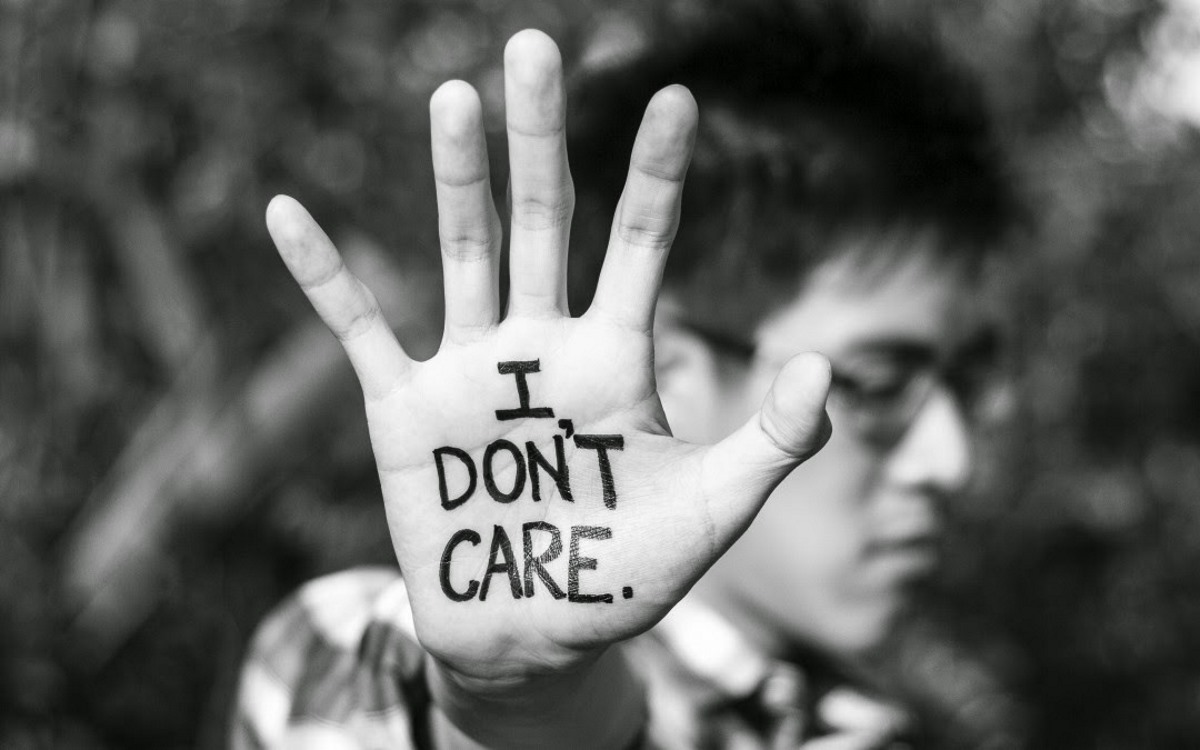
They Know, They Just Don’t Care

“A lot of personal and professional issues that are unaddressed or dealt with will not go away and will need to be handled. In most cases, the problem or issue will metastasize and becomes even more difficult to resolve.”

The popular adage that goes “the first step to solving a problem is to realize that there is one” is key to recognize in life even if it involves admitting an inconvenient truth. A lot of personal and professional issues that are unaddressed or dealt with will not go away and will need to be handled. In most cases, the problem or issue will metastasize and becomes even more difficult to resolve. On top of that, you’ll often need more manpower, resources, or funds to solve the growing problem when it could have been tackled days, weeks, months, or years ago.

I truly believe that knowing a problem exists and refusing to solve it or letting it fester is worse than when a person is unaware that there is a problem to deal with in the first place. Pleading ignorance when you know the truth but lie to yourself and to other affected problem will lead to a lot of stress and turmoil in the long run. There are numerous ways to describe this kind of mentality but to me, it’s about someone or a group of people knowing that a situation is unsustainable or untenable and refusing to fix it even when it would be the right thing to do.

Acting or admitting fault or an error is never easy but doing so is the first step in actively solving the problem instead of letting it continue. Standing by and not admitting what’s going on is not right or not sustainable will put you on a collision course with a rough ending in most cases. This kind of mentality of “knowing but not caring” can erode trust, relationships, and even ruin people’s lives if it is allowed to go on. In this case, knowledge of a problem and not acting to resolve it can cause a lot of damage in various areas of life. To make this ‘knowing and not caring’ examples of hypothetical professional or personal situations where this kind of attitude would lead to negative consequences, let me discuss two instances where ‘knowing and not acting’ can lead to regrettable events:

Let’s say that someone worked hard to be trained as a lifeguard and was paid to do so by the local city by the beach for the summer season. Many people were trained, funds were spent, and chairs / stations were built. The foundation is strong so that people’s lives can be saved if something bad were to happen and each of the lifeguards were trained in CPR and other first aid tactics in case it is necessary.

Not only are the lifeguards trained in first aid, but they also need to pass swimming tests to qualify for the city’s public beaches as employees. However, since the city’s budget is running a deficit because of improper management and cost overruns, the city council must decide where to cut funding to balance the budget. The folks in charge of the budget knew that the deficit would cause problems when they projected in in the previous years, but nothing was done about it.                                                                                                      

As a result, costs need to be cut by the city so difficult decisions will need to be met. The city needs to keep schools open for some students to receive summer school and must pay the public-school teachers to do so. They also can’t reduce the police or firefighter budget given that the summer season tends to be the busiest for them and they also are guaranteed pensions that are negotiated by the unions.

Sadly, the only way to start to balance the budget is to cut recreational programs including the lifeguards at the beach even after they did the training, and the city spent the money to train them for these jobs. Other recreational programs will need to be cut along with reducing hours for access to public parks and sports courts. Most regrettably, the city council will have to cut access to the public beaches there because they don’t want to take the risk of having liabilities involved of having its citizens swim without lifeguards present. It causes a lot of anger, disappointment with the city’s residents as well as students who were looking forward to swimming, playing on the beach, and seeing friends but since the city can’t afford lifeguards, the public beaches will have to be closed the whole summer season.

While many individuals or one individual in city government would be responsible for seeing where the budget deficit would start to harm the city’s services, but because no one looked hard at how to prevent the deficit from affecting the public recreational programs or saw that cuts would need to be made in a year or two years’ time in other less important areas, the problem was unaddressed. It’s about knowing the problem exists in this case, but doing little or nothing, or ‘passing the buck’ onto someone else in the city’s government rather than working in advance to fixing this issue before people’s lives were affected.

Another potential issue is that it is difficult to keep watch over public beaches 24 hours, 7 days a week. Chances are increasingly high then for an accident to happen where college or high school kids come to the beach even when it’s closed or limited to swim or have a bonfire. Because of their anger, they may end up swimming in defiance or doing something that could put themselves in harm’s way. Not only will the city not have lifeguards there to prevent that from happening, but it’s possible that the city will be blamed or liable for any possible accident or issue with people using the beach illegally because they did not balance the budget in advance.

A potential tragic loss of a life, an accident, or the loss of trust in the city’s government are all regrettable consequences that could be avoided if a group of people or person(s) would do something about the problem when they knew of it rather than letting it grow out of control later. While this is a fictional instance, this kind of regrettable story or event happens a lot in our world and the issue at hand could often be avoided with due diligence, foresight, and good work.

More generally, regarding possible examples of this kind of ‘knowing and not caring’ regarding someone’s personal relations, I believe this could apply to situations when it comes to family members or close friends not helping someone out when they know their beloved family member or friend is going through a tough time. They may know of a problem that person has like an addiction to gambling, drugs, alcohol, or other substances, and believe that only they can help them rather than taking them to a licensed professional or a doctor.

This can also be applied when that person’s addiction is harming their relationships, is getting worse, and tends to cost that personal financially, morally, and in other ways. If the family member(s) or friend(s) don’t address their beloved one’s problems head on and let them continue, that affected person in a personal situation will be more likely to hit ‘rock bottom’ and may not be able to be saved from themselves. When that person is not reigned in and told that they have that problem the family member or friend knows about, then they are doing a real disservice by not helping them get better actively. Letting the addiction or mental health problem continue even when that other person in the relationship or friendship knows it must not go on but won’t take action to resolve it, then that’s a prime example of where ‘knowing and not caring’ enough to solve the problem can really backfire.

Sadly, in most cases, the friend or family member affected may suffer even more from the problem not being fixed or aided by the significant other. They can lose themselves fully to the addiction, end up losing their job, their home, or even their life as a result. Part of being a friend or a family member is to be there when that person needs you the most. They don’t want you to sugar coat things and sometimes, you must give them the ‘tough love’ by telling them the absolute truth and letting them know that they have a problem, but that they are not beyond saving, and that you can go ahead and help them get better. That is the mark of a true friendship and relationship when you know about the other person but also care enough to help them be and get better if necessary.

The world can be a messy and complicated place but the concept of knowing when a problem exists in your personal or professional life and not doing anything about it and trying to find a solution to it is disheartening to me when it does happen. It does happen a lot in life, and I hope that you will be different to act on the problem rather than letting it fester. You may change someone’s life or people’s lives for the better when you know about the problem and address it so the solution can improve lives and make the world a better place through your actions to find solutions rather than let the problems you know about to multiply and grow.

The Need to Have a Social Conscience

Keeping with what’s been going on in the world lately, I believe it’s important to reinforce just how important it is now and into the future the need to have a social conscience. What do I mean by a social conscience? Boiling down the formal definition to even simpler terms, it is the feeling derived from caring for others more than yourself. You feel the urge to put others’ needs before your own. It does not mean to stop caring for yourself and taking care of your daily needs but to think of others who rely on you and to put them first especially for family members and friends.

However, having a social conscience goes beyond just our family and our friends. It goes for our immediate society as a whole whether it is the community you live in, the nation you reside in, or the world you inhabit. You feel responsible for what goes on outside of your own life and those of family and friends to think of a larger picture. To have a social conscience is to see beyond your own problems and to see the injustices that continue to plague our world.

You also have to realize that your problems while difficult or not unique and others are going through the same tribulations as you are and sometimes worse. Having a social conscience involves putting yourselves into the shoes of other people and to realize how they could possibly be helped and how you personally can be involved in assisting them. Showing concern for others is the right way to have a social conscience and also to think about how these injustices can be resolved. Any individual can make a difference by having a social conscience and by taking it upon themselves to change their behavior to reflect their new attitude.

How do you show your social conscience? There are numerous ways to do so and you could even put them on a scale from small actions to large movements designed to change the foundations of the society. In the case of a social conscience, I find that it’s like exercising your body. You don’t want to take on too much weight or distance at first for weightlifting or running. You should rather want to start small and build up your actions over time and to be more ambitious.

For some examples, starting off small with your social conscience can include environmental stewardship, collecting donations, or getting involved in your local community. Any of these actions can create a ripple effect and can cause a shift in societal behavior for others to follow your lead or for the actions to spread to other people and even communities based on how consistent and courteous you are with these goodwill efforts. For environmental stewardship, it could be recycling your own bottles and cans each day and getting your neighborhood to do so as well.

You can also plant trees and install solar panels on your house if able to gather momentum from smaller actions. Donating your own clothes or extra food can lead to organizing food drives or even creating your own organizations to help collect donations in your town or city. Leading a local trash pickup event can lead to other future leadership roles for yourself such as running for your child’s PTA (parent – teacher association) board to running for the town / city council board seat. Social consciousness does not have to encompass all of humanity but rather as the popular saying goes, “think globally, act locally.”

As long as you are having a positive impact on the life of another person, you are exercising your social consciousness. The more you do it, the more natural it is, and it becomes your routine or habit. Your first time donating your old clothes to the Salvation Army becomes a monthly habit. Your first-time volunteering at the local food bank becomes a weekly occurrence. Helping others feels good and it can lead to you doing it more often so why not give it a try? A social consciousness does not have to extend to everybody in the world all at once but the actions you do locally can definitely ripple out and stand as a positive example for others to implement in their own communities.

If you would like to get involved globally, there are an almost infinite number of opportunities to study, teach, work, and volunteer in non-governmental organizations and local non-for-profits in important areas such as education, health care, infrastructure and the environment. Spending time to educate yourself on the culture, history, politics, and the society of other places around the world will help better inform you of the injustices and problems of your own. No human society is perfect but there are small improvements that each day we can choose to perform to make it a little bit better than it was before.

Even when you are not in a position of local, national, or even global leadership, you can elect to pay attention to the problems that must be solved, form your position on the issues by being educated and choosing your sources of information carefully and then choose to vote and elect those leaders who have a social conscience. You will know if they have one or not by not only of what they advocate for but how they have advocated for these issues and who they have surrounded themselves with. A person with no social conscience cares for no one but himself and his own brood. Their friends are disposable to them and they care nothing for others beyond what they can do for him or her and how their own prospects can be improved. A person without a social conscience deserves to lead nobody and not be followed by anyone.

A socially conscious leader cares for the least among them and feels their pain as his or her own. While they have not experienced pain or misery as those whom he or she advocates for, he can listen to them, see what they say based on those experiences, and come to an educated decision on how to best fix the problem and work with those who are experts in that field to solve the issue as best as humanly possible. Social conscious behavior is so key to have when it comes to be a leader of a community or a nation and it is unfortunately neglected as of late when it comes to judging the men and the women we put into positions of influence and power.

As long as people err in their own behavior and judgment, there will be manmade problems and injustices. What someone with a social conscience can do is to do their best to continue to fight for justice and solve those problems in any way they can. Rather than focus on 100 problems at one time, it is best to focus one’s attention at 1 or 2 big problems that can be solved in time and that can gain popular support from the community after receiving the facts of why and how the injustice exists. Keep educating yourself on the injustices and the problems that exist in your world and decide how you want to push our world back towards the ‘arc of justice’ that our conscience and actions should bend to as Martin Luther King Jr. so eloquently put it. We only have a finite amount of time on this planet and if we can right some wrongs and create justice where there was little or none before then we are doing our small part to make this world a better and fairer place.