Don’t Let Yourself Be Gaslighted

“There are numerous ways to combat gaslighting, but it is key to make sure you don’t let yourself be gaslighted, even when it is by people you are close to or have grown to trust or admire.”

‘Gaslighting’, a term that was originally derived from the 1944 film titled, “Gaslight,” is sadly an increasingly common form of psychological manipulation, where one person tries to make another person doubt their own reality, memory, or perceptions.

This manipulative kind of behavior can have severe consequences on an individual’s mental health and overall well-being. Recognizing and combating ‘gaslighting’ is crucial in maintaining one’s psychological integrity and emotional health. There are numerous ways to combat gaslighting, but it is key to make sure you don’t let yourself be gaslighted, even when it is by people you are close to or have grown to trust or admire.

Gaslighting itself can occur in various scenarios, from personal relationships to workplace environments and even on an entire societal level. Here are some common examples that I would like to highlight where ‘gaslighting’ can take place and whom can be responsible for it occurring:

  1. Personal Relationships: In intimate relationships or romantic partnerships, a partner might persistently deny events that have happened, downplay your feelings, or blame you for their own abusive or manipulative behavior. For example, they might say to you, “You’re too sensitive” or “You never take things seriously.” “That never happened; you’re imagining things.” Gaslighting in any relationship at any time is a toxic combination and can cause some long-lasting trauma, regret, or depression.
  2. Family Dynamics: Within families, parents might gaslight children by denying past abusive behavior or shifting the blame onto the child for what the parent did to them. Phrases like, “I never said that”, “I never did that to you”, “I knew you couldn’t do it,” or “You’re just making things up to get attention”, “How would you know? You’re just a child.” are commonly used in terms of gaslighting.
  3. Workplace Conditioning: In professional settings, a supervisor could deny promises they had previously made to an employee or group of employees. They could also undermine their employees’ performance and contributions by taking credit for it themselves or by taking advantage of the work you do without rewarding it later or acknowledging its positive impact. Comments made by a supervisor or fellow employee could be such as, “I never approved that project”, “I did not give you permission to do that”, “That presentation was all my idea”, “You did not do as much as I did” or “You must be mistaken, that wasn’t your idea” can make employees question their own competence, proficiency, and memory when it comes to the work they do for their fellow employees or employer.
  4. Societal Distrust: Gaslighting can also be seen on a broader societal scale where media heads, activists, or political figures deny facts or historical events that did occur, leading to widespread confusion and distrust among the public because leaders of those institutions are meant to be trusted but since they lie or deceive, the institution itself is distrusted and loses its standing in society.

Gaslighting has become increasingly prevalent in today’s digital age, where misinformation and manipulation are rampant combined with seemingly never-ending ways to engage people to disbelieve what they perceive or create a different reality than what we are used to. Social media platforms, where information can be easily distorted, manipulated and spread endlessly, provides fertile ground for gaslighting on a mass scale. Politicians, national leaders, and public figures often engage in gaslighting tactics to sway public opinion or deflect criticism to win support for their agendas and policies. When it comes to personal relationships, the anonymity, the rapid pace, and the sheer distance provided by online communication can embolden individuals to gaslight others without facing immediate repercussions because of how they hide who they are and what they really believe by gaslighting you instead.

Avoiding being gaslighted is not easy especially in the modern era where we are constantly exposed to other people’s worldviews and are made to take in rapid streams of information instantaneously. Being able to avoid gaslighting involves the following steps in no order, which can help you avoid these manipulative tactics that harm your mental health:

  1. Educate Yourself: Understanding what gaslighting is, where it can come from, and recognizing the signs of when it is happening is the first step in protecting yourself. Familiarize yourself with common gaslighting tactics and how they manifest in different situations in different areas of our life.
  2. Trust Your Perception: Keep a journal to document events and conversations where you think gaslighting could have occurred. It won’t always be the case, but this approach can help reinforce your memory and provide tangible evidence of what happened, making it harder for someone to distort your reality because you’re able to jog your memory on what happened, what you did, and what was their reaction or behavior about it.
  3. Set Boundaries: It’s vital to establish clear boundaries with those who exhibit gaslighting behavior even if they are close friends or family. Make it known that manipulative behavior is unacceptable to you and that you will not engage with it regardless of if they think they are gaslighting you or not. It is better to preserve your own mental health and wellness even if it harms the friendship or relationship temporarily.
  4. Seek Support: Confide in friends, family, or a mental health professional who can provide an outside perspective and validate your experiences as an impartial participant in what happened. Support networks from people you trust and can confide in are essential in maintaining your sense of reality and self-worth. Never seek support from someone you found out was gaslighting you or attempting to gaslight you. You must hold your standards high because if they did it once, chances are good that they will do it to you again.
  5. Practice Self-Care: To protect your own health and wellness, you should continue to engage in daily or weekly activities that bolster your mental and emotional health. Exercise, meditation, sports, and hobbies with trusted friends and family members can help reduce stress and enhance your resilience against manipulation and other gaslighting tactics.
  6. Assert Your Reality: Calmly assert your version of events without getting drawn into a debate. If you can give examples surrounding what you were doing at the time or provide proof or evidence to back up your point, it doesn’t hurt to do so. Most impactful will be to use phrases with the accuser such as, “I remember it differently”, “I wrote down what happened and have proof to share with you” or “I don’t agree with your version” can help you maintain your stance without escalating the conflict further.

We know that there are ways to avoid gaslighting, but how do we combat it in different ways to give ourselves options to get out of the situation or to remedy the effects of it happening to us.

  1. Direct Confrontation: If safe to do so with the person(s), address the gaslighter(s) directly. Use specific examples and “I” statements to express how their behavior affects you. For example, “I feel confused when you say that because it contradicts what I remember” or “I am upset when you don’t believe what I tell you was how it happened to me.”
  2. Detach Emotionally: Emotionally distancing yourself from the gaslighter can reduce their impact on you or ability to affect your mental state. Do your best to practice this form of detachment by recognizing that their actions reflect their own issues, and not yours. Their problem is not your problem, and you did not do anything wrong.
  3. Seek Professional Help: Therapy or talking to a professional psychiatrist can be invaluable in recovering from the effects of gaslighting. A therapist can help you rebuild your self-esteem and develop strategies to deal with manipulative behavior if you experiencing it happening again to you.
  4. Limit Physical Contact or Distance Yourself: In some cases, the best course of action is to limit or sever contact with the gaslighter. This is especially true in toxic relationships where the gaslighting is severe and persistent. It is always better to get that person out of your life or to never see him or her again if it gets to be too much to deal with their behavior.

Gaslighting is a deeply harmful form of psychological abuse that can have long-lasting effects on someone’s mental health. It erodes your self-esteem, creates self-doubt, and can lead to anxiety, depression, and a host of other issues. The pervasive nature of gaslighting in our modern era, amplified by endless forms of digital communication, misinformation, and coarsening societal dynamics, makes it a significant issue to address for people everywhere.

Recognizing gaslighting as a negative behavior and taking steps to combat it is essential for maintaining your psychological well-being. By educating yourself, trusting your perceptions, setting boundaries, seeking professional support, practicing self-care, and potentially limiting or ending contact with gaslighters, you can protect yourself from this serious form of manipulation. Ultimately, preventing, addressing, or combating gaslighting is not just about preserving one’s mental health; it is about fostering healthier, stronger, more authentic relationships and societal environments where care for one another, truth, and trust can flourish equally.

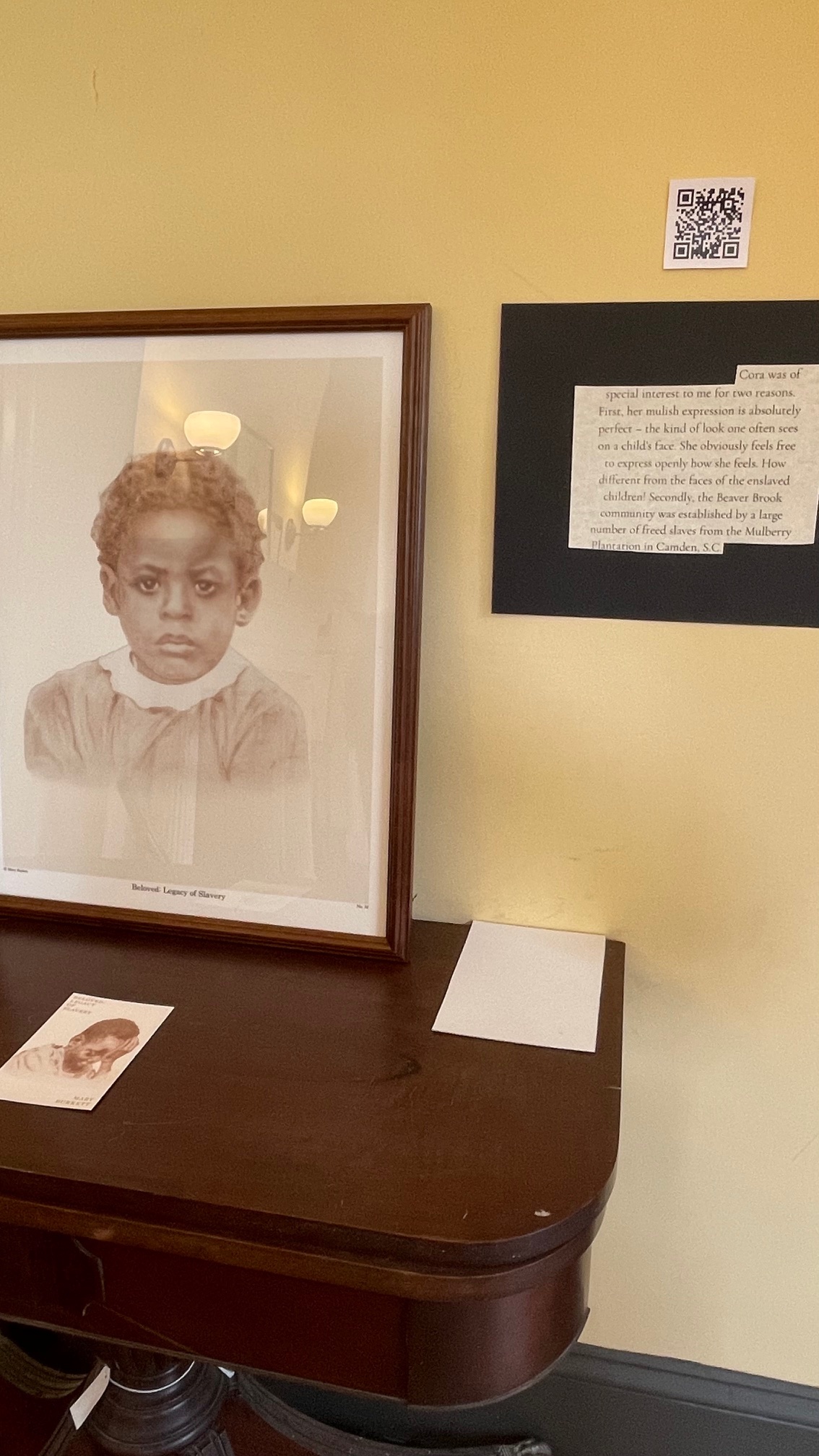
McLeod Plantation Historic Site

Camera: iPhone 12

Location: McLeod Plantation Historic Site ; Charleston, South Carolina

Standing Up to Double Standards

“I am all for having standards to abide and follow as they form the backbone of our laws, rules, and regulations, but what we need to avoid is having two sets of standards, which divides people and aggravates resentments.”

I discussed in a previous article of mine why setting standards around behavior, conduct, and fairness are important. I want to dive further given recent current events of which I could put to a few examples, but for which involve the recent internationally televised and particularly controversial awards show (not naming names here) as well as other prominent examples from politics and business that come to mind in past years on why having two sets of standards can be so deleterious for a society. I am all for having standards to abide and follow as they form the backbone of our laws, rules, and regulations, but what we need to avoid is having two sets of standards, which divides people and aggravates resentments.

We all can agree upon certain norms and standards that are set for us to build trust, reliability, and faith in our institutions and our society. However, when standards are ignored or watered down or not even followed by certain privileged parts of society, that can backfire in several ways including the loss of trust in the standards that were meant for all but are not followed by everyone.

When a few noteworthy individuals, who are looked upon as role models or are put into positions of power and/or influence, when they do not abide by the standards or thwart them openly, it causes others to realize that there are ‘double standards.’ Double standards can happen rarely, occasionally, or often enough that most people will start to realize that the rules set for them are not good enough for everybody and it can cause a ‘domino effect’ when more and more individuals choose to ignore the set standards if they see those with great power, wealth, or influence ignore the standards that they so diligently abide by and follow.

Certainly, there is no excuse to avoid set standards when wealthy and powerful people go out of their way to avoid or ignore them, but it does have effects on people’s faith and trust in those standards when some people because of privilege or background can just ignore or trample all over them. When there are “rules for thee, but not for me” and they are openly flaunted without consequence or punishment, our standards of behavior, conduct, and overall kinship will suffer. On top of that, when standards are diminished, degraded, or abused, that can cascade to our laws, rules, and regulations falling out of favor with more and more people as a result.

The most influential, wealthy, and powerful people in society may not feel they have a moral and a legal obligation to abide by standards but if they choose to ignore or chastise them, there will be negative ripple effects that can come about when others who follow, support, or condone them makes excuses to avoid those standards too and to create their own that are weaker or unenforceable. Double standards involve two sets of standards; often contradictory or competing or negating each other, which can cause unfair practices or inequal application to different groups of people.

If you do not happen to have the chosen background, power, privilege, or wealth to have your own set of standards, you will see the injustice and grievances more clearly when you see the standards not apply to everyone equally even when they still apply to you and your peers. The worst consequences of having two sets of standards with the new set of standards being weak or non-existent or outright morally wrong is when some people act willfully ignorant of the standards that society has fought to uphold, normalize, and spread to everyone equally.

They can end up applauding the 2nd set of standards, ignore the wrongdoing being done, or even condone the action(s) of that individual as being morally upright even when they know in their heart that what that person did is inexcusable. While standards of behavior and conduct can be ignored or demeaned, they never truly go away and while we can choose to forget them or ignore them or mock them, those who uphold these standards will do their best to make sure to point out the ‘double standards’ occurring and how that makes our society worse off as a result.

When you see these ‘double standards’ pop up and there’s nothing you can do about it to change that abuse of the standard, don’t stay quiet about it and do your best to voice your discontent with that ‘double standard’ having reared its ugly head. If you can’t get rid of that ‘double standard’ or hold those of privilege or in power accountable for flaunting their disregard for one set of standards, make sure you do not forget their hypocrisy or their lack of respect for the rules and the laws that keep society functioning.

Standards can change, evolve, and become more just over time, but having two sets of standards will always muddy the proverbial waters and cause discontent, anger, and resentment to brew beneath the surface. Being able to call out the ‘double standards’ when they emerge is crucial to making sure this kind of injustice does not grow or become normalize is very important. If the ‘double standard’ is embraced rather than done away with, the best that can be done is to bring attention to it, try to influence those people who can get rid of it, and then do your best to make sure it never comes back. Once the set ‘standards’ break off into two or more groups or two or more social classes or more backgrounds, it can be hard to put everybody back on the same set of standards in terms of accountability.

People of great power, influence, and wealth are under an extremely heavy lens by the rest of us, which is why they should be ever more careful to strive to be good examples in how they comport themselves even if they never wanted the attention or focus on them. How they act, behave, live, or cause a scene in public can reverberate in how others do the same in their own lives, which may not seem entirely logical but people behave based on the standards that they see around them and when one individual or a group of people betray those strong standards by weakening, abusing, or creating their own lackluster standards for themselves alone, other people will notice and will cause ‘double standards’ to emerge more and more often causing the bonds of societal brotherhood, respect, and love that can hold the society together like a strong glue to slowly weaken, wither, and potentially break off.

Cultural Spotlight – Capoeira

Capoeira is a very unique cultural aspect of Brazil and one that while it has its origins elsewhere has become very Brazilian in its customs, history, and usage. With different elements of dance mixed in with parts of martial arts, Capoeira is unlike any other form of movement in the Western Hemisphere. Not only is Capoeira based on dance and martial arts, it is also formed from a foundation of acrobatics and music to accompany the many movements. The amount of exercise involved in becoming a true Capoeira artist means that you will definitely break a sweat while getting physically fit if you intend to practice this unique art form on a daily basis.

Capoeira is known for having its origins in different parts of west Africa but was developed after the beginning of the Transatlantic slave trade in the 16th century. After enslaved Africans were first brought to Brazil by the Portuguese settlers, it became a way for the slaves to stay physically fit and strong if they ever decided to flee and run away from their slave masters. If they wanted to collaborate and rebel, they could use their capoeira skills to help defend themselves from possible attack or capture from the slave masters as well.

Capoeira uses the full body and so you can use both your arms, hands, legs, and feet to do a large number of movements. The movements are acrobatic, complex, and fluid and based often off of the music and rhythms that are being played for the dancers. Hands often stay on the ground as inverted kicks are flown in the air. The ginga is the focal point or main focus of any capoeira movement and is usually the beginning of any fluid kick or handstand to come.

The capoeiristas’ are those martial artists or dancers who perform the movements often with other capoeirista while being surrounded by a group of observers who are either playing music or encouraging the capoeiristas on to continue their rhythmic movements to match the other participant. The origin of the word ‘capoeira’ comes from the Tupi language words of ka’a (forest) and pau (round) referring to the low-lying vegetation areas where fugitive African slaves would hide from their masters when they would try to make an escape. Most of the African slaves who started capoeira in Brazil were originally from Angola.

After the end of slavery in Brazil in 1888, the new republic outlawed capoeira throughout the country. If you were caught practicing capoeira anywhere in public, practitioners would be thrown in jail, tortured, or even killed. This prohibition continued throughout most of the 20th century even if it was sometimes tolerated in universities and in private places during times of both democratic and military rule in Brazil. Still though, the Afro-Brazilian communities especially in the Northeast kept capoeira alive during these forbidden times and even renamed capoeira to be called ‘Luta Regional Baiana’ which means the regional fight of Bahia in order so that practitioners could practice their form of capoeira without outside interference.

In the recently enslaved communities of Quilombos who had liberated themselves to be free and self-reliant in parts of Brazil during the 18th and 19th centuries, capoeira became a way of defending themselves in case of war or conflict with Portuguese colonial troops or Brazilian soldiers. By using the martial art to dodge potential attacks and/or captures, the Quilombos were a formidable fighting force who used capoeira to defend their communities and their land at often great cost.

The key to capoeira from my own observations in Brazil is to never stop your movements and to always be thinking of how to dodge, kick, sweep, and even take down your opponent. The ginga movement of being fluid is both an attack and defense mechanism to make sure you are constantly ready to either take your opponent by surprise or to evade their own attack. Most attacks in capoeira are done with leg sweeps, swirling kicks, or knee strikes but can also involve the elbow or head. However, most forms of capoeira today are done as simulations and to train for a game or a competition rather than war or actual combat.

To the public who view capoeira in a non-violent lens, these presentations in the roda or circle are just for show and involve games of aerial acrobatics rather than being more about striking or deflecting physical attacks. The circle involves musical instruments specifically for the game between capoeiristas and there is singing, and dancing involved with everyone in the circle participating at some point. Capoeira instruments include the berimbau, which can be played from very slow to very fast depending upon the rhythms requested as well as other instruments such as pandeiros, atabaques, agogo, and the ganza. The row of musicians in the roda (circle) is called a ‘bateria’ and the touch of the berimbau instrument in particular fuels the speed, aggressiveness, or style of the capoeira game.

Similar to Carnaval and Feijoada, Capoeira is one of Brazil’s most famous and impressive exports to the rest of the world. Every year, thousands of tourists come from around the world including serious non-Brazilian practitioners travel to different parts of Brazil to practice its most famous martial art. The capoeira masters (mestres) often teach the Portuguese language in addition to the movements of capoeira so the foreign student can really immerse themselves in the cultural background and history of this traditional martial art. The capoeira demonstrations are perhaps more acrobatic than physical when in public but in private, you would have to guess that it is much more intense and much more serious in terms of displaying physical prowess than what is shown to the public.

After the 1970s, this unique part of Brazilian culture was on its way to not only being accepted by the people but being embraced and taught to the next generations. A powerful way of resolving conflict, promoting social cohesion, and learning about physical fitness, capoeira is great at bringing the community together in a positive way while showing how important it is to recognize and value past traditions. From the roots of West Africa to groups of escaped Afro-Brazilian slaves whose cultural practices were almost extinguished over the centuries due to subjugation, maltreatment, and neglect, capoeira like their rights to human freedom and basic dignity made a powerful comeback which is still being fought for and advanced to this day.

The Need to Have a Social Conscience

Keeping with what’s been going on in the world lately, I believe it’s important to reinforce just how important it is now and into the future the need to have a social conscience. What do I mean by a social conscience? Boiling down the formal definition to even simpler terms, it is the feeling derived from caring for others more than yourself. You feel the urge to put others’ needs before your own. It does not mean to stop caring for yourself and taking care of your daily needs but to think of others who rely on you and to put them first especially for family members and friends.

However, having a social conscience goes beyond just our family and our friends. It goes for our immediate society as a whole whether it is the community you live in, the nation you reside in, or the world you inhabit. You feel responsible for what goes on outside of your own life and those of family and friends to think of a larger picture. To have a social conscience is to see beyond your own problems and to see the injustices that continue to plague our world.

You also have to realize that your problems while difficult or not unique and others are going through the same tribulations as you are and sometimes worse. Having a social conscience involves putting yourselves into the shoes of other people and to realize how they could possibly be helped and how you personally can be involved in assisting them. Showing concern for others is the right way to have a social conscience and also to think about how these injustices can be resolved. Any individual can make a difference by having a social conscience and by taking it upon themselves to change their behavior to reflect their new attitude.

How do you show your social conscience? There are numerous ways to do so and you could even put them on a scale from small actions to large movements designed to change the foundations of the society. In the case of a social conscience, I find that it’s like exercising your body. You don’t want to take on too much weight or distance at first for weightlifting or running. You should rather want to start small and build up your actions over time and to be more ambitious.

For some examples, starting off small with your social conscience can include environmental stewardship, collecting donations, or getting involved in your local community. Any of these actions can create a ripple effect and can cause a shift in societal behavior for others to follow your lead or for the actions to spread to other people and even communities based on how consistent and courteous you are with these goodwill efforts. For environmental stewardship, it could be recycling your own bottles and cans each day and getting your neighborhood to do so as well.

You can also plant trees and install solar panels on your house if able to gather momentum from smaller actions. Donating your own clothes or extra food can lead to organizing food drives or even creating your own organizations to help collect donations in your town or city. Leading a local trash pickup event can lead to other future leadership roles for yourself such as running for your child’s PTA (parent – teacher association) board to running for the town / city council board seat. Social consciousness does not have to encompass all of humanity but rather as the popular saying goes, “think globally, act locally.”

As long as you are having a positive impact on the life of another person, you are exercising your social consciousness. The more you do it, the more natural it is, and it becomes your routine or habit. Your first time donating your old clothes to the Salvation Army becomes a monthly habit. Your first-time volunteering at the local food bank becomes a weekly occurrence. Helping others feels good and it can lead to you doing it more often so why not give it a try? A social consciousness does not have to extend to everybody in the world all at once but the actions you do locally can definitely ripple out and stand as a positive example for others to implement in their own communities.

If you would like to get involved globally, there are an almost infinite number of opportunities to study, teach, work, and volunteer in non-governmental organizations and local non-for-profits in important areas such as education, health care, infrastructure and the environment. Spending time to educate yourself on the culture, history, politics, and the society of other places around the world will help better inform you of the injustices and problems of your own. No human society is perfect but there are small improvements that each day we can choose to perform to make it a little bit better than it was before.

Even when you are not in a position of local, national, or even global leadership, you can elect to pay attention to the problems that must be solved, form your position on the issues by being educated and choosing your sources of information carefully and then choose to vote and elect those leaders who have a social conscience. You will know if they have one or not by not only of what they advocate for but how they have advocated for these issues and who they have surrounded themselves with. A person with no social conscience cares for no one but himself and his own brood. Their friends are disposable to them and they care nothing for others beyond what they can do for him or her and how their own prospects can be improved. A person without a social conscience deserves to lead nobody and not be followed by anyone.

A socially conscious leader cares for the least among them and feels their pain as his or her own. While they have not experienced pain or misery as those whom he or she advocates for, he can listen to them, see what they say based on those experiences, and come to an educated decision on how to best fix the problem and work with those who are experts in that field to solve the issue as best as humanly possible. Social conscious behavior is so key to have when it comes to be a leader of a community or a nation and it is unfortunately neglected as of late when it comes to judging the men and the women we put into positions of influence and power.

As long as people err in their own behavior and judgment, there will be manmade problems and injustices. What someone with a social conscience can do is to do their best to continue to fight for justice and solve those problems in any way they can. Rather than focus on 100 problems at one time, it is best to focus one’s attention at 1 or 2 big problems that can be solved in time and that can gain popular support from the community after receiving the facts of why and how the injustice exists. Keep educating yourself on the injustices and the problems that exist in your world and decide how you want to push our world back towards the ‘arc of justice’ that our conscience and actions should bend to as Martin Luther King Jr. so eloquently put it. We only have a finite amount of time on this planet and if we can right some wrongs and create justice where there was little or none before then we are doing our small part to make this world a better and fairer place.