Cultural Spotlight – Salsa

El_Cantante
Hector Lavoe, ‘El Cantante’ (1946 – 1993)

If you’re walking in any city in Colombia or in most parts of Latin America and you start to feel the rhythm and the beat to some up-tempo music that sounds as if jazz and ‘son cubano’ had a baby, it would be known to the world as ‘Salsa.’ Salsa music has only been around for over five decades but has had a lasting impact on the world of music and its’ popularity has stayed consistent in the countries and regions where it was first introduced. While some folks may argue that old-school music genres like jazz, swing, and the blues are on the decline these days; that is simply not the case when it comes to Salsa.

Contrary to popular belief, Salsa did not originate in Puerto Rico, Cuba, or even Colombia. This form of music came out of the communities of immigrants in New York City during the 1960s from Cuba to Puerto Rico who wanted to introduce a new take on ‘son cubano’ music that had been around for a few decades and to bring it to new audiences before who had never been exposed to that kind of genre before.

The music of Salsa has been highly influenced by previous Cuban genres such as ‘son cubano, son montuno, guaracha, mambo, bolero, etc. as well as certain Puerto Rican genres such as ‘bomba, and plena.’ It also should be noted that Salsa was heavily influenced by the American musical genre of Jazz and certain experts have noted Salsa as being a form of Latin jazz. Salsa is a very flexible genre and can incorporate many different forms of music together in order to be innovative and unique. Even rock, r&b, blues, and funk have found their way into the rhythms, beats, and lyrics of Salsa music.

If there were a form of musical expression to represent the Americas whether it was North America or South America, it would be jazz. Salsa music would not be what it is today without previous music genres influencing the sounds and songs to change and adapt as the decades passed by. However, without the early Salsa bands made up of newcomer immigrants from the Cuban and Puerto Rican communities who came to New York City and America for a better life, Salsa would also not be the popular genre that it has become today. From the 1930s to the 1960s, these new immigrants brought joy, happiness, and excitement to both their local communities and cities from Boston to Cali.

From the streets of the South Bronx to the barrios of Cali, Salsa would spread from New York City to Colombia to Peru to all over Latin America. Salsa has become a global music genre today with people all over the world sharing together their passion and love for this unique form of self-expression. You can find Salsa classes and music clubs in most major cities all over the world. It doesn’t matter where you’re from, if you’re new to dancing, or can’t understand the lyrics, Salsa is a music genre open to everybody. Some of the big names in Salsa are Johnny Pacheco, creator of the Fania all-stars band, Hector Lavoe, Willie Colon, Bobby Valentin, Eduardo Palmieri, Marc Anthony, etc.

The instrumentation used in Salsa music is incredibly diverse and can really depend on what kind of style you’re going for whether it’s ‘salsa romantica’ or ‘salsa dura.’ It also depends upon how fast the tempo is and what the chord / verse arrangement is too. The most popular kinds of instruments used in Salsa music are percussion and brass instruments. It’s very rare where string instruments are used unless its’ an acoustic or electric guitar. When it comes to the most widely used instruments, they are usually the piano, the bongo drums, the congas, trumpet, trombone, claves, and different guitars.

Since the genre of Salsa has spread to many parts of the Western Hemisphere, there are many different styles of Salsa dancing that make the music more enjoyable for people to participate in by moving their bodies in various ways. While there is no clear consensus on which style of Salsa is the best or most popular, there’s the Cuban style, the New York style, Puerto Rican style, Los Angeles style, and Cali style from Colombia. Each style of Salsa is a little bit different from each other so once you master one of these types, there is another one out there to learn in order to keep your knowledge up to date. There are few parts of the world that haven’t been touched by Salsa music, which makes it one of the most fun and enjoyable kinds of dances to learn. Whether you’re in Peru, Colombia, Cuba, the Dominican Republic or the United States, you’ll have a chance to dance Salsa if you look hard enough.

By listening to Salsa music and learning how to dance to the rhythms and the beats of this genre, you really learn a lot about Latin American culture. Listen carefully to the lyrics, study the history of both the song and dance, and you’ll be able to gain insight as to why this has become one of the most popular music genres on the planet today. Few things make the average person happier than being able to cut loose on the dance floor and Salsa as a genre succeeds in doing that beyond measure.

During my time here in Colombia, I’ve enjoyed going out to learn Salsa in some classes, and putting the moves I’ve learned into practice when I go out on Saturday nights to a Salsa club. It’s really a joy to dance and sing to the point of exhaustion until your feet can’t move anymore while the beads of sweat roll down your neck. Salsa, to me, is a celebration of living life to the fullest and expressing the movements of your body the way you’re supposed to do. If you haven’t given Salsa music or dancing a chance yet, start to do so today. I promise you won’t regret the experiences you gain by enjoying this popular genre.


Cuisine Spotlight – Sancocho

Many cultures around the world have their own unique take on stews and soups that are both hearty and comes with a number of different ingredients. This is also the case in many Latin American countries where the stew itself is called ‘sancocho’ and is closely related to the Spanish stew known as ‘cocido.’ Along with the Spanish influence, Sancocho takes most of its’ ingredients from local foods that are popular and add flavor to the dish. Sancocho is also considered to be the national dish in a few of the Latin American countries where it is made and eaten.

Among the countries where Sancocho is a popular food dish includes the Canary Islands, Puerto Rico, Honduras, Ecuador, Colombia, Panama, the Dominican Republic, Peru, Venezuela, etc. so you could say that it’s a staple and has become popular in many households and restaurants. Sancocho is believed to have originated from the Canary Islands where it is a dish that heavily is made of a whole-cooked fish with broth and potatoes.

The dish was brought over to Latin America when the Canarians and their descendants immigrated to parts of the new world centuries ago. As is the case with many different foods, the immigrants who move to a different part of the world often bring their favorite dishes with them. While fish was a main ingredient in the ‘original’ sancocho, there are many different types of meats and vegetables that make up variations on the popular dish depending upon which country you’re in. Sancocho is especially common to be served during lunchtime as it is quite filling and can hold a person over until dinner comes around. It’s common for Sancocho to be served in a huge pot for a family gathering or birthday party where the dish can be expanded to served dozens of people total.

In Colombia, specifically, sancocho is an extremely popular dish with a wide range of ingredients that can range from chicken to ox tail. Other meats that can be apart of sancocho include hen, pork ribs, cow ribs, fish, etc. For example, sancocho with fish is really popular on the Atlantic coast of Colombia while pork and beef is more commonly found in the interior of the country. In addition to mean, sancocho can also include large portions of plantains, yucca, potatoes, and various vegetables such as tomatoes, carrots, cilantro, scallions, mazorca (corn on the cob), etc.

There is simply no limit as to what can be put into sancocho and each country puts a different spin on the popular dish. In the Dominican Republic, for example, there is Sancocho de siete carnes, which is a dish made up of a mixture of different meats including chicken, beef, pork, etc. Sancocho de gallina, which is made up of free-range chicken is quite popular in Panama and is also the national dish of the country. Puerto Rico has the distinction of even adding smoked ham, pork feet with chick feats, which is known as sancocho de patitas and is quite unique in terms of its’ culinary characteristics.

The beautiful thing about sancocho is that there are so many different regional and national varieties to this dish are that the possibilities of mixing and matching different ingredients or toppings is simply endless. Any nation that has been touched by Spanish influence or colonization has adapted their own version of sancocho including even in the Philippines, which has a huge amount of meats and vegetables to offer in its own national take on the dish. Keeping to the Spanish heritage of the dish, they call it cocido as it is known in Spain.

If you decide to come to Latin America and find yourself at someone’s family gathering, hanging out with a few friends, or enjoying a birthday party, it’s likely that you’ll get a good serving of sancocho. In addition, the sancocho you get depending upon the country or the region in which the dish is being served to you will most likely be different and have some variation to it. The beauty of a popular dish like sancocho is its’ history, its’ adaptability, as well as the chance to gather with a group of people and dig in to this delicious food together.


Book Recommendations – Volume IV

Wintertime is often the best time to settle down with a cup of hot coffee / tea and open up a new book or fire up your Kindle to catch up on some reading. When it’s cold and snowy out, there is no better way to pass the time than to sit down with a good book in order to learn something new or to be entertained by a particular story. If you’re looking for some good recommendations, here are three books that I have read recently that I think avid readers would enjoy especially if you like non-fiction material. If you happen to read any of these three recommendations, please let me know what you thought of these books in the comments section below.

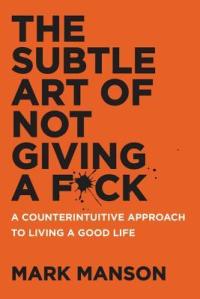
markmansonbook

1.) The Subtle Art of Not Giving A F*ck by Mark Manson is a current New York Times bestseller and is not your typical self-development book. I have been following Mark’s writings for a couple of years now and I hold him in high regard. He has helped change my life for the better with his unconventional life advice and his second book is a great read. Contrary to some self-help books that advertise a philosophy of feeling good all the time and always being positive, Mark instead advocates for a more balanced approach to life. It’s important to embrace the negatives and setbacks in life because you’ll be a stronger and a more mature person for it.

It’s a common truth that not everything will go well in life so it’s better to make due with that than to have a ‘pie in the sky’ attitude all of the time. Mark asks the reader to think about the fact that going through negative experiences is actually a positive experience and can teach us a lot about ourselves. Having solely positive experiences without any adversity or setbacks is itself a negative experience as well because you didn’t struggle and fight for it, which means that it wasn’t that much of a big deal in retrospect. Learning from our past mistakes and our failures is just as important, if not more so, as having massive success according to Mark’s thesis.

The title of the book itself, The Subtle Art of Not Giving a F*ck, doesn’t imply that we as human beings shouldn’t care about anything going on in our lives but rather that we should be more selective about the things that we can truly control and have some input in. You shouldn’t give a f*ck about everything, only the things that matter the most to you and that truly impact your life in some way. Overall, this book is a really thoughtful perspective on living one’s life in a mature and thoughtful manner and has some really practical advice for any demographic of reader.

lightsoutbook

2.) Lights Out: A Cyberattack, A Nation Unprepared, Surviving the Aftermath by Ted Koppel is a well-researched, thought out look about the cyber security challenges facing the United States especially when it comes to the national energy grid that makes it possible for Americans to live a 21st century lifestyle. I remember watching Ted Koppel on ABC’s Nightline when I was a child and he always impressed me with his ability to look at a story he was reporting on from all angles and do a thorough job with interviewing different people involved with the issue. This book written by Mr. Koppel is no exception. Mr. Koppel does great investigative reporting on what is being done and what isn’t being done to prevent such a cyber attack from happening.

With the increasing amount of focus being put on cyber security as it affects different businesses, individuals, and governments, this book is a must-read as it considers the areas in which we are most vulnerable to attack. Mr. Koppel looks at how we can address the current gaps in cyber security such as when it comes to our different energy grids across the United States and what should be done about it in order to prevent an attack from happening in the near future. Mr. Koppel interviews a wide variety of people involved with cyber security from the Secretary of Homeland Security to leaders of the Mormon church in Salt Lake City to ‘preppers’ across the U.S. who make it a lifestyle habit of preparing themselves and their families with emergency supplies and goods in case a cyber attack happens and the electric grid goes down.

The frightening possibility of a regional and national blackout happening in the United States is discussed in detail as to what would be the consequences and how long it would take for the electric grid to go back online. The current picture isn’t very rosy and a lot of work needs to be done according to Mr. Koppel. Hopefully, the policy makers and leaders of government take notice of this book as it is both a warning and a call to action for those people in power to do more about this situation and to help protect against such a potential disastrous scenario.

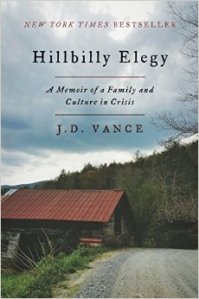
hillbillyelegybook

3.) Hillbilly Elegy: A Memoir of a Family and Culture in Crisis by J.D. Vance was one of the most important books of 2016 for its’ insight into a part of the United States that rarely gets much in-depth coverage. This book is a mix of a personal memoir of Mr. Vance’s life who is a native of the hills of Kentucky and who grew up in southern Ohio and also a retrospective on the economic and social conditions that are affecting Appalachia to this day. Mr. Vance goes into great detail about the struggles of the white, working class, both self-inflicted and those wounds placed on them by economic decline and societal decay that’s out of their control. It’s a community that doesn’t get much fanfare but who still have a political impact as showcased in the recent 2016 election.

Even with a troubled family that both uplifts him and casts him down, Mr. Vance through his hard-work and intellect makes it out of Appalachia and was a member of the Marine corps, a law school graduate and now a successful writer. However, it could be argued that he is the exception and not the norm when it comes to the current state of Appalachian communities. Upward mobility can be hard to believe in for today’s America with stories like Mr. Vance’s becoming less and less common. For this course to reverse itself, economic vitality has to come back to forgotten regions like the Rust Belt and Appalachia. The current social malaise and dispirited communities may be able to improve if the local economy were to improve for families like the Vance’s.

You root for the people of Appalachia highlighted in this memoir who have been dealt a bad hand in life but still try to make the best of things and want to help their family members achieve the American dream, even if it appears out of reach to most. One such example that sticks in my mind from this book is ‘Mamaw’, Mr. Vance’s grandmother and one of the few steady and pragmatic influences in his life that helped make him who he is today. To change a community and a society, it starts with the family but it doesn’t end there. Families in these communities need a future and they need prospects, both educational and job-wise. Let’s see if this book has an impact as well on the policymakers, think tanks, and government leaders. It’s a must-read and I highly recommend it.


‘Road to Perdition’ – Film Review and Analysis

One of the most underrated movies of the 2000’s was Sam Mendes’s ‘Road to Perdition’, which was released to critical acclaim back in 2002 and did pretty well at the box office with around $200 million in ticket sales. While some people would be skeptical of watching ‘Road to Perdition’ at first because they think it’s your average crime / mafia movie that doesn’t have much to offer in terms of storyline and symbolism, they would be wrong when it comes to this film.

Sam Mendes, who directed two other great films ‘American Beauty’ and ‘Revolutionary Road’, does an excellent job here as this movie is beautifully shot and has a stellar cast. ‘Road to Perdition’ also benefited from the legendary cinematography work of the departed Conrad L. Hall for which he won a posthumous Oscar for ‘Best Cinematography’ for this film after he passed away in 2003. The scenery and settings for this movie help to create quite a unique atmosphere and the wide shots, long angles that are used help to make this film stand out as being above average. Beyond just the cinematography, the acting by the cast also stands out.

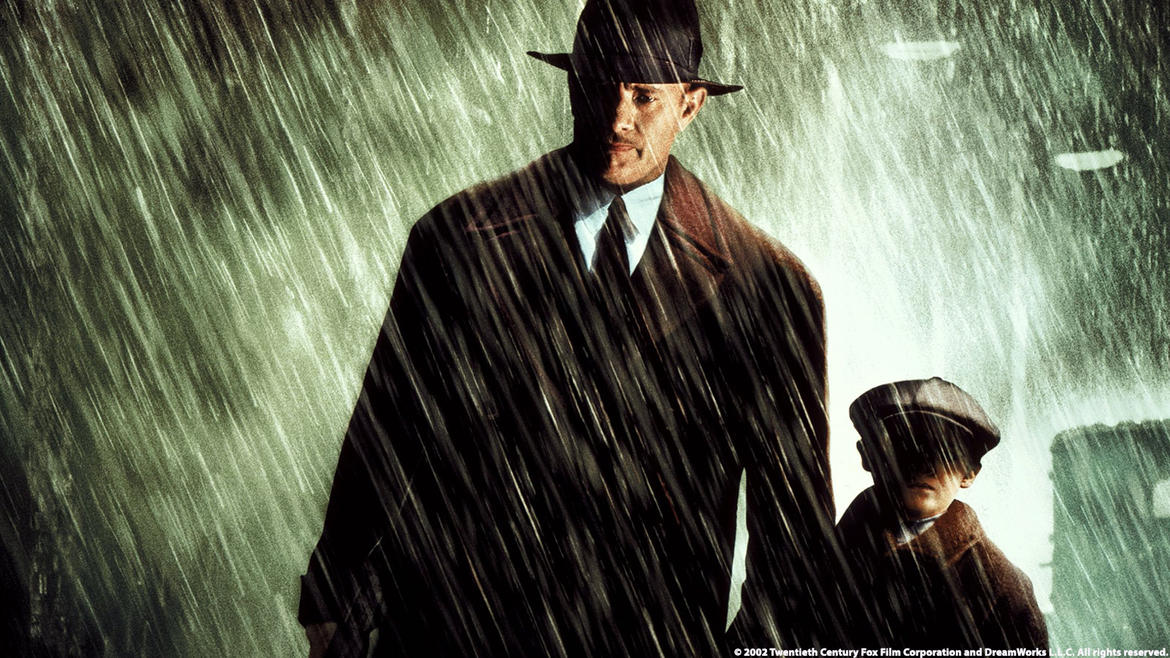
When you look back to see who was starring in the main roles for ‘Road to Perdition’, it is a very impressive list. Tom Hanks plays Michael Sullivan Sr., the lead role of the film and a conflicted Irish mafia man caught between his past and keeping his son sheltered from the consequences of his actions. Paul Newman, one of the greatest American actors of all-time plays the role of John Rooney, an Irish mafia boss, who is also conflicted between his paternal feelings of love for Michael Sr., and his wish to protect his own son, Connor, played by a young Daniel Craig, from his own destructive sins. Rounding out the list is Jude Law, who plays a gifted hit-man / grisly photographer known as Harlan McGuire, and Stanley Tucci, who plays a high-ranking member of the Italian mafia known as Frank Nitti. A young actor who steals most of his scenes is the young but talented Tyler Hoechlin who is Michael Sullivan Jr. in the film, a boy who is coming to terms with his father’s lifestyle and his ties to the mafia. A truly impressive cast of Academy Award winners and nominees, which makes this film even more of a lasting treasure.

‘Road to Perdition’ really brings the atmosphere and makes the setting feel real as it portrays life in Great Depression-era America by focusing on specifically both on the city of Chicago and its’ rural hinterlands, cornfields of greater Illinois. The movie really portrays well the last decade of America being discovered and settled, while undergoing deep economic difficulties, as the Irish and Italian mafias become a source of income and employment when none could be had.

Most movies don’t seem to want to portray the mafia as having been a well-oiled machine that acted like a legitimate business, but ‘Road to Perdition’ makes clear that there are ways to look at the criminal enterprises that achieved a lot of prominence during the Great Depression due to their ability to bootleg and their appeal to provide a good income to men without work.

Without spoiling too much of the plot, Michael Sullivan Jr. (Tom Hanks) is an enforcer and bodyguard for the Irish mafia in the Chicago area of Illinois who has a close relationship with his boss, John Rooney (Paul Newman), who is implied to have helped Michael Sr. a lot with a home, a steady income, and a purpose which is quite difficult to come by during the height of the Great Depression. Michael Sr. is a flawed man who has done murder and committed other crimes for his boss, Mr. Rooney, and knows that it may cost him his life. Despite his past transgressions, he wants to protect his family from his sins and wants to keep his boys from knowing about what he does for a living.

Connor Rooney (Daniel Craig) is shown to be jealous of the close relationship that his father, John, and Michael Sr. have and is resentful of him. Michael Sullivan Jr. (Tyler Hoechlin) is distant from Michael Sr., his father due to late working hours and distant lifestyle. As any boy would like to know about his father, Michael Jr. decides to find out the truth about who his father, Michael Sr. is, and what he does for Mr. Rooney. At this point, the plot really takes off in tragic and unexpected ways leaving the viewer engaged in the storyline and the eventual outcome. As mentioned before, the acting done by this legendary cast helps make the film what it is and what it still is today.

Beyond just being a typical mobster movie, ‘Road to Perdition’ has a number of poignant and thought-provoking themes that stay with you even after the end credits begin to roll. This film goes over the trials and tribulations that fathers and sons can have with each other even when they love and care for each other dearly. Michael Sr. and John Rooney are not related by blood by have a relationship similar to a father and son as Mr. Rooney was around for Michael and his family when they had nothing. He is heavily indebted to Mr. Rooney even if he knows what he is doing is wrong by committing violent acts for the mafia. Still, their bond appears to be unbreakable and they get along quite well with each other.

To the contrary, both of their relationships with their respective sons are shaky at best and hostile at worst. There is a considerable distance between Michael Sr. and Michael Jr. due to the fact that Michael Sr. makes his lifestyle and his work for Mr. Rooney a well-kept secret. Michael Sr. does not show much affection or love for his boy and it’s not made clear until the end of the film why that is. Michael Sr. obviously cares for his boy but likely doesn’t want his son to know about the horrible things he’s done to keep him, his brother, and his wife save from harm or want. Still though, Michael Jr. does not want to be kept away from his father and who he is.

He ends up pursuing the truth whether or not his father wants him to or not leading to quite a turn of events when the truth comes to light. Connor Rooney, John’s son is quite envious of the close relationship that Michael Sr. has with his father compared to him. However, this is for a number of reasons. Connor is very much unlike his father, John, and has a number of character and personality flaws that make him a liability to the family. Connor is shown to be impulsive, manipulative, untrustworthy, and greedy but the conflict comes to light when John Rooney must decide if he should stick by his son’s side or give him up due to his past misdeeds. As John Rooney says to Michael Sullivan Sr. during one of the movie’s best scenes, “Sons were put on this Earth to trouble their fathers.”

During one of the movie’s most touching scenes, Michael Sr. tells Michael Jr. about a town called an idyllic town called Perdition, Illinois, which has beautiful scenery along the beach of Lake Michigan, and where the Sullivan family has visited before when Michael Jr. was a little boy. Perdition is portrayed as a goal for the two Michaels to get to in order to start their lives anew and escape the sins of the past. It’s a way for Michael Sr. to get redemption after taking care of his ties to the mafia and by trying to make up for what he did wrong as both a father and a man. The word ‘Perdition’ as defined in other words is ‘hell’ or ‘complete and utter damnation’ in more religious terms. Michael Sr. may try to redeem his sins by going to church or by rectifying the wrongs he’s done by getting revenge on the men who wronged him in the past but he knows deep down that it may not be enough.

If he is on the ‘Road to Perdition’ or the road to hell, the film shows the audience that he wants to keep his son, Michael Jr., from going down that same path. He wants badly for his son to have a better life and a brighter future away from violence and death. Michael Sr. won’t let his downfall lead to that of his son’s as well. Even if Michael Sr. is a murderer and a sinner, he knows what’s still right from wrong and he is going to do his best to preserve the innocence and goodness of his son. As a father, he is flawed but he still loves his son dearly and wants the best for him still.

Certain moves fit a certain season of the year well and ‘Road to Perdition’ is no exception. The winter setting, the Chicago cold, and the mature themes help lead it to being an ideal film to be watched during the depths of winter in January and February. Without spoiling anything, the film is a real story with real characters who are flawed in their own ways but who each have their own complex motives that drive the plot forward. This film, most of all, touches the audience emotionally and will pull on your heartstrings.

‘Road to Perdition’ is very underrated film that remains one of my favorite movies to this day. I highly recommend ‘Road to Perdition’ to other movie buffs who are looking to watch a crime / mafia film that has a soul. In addition to having an all-star cast, a renowned director, and a legendary cinematographer at the helm, ‘Road to Perdition’s music score composed by Thomas Newman is excellent and fits perfectly into the many moods of the film and has some stirring moments that add to the film’s setting. If you’re snowed in this weekend from the blizzard, do yourself a favor and go watch ‘Road to Perdition.’

English Corner – Present Progressive Tense

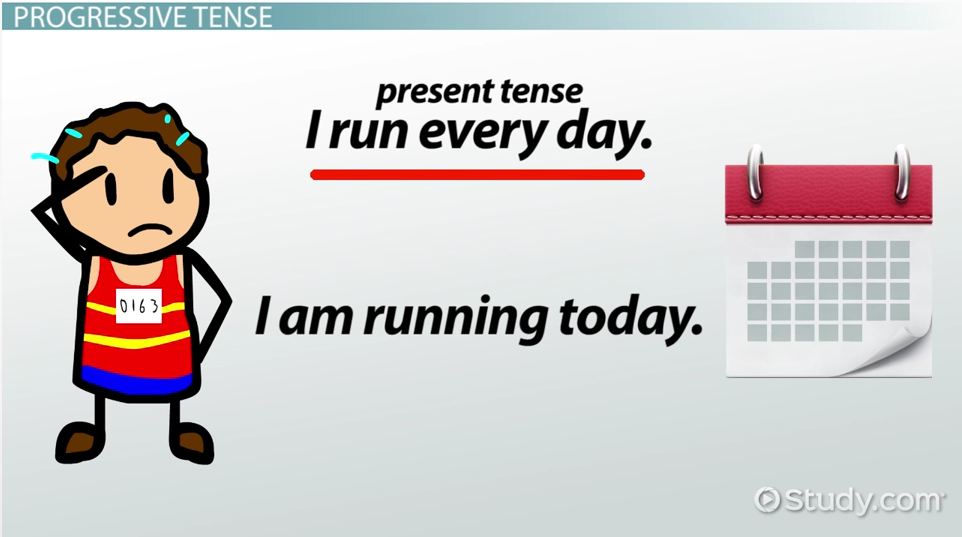
present_progressive_tense
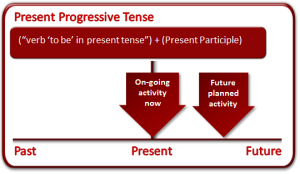
“If you’re not sure where the Present Progressive Tense fits into the timeline, I have a useful chart for you to study.”

As a student of the English language, once you’re able to understand and use the ‘Simple Present Tense’ with proficiency and are ready to move on to the next grammar step, it would be wise to start learning about the ‘Present Progressive Tense.’ This particular grammar tense can help you to describe a number of different topics and can be used in a variety of ways. By studying the examples listed in this blog post and knowing when to apply the present progressive tense, you’ll be able to advance and get better in your study of English grammar rules.

The ‘Present Tense’ is divided into two kinds: the ‘Simple’ present tense and the ‘Continuous’ or ‘Progressive’ present tense. In order to fully understand the present tense grammar form, it’s important to understand both the ‘simple’ and ‘progressive’ aspects to this concept. Please follow along and read through this blog post if you’re a student of English grammar and want to better understand the ‘Present Progressive Tense.’ We will start by looking at a couple of examples regarding how this grammar tense is supposed to be structured. I would recommend that you copy these particular examples so you have some idea on how to use the present progressive tense in a sentence.

Examples

  1. I am going to the store today.
  2. We are planning on coming to your wedding tonight.
  3. What are you doing for dinner later this evening?

For the actual structure of the Present Progressive tense, it’s a little bit different when compared to the Simple Present tense. It’s necessary to begin the sentence with the ‘subject’ word whether it is “I, You, We, They, He / She, etc.” and you can also use the question form as well with “What, When, Where, Why, etc.” at the beginning of a sentence. The auxiliary verb, which is supposed to be conjugated in the Simple Present tense would come next and is modified depending upon which ‘subject’ word is used at the beginning of the sentence.

The auxiliary verb “to be” is the most popular form when it comes to the present tense so it is meant to be used often when it comes to creating the sentence. When you conjugate “to be” in the simple present form, you’ll end up with “is, are, am, etc.” depending upon the subject word. The auxiliary verb is always followed by the main verb, which is supposed to be displayed in present participle form. When we mention the present participle form, it basically involves the verb such as “do” and adding an “ing” to the end of the verb.

For negative sentences, the form of the present progressive sentence is a little bit different compared to regular sentences. It’s necessary to put the word ‘not’ in between the auxiliary verb and the main verb in order for the sentence to make grammatical sense.

Examples

  1. I am not dancing at the ball tonight.
  2. You are not playing basketball tomorrow.

If you’re thinking about making a question sentence with the present progressive tense, there’s a clear step that you need to take in order to make it work. The ‘subject’ at the beginning of the sentence must be exchanged for the ‘auxiliary verb’ due to a necessary change in the structure of the sentence in order to make the question work.

Examples

  1. Am I doing the right thing?
  2. Are you playing the piano for the recital?

As you can see, the ‘am’ which is the auxiliary verb comes at the beginning of the sentence this time and the ‘I’ word comes after and becomes secondary in terms of its’ placement. The positive and negative forms of the present progressive tense are quite similar to each other with the only difference being that the ‘not’ is added into the structure of the sentence in order to create that difference but the actual structure of the present progressive tense does not change at all. When it comes to the question form however, there is a change in the actual structure of the present progressive tense with the fact that the ‘subject’ and the ‘auxiliary verb’ essentially change places in order to form the actual question.

Now that we know the structure of the present progressive tense in its’ main forms of usage, how do we know when to put this grammatical tense into action? Well, it’s quite simple actually. There are some fundamental principles that guide the use of the present progressive tense in formal sentences. The present progressive tense can describe actions that are happening in real time and are continuing into the near future.

These could be actions or occurrences that are happening right now and have not been finished yet. These are actions that are in progress and have not reached the completion stage yet. This is why we add the –ing to our verbs to indicate that the action is ongoing and hasn’t reached an end yet.

Examples

  1. The wheels are spinning.
  2. The tables are turning.
  3. The guns are firing.

In addition to those actions that are occurring right now, there are also actions that have no set time frame or completion date yet but are ongoing and will require some time to finish. This is the most popular use for the –ing form and there are a lot of examples that can be construed from it.

Examples

  1. John is taking Salsa lessons.
  2. Martha is learning how to cook.
  3. Bob is starting a new job.

Despite being known as the ‘present progressive’ tense, this grammatical tense can also be used to describe actions or habits that will be occurring in the near future. In order to make this work though, you must add a word to indicate that something will happen in the future. Some examples of these words include ‘tonight, tomorrow, next week, this weekend, two days from now, etc. Usually, you are describing something that has been planned out to occur in the future with a specific date or timeframe in mind. People are long-term planners and thus, we are able to talk about actions that we will take in the future having made the plans ahead of time.

Examples

  1. I am going to attend university next August.
  2. I am planning to go to Mexico this winter.
  3. We are thinking about having our honeymoon in Hawaii next month.

The plan has already been set in motion and that’s why you’re discussing what you’re going to be doing but at a future time and place. It’s vital to remember that the present progressive tense does not exist without adding -ing to any verb regardless of which verb it is. The present progressive tense may not be the most popular grammatical tense but it is extremely important to practice, create examples, and master it both in its’ written form and its’ spoken form. Before you can go on to the ‘past’ and ‘future’ grammatical tenses, I believe that it’s necessary to have a good handle on the present progressive tense first before moving on to something else. Keep my explanations and examples in mind and look out for another ‘English Corner’ coming to you all soon.

Lima

img_1372img_1379img_1403img_1406img_1412img_1416img_1418img_1426img_1433img_1439img_1442img_1463img_1472img_1481img_1498

Camera: Canon PowerShot SX710 HS

Location: Lima, Peru

‘Forrest Gump’ – Film Review and Analysis

chocolates
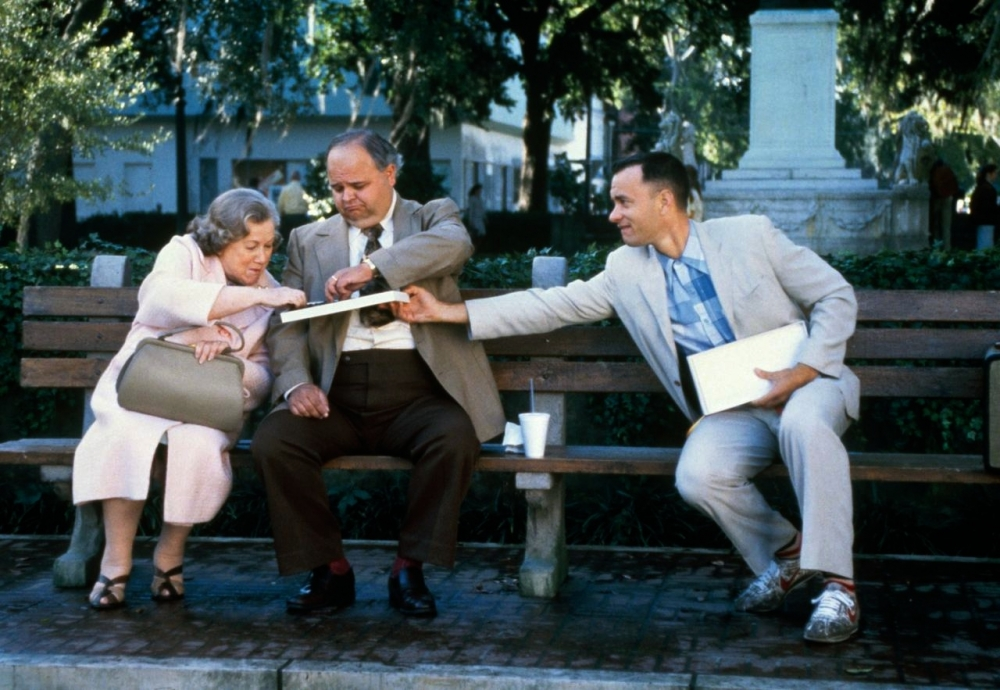
“Life is like a box of chocolates, Forrest, you never know what you’re gonna get.”

One film that captures both your imagination and your heartstrings is the classic American film, Forrest Gump. Released in theaters over two decades ago in 1994, it has become one of the most beloved films of all time and enjoyed high amounts of praise from both critics and moviegoers alike. The film was notable for the fact that it won many different awards and accolades such as the Academy Awards for Best Picture, Best Director for Robert Zemeckis, Best Actor for Tom Hanks, among many other distinctions. I would argue that this film along with Big helped to launch Tom Hanks as one of Hollywood’s rising stars and set him on a monumental acting career, which included many future box office hits. Five years ago, the U.S. Library of Congress recognized Forrest Gump as being a film that is historically, culturally, and aesthetically significant and selected it for preservation in the United States National Film Registry.

Forrest Gump is about an everyman who has a slight disability of not being as smart as everyone else with an IQ of 75. However, despite him learning this fact as a child and being bullied about it, he manages to not let this handicap ruin his life but instead learns to preserve and make the most of things. The story of Forrest Gump takes place over the tumultuous and transformative decades of the 1950s, 1960s, 1970s, and 1980s when America went through a number of political, social, and economic changes. One of the true delights of this film is seeing how many of these changes Forrest witnesses and is actually apart of.

During the film, we see him shaking his hips with Elvis Presley at his mom’s guesthouse in Alabama, serving in the U.S. Army after being drafted in the Vietnam War, starting a fight during the midst of a Black Panther group meeting, and meeting Presidents Kennedy, Johnson, and Nixon. Despite his lack of formal intelligence, Forrest does not let that stop him from being an ‘All-American’ college football player, a veteran of the Vietnam War, a shrimp boat, a wealthy man due to his investments in a little company called Apple Inc, and lastly and most important, a loving son, friend, father, and husband. In addition to serving in Vietnam and witnessing Elvis Presley in person, Forrest also helps a black woman become the first African-American to integrate into an all-white school, helps to break the seal on the Watergate scandal when he sees people breaking into DNC headquarters, and becomes an international ping-pong star while helping to improve relations between the United States and the People’s Republic of China. He’s an every man who takes life as it comes regardless of the good or bad and finds himself involved in extraordinary events that shape American history.

As Forrest gets wrapped up in these events over the course of the film, he takes an almost child-like innocence to them even in the cases of war, violence and prejudice. He’s aware of these things and knows right from wrong but tries to live a simple and uncomplicated life despite all he’s been through. He wants to be a good son to his mother; he desires to be with the love of his life, Jenny, to have good friendships with his fellow soldier Bubba and Lieutenant Dan, and to be a responsible father to his son at the end of the movie. He may lack intelligence in terms of critical thinking and solving problems; he has the ability to display maturity, show emotional intelligence and is able to show kindness and love towards others despite his differences with them.

While he may not know his father, and his wife Jenny disrespected and left him in the cold over the years when she was dealing with her own demons, he has the ability to look past these grievances and live a good and fulfilling life. Forrest endures other traumas and heartbreak in the Vietnam War when he sees his fellow soldiers and friends killed or disabled like his good friend Bubba and his lieutenant, Dan Taylor. While he could have given up on life or become bitter and disenchanted, Forrest instead finds new purposes in playing ping-pong around the world, starting a very profitable shrimp boat company with his old Lieutenant Dan, and runs around the United States for three years straight to help get past those losses and betrayals that has haunted him. Forrest is an example of a man who never gives up and keeps moving forward despite his past. He simply does not let his past define him. Like all of us, he’s been giving good and bad fortune but he makes the best of things regardless of the circumstances.

During the long run scene of Forrest’s, people become inspired by his example and ask him for advice and guidance. He doesn’t have much to say to them but they happen to find comfort in the fact that he’s doing this just for its’ own sake. Forrest simply can’t help them all figure life as they have to each follow their own path and find inspiration wherever they can. Once one path ends, another one opens up to be explored afterwards. As Forrest states when reporters ask him why he’s running, “I just felt like running.” Sometimes, you don’t need a reason to be doing something if you feel like it.

While many other people are inspired and are given hope from Forrest’s example, Forrest is inspired by other people such as his mother played by the wonderful Sally Field, along with his fellow soldier Bubba and his Lieutenant Dan. His mother teaches him about love, respect, and finding your own path in life. She gives Forrest a quote on her death-bed that he takes to heart and has become one of the most famous movie quotes of all-time. “Life is like a box of chocolates, Forrest, you never know what you’re gonna get.” Forrest asks his mom what his destiny may be. She tells him that he can’t answer that for him and ask he needs to figure that out for himself. She does let him know that it was her destiny to be his momma and that she’s very proud of the man that he has become.

Forrest’s relationship throughout the film with Jenny is complicated and unfortunate as the ways their lives converge and diverge leads to pain and heartbreak but also compassion and understanding. Jenny is Forrest’s first and only love. They grow up together and spend time getting to know each other. Forrest is a breath of fresh air for Jenny who has to deal with an abusive father at home. Even through college, they remain close but still friends.

Jenny’s path through life takes her to some lonely places and she deals with abusive boyfriends, drug abuse, and hostile friends like the Black Panther party. Even with her flaws, Forrest still loves her as always and asks her to marry him. She eventually agrees to be his bride making him the happiest man in the world. Tragically, their marriage is cut short by the fact that Jenny has HIV/AIDS and has become really sick. However, the love that Jenny shares for Forrest allows them to have a son together before she passes away. While a devastating loss for Forrest like it was to lose his mother and Bubba, his best friend, Forrest’s destiny is renewed in the love he has for his son, Forrest Jr. as he takes care of him after Jenny’s death.

Forrest Gump is a special movie that has resonated with millions of people around the world. Many folks have been inspired by the message of this movie and have gone to improve their lives in enumerable ways. The story of Forrest Gump is a story of hope, love, perseverance, respect, and tolerance. Anybody who watches Forrest Gump will get something out of the movie because of its’ overall message. Like the feather that floats by Forrest at the beginning and ending of the film, you make the most of what we’re dealt with in life and it’s you alone who can shape your destiny through the choices you make, the people you befriend, and the impact you create. We may all be floating on the breeze like a feather unsure of where we’re going but we can steer the direction of that feather to new places and new conclusions.

Forrest Gump is a special character in a special movie that rekindles for viewers what they love about the big screen by showing our capacity as human beings to love, cry, laugh, and share good times and bad with those friends and family as Forrest does. Anybody who watches Forrest Gump can relate to Forrest and what he goes through. That is what makes this movie such an endearing, popular film and why it will last for many more years as one of the most iconic pieces of work in American cinema.

English Corner – Simple Present Tense

wordle1
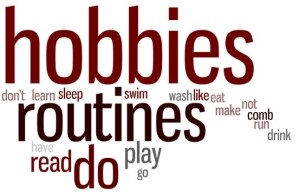
“Hobbies, routines, and daily habits are key actions that are described by the simple present tense.”

If you’re a student of the English language, chances are good that you’re familiar with the ‘Present Tense’ grammar form. In order to form basic sentences in your writing or to make yourself understood verbally when speaking to a native speaker, it’s important to learn the ‘Present Tense’ especially before moving on to the ‘Past’ and ‘Future’ tenses which is slightly more advanced and complicated to master.

The ‘Present Tense’ is divided into two forms: the ‘Simple’ present tense and the ‘Continuous’ or ‘Progressive’ present tense. In order to fully understand the present tense grammar form, it’s important to understand both the ‘simple’ and ‘continuous’ aspects to this concept. Please follow along and read through this blog post if you’re a student of English grammar and want to better understand the ‘Simple Present Tense.’ For next month’s edition of English Corner, we will focus on the ‘Present Continuous Tense’ and how that grammar tense is formed correctly.

The Simple Present tense is regarded as being the easiest to learn and most vital tense to master in order to the basics of English grammar down. For example, the simple present tense uses verbs like “to be” and changes the form into singular or plural depending on if you are referring to one more person or more.

For Example:

  • He is on his way to the store to pick up some fruits and vegetables.
  • They are at the ballpark tonight to watch the baseball game.

We can see from these examples how the verb “to be” is put into the simple present tense using the word ‘is’ or ‘are’ depending on if the subject of the sentence is singular or plural. For the subject ‘He’, the corresponding simple present tense form of “to be” would be is which is singular. For the subject ‘They’, the corresponding simple present tense form of “to be” would be are which is plural. With the subject word ‘I’ which is singular, we will use the word am which is singular but is different from the word ‘is’ which is used for ‘he’, ‘she’, or ‘it.’ The subject words of ‘they’, ‘you’ or ‘we’ would be used for the word ‘are’ as mentioned before.

The structure of the present simple tense is quite easy to form correctly when compared to other English tenses. You simply need to put the subject and the main verb together to form the basis of a sentence. This goes for positive sentences which don’t have a negative connotation or which form the basis of a question.

For Example:

1) I do like to swim with my friends at the lake.

The subject for this sentence is the word ‘I’ and the verb form is ‘do’ and it is possible sometimes to follow one verb with another verb or two verbs, as is the case with this sentence. ‘Do’ and ‘like’ can be together as well as ‘to swim’ and then to finish off the sentence with ‘my friends’ who are the objects and ‘at the lake’ which is the location along with a prepositional phrase.

The first verb in a sentence when there are other verbs after is known as the auxiliary verb, which comes before the main verb(s). Once again, it’s important to note that ‘I do’ can change form into becoming ‘He does’ or ‘She does.’ It is a common rule that the verb must be modified to change depending on which subject word in English is being used.

If you need to make a simple present sentence negative, it’s important to add the word ‘not’ after the auxiliary verb of ‘to do.’

For Example:

1) I do not like to dance because the basic moves are hard for me.

2) He does not want to go to work because he does not like his boss.

Regardless of the subject word being ‘I’ or ‘He’, there will always be a ‘not’ after the auxiliary verb. You can have multiple verbs being used in a simple present sentence as well. There is no limit to the amount as long as the sentence makes grammatical sense to the audience.

In order to form a question using the simple present tense, the order of the sentence needs to change slightly in order to reflect this shift. Instead of the ‘subject word’ leading off the sentence, the auxiliary verb of ‘to do’ must be at the beginning. You can either put ‘do’ or ‘does’ at the beginning of a simple present tense sentence. After that, you can place the subject word whether it is ‘I’ or ‘you’ right after the auxiliary verb. In this case, after the auxiliary verb and the subject comes the main verb and then finally the object which is wrapped up with a question mark to finish the sentence.

For Example:

1) Do you like to go skiing?

2) Does he know who you are?

It’s important to remember that the positive form of a simple present tense sentence doesn’t have an auxiliary verb in it while there is one in both the negative and the question form of the sentence. With the main verb for the positive form, it’s important to add an ‘s’ to the end of the word especially if it’s a third-person subject like ‘it’, ‘he’ or ‘she’ in order to make the sentence grammatically correct.

For Example:

  • He likes to dance salsa on Saturday night.
  • She knows that it’s important to study for the Chemistry exam.

When it comes to the negative and question forms of the simple present tense, certain rules must be observed. The auxiliary verb form must be used in both cases and also needs to be conjugated. The main verb form does not change and often comes in its’ normal form which is ‘to ____’. For negative sentences, the word not must come between the auxiliary verb and the main verb for the sentence to be coherent. Lastly, The auxiliary verb has to come at the beginning of a question sentence while the subject comes afterwards which is a reversal of what you would see in a positive or negative form of the simple present tense.

In terms of using the simple present tense correctly, it’s best usage comes in terms of describing general times and situations. Action verbs like ‘to do’, ‘to eat’, ‘to work’, ‘to dance’, and ‘to swim’, etc. are apart of the simple present tense umbrella of usage. This grammar tense is instrumental in describing a statement, which is always true as well as describing actions, which are continuous, habitual, or come from a routine. The simple present tense is most often associated with the verb ‘to be’ which can describe whom somebody is, what they do, where are they going, and why they are unique. The simple present tense can describe those actions, which happen in all forms of time whether it is the past, present, and future.

Out of all English grammar forms, the ‘Simple Present’ tense forms the base of a simple sentence. For any Basic English language student out there, it’s a necessity to master this concept before moving on to other forms of the present tense. After successfully understanding the methodology and the usage behind the simple present tense, an English learner will be ready to move on to the next challenge: The ‘Present Continuous’ tense.

The Blog Turns One

This week officially marks a year of my blog’s existence and I have to say that it’s been a rewarding and fulfilling experience overall. It started over seventy-five posts ago with my first look into the increasing presence of smartphones in today’s society with “Smartphones: Man’s New Best Friend?” and has continued up through this September with pictures during my recent trip to Guatepe, Antioquia, Colombia.

Over the past year, I’ve learned a lot about the writing process especially when it comes to topics like travel and self-development. While my writing and photography skills are still a work in progress, I believe that I am a better writer and photographer than I was a year ago. I have put a lot of time and effort into this blog over the past year and I am thankful to all of the readers, friends, and family who have supported it by reading the articles, leaving comments, and giving me constructive feedback.

I’ve been through some big life changes with moving home and then back to Colombia recently. This blog has changed to become more travel and culture focused since that’s where I am right now in my life but I hope to continue writing about self-development and even ESL topics. I’m quite proud of the work that has gone into this blog and hope that you as the reader have learned a lot or gained something from my writings. So far, I have had a couple of thousand unique visitors from many different countries along with thousands of individual views and that’s very exciting to see.

As this blog enters year two, I am hoping to invest more time and money into the layout and formatting as well as creating more content for the reader. The first year has been very rewarding for me and I hope to continue developing this blog and expanding the readership. As a writer who enjoys hearing constructive comments, feedback, and criticism, I hope that you will leave a comment telling me your thoughts and suggestions about the blog. I am open to any advice as long as its’ respectful and within reason. I will continue to have eight to ten posts per month in 2017 and will highlight more of my experiences of living, working in Colombia as well as some upcoming travels to different parts of South America.

If you’re new to this blog and don’t know much about me or my writings, I have organized an archives section which has the location of all seventy-five of my posts which have occurred in the past year. I also have a ‘Best Of’ Articles page where I highlight the ten blog posts that I like the most when it comes to culture, lifestyle, traveling, music/movies/books, and personal development. You can find the individual links to these ten top posts here: https://benjweinberg.com/best-of-articles/.

I am now one year into my blogging hobby and I am happy with the results so far. I hope that this website will continue to grow in terms of audience and expand in terms of its’ content. I want to say thank you to all the readers and supports of benjweinberg.com and I look forward to keeping in touch with you throughout the rest of the year and into 2017. Please feel free to leave a comment on this particular post if you would like to share your thoughts or express your opinion about the blog so far and where you might like to see it go in the next year. Cheers to the future and here’s hoping to a great 2nd year of this blog!

English Corner – Conjunctions

This ‘English Corner’ on the subject of conjunctions is a continuation of an ongoing blog post series with a new post every month to help English language learners to better understand the vocabulary, grammar, and syntax in order to better develop their own proficiency. I have over two years of experience of teaching the English language to non-native speakers, both online and in person.

I hope to use these posts to help you, the reader, improve your understanding of English, and also develop your fluency. If you have any questions about this ‘English Corner’ post, please leave a comment and I will answer them to the best of my ability. Any constructive feedback is appreciated and I hope that this will become a popular series of posts within my website. If you enjoy my ‘English Corner’ series, you can also request private English lessons with me through the WordPress message system.

Second only to ‘Prepositions’ in terms of grammatical importance, ‘Conjunctions’ play a vital role in the formation of sentences in the English language. Conjunctions do the important job of connecting words and phrases together to form a complete sentence. Examples of conjunctions include although, and, because, but, etc. Instead of forming simple sentences such as: “I like to play sports”, we can then add on to this sentence by adding the word ‘and’ to create a complete sentence which could be “I like to play sports and hang out with my friends on the weekends.”

Having a good grasp on conjunctions can make writing complete sentences a lot easier and give you the ability to form paragraphs and even entire essays by adhering to the sentence structure by adding a conjunction or two. When it comes to grammar topics like conjunctions, it’s important to be able to remember the correct words that fit into the category and to know when to apply them in your sentence.

The word ‘And’ is the most popular conjunction because it can be used for three different functions. Not only can it connect words but clauses as well as phrases. ‘And’ is also used to describe more than one person in a sentence by grouping them together such as “Tim and Tina went to the movies together last time. In addition to the word ‘and’, other popular conjunctions that are commonly used to connect sentences are ‘although, since, but, unless, or, yet, so, etc.’

Contrary to popular belief, conjunctions can be used in the beginning of a sentence rather than just in the heart of a sentence. For example: “Although he was tired from working late, James still decided to go out for a drink with his friends.” A conjunction is a part of speech that can also be more than one word. Examples of conjunctions that make up more than one word include ‘so that, in order to, as long as, etc.’ By clearing up the confusion and misleading information regarding conjunctions, beginner students of English will better be able to handle this important grammar subject.

part-speech-nounb
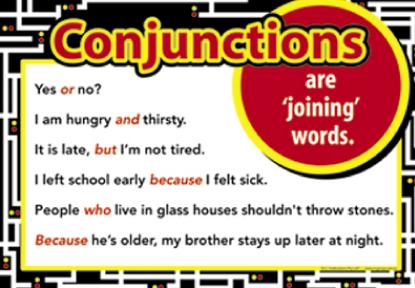
Conjunctions: Successfully joining words and phrases together in order to form complete sentences.”

Learners of the English language often forget that conjunctions can be divided into two categories: coordinating and subordinating conjunctions.

Coordinating conjunctions are known for connecting two parts of a sentence or phrase together to form a complete sentence. This first type of conjunctions is usually used in the middle of a sentence and is supposed to connect words and clauses together along with two parts of a sentence.

An example of a sentence where a coordinating conjunction would be used could be “John picked up Tim after his soccer practice in the park and then they went to the movies together.” There are many different coordinating conjunctions but the most popular ones are ‘and, but, for, or, so, yet.’

Subordinating conjunctions have a more specific purpose than their coordinating counterparts. The main purpose of subordinating conjunctions is to join the dependent clause of a sentence to its’ independent clause to form a complete sentence. The main clause is also known as the independent clause and the conjunction is placed in between the two clauses in order to create the grammatical structure of the sentence.

For example, a sentence with a subordinating conjunction would look like “I had to study hard last night because we have an important English test today. Some examples of subordinating conjunctions include ‘although, because, since, unless.’ It’s important to remember that a subordinating conjunction will always come at the beginning of the subordinate clause, which could either be before or after the main clause. This means that there is some flexibility when it comes to inserting your subordinate conjunction in that it can come in either the beginning or middle of a sentence.

Lastly, in addition to conjunctions that are subordinate or coordinate and are one word usually, there are other types of conjunctions that can be a few words in all when forming a sentence. These two other types of conjunctions are known as compound or correlative.

Compound conjunctions often end in the words ‘that’ or ‘as’ and some examples of these conjunctions include: ‘as long as’, ‘provided that’, ‘because of that’, ‘in order to.’ Remember that a compound conjunction does not always end in ‘as’ or ‘that’ but it’s usually true in most instances. For example, a sentence with a compound conjunction would be like; “You can eat ice cream later as long as you eat your vegetables first.”

Correlative conjunctions are often made up of pairs of two corresponding words such as ‘neither…nor’, ‘either…or’, ‘both…and’, which serve to balance the sentence and the two clauses. For example, you could write a sentence like “We could either go to Spain or Italy for vacation this summer.” When using correlative conjunctions, remember that there needs to be two words that relate to each other in the overall meaning.

Like our previous topic of ‘Prepositions’, learning about ‘Conjunctions’ will help a beginner in English to gain confidence in developing both grammar and vocabulary. Both of these topics are important to review and go over with a student in order for them to correctly form a sentence by adhering to the necessary structure.

By knowing about the different types of conjunctions, some key examples, and their varied uses, students of English reading this post will gain a better understanding of this vital grammar topic. If you have any questions or comments about this ‘English Corner’ post, please feel free to write me a message. In the mean time, good luck with your continuing studies of the English language! I promise that there will be a new post next month focusing on another key topic.