English Corner – Present Perfect Tense

While not the most widely used or well-known grammar tense in the English language, the ‘perfect’ tense does come up every now and then in either your writing, speaking, or listening skills. It’s important to understand both the usage of the ‘perfect tense’ as well as the forming of this grammar tense. We’ll begin this series of the ‘perfect tense’ with its’ usage and formation in the present. In the next two posts, we’ll then dive into the past and future forms and uses of the ‘perfect tense.’ When you get the basic grammar tenses down as I have gone over in past ‘English Corner’ posts, you can move onto more challenging and specifically used tenses such as the ‘perfect tense.’

It may be surprising to teach this right off the bat but the present perfect tense helps to create a link between the past and the present. In a present perfect sentence, you are going to be describing an action or an event that has happened before but it isn’t certain whether that action or event is ongoing. When you use the present perfect tense, you are going to want to focus on the result or conclusion of an action rather than if it’s still continuing or not.

There are five main circumstances in which you can use the present perfect tense. You can do so when discussing an action or situation, which began in the past and has continued into the present. You can talk about an action that was undertaken during a period of time and that has not yet been finished. You could also discuss a repeated action or event that occurred over an unspecified amount of time between the past up until now.

You can also insert the word ‘just’ into your sentence to indicate that an action or event was completed very recently in the past to emphasize how close it was to the present. Lastly, you can describe an action or event that simply took place and was completed without mentioning the time or date at all. If you want to be more detailed about asking why, when, where, what, how, who, etc., you’re going to want to focus on using the simple past tense instead so as to not to confuse these two distinct tenses. In order to get a better idea of these five different uses for the present perfect tense, here are some examples to remember.

Actions Started In The Past that Continue Into The Present

Examples:

  • We haven’t lived in our house for years.
  • He has worked in the high school for decades.
  • Have you played the guitar since you were a teenager?

The Time Period Hasn’t Been Completed Yet

Examples:

  • I have traveled very far this week.
  • They have danced a lot tonight.
  • It has snowed a little bit this winter.

Repeated Actions Between The Past and Now (Unknown Period)

Examples:

  • We have seen The Terminator three times.
  • I have been on that roller coaster ride multiple times.
  • She has visited her parents occasionally.

Completed Actions In The Very Recent Past – ‘Just’

Examples:

  • Have you just eaten dinner?
  • I have just finished my thesis.
  • Has he just left the ballpark?

The Timing of the Action is Not Known or Not Important

Examples:

  • Have you been to Washington DC?
  • Somebody has eaten my lunch.
  • You have studied many foreign languages.

Ultimately, it’s important to remember that additional words like ‘just’, ‘since’, ‘for’, and ‘still’ may pop up every now and then in your present perfect tense sentences depending upon which of the five uses you are utilizing this specific grammar tense for.

When it comes to forming the present perfect tense, there is an actual formula towards creating the right form that each English learner should be aware of. There are two elements to the present perfect tense. The first is the right form of the auxiliary verb represented by the verb to have in the present tense. The second element is represented by using the past participle of the main verb with the base verb + ed. For some examples, the past participle of these regular verbs could be danced, finished, worked, etc. The two elements will also go together when the base verb is irregular regardless of the circumstances.

Positive Form – Example

  1. He has traveled to Japan.

(Subject + verb ‘to have’ + past participle)

Negative Form – Example

  1. She has not traveled to Brazil.

(Subject + verb ‘to have + not’ + past participle)

Question Form – Example

  1. Have they traveled to Colombia?

(Verb ‘to have’ + subject + past participle)

Negative Question Form – Example

  1. Hasn’t he traveled to Japan?

(Verb ‘to have + not’ + subject + past participle)

To finish off this entry on the ‘present perfect’ tense, I’d like to leave my readers with an additional example of how to use a simple verb and express that word in the positive, negative, and question forms by using the present perfect tense. You can use these examples to help yourself when it comes time for you as the student to use this particular grammar tense in your everyday speaking and writing activities as an English language student.

As always, if you have any questions or comments about my ‘English Corner’ posts, please do let me know. Next time, I’ll be covering the ‘past perfect’ grammar tense, which is quite similar to the ‘present perfect’ tense but with a few differences to highlight. In the meantime, keep studying hard and do check out my previous ‘English Corner’ posts on my website.

To Run – Present Perfect Tense

Positive Form

  1. I have ran
  2. You have ran
  3. He, She, It has ran
  4. We have ran
  5. You have ran
  6. They have ran

Negative Form

  1. I haven’t ran
  2. You haven’t ran
  3. He, She, It hasn’t ran
  4. We haven’t ran
  5. You haven’t ran
  6. They haven’t ran

Question Form

  1. Have I run?
  2. Have you run?
  3. Has he, she, it ran?
  4. Have we run?
  5. Have you run?
  6. Have they run?

Note: It’s important to remember that the verb ‘to run’ goes from ran to run when it comes to the question form of the ‘present perfect’ tense. Otherwise, in the positive and negative forms of this grammar tense, you will use ‘ran’ instead to describe this particular verb in the ‘present perfect.’ This is a helpful tip to remember for readers if you happen to be confused by this change.

Cuisine Spotlight – Patacones

Patacones are one of my favorite side dishes or entrees that you can find in Latin America. It’s a versatile kind of food that can be a side dish with fish, chicken, or beef but you can also make it a kind of entrée by putting two patacones together with a type of meat or fish inside along with lettuce, tomatoes, and other toppings. This food also makes for a wonderful snack if you want to munch on something between lunch and dinner. Patacones are relatively easy to make and don’t take too much skill because the recipe is pretty simple to follow.

Commonly known as ‘Tostones’, which comes from the verb tostar, “to toast” in Spanish are slices or pieces of plantain that have been fried twice over. While they are known as ‘tostones’ in countries such as Puerto Rico, Honduras, Guatemala, Nicaragua, Venezuela, the Dominican Republic, etc. They also have a different nickname of ‘tachinos’ (Cuba), ‘bananas pesees’ (Haiti). However, since I have been living in Colombia for almost a year now, I will refer to this delicious food as ‘Patacones’, which is the common name here and also in countries like Panama, Peru, Costa Rica, and Ecuador. You can find patacones of all shapes and sizes across both Central and South America, and there are many ways to put this food to good use.

When it comes to preparing and cooking patacones, you first have to pick up a few unripe plantains (green in color) from the local food market. After buying the plantains, you’re going to have to peel them and then slice into individual pieces that are circular in appearance. You should make sure that they’re big enough in length and width before you decide to begin frying them.

It’s important to put enough cooking oil in your frying pan, and to heat up the pan sufficiently first before putting the raw slices of plantains in there. For the first time, you’re going to want to fry the plantains for one to two minutes on each side until they start to look cooked enough by showing a golden color. One time isn’t enough to make patacones so you’re going to want to fry these patacones a second time to finish the job. However, before you decide to do that, it’s important to remove the patacones from the frying pan for a few minutes in order to get rid of excess cooking oil.

The patacones should be patted down and flattened before being fried a second time in the pan. For the second frying, the patacones should only be fried for a minute or two on each side before they are finished cooking. After they have been thoroughly fried, you should make sure to pound them flat with some kind of utensil that has a large flat surface like a bowl or a pot cover. By the time you’re done, your patacones should be golden, and crispy brown. It’s pretty common to add extra ingredients like salt, or some seasoning depending on if you want this food to be a bit spicy or not.

Patacones can also be served with garlic sauce (ajo in Spanish) or with hogao sauce as is done here in Colombia. You can make the comparison that Patacones are almost like French fries in that you can have them as a side dish or snack without too much effort. It’s easy to make between six to ten patacones to serve you and your guests. If you’re looking for an appetizer or a snack dish to serve friends and family at a house party, patacones are a great option. Patacones have their origin in West African cuisine, and made their way over to Latin America within the colonial period of Gran Colombia during the eighteenth century.

The best thing about a dish like patacones is how versatile it is. You can put anything on top of it whether its’ shrimp ceviche or avocado paste. It can function as a sandwich if you put two of them together with a kind of meat or fish in between to add additional flavor. They’re easy to cook, prepare, and delicious to eat. Be careful though because it’s likely you won’t be able to stop at just eating one patacone.

Whether it’s in the Caribbean, or in Latin America, or throughout the rest of the world, you’re likely to find patacones being served at a restaurant, or being sold as the original plantains in the supermarket. Personally, I look forward to learn how to cook patacones, and serving them to friends and family in the future. Now that I’ve tasted patacones many times and enjoyed this food, I’d like to make my own and have a taste of Colombia when I’m outside of this lovely country.

English Corner – Future Progressive Tense

Similar to the ‘Simple Future Tense’ that was written about in last month’s edition of the ‘English Corner’, it is only natural that we continue with the other form of the Future tense in English known as the Continuous Future tense or the Future Progressive tense. This grammatical tense is the last of the major verb forms that appears often in the English language and it is quite important to master each of the Past, Present, and Future grammatical tenses before moving on to other grammatical topics, which I will proceed with next month. There are a number of similarities between the Simple Future tense and the Future Progressive tense so it’s important to take them into account when you start to use them in either your speaking or writing activities.

Compared to the Simple Future tense, there is a major distinction between it and the Future Progressive tense that should be recognized by the learner. The Future Progressive tense is more specific than the Simple Future tense in that this grammatical tense refers to an event or a thing that will occur at a specific point in the future and is certain in its’ happening at a given time or date.

The Simple Future tense is most often used when it comes to possibilities and probabilities that could occur in the future rather than certain events or things that will definitely transpire. For the latter principle, you’re going to want to use the Future Progressive Tense as much as you can. Now that we know when to use this particular grammar form, we should learn about its’ structure especially when it comes to its’ positive, negative, and question forms.

When it comes to the structure of the Future Progressive tense, you’re going to want to put the subject at the beginning of the sentence regardless if you’re beginning with I, You, We, They, etc. The auxiliary verbs of ‘will’ and ‘be’ should follow after the subject and then to finish off the sentence, you will need to put down a main verb in the present participle form with the base form of the word + ing and then the ‘action’ part of the sentence should come at the very end to complete the structure. It’s important to note that this structure should only apply to the positive form of the Future Progressive tense as the questions and negative form of this grammar tense is a little bit different.

Examples: Positive

  1. I will be going to the Mall tomorrow to do some shopping for my sister.
  2. You will be dancing a lot tonight when we go to the rock concert.
  3. We will be meeting you and your family in the hotel lobby tonight at 8 PM for the cocktail hour and reception.

When you want to use the negative form of the Future Progressive tense with the correct structure, it’s quite simple to do. In between the will and be, the two auxiliary verbs of this grammatical tense, you would need to put the word ‘not’ in between these two words in order to make the structure of the sentence negative in its’ meaning. Also, if you want to turn the Future Progressive tense structure into the question form, you need to exchange the placing of the ‘subject’ at the beginning of the sentence for the auxiliary verb of ‘will’ and have these two parts switch places. Please look at the examples below to get a better sense of how to create the negative and question forms of the Future Progressive tense.

Examples: Negative

  1. I will not be going to the play tonight because I have to study for an exam.
  2. He will not be attending the graduation ceremony because he did not pass all of his classes this semester.
  3. She will not be performing in the Broadway musical because she broke her leg during a rehearsal.

Examples: Question

  1. Will you be joining all of us for dinner tonight?
  2. Will they be marching in the Memorial Day parade tomorrow?
  3. Will we be studying tonight for the important exam on Wednesday?

It’s important to note that certain verbs such as ‘shall’ can be substituted for ‘will’ as an auxiliary verb when it comes to the Future Progressive tense and be used in its’ place. ‘Shall’ and ‘will’ have the same meaning and express the same certainty when it comes to an event or a thing that will definitely take place in the future at a certain time and date.

Examples: Shall

  1. I shall be going to work tomorrow at 9 AM.
  2. I shall be completing the website design project by noon today.

As mentioned in the previous blog post on the ‘Simple Future Tense’, it is quite common to contract the form of ‘I will’ to be ‘I’ll’ and still be grammatically correct with your sentence. If you want to make a contraction in the negative form, you should turn ‘I will not’ into ‘I won’t’ to make sense in your sentence structure.

Contractions: Positive

I will –> I’ll

You will –> You’ll

They will –> They’ll

He will –> He’ll

She will –> She’ll

Contractions: Sentence Examples

  1. They’ll be going to visit Italy in July this summer.
  2. I’ll be hearing from the manager about the job offer next week.
  3. He won’t be marrying his fiancé because he’s not in love with her.
  4. We won’t be traveling to Europe because we don’t have the money.

Before I finish up this post on the ‘Future Progressive Tense’, I would like to remind my readers that the most important distinction between the ‘Simple Future Tense’ and this one is that the Future Progressive Tense refers to a specific timeframe in the future and is very particular in its’ timeline. Since we are using ‘will’ or ‘shall’, you’re going to want to give the reader or listener a specific time or date in the future in which you will be doing the action so that they know when to expect it to be started or completed.

The future action will be ongoing but the reader or listener in question will have a better idea on when the action will be completed as well. Since this is the Future Progressive tense, there must be a specific time and date when the action will be in the process of completion. I will be leaving you with some examples so that you’ll have a better idea of how to use this important grammatical tense. Good luck and please let me know if you have any questions or comments about this particular subject.

Examples: Actions

  1. We will be playing paintball tomorrow morning at 10 AM.
  2. He will be taking the Chemistry exam next Wednesday evening at 8 PM.
  3. They will be playing each other in an important football match starting at 5 PM this Saturday.

How You Think Affects Everything You Get

1. Your mind is a fertile garden patch. Failure to cultivate it allows weeds to run rampant. 

As the popular saying goes, “Your mind is a terrible thing to waste.” In order to get the most out of your brain, you need to put your mental and intellectual capabilities to the test every single day. Whether it is reading the newspaper, doing a crossword puzzle, or solving a Rubix cube, you must exercise your mind as you do so for your body. If you don’t do anything to stimulate your learning capabilities, it’s likely that you will be left behind in life to some degree. Especially in this day and age where there is an unlimited amount of information to be accessed by the average person, there is simply no excuse as to why someone can’t cultivate their mind to improve themselves and become smarter.

You don’t even need to spend your whole day learning because it’s likely that you’re already a busy person. However, it only takes an hour or two a day of active learning in order to get ahead in life and improve a little bit. For example, you could spend that hour or two each day learning a musical instrument, studying a foreign language, or reading a chapter or two from a new book. The possibilities are seemingly endless but you need to take the initiative in order to make it happen. As an adult, nobody is going to hold your hand and force you to learn new things.

This isn’t like it was in school growing up where you had set periods of learning and a teacher there who could guide you to improve and become more knowledgeable. After high school or even college, you need to take initiative when it comes to learning and empowering your mind to become more open, agile, and responsive for the increased amount of knowledge that you want to retain. You can hold the weeds at bay if you’re willing to plant some flowers there instead.

2. Thoughts lead to feelings, and feelings lead to actions and actions lead to results. If         you don’t like the results you’re getting, reexamine your thinking.

You may not be able to control the thoughts or the feelings that enter your head but you need to control how you act and react to them. There is a direct correlation between your thoughts and feelings and your actions that come later. It’s important to think about why you are experiencing these particular thoughts and feelings, and if they are constructive or not to be having in your mind. You need to make sure that the actions that you are willing to undertake as a result of your feelings are done for the right reasons and are not just based off of poor impulses.

Part of being a mature adult is realizing that you have control over your actions and you should weed out the thoughts, emotions that are completely negative in nature and won’t get you very far in your goals and in your results. The effort that you put forth in your actions is a direct result of the effort you put into your thoughts. For example, if you feel confident about the subject material for a biology exam and are thinking about the topics you need to study and master, then you will be more likely to turn those positive thoughts into real actions as you crack open the books to study for this exam and then take the exam the next day with good feelings of confidence from putting efforts behind your original thoughts.

However, if you choose to focus on the negative aspects of your thoughts and emotions, it will likely cause a downward spiral, leading you to make mistakes and achieve less than desired results. With positive thoughts and emotions come the positive efforts of hard work that will often lead to good results. You really need to believe in yourself internally before you can have external success in the world and that all begins with your thought process and how you feel about yourself as a person.

3. Don’t deceive yourself. Confront reality, as it exists, even when the facts are brutal! Once you do, and then take action based on that reality.

Reality can be difficult to cope with but it is absolutely necessary to be able to handle even when the facts are not in your favor. In anything in life, you need to have a sound understanding of the facts and figures before you can start taking action regarding the subject you’re researching.

It is very easy these days to wrap yourself up in falsehoods and misleading information, which is why it’s more important than ever to seek out the reality of things in order to not confuse or distort your understanding of it all. The facts that may make you depressed, angry, or disturbed but the facts are the facts and they won’t be handed to you automatically. Any good student or researcher will know that you have to check and verify the facts on any subject before moving forward with taking any serious actions.

For example, when it comes to the issue of climate change and global warning, the facts matter a lot which is why so many scientists spend years in their field compiling data, doing research, testing out hypotheses, etc. before they decide to take substantive action to reverse this problem or lessen its’ effects. There are a lot of people out there who wish to distort the truth or dismiss it entirely but when you do not have a consensus on an important global issue like climate change, the problem will get worse and not better especially if no action is taken.

Reality must always be confronted even if there are some harsh truths that we as human beings must deal with. Part of being a mature, responsible adult is seeking out the facts in a situation and getting to the truth of the matter regardless if you like what the outcome is or not. Once you have the facts, you’ll be clear to take action and to do the right thing in your mind.

4. Worrying about things you can’t control creates a negative feedback loop that will cause you unneeded stress and anxiety.

Worrying is useless when you think about it. It doesn’t do anyone let alone yourself any good to think about the things that may happen in the future but also may not happen otherwise. You can only really know what’s going to happen exactly for today or maybe for tomorrow but beyond that you can never really be sure about what is going to happen to you.

Worrying can really be a mental block that can prevent you from making progress in your daily goals or from being successful in whatever you set your mind or your body to. By worrying all of the time, you’re not going to be able to do anything useful with your life if you’re worried about something bad is going to happen. By doing that, you’ll create a negative spiral of negative thoughts that you may not be able to get out of so easily.

When you decide to worry about something out of your control, stop yourself right there, take a deep breath, and push those negative thoughts out of your head. Instead, you must think positively and act positively in order to create the change you need and to become a better person in different areas of life. Worrying will get you nowhere and will create an endless loop of negatively. You have to be willing to take some chances, face some risks, and do your best effort in order to get to where you need to be. Worrying is a wasteful endeavor when you could focus your mental energies in a way that is more positive and productive overall.

5. Harnessing your thoughts to drive tangible, positive outcomes – It’s not enough to stare up the steps, you have to step up the stairs.

Thoughts must become actions in order to make things happen. You can think as much as you want about what you’re going to do, but unless you put actions to words, you won’t be able to get anywhere. There’s an important saying when it comes to this subject, which is, “Watch what people do, not what they say.” There’s also another saying such as, “Actions speak louder than words do.”

If people aren’t willing to follow through with their actions, you can be sure that they won’t be able to advance or progress that much with their goals, dreams, or aspirations. The difference between someone who’s a big talker and someone who actually walks the walk is quite stark. Success and progress doesn’t just come out of thin air. You need to be the person who is willing to take action after forming a plan of how to make the outcome positive or successful. This applies to a number of things in life that we often strive to achieve.

Whether it’s being the first person in your family to graduate from college, or working extra hours for that raise, or going back to night school to get the skills you need to apply for that job, positive outcomes must come from actual efforts and hard work. Good things come to people who put actions behind their thoughts. Anybody can talk a good game but the ones who really stand out in life are the ones who go the extra mile to achieve their goals with planning, taking action, and doing their best.

English Corner – Simple Future Tense

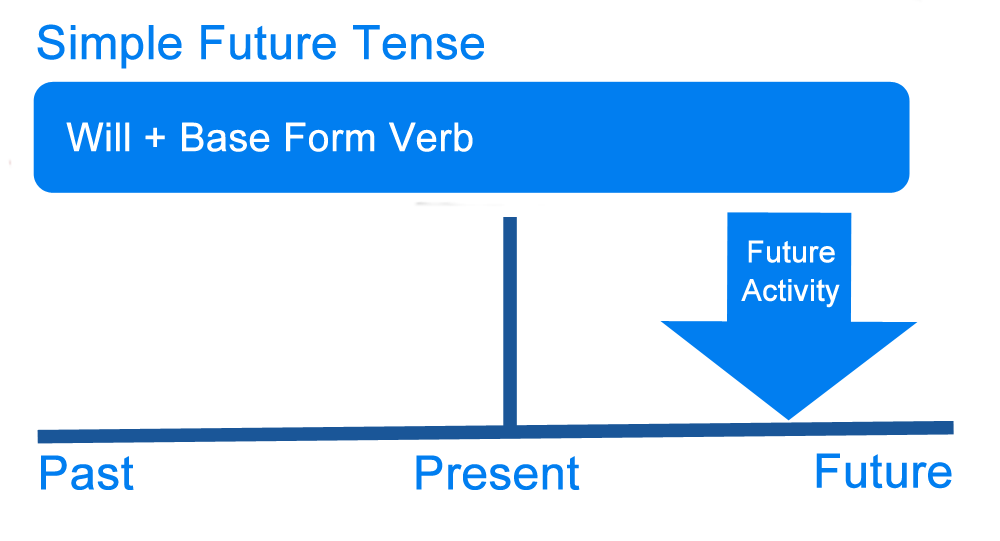
In the past couple of editions of the ‘English Corner’, we’ve gone from the past to the present in terms of understanding and using the grammar structures that encompass these lengths of time. Now, we’re going to take our knowledge of English grammar into the future by going over and analyzing the ‘Simple Future’ tense. If you have a good basis of understanding when it comes to the past tense and the present tense, you should have no trouble with the future tense, especially the ‘simple’ version of the tense to start out with.

In order to master the simple future tense, we need to use the word ‘will’ and implement that word into the correct order of the sentence. This is why the simple future tense is sometimes known as the ‘will tense’ instead due to the importance of this particular word. In order to create the correct form of the simple future tense, we need to get the structure down without any problems.

As always in the English language, we are going to want to start our sentence even in the simple future tense with the ‘subject’ at the beginning whether it is ‘I, You, They, We, He / She, It, etc. After the subject comes the auxiliary verb first which in this case you are going to put the future indicator ‘will’ right after the subject. Once you have the subject and the auxiliary verb set up, you can then put the main verb after that to fill out the third part of the sentence. Lastly, you’re going to finish the sentence with the action taking place and the object that is being referred to. Overall, the structure of a ‘simple future’ tense sentence should be ‘subject + auxiliary verb + main verb + action (object).

Here are a few examples to consider:

  • I will go to the store today.
  • He will do his homework before tomorrow.
  • We will attend the theater musical later tonight.
  • They will finish the job as necessary.
  • She will study mathematics for her test tomorrow.

Sometimes, you’re going to want to make the simple future tense from its’ usual, positive form into the negative form which isn’t that much different except for one important difference. In order to make this grammar tense negative, you’re going to want to put the word ‘not’ between the auxiliary verb, which is the word ‘will’ and the main verb, which could be any number of verbs to express what you would like to be doing in the future.

If you want to go ahead and put the simple future tense into the question form, you’re going to want to exchange the usual placement of the subject for the auxiliary verb and switch them around with each other. In order to get a better understanding of the negative and question forms of the simple future tense, let us take a look at some examples that I have listed below:

Negative

  • I will not go to the store tomorrow.
  • He will not beg to keep his job.
  • You will not get a promotion unfortunately.

Questions

  • Will you do your homework please?
  • Will she go out with you to the dance this weekend?
  • Will we win the match if we practice hard today?

Another thing to be aware of when it comes to the simple future tense is that you don’t need to use ‘will’ in the auxiliary verb part of the sentence all of the time. To express the future, you can exchange ‘will’ for ‘shall’ in order to get your point across.

Examples

  • I shall not waver from this decision that I must make tomorrow.
  • I shall work my hardest to ace this job interview on Wednesday.

Beyond just writing correctly in the simple future tense, when it comes to the spoken form, you can be much more informal with your choice of words. If you’re speaking to someone about the future, you’re going to want to contract both the subject and the auxiliary verb. You should push them together to become one word with the help of a well-placed apostrophe. You don’t have to speak or write in the contracted form but you can do so if you’re being informal and don’t feel the need to sound everything out for the other person or for the audience.

Examples

I will –> I’ll

I’ll be sure to call you back after I’m done cooking.

You’ll need more time to study tonight since your exam is tomorrow.

In addition to contracting the positive form, you can also contract the negative form of ‘will’ with a slight difference in its’ wording. Instead of ‘will’ being contracted into ‘I’ll’, it becomes something else entirely.

Examples

I will –> I won’t

We won’t stop the strike until our demands are met.

They won’t stop playing their awful music in the house next door.

Now that we have the structure of the simple present tense down to a science, let’s focus on the ways in which we can use this grammar form to the best of our ability.

More often than not, the main reason we choose to use the simple future tense is because we have no plans or obligations ahead of us so we can choose to do things spontaneously instead without putting much thought into it. Sometimes, as human beings, we do things without much planning so using ‘will’ in a sentence to express a spontaneous action is quite useful. The decision that you make or the action that you take can occur right away or within a short notice.

Examples

  • I’ll bring you a drink.
  • We will go see the new Star Wars movie tonight.
  • They will leave after dessert is served.

It should be kept in mind that there are a few known exceptions where ‘will’ is actually the main verb in a sentence and the auxiliary verb is another word that can take its’ place to express a future action to take place. The primary example of this exception is the word ‘think’, which can exchange places with ‘will’ to become the auxiliary verb and to express what the subject may do in the future with regards to their plans or obligations.

Examples

  • I think I’ll buy a bike later today.
  • We think they’ll do the right thing and return the money.
  • She doesn’t think that you are guilty.

Another main use of the simple future tense is to try and predict the future. While these predictions aren’t foolproof and could end up being wrong, we try to be as certain as possible before using ‘will’ in a sentence to prove its’ inevitability. As human beings, we are prone to make mistakes but we try to predict the future as if it is set in stone.

Examples

  • It will snow heavily tomorrow.
  • He said the Yankees will win the World Series this season.
  • We will be victorious in the spelling bee next week.

Lastly, without changing the structure of the simple future tense, you can add the verb ‘to be’ after the important auxiliary verb ‘will’ to create some additional sentences with the same grammatical form. It is not necessary to use ‘be’ in a sentence with ‘will’ but it can help you to create additional examples such as the ones below.

Examples

  • I will be waiting for you outside the doctor’s office when you finish.
  • Will we be meeting at the ice skating rink at 8 PM?
  • They won’t be able to come tonight to dinner, should we reschedule?

Oftentimes, you can use ‘going to’, the present progressive (continuous) tense to express what plans or actions you have for the future. However, for now and for the next edition of ‘English Corner’, we are going to continue to focus on how to use ‘will’ to express the future including its’ continuous form, which we will review next month. Until then, keep studying your English and please let me know if you have any questions or comments!

Why You Should Learn to Cook in Your 20’s

You’ve got the good job. You live in a nice apartment. You are able to move out of your parents’ house. You’re lucky enough to consider yourself to be pretty independent and self-sufficient in your 20’s, which isn’t so easy to come by these days. However, have you learned how to cook? Can you feed yourself without needing to go to a restaurant or to order from Domino’s?

I consider that being able to learn how to cook is one of the most important skills any young adult should have a good proficiency in by the time they turn 30. You don’t need to be on the level of Anthony Bourdain or Emeril Lagasse but you should be able to know a decent amount of recipes and be able to cook yourself a couple of homemade meals each week. There are a number of good reasons as to why it’s important to learn how to cook in your 20’s and I’ll cover a few of them in this post.

1.) You’ll save money.

Regardless of where you’re living in the world, it’s often the case that buying groceries from the local market or supermarket and cooking meals for yourself will be less expensive than going out to eat for lunch or dinner or even both meals. The costs really add up after a while from eating out all of the time or from ordering a lot of meals to be delivered to your door. In your 20’s, many people are trying to save up money for graduate school, or to buy a car or to lease an apartment so if you’re able to buy food for yourself and then cook it, you’re way ahead of the game and you’ll probably save a good amount of money each month. Any kind of savings that you can create in your 20’s will make a sizable impact down the road and cooking your own meals is one of the best ways to have a positive impact on your personal budget each month.

2.) It’s healthier for you.

Let’s be honest: ordering out or eating out at a restaurant are not the healthiest options to do repeatedly. While there are healthy options out there, they are usually the exception and not the rule. Eating a takeout pizza with extra cheese from Domino’s is simply not as preparing a fresh salad from scratch for your dinner. Unless you go to a higher-end restaurant, a lot of restaurants these days use a lot of sugar, salt, or other preservatives that can lead you to put on some extra weight if you’re not careful. Knowing how to cook forces you to create your own daily diet without having any outside influence. You’ll be more responsible for your intake of different foods and learning how to properly balance your diet with fruits, vegetables, dairy products, grains, meats, etc. This is a skill that is better to be learned in your 20’s so that it can be a healthy habit that can stay with you for the rest of your life. You’re making a conscious choice every time you prepare and cook your own food and that’s a great skill to have.

3.) You’ll become more independent and self-reliant.

Being comfortable with your cooking skills and knowing that you’ll never go hungry or rely on others to cook your food is a great thing for your self-esteem. The confidence that you’ll gain as you get better at cooking is something that can transfer over to your parts of your life. It’s a skill that you can share with other people whether it’s your friends, your parents or other members of your family. A lot of your 20’s is learning how to function as an individual who is independent from other people and one of the best ways to do that is to learn how to cook a good meal. It may take time and a lot of effort but the rewards will be ever present throughout your life. You can make other people in your life happier and healthier by cooking for them and they’ll appreciate the fact that you can take care of yourself in the kitchen.

4.) It’s easier now than ever.

With modern technology like the stove, the gas oven, and the many utensils and kitchenware you can buy for pretty cheap, learning how to cook is easier now than ever. In addition, any aspiring cook has the entirety of the Internet at their disposal. Whether it’s learning the basics for the first time or trying out a new recipe, there is a limitless amount of information out there that can help you achieve your cooking goals. There are hundreds of videos on YouTube that can walk you through a recipe step by step and there are thousands of unique recipes that you can look up on a moment’s notice through Google that can make cooking more fun and creative.

Centuries ago, cooking food was much more of a daily ordeal with the average meal taking a full day to prepare but due to the advent of modern technology, it really is easier now than ever. For example, I learned of a website recently called Blue Apron, which actually delivers all of the fresh ingredients for the different recipes you want to make without you leaving your apartment or house to scavenge for the ingredients at the local market. There are also a number of companies out there such as Whole Foods that can deliver all of your groceries to your door making it even easier and more cost effective to cook your own meals.

5.) It makes you more creative.

With thousands of recipes to choose from and with different ingredients to mix and match with your favorite foods, cooking is really an art just like painting or music. You can experiment as much as you want and really tailor your meal to your own preferences. When you order food at a restaurant, it’s really up to the chef’s own taste on how he puts your meal together. When you cook for yourself, you’re giving back control to yourself. You can work with your hands and you can slice and dice as you please.

While you may struggle at first with getting the recipes down to a science, you’ll keep getting better and better the more you practice and that’s what makes it so fun. Even if you burn the chicken or undercook the spaghetti, you can learn from your mistakes and know what to do better the next time. Cooking is a skill that really utilizes both your mind and your body. While it takes a lot of effort and time to master, the results are often delicious.

Put away the Chinese takeout menu, and put that apron on. It’s time to take these reasons into consideration as you begin your cooking career. Even if you’re a single guy or gal living in the heart of the city with restaurants abound, you should still give yourself the joy of cooking. You’ll thank yourself later when you have a wife or children to cook for at home and you can put together a meal that’s more than just scrambled eggs or spaghetti. Now, if you’ll excuse me, I’ve got to make myself dinner.

English Corner – Past Progressive Tense

Now that we have covered both the Simple Past Tense and the Present Progressive tense in the past few months, we will be able to move forward with our summary and analysis of this month’s ‘English Corner’ focusing on the underrated yet important ‘Past Progressive Tense.’ If you want to express your sentiments or observations in English regarding something that was happening in the past as a continuous action or movement with no clear end date, you’re going to want to utilize the past progressive tense in order to make the grammar of your sentence work properly.

While not as popular as the simple past tense, it’s an important concept to grasp in order to fully understand the past tense as a whole. Both the simple and progressive forms of the past tense tend to overlap quite a bit, sometimes in the same sentence or paragraph, making it necessary to know when and where to use both or either grammar tense to talk about actions and happenings in the past. Compared to most grammar tenses that you will learn in the course of your English studies, the past progressive tense tends to be one of the simplest and easiest to grasp.

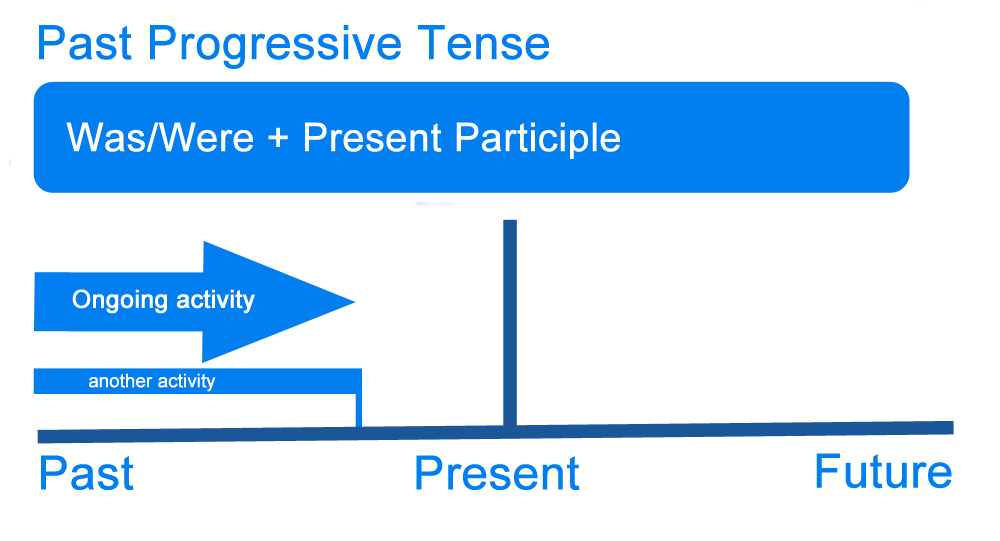
To form the ‘past progressive’ tense is quite simple and is very similar to the present progressive tense in how the structure works. In order to make this grammar tense function, you need to put the ‘to be’ verb in the past tense. There are two different ways for accomplishing this method. If it is a singular action that was occurring, you’re going to use the word ‘was’ before the main verb if you’re referring to one person or thing. However, if it is a plural action being described, you’re going to use the word ‘were’ before the main verb if you’re referring to more than one person or thing.

The actual main verb is going to be in its’ present progressive form with –ing being added to the end of each verb after ‘was’ or ‘were’ that will make it a past progressive tense sentence. It is very important that you follow this structure, otherwise, your sentence won’t make much grammatical sense and you’ll need to re-order the structure in order for your sentence to be understood by the reader. Don’t stress about it if you don’t get the concept at first.

Here are some examples with the basic form of the past progressive tense using ‘was’ or ‘were’:

  • I was riding on the train when lightning struck the tracks nearby.
  • We were going to go to the movies on Saturday night but you canceled on me.
  • They were talking about us at the lunch table today as we walked by.
  • He was not doing the job like his boss wanted him to do it.

If you are thinking of making the past progressive tense negative, all you need to do is to put the word ‘not’ between the ‘to be’ verb in the past form and the actual action that was taking place at the time. If you’re struggling with forming a sentence by using the past progressive tense, you should look to these examples in order to help you in the future as an English student.

When it comes to the past progressive tense, you are often describing an action or an occurrence that is happening within a limited time frame while something else in the past was going on at the same time. When you write a sentence in the past progressive tense, you should be aware that most sentences with this grammar tense would be describing two actions in the past and not just one action. Here are some examples of past progressive sentences where two actions are being described simultaneously:

1) John lost his wallet while he was dancing salsa at the club.

2) Jane found her keys while she was watching her favorite television show.

3) We ate a lot of tapas dishes while the bands were playing Spanish music at the restaurant.

As you can see, it is quite easy to form the past progressive tense in a sentence if you are able to describe two actions occurring within the same timeframe. The major difference between the simple past tense and the past progressive tense that any student of English grammar should be aware is the fact that the simple past tense describes a completed action from the past while the past progressive tense describes an incomplete action from the past that is still playing out. If you’re still confused, here are some examples that highlight the difference between the simple past tense and the past progressive tense:

  • I slept throughout the night while the rain was coming down heavily. (Simple past tense and Past progressive tense)
  • I drank too much juice yesterday, which made me sick. (Simple past tense)
  • He was dancing all night long to the wonderful music of Michael Jackson. (Past progressive tense)

As highlighted in the examples above, the simple past tense and the past progressive tenses can be used together in the same sentence without any problems. However, it is possible to use them in separate sentences as well, which will make the sentence a lot simple to create. Be aware that the word ‘while’ is a way to connect a sentence together that uses the two forms of the past tense together in a seamless manner.

Lastly, it’s important to note that the subjects ‘I, He, She, It’ should be used with the singular word ‘was’, which is the past form of ‘to be’ before describing the past action that was happening. For the subjects of the past progressive tense which are ‘You, We, They’ should be used in conjunction with the plural word ‘were’, which is the past form of ‘to be’ before describing the past actions that were happening. Here are a few examples to clarify the difference between ‘was’ and ‘were’ in the past progressive tense:

Singular: I was playing, He was playing, She was playing, It was playing.

Plural: You were playing, They were playing, We were playing.

Overall, the past progressive tense is a lot simpler and straightforward when compared to other grammar tenses such as the simple past tense. As long as you remember the rules, study the examples, and practice writing sentences using this verb form on your own, you should be just fine. As always, if you have any questions or comments, please leave a comment for me and I would be happy to answer them for you. Good luck and look out for next month’s English corner!


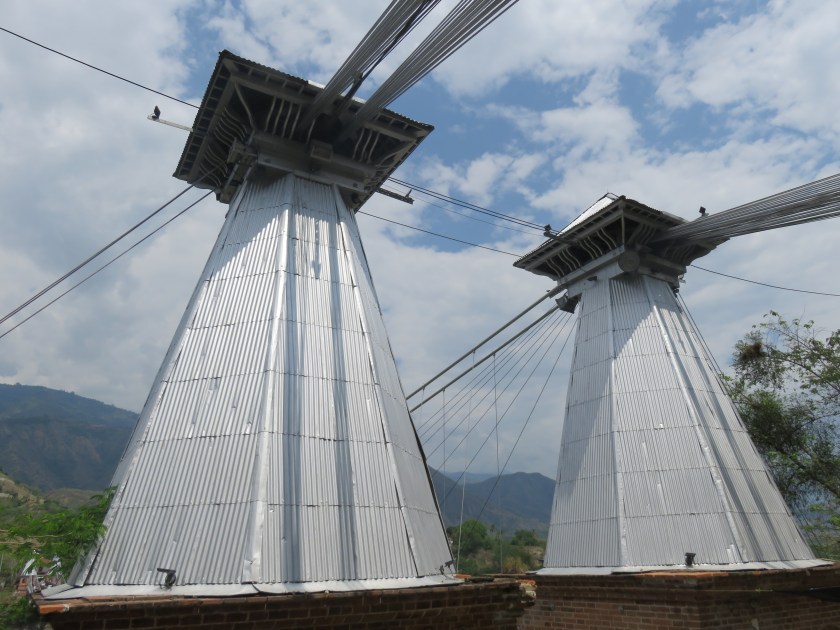
A Day In Santa Fe

IMG_2066IMG_2054IMG_2059IMG_2057IMG_2060

IMG_2069IMG_2072IMG_2075IMG_2083IMG_2107IMG_2117IMG_2116IMG_2101IMG_2105IMG_2109

Camera: Canon PowerShot SX710 HS

Location: Santa Fe de Antioquia, Antioquia, Colombia

Steve Jobs – ‘On Failure’

It’s not often when the average person can gleam some wisdom or some insight from a YouTube video but there are exceptions to this fact when you start to dig deeper. One of these videos that I enjoyed viewing focuses on the late Steve Jobs, the innovative and driven entrepreneur, who was the co-founder of Apple Inc. and for the later half of the 20th century and the beginning of the 21st century helped lead the computer and smartphone revolution around the world. While most people may know him from his appearances at developers’ conferences where he would unveil Apple’s latest invention or innovation, there is a side to Steve Jobs that some folks may overlook.

Steve Jobs wasn’t always a great success and had many failures throughout his life. Fired by the company he co-founded and having gone through product setbacks such as with the Apple III and the NeXT computer, not everything went the right way for the legendary entrepreneur at first. However, these setbacks and failures are obscured today but the massive amount of success and innovation he would bring to the world by sticking to his principles and by always taking the initiative to ‘stay hungry’ for more.

The YouTube video I’m referencing in this blog post is titled, “Steve Jobs on Failure” has over one million unique views and has been up on the website for over six years. In the video, most likely set in the 1990’s, a young Steve Jobs talks about one particular time where he took the initiative that was driven by his innate curiosity. At the beginning of the video, Jobs talks about the fact that most people don’t have the experiences they should because they never ask or inquire about them to begin with. Mr. Jobs hints at the fact that he was never afraid to ask for help from other people, especially if they were in his field of work and would be able to assist him in some way by giving him advice or by mentoring him in some capacity.

The adult Steve Jobs in the video recounts how when he was only twelve years old, he called up Bill Hewlett, the engineer and co-founder behind the massively successful information technology company known worldwide as Hewlett Packard or HP, which similarly to Apple Inc., is also based out of Silicon Valley in California. The twelve-year old Jobs introduced himself to Mr. Hewlett and simply asked him directly for help with building a frequency counter. Little Steve asked Mr. Hewlett for some spare parts that could be used in order to build an effective frequency counter. The young Steve Jobs left quite an impression on Mr. Hewlett, so much so that the co-founder of HP gave him the spare parts as well as a summer job working on an assembly job working with the nuts and bolts that help make the frequency counters at Hewlett Packard work effectively.

You can tell the way from the way that Steve reacts to Mr. Hewlett’s genuine help and generosity with giving him a job and a start to his future in information technology that it meant a lot to him both personally and professionally. Certain moments like that in our lives when somebody really gives a chance and helps us along the way to having a brighter future is a lasting memory that simply does not go away. We can only speculate what might have happened if Mr. Hewlett had instead just hung up the phone on young Steve and not helped him out at all. The world could very much be a different place had Steve not gotten that positive feedback and mentorship that we all seek in our own lives.

“I’ve never found anyone who said ‘No’ or hung up the phone when I called…I just asked.” Steve knew that there was a chance at failure when it came to reaching out to others in his field but he knew also that he had to try in order to get ahead in his life. He had to put himself out there, make connections, and learn from others in order to build his company and create successful products. I think Steve realizes that he would not be where he was as an adult without the help he received from others throughout his life. The video shows his sense of gratitude for that assistance and that he is wise enough to remember to give back to other people as well who want to be in his position one day or to be successful like he was.

“Most people never pick up the phone and call…most people never ask.” Steve is right in his assertion that those who don’t reach out for help or don’t seek out opportunities will never get to where they want to be in life. He makes the correct distinction between those people who take the initiative and those other people who let opportunities pass them by. You can dream and wish for things to happen for yourself but unless you put the pen to the paper or put your phone to your ear, you won’t accomplish that much.

Lastly, Steve notes in this video that ‘you have to be willing to fail…you got to be willing to crash and burn.” Steve Jobs like many other inventors and innovators had multiple failures beset them but they did not give up and they were not afraid to fail. Through failure, we learn from our mistakes and we get better and better at what we are trying to accomplish. With enough hard work and effort, we can push forward to achieve what we set out to do originally and so much more. When an Apple product failed to gain traction or when he was forced out of his own company, Steve Jobs like many other successful men and women did not give up and go home. They learned from their mistakes and became better at what they do.

“If you’re afraid of failing, you won’t get very far.” To put it bluntly, failure happens to everybody. Nobody in the world succeeds 100% of the time at everything they do. People like Steve Jobs recognize that this is all too true but it doesn’t deter them from their goals because they won’t stop until they achieve what they want to accomplish. In order to turn those failures into successes, you need to have an indomitable will and to let nothing stand in your way.

Instead of blaming your failures on others or giving up after a few bumps in the road, you should continue to embrace the learning process and seek help from those other people who have been successful in their lives and would be willing to offer their help to you. Steve Jobs did not become one of the most important men of the 20th century by being afraid of failure or from doing it all on his own. He sought the advice and counsel of others while never giving up even when things looked pretty bleak. That kind of mindset that he explains in the video helps us to understand why he became so successful in his life and how we can learn from his words to become successful in our own lives.

English Corner – Simple Past Tense

For this edition of ‘English Corner’, we’re going into the past to figure out and understand the ‘Simple Past Tense.’ In order to successfully master the English language, you need to be able to use the simple past tense correctly. Whether it’s talking about what you did yesterday or last week or even five years ago, the structure and formation of the simple past tense should not be overlooked. As we discussed previously with the simple present tense and the present progressive tense, having a good grasp of these basic grammar forms will help you to get better in English really quickly.

In this blog post, I’ll go over when and how we should use the simple past tense and you will be able to see a few examples of how to put this grammar tense into action. If you have any questions or comments, please leave them for me below the article, as I am happy to help anyone out who needs additional assistance with the simple past tense. After going through this grammar tense for this post, be on the lookout for the next edition of ‘English Corner’ when we go over the past progressive tense.

If you have heard about the ‘preterite tense’ but don’t know about the ‘simple past tense’, then you can be at ease knowing that they are one in the same. While there are different forms of the past tense, the ‘simple past tense’ has become the most commonly used form and is quite easy to master if you are able to understand and apply the structures and the different ways you can use the grammar tense in a sentence.

When it comes to creating the simple past tense, the structure is quite simple. There are three types of sentences that you can form with the simple past tense: positive, negative, and questions. For positive sentences, you’ll put the ‘subject’ first and then add the ‘main verb’, which will be in the simple past tense. For negative sentences, you put the subject first and then an auxiliary verb with the verb ‘to do’, put into the past tense, which becomes ‘did’ followed by the word ‘not’ afterwards to indicate the negation in the sentence. The last part of the ‘negative’ sentence with simple past is the ‘main verb’ so the structure should be ‘subject’ + ‘auxiliary verb and ‘not’ + ‘main verb’ to complete the sentence fully. The question form of the ‘simple past tense’ is very similar to the negative form but there’s one exception that makes them different from each other.

The ‘auxiliary verb’ comes first before the ‘subject’ and then after the subject comes the ‘main verb’ and the ‘object’, which completes the sentence’s overall purpose. Positive sentences for the simple past tense do not have any auxiliary verbs as the negative and question sentences do reply upon. The verb ‘to do’ is the most important one when it comes to forming the simple past sentence regardless if its’ a positive, negative, or question form of the grammar tense. Lastly, the negative sentences you create must have the ‘not’ word after the auxiliary verb and before the main verb in order for it to make grammatical sense.

Examples

Positive Sentences:

I did go to the mall last weekend. (to go)

         I did play with my friends at the park yesterday. (to play)

Negative Sentences:

I did not think you were polite at the lecture on Monday. (to think)

I did not believe you when you said the stock market crashed. (to believe)

Question Sentences:

Did you do your homework last night? (to do)

Did you tell her you were late for class? (to tell)

When it comes to the verb ‘to be’, there is a different structure for the simple past tense that the average ESL student should be made aware of. In order to put ‘to be’ in the past tense form, it’s either going to become ‘was’ or ‘were’ depending upon what subject is being used at the beginning of the sentence. For the positive form of the was/were usage of ‘to be’ in the past tense, you start with I/He/She/It (subjects) and then the verb, which in this case for singular subjects would be was, followed by the object of the sentence.

For sentences with subject plurals like We/They/You, you are going to change ‘to be’ from was to were to reflect the change followed by the action / object again. For the negative form, you’re just going to add ‘not’ between the main verb and the object at the end of the sentence. ‘Was or were’ are going to be placed at the beginning of a question sentence followed by the subject and the actions that are involved in the sentence.

Examples

Positive Sentences:

He was here yesterday evening at the dinner table. (to be)

         You were in Istanbul last weekend for a friend’s birthday. (to be)

Negative Sentences:

I was not at the park last night because I had work to do. (to be)

They were not at the party because they were not invited. (to be)

Question Sentences:

Was she nice to her date last Thursday night? (to be)

Were you happy with how you did on the Spanish exam? (to be)

Compared to the verb ‘to do’ in the simple past tense, ‘to be’ has no auxiliary verbs at all even for the question and negative forms of the verb tense. However, it is the same in that ‘not’ always comes after the main verb for a negative sentence. The subject also becomes the past tense form of the verb ‘to be’ while the main verb moves to the middle of the sentence and is actually the subject words such as he / she / they, etc.

If you simply would like to use the past simple tense with most of the verbs you’ll be using in your sentences, you will add the letter ‘d’ or ‘-ed’ to the end of the verb in order for it to make sense grammatically. There are a couple of examples we should take a look at it when it comes to forming the simple past tense of the verb with ‘d’ or ‘ed.’

Examples

  1. After school, he walked home in the rain.
  2. He danced really well with his date at the senior prom.
  3. She planned to go to Europe this summer but she couldn’t save up enough money.
  4. Because his mother was sick, he baked a chocolate cake.
  5. We went to the movies after we ate at a Mexican restaurant.

It’s important to note that there may be some irregular verbs that are formed differently when it comes to the simple past tense. For example, ‘go’ in the simple present tense will become ‘went’ when it comes to being grammatically correct in the simple past tense. Another verb like ‘eat’ will become ‘ate’ and ‘drink’ will also change slightly to become ‘drank.’ While most of the verbs only need a ‘d’ or an ‘ed’ to be properly simple past, there are a few irregular verbs that should be memorized for the fact that they are exceptions to the rule when it comes to going from present to past in terms of how the word is written and pronounced.

Now that we know how to use the structure of the simple past tense, you’ll also want to be aware of what kinds of uses do we have for this particular grammar tense. The main purpose of the simple past tense is to talk about the past meaning that we want to shed light about a thing, an action, or a situation that happened in the past. These events can be as recent in the past as in they happened last night or they can be events that occurred long ago such as discussing a sports championship that happened over a decade ago.

Examples

  1. I played my violin last night for my parents and brother. (short time ago)
  2. I had a great time living in Istanbul, Turkey back in 2015. (long time ago)

When we use the simple past tense, you cannot refer to events or actions that are happening currently in the present or are slated to happen anytime in the future. The simple past tense only focuses on those events and actions that were completed sometime in the past. It simply doesn’t matter if the event was finished ten years ago or ten seconds ago. The fact is that it’s still in the past and the sentence structure should reflect the grammatical tense that fits the place and time.

Lastly, it should be noted that the books you’ve read or the movies you seen who occur in the past are mainly going to use the simple past tense. The present perfect and simple present tense may be used in stories or movies as well but you’re going to want to pay attention and listen to the sentences with the simple past tense because they are going to be the most common.

If you want to practice your simple past tense after reading this article, I recommend listening to songs, reading books, watching movies that take place in the past. Besides speaking or writing about the past, participating in the active listening and / or reading about events or moments in the past will help to take your English language skills to the next level. I hope you enjoyed this ‘English Corner’ post and please leave a comment if you have any questions, queries, or comments.